Basketball in China has no shortage of visible desire. The problem is continuity. A crowded public court, a school game, a training program, a university competition and a CBA roster can all exist without forming one reliable ladder. The court is culturally popular; the pathway is not smooth.
Basketball in China is easy to see and harder to follow
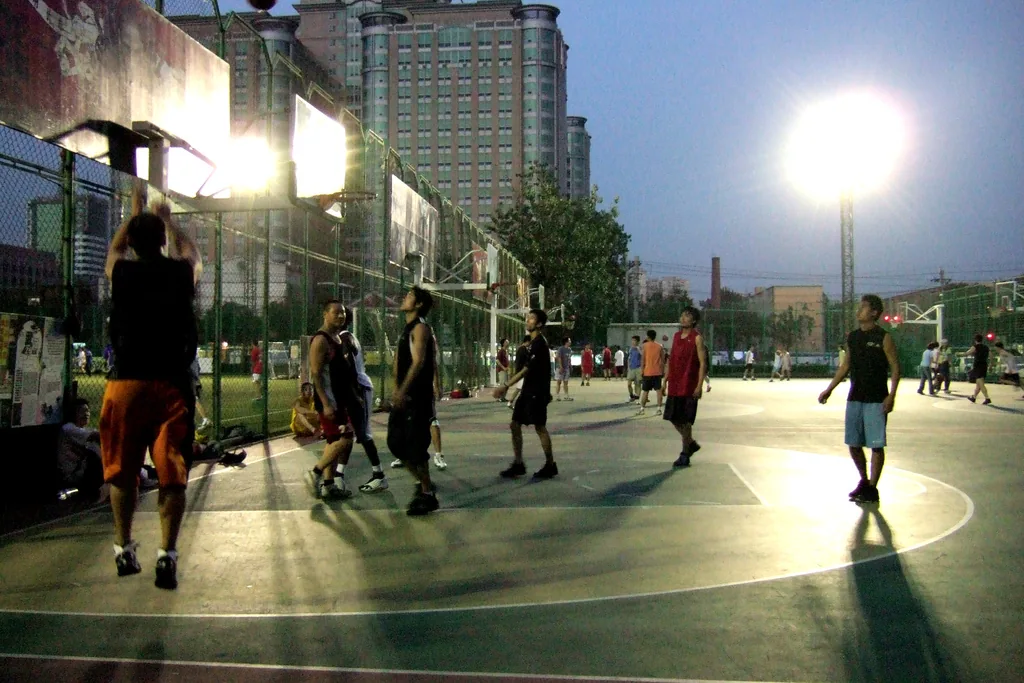
At a floodlit Beijing court, a shot rises while nine other bodies decide what happens next. Some turn toward the rim. One player prepares for the rebound. People wait beyond the fence. Another game is already happening in the background. The scene is social before it is developmental: find enough people, divide the teams, call the score, argue about a foul and keep playing until the lights or legs stop.
This is the most honest opening to basketball in China. The game is not an imported curiosity waiting for explanation. It is a familiar urban language. A ball and hoop can gather strangers quickly, and global basketball supplies endless gestures to borrow: the jumper, crossover, celebration, jersey, shoe and argument about who is greatest.
Visibility creates a tempting conclusion. If many people play and many more watch, elite success should follow automatically. It does not.
My position is blunt: participation is a base, not a pathway. A popular court can produce joy, identity and good players. It cannot by itself connect a promising teenager to stable coaching, meaningful competition, academic support, injury care, selection and professional opportunity.
The public court is a social sorting machine
An open run looks informal, but it has rules. Teams may form by friendship, arrival order, self-selection or a quick judgment of ability. Winners may stay. Strong players may control possession. A newcomer earns trust by defending, passing or making the first shot. Someone keeps score, even when nobody agrees who that person is.
These negotiations are part of Chinese basketball culture because they are part of basketball culture wherever space is scarce and demand is high. Local conditions change the pressure. Dense neighborhoods can put many potential players close to one court. Work and school schedules compress popular hours. Outdoor heat, cold, rain, air quality and lighting decide when a game is realistic. Facility management decides whether the gate remains open.
The night court in the hero shows a game thriving under artificial light. It cannot tell us how long players waited, whether the court charges a fee, how teams were chosen or whether anyone receives coaching. That evidence boundary matters. One busy evening proves use, not universal access.
The court's greatest strength is immediacy. Its weakness is that the same informal sorting that creates a fast game can hide learners. If the only route to better play is surviving stronger adults, some players improve and others disappear.
School basketball creates contact, but contact is not a ladder
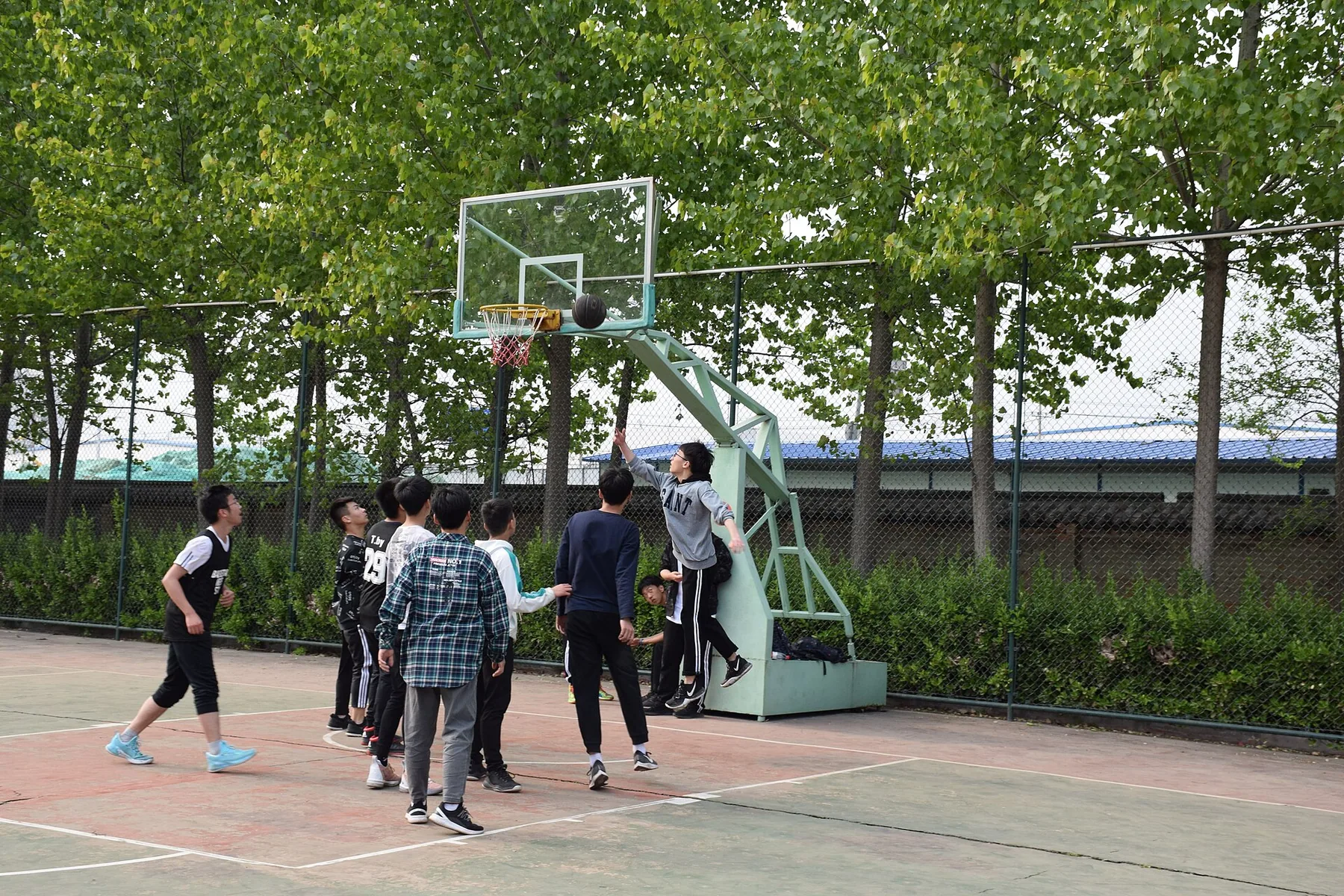
The Luohe school scene contains an appealing chaos. Students cluster beneath the basket, one body extends upward, and several others track the same ball. They have a court, a hoop and enough people for a game. That is not trivial. School can make basketball part of an ordinary week rather than a product families must purchase separately.
But the photograph does not show a coach, drill, referee, fixture list or progression plan. We should not invent them.
For a school game to become a development route, several handoffs must work. Physical education must connect to sustained practice. Practice must connect to competition against appropriate opponents. Performance must be observed by people who can offer the next level. The next level must be compatible with education and family decisions. A late-developing player needs another chance; an injured player needs support; a talented player outside a famous school needs visibility.
Any missing handoff can break the route.
This is why the popular question "Why can't China produce another Yao Ming?" is badly framed. It turns a system problem into a search for one exceptional body. Yao's career is historically important, but waiting for another singular figure avoids the harder work of asking how thousands of different young players receive good minutes, good feedback and repeated competitive decisions.
The goal should not be to manufacture a replacement celebrity. It should be to make development less dependent on being impossible to overlook.
Three-on-three changes the doorway, not the need for structure
FIBA describes 3x3 as a formal basketball discipline built around a half court, one basket and small teams. That compact format fits the logic of many public spaces. Fewer players are needed to start. Every player handles more decisions. Possession changes quickly, and hiding without the ball becomes difficult.
This makes 3x3 a valuable bridge between informal court culture and organized competition. It can turn the spatial reality people already have into a recognized game rather than treating five-on-five as the only serious form.
Yet format cannot repair everything. A half court still needs scheduling, a safe surface and maintenance. Organized events need officials, age groupings and transparent entry. Players need to learn spacing, screening, decision-making and defense rather than simply compressing five-on-five habits into less room.
The best use of 3x3 is not as a slogan about accessibility. It is as a designed next step: a format close enough to the public court to feel familiar and structured enough to create comparable competition.
A professional league is a product, not proof of the whole pathway
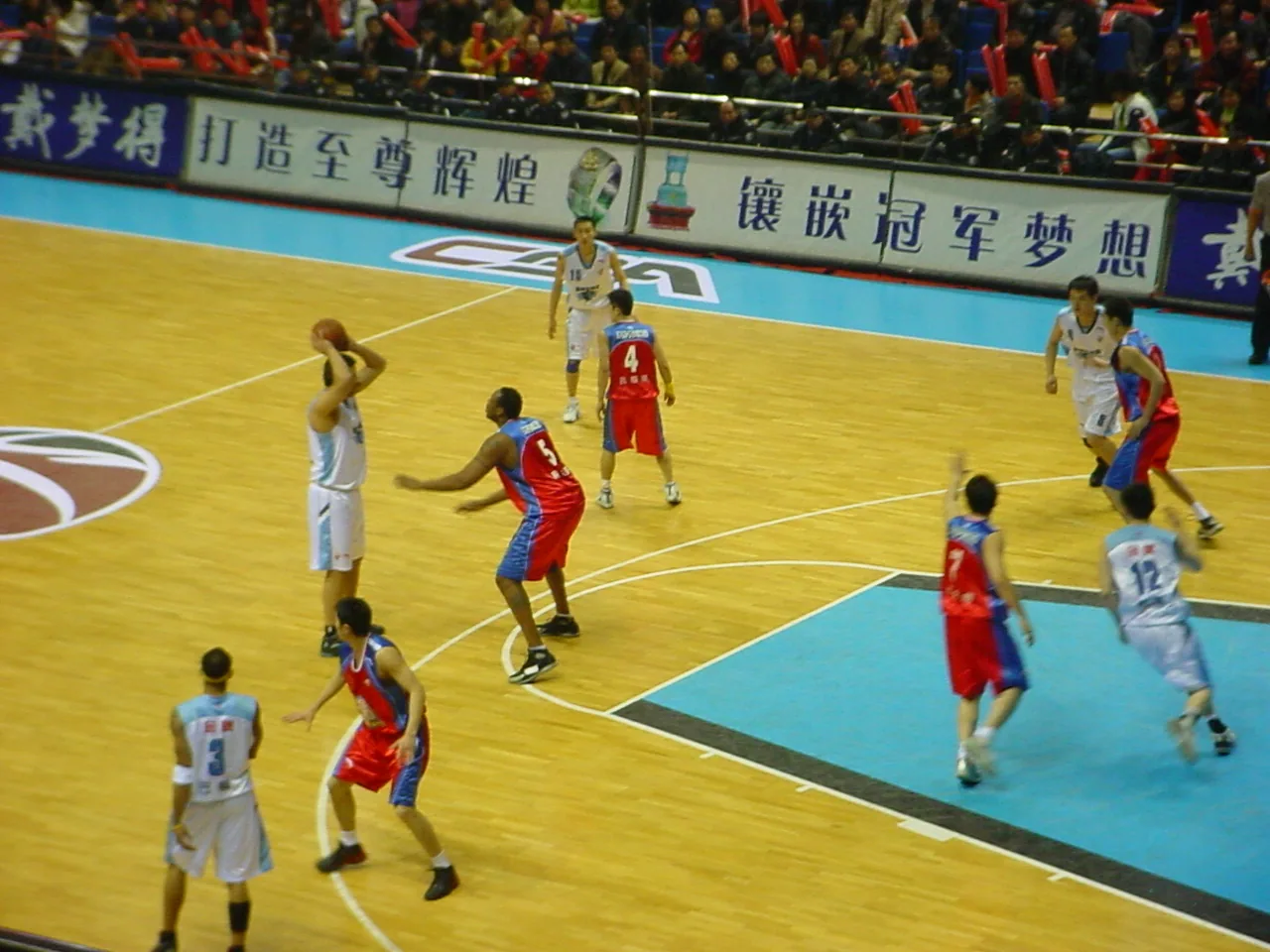
This 2006 CBA scene is instantly different from the schoolyard. Uniforms identify teams. The painted court establishes roles and boundaries. Spectators sit behind advertising boards. Players are spaced around a half-court possession, and each movement belongs to a larger tactical plan.
The Chinese Basketball Association's federation record at FIBA and FIBA's China office show basketball inside national and international institutions. Those structures matter. Rules, competitions, officiating, national teams and development initiatives require organizations, not vibes.
But the presence of a professional league does not prove that the layers beneath it connect cleanly. A league can deliver entertainment, employment and elite competition while youth pathways remain uneven. It can feature excellent imported players without transferring enough coaching knowledge downward. It can generate attention in major cities while smaller programs struggle for fixtures or qualified staff.
We should judge the CBA as a professional competition and also ask what relationship it has with the court outside. Who watches and then plays? Which coaches move between levels? Where do young players receive meaningful minutes? How are university and club routes valued? A broadcast logo cannot answer those questions.
The difference between a play and a pathway is what happens afterward
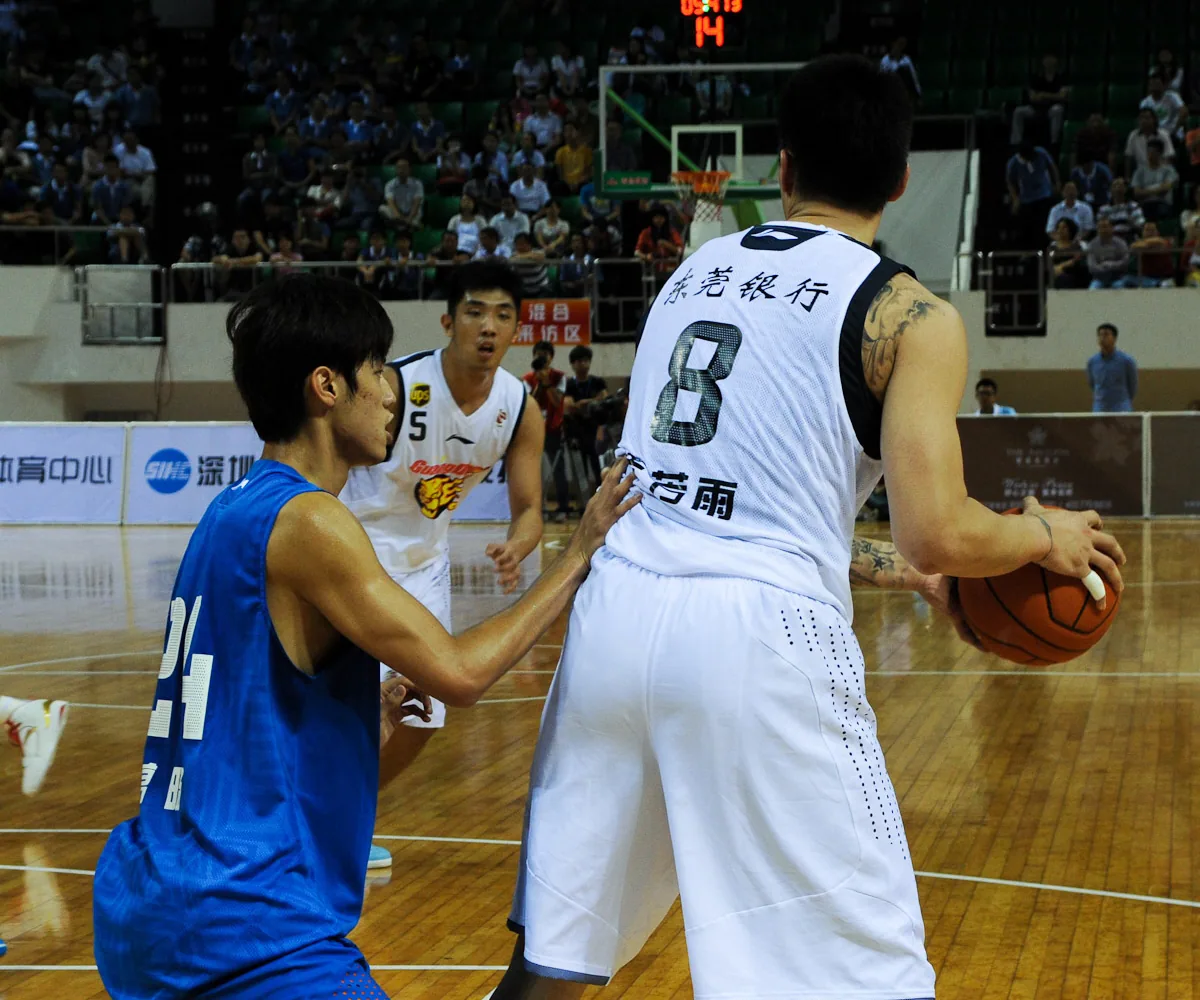
The close CBA frame above is useful because basketball's intelligence becomes visible. The player with the ball uses his body to protect space. A defender keeps contact. Teammates behind them are not decoration; their positions create passing possibilities and defensive obligations. One possession contains footwork, scanning, timing, strength and trust.
A pathway teaches a player to understand why those relationships work, then gives that understanding somewhere to be tested. The test must continue as bodies change and competition improves.
That continuity is difficult in any country. In China, the routes can include school teams, sports schools, private training, clubs, universities, regional competition and professional systems. Their existence should not be mistaken for seamless coordination. A family choosing among them may face uncertainty about educational cost, coaching quality, playing time and future options. A player may train intensely without enough unscripted competition. Another may play constantly without receiving technical correction.
The gap is not "training versus fun." Good development needs both disciplined work and decisions that cannot be rehearsed in advance.
My strongest criticism of basketball discussion is that it jumps from mass popularity straight to national-team outcomes. The middle disappears. That middle is exactly where a pathway lives: age-appropriate coaching, repeated games, honest selection, chances after failure and routes that do not demand one irreversible choice too early.
Imports can raise the level and still leave local questions
Professional basketball is international labor. Foreign players and coaches can bring different pacing, physical matchups, tactical habits and standards. Their presence is not automatically a threat to Chinese development. Strong competition can expose weaknesses that a closed environment hides.
The real question is design. Do local players receive roles that develop decision-making, or only minutes around somebody else's creation? Do coaches learn and adapt methods, or rent results for one season? Does the league give supporters recognizable local stories as well as spectacular individual performances?
National identity is often used to simplify these choices. More foreign talent is called either salvation or obstruction. Neither answer is serious enough. A roster rule must be judged by consequences: game quality, competitive balance, local-player responsibility, coaching exchange and club stability.
Basketball becomes stronger when outside knowledge meets a confident local system. It becomes weaker when nationality substitutes for evaluation.
The audience sees the finished product, not every missing bridge
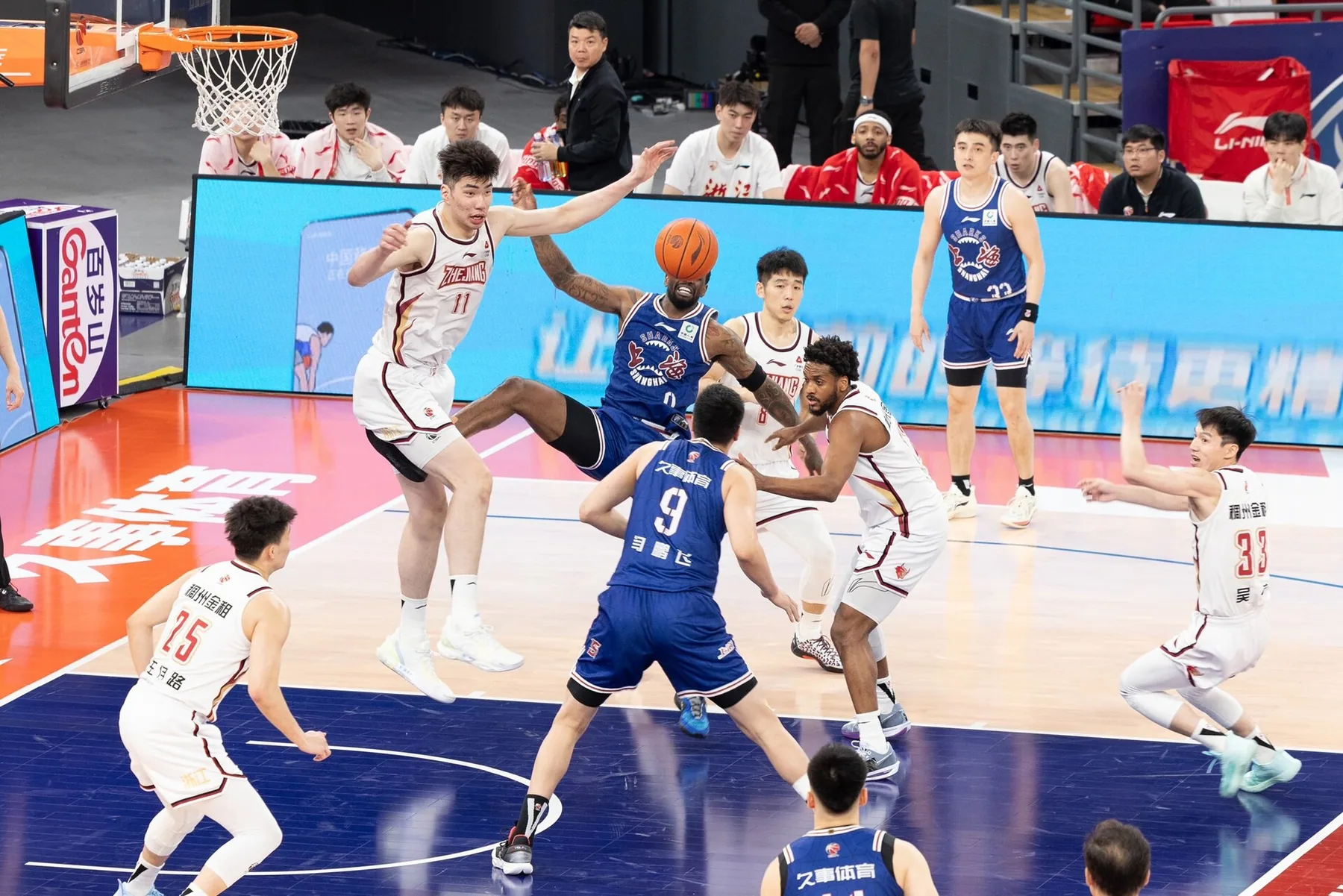
The 2024 Shanghai playoff photograph gives the professional game its full visual density. Players converge around the ball. Benches watch. Coaches stand near the boundary. Spectators rise behind the action. The floor is bright, branded and controlled.
This is real basketball culture. Fans care about teams, players, rivalries and outcomes. A league can create a weekly rhythm and a public memory that an isolated training program cannot.
Still, the photograph is a final-stage image. It does not show the child who could not find a coach, the university player balancing study and competition, the local organizer negotiating court time or the assistant coach learning how to teach a skill. Those people belong to the same sport even when television cannot see them.
That invisible work is where the pathway either becomes trustworthy or remains a sequence of lucky doors.
How to evaluate a basketball program in China
For a parent, player or curious visitor, brand recognition is a poor first filter. Ask to see the path.
Who coaches, and what do they correct beyond effort? How often do players compete outside their own training group? Are teams organized by age, physical maturity or demonstrated skill? How is playing time handled? What happens to a player who develops late? Is strength work appropriate and supervised? How does the program coordinate with school demands? Where did last year's players actually go?
Watch a session before admiring the uniform. Count how often each player makes a live decision. A drill can look orderly while one child touches the ball twice. A messy small-sided game may produce more reading, communication and adaptation.
Also inspect the ordinary details: floor condition, hoop stability, heat management, first-aid readiness and whether humiliation is treated as coaching. Ambition does not excuse bad teaching.
For public courts, ask a different set of questions. When is the court open? How are teams formed? Is there a beginner-friendly period? Who controls the ball and score? What happens after one good player outgrows the run? These answers reveal whether the court is only popular or actually connected.
Basketball, table tennis and badminton organize opportunity differently
Table tennis in China concentrates play around a permanent object. A public table can make repetition cheap and visible, while specialist coaching can intensify feedback rapidly.
Badminton in China can begin in improvised space with two people, then becomes far more demanding when wind, court dimensions, rotation and overhead technique matter.
Basketball asks for more bodies and more shared space. That creates a powerful social scene, but it also makes participation dependent on group formation. A player can own a ball and still need a hoop, teammates, opponents and time. The pathway must coordinate people as carefully as it develops technique.
This is why a busy court is meaningful evidence but incomplete evidence. It proves desire. It does not prove continuity. The Chinese sports field guide follows that distinction across movement practices, everyday games and the screen stories built around them.
Basketball in China needs bridges more than another symbol
The right way to understand basketball in China is to follow one player after the public game ends. Where can that person go next? Who offers feedback? Where is the next meaningful competition? Can education continue? If the player fails one selection, is there another route?
The answers will differ by city, school, family and level. That variation is not a reason to retreat into "it depends." It is the finding. China has courts, audiences, organizations and professional basketball. The unresolved challenge is how consistently those pieces hand a player forward.
I do not think the sport needs another myth about one giant changing everything. It needs many boring, reliable bridges: coaches who teach, leagues that schedule, schools that cooperate, clubs that document progress and selectors willing to look twice.
In the comments, choose one court you know and identify the exact handoff that works or fails. Does casual play lead to a school team, a local league, private coaching, a university route or nowhere at all?
Then add a court-path map to East Moment Moments. Record where play begins, how teams form, who keeps time or score, the next organized level and the missing bridge. Return when a player, parent, coach or organizer adds the step your first map could not see. Popularity fills a court; shared evidence can help us understand the path beyond it.