Looking for the Shenzhen electronics market? Start with Huaqiangbei, the electronics district in Futian—not a single shopping mall. SEG and Huaqiang Electronics World are useful market names to locate. Go to explore gadgets, compare a replacement or investigate components; those are three different visits. My rule is blunt: if you cannot explain how you will test the thing, do not let its low price make the decision.
Shenzhen electronics market: bring the device, the failed part or the design
What would I put in your bag before a Huaqiangbei visit? The device an accessory must work with, the failed part you want to replace, or the design record for a prototype. Each gives the conversation an object. “Something like this” becomes a connector to compare, a marking to read or a function to demonstrate. That is far more interesting than trying to sound like an industry insider.
| Your actual question | First stop | Leave with | Do not buy when... |
|---|---|---|---|
| "What is Huaqiangbei like?" | The district, then one market directory | A map of which counters handle your category | A novelty display is your only evidence of quality |
| "Will this replace my part?" | A repair or component counter that will inspect the old part | Exact marking, connector match and a repeatable test | The seller cannot identify the part or permit the relevant test |
| "Can I source this for production?" | A specialist counter or prototype lead | Written part identity, lot, quotation and sample-test plan | A sample works but the next batch or substitute is undocumented |
This is a visit plan, not a current floor directory or seller endorsement. The Shenzhen government account describes Huaqiangbei as a district of specialized markets, including SEG and Huaqiang Electronics World; it does not certify that a particular stall, price or stock level will still be there on your visit. Confirm the current entrance and hours before traveling.
That is not a reason to skip the district. It is the reason to arrive curious rather than convinced you are about to beat the system. Overseas buyers often use “Shenzhen electronics market” to mean component counters, phone-accessory malls, repair businesses, prototype suppliers or the wider city's manufacturing network. These overlap, but they do not sell the same service.
The market is valuable because it compresses discovery time. You can compare connectors, boards, displays, modules, cables and accessories quickly. The Shenzhen government's Huaqiangbei account describes a dense system of specialized markets and connects that density to unusually rapid component sourcing and prototyping. That establishes the ecosystem, not the trustworthiness of one reel or seller.
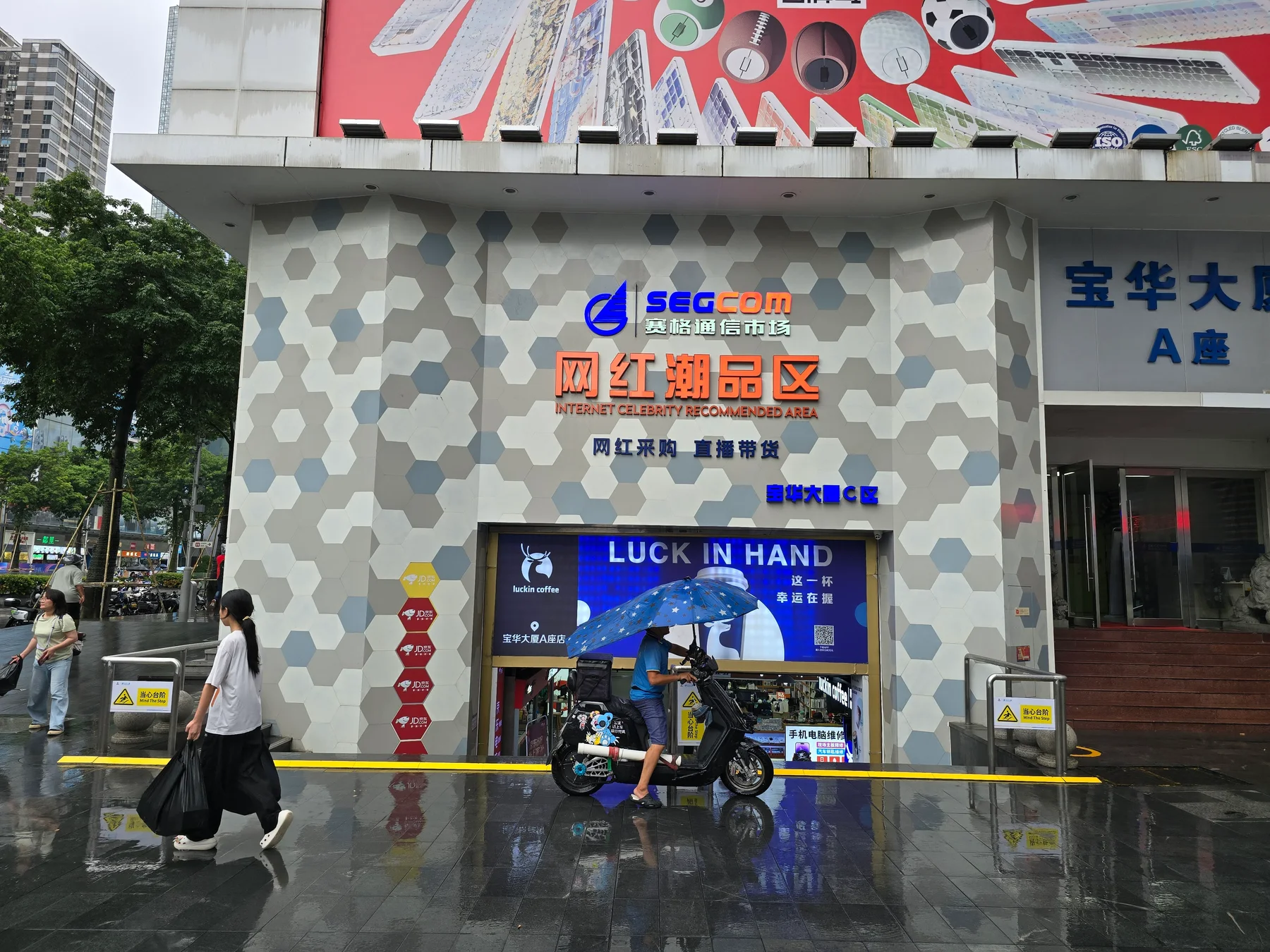
Look at the entrance in the cover photograph: 网红潮品区 advertises trending products, with influencer sourcing and livestream selling named underneath. The street is speaking to people who want something to show and sell, as well as people hunting a component. That difference matters before you even step inside. A fashionable product and a suitable part are not interchangeable answers to “What should I buy?”
Cover: Benlisquare, Huaqiangbei, August 2025, resized WebP under CC BY-SA 4.0.
First visit: choose a building, not “all of Huaqiangbei”
Save both names on your phone: 华强北 for the district and 赛格电子市场 for SEG Electronics Market. 华强电子世界 is Huaqiang Electronics World. These names help distinguish a specific destination from a broad neighborhood search. Use a current map for the entrance and transit route; walking to a district label is not the same as reaching the counter you need.
Start with the directory inside your chosen building. Look for your product category before committing to a floor. An accessory display, a repair bench and a component counter can all belong to the electronics economy while being completely wrong for your purpose. Do not treat an old floor-by-floor guide as a reservation: stalls and uses change. Confirm opening hours and whether a seller handles single units before building the day around a visit.
If you are visiting for pleasure, give yourself permission to leave without a purchase. Watch the differences between a boxed product, a loose replacement part and a repair service. Ask before photographing a workbench. You are looking into somebody's working day, not a set built for technology tourists. I find that distinction more interesting than another claim about the cheapest earbuds in China.
For a personal accessory, bring the device it must work with. For a replacement, bring the failed part or clear photographs of its markings and connector. For an engineering purchase, bring the exact bill-of-materials line and the required test. The first two visitors should not have to read a procurement manual before entering; the third cannot afford to leave the specification at home.
The demonstration worked. Did it answer your question?
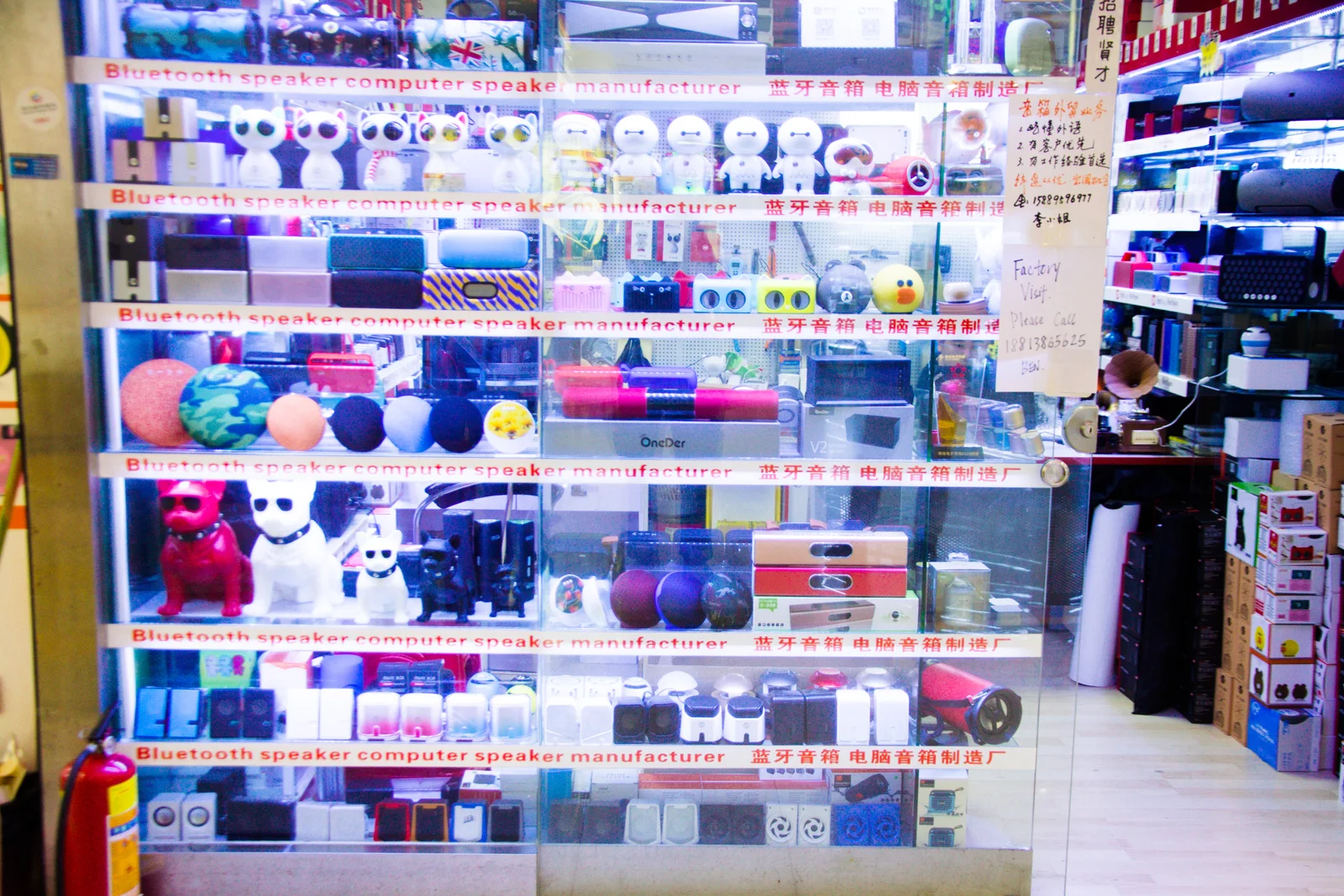
Mitch Altman, November 2018, resized WebP under CC BY-SA 2.0.
The speaker counter makes the problem wonderfully visible: spheres, animals, cylinders and rectangular boxes all compete for attention. The handwritten factory-visit sign adds another invitation. I like the abundance; I do not accept appearance or a sign as an answer about sound, battery life or who controls production. This older photograph captures the sales encounter, not today's stock list.
A display lights up on the seller's board. An adapter charges the seller's phone. A wireless device pairs immediately. Those demonstrations answer narrow questions—and it is very easy to pay as though they answered every question.
Ask to repeat the relevant test with your own device and intended connection. Charging does not establish data transfer or video output. A plug that fits does not establish the required electrical characteristics. A secondhand phone that reaches its home screen still needs a competent check of condition, account restrictions and the functions you depend on. If you cannot perform that check, my answer is no purchase, not a more persuasive bargain.
A USB-C cable makes the distinction visible
The USB Implementers Forum's cable guidance treats power capability and data rate separately. The connector shape does not tell you everything the cable supports. A charging demonstration therefore does not settle a purchase intended for moving files or connecting a display.
Describe the job before accepting the demonstration: “This laptop, this external drive, this cable length; I need reliable file transfer.” Start with a known-working setup, change one item, and repeat the same task. For a display connection, confirm the laptop port, cable and display support the intended mode before blaming whichever object was bought last. Do not put private files or an unlocked personal device into an unfamiliar shop computer to perform a test.
Keep the note precise: device models, cable model and length, connection used, task attempted and result. “The drive disconnected during this transfer” is an observation. “The cable is counterfeit” is a different claim that this observation cannot establish. I value a seller who helps isolate the mismatch more than one who repeats “high speed” while changing the test equipment.
Agree on what happens if the item fails that test after purchase. Record the exact model and the seller's stated return conditions on the receipt or written conversation. A friendly assurance is much harder to use when you have left Shenzhen. Cross-border follow-up is part of the purchase decision, not an inconvenience to discover afterward.
The uncomfortable part is admitting that a specialist may assess something in minutes that you cannot assess all afternoon. That expertise has value. A visitor does not need to imitate the confidence of a repeat buyer to enjoy Huaqiangbei, and should not use a stranger's confidence as a substitute for a test.
What can you use the market for?
| Need | Market value | What still requires verification |
|---|---|---|
| Prototype parts | Fast comparison and small quantities | Datasheet, revision, electrical test |
| Cables and connectors | Form-factor and price discovery | Materials, current rating, batch consistency |
| Displays and modules | Find compatible options quickly | Brightness, touch response, firmware, returns |
| Consumer accessories | Packaging and trend discovery | IP rights, battery safety, durability |
| PCB and assembly leads | Locate specialist capability | BOM ownership, factory audit, yield and testing |
The market is often the first conversation, not the final purchase decision.
A part number is not complete until the suffix survives the quotation
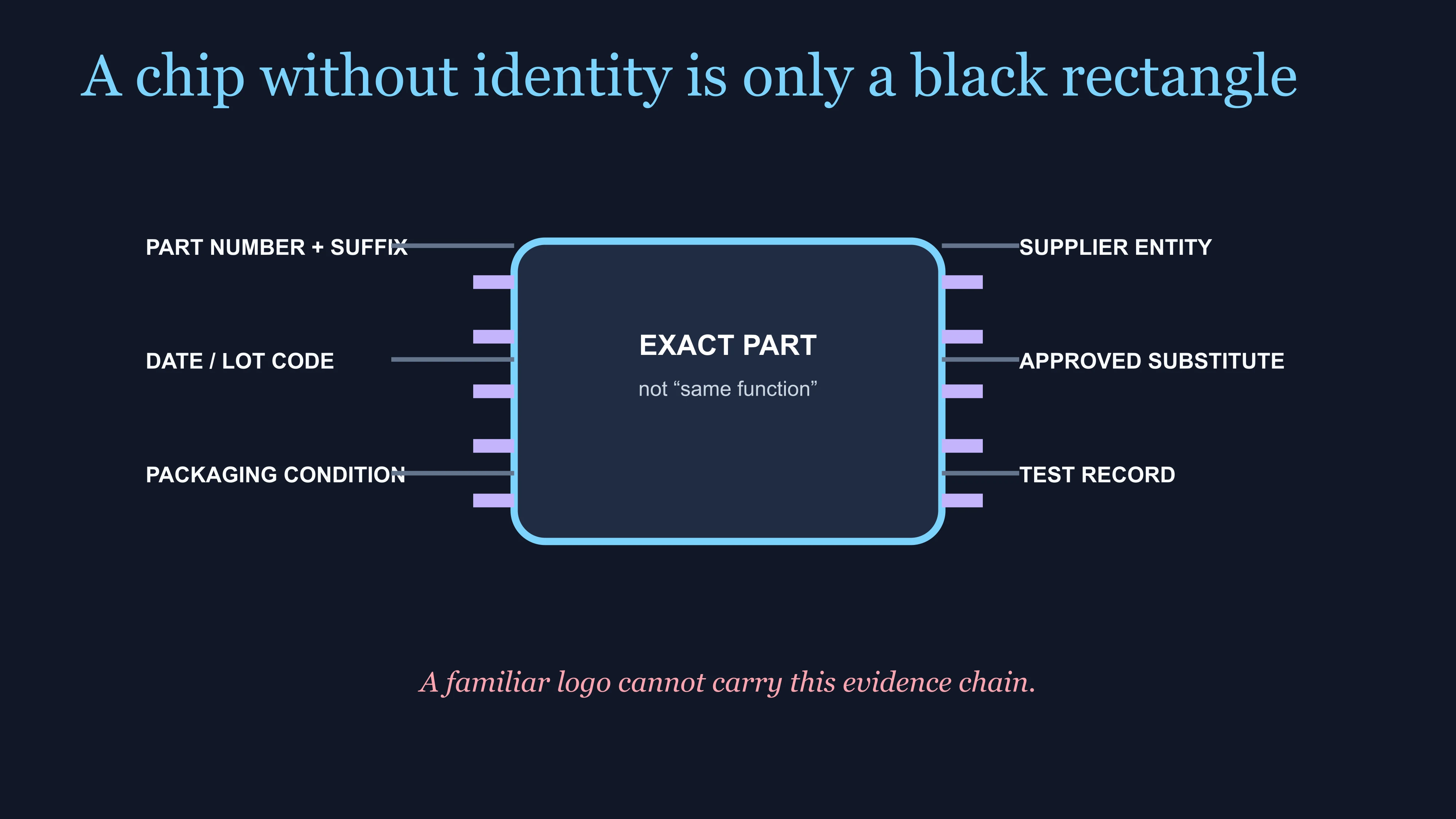
I do not trust the phrase “original stock” when it arrives without an exact identity. The useful object is not “a TI chip,” “an STM32” or “the same connector.” It is a manufacturer part number including its suffix, package and relevant grade, accompanied by lot information, packaging condition and a seller willing to put that identity on the quotation.
One changed suffix can alter package, pinout, tape orientation, temperature range, memory or another property that matters to the board. The specific consequence depends on the component; the rule does not. Never let sales shorthand overwrite the manufacturer's naming system.
Build the sample record before leaving the counter:
- photograph the top marking and the complete reel, tray or bag label;
- copy the exact part number instead of relying on OCR;
- record whether the goods are described as new, surplus, refurbished, compatible or another condition;
- name the legal supplier on the quotation and payment account;
- state the quantity available now and the route for a repeat lot;
- attach the test that will decide acceptance.
Visual inspection can expose damage, inconsistent marking or suspicious packaging. It cannot establish electrical performance or provenance by itself. A perfectly printed top mark can still sit on the wrong device; an ugly old reel can contain legitimate surplus. The buyer needs layered evidence, not confidence theater.
From a working module to a repeatable board

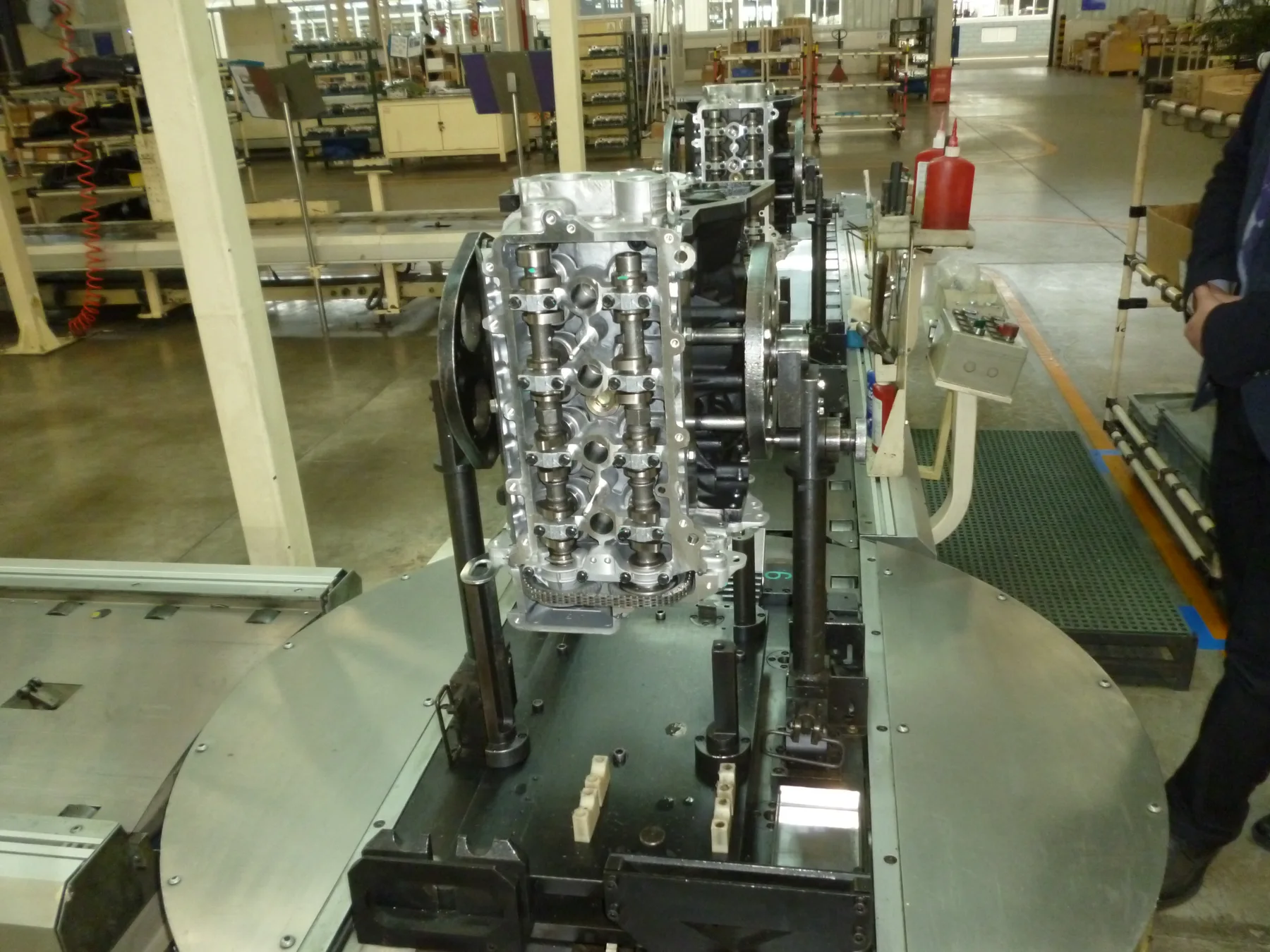
Copper electroplating equipment, photographed in 2010 by Stephen Woolverton (Swoolverton). Resized WebP under CC BY-SA 3.0. This is a manufacturing process, not a Huaqiangbei shop interior.
The identity record gets the right component onto the bench. The next problem is keeping the rest of the assembly equally specific when it moves into production.
For a board, record the chipset, firmware version, connector, operating range and test procedure. For a cable, record gauge, length, shielding, connector material and packaging. For a battery product, stop and obtain the relevant safety and transport documentation before treating a cheap sample as a product opportunity.
The production image changes the sourcing question. A finished module on a counter hides plating, solder, inspection, firmware and yield. Once you can name the hidden process, you can ask which factory performed it, which controls were recorded and whether the next batch will use the same material.
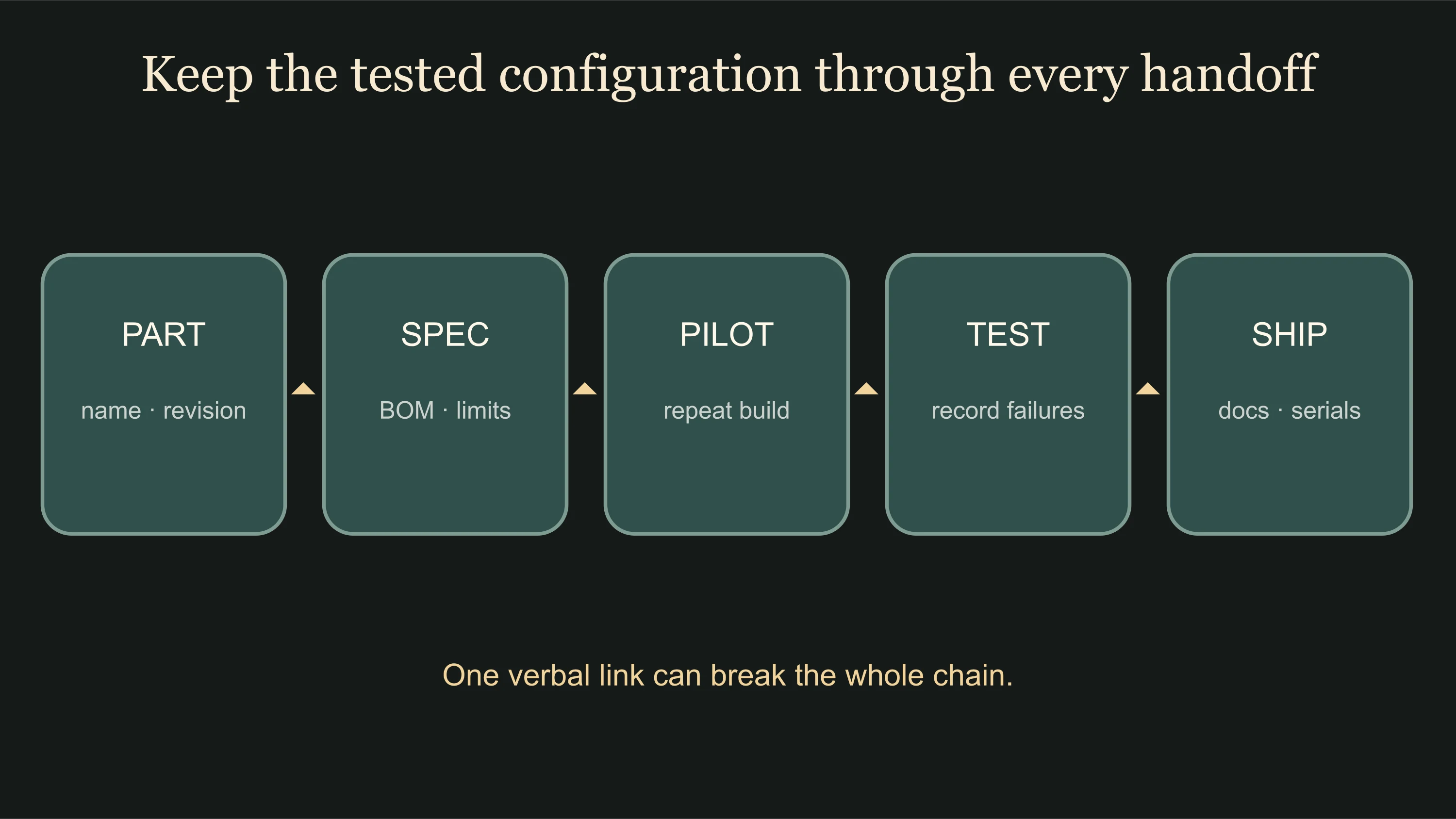
Use the chain above to locate the next missing record, rather than restarting the whole supplier investigation. A working module with no firmware version needs a firmware record. A repeatable bench test with no packing reference needs a transport plan. The general manufacturing guide handles the wider order; here the distinctive task is preserving the exact electronic configuration that produced the result.
The dangerous sentence is “we replaced it with an equivalent”
Shortages, end-of-life notices, allocation and one-time surplus are normal parts of electronics sourcing. Substitution is not automatically misconduct. Secret substitution is.
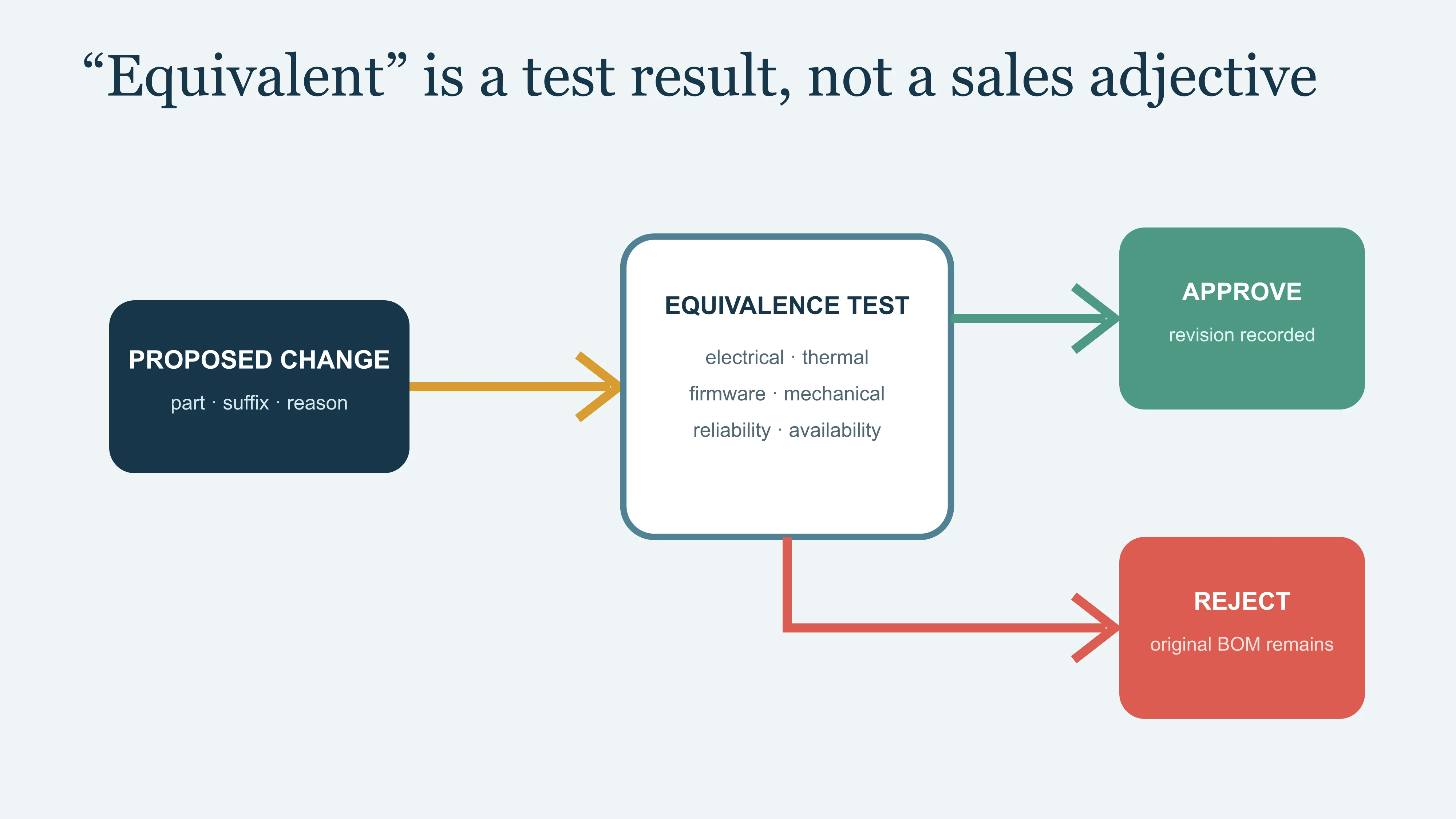
An acceptable substitute must be compared against the job the original part performs in this design. Pin compatibility is only the opening check. Electrical limits, timing, thermal behavior, firmware interaction, mechanical fit, regulatory consequence, expected life and future availability may all matter. The design owner—not the market seller—decides which tests are decisive.
Write three statuses into the BOM:
- Fixed: no substitution without a new engineering release.
- Approved alternative: a named part already tested for this revision.
- Open sourcing item: a supplier may propose an option, but production cannot use it before written approval.
I would rather lose a day to a rejected substitute than lose a production run to an undocumented “upgrade.” Shenzhen's speed is most impressive when a team can propose, test and record a change quickly. Speed without a revision trail is not agility. It is amnesia.
Huaqiangbei is fast because the network is dense
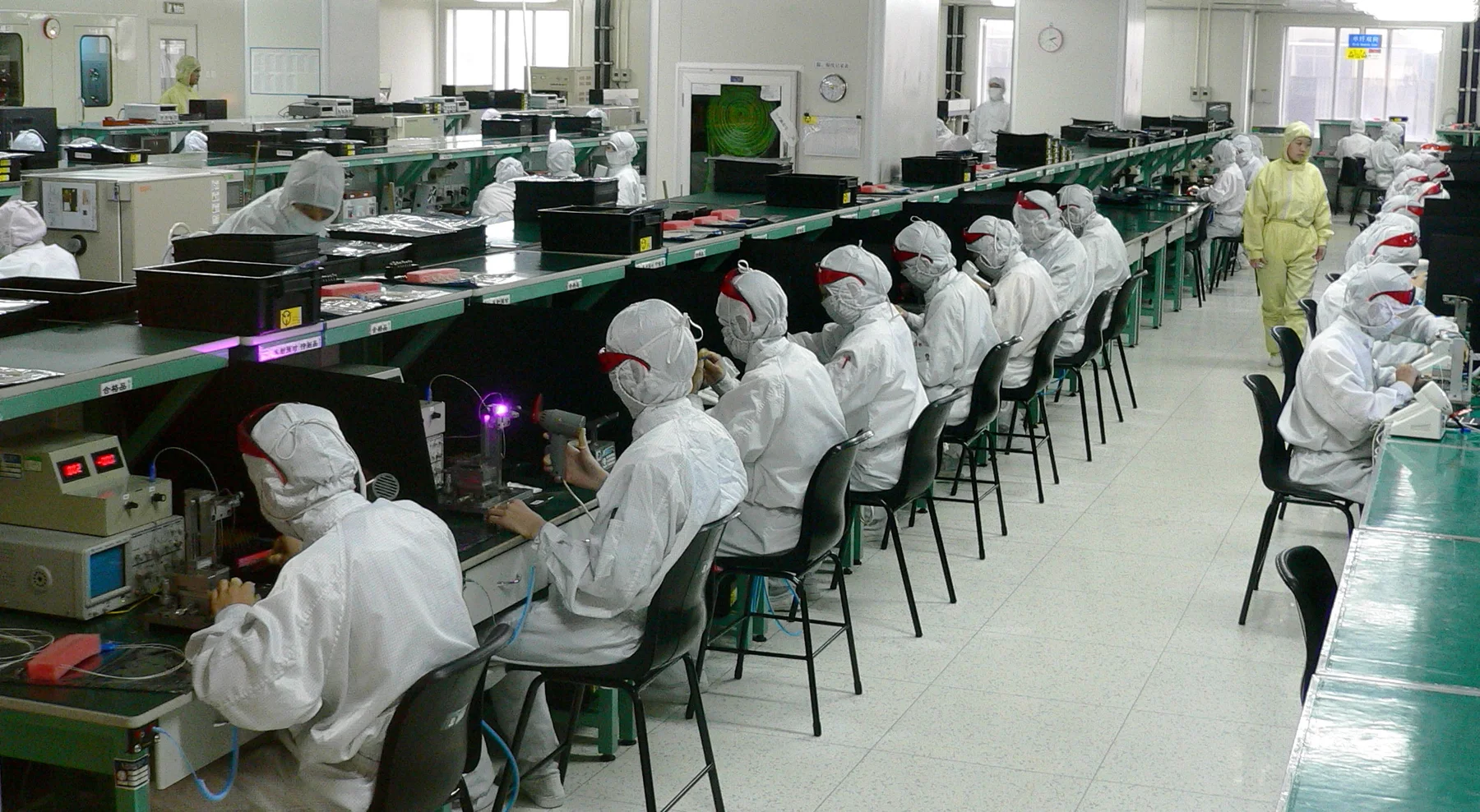
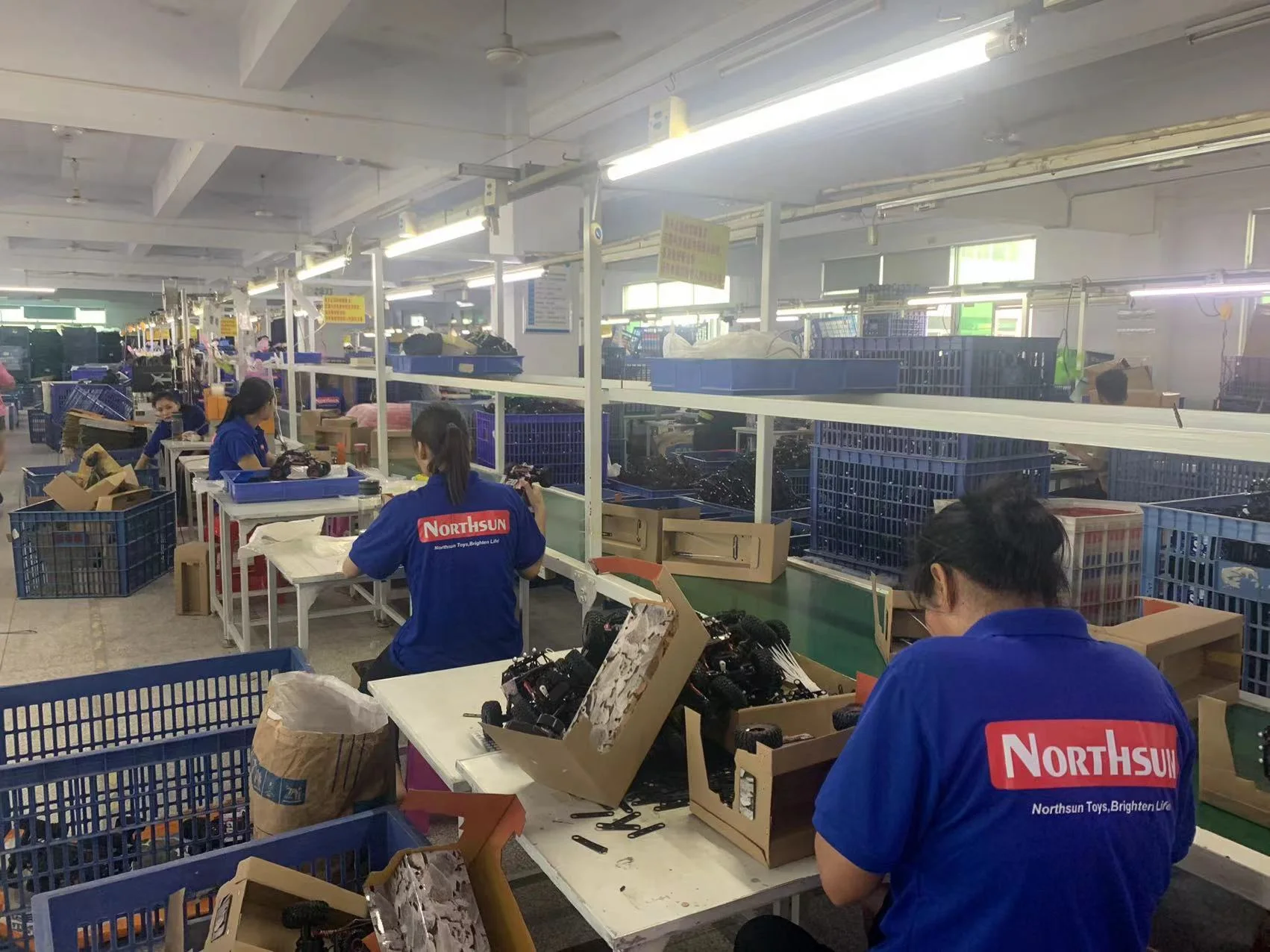
Steve Jurvetson, 2005, resized WebP under CC BY 2.0. The workstations show the production side of the story: a market display and an assembly process require different questions.
Shenzhen's advantage is not one magical building full of inventors. It is the distance between component sellers, repair knowledge, industrial design, PCB services, assembly, moulding, packaging and logistics. A buyer can move from broken prototype to revised sample unusually quickly because several specialist conversations happen in the same urban system.
This urban rhythm matters. A repair technician sees recurring failure modes. A component seller sees what is actually moving. A board house knows which change will delay fabrication. An enclosure shop can expose the connector that no longer fits. The intelligence is distributed across counters, workbenches and factories rather than stored in one heroic company. That is why Huaqiangbei feels less like a conventional mall and more like a physical search engine with soldering irons.
This is the part I admire: a stalled idea can become several small, answerable questions. The enclosure specialist does not need to redesign the whole product to notice that the socket has moved. The repair technician does not need a pitch deck to recognize an inaccessible screw. Their contribution is specific, and that specificity deserves more attention than the fantasy of a lone inventor buying everything in one afternoon. Keep their proposed changes in the revision record so the next person can act on them.
That density is also why supplier identity becomes confusing. The person who understands the component may not own the factory. The company issuing the invoice may coordinate several partners. This can be efficient, but only if responsibility is written down.
Ask one practical question at every handoff: who owns the specification when something fails? Speed without ownership produces arguments instead of products.
A Shenzhen electronics market quote needs a red-line sheet
At the discovery stage, I favor a one-page red-line sheet over an unread bundle of requirements: exact part number, acceptable alternative, forbidden substitution, cosmetic limit, test quantity, failure threshold, firmware owner and the person authorised to approve change. The supplier can disagree with it; silence is not approval. Our Chinese business culture guide explains why a constructive relationship and an explicit commercial agreement need to work together.
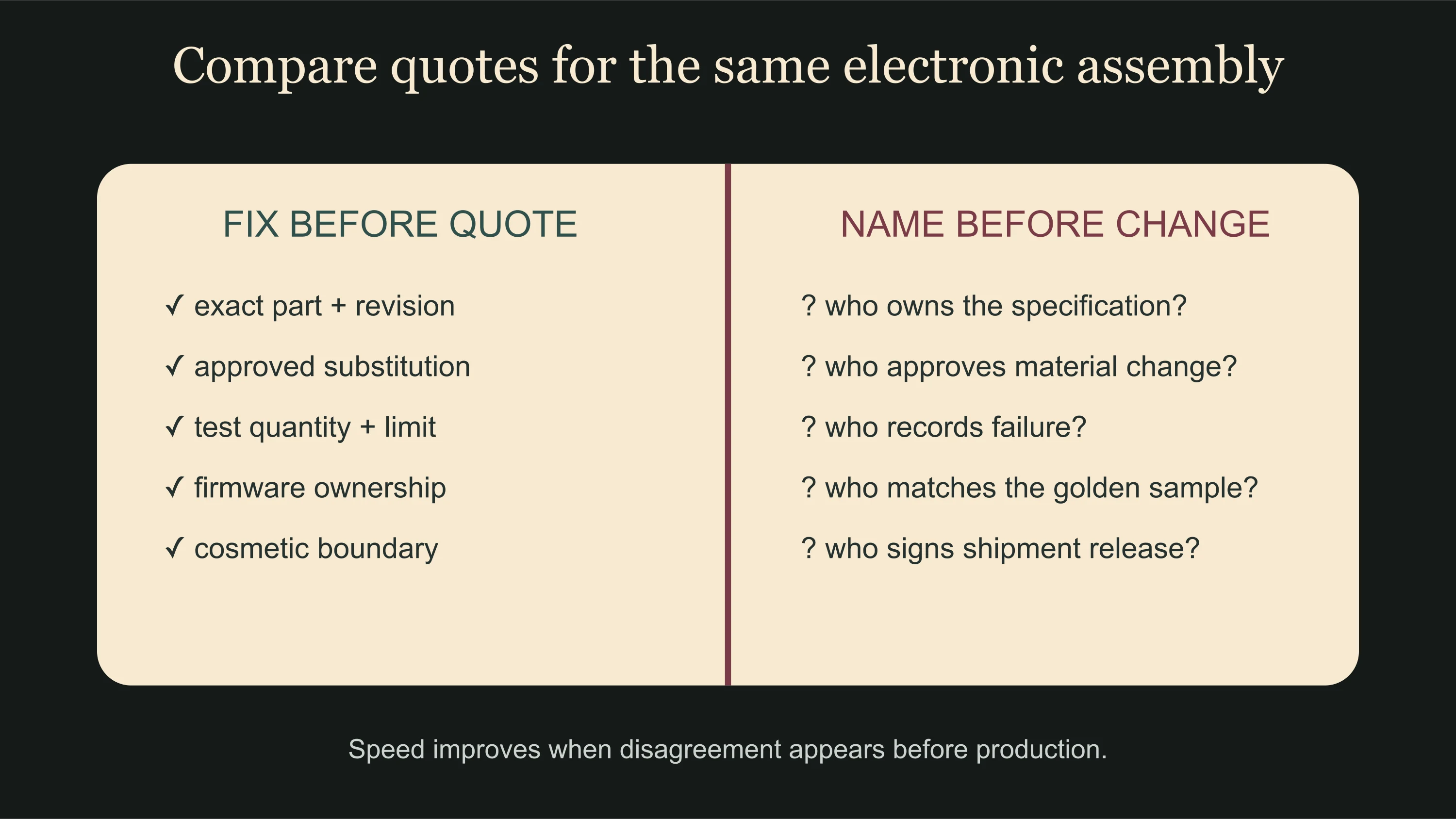
This sheet protects speed. A seller can immediately say which requirement is unrealistic, a factory can quote the real process, and an inspector can test the same promise. It also reveals whether three apparently different offers are quoting the same upstream source. I do not reward the lowest number until the three quotes describe the same object.
For a first pilot, I would keep the sample, golden sample, packaging reference and test record together. Photograph serial numbers before shipment. The goal is not to distrust Shenzhen; it is to let the city's extraordinary speed operate inside a decision trail that survives staff changes and repeat orders.
A familiar logo does not settle provenance
A market can contain genuine surplus, compatible parts, unbranded alternatives, refurbished goods and counterfeit marks in the same visual environment. A familiar logo is not proof of authorisation.
Do not build a product around an untraceable component because the stall owner says it is “the same.” Ask who made it, which test it passed and whether the part can be supplied consistently after the first small order.
The International Electrotechnical Commission is a useful starting point for understanding why electrical standards and documentation matter. It is not a substitute for the requirements of your destination country or product category.
MOQ, prototype and the real cost of speed
Shenzhen's advantage is speed from idea to sample. The hidden cost is that a prototype may use a part that is easy to find once and hard to source repeatedly. Ask for a second and third batch before you redesign the entire product around it.
Add assembly, testing, packaging, inspection, firmware, failure rates, freight, duties and returns to the quote. A cheap component with a high failure rate is not cheap.
The pilot batch should deliberately answer questions the polished sample cannot. Does the supplier pull parts from the same approved source? Does programming produce a traceable log? Are failures recorded by mode rather than hidden inside one pass-rate percentage? Does the test fixture detect the fault customers would actually experience? Can a second operator repeat the result without the salesperson standing beside the bench?
Keep failed units. They are evidence, not embarrassment. Label the failure, preserve the lot and compare it with later defects. A supplier who can explain a failure mechanism, isolate affected stock and show the corrective change is more useful than one who insists every sample is perfect. Perfection is a weak sales performance. Traceable correction is a manufacturing capability.
Choose the next stop by the unresolved problem
If the accessory works with your device and you understand its condition and return terms, your market task may be complete. If a module works once but you need repeat production, continue through the China manufacturing guide for process ownership, sampling and shipment decisions. If your actual task is assembling a retail assortment rather than resolving an electronic design, Yiwu wholesale market offers the more relevant buying questions. A productive visit can end with the decision to stop shopping here.
Leave time to repeat the test, not just revisit the price
For a sourcing visit, reserve part of the day for the moment after discovery. Can the promising module reproduce its result with your firmware, cable, load or enclosure? Which test can happen at the counter, and which requires equipment elsewhere? The schedule should follow that distinction. A late-afternoon demonstration followed by a rushed payment leaves the engineering question unanswered.
Record which physical sample was tested. If the seller hands over another unit from a drawer, check its markings and revision before treating it as equivalent. For a prototype, one accepted unit can be enough to investigate an idea. For production, it is evidence about one unit—not a batch acceptance result. This is where the enjoyable market visit and the serious purchasing job separate.
Keep the counter location and contact alongside the test record, not in a disconnected photograph album. Ask whether the quoted stock is physically available or must be obtained through another business. Neither arrangement automatically disqualifies a seller; pretending they are identical creates a repeat-order surprise.
The Shenzhen electronics market should make the evidence move faster
Use the Shenzhen electronics market to shorten discovery and improve your questions. Do not use it as a shortcut around specification, testing, IP checks or export responsibility.
The most useful photograph is not the most crowded stall. It is the sample beside its part number, suffix, lot label, test note, supplier identity and unanswered question. That small evidence bundle is more valuable than a wall of anonymous components. The 2018 counter image above proves that such sales encounters existed at that photographed place and time; the 2025 entrance image shows a newer consumer-facing invitation. Neither image proves today's inventory, any seller's authorization or the quality of an untested part.
Before your first visit, name your device, failed part or prototype in the comments and the function you need to check. Already tried it? Share the exact model, connection and result in a technology Moment, including a test that caught a mismatch before you paid. Hide receipts' personal details and distinguish an observed failure from a guess about its cause. Come back after using the item to add what the first demonstration missed. That follow-up can help the next visitor ask a better question than “How much?”