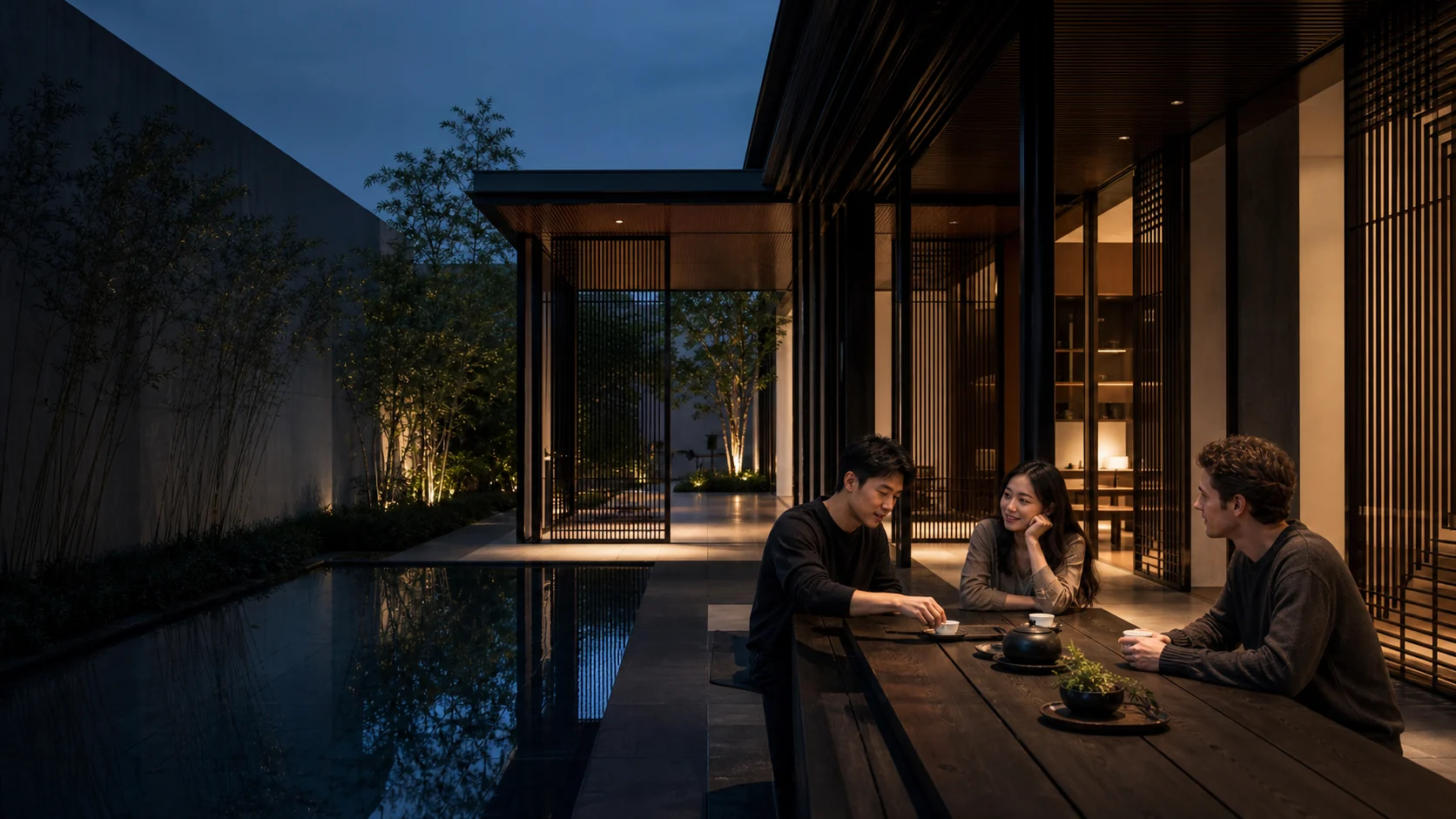
Chinese culture is not a cabinet of beautiful old things. It is what happens when inherited ideas pass through an ordinary day: when a family argues over the correct dumpling filling, when an old poem returns in a text message, when a wedding changes shape after crossing an ocean, or when a young person puts on historical clothing and discovers that tradition can feel surprisingly new.
Chinese culture: what it is and how it is lived
Chinese culture is the changing world of languages, values, arts, beliefs, foodways, customs and social relationships formed across thousands of years and lived by people in China and throughout the global Chinese diaspora.
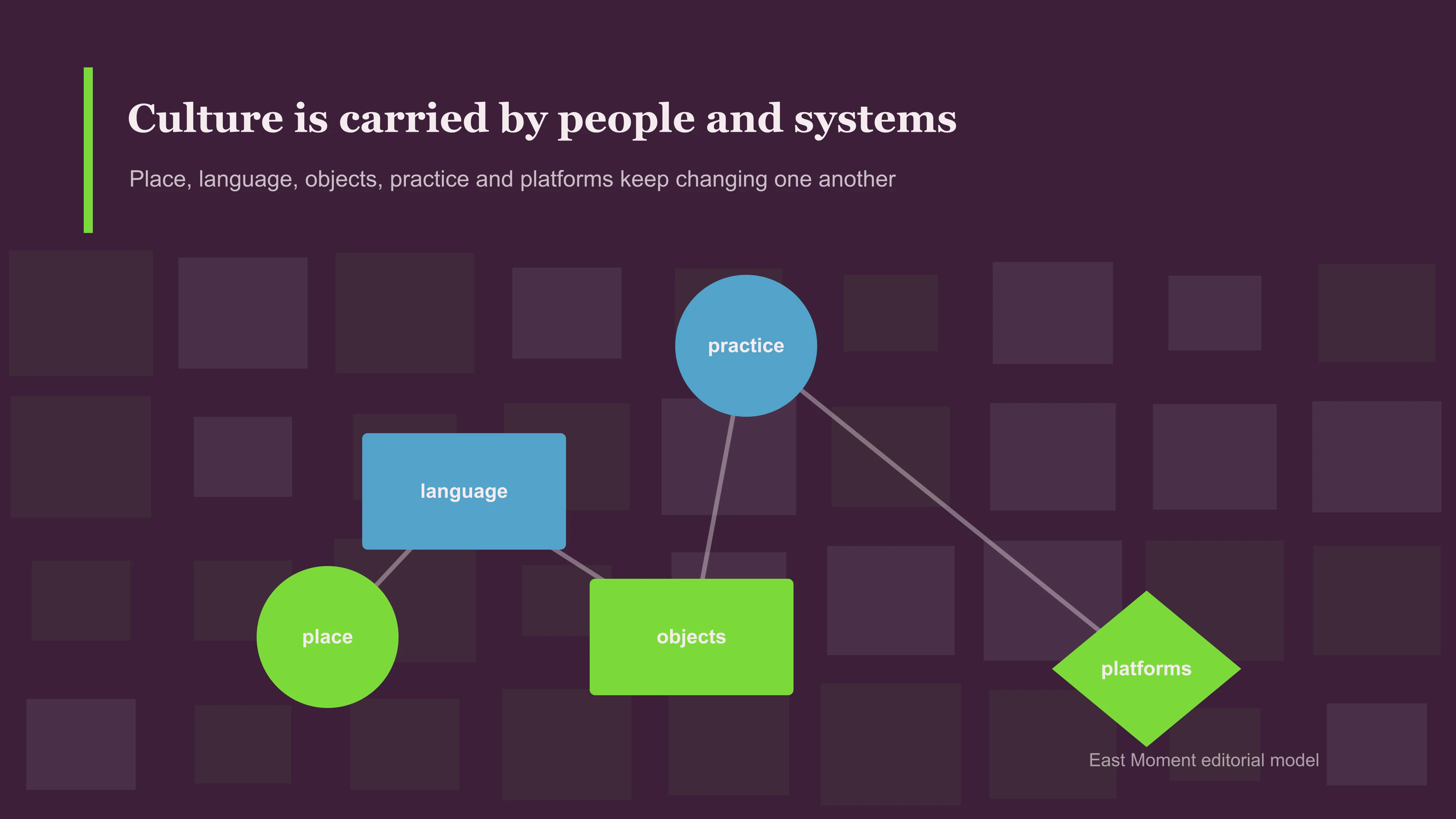
That definition needs room to breathe. China is not culturally uniform, and “traditional” does not mean untouched by history. Court ritual, village custom, urban fashion, religious practice and family habit have never been the same thing. A Cantonese household in Guangzhou, a Hui noodle shop in Xi'an, a tea maker in Fujian and a Chinese Malaysian family in Penang may all recognize parts of one another's world while carrying distinct histories.
I have lived in China for four decades, yet Chinese culture still refuses to sit politely inside a definition. It behaves more like a large family dinner. Several conversations happen at once. Someone quotes an ancient saying, someone challenges it, someone is concerned that the food is getting cold, and a child quietly changes the subject with excellent timing.
One person cannot explain everything, but I do not trust a definition that never asks who still makes the object, how it feels in the hand, what a family disagrees about or what changes when a tradition crosses a border. Those ordinary questions make a vast culture human-sized.
Chinese culture in one table
Categories help readers find a door, even though real life walks through several doors at once.
| Cultural lens | What it includes | How it appears in everyday life | Begin exploring |
|---|---|---|---|
| Family and relationships | Kinship, respect, reciprocity, hospitality and social obligation | Reunion meals, gift giving, forms of address and care between generations | Confucianism |
| Food and tea | Regional cuisines, ingredients, cooking skills and table customs | Breakfast queues, shared dishes, tea offered to guests and festival foods | Chinese tea and Chinese dumplings |
| Festivals and memory | Lunar and seasonal calendars, reunion, remembrance and community celebration | New Year preparations, tomb sweeping, dragon boats, mooncakes and lanterns | Chinese festivals |
| Ideas and beliefs | Confucian, Daoist, Buddhist, folk and modern ethical traditions | Education, ritual, temples, ancestor remembrance and ways of speaking about balance | Taoism |
| Arts and objects | Painting, calligraphy, music, opera, ceramics, gardens and craft | Home decoration, collecting, performance, apprenticeship and design | Chinese art |
| Myth and storytelling | Creation, divine figures, culture heroes, monsters and literary rebellion | Festivals, idioms, opera, animation, film and games | Chinese mythology and the best Chinese movies |
| Clothing and identity | Historical dress, textiles, qipao, hanfu and ethnic clothing traditions | Weddings, festivals, fashion, photography and cultural revival | Traditional Chinese clothing |
| Language and texts | Spoken languages, writing, poetry, history and storytelling | Names, idioms, schoolbooks, songs, family jokes and digital conversation | Chinese language |
The table is a map, not a set of walls. A mooncake is food, festival memory, regional craft, commercial design and sometimes a diplomatic gift. A tea bowl can be an artwork, a working tool and evidence of international exchange. Chinese culture becomes clearer when we follow these connections instead of separating everything too neatly.
A long history without a single straight line
The larger chronology belongs in the history of Chinese culture, where objects, texts, institutions and migration are followed across changing political periods. The Metropolitan Museum of Art's China chronology is a disciplined object-based route through that scale. The useful lesson here is shorter: a dynasty name can orient you, but it cannot tell you how every household, workshop or border region changed.
Chinese civilization has deep continuities: written traditions, agricultural knowledge, family ritual, state institutions and artistic forms have been transmitted and reinterpreted over very long periods. Yet continuity is not the same as stillness.
Early philosophical texts asked how people should cultivate character and govern well. Imperial states developed bureaucracies, educational systems and ritual orders. Trade and migration carried religions, foods, technologies and artistic forms across Central, South, Southeast and East Asia. Buddhism was translated and transformed in China; tea, porcelain and silk moved outward; foreign music, clothing and crops moved inward.
Later centuries brought conquest, dynastic change, maritime commerce, colonial pressure, revolution, war, industrialization and extraordinary social upheaval. The twentieth and twenty-first centuries changed family size, work, education, cities, media and the relationship between people and inherited customs. No serious account of traditional Chinese culture can pretend those transformations did not happen.
The result is not a broken chain. It is a woven one. Some strands remain visible for centuries; others disappear, return or acquire a new meaning. Today's hanfu movement, for example, is connected to historical clothing but also to modern research, manufacturing, photography, online communities and young people's search for identity. Revival is itself a contemporary cultural act.

Hongcun refuses the lazy idea that “Chinese culture” is a floating mood. Here, white-walled houses, water, bridge, mountain weather and paths form one named local environment. Architecture becomes cultural evidence only when we keep the place attached to it.
UNESCO’s living-heritage inventory for China is useful precisely because it records named practices and safeguarding contexts rather than claiming to inventory one national personality. Recognition can protect knowledge and visibility; it still cannot perform the practice. A list does not cook the festival food, teach the movement, remember the dead or settle the family argument over what must be kept.
Chinese cultural values in real life
Overseas introductions often reduce Chinese values to a tidy list: family, harmony, respect, education and “saving face.” These words are useful only when we remember that values create questions as often as answers.
Family is care, duty and negotiation
Family has been a powerful center of social life. It can offer belonging, practical support and continuity across generations. It can also create expectations about education, work, marriage, money and care for older relatives.
The interesting story is rarely “Chinese people value family.” The interesting story is how a daughter negotiates a career far from home, how siblings divide caregiving, how grandparents learn video calls, or how an overseas family keeps one festival dish because its flavor carries a place they can no longer visit easily.
Education carries moral weight
Learning has long been associated not only with employment but with self-cultivation, family hope and social responsibility. The historical examination system helped make literacy and scholarly achievement powerful cultural ideals, even though access was unequal.
Modern educational pressure should not be explained as an ancient gene. It grows from history, institutions, economic competition and family circumstance. Confucius valued learning as an active practice of reflection and character, not merely the collection of perfect scores.
Harmony includes the work of disagreement
Harmony is sometimes misread as obedience or the absence of conflict. In practice, maintaining relationships may involve tact, timing, indirect language and an effort to avoid unnecessary humiliation. It can also involve intense disagreement behind the kitchen door.
A harmonious meal is not one where everyone has identical tastes. It is one where spicy and mild dishes can share the table, the vegetarian is remembered, and an argument does not prevent someone from cutting fruit afterward.
Face is relational, not exotic
The idea commonly translated as “face” concerns reputation, dignity and how people are recognized by others. It is not uniquely Chinese; every society understands embarrassment and social standing. Chinese languages and customs, however, give these concerns particular expressions.
Public praise, respectful introductions, gift etiquette and avoiding direct humiliation can all involve face. Context matters more than a list of rules. Treating every polite refusal as a secret code usually makes an encounter less natural, not more.
The Chinese business culture field guide follows these ideas into trade fairs, meetings, WeChat, hierarchy and gift boundaries, where respect only becomes valuable when the next promise is documented and delivered.
Food is an edible map of China
Chinese food abroad is often introduced through a small restaurant vocabulary. Inside China, food is one of the fastest ways to discover how dramatically place matters.
Wheat breads, dumplings and noodles are prominent across much of the north; rice traditions shape many southern tables; coastal cuisines work with changing seafood markets; pastoral and Muslim foodways bring lamb, breads and distinctive seasoning systems; subtropical regions use ingredients and preservation methods that answer heat and humidity. Provincial labels are convenient, but culinary regions cross administrative borders.
The shared-table format also carries social meaning. Several dishes allow people to compare, offer, negotiate and care for one another in real time. The best piece may be placed in a guest's bowl. A host may order too much because visible abundance communicates welcome. The guest may protest because politeness requires at least a small performance. Nobody is confused; this is choreography with leftovers.
Chinese dumplings, baozi and Chinese hot pot each reveal a different social world. Dumplings gather hands around folding; baozi belongs to the steam and hurry of an ordinary morning; hot pot turns dinner into a shared sequence of choices.
The cupboard carries another map. Chinese herbs follows ginger, jujube, chrysanthemum and dried peel through food, household care and family memory while keeping culinary use separate from concentrated products and cure claims.
Tea makes attention visible
Tea can be agricultural craft, household drink, gift, hospitality and connoisseurship. A formal-looking tea table is only one part of Chinese tea culture. Tea is also brewed in office mugs, carried in glass bottles, poured at restaurants and offered without ceremony when a visitor sits down.
What moves me about tea is not the promise of perfect calm. Real tea tables are rarely that obedient. Water spills, someone over-brews the leaves, a phone rings. Attention survives anyway. One person notices the cup is empty and pours for another.

This is the tea culture I trust: scarred kettles, rising steam and the repetitive work required before anyone can lift a cup. An old Chengdu teahouse makes hospitality visible as labor, not a flawless ceremony staged for a brochure.
That small act expresses a larger truth about Chinese culture: meaning often lives in repeated gestures rather than public declarations.
Festivals turn time into relationship
Chinese festivals organize the year through reunion, remembrance, season and hope. Chinese New Year brings travel, cleaning, food preparation and family negotiation on an immense scale. Qingming makes remembrance physical through visiting graves and tending memory. The Dragon Boat Festival joins regional food traditions to stories whose meanings changed across history. Mid-Autumn gathers moonlight, gifts and distance into one evening.
No festival belongs to one frozen script. Northern and southern foods differ. Religious and ethnic communities maintain distinct calendars. Work schedules reshape reunion. Diaspora celebrations adapt to local weekends, public spaces and available ingredients.
Change does not make a festival less real. A family video call across twelve time zones may be technologically new and emotionally ancient.

At Jinli, red lanterns occupy a commercial public space rather than a sealed historical display. The photograph does not prove one festival or one ancient meaning. It proves something more useful: inherited visual language is still being arranged, sold, photographed and argued over in present-day city life.
Ideas are practices, not motivational posters
Chinese philosophical and religious traditions are frequently reduced to quotations printed over mountains. Mountains deserve better, and so do the ideas.
Confucianism asks how character is cultivated through learning, relationships, ritual and responsible action. Taoism explores living with the Dao through naturalness, flexibility and non-forcing, while religious Daoist traditions include temples, ritual specialists, scriptures and communities. Buddhism, popular religion, ancestor practices and local deities add further layers.
These traditions influenced one another and were debated for centuries. A person may visit a Buddhist temple, use Confucian language about family, appreciate a Daoist story and describe themselves as not religious. Modern identity does not always fit the boxes created by textbooks.
The value of these ideas is not that they provide an exotic answer to every modern problem. They offer old, sophisticated conversations about being human. Readers deserve the conversation, including its disagreements.
Symbols need stories, not superstition lists
Dragons, phoenixes, red, jade, bamboo, lotus flowers and written characters are globally recognizable Chinese symbols. Their meanings depend on period, medium and setting.
A dragon on an imperial robe does not communicate exactly what a dragon boat, temple carving or contemporary festival mascot communicates. Red can suggest celebration and good fortune, but it also changes meaning with context. A character printed upside down at New Year belongs to a wordplay and household custom, not a universal magic formula.
Symbols become richer when we ask four questions: What exactly is shown? Who used it? In what time and place? What relationship did it create? Without those questions, culture becomes decoration. With them, even a small motif opens into history.
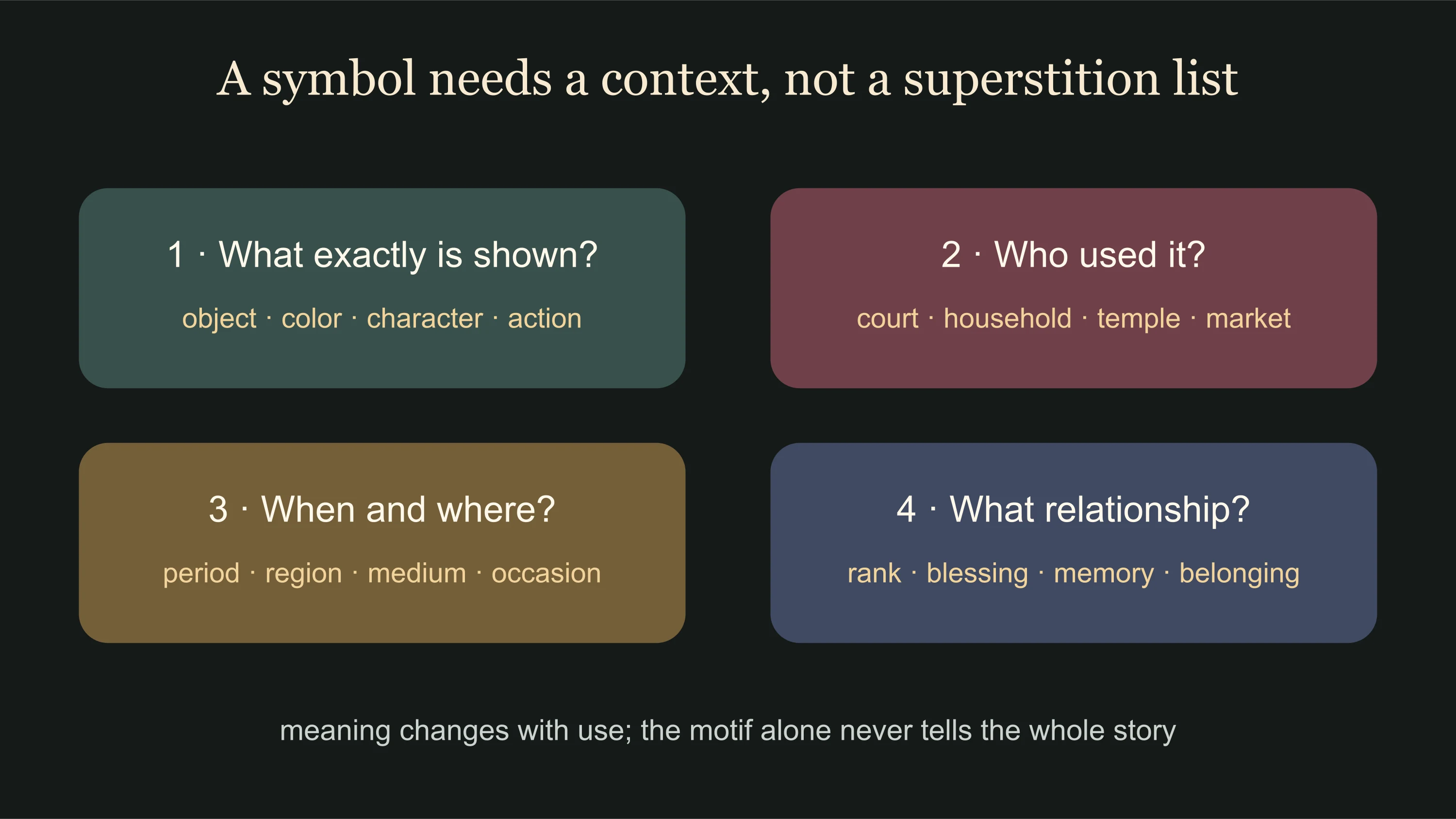
A motif never carries one portable meaning. This East Moment diagram makes the article's method visible: identify the object, user, time, place and relationship before turning culture into a list of lucky meanings.
Popular music makes regional identity audible
Chinese culture is also made in recording studios, small venues, televised competitions and headphones. Hip-hop gives young artists a way to turn dialect, neighborhood memory, migration and local rivalry into public identity.
The career of GAI is a useful case study. He was born in Weiyuan, developed through Chongqing's rap environment, became nationally visible in 2017 and later worked through a mainstream music-company system. His music shows that modern Chinese culture does not simply choose between imported form and native tradition. Artists combine global genres with regional speech, local biography and inherited imagery, then argue over what authenticity means after success.
Chinese culture around the world
Chinese culture has never stopped at modern national borders. Trade, study, labor, conflict and migration created distinct Chinese communities across Southeast Asia, the Americas, Europe, Africa and Oceania.
Diaspora culture is not a diluted copy of a mainland original. Chinese Malaysian, Singaporean Chinese, Peranakan, Chinese American and other communities developed through different local histories. Foods changed with ingredients and neighbors. Languages were preserved, mixed or lost. Temples, associations, newspapers, schools and restaurants became institutions of memory.
Sometimes a custom becomes more visible after migration. A dish once considered ordinary may become the taste of home. A child who resisted weekend language school may later search for the words needed to speak with a grandparent. Identity does not move in one direction.
For overseas readers, this matters because the nearest encounter with Chinese culture may already be local. The respectful first step is to learn whose story it is.
Common misconceptions about Chinese culture
“Chinese culture is one ancient tradition”
It is many traditions shaped by region, ethnicity, class, religion, politics and migration. Ancient sources matter, but present-day life cannot be explained by antiquity alone.
“Every custom has one symbolic meaning”
Meanings accumulate and vary. People may continue a practice because it is beautiful, familiar, delicious or socially important, even when family members explain its symbolism differently.
“Chinese people are collectivist, Western people are individualist”
This comparison is too blunt to explain real people. Chinese life includes community obligation and individual ambition; Western societies include family duty and strong institutions. Good cultural comparison identifies a situation instead of assigning personalities to civilizations.
“Modern change destroys authenticity”
Traditions have always responded to new materials, markets, governments and technologies. The better questions are who leads the change, what power is involved and how communities describe what they are doing.
“Respect means never participating”
Culture grows through exchange. Respectful participation involves invitation, accurate naming, context, fair credit and a willingness to listen. It does not require fearful distance, and it does not grant permission to turn sacred or community-specific practices into costume.
Frequently asked questions about Chinese culture
What is Chinese culture?
Chinese culture is the diverse body of languages, ideas, arts, foodways, social customs and everyday practices formed across Chinese history and communities. It is not one fixed lifestyle or a checklist shared identically by every Chinese person.
What are the main elements of Chinese culture?
Useful entry points include family and social relationships, food and tea, festivals, philosophy and religion, language and literature, visual and performing arts, clothing, architecture, craft and regional traditions. These elements overlap rather than forming separate boxes.
What values are important in Chinese culture?
Family responsibility, education, reciprocity, respect, social harmony and attention to relationships have been influential values. Their meanings vary by period, region, generation and individual, and Chinese people debate them rather than simply obeying a timeless code.
Is traditional Chinese culture still practiced today?
Yes, but practice includes continuity, revival and reinvention. Families still gather for festivals, prepare regional foods, honor ancestors and study inherited arts, while adapting them to city life, migration, technology and personal choice.
Is Chinese culture the same everywhere in China?
No. China contains major differences in language, climate, cuisine, religion, ethnicity and local history. Cantonese, Sichuanese, Hui, Tibetan, Mongolian, Hakka and many other experiences cannot be reduced to one national template.
How can overseas readers learn about Chinese culture respectfully?
Begin with precise names and context, listen to people connected to the tradition, distinguish family custom from universal rule, and approach participation as a relationship rather than a costume or collection of symbols.
A culture continues because people continue it
Chinese culture has survived neither by remaining pure nor by standing still. It continues because people cook, remember, argue, teach, repair, translate, perform and reinvent it.
The grand words—civilization, tradition, heritage—matter. But culture becomes visible at a smaller scale: steam clouding a breakfast window, a festival parcel mailed across a border, an old melody learned on a new instrument, a phrase suddenly understood after years of hearing it. That is where reference-book clarity, museum-level care and scholarly boundaries must meet the warmth and usefulness of lived experience.
That is the moment East Moment is built to notice. We want the world to understand not only what Chinese culture is, but how it is lived, remembered and changed.