Chinese hot pot is not a soup brought finished from the kitchen. It is a meal still becoming: broth trembling at the center, raw ingredients waiting at the edge, chopsticks crossing paths, and each diner deciding what the next minute will taste like. Across China, the shared pot may burn red with chilies, remain almost clear around slices of lamb, or hold a gentle beef broth designed to reveal the sweetness of fresh meat. The method is shared. The traditions are not identical.
Chinese hot pot: what it is and how the meal works
Chinese hot pot is a table-side cooking system. A pot of broth or seasoned cooking liquid is kept simmering over heat while diners add ingredients that have been sliced or portioned to cook quickly. Meat, seafood, vegetables, mushrooms, tofu products, noodles and dumplings may all appear, but no single checklist defines the meal.
The Chinese name huoguo (火锅) literally evokes a fire pot. That directness is useful. Hot pot is partly a dish, partly equipment and partly a way of organizing people around food. Unlike a composed stew, it does not arrive with every decision already made.
International restaurant culture sometimes presents a standard formula: choose a broth, order trays of ingredients, build a dipping sauce. That format is widespread and convenient. It should not hide the regional systems beneath it. A Chongqing old hot pot, Beijing copper-pot mutton and Chaoshan fresh beef hot pot ask for different ingredients, sauces, cutting skills and expectations. I reject any guide that teaches a single universal ingredient list before it teaches these regional differences. The pot is shared; the food logic is local.
Chinese hot pot is a method, not one flavor
The assumption that hot pot must be spicy comes from the global visibility of Sichuan and Chongqing styles. Their importance is real, but China contains many mild, clear, sour, mushroom-rich, seafood-based and meat-based pots.
| Regional style | Cooking liquid | Ingredients at the center | Typical sauce direction | Character of the meal |
|---|---|---|---|---|
| Sichuan and Chongqing | Chili, Sichuan pepper, aromatics and often a rich fat base | Offal, beef, vegetables, tofu products and many quick-cooking items | Sesame oil, garlic and personal additions | Layered heat, fragrance and a strong communal rhythm |
| Beijing mutton hot pot | Clear or lightly seasoned broth in a chimney pot | Thin lamb slices, napa cabbage, tofu and noodles | Sesame paste with fermented tofu, chive-flower sauce or aromatics | The lamb and sauce carry more flavor than the broth |
| Chaoshan beef hot pot | Light beef broth, sometimes with radish or corn | Very fresh beef divided into named cuts, beef balls and vegetables | Shacha sauce is common | Precision of slicing, timing and beef texture |
| Yunnan mushroom hot pot | Mushroom or poultry-based broth | Cultivated and regionally available mushrooms, vegetables and meat | Often restrained so mushroom aromas remain clear | Ingredient knowledge and thorough cooking are essential |
| Cantonese seafood hot pot | Clear stock or seafood-oriented broth | Fish, shellfish, squid, meat, tofu and greens | Soy-based sauces, ginger, scallion or satay-style sauces | Freshness and a lighter broth often guide the table |
This table is an orientation, not a border map. Restaurants innovate, families combine preferences and regional traditions overlap.
A history that should not be reduced to one origin legend
Humans have cooked food in shared vessels for a very long time. Archaeological finds of bronze cauldrons and later divided pots are often recruited into neat hot pot timelines. They show histories of boiling and communal vessels; they do not automatically prove that a modern restaurant meal existed in the same form.
Another popular account credits northern nomadic soldiers with cooking meat in helmets. It is memorable and difficult to establish as the single origin of Chinese hot pot. Similar stories appear whenever a portable food needs a dramatic inventor.
The more credible history is gradual. Britannica's hot-pot overview is useful as a broad orientation, but no single origin story can carry every regional form. Metal vessels, charcoal heat, livestock traditions, urban restaurants, regional seasoning and the movement of ingredients all helped different table-side boiling practices emerge. The history of Sichuan chili hot pot, for example, cannot begin before chilies entered China from the Americas and became rooted in local agriculture and taste.
It is more honest to speak of histories of hot pot than of one birth date.
Sichuan and Chongqing hot pot: heat with structure
Sichuan and Chongqing hot pot is famous for mala: the interaction of chili heat and the tingling sensation associated with Sichuan pepper. A well-built broth is not merely hot. It layers fermented broad-bean paste, dried chilies, peppercorns, ginger, garlic, spices and fat into an aromatic cooking medium.
Chongqing old hot pot has strong associations with beef fat and robust seasoning. Contemporary restaurants may offer vegetable-oil bases, split pots or adjustable heat, especially for different diners. Those options are adaptations within a living restaurant culture, not proof that every local pot has always looked the same.
The nine-grid pot, divided into sections, is visually iconic. Popular explanations say the compartments once helped different customers keep ingredients separate or manage different cooking zones. The stories vary and should not be treated as one settled invention account.
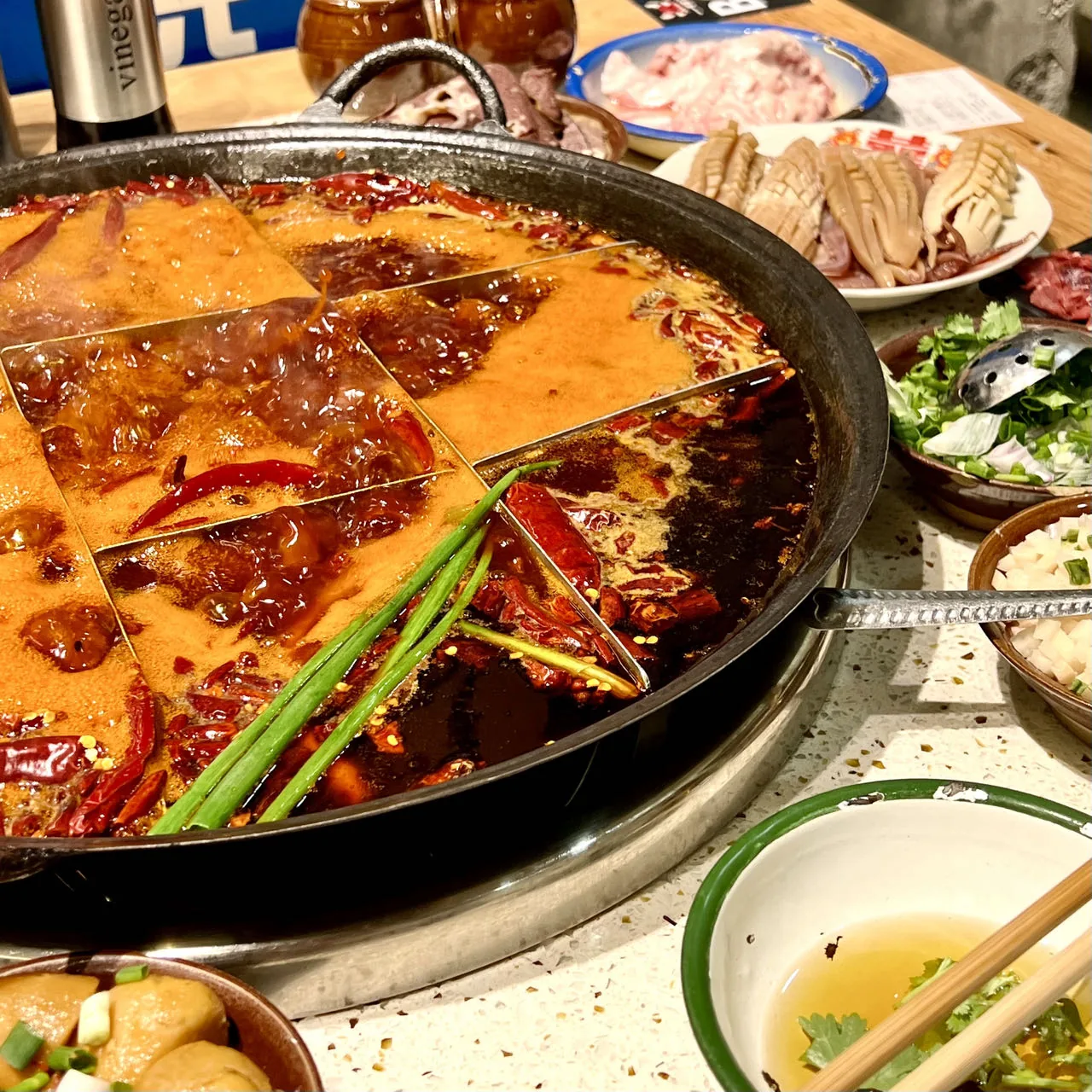
Chongqing-style nine-grid hot pot and its accompanying ingredients. Photograph by Leeinm, CC BY-SA 4.0, via Wikimedia Commons. License record.
Offal has an important place at many Sichuan and Chongqing tables: tripe, duck intestine and other quick-cooking cuts offer textures valued by experienced diners. Treating them as novelty challenges misses the history of thrift, labor and skilled preparation behind them.
The Chinese hot pot collection keeps Sichuan and Chongqing broth traditions in their wider regional context.
Beijing mutton hot pot: clarity, copper and sesame
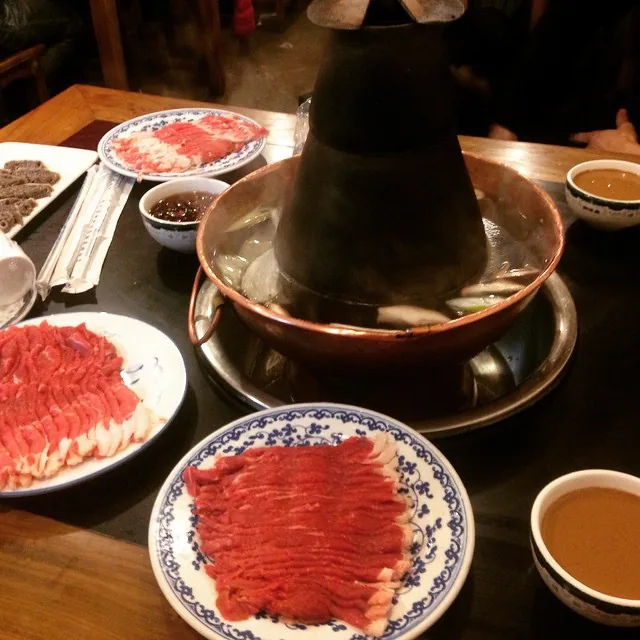
Traditional Beijing shuan yangrou places thin slices of lamb beside a tall copper pot whose central chimney carries heat upward. The broth may contain little more than water with scallion, ginger, dried mushrooms or other light aromatics. The restraint is intentional: lamb quality, slicing and the dipping sauce define the experience.
The verb shuan describes the brief swishing or rinsing motion used to cook thin meat. Lamb should not be abandoned in the pot until it becomes gray and tight. Diners move a slice through simmering liquid, retrieve it as soon as it is safely cooked, and dress it in a sauce often built around sesame paste.
Napa cabbage, frozen tofu, mushrooms and noodles may follow the lamb. As the meal continues, the once-clear pot gathers flavor from everything cooked in it. The change is part of the evening.
Beijing mutton hot pot deserves attention to its copper-pot service, thin slicing and sesame-based sauces rather than being treated as a mild version of Sichuan hot pot.
Chaoshan beef hot pot: the knife decides the timing
Chaoshan beef hot pot often begins with a light broth and an exacting approach to fresh beef. Cuts are separated by muscle, fat, connective tissue and texture, then sliced to suit a very short cooking time. International menus may struggle to translate the local cut names because they do not map neatly onto Western butchery.
The broth is not designed to cover weaknesses with spice. Beef quality and the interval between slaughter, slicing and service have become central to the style's public identity. Handmade or mechanically beaten beef balls add another texture, springy rather than tender.
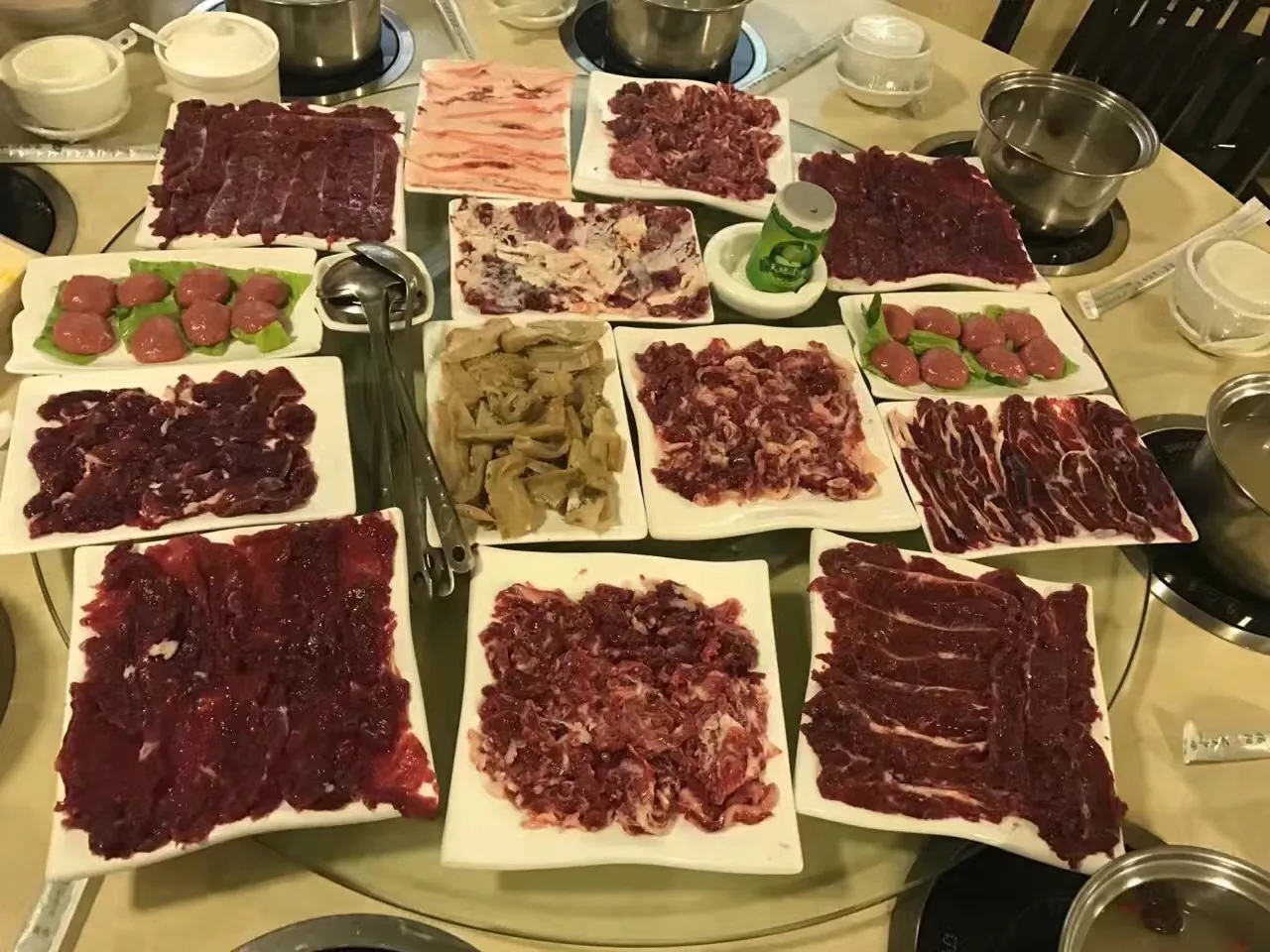
Chaoshan fresh beef hot pot. Photograph by Clarayyt, CC BY-SA 4.0, via Wikimedia Commons. License record.
Shacha sauce, a savory condiment with a complex maritime and Southeast Asian history, is a common partner. Diners may add celery, garlic or chili, but the sauce should not erase the differences between cuts.
Chaoshan beef hot pot is best understood through its precise cut names, clear broth and relationship to the wider food culture of Chaoshan.
The ingredients are a sequence, not a pile
A hot pot table can become crowded enough to look like abundance without order. Cooking improves when ingredients are understood by time and effect.
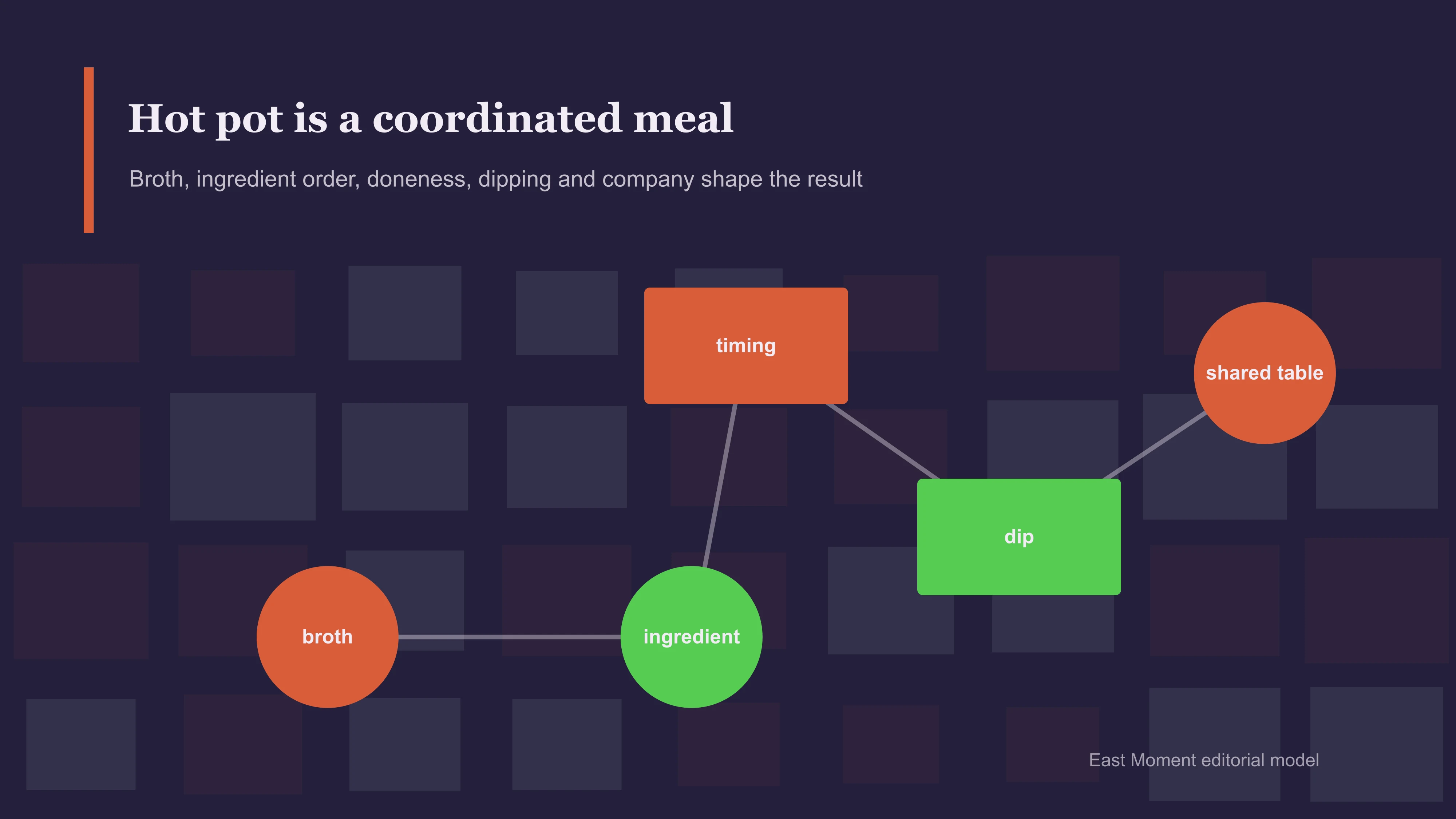
The most familiar failure is almost comic: several hands release meat at once, conversation moves on, and a minute later nobody can find the slices they were certain they were watching. The lost meat reveals why timing at a shared pot is social coordination, not just culinary instruction. A good table uses small batches, lets the broth recover and retrieves one round before starting the next. That rhythm leaves room for talk without turning every ingredient into the same exhausted texture.
| Ingredient group | Examples | Cooking consideration |
|---|---|---|
| Thin meat | Beef, lamb, pork | Cook in small batches so the broth stays hot |
| Seafood | Shrimp, fish slices, squid, shellfish | Avoid cross-contamination and cook thoroughly |
| Balls and pastes | Fish balls, beef balls, shrimp paste | Dense pieces usually need longer than thin slices |
| Tofu products | Fresh tofu, fried tofu, tofu skin, frozen tofu | Porous products absorb broth and retain heat |
| Leafy vegetables | Napa cabbage, chrysanthemum greens, lettuce | Add later or in small amounts to protect texture |
| Mushrooms and roots | Shiitake, enoki, lotus root, daikon, potato | Some need sustained cooking; wild mushrooms require expert identification |
| Starches | Noodles, glass noodles, rice cakes, dumplings | Often added toward the end because starch clouds and thickens broth |
There is no universal law that meat must come first and vegetables last. The practical principle is to protect broth temperature, avoid losing delicate items and keep raw-food handling clear.
Chinese hot pot dipping sauces are personal and regional
A sauce bar can make the meal look like unlimited customization, but regional patterns matter.
Sichuan and Chongqing diners may use sesame oil with minced garlic to soften and perfume food lifted from an intense pot. Beijing mutton commonly meets sesame paste enriched with fermented tofu, chive-flower sauce, soy, vinegar or herbs. Chaoshan beef is closely associated with shacha sauce. Cantonese tables may favor soy, satay-style sauce, ginger, scallion or chili according to the broth and ingredients.
More ingredients do not guarantee a better sauce. Start with a base that belongs to the style, then add only what has a purpose.
| Sauce base | Especially compatible with | Watch for |
|---|---|---|
| Sesame oil and garlic | Spicy Sichuan or Chongqing hot pot | Oil softens heat but adds richness |
| Sesame paste | Beijing mutton and northern-style pots | Thin gradually; fermented condiments are salty |
| Shacha sauce | Chaoshan beef and some southern hot pots | Brands vary in seafood content and allergens |
| Soy, vinegar and aromatics | Mild broths, seafood and mixed tables | Strong seasoning can overwhelm delicate ingredients |
A family meal that continues after migration
Hot pot travels well because it holds personal choice and collective rhythm in the same vessel. Each diner chooses what to cook and builds an individual sauce, yet everyone must still watch the same broth, wait for the same simmer and make room for other hands.
In diaspora homes, an electric cooker may replace charcoal; a prepared broth base may replace one built slowly from aromatics; local greens and mushrooms join familiar tofu and sliced meat. None of those substitutions makes the meal less meaningful. The essential structure remains: a shared source of heat, ingredients arranged within reach and enough time for conversation to outlast hunger.
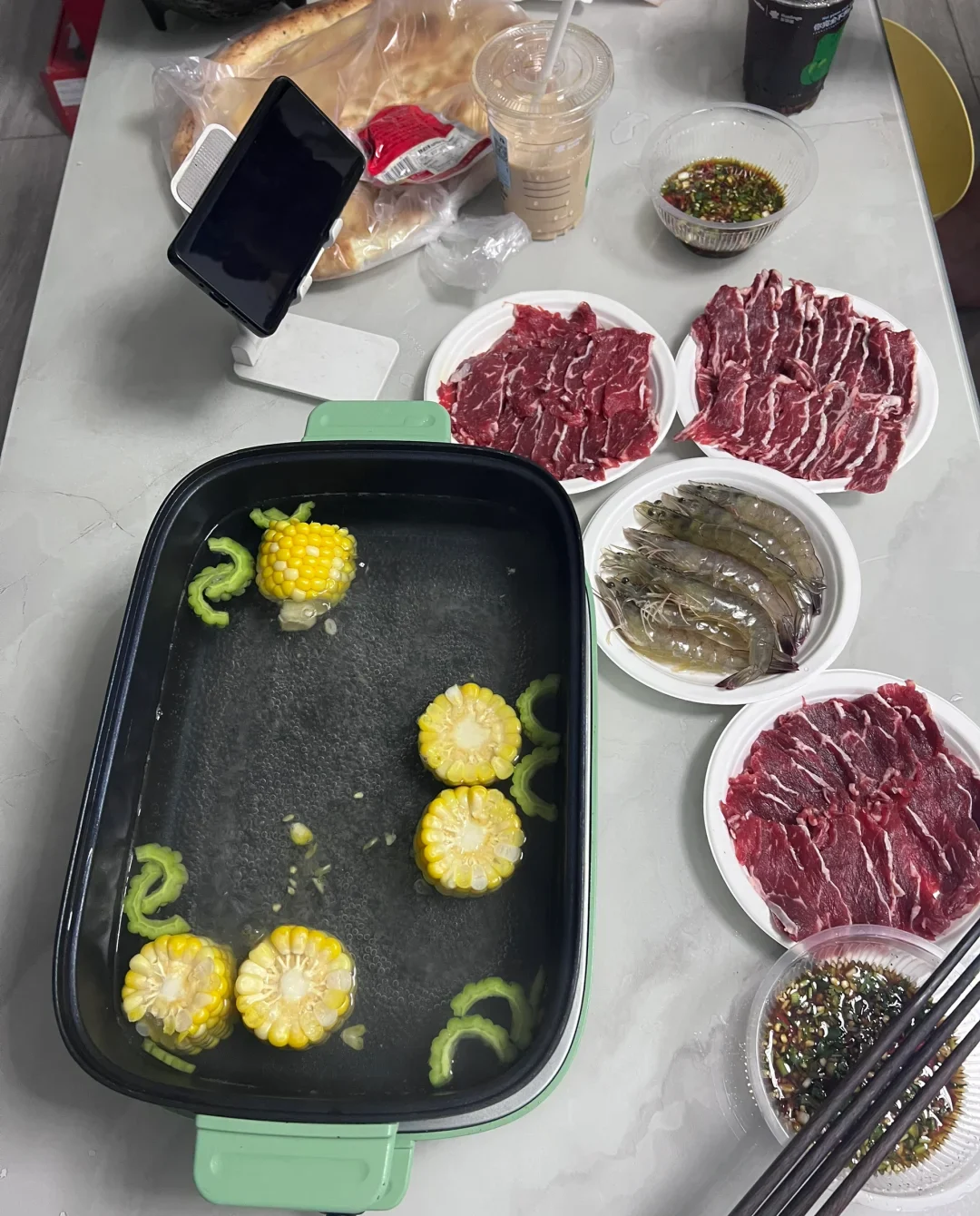
A real home table makes the system visible: clear broth leaves the beef exposed, dense corn enters on a different clock from thin slices, raw shrimp stays on its own plate, and each diner has a separate sauce. The photograph proves how one household organized one meal. It does not turn corn, bitter melon or this exact sauce into compulsory Chaoshan rules.
How to eat Chinese hot pot
Hot pot does not require a performance of expertise. A few habits make the table calmer and safer.
- Let the broth return to a simmer after adding a large batch of ingredients.
- Use separate utensils for raw meat or seafood and for food that is ready to eat.
- Cook only as much as people can retrieve before it overcooks.
- Use a wire skimmer for small ingredients that are easy to lose.
- Transfer food to your own bowl before eating rather than leaning over the pot.
- Let tofu, fish balls and broth-filled items cool; they can hold more heat than expected.
- Ask before changing a shared broth with a strong ingredient or sauce.
At a communal pot, ownership is temporary. A slice someone added may not be the slice they retrieve. Families and friend groups develop their own rules; guests can watch and ask instead of assuming.
Hot pot food safety matters more than folklore
Raw meat, poultry and seafood share a small table with ready-to-eat sauces and cooked food. That makes utensil discipline essential. Do not use chopsticks that handled raw meat to eat from your bowl unless they have been thoroughly heated or replaced. Avoid overloading the pot, which can lower the temperature for too long.
Cook animal proteins fully according to reliable local food-safety guidance; the U.S. government's safe minimum internal temperature chart is one accountable reference, while local authorities may specify different handling advice. Keep perishable ingredients cold until they are needed. Replace contaminated sauce bowls or utensils. Diners who are pregnant, immunocompromised or otherwise at higher risk should be particularly cautious with undercooked meat, seafood, eggs and unpasteurized products.
Broth also concentrates during a long meal. Salt, fat and chili do not disappear because ingredients are boiled. This guide does not label hot pot healthy or unhealthy as a category; the broth, portions, ingredients and individual needs determine the answer.
Frequently asked questions about Chinese hot pot
What is Chinese hot pot?
Chinese hot pot is a shared meal in which diners cook thinly sliced meat, seafood, tofu, vegetables, mushrooms and starches in a simmering pot at the table. Broth, ingredients, sauces and etiquette vary greatly by region.
Is all Chinese hot pot spicy?
No. Sichuan and Chongqing hot pot may be intensely spicy and numbing, but Beijing mutton hot pot commonly uses a clear broth, Chaoshan beef hot pot favors a lighter beef broth, and many mushroom, seafood and herbal broths are mild.
What ingredients go into Chinese hot pot?
Common choices include thinly sliced beef or lamb, seafood, fish or meat balls, tofu and bean-curd products, leafy vegetables, mushrooms, root vegetables, noodles and dumplings. The correct selection depends on the regional style and diners' dietary needs.
What is the difference between hot pot and shabu-shabu?
Both cook ingredients in a table-side pot, but shabu-shabu is a Japanese tradition with its own broths, sauces and service conventions. Chinese hot pot contains many regional systems and should not be treated as the same meal under another name.
Can the hot pot broth be drunk?
Some mild broths are served partly for drinking, while heavily seasoned or long-used broths may become salty, oily and concentrated. Follow the custom of the specific style and use a separate bowl or ladle when provided.
How do you eat hot pot safely?
Keep raw and cooked utensils separate, cook meat and seafood thoroughly, avoid overloading the pot so the broth stays hot, and replace utensils that touched raw food. Diners with allergies should verify broth bases, sauces and shared equipment.
The last ingredient changes the whole pot
At the beginning, the broth belongs to a recipe. By the end, it belongs to the table. Lamb has passed through it; mushrooms have darkened it; tofu has absorbed it; a lost leaf has cooked beyond recognition at the bottom. Conversation has changed too. Sleeves are pushed back. Sauce bowls show each person's preferences. The meal has made a temporary world around one source of heat.
That is the quiet strength of Chinese hot pot. It makes regional difference visible while asking people to share space. The pot is common, but no two bowls need to be the same. I insist that this social choreography is not decorative atmosphere around the food—it is part of the dish. Timing, permission, attention and restraint decide whether a table feels generous or merely crowded.
Browse the Chinese hot pot collection to compare Sichuan and Chongqing, Beijing mutton and Chaoshan beef traditions without reducing them to one recipe.
Then choose one regional table: follow the oil, offal and city temperament in Chongqing food, the clear copper-pot logic in Beijing food, or the broader restaurant rhythm in Chengdu food. The next useful question is regional, not “What goes in hot pot?”