Beijing food is the cooking of a capital shaped by northern wheat traditions, imperial kitchens, Shandong techniques, Hui Muslim foodways, neighborhood snack stalls and generations of newcomers. Roast duck is its most famous ambassador, but noodles, mutton, buns and breakfast counters reveal the city more intimately.
The Beijing municipal government's current dining guide is useful for names, districts and practical orientation. This page has a more demanding job: separating foods that perform the capital for visitors from the meals that keep ordinary Beijing moving.
Beijing food at a glance
| Choose your route through this guide | Start here |
|---|---|
| First visit | Roast duck, everyday wheat foods and the two-day plan |
| Interested in ordinary local life | Zhajiangmian, buns and neighborhood snack formats |
| Visiting in winter | Copper-pot mutton and the seasonal appetite section |
| Curious about old Beijing snacks | The snack section, with texture and etiquette guidance |
| Eating with dietary restrictions | Balanced ordering and restaurant-format guidance |
| Comparing northern Chinese food | The capital's historical layers, without treating Beijing as the whole north |
| Dish | Chinese | Taste and texture | Best moment | How specifically Beijing? |
|---|---|---|---|---|
| Peking duck | 北京烤鸭 | Crisp skin, tender meat, sweet-savory sauce and fresh scallion | A shared restaurant meal or special occasion | A defining public symbol of the capital |
| Zhajiangmian | 炸酱面 | Wheat noodles, fermented bean sauce and crisp vegetables | An everyday lunch | Strong Beijing association, with northern variations |
| Copper-pot mutton | 铜锅涮肉 | Clear broth, thin mutton and sesame-based dipping sauce | A cold evening with friends | Closely associated with Beijing and northern Muslim foodways |
| Douzhi and jiaoquan | 豆汁儿、焦圈 | Tart fermented drink with a crisp fried ring | Traditional breakfast exploration | Distinctively old Beijing, but not universally loved or eaten |
| Baodu | 爆肚 | Quickly cooked tripe valued for tenderness and snap | A snack-focused meal | A recognizable Beijing snack tradition |
| Luzhu | 卤煮 | Offal, wheat bread and deeply savory broth | A filling neighborhood meal | Strongly tied to old Beijing popular food culture |
| Ludagun | 驴打滚 | Soft glutinous rice, sweet bean paste and soybean flour | Tea or a light sweet finish | A classic northern sweet with a strong Beijing identity |
A capital eats from many histories
Beijing food is sometimes described as imperial cuisine, as though the entire city has been dining beneath painted beams for centuries. The palace mattered. So did soldiers, merchants, craftsmen, students, migrants and families trying to make winter appetites affordable.
Place the city inside the wider Beijing and northern Chinese food collection: Beijing borrows northern wheat, lamb and preservation traditions, but the capital is not a synonym for the entire north.
I think Beijing is best tasted through contrast. A duck restaurant can turn carving into theatre at noon; by evening a small noodle shop may serve a bowl whose dark bean sauce needs no performance. One carries ceremony, the other repetition. Both belong to the city.
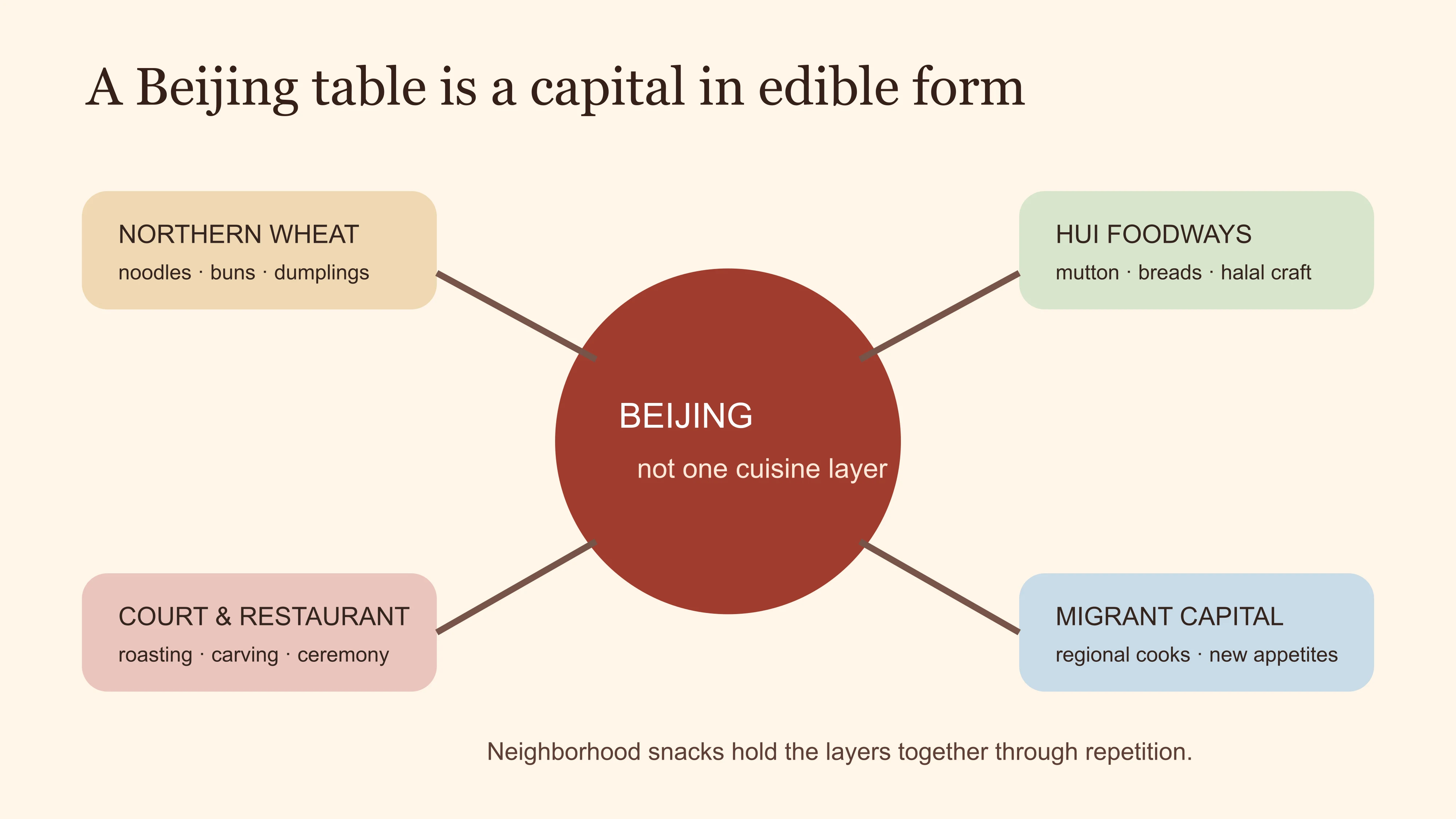
The capital constantly absorbs food from elsewhere. Shandong cooks, Hui Muslim communities, officials and workers from many provinces, university migration and modern restaurant groups have all widened the menu. That does not make local identity meaningless. It means Beijing food is partly a history of selection: which foods became attached to the city, which techniques entered public institutions and which ordinary meals residents repeated until they felt inseparable from place.
What defines Beijing cuisine?
Beijing stands within northern China's wheat-eating landscape, but it is not a self-contained culinary island. Shandong cooks influenced high-end kitchens and savory technique. Hui communities strengthened traditions around beef, lamb, breads and halal preparation. Court and official dining gathered specialists and ingredients. Later migration continued to redraw the menu.
| Layer of Beijing food | What it contributes | Useful examples |
|---|---|---|
| Northern wheat traditions | Noodles, dumplings, buns and flatbreads | Zhajiangmian, jiaozi, baozi, sesame breads |
| Court and official kitchens | Refined service, roasting and banquet organization | Peking duck and elaborate banquet dishes |
| Hui Muslim foodways | Beef, lamb, breads and halal practice | Mutton hot pot, lamb skewers, beef pastries |
| Neighborhood snacks | Affordable, strongly local daily food | Douzhi, jiaoquan, ludagun, wandouhuang |
| Migration | New regional restaurants and changing tastes | Sichuan, northeast, northwest and southern foods now woven into city life |
This is why “Beijing cuisine” should describe a historical meeting place, not a short menu protected from outside influence.

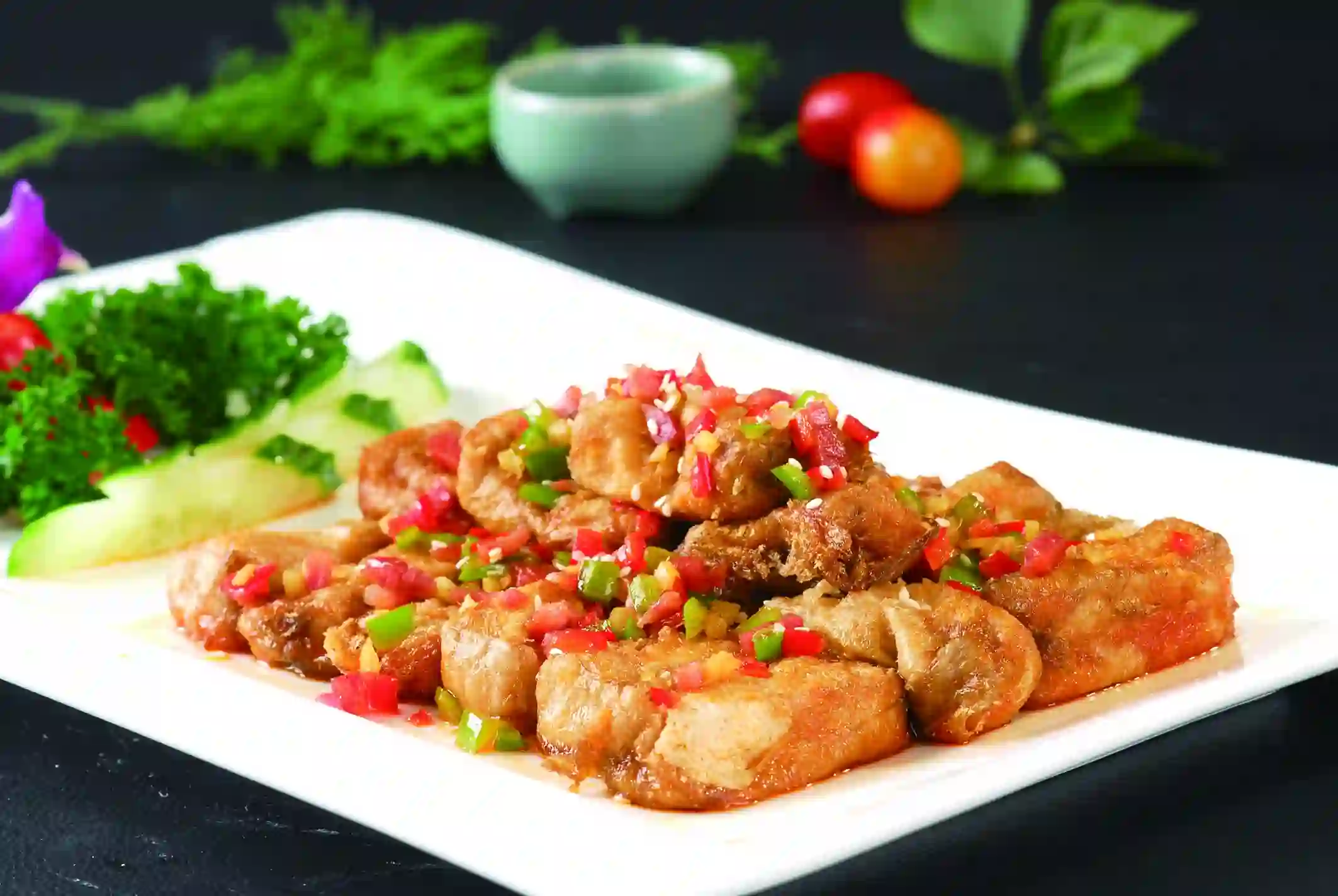
Jingjiang rousi pairs thinly cut pork in a sweet-savory bean sauce with scallion and tofu sheets. Its assembled-at-the-table format makes contrast part of the dish.
Jingjiang rousi is useful precisely because ownership is complicated. Its bean-sauce flavor, knife work and tofu-sheet wrapping fit the northern table, but no responsible guide should use one restaurant dish to prove a pure, closed “Jing cuisine.” Beijing's distinctive value lies in how northern staples, court service, Muslim foodways and migrant restaurants coexist.
Season gives the capital another menu
Beijing's dry winters and sharp seasonal changes shape appetite. Cold weather makes hot broth, lamb, cabbage, radish and substantial wheat foods especially persuasive. Spring brings tender shoots and greens; summer invites cooler noodles, cucumbers and lighter preparations; autumn supports fruit, grains and the return of richer restaurant meals.
Modern supply chains make most ingredients available for much longer, but seasonal memory remains in the way people speak about what feels right to eat. A copper pot in July is possible. It simply tells a different story from the same pot breathing steam against a winter window.
Winter is when the city's food architecture becomes easiest to read. Steam, broth, cabbage, radish, lamb and dense wheat foods answer cold and dry air. Summer asks more from cucumbers, cold dishes, lighter noodles and fruit. Season is not a claim that Beijing once stopped eating between harvests; it explains why the same dish can feel culturally louder in one month than another.
The seasonal setting matters because Beijing's dry cold makes broth, lamb and wheat foods feel less like heritage performance and more like common sense.
Peking duck: fire, skin and ceremony
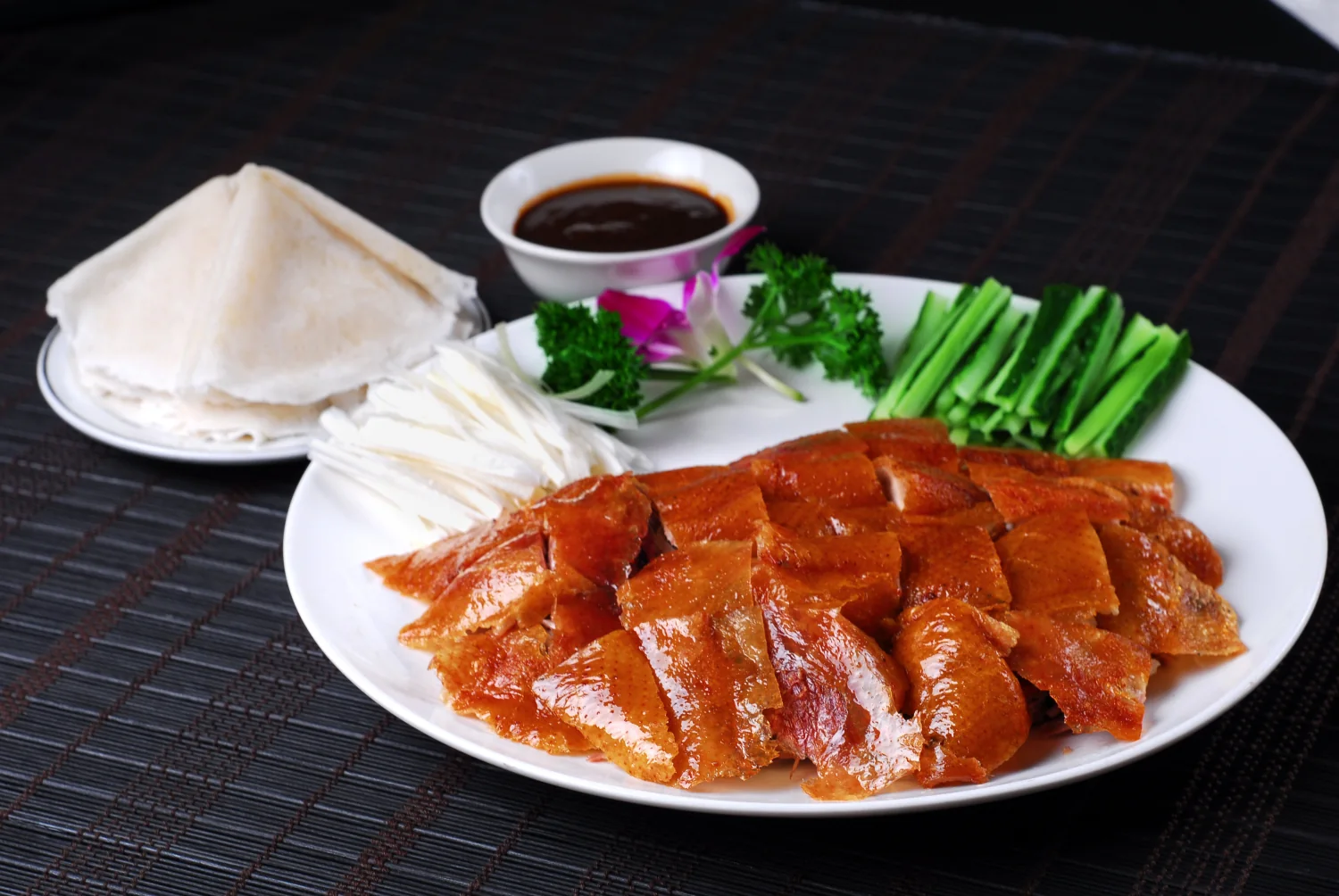
Britannica's Peking duck overview supplies the broad dish history; the meal itself is built around controlled roasting and the relationship between crisp skin, rendered fat and tender meat. The carved slices are commonly eaten with thin pancakes, scallion or cucumber and a sweet-savory sauce. Different restaurants favor different ovens, carving styles and proportions of skin to meat.
The whole experience has several technical moments. The skin must dry and roast without becoming leathery; fat must render without taking all moisture from the meat; carving should separate useful slices rather than leave a pile of fragments; pancakes should be warm and flexible. Sauce, scallion and cucumber are supports, not ingredients meant to bury the duck.
The dish deserves its fame, yet it can distort the view. Roast duck is occasion food for many diners. It says something about hospitality, restaurant craft and the capital's public image; it says less about what an ordinary household cooks on Tuesday.
Ask what is included before ordering. Whole and half ducks, carving service, pancakes, condiments, soup or secondary preparations vary by restaurant. Two people should consider a half duck or accept that leftovers are likely. A duck dinner becomes more balanced with one green vegetable and a lighter tofu or cold dish, not a second prestige meat.
The most revealing bite is not necessarily the fattiest piece of skin dipped in sugar. Compare pure skin, skin with meat and a complete pancake wrap. The changes in crispness, fat, wheat, sauce and raw allium explain why the dish is structured as a sequence rather than served as anonymous roast poultry.
Everyday Beijing is built from wheat, sauce and repetition
The ordinary capital is easier to understand through dough and assembled bowls than through banquet history. Wheat becomes noodles, wrappers, steamed buns, flatbreads and pieces of bread cooked into savory dishes. The techniques overlap with a much wider northern Chinese food world, but Beijing gives them specific neighborhood rhythms and condiment combinations.
Zhajiangmian is the city's quieter portrait
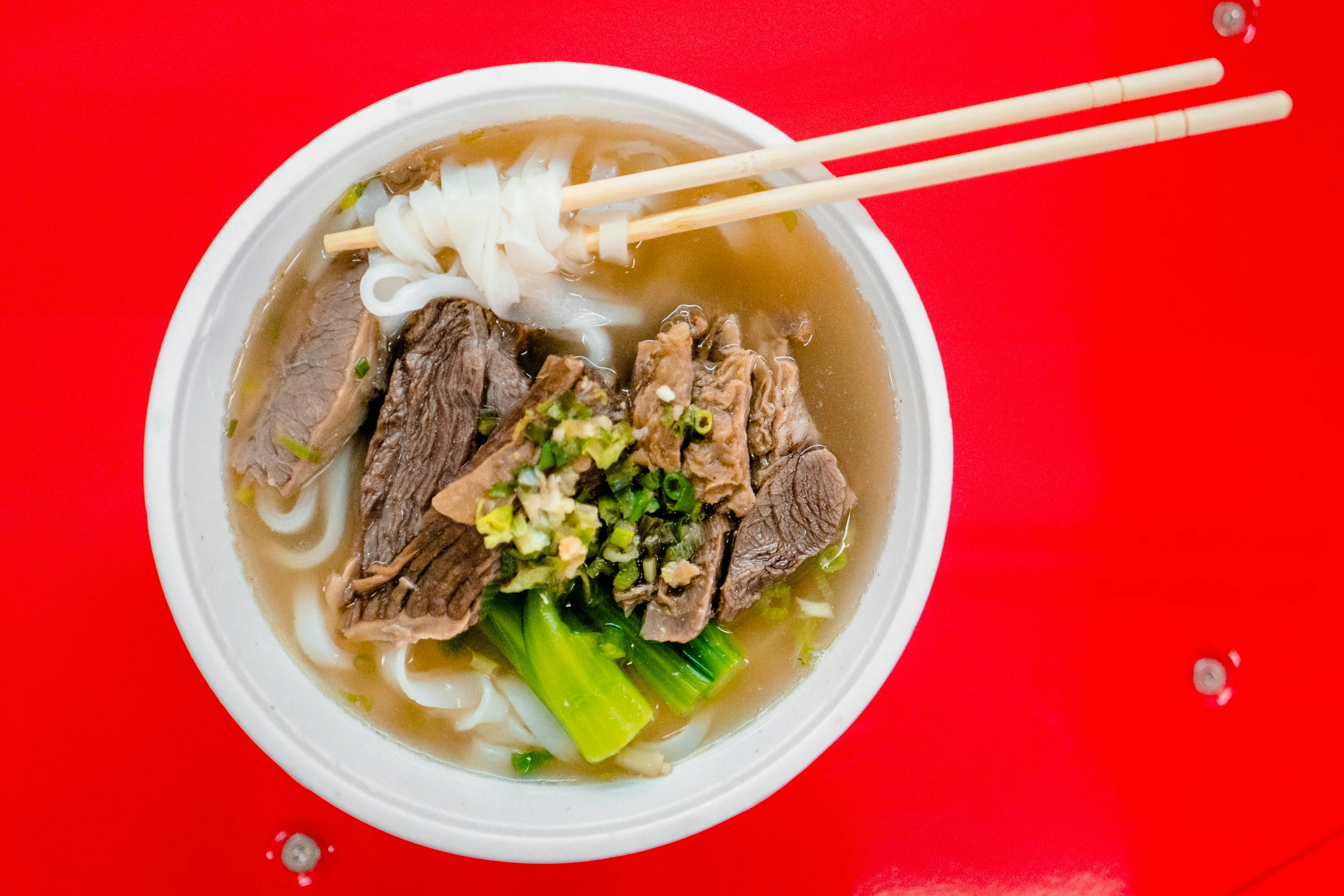
Zhajiangmian places wheat noodles beneath a sauce of fermented soybean paste cooked with meat or other ingredients, then adds raw or blanched vegetables for freshness and crunch. The exact sauce, sweetness, salt level and assortment of vegetables vary.
The bowl is persuasive because it understands proportion. Sauce alone can be dense; cucumber and radish sharpen it; noodles carry everything without disappearing. Explore the larger Chinese noodles guide to see why one English word covers so many regional systems.

Zhajiangmian is assembled through proportion: sauce provides depth, vegetables restore freshness and the noodles must remain present beneath both.
Do not pour in all the sauce before tasting it. Fermented bean sauces vary in salt, sweetness and meat content, while the vegetables may include cucumber, radish, bean sprouts or seasonal additions. Mix part of the bowl, then adjust. The useful comparison is not which restaurant supplies the largest topping tray; it is whether sauce, noodle and raw crunch remain legible together.
Zhajiangmian also owns a different search intent from a general Chinese noodles guide. The broader page compares noodle systems. This page explains why the bowl matters in Beijing, how it fits an ordinary lunch and what to notice when ordering it locally.
Copper-pot mutton hot pot
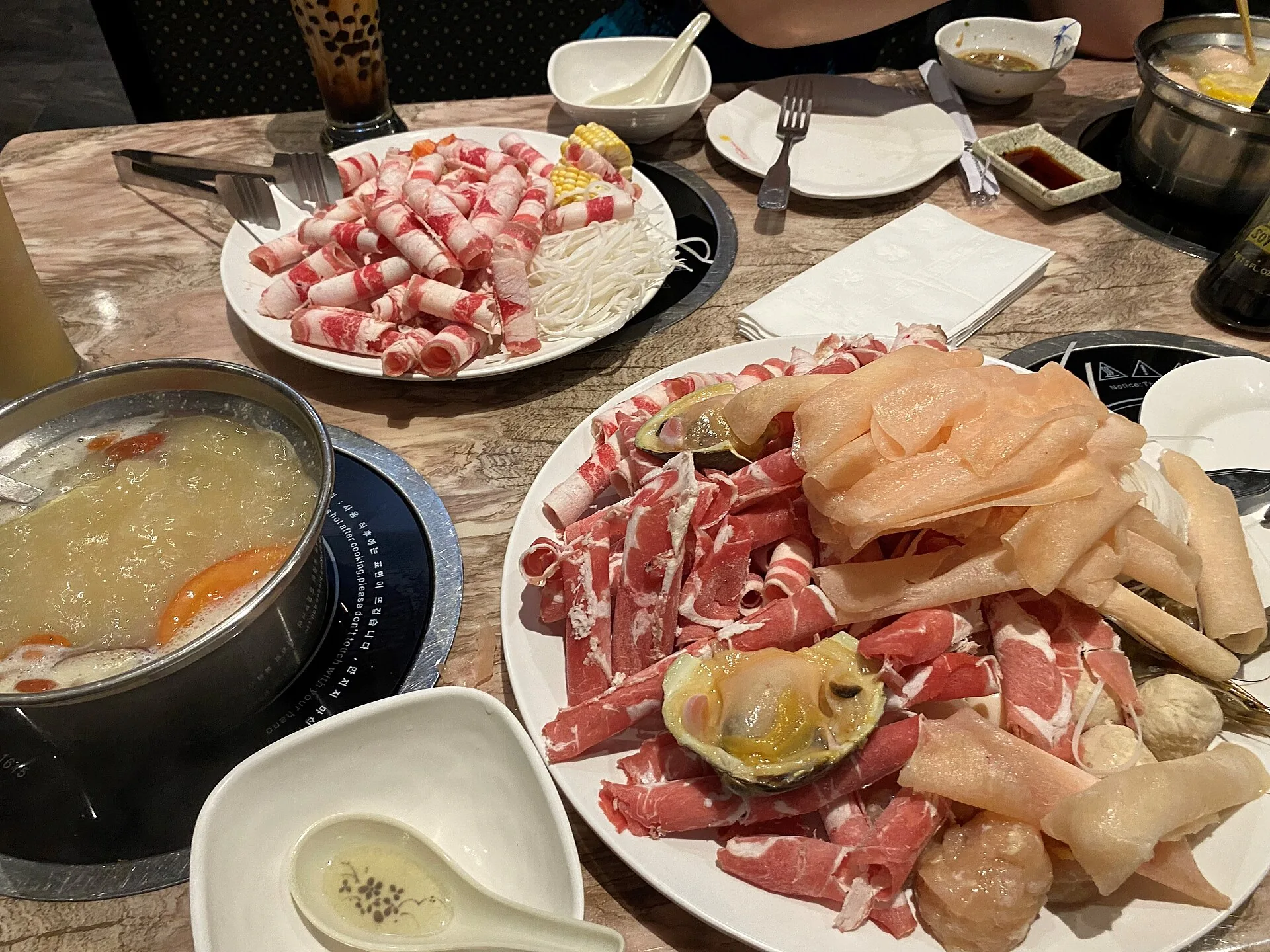
Beijing-style mutton hot pot is not the red, spice-heavy pot many overseas readers first imagine. Thin slices of lamb or mutton cook quickly in clear broth, traditionally around the chimney of a copper vessel. Sesame paste, fermented tofu, chive-flower sauce, soy and aromatics may enter the dip.

Old Beijing mutton hot pot with a copper chimney vessel. Photograph by Nan Jiang, CC BY-SA 2.0, via Wikimedia Commons. License record.
The meat is the center, so timing matters. Leave a thin slice too long and tenderness becomes discipline. Compare this northern form with other regional systems in our Chinese hot pot guide.
The clear broth does not mean the meal is flavorless. It keeps the meat visible while the sesame-based dip supplies richness, fermentation, salt and aroma. Cabbage, tofu, mushrooms and noodles can follow, but a pot overloaded at the beginning loses temperature and makes thin slices difficult to retrieve.
Order mutton by cut and quantity rather than by the number of plate photographs you want. Begin with a modest amount, cook a few slices at a time and add vegetables after understanding the broth. Frozen rolls and hand-sliced fresh meat can create different textures; price and restaurant format vary, so ask rather than treating one presentation as the only traditional form.
Mutton also leaves the copper pot. In scallion stir-fried lamb, high heat, thin slicing and abundant lengths of scallion create a quicker restaurant dish: the allium sweetens at the edges while the meat must leave the wok before it toughens.
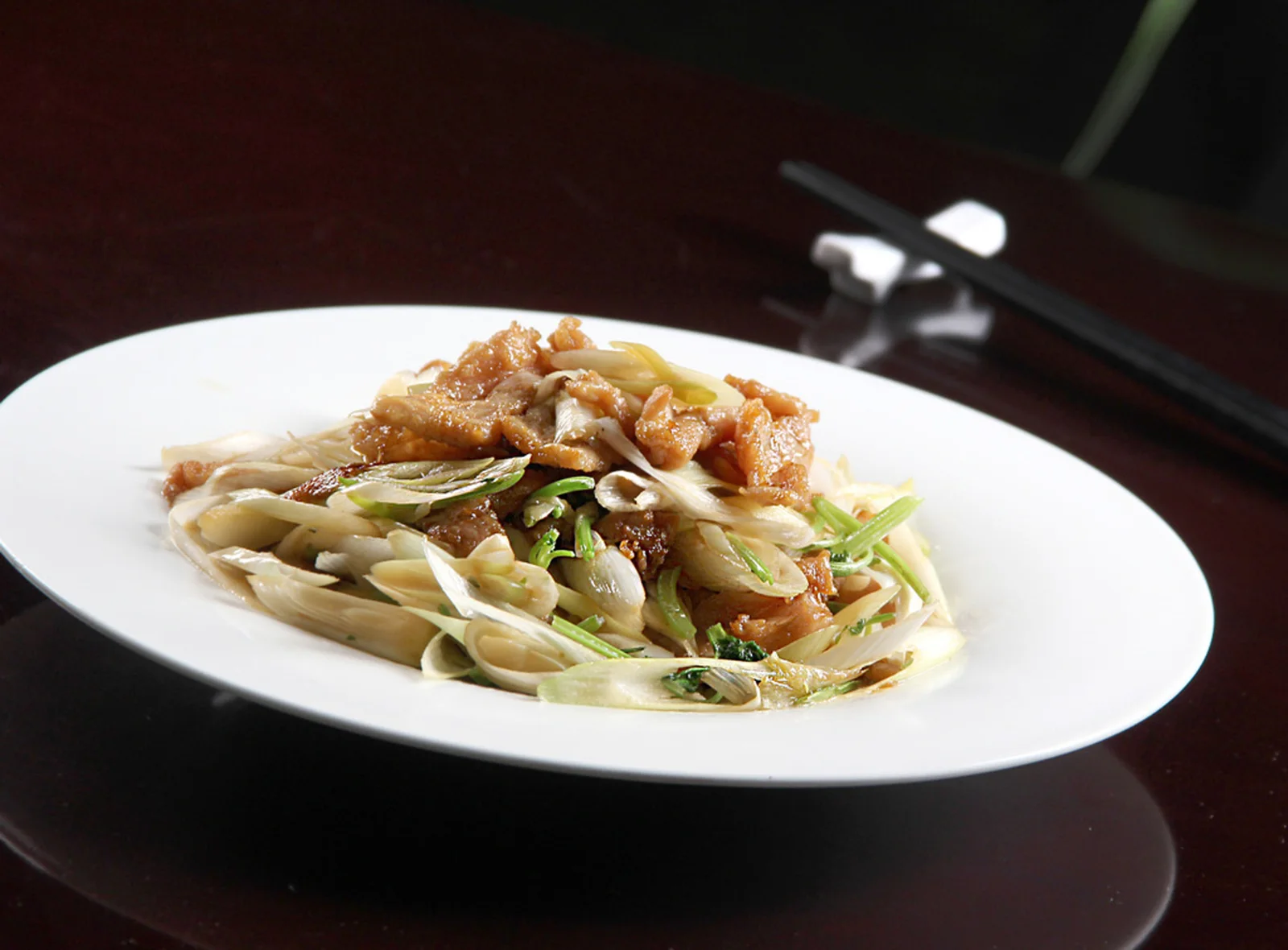
Scallion lamb is part of a wider northern Chinese repertoire, not Beijing's private possession. Here it helps show how the capital's appetite for lamb appears beyond hot pot.
The two lamb formats should not occupy the same first dinner. Hot pot is a slow social system built around individual timing; scallion lamb is a quick wok dish whose success depends on the kitchen. Compare them on separate days if lamb is a major interest.
Dumplings, buns and the comfort of wheat
Chinese dumplings and baozi are not exclusively Beijing foods, but they sit naturally within the city's northern grain culture. Jiaozi can be boiled for family meals or festival gatherings. Baozi belongs to breakfast, lunch and the practical need to place filling inside a portable warm skin.
Their importance lies partly in the hands. Wrappers are rolled, fillings adjusted and edges sealed in company. The kitchen becomes a temporary workshop where conversation is allowed to wander because the fingers already know their task.

A baozi reveals its quality before the filling is visible: the dough should be tender rather than wet, the pleats should hold, and the base should not collapse under trapped steam.
Neither dumplings nor buns should be labeled as uniquely Beijing. Their value on this page is different: they locate the capital within the broad wheat traditions of northern China and within the ordinary rhythm of breakfast shops, canteens and family tables.
Wrapper quality is the first test. A boiled dumpling skin must hold through cooking without becoming thick armor. Baozi dough should be resilient enough to contain steam and filling but soft enough to bite cleanly. Filling should not leak oil as a substitute for juiciness. These standards are ordinary, which is precisely why they reveal so much: repetition exposes weak dough faster than ceremonial presentation does.
For breakfast, choose one primary starch. Baozi plus congee or tofu pudding makes sense; baozi, dumplings, sesame bread and fried dough on the same tray turns breakfast into a survey rather than a meal. Return another morning for comparison.
Old Beijing snacks are not a courage test
Douzhi, a fermented mung-bean drink, has a tart aroma and flavor that many newcomers find challenging. It is commonly paired with crisp jiaoquan and pickled vegetables. The respectful response is neither to pretend instant love nor to treat local food as entertainment for the brave.
Other snacks are gentler introductions: ludagun rolls glutinous rice around sweet bean paste and coats the surface with soybean flour; wandouhuang is a smooth pea cake; aiwowo is a soft glutinous-rice sweet. Together they show a city with more textures than roast and wheat.
Old Beijing is a historical and commercial label, not proof that every resident eats every snack. Some flavors have become identity symbols precisely because they are unusual, nostalgic or tied to particular neighborhoods and generations. Try a small portion, notice who else is eating it and avoid filming disgust as though local breakfast exists for visitor entertainment.

Baodu, quickly cooked tripe served for tenderness and snap, shows why texture matters so much in Beijing snack culture. The name covers variations in ingredient and preparation, so a careful guide should not present one restaurant plate as the only standard.

Luzhu is a substantial local bowl associated with offal, wheat bread and a strongly flavored broth. It is historically and socially different from palace cuisine: direct, filling and tied to neighborhood appetite rather than ceremonial display.
Baodu and luzhu also demonstrate different uses of offal. Baodu values exact cooking and a clean snap; luzhu uses broth, bread and longer-cooked components to create density. Ordering both back to back because they share an “adventurous” label misses that technical difference.
Where to eat Beijing food by format
| Format | Best use | What it teaches |
|---|---|---|
| Roast-duck restaurant | One planned shared meal | Roasting, carving, pancake service and occasion dining |
| Neighborhood noodle shop | Lunch or a fast solo dinner | Sauce proportion, wheat texture and repetition |
| Copper-pot mutton restaurant | Cold-weather group dinner | Meat quality, cooking timing and dipping sauce |
| Baozi, dumpling or breakfast shop | Morning | Dough, filling and the practical northern grain culture |
| Old-snack specialist | One controlled tasting stop | Fermentation, offal texture and local nostalgia |
| Multi-regional restaurant district | A meal chosen for another cuisine | Modern Beijing as a migration capital, not evidence that every dish is Beijing food |
Choose the format before the famous name. Roast duck requires enough people and appetite; a noodle shop works because its menu is narrow; a snack counter should not be expected to provide a balanced dinner. Permanent “best restaurant” rankings age quickly, while specialization and turnover remain useful tests.
Geography matters in a large city. Cluster breakfast, sightseeing and lunch within one area, then travel for one important dinner if necessary. Crossing Beijing for every viral address wastes appetite in transit and replaces neighborhood observation with appointments.
How to order a balanced two-day Beijing food trip
For a first table, choose one major craft dish, one wheat dish, one vegetable and a lighter accompaniment. Roast duck plus mutton hot pot may turn dinner into two competing ceremonies. Duck with seasonal greens and a shared noodle dish offers more contrast.
| Group size | A balanced order | What to avoid |
|---|---|---|
| Solo | Zhajiangmian or baozi, one cold vegetable and a small sweet | Ordering a banquet dish that hides the everyday food you came to understand |
| Two people | Half duck or one lamb dish, one vegetable and one wheat dish | Duck and hot pot together unless appetite is the main event |
| Three to four | One craft centerpiece, one wheat dish, two vegetables or cold dishes and one snack or sweet | Filling the table entirely with meat and starch |
| Breakfast | Baozi, tofu pudding or congee; add douzhi and jiaoquan only if curious | Treating a strongly local flavor as a dare or performance |
Ask which foods the restaurant treats as local specialties and which belong to another region. Modern Beijing is excellent precisely because it contains all of China; clear naming lets each tradition keep its history.
For visitors, neighborhood context is useful. A famous old-brand restaurant may preserve a service ritual but struggle under the weight of reputation. A modest shop may execute one noodle or pastry beautifully. Age, price and ornate decor are clues, not guarantees. Taste the dough, broth and timing before believing the signboard.
Use day one for an ordinary breakfast, zhajiangmian at lunch and roast duck with greens at dinner. Day two can begin with another wheat breakfast, continue with one old snack or a simple noodle and finish with copper-pot mutton. This separates the two major restaurant ceremonies and gives ordinary food more than one chance to speak.
Do not make every stop historical. Contemporary Beijing restaurants show how regional cuisines from across China now function in the capital. The purpose of a Beijing food guide is not to deny that diversity, but to name it accurately and preserve one or two meals for food closely tied to the city.
A city larger than its signature dish
Roast duck cannot carry the whole capital
They move from roast duck to a list of unusual snacks and call the gap “street food.” That structure misses the capital's wheat-based daily life, Muslim lamb traditions, seasonal appetite, migration and the difference between an occasion restaurant and a neighborhood specialist.
Beijing food becomes warmer when roast duck stops carrying the entire city on its lacquered back. Follow the flour dust on a noodle counter, the steam above a bun and the brief silence when thin mutton touches boiling broth.
East Moment recommends two mornings, one noodle lunch, one duck dinner and one mutton dinner. Try douzhi only if curiosity is genuine, and order a small portion. The city rewards comparison between ceremony and repetition, not completion of an old-snack challenge list.
Continue into the Beijing culture guide for the city behind the table, use Travel to Beijing for a route that protects meal time, return to Chinese food, or compare Beijing's northern appetite with the changing sweetness and seasonality of Shanghai food.
Editorial note: This original East Moment guide reflects Lijun's lived experience of food in China and is not sponsored restaurant content.
Frequently asked questions about Beijing food
What food is Beijing famous for?
Beijing is famous for Peking duck, zhajiangmian, copper-pot mutton hot pot, jiaozi, baozi and snacks such as douzhi, jiaoquan, ludagun and wandouhuang. The city also contains food traditions brought by migrants from across China.
Is Beijing food the same as northern Chinese food?
No. Beijing belongs within northern Chinese foodways, but the city's cuisine reflects court kitchens, Shandong influence, Muslim communities, neighborhood snacks and generations of migration. Northern China is much larger than Beijing.
What is traditional Beijing breakfast?
Breakfast varies, but common older Beijing associations include douzhi with fried jiaoquan, sesame flatbreads, baozi, congee, tofu pudding and fried dough. Not every resident eats the same foods, and modern breakfast is highly diverse.
What is Beijing mutton hot pot?
It is a northern hot-pot tradition built around thinly sliced mutton cooked quickly in a clear broth, often in a copper pot, then eaten with a sesame-based dipping sauce and condiments.
Is Peking duck everyday Beijing food?
Peking duck is a major ceremonial and restaurant dish rather than an ordinary daily meal for most people. Noodles, buns, dumplings, quick stir-fries and neighborhood snacks better reveal everyday eating.