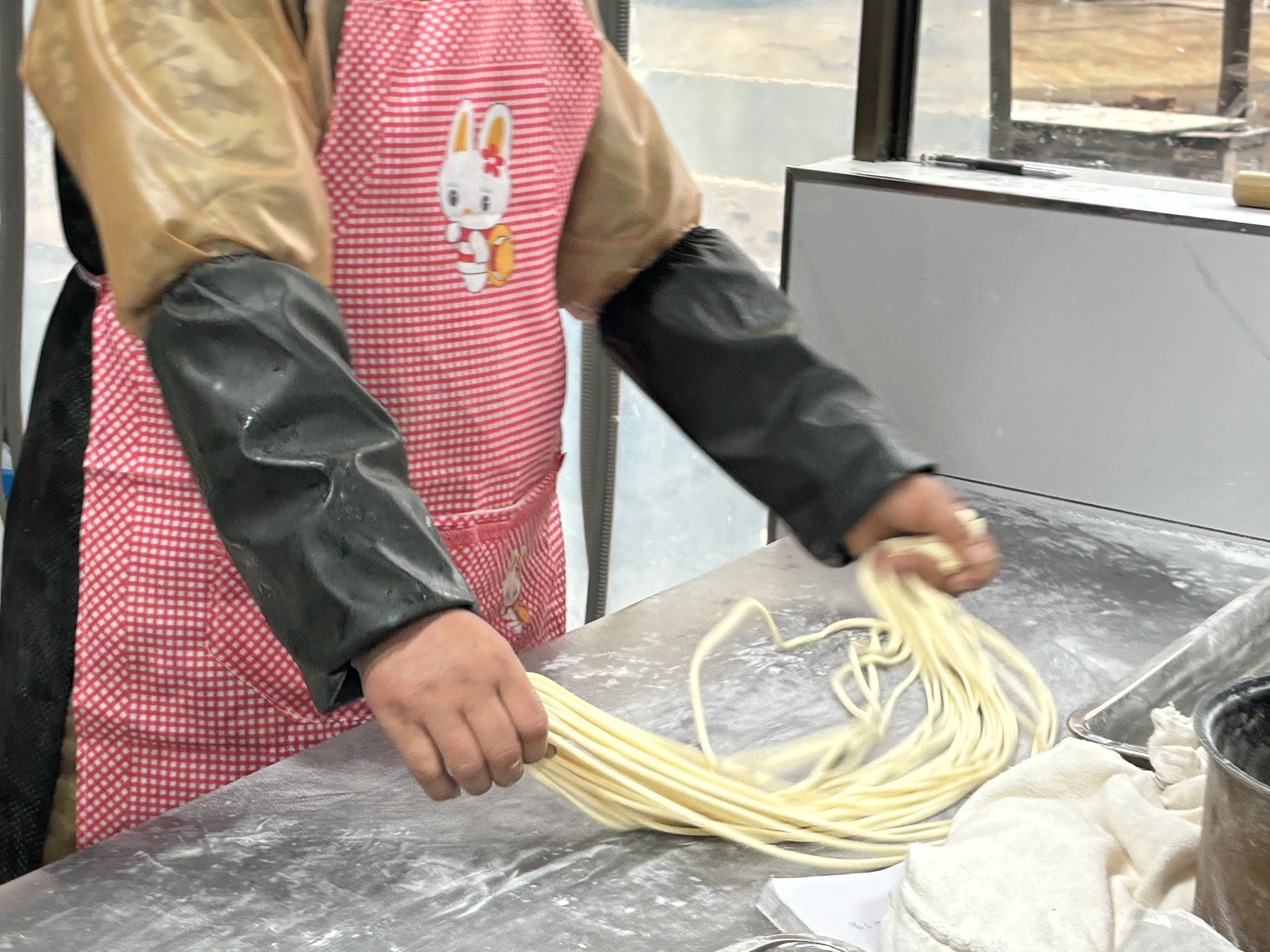
Chinese noodles do not begin with a single recipe. They begin with a question: what can flour, grain or starch become in the hands of a particular place? In one kitchen, dough is pulled until it falls in pale ropes. In another, a cleaver sends shaved leaves of dough into boiling water. Rice is ground into a batter, starch turns translucent, and a bowl acquires the weather, labor and appetite of its region. To follow Chinese noodles across the country is to read a map whose lines can be eaten.
What are Chinese noodles? My Henan-born answer
Chinese noodles are a broad family of strands, ribbons, sheets and irregular pieces made primarily from wheat, rice or starch and served in broths, sauces, stir-fries and cold dishes. The category includes hand-pulled lamian, knife-cut noodles, rolled noodles, rice vermicelli, broad rice sheets, glass noodles and many forms that resist a tidy English label.
The useful definition is not "long food from China." A noodle belongs to a system: raw material, dough or batter, shaping method, cooking method, seasoning and eating occasion. Two bowls can look similar while carrying different histories. Two noodles made from the same flour can feel unrelated because one is pulled for elasticity and the other cut wide enough to hold a heavy sauce.
International menus often flatten this variety into "noodles" and then distinguish only soup, fried or spicy. That shorthand helps people order. It does not explain why a Lanzhou noodle maker asks for the width of the strand, why a Sichuan bowl may hide its sauce beneath the noodles, or why a Yunnan rice-noodle shop organizes a meal around the heat of its broth.
I was born in Henan, in the Central Plains, and I have a personal bias here: if someone asks me which province has the richest everyday noodle vocabulary, I will say Henan before I have finished considering the alternatives. That is my editorial judgment, not a statistical census. It comes from growing up around bowls that can be soupy, dry, steamed, mixed, pulled, sliced, fermented, braised or simply tossed with whatever the household has that day.
I have also worked in Guangzhou for more than ten years, where rice is deeply present in the local food rhythm. I still choose noodles for most meals. That is not a claim that noodles are superior to rice. It is a reminder that food identity is carried by habit: the chew I want, the speed of a hot bowl, the way sauce clings to a strand and the feeling that a meal has actually settled me. This page begins there, with daily appetite, then opens outward to China's regional noodle map.
Why Henan makes me defend noodles so fiercely
Henan is often introduced through wheat, wheat is then reduced to one famous bowl, and the explanation ends with hui mian. That is too small. Henan's noodle world is more interesting because the same staple can move through different household technologies and eating situations.
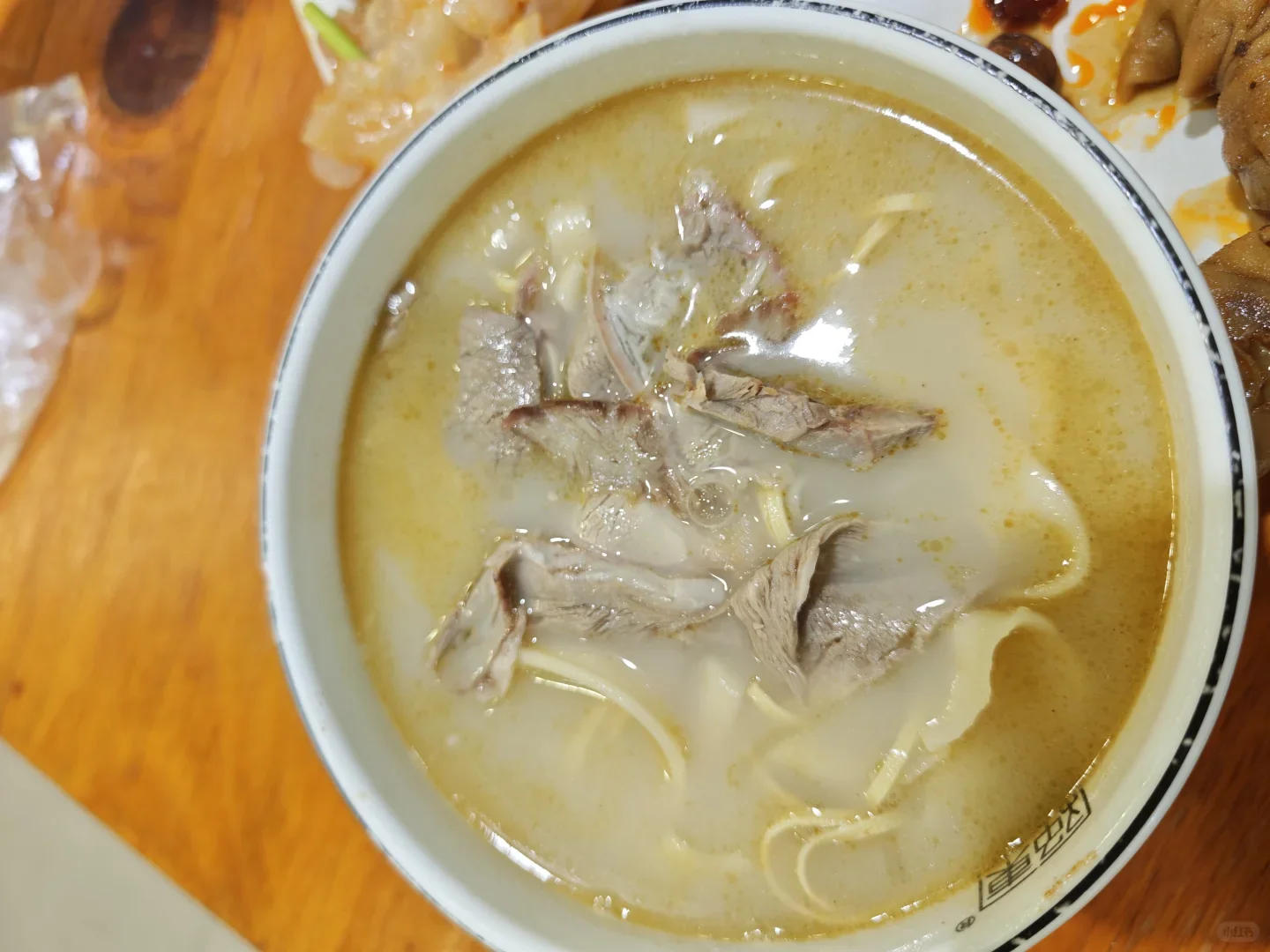
Hui mian is the famous broth route: broad hand-stretched dough in a rich soup, often associated with mutton, herbs and a substantial meal. Luomian or steamed braised noodles take a different path: noodles are steamed, mixed with seasoned ingredients and cooked until the flavor belongs to the strand rather than sitting only in a bowl of liquid. Laomian and other tossed or pulled forms bring the sauce and the wheat into direct contact. Jiangmian, including sour fermented preparations such as jiangmian, shows that acidity and fermentation can define a noodle meal as strongly as chile or beef.
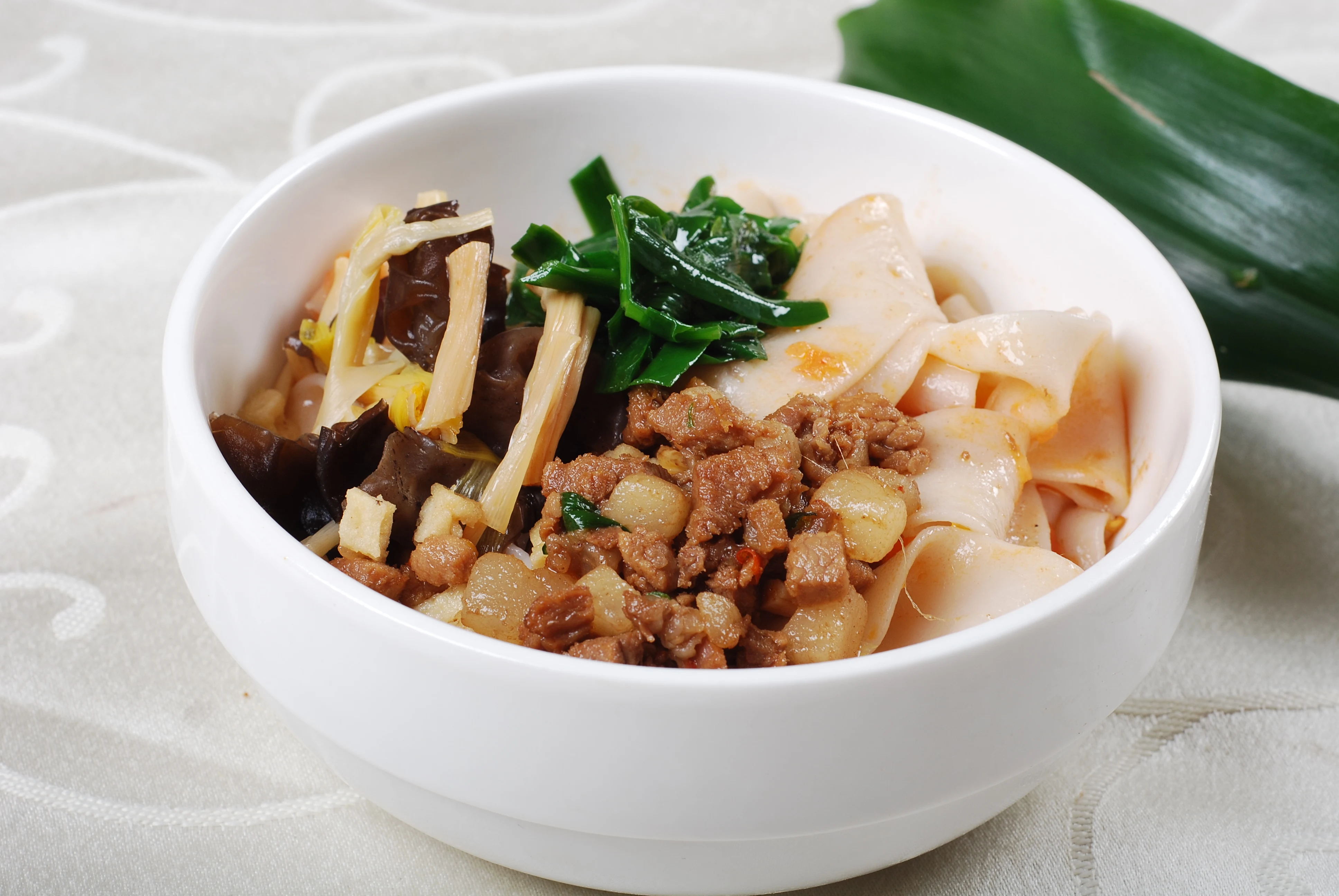
A dry-mixed Henan-style bowl shows why “noodles” is too broad a description: the strand is carrying vegetables, aromatics and a concentrated topping rather than disappearing into broth.
The names and methods vary across families, towns and restaurants, so I will not pretend Henan has one official noodle taxonomy. The point is the range of decisions: soup or no soup, steamed or boiled, broad or fine, fresh or fermented, communal pot or individual bowl. A tourist list sees many names. A person from Henan notices the technologies behind them.
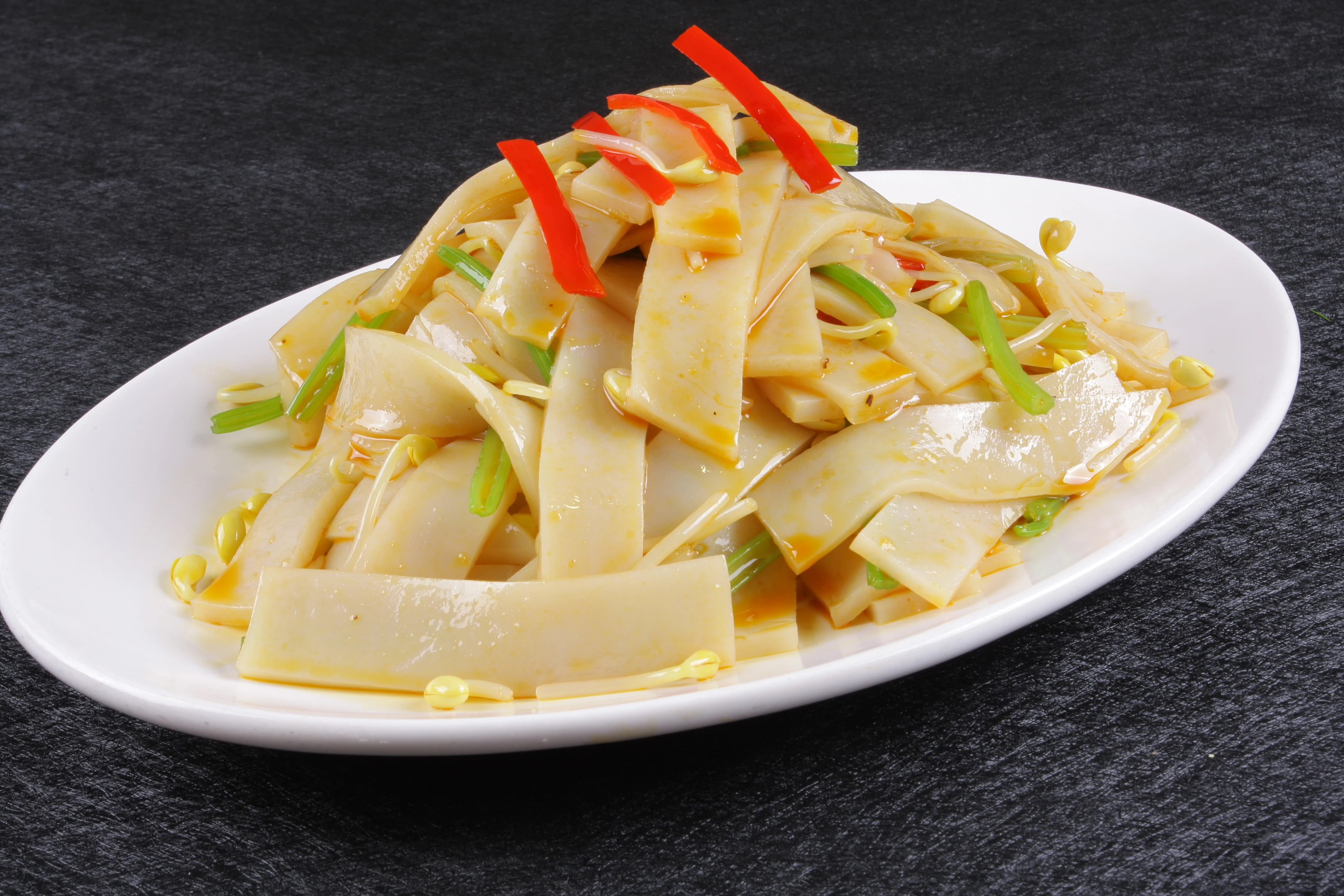
Steamed noodles make the distinction even sharper: the cooking method changes how seasoning settles into the wheat, so this is not simply a soup noodle with less liquid.
The Henan cuisine guide gives the wider regional pantry and wheat context. This page makes the narrower case that noodle diversity is not a decorative regional label. It is a record of how people solve the same everyday problem, feeding themselves well with the grain that is available, the time they have and the flavor their household expects.
When I eat noodles in Guangzhou, I do not feel that I have left this map. Cantonese wonton noodles, beef brisket noodles and rice noodles belong to another local grammar, but they still make the same things visible: texture, broth, timing and the relationship between a bowl and the city around it. The Guangzhou food guide is the natural companion page because it explains the local table where my Henan habit has continued.
The Henan noodle ranking I actually carry
This is my own ranking, not an official list of Henan's “best” noodles. Gaxian Heluo noodles (郏县河洛面) come first. Many foreign readers have never heard of them, which is precisely why I want to name them: a food memory should not disappear simply because it has not been packaged for international search. Their local character, wheat texture and the feeling of eating something tied to home matter more to me than global familiarity.
Henan huimian comes second. It is the bowl I would recommend to a newcomer first because the broad hand-stretched dough, broth and generous appetite are easy to understand. Second place is not an insult; huimian is the public ambassador of Henan noodles. Braised or steamed noodles (焖面/蒸面) come third for me because the cooking lets the strand absorb seasoning instead of merely carrying soup. The result is quieter, more domestic and especially satisfying when the sauce has reached every fold.
The order belongs to my life and palate. Use the Henan huimian guide for the famous bowl and the Henan cuisine guide for the wider pantry; do not mistake my affection for a provincial ranking committee.
Chinese noodles are a system, not one dish
The plural matters. There is no neutral noodle waiting to receive a regional topping. Material and technique are already part of taste.
| Noodle family | Common base | Typical qualities | Regional examples |
|---|---|---|---|
| Wheat noodles | Wheat flour, water and sometimes alkaline salts or egg | Elastic, chewy, soft or firm depending on flour and shaping | Lamian, dao xiao mian, zhajiangmian noodles, biang biang noodles |
| Rice noodles | Rice flour or soaked and milled rice, sometimes blended with starch | Tender, smooth, springy or delicate | Guilin mifen, Yunnan mixian, Guangdong ho fun, Jiangxi rice noodles |
| Starch noodles | Mung-bean, sweet-potato, pea or other purified starches | Slippery, translucent and highly receptive to broth or sauce | Fen si, sweet-potato noodles in hot-and-sour preparations |
| Mixed-grain noodles | Buckwheat, millet, oat or blends with wheat | Flavor and texture depend strongly on the blend | Regional buckwheat and oat noodles in northern and border cuisines |
Even these groups overlap. Manufacturers adjust formulas; home cooks use what is available; restaurant traditions travel. Classification should make difference visible without pretending food respects administrative borders.
Wheat, rice and the agriculture beneath the bowl
Northern China is often described as a wheat-eating world and southern China as a rice-eating world. The contrast is useful at continental scale. It becomes misleading when treated as a wall.
China's State Administration for Market Regulation describes noodles as a staple eaten across both north and south and distinguishes fresh, semi-dry and dried commercial forms by moisture and processing. That consumer guidance is narrower than this cultural map, but it usefully prevents the regional shorthand from becoming an absolute border.
Climate, water, soil, trade and state policy shaped which grains became dependable staples. Wheat supported a remarkable northern vocabulary of breads, dumplings and noodles. Rice agriculture supported southern forms made by soaking, milling, steaming, extruding and cutting. Migration then carried both traditions far beyond their agricultural origins.
A bowl therefore records more than preference. It carries the work of milling and irrigation, fuel and storage, market access and the knowledge needed to make an ingredient behave. Wheat dough develops gluten and can be stretched. Rice has no gluten, so rice-noodle makers use different relationships among particle size, water, heat and starch gelatinization. What appears at the table as texture began much earlier as an accommodation with the land.
A long history without one convenient inventor
In 2005, researchers reported in Nature an approximately 4,000-year-old deposit of thin, noodle-like strands at the Lajia archaeological site in northwestern China. Analysis associated the strands with millet rather than modern wheat noodle dough. The find is extraordinary evidence that people in that place and period transformed grain into long strands.
It is not a certificate naming the inventor of all noodles. Archaeology rarely grants such clean ownership. Organic food decomposes, terminology changes and similar techniques can emerge in more than one place. The Lajia discovery does not prove that every later Chinese noodle descends through one uninterrupted recipe, nor does it settle competitive national origin stories.
Written records from later periods contain changing words for wheat foods and sheets or strands of dough. Meanings shift across centuries. The honest history is cumulative: grain cultivation, milling, improved flour, urban food markets, portable street trades and regional craft all contributed to the noodle worlds visible today.
Longevity is another genuine but often overextended association. Long noodles appear in birthday and celebratory contexts because unbroken length can suggest long life. That symbolism does not govern every bowl. Most noodles are also breakfast, lunch after work, a late-night meal, a train-station necessity or the quiet food cooked when no ceremony is required.
Pulled, cut, rolled, shaved and extruded
To watch noodles being made is to see geometry emerge from touch. The cook does not decorate the dough after it is finished; motion creates the final structure.
| Technique | How the noodle is formed | Resulting character | Common point of confusion |
|---|---|---|---|
| Hand-pulled | Dough is stretched, folded and divided into strands | Long, elastic strands in several possible widths | Handmade does not always mean hand-pulled |
| Knife-cut | A rolled sheet is cut with a knife | Regular strands or ribbons with controlled width | Not the same as knife-shaved noodles |
| Knife-shaved | Pieces are shaved rapidly from a block of dough into boiling water | Irregular leaves with thick centers and thinner edges | Texture depends on the uneven profile |
| Rolled and sliced | Dough is rolled flat, folded and sliced | Broad or narrow noodles suited to soups and sauces | A household technique with many local forms |
| Extruded or pressed | Dough or batter is forced through openings | Consistent round or shaped strands | Used for both rice and some wheat or starch noodles |
A skilled pull looks effortless only after dough strength, hydration, rest and hand movement have been made to agree. Spectacle is a by-product of control.
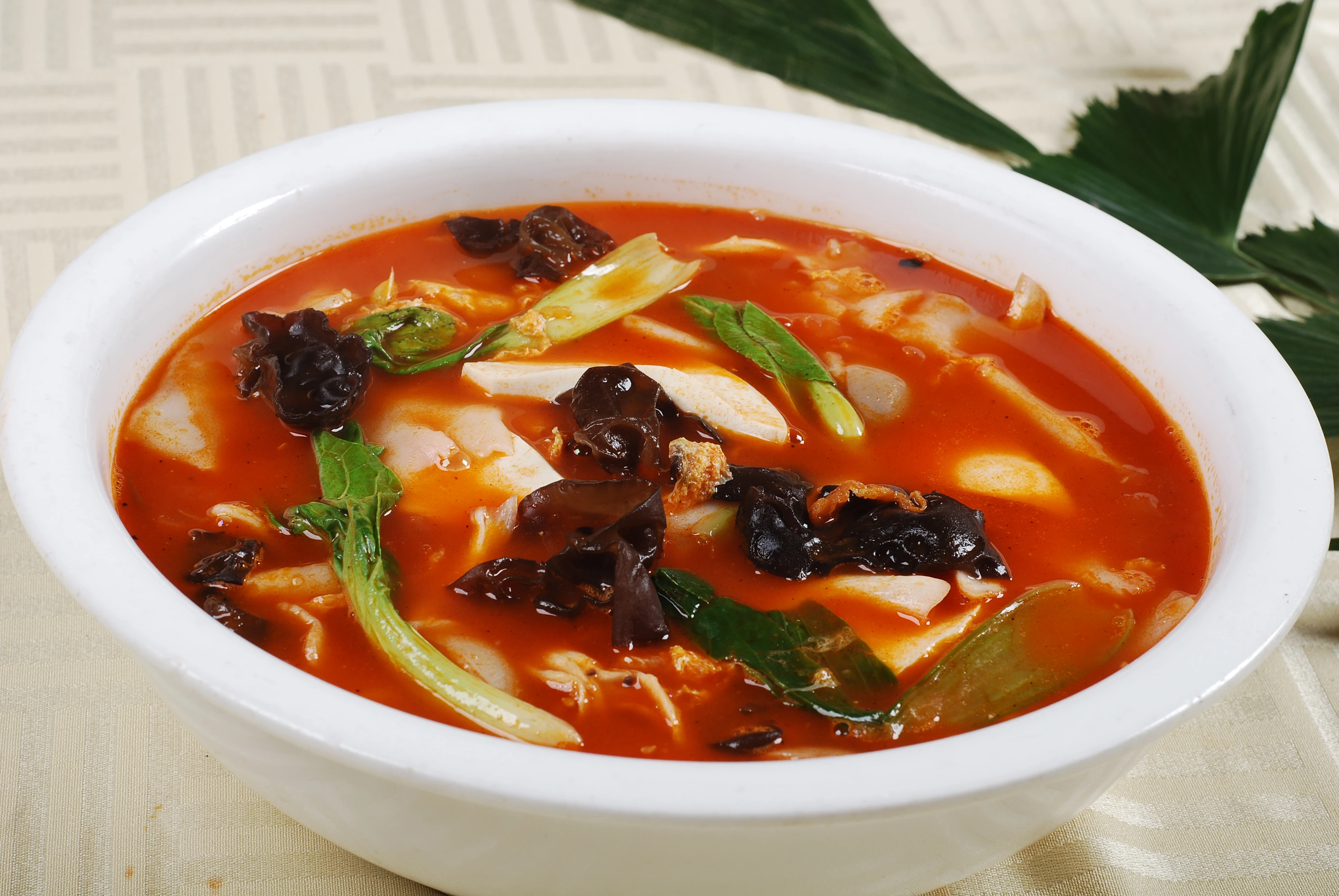
Broad dough sheets make the shaping decision visible before the noodle ever reaches broth or sauce. Width is not decoration; it determines how the finished bite folds, holds liquid and slows the eater down.
The sheet's next life is a different search task. The Henan huimian guide follows those ribbons into a Zhengzhou bowl and tests whether their texture survives the broth.
Lanzhou beef noodles: clarity, fragrance and Hui foodways
Lanzhou beef noodles are often introduced through a visual formula: clear broth, pale radish, red chili oil, green herbs and yellowish noodles. The colors are memorable, but the bowl's identity also rests on Muslim Chinese foodways, beef-broth craft and the practice of pulling noodles to order.
Customers may choose among strand widths, from very fine threads to broad belts. Width changes the meal. Fine noodles move quickly and carry broth differently; broad noodles offer more chew and a slower rhythm. The choice is not a novelty menu. It is evidence that the noodle itself remains an active part of the dish.
Lanzhou restaurants have traveled widely across China and overseas, often signaling halal practice through Arabic script or the Chinese term qingzhen. Standards and ownership vary, so a sign should not be used to make assumptions about every operator. The larger point is that a regional Muslim Chinese dish has become one of the most recognizable forms of everyday noodle service.
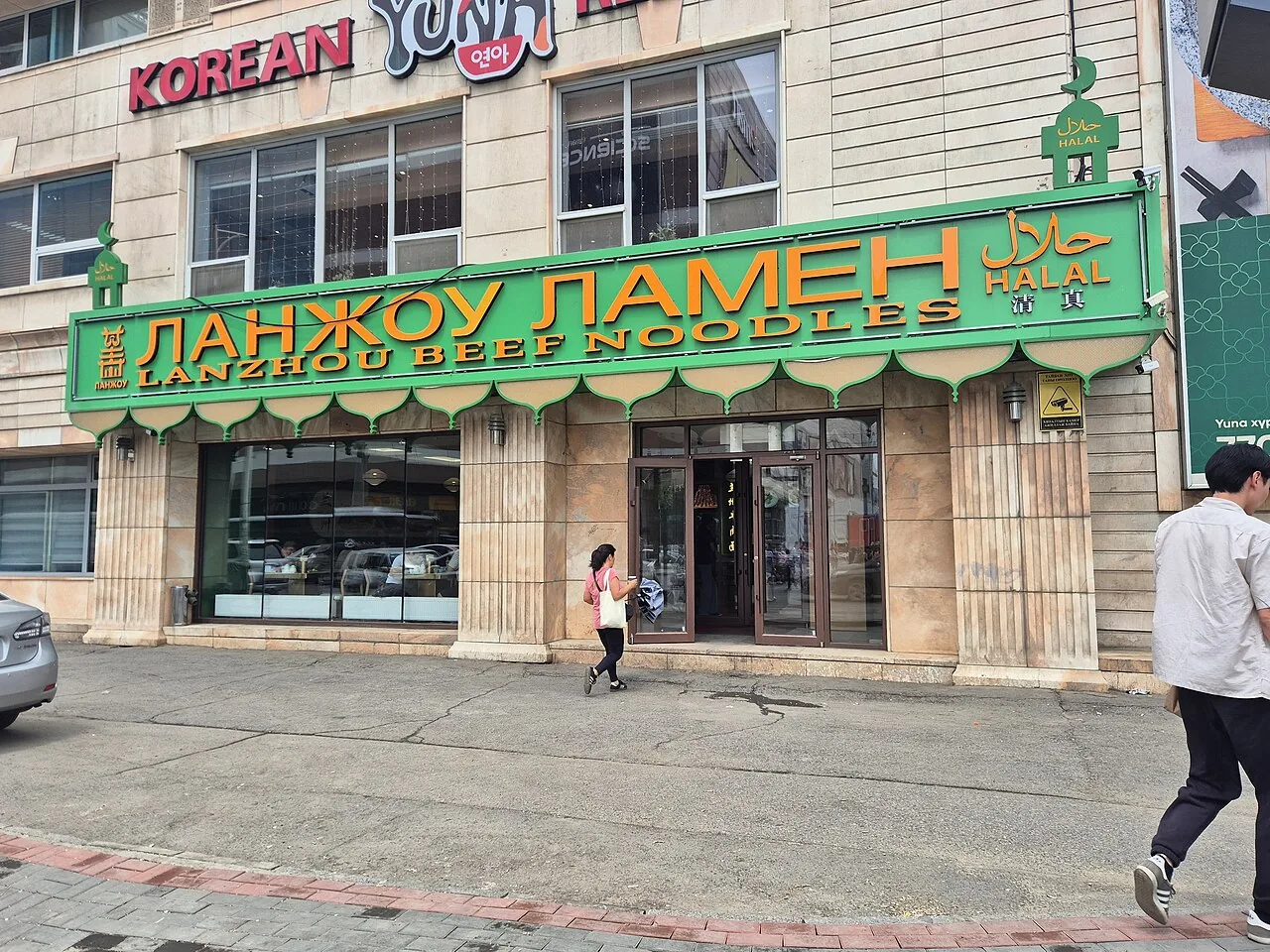
A Lanzhou beef noodle restaurant in Ulaanbaatar shows how a regional Chinese noodle tradition travels through multilingual cities. Photograph by Chongkian, CC BY-SA 4.0, via Wikimedia Commons. License record.
The broth, noodle widths and Hui cultural context must be understood together, without turning a living Lanzhou tradition into a five-color slogan.
Dan dan noodles: a small bowl with a long aftertaste
Dan dan noodles take their name from the carrying pole once associated with itinerant sellers. Contemporary versions vary dramatically. A Sichuan bowl may be compact and intensely seasoned, with preserved vegetable, minced meat, chili oil, Sichuan pepper, sesame or nutty depth and a sauce intended to be mixed upward through the noodles. Overseas restaurant versions are sometimes larger, sweeter or more sesame-heavy.
Variation is not automatically corruption. Restaurant scale, ingredient access and local expectations all reshape dishes. But it is useful to distinguish a local reference point from a global family of adaptations. Calling every spicy peanut noodle "dan dan" erases the preserved, fermented and numbing dimensions that give many versions their structure.
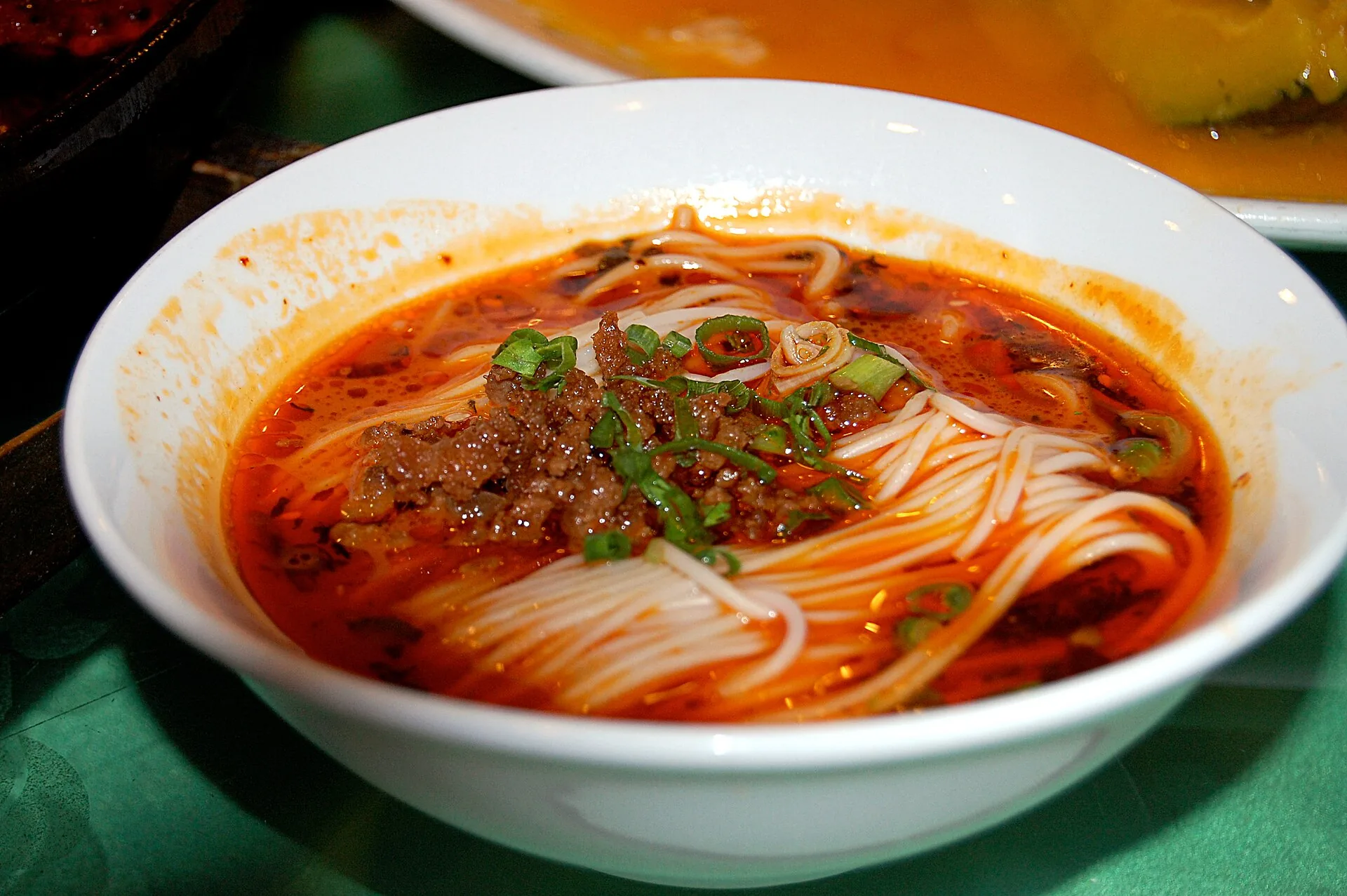
Dan dan noodles served in Shanghai. One photograph records one restaurant interpretation, not a universal formula. Photograph by Steven G. Johnson, CC BY-SA 3.0, via Wikimedia Commons. License record.
Its carrying-pole history, sauce architecture and differences between Chengdu, restaurant and diaspora forms show why one English menu name can conceal several distinct bowls.
Zhajiangmian: sauce, vegetables and the sound of mixing
Zhajiangmian is closely associated with Beijing, where wheat noodles are topped with a deeply savory sauce made by frying fermented soybean-based paste with meat or other ingredients. Fresh vegetable accompaniments may add cucumber, radish, bean sprouts or seasonal crunch. The bowl often arrives in parts and becomes complete only after vigorous mixing.
The name travels across languages and borders. Korean jajangmyeon developed its own dark, gently sweet sauce and cultural life; it should not be described merely as Beijing zhajiangmian served abroad. Related northern Chinese versions also differ in paste, salt, sweetness, meat and garnish.
What makes the Beijing bowl compelling is contrast. Warm noodles receive a dense sauce; raw vegetables keep their brightness; the diner turns separate colors into an earthier whole. It is not visually pristine after mixing. Its beauty is the beauty of a meal entering use.
Beijing practice also needs to be compared with other northern and diaspora relatives while keeping their identities separate.
Biang biang noodles: width as landscape
Biang biang noodles from Shaanxi are broad enough to fold across a bowl like cloth. They are commonly associated with the Guanzhong region and with a famously complex written character used in signs and popular culture. The character's playful mnemonic has helped the dish travel online, but the noodle is more than typography.
Width changes how oil, vinegar, garlic and chili meet the dough. In an oil-splashed preparation, hot oil awakens aromatics on the noodle's surface; dark vinegar cuts through richness; the uneven ribbon offers both tender and resistant bites. Some bowls include tomato, egg, greens or meat. No single topping list owns the name.
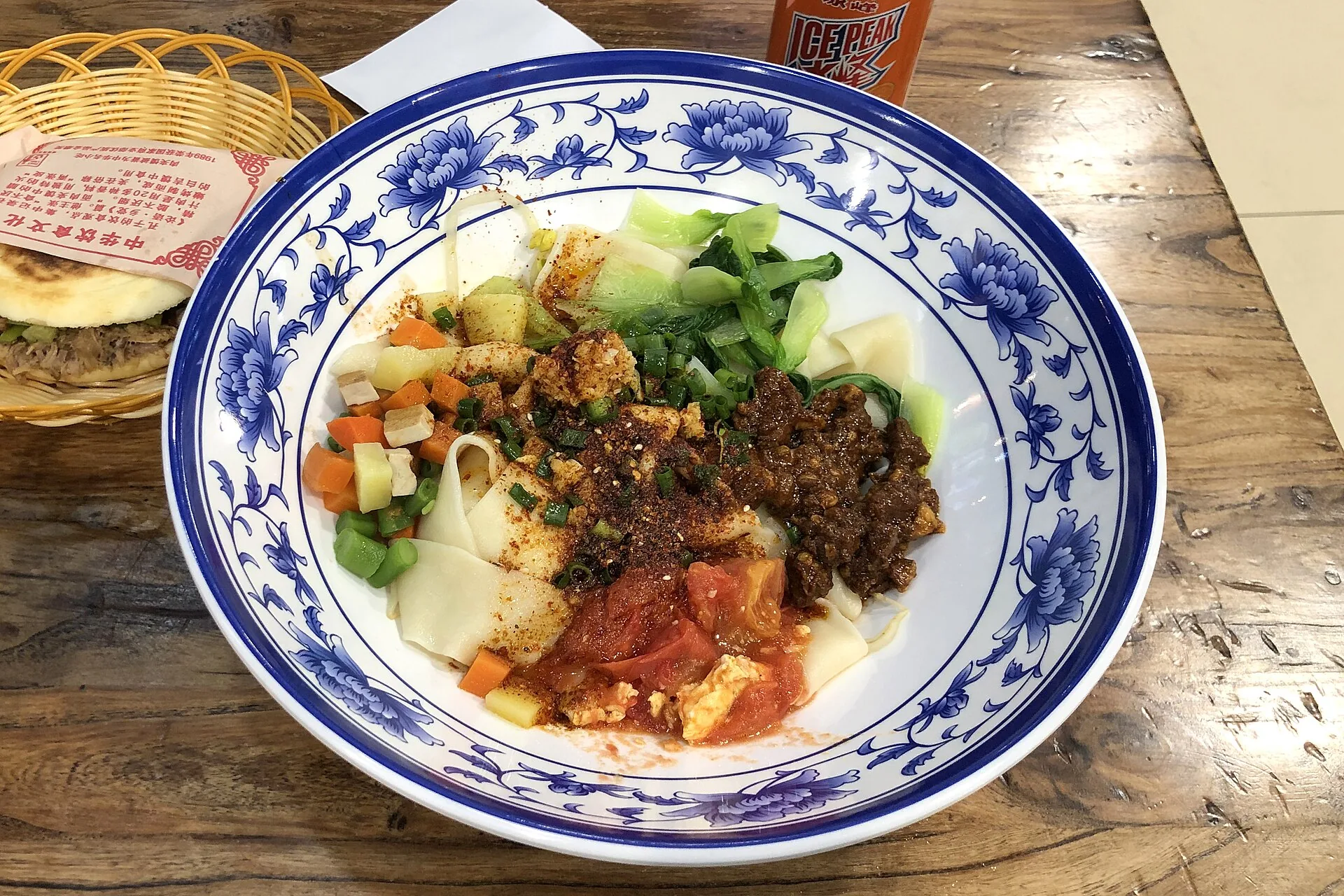
Broad biang biang noodles served with vegetables, chili and meat. The width of the ribbon is part of the dish's texture, not simply a visual signature. Photograph by N509FZ, CC BY-SA 4.0, via Wikimedia Commons. License record.
Its Shaanxi context, hand-forming technique and the difference between the historic dish and its modern written symbol are more useful than treating the character alone as an internet curiosity.
Southern rice noodles: many traditions, not one substitute
Rice noodles are sometimes introduced to overseas readers as the gluten-free alternative to wheat noodles. That nutritional framing is too narrow. Rice noodles are not replacement noodles; they are the foundation of mature regional traditions.
Guilin rice noodles may be served with a concentrated braising liquid, sliced meat, pickled vegetables and toppings, sometimes with broth added separately. Yunnan mixian appear in many forms, including crossing-the-bridge noodles, where ingredients are assembled around a very hot broth. Guangdong and Hong Kong kitchens use broad rice noodles such as ho fun in stir-fries and soups. Jiangxi and Hunan have their own rice-noodle breakfast cultures, seasonings and preferred textures.
Commercial rice noodles also vary in rice content, starch additions, thickness and treatment. Diners with celiac disease or allergies should verify ingredients and cross-contact rather than assuming every rice noodle dish is safe because its traditional base is rice.
Broth, sauce and toppings: five bowls compared
Named dishes become clearer when the relationship among noodle, liquid and topping is compared.
| Dish or family | Noodle | Flavor structure | Eating rhythm |
|---|---|---|---|
| Lanzhou beef noodles | Hand-pulled wheat strands in chosen widths | Clear beef broth, radish, herbs and chili oil | Broth and noodle are tasted together; best eaten promptly |
| Dan dan noodles | Usually slender wheat noodles | Concentrated spicy, numbing, savory and fermented sauce | Mix thoroughly so sauce rises from the bottom |
| Zhajiangmian | Northern wheat noodles | Fried fermented-paste sauce with crisp vegetable garnishes | Combine components at the table |
| Biang biang noodles | Very broad hand-formed wheat ribbons | Chili, vinegar, garlic, oil and varied toppings | Fold and lift manageable lengths; texture is central |
| Southern rice-noodle soups | Rice noodles in many thicknesses | Clear, meat-based, sour, spicy or herb-led broths | Texture changes quickly in hot liquid |
The table is not a ranking. I refuse the usual “best Chinese noodles” list because it rewards name recognition and erases the actual decision. A better question is what kind of pleasure the eater wants: the lift of clear broth, the compression of sauce, the resistance of a broad ribbon or the softness of rice in a fragrant soup.
How to eat Chinese noodles with attention
There is no single ceremony for every bowl, but a few habits reveal more of the food.
- Taste the broth or sauce before adding vinegar, chili or soy sauce.
- Mix sauce-based noodles from the bottom, where the most concentrated seasoning may be hidden.
- Eat freshly cooked noodles before they soften or absorb more liquid than intended.
- Use a spoon to support noodles in broth and to gather small toppings.
- Lift a manageable portion rather than cutting every strand automatically.
- Ask what a condiment is before adding it; preserved vegetables, sesame paste and chili oils serve different purposes.
- Do not perform loud slurping because a travel article declared it mandatory. Follow the actual table.
Long noodles can symbolize longevity, especially at birthdays, but avoiding every broken strand is not a universal test of respect. Courtesy is simpler: notice how the dish is served, make room for shared condiments and let the cook's first balance reach you before rewriting it.
Cooking Chinese noodles at home and abroad
Home cooking begins with accepting that noodles are time-sensitive. Prepare sauce, broth and toppings before the noodles enter the water. Stir early to prevent sticking, keep the water moving and taste rather than trusting one printed minute. Dried, fresh, alkaline, rice and starch noodles do not share one cooking rule.
Substitution is often necessary outside China. A local leafy green can replace one unavailable variety; a carefully chosen dried noodle can stand in for fresh; a vegetarian sauce can preserve fermentation and texture without imitating meat. The goal is not to pretend ingredients are identical. It is to understand which function each ingredient performs.
Diaspora kitchens have always adapted. Their dishes are records of migration, commerce and neighborhood appetite. Authenticity is strongest when it names its context: "our family version," "a Cantonese American restaurant style," or "adapted from a Shaanxi method" tells the reader more than an unsupported claim to the only real bowl.
For a broader view of the table around the noodles, continue to Chinese food culture, Chinese dumplings and Chinese hot pot.
Frequently asked questions about Chinese noodles
What are Chinese noodles made from?
Chinese noodles may be made from wheat flour, rice, mung-bean or sweet-potato starch, buckwheat and mixed grains. Wheat dominates many northern traditions, while rice and starch noodles are especially important across southern China, although regional boundaries are never absolute.
What is the difference between Chinese noodles and lo mein?
Chinese noodles are an enormous category of ingredients and dishes. Lo mein is one Cantonese-derived preparation whose name refers to mixing or tossing cooked noodles with sauce and other ingredients; it is not a synonym for every Chinese noodle dish.
Are all Chinese noodles wheat noodles?
No. Wheat noodles are central to northern and northwestern foodways, but rice noodles, rice vermicelli and several translucent starch noodles are equally established in southern and regional cuisines.
What are hand-pulled noodles?
Hand-pulled noodles, often called lamian, are formed by repeatedly stretching and folding a developed wheat dough into long strands. The method requires control of flour strength, hydration, resting and movement; not every handmade noodle is hand-pulled.
Which Chinese noodle dishes are spicy?
Dan dan noodles, Chongqing xiaomian and some biang biang preparations may be spicy, but many Chinese noodle dishes are mild. Lanzhou beef noodles, zhajiangmian, Cantonese wonton noodles and numerous rice-noodle soups follow very different flavor systems.
How are Chinese noodles eaten?
Most are lifted with chopsticks and supported by a spoon when broth or small toppings are involved. Mix sauce-based noodles before eating, taste the original seasoning before adding condiments, and follow the pace and customs of the table rather than treating slurping as a universal rule.
A bowl is a place you can hold
Noodles are often photographed lifted above the bowl, suspended between chopsticks and gravity. The image is irresistible because it makes the meal look like a line with two ends. In practice, Chinese noodles are less linear. Grain leads to craft; craft leads to texture; texture asks for a particular broth or sauce; the bowl enters a birthday, a market morning, a Muslim noodle shop, a family kitchen or a city far from where the recipe began.
The noodle carries all of this without becoming solemn. It remains immediate food: hot, perishable, difficult to eat elegantly and best before conversation grows too long. That is why it holds memory so well. History enters the bowl, but appetite keeps it alive.
Browse the types of Chinese noodles collection, then compare the wider table through Chinese dumplings and Chinese hot pot.
Bring one serving to the Bowl to Strand Atlas: show the whole bowl and a close strand from that same serving, then record the city, broth or sauce and only the grain or shaping method you can support. Return for a library organized by inspectable craft, where a correction can change the map instead of disappearing beneath another “best noodles” list.