Henan cuisine, often called Yu cai (豫菜), comes from the Central Plains, a region crossed by dynasties, migration, markets and the Yellow River. For one breakfast, choose peppery hulatang; for one long meal, choose Zhengzhou huimian, a Kaifeng table or a Luoyang soup sequence according to your city. The province's intelligence is practical: wheat built for appetite, broth built through time and seasoning strong enough to support an ingredient without erasing it.
The lazy verdict that Henan is a “food desert” survives because it judges the province by a souvenir list. I find it misses the whole point. Henan rarely asks a dish to perform its identity loudly; it asks breakfast to get a person through a morning, a broth to carry wheat without exhausting it, and a banquet to move from one warm bowl to the next. That restraint is not absence. It is a food culture whose logic becomes clear only when you stop hunting a single photogenic signature dish.
Henan cuisine at a glance
| Food | Chinese name | Place association | What defines it |
|---|---|---|---|
| Zhengzhou huimian | 郑州烩面 | Zhengzhou | Broad hand-stretched noodles cooked in a rich broth with varied toppings |
| Hulatang | 胡辣汤 | Strong traditions in Zhoukou and Luohe; eaten across Henan | Peppery, thickened breakfast soup with gluten, meat or vegetables depending on style |
| Kaifeng soup dumplings | 开封灌汤包 | Kaifeng | Thin wrappers holding meat filling and hot soup |
| Carp with baked noodles | 鲤鱼焙面 | Kaifeng | Sweet-sour Yellow River carp topped with very fine fried noodles |
| Luoyang Water Banquet | 洛阳水席 | Luoyang | A banquet sequence dominated by soups and dishes with flowing sauces |
| Peony yan cai | 牡丹燕菜 | Luoyang | Finely cut radish prepared to resemble delicate strands in a soup dish |
| Daokou roast chicken | 道口烧鸡 | Huaxian, Anyang | Spiced whole chicken braised or roasted until fragrant and tender |
| Henan mixed stew | 河南烩菜 | Widespread household and restaurant forms | Meatballs, tofu, vermicelli and vegetables brought together in broth |
Henan is not one undifferentiated ancient cuisine
Henan's long history tempts writers to attach every dish to an emperor or a named ancient capital. Most such stories require caution. Recipes change, ingredients move and restaurants strengthen legends because they are easy to sell. Start with our regional Chinese cuisines collection to compare Henan's wheat-and-broth logic with neighboring systems; use the Henan Provincial People's Government for official regional context, not as proof of a restaurant legend.
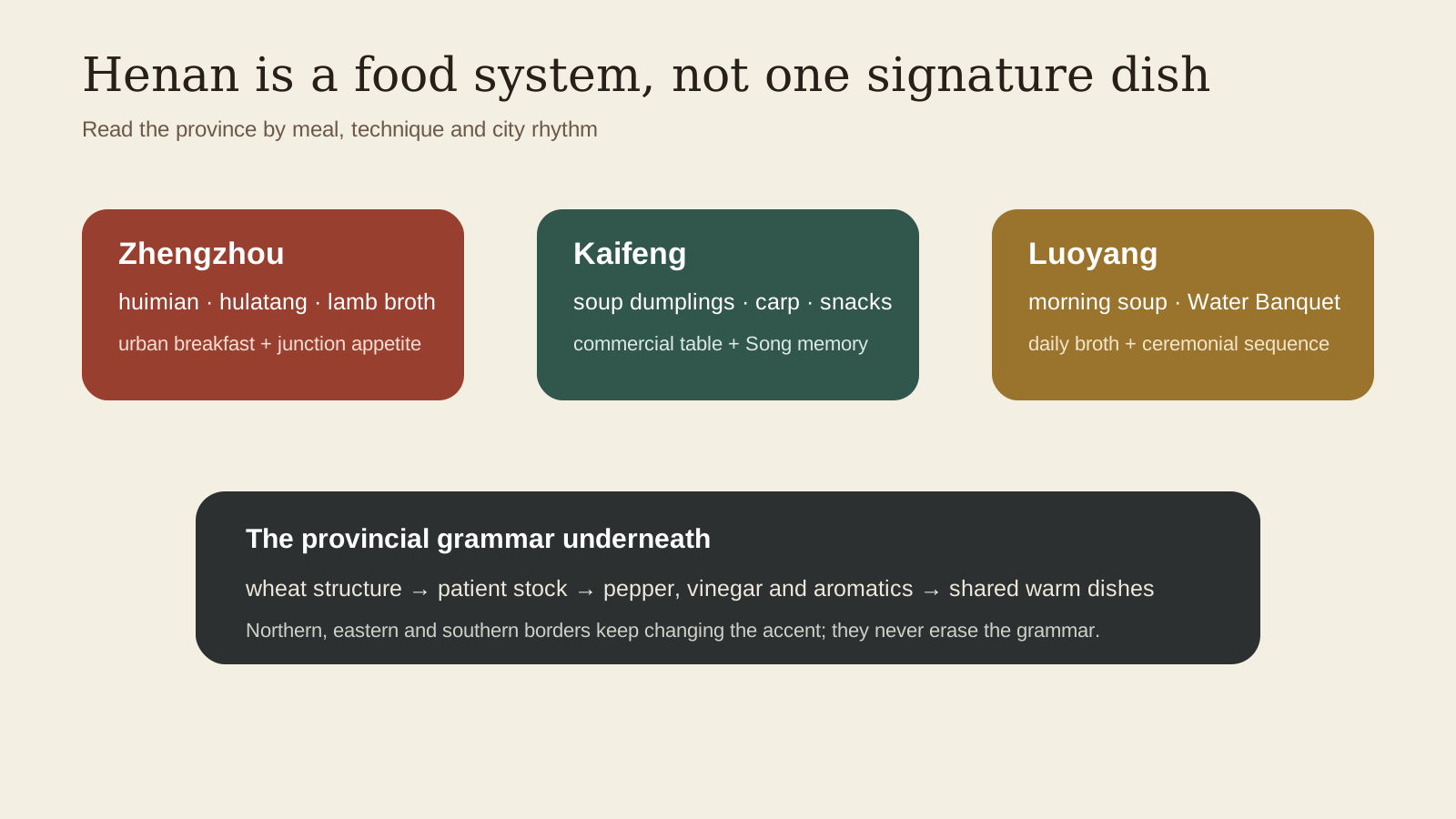
It is more useful to map real regional differences. Zhengzhou's modern identity centers huimian and fast urban breakfasts. Kaifeng restaurant culture draws on Northern Song memory but also on later commercial reinvention. Luoyang's Water Banquet belongs to its own ceremonial and tourism system. Northern Henan has strong wheat, chicken and lamb traditions; southern and eastern parts of the province meet neighboring food regions in different ways.
My own route through the subject is deliberately anti-checklist: Zhengzhou for the working rhythm of breakfast, Kaifeng when I want a meal with ceremony and night-market energy, and Luoyang when soup is allowed to be the structure rather than the side. Put all three into one afternoon and every bowl turns heavy. Give each city the meal it is good at, and the province suddenly has contrast: pepper against clear stock, speed against sequence, daily hunger against a table built for staying awhile.
A practical regional map
| Area | Foods to notice | Cultural context | Do not reduce it to |
|---|---|---|---|
| Zhengzhou | Huimian, hulatang, lamb soup, flatbreads and mixed stews | Railway city, migration and fast everyday meals | One famous noodle bowl |
| Kaifeng | Soup dumplings, carp dishes, peanut cake and night-market foods | Northern Song memory and long commercial food culture | Reconstructed imperial spectacle alone |
| Luoyang | Water Banquet, yan cai, soups and local noodles | Dynastic history, dry climate and banquet tradition | Peony-shaped presentation only |
| Anyang and northern Henan | Daokou roast chicken, wheat staples and soups | Northern plains agriculture and regional trade | A single branded chicken |
| Eastern and southern Henan | Hulatang traditions, buns, grains and cross-border flavors | Connections with Anhui, Hubei, Shandong and Jiangsu | One standardized provincial recipe |
Wheat is the everyday architecture
The Central Plains support a deep wheat culture: noodles, steamed buns, dumplings, flatbreads, fried dough, stuffed buns and pancakes move through breakfast, lunch and dinner. Rice is eaten, but wheat foods often give the meal its physical center.
Texture matters as much as shape. A noodle must hold broth. A steamed bun must remain soft without collapsing. A shuijianbao, or water-fried bun, needs a tender top and crisp base. Flatbread may be torn into soup, wrapped around meat or eaten beside a strongly seasoned bowl.
Calling this simply "heavy northern food" misses the range. Wheat can be elastic, crisp, flaky, porous or silky depending on hydration, fermentation and heat.
Zhengzhou huimian joins noodle and soup
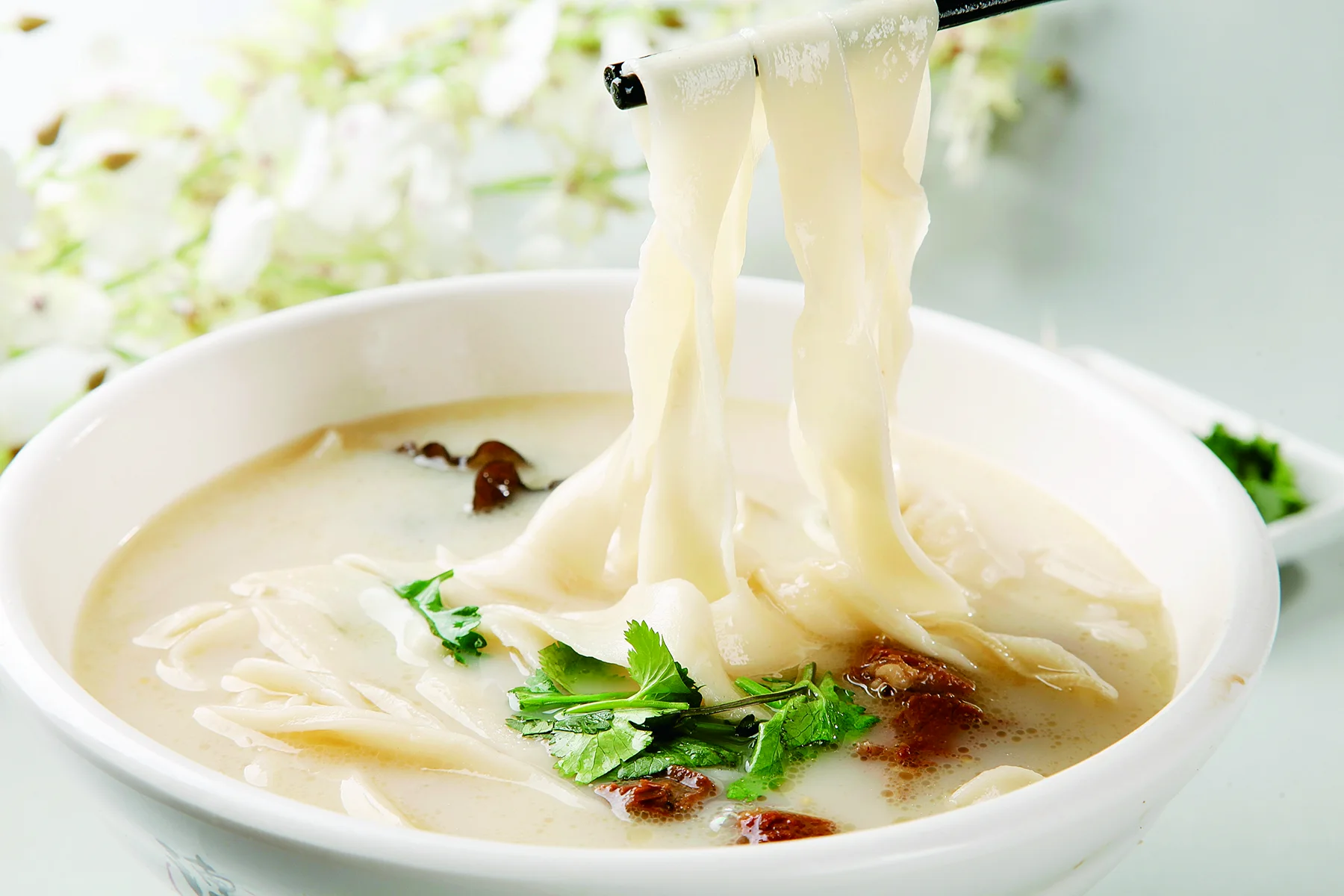
Huimian uses wheat dough stretched into broad strips and cooked in broth. The most familiar Zhengzhou versions are associated with lamb stock, though beef, mixed-meat and vegetarian adaptations also exist. Toppings may include tofu skin, kelp, wood-ear mushroom, greens, cilantro, quail egg or thin vermicelli.
The broth should not make the noodle irrelevant. Good strips retain elasticity and a slightly uneven hand-pulled character. A rich soup supports the wheat rather than reducing the bowl to liquid fat.
Huimian origin stories vary. Some restaurants link the dish to wartime or imperial anecdotes, but the modern Zhengzhou form is better understood through twentieth-century urban restaurant culture, migration and the demand for substantial, quickly served meals. Henan's own culture-and-tourism guide identifies huimian as a representative food built from high-gluten wheat, meat broth and multiple accompaniments; it supports the bowl's public regional status, not any one shop's invention legend.
How to read a huimian menu
| Menu choice | What changes | What to ask |
|---|---|---|
| Mutton huimian | Lamb broth and often lamb slices | Is the restaurant halal, and does the broth contain only lamb? |
| Beef huimian | Beef stock or beef topping | Is the broth itself beef-based or shared with another soup? |
| Three-delicacy huimian | Mixed toppings, often meat, mushroom or seafood depending on shop | What exactly does "three delicacies" mean here? |
| Vegetarian huimian | Vegetable broth and plant toppings where genuinely available | Confirm the stock contains no meat, lard or chicken powder |
| Small or large bowl | Noodle and topping quantity | Start small; Zhengzhou portions can be substantial |
Add chile, garlic or vinegar only after tasting the broth. Condiments are tools for adjustment, not proof that the original bowl lacks flavor.
Hulatang is breakfast with a peppery spine
Hulatang is a thickened soup with a pronounced pepper aroma. Famous Henan traditions include Xiaoyaozhen in Zhoukou and Beiwudu in Luohe, but recipes vary across the province. Wheat gluten, beef or lamb, kelp, tofu skin, wood-ear mushroom, vermicelli and other ingredients may appear.
Hulatang is not visually delicate. Its brown-gray thickness can look flat in a photograph even when the bowl is alive with pepper, gluten, vegetables, broth and vinegar. That is exactly why it matters to me. Henan food is often underestimated when it travels as an image because some of its intelligence lives in heat, elasticity and the way a bowl settles the body before work. A glossy hero shot cannot communicate the pepper arriving in the throat or the contrast between thick soup and a crisp fried companion. The first spoon must do the work that the photograph cannot.
Its heat often comes as much from black or white pepper as from chile. The sensation rises through the nose and throat rather than arriving only as red oil.
Hulatang is commonly paired with fried dough, buns or flatbreads. Some diners combine it with tofu soup in a mixed bowl. The point is not elegant plating. It is a hot, filling breakfast assembled for a working morning.
Hulatang versus hot-and-sour soup
| Dimension | Henan hulatang | Restaurant hot-and-sour soup |
|---|---|---|
| Main aromatic heat | Often pepper-forward | Pepper plus vinegar, with recipe varying widely |
| Eating context | Breakfast and street-side shops | Restaurant course or takeout soup in many regions |
| Body | Thick, substantial and ingredient-dense | Can range from light to heavily thickened |
| Typical partner | Fried dough, water-fried buns or flatbread | Usually eaten on its own as soup |
They may share sourness, pepper and thickening, but one should not be used as a translation for the other.
Lamb soup reflects movement and community
Lamb and mutton soups appear across Henan in local forms. Clear or milky broths, sliced meat, offal, cilantro, scallion and flatbread create meals suited to cold mornings and physically demanding work.
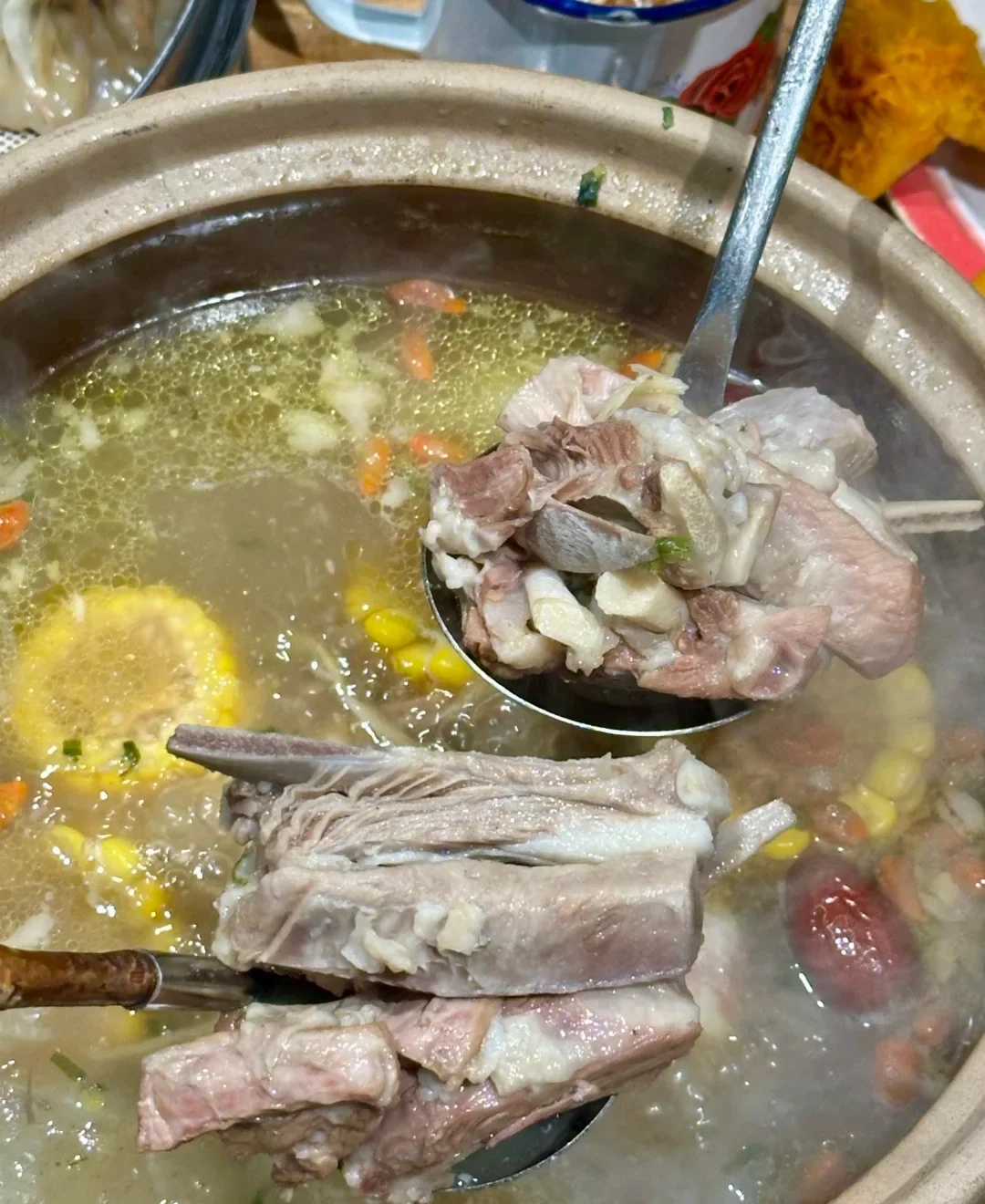
This authorized Zhengzhou field photograph makes the meal's scale visible: broth is not a decorative side, the meat remains bone-in, and diners assemble each bowl from a shared hot pot. It proves one current eating scene, not a universal Henan lamb-soup recipe.
Muslim Hui cooks and halal restaurants are important within Henan's lamb and beef foodways, but no single community owns every bowl. Check signage and ask about preparation rather than assuming all lamb restaurants follow the same religious standards.
Broth color is not a universal measure of strength. Milky appearance can come from emulsified fat and prolonged boiling; a clear broth may still carry deep flavor.
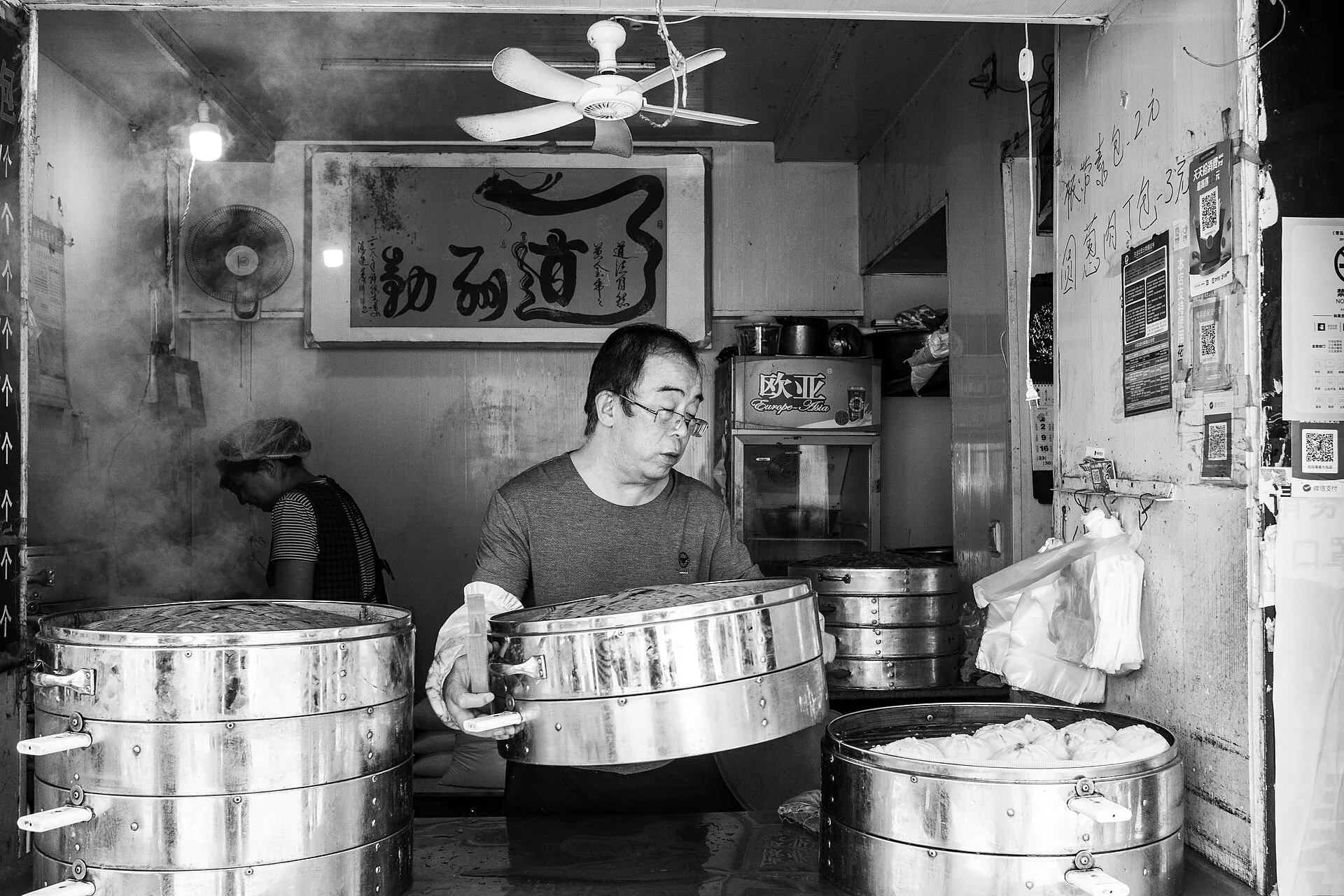
Kaifeng soup dumplings require patience
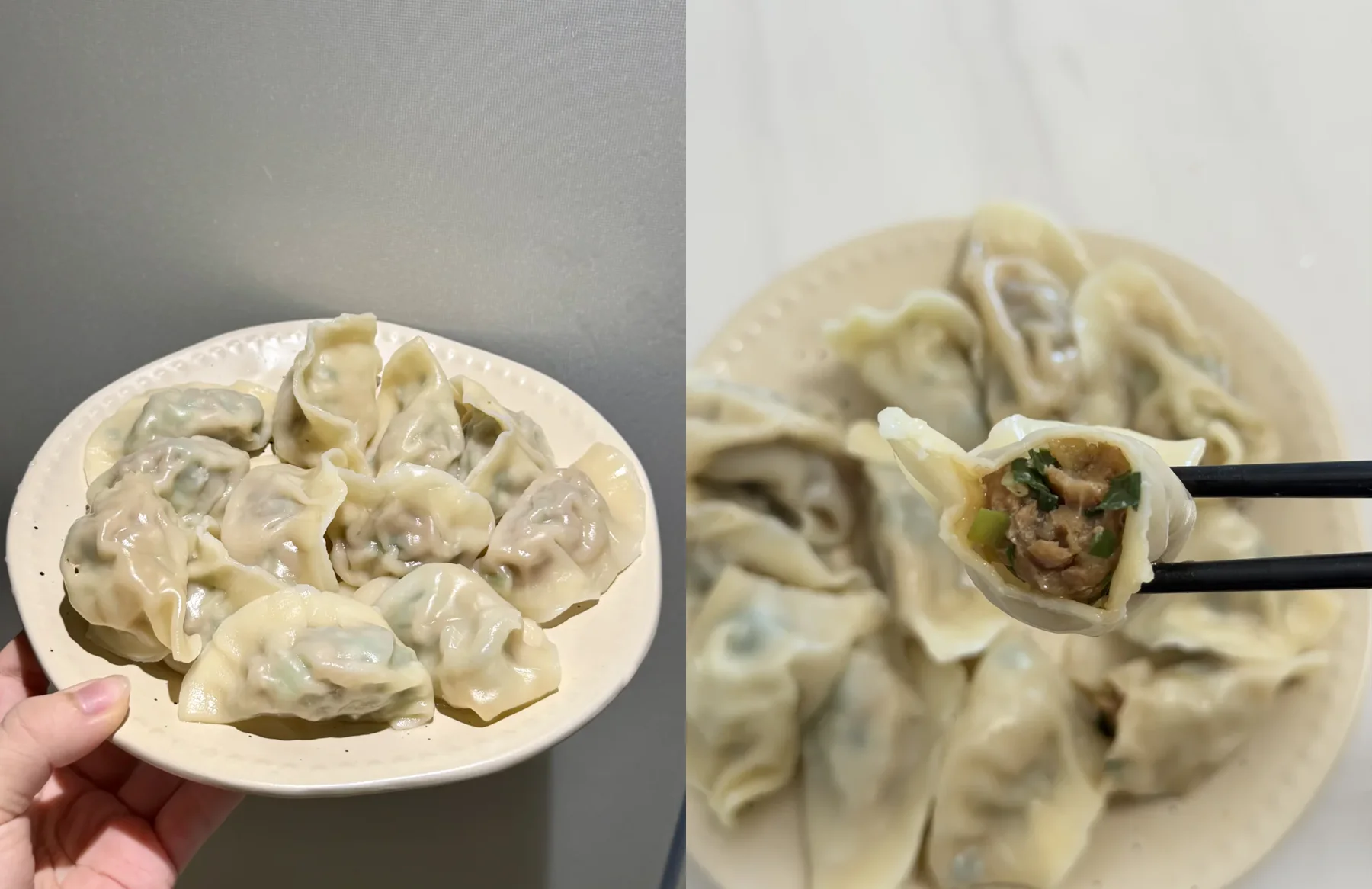
Kaifeng is associated with guantangbao, buns or dumplings containing seasoned meat and hot liquid. They are related to a wider family of soup-filled dumplings, but local form, wrapper and service should not be collapsed into Shanghai xiaolongbao. Use the dedicated Kaifeng food guide when night-market eating, carp and a full city-day route are the actual task.
Lift a dumpling gently, support it with a spoon, open a small edge and allow steam to escape before tasting the soup. Biting directly into a sealed dumpling is an efficient way to burn your mouth and lose the broth.
The best wrapper is thin enough to feel delicate but strong enough to hold liquid. A broken dumpling is not automatically bad if it was damaged by rough handling; watch how the basket arrives before judging the kitchen.
Carp with baked noodles is a Kaifeng composition
Liyu beimian joins sweet-sour Yellow River carp with extremely fine fried noodles placed over or beside the fish. The noodles soften where they touch sauce while remaining crisp at the edges.
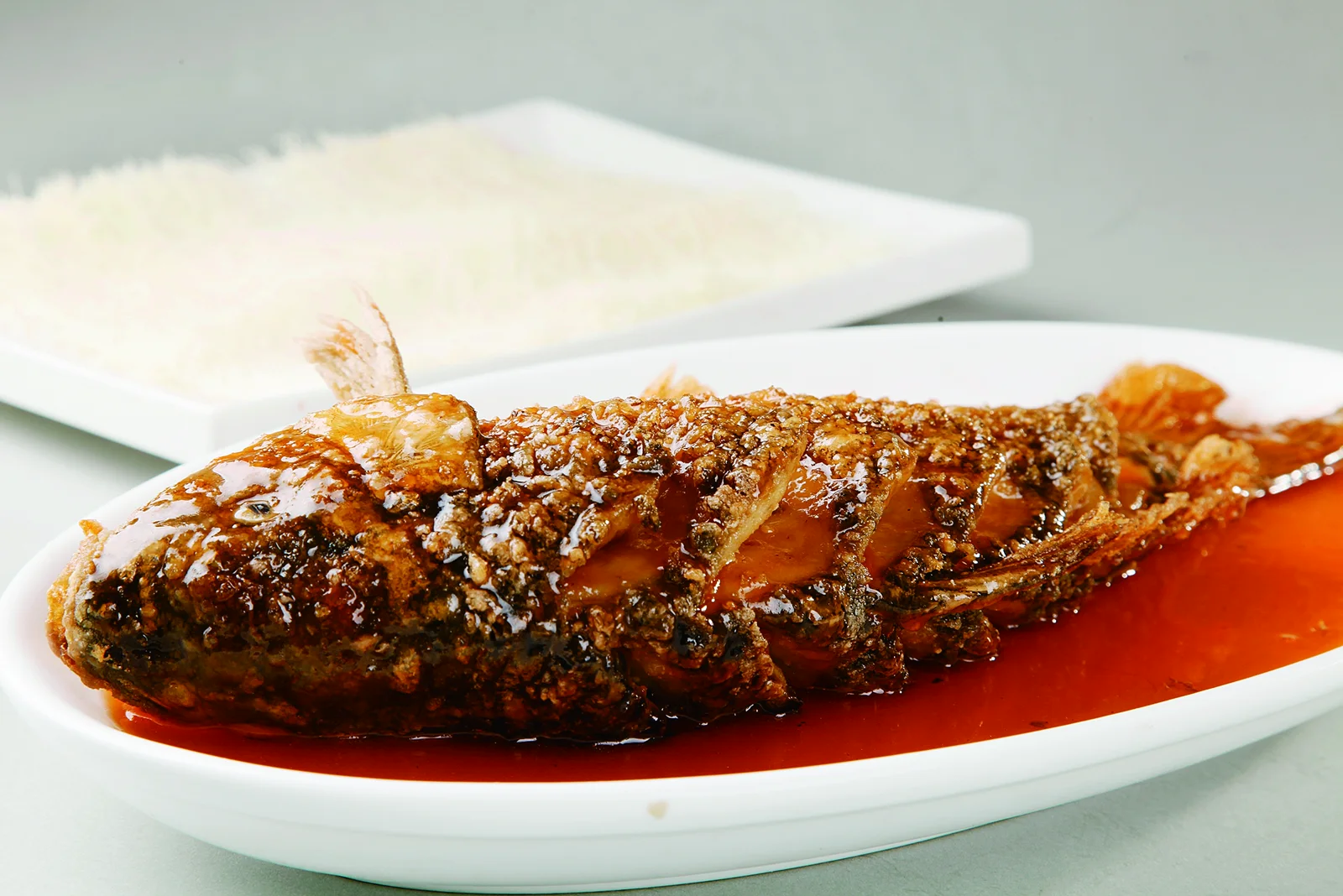
The photographed dish shows the sauced carp component; Kaifeng's named baked-noodle presentation adds a nest of very fine fried noodles.
The dish depends on contrast: fish flesh, crisp surface, glossy sauce and delicate noodle texture. It is a large shared order. Ask fish weight and price before committing, and eat carefully around fine bones.
Yellow River carp carries strong cultural prestige, but a menu name does not by itself document exact origin or sustainable sourcing. Ask what fish is actually being served.
The Luoyang Water Banquet is a sequence, not one soup
The Luoyang Water Banquet is a formal meal structure associated with a succession of dishes containing soup or flowing sauces. Modern banquet formats commonly present twenty-four courses, but restaurant scale and composition vary. For morning soup houses, old-city timing and a practical order, continue to the Luoyang food guide.
The experience is about pacing and relationship between dishes. Sour, peppery, warm and cooling elements move through the table. Ordering one isolated "Water Banquet dish" can be enjoyable, but it does not reproduce the full sequence.
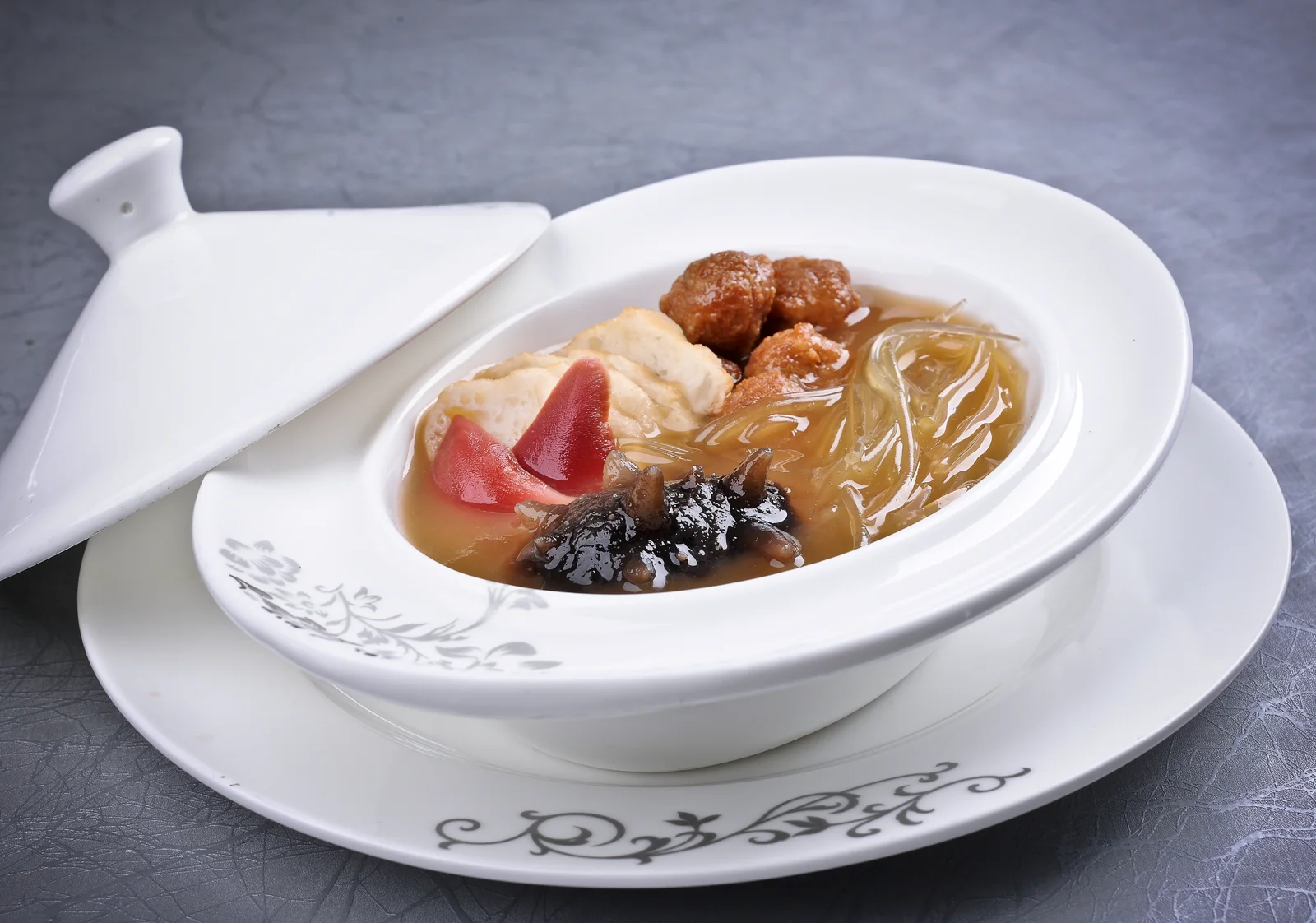
Yan cai transforms radish through fine cutting and preparation into delicate strands. Peony presentation connects the dish to Luoyang's flower identity, but knife work, broth and texture matter more than decorative resemblance.
Daokou roast chicken shows the power of a specialist product
Daokou roast chicken is associated with Daokou in Huaxian, Anyang. Whole chickens are seasoned with spices and cooked until aromatic and tender. Established shops protect their own spice ratios and processes.
Packaged chicken is common as a travel gift. Check production date, storage conditions and whether refrigeration is required. A historical brand claim should be supported by the producer's documentation, not assumed from antique-style packaging.
Roast chicken works best as part of a table with vegetables, bread or congee. Eating it alone exaggerates salt and richness.
Mixed stew is household logic made visible
Henan huicai brings multiple ingredients into broth: meatballs, fried pork, tofu, cabbage, vermicelli, mushrooms and seasonal vegetables can all appear. There is no single mandatory formula.
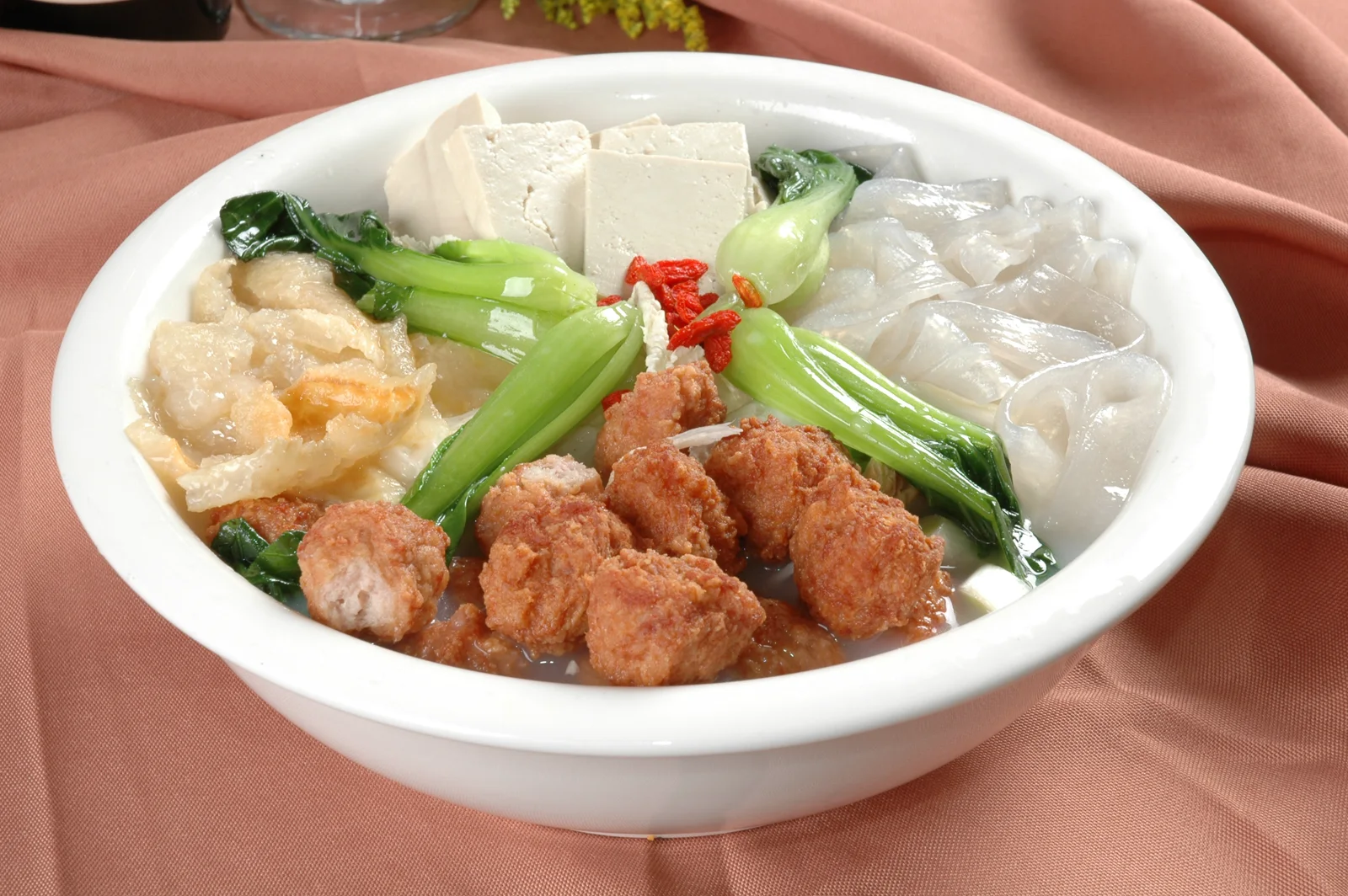
The dish demonstrates household economy without being merely leftovers. Ingredients enter in an order that preserves texture, and fried or dried components gain a second life by absorbing broth.
At restaurants, huicai may become a large, polished centerpiece. At home, it is a flexible answer to weather, available ingredients and the need to feed several people.
Steamed vegetables are more than a side dish
Henan home cooking includes vegetables or leaves lightly coated with flour or grain meal and steamed, then dressed with garlic, sesame oil, vinegar or other seasonings. Wild greens and seasonal leaves may be used when available.
This technique stretches vegetables, changes their texture and gives seasoning something to cling to. It also shows why regional food should not be represented only through meat, soup and wheat.
Ask what leaf is being served. Names can be highly local, and seasonal greens may not have a useful one-word English translation.
Bian dan belongs to the cold-dish table
In Henan, preserved eggs are often called bian dan (变蛋). They may be sliced and dressed with garlic, chile, vinegar or peppers.
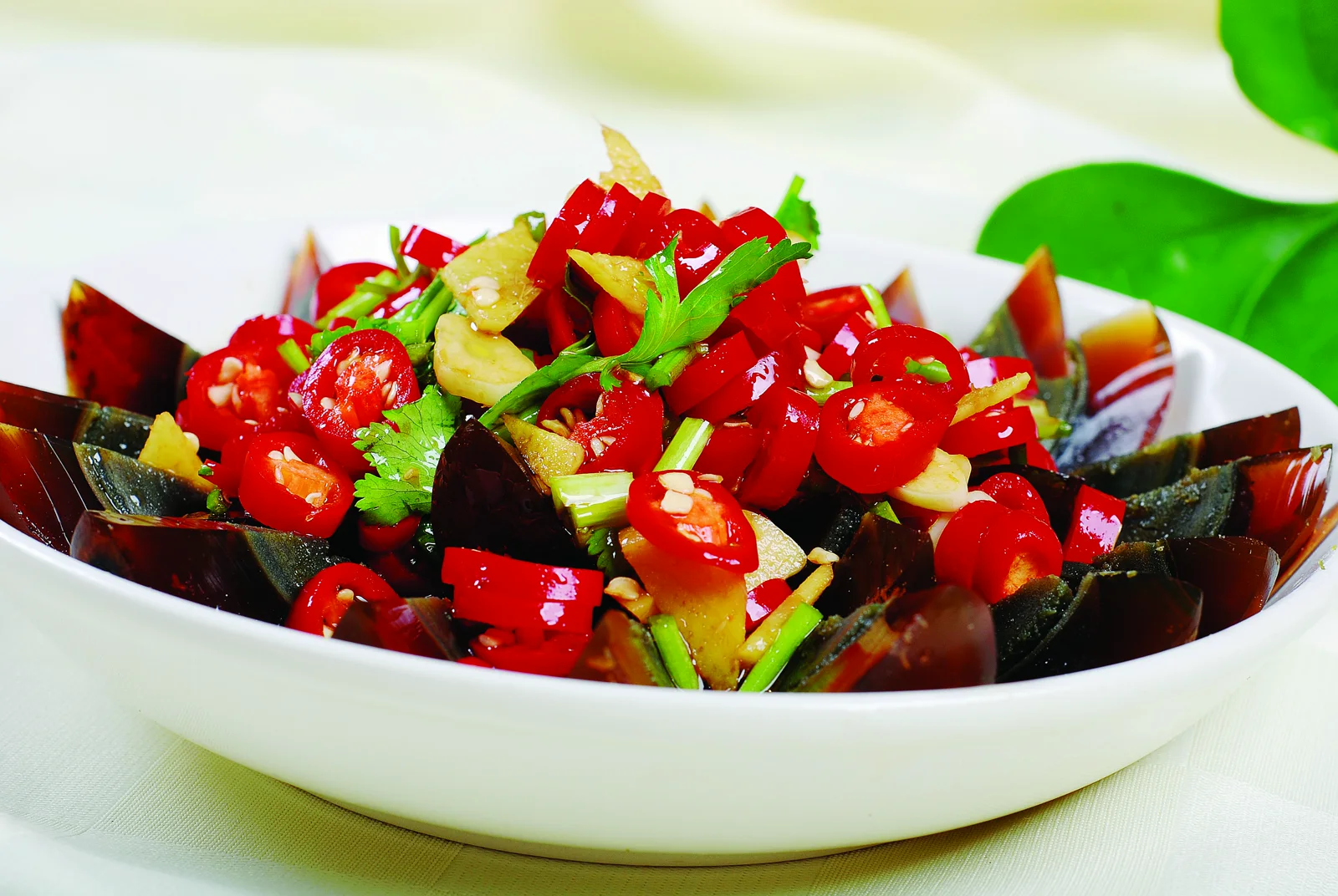
The translucent dark white and creamy yolk are created through alkaline curing, not age in the ordinary sense. Good seasoning balances the egg's mineral, savory intensity rather than covering it completely.
Everyday breakfast is a complete food system
Zhengzhou breakfast shops may combine hulatang, tofu soup, fried dough, water-fried buns, steamed buns, egg-filled pancakes and millet porridge. The choice is modular: one liquid, one wheat item and a small cold dish.
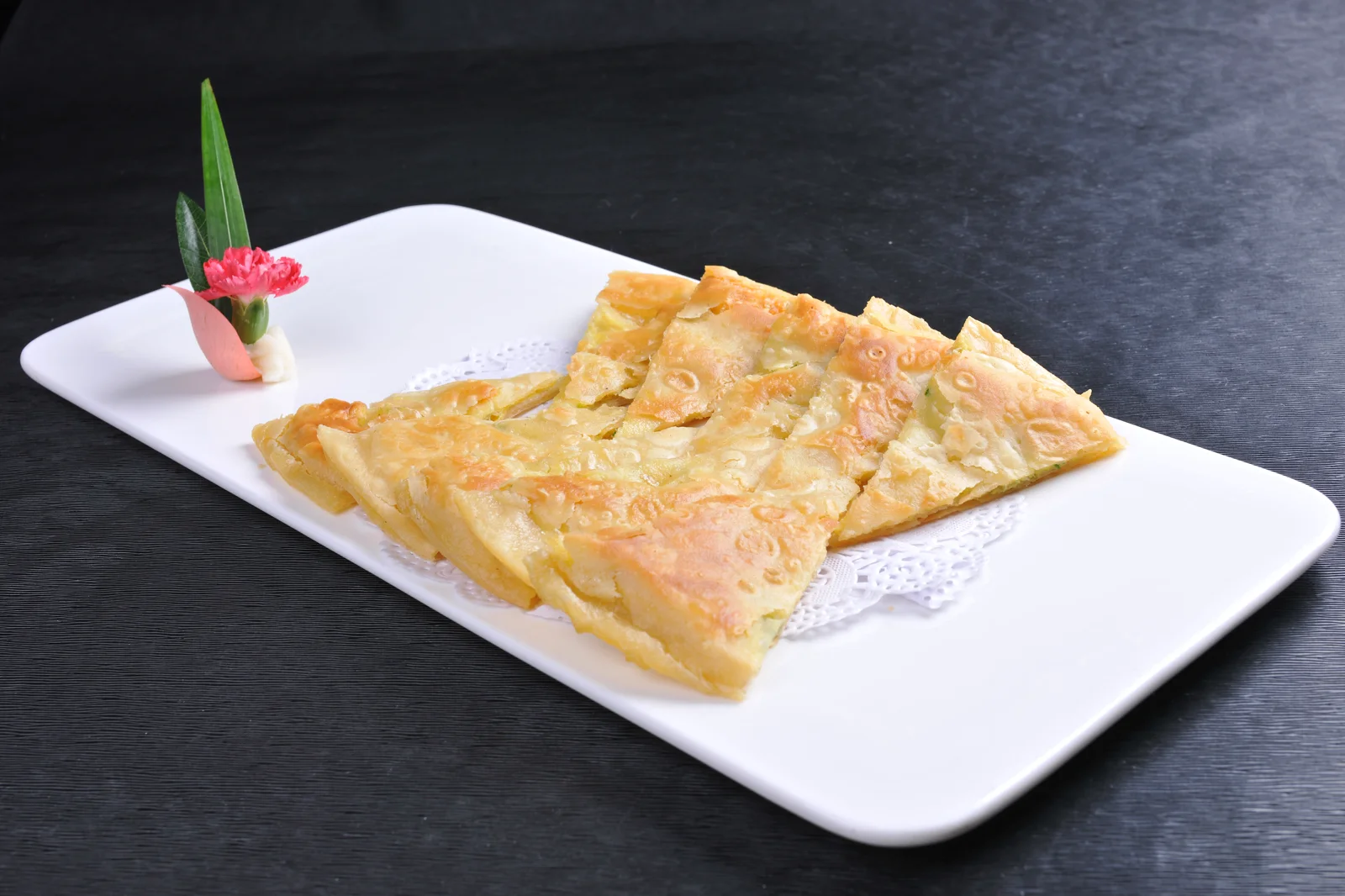
Egg-filled pancakes appear in many Chinese cities and are not exclusively Henan. In Zhengzhou, they belong to the practical urban breakfast landscape rather than a claim of unique origin.
Go early. Breakfast foods often decline in quality or disappear after the morning rush. Order at the counter, observe whether diners collect their own bowl and avoid occupying a small table for an extended photo session.
Famous dishes versus daily eating
| Famous regional dish | Everyday counterpart | What the contrast teaches |
|---|---|---|
| Carp with baked noodles | Huimian | Banquet composition versus a repeatable city bowl |
| Luoyang Water Banquet | Hulatang breakfast | Formal sequence versus fast daily sustenance |
| Daokou roast chicken | Mixed stew | Specialist preserved product versus flexible household cooking |
| Kaifeng soup dumplings | Water-fried buns | Delicate soup-filled service versus crisp-bottomed breakfast food |
| Peony yan cai | Steamed seasonal greens | Presentation and knife work versus household use of vegetables |
How to order a balanced Henan meal
| Situation | A balanced order | What to avoid |
|---|---|---|
| Solo breakfast | Hulatang plus one bun, fried-dough item or small flatbread | Ordering several wheat items before seeing their size |
| Solo lunch | Small huimian, dumplings or lamb soup with bread | Treating a large banquet dish as an individual portion |
| Two-person dinner | One braised or roast dish, one vegetable, one soup and a staple | Ordering huimian, dumplings and pancakes together without vegetables |
| Four-person regional meal | Chicken or fish, mixed stew or soup, steamed vegetables, cold dish and wheat staple | Choosing four brown braised dishes with similar texture |
| Kaifeng food day | Soup dumplings, one shared fish or roast dish and a modest night-market snack | Turning every famous food into a full portion at one sitting |
| Luoyang banquet | A small Water Banquet set where available | Booking the largest course count for too few diners |
Vegetarian, allergy and dietary guidance
| Need | What to know |
|---|---|
| Vegetarian | Vegetable noodles and steamed greens may still use meat stock, lard or chicken seasoning; confirm the broth and dressing |
| Vegan | Wheat foods can be plant-based, but egg, dairy, stock and animal fat may enter dough, fillings or sauces |
| Halal | Look for qingzhen (清真) signage, but communicate your exact standard; not every lamb restaurant is halal |
| Gluten sensitivity | Wheat dominates noodles, buns, gluten pieces and thickened soups; hulatang may contain both wheat gluten and flour thickener |
| Peanut or sesame allergy | Sesame oil, sesame paste and peanuts can appear in cold dishes, buns and condiments; cross-contact is common |
| Low salt or oil preference | Broths, roast meats and braises can be concentrated; ask for vegetables and smaller portions rather than relying only on custom seasoning |
| Fish bones | Whole carp contains fine bones; eat slowly and supervise children carefully |
Severe allergies require a clear Chinese translation and a restaurant capable of discussing stock, flour and shared equipment. Visual inspection cannot identify every thickener or seasoning powder.
How to recognize thoughtful Henan cooking
- Huimian noodles retain elasticity and do not dissolve into the broth.
- Hulatang tastes of pepper and ingredients, not raw starch alone.
- Soup dumpling wrappers hold liquid without becoming thick and doughy.
- Braised chicken remains tender but does not collapse into cottony fibers.
- Mixed stew keeps vegetables, tofu and meatballs texturally distinct.
- Sweet-sour fish balances acidity and sugar while the flesh remains moist.
- Steamed vegetables taste of the leaf as well as garlic and sesame oil.
- Broth has a clear direction, whether rich or light, instead of depending only on salt.
Frequently asked questions about Henan cuisine
What is Henan cuisine known for?
Henan cuisine is known for wheat foods, soups, braises, stews and balanced savory flavors. Famous examples include Zhengzhou huimian, hulatang, Kaifeng soup dumplings and carp with baked noodles, the Luoyang Water Banquet, Daokou roast chicken and many local lamb soups, steamed vegetables and mixed stews.
What food is Zhengzhou famous for?
Zhengzhou is especially associated with huimian, broad hand-stretched noodles served in a rich broth. Hulatang is a common breakfast, while lamb soup, water-fried buns, dumplings, flatbreads, mixed stews and halal noodle restaurants are important parts of everyday eating.
Is Henan food spicy?
Henan cuisine is not defined by chile heat. Black and white pepper can be prominent in hulatang, while garlic, vinegar, scallion, ginger, sesame oil, stock and braising sauces shape many dishes. Chile is available and modern tastes vary, but the regional table is broader than spicy food.
What is the difference between huimian and other Chinese noodles?
Henan huimian uses wide wheat dough strips stretched by hand and cooked directly in broth. The bowl is defined by the relationship between noodle texture and soup, often with lamb or another stock plus tofu skin, kelp, mushrooms, greens or other toppings. Shops vary substantially.
What should two people order at a Henan restaurant?
Choose one soup or noodle, one braised or roast dish, one vegetable or steamed dish and a wheat staple if needed. At a banquet-style restaurant, confirm portion sizes before ordering whole fish, roast chicken or large stews. For breakfast, share hulatang with fried dough, a water-fried bun or a flatbread.
Central Plains food rewards attention to ordinary structure
Henan cuisine does not need an invented imperial legend to become important. Its strength is already visible in how dough stretches, how pepper opens a breakfast soup, how broth turns several ingredients into a meal and how regional cities preserve distinct forms without leaving the province's shared wheat culture.
In Zhengzhou, begin with huimian and hulatang because they belong to the city's rhythm. Then travel outward carefully: soup dumplings in Kaifeng, a Water Banquet in Luoyang, roast chicken from northern Henan. The province becomes legible not as one ancient menu, but as a network of markets, fields, roads, kitchens and appetites across the Central Plains.
Use the Luoyang food guide when banquet pacing and breakfast soups deserve a full day, and the Kaifeng food guide when the task is specialist counters, night-market appetite and the difference between a famous snack and a balanced meal.