Kaifeng food has two public faces. One belongs to old restaurants and formal dishes: soup dumplings, Yellow River carp, braised meats and elaborate poultry. The other appears under market lights: fried liangfen, lamb-filled flatbread, sweets and snacks eaten while walking. Both are real, but neither should be mistaken for an unchanged menu from the Northern Song capital.
The broader Henan cuisine guide explains the regional pantry, while Yale University Press's The Food of China supplies a serious historical frame. This page stays at table height: what belongs together, what should be ordered separately and what texture proves the kitchen handled the dish well.
Kaifeng food at a glance
| Food | Chinese name | Best context | What defines it |
|---|---|---|---|
| Soup dumplings | 开封灌汤包 | Breakfast, lunch or specialist restaurant | Thin pleated wrapper holding seasoned meat and hot broth |
| Carp with baked noodles | 鲤鱼焙面 | Shared banquet-style meal | Sweet-sour whole carp paired with a nest of extremely fine fried noodles |
| Bucket chicken | 桶子鸡 | Cold dish, takeaway or shared meal | Firm chicken seasoned through a spiced brine or cooking liquid, commonly served chopped |
| Lamb kangmo | 羊肉炕馍 | Snack or light meal | Thin wheat layers filled with seasoned lamb and cooked until browned and crisp |
| Fried liangfen | 炒凉粉 | Market snack or simple meal | Starch jelly cut into pieces and fried with sauce, aromatics and chile to taste |
| Braised fish | 黄焖鱼 | Shared restaurant dish | Small fish or fish pieces slowly cooked in a savory sauce; local versions vary |
| Peanut cake | 花生糕 | Sweet snack or gift | Crumbly confection built from peanuts and sugar, with texture varying by maker |
| Almond tea | 杏仁茶 | Sweet bowl or evening snack | Thick hot dessert drink with almond aroma and optional nuts, seeds or dried fruit |
Kaifeng owns a city cuisine inside Henan
The broader Henan cuisine guide explains Central Plains wheat culture, soups and regional differences. Kaifeng deserves its own page because its strongest food identity joins formal restaurant craft to dense market eating.
Northern Song stories surround the city's menu. Some dishes may have older precedents, but recipes, ingredients, restaurant techniques and names change. A claim that one snack was eaten by an emperor is not automatically historical evidence.
The useful question is not "Is this exactly one thousand years old?" It is "What work, ingredients and social setting make this recognizably Kaifeng today?"
My rule in Kaifeng is simple: do not turn dinner into a competitive eating event. Soup dumplings, fried liangfen, lamb kangmo, a sweet bowl and a whole fish all have different weights, temperatures and moments. The most satisfying route lets one restaurant dish have a proper place, then leaves enough appetite to follow the market's changing smells without needing to declare every stall a masterpiece. Kaifeng’s charm is not that an emperor might once have eaten something similar; it is the very current pleasure of warm broth, crisp starch and people lingering under market lights.
I trust repetition more than a “century-old” sign. A specialist who makes one thing all morning gives you evidence: wrapper thickness, turnover, temperature and the rhythm of regular customers. A broad menu beneath an antique-looking plaque gives you a story. Sometimes the story and the cooking agree; the plate must still prove it.
Soup dumplings demand patience
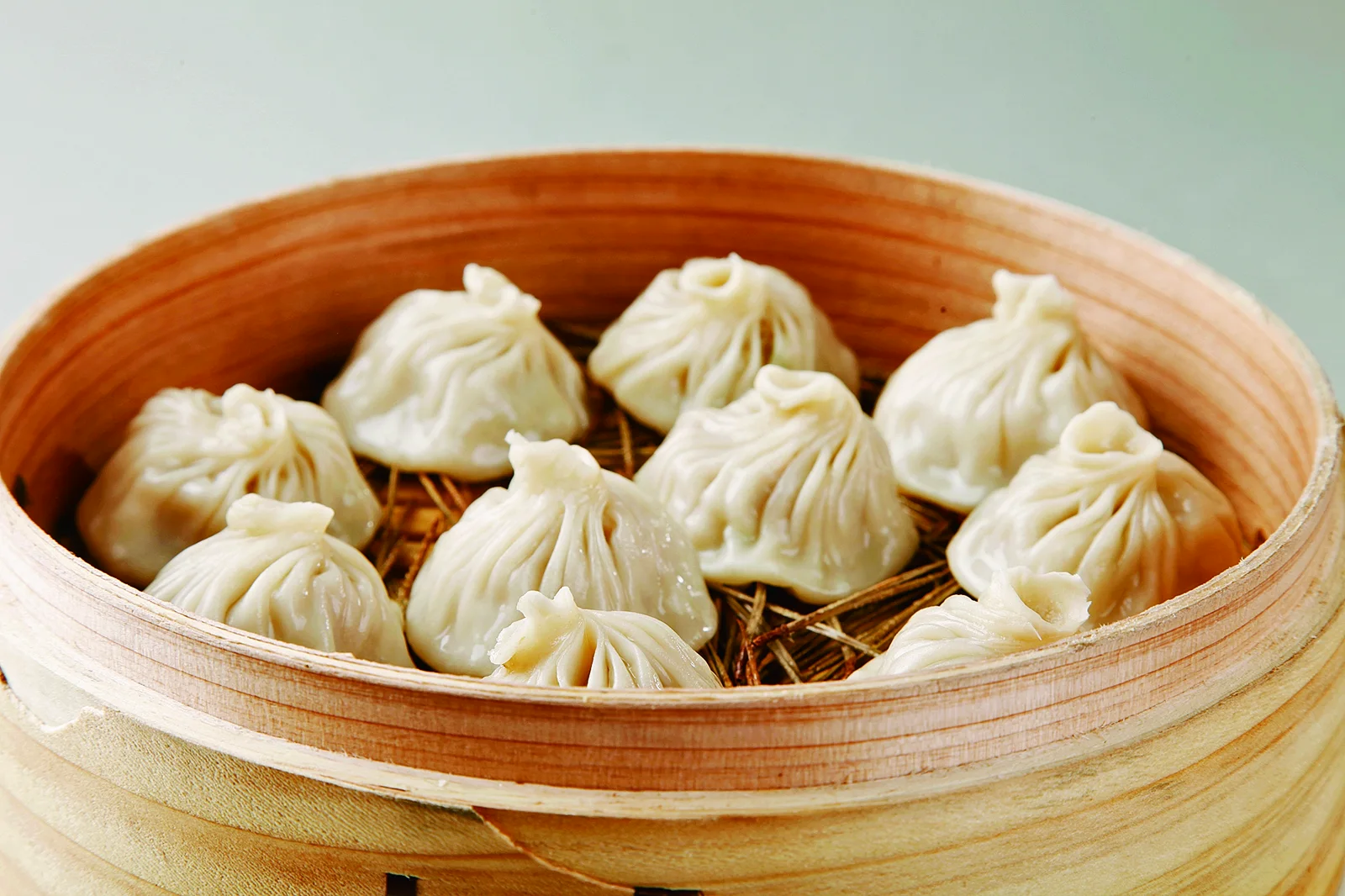
Kaifeng guantangbao are soup-filled dumplings made with a thin wheat wrapper, seasoned meat and broth that liquefies during steaming. They belong to a broad Chinese family of soup dumplings but should not be collapsed into Shanghai xiaolongbao.
Local shops vary in size, pleat count, filling, wrapper thickness and whether the dumplings sit on leaves or another steamer lining. Pork is common, while beef, lamb or seafood versions may appear.
How to eat a soup dumpling
| Step | Action | Reason |
|---|---|---|
| 1 | Lift gently and support it with a spoon | A thin wrapper can tear under its own weight |
| 2 | Open a small edge | Releases steam without losing all the broth |
| 3 | Taste the liquid carefully | The soup can remain dangerously hot after the basket arrives |
| 4 | Add a little vinegar or ginger only if desired | Condiment should sharpen the filling, not erase it |
| 5 | Eat the wrapper and filling together | The balance of dough, broth and meat defines the dumpling |
Do not insert a straw unless the restaurant specifically serves a form designed for it. The viral technique is not a universal local rule.
How to judge Kaifeng soup dumplings
| Detail | Better sign | Warning sign |
|---|---|---|
| Wrapper | Thin, elastic and strong enough to lift | Thick enough to dominate or already broken in the basket |
| Broth | Savory, aromatic and integrated with the filling | Mostly grease or aggressively salty liquid |
| Filling | Juicy, seasoned and texturally clear | Rubbery meat with no relationship to the broth |
| Pleating | Even enough to close securely | Decorative complexity that leaves a raw dough knot |
| Service | Hot basket, clean spoon and quick table delivery | Dumplings left cooling until the broth congeals |
Carp with baked noodles is a two-texture composition
Liyu beimian combines a sweet-sour whole carp with very fine fried noodles. The noodles remain crisp in dry areas and soften where sauce reaches them, creating the dish's central contrast.
The photographed presentation keeps the noodle component separate; restaurants may arrange it over or beside the fish. Ask the fish weight, price calculation and final estimated price before ordering. This is a shared dish, not an efficient solo lunch.
Yellow River carp has strong prestige, but a menu name does not guarantee exact sourcing. Ask what species is being served. Eat slowly around fine bones and supervise children carefully.
Ordering carp without waste
| Group size | Sensible approach | Main risk |
|---|---|---|
| Solo | Skip it or find a tasting portion | Paying for a whole fish and wasting most of it |
| Two people | Choose the smallest available fish and only one other dish | Adding dumplings, chicken and multiple snacks too soon |
| Four people | One shared carp, vegetable and modest staple | Ordering a banquet quantity because every dish is famous |
| Six or more | Add cold chicken or another regional dish | Letting the noodles sit until all crispness disappears |
Bucket chicken is a cold, firm specialist food
Kaifeng tongzi ji, commonly translated as bucket chicken, is prepared so seasoning penetrates the bird while the meat retains a firm sliceable texture. It is often sold by specialist shops and served cold or at room temperature.
The name does not mean a fried chicken served in a modern paper bucket. Cooking and brining methods vary by producer. Good chicken is aromatic around the bone, seasoned without becoming harshly salty and moist without collapsing.
Buy a small portion unless you are feeding a group. For takeaway, ask about storage temperature and how long the chicken can remain unrefrigerated.
Lamb kangmo turns wheat into crisp layers
Yangrou kangmo encloses seasoned lamb, scallion and spices between thin wheat layers, then cooks the bread on a hot surface until the exterior browns.
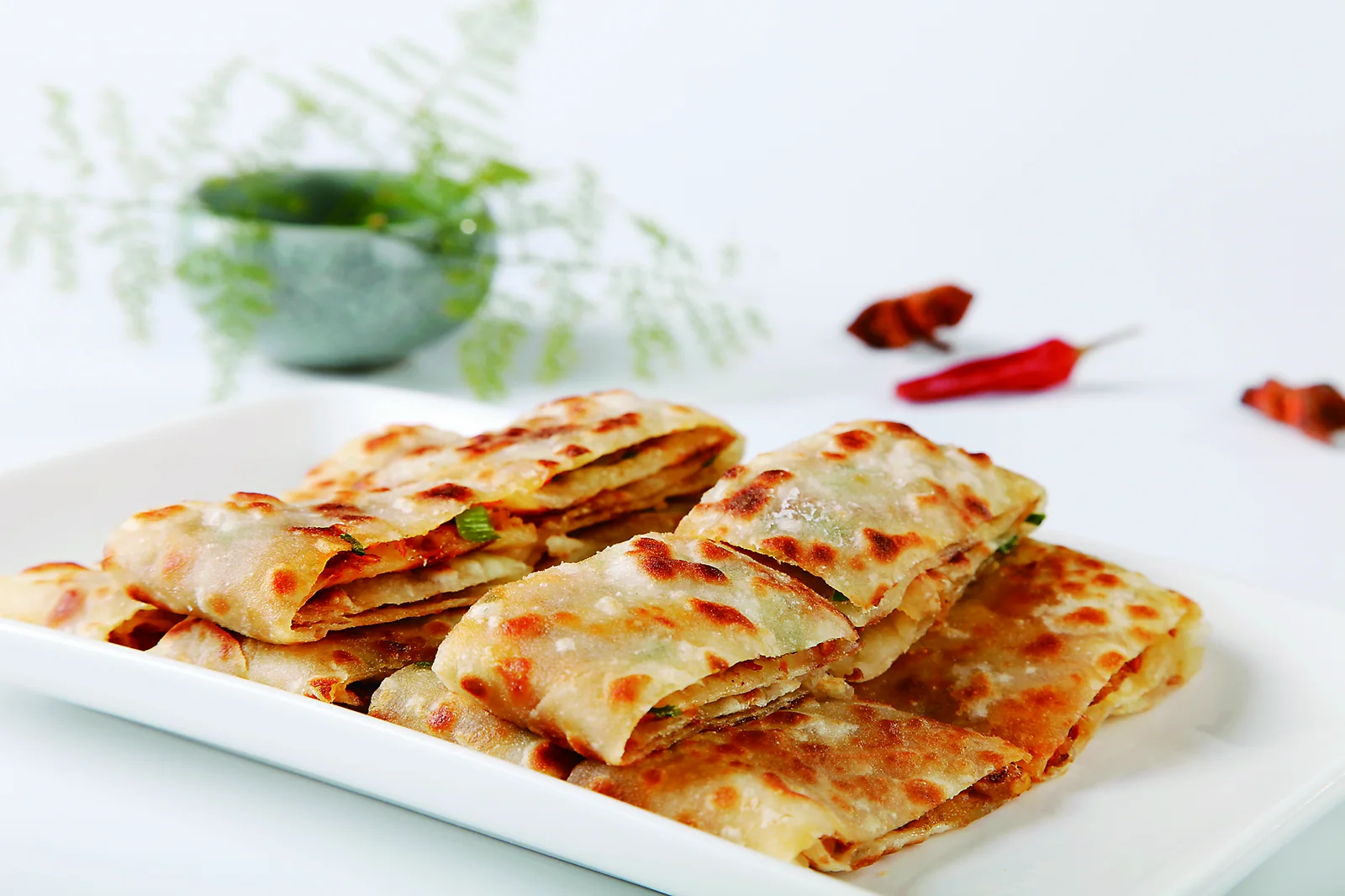
The best contrast is crisp outside, tender inside and juicy without leaving the wrapper greasy. It is easy to underestimate because the pieces look flat. One order can be a substantial light meal.
Kaifeng's lamb and beef foodways are connected to Hui Muslim communities and halal commerce. Look for qingzhen (清真) signage when needed and communicate your exact standard; not every stall using lamb follows the same kitchen rules.
Fried liangfen belongs to the hot pan
Liangfen is a starch jelly, often made from mung bean, pea or another starch. In Kaifeng's fried form, cubes or irregular pieces cook with sauce, garlic, scallion and optional chile until surfaces become glossy and some edges develop color.
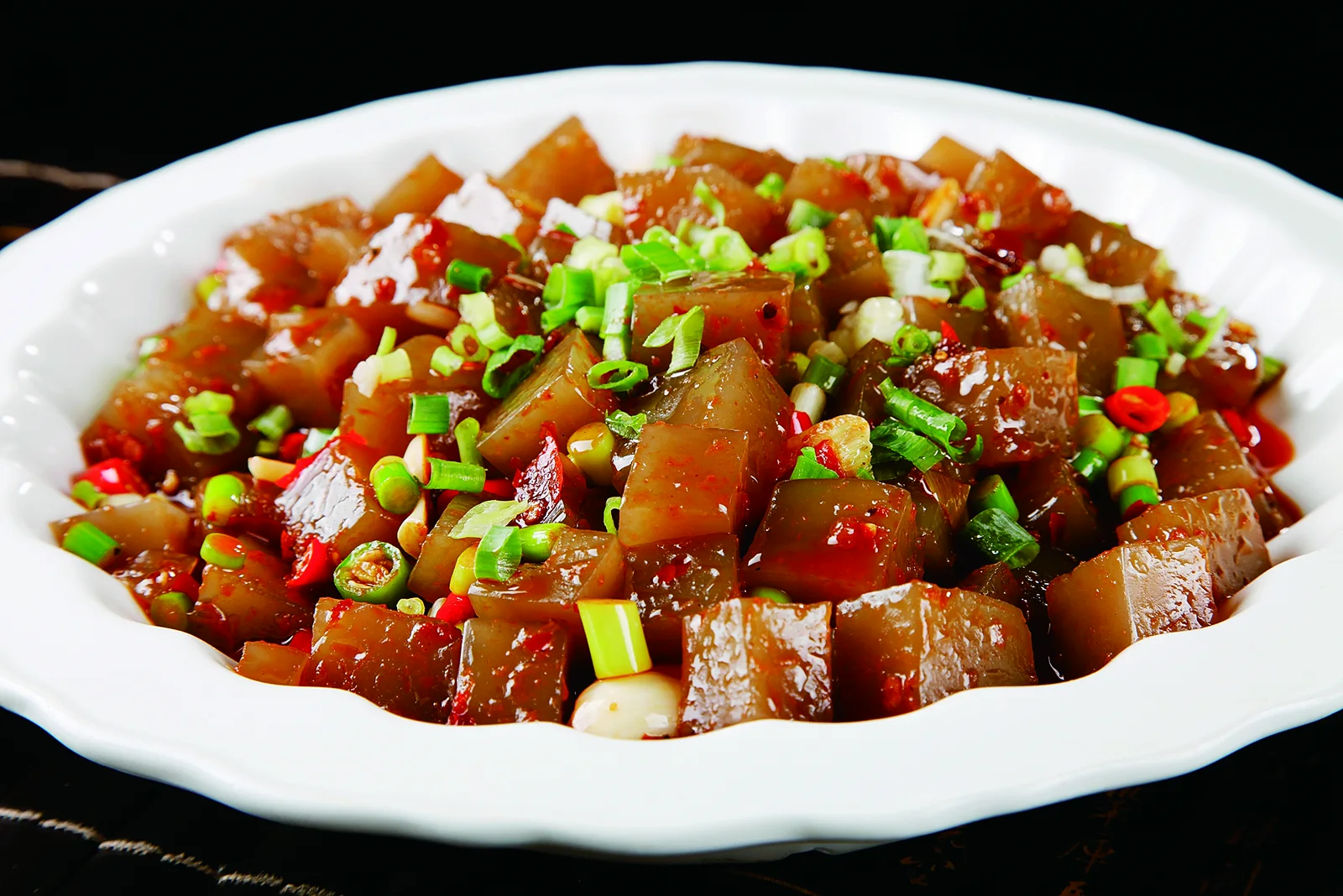
Texture should remain soft and slippery with enough structure to lift. If it becomes one paste, heat control or starch quality has failed. Eat it promptly; cooling makes the sauce feel heavier and the jelly firmer.
Ask for less chile before cooking rather than trying to remove red oil afterward. The dish can be savory and garlicky without being extremely hot.
Fried crisp pork connects banquet and street appetite
Zisu rou is associated with pork fried to create a crisp surface, sometimes followed by additional seasoning or service with thin wrappers and aromatics. Names and exact preparation vary, so confirm what the restaurant means before ordering.
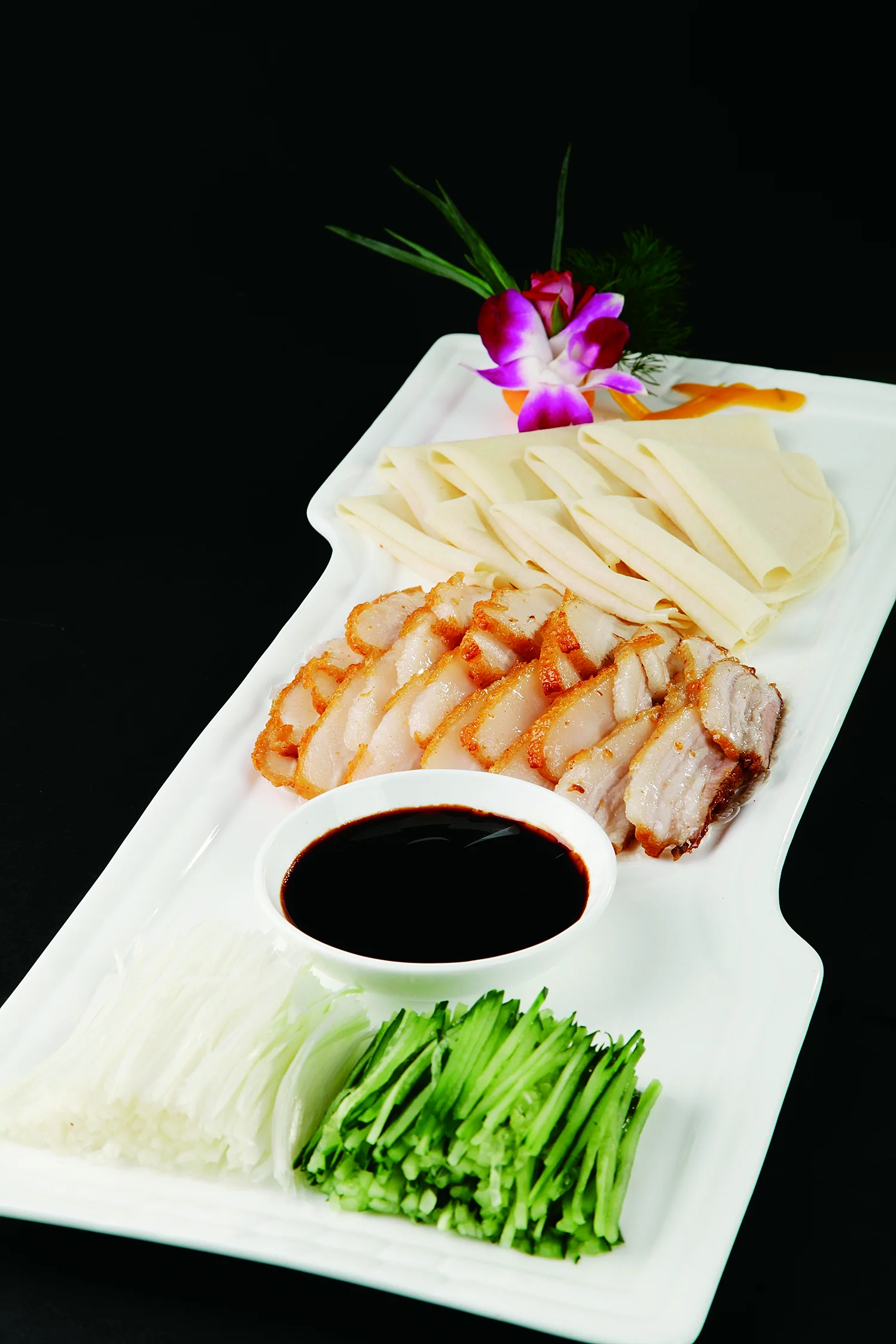
The photographed version demonstrates the intended contrast between browned meat, soft wrapper and fresh vegetables. It is rich. Pair it with a vegetable or light soup rather than another fried meat and a full basket of dumplings.
Braised fish is broader than one famous carp
Kaifeng menus include huangmen yu, or yellow-braised fish, commonly built from smaller fish or portions simmered in a savory sauce. Recipes differ in fish, frying, stock, spice and final thickness.
This dish belongs to everyday and restaurant cooking more than the visual ceremony of carp with baked noodles. Ask whether the fish is whole, how many pieces arrive and whether bones are fine. The word huangmen describes a braising family, not one standardized recipe across China.
Rabbit and other cold meats require specialist trust
Spiced rabbit appears in Kaifeng shops and markets, often sold chopped or torn for cold eating. The meat is lean, so careful cooking and seasoning are important.
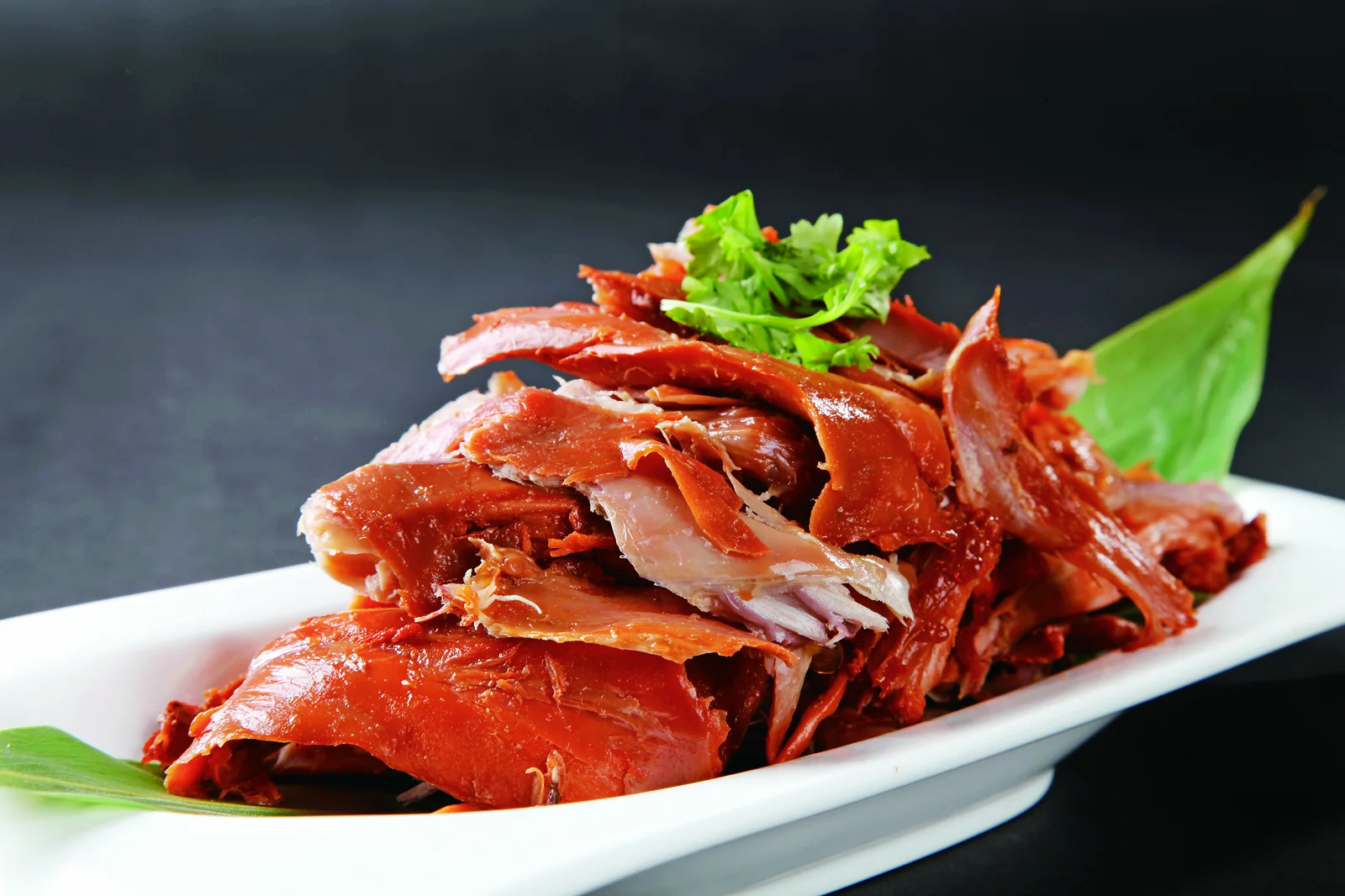
Buy from a busy specialist with clear storage and pricing. Small bones can remain among chopped pieces. Travelers who do not eat rabbit should ask before assuming every reddish cold meat is chicken.
Sweet potato puree is small but not light
Hongshu ni, sweet potato puree, turns an ordinary root into a glossy shared sweet. Sugar, oil and sometimes nuts, sesame or fragrant additions create a dense, smooth texture.
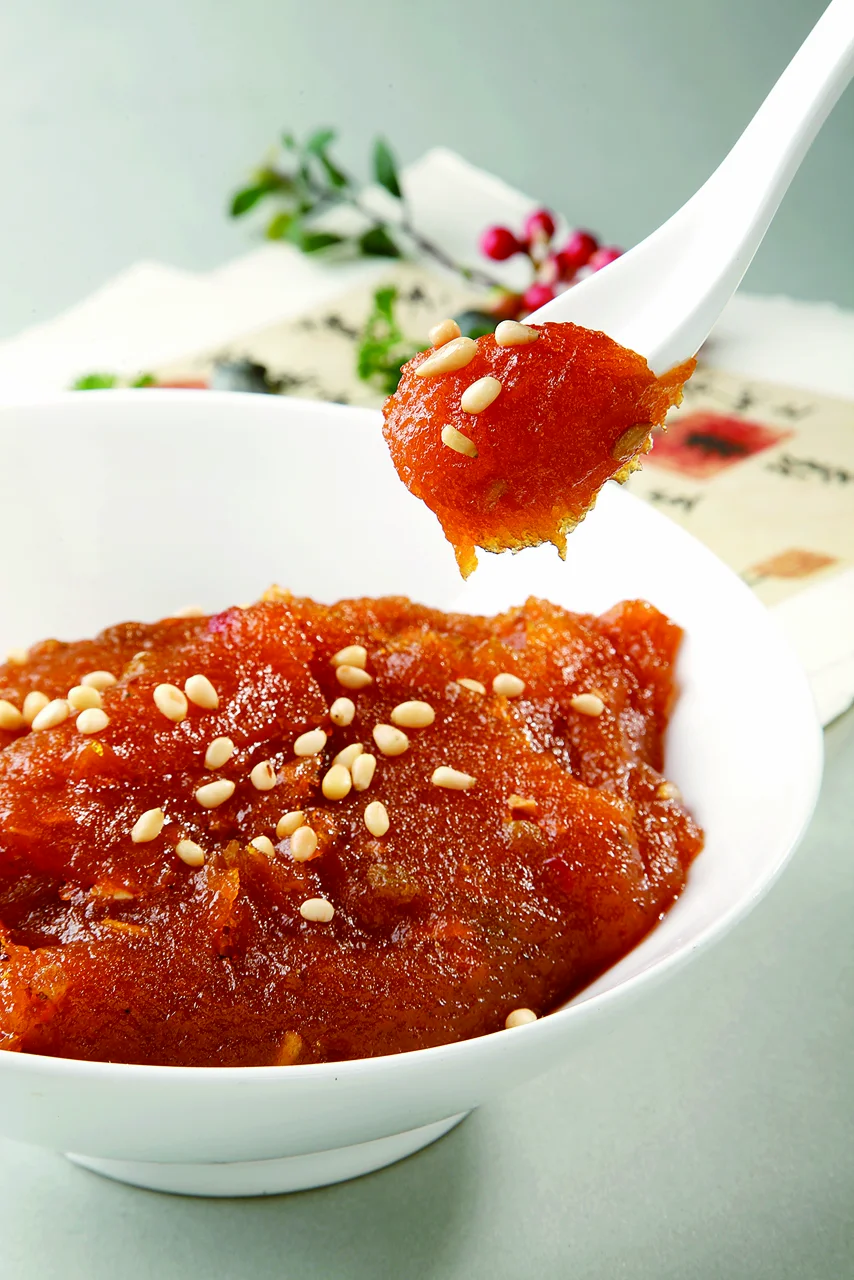
Order one small bowl for several people. The surface can retain heat and the sweetness builds quickly. It works best after savory dishes when the table shares a few spoonfuls rather than treating it as an individual dessert.
Peanut cake, almond tea and rice cake form a sweet map
Kaifeng peanut cake is a crumbly confection made by working peanuts and sugar into layers or compressed pieces. Freshness matters: the aroma should be nutty, not oily or stale. Packaged versions vary greatly in sweetness and texture.
Almond tea is a hot, thick sweet bowl whose toppings may include nuts, seeds, dried fruit, sugar or flower petals. Vendor recipes vary, and some use almond-flavored bases rather than only ground almond. Nut-allergic travelers should avoid relying on the English name alone.
Jiangmi qiegao uses glutinous rice with sweet fillings such as red bean or dates and may be coated with sesame or decorative sugar.
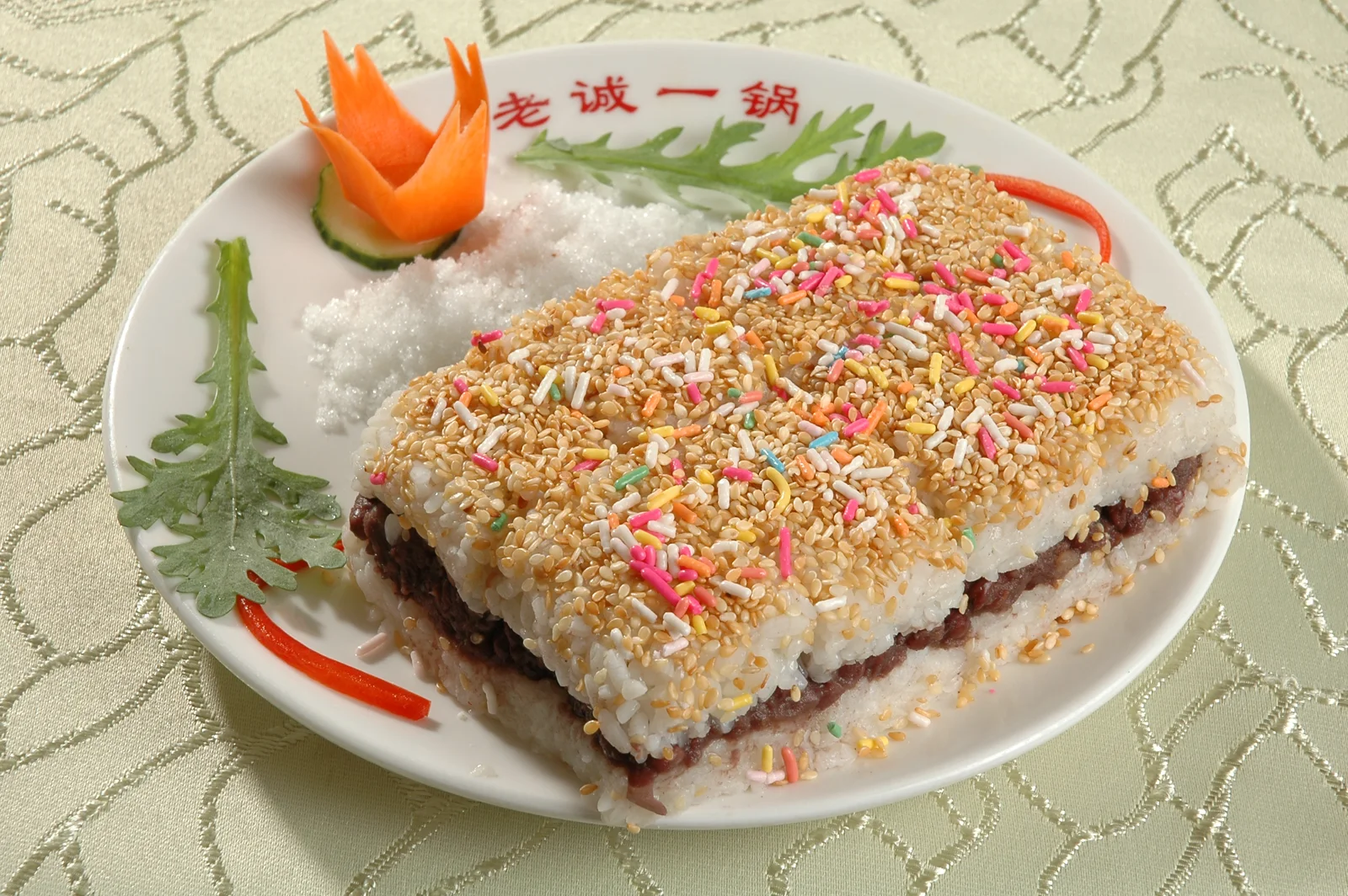
These sweets are easy to overbuy at night markets. Share one item, then decide whether the texture is worth carrying as a gift. Ask about shelf life instead of trusting decorative packaging.
Night markets are not one menu
Kaifeng's famous markets gather grilled meat, dumplings, soups, sweets, liangfen, breads, braised foods and snacks from beyond the city. Popularity does not make every stall locally distinctive.
Use a market for comparison. Watch turnover, cooking temperature, posted prices and whether residents return to the same specialist. A stall making one item continuously is often more informative than a counter displaying twenty unrelated dishes.
Famous market versus neighborhood eating
| Dimension | Major night market | Neighborhood shop |
|---|---|---|
| Strength | Variety, energy, late hours and easy sampling | Repetition, specialist technique and clearer daily rhythm |
| Price | Can include tourism premium | Often more stable, though not automatically cheaper |
| Food range | Local dishes mixed with national viral snacks | Narrower menu with stronger local regulars |
| Best approach | Choose two or three items and share | Return for a full bowl or specialist order |
| Main mistake | Treating every illuminated stall as ancient Kaifeng food | Ignoring simple shops because they lack spectacle |
A one-day Kaifeng eating rhythm
| Time | Eat | Strategy |
|---|---|---|
| 07:30-09:00 | Soup, flatbread or a modest dumpling breakfast | Save space; Kaifeng's famous foods are dense |
| 11:30-13:00 | Specialist soup dumplings or local noodles | Order one basket first and eat it hot |
| 15:30 | Peanut cake, rice cake or almond tea | Share one sweet rather than buying a gift box immediately |
| 18:00-19:30 | Restaurant meal with carp, chicken or braised fish | Confirm whole-dish sizes and prices |
| 20:00-22:00 | Fried liangfen or lamb kangmo at a market | Choose one savory snack, not a second full dinner |
How to order for different group sizes
| Group | Balanced order | Avoid |
|---|---|---|
| Solo | One basket or half order of dumplings, or fried liangfen | Whole carp and multiple market snacks |
| Two people | Dumplings, one vegetable and lamb kangmo or a small cold dish | Carp plus bucket chicken plus fried pork |
| Four people | One shared fish, one dumpling basket, vegetable and cold dish | Adding every wheat staple before dishes arrive |
| Six people | Carp, bucket chicken, dumplings, vegetable, soup and one sweet | Ordering both banquet food and a full night-market circuit immediately afterward |
Dietary, allergy and safety guidance
| Need | What to know |
|---|---|
| Vegetarian | Fried liangfen and sweets may work, but confirm lard, stock, meat sauce and shared frying oil |
| Vegan | Dumpling dough may be simple wheat and water, but fillings, oil, toppings and sweets require checking |
| Halal | Look for qingzhen (清真) signage at lamb and beef businesses and ask about shared equipment |
| Gluten sensitivity | Wheat dominates dumpling wrappers, kangmo and many thickeners; soy sauce may also contain wheat |
| Nut allergy | Peanut cake and almond tea are obvious risks; nuts and sesame can also enter sweets and cold dishes |
| Fish allergy | Shared woks, fryers and sauces make cross-contact likely around fish-specialist restaurants |
| Pork avoidance | Dumplings, stock, fried dishes and lard may contain pork even without obvious pieces |
| Severe allergy | Carry a precise Chinese explanation and choose restaurants able to discuss stock, oil and equipment |
| Food safety | Prefer active turnover, hot foods served hot, clean utensils and cold meats held at safe temperature |
Useful Chinese for eating in Kaifeng
| English | Chinese | Use |
|---|---|---|
| One basket first | 先来一笼 | Prevents over-ordering soup dumplings |
| Is there soup inside? | 里面有汤吗? | Useful when dumpling styles differ |
| How much does the fish weigh? | 这条鱼多重? | Essential before ordering whole carp |
| Is the price by weight? | 是按斤收费吗? | Confirms pricing method |
| Less chile | 少放辣椒 | Best requested before fried liangfen is cooked |
| Does this contain pork? | 这个有猪肉吗? | Important for fillings and stock |
| Is this halal? | 这是清真的吗? | Ask in addition to checking signage |
| How long can this be stored? | 这个能保存多久? | Useful for chicken, peanut cake and gifts |
Frequently asked questions about Kaifeng food
What food is Kaifeng famous for?
Kaifeng is famous for soup dumplings, carp with baked noodles, bucket chicken, lamb kangmo, fried liangfen, braised fish, peanut cake, almond tea and a broad night-market snack culture. Some are banquet dishes and others are everyday foods, so they should not all be ordered in one meal.
Are Kaifeng soup dumplings the same as Shanghai xiaolongbao?
No. Both belong to the wider family of soup-filled dumplings, but Kaifeng guantangbao have their own local wrapper, size, pleating, filling and restaurant traditions. Do not use xiaolongbao as the automatic English identity for every soup dumpling in China.
How do you eat Kaifeng soup dumplings?
Lift one carefully onto a spoon, open a small edge, allow steam to escape and taste the broth before eating the wrapper and filling. Handle the dumpling gently and avoid biting directly into a sealed, very hot dumpling.
Is Kaifeng food spicy?
Kaifeng food is not defined by chile heat. Sweet-sour sauce, pepper, vinegar, braising spices, garlic, sesame and lamb aromas are often more important. Night-market vendors may add substantial chile, so specify your preference when ordering.
Which Kaifeng night market is best?
There is no single best market for every traveler. Drum Tower offers scale and spectacle; other markets and neighborhood streets may provide easier prices and more local repetition. Visit one famous market, then compare it with a breakfast shop or daytime restaurant before deciding what Kaifeng food is.
Can vegetarians eat well in Kaifeng?
Yes with planning, but visible vegetables do not guarantee vegetarian preparation. Fried liangfen, sweets, rice cakes and vegetable dishes may work, while stock, lard, meat fillings and shared frying oil require explicit confirmation.
Eat Kaifeng in layers
Kaifeng food is easiest to appreciate when the meals remain distinct. Soup dumplings reward a quiet specialist lunch. Carp with baked noodles needs a table of people. Fried liangfen and lamb kangmo belong to the movement of the market. Peanut cake and rice cake are tastes, not obligations to buy a box.
Read the Kaifeng culture guide before calling every market dish a Song survival, then use the travel-to-Kaifeng route to separate a specialist lunch from evening grazing. That sequence protects both appetite and historical honesty.
The city does not need every snack to descend directly from the Northern Song. Its food culture is already deep because restaurants, Muslim communities, market vendors, wheat workers and sweet makers have kept adapting a trading city's appetite to the present.