To travel to Kaifeng well, learn to distinguish three cities occupying the same ground: the Northern Song capital that is largely buried, the later city preserved in pagodas, temples and merchant architecture, and the modern city that rebuilds Song imagery as entertainment.
The Kaifeng culture guide explains the Northern Song capital, Yellow River floods, Bao Zheng memory and historical evidence in depth. This page turns those layers into a practical trip.
Start from the wider Chinese cities travel hub if Kaifeng is one stop in a longer route. Use Kaifeng Museum's official site for current institutional information; this guide owns the time-and-energy decisions between stops.
Travel to Kaifeng at a glance
| Travel decision | East Moment recommendation |
|---|---|
| Ideal first stay | 3 full days |
| Essential first stop | Kaifeng Museum, so later reconstructions do not become your default image of the Song capital |
| Strongest route | Museum and city layers; surviving monuments; then one modern Song-culture experience |
| Best for | Northern Song history, urban archaeology, architecture, night food and historical interpretation |
| Main mistake | Spending the whole trip inside reconstructed attractions and skipping the quiet buildings with original fabric |
Choose your route through this guide
| If you need... | Start with... |
|---|---|
| A first itinerary | Museum-first planning and the three-day route |
| Song history | The buried-city framework and Qingming scroll section |
| Surviving architecture | Iron Pagoda, temples and guild halls |
| Food priorities | Night markets, breakfast and the Kaifeng food guide |
| A Zhengzhou side trip | Station choices and the cost of returning the same day |
How to read the city that is no longer visible
The Northern Song capital, known as Bianjing or Dongjing, was a major political and commercial city. Britannica's Kaifeng history establishes the city's long capital sequence and repeated destruction; today's Kaifeng does not preserve that Northern Song capital as an intact street district. Flood deposits, destruction and repeated rebuilding changed ground levels and urban form.
Kaifeng Museum should therefore come early. Use it to understand city walls, excavated layers, the Yellow River, portable objects and the difference between documentary evidence and later imagination. Once that framework is in place, the Iron Pagoda and a Song-themed park stop competing for "authenticity" and begin answering different questions.
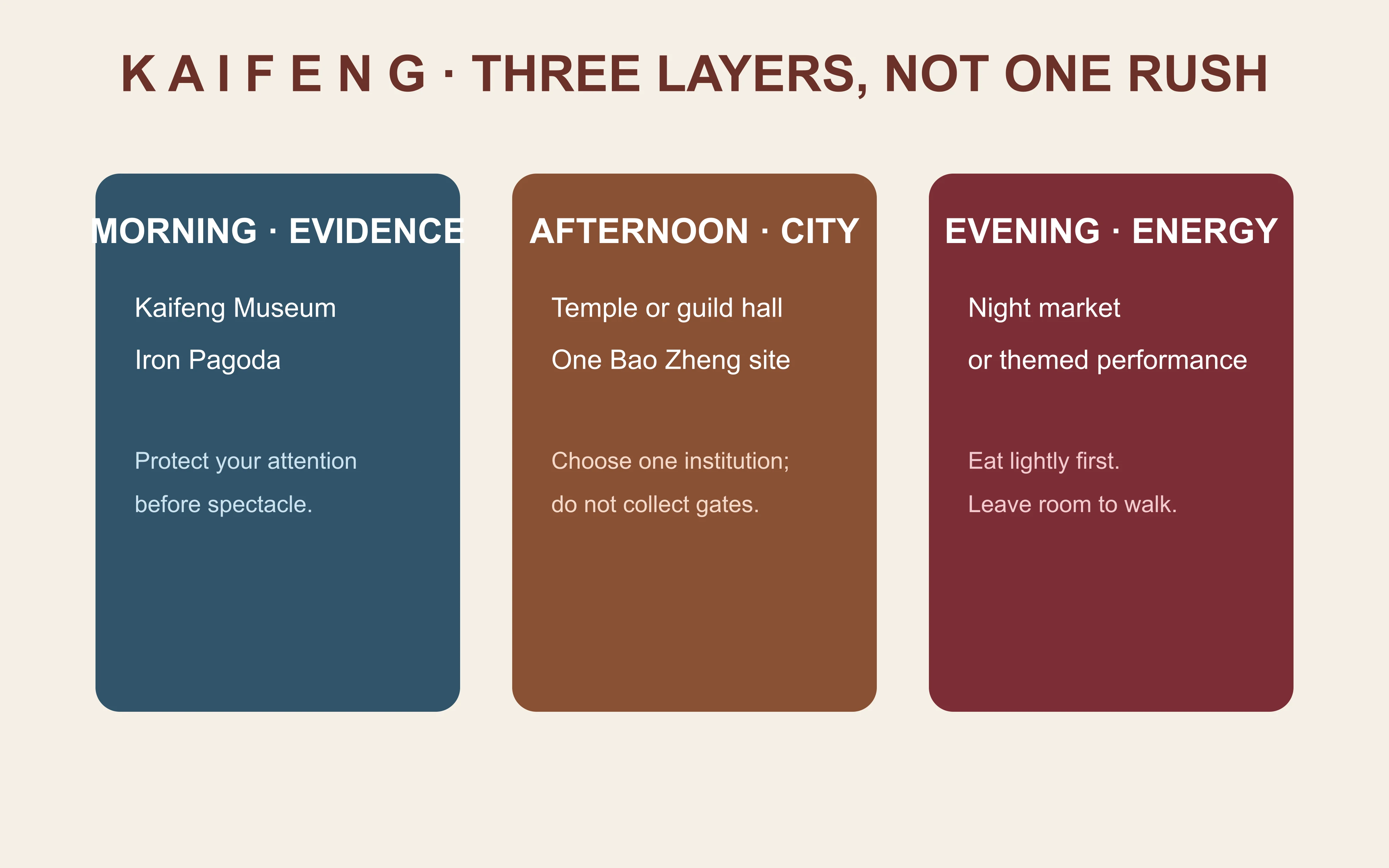
The order moves from evidence to atmosphere, so the modern Song city never replaces the buried one.
Kaifeng must be imagined vertically
Most city guides train the visitor to look across space: from gate to street, monument to skyline. Kaifeng also requires a vertical imagination. Successive cities, flood deposits, rebuilding and changing ground levels mean that important evidence may sit beneath later streets rather than beside them. The absence of a visible Northern Song district is itself part of the story.
This changes how you use the museum. Look for stratigraphic diagrams, city plans and excavation photographs that show depth. Ask whether a displayed object was found in a secure archaeological context, collected later or reproduced for interpretation. A pottery fragment with a documented layer may tell you more about the former city than a full-scale modern facade.
Outside the museum, notice changes in elevation around walls, lakes and major historic zones. Do not claim that every rise is a buried city wall or flood layer; urban ground changes for many reasons. Instead, use official interpretation to identify places where archaeology has established the sequence. The goal is to become comfortable with a capital that cannot be recovered through sight alone.
Kaifeng's vertical history also explains the emotional appeal of reconstruction. When the famous capital is physically inaccessible, modern architecture, performance and digital display give it form. These forms are not substitutes for archaeology, but they answer a real public need to visualize scale and life.
Carry one historical map
Save a reliable museum or institutional plan of Northern Song Bianjing. Compare its broad axes and gates with the modern city without forcing an exact overlay. The exercise reveals both continuity and rupture and gives otherwise isolated attractions a shared geography.
The Yellow River is a historical force, not a quick scenic stop
Kaifeng's relationship with the Yellow River shaped risk, defense, agriculture, transport and repeated rebuilding. Yet many itineraries either ignore the river or add a vague riverside visit as if it were another urban attraction. Understanding the river is essential; reaching a meaningful site requires separate planning.
Begin with museum context. Learn why sediment, embankments and changing channels mattered before deciding whether an excursion will add insight. A river-viewing area may be distant from the old city, seasonally variable and designed more for recreation than historical interpretation. Confirm transport, current access and the exact experience rather than booking a generic "Yellow River" ride.
If you go, look at the relationship among water level, embankment, surrounding land and settlement. The river's power is not communicated only by dramatic flow. Engineering and the constant management of risk are equally important. Weather, heat, wind and exposed walking can make the trip demanding.
Do not describe modern residents as passively living beneath an eternal threat. The relationship includes institutions, infrastructure and long histories of adaptation. A serious travel account should connect environmental force with human decisions rather than using flood as a tragic backdrop.
Essential surviving Kaifeng
The Iron Pagoda is the essential surviving anchor
The Iron Pagoda, completed in the Northern Song period, is faced with dark glazed brick rather than iron. Look closely at color, relief pattern and the way the structure changes between daylight and illumination. It matters because it is material evidence in a city whose most famous historical streets are underground or imagined.
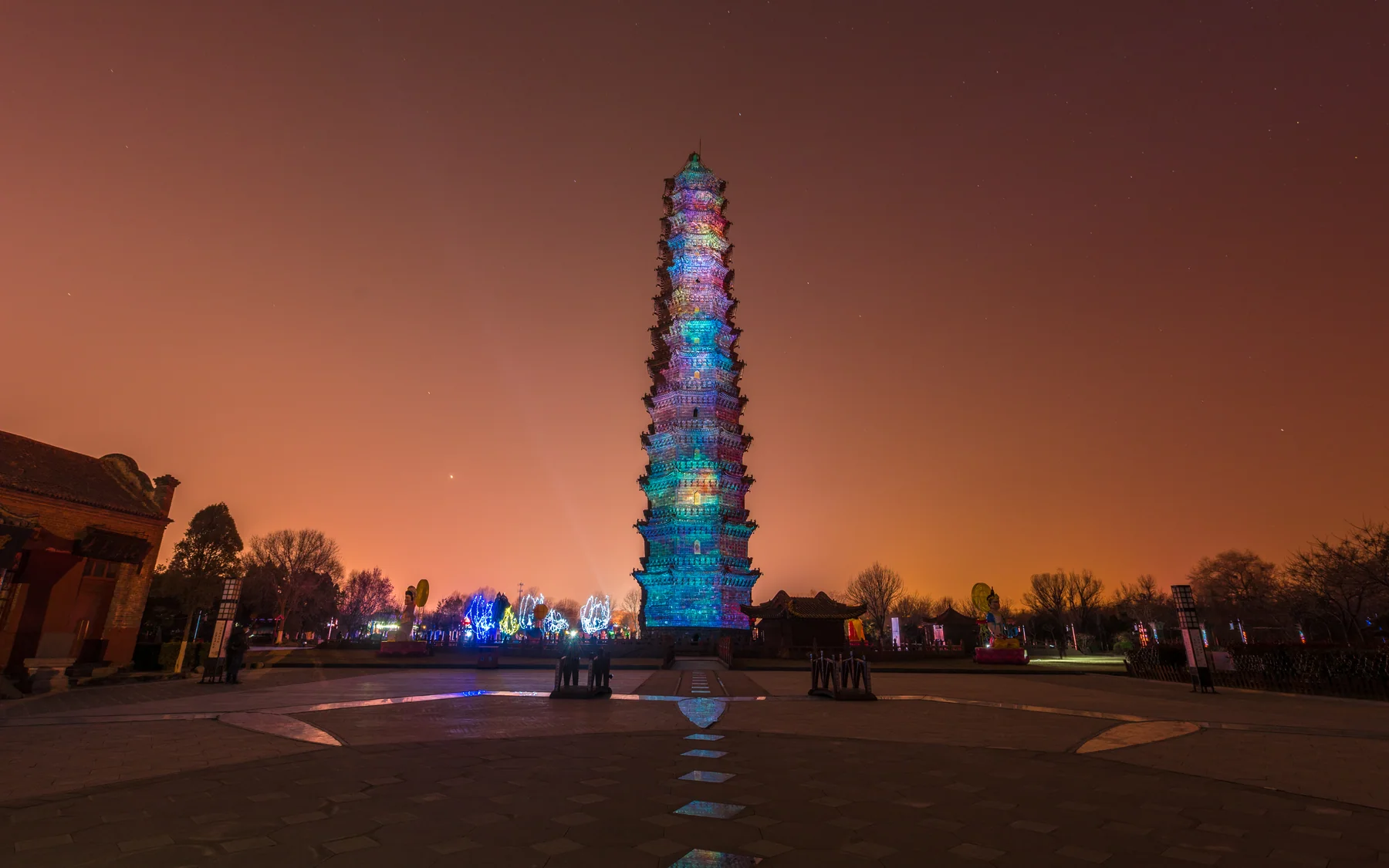
Visit in daylight if architecture is the priority. Night lighting creates atmosphere, but surface detail and proportion read differently under the sun. Check current interior access and opening arrangements rather than assuming the climb is available.
How to spend an hour with one pagoda
The Iron Pagoda rewards a slower method than most itineraries allow. Begin at a distance where the full silhouette and relationship to the park can be seen. Walk around it if the current route permits, watching how corners, eaves and the tapering body change. Then move close enough to study the glazed brick and relief decoration.
The name can create the first useful correction: the tower is not made of iron. Its dark glazed surface produced the association. That small fact demonstrates why visual impressions need material explanation. Light, weather and age change color, so one photograph may make the brick appear brown, black or reddish.
Look for repetition and variation in the decorative units rather than trying to identify every figure. Repeated forms turn the surface into a patterned skin while the vertical structure maintains monumentality. If interior access is closed, the visit remains worthwhile; climbing is not the only way to understand a pagoda.
Compare the Iron Pagoda with Fan Pagoda if time and access allow. The point is not to choose a winner but to see how form, date, material and later survival differ. Two surviving structures can teach more about Kaifeng than two reconstructed palace gates.
Photograph in daylight, then consider returning near dusk only if the route is convenient. The second view shows how modern lighting converts a religious monument into a city symbol. Keep both readings: historical fabric and contemporary presentation.
Use temples and guild halls to move beyond the Song dynasty
Daxiangguo Temple represents a religious institution renewed over long periods. The visible buildings should not all be labeled original Song architecture, but worship, reconstruction and institutional memory remain part of the city's history.
Shanshangan Guild Hall shifts attention toward merchants, regional networks and later craftsmanship. Slow down at the carved roof brackets, stonework and decorative surfaces. This is not secondary history just because it came after Kaifeng's most famous dynasty.
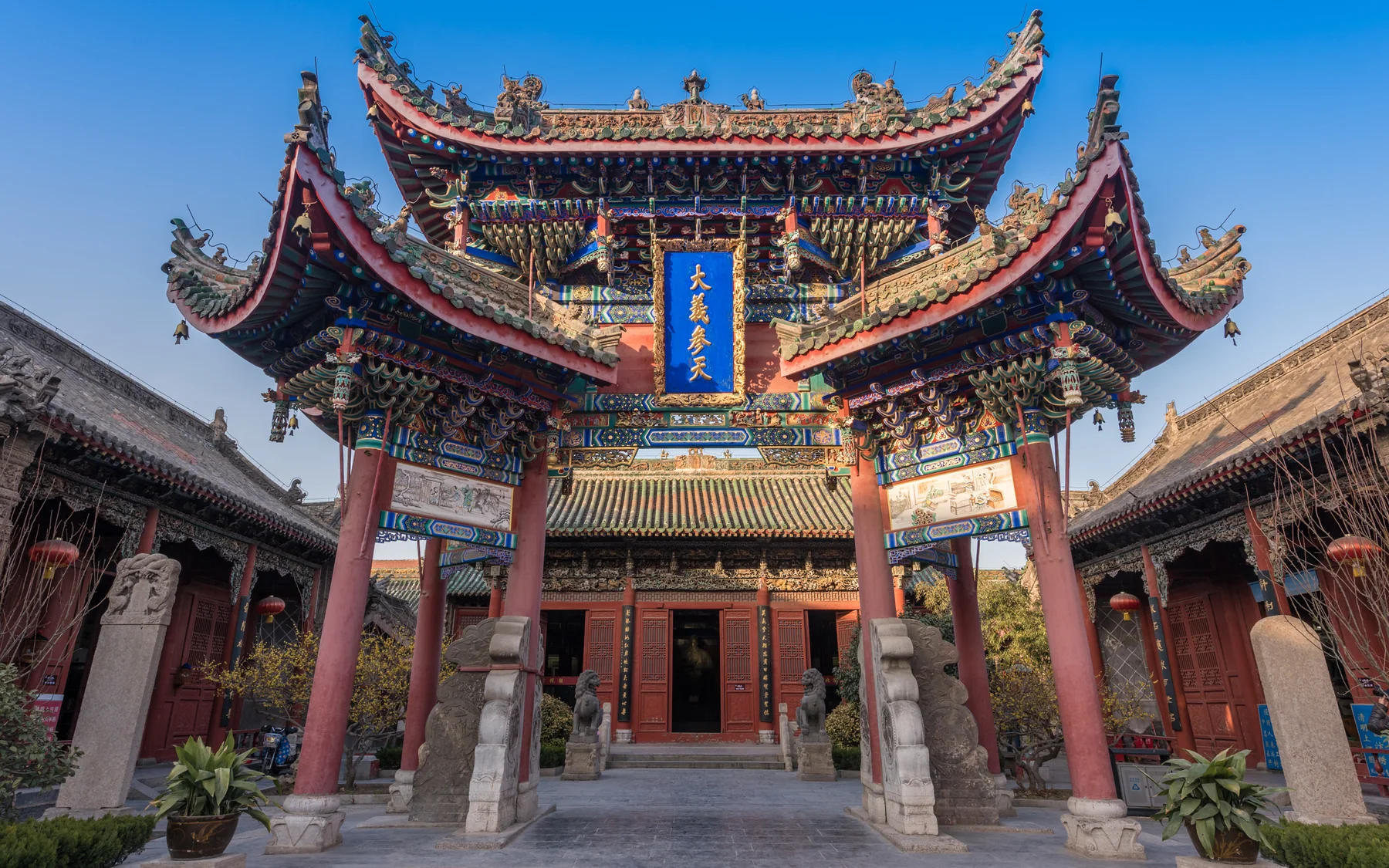
These sites work well on the same day because they keep you within the old-city area while changing the historical lens from imperial capital to religion and commerce.
Later Kaifeng is not an epilogue
Visitors arrive for the Northern Song and often treat everything afterward as decline. That creates a distorted city. Temples, guild halls, neighborhoods, food traditions and institutions from later periods show that Kaifeng continued to attract devotion, trade and cultural memory long after it ceased to be the capital described in famous paintings and texts.
At Shanshangan Guild Hall, the regional name points toward merchant connections. Architecture becomes evidence of people organizing away from their places of origin, pooling resources and expressing status. Decorative carving is therefore not only craftsmanship; it belongs to a social institution.
At Daxiangguo Temple, distinguish the long identity of the institution from the date of every visible hall. Religious sites are repeatedly repaired and rebuilt because they remain in use. Demanding untouched fabric can make continuity invisible. Observe worship respectfully, note the relationship between temple and surrounding commerce and ask how the site functions for residents today.
This later history also helps explain Kaifeng's diverse cultural memory. Communities, travelers and merchants connected the city to wider networks. Some histories may have limited or changing public interpretation, so do not promise access to a specific community site based on an old article. Use museum or scholarly context and respect current conditions.
The practical lesson is to give at least half a day to non-Song Kaifeng. Without it, the trip becomes a search for one dynasty rather than an encounter with a city that survived its loss of political status.
How modern Kaifeng performs the Song
Qingming Riverside Garden is valuable when labeled honestly
Qingming Riverside Garden is a modern cultural theme park inspired by popular images of Northern Song urban life and the famous handscroll Along the River During the Qingming Festival. It is not an intact Song neighborhood and should not be judged by that impossible standard.
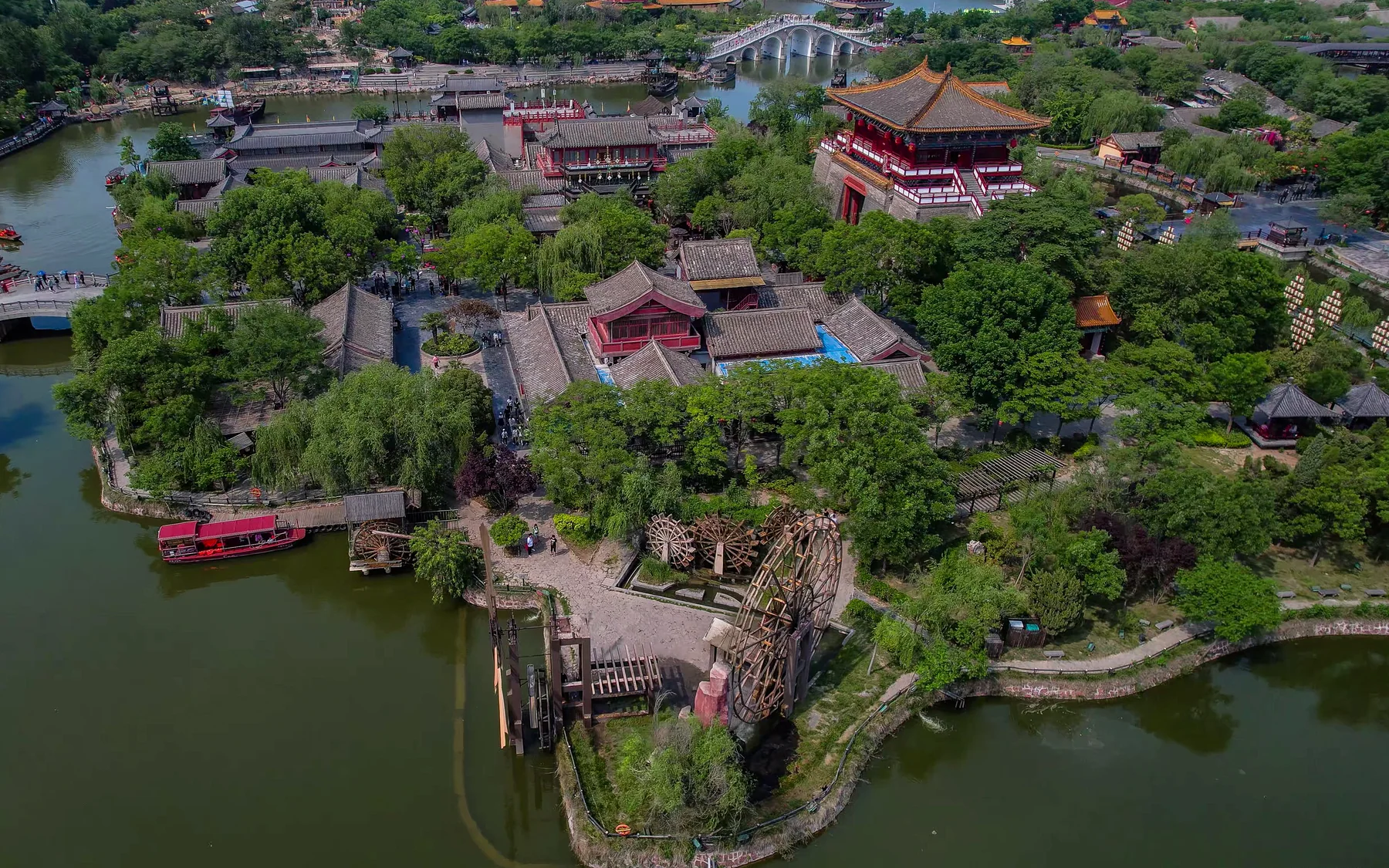
Go if you enjoy performance, costume, craft demonstration and large-scale public historical imagination. Give the park enough time to see a program rather than entering only for photographs. Then keep a clear label in your own memory: the experience shows how modern Kaifeng performs the Song, not exactly how Bianjing looked.
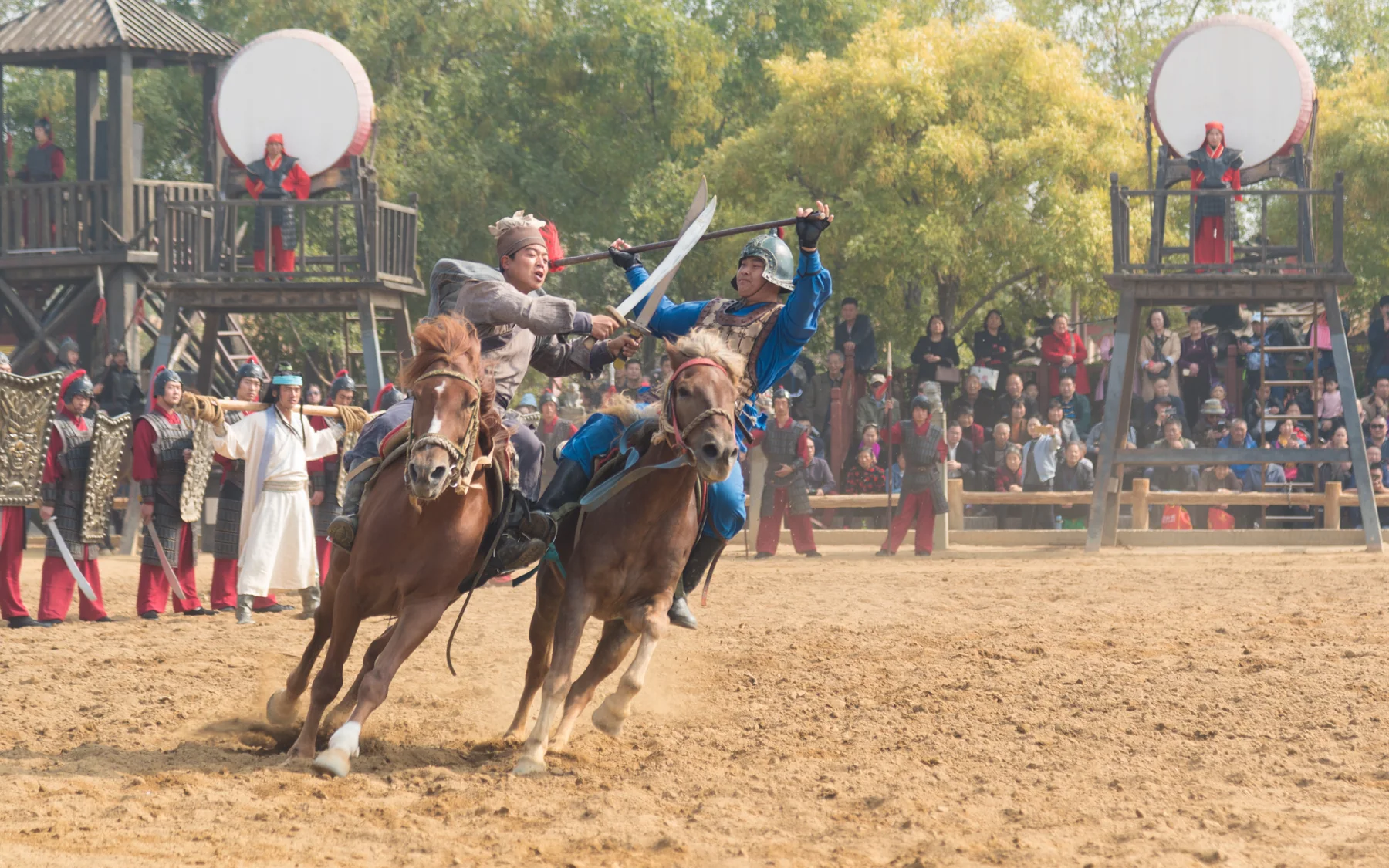
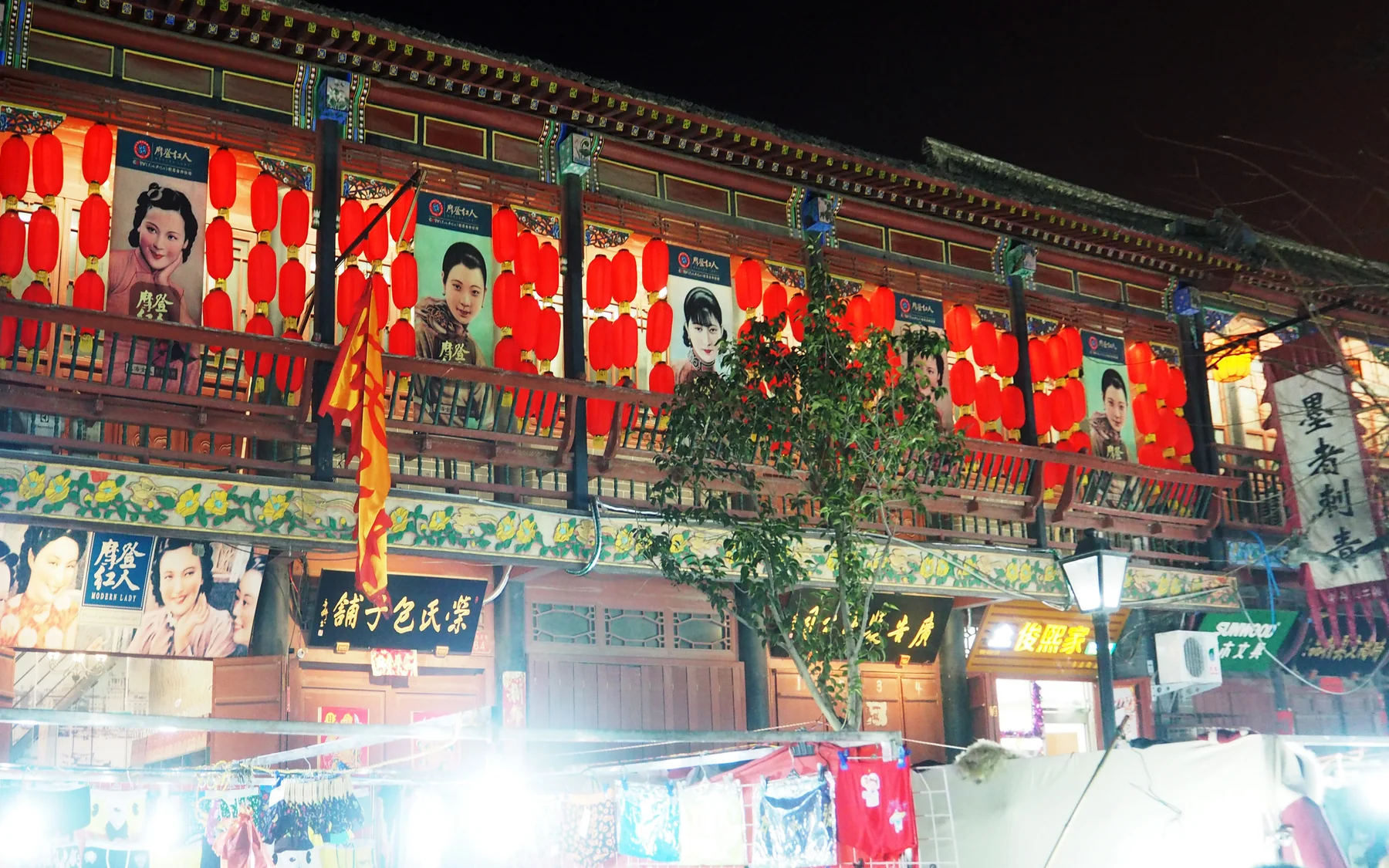
If modern historical entertainment does not interest you, use that half-day for Fan Pagoda, another museum route, neighborhoods or food. "Famous" does not mean compulsory.
The Qingming scroll is a lens, not a city map
Along the River During the Qingming Festival is central to popular imagination of Northern Song urban life, but visitors often treat it as a literal street plan of Kaifeng. The handscroll is an artistic construction with its own composition, movement and interpretive history. It can reveal activities, social types, transport and urban imagination without functioning as a photograph or survey.
Before entering Qingming Riverside Garden, study a reliable reproduction or museum explanation. Follow the scroll from quieter edges toward denser urban scenes and notice how movement creates narrative. Then observe how the theme park converts selected motifs into buildings, performances and visitor routes.
This comparison makes the park more interesting. You can ask which scenes were enlarged, which characters became performers and how sound, costume and scheduled shows turn a handscroll into a full-body experience. The park tells you as much about contemporary cultural production as it does about the Song.
Avoid the opposite mistake of dismissing enjoyment because the environment is reconstructed. Historical entertainment can spark curiosity, support performance work and create shared public memory. The responsible label is "modern interpretation inspired by Song imagery," not "fake ancient city" and not "preserved Bianjing."
Choose one or two performances in advance. Running between every scheduled show reproduces checklist tourism inside the park. Leave time to watch how families and costume photographers use the spaces between programs.
Ordinary Kaifeng corrects the imperial story
The capital narrative emphasizes emperors, officials, monumental gates and urban prosperity. A walk through present-day commercial and residential streets introduces other scales: breakfast shops, schools, repair work, local parks and apartment life. This is not a separate, less important city. It is the social setting in which Song memory is maintained and sold.
Spend one morning away from the major attraction gates. Eat near your hotel, walk toward a market or local park and observe how historic branding appears on ordinary businesses. Some names and decorative motifs extend the capital story into daily commerce; others have nothing to do with it. Both are useful.
Do not call an unrenovated lane "the real Kaifeng" merely because it looks less curated. Authenticity is not a reward given to places with peeling walls. Ask how the street functions, what services it provides and whether visitors have a reason to be there beyond photography.
Modern Kaifeng may feel visually modest compared with Xi'an or Luoyang's illuminated reconstructions. That modesty is part of its appeal for attentive travelers. The gap between historical fame and present scale creates room to think about how capitals continue after political centrality moves elsewhere.
Bao Zheng is both a historical official and a cultural afterlife
Bao Zheng served in Kaifeng and became far larger in later drama, fiction and television as the incorruptible Judge Bao. A memorial or Kaifeng Fu visit can be useful, but identify whether you are seeing official history, popular legend or a contemporary performance of both.
Do not schedule several Bao-themed attractions unless this cultural afterlife is your main interest. One focused site plus museum context is enough for most travelers.
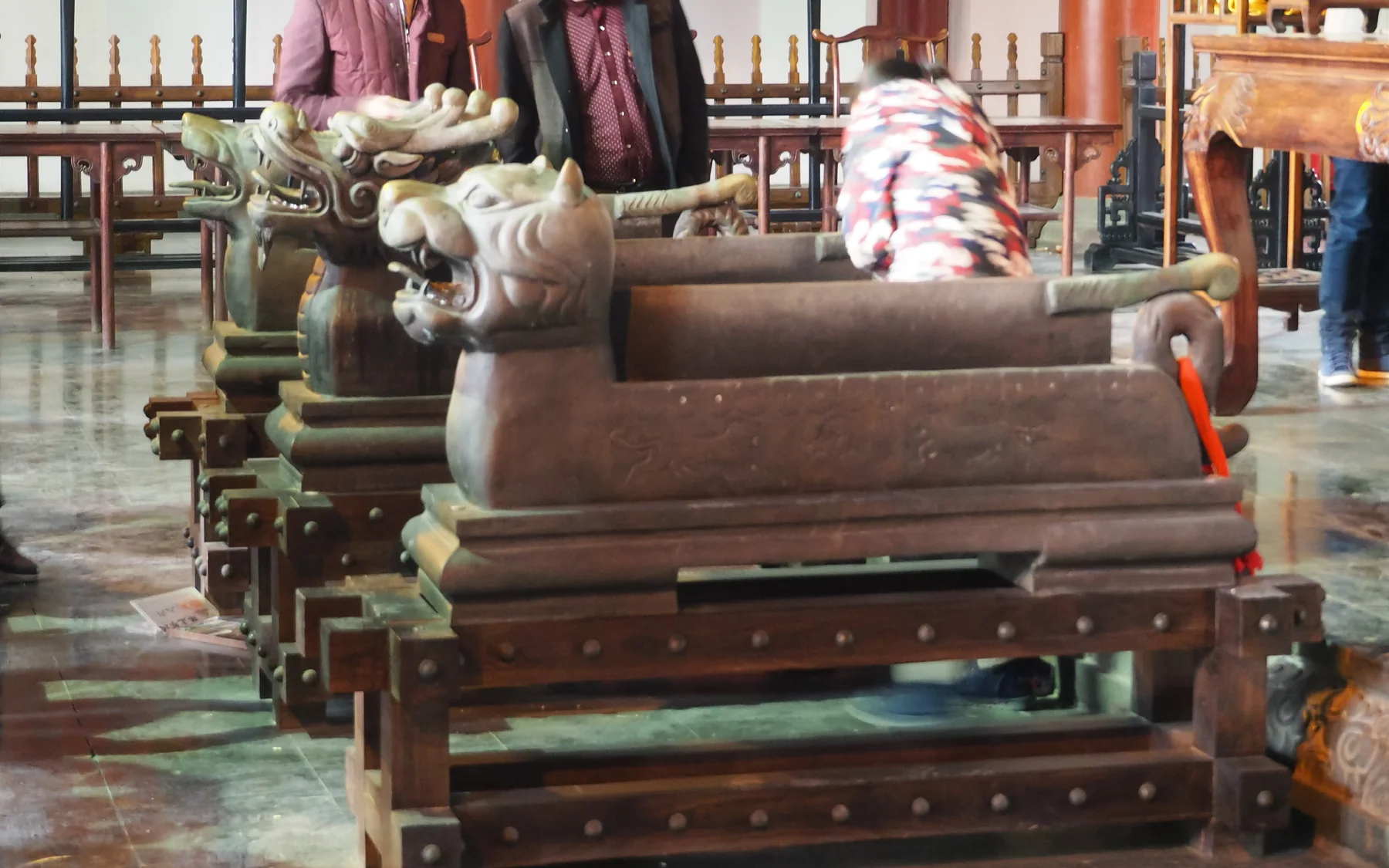
Judge Bao shows how popular culture preserves a city
For many Chinese visitors, Bao Zheng is not first encountered through an official biography. He arrives through opera, storytelling, novels, television and childhood ideas of justice. Kaifeng's connection to him therefore operates on several levels at once: historical service, local memorial, moral symbol and entertainment.
At a Bao-themed site, ask which layer a display presents. An administrative reconstruction may use historical research, while a courtroom performance draws from later dramatic conventions. A blackened face and crescent mark belong to recognizable performance imagery, not straightforward portrait evidence.
This distinction does not weaken Bao's importance. It explains why the figure remained powerful. Cities are remembered not only through surviving buildings but through stories repeatedly adapted for new audiences. Kaifeng's cultural afterlife is therefore one of its strongest forms of continuity.
If you know a television version, use the visit to compare it with museum chronology. If you do not, one short performance or introductory display may help explain why local audiences respond immediately to the character. Avoid spending a full day on overlapping attractions unless popular justice narratives are a specific research interest.
Night markets are not a license to eat without a plan
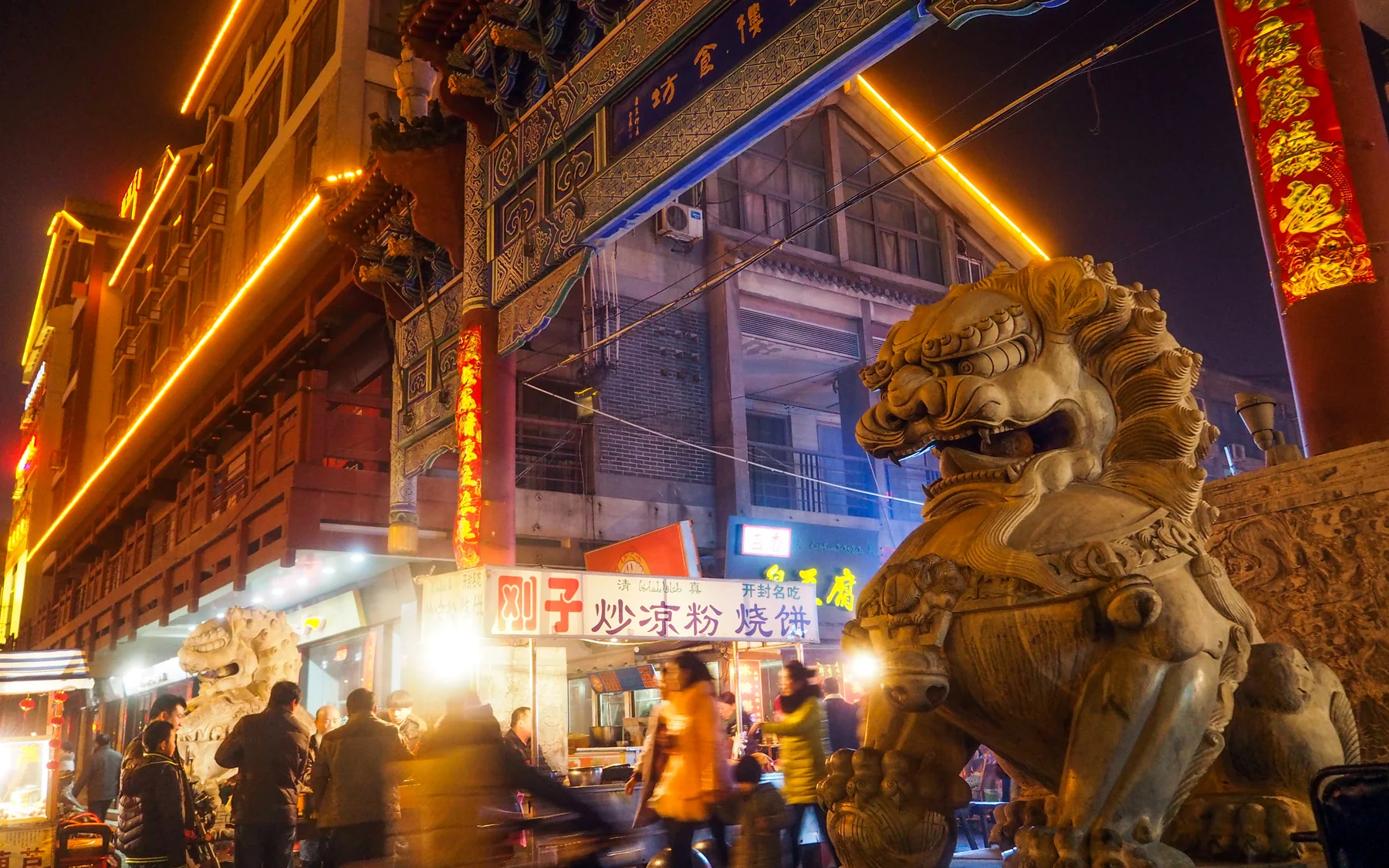
Kaifeng's evening food scene is central to the visitor experience, but the largest market is also a performance of abundance. Walk once before ordering. Compare prices, look for active turnover and choose food served hot.
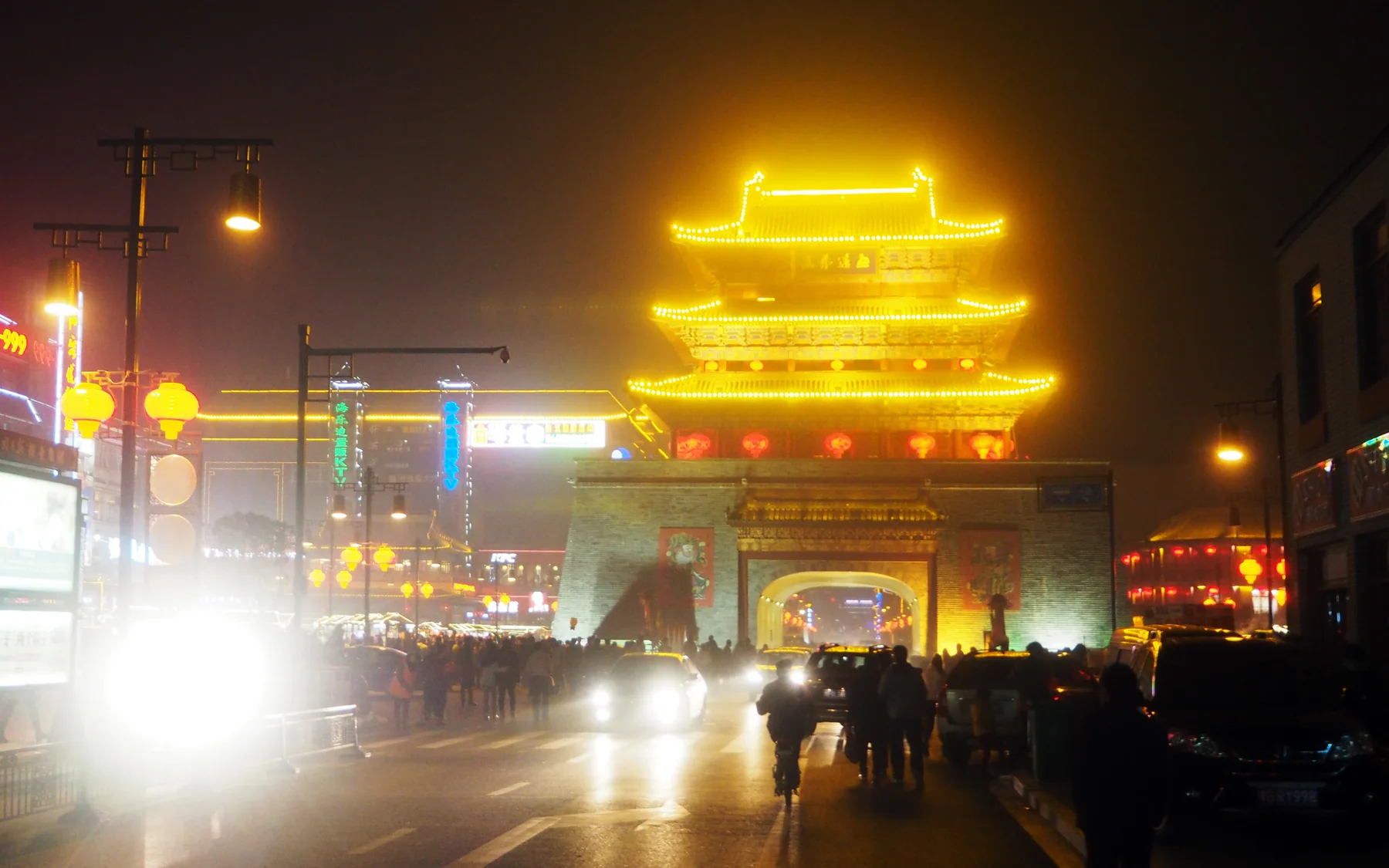
Eat soup dumplings seated if possible, where they can be served and handled properly. Add a breakfast soup, a wheat-based staple, peanut cake or another small snack across different meals. The Kaifeng food guide gives a full eating route; the Henan cuisine guide explains why soup, wheat and shared dishes matter across the province.
Night-market fame needs daytime context
Kaifeng is often connected to claims about a long night-market tradition. Historical descriptions of urban consumption are important, but a present market is not an unchanged survival from the Northern Song. Regulations, tourism, food safety, electricity, modern supply chains and social media all shape what visitors see now.
Approach the market as a contemporary institution with historical branding. Notice which foods residents buy repeatedly and which are designed for spectacle. Compare fixed shops with temporary stalls. Look at seating, waste collection, queues and delivery access. These operational details reveal whether the market is primarily a neighborhood food space, a visitor event or a mixture.
Eat across two evenings if possible. On the first, choose restrained portions and learn the layout. On the second, return for the dishes that looked strongest rather than chasing novelty. One breakfast outside the market is essential because it introduces soups and staples that evening tourism can overshadow.
Crowds require ordinary caution. Keep valuables secure, allow hot-oil and cooking space, and avoid stopping in the middle of circulation for video. Ask before filming a vendor closely. A food business may be public-facing without consenting to become the subject of extended content production.
The market's real value is social rhythm. Kaifeng after dark feels more expansive and performative than it does in quiet daytime streets. Experiencing both helps explain how food carries the city's public identity.
A Zhengzhou day trip saves a hotel night but loses the city's rhythm
Rail connections make Kaifeng appear easy to consume from Zhengzhou. A day trip can cover the museum, one monument and an early dinner. It usually misses breakfast, late market hours and the contrast between quiet mornings and theatrical evenings.
The calculation should include the exact stations. Reaching Zhengzhou's departure station, waiting, traveling from Kaifeng North or another arrival point and returning on schedule can use hours that a route planner hides. One night in Kaifeng often costs less in time and energy than repeated transfers.
Stay two nights if history is the main reason for visiting. The first evening provides orientation, the full middle day supports surviving heritage and the final morning can hold a museum or ordinary neighborhood. Add a third night if Qingming Riverside Garden or an outlying excursion matters.
Kaifeng suits travelers who enjoy interpretation, food and the problem of missing architecture. It may disappoint anyone seeking a continuous preserved old town or a city of monumental originals. I believe that disappointment is useful: the route must teach us to separate an excavated layer, a surviving monument and a modern Song performance instead of demanding one seamless ancient city. Arrive prepared to work with fragments, reconstructions and memory, and the apparent absence becomes the destination's deepest quality.
Absence is Kaifeng's strongest evidence
What most guides get wrong
They compensate for the buried Northern Song city by presenting every reconstruction as if it restores the missing capital. Kaifeng is deeper when museum evidence, surviving later monuments, ordinary streets and modern historical entertainment remain visibly different.
Build a 2, 3 or 4-day Kaifeng itinerary
| Length | Recommended sequence | What to leave out |
|---|---|---|
| 2 days | Museum and Iron Pagoda; then guild hall, temple and one evening market | Qingming Riverside Garden unless performance is a priority |
| 3 days | Add the modern Song-culture park or a focused Bao Zheng route | Multiple overlapping theme parks |
| 4 days | Add Fan Pagoda, neighborhoods, deeper food or a carefully planned Yellow River or Zhuxian Town excursion | Daily commuting from Zhengzhou |
A strong three-day plan
- Begin at Kaifeng Museum, then use the evening for a simple meal rather than the biggest market.
- Visit the Iron Pagoda, Daxiangguo Temple and Shanshangan Guild Hall, followed by one night-market circuit.
- Choose Qingming Riverside Garden for performance and public history, or replace it with quieter monuments and neighborhoods.
Where to stay and which railway station matters
Stay near the old city or Drum Tower if evening food and central atmosphere matter most, but expect noise, crowds and slower vehicle access. The Longting and lakes area works for parks and Qingming Riverside Garden. Newer districts can offer calmer hotels and easier roads but less spontaneous street life.
Kaifeng Station, Songcheng Road Station and Kaifeng North Station are different. Check the actual train and hotel route before booking. Fast rail from Zhengzhou makes a day trip possible, but station transfers and the loss of Kaifeng's morning and evening hours reduce the apparent convenience.
When to visit
Spring and autumn usually support the best walking. Autumn chrysanthemum events can transform public spaces and increase demand. Summer brings heat, humidity and storms; winter is cold and dry but offers quieter monuments and occasional sharp light or snow atmosphere.
Major holidays intensify crowds at reconstructed attractions and night markets. If you must travel then, put museums and surviving monuments near opening time and reserve evening performance tickets through current official channels.
Practical information
Museums and major attractions may require real-name reservation and passport entry. English interpretation is strongest at major institutions and inconsistent elsewhere, so save Chinese place names and addresses offline. Historic thresholds, pagoda grounds and large parks vary in accessibility; confirm current routes directly when needed.
Read Travel to China for payment, rail and connectivity preparation. Compare Kaifeng with Luoyang rather than treating "ancient capital" as one repeatable product. Kaifeng is deepest precisely where the Song city is least visible.
Frequently asked questions about travel to Kaifeng
How many days do I need in Kaifeng?
Two days can cover Kaifeng Museum, the Iron Pagoda, one temple or guild hall and an evening market. Three days is better because it lets you separate surviving heritage from a modern Song-themed park and eat beyond one crowded night.
Is Kaifeng mainly a reconstructed heritage city?
Reconstruction is highly visible, but Kaifeng also contains surviving monuments, religious communities, archaeology and ordinary urban life. A good visit distinguishes among these layers.
What food should I try in Kaifeng?
Look for soup dumplings, lamb or beef dishes, peanut cake, fried snacks and Henan wheat-based foods. Market hygiene and personal dietary needs still deserve ordinary judgment.