Read everyday food through the day it must serve
Occasion explains why format, speed and flavor matter.
| Daily moment | What the food must do | What a visitor should notice |
|---|---|---|
| Morning | Serve quickly, travel well or warm the body before work and school. | One city’s breakfast is the national breakfast. |
| Quick meal | Balance batch production, choice, price, seating and predictable service. | Fast means culturally empty or copied from Western chains. |
| Street pause | Use a specialist tool or repeated technique to produce one item reliably in public view. | Every street snack is ancient, hygienically identical or eaten daily. |
| Home return | Stretch leftovers, seasonal produce, pantry condiments and available time into a shared meal. | Restaurant presentation describes household frequency. |
Breakfast begins with a city already in motion
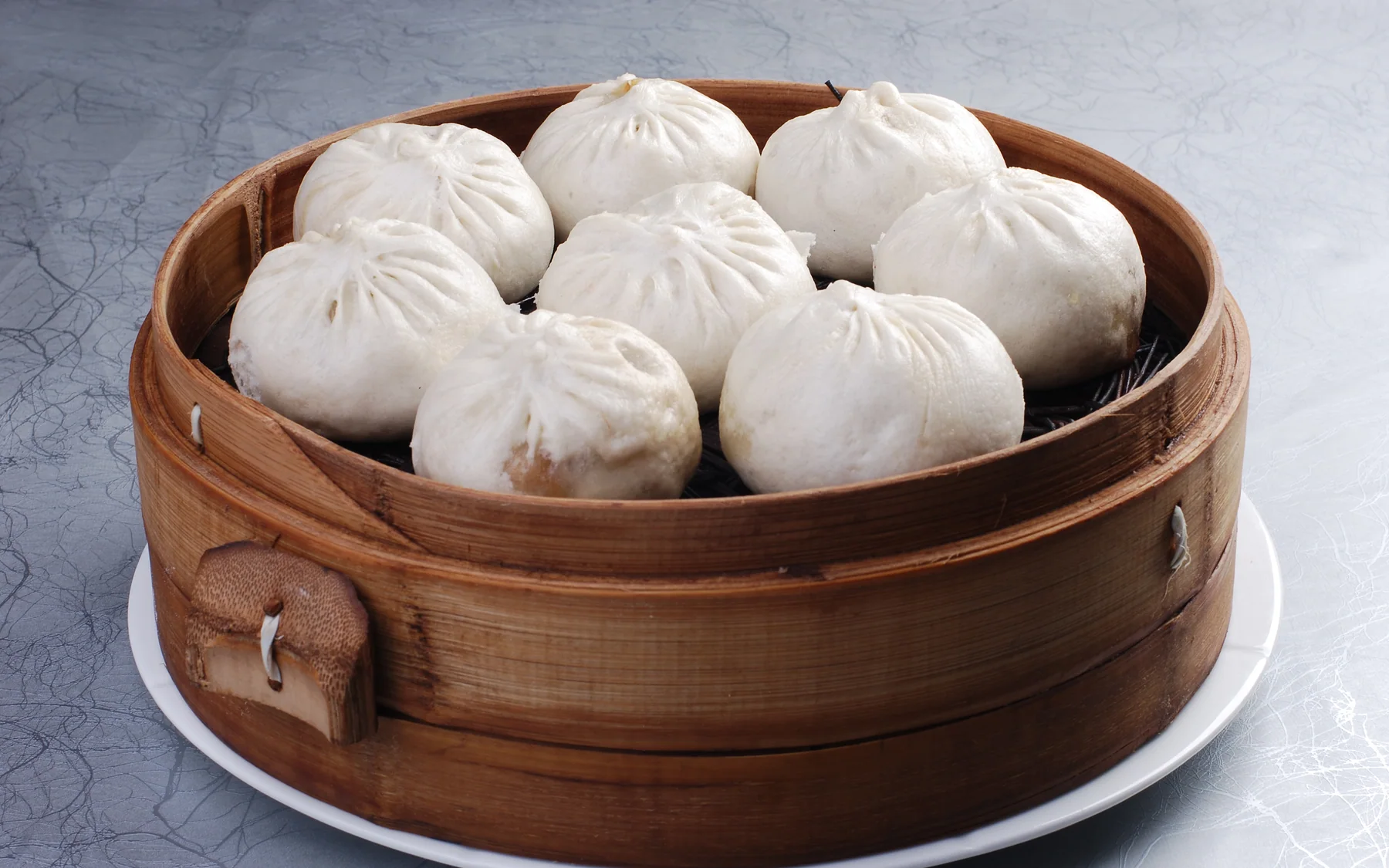
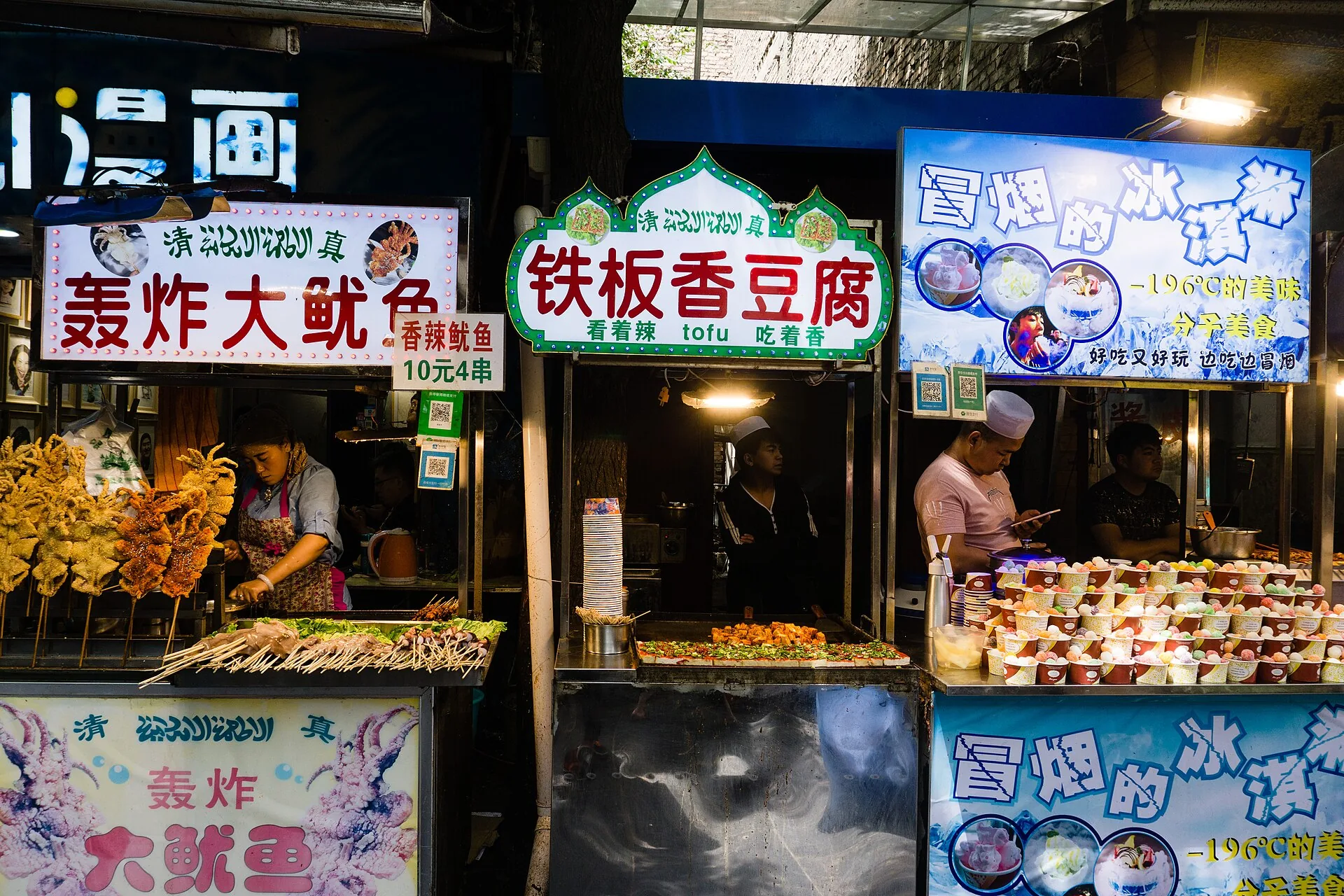
Jianbing needs a hot griddle, practiced spreading and a sequence that can keep a queue moving. Baozi need dough, filling, proofing, steaming and batch timing before the customer arrives. Youtiao depends on frying and is often paired with soy milk, congee or another local habit. Rice noodles, spicy soup and dim sum belong to other mornings. The equipment on the pavement reveals the labor hidden inside the word quick.
I refuse national breakfast lists that mix ten cities into one imaginary table. A useful page says where the food is normal, whether it is a breakfast, snack or all-day item there, and what a local order sounds like. The absence of a food in another region is not a contradiction; it is the map becoming accurate.
Chinese fast food is a service system, not a cuisine label
A canteen line, tray-selection shop, noodle counter, dumpling chain and delivery kitchen solve speed differently. Some cook in batches; some assemble from prepared components; some finish one bowl to order. Rice, vegetables and proteins may be displayed for visual choice, while noodles require a short verbal decision about broth, spice and toppings. The system tells us how urban time is organized.
Fast does not automatically mean cheap, unhealthy or inauthentic. Nor does a Chinese name make the food nutritionally balanced. Price, portion, oil, salt, ingredient variety and frequency are separate questions. The honest guide explains the ordering logic and lets a reader make a meal decision without turning culture into a health halo.
The school gate and transit stop remember a generation
Skewers, pancakes, fried snacks, roasted sweet potatoes and drinks become emotional because they attach to release: class is over, work is done, friends are walking together. The flavor may be intense and the price small, but the memory is social. A reader does not need engagement counts from a social post to understand why one smell can return an entire street.
East Moment writes that feeling directly while keeping the facts narrow. We can say the griddle edge crackles, the paper sleeve warms the hand and people debate the correct sauce. We cannot claim every Chinese child shared the same snack. Specificity makes the emotion believable; universality makes it advertising.
Home cooking is built from constraints outsiders rarely photograph
A weekday meal answers the vegetables that need using, the rice already in the cooker, the person returning late and the amount of washing anyone can tolerate. One stir-fry, eggs with tomato, a cold dish and yesterday’s soup may be more representative of family life than a table of regional classics. Leftovers become fried rice, noodle topping or congee accompaniment because waste and time are practical facts.
This is where personal knowledge belongs. A family may cut one ingredient differently, prefer a softer texture or insist that a dish is incomplete without one condiment. Write whose preference it is and what consequence it changes. The point is not to establish a national recipe; it is to show how food becomes home through repetition.
Choose one neighborhood rhythm instead of chasing a hundred-item checklist
A visitor learns more by returning to the same morning stall, market lane or noodle shop than by photographing five unrelated ‘must-eats.’ Watch when the batch appears, how regulars order, which condiments are self-service and what sells out. Ask before photographing faces or workspaces. Pay attention to heat, queues and sanitation without turning unfamiliarity into suspicion.
My advice is definite: eat one ordinary thing slowly enough to notice its system. The reward is not bragging rights. It is recognition—the moment a city stops being scenery and becomes people solving the day.
Delivery apps, chains and new tastes belong to the story now
Mobile ordering changes storefronts, packaging, portions and which dishes travel well. Chains standardize some flavors while local independents adapt faster. Young consumers move between regional nostalgia, convenience, dieting language, coffee, milk tea and late-night food without asking whether the combination looks traditional. Everyday food is precisely where a culture’s present tense is easiest to see.
I will not mourn every change or praise every novelty. The question is what disappears: specialist skill, affordable access, neighborhood relationships, ingredient quality or only an inefficient habit. Strong criticism names the consequence. Empty nostalgia merely asks the present to pose like an old photograph.
An everyday food stops being everyday when ordinary people cannot afford it
Viral fame can raise rent, ingredient costs and queue time around a once-routine stall. Tourism can preserve a technique while turning the product into a souvenir local workers rarely buy. A chain can lower price and increase access while flattening specialist texture. None of these outcomes is automatically good or bad, but price and frequency must stay in the description.
Ask what the item costs relative to a normal meal, who buys it on weekdays and whether the seller depends on regulars or visitors. That evidence separates a living daily food from a heritage performance staged at lunchtime. I care about the difference because culture without ordinary access becomes scenery. A photograph of a queue means little until we know whether the people in it are neighbors, commuters or tourists collecting the same recommendation. Context turns popularity into durable knowledge. Price completes the picture.