The best Chinese food recipes teach your hands what to notice. A written quantity can tell you how much vinegar to pour; it cannot hear the oil, feel a dumpling wrapper drying or warn that the scallions have crossed from fragrant to bitter. That knowledge comes through cooking.
How to use Chinese food recipes well
Do not begin by trying to reproduce an entire banquet. Begin with one technique and one honest dish. Steam something until timing becomes visible. Stir-fry greens until you understand why preparation happens before the flame. Fold ten dumplings badly, then notice why the eleventh closes.
Chinese cooking is regional and practical. A Sichuan pantry, Cantonese soup kitchen and northern dough table do not require the same ingredients or equipment. Good recipes state their context and explain where substitutions change the result.
That regional discipline is not decorative scholarship. E. N. Anderson's The Food of China from Yale University Press connects cooking to ecology, staple crops and social organization; a responsible recipe translates those conditions into choices a cook can actually make. If a recipe removes the place, technique and reason for each step, precise gram measurements cannot put the knowledge back.
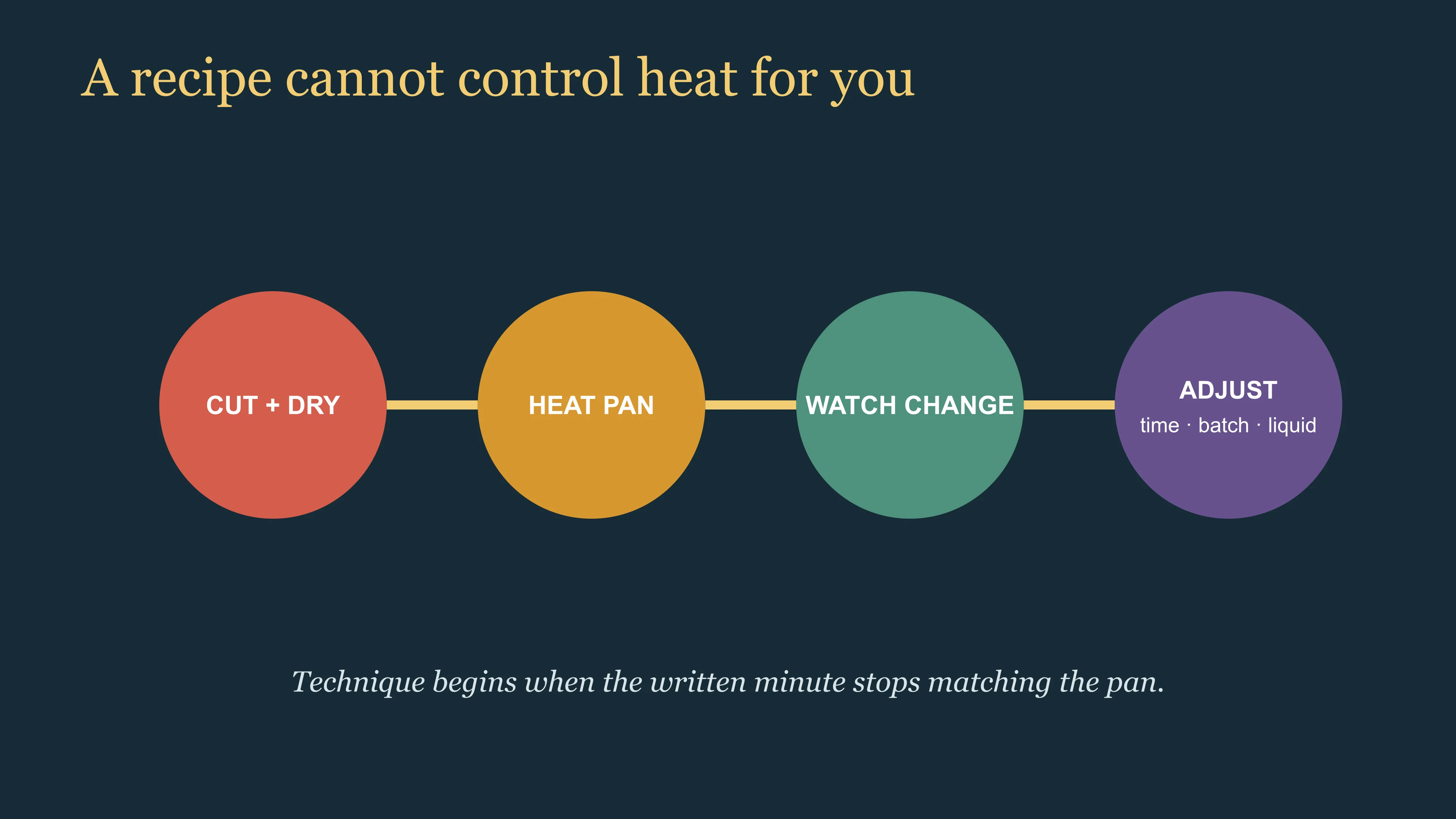
A recipe is compressed choreography. The ingredient list tells you what enters the pan, but the real dish depends on cutting, sequence, heat, moisture and the moment each ingredient leaves. Two cooks can use the same quantities and produce different food because one pan stayed hot, one cabbage released water, or one sauce waited thirty seconds too long.
That is why East Moment treats recipes as decision systems, not sacred scripts. The useful question is not only "How many tablespoons?" It is also "What should I see, smell and hear before the next step?"
Six techniques that unlock many Chinese dishes
| Technique | What it teaches | Beginner-friendly direction |
|---|---|---|
| Stir-frying | Heat control, cutting consistency and timing | Tomato and egg; seasonal greens |
| Steaming | Respect for texture and ingredient freshness | Steamed egg; fish; buns |
| Red braising | Patience and sauce reduction | Tofu, mushrooms or pork |
| Blanching and dressing | Clean flavor and precise doneness | Leafy greens; cold vegetables |
| Dough and wrapping | Moisture, gluten and hand memory | Dumplings; scallion pancakes |
| Soup and congee | Extraction, restraint and comfort | Rice congee; winter melon soup |

Stir-frying teaches the fastest lesson. Ingredients cut to similar cooking times can move through the wok together; ingredients with different densities need separate entrances. Aromatics release fragrance before they burn. Leafy greens collapse quickly, while stems need a head start. If a crowded pan begins producing water, the cook is no longer stir-frying in the same way. Smaller batches are not a defeat. They are often the correct adaptation to a domestic stove.
Steaming teaches another kind of control. The heat is moist and indirect, so texture changes without a browned surface. A steamed egg exposes every bubble and temperature mistake. A fish reveals whether timing respected its thickness. A bun remembers proofing, shaping and the violence of lifting a lid too soon.
Braising slows the room down. The first stage builds aroma and color; the covered stage lets heat move inward; the uncovered finish decides whether the liquid becomes a glossy sauce or remains a soup. "Cook for forty minutes" is less useful than understanding which of those stages the recipe means.
Dough work may be the most honest teacher because it changes with flour, humidity and rest. A wrapper can resist, relax, dry or tear. The answer is not always more flour. Sometimes the dough needs ten quiet minutes while the cook stops arguing with it.
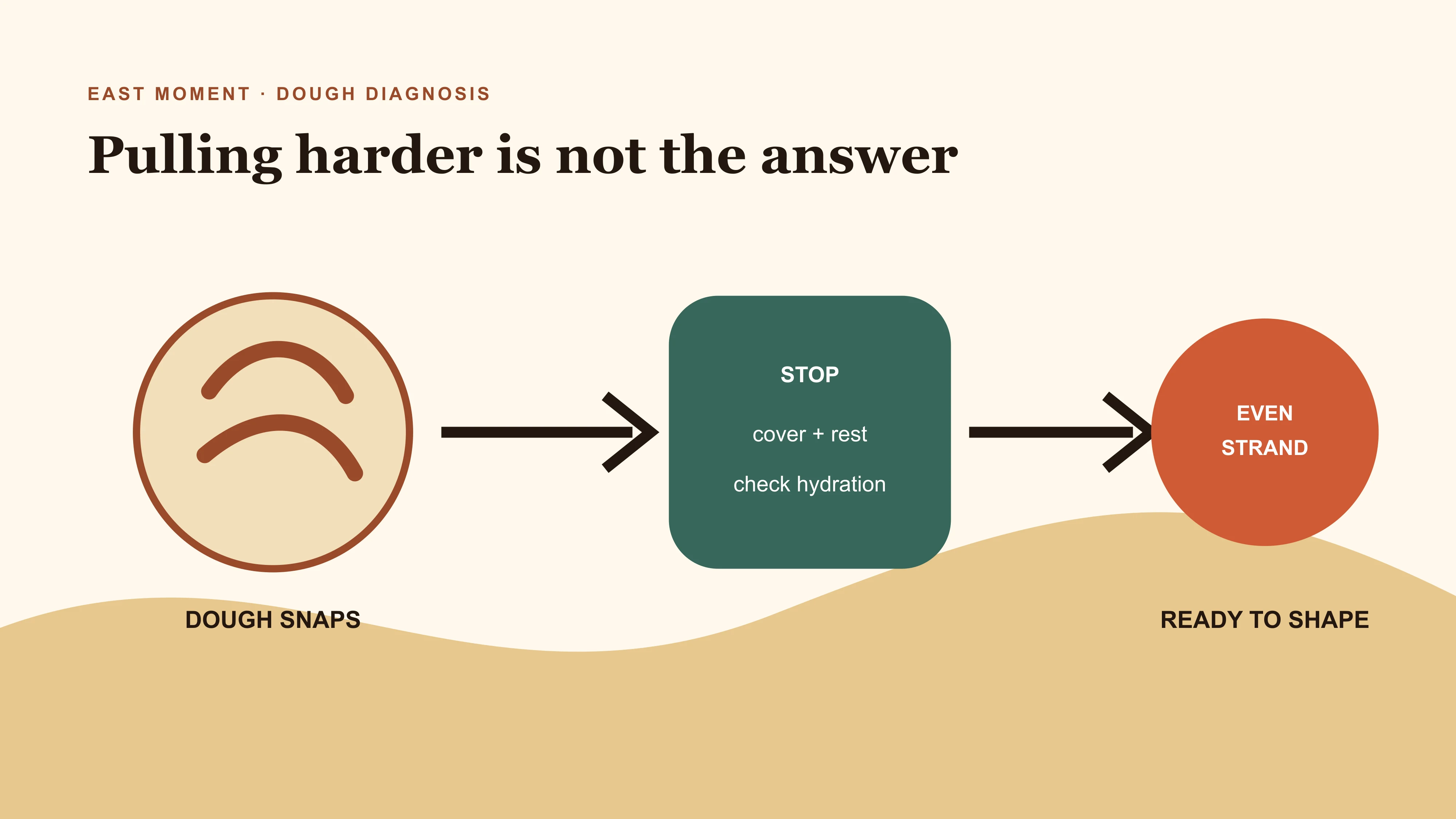
Fresh noodle dough makes the limitation of fixed timing obvious. Flour absorption changes, room humidity changes, and a rested dough can become workable without another drop of water. Pulling is therefore a diagnosis, not a stunt: an even strand shows that hydration, kneading and rest have started cooperating. If the dough snaps, adding force is not bravery. Stop, cover it and identify whether the problem is dryness, insufficient rest or a dough formula never intended for pulling.
Build a pantry around dishes, not shopping anxiety
The internet can make a Chinese pantry sound like an airport duty-free list: buy everything now and feel guilty later. Instead, choose three dishes from one regional direction and buy what they share.
Light soy sauce seasons; dark soy sauce mainly deepens color and adds a different richness. Chinese black or rice vinegar brings acidity. Sesame oil is usually a finishing aroma, not the neutral oil for an entire stir-fry. Starch protects meat and thickens sauce. Dried chilies, Sichuan pepper, fermented black beans, oyster sauce and broad-bean chile paste belong in specific flavor systems rather than every dish.
Labels vary by country. Read ingredients, watch sodium and allergens, and do not assume two bottles with “soy” on the front behave the same way.
The bottle shape is not the flavor system. A useful pantry grows through repetition: buy one vinegar because three dishes need it, learn its acidity, then notice when another regional recipe asks for something different. This creates memory instead of shelf clutter.
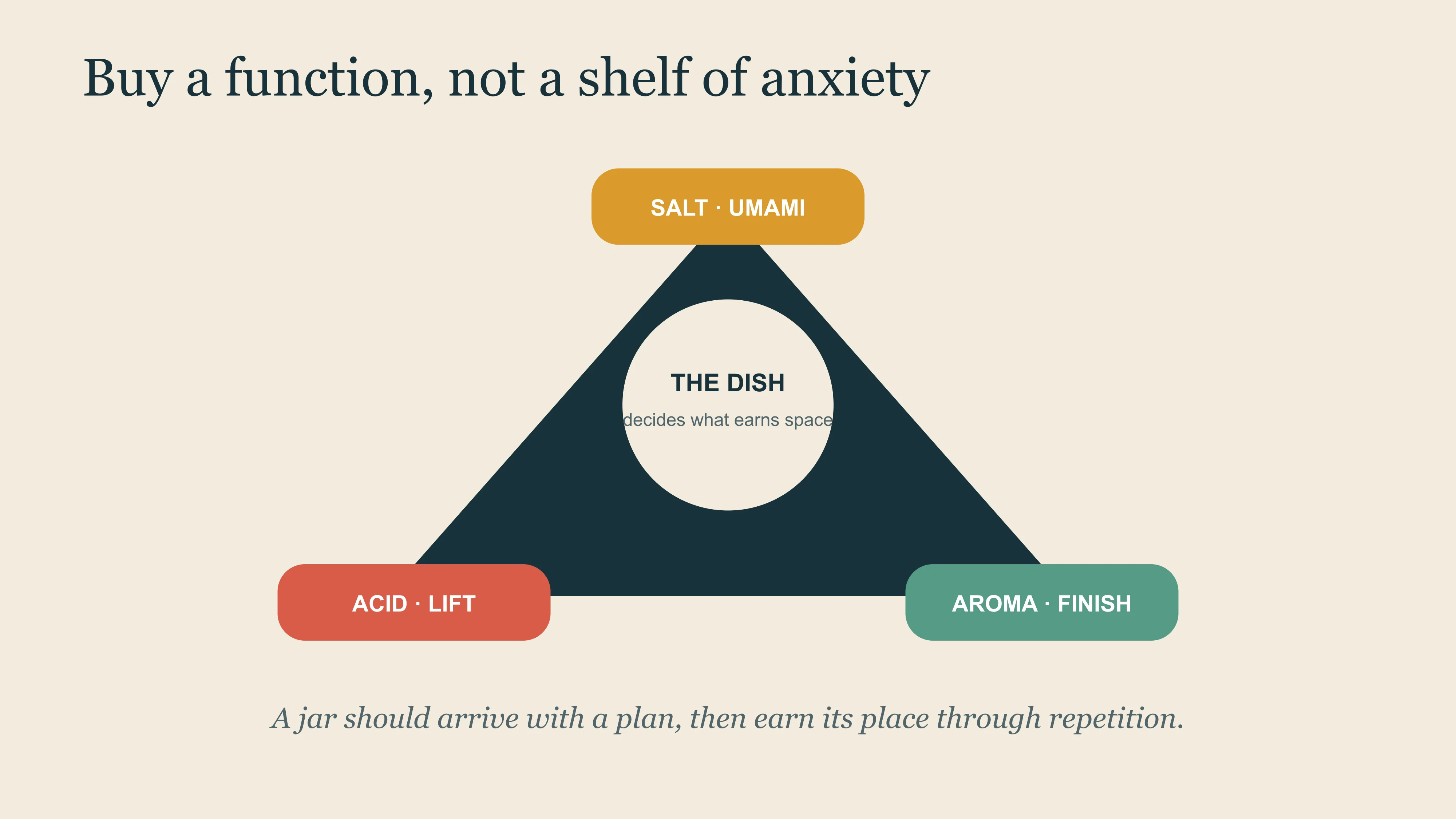
For a first month, light soy sauce, one Chinese vinegar, neutral oil, sesame oil, starch and a few dried aromatics can take you surprisingly far. Add fermented pastes, preserved vegetables and regional seasonings when a specific dish earns them. A jar should arrive with a plan.
A sensible path for beginner Chinese recipes
First: learn timing
Cook tomato and egg, stir-fried cabbage or scallion-oil noodles. These foods reveal heat immediately and forgive small mistakes. Chinese noodles explains why noodle type and sauce must be considered together.
Next: learn preparation
Try Kung Pao chicken only after every ingredient is cut and the sauce is mixed. The cooking itself may take minutes; the calm before it is part of the recipe.
Then: learn handwork
Chinese dumplings teach wrapper moisture, filling balance and secure sealing. Baozi adds yeast, proofing and steaming.
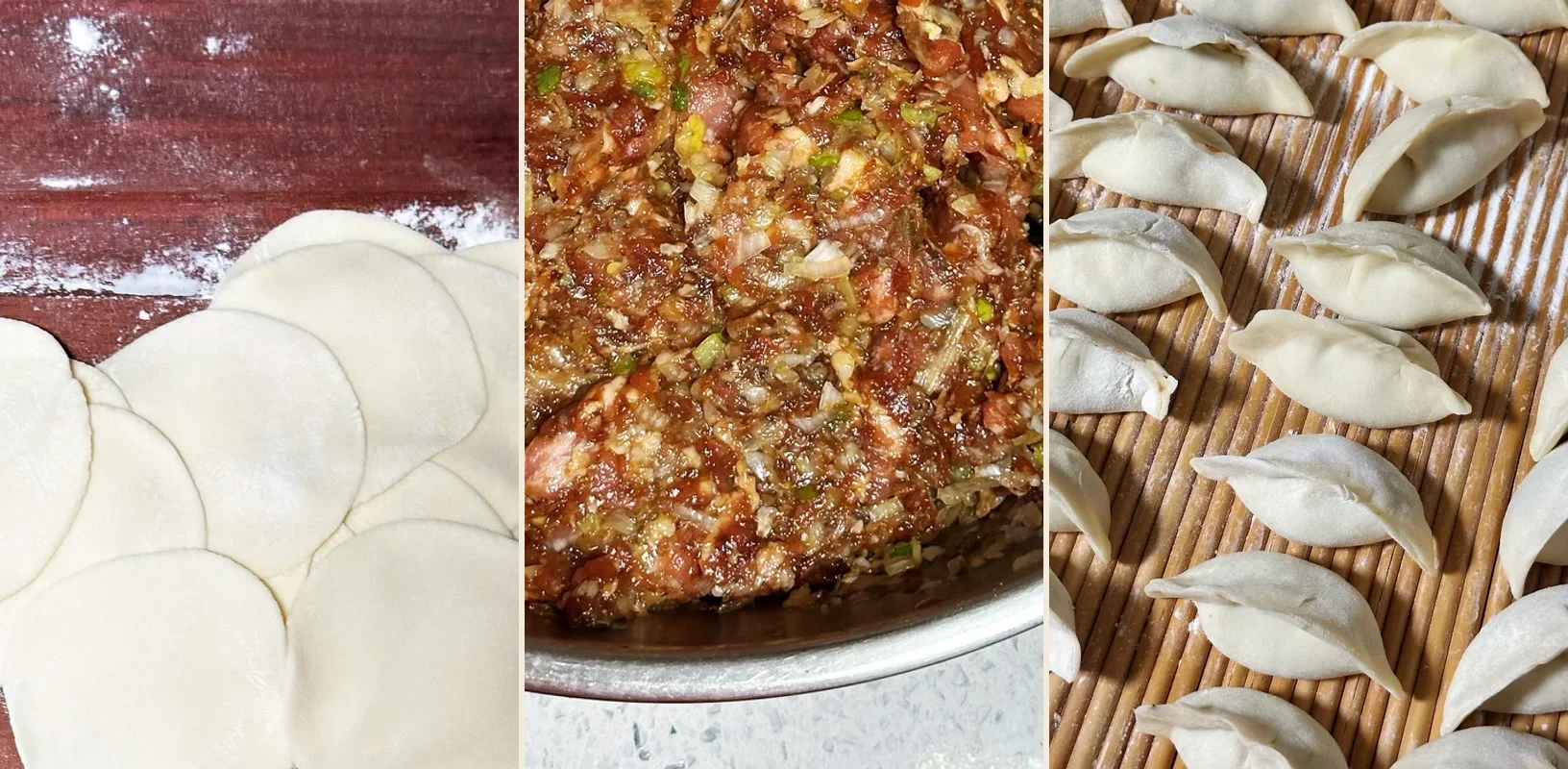
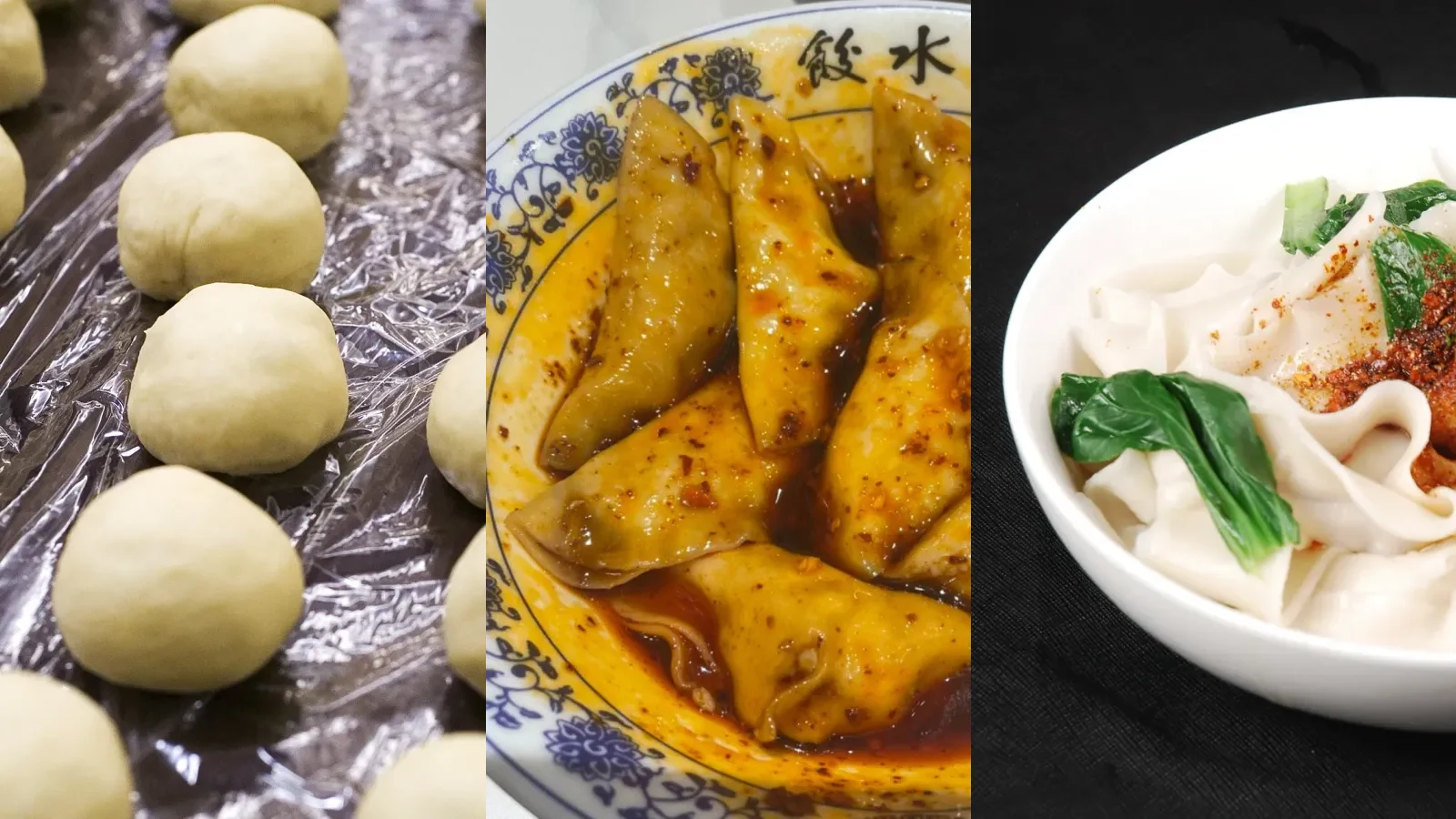
This is what a useful recipe must answer to. The wrappers are not identical, the filling is visibly moist and the finished jiaozi carry the small irregularities of one person's first full batch. I trust this kitchen evidence more than a sterile row of perfect folds. A beginner needs to know what can vary without ruining dinner—and which warning signs, such as a wet filling or drying wrapper, require action now. That kind of practical transmission is part of Chinese food culture, not an embarrassment to be edited out.
Do not chase perfect pleats on day one. A dumpling that stays closed is already beautiful in the way a bridge is beautiful.
Your stove changes the recipe
Many restaurant demonstrations use powerful burners, seasoned carbon-steel woks and quantities designed for service. A home cook may have induction, an electric coil, a nonstick skillet or a small gas flame. Pretending those kitchens behave identically creates frustration disguised as authenticity.
On lower heat, preheat the pan carefully, dry ingredients well and cook smaller portions. Let the pan recover between batches. Use a broad skillet when it gives food more contact with heat. A wok remains useful for tossing, steaming and deep shapes even when it cannot reproduce restaurant burner intensity.
The phrase wok hei is often marketed as a mystical smoky flavor available only to fearless cooks. It is better understood through high heat, rapid movement, surface drying, aromatic oil and controlled browning. Chasing smoke in an unventilated apartment is not cultural respect. It is a fire alarm with ambitions.
Chinese home cooking has always adapted to fuel, season, household size and available equipment. Adaptation does not automatically make a dish careless. The honest version names what the equipment can and cannot do.
How to read substitutions honestly
A substitution can preserve function, approximate flavor or create a new dish. These are different outcomes.
If Shaoxing wine is unavailable, an alcohol-free recipe may use stock and accept the missing fermented aroma. Replacing Chinese black vinegar with another vinegar can provide acidity but not identical depth. Swapping a regional chile paste for generic hot sauce changes both salt and fermentation.
Good cooking does not require shame about availability. It requires naming what changed.
Function is the clearest way to think. Does the missing ingredient provide salt, acidity, fermentation, sweetness, aroma, color or texture? A substitute may cover one function while losing another. Add it because you understand the gap, not because a search snippet declared two ingredients equivalent.
How to judge a Chinese recipe online
A strong recipe tells you where the dish belongs and which choices are flexible. It explains the cut, the heat level, the order of ingredients and the visual sign for moving forward. It does not bury every useful instruction beneath a fictional grandmother story or claim that one household version is the only authentic one.
Look for these signals:
- The regional or household context is named precisely.
- Ingredients are measured, but sensory cues are also provided.
- Preparation time is separated from active cooking time.
- Substitutions explain what changes in flavor or texture.
- Food-safety guidance appears where raw meat, seafood or storage requires it.
- The finished image matches the method rather than serving as unrelated decoration.
Be cautious when every dish uses the same sauce, every regional recipe tastes "sweet and spicy," or authenticity is defended mainly through capital letters. Confidence should come from technique and context.
Restaurant names solve a different problem from home recipes. If a dish title is compressing place, cut and cooking method rather than giving instructions, use the Chinese food menu guide before assuming the English translation describes what will arrive.
A four-week route into Chinese home cooking
In week one, cook eggs, greens and noodles. Learn heat and sequence without managing too many variables. Tomato and egg teaches the difference between setting and drying; stir-fried greens teach moisture; scallion-oil noodles show how a small amount of aromatic fat can organize a bowl.
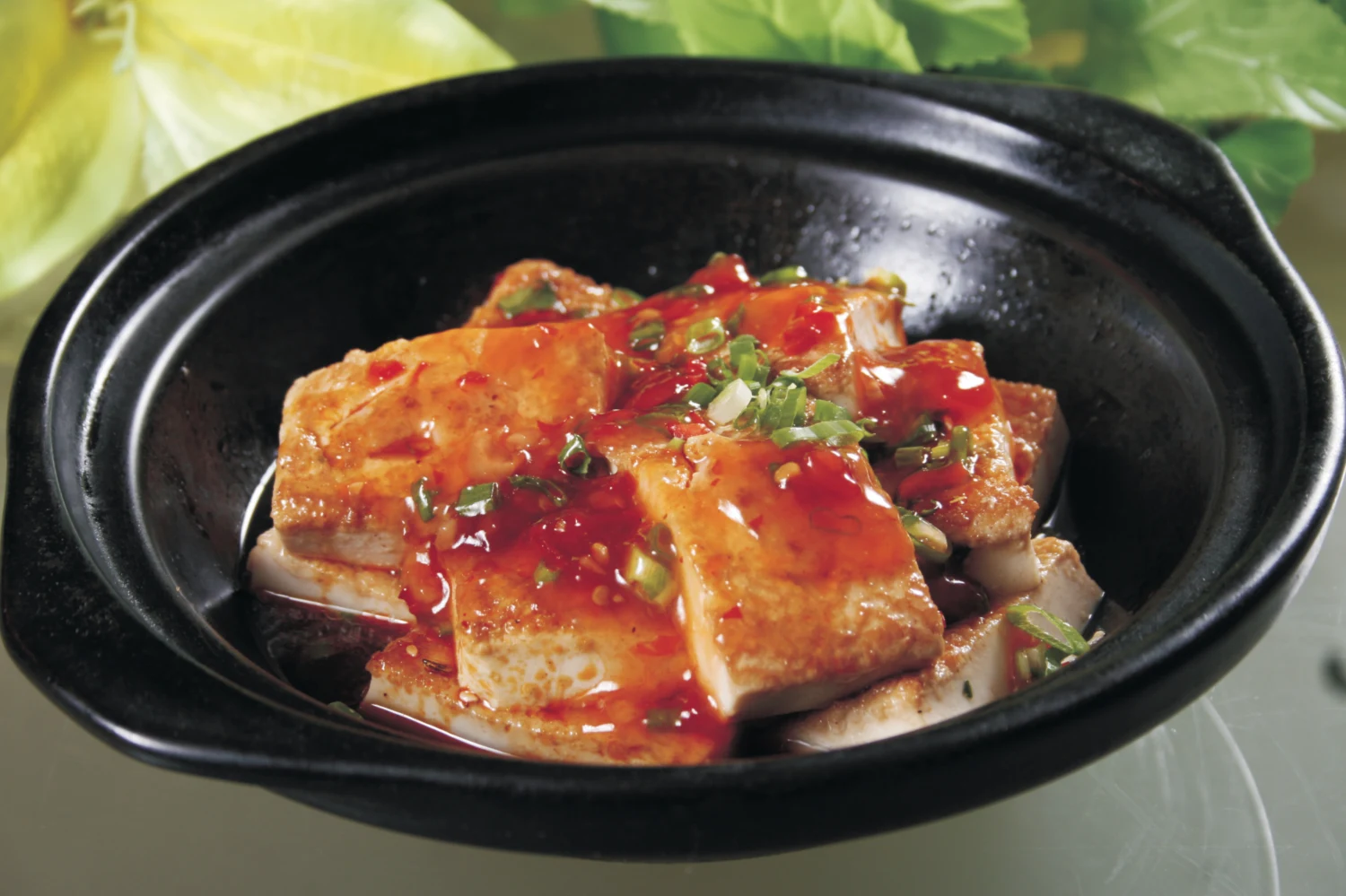
In week two, steam and braise. Try steamed egg, tofu with a simple sauce, or a modest braise. These methods teach patience and make it easier to notice texture without the speed of a wok.
In week three, choose one regional direction. Build two or three dishes around Sichuan vinegar and chile, Cantonese steaming and soup, Jiangnan braising, or northern wheat foods. Regional focus makes the pantry coherent.
In week four, invite other hands into the kitchen. Fold Chinese dumplings, shape baozi or make noodles. The meal may become less efficient and more memorable. That trade is often the point.
Recipe safety belongs inside good writing
Keep raw and cooked utensils separate. Cook poultry and ground fillings thoroughly. Cool leftovers promptly. Confirm allergens in soy sauces, oyster sauce, peanuts, sesame and shared equipment. For measurable minimum temperatures rather than inherited guesswork, keep the official FoodSafety.gov safe minimum internal-temperature chart beside any recipe using poultry, ground meat, seafood or reheated leftovers. When steaming, protect hands from escaping vapor; it is invisible and remarkably confident.
These notes are practical boundaries, not medical advice.
The safest recipe is also readable under pressure. Raw ingredients should not force the cook to scroll through five paragraphs with contaminated hands. Temperatures, resting times and storage instructions belong beside the step where they matter.
Frequently asked questions about Chinese food recipes
What are easy Chinese food recipes for beginners?
Good starting points include tomato and egg, fried rice, steamed egg, smashed cucumber salad, scallion-oil noodles and simple stir-fried greens. Each teaches a reusable technique without requiring a restaurant-sized pantry.
What ingredients are essential for Chinese cooking?
A practical starter pantry may include light soy sauce, a Chinese vinegar, sesame oil, neutral cooking oil, rice wine or an alcohol-free substitute, starch, dried chilies and white pepper. The exact pantry should follow the regional dishes you want to cook.
Do I need a wok to cook Chinese food?
No. A wok is excellent for high-heat tossing and efficient cooking, but a broad skillet, saucepan, steamer setup and ordinary pot can produce many Chinese home dishes. Match the pan to the heat source and recipe.
Why should ingredients be prepared before stir-frying?
Stir-frying moves too quickly for chopping between steps. Cutting, measuring and mixing the sauce first lets the cook control doneness and prevents aromatics or chilies from burning.
Are Chinese recipes the same across China?
No. Ingredients, staple grains, seasonings and techniques vary by region, community and household. A responsible recipe names its culinary context instead of presenting one version as universally Chinese.
A recipe should eventually become less necessary
The goal is not to obey instructions forever. It is to understand why the instruction exists. Once you can see when a sauce has reduced enough or feel when dough needs water, the recipe becomes a map you can fold and place in your pocket.
Use the wider Chinese food guide to choose a regional direction, then return here as this recipe library grows dish by dish.
The parent Chinese cooking techniques and condiments collection is the right next stop when the failure belongs to heat, oil, fermentation or sequence rather than one named dish.
Bring one cooking correction card to East Moment's community: dish, stove, pan, batch size, failure signal and the adjustment that worked. Return for corrections organized around the moment written timing stopped matching a real kitchen.