Kung Pao chicken is a small argument conducted at high heat. Vinegar sharpens the sentence, sugar softens it, dried chile adds wit, Sichuan pepper leaves a bright vibration, and peanuts arrive with the final word: crunch.
What is Kung Pao chicken?
Kung Pao chicken is the English name for gongbao jiding (宫保鸡丁), a Sichuan dish built from diced chicken, dried chilies, aromatics and peanuts in a restrained, glossy sauce. It belongs to the Sichuan flavor tradition known as hula, combining scorched-chile fragrance with a measured sweet-and-sour balance.
The important word is balance. A sauce that tastes only sweet misses the vinegar; one that burns without aroma misses the chile; one that floods the plate misses the stir-fry.
It is also useful to separate hula from the better-known word mala. Mala foregrounds numbing Sichuan pepper and chile heat. Hula points toward the roasted, slightly scorched fragrance released when dried chile meets hot oil. Kung Pao chicken may include Sichuan pepper, but the dish should not become a bowl of numbing sauce. The aroma arrives first; heat follows.
That difference is easy to miss on menus that translate every Sichuan dish as "spicy." A cuisine can use the same chile in several grammars. Kung Pao is one of the clearest demonstrations.
The history behind the name
The dish is often associated with Ding Baozhen, a nineteenth-century official whose title included gongbao, or palace guardian. Food histories around famous people easily gather decorative legends, so the exact path from official title to restaurant standard should be treated with caution.
What can be said more securely is that the modern dish is strongly associated with Sichuan cuisine and became globally recognizable through Chinese restaurants. During parts of the twentieth century, political sensitivities affected its naming in China; the familiar name later returned.
History matters, but the wok tells us more than the anecdote. The dish survives because its structure is memorable.
The famous-official story can make the dish sound as if one powerful man invented dinner. Real food history is usually less cinematic. Names, cooking practices, ingredients and restaurant standards gather over time. Treating the Ding Baozhen association cautiously does not weaken Kung Pao chicken. It allows the dish to be more than a historical souvenir. For readers who want the wider historical argument rather than one restaurant legend, Yale University Press's page for K. C. Chang's edited volume Food in Chinese Culture is a useful route into food as social and historical evidence.
The flavor architecture of Sichuan Kung Pao chicken
| Element | Ingredient direction | What it contributes |
|---|---|---|
| Main body | Diced chicken, often thigh or breast | Tender texture and quick, even cooking |
| Aromatic heat | Dried red chilies; sometimes Sichuan pepper | Toasted fragrance, warmth and light numbing sensation |
| Sweet-sour balance | Sugar and Chinese vinegar | Contrast without becoming dessert-like |
| Savory depth | Soy sauce and seasoning | Salt, color and umami |
| Aroma | Ginger, garlic and scallion | Freshness released by hot oil |
| Finish | Peanuts or occasionally cashews | Roasted flavor and crisp texture |
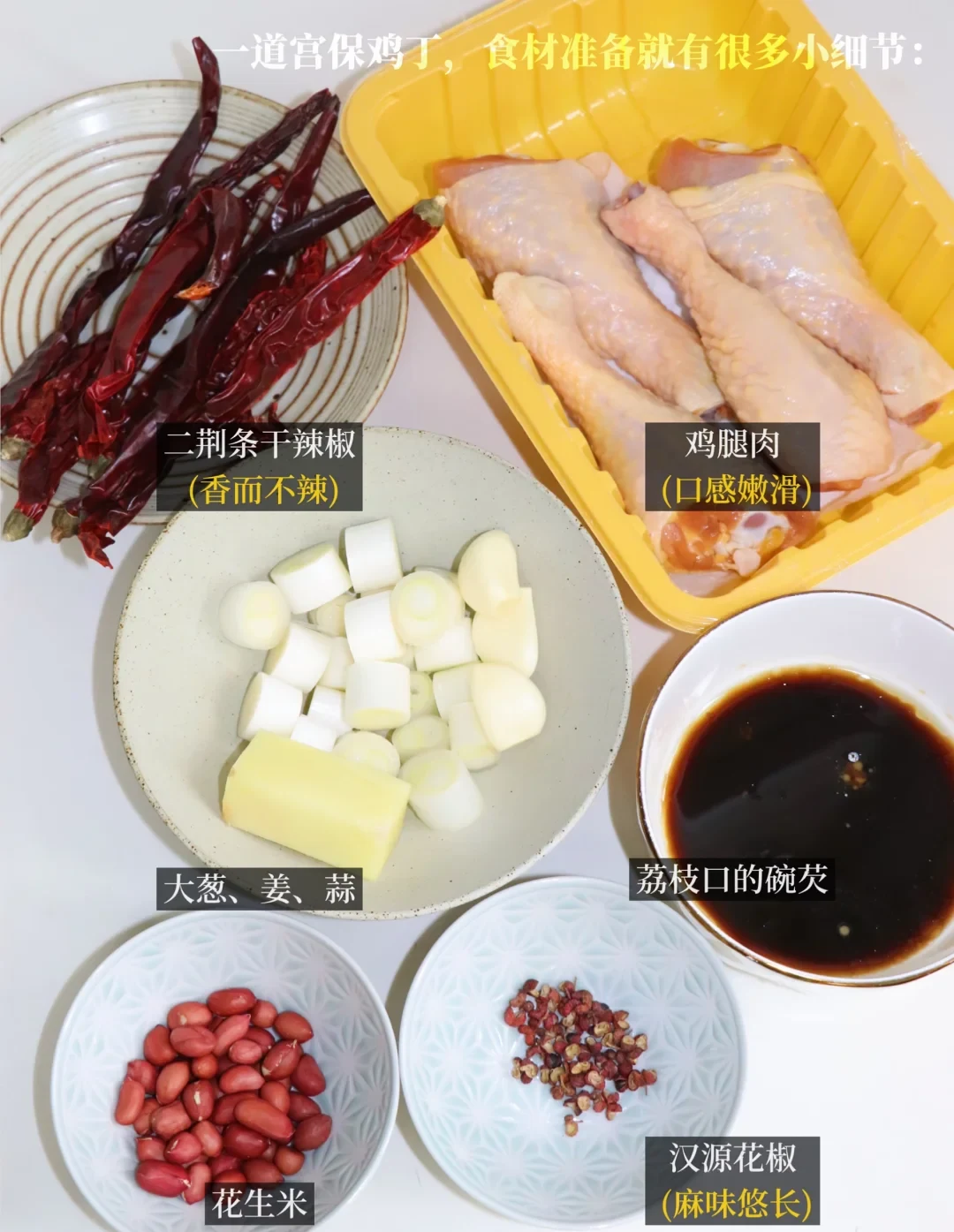
This authorized home-kitchen frame does something a polished restaurant plate cannot: it makes the cook's decisions visible before heat hides them. Chicken thigh is separated from dried chile; peanuts and Sichuan pepper are not treated as one kind of "spice"; scallion, ginger and garlic have already been cut; the sauce is mixed in advance. The Chinese labels also preserve the original cook's distinctions instead of replacing them with a decorative English infographic. A photograph cannot certify the quantities or the final flavor, but it proves that Kung Pao's apparent simplicity depends on deliberate preparation.
The sauce should cling. If the chicken is swimming, the proportions or heat control have gone astray.
Each element has a physical job. Starch on the chicken helps protect moisture and gives the sauce a surface to hold. Vinegar prevents sugar from becoming flat. Dried chile perfumes the oil. Scallion adds a greener, sweeter aroma near the end. Peanuts interrupt the tender chicken with dry crunch.
Remove one element and the dish can still be enjoyable, but its rhythm changes. This is why adding many vegetables is not a neutral decision. Bell pepper, zucchini and celery release water, occupy pan space and turn a tight stir-fry into a larger mixed dish. That may suit an overseas restaurant format. It is not invisible.
How Kung Pao chicken is cooked
The chicken is cut into small, even pieces and briefly marinated, often with soy sauce, starch and cooking wine. A separate sauce is mixed before the wok becomes hot; there is no time to search for vinegar while the chilies are burning.
Oil first releases the aroma of dried chile and sometimes Sichuan pepper. Chicken enters and cooks quickly. Ginger, garlic and scallion follow according to the cook's method. The prepared sauce is added near the end, thickening almost immediately, and roasted peanuts are folded in late enough to remain crisp.
This is why home versions improve when preparation becomes calm. Stir-frying is fast only after everything else is ready.
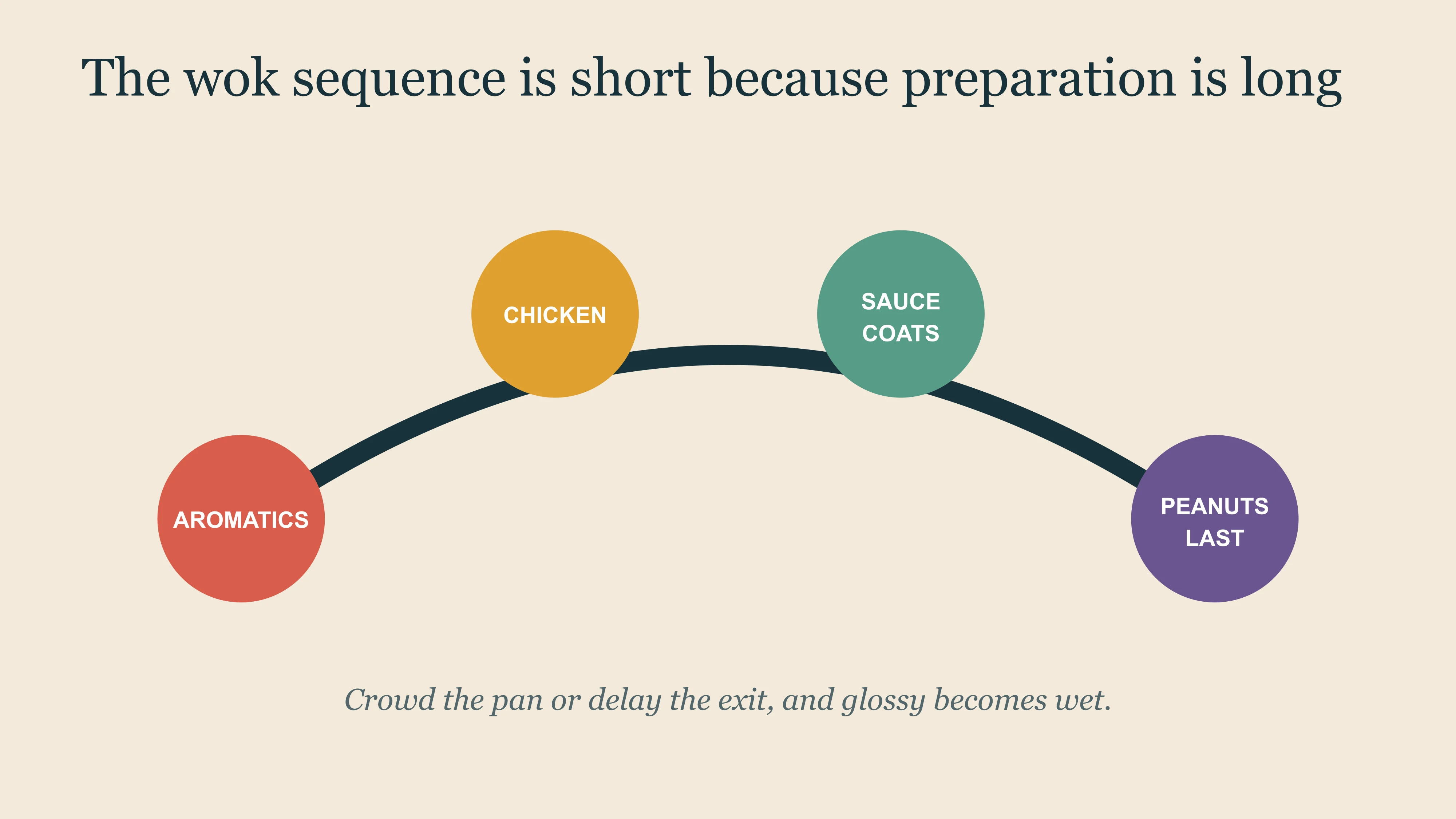
The cooking sequence is visible if you know where to look
First, the chicken should be evenly cut. Large and small pieces cannot agree on when they are done. A brief marinade seasons the surface and helps create tenderness, but a heavy wet coating makes browning difficult.
Second, the dried chilies need fragrance without turning black. The interval can be short. Once the oil smells toasted and warm, the next ingredient should already be waiting. Burned chile tastes bitter and makes the entire dish feel louder but less precise.
Third, the chicken needs room. If the wok is crowded or cool, it releases water and steams. Home cooks can divide the batch, let the pan recover and recombine everything for the final sauce.
Fourth, the sauce enters late. Starch thickens quickly, so the cook is looking for a thin gloss around separate pieces, not a gravy stage. Peanuts enter near the finish because crunch is part of the design.
The best moment is brief: the sauce has tightened, the scallion is aromatic, the chicken is cooked and the peanuts have not softened. Turn off the heat. Continuing to stir because the recipe still has thirty seconds left is how control becomes obedience.
Sichuan and overseas versions compared
| Feature | Sichuan direction | Common overseas direction |
|---|---|---|
| Chicken | Small diced pieces, often not battered | May be larger, sometimes coated or fried |
| Vegetables | Usually limited so the core structure stays clear | Bell pepper, celery, zucchini or water chestnut may be added |
| Sauce | Glossy and relatively restrained | Often sweeter, thicker and more abundant |
| Heat | Dried-chile aroma with possible Sichuan pepper | Chile heat may be milder or more direct |
| Nuts | Peanuts are strongly associated | Peanuts or cashews |
Neither column describes every restaurant. The comparison helps readers recognize two cooking logics without turning dinner into a courtroom.
The overseas version often solves a practical problem. More sauce protects food during delivery, vegetables increase portion size and a sweeter profile reads immediately to a broad audience. Those choices can produce a satisfying dish. The mistake is pretending they have no effect on texture or regional identity.
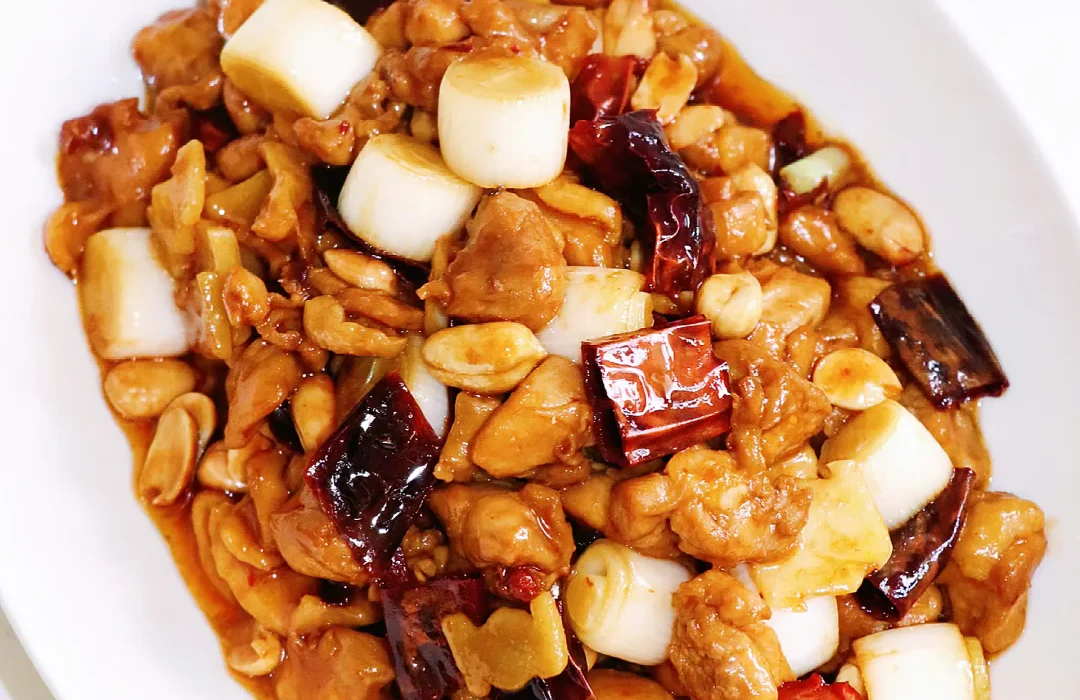
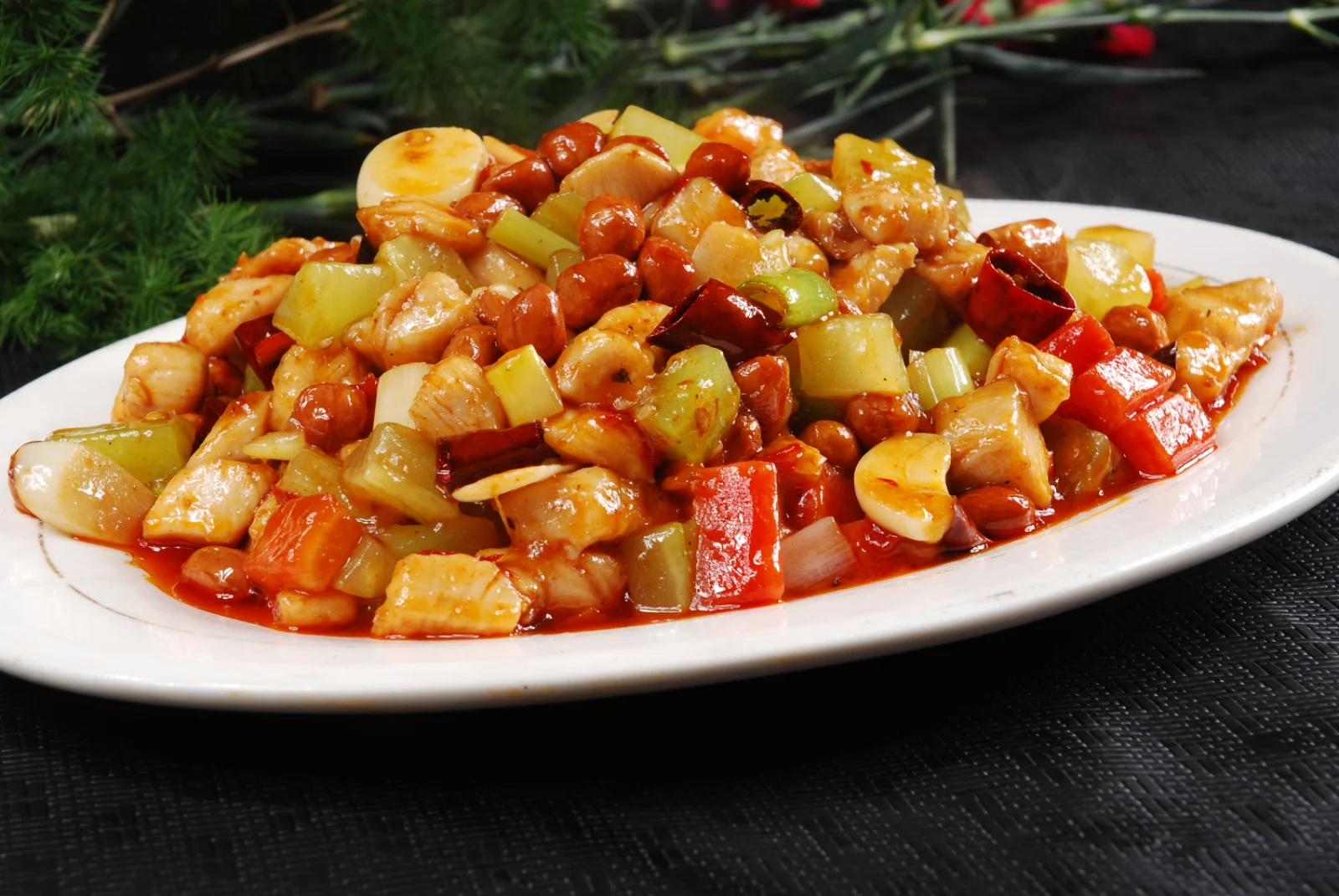
This home-cooked plate makes the structure legible without pretending a photograph can certify flavor. Chicken, peanuts, dried chile and thick scallion sections still hold separate shapes; the sauce clings instead of burying them. That is the visual rhythm I want before tasting: tenderness interrupted by dry crunch, chile fragrance and a sweet scallion edge. The image cannot prove wok temperature, vinegar quality or Sichuan origin. It can prove that the cook kept the ingredients distinct enough for those questions to matter. My line is firm: adaptation deserves respect only when we name what it preserved and what it changed.
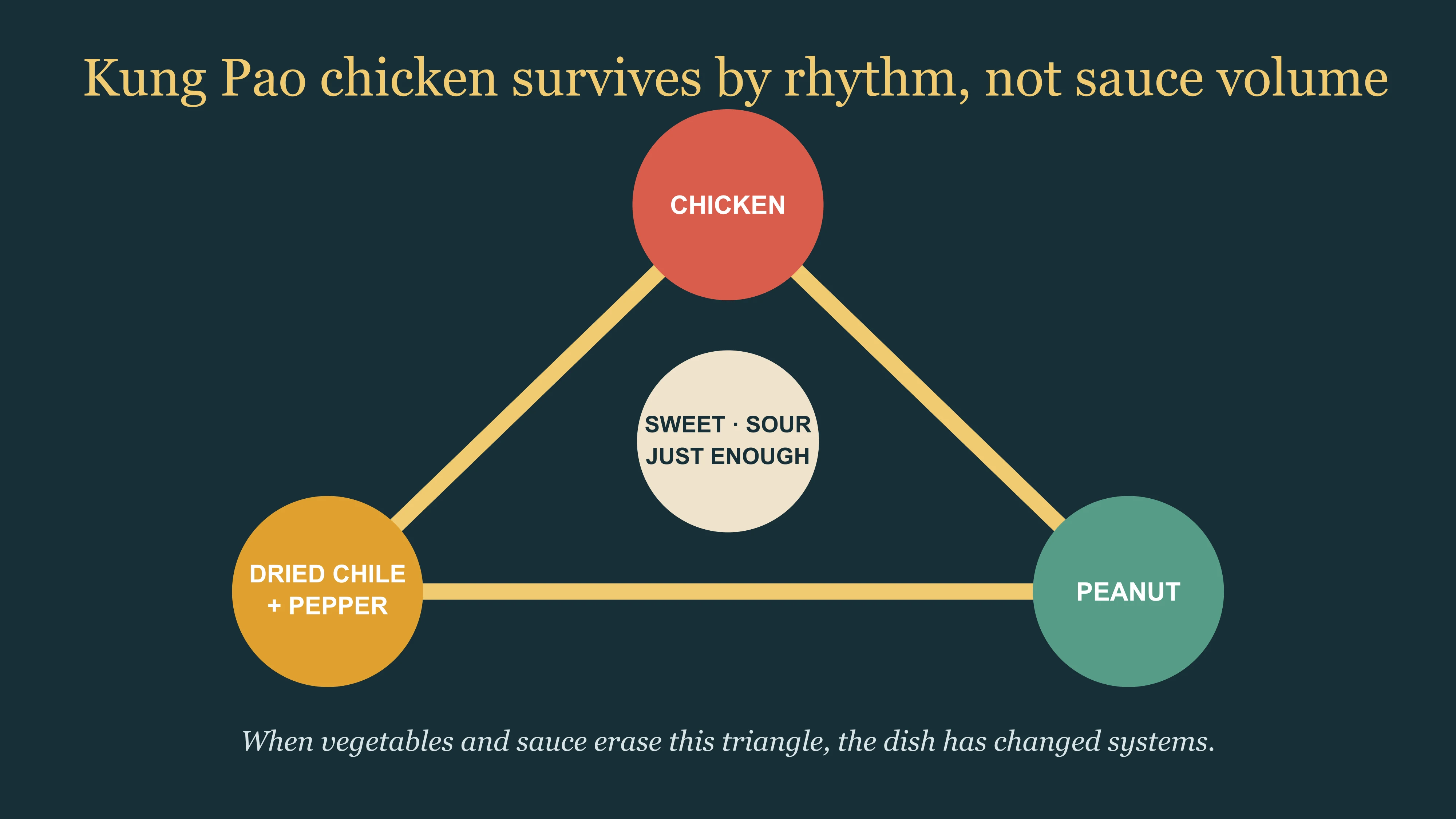
The triangle makes adaptation visible. Larger vegetables and generous sauce can create abundance, but they also move attention away from the tight chicken-chile-peanut rhythm of the Sichuan version.
Kung Pao chicken and Chinese American food
In the United States, Kung Pao chicken became a dependable menu name because it communicates heat, chicken and peanuts quickly. American versions often added vegetables and sauce, responding to local expectations and takeout service.
That adaptation belongs within Chinese American food. The useful distinction is not real versus fake, but Sichuan regional form versus a particular diaspora form. A careful menu can tell you which conversation you are entering.
Kung Pao chicken became globally successful partly because the structure travels well as an idea. Chicken, chile, sweetness and nuts are easy to communicate across languages. What travels less easily is restraint. Menus can preserve the ingredient list while losing the fast, dry finish that makes the Sichuan dish feel alert.
That makes Kung Pao a useful test case for culinary translation. Translation is not copying every word. It is deciding which relationships must survive.
Common mistakes reveal what the dish needs
A pale plate usually means the pan never became hot enough or the chicken released too much water. A dark, bitter plate points toward burned chile, garlic or sauce. A sticky plate may contain too much starch or sugar. Soft peanuts entered too early or sat in sauce too long.
The most common problem is excess. Too much sauce, too many vegetables, too much sweetness and too much heat can all make the dish less expressive. Kung Pao chicken does not need to prove generosity by covering the rice bowl in liquid. Its confidence comes from concentration.
At home, fix one variable at a time. Reduce the batch before buying a stronger burner. Mix the sauce before heating the pan. Dry the chicken before adding it. Use the sensory sequence in our Chinese food recipes guide instead of treating stir-frying as a race.
Substitutions should preserve the relationship
Chicken thigh gives a wider margin of tenderness; breast can work when cut evenly and cooked briefly. Chinese black or dark rice vinegar contributes a deeper aroma than plain white vinegar. Another vinegar can supply acidity, but the dish will not smell identical.
Cashews create a richer, softer crunch than peanuts. They are a recognizable restaurant variation, not a secret upgrade. For a nut-free version, do not simply assume seeds are safe for every allergy. Use an ingredient appropriate to the diner and accept that the final texture will change.
Sichuan pepper should be fresh enough to smell citrusy and bright. If it tastes dusty, adding more will not restore it. Dried chilies also vary dramatically in heat. The cook controls the dish by knowing the ingredient, not by counting red objects.
How to recognize a well-made plate
Look for distinct pieces rather than a sticky mass. The chicken should remain juicy, peanuts crisp, scallions aromatic and dried chilies fragrant rather than blackened. Sweetness should arrive, then make room for vinegar and savory depth.
Do not casually eat whole dried chilies unless you enjoy turning lunch into a personal challenge. They season the oil and can be moved aside.
Taste in sequence. First notice the fragrance rising from the plate. Then ask whether the chicken is tender and separate. Look for vinegar behind the sweetness, toasted chile behind the heat and a clean peanut crunch at the end. A good plate should remain interesting after the first spicy impression.
When ordering, ask whether the restaurant serves a Sichuan-style version and mention a nut allergy before the dish reaches the kitchen. If the menu groups Kung Pao beside regional Sichuan dishes and names gongbao jiding, the kitchen may be aiming closer to the restrained form, though the plate remains the final evidence.
A dish remembered by its rhythm
Kung Pao chicken is famous because its contrasts are immediately readable, but it rewards slower attention. Behind the shine is timing; behind the heat is fragrance; behind the global name is a Sichuan system of balance.
Explore more through our Chinese food guide and the meat and poultry collection, then compare Sichuan's aromatic heat with the fresh-chile, smoked and fermented flavors discussed in Hunan cuisine.
Bring one plate audit to East Moment's community: sauce cling, chile fragrance, peanut crunch, vegetable load and the point where adaptation changed the dish's rhythm. Return when a second cook tests the same variable instead of repeating an authenticity slogan.