Hunan cuisine, or Xiang cuisine, is a family of food traditions from Hunan shaped by rice agriculture, lakes and rivers, humid summers, preserved foods and an expressive use of fresh, dried and fermented chilies. Its heat is direct, but its deeper character comes from smoke, sourness, steam and appetite.
Hunan cuisine is heat with a memory behind it
Hunan food is often introduced as one of China's hottest cuisines. That is true often enough to be useful and incomplete enough to be dangerous.
The broader Hunan regional-cuisine collection is the parent map; this guide owns the province-wide flavor grammar rather than one city's eating itinerary. The Hunan provincial government's culture overview provides an institutional boundary for the regional tradition; the flavor-state distinctions below remain East Moment's editorial tasting framework.
The first sensation may be chili, but the second tells you more: the tartness of a pickled vegetable, the depth of smoked pork, the softened garlic beneath a steamed fish, or the clean sweetness that remains after the heat passes. Good Hunan cooking does not use chili to erase ingredients. It uses chili to wake them.
Chili was not an ingredient of ancient China waiting unchanged in a Hunan pantry. It arrived through global exchange and became local through agriculture, preservation, appetite and repetition. That transformation is more interesting than an invented timelessness: a foreign plant became one of the province's clearest languages.
The language has several registers. Fresh green chili can be vegetal and bright. Red chili can bring fruit and direct heat. Dried chili concentrates aroma. Salted chopped chili adds fermentation. White chili changes color, texture and flavor through preservation. A menu that marks everything with one flame icon erases this vocabulary.
Hunan is not one flavor zone
Hunan contains lake regions, river valleys, mountains and cities with different local habits. Changsha and the Xiang River area, the Dongting Lake region and western Hunan do not produce one identical menu. Tujia, Miao and other communities also carry food knowledge that should not be flattened into a provincial restaurant label.
The regional distinctions in E. N. Anderson's The Food of China are a useful guardrail here: “Hunan cuisine” names a province-scale tradition, not a licence to make Changsha restaurant food stand in for every lake, mountain and household table.
Changsha and the Xiang River area
Urban Changsha has become an energetic public face for Hunan food through restaurants, late-night eating and boldly seasoned snacks. Its visibility is useful, but it should not make the provincial cuisine seem like one endless night market.
Dongting Lake and northern Hunan
The lake and surrounding waterways bring freshwater fish and aquatic ingredients into the regional pantry. Steaming, braising and preserved chili meet ingredients whose texture can be damaged by careless heat.
Western Hunan
Mountain landscapes, smoking, curing, sour preparations and the food traditions of Tujia, Miao and other communities give western Hunan its own identities. Those traditions deserve pages grounded in named communities rather than being absorbed into a generic category of “rustic Hunan food.”
| Hunan food characteristic | How it appears | What outsiders may miss |
|---|---|---|
| Fresh chili heat | Sliced green and red chilies stir-fried with meat or vegetables | Fresh chili has aroma and vegetal sweetness, not only heat |
| Preserved chili and vegetables | Chopped salted chili, pickled beans and fermented greens | Preservation builds sourness and depth |
| Smoking and curing | Pork, duck and other meats paired with seasonal vegetables | Smoke belongs to storage history as well as flavor |
| Steaming | Fish, meat and preserved ingredients cooked with direct aromatic toppings | Strong flavor can coexist with a gentle cooking method |
| Freshwater food | Fish and aquatic ingredients from rivers and lakes | Hunan cuisine is not only meat and chili |
This is the fastest correction to the stereotype. “Spicy” names a sensation; state explains the cooking. A fresh pepper still behaves like a vegetable, a chopped preserved pepper brings salt and acidity, a white chili carries processing in its texture, and smoke asks for a fresh partner.
Chili changes state, and the dish changes with it
Fresh chili behaves like a vegetable as well as a spice. It occupies space, releases water and keeps a green or ripe-fruit aroma. Preserved chili contributes salt and acidity before the cook reaches for separate seasoning. Dried chili perfumes hot oil differently again.
This is why "less spicy" can be an imprecise request. A diner may want fewer whole chilies, less chopped preserved chili, no added chile oil or simply a smaller total quantity. Those changes affect flavor as well as pain.
For a first Hunan meal, compare two forms directly: stir-fried pork with fresh chili and steamed tofu or fish with preserved chili. The heat may be similar, but the aroma, salt and texture will not be.
Steaming does not mean mild
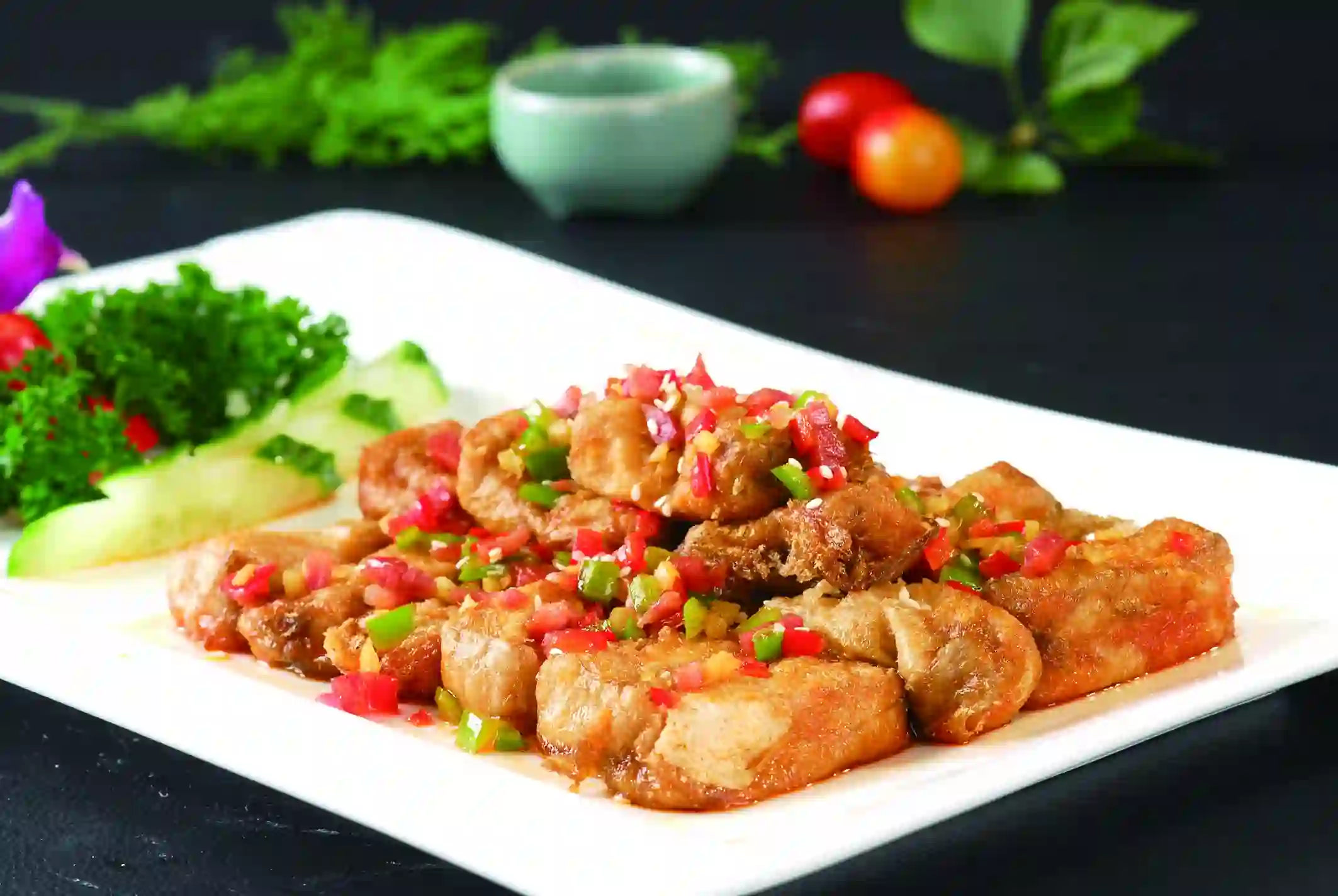
Steaming is sometimes translated culturally as restraint, but Hunan cooks use a gentle heat source to carry assertive toppings into an ingredient. Tofu is especially revealing because its quiet surface receives salt, fermented depth and chili without losing its own softness.
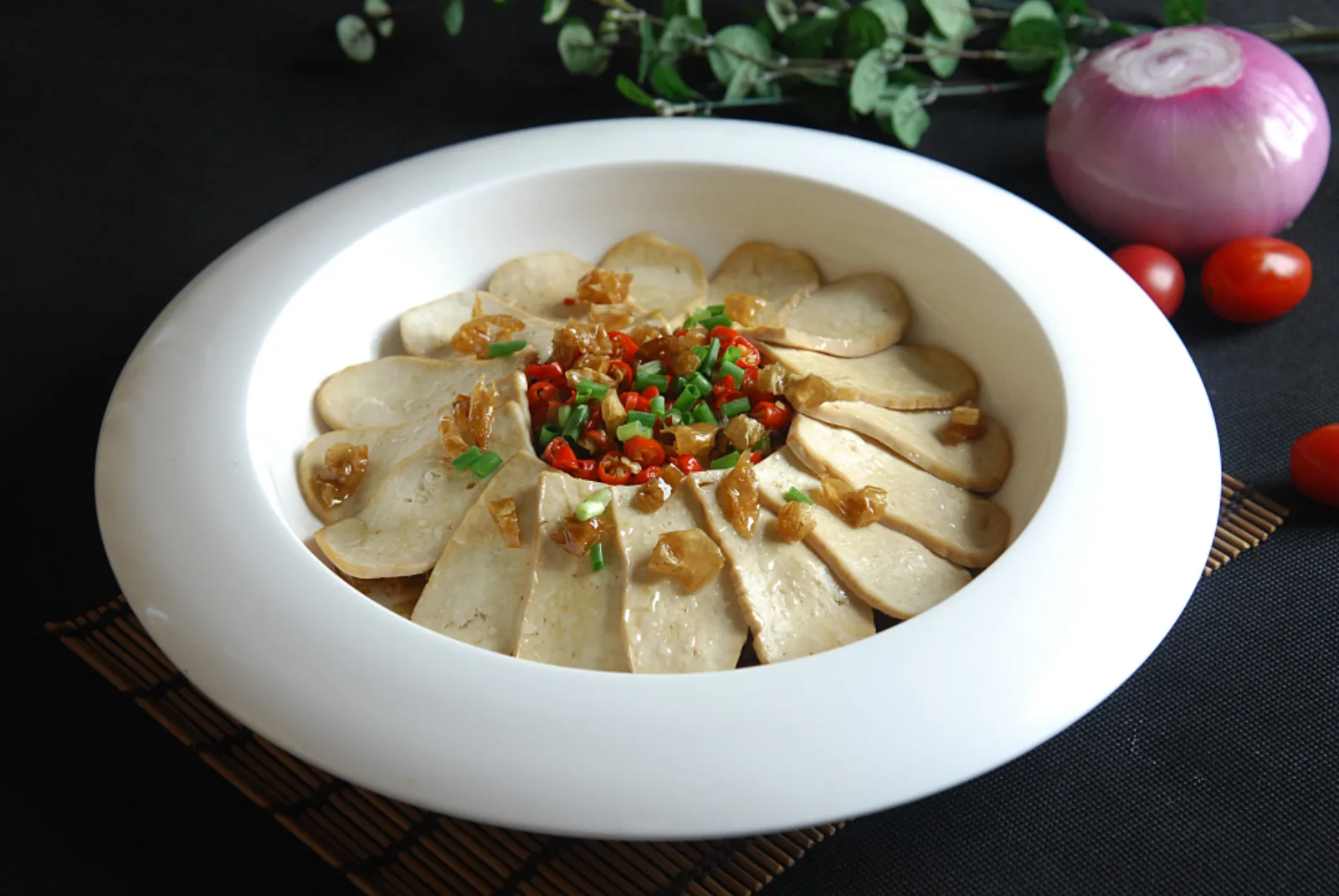
The pale tofu and red chili make a useful visual lesson: a gently cooked base can carry a forceful topping. The photograph does not establish whether the chili was fresh or preserved.
White chili is another preparation worth asking about: processing changes fresh green chili in color, aroma and texture. Methods vary by household and producer. Do not assume that every pale-looking topping, or every steamed tofu dish, uses it.
Chopped-chili fish head
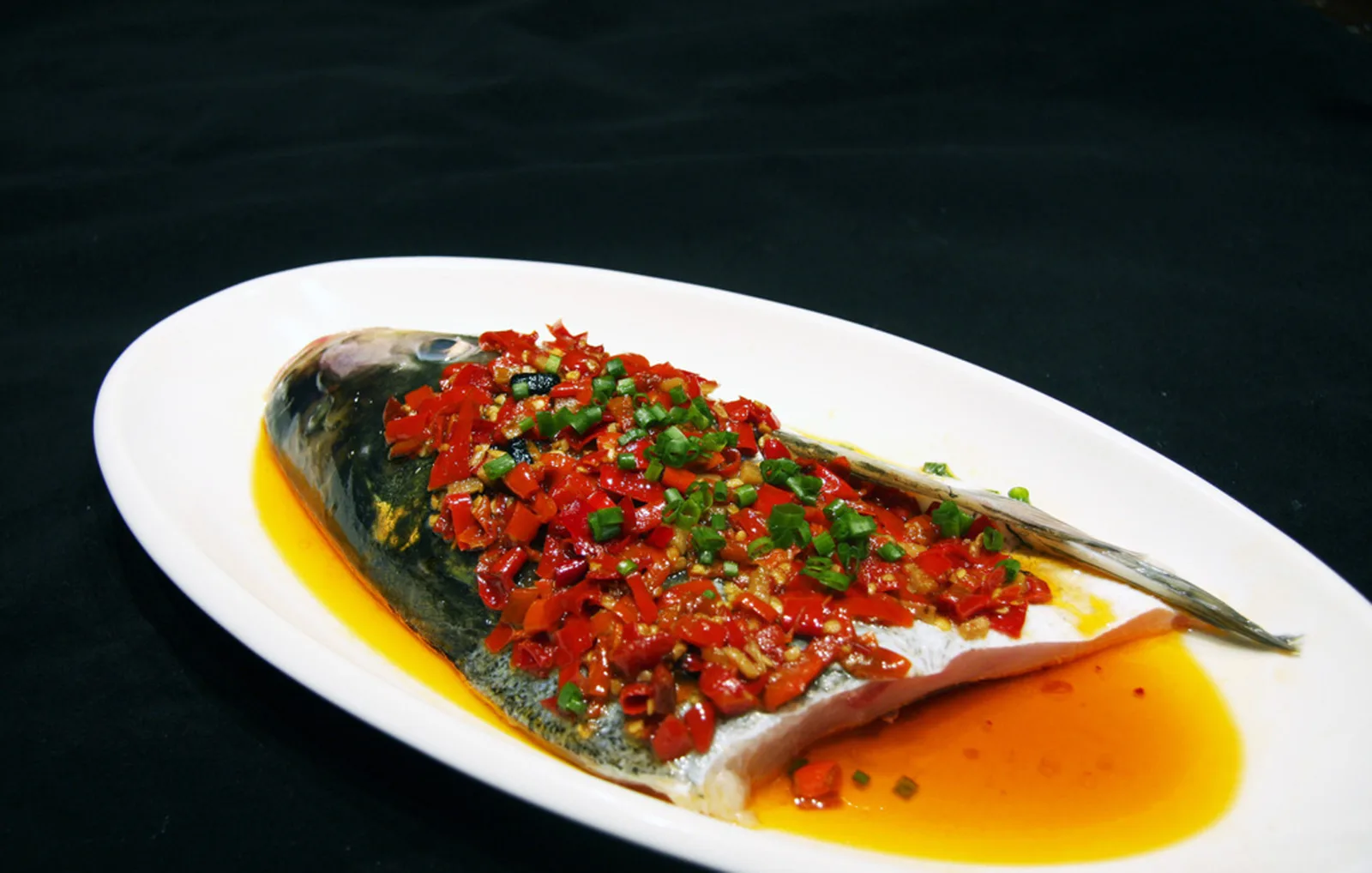
Steamed fish head covered with chopped red chili is one of Hunan cuisine's most recognizable images. The fish is cooked gently while salted or fermented chili, garlic and aromatics create an intense surface. The pleasure lies in contrast: tender flesh, gelatinous edges, fragrant steam and sharp seasoning.
The photograph at the top of this page shows a fish preparation with chopped chili, not a reliable close-up of the fish-head dish. It demonstrates the visual contrast of fish and chili; the dish described here has to be judged on its own ingredients and preparation.
The dish should not be treated as a red decoration placed on any fish. Salt level, chili fermentation, fish freshness and steaming time decide whether the flavors meet or merely sit together.
Fish head also asks the diner to slow down. Cheeks, collar, skin and gelatinous areas carry different textures, and bones make distracted eating unwise. The dish is social partly because it rewards people willing to work around one shared center.
Noodles or another starch sometimes follow the fish, collecting seasoned liquid left on the plate. This second act makes the sauce a resource rather than decoration.
Hunan stir-fried pork
Hunan stir-fried pork commonly brings sliced pork together with fresh green and red chilies, garlic and assertive seasoning. The dish appears simple, which leaves little room for poor timing. Pork must remain tender; chilies should soften without losing all their fragrance; the oil should carry flavor rather than become the flavor.
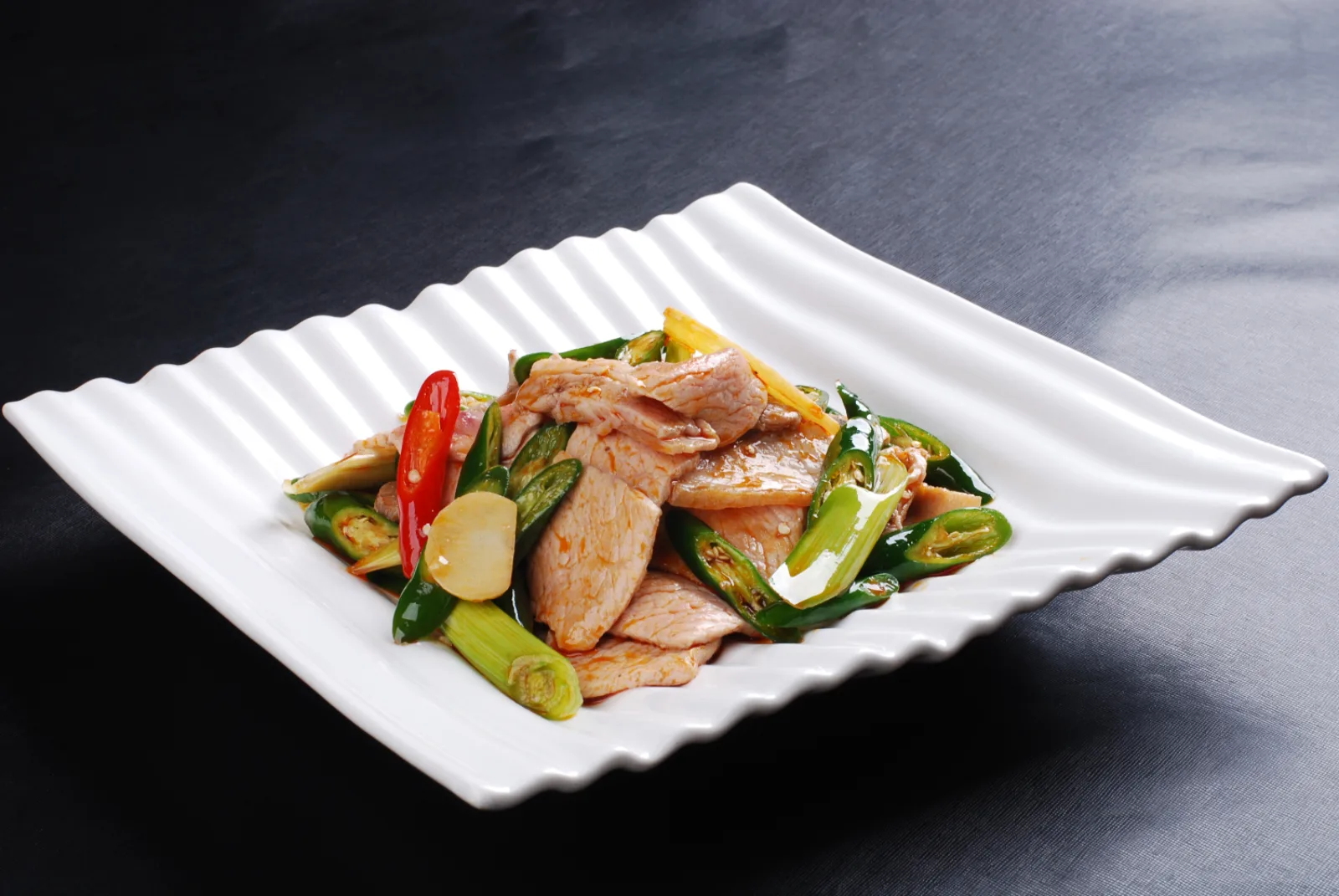
This authorized archive image shows one restaurant presentation: pale slices of pork, glossy chilies and scallion on a restrained plate. It is a useful visual reference, not a claim that every Hunan household plates the dish this way.
Smoke, preservation and the work of weather
Smoked and cured meats are sometimes described only as rustic delicacies. Their older logic is practical. Preservation turns seasonal abundance into future meals, and the smoke becomes part of the household pantry.
Stir-fried smoked pork with garlic shoots, pickled beans or local greens creates a layered saltiness that demands rice. Preserved ingredients are powerful; skilled cooking gives them fresh partners so the plate does not become dense.
Preservation should not be romanticized as a single farmhouse technique. Smoking, drying, salting, pickling and fermenting solve different problems and produce different flavors. Contemporary households may buy professionally made products rather than preserving everything themselves. The tradition continues through selection and cooking as well as production.
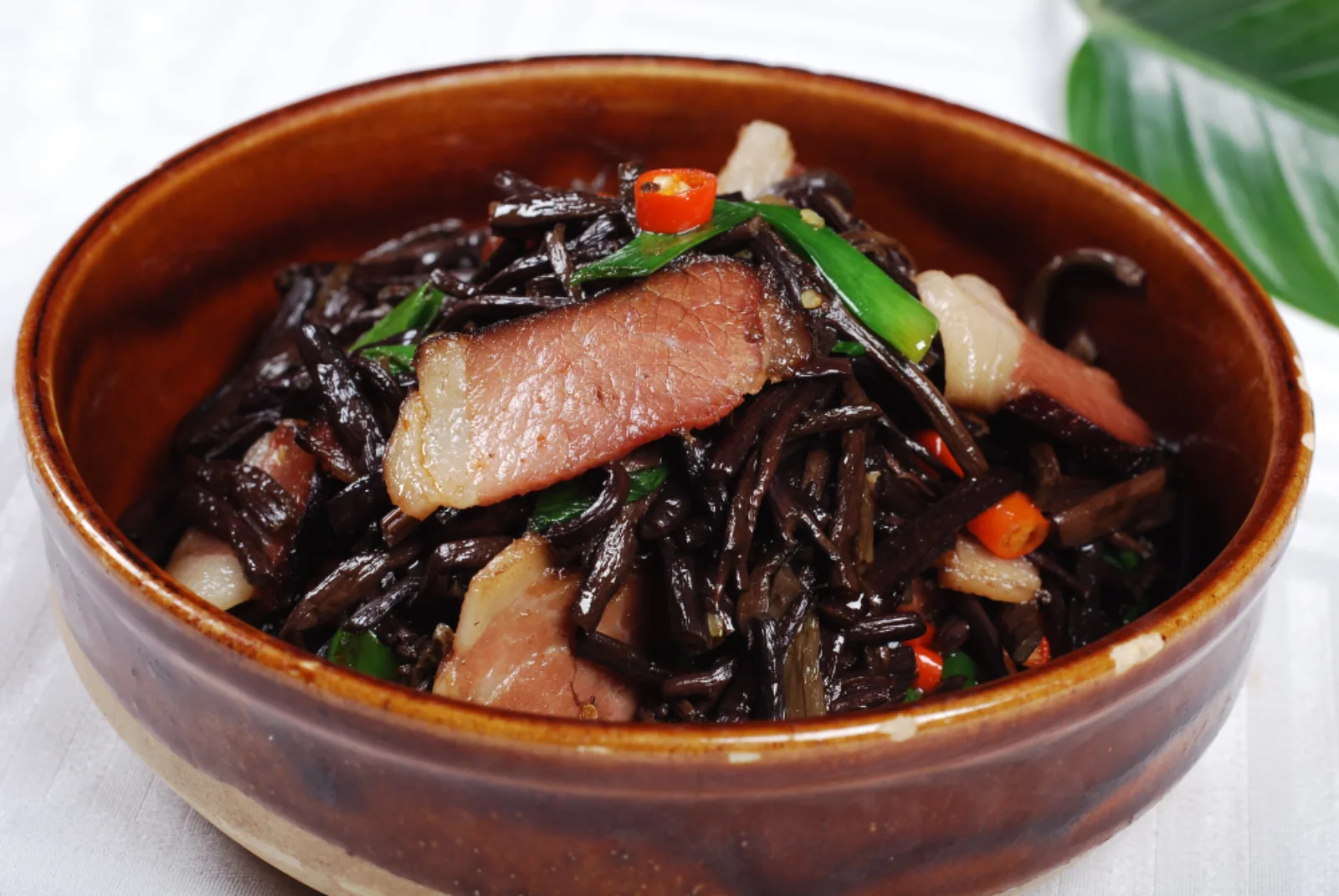
Here smoked pork is paired with bracken, whose dark strands and yielding bite prevent the plate from becoming only fat and smoke. It shows the Hunan habit of letting a preserved ingredient meet something vegetal.
This pairing also marks a boundary of interpretation. Bracken requires correct processing and preparation; this guide uses the image to explain culinary structure, not to offer foraging or food-safety instructions.
Rice is the quiet architecture of the meal
Hunan dishes can taste excessive when separated from rice. That is partly a serving mistake. Salt, smoke, sourness, oil and chili are calibrated within a table where plain rice receives and redistributes intensity.
The rice bowl gives the diner control. One bite of smoked pork can expand across two bites of grain. A strong chopped-chili topping can be balanced by tofu, vegetables or soup. The meal is not asking every dish to be gentle; it is asking dishes to work together.
This helps explain why translated restaurant descriptions can mislead overseas readers. A plate judged alone may seem salty or oily, while the original eating structure assumed shared dishes and a staple. Context lives in portioning.
Hunan and Sichuan compared
| Question | Hunan cuisine | Sichuan cuisine |
|---|---|---|
| Famous heat | Fresh, dried and preserved chilies | Chilies often paired with Sichuan pepper |
| Common secondary direction | Sour, smoked, garlicky and preserved | Numbing, fragrant, fermented and layered flavor systems |
| Iconic visual | Chopped chili over steamed fish | Red oil, peppercorns and complex sauces |
| Frequent misunderstanding | Every dish must be aggressively hot | Every dish must be numbing-hot |
The comparison helps beginners, but neither cuisine fits inside one row. Restaurants and households cross these boundaries constantly.
Sichuan pepper is the obvious contrast and the laziest stopping point. Hunan cuisine also differs through its use of fresh chile volume, preserved vegetables, smoked meats, steamed dishes and the relationship with rice. Sichuan food has its own vast vocabulary of flavor types. Neither cuisine should serve as the other's explanatory shadow.
If a restaurant describes Hunan food only as "Sichuan without numbing," the menu has not finished thinking.
Changsha made provincial food visible after dark
Changsha's late-night restaurants, snack streets and social-media presence have made Hunan flavors legible to younger diners across China. Stinky tofu, rice noodles, crayfish and chili-heavy dishes travel well through short video because steam, color and crowd reaction are immediately visible.
That visibility creates energy and distortion. The camera rewards red surfaces, giant portions and dramatic heat. Quieter soups, seasonal vegetables and careful steamed dishes receive less attention. A city nightlife image can become mistaken for an entire provincial cuisine.
The better reading connects both. Changsha shows how Hunan appetite enters contemporary urban life; Dongting Lake, western Hunan and household preservation show why the flavor existed before the feed discovered it.
How to order Hunan food with balance
Choose one strongly seasoned centerpiece, one preserved or smoked dish, one vegetable and a gentler soup or steamed item. Ordering four chili-heavy meat dishes may prove endurance while hiding the cuisine's range.
Ask whether the restaurant specializes in Changsha, western Hunan, Dongting Lake or broader provincial cooking. Clear regional answers are more valuable than a menu covered in generic flames.
Pay attention to preservation language. Smoked, pickled, salted and fermented ingredients are not interchangeable. A thoughtful menu explains which process created the flavor instead of using “farmhouse” as a universal marketing adjective.
Order heat in different forms instead of repeating one. Choose a fresh-chili stir-fry, a steamed preserved-chili dish, one smoked or pickled preparation, a green vegetable and rice. Add soup if the table needs a slower register.
Look for balance after the first impact. Does fresh chili still smell green? Does smoked meat taste of meat beneath the smoke? Does sourness make you want another bite or merely tighten the mouth? Heat can attract attention; structure keeps it.
Hunan cuisine: three questions worth asking before you order
Is the chili fresh or preserved? In a pork stir-fry, look for visible slices of green or red pepper. In a steamed dish, ask whether the chopped topping is salted or fermented: reducing its amount changes salt and acidity as well as heat.
Where is the smoked flavor coming from? A smoked-meat dish should still let you taste the meat and the vegetable alongside it. If the menu cannot name the preserved ingredient, ask before treating "farmhouse" as an explanation.
What will balance the table? Put rice, a vegetable and a less assertive steamed dish or soup beside the chili-heavy centerpiece. I would choose that contrast over four versions of the same red, oily plate: the second meal tells me much more about Hunan cooking.
A cuisine that keeps the rice bowl close
Hunan food often feels generous because it understands the purpose of rice. Salt, smoke, sourness and chili reach outward; the plain grain receives them and returns calm.
Continue through Chinese food, compare another southeastern regional system in Fujian cuisine or follow shared heat and conversation through Chinese hot pot.