My verdict: Hengdian World Studios is worth the trip only when you stop expecting an ancient city or a celebrity safari. It is a working production town made of historical simulations, camera corridors, performance parks and ordinary service roads. Choose the visual world you want to understand, then watch how architecture changes when the frame widens.
Hengdian World Studios is a network of working sets, not one theme park
The English name sounds singular. The map is not.
Hengdian World Studios covers multiple shooting bases and visitor parks across Hengdian Town in Dongyang, Zhejiang. Qin Palace, Qingming Shanghe Tu, Ming and Qing Palace Garden, Guangzhou Street and Hong Kong Street, Dream Bund and other areas reproduce different eras and screen languages. They have separate entrances, schedules and ticket products. Some sit near one another; others require a town transfer.
The official Hengdian operator says development began in 1996 and now includes more than ten shooting bases plus film and television stages. That origin still explains the place. Hengdian was not built around one preserved monument. It grew because productions needed controllable streets, palaces, props, technicians, performers and repeatable space.
The visitor therefore has two overlapping Hengdians:
| Hengdian as production system | Hengdian as visitor experience |
|---|---|
| Sets designed for framing, redressing and repeated use | Parks, shows, photo routes and themed evening programs |
| Working crews, equipment, technicians and controlled access | Ticketed areas that may change around production needs |
| Architecture that suggests an era without being its original fabric | A chance to walk beyond the edge of familiar drama shots |
This is the East Moment reason to go. A normal attraction guide asks which park is prettiest. I want you to notice how Chinese screen history is manufactured: what a camera includes, what it hides and how a crowd, soundtrack or costume turns plywood, plaster, masonry and paint into a believable world.
Do not mistake a Hengdian set for the historical original
Qin Palace is not an excavated Qin imperial palace. Guangzhou Street and Hong Kong Street are not preserved districts removed from Guangzhou or Hong Kong. The Ming and Qing Palace Garden is not the Forbidden City.
That does not make the spaces worthless. It changes the question.
The official Qin Palace page explains that the complex was designed for Chen Kaige's film The Emperor and the Assassin and constructed as a large cinematic image of Qin-Han power. It later hosted many other productions. Its value is not archaeological authenticity. Its value is seeing how scale, axial movement, walls and empty courts create imperial authority on screen.
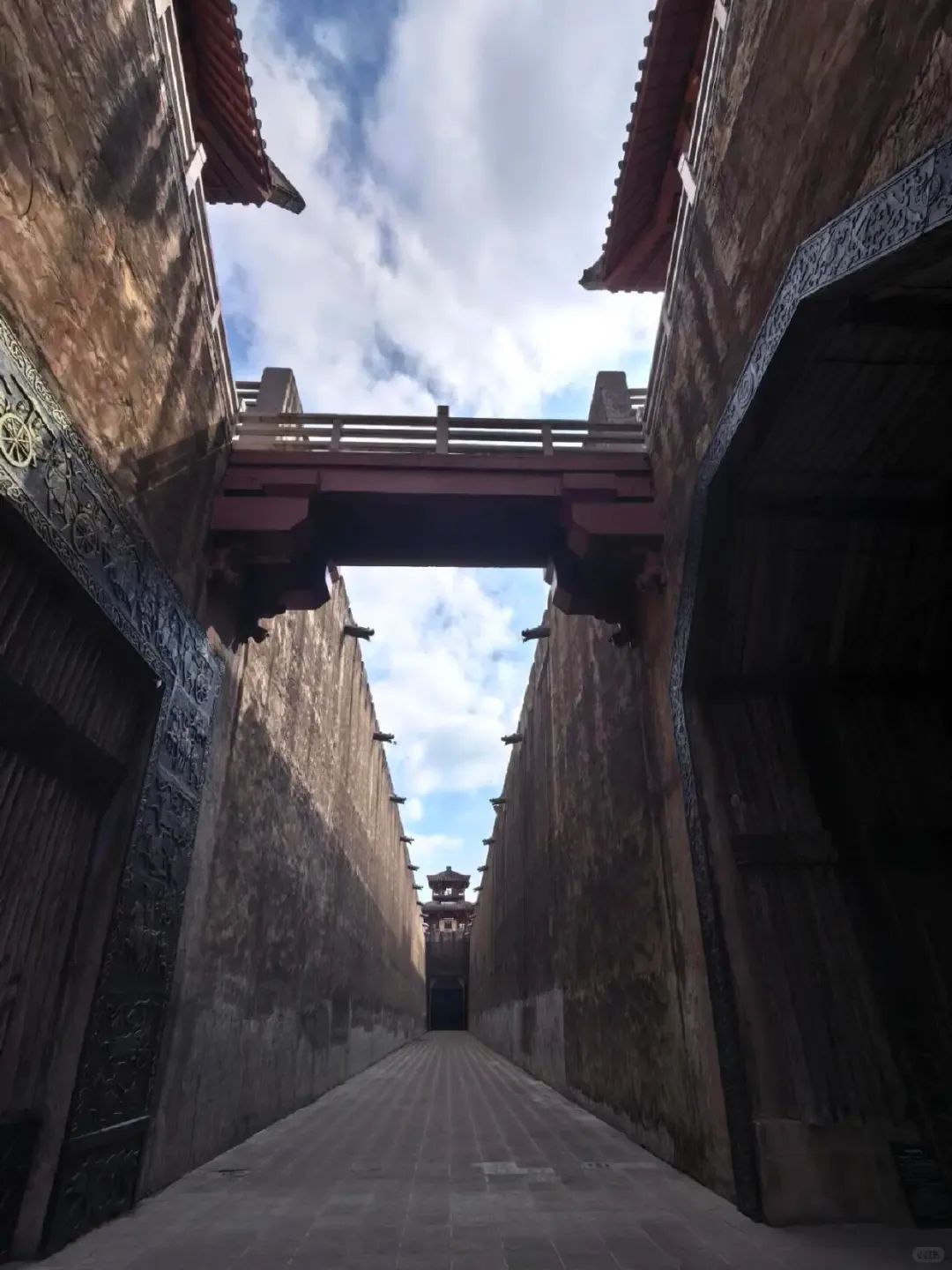
This authorized visitor photograph proves that Qin Palace contains narrow off-axis passages as well as monumental public courts. It cannot prove Qin-period construction, an exact filming location or which production used this corridor.
That narrow passage teaches more than another centered throne-room photograph. On screen, high walls can compress a figure, hide modern context and control the direction of movement. In person, the sky, service edge and abrupt transition between spaces reveal the mechanism.
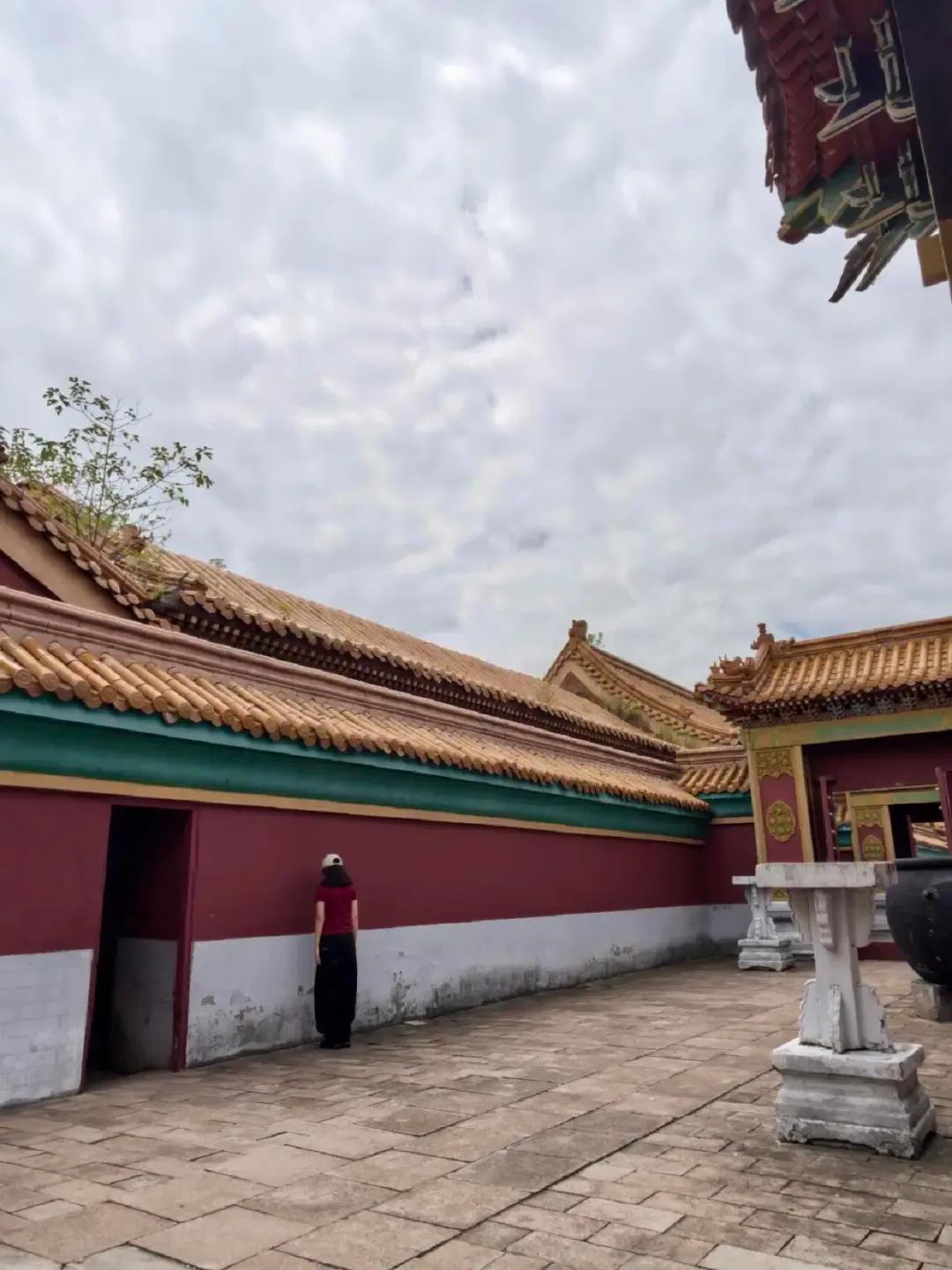
The correct language is “set,” “reconstruction for screen production,” “visitor park” or “historically inspired space.” Use “original palace” only for an original site supported by archaeology and history. Hengdian becomes more interesting, not less, when we stop demanding that fiction pretend to be heritage.
Qin Palace is about power; Qingming Shanghe Tu is about movement
Choose Qin Palace when you want monumental geometry. The courts, stairways, gates and side passages are built to make bodies look small and state power look organized. Fans of Hero, The Emperor and the Assassin and many later period dramas will recognize the visual grammar even when a specific corner cannot be matched confidently to one scene.
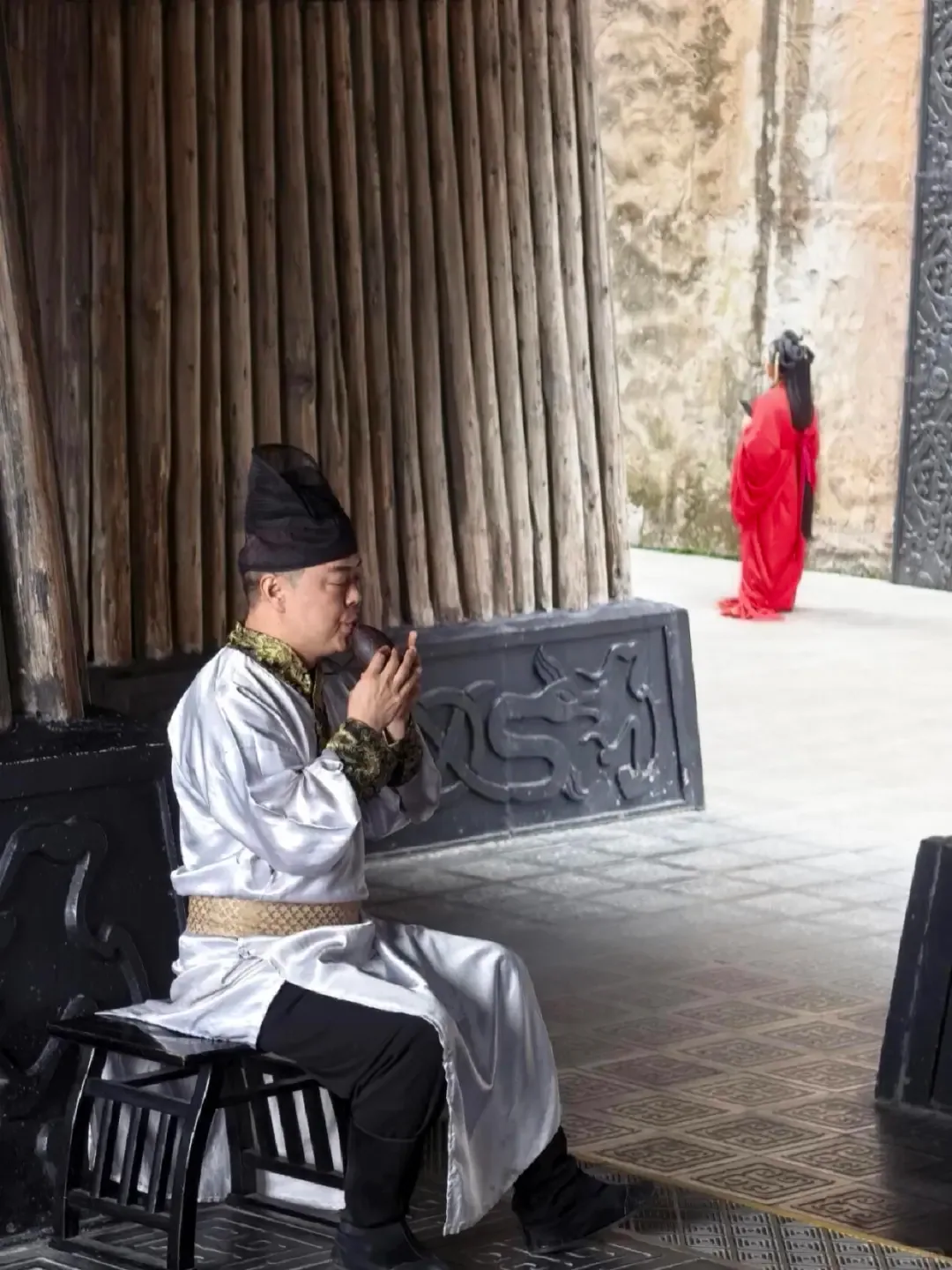
The image proves how live performance can activate an otherwise static corridor. It cannot identify the instrument, role or historical accuracy without the program record.
Qingming Shanghe Tu works differently. Its bridges, water edges, shops and public lanes create circulation rather than intimidation. The park borrows the idea of an inhabited Song-era urban picture, then turns it into screen streets and visitor performance space. It is strongest when performers and visitors make the route socially legible.
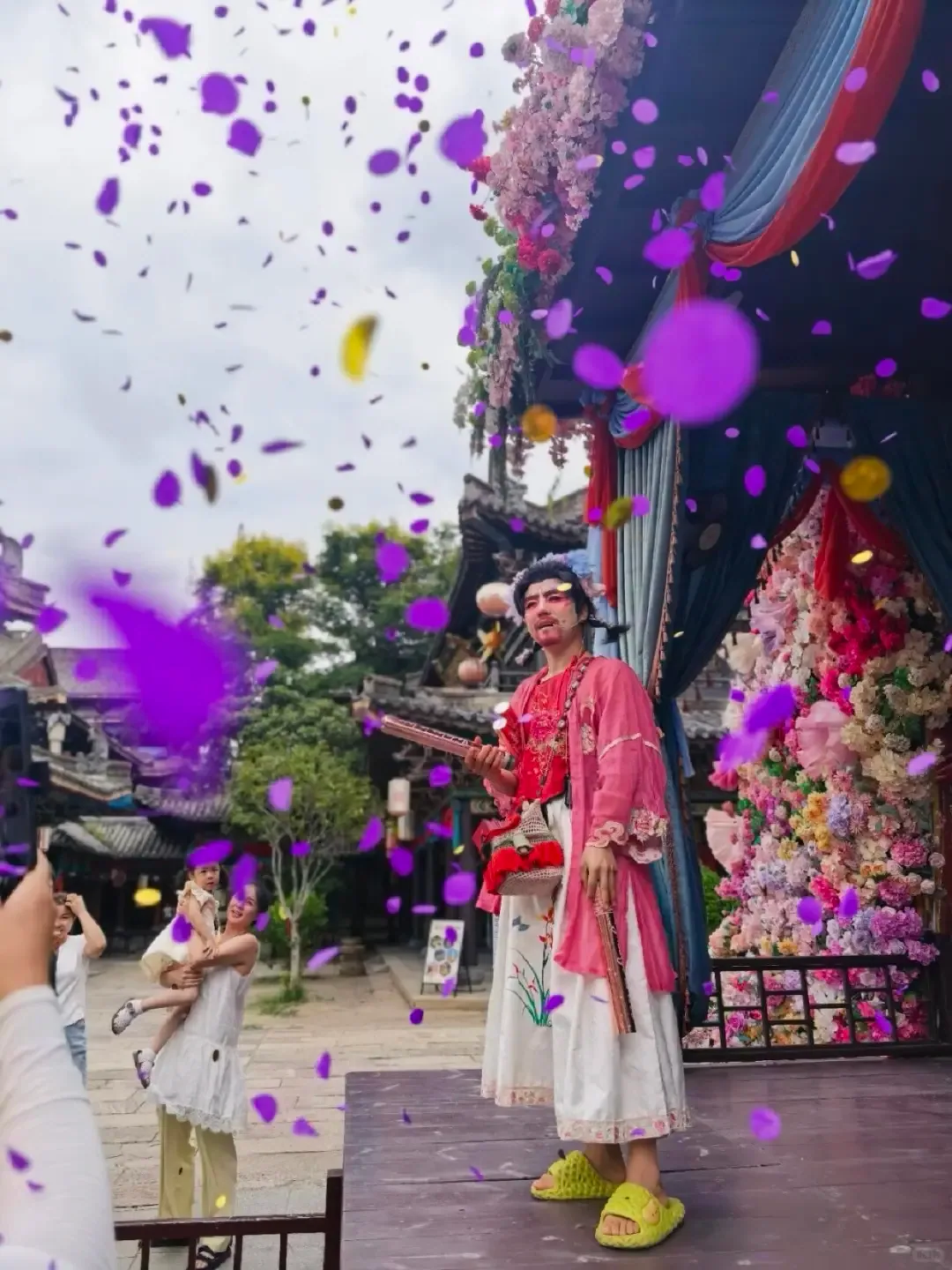
This is where Hengdian stops being an architecture collection. A stage character moves through spectators; people raise phones; confetti crosses a facade designed for another era. The scene is openly artificial and genuinely communal at the same time.
The performance schedule can change. Do not build a day from one visitor's old timetable. Use the official park listing for the date, then choose one or two shows that clarify the space. Racing across a park to collect every performance turns film culture into a bus schedule.
Guangzhou Street and Hong Kong Street reveal the camera's favorite lie
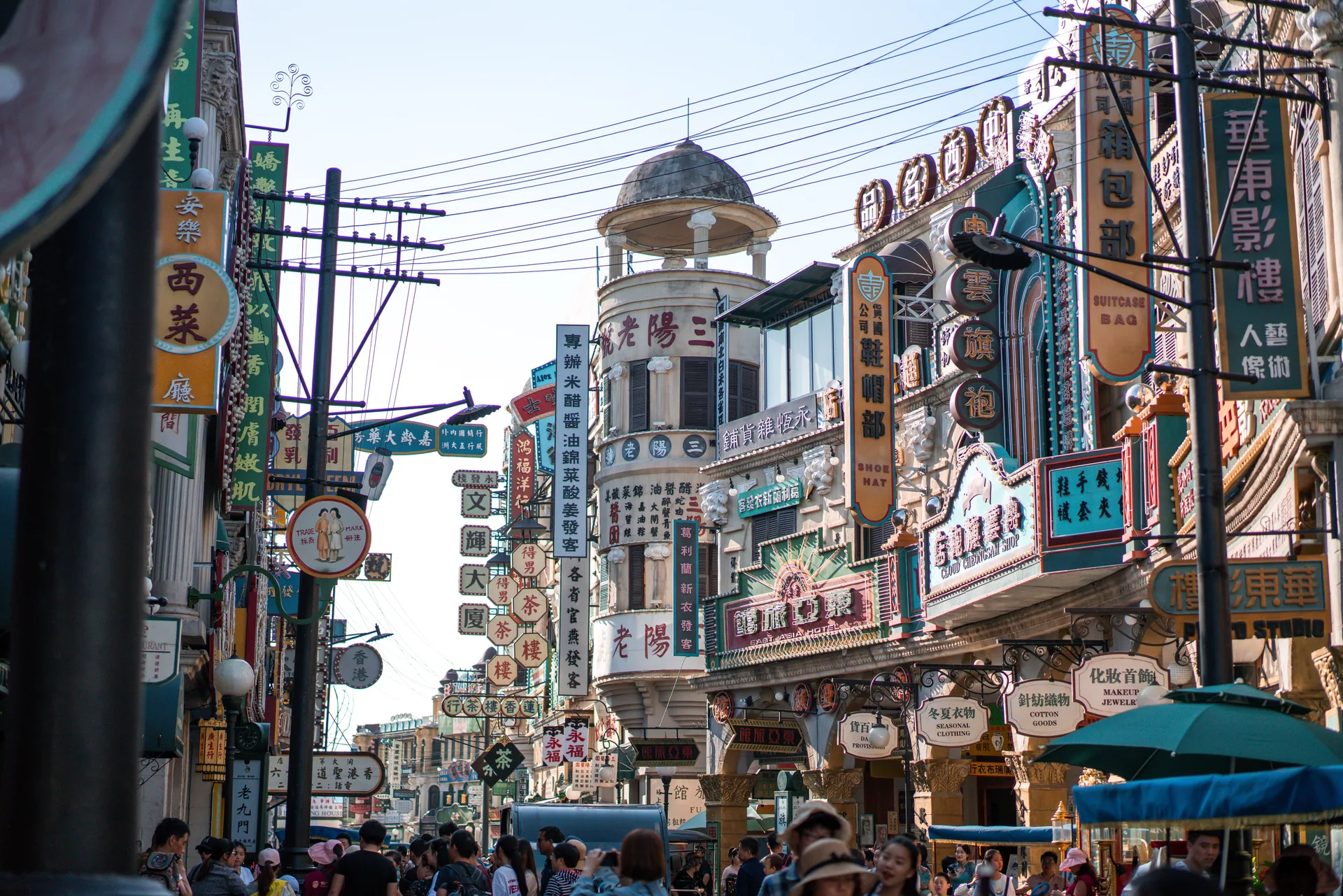
The official Hengdian account says Guangzhou Street was first constructed in 1996 for The Opium War, with Hong Kong street scenes expanded later. The zone compresses treaty-port, colonial, commercial and popular visual references into a controllable production environment.
The archive hero image makes the method visible. Shop signs stack more densely than most real streets could sustain. Wires, poles, balconies, domes and lettering compete for the frame. The street is not reconstructing one verified block. It is manufacturing instant period recognition.
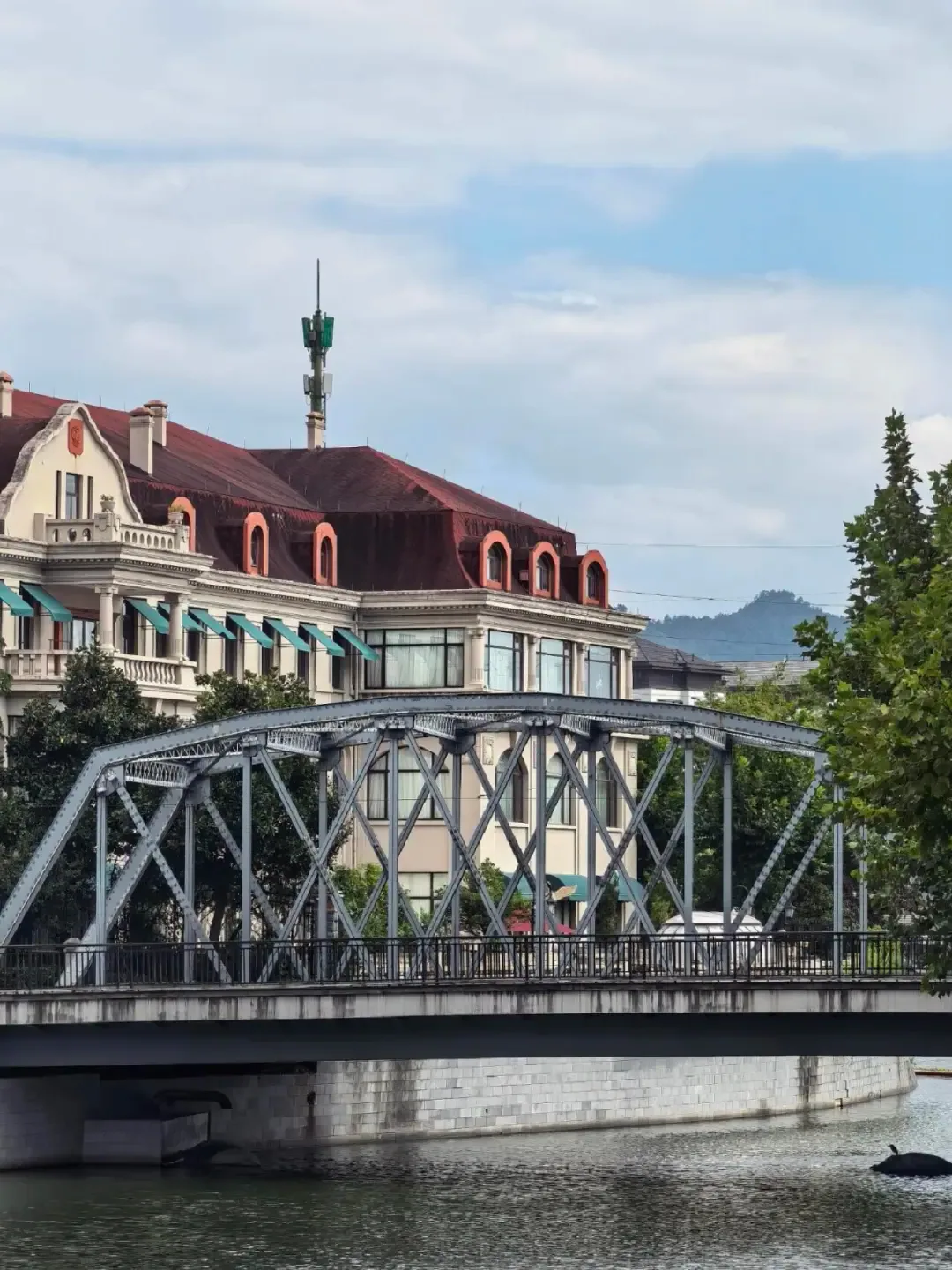
This photograph proves the deliberate collision of bridge, water and facade styles in one visitor sightline. It does not identify a historical district or establish that the architecture accurately reproduces one year.
That compression is the camera's favorite lie: if enough period signals enter the frame together, viewers accept a whole city beyond it. Walk to the edge and the illusion becomes a lesson in production design.
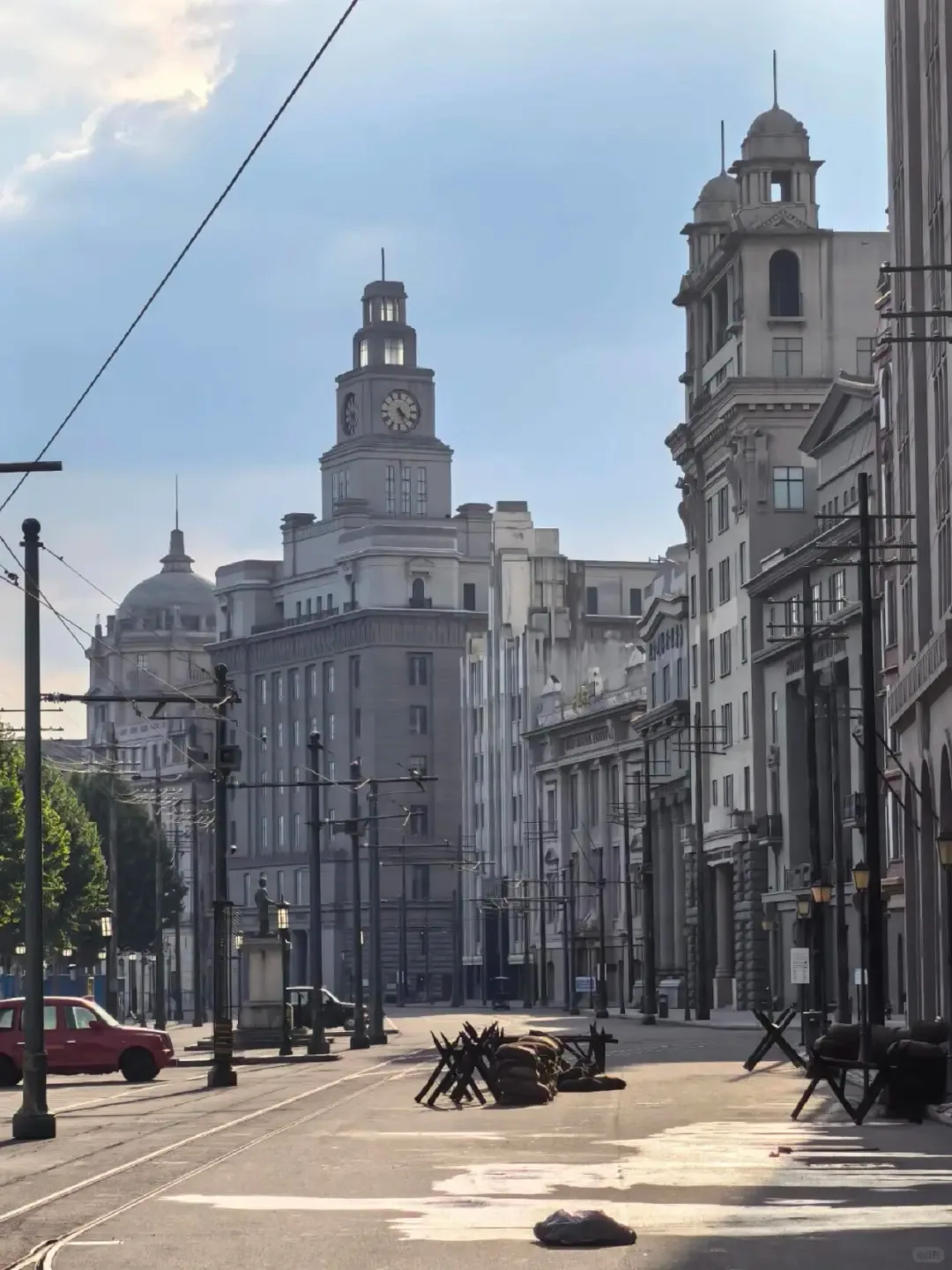
At night, lighting changes the same logic. A plain facade becomes a music-hall entrance; a wet or reflective street multiplies neon; darkness removes the hills and service structures that would break the period.
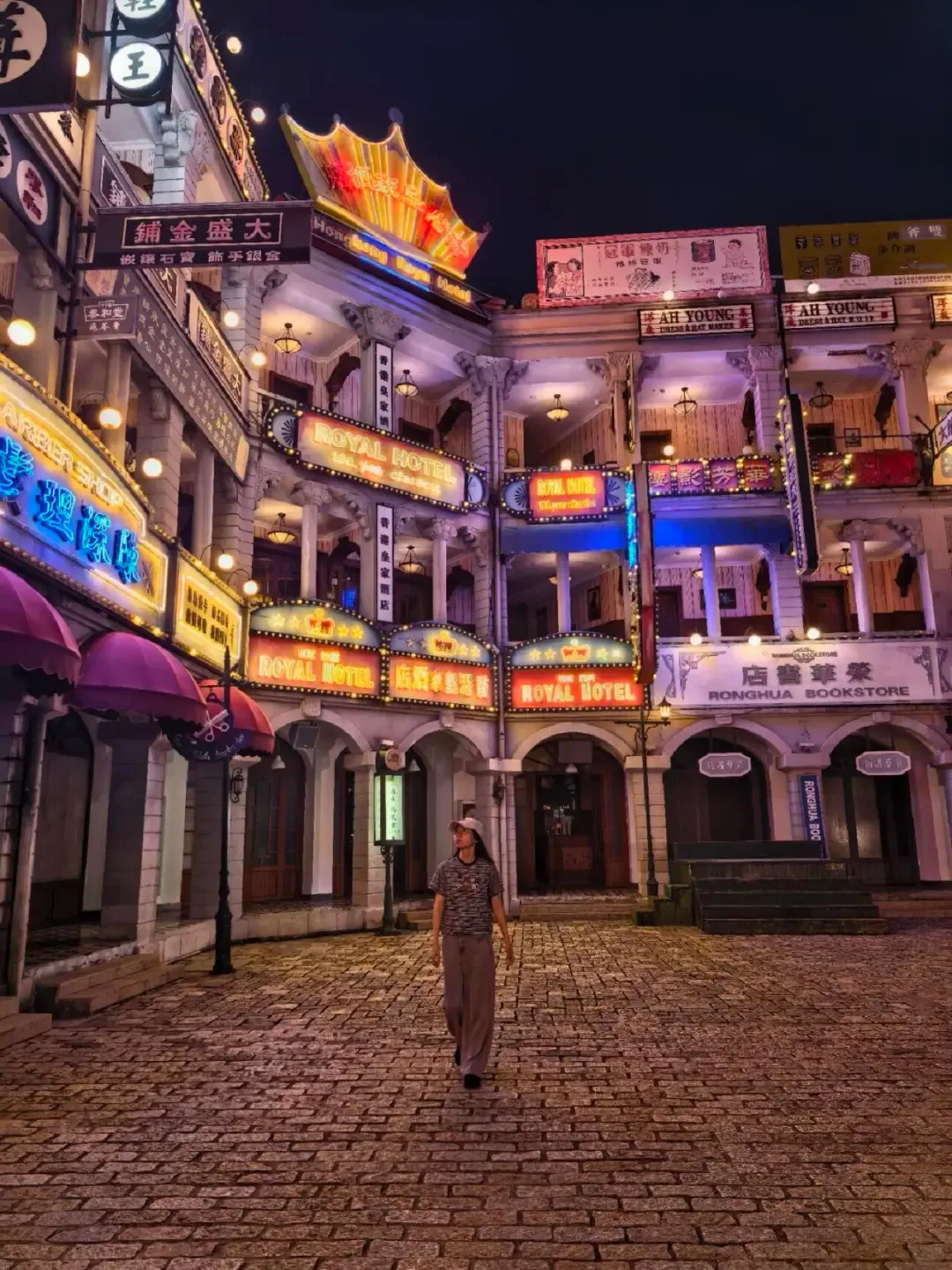
I would schedule this area for late afternoon into evening when current hours allow it. Daylight exposes construction and spatial joins. Night shows what controlled light can repair. Seeing both versions is more valuable than adding a fifth park.
The shows are useful when they expose transformation
Hengdian's visitor economy adds stage shows, street characters, rides and interactive scenes to spaces originally associated with production. Some visitors dismiss that layer as commercial noise. Some treat it as the entire reason to go. Both positions miss the interesting middle.
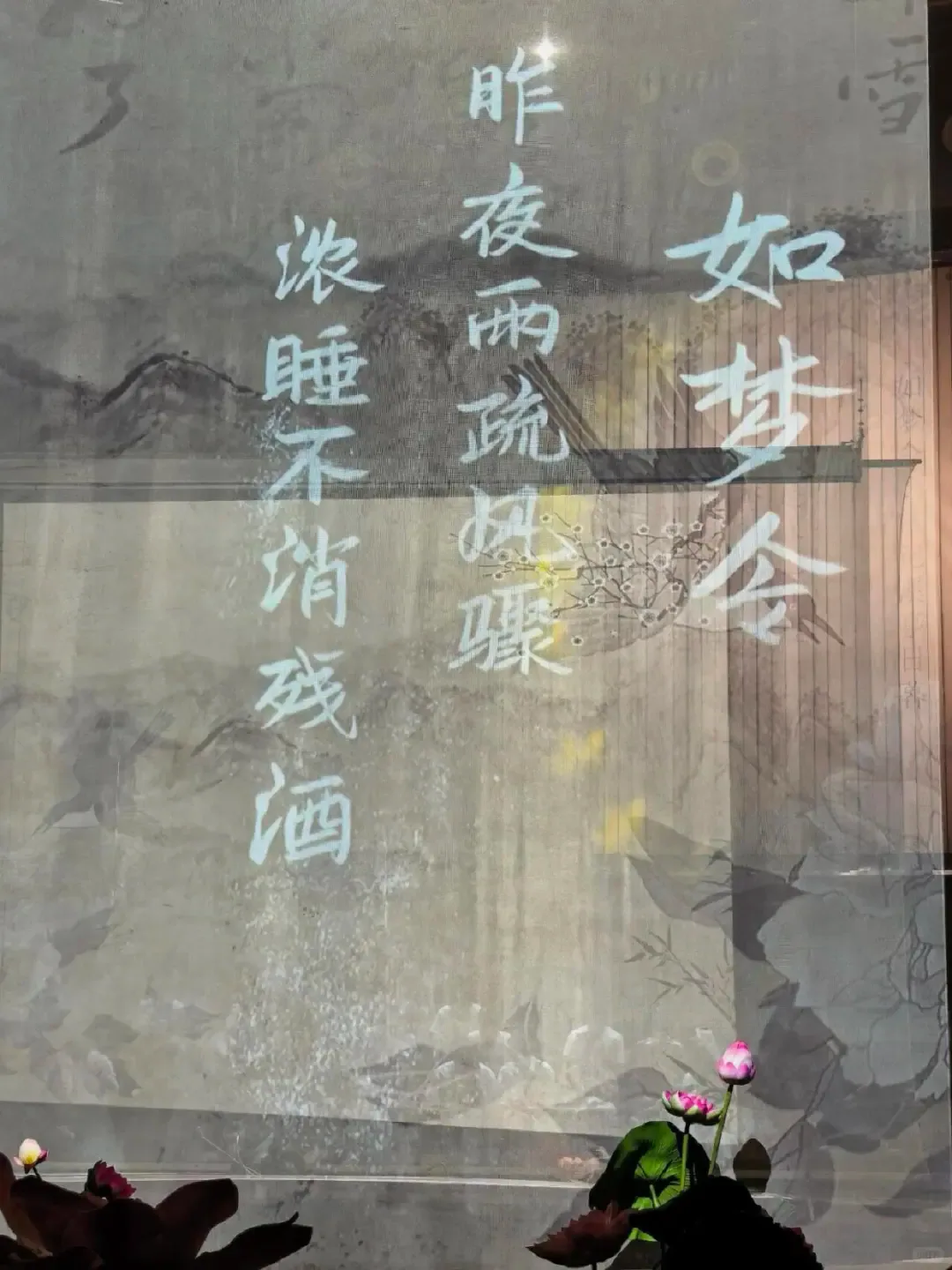
The best show demonstrates transformation: architecture becomes backdrop, an actor turns a lane into narrative, projected text alters scale, or a crowd learns where to look. The weakest show merely blocks movement while repeating a generic stunt.
Choose by relationship to the park. A performance about Qin power belongs inside the visual argument of Qin Palace. A Song-literary show can reveal how Qingming Shanghe Tu turns cultural memory into popular spectacle. A random ride may be fun, but it should not consume the hours needed to understand why you came.
Do not confuse emotional response with historical proof. A visitor can be moved by a familiar drama soundtrack in a reconstructed corridor. That feeling is real. The corridor does not become the original setting of the story, and the production does not become a documentary.
One day can sample Hengdian; two days can explain it
A single day forces a choice. Two days create comparison.
One-day route: one imperial system, one living street
Choose Qin Palace plus Qingming Shanghe Tu when your interest is costume drama, monumental state space and the contrast between court and city. These zones are commonly grouped on the southern side of the visitor geography, but use the current official map rather than assuming every internal connection remains open.
Or choose Ming and Qing Palace Garden plus Guangzhou Street and Hong Kong Street when you want palace spectacle by day and a period commercial street after dark. Official transport guidance identifies these as a practical neighboring pair.
Do not attempt all four major areas plus shows in one day. The result is not efficiency. It is an expensive sequence of gates, queues and photographs taken before the eyes catch up.
Two-day route: compare two screen languages
Day 1: Qin Palace in the morning; Qingming Shanghe Tu for lanes, water, performers and one selected show.
Day 2: Ming and Qing Palace Garden for a different imperial vocabulary; Guangzhou Street and Hong Kong Street from late light into the evening program.
Dream Valley and Dream Bund can replace a zone when rides, water entertainment or twentieth-century city spectacle are the actual priority. They should not be added automatically. Hengdian rewards editing because each park is already dense with fabricated signals.
Hengdian World Studios tickets are choices, not admission to one kingdom
The official site sells individual admissions, combinations, multi-day products and hotel packages. Exact prices and inclusions move with date, campaign and visitor category. Read the product as a contract.
Before payment, verify:
- the named parks, not just “Hengdian World Studios”;
- the validity period and whether re-entry is allowed;
- the identity document required for an overseas visitor;
- the day's opening and last-admission times;
- which shows or night programs are included;
- refund and change rules;
- access limits created by active filming, maintenance or events.
The English official site notes that overseas visitor booking procedures can require extra identity handling. That policy may change, so contact official customer service rather than borrowing an old workaround from a forum. Bring the passport or document registered to the booking.
Never promise yourself a celebrity sighting. Active production may create closures without producing a public encounter. Respect barriers, crews and performers. A person at work is not part of your ticket.
How to get to Hengdian World Studios now
Older English guides often send every traveler through Yiwu because Hengdian did not have direct high-speed rail. That changed in September 2024, when the Hangzhou–Wenzhou high-speed railway opened with Hengdian Station among its nine stations. The National Railway Administration confirms the line and station; the Hengdian operator's current transport page lists onward bus or rail connections from the station.
Use Railway 12306 for the date rather than assuming a direct train from your city. “Hengdian” must be the station result, not merely the attraction search term. After arrival, confirm the current connection to your hotel or first park.
Yiwu and Jinhua remain useful alternatives when their schedules are better. The official guide describes rail-to-metro routes toward Mingqinggong Station and airport/bus options. But a 2019 itinerary that says Hengdian has no railway station is now structurally obsolete.
Inside town, distance is deceptive. Two parks can be walkable neighbors while the next pair requires a vehicle. Group the day geographically, keep Chinese park names offline and avoid scheduling a fragile final show immediately before the last train.
What a screen fan should photograph
Do not spend the whole visit recreating character poses. Photograph the evidence the finished drama hides:
- a monumental axis and the side passage that services it;
- a facade from the intended angle and from its exposed edge;
- daylight and night lighting on the same street language;
- a performer changing the behavior of a crowd;
- the transition between visitor park and working production space, only where photography is permitted.
Then pair the photograph with a verified screen timestamp after the trip. Memory is unreliable, and Hengdian sets are redressed. A similar wall does not prove the scene was filmed there.
That is also the page's community task. Submit a Hengdian set-to-screen field note with your own image, the film or drama title, episode and timestamp, plus one sentence about what the camera excluded. Corrections are welcome. Celebrity tracking, leaked production information and invented matches are not.
Continue through East Moment's Chinese movies and Chinese TV shows collections when the set sends you back to the work itself. The Hero guide is a useful next lens for Qin-scale composition, but film imagery must not be treated as architectural evidence. For real historical geography, the ancient capitals itinerary separates surviving cities and archaeological memory from studio simulation. The broader Travel to China guide handles payments, connectivity and national routing.
My final Hengdian World Studios rule
Go to Hengdian to see the frame break.
Choose two visual systems, give them time, and look sideways when everyone else looks at the throne. The cracked edge, service passage, waiting performer, impossible density of signs and sudden night lighting reveal how a screen world earns belief. Hengdian is not ancient China preserved. It is contemporary China manufacturing images of the past, at industrial scale, while visitors walk through the machinery.