A China ancient capitals itinerary fails when it treats five cities as five backdrops for the same costume drama. Beijing still makes imperial power physical. Xi'an asks you to reconstruct vanished capitals from earth, objects and scale. Luoyang explains why courts repeatedly returned to the Central Plains and how belief reshaped stone. Kaifeng turns loss and rebuilding into urban memory. Nanjing refuses a comfortable ending: its capital layers culminate in modern rupture and testimony. I would take this route for one reason—each stop changes the kind of evidence you must trust.
China ancient capitals itinerary: choose by evidence, not fame
There is no timeless official list that cleanly settles China's "four," "six," "seven" or "eight" ancient capitals. Chinese history includes capitals of unified dynasties, regional states, conquest regimes, rebel governments and a modern republic. A city name may also conceal several palace zones and settlements that shifted across centuries.
This page therefore makes a firm editorial choice. For a first deep route, take Beijing, Xi'an, Luoyang, Kaifeng and Nanjing. They form a workable rail line and, more importantly, prevent one false idea of "ancient China" from dominating the trip. East Moment's wider Chinese culture collection supplies the thematic background; this itinerary is the decision tool.
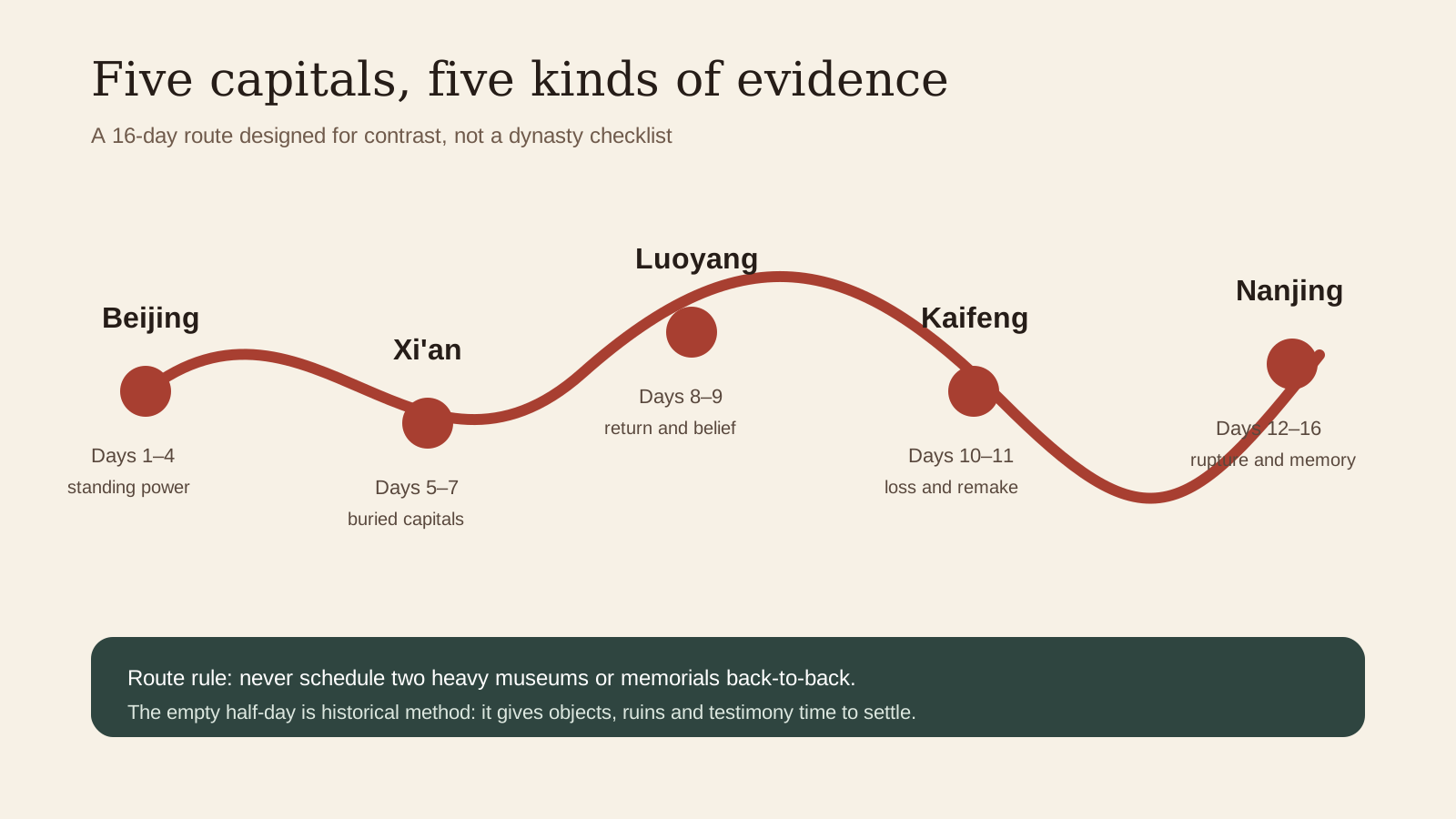
This map shows the editorial sequence: standing power, buried capital, sacred stone, rebuilt memory and modern testimony. It does not claim that five cities exhaust China's capital history or that every transfer and opening time remains unchanged.
| City | Capital layers to foreground | Evidence you must learn to read | The question worth carrying |
|---|---|---|---|
| Beijing | Yuan, Ming, Qing and the modern national capital | Standing palace and ritual space, axes, gates and institutional reuse | How does a capital make hierarchy physical? |
| Xi'an | Qin-Han and Sui-Tang capital regions, then the later walled city | Excavation, tomb objects, foundations, pagodas and museum reconstructions | How do you imagine a metropolis after its wooden palaces vanish? |
| Luoyang | Repeated early and medieval capital phases | Capital-site archaeology, burials, Buddhist caves and religious institutions | Why did political power keep returning to this landscape? |
| Kaifeng | Northern Song capital and later regional city | Pagodas, urban archaeology, texts, painting memory and modern reconstruction | What remains when flood and rebuilding bury a capital? |
| Nanjing | Six Dynasties, early Ming, Taiping and Republican capitals | Tomb art, walls, mausoleum, political sites and testimony | How should a visitor hold achievement, violence and memory together? |
The UNESCO World Heritage list for China is a reliable starting point for site boundaries and formal significance. It is not a ready-made itinerary. Heritage status cannot tell you how tired your feet will be, whether a reconstruction feels persuasive or how much silence a memorial needs afterward.
The 16-day route I would actually protect
Sixteen days is not luxurious. It is the minimum at which this route stops feeling like a relay race through museum entrances. The non-negotiable feature is not another attraction; it is recovery space.
| Days | Base | Historical task | One thing deliberately left open |
|---|---|---|---|
| 1–4 | Beijing | Read monumental planning, then test it against neighborhood life and the modern capital | A half-day for one museum or one ordinary district—never both |
| 5–7 | Xi'an | Move from the later wall to buried Qin-Han and Sui-Tang scales | An evening without a performance booking |
| 8–9 | Luoyang | Pair Longmen with museum or capital-site evidence | A slow early meal after the cliff walk |
| 10–11 | Kaifeng | Compare surviving fabric, buried history and staged Song imagination | A morning before ticketed attractions open |
| 12 | Transfer | Travel to Nanjing and reset | No mountain, memorial or "bonus" museum |
| 13–16 | Nanjing | Follow Ming, Republican and wartime layers without flattening them | A quiet block after the massacre memorial |
Book the long intercity legs first, but keep local days flexible until official opening calendars are current. Never trust an old blog for museum closure days, timed-entry rules or passport procedures. A historically serious route still needs live logistics.
Beijing: power survives as movement through space
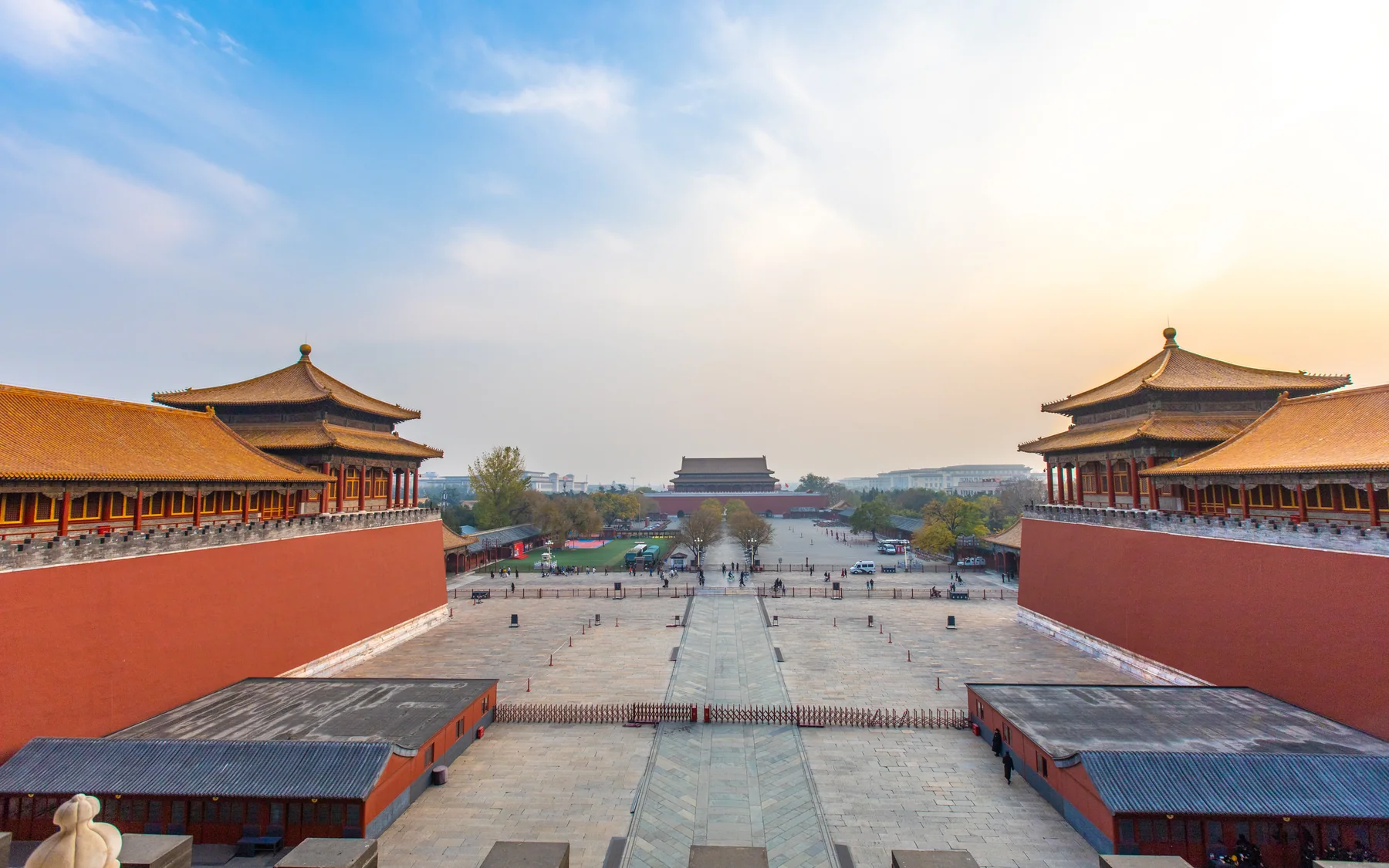
Beijing is where the route begins because it gives the body an immediate lesson. The Forbidden City does not merely display imperial objects. Its gates, forecourts, halls and restricted depths turn rank into distance. The Temple of Heaven extends that lesson into ritual geography. UNESCO's record of the Beijing Central Axis connects palaces, gardens, sacrificial structures, ceremonial buildings and public space to a long capital-planning tradition. Monumental survival here is exceptional, which makes Beijing both the clearest opening and the most dangerous model for imagining every earlier capital.
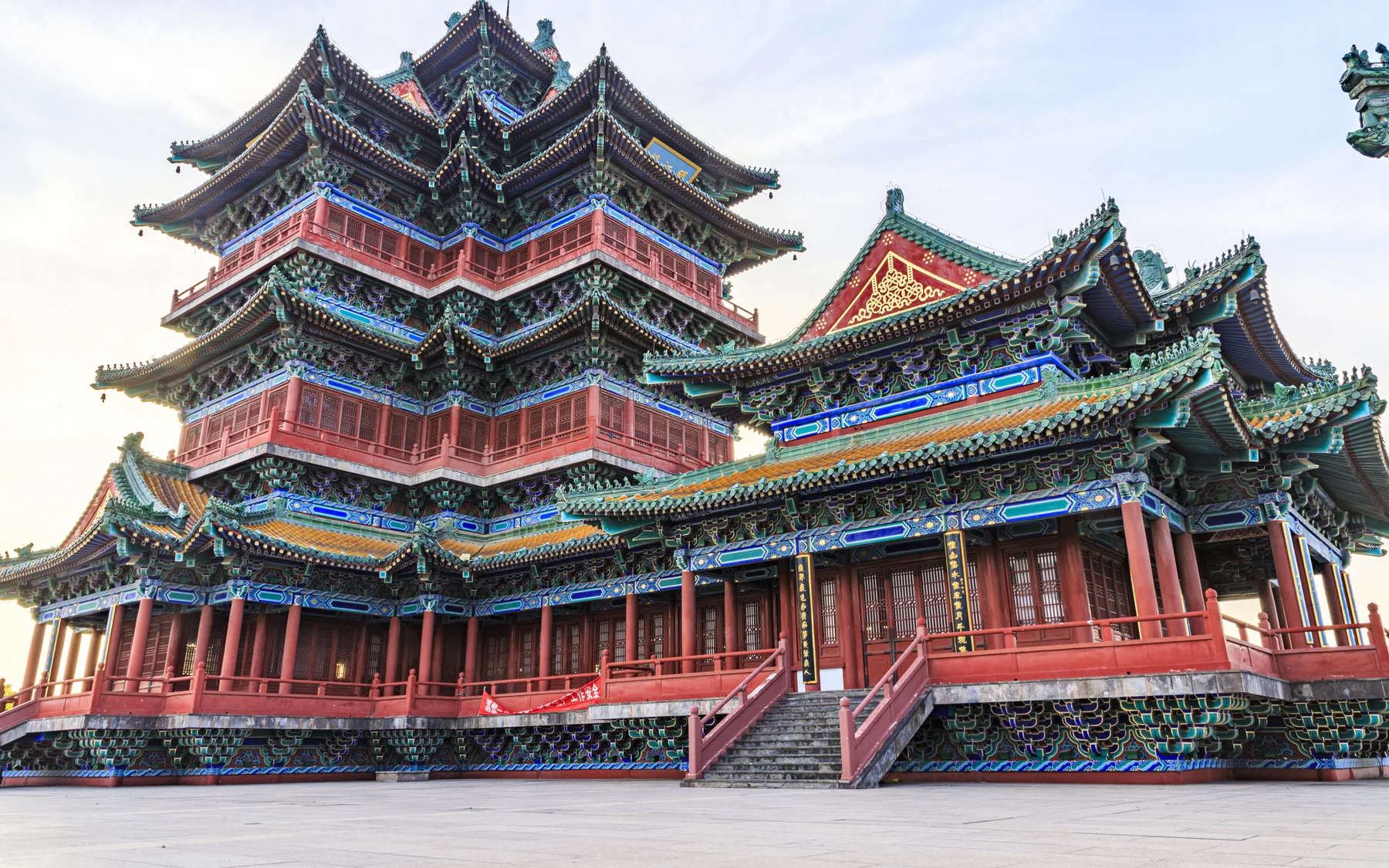
The cover photograph shows the standing monumental evidence that distinguishes Beijing from the buried and reconstructed capital landscapes later on this route. My rule is simple: never spend four days only inside imperial frames. Walk a hutong area, read the modern city around a removed wall line and watch how present-day institutions reuse the capital axis. Beijing is not "better preserved ancient China." It is a specific late-imperial and modern capital whose survival can make vanished Chang'an or Luoyang look unfairly empty.
The first four days should include the Forbidden City, Temple of Heaven, one wall or tomb landscape, and one museum or neighborhood chosen by your actual question. If architecture matters, slow down at thresholds and side courts. If political ritual matters, trace who could move where. A photograph of a red wall proves color and material; it does not prove that every surface is untouched or every present route reproduces court life.
Xi'an: stop demanding picturesque ruins from buried capitals
Xi'an is routinely compressed into the Terracotta Army, city wall and Muslim Quarter. That triangle is popular because it is legible, not because it explains the capital history. Qin palatial zones and mausoleum landscapes, Han sites, Sui-Tang Chang'an, Buddhist institutions and the later Ming city occupy different scales and locations.
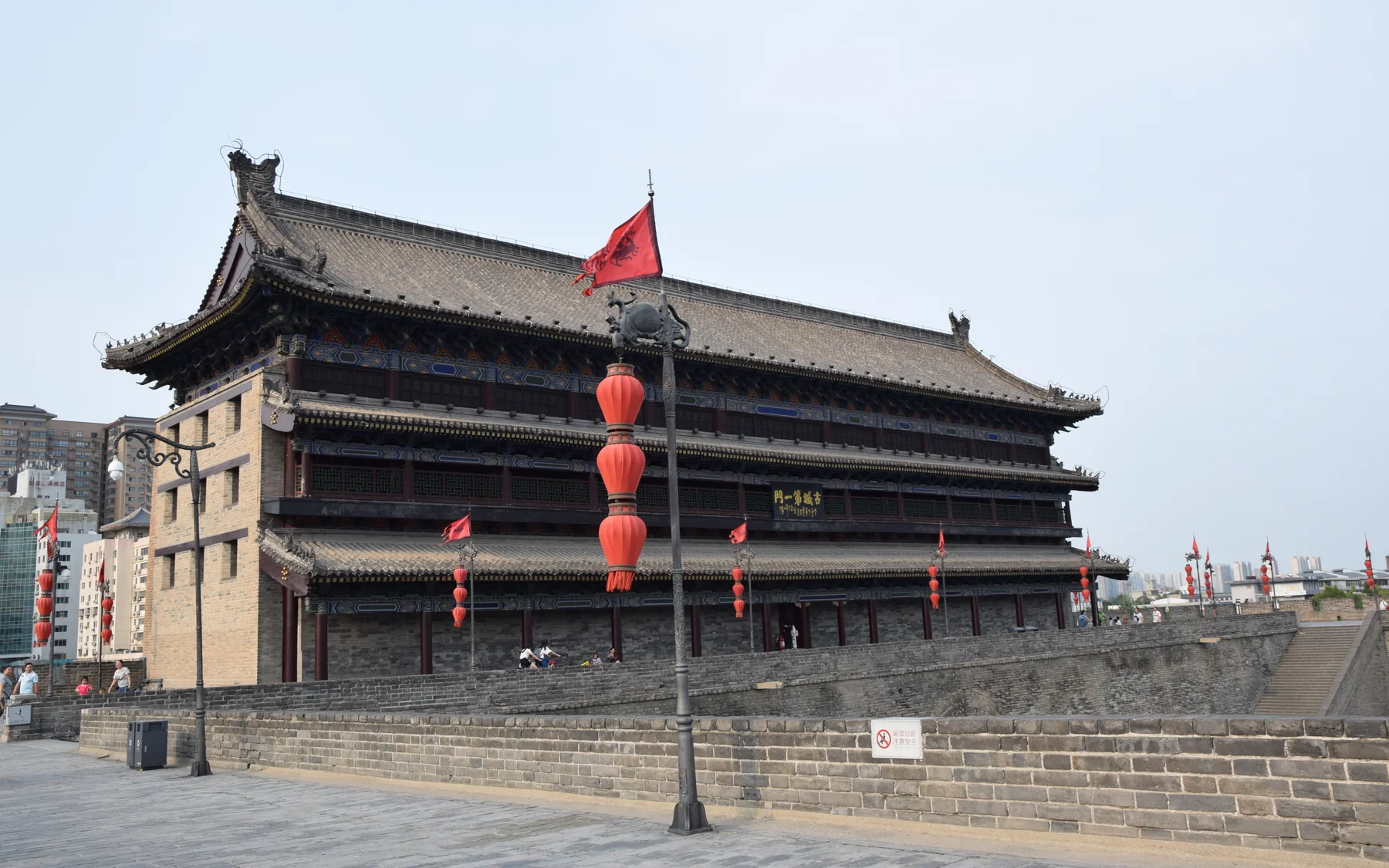
The wall you can walk is not the wall of Tang Chang'an. That distinction is not a disappointment; it is the point. At Daming Palace or another capital site, foundations, maps and models must do work that timber buildings no longer can. At a museum, burial objects reveal craft, belief, trade and elite life, but they cannot stand in for the entire urban population. The full Xi'an travel guide separates the Qin necropolis, Han and Tang capital footprints, Ming center and modern Tang-themed economy before turning them into a day plan.
Give Xi'an three days. Put the Terracotta Army on one day, not as an add-on after two museums. Use another day for the later walled city and pagoda landscape. Reserve the third for a capital site or archaeological museum. I would rather understand one excavated gate than collect six decontextualized "must-see" photos.
Luoyang: recurrence matters more than a single golden age
Luoyang's power comes from return. Different regimes chose the Central Plains for political, agricultural and transport reasons, while Buddhist patronage connected court ambition, devotional practice and long-distance exchange. The result is not one intact capital center but a field of sites that must be placed in time.
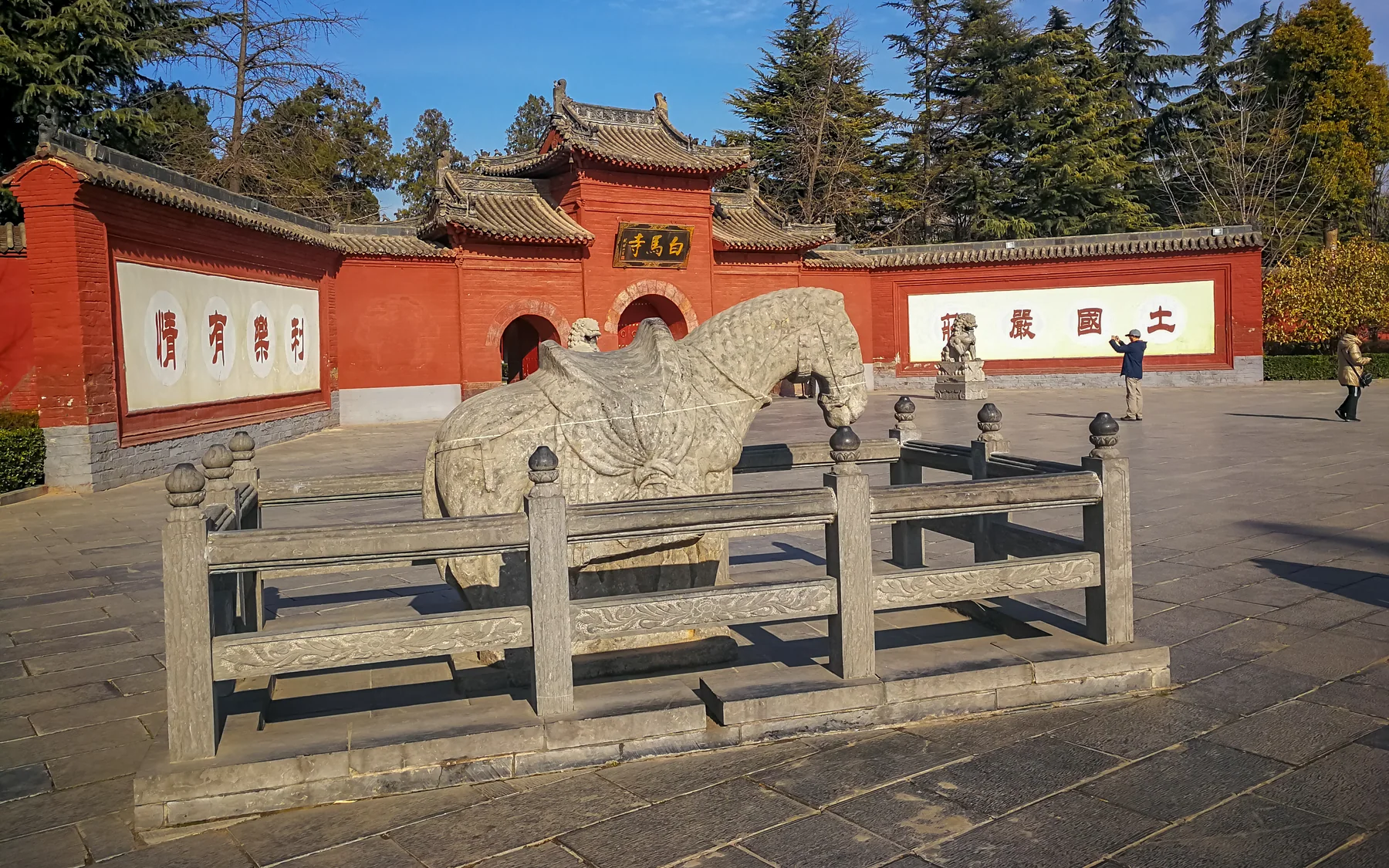
Longmen Grottoes deserves a long half-day or more. Do not read the cliff as one artwork: caves differ in date, patrons, style, damage and restoration. Pair Longmen with Luoyang Museum, a capital-site museum or White Horse Temple according to your interest. Two days cannot cover everything, so make the selection explicit.
The best contrast is between stone that survives, earthworks that require interpretation and reconstructed gates that make a modern claim about the past. Afterward, eat at the city's own clock. The Luoyang food guide explains why morning soup and a formal Water Banquet communicate different kinds of local confidence.
Kaifeng: reconstruction is evidence of desire, not original fabric
Kaifeng asks the hardest visual question. Northern Song importance is undeniable, yet repeated Yellow River flooding, warfare and rebuilding transformed or buried the capital. Surviving pagodas and temples, archaeology, textual records, the famous Qingming scroll tradition and large modern scenic reconstructions now coexist.
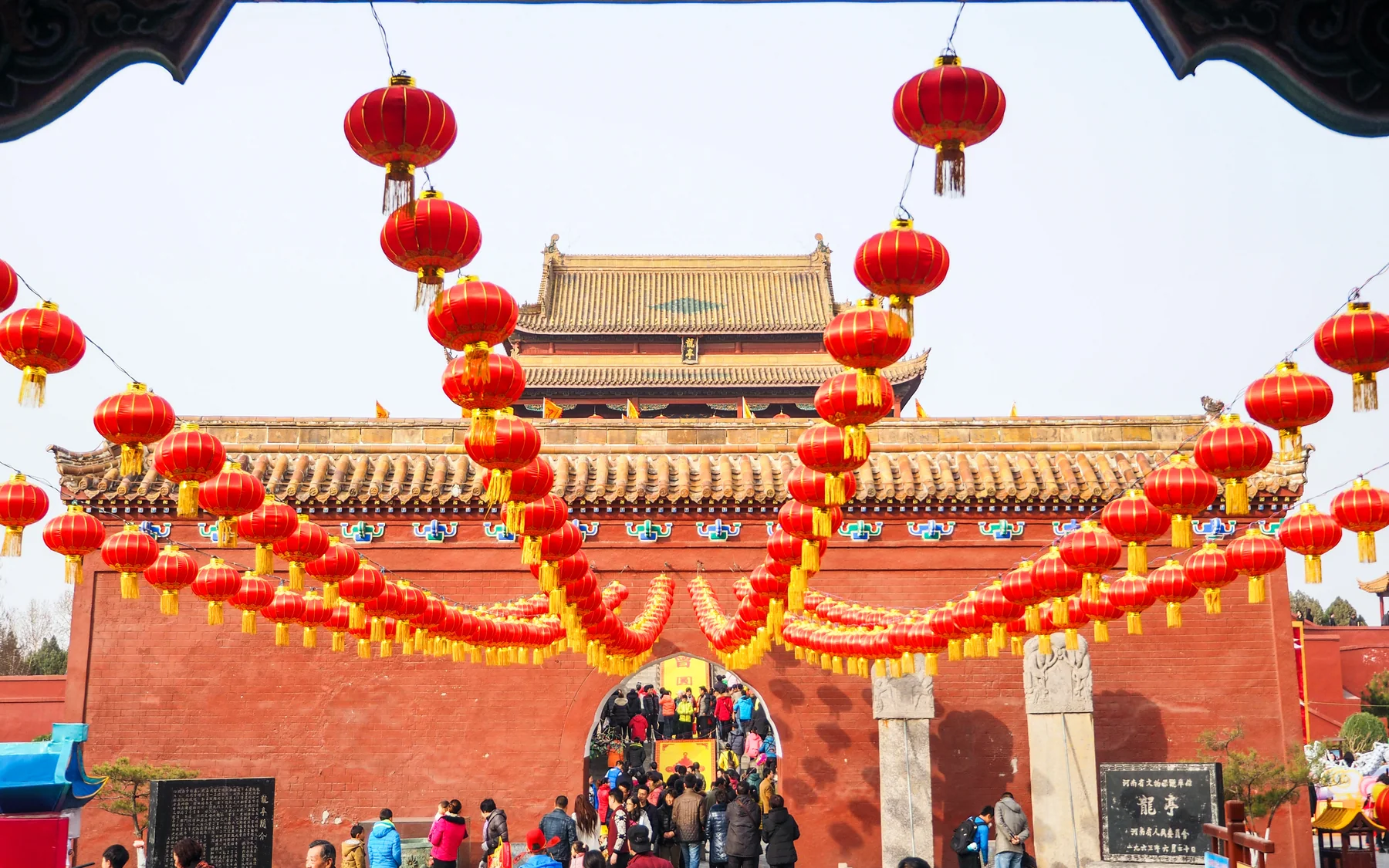
Enjoy a performed Song streetscape if it moves you. I do. The lights, costumes and crowds can make historical imagination social rather than solitary. But emotional success cannot turn a modern scenic area into an excavated Northern Song neighborhood. The honest sentence is stronger: this is how the present wants to meet the Song.
Stay overnight. Before the attractions open, walk an ordinary street, look at the relation between ground level, water management and city life, then visit one surviving monument and one reconstructed environment. The Kaifeng food guide keeps the city from becoming a vanished-capital thought experiment; breakfast and evening markets belong to the living place.
Nanjing: the route must end with responsibility
Nanjing contains Six Dynasties Jiankang, the early Ming capital, Taiping Tianjing, the Republic of China and the history of the 1937 massacre. These layers are neither equally visible nor emotionally interchangeable. Ming Xiaoling and the city wall provide monumental evidence. Six Dynasties history often depends on tomb art and archaeology. Republican buildings remain in the modern city. The massacre memorial centers victims, documents and testimony.
Do not place the memorial between a themed lunch and nightlife as though every site is a content unit. Give it its own morning or afternoon and leave the next block empty. Historical travel becomes shallow when the itinerary protects ticket value but not emotional comprehension.
Four days allow Purple Mountain and Ming Xiaoling, wall and museum time, Republican sites, the memorial, and one neighborhood or river edge. Nanjing closes this route because capital history is not only architecture and dynastic brilliance. It is also coercion, war, civilian experience and the public work of remembering.
Use one evidence test in every city
At each stop, ask four questions before accepting a label:
- What is physically visible? Name the wall, foundation, inscription, object, repaired surface or reconstructed building.
- What date and phase does it belong to? A city can be ancient while the structure in front of you is much later.
- Who is interpreting it? Archaeologists, religious communities, museums, tourism companies and local residents may frame the same place differently.
- What can this evidence not prove? A palace model cannot prove daily emotion; a tomb object cannot represent every class; a popular performance cannot certify historical detail.
The Metropolitan Museum's Heilbrunn chronology helps anchor dynasties and objects before the trip. Its strength is chronology and collection interpretation, not route logistics or the total history of any city.
Food is the anti-reconstruction test
Capital history becomes sterile when every meal is another imperial-themed set. Eat food that current residents recognize as ordinary, specialist or celebratory.
| City | A present-tense entry | What it restores to the route |
|---|---|---|
| Beijing | Neighborhood breakfast, zhajiangmian or a lamb meal | Modern appetite outside palace space—see Beijing food |
| Xi'an | Roujiamo, liangpi and wheat or halal traditions beyond one tourist street | Movement, migration and the city beyond a dynasty set—see Xi'an food |
| Luoyang | Early broth followed later by a small Water Banquet selection | The difference between daily rhythm and formal hospitality |
| Kaifeng | Soup dumplings, lamb breads, fried snacks and a night market | A living commercial city after the buried capital |
| Nanjing | Saltwater duck, duck-blood vermicelli or beef guotie | Regional taste that refuses to be reduced to political memory—see Nanjing food |
Cut the route honestly when time is short
With ten days, choose Beijing–Xi'an–Luoyang if archaeology and early-to-medieval history lead your interest. Choose Beijing–Nanjing if you want two contrasting monumental capitals and can give modern history the time it requires. Choose Luoyang–Kaifeng–Nanjing only if you already understand that much of the route will depend on fragments, museums and reconstruction rather than intact palaces.
For limited mobility, reduce giant archaeological landscapes and mountain additions before cutting recovery time. For children, alternate object-rich museums with walls, parks and food streets. For repeat visitors, remove the famous stop you have already understood and add a site that tests your assumptions.
My final judgment is firm: the successful route does not produce the sentence "I saw five ancient capitals." It lets you say why a standing gate, a buried foundation, a carved cave, a reconstructed street and a recorded testimony demand five different forms of attention.
Frequently asked questions about a China ancient capitals itinerary
Which cities are the ancient capitals of China?
Many cities served as capitals of states, dynasties or regimes. Beijing, Xi'an, Luoyang, Kaifeng and Nanjing form a strong travel route because they represent different periods and different kinds of surviving evidence. Any fixed list of four, six or eight ancient capitals is a modern classification rather than one timeless official canon.
How many days do you need for China's ancient capitals?
Fourteen days is a demanding minimum for Beijing, Xi'an, Luoyang, Kaifeng and Nanjing. Eighteen days is better because museums, archaeological sites and transfers require time. With ten days, choose Beijing, Xi'an and Luoyang or Beijing and Nanjing.
Is Xi'an the oldest capital of China?
Xi'an and the wider Guanzhong region contain capital sites from several early and medieval dynasties, but asking for one oldest capital oversimplifies changing states, sites and definitions. Archaeology, textual records and the movement of capital centers matter more than a ranking.
Are the ancient capitals still intact?
No. Beijing preserves major late-imperial monumental ensembles, while earlier capitals such as Chang'an and Luoyang often survive through foundations, tombs, archaeology and museums. Kaifeng was repeatedly altered by flood and rebuilding. Nanjing contains major Ming and modern layers but not one intact capital landscape.
What is the best ancient-capital route for archaeology?
Xi'an and Luoyang are the strongest pair for archaeology, tomb material, Buddhist art and early capital sites. Add Beijing for monumental late-imperial survival or Nanjing for Ming foundation, Republican history and twentieth-century memory.
Can Kaifeng be a day trip from Zhengzhou?
Yes, but an overnight stay gives the city a different rhythm and makes its reconstructed night landscapes easier to assess. Stay two nights if Northern Song history, Jewish history, food or heritage reconstruction is a serious interest.