My verdict on Nanjing food: do not reduce the city to a duck checklist. Saltwater duck is essential, but Nanjing becomes memorable when duck, Hui Muslim guotie, duck-blood soup, spring greens, noodles and Qinhuai sweets are eaten at the right pace. Read this living table against the broader Jiangsu cuisine system, then return to the Nanjing travel guide to see how migration, examination commerce and modern neighborhoods shaped where those foods belong.
Nanjing food at a glance
| Food | Chinese name | Best context | What defines it |
|---|---|---|---|
| Saltwater duck | 盐水鸭 | Cold dish, takeaway or shared meal | Gently salted and aromatic duck valued for clean meat flavor, pale skin and controlled curing and cooking |
| Duck blood vermicelli soup | 鸭血粉丝汤 | Breakfast, lunch or quick dinner | Duck blood, sweet-potato vermicelli, broth and optional duck offal, tofu puff and herbs |
| Nanjing roast duck | 南京烤鸭 | Takeaway or shared dinner | Chopped roast duck commonly served with savory roasting juices rather than pancakes and tableside carving |
| Beef guotie | 牛肉锅贴 | Breakfast, snack or light meal | Crisp-bottomed dumplings associated especially with Hui Muslim food businesses |
| Duck-oil shaobing | 鸭油烧饼 | Breakfast or snack | Flaky or layered baked pastry using duck fat, with savory or sweet fillings depending on the shop |
| Pidu noodles | 皮肚面 | Substantial lunch or dinner | Noodles with puffed fried pork skin and a generous mixed topping and broth system |
| Soup buns | 汤包 / 小笼包 | Breakfast, snack or shared tasting | Thin dough holding hot broth and meat filling; size, pleating and sweetness vary by shop |
| Red-bean yuanxiao | 赤豆元宵 | Sweet snack or dessert | Soft glutinous-rice pieces or balls in a thick red-bean preparation |
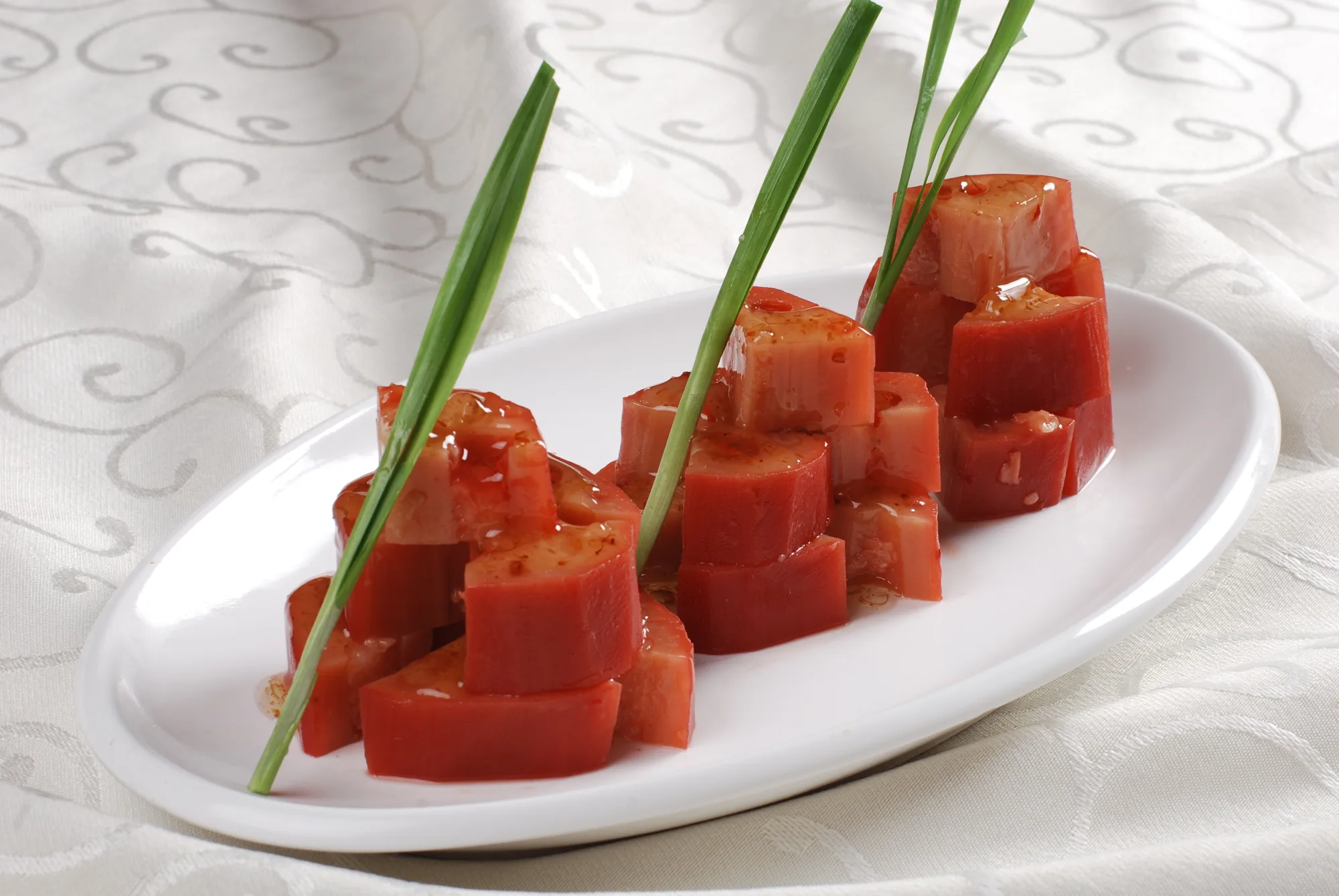
| Sugar taro shoots | 桂花糖芋苗 | Warm sweet snack | Small taro pieces in a lightly thickened sweet soup, often scented with osmanthus |
Nanjing is part of Jiangsu cuisine but not a provincial summary
The broader Jiangnan regional-cuisine map places Nanjing within a lower Yangtze world whose food changes between Jiangsu cities, Shanghai and Zhejiang. Nanjing cooking belongs to that connected landscape, but the city is not a miniature containing every Jiangsu dish.
Nanjing's political history and migration matter. Court and official cooking, river transport, Hui Muslim neighborhoods, wartime displacement, state work units, university canteens and contemporary tourism all helped determine what became visible as "Nanjing food." The Jiangsu Provincial People's Government provides accountable regional context; it cannot authenticate a restaurant legend or decide which present-day shop cooks a dish best. Some dishes are old techniques with changing forms. Others are modern restaurant creations given historical narratives after they became popular.
Do not reduce the flavor to "sweet." Sugar may round salt, deepen braising liquid or support osmanthus and bean desserts, but good Nanjing food also uses clean salinity, stock, vinegar, ginger, scallion, pepper, sesame and the natural bitterness of greens.
My strongest objection to the standard first-time Nanjing meal is that it turns the city into a duck checklist: saltwater duck, roast duck, duck blood soup, then a sweet in the same sitting. It is technically possible and emotionally forgettable. Nanjing reveals itself through pacing. Begin with one specialist breakfast, let a cold duck dish become a shared punctuation rather than the whole meal, and leave space for noodles, guotie or seasonal greens later. A city that knows how to use one bird so completely is not asking to be consumed all at once.
I also would not let a tourism district decide the entire trip. Qinhuai is worth visiting for its lights, river setting and social theatre; it is simply not evidence that every bundled snack plate is the best version of what Nanjing cooks. The meals I remember are the ones with a clear job: a crisp-bottomed dumpling made for the morning, a bowl of soup that warms rather than overwhelms, a clean slice of duck that makes you slow down before reaching for sauce.
Saltwater duck is a study in restraint
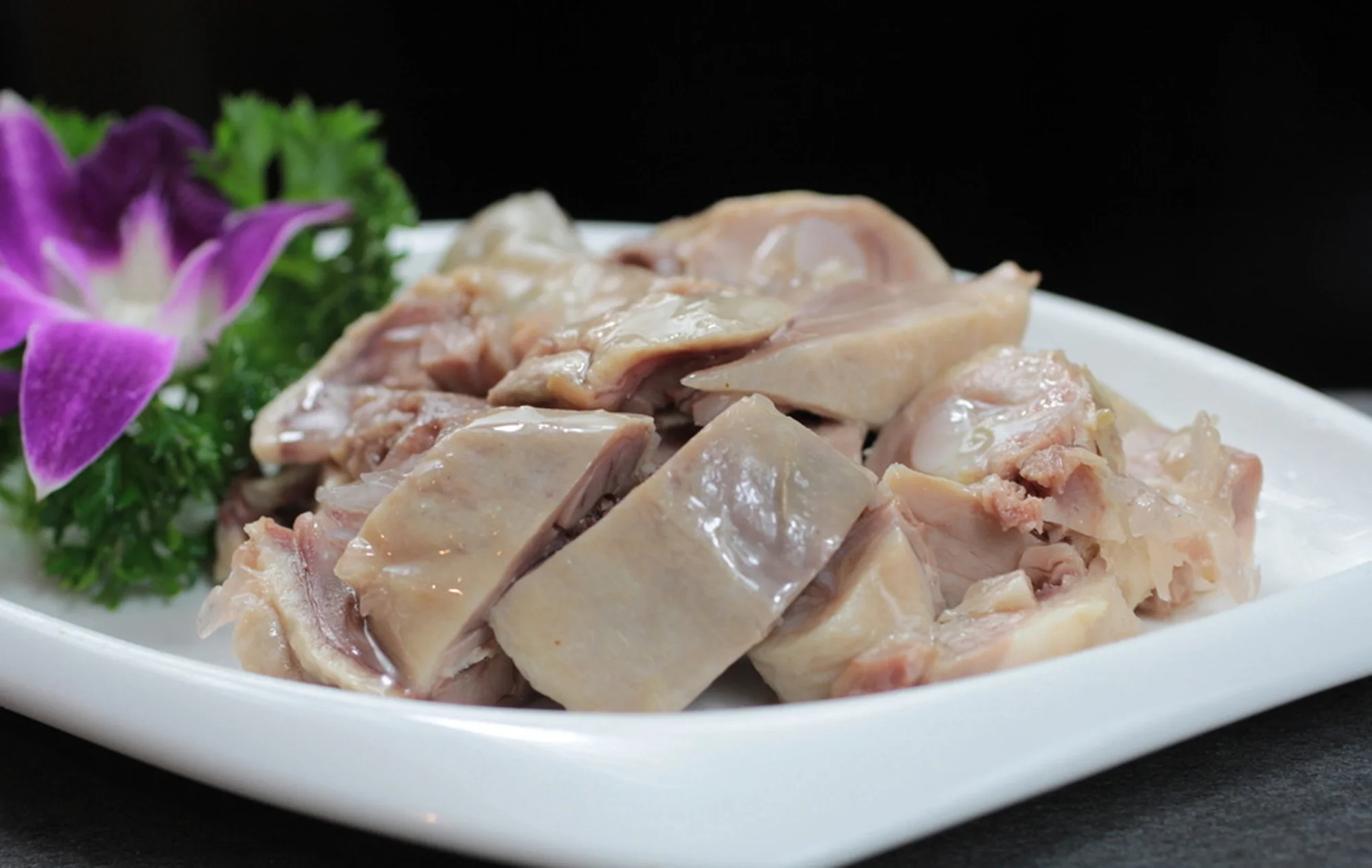
Saltwater duck, or yanshui ya, is Nanjing's most representative food. The English name sounds like meat stored in seawater; the dish is better understood as carefully salted, aromatically cured and gently cooked duck. Exact brining, dry salting, spice, hanging and cooking methods vary by producer.
The ideal is clarity. The meat should taste unmistakably of duck without being aggressively gamey. Skin and the thin layer beneath it contribute aroma and texture, while the flesh remains moist rather than cottony. Salt should preserve and season without replacing the bird's flavor.
Autumn versions are often marketed as osmanthus duck, connecting the dish to the city's osmanthus season. Do not assume that every piece literally contains flowers or that one poetic name proves an ancient fixed recipe. Season, bird size and the producer's curing rhythm matter more than a romantic label.
How to judge saltwater duck
| Detail | Better sign | Warning sign |
|---|---|---|
| Aroma | Clean duck, gentle spice and a fresh cooked-meat scent | Sour, stale-fat or strongly oxidized odors |
| Meat | Moist, close-textured slices that retain shape | Dry fibers or waterlogged meat with little flavor |
| Skin | Tender with enough resilience to contrast the meat | Thick rubbery skin or greasy surface without aroma |
| Salt | Present through the slice but not harsh | Salt concentrated only at the surface or overwhelming every bite |
| Chopping | Bone pieces are deliberate and manageable | Splintered fragments caused by careless chopping |
| Storage | Busy counter, clean tools and credible chilled handling | Cooked duck sitting warm for long periods in hot weather |
Order a small portion by weight if possible. Duck is filling, salty and commonly served bone-in. A whole or half bird can overwhelm two travelers who also want soup, dumplings and vegetables.
Nanjing uses duck in several different food systems
| Style | Central pleasure | Typical service | Do not expect |
|---|---|---|---|
| Saltwater duck | Pure duck aroma, controlled salting and tender cool meat | Chopped cold or room-temperature pieces, often takeaway | Crisp lacquered skin or a sweet glaze |
| Nanjing roast duck | Roasted aroma, tender meat and seasoned juices | Chopped pieces with lu, the collected and seasoned roasting liquid | Beijing-style pancakes, tableside carving or skin served alone |
| Duck blood vermicelli soup | Mineral-rich duck blood, broth, offal and slippery noodles | Individual hot bowl assembled quickly | A vegetarian soup or a mild chicken-noodle profile |
| Duck-oil shaobing | Rendered-duck aroma carried through flaky wheat layers | Handheld pastry, savory or sweet | A neutral shortening-based biscuit |
| Braised or soy-seasoned duck parts | Chewy wings, neck, gizzard or other cuts with concentrated seasoning | Cold counter snack or shared small plate | Boneless meat or uniform tenderness across every part |
This range reflects economy as well as taste. Blood, organs, fat, bones and lean meat enter different preparations. Calling the system "nose-to-tail" is convenient English, but Nanjing's duck culture has its own business networks, specialist labor and everyday habits.
Duck blood vermicelli soup should taste like more than chile oil
Duck blood vermicelli soup combines soft cubes or slabs of set duck blood with translucent sweet-potato vermicelli, broth and a choice of duck organs. Tofu puff, cilantro, scallion, pepper, chile oil and vinegar may complete the bowl.
The Nanjing municipal local-food guide lists duck blood, intestine, liver and gizzard with vermicelli, dried shrimp and coriander. That is useful evidence for the bowl's local identity and common composition. It is not permission to hide offal from a first-time eater: the ingredients should be named before the order, not revealed after the first spoonful.
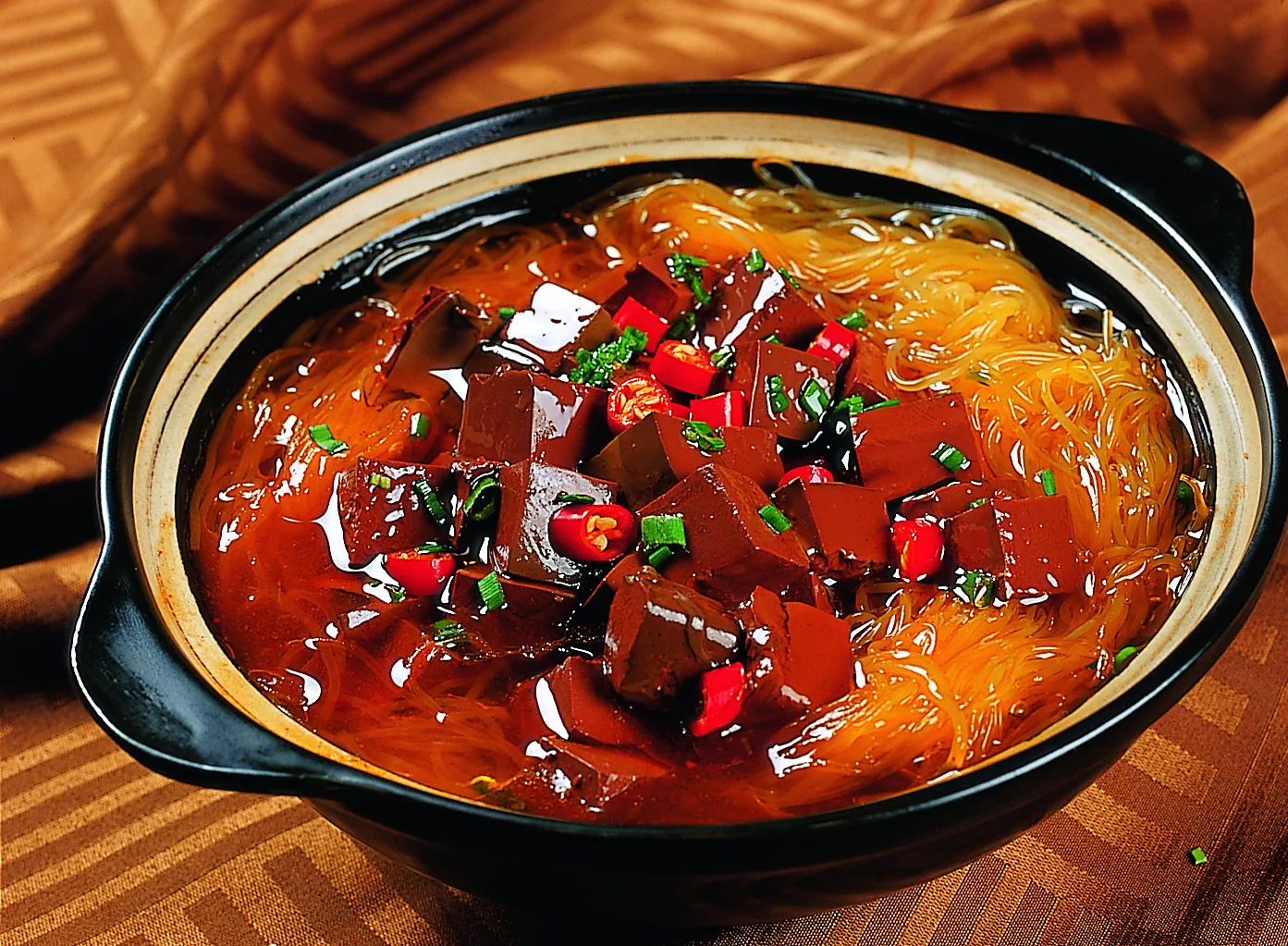
The pictured dish is a substantial restaurant presentation rather than the plainest street-shop bowl. Serving vessels and topping abundance vary. The core question remains whether the blood is tender, the offal clean, the vermicelli resilient and the broth coherent.
Duck blood has a mineral flavor but should not taste harsh or smell stale. Intestine offers springy texture, gizzard is firmer, and liver is softer and stronger. First-time visitors can request a reduced offal mix without treating the ingredients as a stunt.
Build your duck blood vermicelli bowl
| Component | What it adds | What to ask |
|---|---|---|
| Duck blood | Soft texture and mineral depth | Is it included by default, and can the portion be smaller? |
| Duck intestine | Clean, springy bite | Can it be omitted if you dislike chewy offal? |
| Gizzard | Firm, dense texture | Is the shop's standard bowl mixed offal or separately priced? |
| Liver | Richer flavor and softer bite | Add only if you enjoy liver; overcooking makes it grainy |
| Vermicelli | Slippery, elastic body and appetite | Request less if the bowl also includes many toppings |
| Tofu puff | Absorbs broth | It contains the same meat broth even though tofu itself is plant-based |
| Herbs and condiments | Freshness, heat and acidity | Taste the broth before adding chile and vinegar |
Eat it hot, but let the first spoon cool. Vermicelli and tofu puff can trap heat. In a busy specialist shop, watch how bowls are assembled and order the house standard before adding every optional organ.
Nanjing roast duck is not failed Beijing duck
Nanjing-style roast duck often reaches the table chopped through the bone with a savory lu or roasting juice spooned over or packed separately. The meat and juice are central. Skin may be aromatic and browned, but it is not judged solely by the glassy crispness expected from Beijing's formal roast-duck service.
Neighborhood counters make roast duck a practical household dish. Customers buy part of a bird, carry it home and serve it with rice and vegetables. This rhythm differs from the theatrical restaurant carving that has made Beijing food internationally recognizable.
Ask whether the sauce is included and keep it separate during transport if you want the skin to retain more texture. Bone fragments are normal in Chinese chopping, but careful cleaver work should not produce dangerous splinters.
Duck-oil shaobing carries aroma in the layers
Duck-oil shaobing uses rendered duck fat to give baked wheat layers a distinctive savory fragrance. Fillings and shapes vary: scallion, salt-and-pepper seasoning, sesame, sweet paste or radish may appear. Some shops emphasize flaky pastry, while others produce a firmer bread-like crumb.
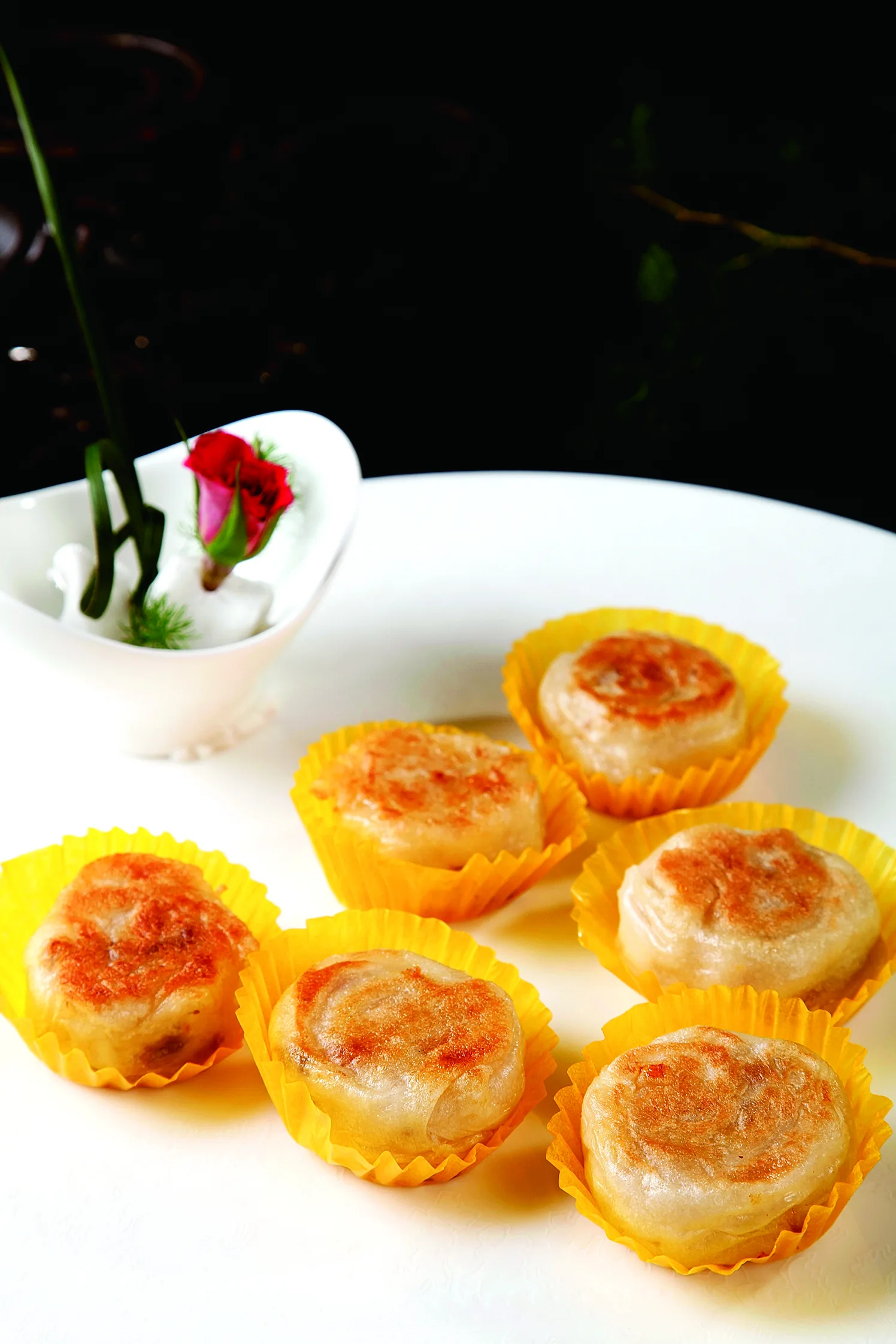
The local-library image shows a refined radish-filled pastry presentation, not a guarantee that every street shaobing has this height or shape. Use it to notice lamination, browning and the relationship between rich fat and a fresher vegetable filling.
Buy one warm piece and share it. Cold fat dulls the aroma and makes layers feel heavier. Duck-oil pastry is not vegetarian even when the visible filling is radish or scallion.
Beef guotie carries Hui Muslim neighborhood history
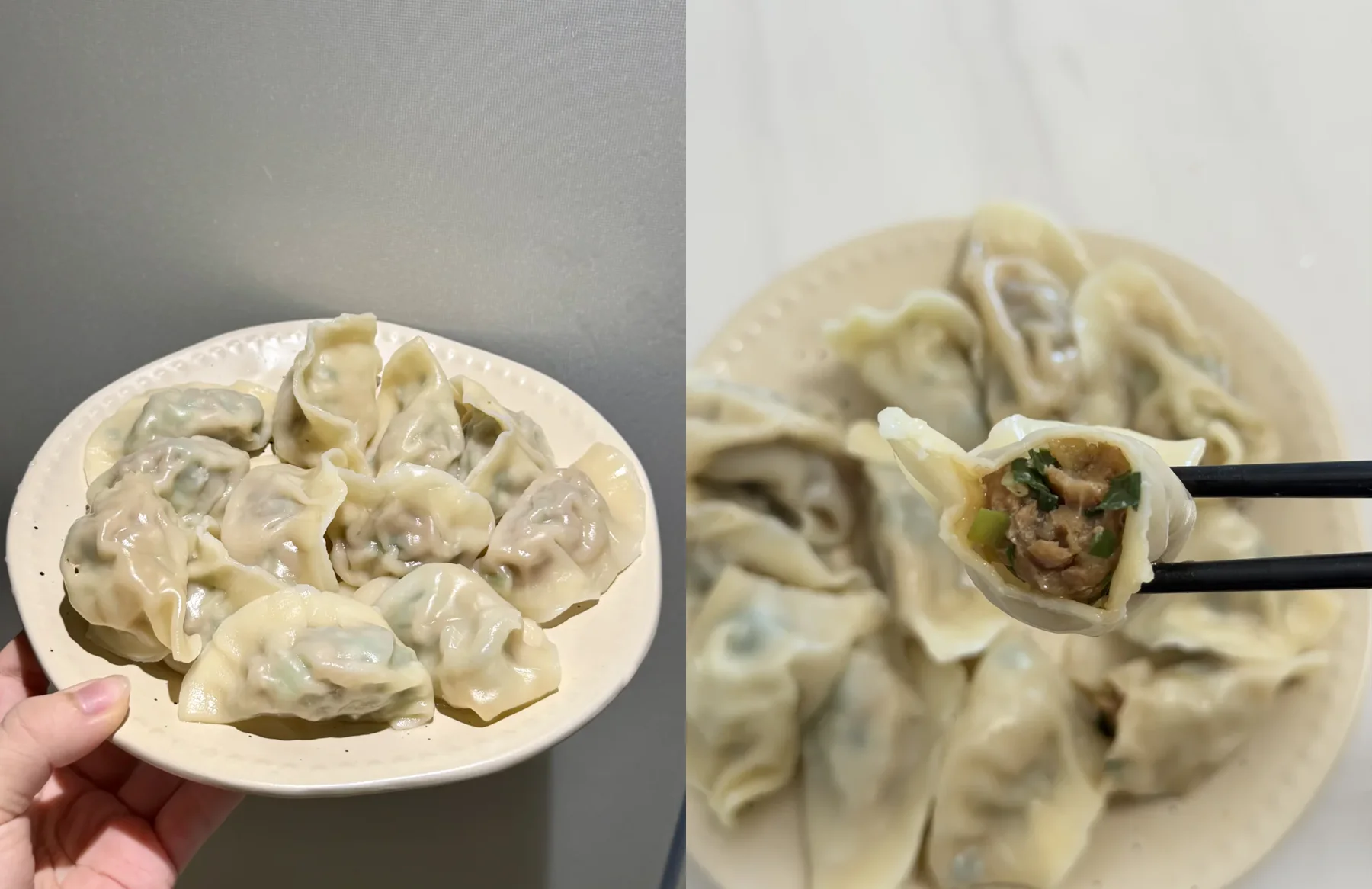
Nanjing's beef guotie are strongly associated with Hui Muslim food businesses, particularly around older southern-city neighborhoods. The dumplings develop a deeply browned base while the upper wrapper stays tender and the beef filling remains juicy.
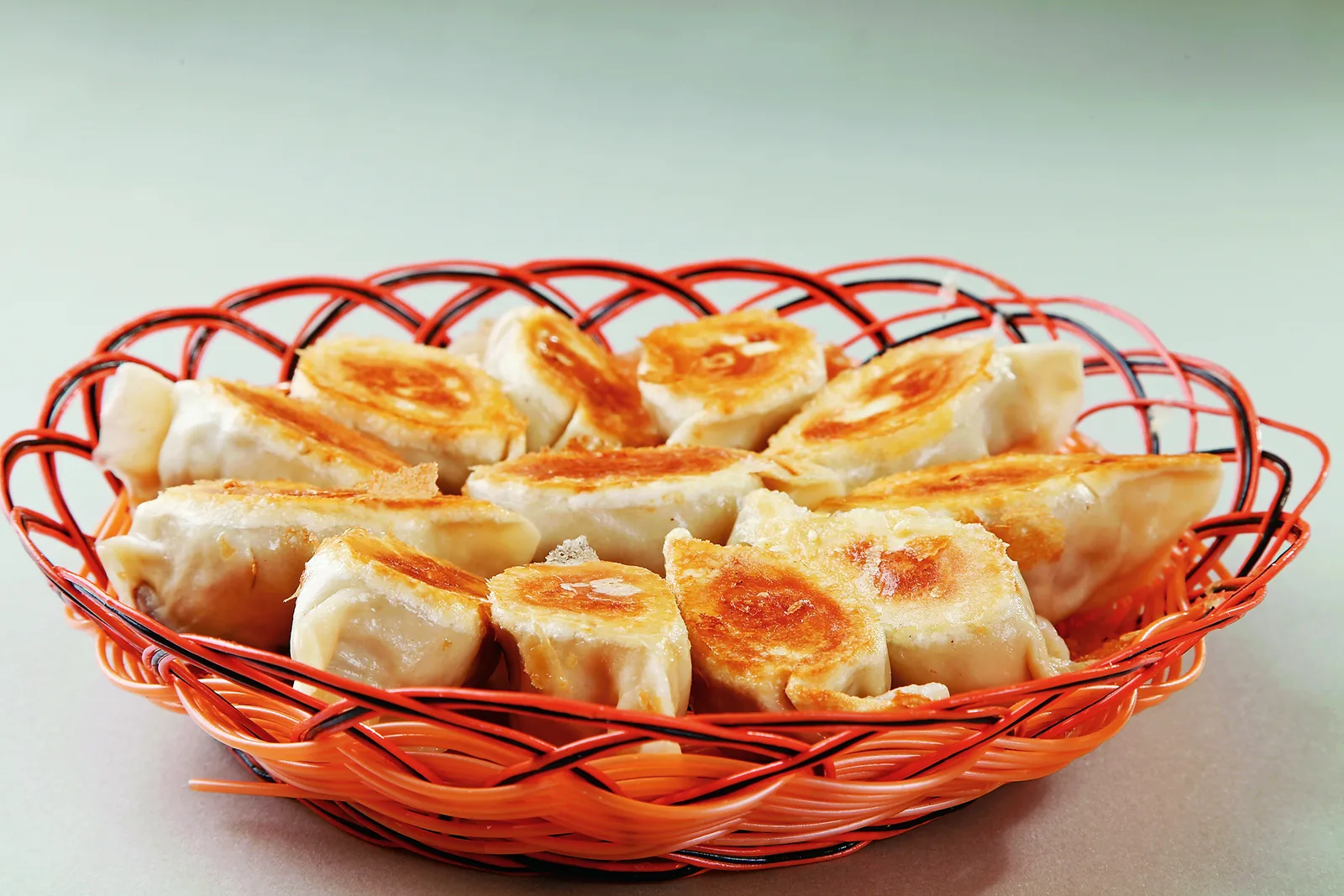
The best contrast happens immediately after cooking. Bite from one end cautiously because juice and steam can escape. Taste before adding vinegar; a well-seasoned filling should carry beef, scallion or other aromatics without needing a strong dipping sauce.
Look for qingzhen (清真) signage if halal practice matters to you, but explain your own standard rather than assuming every traveler defines it identically. Respect the shop as a working community business, not an exotic stop built for photography.
Pidu noodles turn pork skin into structure
Pidu is pork skin that has been dried and fried or puffed, creating a porous ingredient that absorbs broth while retaining a slight bounce. In pidu noodles, it joins noodles, vegetables, egg, meat, mushrooms or other toppings in a generous bowl.
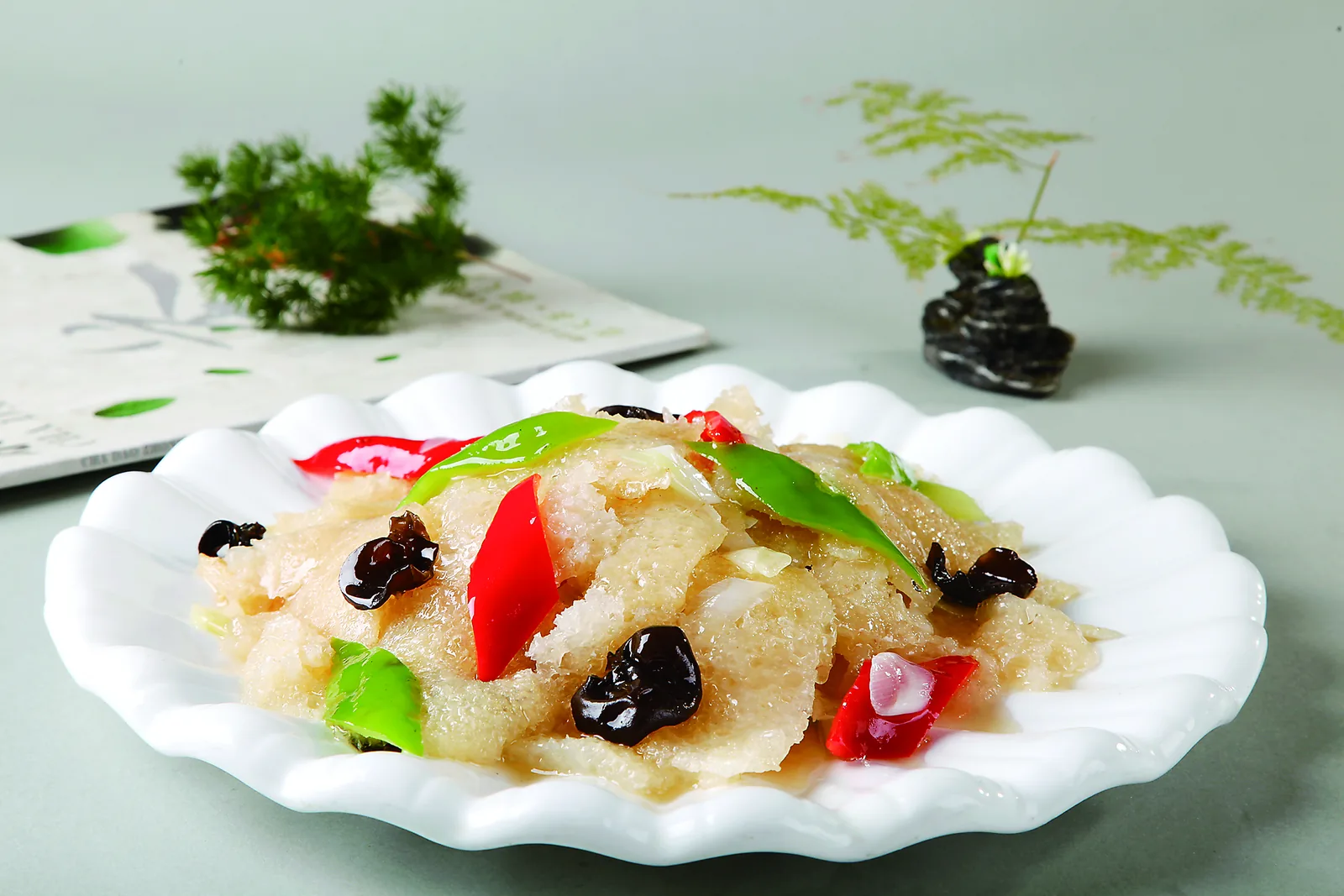
The ingredient is not simply fatty skin dropped into soup. Proper processing changes it into a sponge-like structure. Early in the meal, the surface still resists; later, broth moves deeper into the pores.
Shop menus can become combinatorial. A bowl may include pork skin plus sausage, meat slices, tomato, greens and egg. Start with a standard pidu noodle rather than selecting every topping. The dish is already substantial and explicitly unsuitable for pork-free diners.
Soup buns require patience, not a dramatic bite
Nanjing belongs to a wider Jiangnan culture of tangbao and xiaolongbao, but names, sizes and wrappers are not perfectly standardized. Some buns are small enough for a steamer basket; others are larger and emphasize abundant broth. Fillings may be pork, crab-seasoned meat or seasonal combinations.
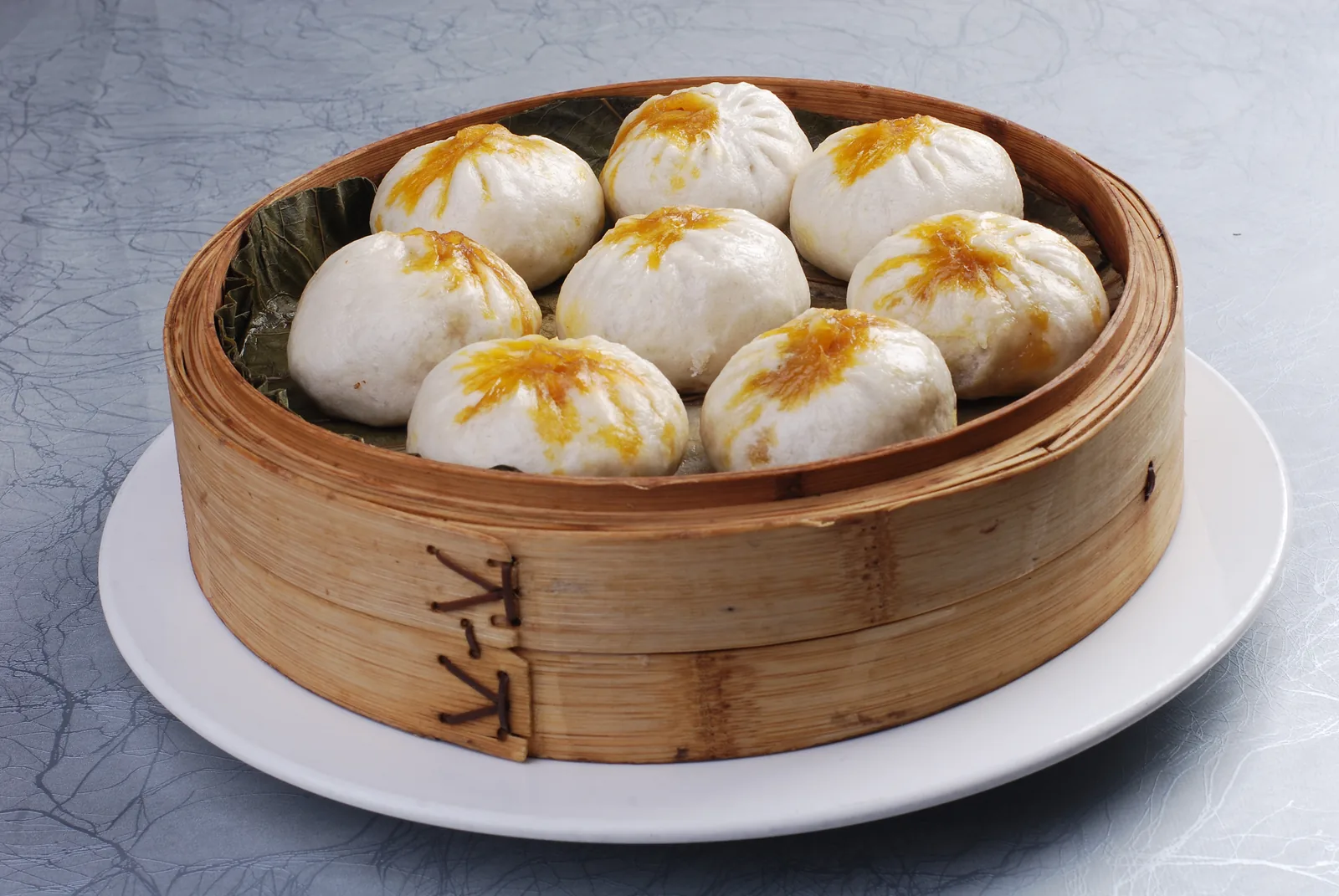
The pictured buns represent a rich restaurant presentation; they should not be used to claim that crab roe is standard in every Nanjing soup bun. Check the menu and price because "crab" can refer to roe, meat, flavored filling or a seasonal premium preparation.
Lift a bun onto a spoon, open a small edge, release steam and sip carefully. Slurping the filling through a straw is associated with some oversized tangbao services but is not a universal rule. Follow the shop's vessel and method.
Qinhuai snacks are a tourism format and a real food history
The Confucius Temple and Qinhuai area has long connected movement, commerce, examinations, entertainment and food. Modern restaurants often sell grouped Qinhuai snack sets, sometimes promoted as "eight delicacies" or through other fixed numbers.
There is no need to choose between calling them ancient truth and dismissing them as fake. Individual foods may have meaningful local histories, while the standardized tasting package is also a modern tourism product. Different operators choose different items, portion sizes and narratives.
I would not let that package define the city. The Nanjing foods I want to find next are less exportable: a neighborhood casserole built around one shop's broth, a starch sheet cooked rather than merely dressed cold, or a spring green that disappears when the season moves. They lack the instant recognition of saltwater duck. That is their value. They force me to stop searching for Nanjing's logo and start eating the city as residents repeat it.
Read the snack menu critically
| Item or claim | What may be valuable | What to verify |
|---|---|---|
| Eight-snack set | Efficient sampling for a group | Exact items, portion size, substitutions and whether drinks or service are included |
| "Imperial" recipe | A restaurant's historical theme or refined presentation | Documentary basis; proximity to an old site is not evidence of palace origin |
| Famous old brand | Continuity of name, craft or customer memory | Whether this branch, product and current ownership preserve the same method |
| Seasonal sweet | Osmanthus, taro, lotus root or beans at an appropriate time | Whether fragrance comes from fresh flowers, syrup, flavoring or a mixed product |
| Photogenic snack | Visual pleasure and contemporary creativity | Whether taste, temperature and texture survive the time spent staging it |
| Night-market specialty | Convenient evening energy | Whether residents eat it beyond the visitor corridor and whether the stall handles food safely |
Nanjing sweets build fragrance rather than heavy dairy richness
Osmanthus, glutinous rice, red beans, taro, lotus root and fermented rice appear in desserts and sweet snacks. Sweetness can be substantial, but aroma and texture should remain legible.
Osmanthus fermented-rice balls combine small glutinous-rice balls with sweet fermented rice, or jiuniang, and floral fragrance. Egg may be streamed into some bowls.
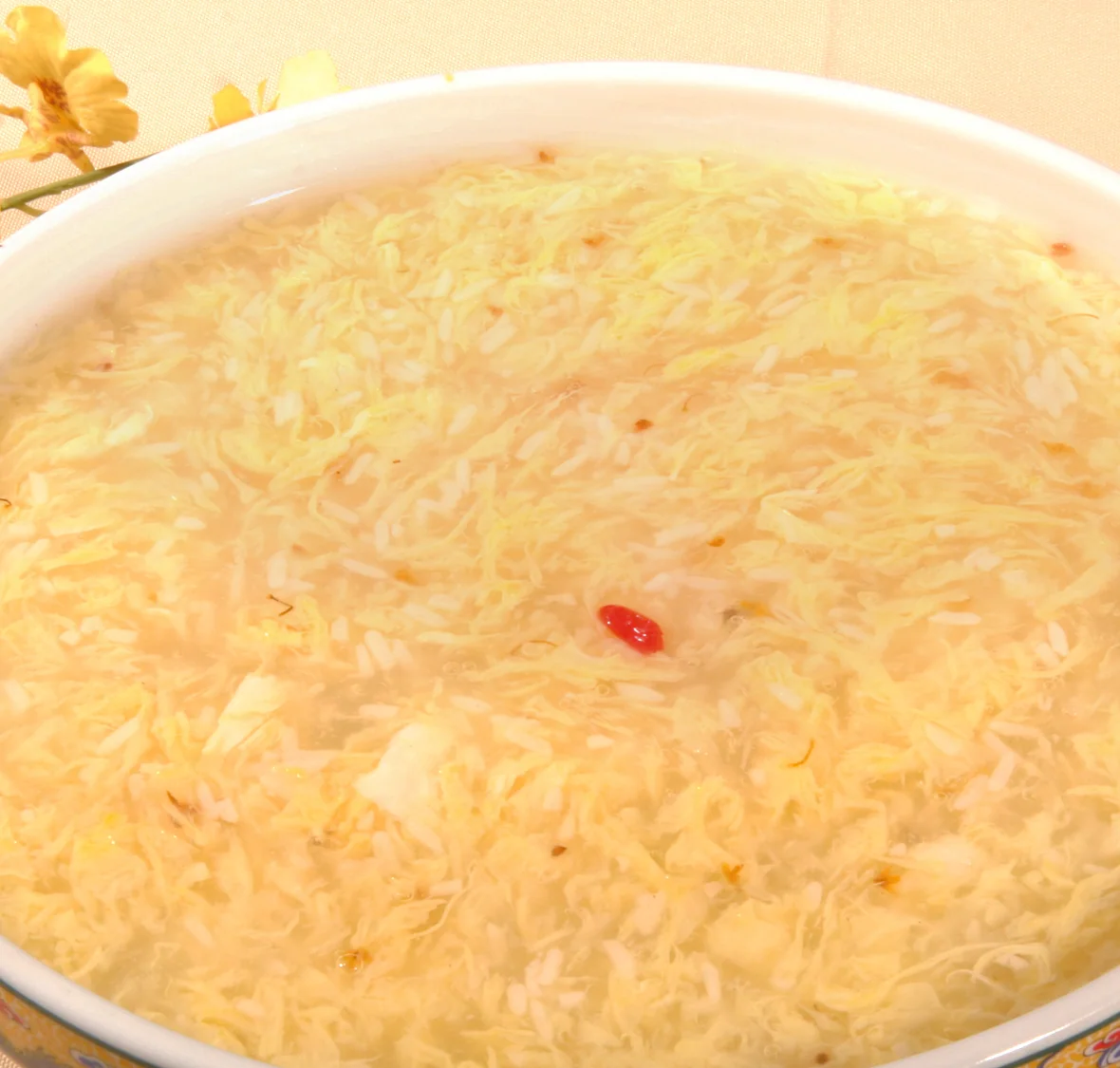
Jiuniang is fermented and can retain a small amount of alcohol. Travelers avoiding alcohol entirely should ask rather than assuming a cooked dessert is acceptable.
Osmanthus lotus root typically fills lotus-root channels with glutinous rice before slow cooking and slicing, often with syrup.
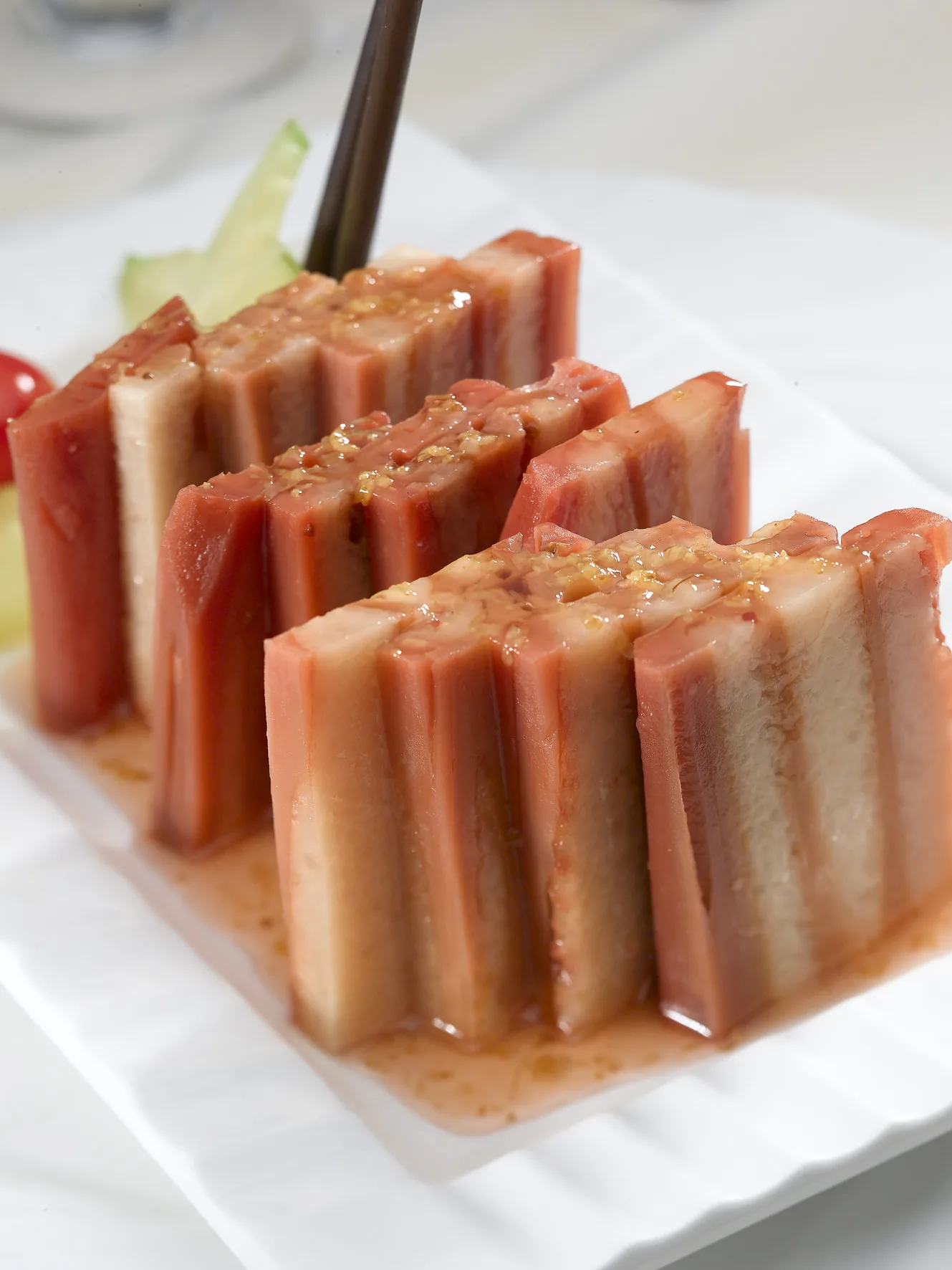
Good slices hold their pattern without becoming hard. Lotus root contributes gentle resistance, rice gives density and syrup carries aroma. Share a plate; the compact slices are more filling than they look.
Rain-flower-stone tangyuan is a modern visual sweet
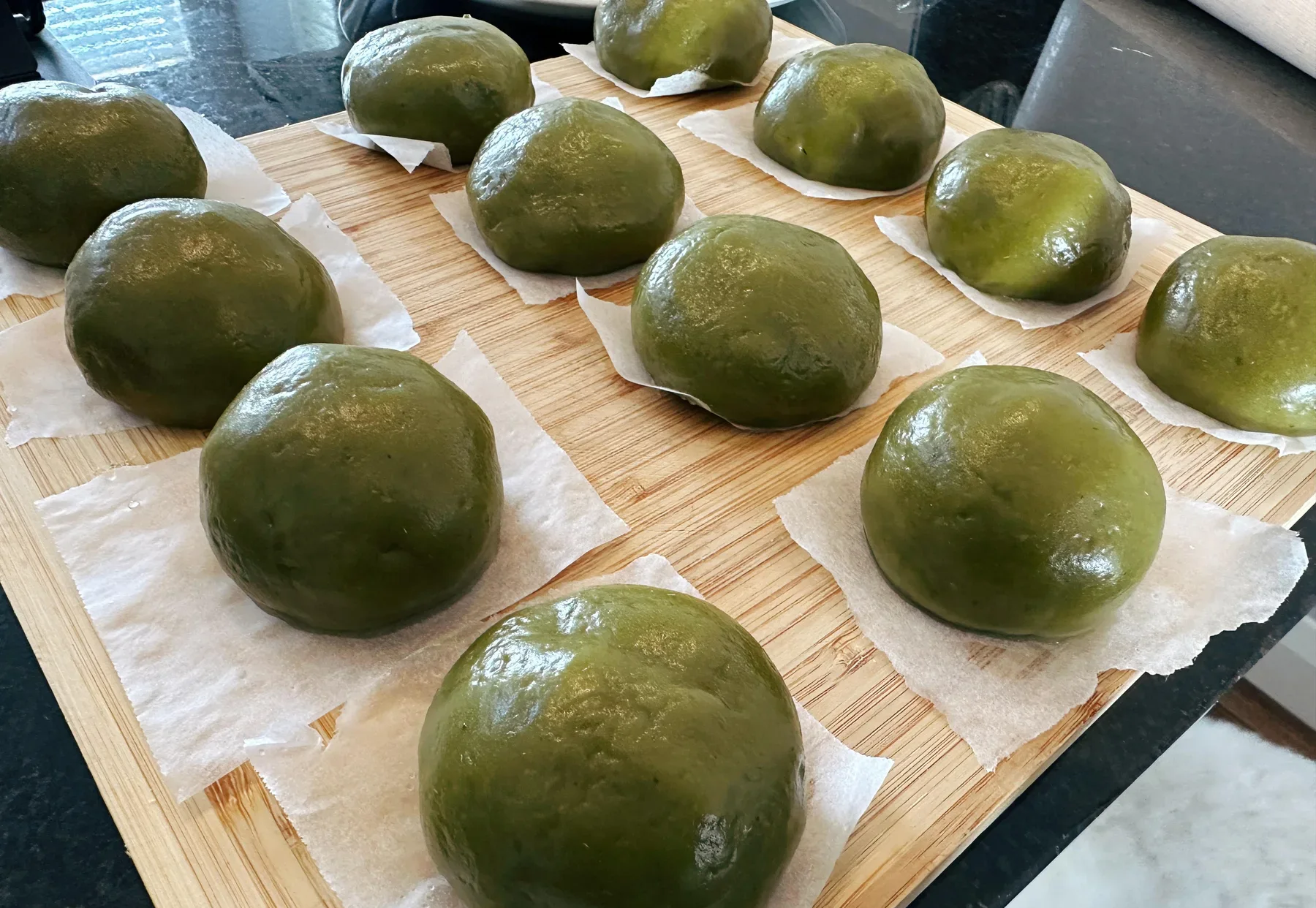
Rain-flower-stone tangyuan imitates the banded colors of polished Yuhua stones associated with Nanjing. Colored glutinous-rice dough is layered or marbled around a sweet filling, producing a memorable contemporary city symbol.
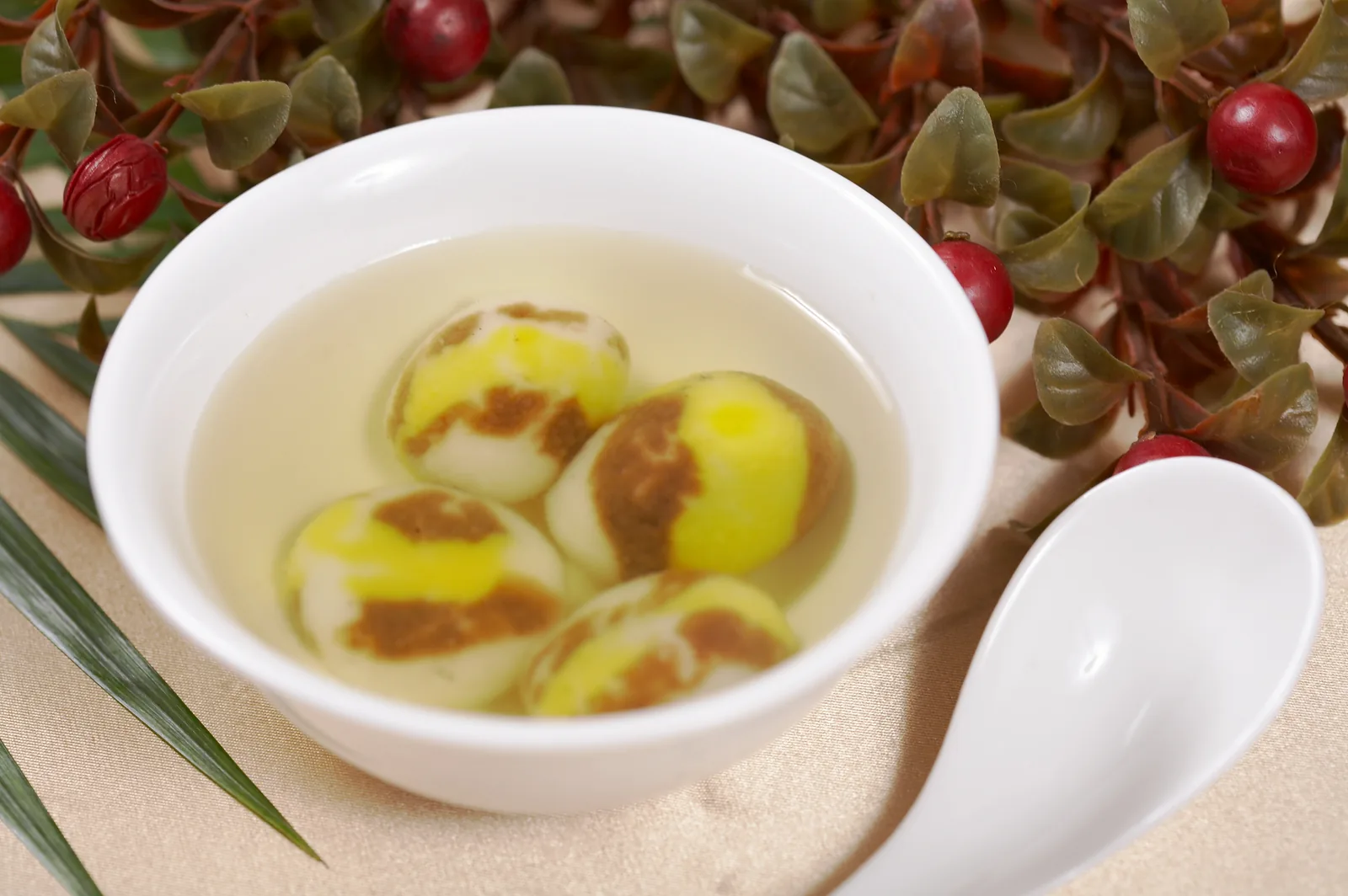
Treat it as modern creative food, not archaeological evidence that people in ancient Nanjing ate identical patterned dumplings. The craftsmanship lies in controlling colored dough so the pattern survives boiling and the wrapper stays tender.
Color may come from plant ingredients, cocoa or approved food coloring depending on the maker. Severe allergies require a direct ingredient check, especially for sesame, peanut or mixed-nut fillings.
Meiling porridge is stronger as a modern story than a proven legend
Meiling porridge commonly combines rice with soy milk and ingredients such as Chinese yam or lily bulb, producing a smooth, pale and gently sweet bowl. Restaurant stories often connect it to Soong Mei-ling.
The association is widely repeated but difficult to treat as a fully documented invention story. It is safer to understand the dish as a modern Nanjing food narrative shaped by Republican-era memory and restaurant culture. Enjoy the texture without requiring a famous person to have created or eaten the exact recipe.
Soy, dairy additions, nuts and sweeteners vary. Ask if you have allergies or expect a vegan bowl; condensed milk or other dairy can appear in contemporary versions.
Spring greens are Nanjing's quiet luxury
The phrase "seven heads and one brain" groups tender spring shoots and leafy vegetables whose local names refer to edible tips or heads, plus chrysanthemum greens known as juhua nao, the "chrysanthemum brain." The exact marketed set can vary.
These greens may be stir-fried, blanched, dressed or folded into other dishes. Their appeal is short season, slight bitterness, tender stems and freshness. Ordering only duck and dumplings gives a distorted picture of Nanjing taste.
Ask what arrived from the market that morning. A simply cooked seasonal green can be more locally precise than a banquet dish available unchanged throughout the year.
A one-day Nanjing eating rhythm
| Time | Eat | Strategy |
|---|---|---|
| 07:00-09:00 | Beef guotie, soup buns or duck-oil shaobing | Choose one specialist and share two items rather than building a breakfast buffet |
| 11:30-13:00 | Duck blood vermicelli or pidu noodles | Order the standard bowl before adding every organ or topping |
| 15:30 | Red-bean yuanxiao, sugar taro shoots or one osmanthus sweet | Use the sweet as a rest, not another full meal |
| 18:00-20:00 | Saltwater duck, one seasonal green, river or lake ingredient and rice | Buy only the duck quantity the group can finish |
| After dark | Qinhuai walk and one shared snack | Let the district be an evening experience, not a compulsory tasting checklist |
How much should you order?
| Group | Sensible first order | Avoid |
|---|---|---|
| Solo | Small duck portion or one soup, plus one vegetable or pastry | Half a duck, a full dumpling basket and a large noodle bowl at once |
| Two people | Quarter duck, one hot dish, one seasonal green and rice | Ordering saltwater duck and roast duck in full portions before comparing them |
| Four people | One duck preparation, one freshwater dish, two vegetables and one staple | Adding a large Qinhuai snack set immediately after dinner |
| Six people | Two contrasting duck or protein dishes, two to three vegetables and shared staples | Assuming every famous dish needs one full restaurant portion |
| Takeaway | Ask for weight, bone-in yield, sauce packaging and storage advice | Leaving cooked duck unrefrigerated through a hot sightseeing afternoon |
Dietary, allergy and food-safety guidance
| Need | What to know |
|---|---|
| Vegetarian | Vegetable dishes may use lard, duck fat, meat stock, dried shrimp or oyster sauce; ask about both broth and cooking fat |
| Vegan | Egg appears in soups and dough, while dairy may enter modern sweets; Buddhist vegetarian restaurants can be easier but still require questions |
| Halal | Hui beef-guotie and noodle shops may display qingzhen (清真) signage. Explain your specific requirements and ask about shared kitchens |
| Pork avoidance | Pidu is pork skin; dumpling filling, soup stock and lard can be hidden in apparently vegetable foods |
| Gluten sensitivity | Wheat is common in wrappers, noodles, shaobing, soy sauce and some thickeners; rice-based sweets can still face cross-contact |
| Sesame or peanut allergy | Tangyuan fillings, pastries, sauces and dessert garnishes commonly use sesame, peanut or mixed nuts |
| Alcohol avoidance | Jiuniang is fermented sweet rice and may retain alcohol even when served warm |
| Severe allergy | Carry a precise written Chinese explanation and choose kitchens able to discuss stock, oil, fillings and shared equipment |
| Food safety | Buy cooked duck from a busy, clean counter; keep it chilled as advised and do not carry it unrefrigerated for hours in summer |
Visual inspection is unreliable. Clear soup can contain duck or pork stock, a radish pastry can use duck fat, and a pale dessert can contain soy, dairy or nuts.
Useful Chinese for eating in Nanjing
| English | Chinese | Use |
|---|---|---|
| A small portion of saltwater duck | 一小份盐水鸭 | Prevents over-ordering a bone-in cold dish |
| How much is this by weight? | 这个按重量怎么卖? | Useful at cooked-food counters |
| No duck intestine | 不要鸭肠 | Customize duck blood vermicelli before assembly |
| No cilantro | 不要香菜 | Common request for soup and noodles |
| Please pack the sauce separately | 卤汁请分开装 | Helps roast-duck skin keep more texture |
| Does this contain pork or lard? | 这个有猪肉或猪油吗? | Essential for pidu, pastry and vegetable dishes |
| Is the broth vegetarian? | 这个汤底是素的吗? | Asks about hidden stock rather than visible ingredients |
| Does this contain alcohol? | 这个含酒精吗? | Useful for jiuniang desserts |
| I have a severe allergy | 我有严重过敏 | Follow with the exact ingredient in Chinese |
Frequently asked questions about Nanjing food
What food is Nanjing famous for?
Nanjing is most famous for saltwater duck, duck blood vermicelli soup, Nanjing-style roast duck, duck-oil shaobing, beef guotie, pidu noodles, soup buns and Qinhuai sweets such as red-bean yuanxiao, sugar taro shoots and osmanthus-flavored desserts. Spring greens and freshwater ingredients are equally important to the city's seasonal table.
What is the difference between Nanjing roast duck and Beijing roast duck?
Beijing roast duck foregrounds crisp skin, carving and pancakes in a formal restaurant service. Nanjing roast duck is usually chopped into pieces and valued with its seasoned roasting juices or lu sauce, often as a neighborhood takeaway or shared home-style dish. Shop methods vary, and neither should be judged by the other's ideal texture.
Does duck blood vermicelli soup contain offal?
Usually yes. In addition to duck blood and sweet-potato vermicelli, common versions may include duck intestine, gizzard, liver, tofu puff, cilantro and scallion. Exact combinations vary, so ask for unwanted organs to be omitted before the bowl is assembled. The broth is not vegetarian.
Are Qinhuai's Eight Delicacies one fixed ancient menu?
No single snack package should be treated as an unchanged canonical menu from antiquity. Restaurants, tourism programs and different historical accounts group Qinhuai snacks in varying sets. Use a package as a convenient tasting format, then judge each shop and dish on its own quality.
Can vegetarians eat well in Nanjing?
Yes, especially during the spring-green season and at Buddhist vegetarian restaurants, but clear communication is necessary. Lard, duck fat, meat broth, dried shrimp and oyster sauce can appear in vegetable, noodle and pastry dishes. Ask about stock and cooking fat, not only visible ingredients.
When is the best season for Nanjing food?
Every season has strengths. Spring brings tender greens, summer favors lighter cold dishes and river-lake ingredients, autumn is associated with osmanthus aromas and seasonal duck, and winter suits duck blood soup, pidu noodles and richer shared dishes. Market availability and restaurant menus vary from year to year.
Eat Nanjing beyond the duck checklist
Duck is the fastest entrance into Nanjing food because it reveals preservation, roasting, broth, offal, fat and skilled chopping. It should not become the whole meal. Beef guotie points toward Hui Muslim neighborhood life. Pidu shows how texture can be engineered from a neglected ingredient. Osmanthus and fermented rice make fragrance edible. Spring greens reconnect the city to fields and market time.
Begin with a specialist breakfast, order less duck than your ambition and taste soup before adding chile. Visit Qinhuai for the social theater, then eat somewhere that does not need to call every snack ancient. Nanjing becomes memorable when its food is allowed to be seasonal, practical and contemporary as well as famous.
Place that day inside the wider Jiangnan travel route if Nanjing is one stop among lower-Yangtze cities, or compare it with the best food cities in China when the real decision is where a food-first trip should spend its limited meals.