This Nanjing travel guide begins from one conviction: the city's history refuses to stay in one period. Six Dynasties Jiankang survives through archaeology, tomb art and literary memory rather than an intact street plan. The first Ming emperor is buried beneath Purple Mountain, while much of his enormous wall still shapes traffic and neighborhoods. The Taiping Heavenly Kingdom renamed the city Tianjing. Republican institutions later made it a national capital. The 1937 massacre left a wound that must be approached through evidence, mourning and responsibility; the Memorial Hall's official site is the authority for current institutional information. Use the wider Chinese culture guide for context, the Chinese architecture collection to read built layers, and the Nanjing food guide to meet the living city after the memorial and museum route.
Nanjing travel guide: begin with layers that do not agree
| Question | Short answer |
|---|---|
| Why visit? | For capital-city history, Ming heritage, Purple Mountain, powerful museums, Qinhuai culture, Republican architecture, serious twentieth-century memory, temples and regional food |
| Ideal first stay | Six days: Purple Mountain, two central-history days, one Qinhuai day, one memorial and riverfront day, and one flexible neighborhood or museum day |
| Best first base | Xinjiekou or the older central-east districts near a metro interchange; choose transport access before a generic river-view promise |
| Essential experiences | Walk a substantial wall section, give Ming Xiaoling time, read Qinhuai beyond its lights, visit the massacre memorial respectfully and eat both duck and seasonal vegetables |
| What makes it different? | Few Chinese cities place imperial foundation, revolution, republic, wartime atrocity, socialist construction and contemporary university life in such a compact field |
| Main planning trap | Treating all historic-looking roofs as ancient, reducing the city to Republican nostalgia or visiting a memorial site as visual content |
Choose the Nanjing you want to meet
| If you care most about | Build your days around | Add this contrast |
|---|---|---|
| Early medieval China | Nanjing Museum, Six Dynasties Museum, Qixia-area archaeology and tomb-art displays | Use maps and objects because Jiankang does not survive as one walkable ancient core |
| Ming history | Ming Xiaoling, the city wall, Zhonghua Gate and surviving gates or wall parks | Compare imperial burial landscape with urban defense rather than expecting a palace city |
| Modern history | Presidential Palace, Republican architecture, Sun Yat-sen Mausoleum and selected specialist museums | Include the Taiping, wartime and post-1949 layers instead of making the Republic the whole story |
| Memory and ethics | Nanjing Massacre Memorial Hall and carefully contextualized wartime sites | Leave time afterward; do not pair the memorial with entertainment as if it were another attraction |
| Religion | Jiming Temple, Pilu Temple and other active Buddhist sites | Ask when visible buildings were rebuilt and observe contemporary practice quietly |
| Food and youth culture | Morning food, university districts, independent shops, live music and night walks | Use our Nanjing food guide to move beyond one Qinhuai snack package |
Nanjing has been many capitals, not one continuous ancient city
Nanjing's position beside the lower Yangtze gave it a defensible river landscape, access to grain and waterways, and command of routes between north and south. Mountains surround parts of the urban basin while the river opens toward the coast. Geography made the city strategically powerful, but it also made Nanjing a repeated target during political change.
Names signal different urban and political moments. Jianye is associated with Eastern Wu. Jiankang became the capital of the Eastern Jin and the four Southern Dynasties, a sequence conventionally grouped with Eastern Wu as the Six Dynasties. The Ming founder built his capital here in the fourteenth century. The Taiping Heavenly Kingdom renamed it Tianjing from 1853 to 1864. The Republic used Nanjing as a capital in several phases, most consequentially under the Nationalist government from 1927 until the Japanese capture in 1937 and again from 1946 until 1949.
These capitals did not leave one unchanged footprint. Walls moved. Palaces disappeared. Rivers were altered. New political institutions reused older sites. A productive Nanjing trip begins by asking which city a place belongs to and what evidence actually remains.
A working timeline for Nanjing
| Layer | Representative evidence | What a visitor should understand |
|---|---|---|
| Eastern Wu and Six Dynasties | Tomb objects, brick reliefs, inscriptions, museum displays and archaeological sites | Jiankang was a major center of southern court culture and Buddhism, but not a preserved early-medieval old town |
| Founding Ming capital | Ming Xiaoling, city wall, gates and urban geography | Nanjing was the dynasty's first capital; Beijing later became the primary capital while Nanjing retained secondary institutions |
| Taiping Tianjing, 1853-1864 | Site history at the Presidential Palace area, collections and urban memory | The rebel capital transformed and reused the city before its violent reconquest by Qing forces |
| Republic of China | Government offices, university and civic buildings, Sun Yat-sen Mausoleum and streetscapes | Modern nation-building produced a new capital landscape, not simply a picturesque architectural style |
| Japanese occupation and massacre | Memorial Hall evidence, survivor testimony, burial sites and archives | Mass killing, sexual violence and other atrocities followed the city's capture in December 1937; victims must remain central |
| People's Republic and contemporary Nanjing | Yangtze River Bridge, industry, housing, metro, universities, software and research districts | Socialist construction and reform-era growth are historical layers, not visual noise around the older city |
Six Dynasties Jiankang survives through fragments and scholarship
Between the third and sixth centuries, regimes based in the lower Yangtze turned Jiankang into one of the world's largest and most culturally consequential cities. Court politics, elite migration from northern China, local southern traditions, Buddhist institutions, literature and landscape aesthetics developed together.
Yet little standing architecture can be viewed as an untouched Six Dynasties monument. Archaeological foundations, tomb chambers, carved brick reliefs, celadon, inscriptions and later textual memory do most of the historical work. This is why the Nanjing Museum and Six Dynasties Museum matter. They give spatial and material form to a period that tourism slogans often render as atmosphere alone.
Do not expect one "Six Dynasties street." Read the city through objects and topography. Purple Mountain, the Qinhuai waterways and former urban axes help explain why courts and religious communities imagined Nanjing as a landscape capital even when their buildings have vanished.
Ming Xiaoling makes imperial power part of a mountain
The Ming Xiaoling Mausoleum, included in UNESCO's Imperial Tombs of the Ming and Qing Dynasties property, is the burial complex of the Hongwu Emperor, Zhu Yuanzhang, and Empress Ma. It occupies the southern slope of Purple Mountain within a much larger ritual and natural landscape.
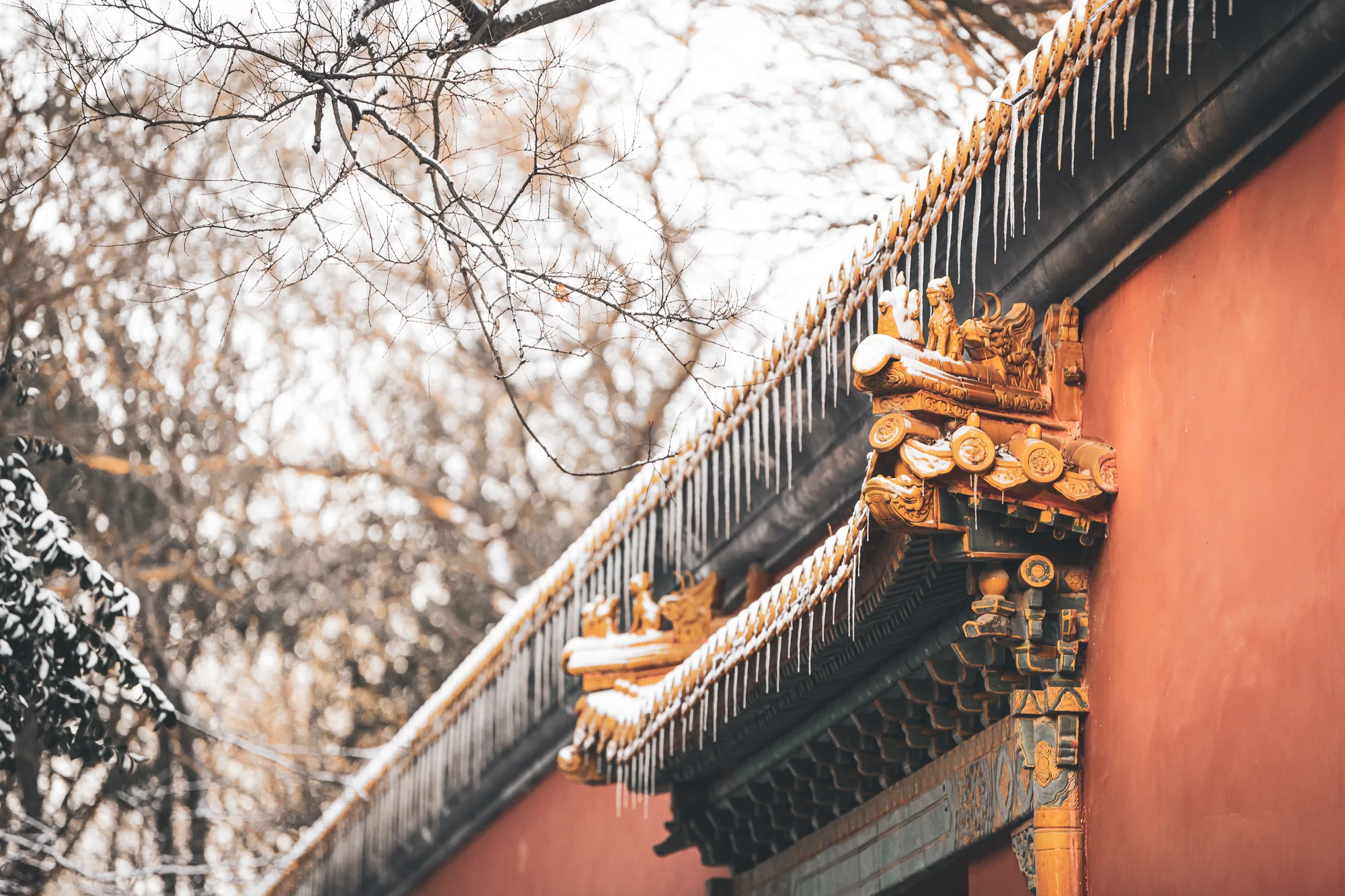
Approach matters. The spirit path, stone animals and officials, gates, drainage, walls, woodland and changing elevation organize a journey toward the burial mound. The famous sculptures are not a free-standing outdoor gallery. Their paired forms, scale and sequence establish imperial order in space.
Visible buildings have undergone loss, repair and reconstruction. Read foundations and surviving masonry alongside renewed roofs and visitor infrastructure. Reserve half a day, longer if you combine the mausoleum with other Purple Mountain sites. Early morning offers quieter paths and less heat in warmer months.
The Ming city wall was designed around terrain
Nanjing's Ming wall is not a neat rectangle. Builders incorporated hills, waterways and earlier urban conditions into an enormous circuit. Bricks often carry inscriptions connected to production and responsibility, making the wall evidence for a vast supply and labor system as well as a fortification.
Zhonghua Gate is the most famous surviving gate complex, but a wall visit should not become one ticketed monument. Walk sections around gates, parks and neighborhoods to see breaks, repairs, reused edges and the modern roads pressed against the fortification. The city wall is strongest as an urban system.
How to read Nanjing's built heritage
| Category | Nanjing example | Historically present | Best question to ask |
|---|---|---|---|
| Surviving monumental fabric | Ming wall masonry and gate structures | Large amounts of original or historically repaired brickwork within altered surroundings | How did terrain, water and logistics shape this form? |
| Ritual landscape | Ming Xiaoling | Tomb setting, stone sculpture, foundations and structures with later repairs | How does the route create rank and imperial memory? |
| Active institution with rebuilding | Jiming Temple or Pilu Temple | Long institutional histories expressed through later and modern building phases | What happens here now, and which visible parts are recent? |
| Archaeological and museum evidence | Six Dynasties objects and city remains | Excavated materials, plans and scholarly interpretation | What can an object prove that a reconstructed street cannot? |
| Historic district with modern reconstruction | Confucius Temple and Qinhuai visitor area | Long-standing sacred, educational and commercial functions mixed with rebuilt architecture | Which layer am I looking at: institution, surviving fabric or tourism design? |
| Modern historical imagination | Yuejiang Tower | A tower completed in 2001 from a Ming-era proposal that had never been realized | Why did contemporary Nanjing choose to build the unbuilt past? |
Qinhuai is a river system, not only a night photograph
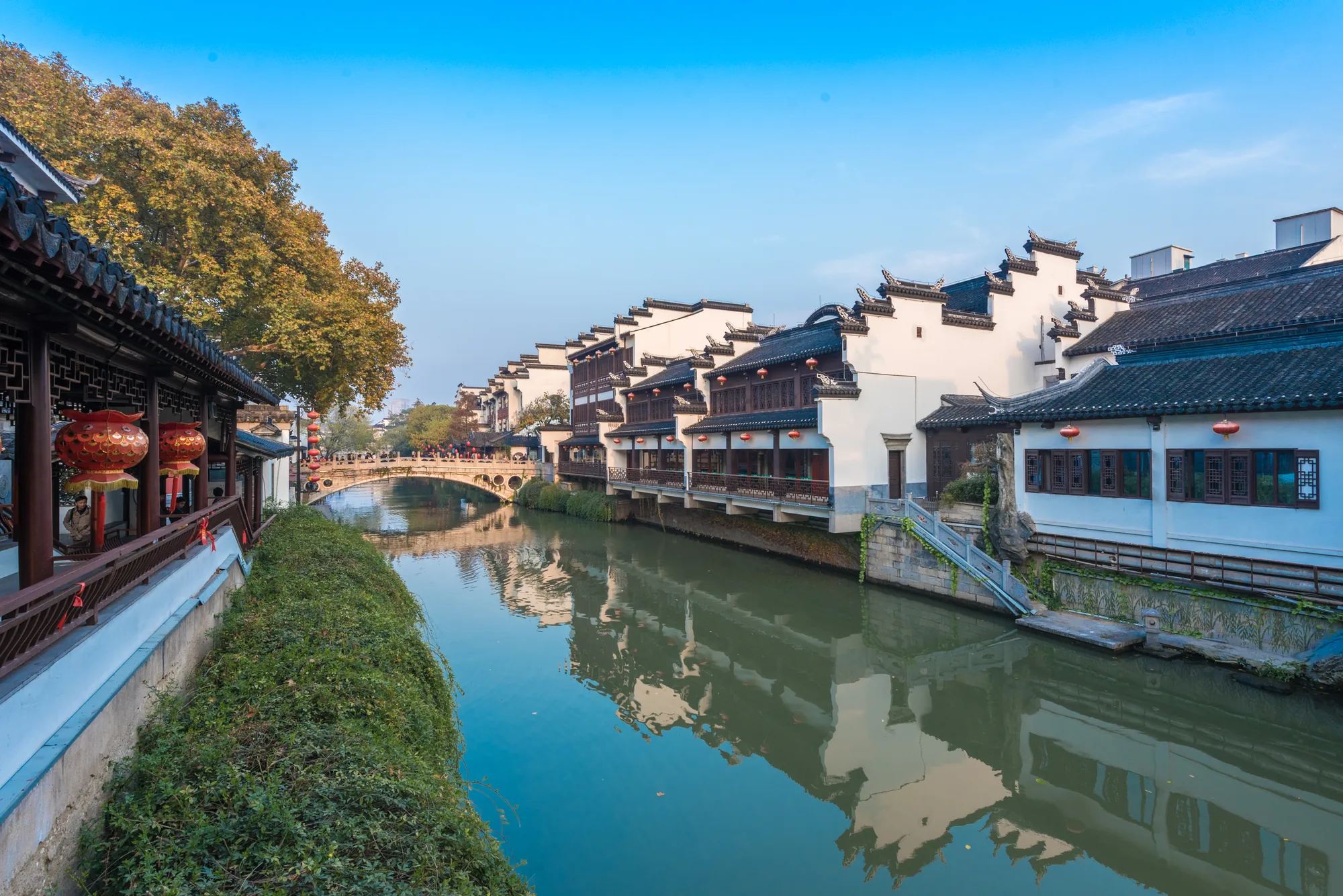
The Qinhuai River has supported transport, settlement, craft, commerce, entertainment, examination life and literary imagination. Its visitor center around Confucius Temple is highly commercial, but the district's historical importance cannot be dismissed simply because it is crowded.
Visit once in daylight. Water control, building edges, bridges and the relationship between narrow streets and the river become clearer before illuminated signs take over. Boat rides can orient you, but recorded narratives may compress courtesan culture, scholars and dynastic nostalgia into romance. Ask whose labor and whose lives have disappeared from the story.
At night, the district becomes performance: lights reflect on water, visitors wear historical clothing, snack shops repeat famous names and the river functions as a stage. Enjoy it as contemporary urban culture while keeping the distinction between old functions and new scenery.
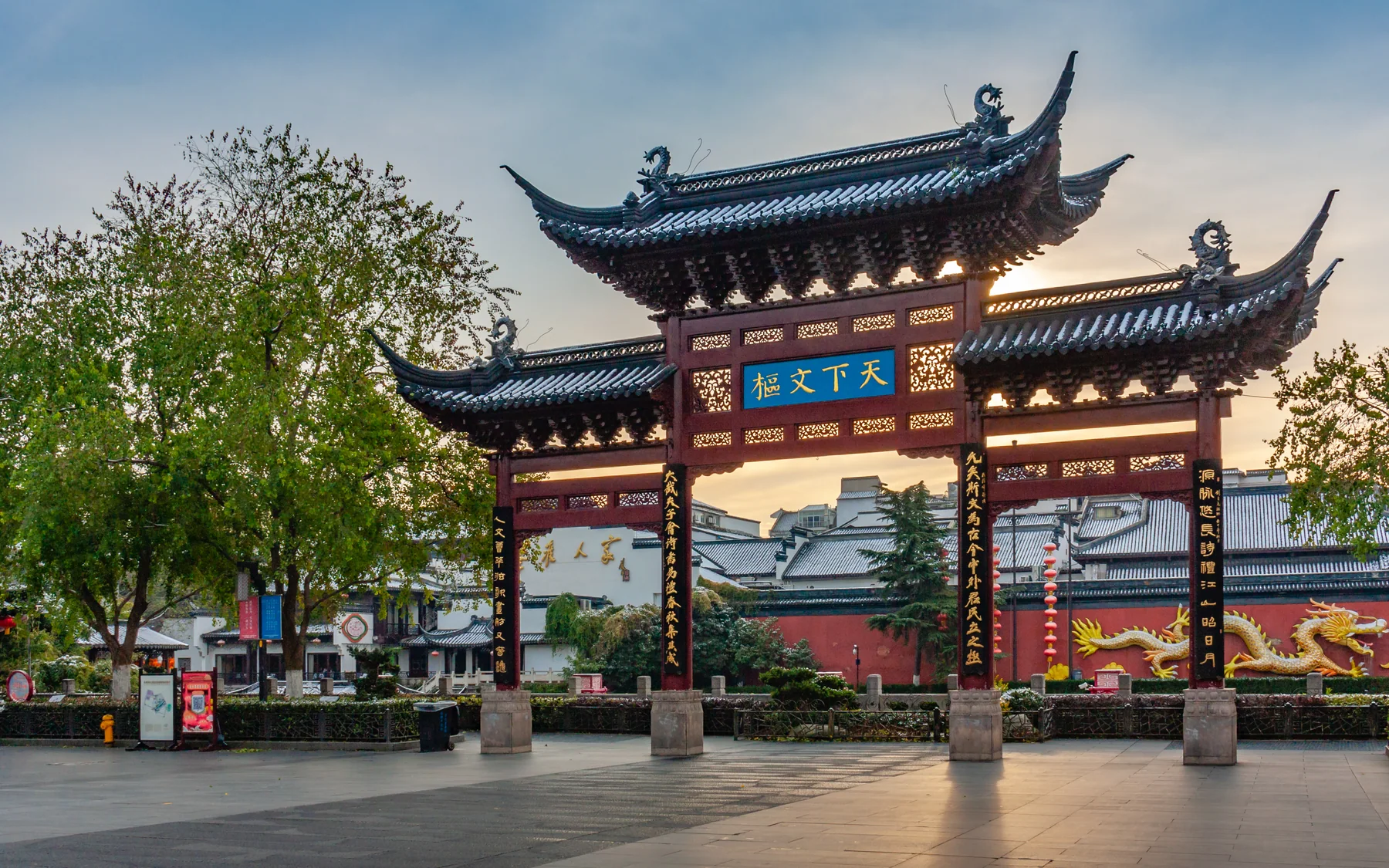
Confucius Temple joins ritual, schooling and commerce
Nanjing's Confucius Temple, or Fuzimiao, belongs to a wider complex of Confucian ritual, education and examination culture. Its institutional history reaches far back, while much of the present visual environment reflects later rebuilding and modern reconstruction.
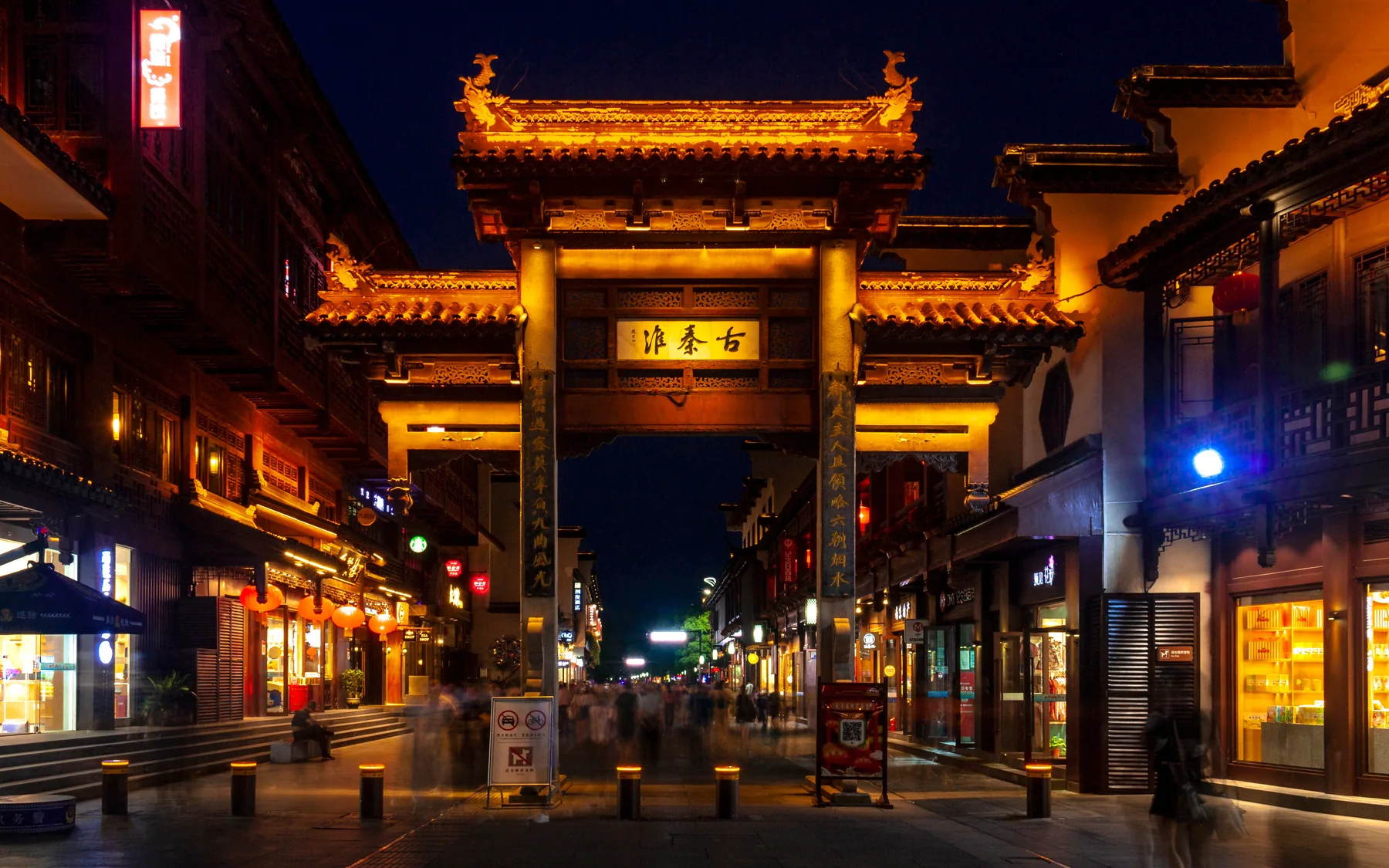
Confucian temples were not generic places of quiet wisdom. They were connected to state ritual, education, status and the reproduction of an official elite. Read plaques, spatial hierarchy and museum interpretation before treating the architecture as a decorative backdrop.
The surrounding shops and restaurants continue an older relationship between examination traffic and commerce, although today's scale is new. Tourism does not erase history, but it changes which stories receive the brightest lighting.
The Jiangnan Examination Hall explains the pressure behind scholarship
The Jiangnan Examination Hall was one of imperial China's largest examination compounds. Candidates worked in rows of small cells under intense regulation, hoping to advance through a system that linked literary performance to office, family status and state service.
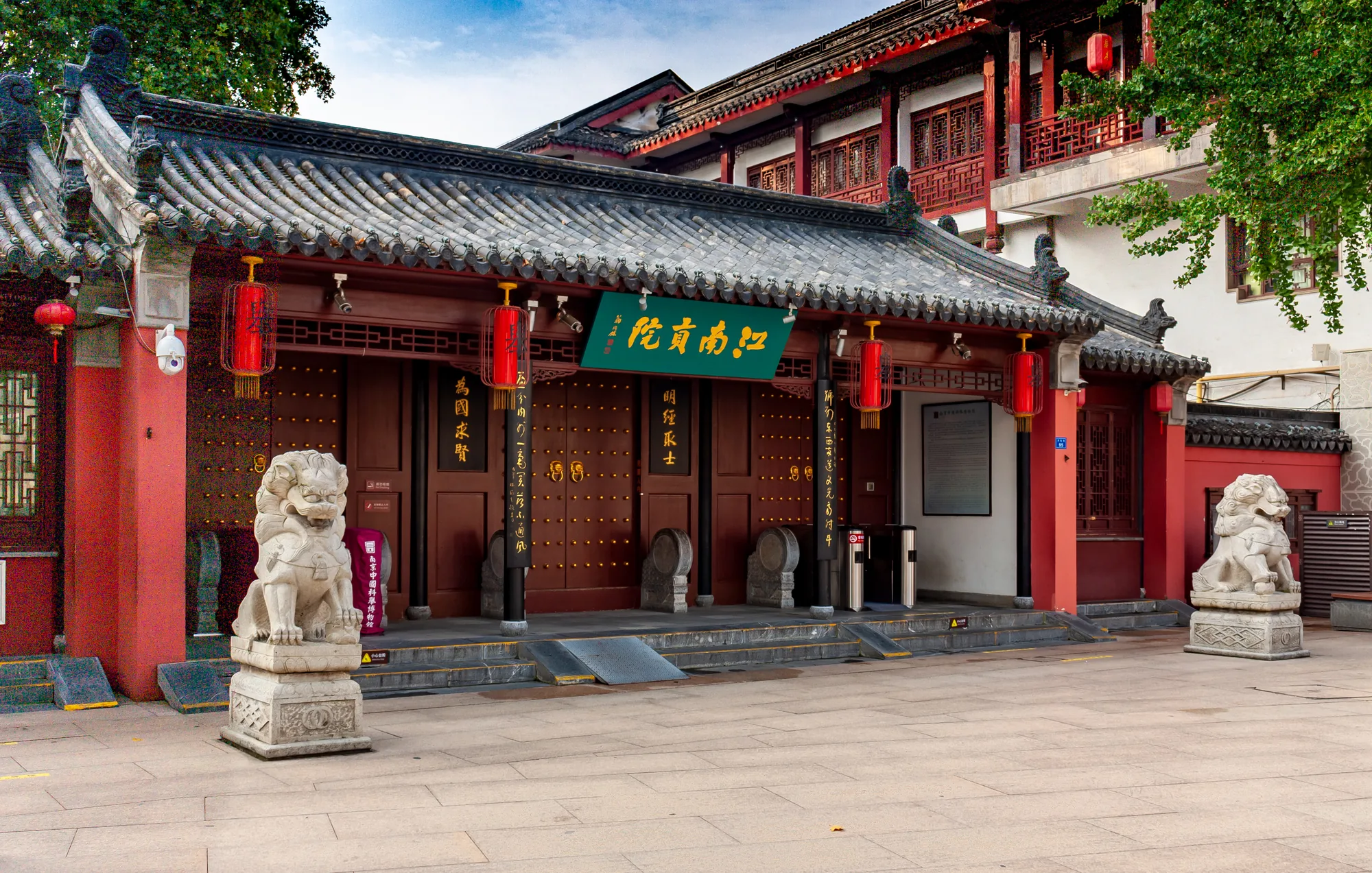
The examination system enabled some movement through education, but it was never broadly equal by modern standards. Preparation required literacy, time, money, teachers and family support. Women were excluded from the formal route to office. Success depended on mastery of prescribed forms rather than free intellectual creativity.
Use the museum to understand scale, procedure, cheating controls and psychological pressure. The tiny cells are more revealing when connected to the households and local economies that invested in candidates for years.
The Presidential Palace is a site of repeated takeover
The complex marketed as the Presidential Palace carries more than Republican history. The area is associated with Ming princely use, Qing administrative offices, the Taiping Heavenly Kingdom's palace center and later Nationalist government institutions. Buildings, gardens and displays come from different phases.
Do not read every room as the preserved workplace of one famous leader. Begin with a site plan and chronology. The power of the place lies in reuse: successive governments occupied, transformed and narrated the same central ground in different ways.
Republican Nanjing was also much larger than this compound. Ministries, residences, universities, transport infrastructure, tree-lined roads and planned civic architecture spread across the city. A focused architecture walk can reveal nation-building, modern professional expertise and unequal access to the capital rather than nostalgia alone.
Purple Mountain joins Ming, Republican and religious memory
Purple Mountain is a historical landscape, not one attraction. Ming Xiaoling, Sun Yat-sen Mausoleum, temples, observatory history, paths and forested recreation draw different crowds into the same terrain.
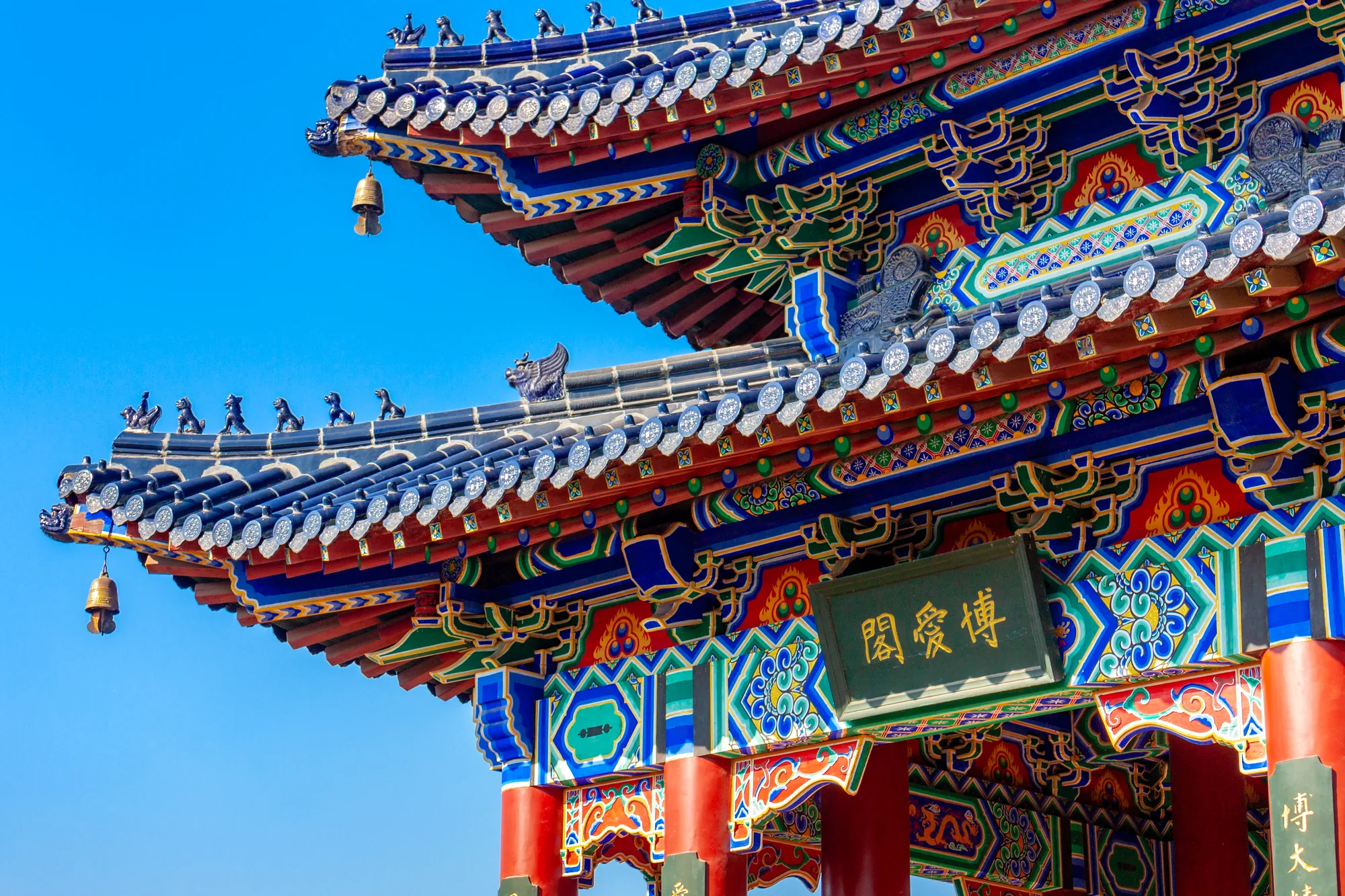
The Sun Yat-sen Mausoleum, constructed in the late 1920s, combines a monumental stair, axial planning, modern materials and forms that were intended to communicate a national architectural language. The climb transforms political commemoration into bodily effort and broad views.
Do not schedule every Purple Mountain site in one rushed day. Distances, slopes, shuttle queues and heat are substantial. Choose one major historical theme, then add a walk or contrasting site. The mountain should feel like a landscape, not an outdoor checklist.
The Nanjing Massacre Memorial Hall requires a different kind of visit
After Japanese forces captured Nanjing in December 1937, soldiers carried out mass killings, widespread sexual violence, looting and other atrocities over subsequent weeks. Historical estimates of the number killed vary by source, geographic boundary and period counted. That debate must never become an excuse to deny the atrocity or reduce victims to competing numbers.
The Memorial Hall of the Victims in Nanjing Massacre by Japanese Invaders brings together documents, objects, photographs, testimony, burial evidence, architecture and commemoration. It is both a historical museum and a mourning site. Allow at least two hours and do not arrive emotionally rushed.
Memorial visit ethics
| Do | Avoid | Why |
|---|---|---|
| Read testimony and captions before making conclusions | Photographing only the most graphic material | Evidence has context; shock without context can become spectacle |
| Keep voices low and clothing ordinary | Cheerful poses, fashion shoots or performance content | The site centers victims, survivors and bereaved families |
| Follow current photography rules | Secretly filming restricted rooms | Restrictions protect dignity, evidence and other visitors |
| Give school groups, elders and mourners space | Arguing about casualty figures inside the galleries | A memorial is not an arena for performative debate |
| Take a quiet break afterward | Scheduling a celebratory attraction immediately next | Serious attention has an emotional and physical cost |
| Use responsible language when posting | National stereotypes or collective blame toward people today | Historical accountability requires precision, not inherited hatred |
Victim-centered history is compatible with rigorous scholarship. Ask how evidence was gathered, whose voices survive, how gendered violence is documented and how remembrance changed after the war. Resist both denial and the consumption of pain as dark tourism.
Jiming Temple is a living institution rebuilt across time
Jiming Temple is linked through tradition to early Buddhist foundations near the former Jiankang landscape. The visible complex, however, reflects repeated destruction, restoration and modern rebuilding rather than one uninterrupted set of Six Dynasties halls.
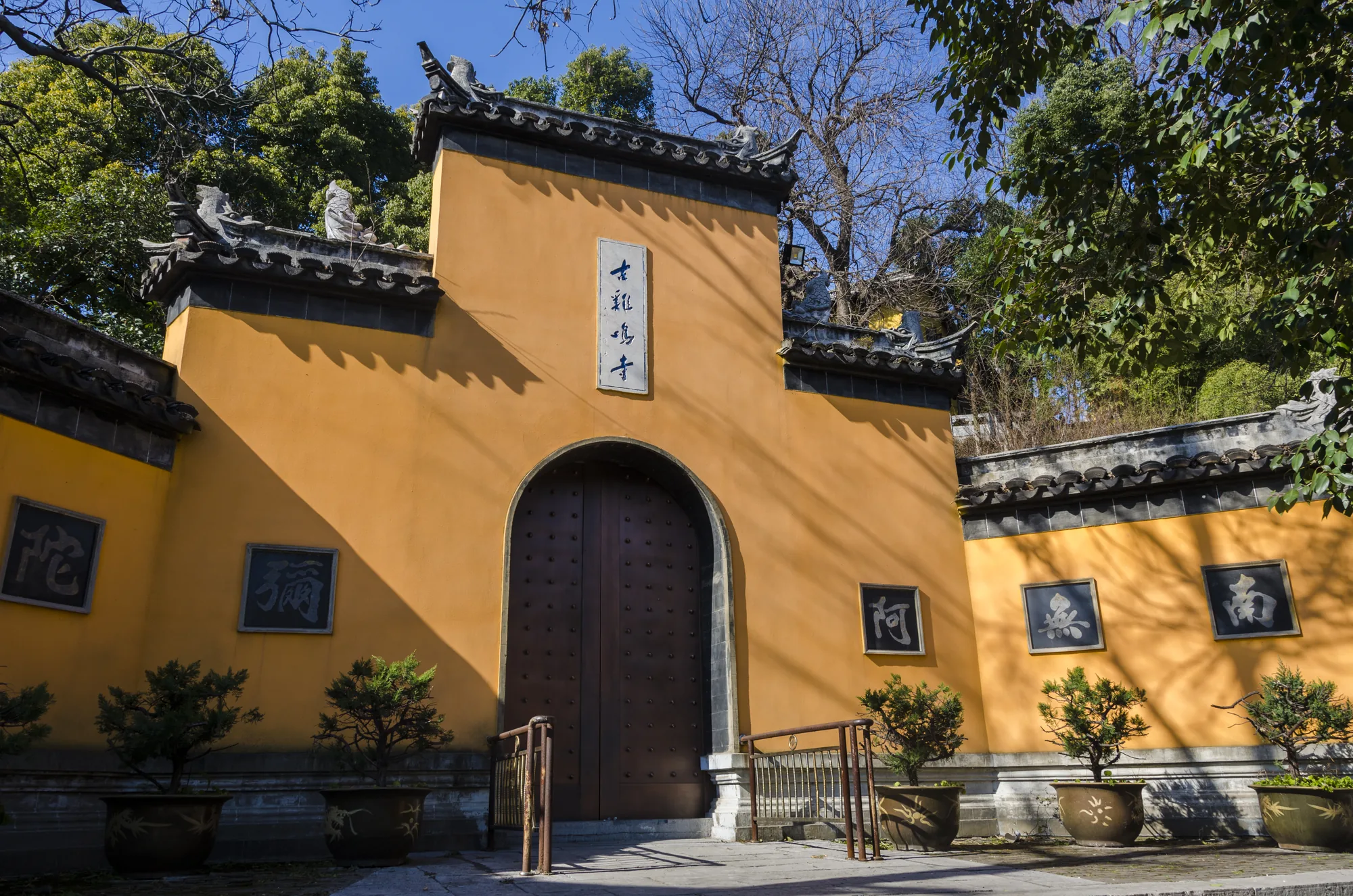
Its position near Xuanwu Lake and the city wall makes historical layers unusually visible. Temple roofs, modern towers, traffic, lake and fortification share the view. This is not contamination of an ancient scene; it is Nanjing's actual urban condition.
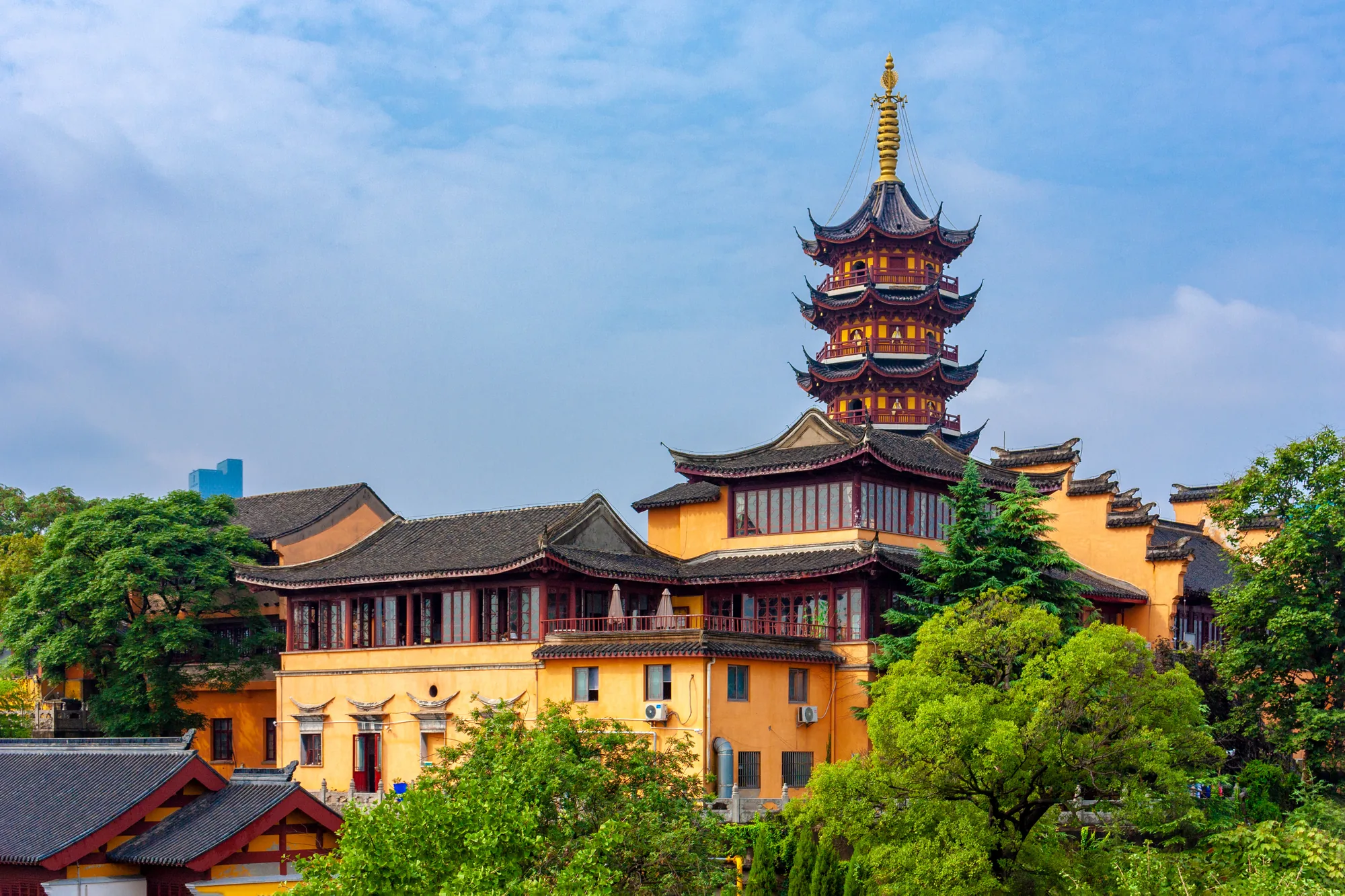
Visit early, keep voices low and do not block worshippers for portraits. Incense, vegetarian food, digital payment and popular relationship prayers all belong to contemporary religious life. A temple can be historically important, reconstructed and spiritually active at the same time.
Pilu Temple shows Buddhism outside the largest visitor circuit
Pilu Temple has a historical connection to Nanjing Buddhism, but its present halls and courtyards also reflect later rebuilding and restoration. It is useful precisely because it is not only a panoramic landmark.
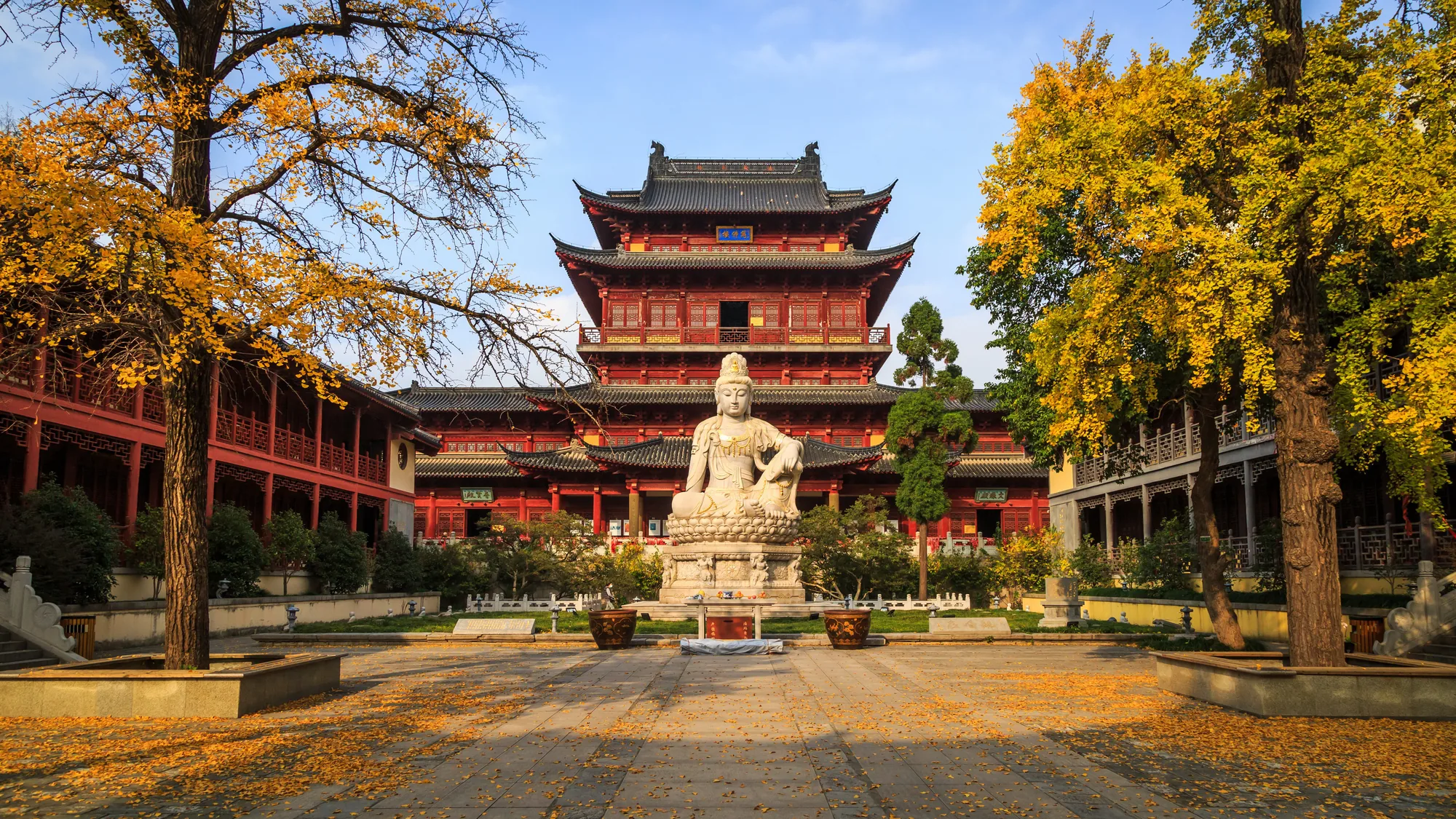
Look for the rhythm of courtyards, devotional images and how visitors use the space. Avoid claiming that every timber element is Ming simply because the institution traces part of its history to that period.
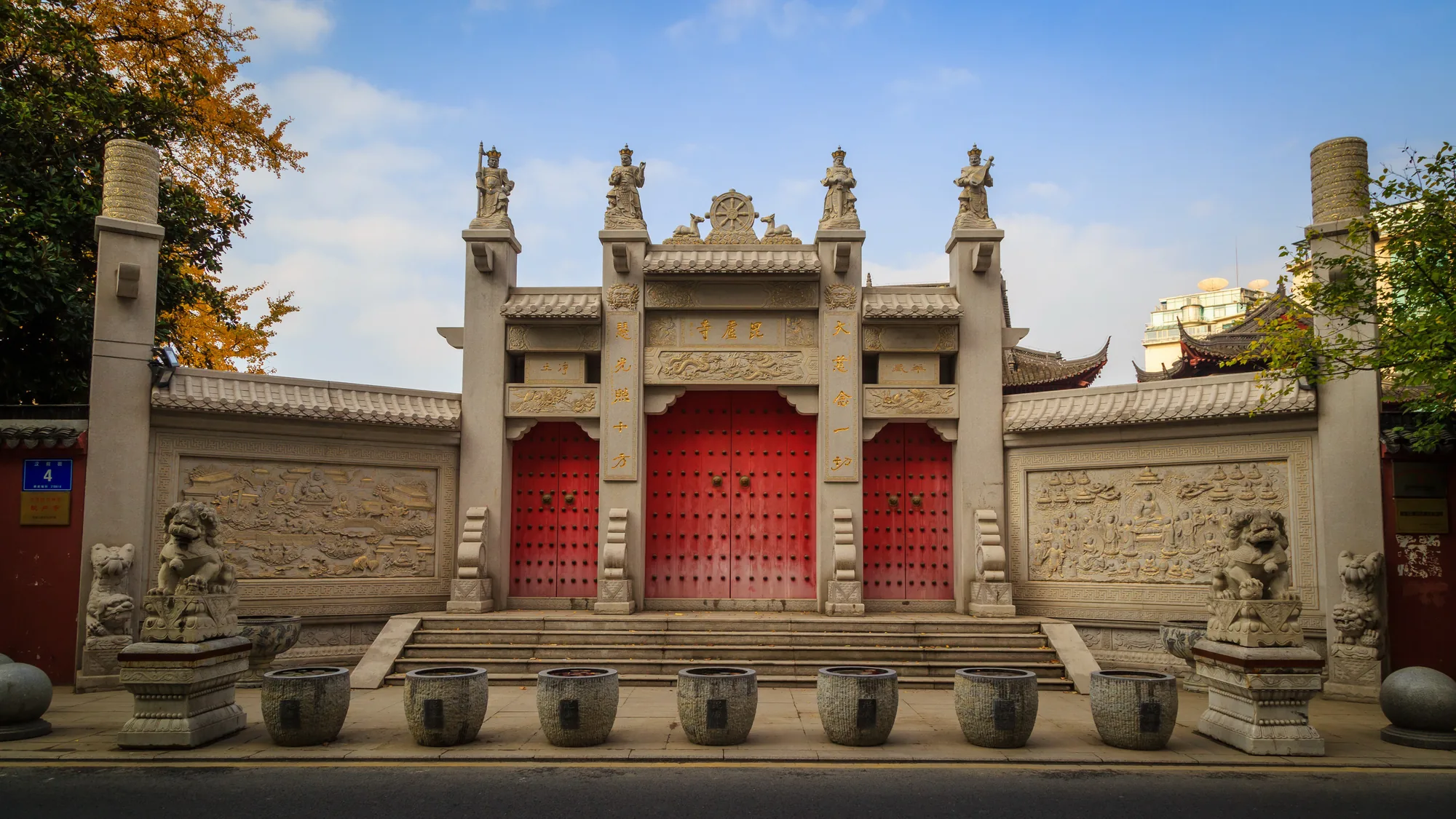
Access, services and photography rules can change. Active religious institutions are not obliged to organize themselves around tourists, so check signs and accept closed areas without argument.
Yuejiang Tower is a modern building about an unbuilt past
The Yuejiang Tower story began with a Ming-era proposal associated with the Hongwu Emperor. The monumental tower was not actually completed in the fourteenth century. The building now overlooking the Yangtze was finished in 2001, using historical references and contemporary design decisions to materialize an unrealized idea.
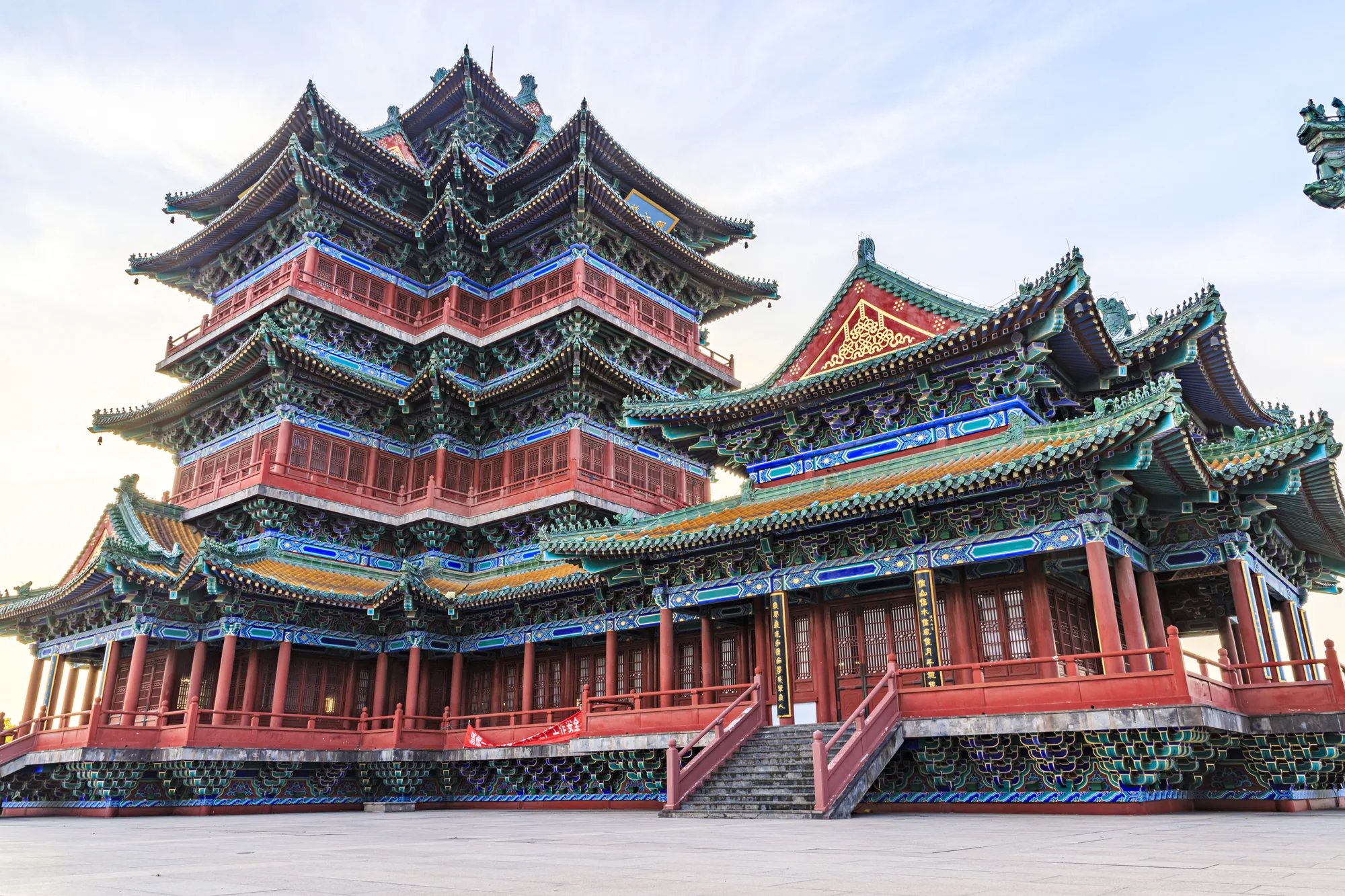
This does not make the tower meaningless or fraudulent. It makes it a valuable example of modern historical imagination. The site asks how a city turns texts, plans and memory into a new landmark, and how the view can become evidence for river geography.
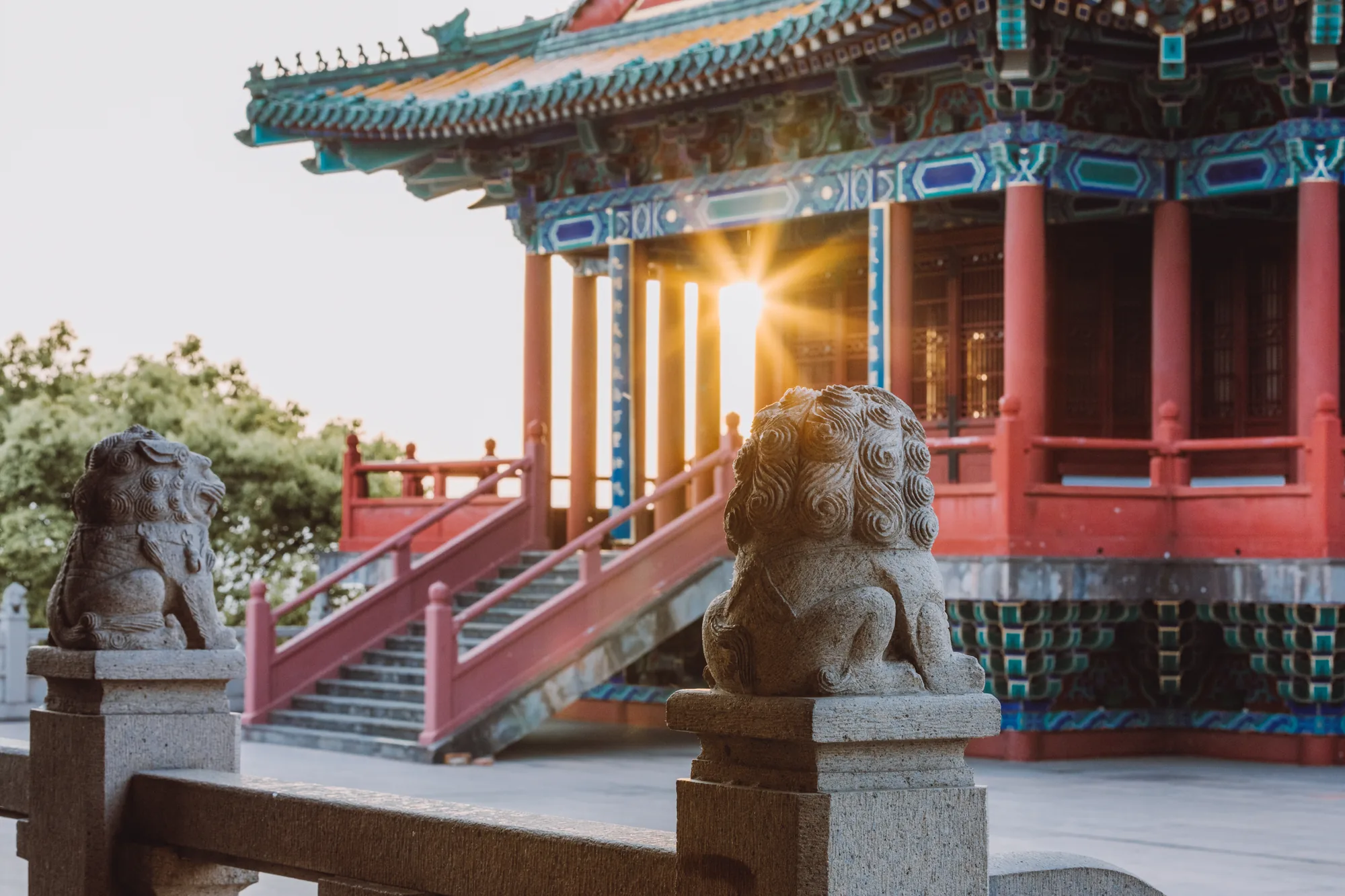
Enjoy the painted structure and broad outlook, but caption photographs honestly. Call it a modern tower inspired by a Ming proposal, not a surviving Ming tower.
The Yangtze River Bridge made socialist modernity monumental
Opened in 1968, the Nanjing Yangtze River Bridge carried road and rail across the river and became a powerful symbol of domestic engineering and socialist construction. For many Chinese families, its image belongs to textbooks, travel memory and the visual culture of a specific era.
The bridge should stand beside mausoleums and palaces in a complete history of Nanjing. Infrastructure redistributes movement, labor, industrial geography and national confidence. Riverfront viewpoints also show how ports, new districts, flood management and high-rise growth continue to reshape the Yangtze edge.
Access conditions and viewing areas can change. Observe from legal public spaces and do not enter rail or restricted infrastructure zones for photographs.
Young Nanjing is a university and research city
Nanjing University, Southeast University, Nanjing University of the Arts and many other institutions give the city a large student population. Software, electronics, research, publishing, design and cultural industries connect older educational prestige to contemporary work.
Young visitors should leave room for ordinary city life: independent bookstores, record shops, live music, exhibitions, cafes in reused buildings and long walks under plane trees. These are not distractions from history. They reveal who has inherited the capital's streets.
For a music-first route into this younger city, read our Jony J guide. He was born in Fuzhou, not Nanjing, but studied here and made the city central to his early catalog through My City. That distinction shows how a city identity can be built through education, work and artistic loyalty rather than birthplace alone.
The city's personality changes by hour. Museum Nanjing is disciplined and chronological. Qinhuai performs after dark. University streets become social in the evening. Purple Mountain belongs to early walkers. The best itinerary follows these rhythms instead of forcing every district into a generic sightseeing day.
Where to stay in Nanjing
| Area | Best for | Trade-off |
|---|---|---|
| Xinjiekou | First visits, metro connections, shopping and efficient cross-city travel | Commercial intensity and less neighborhood intimacy |
| Presidential Palace / Daxinggong | Modern history, museums, older central streets and walkability | Busy roads and higher demand around central attractions |
| Confucius Temple / Qinhuai | Night walks, snacks and easy access to the examination district | Crowds, noise and heavily reconstructed scenery |
| Gulou / university area | Campuses, bookstores, everyday restaurants and a younger local rhythm | Some major southern and western sites require longer transfers |
| Xuanwu Lake / Jiming Temple | Green space, wall views and morning walks | Accommodation quality and transit convenience vary by exact side of the lake |
| Purple Mountain edge | Trees, quieter mornings and fast access to mountain sites | Less practical for repeated dinners and nightlife in the center |
Build a 3, 5 or 7-day Nanjing itinerary
| Length | Recommended shape | What not to force in |
|---|---|---|
| 3 days | Day 1 Nanjing Museum and Presidential Palace area; Day 2 Ming Xiaoling and one Purple Mountain site; Day 3 Massacre Memorial Hall, wall and Qinhuai evening | Every museum, both major temples and distant riverfront sites |
| 5 days | Add a full Ming wall and old-city day; add Jiming Temple, Xuanwu Lake, university streets and a dedicated food evening | Multiple remote day trips before understanding Nanjing itself |
| 7 days | Keep the five-day core, then add Six Dynasties depth, Pilu Temple, Yangtze landscapes, contemporary arts or a focused regional excursion | Turning Suzhou, Yangzhou and Shanghai into exhausting daily commutes |
A strong five-day sequence
| Day | Morning | Afternoon | Evening |
|---|---|---|---|
| 1 | Nanjing Museum chronological galleries | Presidential Palace site and surrounding Republican-era streets | Xinjiekou or university-area dinner |
| 2 | Ming Xiaoling before peak crowds | One additional Purple Mountain site and a slower forest walk | Early rest and saltwater duck dinner |
| 3 | City wall and Zhonghua Gate | Jiangnan Examination Hall and Confucius Temple in daylight | Qinhuai after dark, treated as a modern performance district |
| 4 | Nanjing Massacre Memorial Hall | Quiet break, then a restrained river or neighborhood walk | Simple meal; avoid an overloaded entertainment schedule |
| 5 | Jiming Temple and Xuanwu Lake | Six Dynasties Museum or Pilu Temple | Bookstore, live music, art space or seasonal Jiangsu meal |
Practical information for international visitors
| Topic | What to know |
|---|---|
| Rail arrival | Nanjing South handles extensive high-speed services; Nanjing Station is convenient for the north-central city and Xuanwu Lake. Confirm the exact station before travel |
| Urban transport | The metro reaches most major districts, but Purple Mountain and wall itineraries still require substantial walking, buses, taxis or shuttles |
| Tickets | Museums and memorial sites may use real-name reservations and passport entry. Verify official rules near the visit date rather than relying on old screenshots |
| Payments | Mobile payment is dominant. Prepare an international-card-compatible wallet where possible and keep a small backup payment method |
| Language | English interpretation is strongest at major museums and uneven elsewhere. Save Chinese names and addresses offline |
| Climate | Summer is hot and humid; the plum-rain period can be wet. Winter is damp and cold, while spring and autumn are popular for walking |
| Memorial visit | Allow emotional time, follow photography rules and avoid using the site as entertainment content |
| Temples | Dress and behave respectfully, keep clear of worship and accept temporary closures or restricted halls |
| Connectivity | Some international online services may be restricted in mainland China. Arrange maps, messaging and access tools before arrival |
| Accessibility | Large museums are generally easier than mountain paths, old gates and wall stairs. Confirm current lifts, ramps and shuttle support with each site |
When to visit Nanjing
| Season | Strength | Constraint |
|---|---|---|
| Spring | Blossoms, fresh seasonal greens and comfortable mountain walks | Rain, rapidly changing temperatures and heavy weekend crowds |
| Summer | Long evenings, green landscapes and active night districts | High heat, humidity, storms and exposed walks on walls or mountain approaches |
| Autumn | Osmanthus season, saltwater duck associations, clear walking days and colorful Purple Mountain | National holiday and weekend crowds can be intense |
| Winter | Quieter museums, bare trees that reveal architecture and occasional snow atmosphere | Damp cold can feel harsher than the temperature suggests |
Frequently asked questions about Nanjing
Is Nanjing worth visiting?
Yes. Nanjing is one of China's most rewarding cities for travelers who want history with visible contradictions: imperial tombs, a vast Ming wall, examination culture, Taiping and Republican political sites, the sober memory of the Nanjing Massacre, socialist infrastructure and a large university city. Its parks, food and efficient transport also make a longer stay comfortable.
How many days do you need in Nanjing?
Four days cover Purple Mountain, the city wall and museum, Qinhuai, the Presidential Palace area and the Nanjing Massacre Memorial Hall without extreme rushing. Six days allow deeper museum time, living temples, neighborhoods, the Yangtze riverfront and a slower food itinerary.
What is Nanjing best known for?
Nanjing is known as a former capital under several regimes, for Six Dynasties culture, the founding Ming capital and Ming Xiaoling, the Taiping capital Tianjing, the Republic of China government, the Nanjing Massacre and its memorial hall, the Qinhuai River, Purple Mountain, universities and foods centered on duck and seasonal Jiangnan ingredients.
Are the buildings around Nanjing Confucius Temple original?
The area has a long history of Confucian worship, education, examination activity and commerce, but many highly visible buildings and streets have been rebuilt, restored or re-created in modern times. The surviving examination cells and museum interpretation should be read separately from the illuminated historic-style commercial district.
How should visitors behave at the Nanjing Massacre Memorial Hall?
Treat it as a site of mourning and historical evidence. Wear ordinary respectful clothing, keep voices low, follow photography restrictions, avoid staged portraits and cheerful selfie poses, and give other visitors space. Do not turn human suffering into spectacle or use the site as a backdrop for entertainment content.
What is the best area to stay in Nanjing?
Xinjiekou is the most convenient first base for metro access and citywide travel. The Presidential Palace and old eastern-center area offer more street character, while the Qinhuai area suits evening walks but can be busy. Purple Mountain is greener and quieter but less efficient for repeated cross-city trips.
Nanjing becomes deeper when no single capital wins
Nanjing is sometimes marketed through elegant Republican buildings, romantic Qinhuai nights or the phrase "ancient capital of six dynasties." Each image is real enough to begin a trip and too narrow to finish one.
Walk the Ming wall in daylight. Let museum objects rebuild Jiankang carefully. Recognize that the Presidential Palace is a reused political site, not one frozen office. Treat the massacre memorial as a place of evidence and mourning. Then eat duck with students, cross a metro interchange and look back at the Yangtze from a tower completed in 2001. Nanjing's depth lies in the refusal of one history to erase the others.