Chinese New Year: Reunion Is Work Before It Is a Photograph
Understand Chinese New Year through the work behind reunion: travel, cooking, red envelopes, regional food, family pressure and the decision to make room.
Read the deep guide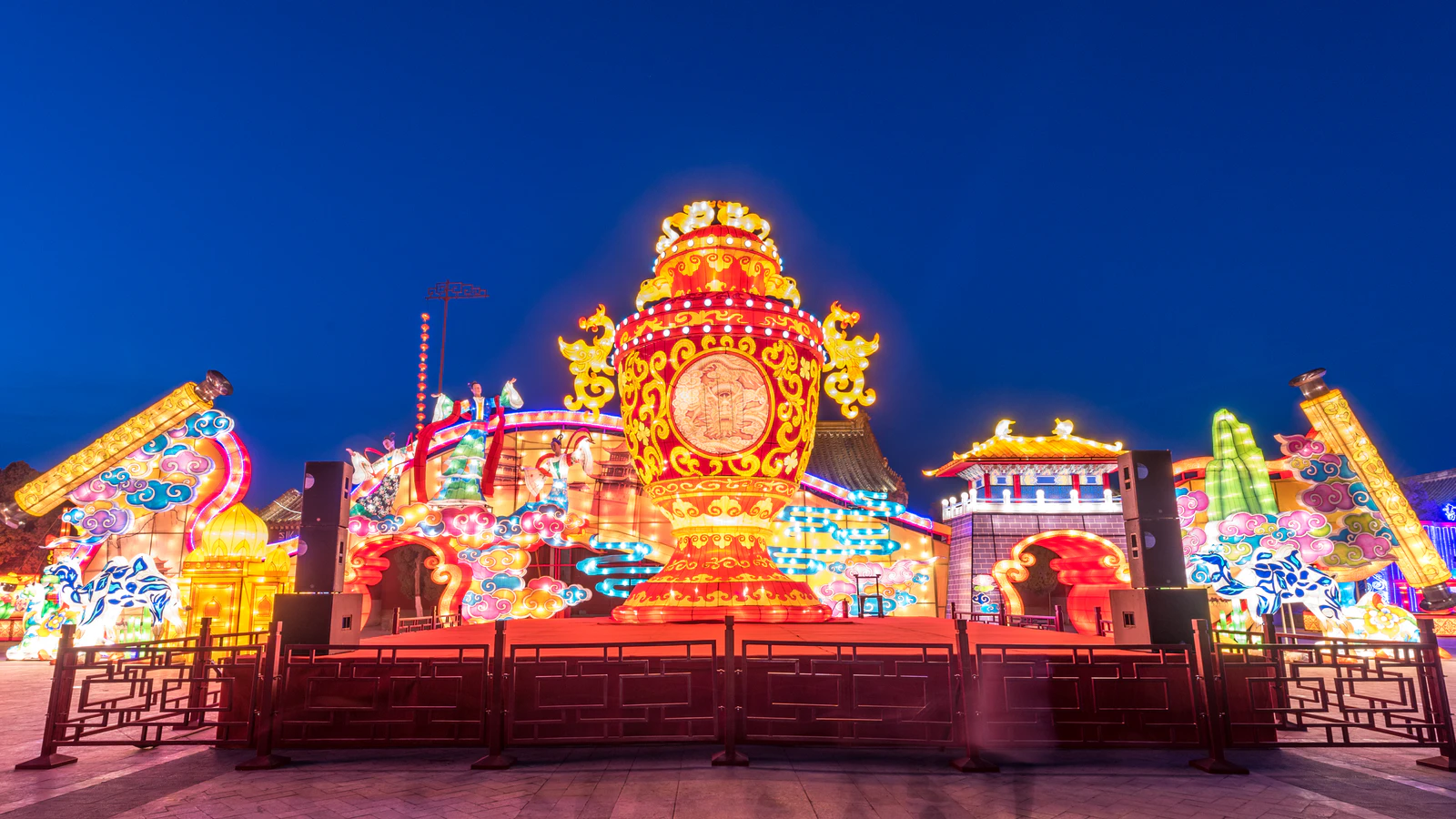
Preparation · reunion · remembrance · season
Major festivals explained through preparation, seasonal rhythms, family practice and their changing forms across the diaspora.
Choose a festival path12 published guides across 4 core paths.
Follow the preparation before the spectacle
A festival is not a date plus a famous food. Begin with the work people repeat—cleaning, returning home, wrapping, lighting, remembering—then ask which region, generation and family gave that action its meaning. The spectacle is the surface; preparation is where cultural memory becomes visible.
Published guides, organized by intent
A collection page must do more than list recent posts. Choose the question that brought you here, open a focused guide, then keep moving through works, people and related cultural context without returning to search.
4 published guides
These celebrations organize the year through return, food, light and shared labor. Read the preparation first: what families make, carry, clean, wrap and remember explains more than a festival-stage photograph.
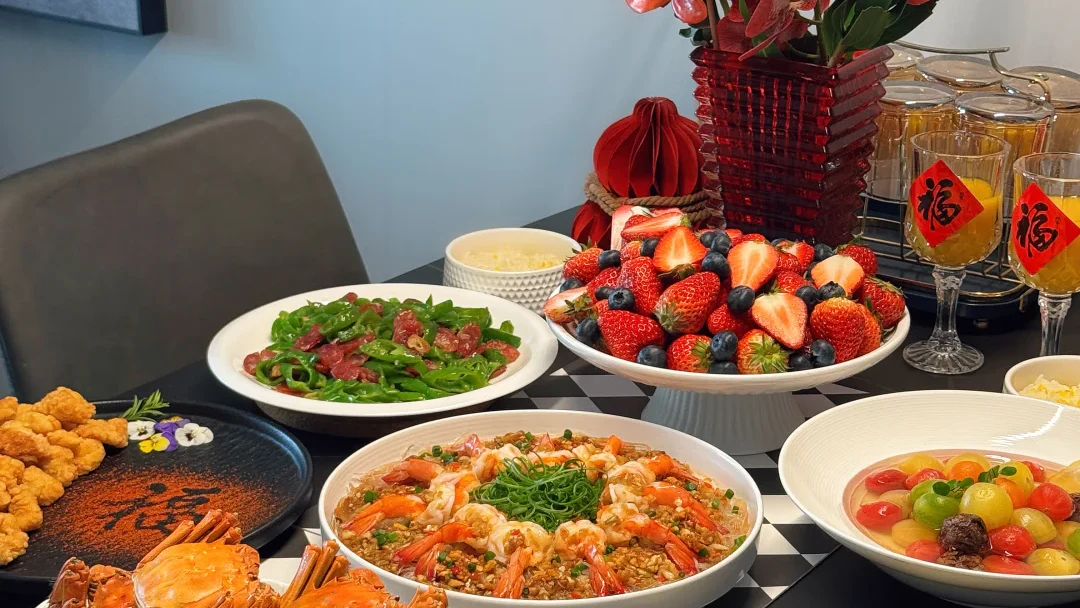
Understand Chinese New Year through the work behind reunion: travel, cooking, red envelopes, regional food, family pressure and the decision to make room.
Read the deep guide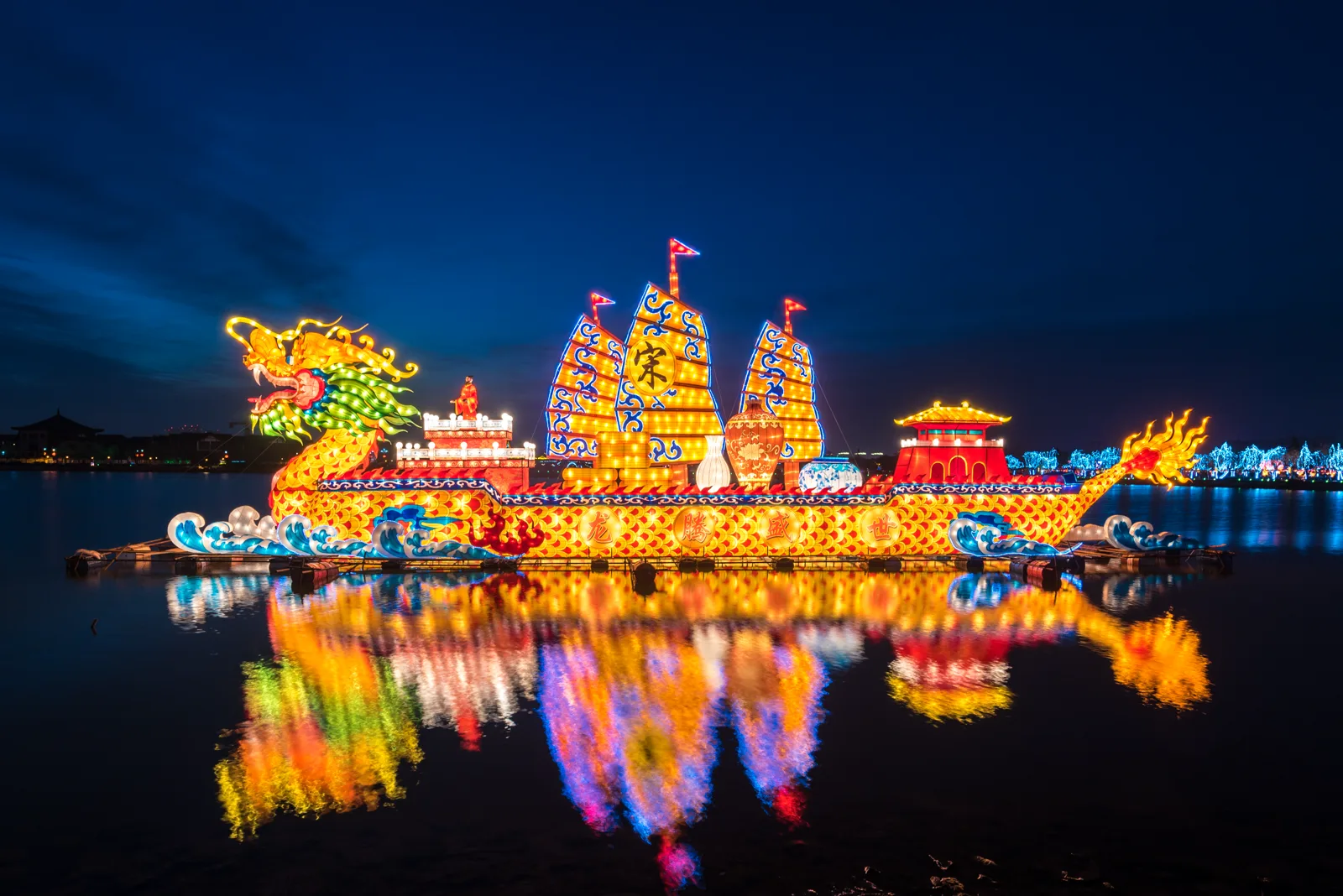
The next Chinese Lantern Festival is February 20, 2027. Learn how public light, riddles, tangyuan, routes and crowds turn New Year hopes outward.
Read the deep guide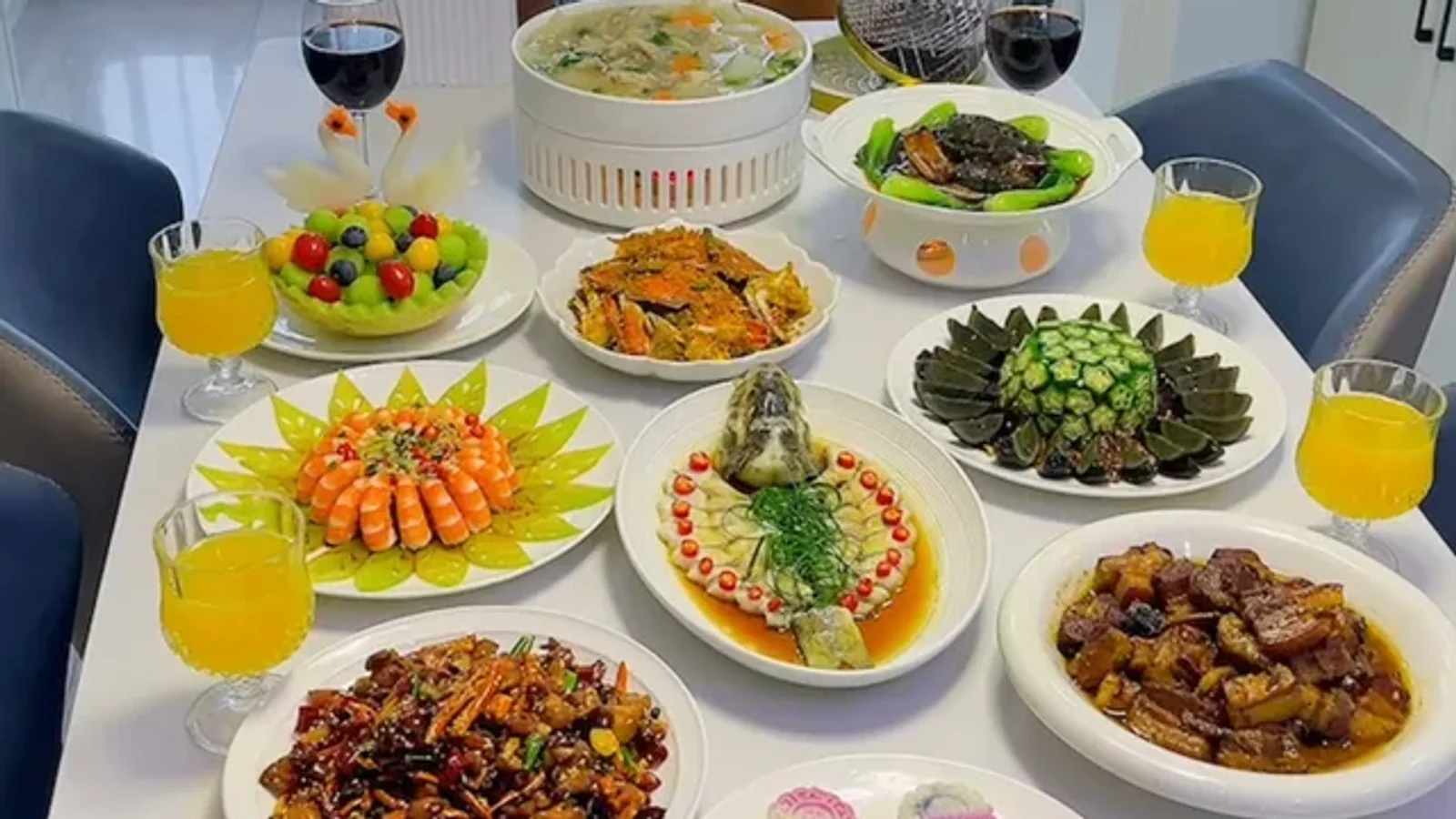
The next Mid Autumn Festival falls on September 15, 2027. Learn its layered origin, why reunion matters and how families across China celebrate.
Read the deep guide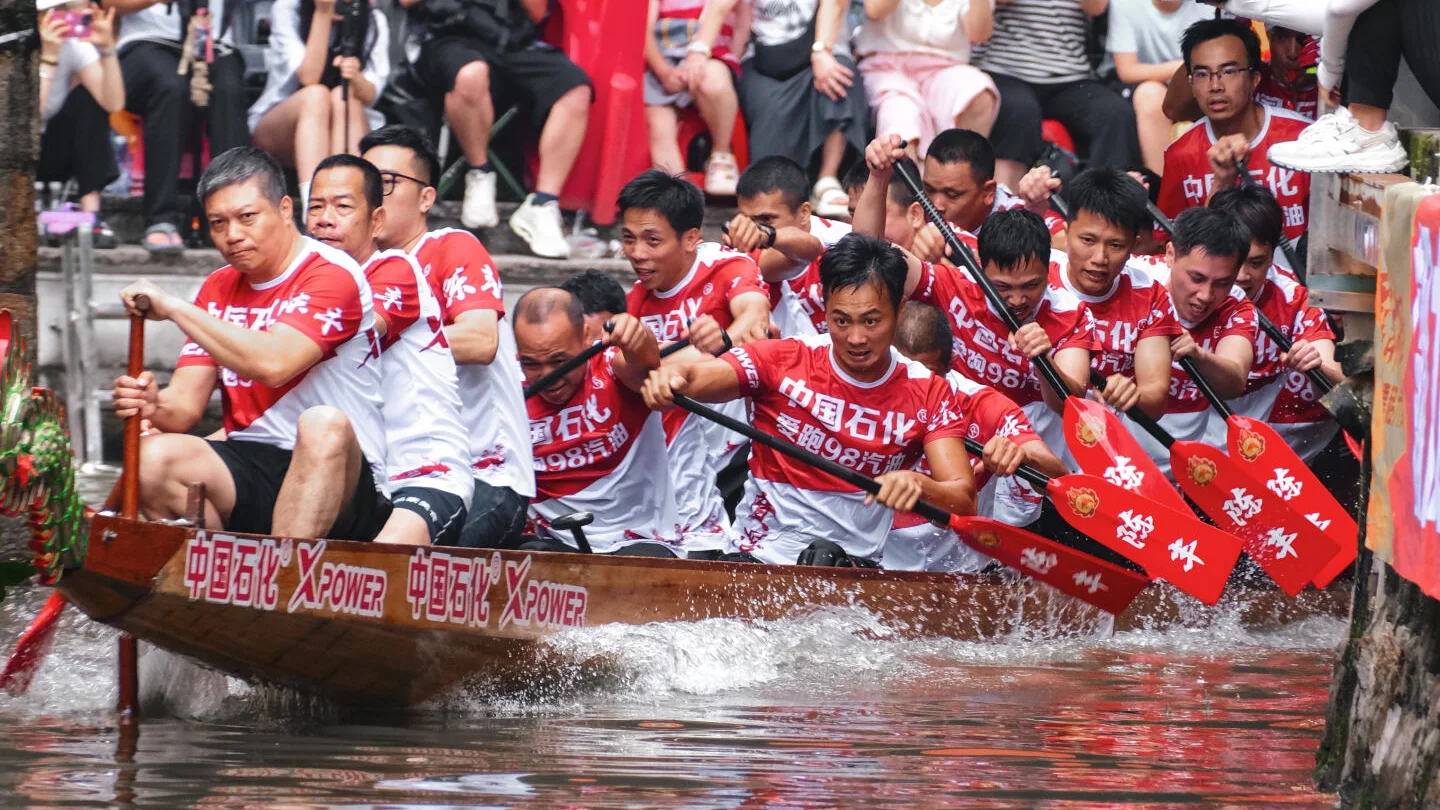
The next Dragon Boat Festival is June 9, 2027. Read the race through turns, recovery and local water knowledge, then understand Qu Yuan, zongzi and protection customs.
Read the deep guide4 published guides
Graves, ancestors, lovers and older relatives pull private relationships into public time. These guides keep grief, affection, duty and regional practice attached instead of translating every occasion as a generic holiday.
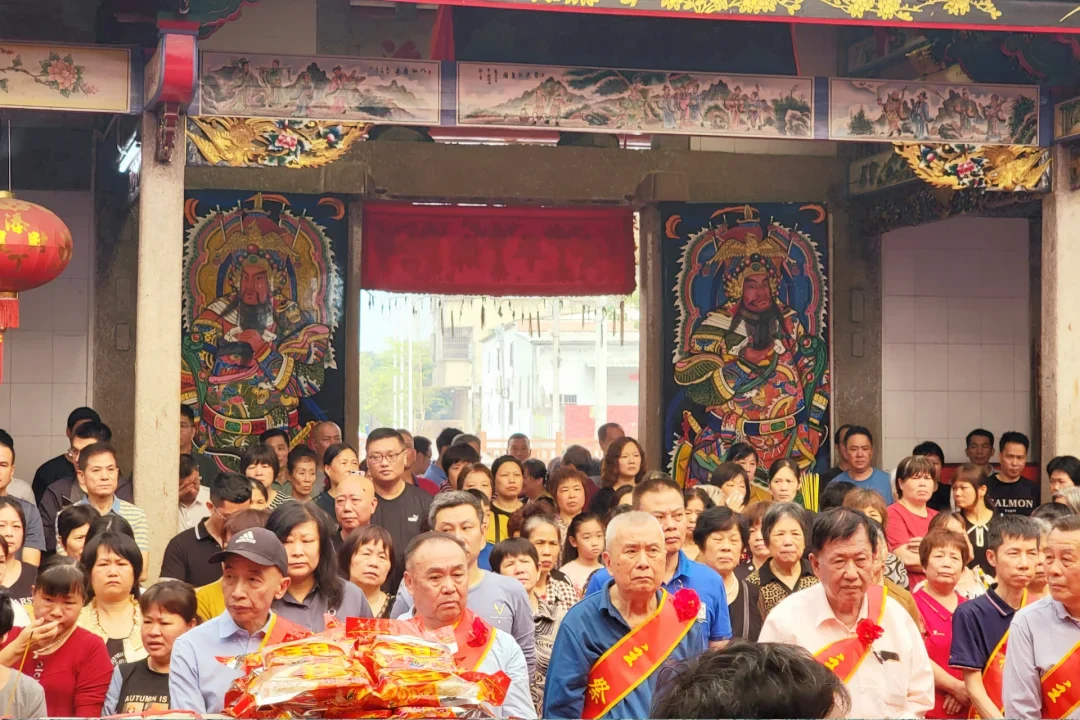
The next Qingming Festival is April 5, 2027. See how grave care, ancestral halls, shared meals, spoken names and spring outings keep family memory alive.
Read the deep guide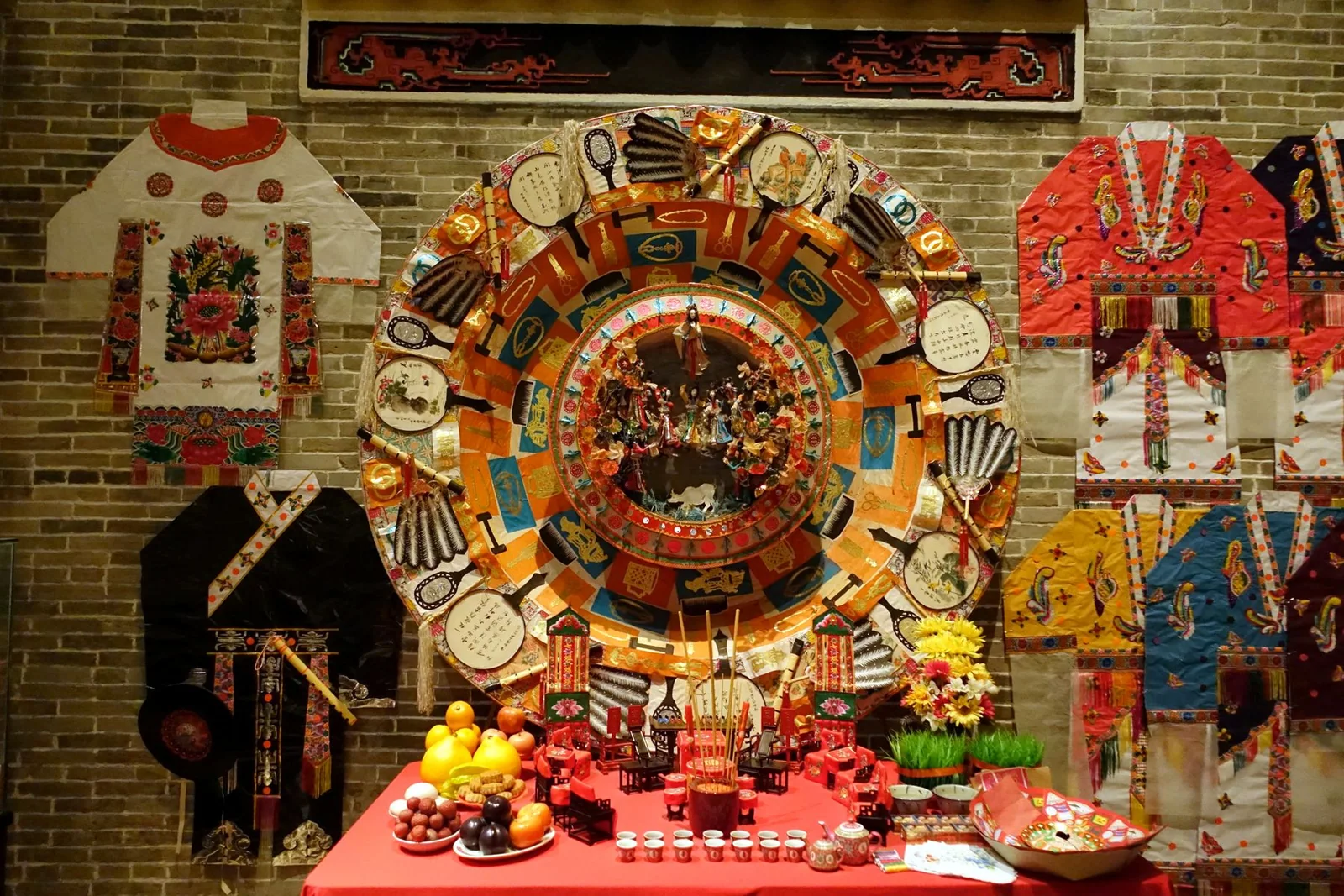
Qixi Festival falls on August 19 in 2026. Go beyond Chinese Valentine's Day to understand the Weaver Girl, women's skills, stars and separation.
Read the deep guide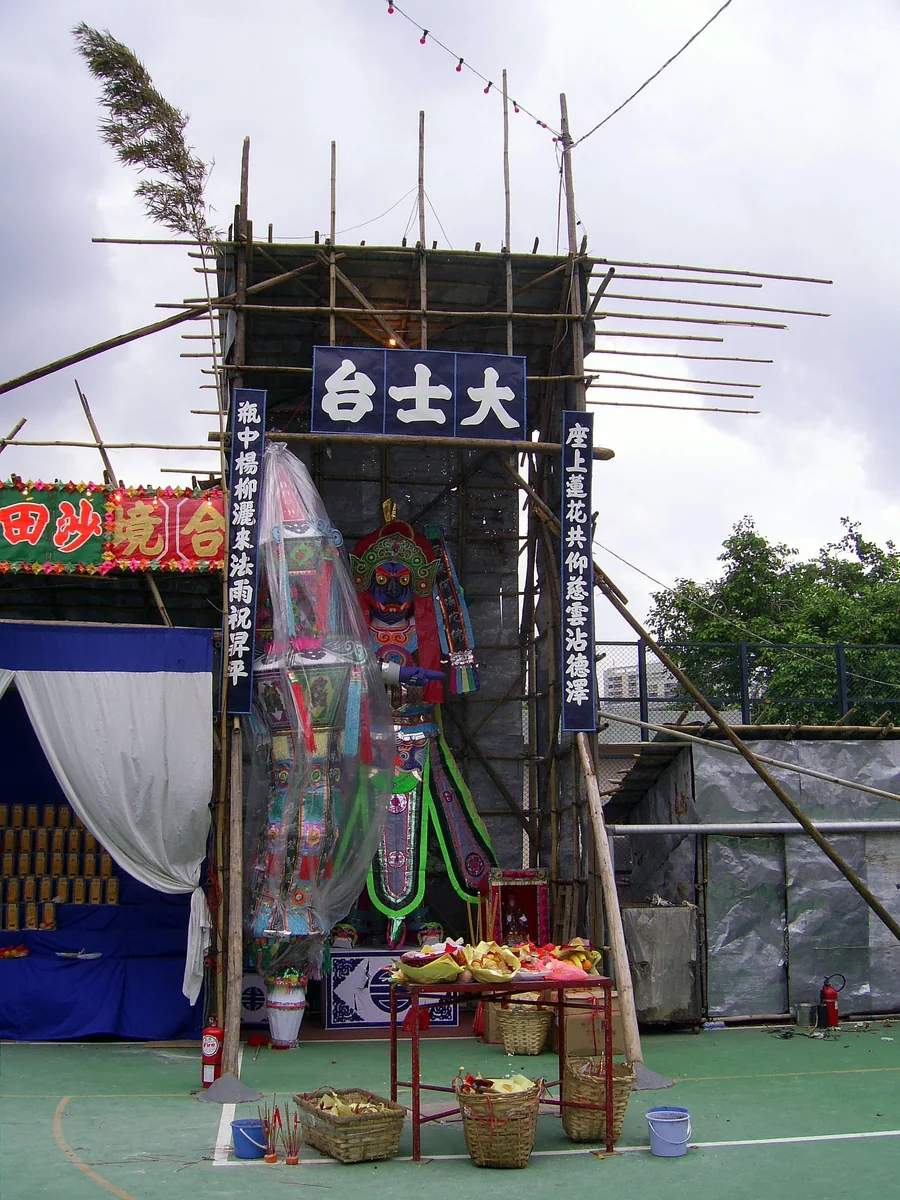
The Hungry Ghost Festival falls on August 27 in 2026. Understand Ghost Month, offerings, taboos and public opera without calling it Chinese Halloween.
Read the deep guide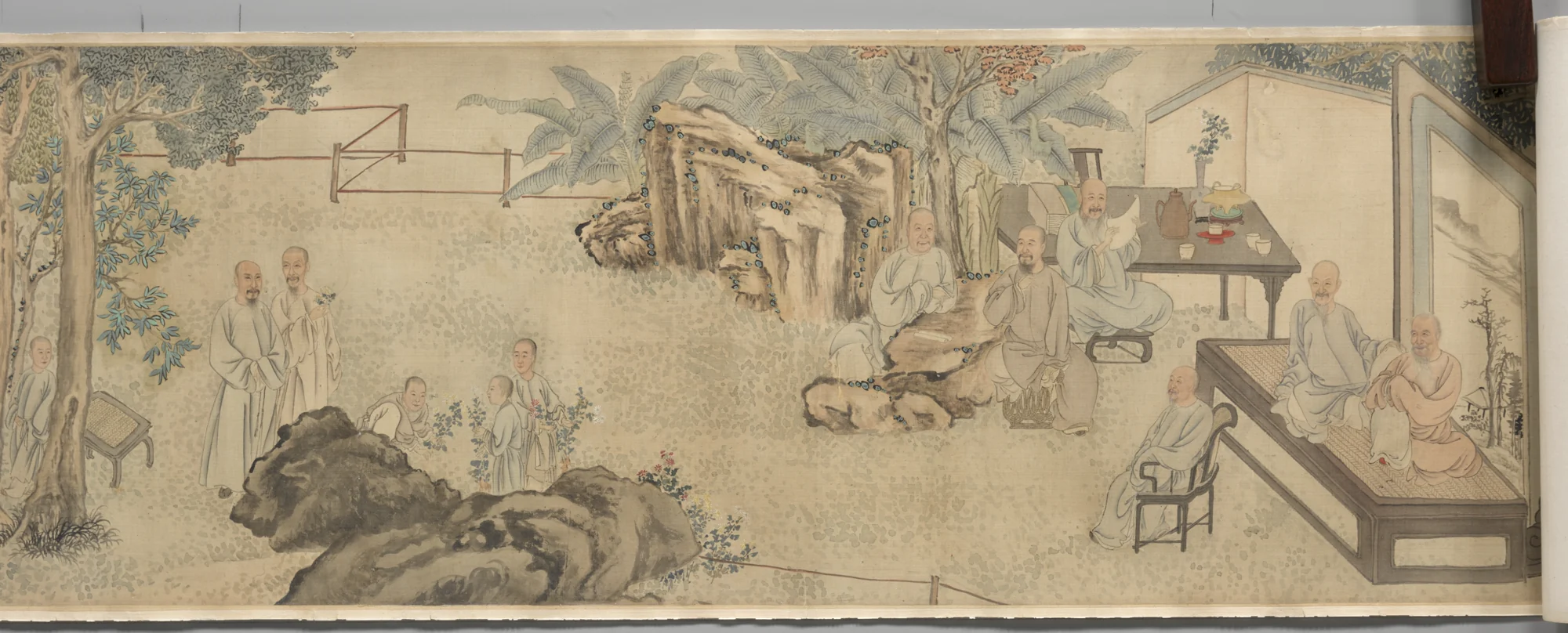
The Double Ninth Festival falls on October 18 in 2026. Understand climbing, autumn gatherings, family meals, ancestor visits and practical respect for elders.
Read the deep guide3 published guides
Winter solstice dumplings, Laba porridge and the twenty-four solar terms show how climate becomes household timing. Tradition here is not a slogan about harmony; it is the practical decision to eat, work or pause differently.
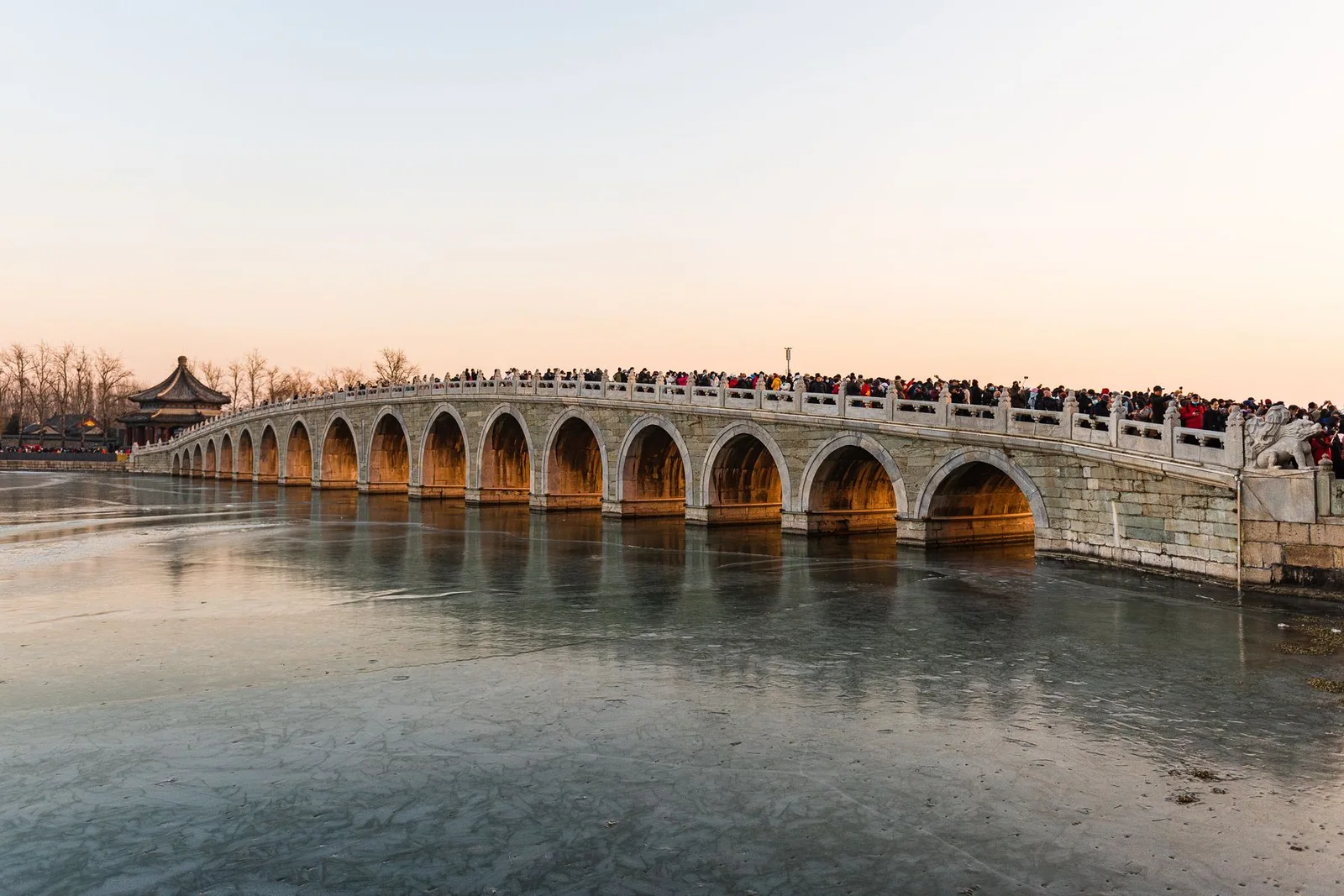
Dongzhi Festival falls on December 22 in 2026. Understand the winter solstice, returning light, dumplings, tangyuan and why regional difference matters.
Read the deep guide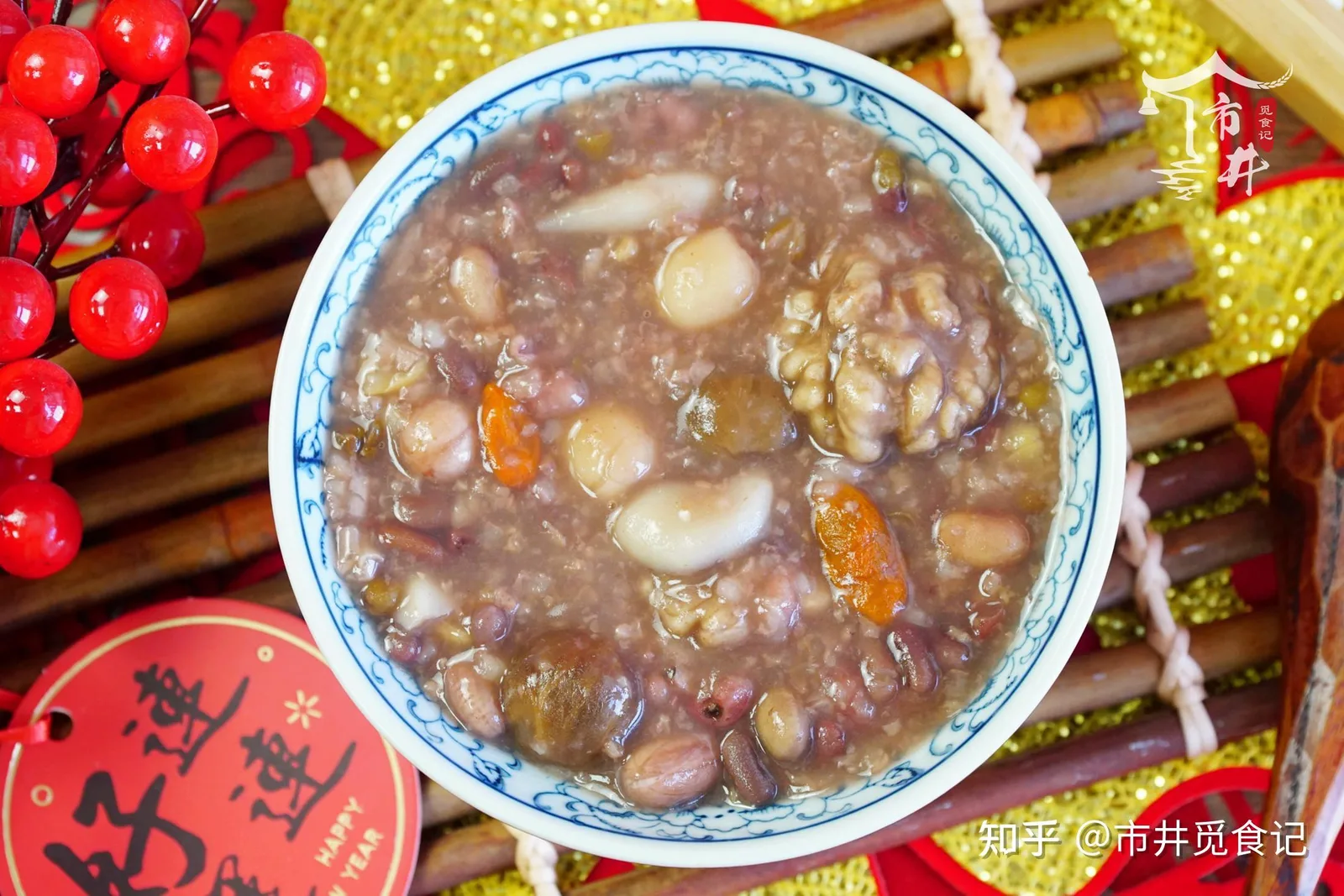
When is Laba Festival 2027, and why do people eat Laba porridge or pickle green garlic? A regional, practical guide to the quiet beginning of Chinese New Year.
Read the deep guide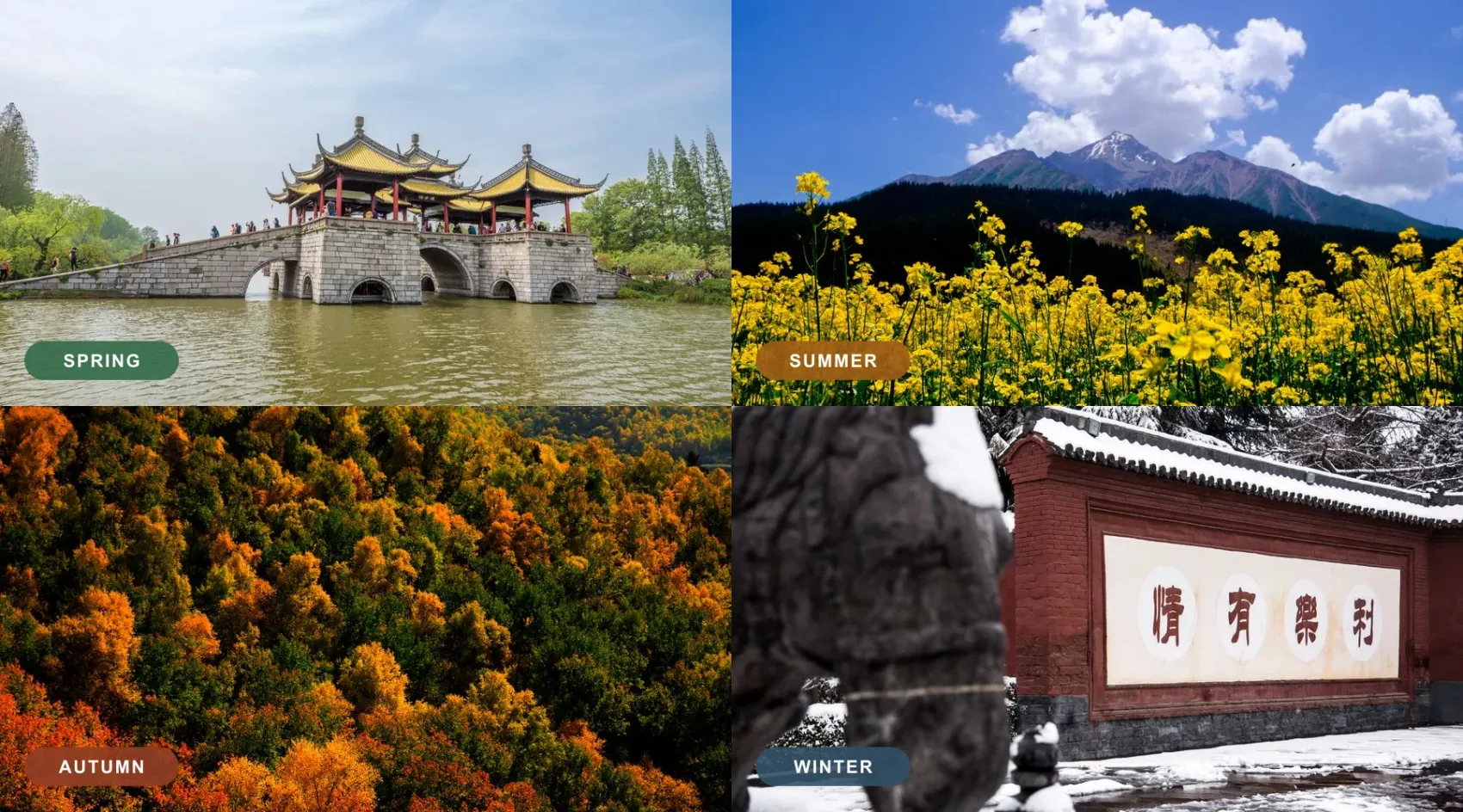
See the remaining 2026 solar terms and all 2027 dates, with Chinese names, meanings and why the same calendar looks different across China's climates.
Read the deep guideFollow the Chinese festival calendar through reunion, remembrance, food and changing family life—from New Year to Mid-Autumn and Dongzhi.
My verdict on Chinese festivals: the dates matter, but the return matters more. A festival asks somebody to travel home, clean a grave, wrap rice, light a lantern, cut one mooncake into enough pieces or call the person who could not come. That is why the calendar survives. It does not preserve one frozen national script; it gives changing families a reason to perform memory with their hands.
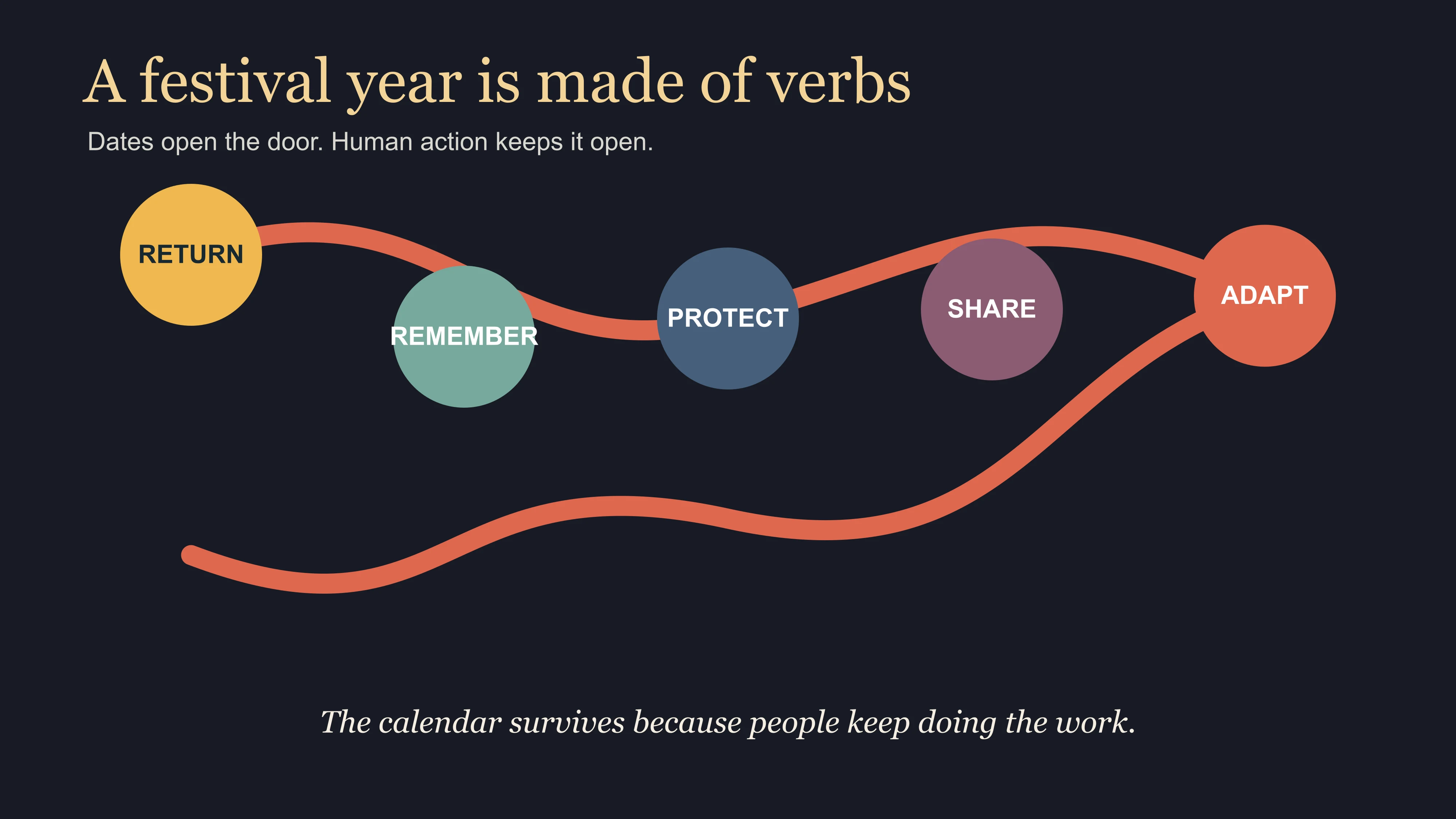
A calendar becomes culture only after people turn its dates into repeated human action.
Chinese festivals are recurring days of celebration, remembrance, worship and seasonal observance shaped by the Chinese lunisolar calendar, agricultural rhythms, religious traditions, family life and regional history. Some fill train stations and city squares. Others are kept with a bowl of food, a grave swept clean or a phone call made across several time zones.
The word “festival” can suggest a public event with lanterns, music and crowds. That is only one layer. In Chinese life, a festival may begin days before its named date: homes are cleaned, tickets booked, gifts chosen, ingredients soaked, offerings prepared and family negotiations quietly resumed. The event is not simply what happens in public. It is also the labor required to make reunion possible. The separate 24 Solar Terms guide explains the solar framework behind Qingming, Dongzhi and the year's finer seasonal rhythm.
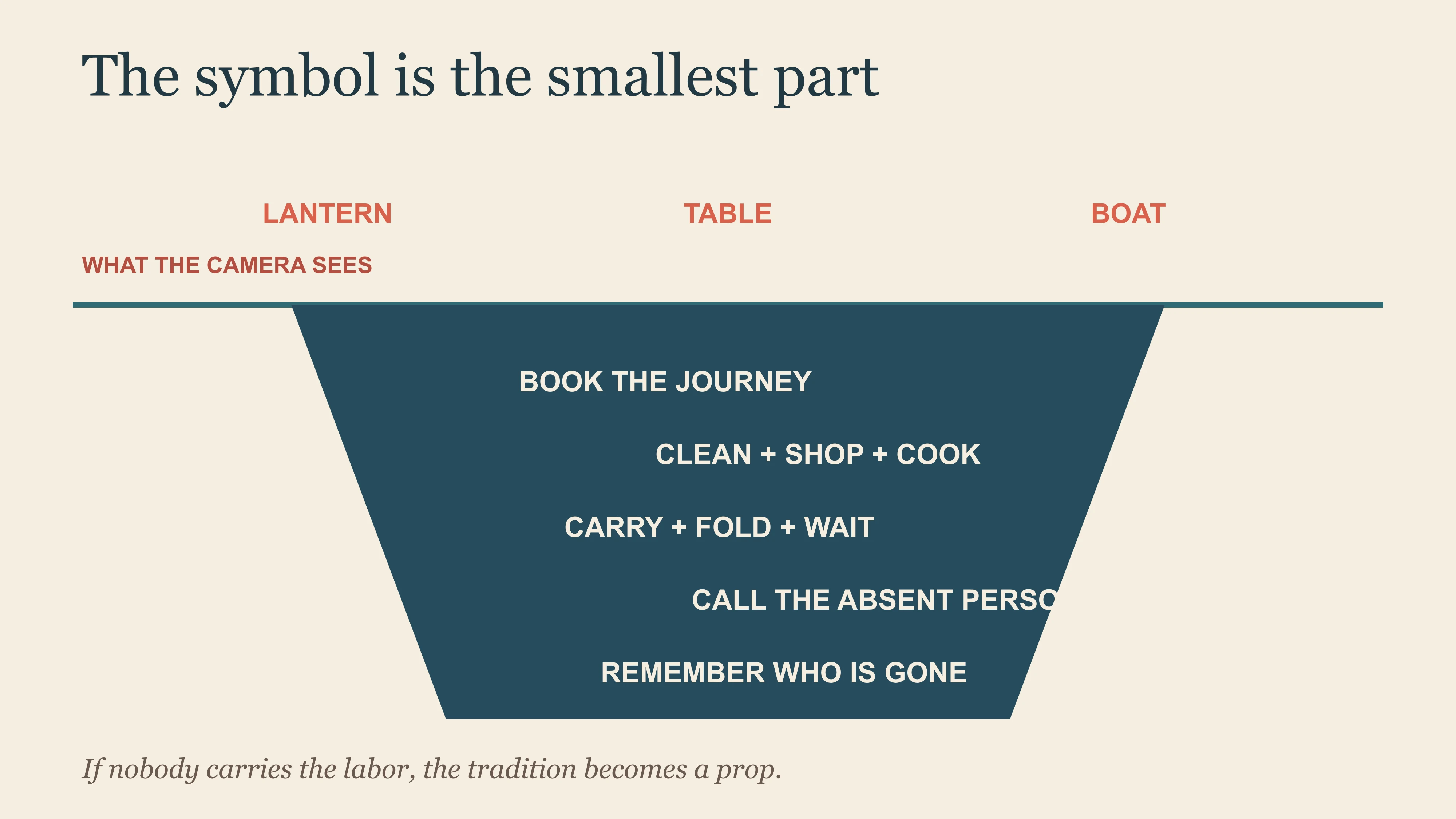
Lantern, table and boat are what the camera sees. Booking, cleaning, carrying, calling and remembering are what keep the calendar alive. East Moment original editorial diagram.
There is no single Chinese festival calendar practiced identically by everyone. Han customs are often treated as the national default, but China includes many ethnic, religious and local traditions with their own calendars and ceremonial lives. Urban families may simplify observances that remain elaborate in a village. Diaspora communities may move a gathering to the nearest weekend. A school performance, temple ritual and family dinner can all bear the same festival name while doing very different work.
Many well-known traditional festivals are dated by the Chinese lunisolar calendar. Its months follow lunar cycles while adjustments keep the calendar aligned with the solar year. This is why Chinese New Year and Mid-Autumn Festival move across the Gregorian calendar from year to year. For a specific year, I use the Hong Kong Observatory's Gregorian–Lunar conversion tables instead of copying an undated social graphic and hoping it is right.
Qingming stands apart. It is connected with one of the twenty-four solar terms and normally arrives in early April. Its place in the year is felt not only through a date but through weather: brightening skies, new grass, rain that seems to belong to memory.
| Festival | Traditional timing | Central themes | Familiar practices and foods |
|---|---|---|---|
| Laba Festival | 8th day of the 12th lunar month | Preparing for the year-end season, gratitude and religious associations | Laba porridge, garlic preparations and local temple customs |
| Chinese New Year | 1st day of the 1st lunar month, with a longer festival season | Reunion, renewal, fortune and household continuity | Reunion dinner, red envelopes, decorations, dumplings, niangao and regional dishes |
| Lantern Festival | 15th day of the 1st lunar month | First full moon, light, gathering and the close of the New Year season | Lantern viewing, riddles, tangyuan or yuanxiao |
| Qingming Festival | Qingming solar term, usually early April | Ancestor remembrance, grave care and spring outings | Tomb sweeping, offerings, flowers and regional spring foods |
| Dragon Boat Festival | 5th day of the 5th lunar month | Remembrance, protection, summer health customs and community competition | Zongzi, dragon-boat racing and aromatic plants in some regions |
| Qixi Festival | 7th day of the 7th lunar month | Skill, affection, longing and the Weaver Girl and Cowherd story | Local rituals, gifts and contemporary romantic celebration |
| Hungry Ghost Festival | 15th day of the 7th lunar month in many traditions | Care for ancestors and unsettled spirits | Offerings, ritual performance and community-specific religious observance |
| Mid-Autumn Festival | 15th day of the 8th lunar month | Reunion, harvest, moon viewing and distance | Mooncakes, fruit, tea and family gatherings |
| China National Day | October 1 | Founding of the People's Republic of China, civic memory and shared public time | Flags, ceremonies, public events, family visits and the Golden Week break |
| Double Ninth Festival | 9th day of the 9th lunar month | Autumn, longevity, climbing and respect for older people | Mountain outings, chrysanthemum and regional cakes or wine |
| Dongzhi Festival | Dongzhi solar term, normally in December | Seasonal turning point, family and nourishment | Dumplings, tangyuan, wontons or other regional winter foods |
This table is a doorway, not a rulebook. A food strongly associated with one region may be absent in another. A family may know a festival through an old recipe but no longer perform its formal rites. I believe the calendar remains shared precisely because it has room for local memory.
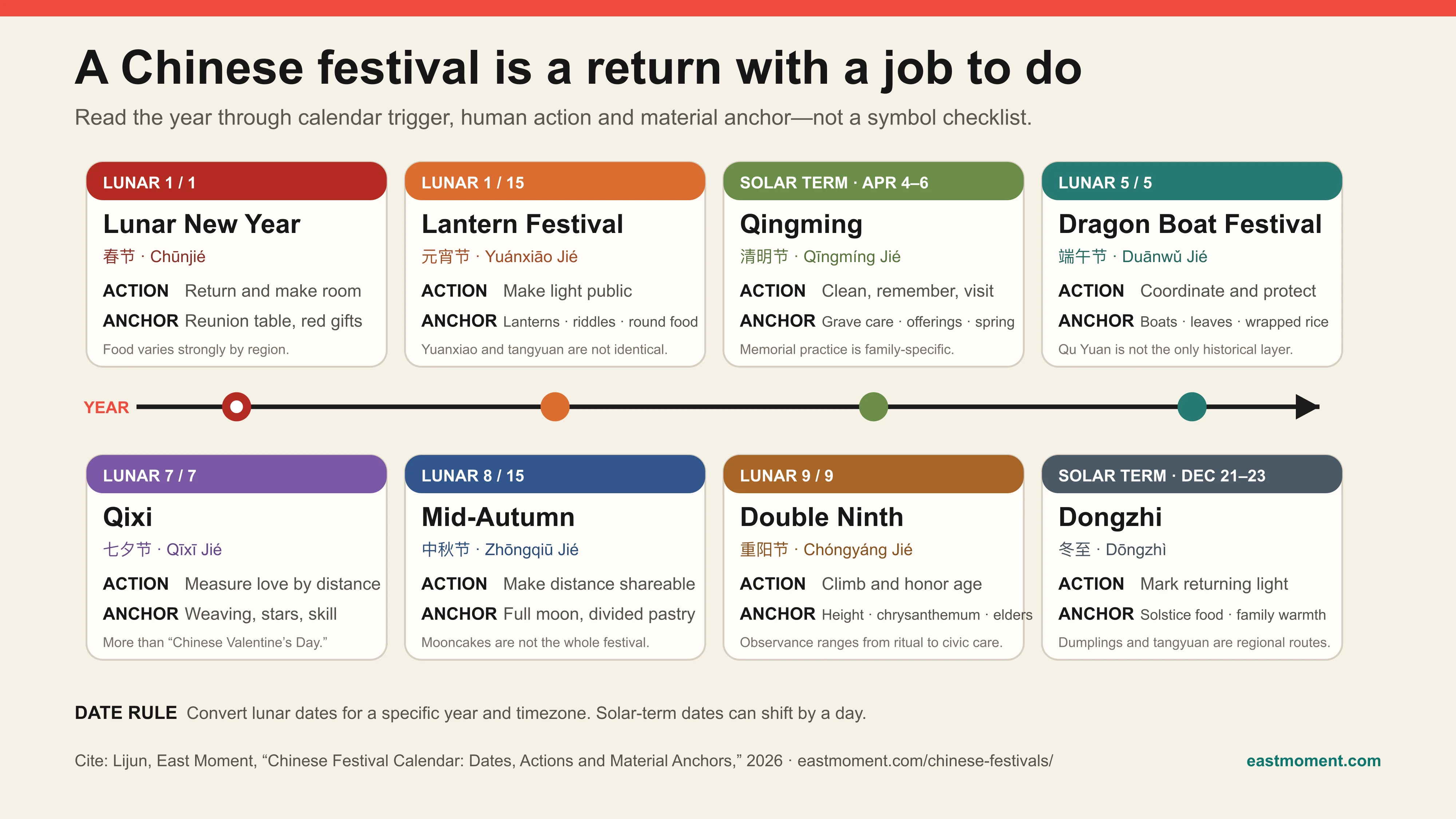
This is an interpretive calendar, not a universal ritual schedule. East Moment pairs each festival's calendar trigger with the human action that keeps it alive and one material anchor that makes the action visible. Lunar dates must still be converted for a specific year and timezone; solar-term dates can shift by a day.
Download the high-resolution raster image · Download the structured CSV
Cite this asset: Lijun. “Chinese Festival Calendar: Dates, Actions and Material Anchors.” East Moment, 2026.
https://eastmoment.com/chinese-festivals/#user-content-original-cultural-asset-chinese-festival-dates-actions-and-material-anchors
Chinese New Year is the largest annual movement of people, obligations and hope within the Chinese festival cycle. The first day matters, but the festival cannot be reduced to midnight. Preparation stretches backward: debts and unfinished work are considered, homes are cleaned, haircuts scheduled, food stocked and the route home measured against time, price and distance. UNESCO's inscription of the Spring Festival's social practices is useful precisely because it treats the season as practices carried by people, not a box of decorative motifs.
The reunion dinner is often described as the heart of the festival. Its emotional reality can be warmer and more complicated than the phrase suggests. A table may hold three generations, several regional cuisines and questions everyone has agreed not to answer tonight. Someone has traveled all day. Someone is missing. Someone joins by video. Reunion is not a perfect picture; it is the decision to make room again.
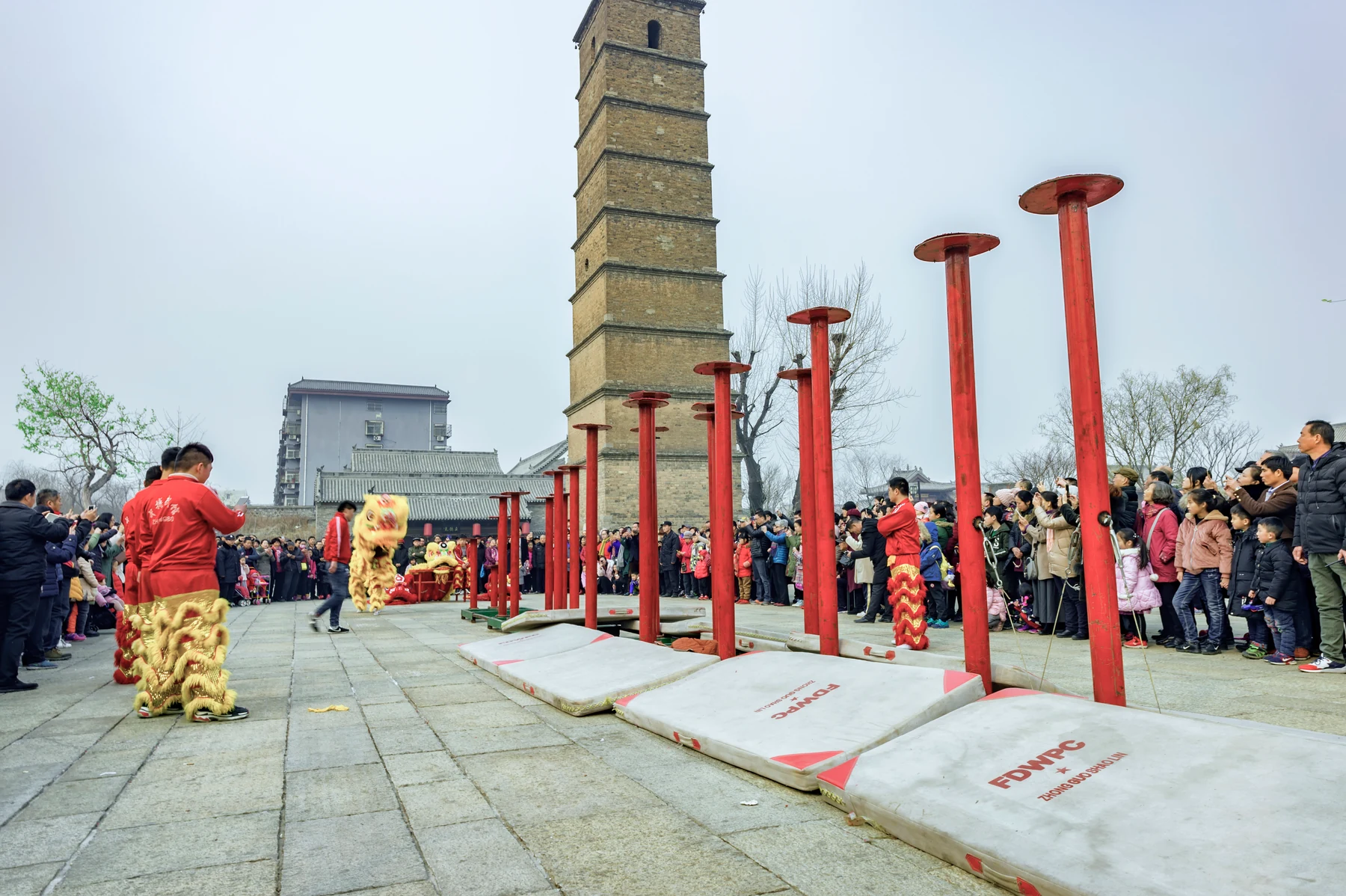
This East Moment archive photograph catches the public half of the season. The lion is moving between tall poles, but the crowd is doing just as much cultural work: adults raise phones, children lean forward, performers wait for the next handoff and an old pagoda fixes the scene in Luoyang rather than in an interchangeable “Chinese festival” backdrop. I care about that specificity. A lion costume isolated on white proves an object exists; a real crowd shows why the object still has energy.
The photograph documents one Luoyang folk performance and its mixed-age audience. It does not prove that lion dance belongs only to New Year, that every region stages it this way or that every spectator understands the same symbolism.
Dumplings may suggest wealth through their shape, fish may carry wishes for surplus and niangao can be connected through wordplay with rising year by year. Yet symbolism should not turn dinner into a code-breaking exercise. Most people eat foods because families know how to make them, elders expect them and the taste belongs to the season. Meaning grows from repetition as much as from puns.
The preparation period, New Year's Eve and the first days of the year differ across regions and overseas communities. The Chinese dumplings guide explains why jiaozi cannot represent every Chinese New Year table.
For me, Spring Festival is the moment the year finally points home. I can leave Guangzhou and return to Xuchang in Henan, where winter may bring snow, the streets carry a thicker sense of年味 and a short walk can turn into several unplanned visits. I like walking from street to street, calling on relatives and friends, and letting the day expand around familiar voices rather than a timetable.
That feeling is personal, not a universal Henan itinerary. Usually, once the Lantern Festival has passed, the return trip to Guangzhou is already approaching. The festival therefore contains both arrival and departure: the relief of being home and the knowledge that the journey back is waiting.
On the fifteenth night of the first lunar month, the New Year season reaches its first full moon. Lanterns transform streets, parks, temples, shopping districts and community halls into temporary maps of light. Some are modest paper forms; others are large engineered installations. Riddles may hang beneath them, turning a walk into a public game of language and recognition.
Tangyuan and yuanxiao are both round glutinous-rice foods associated with the festival, but the names and techniques are not always interchangeable. Tangyuan are commonly formed by wrapping dough around a filling. Yuanxiao may be made by repeatedly rolling a filling in moistened rice flour until a coating builds around it. Regional speech and contemporary commerce often blur the distinction.
Our Lantern Festival guide gives the 2026 date and explains why this first full-moon night turns the New Year season outward into public light. The separate tangyuan guide owns the wrapper, filling, serving and tangyuan-versus-yuanxiao decisions.
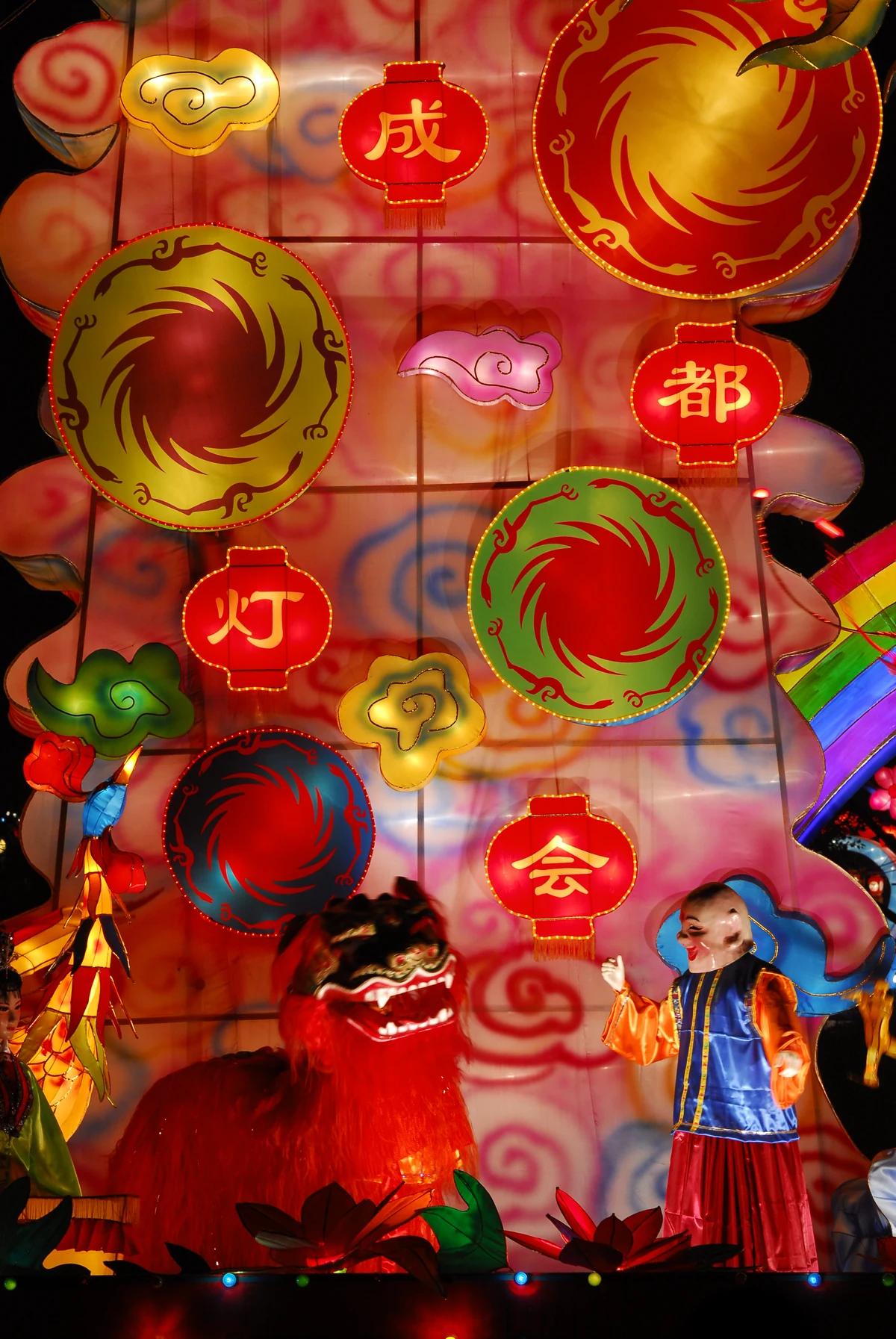
The words 成、都、灯、会 are not a caption added after the fact; they are built into the illuminated structure. That makes the image more useful than a generic row of red lanterns. A contemporary lantern fair is part craft, part lighting engineering, part municipal spectacle and part family night out. Traditional cloud forms, theatrical figures and electric outlines share one surface without asking permission from a purity test. This is exactly how a living festival should look: inherited visual grammar doing new public work.
The archive image proves one Chengdu lantern-fair design and its material scale. It cannot establish the date of every local fair, the meaning of every figure or the experience of people outside the frame.
The bowl is pale, warm and deceptively quiet. A spoon enters the broth; a rice ball turns against it; sesame or another filling waits inside. The food's roundness makes symbolism easy to explain, but texture carries the deeper memory: the soft resistance of glutinous rice, the danger of biting too quickly, the sweetness left after the lanterns have gone dark.
Qingming is often translated as Tomb-Sweeping Day, which identifies a central practice while narrowing the day. Families visit ancestral graves or memorial sites, clear weeds, clean the area and make offerings according to local custom. Flowers are common in contemporary observance. Some families burn paper offerings where law and local practice permit; others choose quieter forms of remembrance.
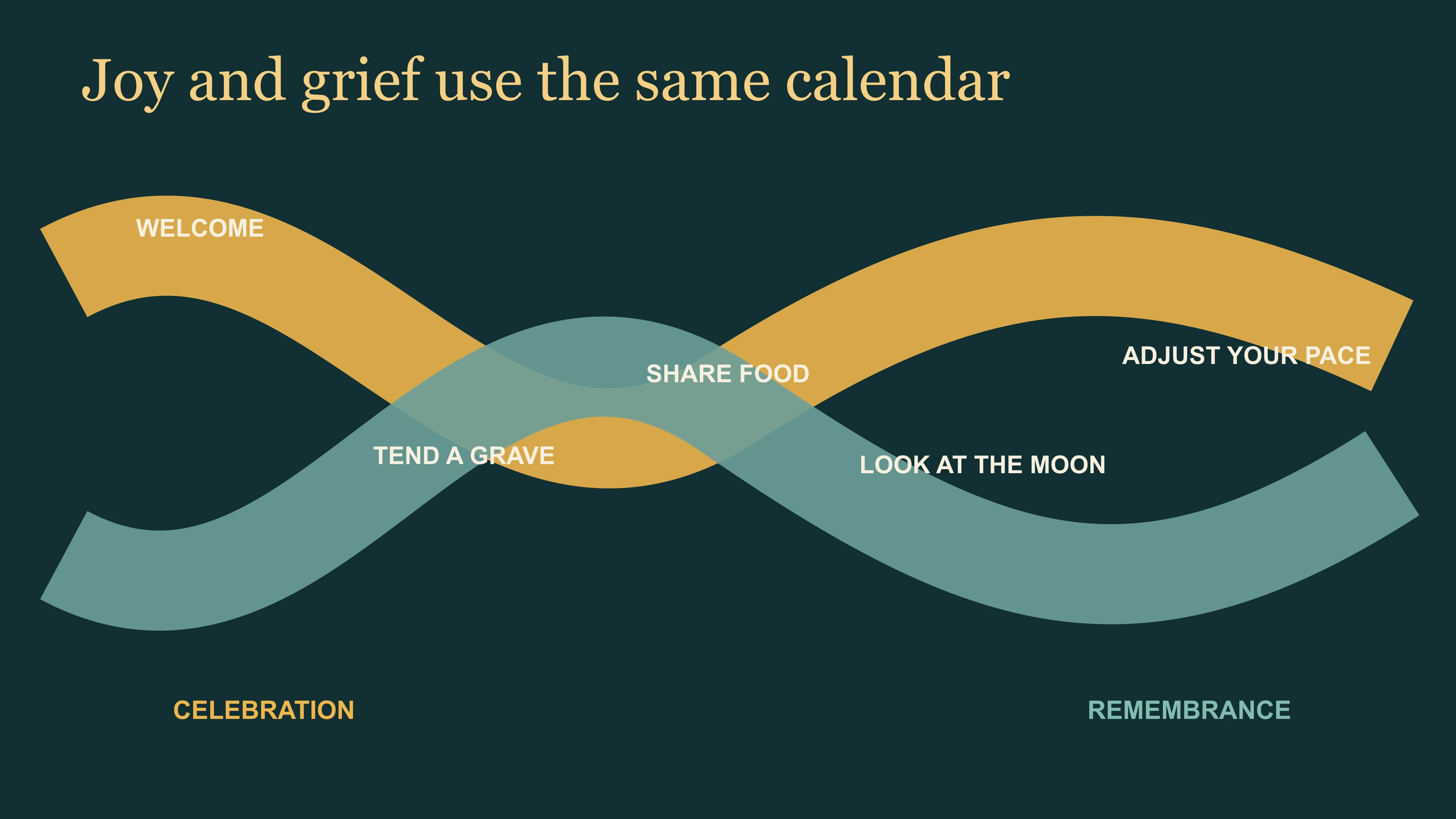
Chinese festivals do not force joy and grief into separate calendars. Welcoming, tending a grave, sharing food and looking at the moon belong to one human year. East Moment original editorial diagram.
The festival also belongs to spring outings. This is not a contradiction. Grief and new growth occupy the same landscape. People walk under newly leafed trees, eat seasonal foods and feel the year's brightness beside the names of those who cannot see it.
Overseas, access to an ancestral grave may be impossible. Remembrance then moves: to a family altar, a cemetery in another country, a photograph on a shelf or a conversation in which a younger person finally asks who someone was. Ritual survives by changing location.
The complete Qingming Festival guide gives the April 5, 2026 date and follows the physical sequence of clearing, offering, speaking and returning through spring.
The Dragon Boat Festival is widely associated with the poet Qu Yuan, whose loyalty, exile and death became part of the festival's most familiar historical narrative. That story matters, but it should not erase older and regional traditions connected with water, seasonal danger, protection, agriculture and local heroes. UNESCO's record of the Dragon Boat Festival is useful because it holds ritual, food, sport and community transmission together instead of reducing the day to one patriotic biography.
Dragon-boat racing gives the festival its public force. A crew must convert many bodies into one rhythm. The drummer is visible, but the boat moves because timing travels through shoulders, paddles and water. Contemporary races can be community rituals, organized sport, tourism events or all three at once.
Zongzi bring the festival into the kitchen. Glutinous rice is wrapped in leaves and tied before steaming or boiling. Fillings reveal geography and family taste: dates, beans, pork, salted egg yolk, chestnuts, mushrooms and many other combinations. The old argument between sweet and savory zongzi is less a problem to settle than a map of where people learned to eat.
Read the complete Dragon Boat Festival guide for the lunar date, regional historical traditions and the coordination visible in a real race. The zongzi guide shows the practical leaf, fold, filling and tying sequence without pretending one filling represents the country.
Qixi falls on the seventh night of the seventh lunar month and is linked with the story of the Weaver Girl and the Cowherd, lovers separated by the Milky Way and allowed to meet under particular tellings of the legend. Modern shops and media often present Qixi as Chinese Valentine's Day. The comparison is useful for recognizing contemporary romance and too narrow for the festival's longer history.
Earlier customs could emphasize women's skills, weaving, needlework, prayer and the wish for dexterity or a good future. Local practices differed. The festival's modern romantic form is not false merely because it is commercial, but it is one chapter rather than the whole book.
This is a recurring lesson in Chinese festivals: tradition does not remain authentic by refusing to change. It remains legible when people can still explain what changed, where and why.
Read the Qixi Festival guide for its 2026 date and the four older layers hidden by the easy “Chinese Valentine's Day” translation. The Hungry Ghost Festival guide then follows the seventh lunar month into a different emotional world of offerings, boundaries and public opera.
The Mid-Autumn Festival arrives under the full moon of the eighth lunar month. Reunion is its central language, but distance gives that language weight. The moon can be seen from different cities and countries at once; poetry understood this long before video calls.
Mooncakes carry the festival physically. Their fillings, crusts, sizes and reputations vary enormously: lotus seed paste, red bean, mixed nuts, salted egg yolk, flaky Suzhou-style pastries, snow-skin versions and regional forms that resist a single list. Gift boxes can become elaborate, yet at home a mooncake may still be cut into narrow wedges so everyone tastes the same one.
The best part of that gesture is mathematical and emotional. A small round pastry becomes enough because sharing changes the unit of measure.
Moon viewing, Chang'e traditions, regional foods, gift etiquette and diaspora celebrations all add different meanings to Mid-Autumn Festival.
I also look forward to Mid-Autumn Festival for a less poetic reason: it tells me Guangzhou's hardest summer is beginning to loosen. The heat is still present, but the season is turning and evenings become easier to inhabit. Mooncakes and reunion matter, yet my own memory is also physical—the sense that the long, exhausting heat will not continue forever.
For overseas readers, this is a reminder that a festival can be a weather marker as well as a family symbol. The same full moon can carry homesickness in one place and seasonal relief in another.
The Mid-Autumn Festival guide connects those practices through reunion rather than a rigid national checklist. Continue to the mooncake guide for taste and selection, or the Chang'e source guide for the myth's competing textual versions.
China National Day does not follow the lunisolar calendar. It returns on October 1 and commemorates the founding of the People's Republic of China in 1949. That makes it historically younger and institutionally different from the seasonal and family festivals around it.
Yet it belongs in a living festival guide because the date does not remain inside official ceremony. Flags enter streets, people wait before dawn for the Tiananmen flag raising, families use the break to travel or visit one another, weddings fill the calendar and many workers keep the holiday operating. Public history becomes private scheduling.
The China National Day guide separates the October 1 commemoration from the adjusted holiday period and follows the date through real street and crowd records. Its sibling Golden Week China guide owns the transport, ticket and itinerary problem. Read them together when you need both cultural meaning and practical travel truth; do not force one page to pretend those are the same search task.
The ninth day of the ninth lunar month is known as the Double Ninth or Chongyang Festival. Traditional associations include climbing to high places, chrysanthemum, autumn air and wishes for protection and longevity. In contemporary China, the day is also connected with respect and care for older people.
A festival about elders can become shallow if reduced to one annual performance. A photograph of a visit is easier than the daily work of listening, caregiving and making public life accessible. The day carries meaning when ceremony points back toward ordinary responsibility.
Climbing remains a powerful image. Height makes the landscape wider, but autumn also makes time visible. Leaves have begun to turn. The person beside you does not walk at the same pace as twenty years ago. Respect sometimes means adjusting your own pace without announcing the kindness.
The Double Ninth Festival guide connects climbing, cemetery visits and everyday elder care through three kinds of height. Later in the year, the Dongzhi Festival guide explains why the winter solstice is organized by returning light and deliberately unresolved regional food traditions.
Food is often the easiest part of a festival to carry across generations because a recipe can survive where a ritual space cannot. A family may no longer know every offering formula, yet still soak rice, knead dough or buy the pastry an elder preferred.
| Food | Festival association | Why the association matters | Important limit |
|---|---|---|---|
| Dumplings | Chinese New Year, especially in northern traditions | Family preparation, shared labor and wealth symbolism | Not every region eats dumplings for New Year |
| Niangao | Chinese New Year | Wordplay associated with progress or rising year by year | Forms range from sweet cakes to savory sliced rice cakes |
| Tangyuan or yuanxiao | Lantern Festival; also other reunion occasions | Roundness, family unity and the first full moon | Names, fillings and production methods vary |
| Zongzi | Dragon Boat Festival | Leaf wrapping, summer season and multiple historical traditions | Sweet-versus-savory debates hide wider regional variety |
| Mooncakes | Mid-Autumn Festival | Full-moon form, gifting and shared tasting | They are one part of the festival, not its entire meaning |
| Chrysanthemum foods or wine | Double Ninth | Autumn season, longevity and literary association | Practice is not universal and alcohol is not required |
Symbolic explanations travel well online because they are short. Cooking knowledge is harder to compress. It includes how wet the leaf should be before wrapping, when dough feels ready, which filling a grandparent will accept and how many portions the family needs when guests never confirm. This practical knowledge is part of the culture, not an accessory to the symbol.
Chinese festivals are sometimes presented overseas through a national checklist: red for New Year, lanterns for the Lantern Festival, boats for Duanwu, mooncakes for Mid-Autumn. These are useful signs. They become stereotypes when they erase region and community.
Northern and southern New Year staples differ. Zongzi fillings shift across provinces and households. Qingming foods such as qingtuan are strongly associated with parts of Jiangnan but do not define remembrance everywhere. Ethnic minority festivals may overlap with national calendars while carrying distinct languages, cosmologies and social histories.
Even the same family changes over time. Apartment kitchens alter what can be cooked. Fire regulations change public ritual. Work moves a reunion dinner. A child who once received a red envelope becomes the adult preparing them. Continuity is not the absence of change; it is the recognition that something still deserves to be carried forward.
Diaspora communities celebrate within the calendar of another country. The lunar date may fall on a workday. Public school schedules do not pause. Ingredients have traveled unevenly, and local laws shape fireworks, processions, food sales and street closures.
As a result, celebration often splits in two. A family keeps the actual evening quietly at home, then joins a public festival on the weekend. Temples, cultural associations, museums, schools, restaurants and city governments may each host events with different purposes. One protects ritual; another teaches children; another introduces a neighborhood; another supports business.
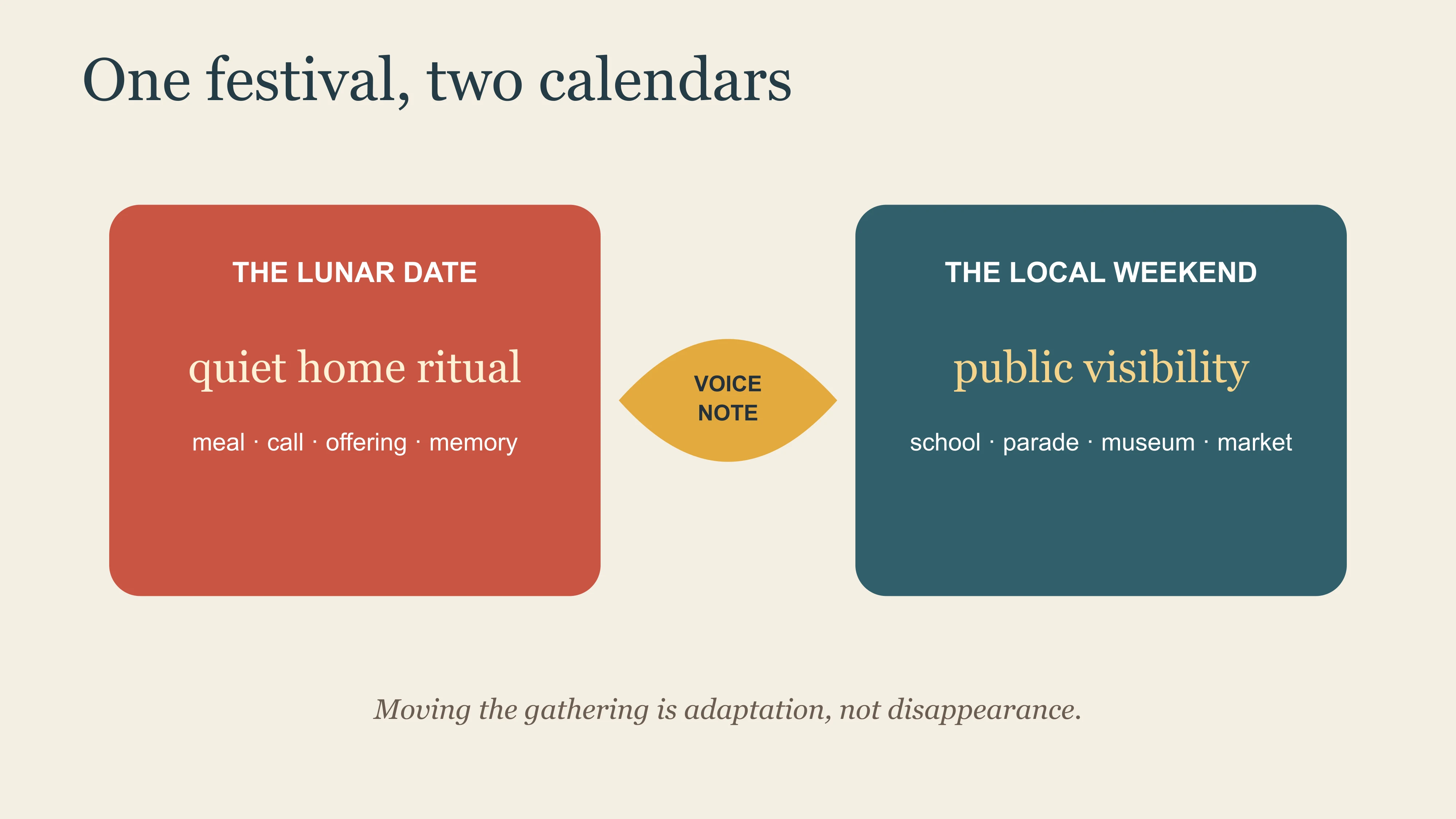
Moving a public gathering to the weekend does not erase the lunar date kept at home. Diaspora life often carries two calendars at once. East Moment original editorial diagram.
Public celebration can make a community visible, but visibility has costs. A festival may be asked to become cheerful proof of multicultural harmony while difficult histories remain outside the parade route. Respectful visitors should enjoy the food and performance while remembering that a living community is larger than the day it becomes publicly legible.
The best starting point is not mastery but attention.
Most festival etiquette is ordinary human courtesy given a particular cultural setting. Be curious without demanding that someone perform their identity for you.
A festival promises return. The moon reaches fullness again. The leaves are folded again. Red paper appears on another door. Yet the people around the table have changed, even when the dishes have not.
This is why Chinese festivals endure. They do not stop time. They give people a way to notice what time has done: who came home, who could not, who now knows the recipe, whose chair has become a story. Celebration and remembrance are not opposites. Together, they make the year human.
Choose the next guide by the action you want to understand: follow public light into the Lantern Festival, coordinated work and leaf-wrapped food into the Dragon Boat Festival, or distance, moon viewing and divided pastries into the Mid-Autumn Festival. The calendar becomes useful when the next click deepens one human action rather than repeats another list of dates.
One useful question
Which small job makes a Chinese festival real in your family—traveling, cleaning, folding, cooking, calling or remembering—and what changed when someone moved away or grew older?
Loading the conversation…
Reader-built field guide
Record the person, place, food or small job your family repeats—and the part that changed when a generation moved, aged or could not return home.
What this builds: Follow Culture for reviewed family rituals, diaspora adaptations and calendar updates that show how the same festival changes across homes and years.
These sources verify institutional records, protected traditions and claims that benefit from direct evidence. They support the story; they do not replace Lijun's judgment.