A mooncake is not one flavor or one recipe. It is a broad family of round or shaped pastries associated especially with the Mid-Autumn Festival. To choose one you will actually enjoy, ignore the prestige box at first and check five things: crust, filling, sweetness, texture and serving context.
That rule is more reliable than asking which mooncake is “best.” A flaky pastry filled with fresh pork and eaten hot is solving a different problem from a tender baked cake filled with lotus-seed paste, or a chilled snow-skin cake made for a modern gift set. A ranking that hides those differences is not useful.
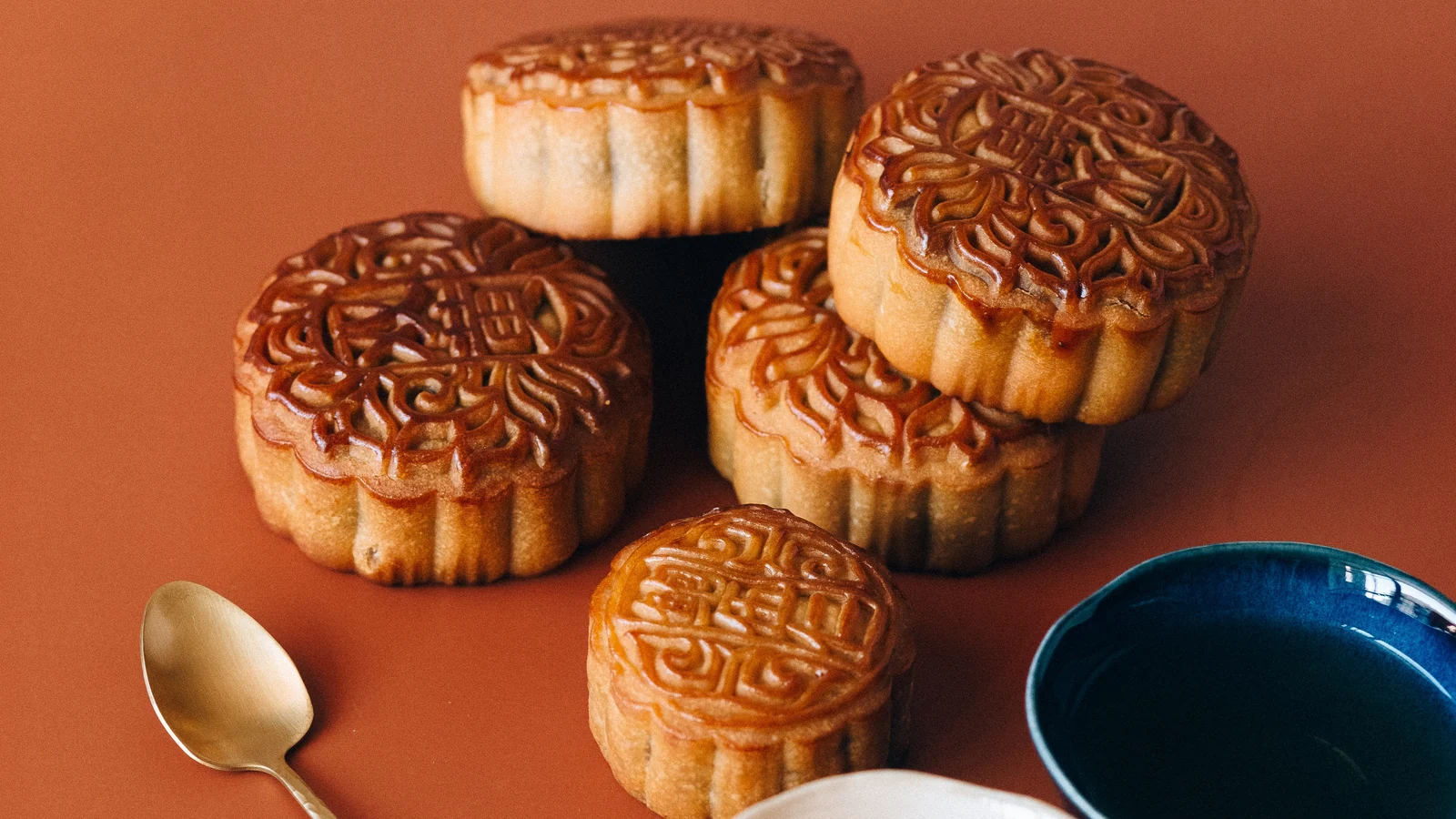
For a first purchase, start with two contrasting cakes, not a large assorted box: one labeled baked mooncake with a paste filling, and one fresh flaky or clearly labeled savory style if you can get it. Cut both open before judging the category. The stamped top shows you almost nothing about the filling.
What does a mooncake taste like?
The honest answer is: first identify the type.
A classic baked, tender-skinned mooncake may be dense, smooth and sweet, with a thin browned crust around lotus-seed or bean paste. Salted egg yolk adds a crumbly, oily, savory center. A mixed-nut filling can be chewy and uneven, with seeds, nuts and preserved components that reveal themselves in each bite.
A flaky pastry has a completely different structure. Thin layers break and scatter; the filling may be sweet, savory or both. Fresh-meat mooncakes are juicy and aromatic when warm. Yunnan-style ham fillings can combine cured meat, sugar and fat into a sweet-salty profile. Snow-skin mooncakes are soft, chilled and usually lighter in appearance, but “snow skin” describes the wrapper style rather than one filling.
If someone says “I don't like mooncakes,” the next question should be “which crust and filling did you try?” Disliking dense lotus paste says little about whether that person would enjoy a warm flaky meat pastry.
Use this five-part choice before looking at the brand
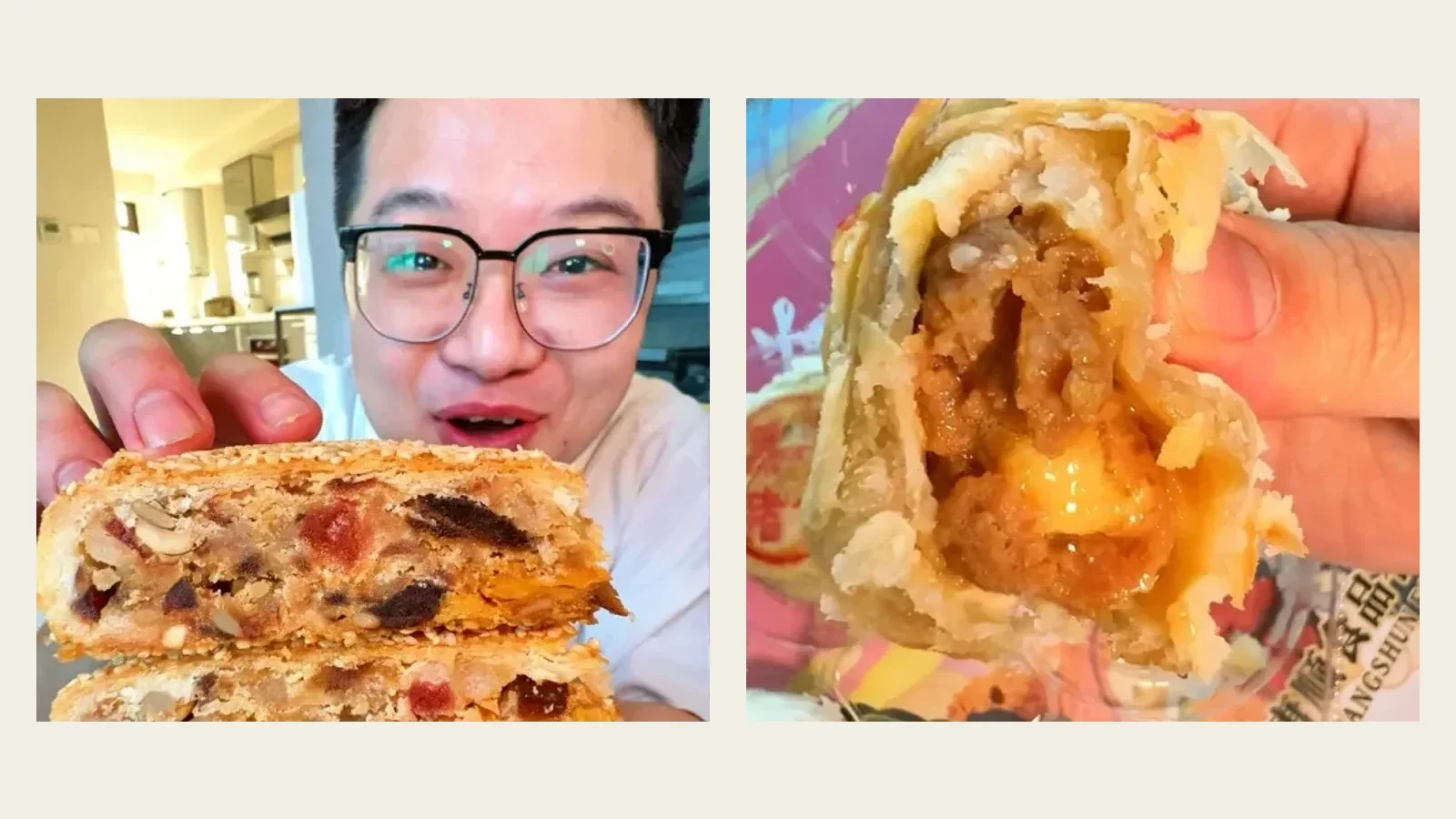
These authorized photographs show what the outside cannot: two very different mooncake interiors. They document visible texture, not the full recipe or the origin of each ingredient. Start with the physical pastry, then decide how and with whom it will be eaten.
1. Choose the crust family
The crust controls the first bite and often predicts the whole experience.
| Crust family | What it feels like | Best first question |
|---|---|---|
| Tender baked skin | Thin, soft to slightly firm, often glossy-brown | Do I want a dense paste-centered cake? |
| Flaky pastry | Layered, crisp or crumbly | Can I eat it fresh or reheat it as directed? |
| Snow skin | Soft, chewy, chilled | Is it being stored cold and eaten promptly? |
| Soft cake-like or local hybrid | Varies widely | What does the ingredient label and maker call it? |
Do not infer the regional identity from crust alone. Flaky layers are a useful clue, not a certificate of origin. Product names, labels, the maker and place of production provide stronger evidence.
2. Read the filling before the poetic product name
Mooncake names often foreground romance, season or luxury. The ingredients tell you what you will taste.
Common filling families include:
- lotus-seed, red-bean, mung-bean or other smooth pastes;
- salted egg yolk set inside paste;
- nuts, seeds, dried fruit and preserved ingredients;
- jujube or black-sesame pastes;
- cured ham, rose-scented ham or sweet-savory meat mixtures;
- fresh pork or other hot savory fillings;
- custard, flowing custard, chocolate, tea and contemporary combinations.
“Five-nut” (wuren, 五仁) is a category name, not a guarantee that every maker uses an identical formula. The same is true of lotus-paste and ham mooncakes. Compare labels when allergies, dietary restrictions or strong dislikes matter.
3. Decide whether you want sweet, savory or sweet-salty
Many disappointing first tastings begin with a false assumption: that mooncake is simply a Chinese dessert. Some are decisively savory; others deliberately combine sugar with salted yolk or cured meat.
If you usually prefer Western-style pastries, a smooth sweet paste may be the easiest conceptual starting point, but its density can still surprise you. If you dislike sustained sweetness, choose a smaller cake, a savory style or a tasting where several varieties are cut into wedges.
4. Treat texture as seriously as flavor
Texture often creates the strongest reaction. Look at one real Yunnan ham mooncake before treating the whole category as smooth sweet paste.
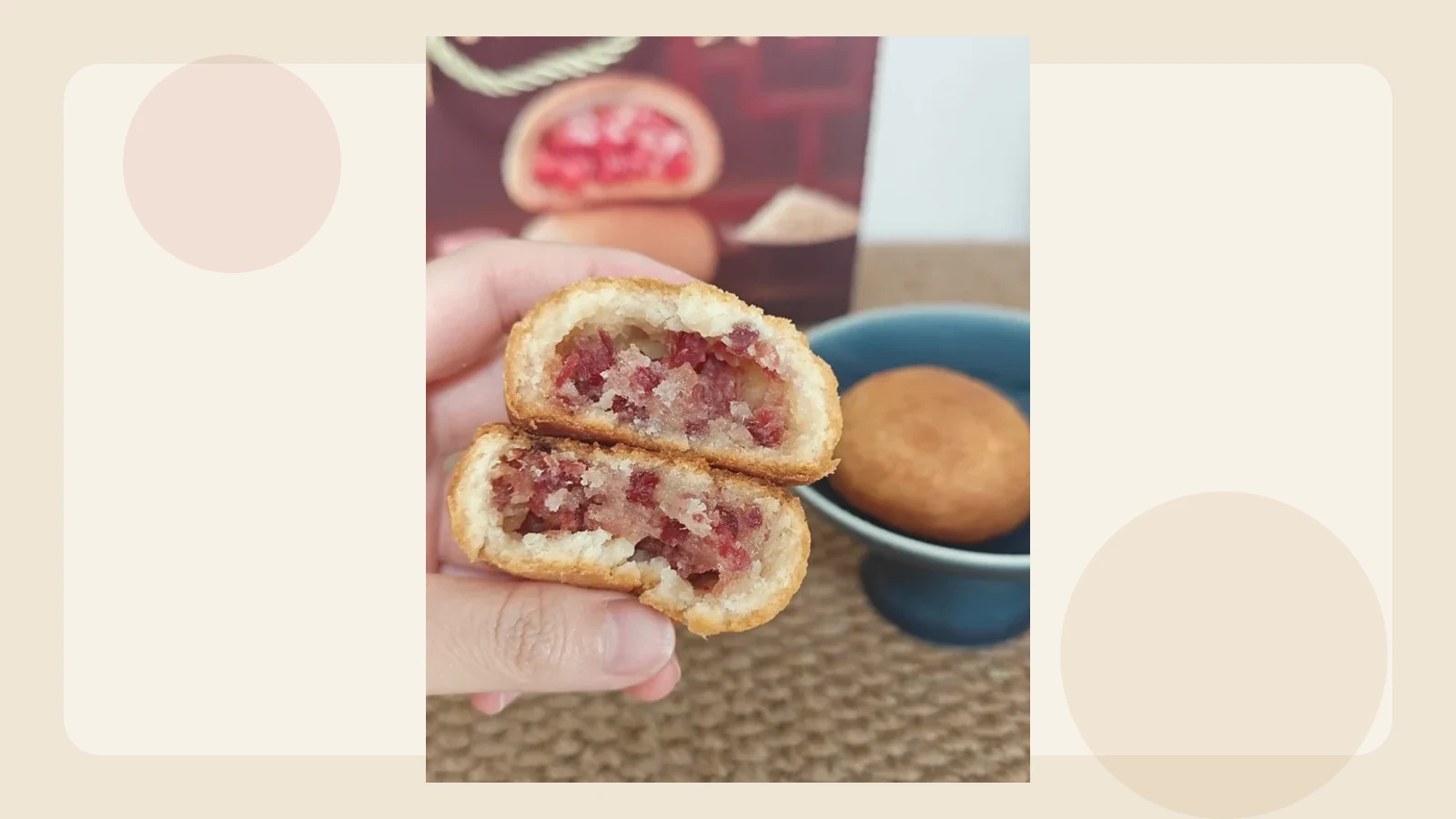
The authorized photograph shows a coarse, crumbly interior rather than an anonymous block of paste; the creator identifies it as Yunnan ham mooncake. The frame cannot authenticate the ham's origin, reveal every ingredient or tell another person whether the sweet-salty balance will taste good.
The image makes one point that packaging cannot: “mooncake” contains materially different eating structures. One bite may be crumbly and nutty; another oily, moist and salty-sweet. Neither is the neutral baseline.
5. Match the cake to the occasion
A gift for a client, a family tasting, a solitary snack and a pastry eaten hot from a shop are not the same purchase.
| Situation | Better choice | Avoid |
|---|---|---|
| First tasting with friends | Four to six clearly labeled varieties, cut small | Twelve similar cakes in a prestige box |
| Gift for someone you know | Two or four flavors they already like | Choosing only by package size |
| Tea table | Contrasting fillings with restrained portions | Serving each person an unopened whole dense cake |
| Savory preference | Fresh-meat or clearly labeled ham style | Assuming every golden baked cake is sweet |
| Long-distance transport | Product designed and labeled for that storage | Mailing a fresh or chilled cake without checking handling |
The point is not minimalism for its own sake. It is to buy the pastry for the people who will eat it.
The main mooncake styles, without false rankings
Regional style names are useful orientation. They are poor guarantees. Commercial production, local makers and household preferences create overlap, so treat this as a map rather than a purity test.
China's GB/T 19855-2023 mooncake standard supplies a formal baseline for product names and quality language. It cannot choose the cake you will love. That still requires cutting the pastry open, reading its actual label and judging crust, filling and freshness with your own mouth.
Cantonese-style baked mooncakes
These are the internationally familiar form: a thin, tender baked skin with a stamped top, usually surrounding a dense filling. Lotus-seed paste and salted egg yolk are well-known combinations, alongside red-bean paste, mixed nuts and many modern fillings.
The proportion of skin to filling, oiliness, sweetness and yolk quality can vary greatly. “Cantonese-style” tells you the broad construction, not whether a particular cake is good.
Suzhou-style flaky mooncakes
Suzhou-style mooncakes are associated with laminated or layered pastry. Sweet versions exist, while fresh-meat mooncakes are a major savory expression. The experience depends heavily on freshness: a warm flaky shell around savory meat is not well represented by a cake that has sat open and cold for hours.
This is why a search for “traditional mooncake flavor” has no single answer. A person in Shanghai or Suzhou may think first of a warm meat pastry while an overseas supermarket display foregrounds lotus paste.
Yunnan ham mooncakes
Yunnan ham mooncakes use cured ham within a rich pastry tradition, often creating a deliberate sweet-salty balance. Rose, honey or sugar may appear depending on the product. The ham is not an accidental savory interruption; it is the identity of the filling.
Do not call every ham-filled cake “Xuanwei ham mooncake” unless the maker or label establishes that connection. A famous place name is evidence only when the supply chain supports it.
Five-nut mooncakes
Five-nut mooncakes have become an internet argument because texture and ingredient quality are highly visible. A good mixed filling can be aromatic, varied and satisfying; a poor one can feel dry or confused. The category should not be judged from one mass-produced example.
The useful question is not whether wuren is “the worst flavor.” Ask which nuts and seeds are present, how coarse the mixture is and whether preserved fruit, meat or strong aromatics are included.
There is also a difference between a flavor label and a loose resemblance. Beijing's market-regulator explanation of mooncake labels distinguishes wuren (five-nut) from the broader guoren (nut-kernel) category under the national standard. For Cantonese-style five-nut mooncakes, the standard specifies the kernel types; for other regional five-nut styles, the regulator says the filling must contain exactly five types of nut kernels and meet its minimum total nut-kernel proportion. Six or seven types cannot simply be sold as "five-nut." Do not count five distinct pieces visible in a cut cake and call the product compliant; a photo cannot show the complete formulation. Read the actual product name and ingredient list, especially if you are buying for someone with a nut allergy. My judgment about taste remains independent of the label rule: a correctly named five-nut cake can still be dry, and a broader mixed-nut cake can be wonderful.
Snow-skin and contemporary mooncakes
Snow-skin mooncakes are unbaked, soft and served chilled. Custard, fruit, chocolate, tea and ice-cream variants expand the modern category further. These are not evidence that tradition has disappeared. Festival foods have always interacted with commerce, technology and changing taste.
They do require attention to the storage instructions. A chilled product is not interchangeable with a shelf-stable baked cake.
How to cut, serve and compare mooncakes
The strongest serving method is simple: cut small, keep labels visible, compare two styles side by side.
- Use a clean, sharp knife and divide a dense cake into small wedges.
- Keep the wrapper or flavor card beside the plate.
- Taste one crust family before moving to a contrasting one.
- Offer unsweetened tea or water so flavors remain distinct.
- Record what people liked in concrete terms: flaky, smooth, nutty, salty, fragrant, too dense or too sweet.
This is an editorial tasting method, not nutrition or medical advice. Follow the product label for ingredients, storage and individual dietary needs.
Tea is useful because it resets attention and slows the tasting. It is not mandatory, and there is no one historically correct pairing. A roasted oolong may stand up to a rich nut filling; a lighter tea may suit a delicate paste. Use the Chinese tea guide to understand the tea first rather than forcing a ceremonial match.
Packaging is a social signal, not pastry evidence
Mooncake packaging has a real role. Formal gifts need protection, presentation and clear labeling. A box can communicate generosity or institutional care. The mistake is treating those signals as proof of flavor.
An oversized box may hide individually wrapped cakes that are nearly identical. Heavy materials can raise cost without improving crust or filling. Conversely, a plain paper packet from a local bakery may contain a pastry that must be eaten immediately and cannot travel well.
Judge packaging on what it can actually do:
- protect the cakes;
- state ingredients and storage clearly;
- identify flavors without guesswork;
- suit the dignity of the exchange;
- avoid creating waste the recipient must manage.
Then judge the pastry by its own evidence.
Why mooncakes belong to Mid-Autumn
The association works through use. Mooncakes are exchanged before the festival, placed on family tables, cut into round-to-wedge transformations and carried across distance as gifts. Their round form readily supports the language of reunion.
That does not mean every family must eat them or that the pastry alone explains the holiday. Singapore's National Heritage Board records the Mid-Autumn Festival as a living set of community practices, not a product launch built around one pastry. The Mid-Autumn Festival guide shows the larger system: lunar date, moon viewing, shared time, lanterns, regional practice and stories of Chang'e.
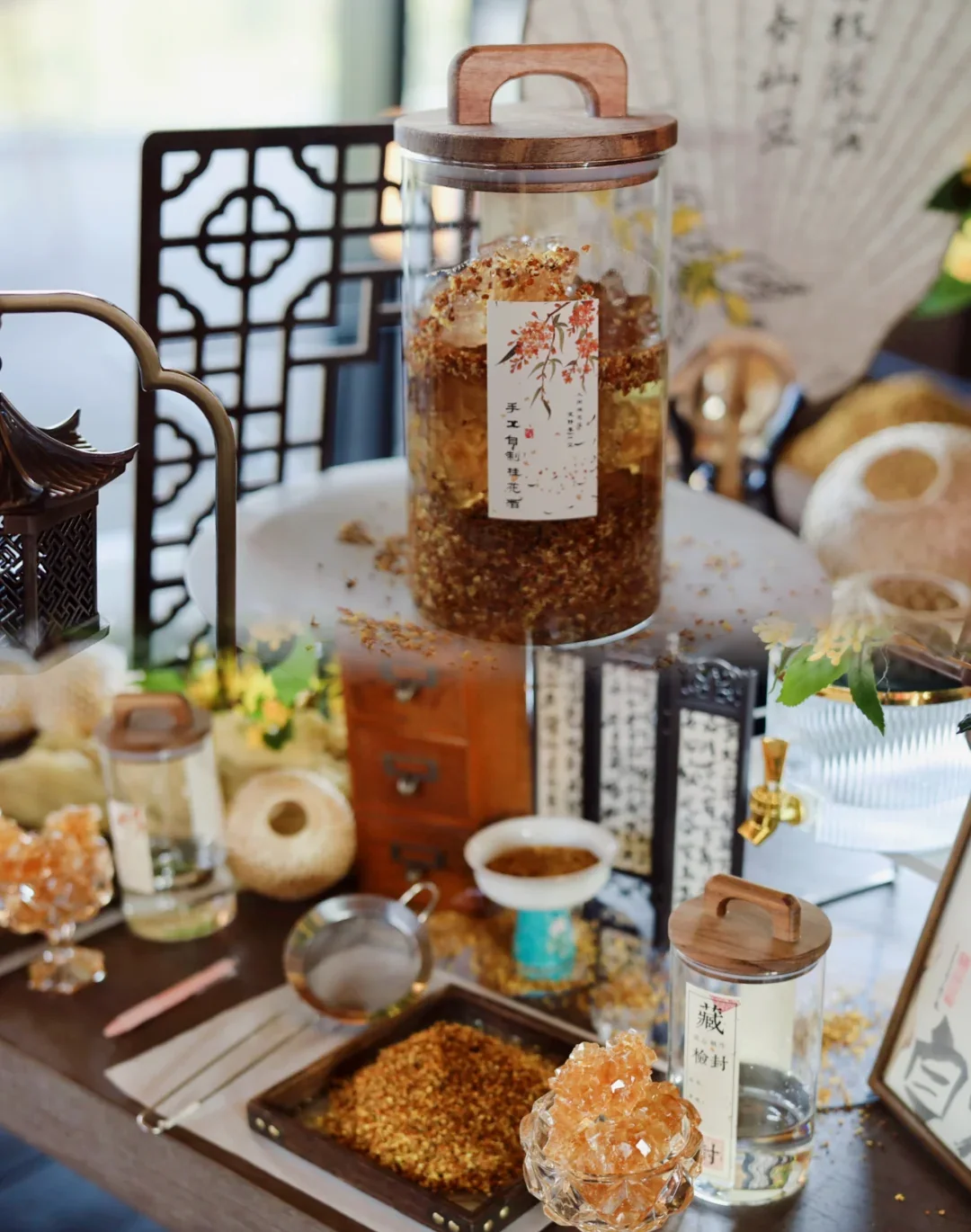
The autumn table also needs contrast. A dense sweet mooncake can flatten the palate; fragrant osmanthus wine promises lift, but the name covers infused, blended and fermented drinks with very different sweetness and alcohol. Pair by the bottle in front of you, not by a poetic flower label. A dry or lightly sweet serving can sharpen the pastry's edges; a syrupy one can turn one bite into two competing desserts.
Be cautious with the famous tale of rebels hiding messages in mooncakes. It is valuable as folklore and political imagination, but it should not be used as a clean, universally documented origin. The category is too diverse and its history too layered for one dramatic invention story.
Cut the mooncake before you trust the box
There is no universally best mooncake. There is a best match between a crust, a filling, a desired taste, a texture and a group of eaters.
My first move with an expensive mooncake is slightly rude and completely necessary: I cut it open. Gold foil can sell status, and a famous name can sell reassurance, but neither tells me whether the paste is greasy, the yolk dry or the crust already tired. The knife ends the advertising. The cross-section begins the food.
Compare a tender baked cake with a flaky one. Cut both. Name the fillings. Let people disagree in precise language. The package can frame the gift, but the cross-section tells you what you bought.
If you want to understand where mooncakes sit beside zongzi, tangyuan, qingtuan and other calendar foods, continue into the Chinese festival foods collection. The useful comparison is not “which food is more traditional.” Ask what each food does with time: some mark return, some remembrance, some seasonal change, and mooncakes make one round object shareable by cutting it apart. That contradiction is exactly why they belong to Mid-Autumn.