The Foshan furniture market is worth visiting for comparison density, not automatic bargains. In Lecong, you can move quickly between many furniture styles, materials and price positions. That concentration is useful only if the sample you like becomes a written, inspectable delivery specification. A beautiful showroom is the start of the order, never proof of the order you will receive.
My rule is simple: do not buy the prettiest sample; buy the sample that can survive documentation, inspection, packing and delivery. Foshan gives you unusual comparison power. Your job is to prevent that power from dissolving into screenshots, voice messages and a quotation that says “same as sample.”
Foshan furniture market buyers should use density as a comparison tool
“Foshan furniture market” sounds like one building. It is really a search term for a wider furniture network, especially around Lecong in Shunde district. Foshan is the city, Shunde is one of its districts and Lecong is the town most international buyers mean when they discuss the large furniture-market route. These names are nested, not competing destinations.
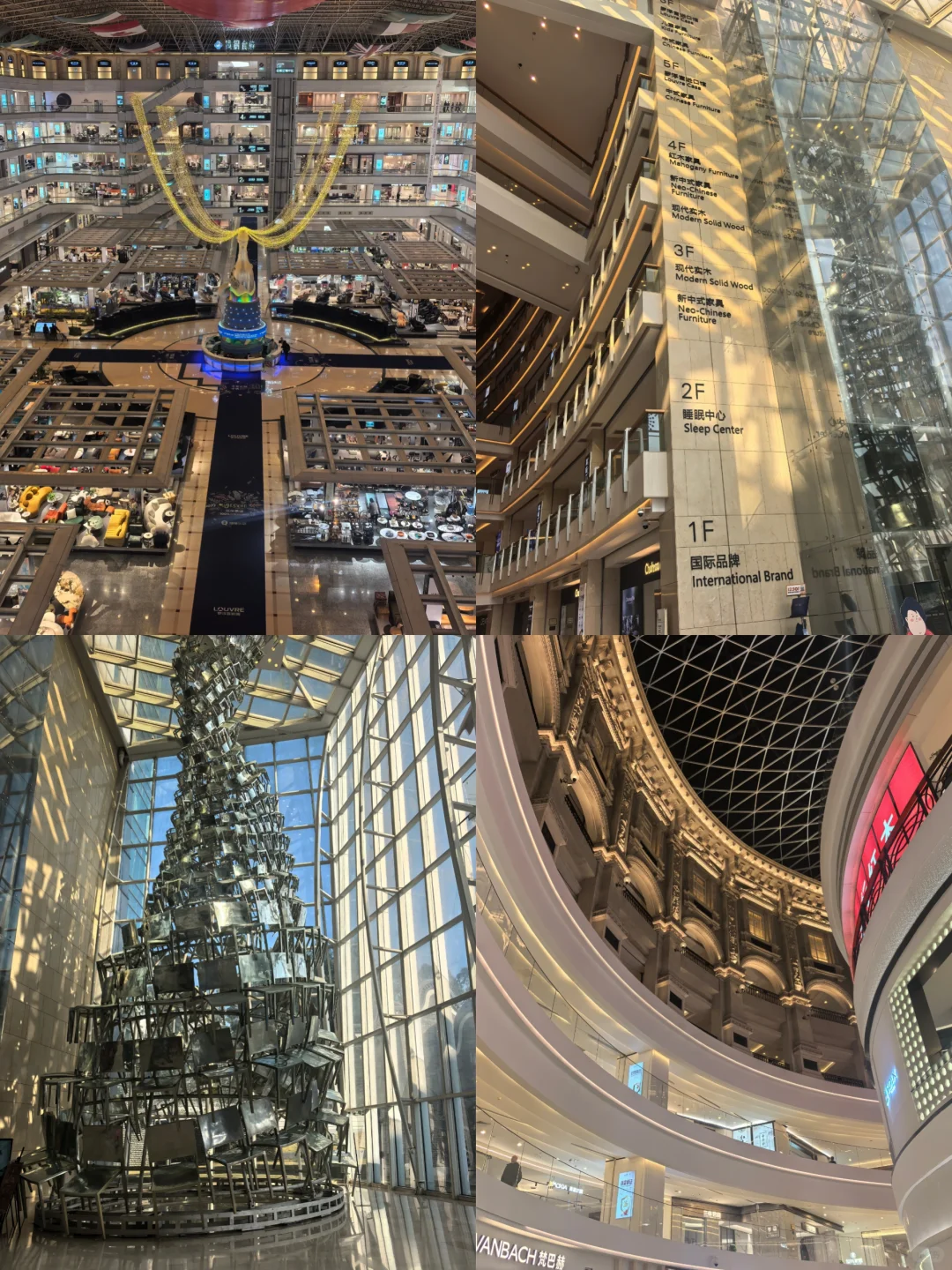
The official Louvre Furniture Mall location page places its main complex in Lecong, Shunde, Foshan. Louvre is a prominent landmark, but it is not the whole market and it is not a certificate for every product around it. A day can include formal mall floors, specialist showrooms, independent sellers, design-led spaces and meetings arranged elsewhere. Confirm the exact building and address for every appointment.
Foshan's advantage is not that every chair is cheap. It is that many chairs can be compared while the differences are still visible. You can sit in three frames, inspect four finishes and reject a fashionable silhouette that feels wrong after ten minutes. That is valuable work. It is also easy to confuse visual abundance with commercial certainty.
The local cluster matters because furniture knowledge accumulates around repeated work: timber and panels, upholstery, foam, metalwork, stone, hardware, finishing, showrooms, installers, packing and freight coordination. The Shunde government describes Lecong as a major furniture trade and industry area. Treat older scale figures as historical promotional context, not a current inventory. The practical truth does not require a giant number: the market is dense enough to make disciplined comparison possible.
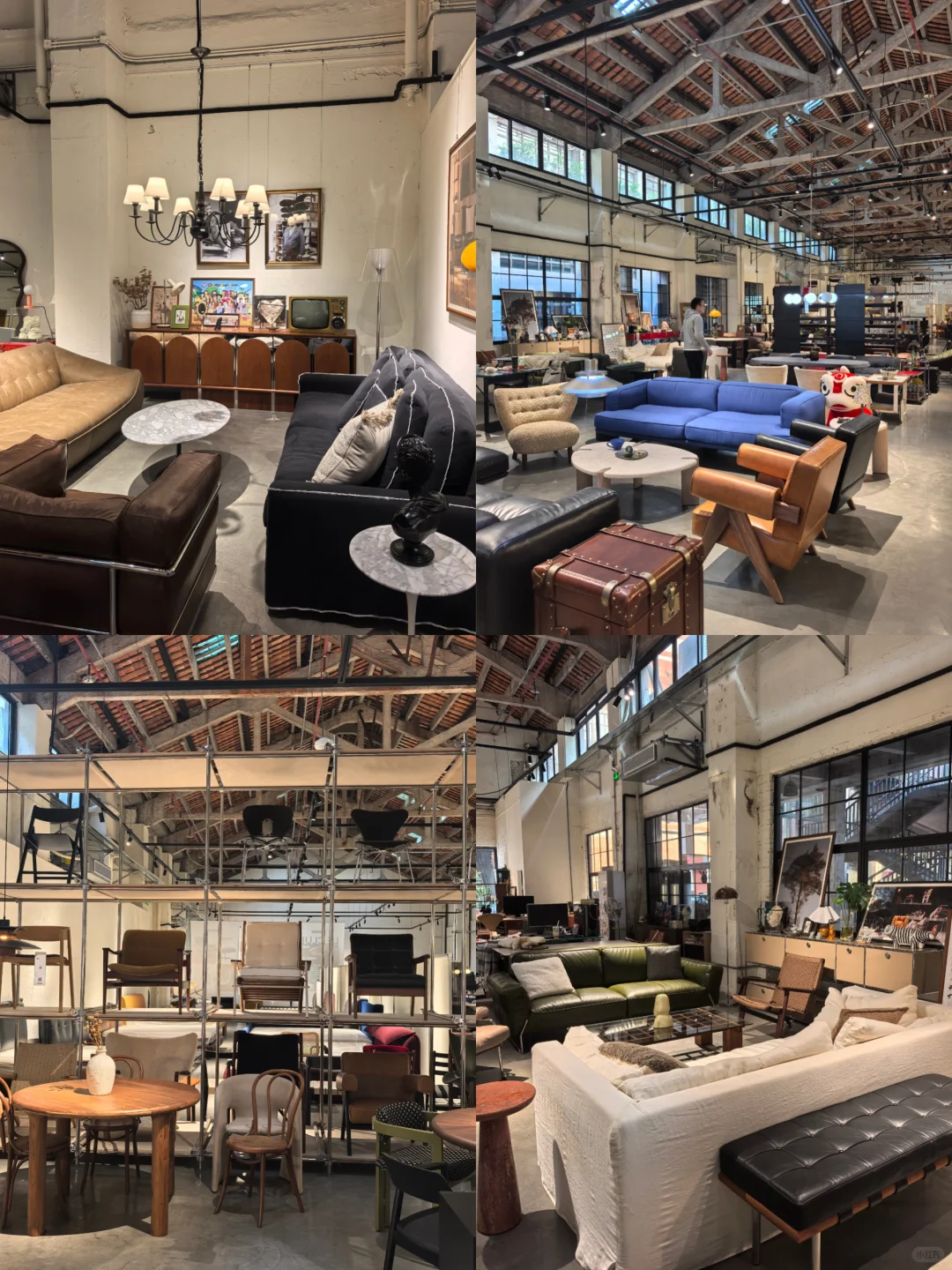
A visitor can compare proportion, upholstery, surface treatment and room-scale relationships quickly here. The photograph cannot identify who manufactured any item or whether two displayed pieces share a production line.
Separate the market, showroom, intermediary and production site
The question “Are you a factory?” is too blunt for Foshan. A seller may operate a showroom and coordinate production well. A factory may own one critical process while outsourcing upholstery, finishing or stone. A buying agent may consolidate several categories better than one workshop could. The risk is not the middle layer. The risk is an invisible handoff.
| Place or role | What it can prove | What it cannot prove by itself |
|---|---|---|
| Market or mall | Range, presentation, immediate comparison and a commercial point of contact | Factory ownership, repeatability, stock, lead time or after-sales performance |
| Showroom | A physical sample's dimensions, comfort, visible finish and some construction clues | That the delivered batch will use the same internal material or hardware |
| Trader, agent or buying office | Coordination, translation, mixed-order consolidation and documentation | Control of every upstream process unless the handoffs are disclosed |
| Production site | The processes, equipment, people and controls visible during that visit | That your order will use the same line, materials or subcontractors without a written link |
Ask three separate identity questions:
- Who issues the quotation and receives payment?
- Who manufactures the critical parts of this product?
- Who is responsible when the delivered batch differs from the approved record?
One company may answer all three. Often it will not. Record the names and responsibilities rather than forcing everyone into the word “factory.” This is the same verification principle used in our broader China manufacturing guide: a city and a front door narrow the search; they do not approve the supplier.
Build the comparison sheet before you enter the first showroom
A camera roll full of sofas becomes useless surprisingly quickly. By the third floor, one warm-grey fabric looks like another, a quoted price loses its unit and nobody remembers whether the side table was included.
Create one line per exact sample before the visit. Give each line your own reference code. Do not rely only on a seller's product name, which may be reused across sizes or finishes.
| Comparison field | What to record at the sample |
|---|---|
| Seller and location | Company name, exact showroom, floor or meeting location and contact role |
| Sample identity | Your reference code plus seller model or stock code |
| Dimensions | Overall width, depth and height; seat height and depth; door, lift and installation constraints |
| Visible materials | Upholstery, timber or veneer, stone or composite top, metal finish and exposed hardware |
| Hidden construction | Frame, substrate, foam density or filling, joinery and load-bearing hardware, supported by documents or inspection |
| Included pieces | Cushions, headrests, side units, power modules, legs, spare hardware and installation |
| Commercial basis | Quantity, currency, tax status, trade term and named location, plus every separate fee |
| Evidence | Photographs of the full sample, label, material swatches, underside, connections and agreed changes |
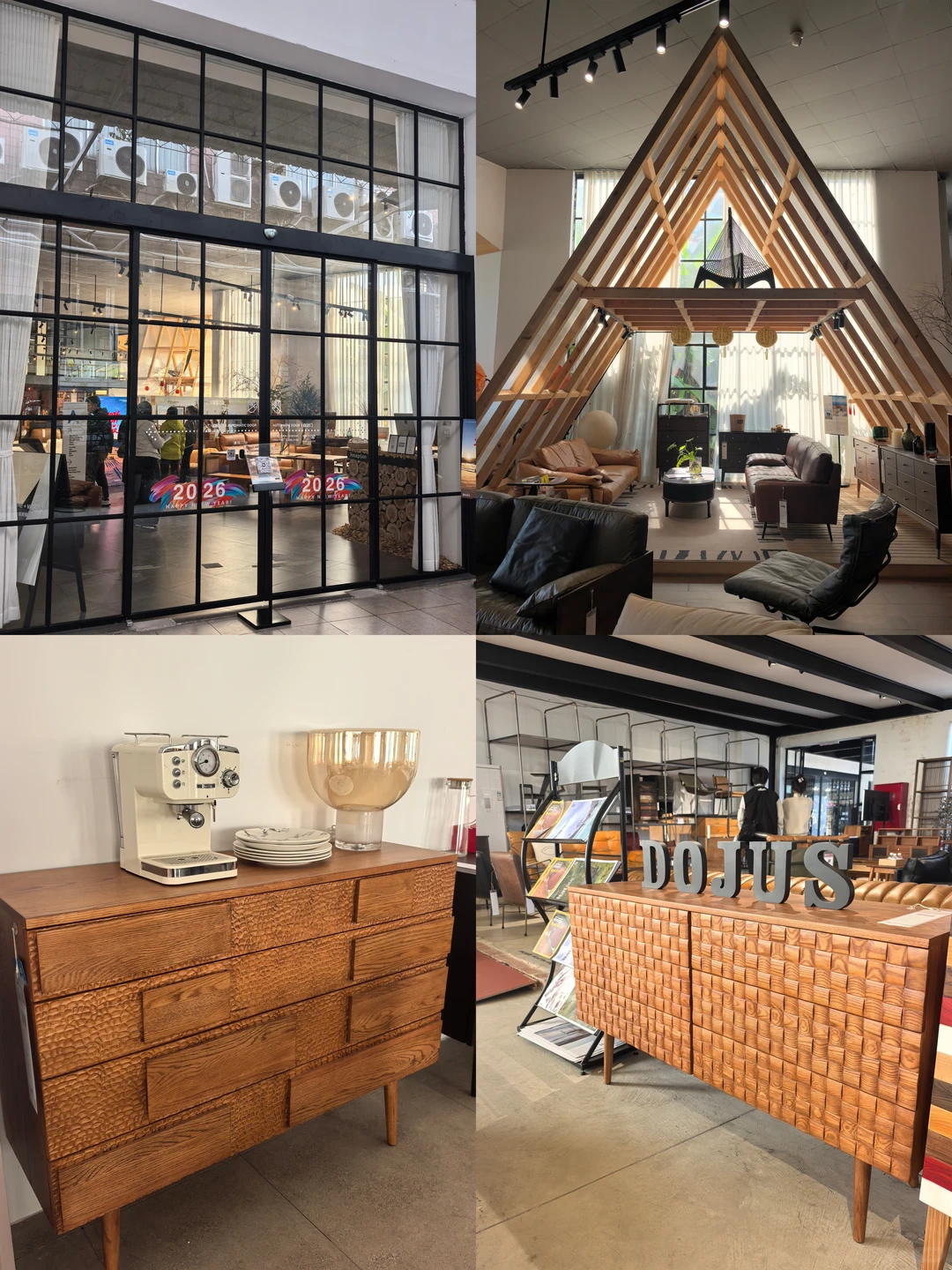
The people in this collage make the real task visible: moving, asking and comparing. The image does not prove that this showroom is a factory or that the displayed cabinetry has a particular wood species.
The comparison sheet changes the mood of the visit. You are no longer collecting beautiful rooms. You are building comparable records. When two quotations cannot be aligned on size, material and included work, the lower number is not yet a lower price. It is a different product hiding inside the same photograph.
Convert the chosen sample into a delivery specification
“Same as display” is not a specification. It is a memory test conducted months later, possibly by people who never saw the display.
Once a sample wins, slow down. Photograph it from enough angles to show the whole form and the details that matter. Measure it. Record the material language precisely enough that someone can check it. Attach the material swatch, finish code, drawing revision and hardware list to the same order line. If a salesperson promises a change, revise the line before paying rather than leaving the promise in a separate chat.
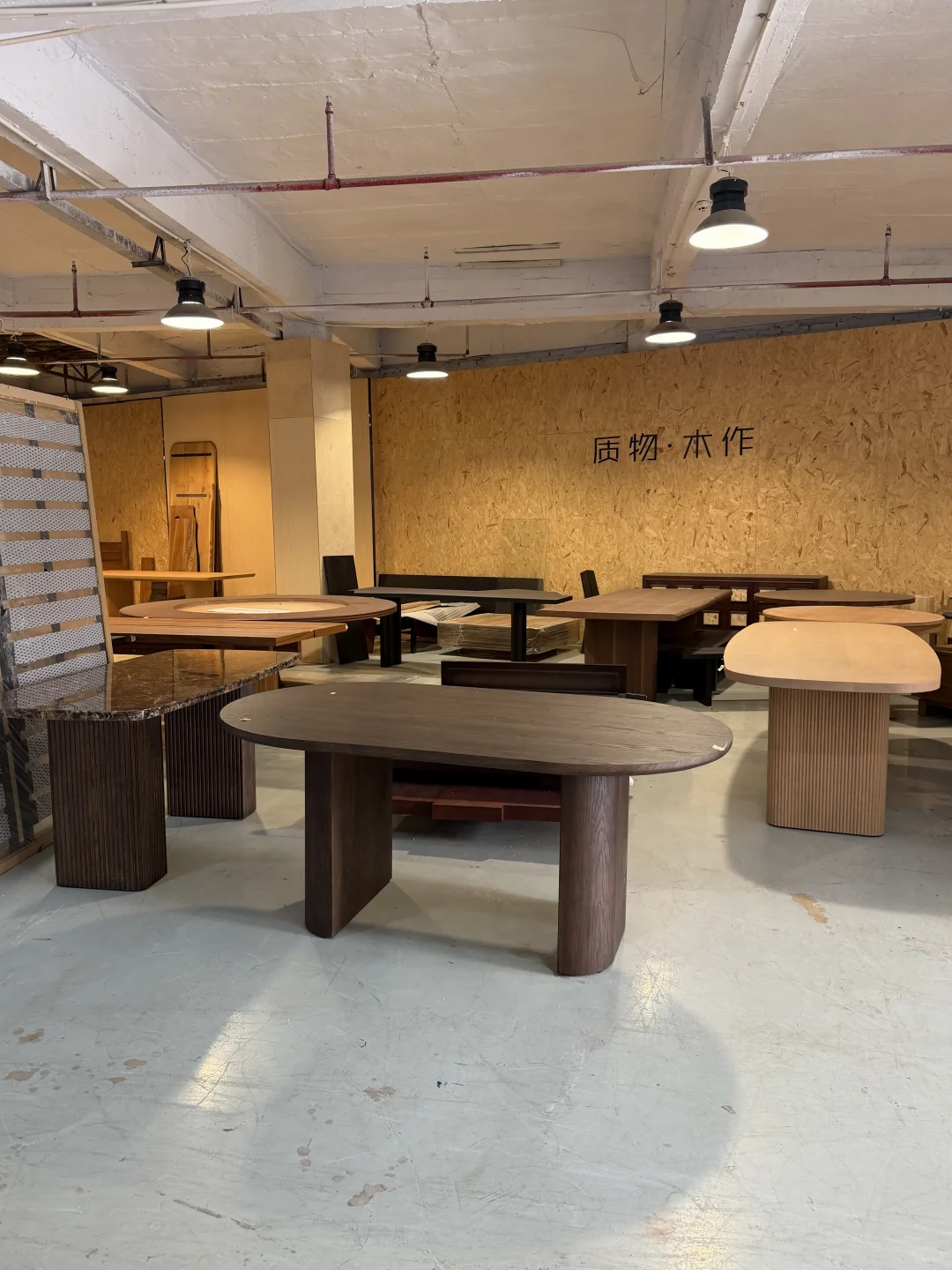
These are real showroom samples, not evidence of a production workshop. The photograph proves range in shape, proportion and visible finish; it cannot prove timber species, substrate, moisture content or construction quality.
For a dining table, the record might include:
- finished dimensions and an allowed tolerance;
- top construction, not merely “solid wood style”;
- named visible species or veneer if that matters;
- finish color, gloss level and approved physical swatch;
- edge profile and corner radius;
- base material, fixing method and floor protection;
- knock-down or assembled delivery;
- carton count, hardware bag and installation instructions;
- inspection points before packing;
- the remedy for a material, dimension or finish mismatch.
The wording must describe the thing you are buying, not the feeling you had beside it. “Premium,” “Italian style” and “high quality” are not inspectable. Millimetres, material layers, finish references, hardware codes and signed images are.
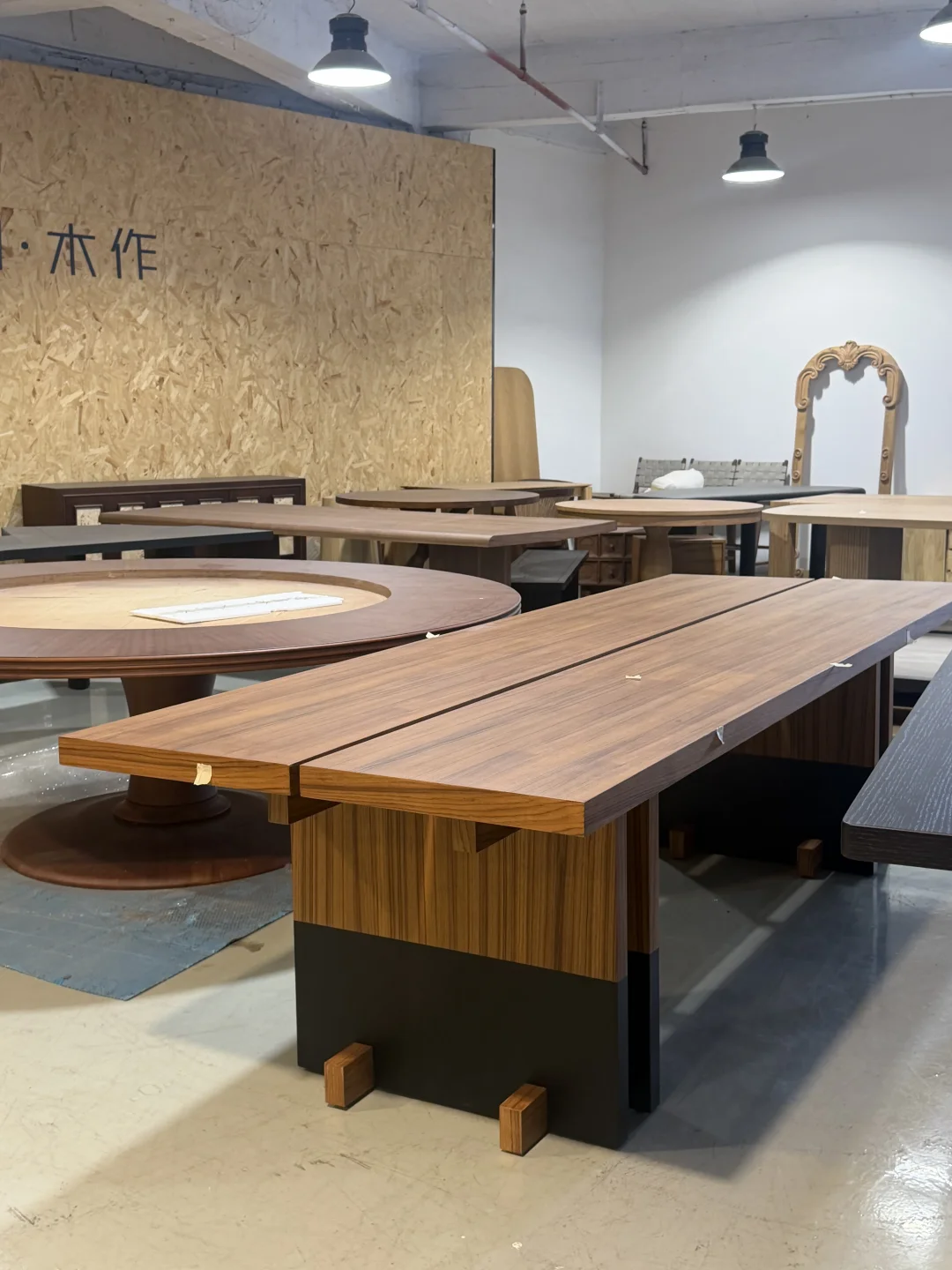
The seam and edge are visible enough to become specification questions. The image cannot establish whether the surface is solid timber, veneer or another construction, so the order must name the build instead of asking the photograph to guess.
This is where many international buyers misunderstand Foshan. The market feels physical, so the purchase feels verified. But touching one sample verifies only that sample on that day. Delivery-batch consistency remains a separate claim.
Inspect construction, not the style label
“Original wood,” “minimalist,” “designer,” “luxury” and “factory direct” can help someone browse. They cannot carry an inspection.
Look below, behind and inside. Open drawers fully. Check whether gaps remain even across the front. Test doors at several positions. Photograph the underside and connection points. On upholstered furniture, ask what supports the seat, how the frame is joined and how foam or filling is specified. For stone or composite surfaces, define the accepted pattern variation, edge treatment and reinforcement. For mixed-material pieces, inspect the junction where different expansion, weight and finishing systems meet.
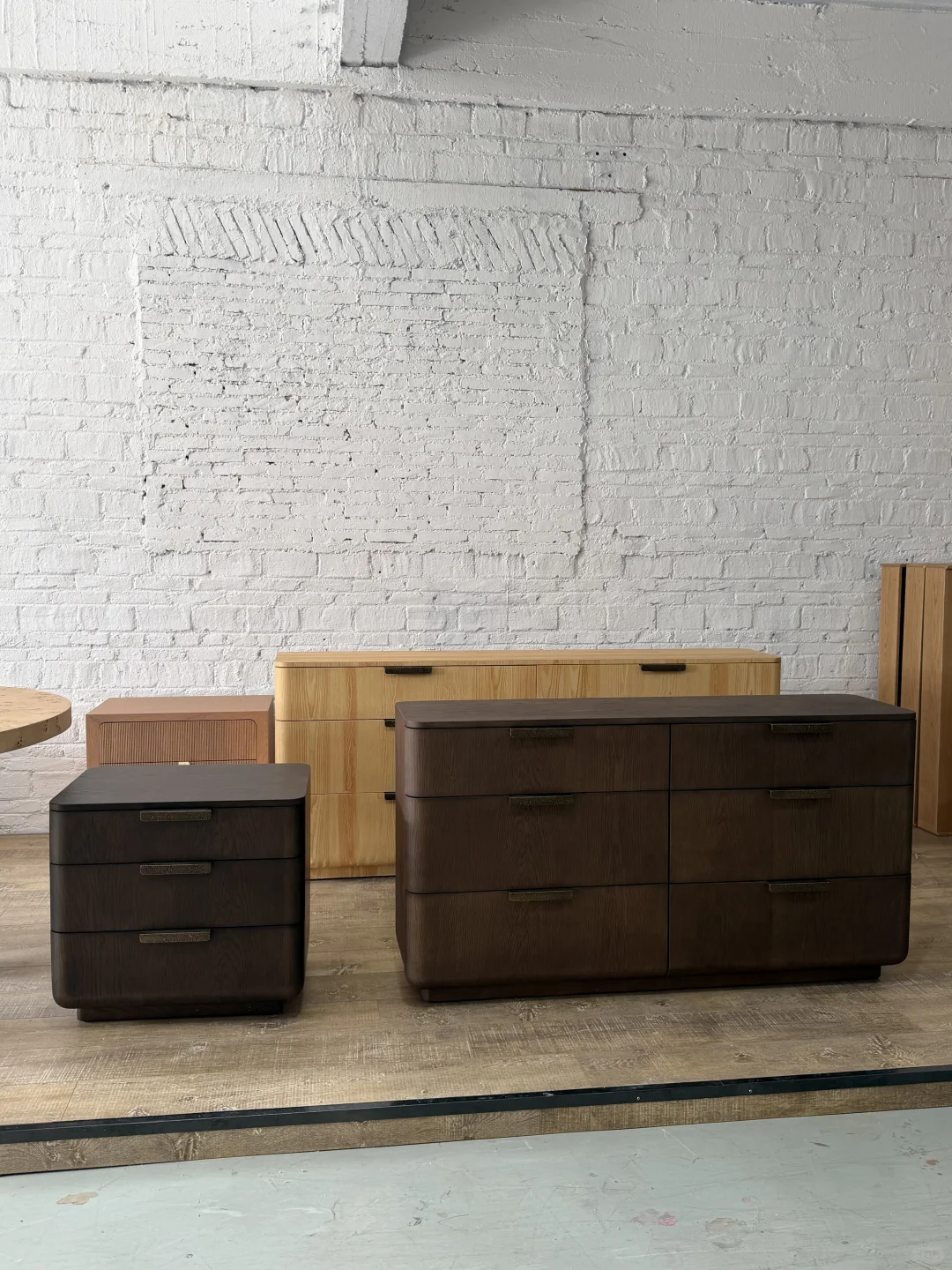
The front view supports questions about alignment, reveal, handle position and finish consistency. It cannot show runner brand, internal substrate, load capacity or repeated-cycle performance.
The best inspection question is not “Does this look good?” It is “Which visible or measurable condition would make us reject this item?” Define that condition before production. A scratch allowance, color range, wobble test, door-gap tolerance or upholstery seam standard is useful only when buyer, seller and inspector interpret it the same way.
If customization changes a structural feature, request a revised sample or a documented pre-production check. A longer table may need a different base. A heavier stone top may require different packaging and handling. A substituted fabric can change stretch, color and seam behavior. The word “small” in “small change” describes the drawing, not necessarily the manufacturing consequence.
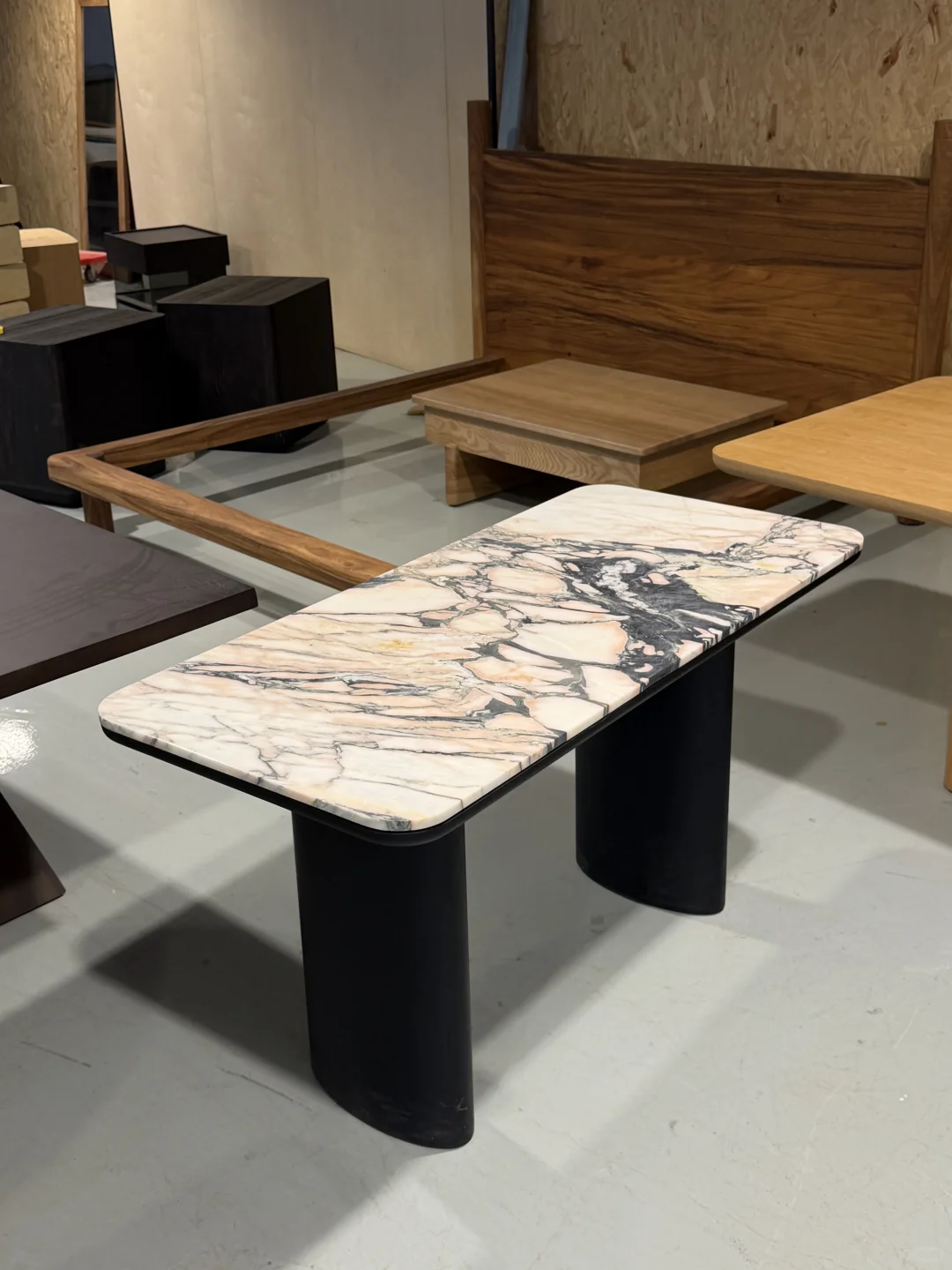
This mixed-material sample makes the interface question unavoidable: what is the top, how is it supported and how will it be protected? The image cannot answer those questions or prove the material.
Treat rugs, upholstery and finishes as materials, not color swatches
Soft furnishings are where a mood board can become expensive. Two beige fabrics may differ in abrasion, cleaning method, lightfastness, backing and hand. Two rugs with a similar photograph may differ in pile height, fiber, edge finish, shedding and final dimensions. Natural stone and timber bring legitimate variation; “natural variation” should not become permission to deliver anything.
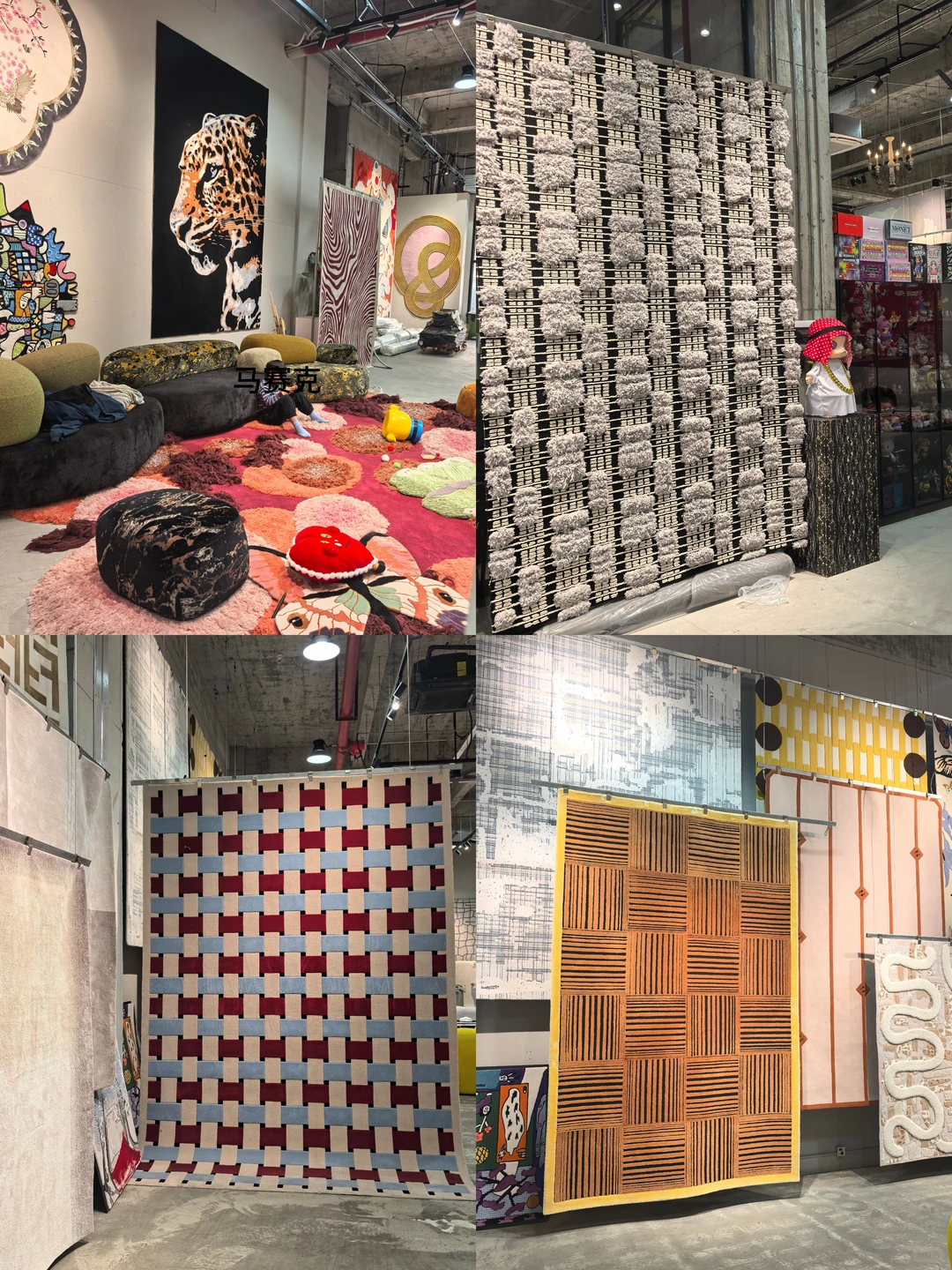
The collage proves that pattern is only one variable. Pile, relief, weave and edge treatment change the object before color enters the discussion. It cannot prove fiber content, durability, care method or final size.
Approve materials at the level your decision actually needs. If exact color matters, compare a physical sample under relevant light and define how batch variation will be handled. If cleanability matters, obtain the care instruction and performance evidence before selecting on touch. If a rug must fit under a table, order from measured room geometry, not a showroom vignette.
I distrust any buying process that becomes more precise about the Instagram color palette than about the object underneath it. Style brings you to the sample. Specification protects the result.
Packing, consolidation and installation are part of the furniture order
A perfect table can still fail as cargo. Furniture is large, finish-sensitive and often assembled from parts with different damage risks. A packing plan should be approved with the product, not invented after the balance payment.
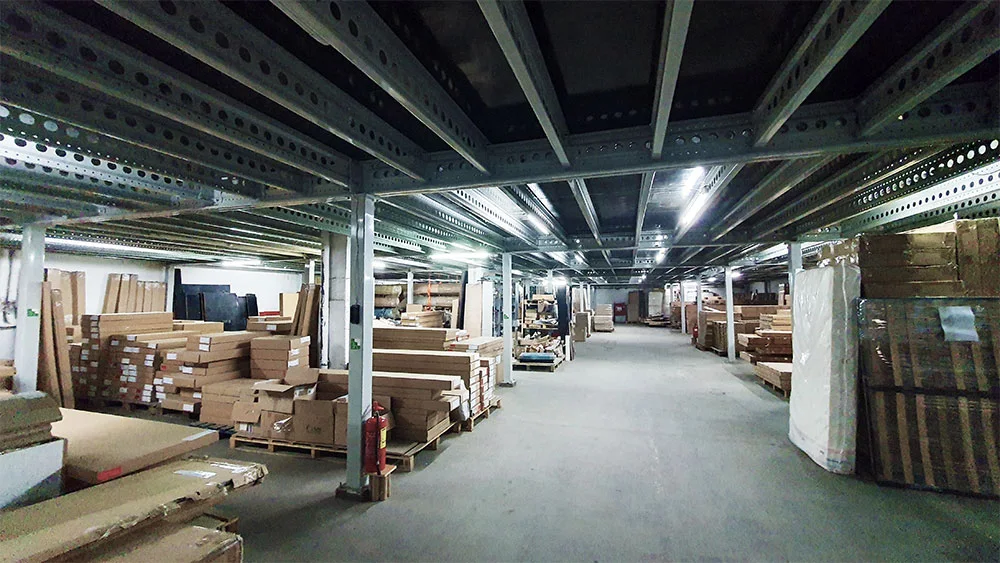
This open-license warehouse photograph shows the physical form of flat-pack storage: many labeled cartons, repeated package sizes and dense racking. It is general delivery-chain evidence, not a Foshan warehouse or proof that a supplier packed any specific order correctly.
Record at least:
- whether the item ships assembled, knocked down or partly assembled;
- which surfaces receive film, foam, corner protection, cartons or crates;
- whether protective material can mark leather, lacquer, metal or stone;
- carton or crate dimensions, weights and piece counts;
- how legs, glass, stone, hardware and instructions are separated and labeled;
- consolidation responsibility when several sellers share one shipment;
- loading photographs and package identifiers;
- destination access, lift size, doorway clearance and installation responsibility;
- the notice period, evidence and remedy required for shortage or transit damage.
Do not assume one forwarder or warehouse will understand every finish. Ask who checks package count, who photographs visible damage, who signs the handoff and who holds spare hardware. The cheapest unit price can disappear under repacking, storage, redelivery, replacement labor and a missing installation part.

This open-license photograph makes the loading handoff visible: a worker, forklift, palletized cargo and container have to align in one confined operation. It was photographed at a warehouse in Thailand, not Foshan. It proves the action and handling constraints only; it cannot establish furniture content, origin, package condition or final delivery quality.
This is also why I do not publish a universal Foshan price guide. Prices move with material, size, quantity, customization, payment, packing, freight and destination service. A social post can report one purchase. It cannot price your order.
A written mismatch record is stronger than a general warning
One archived Shunde government forum case records a 2019 purchase in which the delivered sofa-cover color differed from the selection. The buyer had photographs and messages; the dispute was later mediated. One complaint cannot characterize all Lecong merchants, and it should not become a blacklist. It does show why color, photographs, order identity and remedy must live in the buying record before delivery.
When something differs, document it without drama:
- Match the received item to the order line and package identifier.
- Photograph the whole item and the specific difference under useful light.
- Measure rather than describe when a dimension is involved.
- Preserve packaging and labels until responsibility is clear.
- State the agreed specification, observed condition and requested remedy.
- Record the final resolution, including partial fixes and unresolved limits.
This is stronger than posting “Foshan furniture is bad” or “this seller is perfect.” Both slogans erase the product, order and evidence. Good procurement stays specific.
What international buyers should leave Foshan with
You do not need the longest supplier list. You need a smaller set of records that remain intelligible after the showroom lights are gone.
Before leaving, confirm that each shortlisted item has:
- one stable sample reference;
- complete dimensions and configuration;
- named visible and hidden materials;
- finish and hardware references;
- a quotation with quantity, currency, trade term and separate charges;
- the legal payment entity and responsible commercial contact;
- disclosed production handoffs for critical processes;
- an approved-sample or pre-production plan;
- inspection timing and acceptance criteria;
- packing, consolidation and installation responsibilities;
- a written mismatch and damage process.
For mixed small commodities, the Yiwu wholesale market guide explains a different consolidation problem. For components and rapid electronics iteration, the Shenzhen electronics market guide owns that route. Do not carry furniture assumptions into either cluster. Product geography is useful because it changes the questions.
The relationship also matters, but not as a substitute for the record. Our guide to Chinese business culture explains why trust grows when small promises are kept and bad news travels early. The best Foshan partner will not resent a clear specification. They will use it to reduce ambiguity across sales, production, inspection and delivery.
My Foshan furniture market verdict
The Foshan furniture market is powerful because it compresses comparison. You can see proportion, material and finish differences that a catalog hides. That advantage ends the moment a chosen sample becomes an untraceable promise.
So use Foshan for what it does unusually well: compare widely, reject quickly and make taste concrete. Then become deliberately unromantic. Name the material. Measure the object. Identify the production handoff. Define the inspection. Approve the packing. Write the remedy.
The best purchase is not the one that looked most impressive under showroom lighting. It is the one whose identity survives the journey from sample to specification, from production to inspection, and from packing to the room where it must finally work.
Which furniture promise would you refuse to leave verbal: material, dimensions, finish, hardware, packing or the remedy after a mismatch? Add your own paired evidence to the Furniture Sample-to-Delivery Atlas. Show what you approved and what arrived, remove private order details, and return when the resolution is complete.