The next Mid-Autumn Festival falls on Wednesday, September 15, 2027. It is celebrated on the fifteenth day of the eighth lunar month. Its deepest meaning is reunion: Chinese families make time for one another, share food, look at the moon and make absent people feel present.
I will say it plainly: the festival is not a luxury mooncake-box competition, and it is not one night when every Chinese family performs the same ancient ceremony. Its power lives in smaller actions. Somebody comes home for dinner. A mooncake is cut into wedges so everyone gets a taste. A parent saves one piece for the child who is working in another city. A phone call begins with ordinary questions and ends with nobody wanting to hang up.
What is the Mid Autumn Festival, and where did it come from?
The Mid-Autumn Festival—Zhongqiu Jie (中秋节 / 中秋節) in Chinese—is a major traditional festival fixed to lunar month eight, day fifteen. The English names Mid-Autumn Festival and Moon Festival point to two connected features: its place in the autumn calendar and the bright round moon associated with the night.
There is no honest one-sentence origin story. The festival grew from several layers:
- an old seasonal calendar that divided autumn into three months;
- attention to the moon and the middle of the eighth lunar month;
- harvest-season gratitude and food abundance;
- court and popular moon-viewing practices that changed across dynasties;
- family reunion, which became the festival's strongest modern emotional meaning;
- myths such as Chang'e and Hou Yi, which give the moon a human story.
Calling one of those layers “the origin” and treating the others as decoration makes history tidier than it was. Festivals rarely appear fully formed on a single morning. Dates, rituals, foods, stories and family habits accumulate until people recognize them as one occasion.
The name itself is a useful starting point. In the traditional seasonal system, the seventh, eighth and ninth lunar months make up autumn; the eighth lies in the middle. The fifteenth day sits in the middle of the lunar month and is associated with a round moon. “Mid-Autumn” therefore describes calendar position before it describes a modern holiday itinerary.
The Singapore National Heritage Board's Mid-Autumn Festival record likewise presents the festival as a living cultural practice shaped by moon appreciation, food, lanterns and community history, not as one frozen ritual with a single inventor.
My own view is firm: the festival survived because seasonal time became relationship time. Harvest and moon watching explain why the date mattered. Reunion explains why millions of modern people still rearrange work, travel, gifts and attention around it.
Why reunion is the meaning that matters most
The Chinese word tuanyuan (团圆 / 團圓) means reunion or coming together. It contains the idea of roundness, which is why the full moon and round food are such effective symbols. But the symbol only works when people do something with it.
A round mooncake left unopened in an office gift pile is not reunion. A small cake cut badly among people who are listening to one another is.
That distinction matters because commercial Mid-Autumn imagery can become suffocatingly perfect: gold packaging, identical smiles, a flawless moon and a table nobody has touched. Real reunion is messier. Someone arrives late. One relative complains about the traffic. Children reach for the sweetest filling. An older person asks whether you are eating properly. The table is cleared while the conversation is still going.
I trust that table more than the advertisement.
The round moon also carries distance unusually well. People in different cities can look toward the same object. Chinese poetry has used that possibility for centuries, but the feeling does not require literary education. A migrant worker, an overseas student, a parent and a child can all understand the simple thought: we are not in one room, yet tonight we are directing our attention toward the same sky.
Distance is therefore not the opposite of the festival. It is what gives reunion emotional weight. If everyone were always available, nobody would need to save a wedge, book a train, send fruit or make a late call. Mid-Autumn makes absence visible and then asks people to answer it.
How people celebrate the Mid-Autumn Festival in China
There is no mandatory national sequence. Across China, the most recognizable actions are returning for a meal, sharing mooncakes, looking at the moon, carrying or viewing lanterns, giving seasonal gifts and contacting relatives who cannot attend.
Reunion dinner comes before the performance
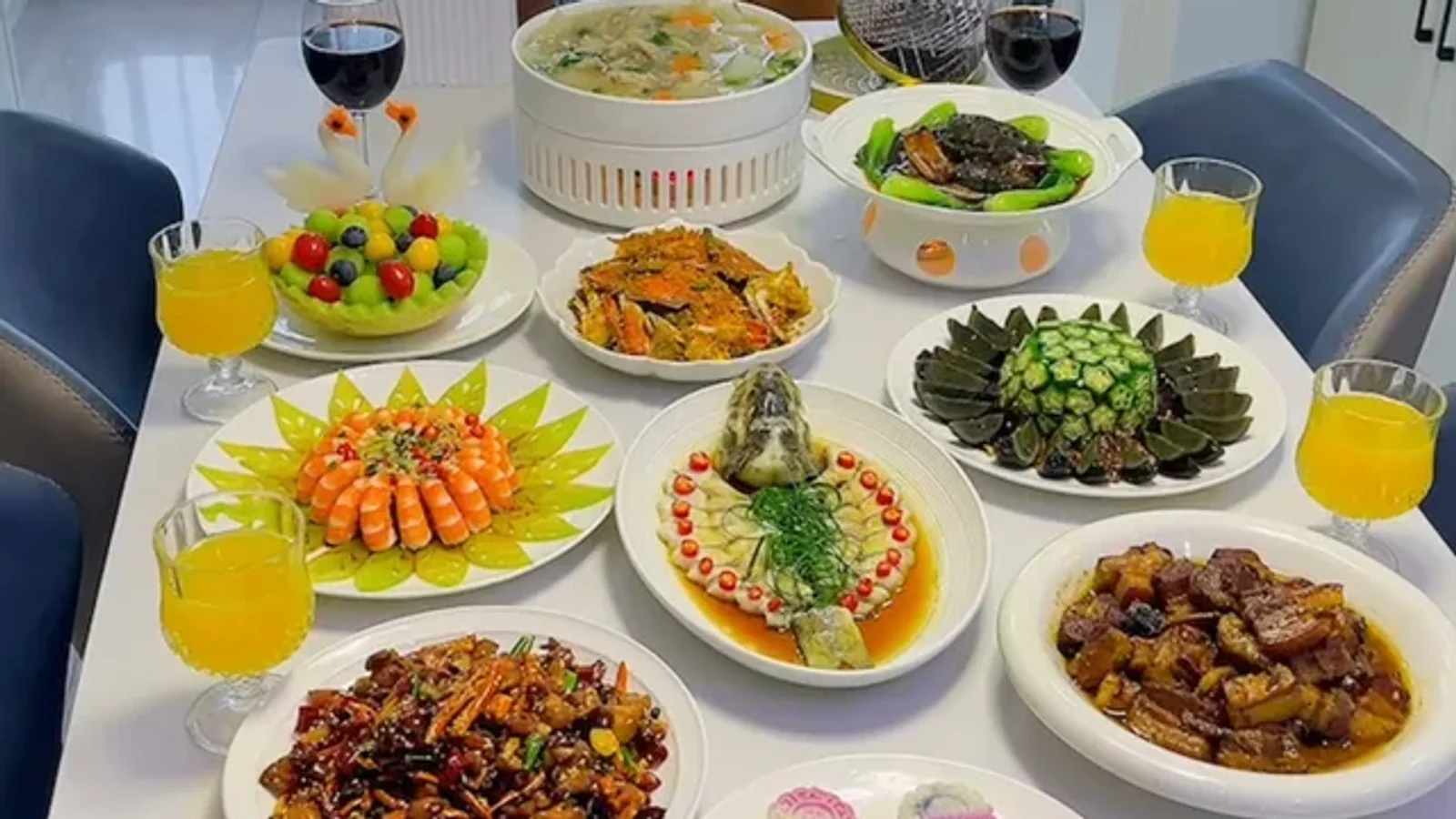
For many households, the meal is the center because it physically gathers people. The menu is not fixed. It may be cooked at home, ordered from a restaurant or assembled after work. Local dishes, seasonal fruit and the family's own favorites matter more than a checklist copied from the internet.
The household photograph above shows one real table with shared dishes, fruit, drinks and small mooncakes. It proves how this family made reunion visible; it is not a required national menu. What makes the dinner “Mid-Autumn” is not a compulsory fish, crab or soup. It is the decision to make time together on that date. In one family, grandparents cook all afternoon. In another, adult children reserve a restaurant because nobody has the energy to wash ten plates. Both can be sincere.
I reject the idea that a restaurant meal is automatically less traditional. Tradition is carried by repeated relationships as much as by homemade food. If outsourcing the cooking allows the family to sit down without one exhausted person serving everyone else, that may protect the actual purpose of the festival.
Mooncakes are shared, compared and sent
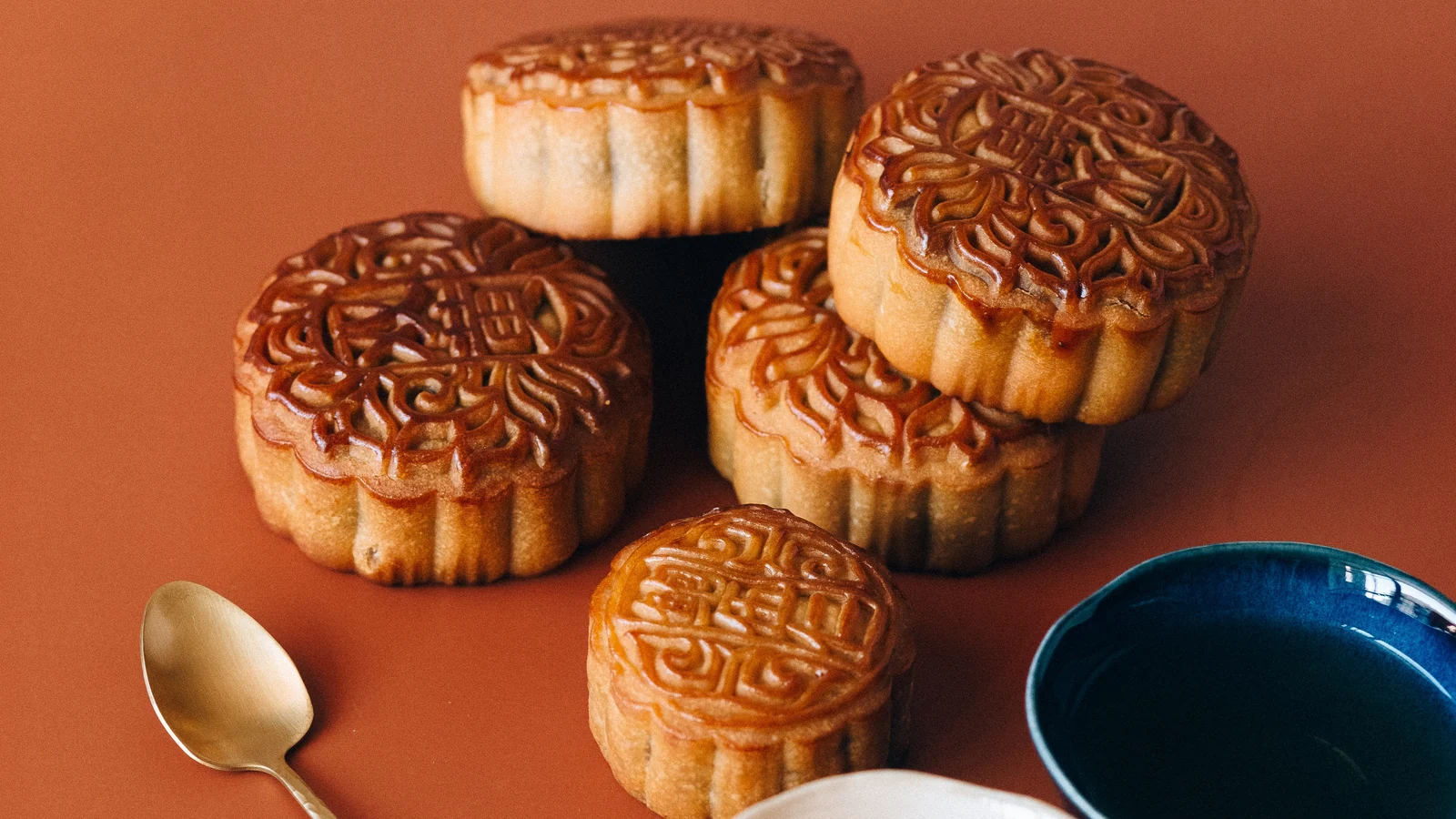
Mooncakes are the festival's most visible food, but “mooncake” is a category rather than one recipe. Cantonese-style baked cakes, flaky Suzhou-style pastries, Yunnan ham mooncakes, mixed-nut fillings, lotus paste, salted egg yolk, snow-skin products and modern custard or tea flavors create radically different textures.

This East Moment archive photograph documents one serving context: baked mooncakes with tea. It cannot identify the fillings or prove one universal ritual.
Dense mooncakes are commonly cut into small wedges so several people can compare fillings. That act is more meaningful than the round shape by itself. A whole cake becomes shares.
Our mooncake guide explains the crusts, fillings, textures and how to choose a box people will actually eat. My rule is simple: two cakes selected for the recipient beat twelve chosen for package size. Mid-Autumn generosity should not end as food waste.
Moon viewing may last five minutes—and that is enough
Moon viewing sounds formal in English, as if everyone must arrange a courtyard ceremony. Often it is simply an after-dinner walk, a few minutes on a balcony or a child being lifted to see above the buildings.
Clouds may hide the moon. Work may delay dinner. High-rise apartments may block the horizon. The practice does not fail because the scene is imperfect. Looking upward creates a pause in the evening and links the household to the festival's shared object.
This is one of the few traditions modern life has not made obsolete. A phone screen can connect a family, but the moon gives everyone something outside the screen to share.
Lanterns turn family time into a public night
Lanterns give children an active role and turn the evening into movement. Some carry rabbit, fish, fruit or cartoon-shaped lanterns. Public spaces may install large displays. Craft activities use paper, wire, glue or modern kits. Electric lights coexist with older paper forms.
Lantern practice varies strongly by place. A 2025 record from a night gathering in Foshan shows illuminated fish and animal forms moving through a real crowd.

The creator identified these scenes with a Foshan Mid-Autumn event. They document one local night, not a nationwide custom or one ancient origin.
This regional specificity is the point. Hong Kong's local heritage records include distinctive practices such as the Tai Hang Fire Dragon Dance; other places foreground lantern walks, family worship, fruit offerings or simply dinner. A festival shared across China does not require every city to look alike.
Gifts and calls carry reunion across distance
People send mooncakes, fruit, tea and other gifts to parents, relatives, clients or friends. The social meaning depends on the relationship. A formal business box can acknowledge obligation and respect. A small parcel chosen around a parent's actual taste can feel intimate.
Calls and video chats now do cultural work older lists of “traditions” often ignore. They are not fake reunion. They are how families respond when work, migration, study or borders make the table incomplete.
The crucial question is not “Is this ancient?” It is “Does this action make the relationship present?” A call can pass that test. A costly gift sent without attention can fail it.
What if you are invited to a Mid-Autumn dinner?
Ask the host what time the meal starts and whether anyone has already chosen dessert. You do not need to arrive carrying the largest mooncake box in the shop. If you want to bring something, ask what the household actually likes: fruit, tea or a few small cakes may be more welcome than a lavish assortment. Different fillings invite comparison; offering to cut and share one cake creates more conversation than handing over an unopened box.
Notice who the meal makes room for. Someone may have traveled across town; someone else may be present by video call. Do not assume that every guest wants to recite the Chang'e myth or pose beside a full moon. Ask what their family normally does on the night. That question turns a visitor's search for a universal "Chinese tradition" into an encounter with this particular household. A good guest helps with the table and learns a name or a preference. They do not demand a performance of authenticity.
Is Mid-Autumn a harvest festival?
Yes, harvest is an important layer—but “Chinese harvest festival” is an incomplete definition.
The autumn date, seasonal foods and older rhythms of gratitude connect the occasion to harvest and abundance. Yet contemporary urban families do not all perform one agricultural ritual. China includes farmers, office workers, students, migrant families and households overseas; their relationship to autumn is not identical.
Use a three-layer explanation:
- harvest explains the season and older gratitude for abundance;
- reunion explains the strongest modern emotional structure;
- local practice explains what people actually do in a specific family or place.
Removing harvest makes the festival float free of the calendar. Making harvest the whole story turns living people into museum figures. Both are wrong.
Where Chang'e and Hou Yi belong
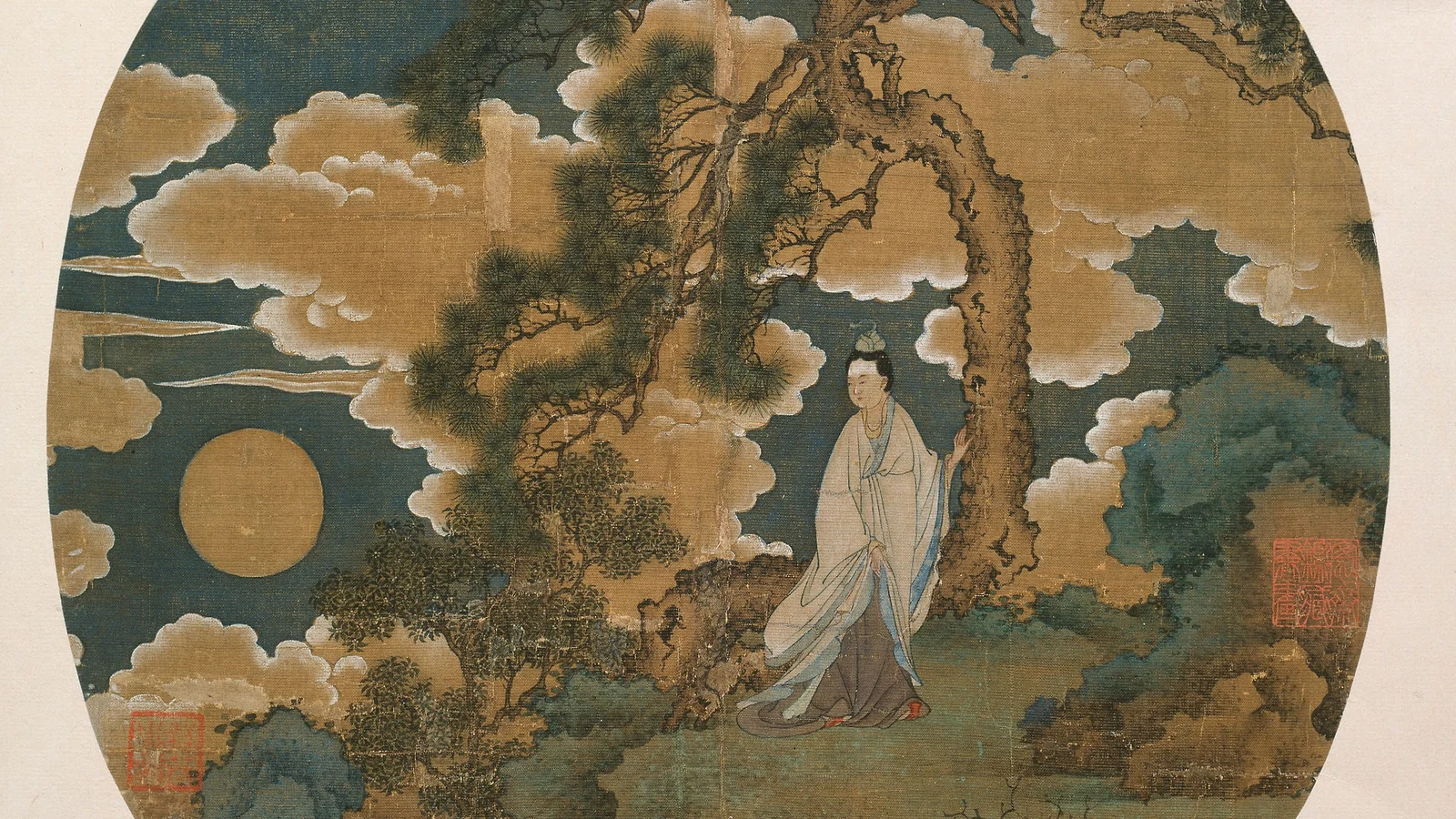
Chang'e is the best-known moon figure associated with Mid-Autumn. In the familiar story, she takes an immortality drug and flies to the moon, leaving her husband Hou Yi on earth. Later retellings add a threatening intruder, the Jade Rabbit, a Moon Palace and motives that make her departure sacrifice rather than theft.
The myth gives the moon emotional inhabitants, but it is not the sole origin of the festival. Families do not need to agree on Chang'e's motive in order to share dinner.
Read the Chang'e guide for the early source layers. The Hou Yi story follows the archer through the shooting of nine suns and the private loss that follows his public victory.
The couple matters here because their separation sharpens the festival's reunion theme. The moon looks perfectly round while their relationship remains divided. That contradiction is more memorable than a neat moral.
When is the Mid-Autumn Festival in 2027?
The next festival date is Wednesday, September 15, 2027. The Hong Kong Observatory's 2027 Gregorian–Lunar calendar places lunar month eight, day fifteen on that date. The 2026 festival fell on Friday, September 25; it remains in the table below as historical reference.
The mainland public-holiday schedule is a separate question from the lunar festival date. Check the applicable year's official holiday notice before booking leave; do not assume a three-day break just because 2026 had one. Employment and public-holiday rules differ by jurisdiction.
| Year | Festival date | Day |
|---|---|---|
| 2026 | September 25 | Friday |
| 2027 | September 15 | Wednesday |
The Gregorian date moves because the festival follows the Chinese lunar calendar, not a fixed September date. Travel plans should therefore use the year-specific date and official holiday notice rather than memory.
The festival succeeds when somebody feels remembered
The Mid-Autumn Festival began through layers of season, moon, harvest, courtly and popular practice. It lives now because reunion remains unfinished work.
The food can change. Lanterns can be handmade or electric. Dinner can happen at home or in a restaurant. The moon can disappear behind clouds. None of that breaks the festival.
What breaks it is treating reunion as packaging.
I know exactly where I stand: Mid-Autumn succeeds when somebody feels that a place was kept for them. That place may be a chair, a mooncake wedge, a parcel, a phone call or five quiet minutes under the same sky.
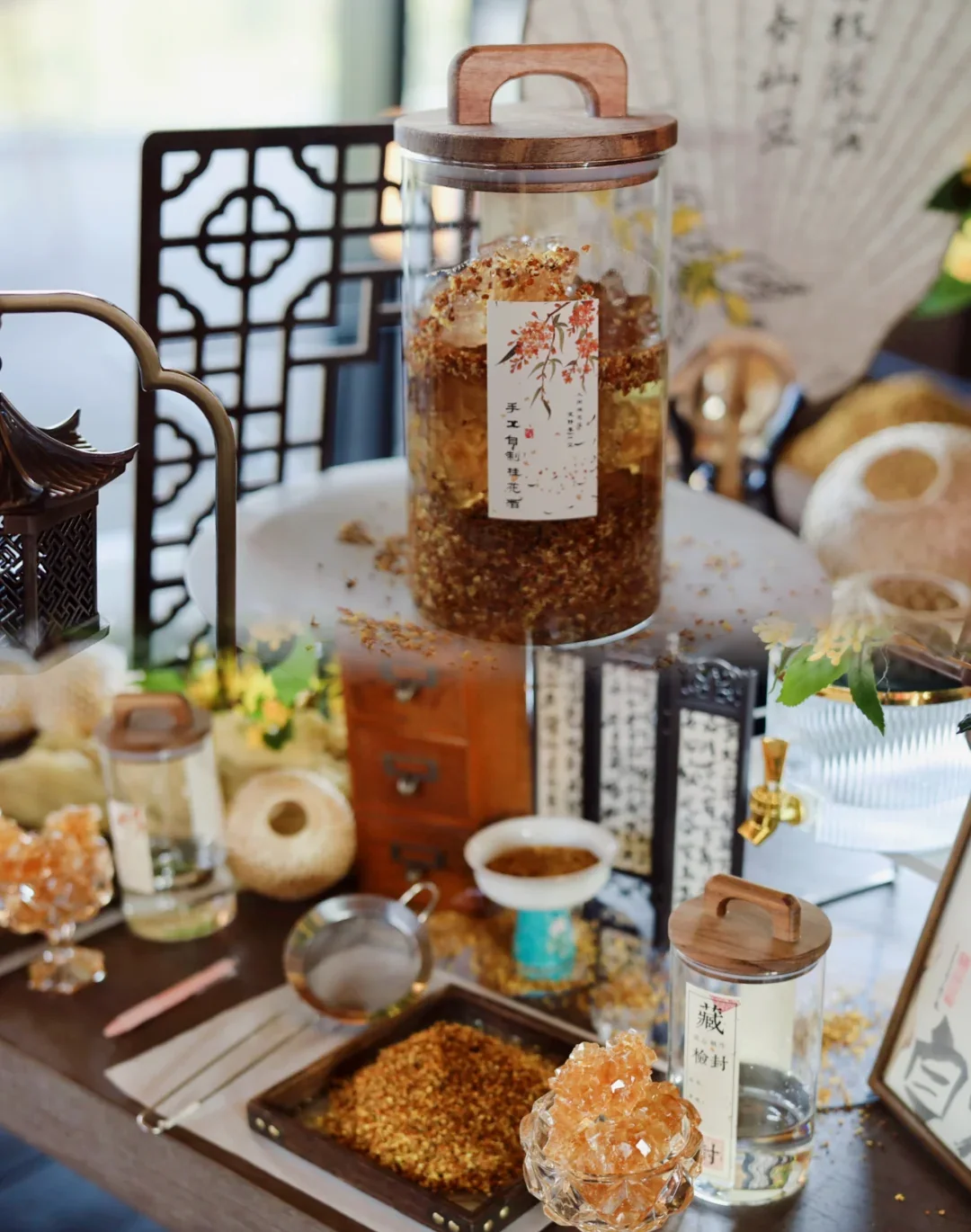
Continue through the Chinese festivals collection to compare this reunion logic with New Year return, Qingming remembrance and Lantern Festival public light. If osmanthus appears on the table, our osmanthus wine guide explains why one romantic label can hide very different fermented, infused and prepared drinks.