The Hungry Ghost Festival falls on Thursday, August 27 in 2026, the fifteenth day of the seventh lunar month. But the single date is only the center of a wider Ghost Month. The festival is not Chinese Halloween: its distinctive ethic is to feed, entertain and set boundaries for ancestors and wandering spirits, including dead people who may have nobody left to remember them.
The first time an outsider sees paper offerings, an imposing effigy and rows of empty seats facing opera, “spooky festival” feels like an easy explanation. It is also the wrong center of gravity. Halloween organizes much of its modern public life around costume, play and managed fear. The Hungry Ghost Festival asks how the living make room for the dead without inviting disorder into everyday life.
When is the Hungry Ghost Festival in 2026?
The central 2026 date is August 27. The Hong Kong Observatory calendar identifies that Thursday as the fifteenth day of lunar month seven.
| Calendar layer | What it means |
|---|---|
| Seventh lunar month | A wider period often called Ghost Month |
| Fifteenth day | The date most commonly identified as Hungry Ghost, Zhongyuan or Yulan Festival |
| Local event dates | Community rites and performances may occur on different days within the month |
This month-versus-day distinction prevents a common planning error. A visitor may arrive on the fifteenth and discover that a local opera, offering ceremony or neighborhood event follows its own schedule.
The guest list includes people without descendants
The identified photograph documents scale, an effigy and arranged offerings at one Hong Kong event. It cannot prove a universal theology.
Ancestor rituals can be described too neatly as exchanges inside a family: descendants remember their own dead. Hungry Ghost observance unsettles that closed circle. Attention may also extend to wandering, neglected or unclaimed spirits. The ethical insight is severe and generous: death does not guarantee that someone will continue to have descendants, a grave or a person who knows their name.
Food and ritual attention create temporary hospitality. The living acknowledge need without pretending that every presence belongs inside the household. That combination of care and caution explains the festival better than fear alone.
Offerings are directed, not decorative

This cemetery scene proves that offerings were made in one documented setting. It does not identify the recipients or meaning of every object.
Offerings may include food, incense and paper goods according to local practice. Some are intended for family ancestors; others are placed in public or liminal spaces. The exact arrangement matters to participants even when a passerby sees only “festival props.”

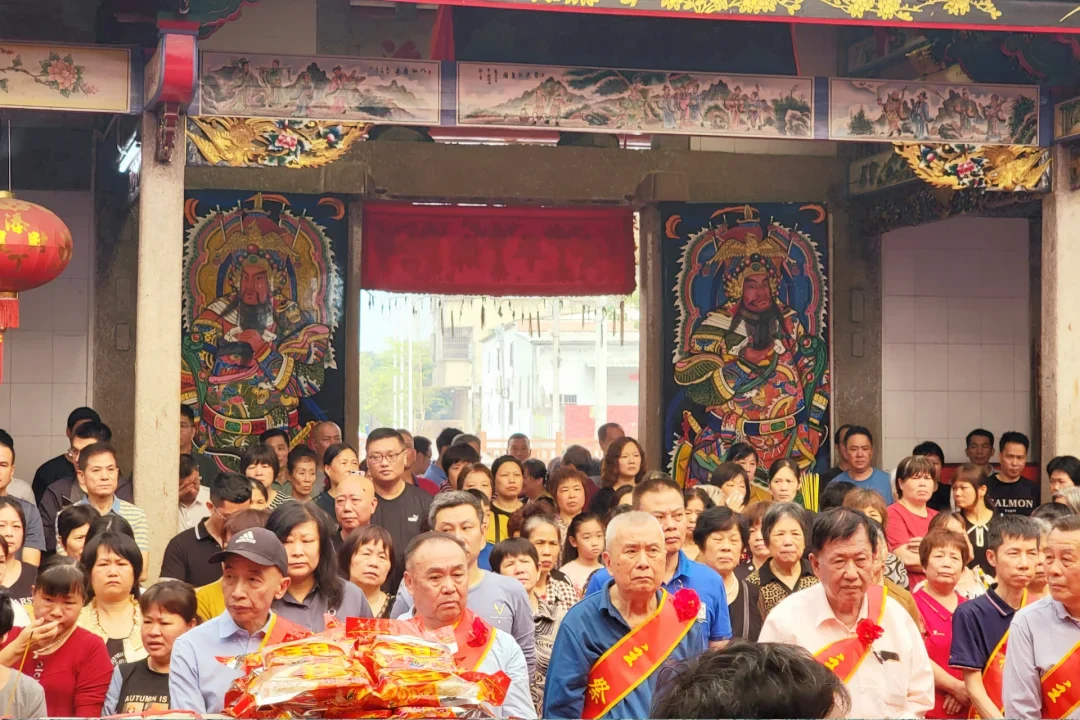
The packages show a material market around the festival. Their printed form does not prove that all buyers use them in the same way.
Paper offerings also reveal modern desire. Representations of money or useful objects can change with consumer life. That does not automatically make the practice cynical. Material imagination gives families a language for care: what might the dead need, and what do we wish we could still give them?
Fire and smoke are not harmless symbols. Local restrictions, building rules and air-quality concerns can change practice. Never burn offerings merely to imitate a photograph. Follow the site, family and legal context.
Taboos draw a boundary around uncertainty
Online lists often turn Ghost Month into clickbait: do not swim, do not stay out late, do not pick up money, do not disturb roadside offerings. Some cautions reflect regional folklore; others are family advice, later repetition or practical safety wrapped in supernatural language.
The right response is neither blind obedience nor ridicule. Ask who follows the rule, where and why. A boundary can express respect even when two generations explain it differently. Avoid stepping over offerings, touching ritual objects or photographing mourners without permission because those are ordinary forms of courtesy, not because a viral list promises punishment.
The festival's boundary work is precise: hospitality does not mean intimacy, and acknowledgment does not mean possession. The living open a ritual space and then close it.
Opera gives the unseen guests a public place

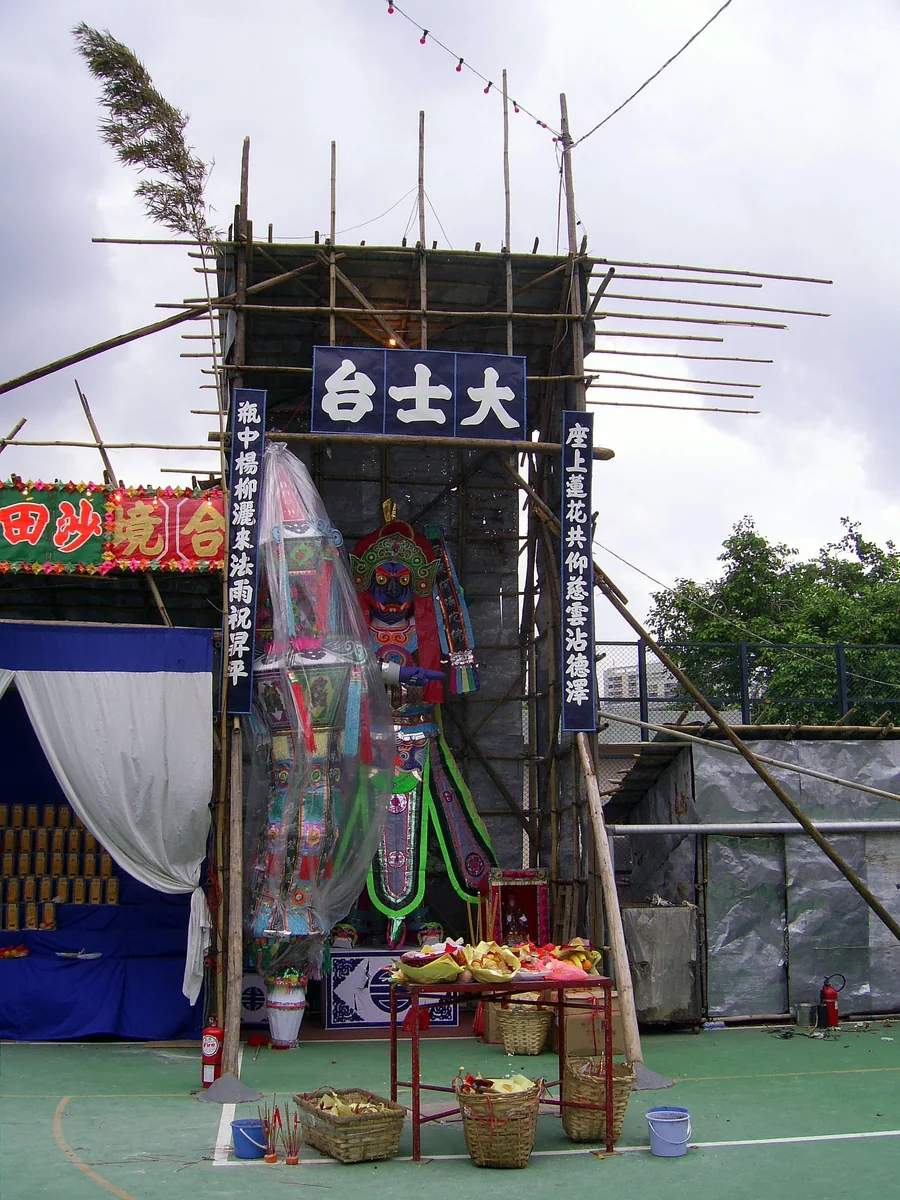
The real stage documents public performance within one Hong Kong Chiu Chow community event. It does not show the full rite or its audience.
UNESCO's account of the Yu Lan Ghost Festival of Hong Kong's Chiu Chow community records religious rites, food and rice distribution, opera and other community activities. The performance is not an entertainment add-on. It creates sound, duration and an audience space in which visible residents and unseen guests can be addressed together.
Empty front seats are often explained to visitors as places for spirits. Whether a particular organizer uses that arrangement must be verified locally, but the image captures a larger truth: a public event can recognize an audience beyond the people buying tickets or taking photographs.
Community distribution also prevents the festival from becoming only metaphysical. Care passes toward living neighbors. Ritual and mutual aid occupy the same calendar.
Why “Chinese Halloween” fails
The comparison is memorable because both festivals involve the dead. It fails on purpose, social structure and mood.
| Hungry Ghost Festival | Modern Halloween |
|---|---|
| Offers food, rites and performance to the dead | Often centers costume, play, candy and managed fright |
| Operates within a lunar month and local ritual calendars | Fixed on October 31 |
| Includes ancestors and potentially unclaimed spirits | Ghost imagery need not imply a relationship with actual dead people |
| Balances hospitality with boundaries | Often invites playful identification with monsters or spirits |
Neither side is a single universal practice, but the contrast shows why translation by nearest Western holiday removes the festival's moral argument.
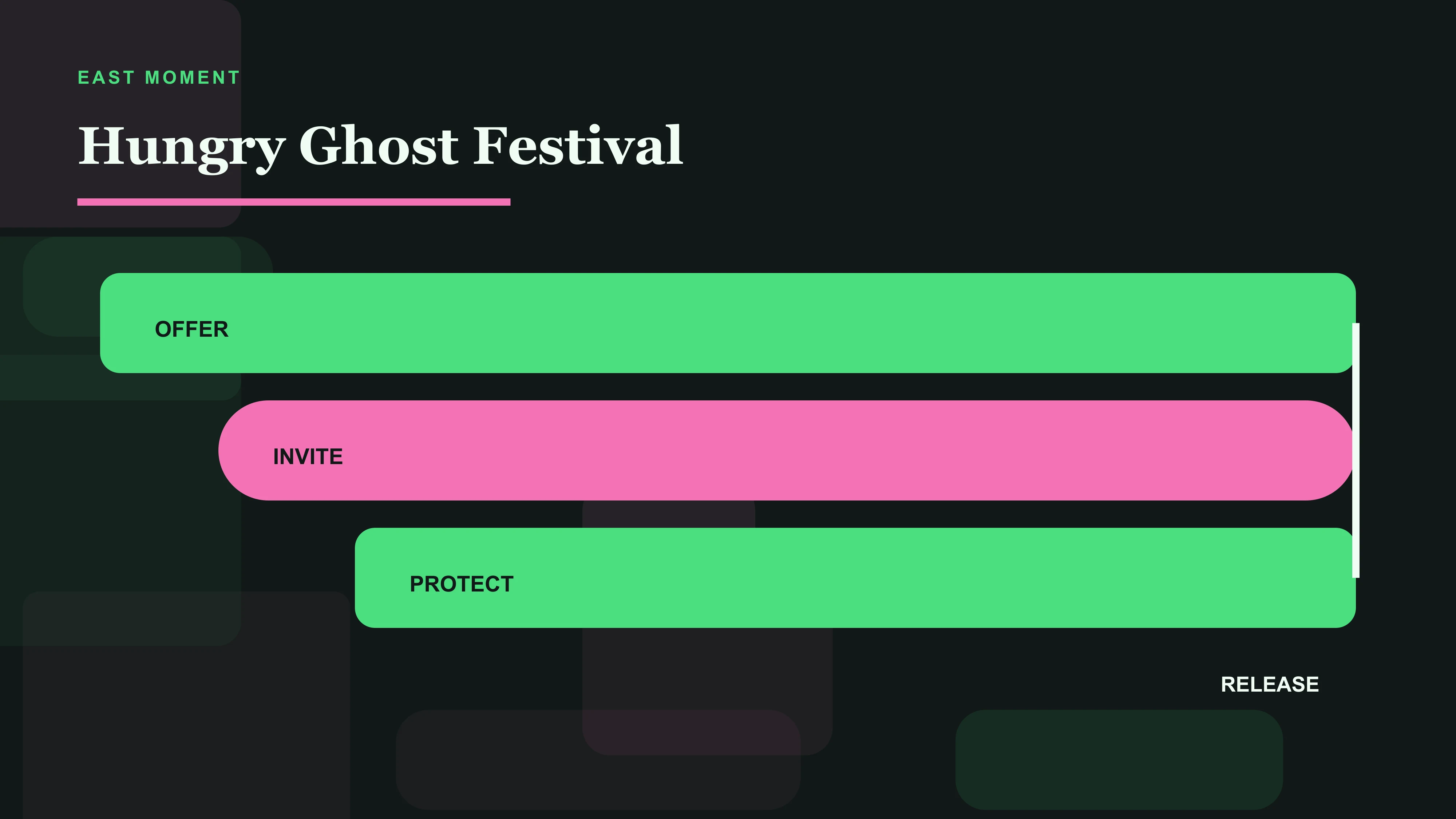
I reject “Chinese Halloween” because it makes fear the protagonist and turns care into decoration. The mistake is not merely linguistic. It replaces a demanding guest list—ancestors, neglected spirits, living neighbors and the people organizing the rite—with costumes and spectacle. I believe the festival must be read through responsibility first: who is invited, who is protected, what is offered and how the temporary opening is closed.
The contrast with the Mid-Autumn Festival is even more useful. Both are tied to a full-moon date, yet one draws living relatives toward reunion while the seventh-month observance widens responsibility toward ancestors and the unclaimed dead. A shared moon does not create a shared emotional task.
How to encounter the festival respectfully
Watch from the public area, follow organizers and keep ritual routes clear. Ask before photographing people, altars or opera backstage spaces. Do not touch food or paper items. Name the community and location in captions rather than labeling every image “Chinese ghost culture.”
Read the Qingming Festival guide to compare family grave care with seventh-month hospitality, then return to the Chinese festivals calendar for the annual sequence. The difference between the two remembrance traditions is more revealing than a generic list of ancestor customs.
Hungry Ghost Festival is public care with dangerous boundaries
The seventh lunar month is often explained through fear: gates open, ghosts wander, taboos multiply. Fear is present, but it is not the whole emotional structure. Offerings, opera and temporary ritual spaces also organise care for beings who may have no descendants or stable place among the living.
That is why food should not be photographed as exotic clutter. Placement, timing and recipient matter. An ancestral offering inside a family relationship differs from provision made for wandering spirits. The same incense or paper object can enter different ritual logics.
Opera seats make the invisible social
Yu Lan and related community festivals may build temporary opera stages, with front rows understood as reserved for non-human guests. The empty chair is not “proof” a ghost attended; it is visible evidence that the organisers structured hospitality around an unseen recipient.
The performance also gathers living neighbours. Ritual, entertainment and local association work occupy the same space. Reducing the event to superstition misses the community infrastructure holding it together.
Burning paper is an action with meaning and consequence
Joss paper packages materialise care, imagined need and exchange. They also create fire, smoke and environmental concerns. Modern restrictions or designated burners do not automatically destroy tradition; they show practice negotiating dense urban life.
The responsible page distinguishes cultural explanation from instruction. Local fire rules, building policy and temple guidance govern what can be burned and where. Do not improvise a ritual from search snippets.
The festival is not Chinese Halloween
Both involve the dead in popular comparison, but their calendars, ritual relationships and social histories differ. “Chinese Halloween” may help a newcomer recognise the topic and then immediately mislead them into costume and horror expectations.
My stronger description is a month of managed permeability. The living acknowledge that memory and obligation do not stay neatly inside the household, then create boundaries for invitation and release.
Ancestors and wandering ghosts are not one category
An ancestor is held inside a named relationship and continuing family memory. A wandering or neglected spirit is defined partly by the absence of that stable care. Ritual responses may overlap in material but differ in address.
This distinction changes how food is read. A meal placed for known relatives carries biography and kinship. A public offering can acknowledge beings outside the family line. Calling both “ghost food” destroys the social grammar.
The street becomes temporary ritual architecture
Tables, burners, stages and marked seating reorganise an ordinary neighbourhood. Routes for pedestrians, performers, offerings and spectators have to coexist. The festival is not floating belief; it is practical coordination.
That coordination also reveals modern tension. Residents may worry about smoke or blocked access. Organisers may adapt hours, burners and cleanup. Tradition survives through negotiated practice, not because nobody is allowed to ask practical questions.
Photography has an ethical boundary
A dramatic flame or altar can tempt the visitor to treat ritual as visual content. Ask before photographing identifiable participants, do not move offerings, and do not stage an interaction for a stronger image. The most spectacular frame is not always the most truthful one.
East Moment should use images to show structure: who the offering addresses, how the temporary space is arranged, where opera meets ritual, and what labour happens after the crowd leaves.
Why children remember rules before explanations
Many people first encounter Ghost Month as instructions from elders: do not disturb an offering, avoid certain behaviour at night, show respect near ritual space. The rule can arrive before theology.
That memory matters because culture is often transmitted through tone and repeated caution rather than a formal lesson. A page can explain possible meanings without claiming every family gives the same reason.
My final judgment is that the festival's emotional centre is responsibility toward the unprotected. Fear creates attention; care gives the attention a social form. That is the reason to look past the horror label.
The remaining boundary is humility. A visitor can observe smoke, music, food and seating while still not knowing every addressed being or family intention. The honest caption names what is visible and asks the participant for meaning instead of completing the ritual from imagination.
The Hong Kong Intangible Cultural Heritage Inventory provides an institutional route into Yu Lan traditions; local practices still vary. Continue to Chinese festivals for the annual ritual calendar, and return with one observed act—food placement, seating, opera or paper—not a generic ghost story.
Respect begins where certainty ends. That is not vagueness; it is the discipline of leaving a living practice in the hands of the people performing it.