Chinese New Year arrives loudly in photographs and quietly in real life. Before the lanterns, fireworks and red paper, someone has checked train tickets six times. Someone is washing vegetables. Someone has moved a stack of boxes so a relative can sleep in the spare room. Celebration begins as work, and love often enters wearing an apron.
What is Chinese New Year?
Chinese New Year is the festival season that welcomes a new year in the Chinese lunisolar calendar. In China it is commonly called the Spring Festival, Chunjie (\u6625\u8282). Its cultural center is renewal: homes are prepared, families gather, ancestors may be remembered, gifts and greetings circulate, and the coming year is approached with deliberate hope.
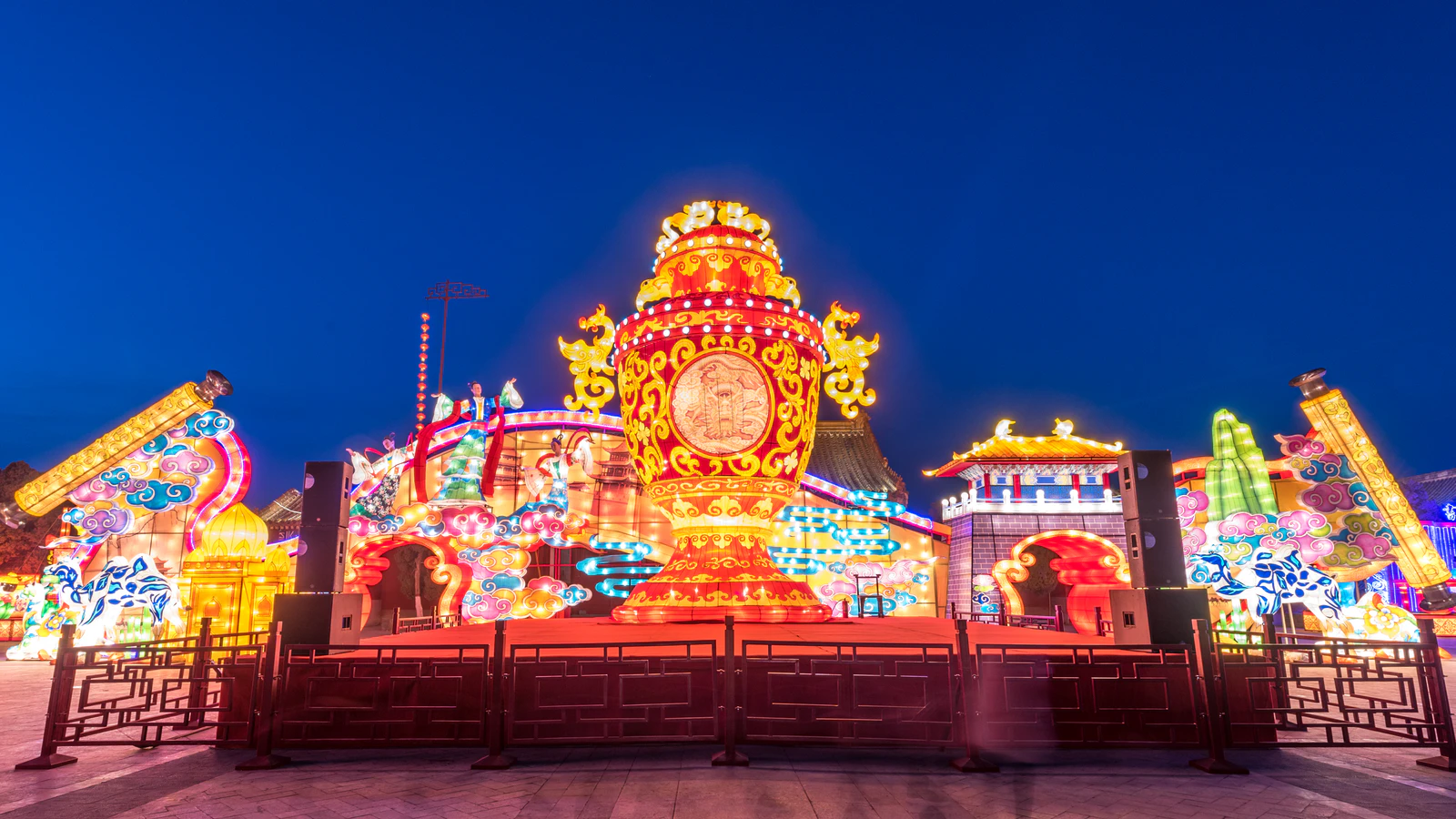
The first day is important, but the festival is larger than one date. Preparations begin beforehand, New Year's Eve carries the emotional weight of reunion, and visits and celebrations continue afterward. The Chinese Lantern Festival on the fifteenth day of the first lunar month traditionally closes the broader season.
After four decades of living in China, I think the festival is best understood through verbs rather than objects. People return, clean, cook, wait, welcome, remember and begin again. A red lantern is visible. The decision to travel home through winter crowds is the deeper tradition.
The UNESCO record of Spring Festival social practices reinforces that human scale: this is knowledge and custom transmitted through households and communities. I refuse to flatten that living system into “wear red, eat dumplings, receive money.” Those are recognizable surfaces. The festival exists because somebody accepts responsibility for making the year feel different from an ordinary Tuesday.
Singapore's National Heritage Board documents Chinese New Year as a diverse living tradition carried through family visits, gifts, food and locally evolved practices. That diaspora record matters: it proves that continuity does not require every household to reproduce one mainland checklist. A festival can travel, absorb a new city and remain recognizably itself.
Chinese New Year, Spring Festival and Lunar New Year
The names overlap, but they are not perfect synonyms.
| Term | Useful meaning | Important boundary |
|---|---|---|
| Chinese New Year | The new-year tradition shaped by Chinese calendars and communities | Chinese regional and diaspora practices still vary |
| Spring Festival | The common modern name used in mainland China | It refers to a winter festival whose name looks toward spring |
| Lunar New Year | A broad English umbrella used for several Asian new-year traditions | Vietnamese Tet, Korean Seollal and Chinese New Year are related calendar events, not one identical culture |
Using “Lunar New Year” can be inclusive when speaking about several communities. When discussing a specifically Chinese custom, “Chinese New Year” or “Spring Festival” is more precise. Respect begins with naming the people whose tradition is actually in front of us.
The festival starts before the calendar turns
Preparation changes the emotional temperature of a home. Rooms are cleaned, decorations appear, food is bought, haircuts and errands are completed, and travel plans begin to govern the family conversation. Cleaning is often connected with clearing away the old, though the exact timing and household rules differ.
Red couplets may be pasted beside doors. The character fu (\u798f), meaning good fortune or blessing, appears on paper squares. In some homes it is displayed upside down through a visual pun suggesting that fortune has arrived. A custom this familiar can still produce a small family debate about which direction is correct.
The modern festival also has an enormous logistical life. Work schedules, school holidays, ticket availability and distance decide who reaches the table. A tradition does not become less sincere because it now involves an airline app and a family group chat.
Who manufactures the feeling of New Year?
As a child, the season can seem to arrive by magic. The floor becomes clean, the fruit appears, the good dishes leave the cupboard and adults somehow know when every relative will arrive. Adulthood exposes the machinery. Someone compared ticket prices at midnight. Someone remembered an elder's dietary restriction. Someone washed bedding, bought gifts, prepared envelopes and calculated whether the table could fit one more chair.
That discovery does not ruin the magic. It identifies its makers. I have no patience for festival writing that praises “family warmth” while leaving the labor invisible. Care becomes cultural continuity only when bodies do it, and that work is rarely distributed evenly. Age, money, gender, health and distance affect who cooks, who pays, who travels, who hosts and who is permitted to sit down first.
The honest question is not whether a family followed every custom. It is who carried the season this year, and whether anyone carried it alone. A smaller dinner where work is shared can hold more tradition than an enormous banquet built on one exhausted person's silence.
Chinese New Year is a sequence, not one red night
The season begins before the first day. Laba Festival, on the eighth day of the twelfth lunar month, is one quiet threshold: mixed grains are cooked for today while garlic is pickled for dumplings weeks ahead. It is where anticipation starts becoming household work.
Search results often compress the festival into fireworks at midnight. Families experience a much longer arc. Before New Year's Eve comes preparation: travel, cleaning, shopping, cooking and the negotiation of who is going where. The reunion meal then gathers the emotional pressure of the journey into one table.
The first days of the new year shift attention outward through greetings, visits, calls and community events. Different regions and households follow different calendars of worship, ancestor remembrance, food and social obligations. The Lantern Festival, on the fifteenth day of the first lunar month, gives the wider season a visible closing point, though modern work schedules may send people back much earlier.
This sequence explains why the festival can feel joyful and exhausting at once. Returning home may mean comfort, crowded transport, family questions, old roles and the strange discovery that both you and the place have changed. Chinese New Year does not suspend ordinary tension. It brings people close enough for affection and tension to share the same room.
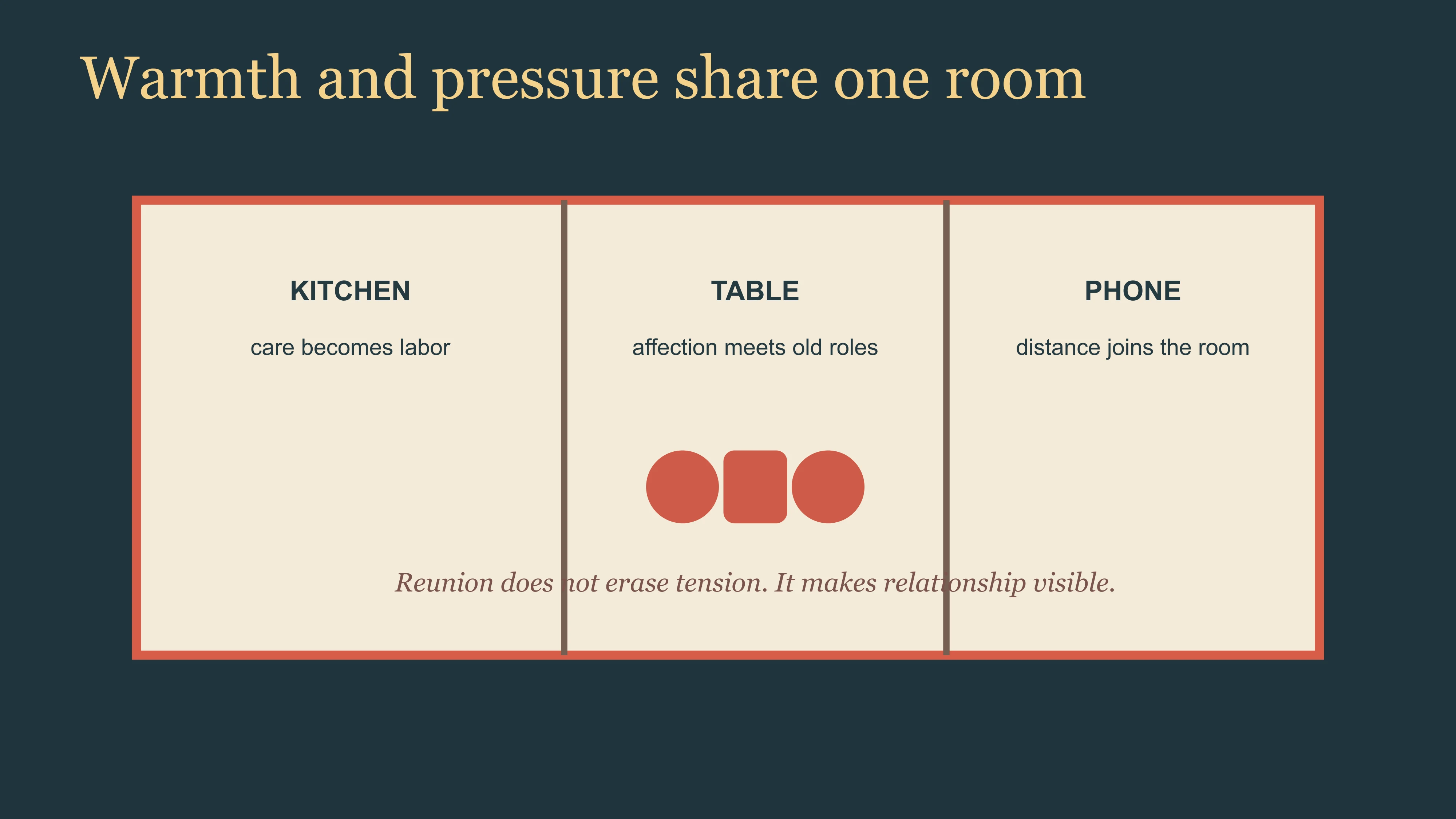
Warmth and pressure do not cancel each other. They become visible in the same room: care in the kitchen, old roles at the table and distance carried through a phone. East Moment original editorial diagram.
That is also why the calendar matters. The date is determined through the Chinese lunisolar calendar, not by moving a Gregorian holiday around for convenience. Exact annual dates should be checked against a reliable source such as the Hong Kong Observatory's Gregorian–Lunar conversion tables, not guessed from the zodiac animal or a social post.
Reunion dinner: one table, several Chinas
New Year's Eve reunion dinner is often described as the heart of Chinese New Year. The phrase is accurate, but the real table is not a museum display. It may contain several regional cooking styles, a dish ordered from a restaurant, a grandparent's specialty and something a child refuses to eat with impressive consistency.
Dumplings can evoke old forms of money and wishes for prosperity. Fish may suggest surplus through the phrase nian nian you yu, a wish to have abundance year after year. Niangao can be linked by sound with rising higher each year. Yet symbolism is only one reason food stays. Families repeat dishes because hands remember them and because a year can feel incomplete without a particular taste.
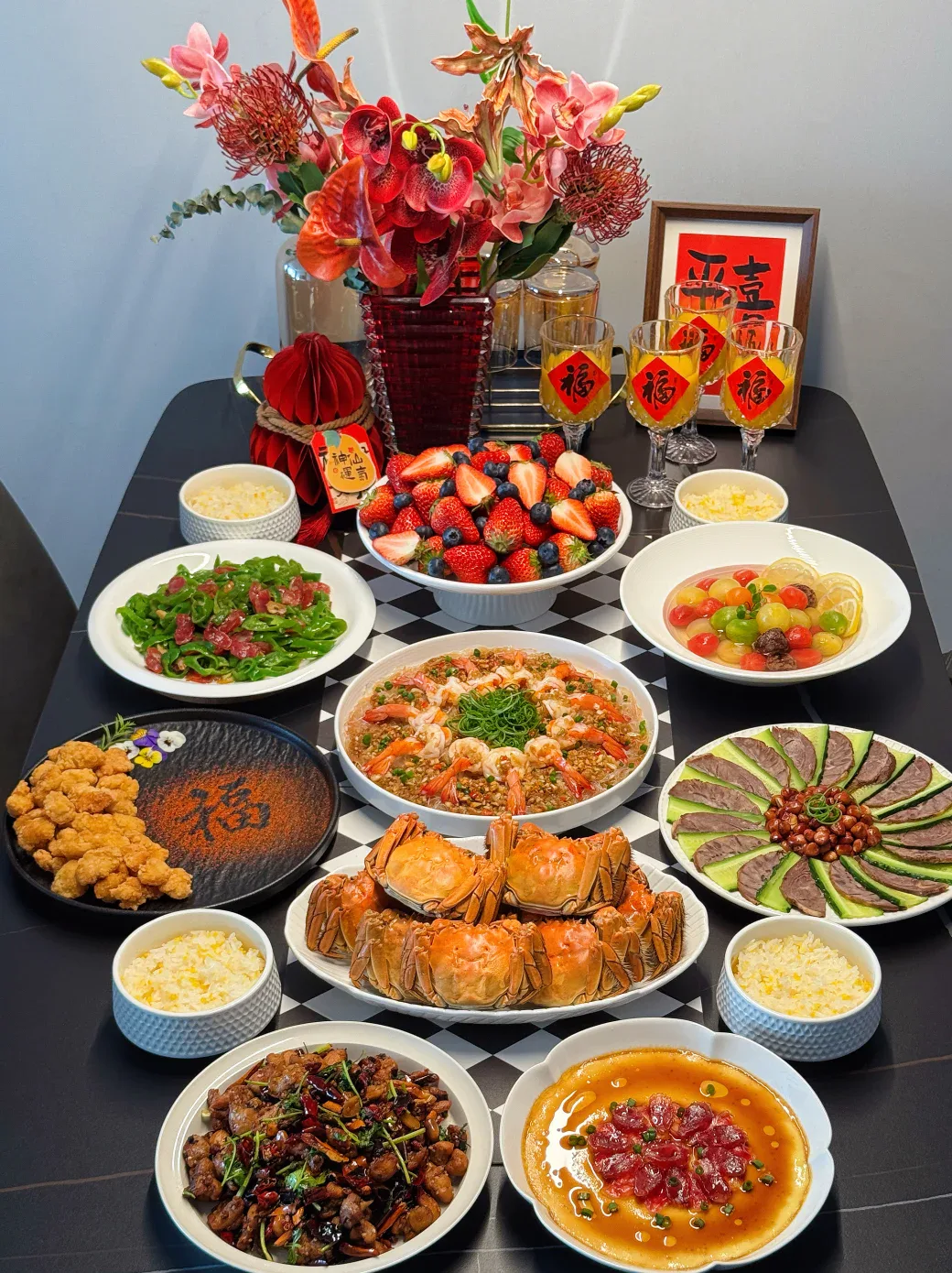
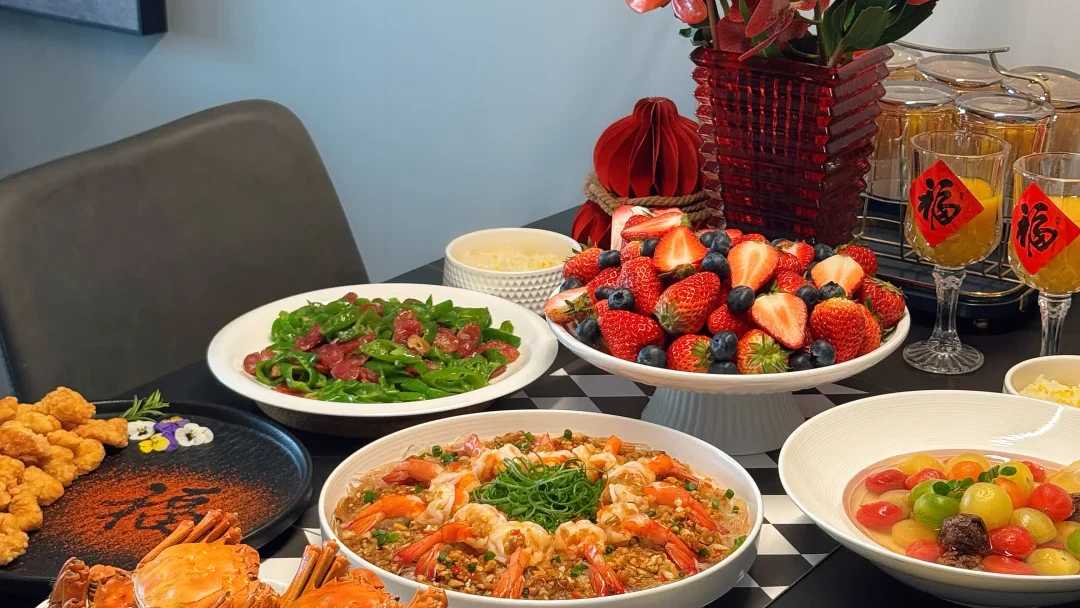
This household table proves variety, abundance and deliberate arrangement in one contemporary meal. It does not establish a national menu, identify every dish or show who performed the cooking.
Look at the table before decoding it. Whole crabs occupy the center, bowls mark individual places, fruit rises at the far end and dishes compete for the remaining surface. The useful evidence is not that every Chinese family must serve this combination. It is that reunion is spatial work: shopping, preparation, serving vessels, timing and enough room for several appetites must converge before anyone lifts a chopstick.
My judgment is simple: the best reunion dinner is not the table with the most dishes. It is the table that did not exhaust one person or erase the person who could not return. A restaurant order can be more loving than a home-cooked performance if it lets the usual cook sit down. One familiar dish can carry a family better than ten symbolic foods copied from a checklist.
Chinese New Year traditions and what they do
| Tradition | What happens | What it can express |
|---|---|---|
| Household cleaning | Rooms and objects are put in order before the new year | Renewal, readiness and leaving disorder behind |
| Reunion dinner | Family members share an important New Year's Eve meal | Belonging, continuity and the effort of returning |
| Red envelopes | Money is given in red packets, often to children and younger relatives | Care, blessing and relationships across generations |
| Greetings and visits | Relatives, neighbors and colleagues exchange good wishes | Reopening social ties and beginning with generosity |
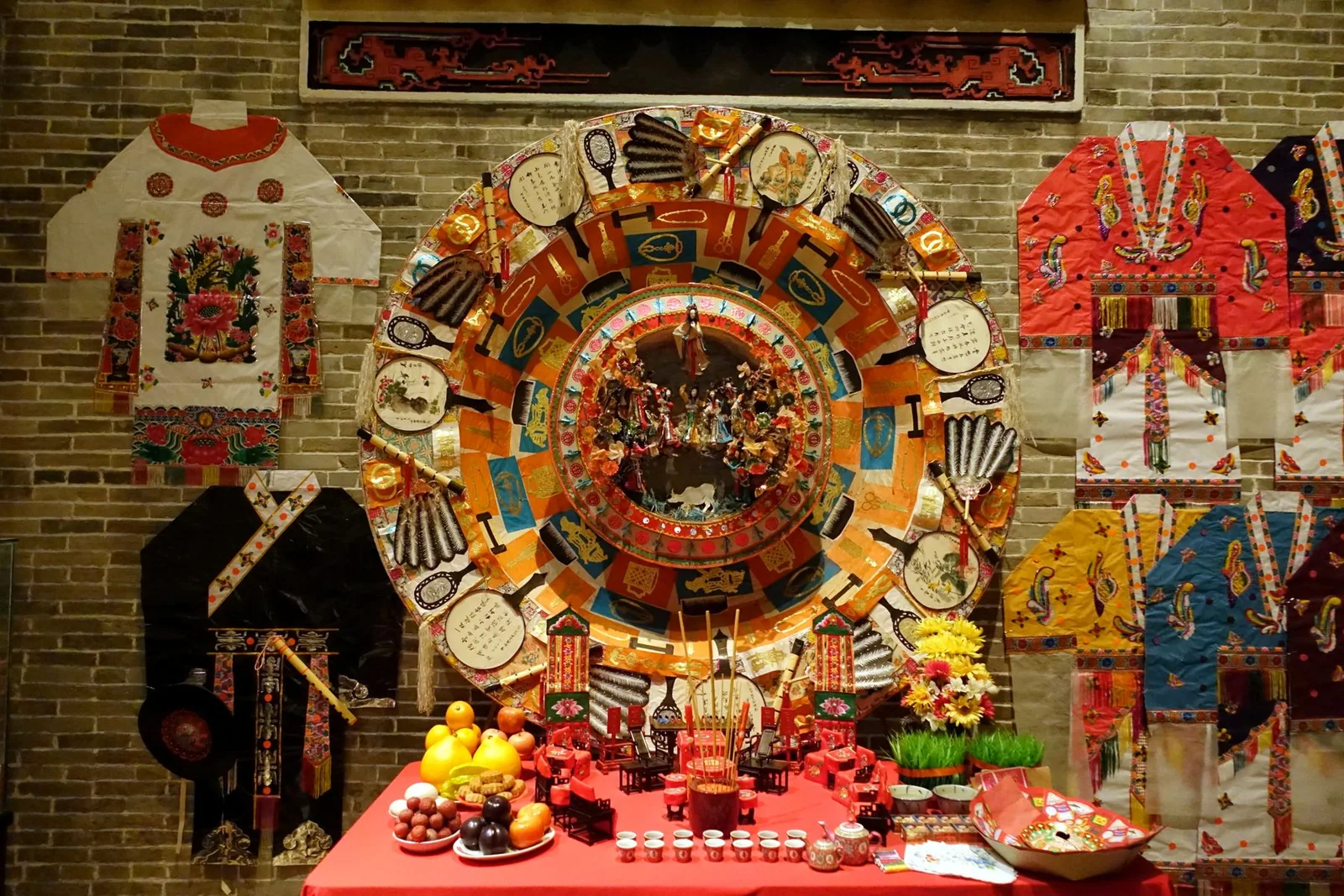
| Ancestor remembrance | Some families make offerings or acknowledge those who came before | Family continuity, gratitude and memory |
| Firecrackers and public performance | Sound, lion dance, dragon dance and community events animate public space | Protection, celebration and collective energy; watch how drum cues and two hidden performers make one lion appear alive |
| New clothing and decoration | Homes and bodies take on a fresh appearance | A visible beginning and an optimistic social mood |
No family performs every item. Religion, region, generation, housing, local regulation and personal preference all change the form.
Red envelopes are relationships, not lucky merchandise
Red envelopes, hongbao (\u7ea2\u5305), are among the most recognizable Chinese New Year traditions. The money matters, especially to a child. The relationship matters more. The envelope moves from an older or established giver toward a younger person, employee, service worker or relative according to local and family customs.
Digital red envelopes now travel through phones. The screen is new; the social pleasure of sending, receiving and comparing remains familiar. Technology does not simply replace tradition. It gives tradition another route through the room.
The same is true of the reunion itself. A relative who cannot return may appear on a video call propped beside the dishes. A family group chat carries recipes, train updates, stickers and arguments across several cities. These tools do not make the festival less traditional. They show that continuity has always depended on whatever infrastructure can carry a person, voice or gift home.
Amounts can carry etiquette, but online lists often exaggerate universal rules. Context matters: closeness, age, local expectations and the giver's means. A sincere gift should not become a financial performance.
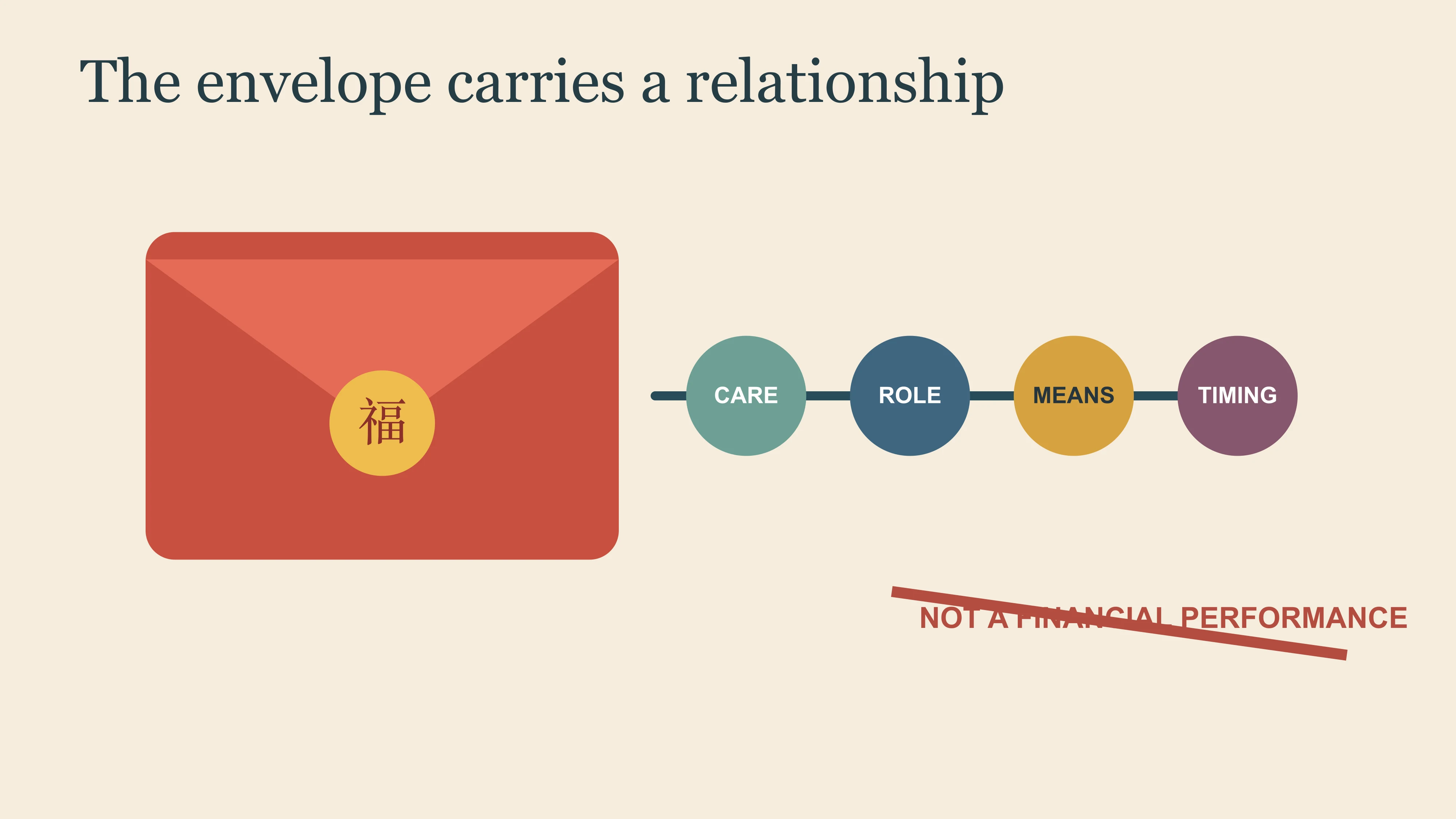
The amount is never the whole message. Care passes through relationship, social role, the giver's means and the moment of giving. East Moment original editorial diagram.
A red envelope can bless and burden at once. The pleasure of giving is real; so is the pressure to match a remembered amount, cover a long list of children or prove prosperity during a difficult year. My position is firm: etiquette should protect a relationship, not force a person to stage wealth. When the performance of generosity damages the giver, the custom has lost its moral center.
Zodiac animals mark years, not destinies
Each Chinese year is associated with one of twelve zodiac animals. Decorations, gifts and public campaigns make the annual animal highly visible. The zodiac offers language for age, time, humor and identity, but it does not determine a person's entire character.
Our Chinese Zodiac guide explains the twelve-year cycle, the calendar boundary and why a birth year should be treated as cultural context rather than a personality diagnosis.

The annual animal is a design brief as much as a calendar label. In 2026 the Horse takes over packaging, screens and gifts; the next animals are already waiting backstage. East Moment media archive.
Regional China celebrates in many voices
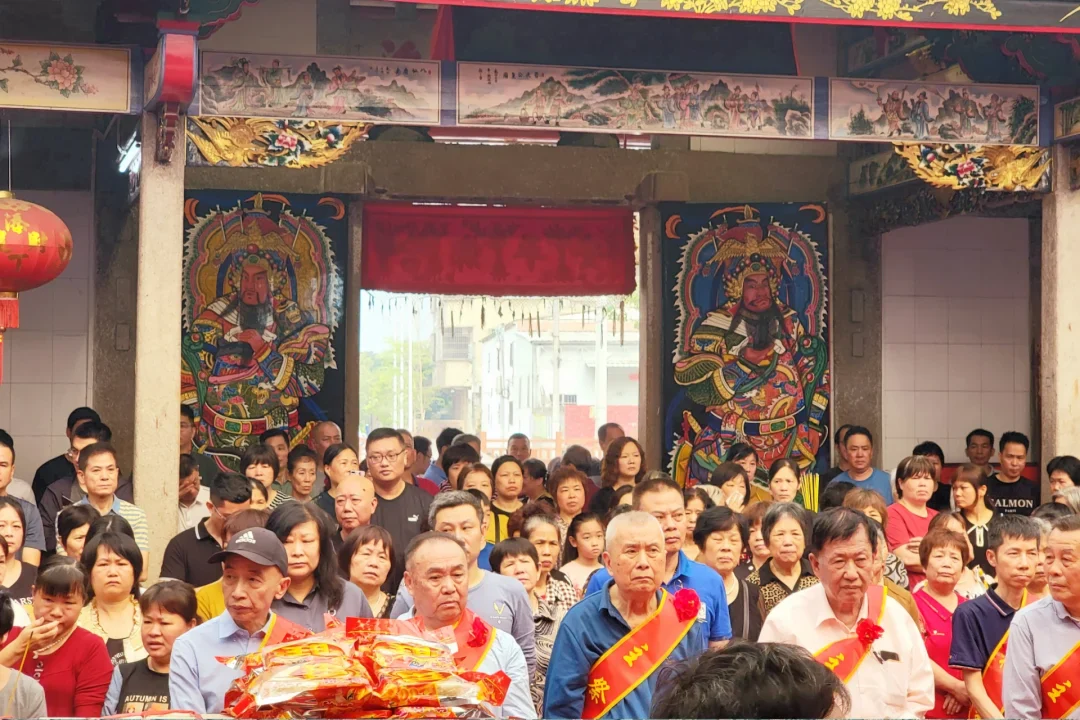
There is no universal Chinese New Year menu, accent or household script. Northern and southern food traditions differ. Rural temple fairs and urban shopping districts create different public experiences. Some families remain home; others travel. Some perform ancestor rites; others do not. Fireworks may be central in one place and restricted in another.
Ethnic minority communities within China also maintain their own new-year calendars and festivals. A national holiday can create shared time without erasing cultural difference.
This variety is not a footnote. It is the reality that keeps “Chinese culture” from becoming one staged dining room.
Chinese New Year outside China
Diaspora communities have carried the festival into Chinatowns, suburban homes, temples, schools, museums and city streets around the world. Work and school calendars may move the largest gathering to a weekend. Public parades can become important statements of visibility and belonging.
Migration also changes the table. Local ingredients enter old recipes. Several Chinese regional communities meet in one city. Children explain customs in another language. A festival can preserve memory while producing a new local tradition at the same time.
The same principle applies inside China when work, illness or distance makes the ideal reunion impossible. There is no virtue in turning the journey into punishment. Call earlier. Move the meal. Share the cooking. Let an elder rest. Make a New Year small enough that the people inside it can still be kind. Tradition is a vessel for relationships; relationships are not fuel to burn for a perfect festival photograph.
How to participate respectfully
Begin with the specific event. Is it a family dinner, a temple observance, a municipal parade or a school activity? Follow the tone set by the host. Ask before photographing private ritual. Learn a simple greeting, but do not worry about performing expertise.
Public celebration welcomes curiosity. Family intimacy still deserves boundaries. A person should not be expected to explain an entire civilization because they handed you a dumpling.
Avoid treating every East Asian new-year tradition as interchangeable. Credit performers, makers and community organizers. If you wear traditional clothing, understand what garment it is and why it belongs in that setting.
A new year is made, not merely announced
Chinese New Year is spectacular because millions of ordinary acts gather around the same turn of time. The red paper and public drums carry the season outward. Its center remains human-sized: an extra chair, a familiar dish, a message sent before midnight, a door opened for someone coming home.
Continue with the complete Chinese Festivals guide, explore Chinese symbols or follow dumplings back to the hands that fold them in our Chinese Dumplings guide.