Qixi Festival falls on Wednesday, August 19 in 2026, the seventh day of the seventh lunar month. Calling it “Chinese Valentine's Day” explains today's dates, flowers and promotions, but hides half the festival. Qixi also remembers a working woman, the value of skill, a night sky used as emotional geography and a love story defined less by possession than by separation.
Modern romance is real. It simply should not be allowed to rewrite the entire past. If all we see is a couple under a heart-shaped sign, Qixi becomes a translated sales event. Four older things bring its Chinese texture back into view.
When is Qixi Festival in 2026?
Qixi is August 19, 2026. The Hong Kong Observatory's 2026 calendar identifies that Wednesday as the seventh day of lunar month seven.
| Year | Qixi Festival | Day |
|---|---|---|
| 2025 | August 29 | Friday |
| 2026 | August 19 | Wednesday |
| 2027 | August 8 | Sunday |
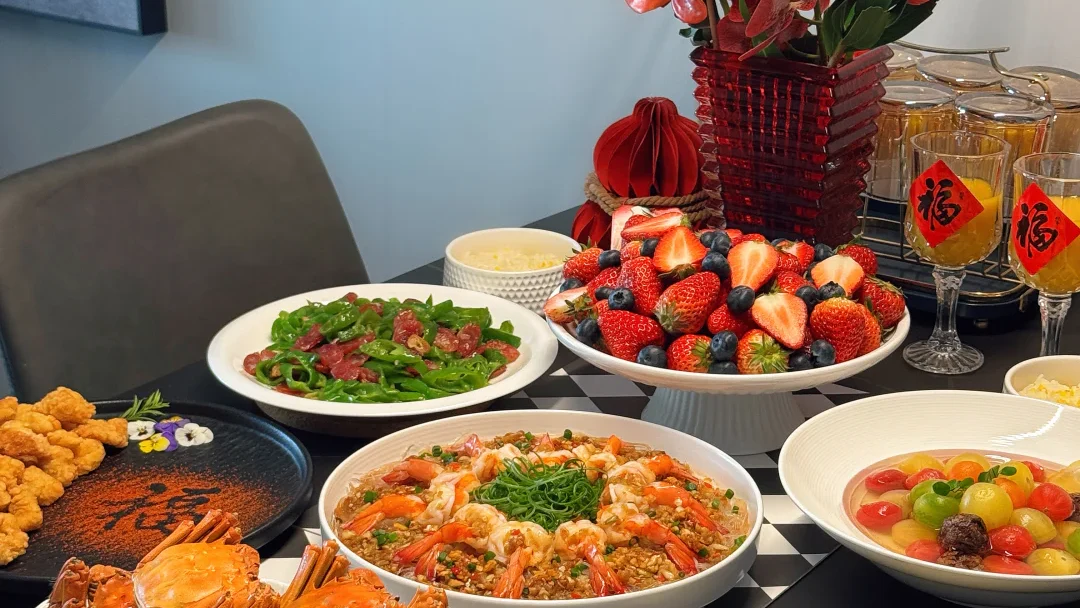
Retail campaigns and couple events may run across a weekend or longer promotional period. That commercial schedule does not change the lunar date.
First: Qixi begins with a woman who can make things
The Weaver Girl, Zhinü, is not compelling only because she loves the Cowherd, Niulang. Her identity is built around skilled labor. Older Qixi customs in different communities gave girls and women ways to display, test or pray for dexterity in needlework and domestic arts. This is why Qiqiao, “pleading for skill,” remains an important name and interpretive key. A current Tianhe District government protection notice identifies the local Tianhe Qiqiao custom as a national intangible-cultural-heritage project; it verifies one living regional protection context, not one universal Qixi ritual.

The historical painting preserves an artist's constructed scene of women and festival activity. It is not a photograph or proof that every region practiced the same ritual.
The old framework carried its own gender expectations; it should not be romanticized as uncomplicated empowerment. Yet replacing women's skill with passive beauty is not progress. The earlier festival at least asks a sharp question that a bouquet cannot answer: what have you learned to do with patience?
That question can survive outside embroidery. It applies to design, coding, cooking, music, repair or any craft in which hands and judgment grow together. Qixi becomes more interesting when admiration includes competence.
Second: one tray holds more history than a heart-shaped display
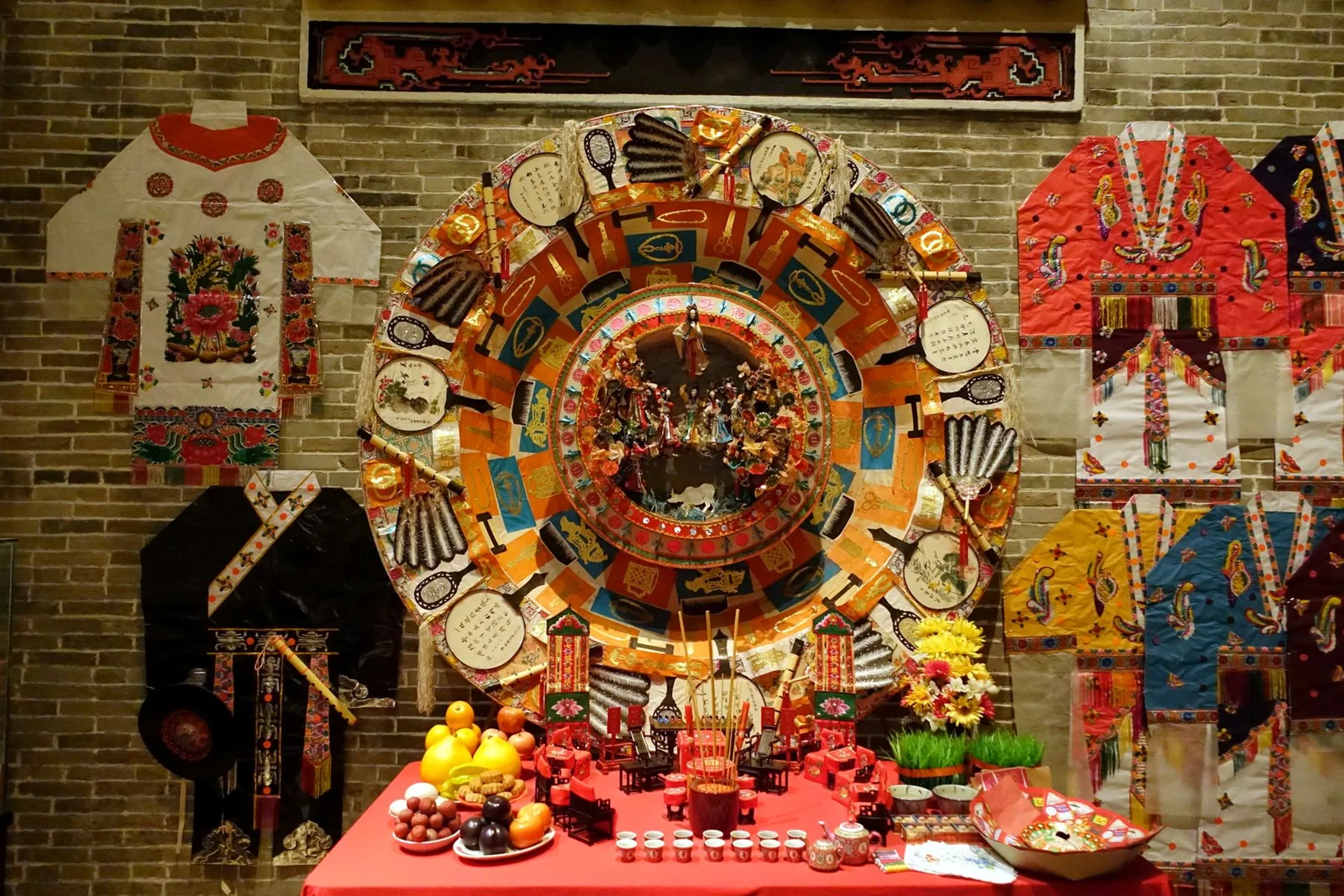
This identified museum display documents a material form associated with the Seven Sisters tradition. It cannot establish the date, maker or use of every similar tray.
The tray makes the festival material. Small figures, decoration and carefully arranged objects require preparation. They turn devotion and dexterity into something other people can inspect. A commercial gift asks what one person can buy for another. A festival object also asks what a community can make, teach and recognize.
This difference matters for overseas readers. “Chinese Valentine's Day” is a useful doorway because it explains why restaurants and brands target couples. It is a poor final definition because it makes every unfamiliar object look like a primitive version of a Western holiday.
Third: the sky gives separation a map
In the familiar story, Niulang and Zhinü are separated across the Milky Way and allowed to meet once a year, often on a bridge formed by magpies. Versions differ in why they are separated, who intervenes and how the lovers are judged. The stable emotional architecture is distance: two visible points divided by a river of stars.
The stars associated with the lovers are commonly identified with Altair and Vega. You do not need astronomical expertise to understand why the story endured. Before instant messaging and air travel, the night sky let separated people inhabit the same visual field. Distance became enormous but not invisible.
The Chinese mythology collection explains why one story can survive in multiple textual, local and popular forms. Qixi should not be forced into one definitive screenplay.
Fourth: the bridge matters because it is temporary
Many modern love stories treat togetherness as the ending. Qixi's lovers meet under a deadline. The bridge will disappear. Their annual reunion therefore carries joy and cruelty at once.
That emotional contradiction is more useful than sweet slogans. People separated by migration, work, borders, family pressure or timing understand it immediately. Qixi does not guarantee that love solves geography. It asks what remains meaningful when geography wins most days of the year.
This is where I resist the easiest festival copy. Qixi is not China's answer to Valentine's Day. It is a Chinese archive of skill and longing that contemporary Valentine's-style consumption has entered. The new layer belongs, but it should remain visible as a layer.
The supermarket heart is evidence too

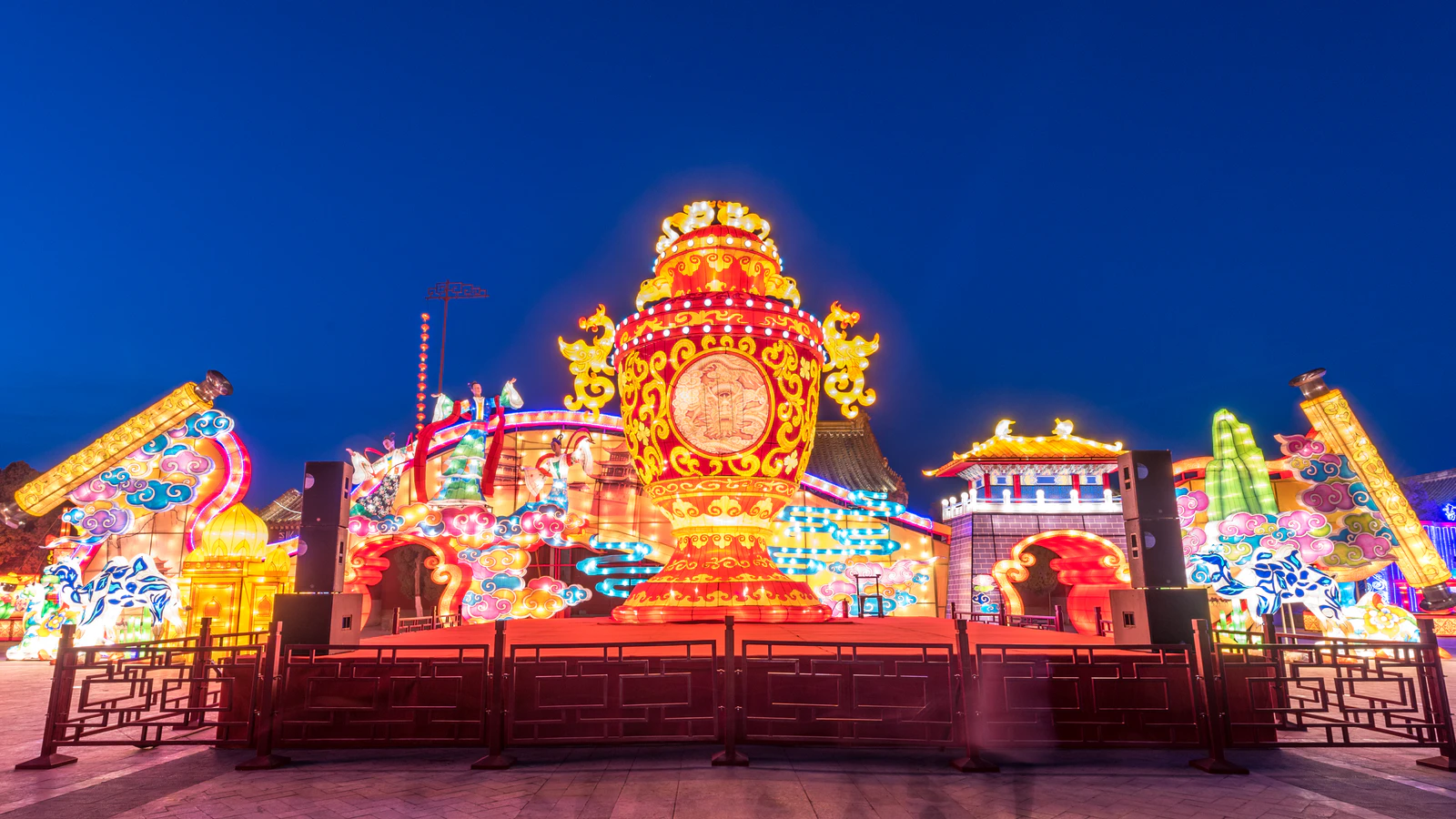
The sign documents one contemporary retailer connecting Qixi with couple consumption. It does not show what shoppers believed or bought.
Commercialization is not automatically cultural destruction. A promotion proves that businesses expect shoppers to recognize Qixi as a romantic occasion. A dinner, gift or date can create a real memory. The mistake is chronological: treating the newest, loudest version as the original and only one.
Try holding both truths at once:
- Couples genuinely celebrate Qixi now.
- Qixi has histories that are not organized around couple consumption.
- Women's ritual attention and skill are not decorative background to the lovers.
- Regional observance cannot be reconstructed from one viral aesthetic.
A better way to spend Qixi
If you are celebrating with a partner, ask about a skill they built slowly, not just a thing they want. If you are not in a couple, the festival still belongs to you. Look for Vega and Altair, make something with care, or learn one version of the Cowherd and Weaver Girl story without pretending it is the only version.
Continue through the Chinese festivals calendar, compare Qixi's star-crossed separation with the moon-centered reunion of Mid-Autumn Festival, or read the Chang'e guide to see how another woman in the sky changes across tellings.
What does Qixi mean in your own life: romance, distance, skill, pressure or something else? Bring one exact memory or handmade object to the comments. The East Moment community is where those lived versions can sit beside the old story without being flattened into a slogan.
Qixi Festival was not born as a shopping slogan for couples
The Cowherd and Weaver Girl story now supplies the easiest international explanation, and modern brands call Qixi “Chinese Valentine's Day.” That label captures current couple culture while shrinking older practices centred on women's skills, wishes and gatherings.
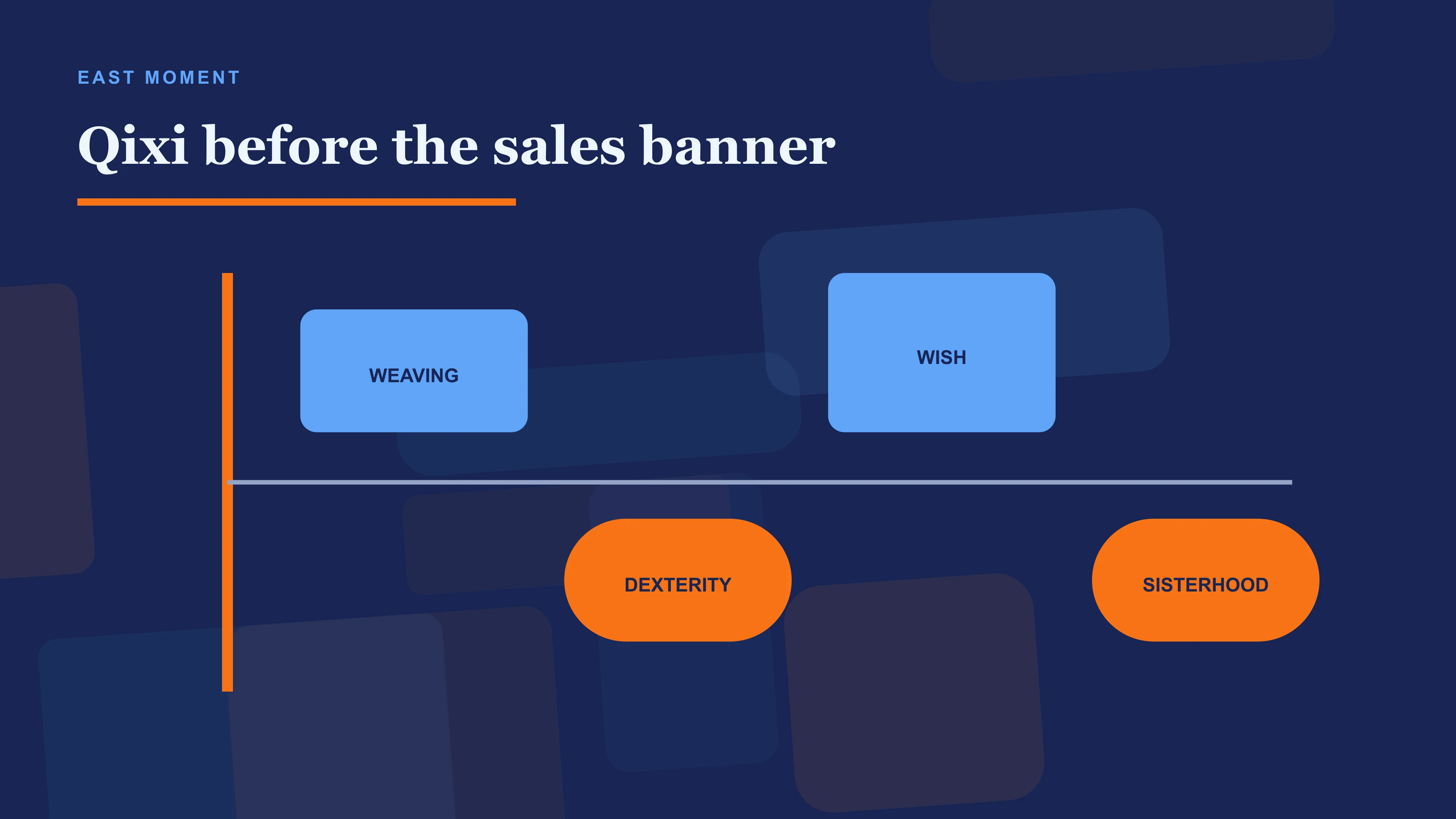
The seventh night gave women and girls a ritual frame for displaying or asking for dexterity—especially needlework—and for directing hopes toward the Weaver Girl. Practice varied by region and period, so no single game can stand for every Qixi.
The love story is powerful because reunion remains limited
The lovers meet across the Milky Way once a year in the familiar telling. That is not a simple promise that true love conquers everything. Separation, labour and cosmic rule remain intact. The reunion is precious because time is rationed.
I find that harder and more moving than a generic date-night festival. It recognises love that cannot rearrange the entire world on demand.
“Chinese Valentine's Day” is true now and incomplete historically
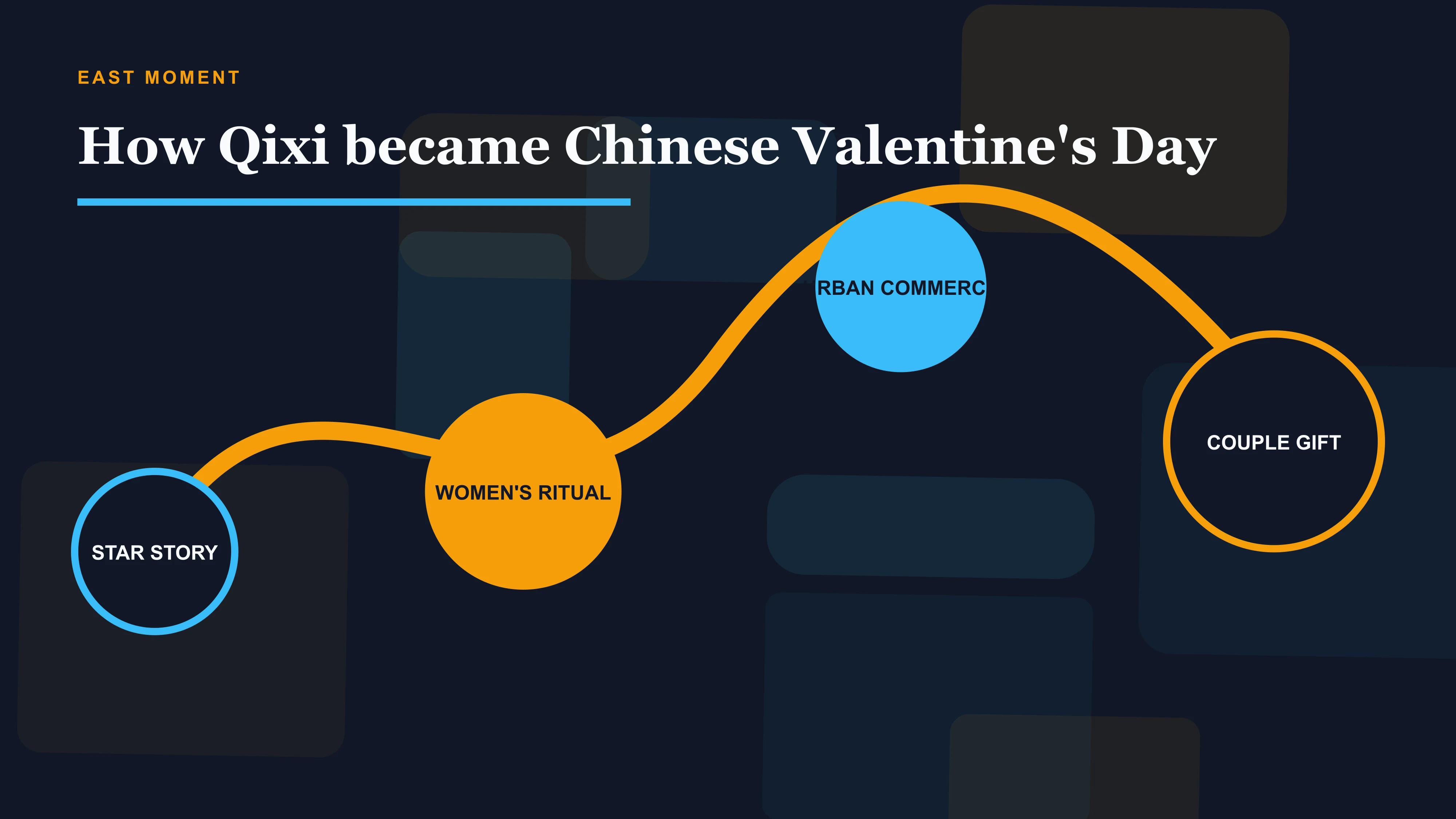
Restaurants, shopping platforms and social media have made couple gifting a real contemporary practice. Commercial change is not fake culture merely because it is recent. But search pages should disclose which layer they are describing.
A museum painting can support historical visual culture. A supermarket promotion can prove current marketing. Neither alone proves what every Chinese person does.
What people actually do
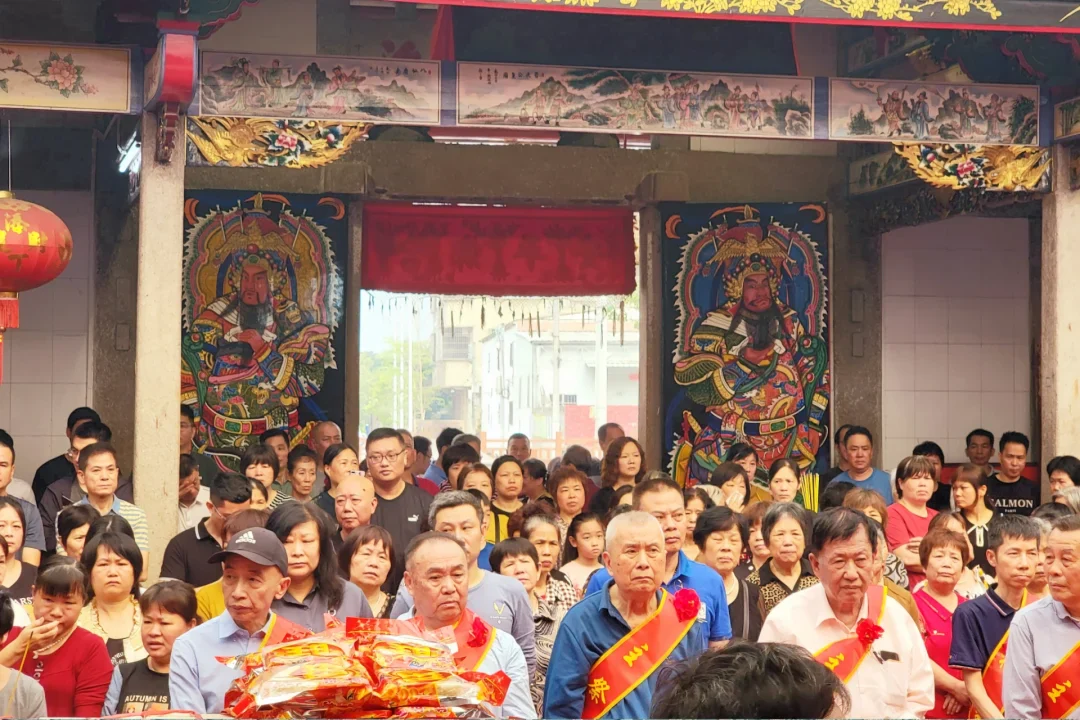
There is no universal national ritual. Some couples exchange gifts or eat out; cultural venues run craft events; families may barely notice the date. Social media amplifies romantic expectation while local heritage projects revive older skill practices.
The useful question is not “Do Chinese celebrate Qixi?” but “Which Qixi is visible here—story, skill, commerce, heritage or private relationship?”
The National Palace Museum collection offers institutional material for historical festival imagery. Use it to identify specific objects, not to claim an unchanged custom.
My verdict is firm: Qixi becomes richer when women are restored to the centre as makers and ritual participants, not only as consumers waiting for romance. Compare Mid-Autumn Festival for another night-sky festival whose emotional centre lies in time and separation, then add one family or city practice to the community record.
Qixi objects reveal who the festival expected to act
Needles, thread, fruit, flowers and small crafted displays place hands at the centre of the festival. An object does not merely illustrate an old story. It records a skill being tested, displayed or wished for.
The question “What gift should I buy?” assumes a consumer couple as the default participant. Historical objects ask different questions: what could a young woman make, what competence did her household value, and how could friends gather around hope without a public romantic declaration?
Skill is not a quaint alternative to love
Dexterity affected clothing, household work, reputation and sometimes income. A wish for clever hands could carry material stakes. Treating women's ritual as a cute craft workshop removes the economic and social pressure inside it.
At the same time, we should not romanticise every old expectation. Skill could be admired and demanded. A festival space may offer solidarity while also reinforcing what women were expected to perform.
That tension is more valuable than either nostalgia or dismissal. It lets Qixi speak about desire beyond the couple: the desire to become capable, recognised and connected to other women.
The star story changes when told from the ground
Looking upward makes the lovers distant and patterned; preparing food or thread brings the story into bodily action. Different regions connect the night sky to different games, offerings and predictions. Cloud and rain can interrupt observation without cancelling the date's emotional force.
A modern city may make the stars almost invisible while Qixi marketing becomes brighter. That contrast is itself a contemporary image: the celestial meeting survives through names, screens and gifts even when the Milky Way cannot be seen.
A useful Qixi page should not command one correct celebration
Celebrate with a partner if that is your life. Learn a textile skill, read the story, visit a museum object or ignore the commercial campaign if that is more honest. Culture does not become meaningful through forced participation.
My preferred action is small and specific: make or repair one thing with your hands, then tell the person beside you why the labour matters. That act joins skill, attention and relationship without pretending the festival has always been only about romance.
If a couple chooses gifts, the same principle can survive: choose an object that records attention rather than price alone. If friends gather to learn a craft, Qixi's older social field becomes newly visible. The festival does not need to reject modern love; it needs enough memory to keep love from becoming the only permitted story.
That wider memory is what makes Qixi worth returning to after the dinner bill is paid. A repaired seam, a learned stitch or a shared night-sky story can last longer than the campaign that advertised the date.