The next Chinese Lantern Festival falls on Saturday, February 20, 2027. It is the fifteenth day of the first lunar month and the first full-moon night of the New Year season. Its real force is social: lanterns, riddles, food and crowds turn private hopes for the year into something people can see and share in public.
That conclusion is more useful than a long list of symbols. There is no single performance that every household must follow. A family may eat rice balls at home without visiting a lantern fair. A city may build an enormous night display that reflects local tourism, craft and engineering as much as inherited custom. The shared structure is a night of light and gathering; the visible form belongs to the place that produces it.
When is the Chinese Lantern Festival in 2027?
The next Chinese Lantern Festival is Saturday, February 20, 2027. The Hong Kong Observatory's 2027 Gregorian–Lunar conversion table places that Saturday on the fifteenth day of lunar month one. The 2026 festival fell on March 3, as recorded in the Observatory's 2026 conversion table; that date remains below for historical reference, not as the next occurrence.
| Year | Lantern Festival | Day |
|---|---|---|
| 2024 | February 24 | Saturday |
| 2025 | February 12 | Wednesday |
| 2026 | March 3 | Tuesday |
| 2027 | February 20 | Saturday |
The Gregorian date changes because the festival follows the Chinese lunisolar calendar. “Fifteenth day” matters more than a fixed date in February or March. It places the event at the first full moon after the lunar New Year.
The Lantern Festival is often described as the end of Chinese New Year. That is a useful orientation, not a universal deadline after which every New Year practice stops. Household schedules and local event calendars can begin or end differently. Our Chinese New Year guide owns the wider reunion season; this page concentrates on its outward-facing final night.
Lanterns change the scale of the celebration
A red decoration on a door addresses a household. A lantern route addresses everyone who walks through it. That change of scale explains why lanterns remain central even when their materials, subjects and technology change.
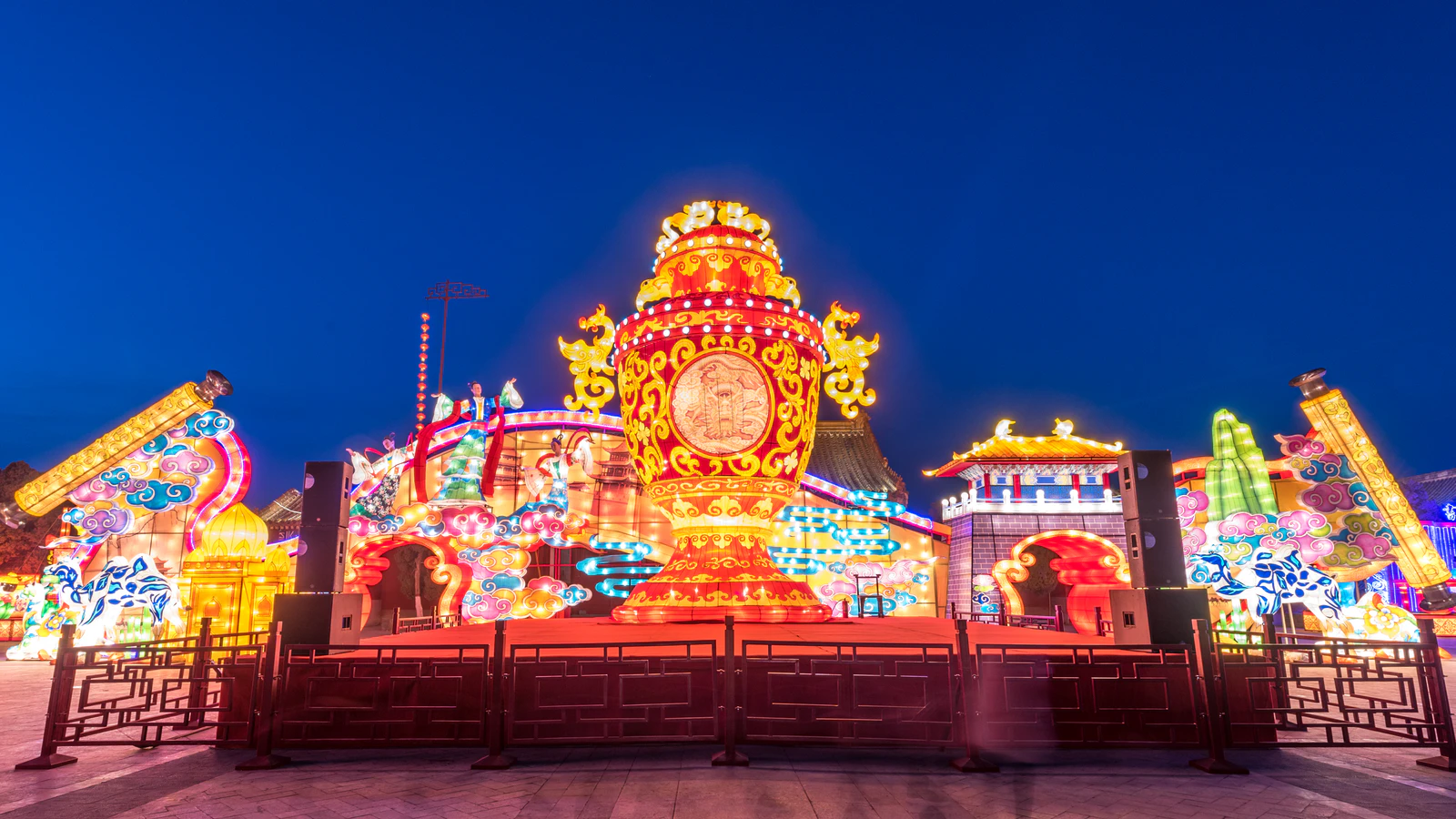
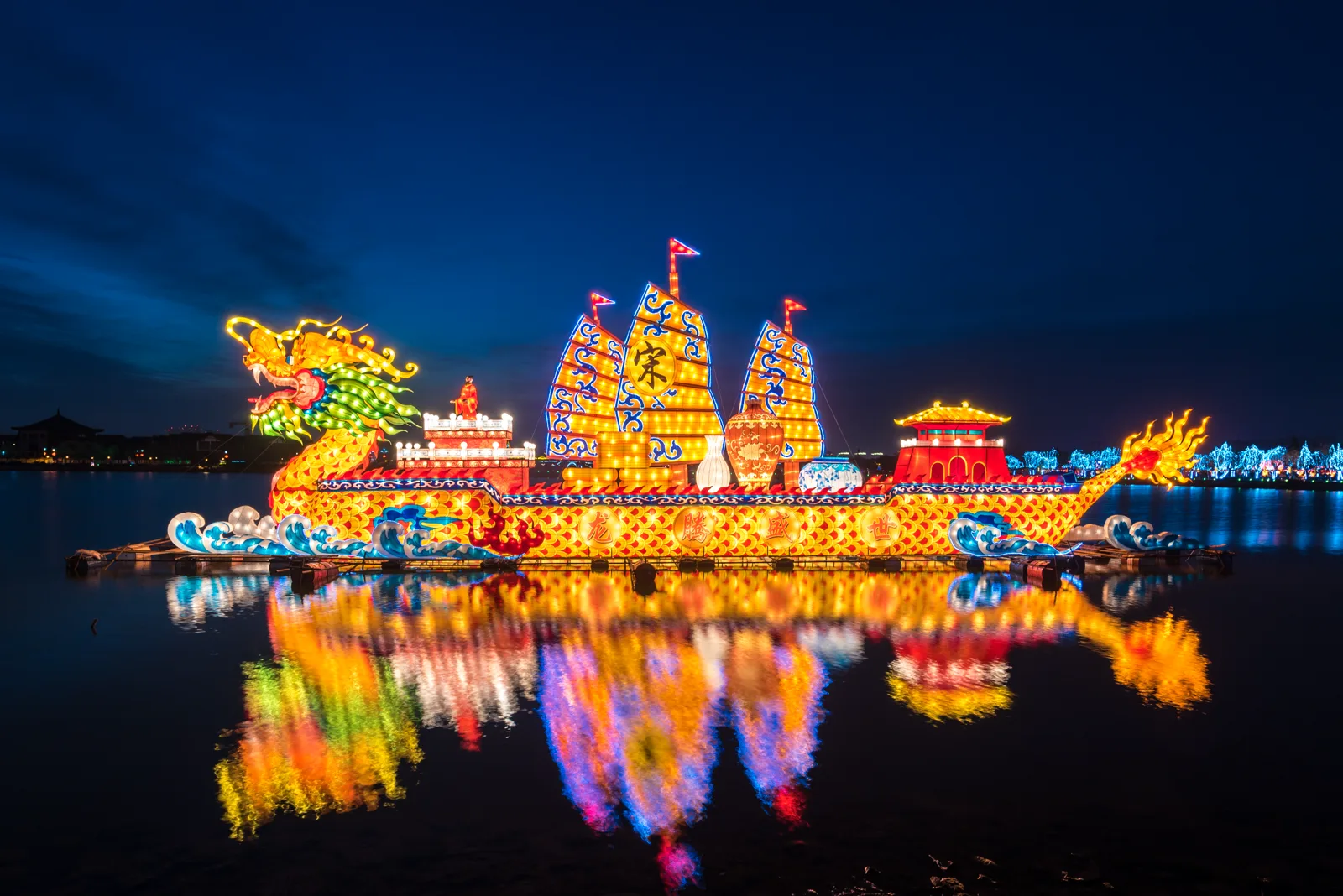
The opening East Moment archive image documents one identified modern event in Kaifeng. The installation is not a small flame enclosed by paper. It is an illuminated boat-form structure, coordinated with a water setting and designed to be viewed from a distance. The photograph proves that visible scale and engineered setting; it does not prove an ancient origin or a universal national design. Calling it “traditional” without qualification would hide the labor that actually makes it possible: contemporary fabrication, electrical systems, crowd management, site planning and local visual choices.
This does not make the event less culturally real. A living festival is not preserved by pretending its newest forms are old. It survives because public space can still be reorganized around a shared night.
Lanterns do at least three jobs at once:
- They make the festival visible after dark.
- They give people a route to walk rather than a spectacle to consume from one fixed seat.
- They create subjects for conversation, photography, riddles and local identity.
The best way to read a lantern fair is therefore not to ask, “What does every lantern symbolize?” Ask who made this display, what place it names, how people move through it and what kind of gathering it creates.
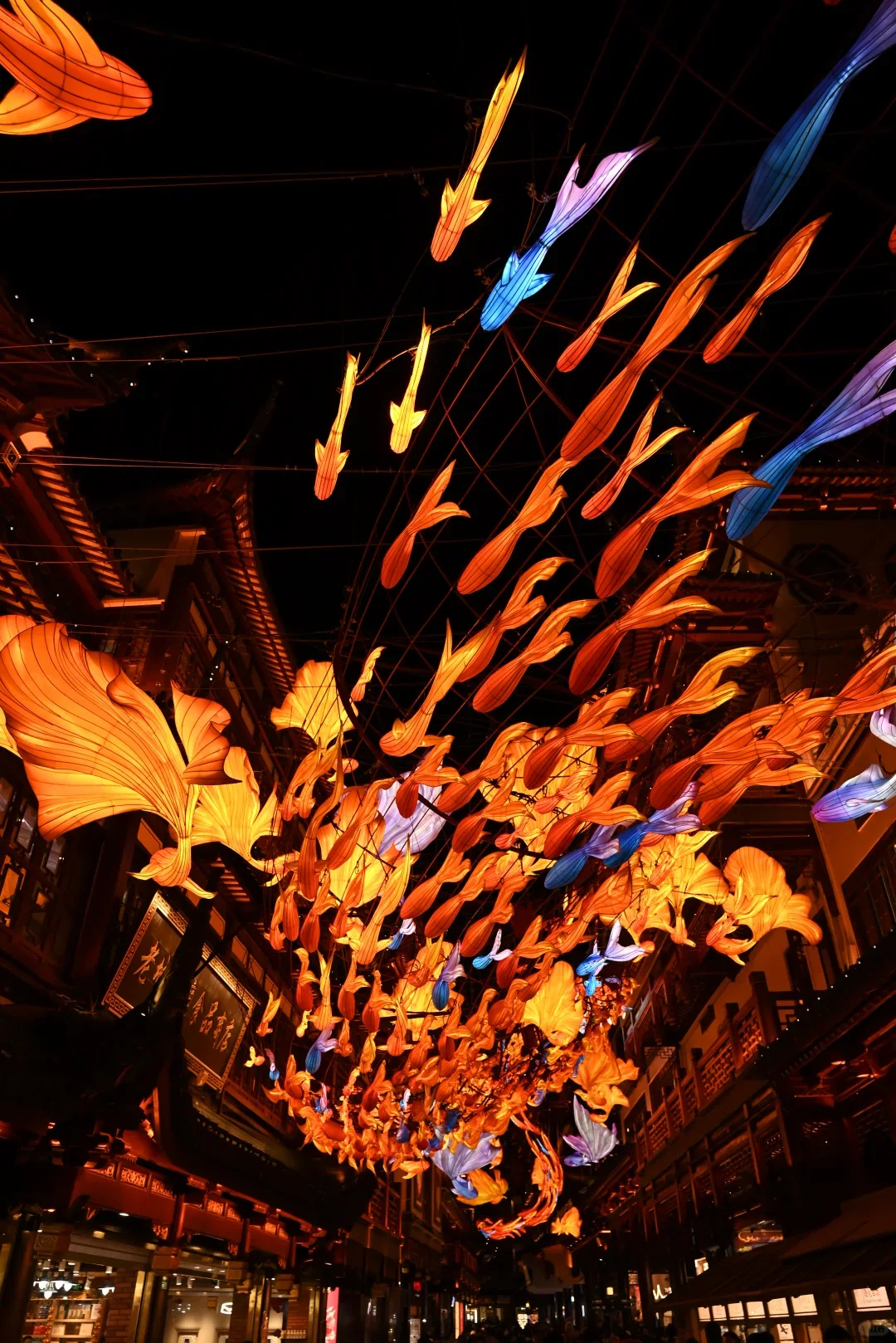
A wide view records the real achievement: hundreds of separate forms become one river only because the route, height and crowd position were composed together. Authorized field photograph.
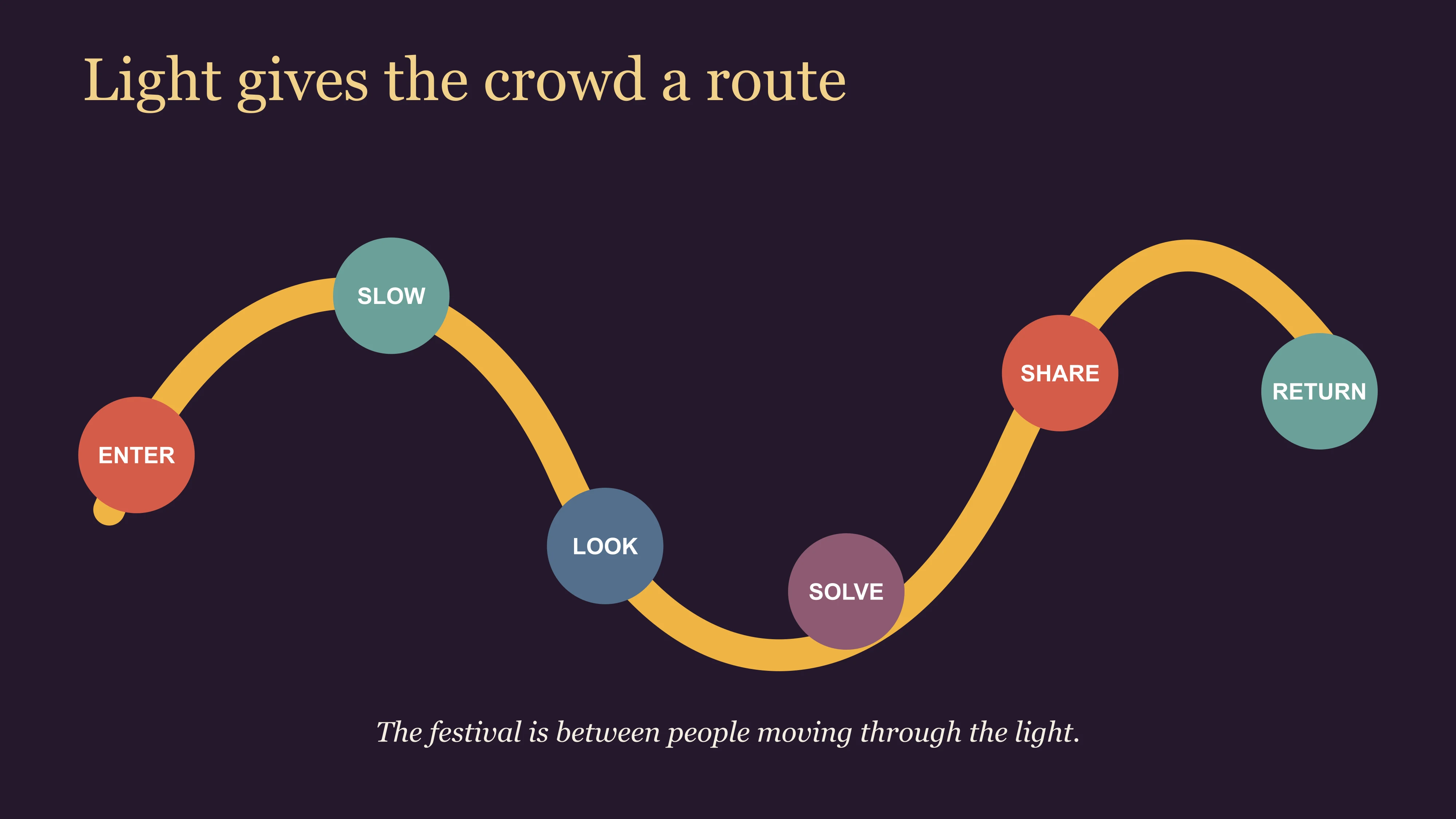
Light is not only an object to photograph. It choreographs the crowd: people slow down, notice one another and acquire a reason to return. East Moment original editorial diagram.
This is the part generic festival guides miss. A successful lantern night is an act of spatial editing. The entrance releases people into a route; repeated light establishes pace; a riddle or performance creates a pause; food extends the visit; an exit returns the street to ordinary life. Put spectacular lanterns in a dead-end field with no rhythm, shelter, visibility or place to stop and the result is an illuminated inventory. The festival lives between installations, in the movement they persuade strangers to share.
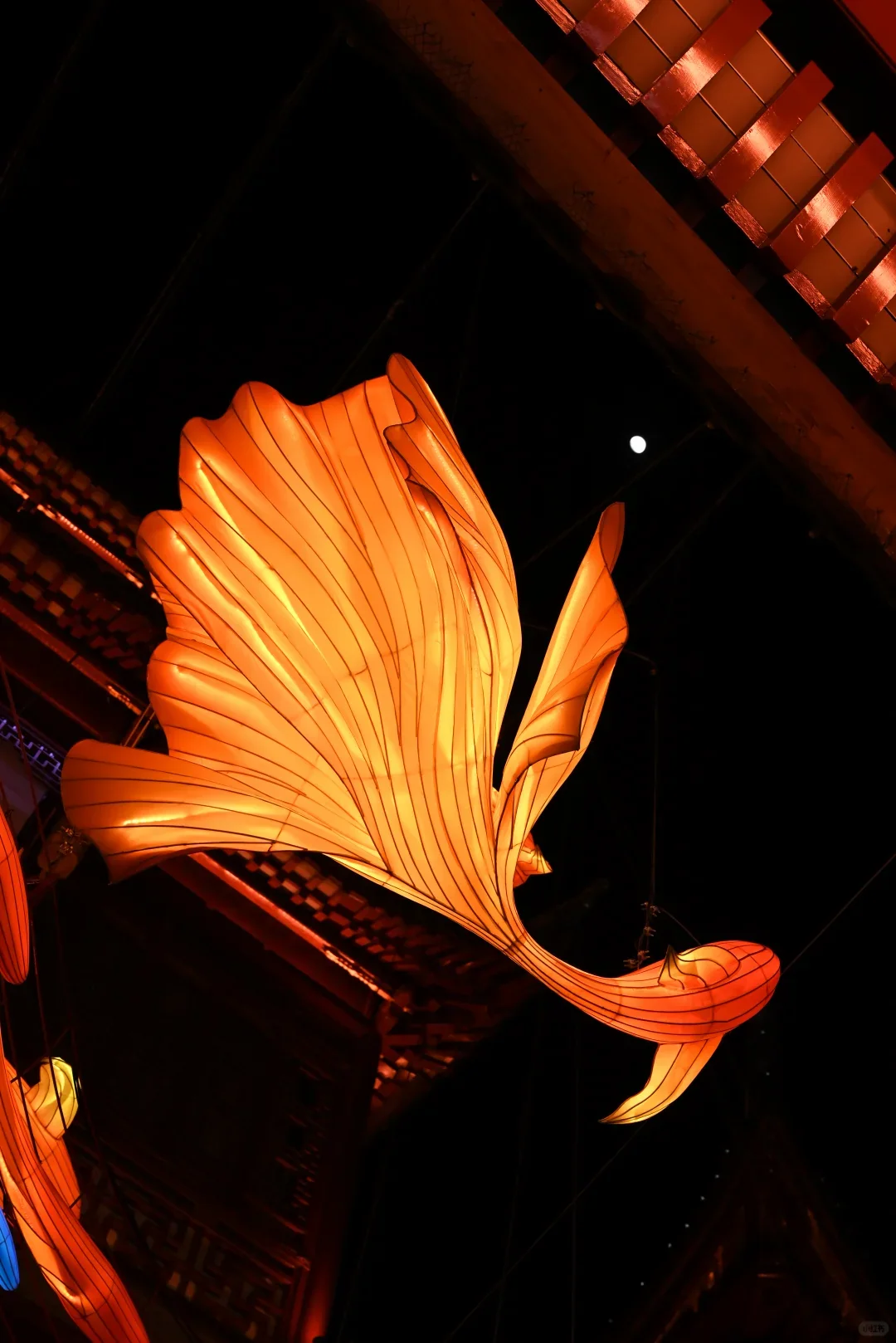
The close view proves why repetition need not become sameness: scale patterns, fins, color and direction keep the school alive as the viewer moves. Authorized field photograph.
I am blunt about lantern fairs because the weak ones all make the same mistake: they confuse size with wonder. Enlarging every zodiac animal and lining it beside a sponsor wall produces photographs, not memory. A good fair gives me one image I could not have predicted and a route I want to walk twice. Local craft, darkness, sound and pauses matter more than the number of bulbs.
What do people do at the Lantern Festival?
Four activities recur often enough to orient a visitor, but none should be treated as compulsory.
View lanterns and walk through public light
Some events use individual hanging lanterns; others build corridors, sculptural sets or large illuminated scenes. Temples, parks, historic districts, community halls and commercial streets can all become venues. The experience is bodily: brightness changes the path, crowds slow down, children choose which form to follow and strangers stop at the same viewing point.
Solve lantern riddles
Riddles turn looking into participation. A written clue may depend on characters, homophones, idioms, objects or shared knowledge, so direct translation can remove the mechanism that makes it satisfying. At a public event, the important point is not whether every visitor is an expert. The riddle gives a crowd permission to pause, argue and solve something together.
If you do not read Chinese, ask for the wording and the explanation rather than demanding an English equivalent. The language mechanism is often the most interesting part.
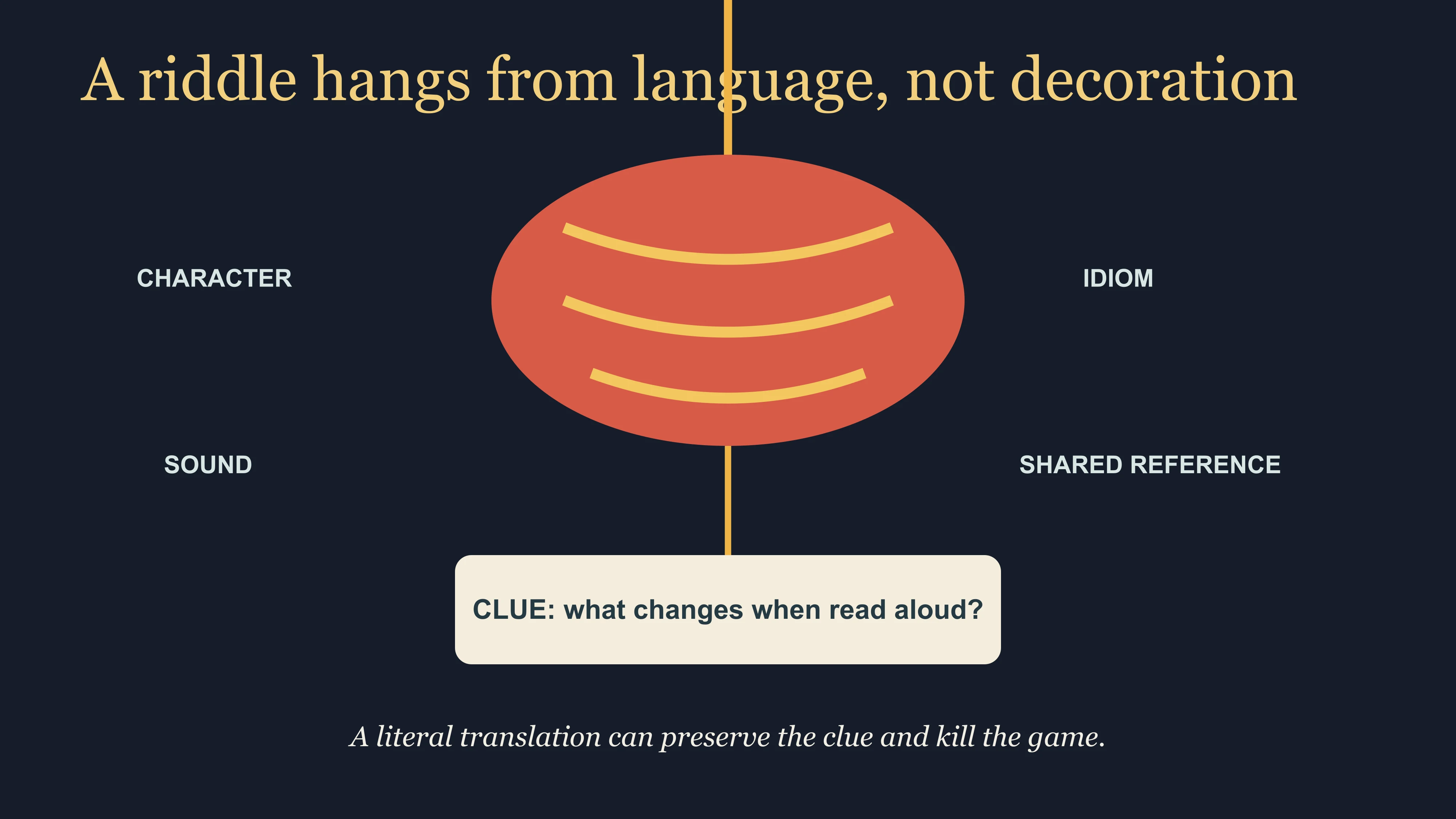
A literal translation may preserve every dictionary meaning and still kill the game. The pleasure lives in the jump between character, sound and shared reference. East Moment original editorial diagram.
A character riddle may remove, combine or visually rearrange components. A sound riddle may pivot on a homophone. An idiom clue may depend on the listener recognizing a phrase before recognizing the answer. These are not interchangeable tricks, and translation should expose the mechanism rather than replace it with an unrelated English pun. The best explanation gives three things: the original clue, the answer and the precise turn that connects them.
Here is a deliberately simple demonstration, not a transcription of a riddle displayed at Yuyuan: 日 + 月, guess one character. 日 is "sun" and 月 is "moon"; placed side by side, they make 明, meaning "bright." Translating only the answer as "bright" hides the visual assembly that made the question solvable. If you photograph a real riddle, capture its complete Chinese clue and the answer provided by the organizer. Then ask a reader of Chinese to explain whether the solution changes the shape of a character, its sound or the meaning of a phrase. Do not label a plausible guess as the official answer.
That shared turn matters socially. For a few minutes, expertise becomes audible in public: a child tries a wild answer, an older relative hears the sound relation, two strangers disagree and somebody laughs before the prize is claimed. The riddle is small, but it makes language perform community work.
Eat tangyuan or yuanxiao
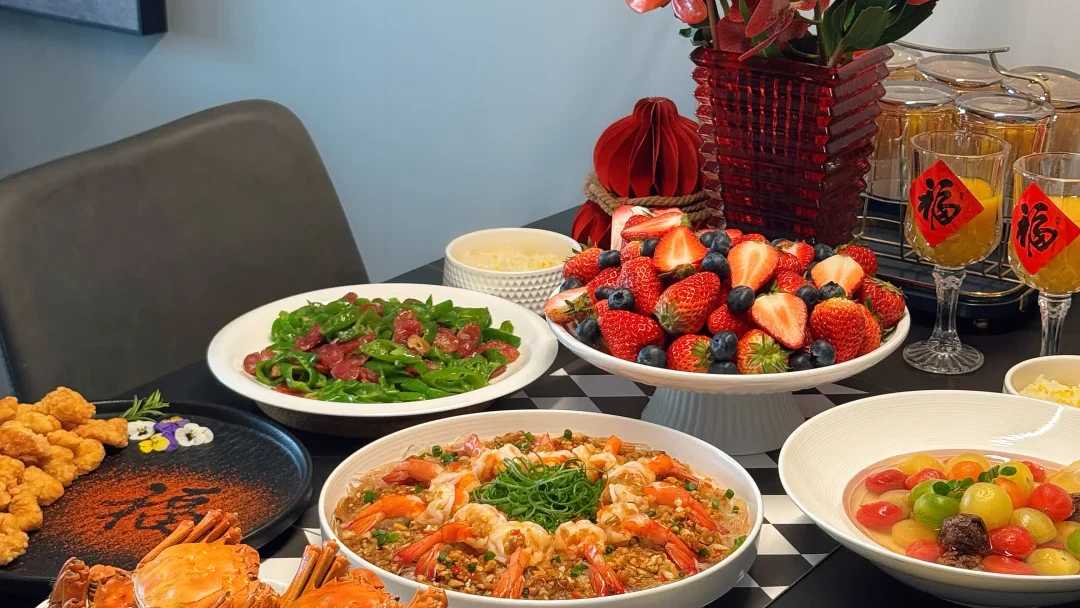
Round glutinous-rice foods connect the night with reunion, but “a white ball in sweet soup” is too narrow a definition. Some are wrapped around a filling; others are built by rolling a filling in moistened rice flour. They may be filled or unfilled, sweet or savory, served in clear liquid, fermented-rice soup, a dry coating or a stir-fry.
The tangyuan and yuanxiao guide explains the production distinction and the wider range of textures. The festival page should not force the food into one national recipe.
Gather, watch and make room for children
Public light makes the festival especially accessible to children: they can carry a lantern, choose a path, guess a riddle or identify a favorite figure. Adults also use the night to meet, photograph and walk after the New Year period's more household-centered obligations.
Public performance can intensify that shared movement. A dragon dance is not generic red decoration: its long body needs route width, coordinated performers and an audience capable of making space. Read the middle of the dragon, not only the head, and the event stops looking like a backdrop. It becomes visible human labor.
Watching is a legitimate form of participation. A visitor does not need to imitate a ritual or wear a costume to be involved. Walking attentively, following local rules and learning why a named display matters is enough.
Is the Lantern Festival the same as the Yuanxiao Festival?
Yes. “Yuanxiao Festival” is a translation of Yuanxiao Jie (元宵节 / 元宵節), a common Chinese name for the Lantern Festival. The word yuanxiao can also name a rice-ball food, which creates confusion in English.
Context resolves it:
- Yuanxiao Festival means the calendar occasion.
- Yuanxiao on a menu usually means the food.
- Tangyuan names a related food family and is also used for reunion occasions beyond this festival.
Everyday speech and product labels do not always respect a rigid technical boundary between tangyuan and yuanxiao. Use the production method as a practical clue, then read the maker's own name rather than correcting a family or restaurant from a glossary.
There is no single “authentic” lantern fair
The internet rewards spectacular images and then quietly removes their location. That is how a Kaifeng installation becomes “ancient Chinese lantern culture,” a Zigong craft tradition becomes generic decoration or a commercial event is presented as a household ritual.
A more reliable reading keeps four layers separate:
| Layer | What it can tell you | What it cannot tell you alone |
|---|---|---|
| Lunar date | When the shared occasion occurs | What every place does |
| Household practice | How one family eats or gathers | A national rule |
| Local public event | How a city or community stages the night | An unchanged ancient design |
| Commercial display | What attracts contemporary audiences | The complete meaning of the festival |
These layers can overlap. The error is not commercial participation or modern technology; it is using one visible layer as proof of all the others.
Commercial does not automatically mean fake. A paid fabrication team can produce extraordinary craft; a shopping district can give families a safe, accessible public night; a sponsor can fund scale that a neighborhood group cannot. My test is stricter than nostalgia: does the event create participation, preserve place and credit the people who made it, or does it merely provide a branded surface for photographs? Old-looking decoration is not authenticity. A living relationship between makers, place and public is.
How to attend a Lantern Festival respectfully
Check the local event rather than arriving with a universal checklist.
- Confirm the venue, date and ticket or crowd-control rules. A public fair may not occur on the exact lunar evening.
- Ask before photographing identifiable children, performers or people at worship.
- Do not touch installations or release flame lanterns unless the organizer explicitly permits it.
- Expect Chinese-language riddles to depend on wording that does not translate cleanly.
- Name photographs by place and event. “Kaifeng lantern fair” preserves more truth than “ancient Chinese tradition.”
- Try the local food, but do not tell a host that their tangyuan, yuanxiao or serving style is wrong because it differs from a viral post.
Choose your camera position without blocking the route. Take the wide photograph first—the one that records people, scale and setting—then the detail. A tight image of one lantern can be beautiful and culturally useless if it erases the city, maker and crowd that gave the object meaning. If a riddle is visible, preserve enough wording to reconstruct how it worked.
Before planning a trip, distinguish the calendar night from an event marketed as a "lantern festival." Yuanxiao Jie has a fixed lunar position, but a named city's display may run for several weeks and may require tickets or timed entry. Some events with lanterns have no connection to Yuanxiao at all. Check the organizer's event name, venue, dates and accessibility information rather than assuming an image search result shows what will be open on lunar month one, day fifteen. That distinction saves a visitor from traveling to the right city on the wrong evening.
The clear conclusion
The Lantern Festival is not a museum of red objects. It is the moment when the New Year season becomes public light: hopes that began inside homes are carried into streets, parks and shared night space. Lantern styles, food names and event formats vary because communities do the work of making that shared date visible in their own way.
The next night is February 20, 2027. Mark the date, then look for the local event and the people producing it. Continue through the wider Chinese festivals calendar when you need to place this public night back inside the full year. The most meaningful question is not whether the lantern is ancient. It is what kind of gathering the light makes possible now.
I return for the moment a child pulls an adult toward one more riddle, not for the biggest light sculpture. That small tug is the festival doing its real work: giving two generations a reason to stay outside together.