The next Dragon Boat Festival falls on Wednesday, June 9, 2027, the fifth day of the fifth lunar month. It is broader than the story of Qu Yuan. Remembrance, early-summer protection, rice dumplings and local heroes coexist, while the boat race gives the festival its clearest living lesson: collective memory only moves when many people turn it into coordinated action.
That position corrects two weak explanations at once. The festival is not merely a sporting event with colorful boats, and it is not a single-origin story in which every custom begins with one poet. UNESCO's description of the nominated heritage element explicitly records regional variation and more than one commemorated hero. The race is valuable because it lets us see cooperation rather than just read a symbol list.
When is the Dragon Boat Festival in 2027?
The next date is June 9, 2027. The Hong Kong Observatory's 2027 Gregorian–Lunar calendar identifies that Wednesday as the fifth day of lunar month five. The 2026 festival fell on June 19; it remains in the table as historical reference.
| Year | Dragon Boat Festival | Day |
|---|---|---|
| 2024 | June 10 | Monday |
| 2025 | May 31 | Saturday |
| 2026 | June 19 | Friday |
| 2027 | June 9 | Wednesday |
The English name foregrounds the most visible public activity. The common Chinese name is Duanwu Jie (端午节 / 端午節). The date moves on the Gregorian calendar because the festival follows the Chinese lunisolar calendar.
Public races may be scheduled on nearby weekends for spectators, teams and broadcasting. Do not use an event poster to overwrite the lunar date, and do not assume the exact festival date is a public holiday in every jurisdiction.
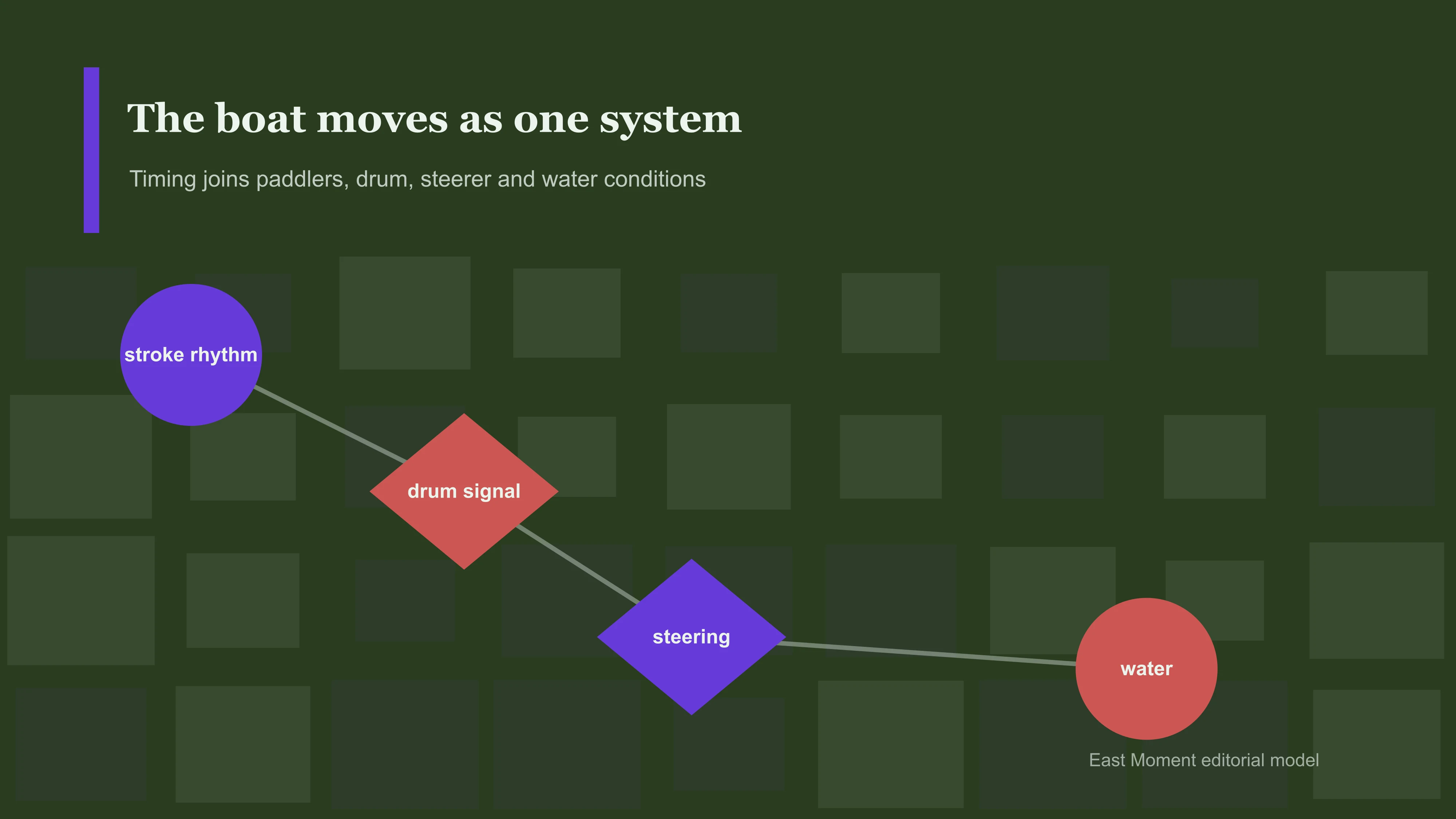
Watch a dragon boat as a system, not a decoration
A long narrow boat is unstable if its crew behaves like a collection of individuals. The spectacle comes from solving that problem under pressure.
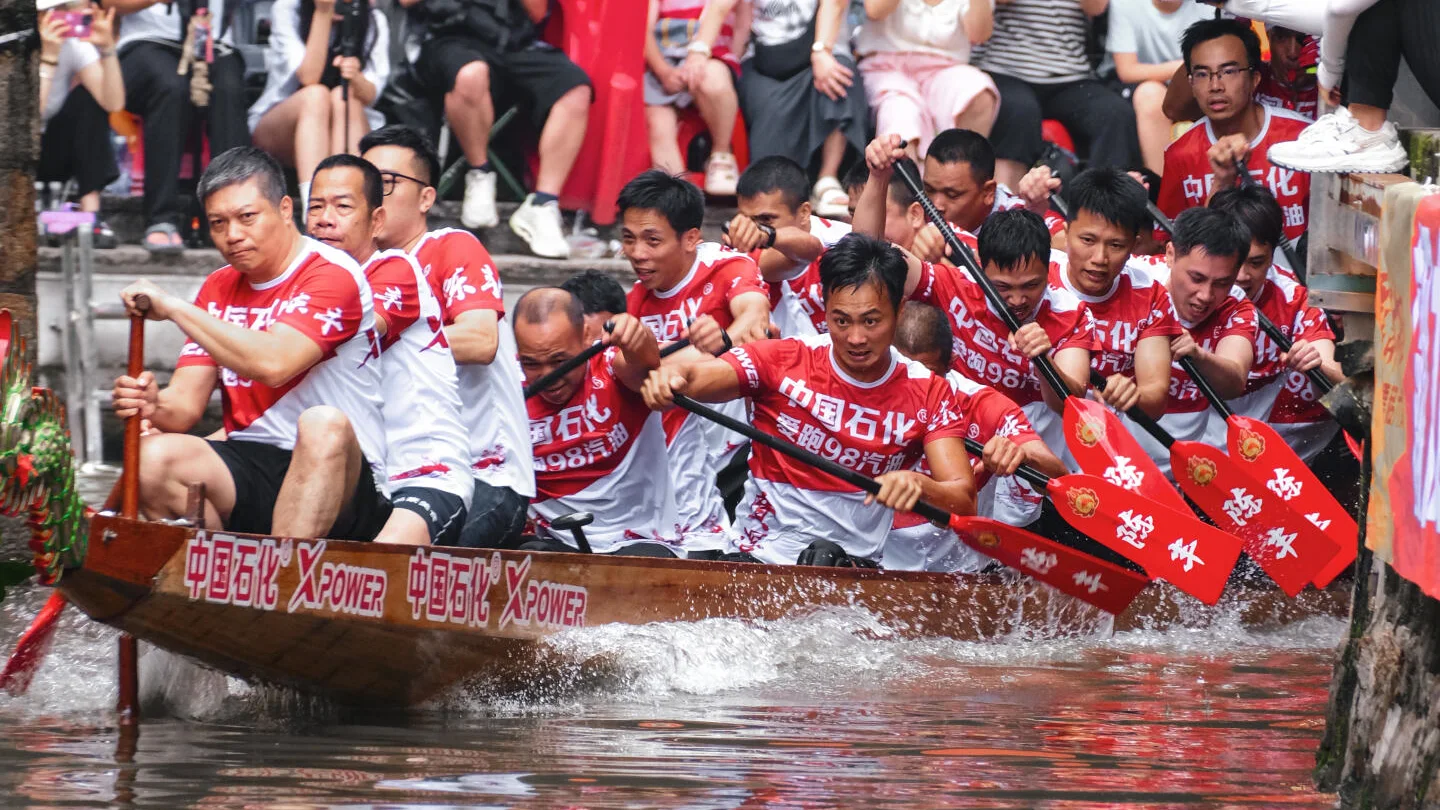
The creator identifies the opening image as a Diejiao race scene. It proves a narrow course, a real crew, spectators and a demanding turn; it does not establish an official result or represent every dragon-boat event. The waterway makes the structure unusually legible. The team is not simply pushing forward. It must preserve speed while reading the banks, the bend, other boats, wake and the space available for correction. A course like this turns local knowledge into competitive knowledge.
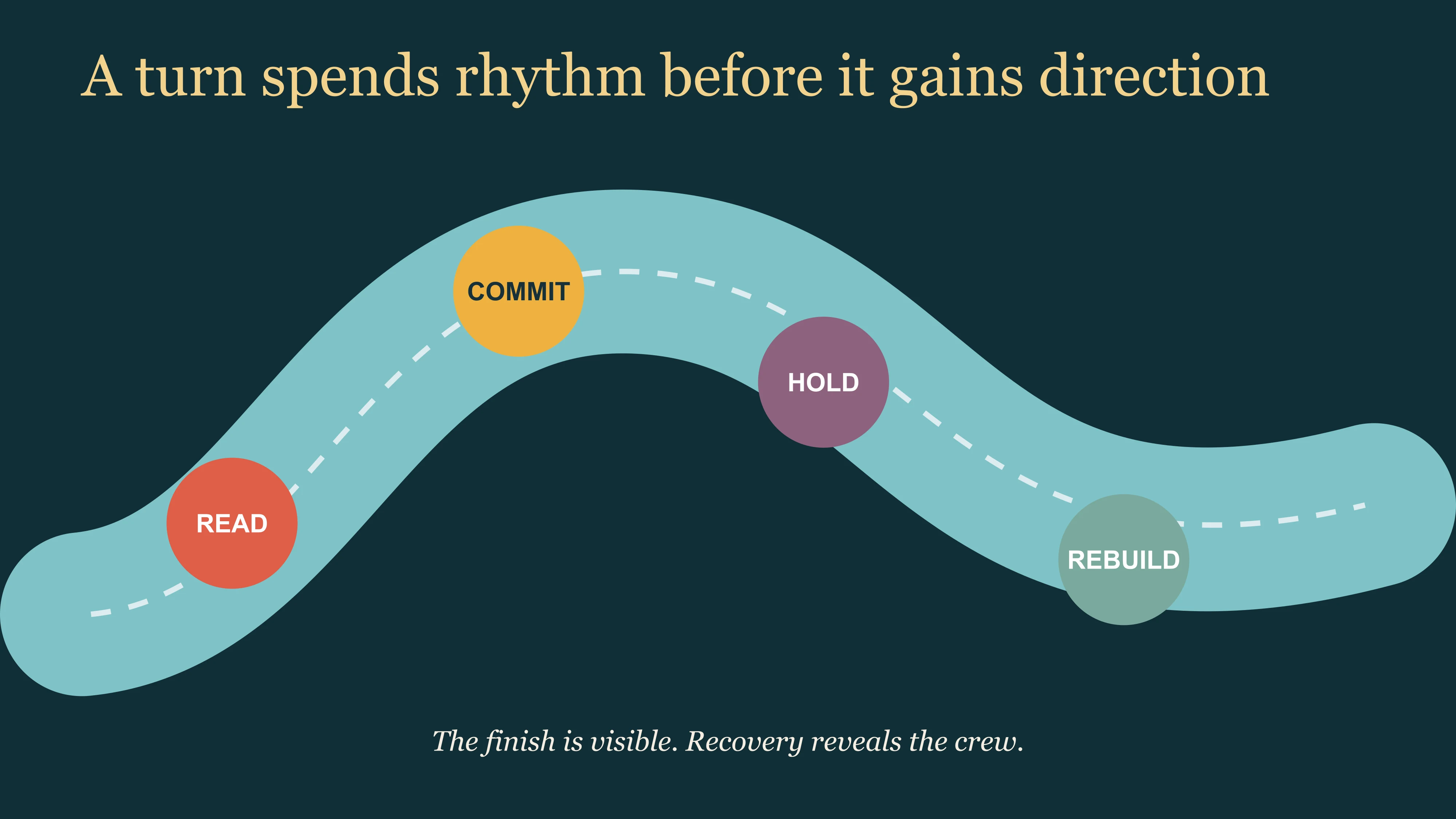
A hard turn spends rhythm before it gains direction. The strongest crew is not the one that never bends its cadence; it is the one that knows exactly when and how to rebuild it. East Moment original editorial diagram.
A turn reveals knowledge a straight sprint can hide
On a straight course, raw power and clean cadence dominate the eye. A narrow bend exposes more. The bow commits first, but the whole boat pays. Inside paddlers work through a shorter path; outside paddlers travel farther; steering must create direction without scrubbing away every bit of speed. The crew has to anticipate the corner before spectators see the correction.
That is why I reject race coverage that shows only the finish. A finish tells us who arrived first. A turn shows who understood the water. In Diejiao, banks, spectators and tight geometry make local familiarity part of technique. The crew knows where the current presses, where another boat may occupy space and how long the stern needs after the bow appears clear.
I insist on watching the recovery, not just the dramatic turn. A crew can survive one ugly stroke; what separates understanding from spectacle is whether the paddlers rebuild one rhythm before the disturbed water makes the next decision for them.
The most revealing sequence has four stages: read, commit, hold, rebuild. “Read” is course knowledge before motion changes. “Commit” is the point where hesitation becomes more dangerous than the turn. “Hold” keeps the boat coherent while roles temporarily do unequal work. “Rebuild” returns the crew to a shared stroke. Miss that final stage and the turn continues stealing speed long after the boat looks straight.
This is not just a metaphor pasted onto sport. It is visible in blade angles, body timing and the delay before a disrupted line becomes uniform again. Watch wide enough to see the whole hull. The evidence lives behind the bow.
The visible roles are connected

These two frames document separate visible positions in one race. Exact role titles and crew organization can vary, so the photograph should not be treated as a universal diagram.
Different crews organize details differently, but a race commonly requires several functions:
- Paddlers generate propulsion and must match timing closely enough that blades enter and recover without wasting one another's work.
- A drummer or caller makes a shared pulse audible and visible.
- A steering position controls direction and responds to course conditions.
- People at the bow may read space, set visual timing or perform locally specific functions.
None of these jobs is meaningful in isolation. A strong paddler who breaks timing can damage the crew's rhythm. A loud beat that the paddlers cannot convert into a shared stroke is theater, not propulsion. Steering that corrects too late forces everyone else to spend energy recovering the line.
Synchronization is not visual perfection

The sequence makes coordination visible but does not measure cadence, speed or technique.
From shore, spectators often judge a crew by whether the paddles “look together.” That is a good starting observation and an incomplete one. Useful synchronization includes the catch, drive, exit and recovery, but it also includes whether the boat holds its line and whether the crew can adjust without collapsing its rhythm.
The important idea is shared correction. A race is not won by eliminating variation among bodies. It is won by building a system in which individual differences can still produce one boat-level action.
Do not collapse that coordination into the movement logic of a Chinese dragon dance. A dance team passes a visible wave through poles and fabric on land; a boat crew converts synchronized force into propulsion while water resists the hull. Both require timing, but the evidence and mechanics are different.
Is the festival only about Qu Yuan?
No. Qu Yuan is the best-known commemorated figure in many modern accounts, but presenting him as the one proven origin of every Dragon Boat Festival custom is historically careless.
Qu Yuan was a poet and official associated with the ancient state of Chu. The familiar story says he drowned in the Miluo River after exile and political despair; people raced boats and cast rice into the water in response. That narrative powerfully links loyalty, loss, water, boats and wrapped rice.
The problem begins when a meaningful story is converted into a universal patent. UNESCO's Dragon Boat Festival heritage description records different commemorated figures: Qu Yuan in Hubei and Hunan, Wu Zixu in South China and Yan Hongwo among the Dai community in Yunnan. The same entry also situates the festival among practices meant to dispel disease, counter harmful influences and seek well-being. Its list is an example of regional variation, not a complete catalogue of every local story.
The correct conclusion is not that Qu Yuan “has nothing to do with” the festival. It is that his story is central in many traditions but does not erase regional heroes or the festival's wider seasonal and protective structure.
This changes how to read a local event. Ask whom its organizers commemorate before repeating the Qu Yuan explanation from a general guide. Then ask which actions belong to that location: a particular waterway, a boat-building tradition, a protective household practice or a local food. The lunar date connects these accounts, but it does not make their stories interchangeable. My objection is to the confident caption that identifies every crew as "racing to save Qu Yuan" without knowing the crew, place or ceremony. A photograph can show a boat in motion; it cannot establish what its paddlers say the race remembers.
Why protection customs belong to early summer
Modern festival summaries often list aromatic plants, colored threads, sachets or protective objects as decorative symbols. The seasonal setting makes them more intelligible.
The fifth lunar month arrives with heat, humidity, insects and concerns about illness in many parts of China. Communities historically responded through local mixtures of plant knowledge, household hygiene, ritual protection and cosmology. UNESCO notes practices involving aromatic plants and protective efforts, but no global checklist follows from that record.
Name what you can verify:
- A household may hang or use locally familiar aromatic plants.
- Children may receive sachets, threads or other protective items in a particular community.
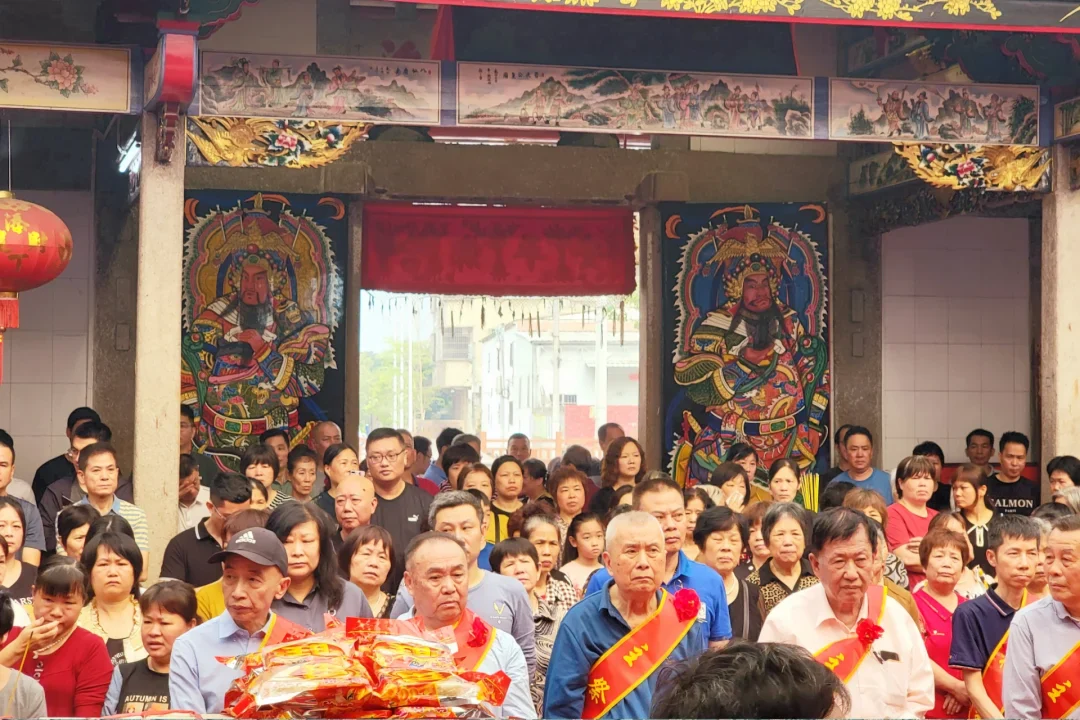
- Temples, villages and urban families may attach different explanations to similar-looking objects.
Do not turn a plant photograph into medical advice. Do not claim one object “was always used across China.” A protective practice can be culturally important without being clinically effective, universal or unchanged.
Zongzi carries the festival into the kitchen
Zongzi are leaf-wrapped glutinous-rice foods associated especially with the Dragon Boat Festival. They connect preparation, gifting, family preference and regional memory. Their fillings can be sweet, savory or mixed; their leaves, folds and shapes vary.
The exterior is not a reliable map. A triangular packet does not disclose pork, red bean, date, chestnut, salted egg yolk or an unfilled rice center. Nor can the shape prove where it was made.
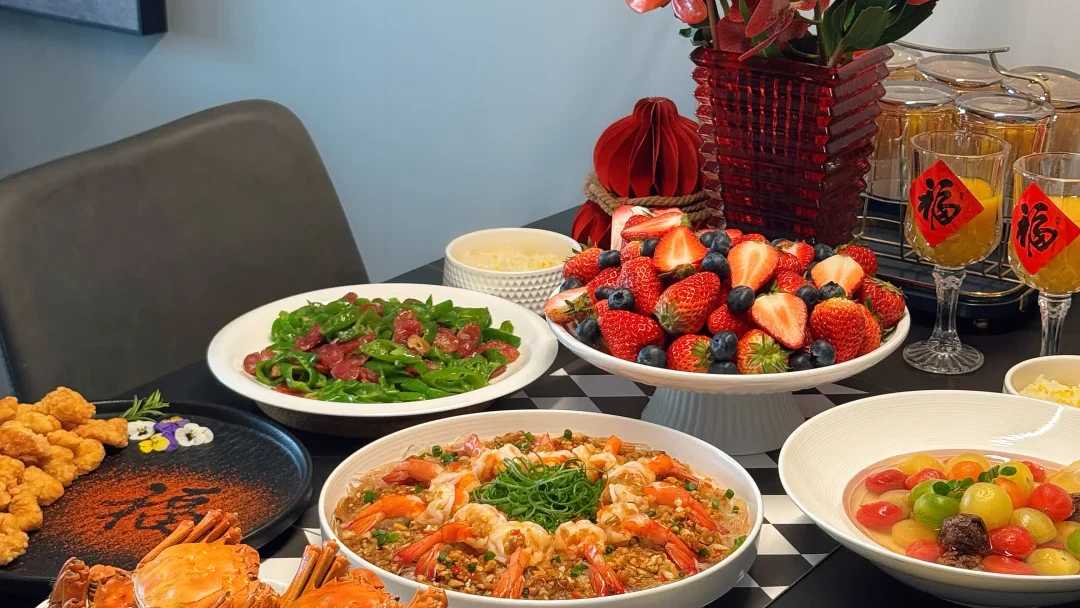
Our zongzi guide owns the useful questions: how leaf, rice, filling, closure and tying create the structure, and which leak points matter in a real wrapping sequence. This festival page keeps the food in its social and calendar setting.
How to watch a dragon-boat race well
Arrive with a few precise questions and the race becomes easier to read.
Before the start
Look at crew spacing, boat length, water width and the position of turns. Identify where spectators are permitted and whether the course is a straight sprint, a turn-heavy route or a locally distinctive format. Do not step onto private banks, block residents or lean into a course for a photograph.
During the race
Watch more than the bow.
- Compare the first strokes with the settled middle rhythm.
- Look for how evenly paddles enter and leave the water.
- Listen for changes in the audible call or drum.
- Observe whether the boat holds its line under pressure.
- At a turn, watch when the crew begins adjusting, not only where the bow ends up.
- Notice recovery after a disrupted stroke, splash or course correction.
The most instructive moment may not be the finish. It may be the half-second in which a crew loses unity and rebuilds it.
As a visitor
Ask before photographing identifiable participants at close range, especially during preparation or ritual. Credit the named place and team when you share images. Treat safety barriers as part of the culture of the event, not an obstacle to your content.
What the festival means now
The Dragon Boat Festival can hold mourning, loyalty, local identity, protection, sport, tourism and family food without collapsing into one of them. Contemporary races may be serious competition and community heritage at the same time. Commercial sponsorship does not automatically empty the tradition; careless storytelling does.
The useful boundary is evidence. A real Diejiao photograph tells us how one crew moves through one demanding local waterway. UNESCO helps establish the festival's regional plurality. A lunar calendar establishes the date. None of those sources should be asked to prove the others' claims.
The clear conclusion
The Dragon Boat Festival is larger than the Qu Yuan story, and the boat race expresses its living power better than a list of symbols. A crew turns memory into coordinated action: different roles, bodies and judgments must produce one movement while the water keeps changing beneath them.
The next date is June 9, 2027. Attend the local event, name its place, watch how the team corrects itself and eat the zongzi people there actually make. Then return to the wider Chinese festivals calendar to see why this early-summer combination of water, protection, remembrance and food cannot be reduced to one poet or one race. That is a more respectful encounter with the festival than repeating one universal origin story.