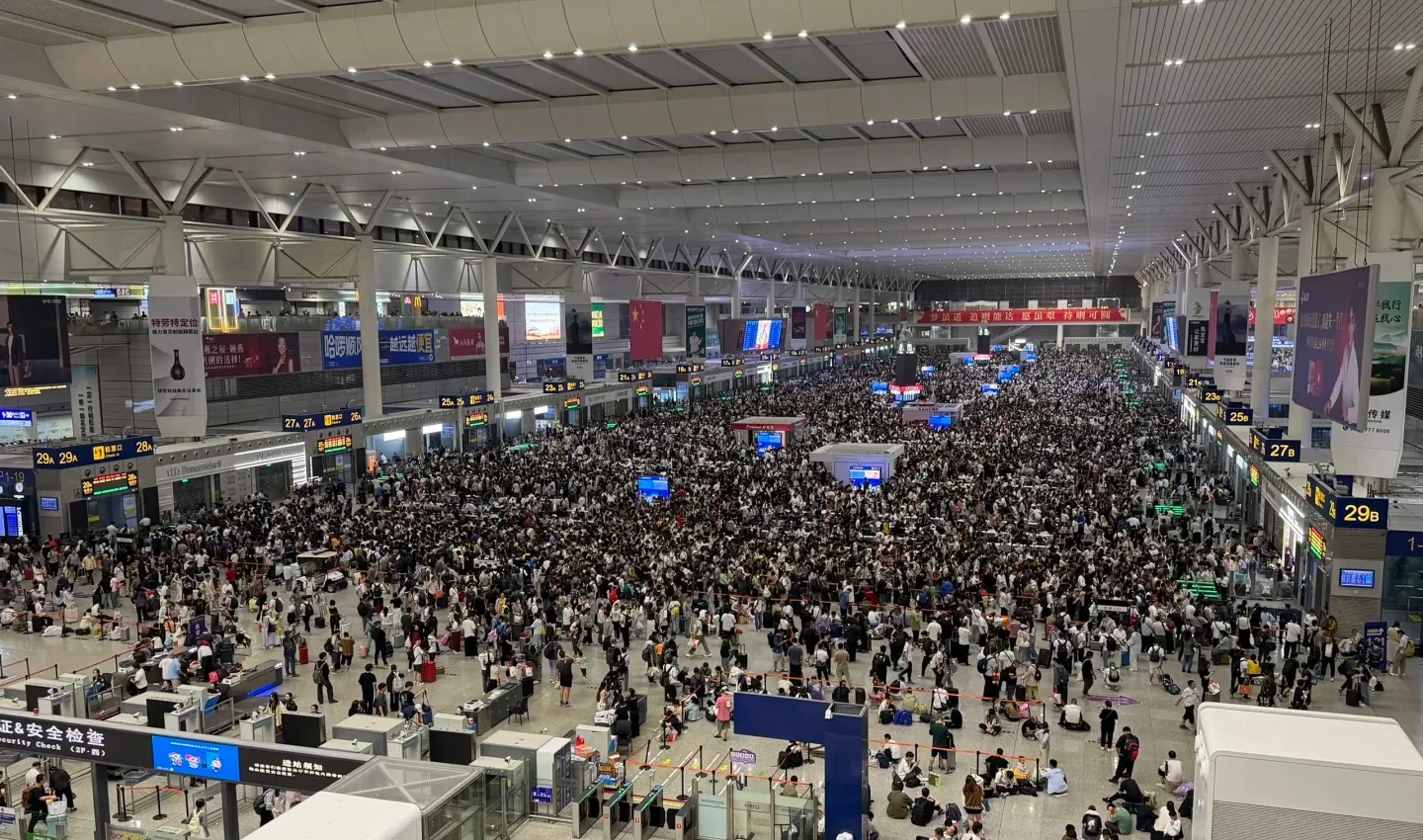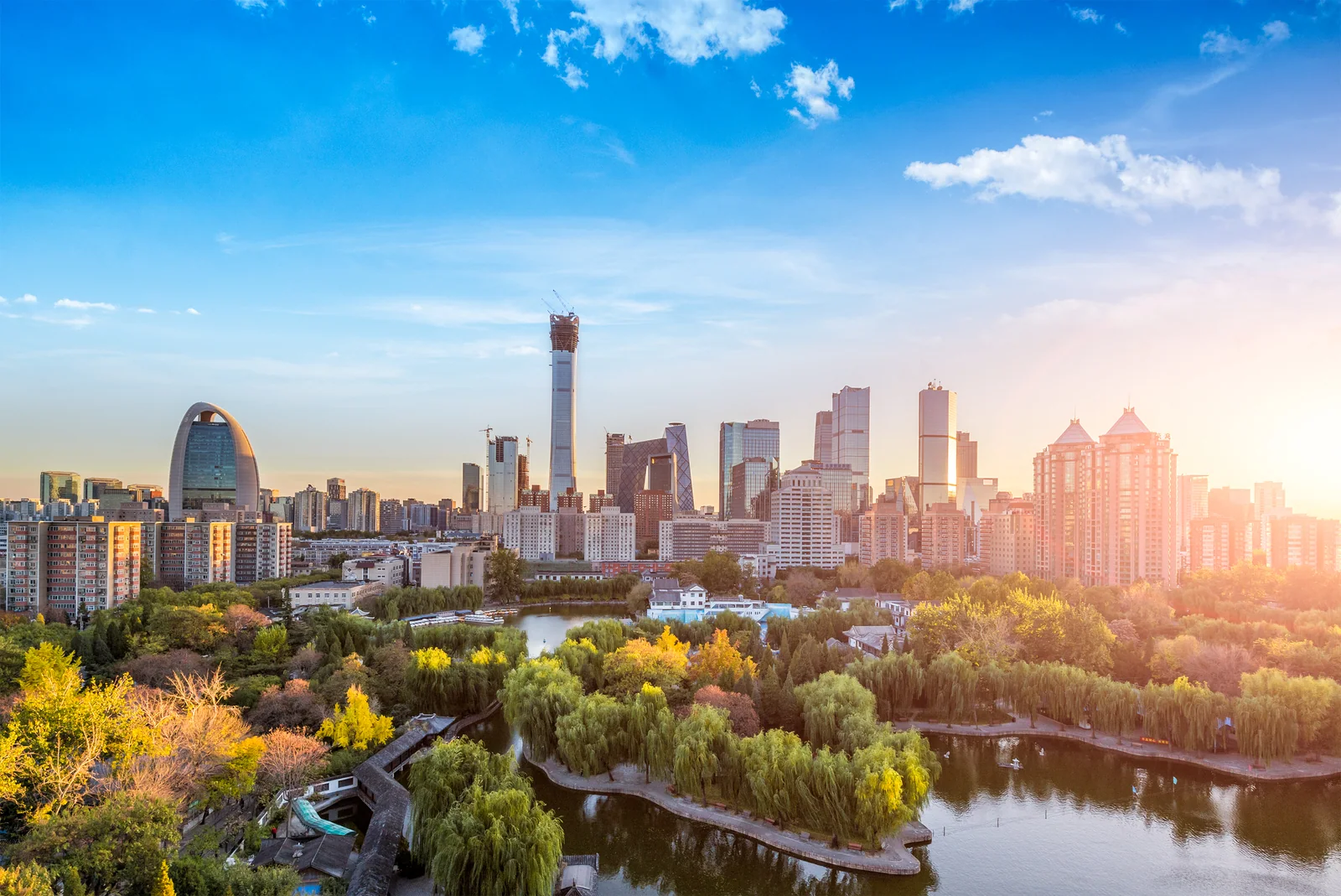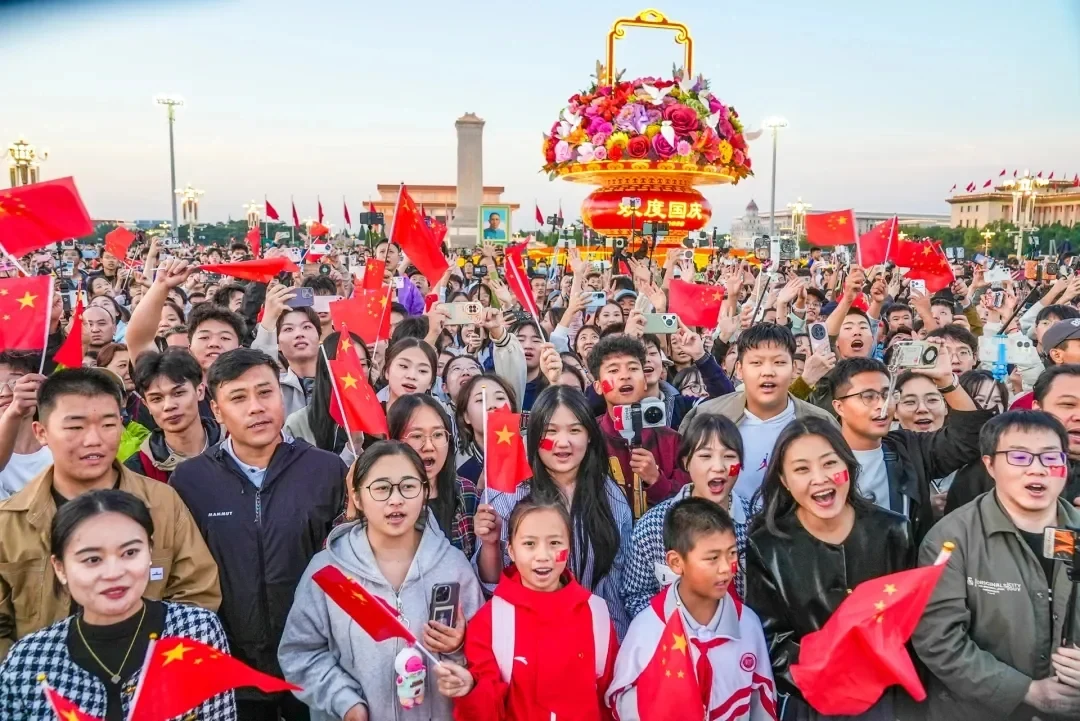
China National Day is October 1, the annual commemoration of the founding of the People's Republic of China in 1949. In 2026, the adjusted mainland holiday runs from October 1 to October 7. But the date is bigger than a ceremony and smaller than a slogan: it becomes real when red flags enter ordinary streets, people wait in darkness for sunrise, families finally share free time and some workers simply keep the city moving.
My strongest National Day image is not an empty square photographed with official perfection. It is a crowded frame: children in red scarves, young people holding phones, parents trying to keep sight of one another, small flags bending in different directions, and faces that do not perform one identical emotion. The scene is noisy, compressed and alive. That is exactly why I trust it.
China National Day is often explained abroad as a founding date followed by a seven-day travel rush. Both facts matter. Neither is enough. The day makes the state visible, but ordinary people decide how it enters their lives. One person queues before dawn at Tiananmen Square. Another rides a delivery scooter beneath a kilometre of flags. Someone uses the break to attend three weddings. Someone sleeps until noon because this is the first morning in months without an alarm.
I refuse to flatten all of that into either patriotic theatre or tourism logistics. October 1 is a public date filled with private meanings.
What is China National Day, and why is it October 1?
China National Day, also called Chinese National Day or PRC National Day, is observed every year on October 1. It commemorates the founding of the People's Republic of China. On October 1, 1949, Mao Zedong proclaimed the Central People's Government of the new state at Tiananmen in Beijing. On December 2 of that year, the Central People's Government adopted a resolution designating October 1 as National Day from 1950 onward. The State Council's English National Day record confirms that sequence.
This distinction corrects two common errors.
First, October 1 is not the anniversary of the end of the War of Resistance against Japanese Aggression. China commemorates that victory separately. Mixing the two turns different histories, deaths and political meanings into one vague patriotic date.
Second, the whole October holiday is not “National Day” in the same sense. October 1 is the annual national day. The longer break is a calendrical arrangement built from statutory holiday days, weekends and sometimes shifted working days. People casually call the entire period National Day holiday or Golden Week because that is how it is lived, but the legal date and the travel period are not identical.
The distinction may sound fussy until you plan a trip, schedule a meeting or try to understand what a photograph shows. A ceremony on October 1, a family outing on October 4 and a replacement workday on October 10 all belong to the same holiday system. They do not carry the same ritual weight.
China National Day 2026: the exact holiday dates
In mainland China, the official 2026 National Day holiday is Thursday, October 1 through Wednesday, October 7. Sunday, September 20 and Saturday, October 10 are working days under the adjusted calendar published by the State Council and relayed by the Beijing Municipal Government.
| What the date means | 2026 date |
|---|---|
| China National Day | Thursday, October 1 |
| Adjusted holiday period | October 1–7 |
| Shifted working days | September 20 and October 10 |
Do not memorize “seven days off” as a permanent formula. China publishes a year-specific holiday calendar, and the arrangement changes. Check the current official notice before booking transport, promising a deadline or assuming a Chinese supplier has disappeared for an entire week. The national public-holiday regulations establish the statutory framework; the annual calendar tells you how the actual break is assembled.
That moved-weekend system annoys people for a reason. A long break can create two compressed working stretches around it. The calendar produces freedom and collects some of it back. Any account of National Day that celebrates seven days of leisure but ignores the replacement workdays is advertising, not explanation.
The street changes before the calendar does

On Taiyuan's Yingze Bridge, National Day appears above an ordinary delivery shift. The image proves one city's street transformation, not what the rider thinks about it.
National Day usually arrives visually before October 1. Flags appear along bridges, main roads, residential entrances, shopping streets and public buildings. Flower displays are installed. Red becomes a repeated line through the city rather than one isolated decoration.
The photograph from Taiyuan explains this better than a list of “National Day traditions.” A delivery rider moves away from the camera while dozens of large flags pull in the same wind above him. The city is ceremonially dressed; the worker is still working. Neither cancels the other.
This is the China I want an overseas reader to notice. Public symbolism does not replace daily life. It sits on top of traffic, wages, errands, school pickups, shift changes and takeaway orders. A row of flags can feel stirring, excessive, beautiful, routine or all four within five minutes. The meaning is not sealed inside the fabric. It is produced by the encounter between the symbol and whoever passes beneath it.
Many generic guides jump from flags to fireworks as if every city follows one national event script. That is false. Decorations, light shows, exhibitions, concerts and local activities vary by place and year. A county town, a university campus, a shopping mall and central Beijing will not stage October 1 in the same way. Even on the same avenue, one person stops for a photograph while another checks whether the bus is late.
My view is firm: street flags are the most honest nationwide image of National Day precisely because they do not demand that life stop. They let the public occasion and the ordinary day occupy the same frame.
Why people wait all night for the Tiananmen flag raising

The dark sky is the missing half of the famous sunrise picture. For many visitors, the ceremony begins with hours of waiting rather than the moment the flag rises.
The flag-raising ceremony at Tiananmen Square is the most recognizable National Day ritual. It is also easy to misunderstand if you only see the final thirty seconds on a screen.
People come from other provinces, navigate checkpoints, wait in assigned areas and protect a small patch of visibility in the dark. Parents carry sleepy children. Strangers compare routes and batteries. The air before dawn can be cold enough to punish a thin jacket. By the time the flag appears against the morning sky, the crowd has already invested inconvenience, attention and hope into the moment.
That cost matters. Ritual becomes powerful when people give it something scarce. Here, they give sleep, physical comfort and time.

The uniform, barriers and controlled sightline show the ceremony's discipline. They do not tell us that every spectator experiences the same emotion.
I understand why the scene can move people. The anthem, the guard's movement, the flag climbing and the first usable light compress a national idea into a sequence the body can follow. You stand. You look in one direction. The waiting ends at the same instant for everyone.
But Tiananmen is not a test of whether someone loves their country correctly. A person who never visits the square may feel October 1 through family, memory, military service, school, work or a city street. A person inside the crowd may be solemn, curious, excited, exhausted or mainly worried that a child cannot see. Human feeling is not weakened by being mixed.
Nor should one Beijing ceremony be used as shorthand for 1.4 billion people. The capital gives National Day its central public image; it does not own every private meaning.
How is National Day celebrated in China?
There is no single household ritual comparable to a Mid-Autumn reunion meal or Lunar New Year eve dinner. National Day is civic rather than kinship-based. Its recurring forms are public symbols, ceremonies, media programming, cultural events, travel and shared free time.
People see the country represented in public space
Flags, flower arrangements, illuminated landmarks and anniversary messages change the visual field. Museums, cultural venues, schools and workplaces may organize themed exhibitions or activities. Television and digital platforms carry ceremonies, concerts, films and historical programming. The exact program changes every year, so a current event listing should never be sold as a timeless tradition.
Families use the break for life that work postponed
This is less photogenic than a parade and more important to many people. The break becomes a window for visiting parents, taking children somewhere new, holding weddings, returning to a hometown, completing a long drive or sitting at home without apologizing for it.
Chinese social discussion around the holiday often contains a sharp complaint: “Why does everyone insist on travelling at the same time?” The answer is not that hundreds of millions share one bad preference. They share one calendar. School, work and family availability align briefly, so private plans become a collective crowd.
That synchronized release is the subject of our separate Golden Week China guide. It covers tickets, stations, road pressure and the decision to travel. This page owns a different question: why October 1 exists and how a civic anniversary becomes lived time.
Some people celebrate by doing almost nothing
Rest is not cultural emptiness. Sleeping late, ordering food, playing games or watching a series can be a truthful National Day experience after months of deadlines. Official imagery tends to show movement and unity because stillness is difficult to broadcast. A closed laptop can matter more to a tired person than a spectacular drone formation.
This is where I reject ceremonial snobbery. A meaningful public holiday does not require every citizen to perform visible enthusiasm. The state marks the date; people inhabit it with the life they actually have.
Many people keep working
Transport staff, hospitality workers, delivery riders, security personnel, medical workers and others sustain everyone else's holiday. The red flags above the Taiyuan rider make this contradiction impossible to miss. National leisure depends on labour that the celebration often pushes outside the frame.
If you travel during the holiday, remember that your “once-in-a-lifetime experience” may be another person's seventh consecutive shift. Patience is not charity. It is the minimum respect owed to the people making collective time possible.
Does China hold a military parade every National Day?
No. A large military parade is not an annual National Day tradition.
Major parades and mass pageants have been held for significant anniversaries, but October 1 does not automatically mean tanks and formations will cross central Beijing. Search results, old footage and anniversary montages are frequently detached from their years, creating the illusion of an event repeated every autumn.
This error matters because it turns a national day into permanent spectacle and obscures the quieter reality visible across most of the country. Most people experience flags, media coverage, local events and the holiday break—not a live military parade outside their window.
Always check the year attached to footage. If a video has no date, uniforms, vehicles, camera quality, flower displays and anniversary numbers may help identify it, but they are not substitutes for a verified source. “National Day parade” is a historical-event query; “China National Day” is a living annual-holiday query. They overlap, but they are not interchangeable.
National Day and Golden Week are connected—but not the same
The easiest mental model is this:
- National Day answers: What does October 1 commemorate?
- Golden Week answers: What happens when a huge share of the country receives the same travel window?
National Day supplies the legal and civic anchor. Golden Week describes the extended holiday economy and movement around it. Conflating them creates bad cultural understanding and bad itineraries.
An international visitor may care most about hotel prices, attraction reservations and train tickets. That is reasonable, but it is only the travel layer. A Chinese family may care that two adult children can finally return to the same home. A manufacturer may care about production and shipping cutoffs. A student may care about the first real pause after term begins. A worker may care that the replacement weekend has turned the week before the holiday into a grind.
One date can hold all of those calculations.
If your priority is practical travel, read the Golden Week field guide before booking. If you want to understand the capital behind the ceremony, continue into our lived guide to Beijing. The point of internal links is not to keep you clicking. It is to stop one overloaded page from pretending culture, history and transport are the same question.
How to watch the Tiananmen ceremony without romanticizing the queue

The clean daylight image is real, but it comes after security, waiting and crowd management. The photograph is the reward, not the whole experience.
If attending the Tiananmen flag raising matters to you, prepare for a controlled public space, not an improvised sunrise walk.
The official Tiananmen Square reservation notice established separate reservation periods including flag raising, morning, afternoon and flag lowering. Rules, booking windows, entrances and identity requirements can change. Use the current Tiananmen Area Management Committee platform before your visit, and check again close to the date.
The ceremony time also follows sunrise rather than one permanent clock time. Do not copy an old post's arrival time and assume it works for October 1 of another year. A “front row” strategy may require a wait many readers will not enjoy. Decide what you actually want: the ritual itself, a clear photograph, the collective crowd or simply the knowledge that you were present.
For many people, standing farther back and keeping the day humane is the better decision. The ceremony does not become more meaningful because your body hurts more. Bring only what current security rules allow, protect your phone battery, expect walking and remember that transport after a major event can be part of the challenge.
Most importantly, do not treat the people around you as obstacles contaminating your perfect frame. They are the reason this is a public ritual rather than a private photoshoot.
What foreign coverage usually misses
Foreign explanations often choose one of two lazy frames. The first shows monumental Beijing, formal ceremony and a state speaking at maximum volume. The second shows packed tourist sites and concludes that National Day is a week when China makes travel impossible.
Both frames select real things. Both become false when presented as the whole.
What they miss is scale changing from hour to hour. Before sunrise, a square is ceremonial. At breakfast, a family argues about where to eat. At noon, a delivery rider crosses a decorated bridge. In the afternoon, someone visits a museum while someone else sleeps. At night, a couple watches traffic on a map and realizes their holiday ambition was ridiculous.
National Day is not intimate in the same way as the Mid-Autumn Festival, where a round moon and shared food pull attention toward family reunion. It is not ancient in the way many traditions in our Chinese festivals guide are. It is a modern civic holiday, and its emotional force comes from the collision between public history and contemporary schedules.
That makes it part of Chinese culture, not merely a date in Chinese politics. Culture is what happens when institutions, symbols and people repeatedly meet. A flag on a government building is formal representation. The same flag above a courier, a wedding car or a child on a parent's shoulders enters lived culture.
China National Day becomes real where the flag meets the street
China National Day commemorates the founding of the People's Republic of China on October 1, 1949. That sentence is correct, searchable and insufficient.
The day matters because it forces a vast public idea into ordinary space. It hangs above roads. It makes people wake at 2 a.m. for a ceremony. It releases families onto trains. It gives exhausted workers a morning without an alarm while asking other workers to serve the holiday. It produces pride, spectacle, inconvenience, memory, commerce and rest at the same time.
I do not need every person in the photographs to feel one approved emotion. Their difference is the truth. A national day is strongest when it can hold ceremony without erasing life.
So when October arrives, look beyond the perfect wide shot. Notice who is holding the child, who is still delivering dinner, who came from another province, who has dressed the street, who is waiting in the dark and who has chosen to stay home. China National Day becomes understandable at the point where the flag meets an actual human day.
If you have lived an October 1 that public guides never capture, tell us the exact scene: the street, shift, meal, journey, sound or awkward family plan that made the date real. We will return before the next National Day with the verified calendar, current access rules and new reader evidence from cities beyond the capital.