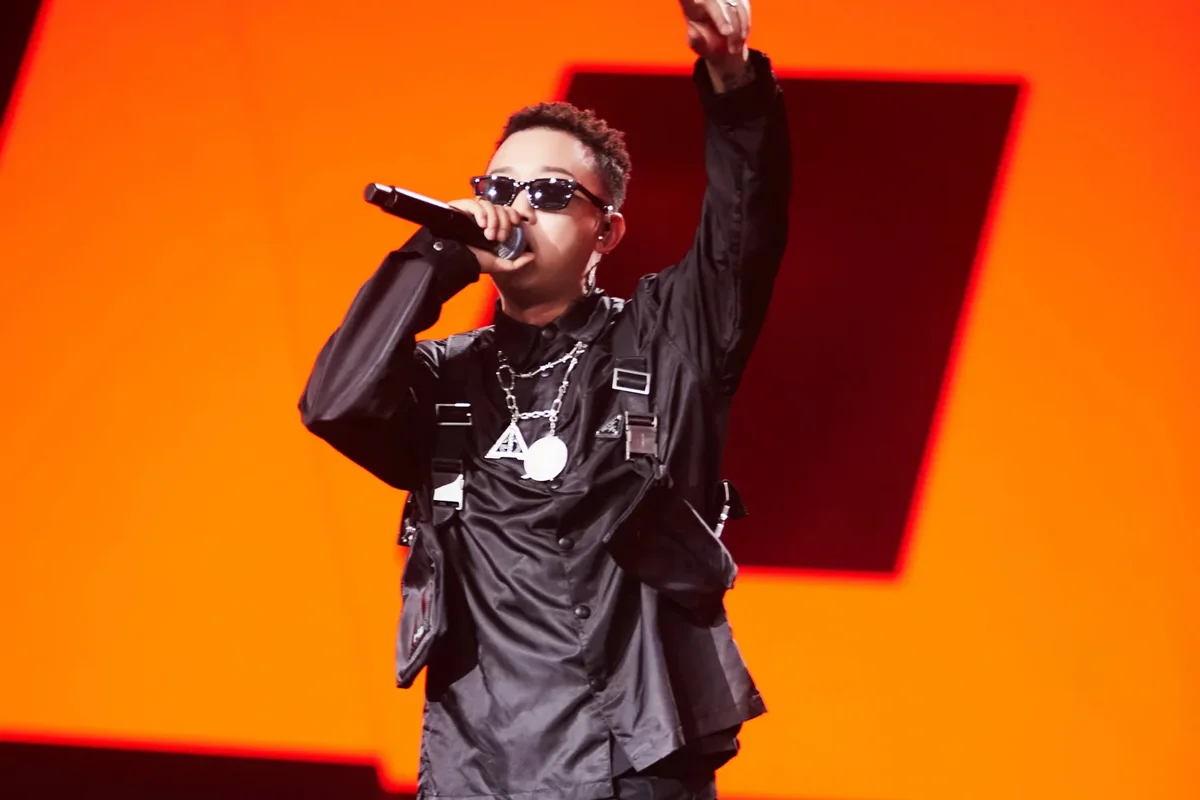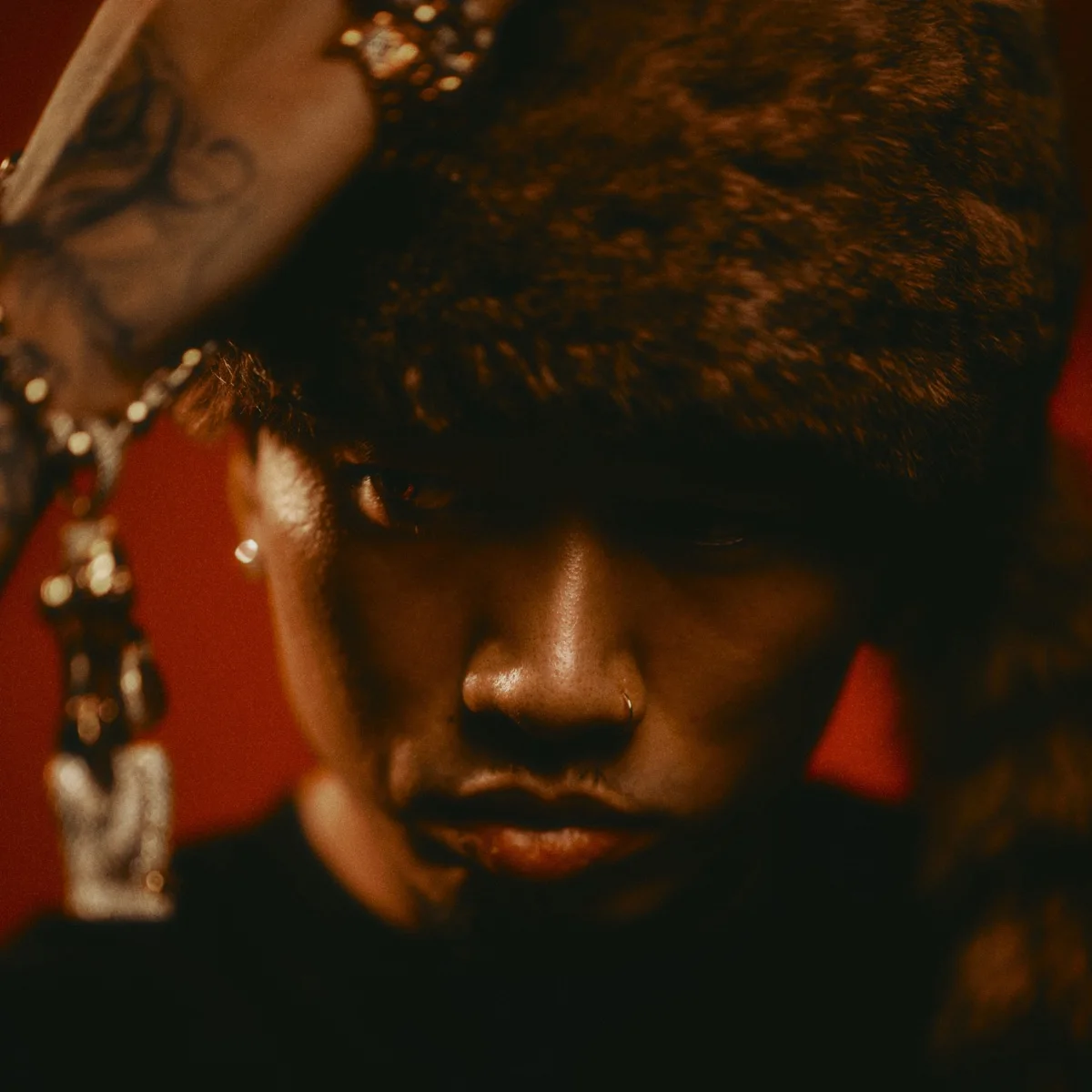
Jony J rarely sounds like he is chasing the beat. He sounds like he has already sat with the thought, cut the weak words and brought only the line that survived. The delivery is calm enough to feel conversational, but the writing keeps turning ordinary pressure into something sharp.
Fans often call him a “rap poet.” That phrase is affectionate, but it can make the music sound like homework. Jony J's real appeal is more immediate: he can say complicated things in sentences people remember, then make a whole crowd rap them back without flattening the idea.
I trust Jony J most when he refuses the easy heroic ending. He can admit that money matters, that ambition deforms people and that knowing the trap does not magically release us from it. I do not hear a lecturer above the crowd. I hear an adult caught inside the same bargain, trying to name its price without lying to himself.
Jony J in 60 seconds
| What you want to know | The short answer |
|---|---|
| Real name | Xiao Jia (肖佳) |
| Also known as | Douya (豆芽, “bean sprout”) |
| Career city | Nanjing, where he studied and built his early musical identity |
| What hits first | Clear diction, controlled flow and writing that turns self-questioning into memorable lines |
| Essential tracks | My City, Nu Li, Bu Yong Qu Cai, Xin Yang and Qing Wu Da Rao |
| Albums to know | Wu Nu Jin, Xi Xin Lian Jiu and 24 Shi |
| TV chapters | Final four of The Rap of China in 2017; rap mentor on Youth With You 2 in 2020 |
The résumé explains the reach. The songs explain the loyalty.
Why people trust his pen
Jony J does not build every verse around a punchline. He builds arguments. A thought enters, meets doubt, turns around and comes back with a harder edge. That structure is why his songs can feel personal without becoming diary entries and socially observant without becoming lectures.
That is the distinction I would defend even if the television résumé disappeared tomorrow. Plenty of rappers can produce a quotable sentence. Jony J can make the sentence acquire a second meaning after the listener has changed jobs, failed publicly or discovered that independence also has bills. To me, that delayed impact is more valuable than instant cleverness.
His diction helps. Even when the beat is busy, the words arrive in a clean line. For overseas listeners learning Mandarin, that clarity can make Jony J unusually approachable, though translation still loses rhyme, tone and the small shifts between spoken language and written phrasing. Our Chinese language guide explains why a literal English line can preserve the subject while missing the music inside the sentence.
The restraint matters too. Jony J can raise his voice, but he rarely needs to perform chaos to prove intensity. The pressure comes from recognition: work, money, ambition, compromise, relationships, screens, crowds and the uncomfortable moment when success creates a new set of traps.
Five tracks that unlock Jony J
1. My City: Nanjing becomes more than a location
My City, featuring Gu Jie, appears on the 2013 J HOOD Mixtape. It is the cleanest starting point for understanding why Jony J and Nanjing are linked so strongly. The city is not a skyline pasted behind a rapper. It is the place in which an artistic self takes shape.
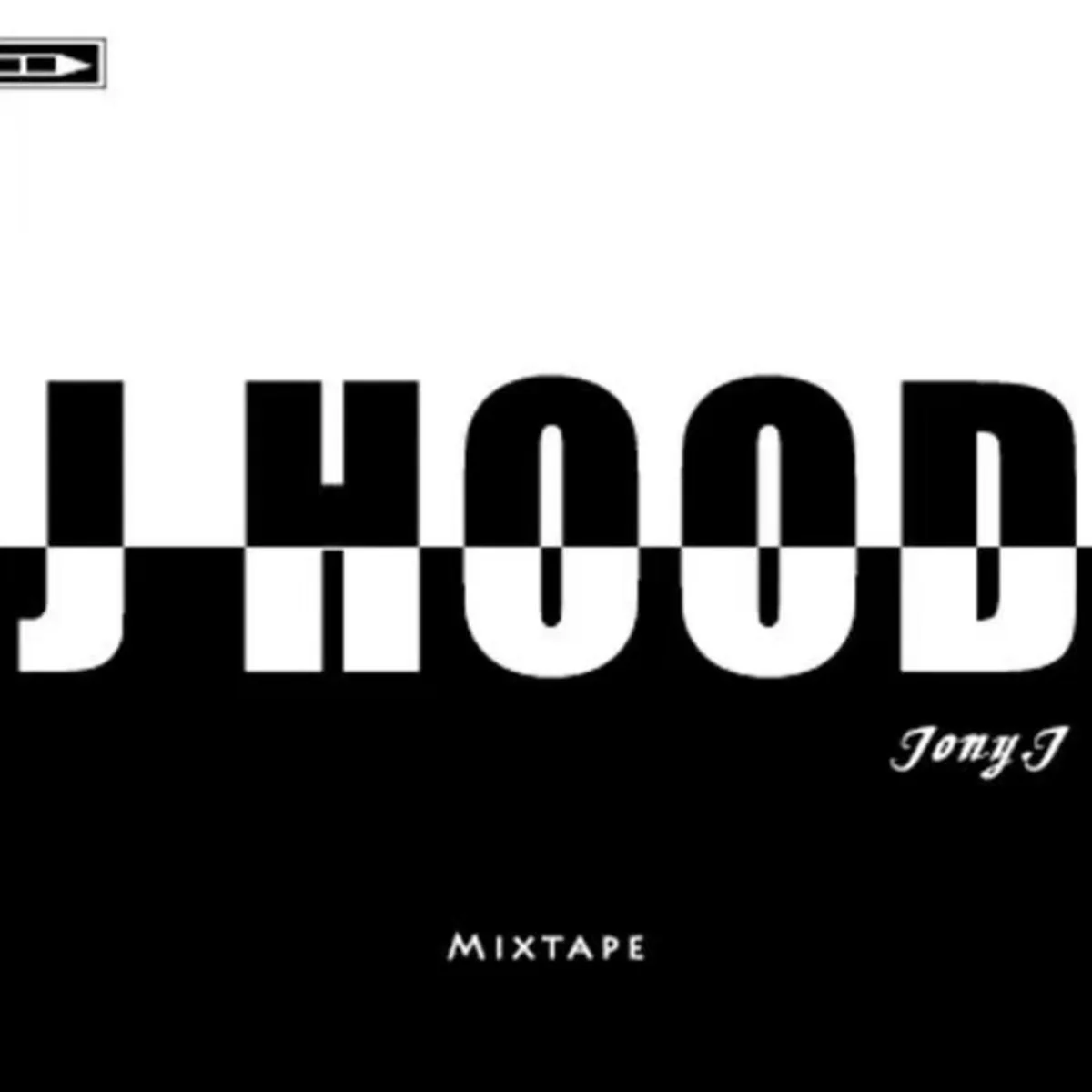
The J HOOD Mixtape on Apple Music preserves the early catalog that introduced Jony J's Nanjing-centered voice.
That distinction matters because he was not born in Nanjing. Public biographical records place his birth in Fuzhou, Fujian. He later studied in Nanjing and built his early career there. The honest sentence is not “Nanjing-born rapper.” It is that Nanjing became his career city, the place he chose and repeatedly made audible.
2. Nu Li: social pressure without a slogan
Nu Li (奴隶, “Slave”) is one of the clearest demonstrations of his writing. The song examines the systems people serve while believing they are acting freely: money, status, consumption, work and the gaze of others.
What keeps it from becoming a school essay is self-implication. Jony J does not stand outside the problem and point down at everyone else. He sounds caught in the same machinery. The song's tension comes from knowing the trap and still having to live inside it.
This is why the “rap poet” label sticks. The value is not decorative vocabulary. It is the ability to make an abstract pressure feel like something that followed you home.
3. Bu Yong Qu Cai: uncertainty becomes a hook
Bu Yong Qu Cai (不用去猜, “No Need to Guess”) became one of Jony J's defining public songs during the 2017 period. Its core attitude is not blind confidence. It is the decision to stop demanding guarantees before moving.

Watch Jony J revisit Bu Yong Qu Cai on MangoTV Music. The 2024 stage shows how a reflective song can still work as a large-room anthem.
That balance is central to Jony J. He can write about doubt without sounding defeated and write about belief without pretending fear has disappeared. The song works because the confidence has friction underneath it.
4. Xin Yang: the writing learns stadium scale
Xin Yang (信仰, “Faith”) is a natural crowd record, but it does not abandon the introspection that built his audience. The subject is persistence: what remains when applause, opportunity and other people's opinions keep changing.
Jony J's live reputation matters here. Goldthread's 2019 documentary described his ability to draw arena-scale audiences as exceptional within Chinese rap at that time. The record helps explain how that happened. Fans are not only watching technical control; they are returning their own years of uncertainty through the chorus.
5. Qing Wu Da Rao: adulthood enters the catalog
Qing Wu Da Rao (请勿打扰, “Do Not Disturb”) belongs to the long-form 24 Shi project. Its mood is more inward. The younger rapper who had to announce himself has become an established artist dealing with noise, expectation and the need to protect mental space.
That does not make the later music automatically wiser or better. It makes the stakes different. Early Jony J often asks how to build a life. Later Jony J asks what parts of that life still belong to him after the audience arrives.
Nanjing is an identity, not a rewritten birthplace
Jony J's Nanjing connection is unusually strong because the city appears before national television fame. My City is already present on J HOOD in 2013. His education in Nanjing and early work there make the relationship biographical, musical and chosen.

Goldthread's 2019 East Coast documentary on Jony J follows the artist at the point when an underground-built audience had become arena-sized.
Nanjing is not usually the first city foreign listeners name when discussing Chinese hip-hop. That is part of why Jony J matters. He expands the map beyond the most heavily branded regional scenes. The city around him is a university center, a lower-Yangtze capital, a place of deep historical memory and a modern creative economy that does not need one rap acronym to exist.
Our Nanjing culture guide gives that wider urban context. Read it beside My City and the relationship becomes richer: one rapper represents a personal route through Nanjing, not every neighborhood or musician in it.
The albums are the real career story
Television made Jony J easier to recognize. The albums explain why he lasted.
Wu Nu Jin (物女金) arrived in 2016 as his first full album. The three-character title places material things, women and money in a terse sequence. The record keeps looking at the desires and pressures attached to those subjects without pretending the rapper stands outside them.

The Wu Nu Jin album artwork places a human eye above stylized waves, a visual match for a record interested in watching desire and value move.
Xi Xin Lian Jiu (喜新恋旧, roughly “loving the new while attached to the old”) followed in 2018. The record widens the emotional frame without losing the analytical voice. Xin Yang, My Man, Zi Dan Kou Shui and the title track move between conviction, intimacy, conflict and self-revision.

The Xi Xin Lian Jiu cover visibly includes the name SHOOC Studio. It proves the studio-brand connection in 2018, not an automatically permanent 2026 label status.
24 Shi (24时) was released as a full album in 2023 after songs from the project had appeared earlier. The clock concept lets Jony J organize different states of one life: crowded and alone, ambitious and tired, public and unreachable. Apple Music then listed 24 Shi Concert Arrangements in December 2025, rebuilding selected songs as live versions rather than pretending the earlier records had stopped changing.
The album route makes one thing clear: Jony J is not a rapper with a television moment and a few famous singles. He has a body of work designed to be revisited.
The Rap of China changed the audience, not the foundation
Jony J entered The Rap of China in 2017 with years of music already behind him. He was eliminated, returned through the revival route and reached the final four. The unusual competition path made good television, but treating it as his origin story erases J HOOD, My City and Wu Nu Jin.
The show did something else: it translated an existing reputation into national name recognition. Viewers saw a rapper who did not need to invent an identity inside the program. The calm delivery, exact wording and refusal to oversell himself were already there.
That difference separates Jony J from a contestant built mainly by editing. The show became a chapter in his catalog, while the catalog remained larger than the show.
Becoming a mentor revealed a different kind of authority
In 2020, Jony J served as the rap mentor on Youth With You 2. The casting looked surprising to some hip-hop fans because the program trained a female idol group rather than staging a rap competition.
It also made sense. Teaching rhythm, diction and intention to beginners requires a rapper who can explain why a line is not working. Jony J's own music depends on those fundamentals. Official iQIYI clips show both the difficulty and humor of translating rap craft into a television training format.
The mentor role expanded his mainstream visibility, but it should not become the headline of the artist page. It is useful because it reveals the mechanics beneath the cool surface: breathing, emphasis, timing, sentence shape and the difference between reciting words and delivering them.
What can we actually say about SHOOC Studio?
The spelling SHOOC Studio appears directly on the 2018 Xi Xin Lian Jiu cover. Goldthread's 2019 documentary description also thanks the studio, although its English production note spells the name “Shocc.” Those two records support a genuine Jony J studio or artist-brand connection in that period.
They do not answer every current business question. Public primary sources reviewed for this page do not clearly identify Jony J's 2026 management company, current label contract or the legal ownership and operating status of SHOOC Studio. The responsible description is therefore historical and limited: SHOOC was visibly part of his independent artist world, but East Moment is not presenting it as a verified current label.
This is a small distinction with a large effect. Rap coverage often turns an old logo, crew name or album credit into a permanent affiliation. Careers change. A page should change only when the sources do.
The current chapter still puts the songs first
Jony J's catalog remained active after 24 Shi. The December 2025 live-version collection reframed older material through concert arrangements, documenting how songs built in a studio changed after years of audience response.
In June 2026, MangoTV documented Jony J appearing with Tiger Hu on Singer 2026 for Jie Guo Yi Xia. The performance is a collaboration rather than evidence of a new group or permanent role.

Watch the official MangoTV stage of Tiger Hu and Jony J performing Jie Guo Yi Xia. It places Jony J's measured delivery inside a live pop-competition setting without asking him to become a different rapper.
The appearance fits his broader career. Jony J can move through rap programs, idol training, documentaries and large music stages while keeping the center of gravity in the writing.
Current listener discussion shows what “the writing” means in practice. People remember printing lyrics in school, return to early documentary footage, organize complete tour sets and describe Player as both heartfelt and technical. That is stronger evidence of attachment than calling him a “conscious rapper.” My conclusion is that Jony J's best sentences survive because adulthood keeps changing their meaning. But trust in the pen cannot excuse a live performance when lyrics are forgotten or delivery loses the room; a song carried for years deserves equal preparation onstage.
I will take that imperfect standard over automatic reverence. If the writing earns loyalty, the live delivery must earn it again. A fan does not betray an artist by noticing a weak night; the more serious betrayal is pretending reputation has made attention optional.
Doubt is the engine, not a weakness
Jony J is easy to respect and sometimes harder to love casually. The same control that makes the best songs durable can make a weaker track feel too careful. When every sentence arrives already polished, you may miss the danger of a voice discovering the thought in real time.
But that control is also why the catalog ages well. Fans return because the songs meet them at different points. A line heard as ambition at twenty can sound like compromise at thirty. Nu Li changes when work becomes real. Bu Yong Qu Cai changes after a plan fails. Qing Wu Da Rao changes when privacy starts feeling expensive.
He is not the rapper to play when you want maximum chaos. He is the rapper to play when the room goes quiet enough for one sentence to become uncomfortable.
I return to him for that discomfort. I do not need every track to reassure me that hard work wins or authenticity survives. I need the line that notices how easily a person can become servant to the life he claimed to choose. At his best, Jony J does not solve the contradiction. He makes it impossible to ignore.
Trace the questions before chasing the hits
For the fastest introduction, play these in order:
- My City for the Nanjing foundation.
- Nu Li for the social writing.
- Bu Yong Qu Cai for the most accessible statement of persistence.
- Xin Yang for the crowd-scale version of his voice.
- Qing Wu Da Rao for the more inward later chapter.
Then take the album route. Start with Wu Nu Jin for the early worldview, Xi Xin Lian Jiu for the strongest bridge between underground reputation and national visibility, and 24 Shi for the mature long-form project. Finish with the 2025 concert arrangements to hear what the audience changed.
Apple Music's main Jony J profile is artist ID 1288524146. A separate same-name page exists with a different catalog, so use the linked main Jony J Apple Music page or the YouTube Music Jony J artist channel instead of trusting the first search result blindly.
Why Jony J matters
Jony J proved that clarity could scale. He did not need to choose between underground credibility and a large audience, between social observation and a hook, or between Nanjing identity and national reach. The career has moved through all of those spaces without turning every transition into a personality reset.
He also makes the map of Chinese hip-hop more accurate. Chengdu has Masiwei, Changsha has Sheng Yu and Chongqing shaped the early career of GAI. Jony J's story adds Nanjing, but with the precision his own writing deserves: not as a birthplace claim, not as ownership of a whole city scene, but as the place where his rap identity became unmistakable.
Continue through Chinese music, browse the Chinese musicians directory or read the Nanjing culture guide beside My City.
Then choose one line that followed you into a different age. Do not paste a lyric or call it “deep.” Paraphrase the thought, name what changed in your life, and post the before-and-after reading as a Moment. Return after hearing its live arrangement: a line that survives a new room deserves to become part of the community's annotated map of Chinese rap.