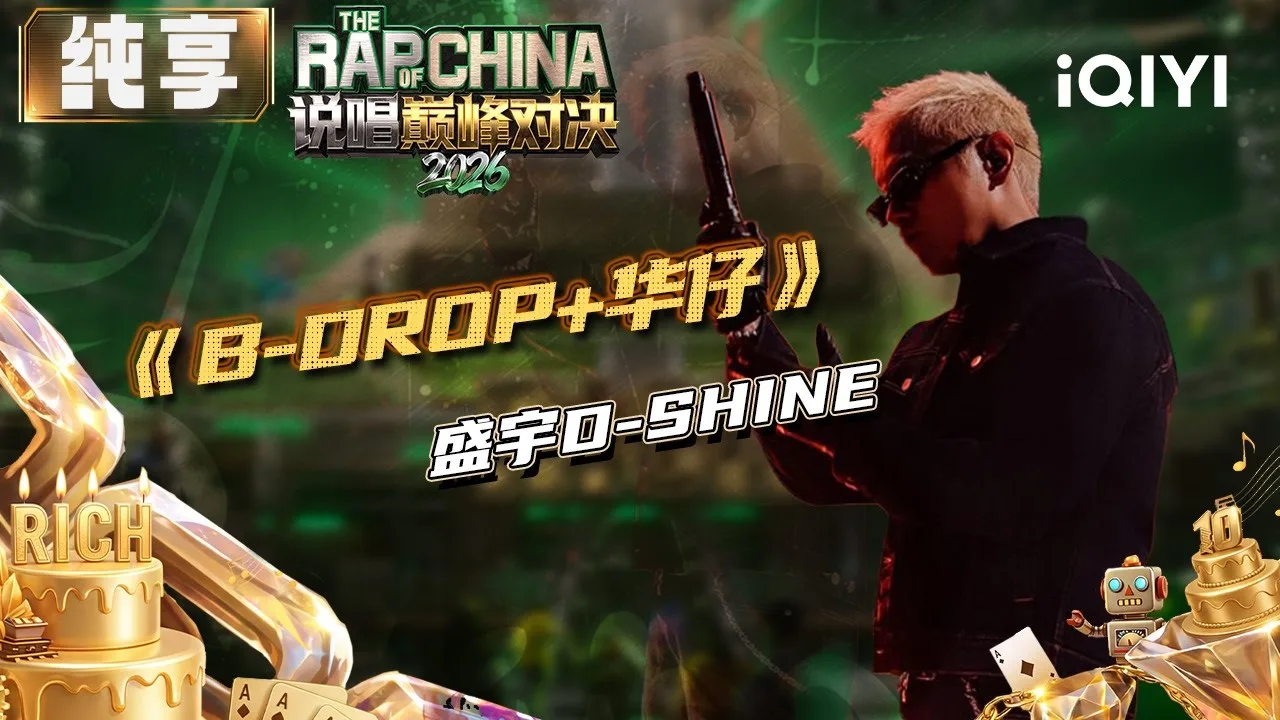
You do not really understand GAI from a list of dates. You understand him when that voice enters the beat: rough at the edges, built for a crowd, then suddenly melodic. I am convinced that his ability to hold challenge, street story and widescreen drama in one voice is the reason fans keep coming back.
If you are new to Chinese hip-hop, GAI is one of the best artists to start with. Not because he represents every artist in our Chinese musicians collection, but because nobody else sounds quite like him. His accent is part of the rhythm. His choruses are big enough to escape rap playlists. His imagery can move from hot pot and river gates to hometown memory and jianghu codes without losing the person at the center.
GAI in 60 seconds
| What you want to know | The short answer |
|---|---|
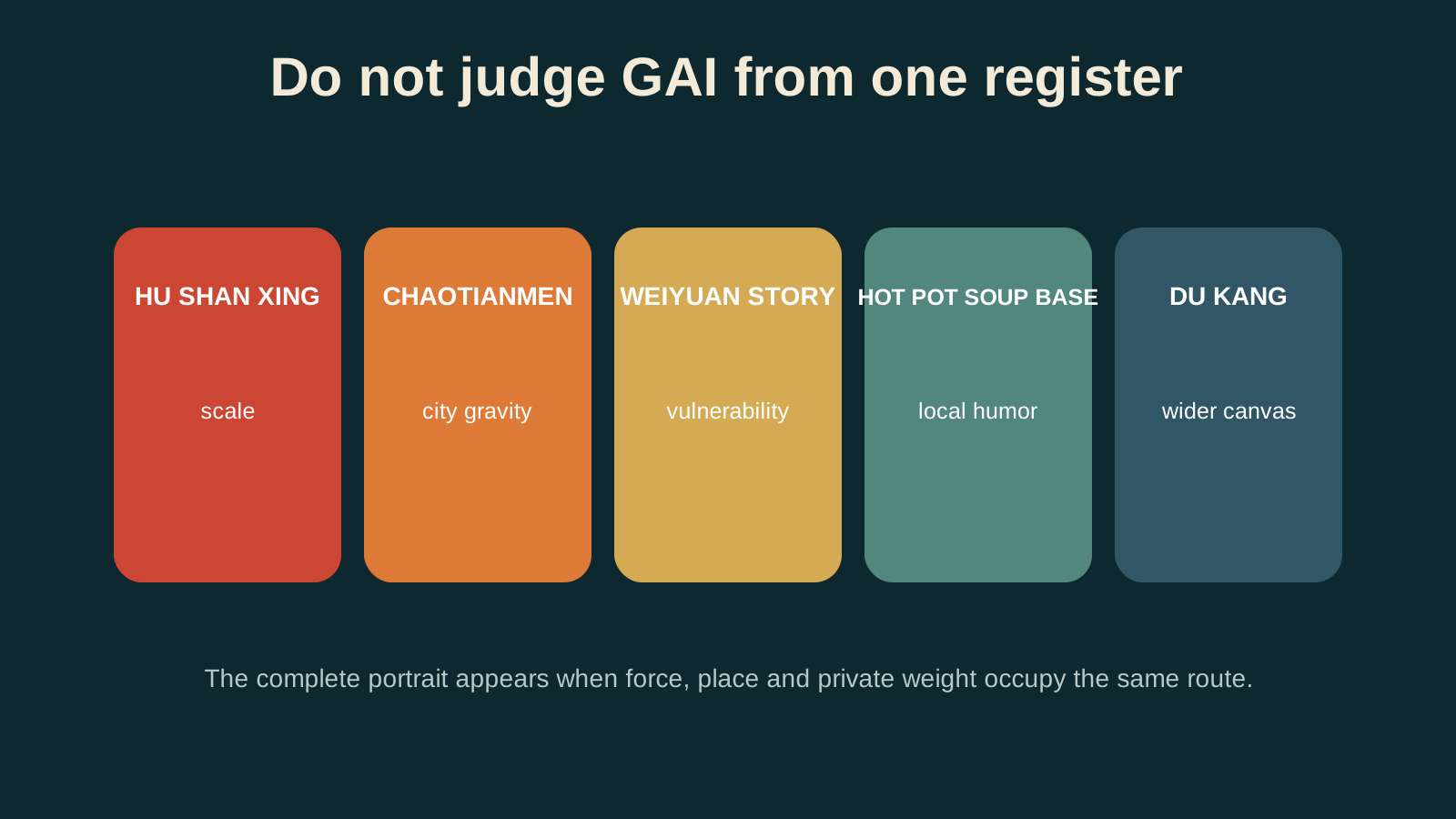
| Real name | Zhou Yan (周延) |
| Born | March 22, 1987, in Weiyuan County, Sichuan |
| The city that shaped his early rap career | Chongqing |
| National breakthrough | Co-champion of The Rap of China in 2017 |
| Early scene connection | Historically associated with GO$H |
| Current official artist profile | Dream Music Group International (DMGI) |
| Start with | Hu Shan Xing, Chaotianmen and Weiyuan Story |
That is the factual skeleton. The interesting part is what happens when GAI turns it into sound.
Why GAI hits differently
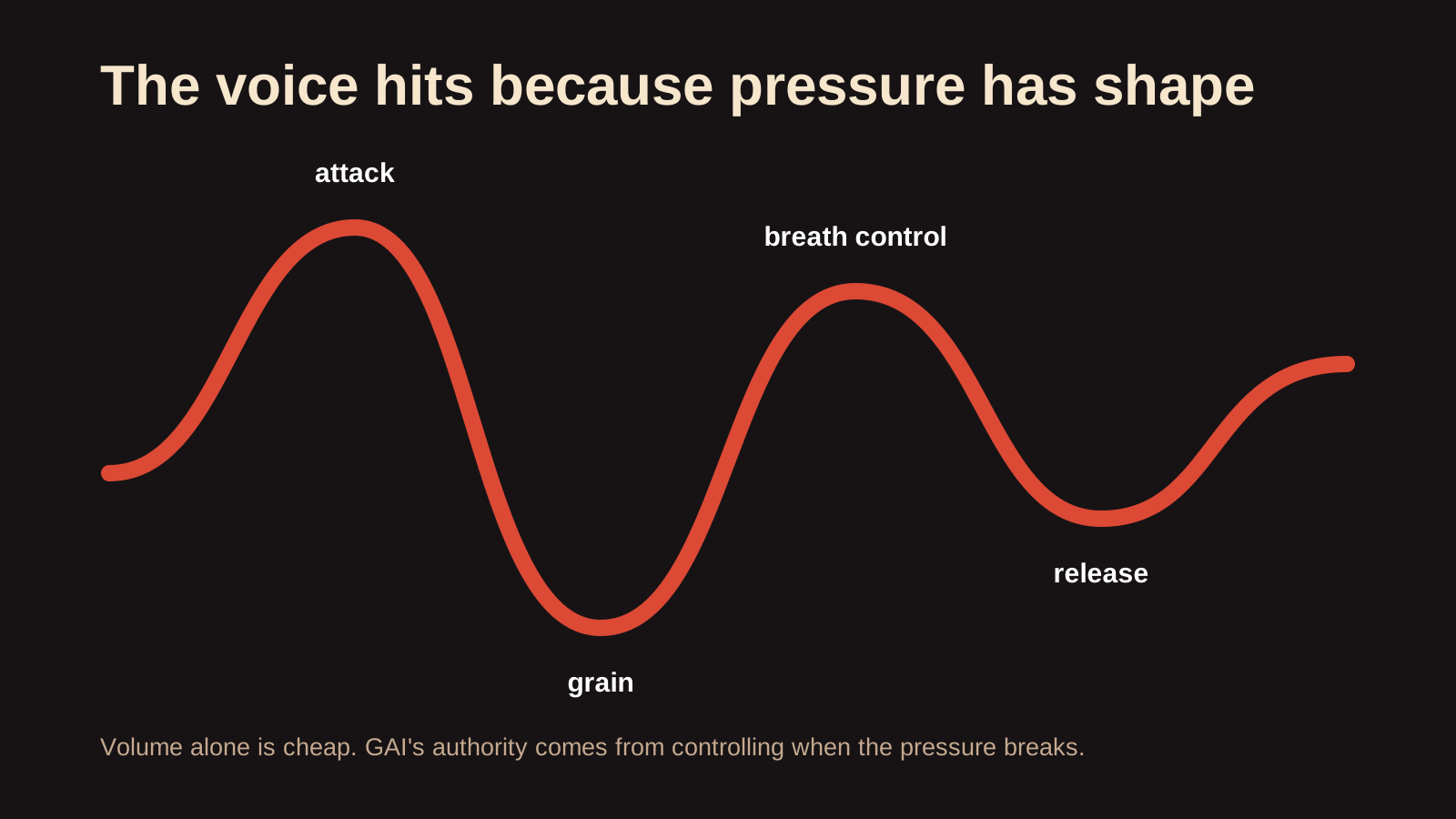
The first thing fans notice is not a clever reference. It is weight. GAI raps as if every line has to reach the back of the room, but he is also a singer. That means he can push a verse with a hard, clipped attack and then open the song into a chorus that feels closer to an anthem than a battle track.
The second thing is place. His pronunciation and cadence carry southwest China even when an international listener cannot identify every regional detail. The voice has not been polished into neutral Mandarin. You hear the route from a small Sichuan county into Chongqing bars, rap circles, television studios and major concert stages.
The third thing is range. GAI can be intimidating, reflective, theatrical or unexpectedly warm. Reduce him to “the tough Chongqing rapper” and you miss half the catalog. I reject that reduction because toughness explains the entrance but not the return: people come back when the voice opens, the local detail becomes memory and the performer lets force carry tenderness without apologizing for it.
My own route through the catalog sharpened that point. I can begin with a forceful Chaotianmen stage and still end up replaying the sustained notes and melodic performances. GAI's singing is not a crossover accessory attached to a hard rapper. It is the mechanism that lets the attack expand into memory, drama and crowd-scale release. A gravelly entrance earns attention; the ability to open the voice is what gives the catalog somewhere else to go.
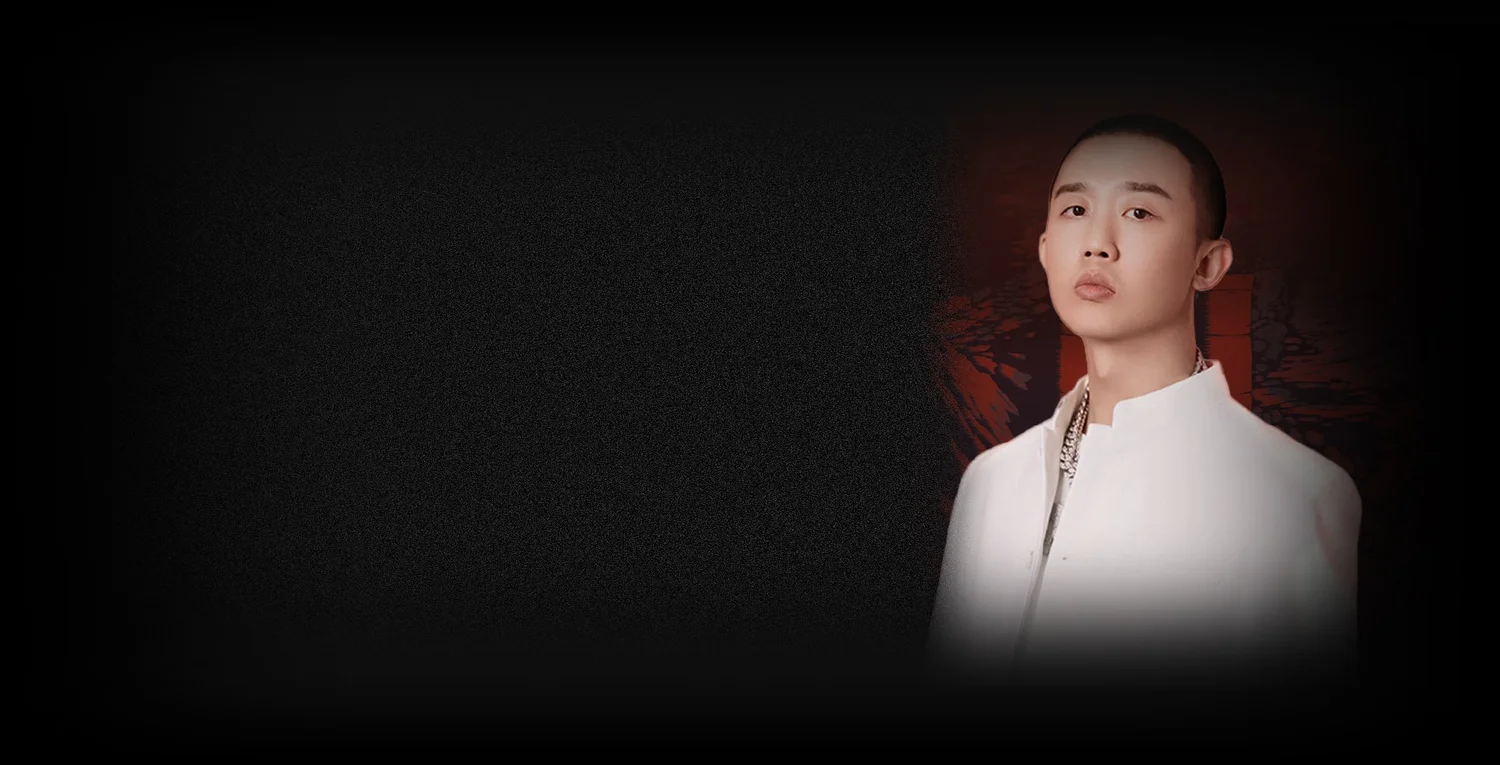
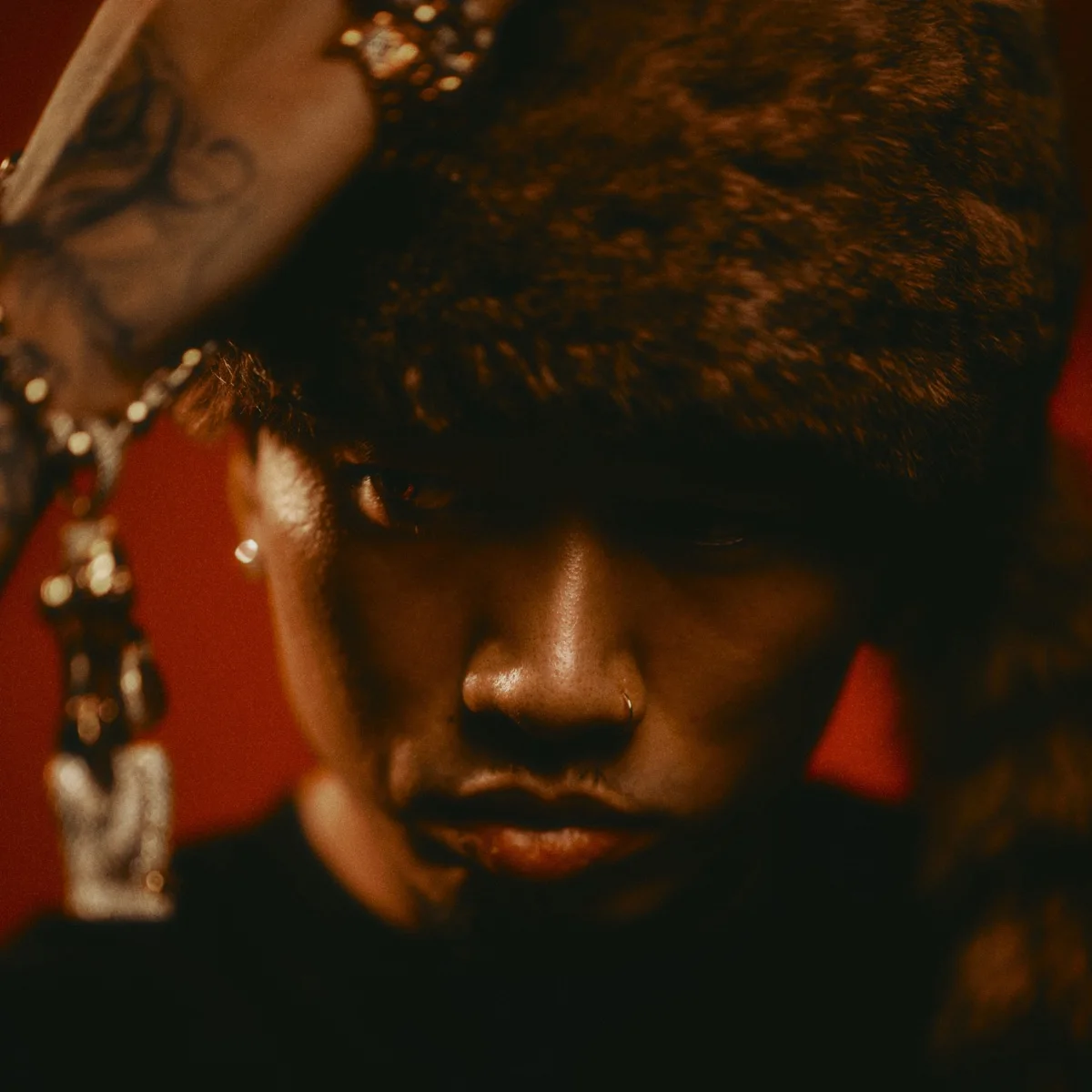
GAI in an official artist portrait. Image via DMGI.
Five tracks that unlock GAI
Do not start with a 40-song playlist. Start with five different doors.
1. Hu Shan Xing: the entrance
Hu Shan Xing (虎山行, often translated as “Tiger Mountain Journey”) is the quickest route to the GAI persona that broke through nationally. The performance is controlled but confrontational, packed with compressed imagery and the feeling that he has already decided the stage belongs to him.
Play this first when you want the presence: the voice, posture and command that made viewers remember him in 2017.
2. Chaotianmen: the city at full scale
Named for the Chongqing river gate where the Yangtze and Jialing meet, Chaotianmen uses geography as more than background. The name already suggests movement, arrival and a city built on dramatic terrain. GAI turns that scale into performance energy.
This is the track to play for someone who asks how a city can be audible inside rap. Our Chongqing rap scene guide compares GAI's gravity with Bridge's brighter elasticity; the Chongqing culture guide explains the place around both voices.
3. Weiyuan Story: the armor comes off
GAI was born in Weiyuan County, not Chongqing, and Weiyuan Story matters because it brings that origin back into view. It is less about proving status and more about memory, ordinary lives and the road out of a small place.
Fans who only know the television competitor should hear this early. It makes the public persona feel less like a costume and more like one side of a larger life.
4. Hot Pot Soup Base: local pride without homework
Hot Pot Soup Base (火锅底料) is direct, playful and immediately connected with Chongqing. You do not need a lecture on regional culture before the hook works. That accessibility is part of GAI's skill: a local marker becomes something a national audience can shout back.
The song works because the image is already social: broth thickens, ingredients enter at different times and the table belongs to several people at once. Our Chongqing food guide explains that real meal structure. Hearing it prevents the title from collapsing into a generic “spicy city” slogan.
5. Du Kang: the larger canvas
Du Kang (杜康) points toward the more expansive “new Chinese-style rap” associated with GAI's later work. The classical name, melodic writing and dramatic arrangement show why calling him only an underground battle rapper no longer makes sense.
These five tracks are not a ranking. Together they reveal the real attraction: GAI can make regional rap, autobiography, pop melody and old cultural vocabulary share the same space.
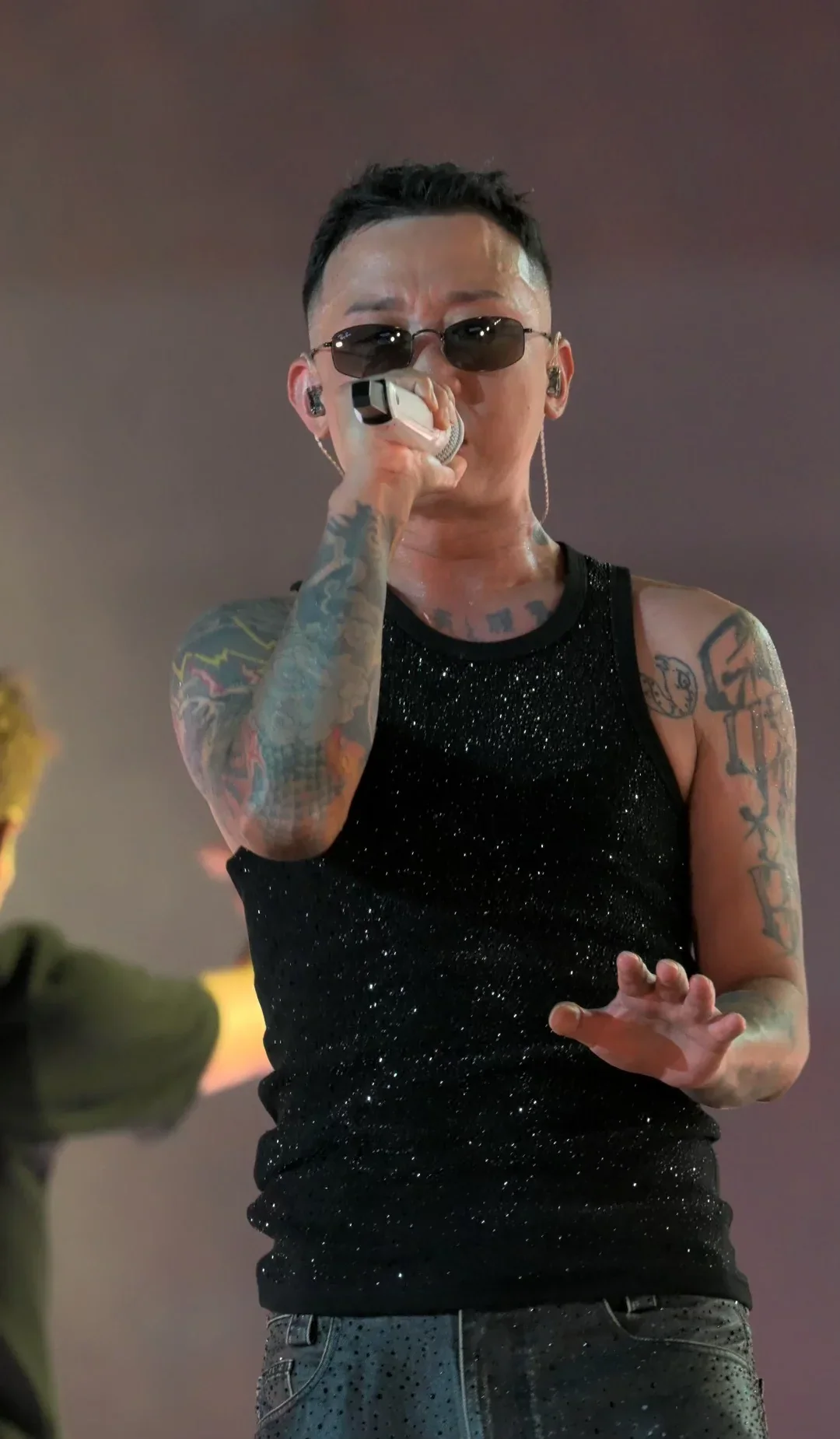
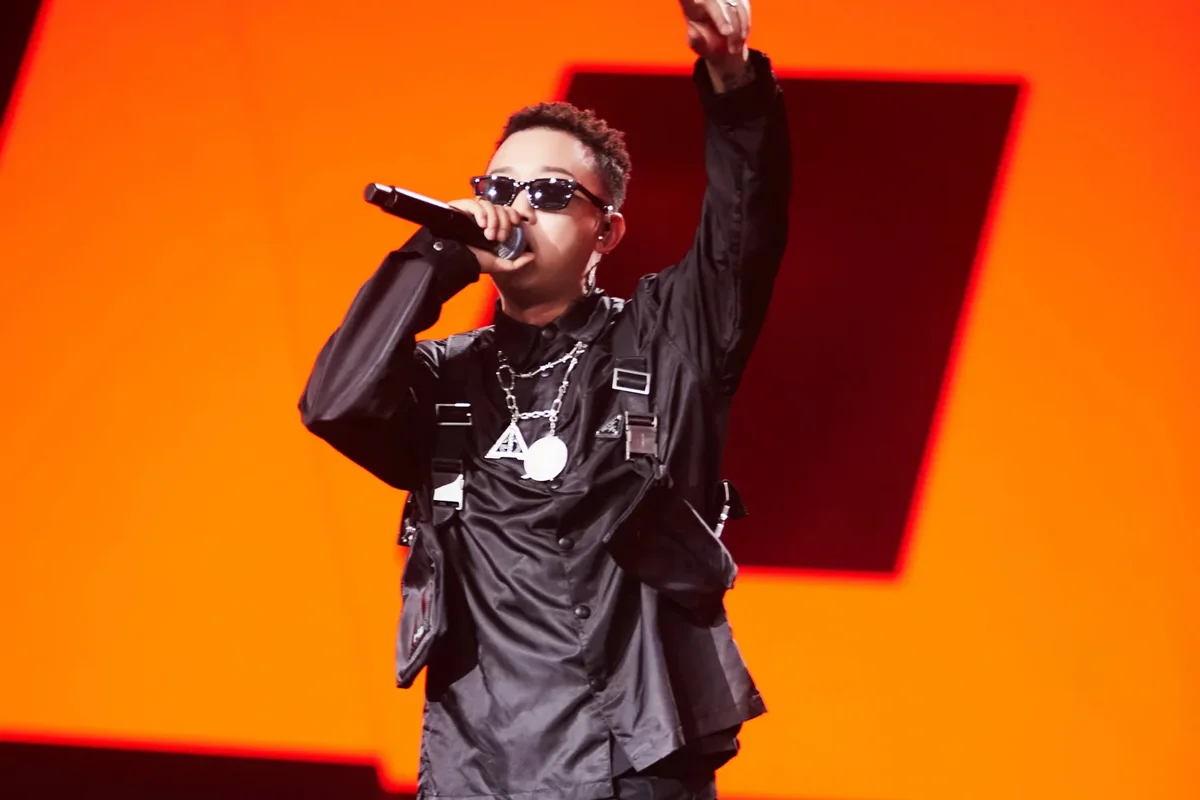
The close view strips away the giant screens and leaves the mechanics: microphone held tight, torso planted, free hand open and sweat visible under the light. I do not need to call that posture “street” to make it impressive. It shows how GAI builds size with breath, stance and timing before production turns him into a monument.
2017: the moment everyone knew his name
GAI had a career before television, but the scale changed with the first season of The Rap of China. In September 2017, he and PG ONE were named co-champions. A contemporary China National Radio report records the double result.
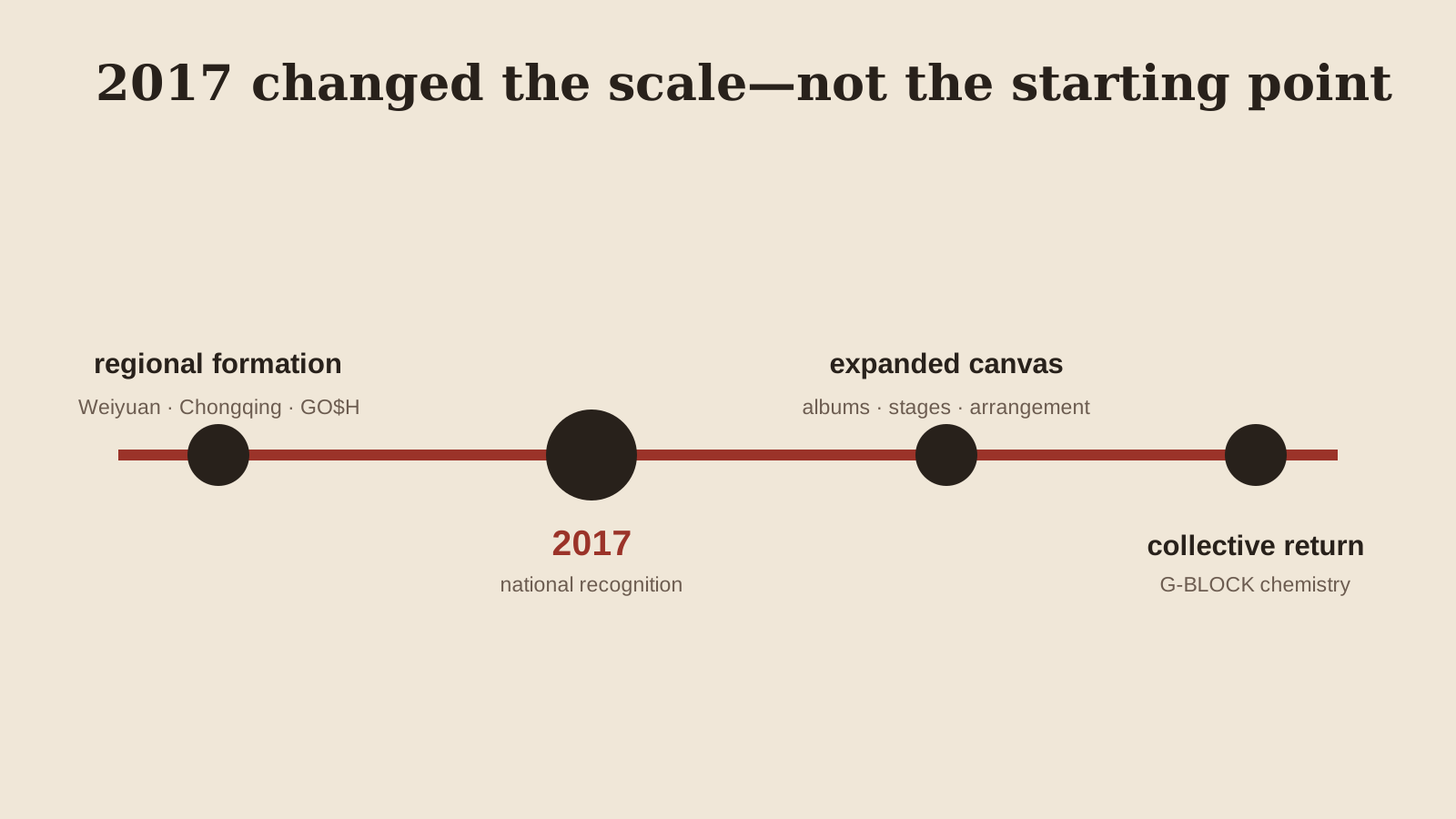
For fans, the important point is not simply that he won. It is that his voice survived the jump. Regional pronunciation, a forceful persona and Chinese literary or martial references reached viewers who had never followed an underground crew.
Television also showed why GAI could travel farther than one competition format. He could build a complete stage, carry melody and make a verse feel cinematic. The program introduced him; it did not invent the musical tools that made the introduction work.
Before TV: Weiyuan, Chongqing and GO$H
Here is the clean version, without internet mythology.
GAI was born Zhou Yan in Weiyuan County, Sichuan. His rap career then developed through Chongqing's scene, after years that included work as a bar singer. He was historically associated with GO$H, a collective central to the story of Chongqing rap. Bridge emerged from the same city orbit with a much brighter vocal character; shared history should not be mistaken for proof of every current crew relationship.
That does not make “born in Chongqing,” “formed in Chongqing” and “currently in GO$H” interchangeable claims. They are not. GAI's current official artist page is maintained by Dream Music Group International. Public sources support the historical GO$H connection, but they do not give us a clean primary-source record for a precise departure date and motive.
The honest wording is enough: GO$H belongs to GAI's early history; Chongqing belongs to his musical formation; Weiyuan remains part of his autobiography.
The jianghu feeling, without the cliché
International writing often turns GAI's jianghu imagery into either “ancient Chinese culture” or a literal gangster story. Both readings are too easy.
Jianghu, literally “rivers and lakes,” carries a long world of wanderers, fighters, performers, loyalties, danger and personal codes. In GAI's music, it becomes a modern language for reputation, brotherhood, survival and the cost of moving through different worlds.
The key is that GAI does not rap from a museum set. Classical phrases, martial imagery, dialect, pop hooks and modern production collide in the present. When it works, the result feels inherited and new at the same time. When it becomes too polished or too grand for your taste, the smaller autobiographical tracks are still there. That contrast is part of being a GAI fan: you do not have to prefer every version of him.
GAI after the breakthrough
Mainstream success did not freeze GAI in his 2017 pose. Albums including Yan and Du Kang, high-profile music programs and the 2024 five-city GAI Evolution concert run moved him deeper into China's professional music industry.
I prefer the rawer early material when the later arrangement becomes too polished, but I hear real growth in his singing and stage design. The useful question is not whether fame made him “real” or “fake.” It is whether the voice still feels specific. Most of the time, it does.
That is why GAI remains interesting after the origin story. He is constantly negotiating between county memory, Chongqing credibility, national celebrity and an increasingly polished idea of Chinese-style rap. You can hear those identities cooperate in one song and pull against one another in the next.
G-BLOCK: chemistry, not a new label
In 2025, GAI joined Sheng Yu, KungFu-Pen and Key.L of Changsha's C-BLOCK for G-BLOCK Mixtape. Apple Music credits all four artists and lists Dream Music Group and SupMusic. G-BLOCK is therefore a collaborative project, not GAI's personal record label.
The appeal is chemistry. GAI brings a huge solo presence; C-BLOCK brings the timing and contrast of a group that has worked together for years. Their connection also predates the mixtape: C-BLOCK released Jianghu Flow featuring GAI in 2017.
For listeners, that history matters more than trying to turn every collaboration into a new corporate structure. G-BLOCK is two regional rap stories meeting again. The Sheng Yu profile opens the C-BLOCK side through the group's leader, while the Changsha culture guide gives the city context.
GAI is convincing when swagger pays a moral cost
The strongest GAI tracks make you feel the artist before you fully decode the lyrics. The voice carries authority, the hook stays with you and the regional texture survives translation. He is also one of the rare rappers whose singing is not a side trick; it changes what the songs can become.
But being a fan does not require pretending every choice lands. The biggest arrangements can tip into spectacle. “Chinese-style” details can feel powerful in one track and decorative in another. His mainstream catalog is broader, cleaner and less consistently raw than the mythology around his early years suggests.
That unevenness is not a reason to avoid the catalog. It is the reason to explore it. Put Hu Shan Xing, Weiyuan Story, Chaotianmen and Du Kang next to one another and you hear an artist arguing with his own image.
A route from jianghu spectacle to private weight
Use a three-step route instead of letting an algorithm choose the loudest clip. Start with Hu Shan Xing for compressed attack, move to Chaotianmen for city-scale projection, then hear Weiyuan Story before returning to the larger Du Kang sound. That order prevents the gravelly public persona from swallowing the more personal writer.
Go to GAI 周延's official YouTube channel (@gaizhou) for current music videos, concert records and artist updates. Use official iQIYI stages for the 2017 competition chapter. The two sources answer different questions: the broadcaster preserves the breakthrough context, while the artist channel shows what GAI chooses to present now.
In the official iQIYI Chaotianmen performance, listen for the distance between the low, compressed verse and the opened melodic phrases. GAI makes the room feel larger by changing breath, vowel length and physical stance, not merely by saying the name of a famous Chongqing gate.
Official artist, label and broadcaster uploads are preferable to reposted clips, which often remove dates, credits and performance context.
The short GAI timeline
- 1987: Zhou Yan is born in Weiyuan County, Sichuan.
- Underground years: He works as a bar singer and develops in Chongqing's rap environment, historically associated with GO$H.
- 2017: GAI and PG ONE become co-champions of The Rap of China.
- 2021-2022: He releases the albums Yan and Du Kang.
- 2024: The five-city GAI Evolution concert run shows the scale of his post-breakthrough audience.
- 2025: GAI, Sheng Yu, KungFu-Pen and Key.L release G-BLOCK Mixtape.
- Current verified affiliation: GAI is listed by Dream Music Group International.
Why GAI still matters
GAI made a regional Chinese rap voice nationally recognizable without sanding away everything that made it regional. He showed that a rapper could sing seriously, use older poetic and martial vocabularies without leaving contemporary hip-hop, and grow into large stages while still carrying the sound of where he came from.
If you only remember the 2017 winner, you have the headline. The songs are better: louder, stranger, more personal and more contradictory.
Continue into the C-BLOCK group guide for the Changsha side of Jianghu Flow and G-BLOCK, then read KungFu-Pen for the collaborator heard on Hu Shan Xing and Yu Lan. The Chongqing guide supplies the city behind GAI's early career.