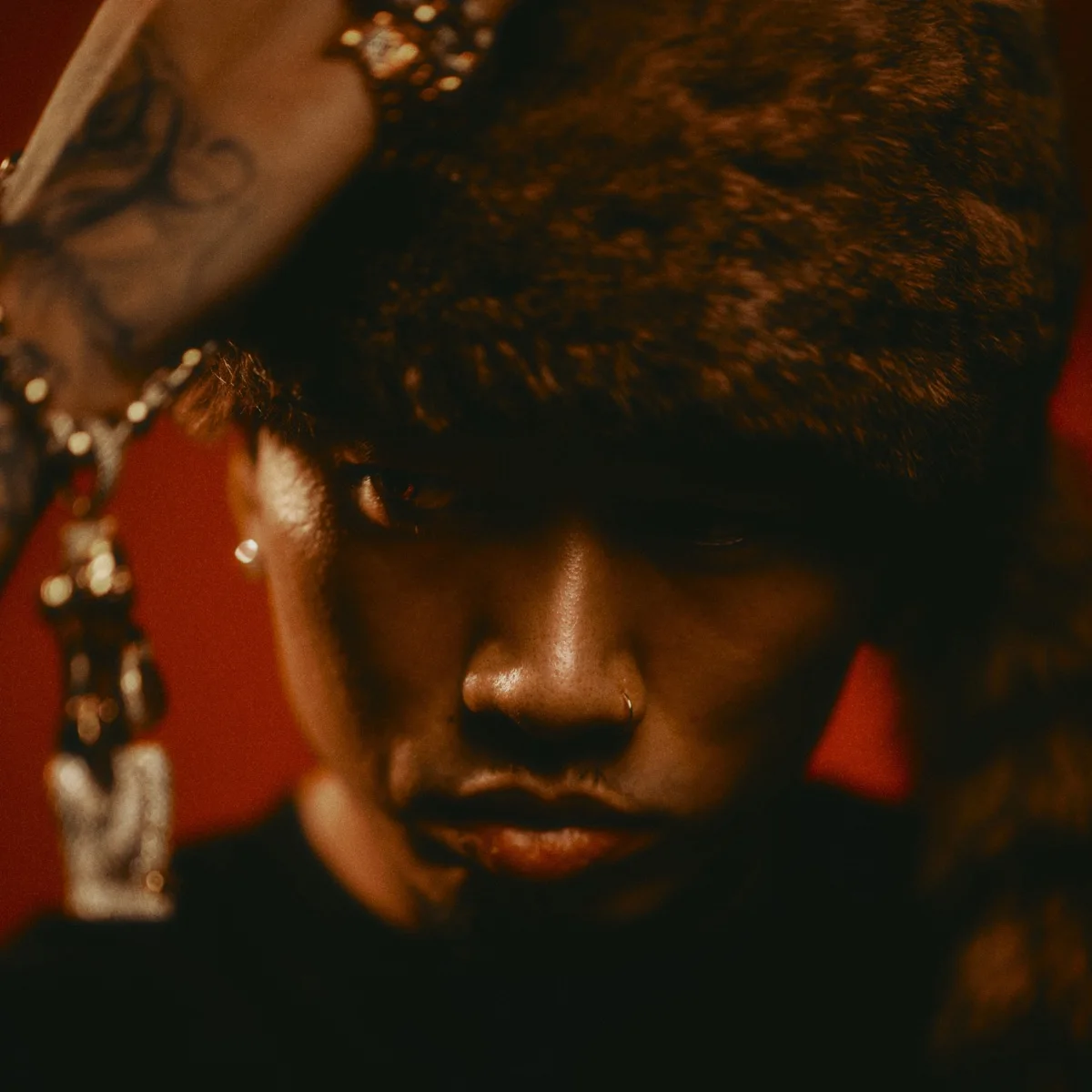
Bridge can make one syllable carry a haircut, a street corner and a grin. His voice arrives high, sharp and immediately identifiable, then Chongqing enters behind it: steep movement, compressed slang, local loyalty and the feeling that a crew is also a public personality.
That is why Bridge is more interesting than the simple label “energetic rapper.” Energy is the surface. Underneath it is character construction. The accent, ad-libs, clothing, hooks and hometown references all reinforce one another until Bridge no longer sounds like a person placed over a beat. He sounds like the beat has entered his city.
Bridge rapper in 60 seconds
| What you want to know | The short answer |
|---|---|
| Chinese name | 布瑞吉; born Cheng Jianqiao, 程剑桥 |
| Home city | Chongqing |
| Formative scene | GO$H and Chongqing's local rap network |
| National breakthrough | The Rap of China in 2017 |
| What hits first | A bright nasal tone, clipped phrases and slogan-like hooks |
| Start with | Grandmaster, Chongqing Works, Running Child and A Toast to You |
| Albums to know | Running Child, 023% and 77% |
| Current chapter | 77%, released in April 2026 |
Bridge's usefulness for an overseas listener begins with a correction. The accent is not comic decoration placed on standard trap. It changes where the rhythm lands.
The voice behaves like a visual logo
Bridge's upper register cuts across low bass without needing extra volume. He shortens words, pushes selected syllables upward and uses ad-libs as punctuation. The result is almost graphic: you can recognize the outline before understanding every word.
That is especially important in Chongqing dialect and southwestern Mandarin. Literal subtitles flatten the tonal attitude. A phrase can sound teasing, confrontational and affectionate at once, depending on how the ending rises. Bridge makes those endings part of the drum pattern.
This consistency helped him travel through television. A competition introduces many technically capable rappers in a short time. Bridge gives the audience a complete character almost immediately.
Five tracks that unlock Bridge
1. Grandmaster: authority performed with a smile
Grandmaster (祖师爷) uses an oversized title, but Bridge does not deliver it like a solemn monument. The pleasure comes from the tension between status language and playful attack. He can brag while sounding as if he is inviting the listener into the joke.

The official Grandmaster video on ZHONG.TV shows how vocal caricature, styling and movement reinforce one another without making the rap secondary.
Listen for the short hook units. They work like stickers placed across the track: repeatable, visible and easy for a crowd to return.
2. Chongqing Works: “023” is more than an area code
Bridge repeatedly returns to Chongqing because hometown identity in his catalog is a working method, not one patriotic song. “023,” the city's telephone area code, becomes a compact sign that local listeners recognize immediately.
The useful overseas context is that Chinese rap scenes often use area codes the way US hip-hop uses boroughs or neighborhood numbers. The number signals language, alliances, taste and who is expected to understand the reference before it is explained.
3. Running Child: motion behind the cartoon outline
The 2022 album Running Child (奔跑孩子) gives the persona more distance. “Child” does not mean childishness. It suggests the person who kept moving before the national audience arrived and continues moving after it becomes familiar.
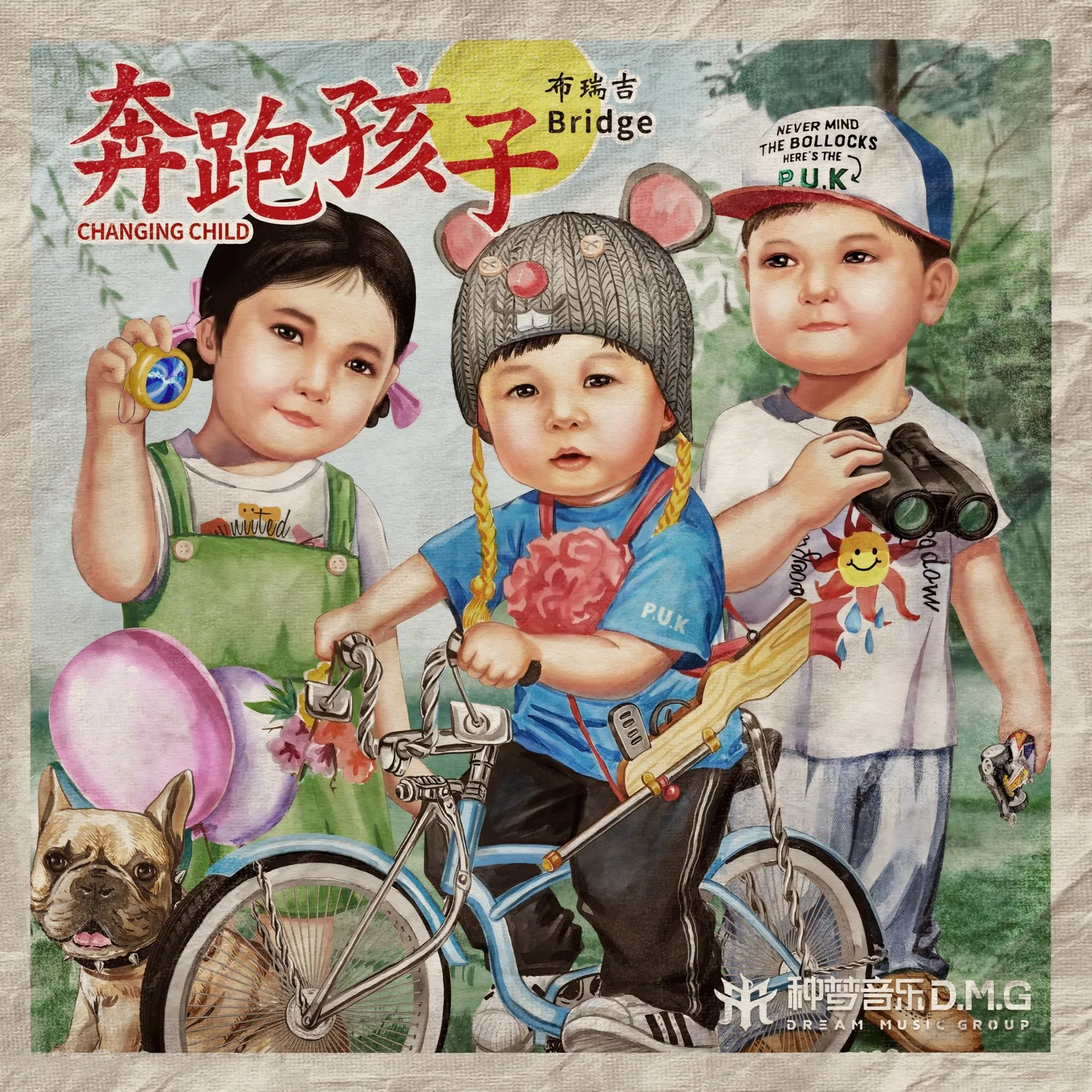
The Running Child album is a better introduction to Bridge's range than a compilation of television clips.
Across a full project, the recognizable voice faces a harder test: it must carry different moods without losing identity. The album is valuable precisely because the character has to become a person.
4. A Toast to You: public warmth without losing the accent
A Toast to You (来我敬你) is built for social recognition. The gesture of raising a drink can express respect, friendship, hierarchy or reconciliation in Chinese settings. Bridge uses that familiar action as a public-facing hook.
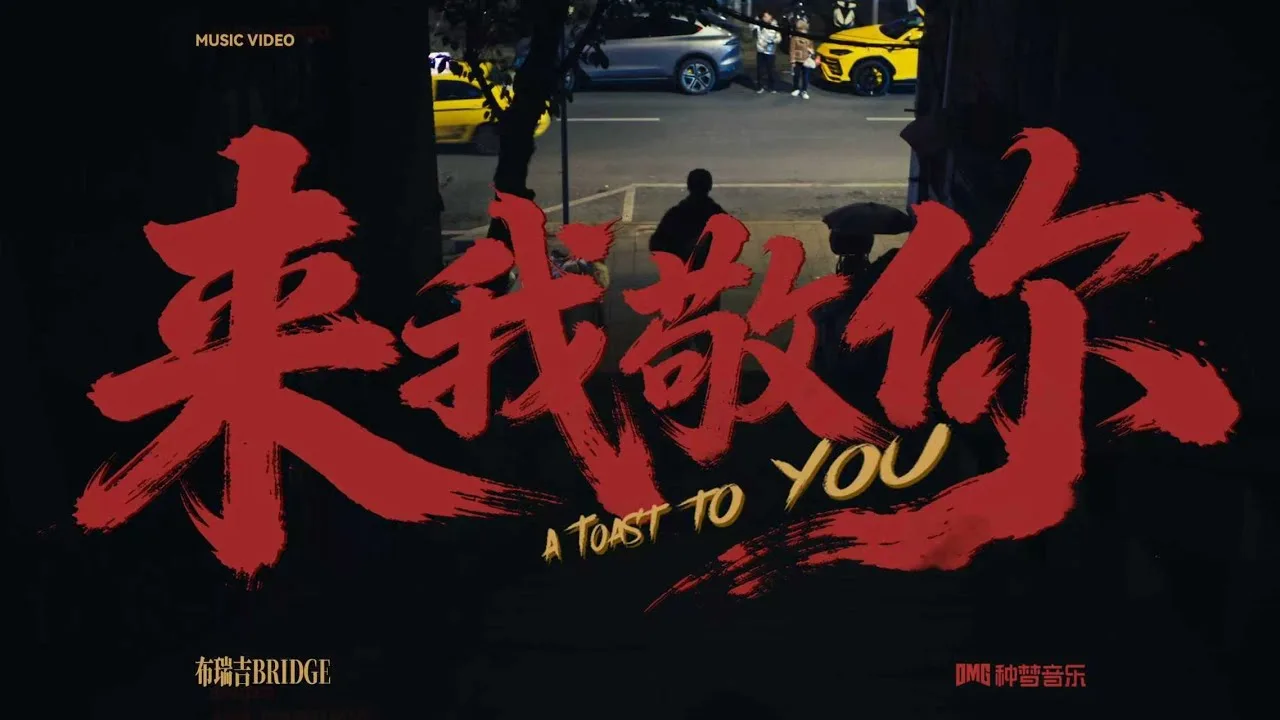
The official video from Dream Music Group shows the later Bridge: more broadly accessible, but still rhythmically marked by Chongqing speech.
The track helps explain his television longevity. He can move from crew-coded rap into variety-show familiarity without replacing his voice with neutral Mandarin.
5. 77%: the unfinished percentage
The 2026 album 77% follows the earlier 023%. Both titles refuse the clean finality of 100 percent. A percentage can measure completion, battery, confidence or how much of the private person has entered the public character.
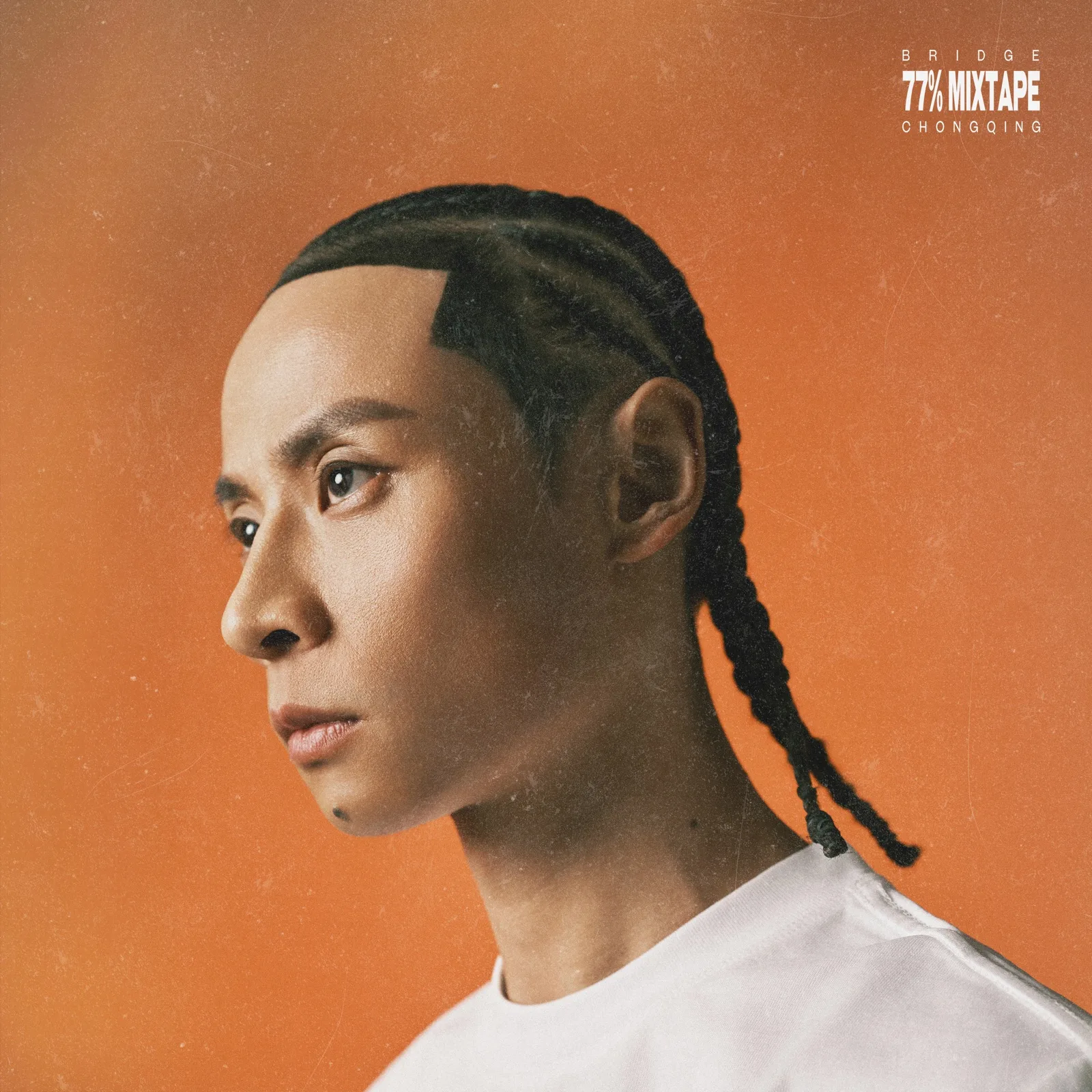
Apple Music lists 77% as Bridge's latest album as of August 2026.
The title is useful because Bridge's career has always involved partial translation. National audiences receive the hooks, hair and hometown pride immediately. The deeper local humor and speech rhythm remain less than fully transferable.
GO$H is essential history, not a permanent shortcut
Bridge emerged from GO$H, the Chongqing collective central to the city's modern rap identity. GAI also came through that orbit, and the association made Chongqing nationally legible as a scene with more than one star.
The two artists reveal different uses of regional voice. GAI lowers his center of gravity and draws on jianghu, folk melody and dramatic authority. Bridge moves upward: brighter tone, quicker slogans, visual play and social charisma.
They share history without being interchangeable. Public information about crews, labels and artist businesses changes over time. It is accurate to say Bridge and GAI emerged from the same important Chongqing network. It is not accurate to use that history as automatic proof of every current affiliation.
This distinction protects the music from fan-fiction organization charts. The songs already show a meaningful relationship between city, generation and style; they do not need an invented present-tense structure.
Why Chongqing sounds different through Bridge
Chongqing is built vertically. Hills, stairs, bridges, tunnels and river crossings make movement feel compressed and dramatic. It would be simplistic to claim geography directly creates a flow, but the city provides a useful social rhythm: fast adjustment, intense local reference and pride in navigating a place outsiders find confusing.
Our Chongqing rap scene guide places Bridge's brightness beside GAI's heavier center and explains why 023 is more than an album title. The Chongqing cultural guide supplies the larger urban logic. Bridge's phrasing then becomes one sonic version rather than a personality assigned to the entire city.
The dialect matters equally. Southwestern Mandarin can sound more elastic and humorous than standardized broadcast speech. Bridge exaggerates that elasticity until tone becomes character.
023% made the area code an album system
The 2024 album 023% places Chongqing's area code in the title but adds an incomplete percentage. The combination is more interesting than uncomplicated hometown branding.
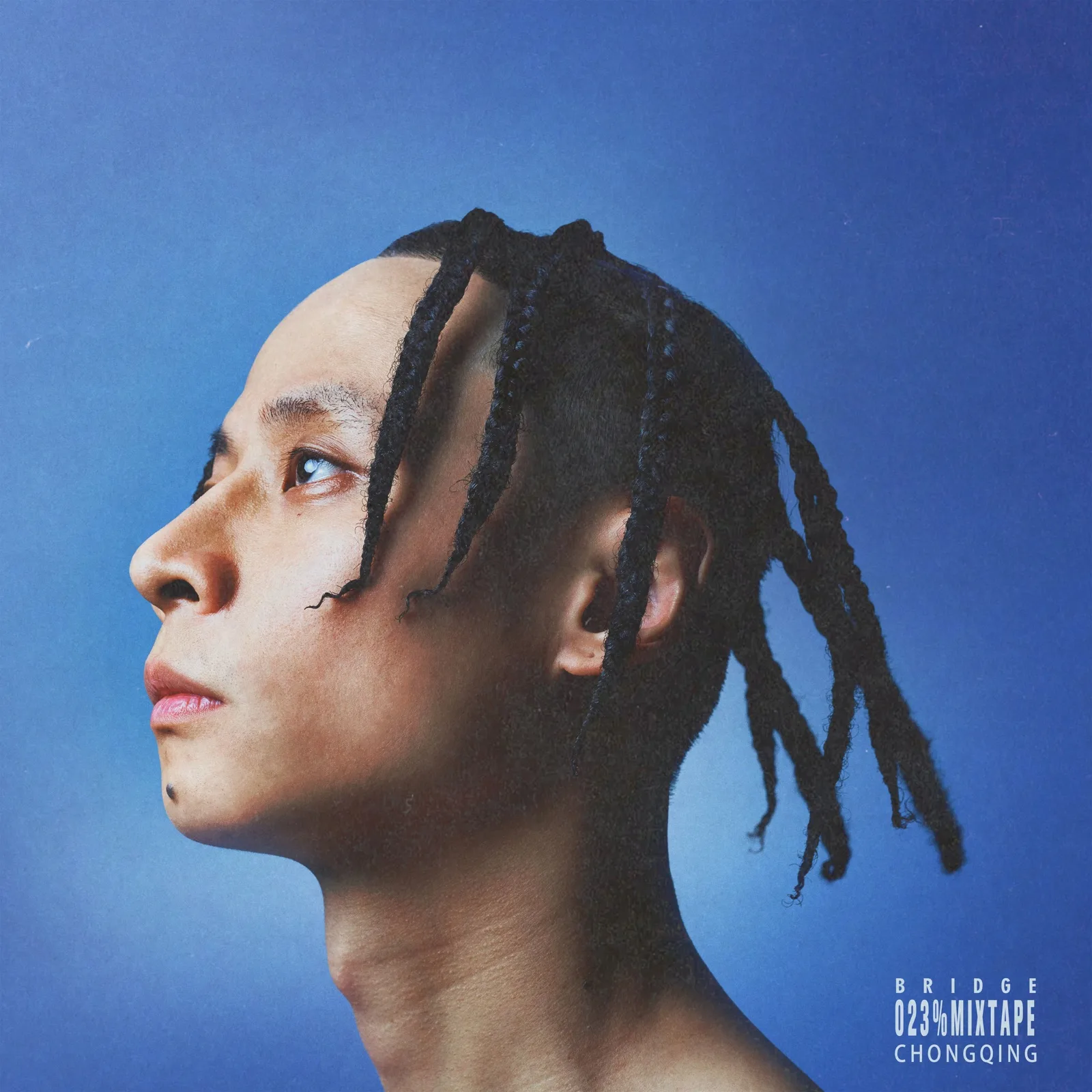
The 023% album turns a familiar Chongqing sign into a question about how much of a city can enter one public artist.
Area-code rap can easily become a checklist of local claims. Bridge is strongest when the number opens into personal movement: how a city teaches posture, humor and social loyalty, not only which landmarks belong in a video.
Test the voice before translating the slang
Bridge is an ideal artist for proving that comprehension begins before translation. Play one track without subtitles and mark the exact second his voice becomes identifiable. The pitch, clipped attack and elastic timing often establish a character before a place name or slang term is understood. That recognition is not a superficial trick. It is musical authorship.
On a second pass, follow the relationship between brightness and weight. A high voice can cut through dense production, but it can also become exhausting if every line arrives at the same pressure. Listen for when Bridge pulls back, leaves space, shifts toward melody or lets another performer take the center. The most convincing records use contrast rather than treating instant recognizability as the entire song.
Then study the Chongqing references. 023 can function as an area code, a badge, a visual system and a promise of local belonging. Do not treat every appearance as proof of documentary realism. Ask what the number does inside the record. Does it organize a group identity, sharpen a hook, locate the narrator or simply decorate a product? Precision protects city pride from becoming a sticker.
The album test matters too. Compare a track designed for immediate crowd response with a quieter sequence from a full project. A performer can dominate thirty seconds and still struggle to build a complete album arc. Bridge becomes more interesting when the fast character has to survive changes in tempo, subject and emotional lighting.
Finally, watch how the body completes the voice. Hair, posture, grin, hand movement and camera distance often work like another rhythmic layer. The image should amplify timing already present in the delivery. If the track remains unmistakable with the screen closed, the visual identity has support beneath it.
My verdict is that Bridge is not valuable because he looks or sounds “different.” He is valuable when difference becomes repeatable technique. Begin with the voice, add the city context, then test the albums. That order prevents a memorable silhouette from replacing the music.
Use collaborations as the final test. When Bridge appears beside a lower, slower or more melodic voice, does he alter his attack or arrive as the same prepackaged event? Strong identity should create chemistry, not forbid adjustment. Mark how many bars pass before the other performer feels present again. That reveals whether Bridge is sharing a track or merely visiting it.
City context needs the same discipline. Chongqing's visual intensity is real, but stacked roads cannot explain a rhyme. The artist must translate place into timing, humor, vocabulary or public character. When a video uses river light and steep streets, listen for the musical equivalent. If none exists, the skyline is doing the storytelling alone.
Bridge becomes most convincing when all three layers align: the voice creates instant recognition, the verse rewards a second listen and the local claim changes how the record moves. Fans do not need to choose between charisma and analysis. The charisma is worth analyzing because it has an audible mechanism.
The quickest proof is memory without image. Close the video, wait an hour and ask which vocal gesture returns. If the answer is more than pitch, the character has become music.
I apply an even harsher live test: breath, lyric memory, escalation and whether the high voice cuts through rather than merely sitting above the beat. A later section must change the energy; otherwise the recognizable entrance has nowhere to go. Memes and imitations explain why the personality is remembered. They do not answer whether the performance was controlled.
When self-deprecation stops being a shield
Bridge is exceptionally easy to recognize. In a scene full of competent low-register trap delivery, his voice creates immediate identity. The visual world is coherent, and the Chongqing references feel native rather than researched for a campaign.
The tradeoff is repetition. Slogan hooks, familiar ad-libs and the public “Bridge character” can become more predictable than his actual writing. On weaker tracks, recognition arrives before discovery.
The albums matter because they force him past that problem. When the beat becomes slower, the subject becomes private or a collaborator changes the social energy, listeners can hear whether the voice is a flexible instrument or only a logo. His best later work proves it can be both.
Hear the diary before the punchline
Use this route:
- Grandmaster for the complete vocal and visual character.
- Chongqing Works for area-code identity.
- Running Child for the person behind the public outline.
- A Toast to You for mainstream social warmth.
- 023% and 77% as a paired album conversation.
Continue with GAI for another branch of Chongqing rap, Jony J for a lower-key narrative contrast, or the Chinese musicians directory for the wider scene map.
Why Bridge matters
Bridge shows how regional identity becomes memorable when every artistic layer agrees. Accent, tone, styling, hooks and city references do not compete for attention. They construct one readable figure.
The deeper achievement is not simply “representing Chongqing.” It is turning local speech into a rhythmic technology that national audiences recognize even when they miss part of the joke.