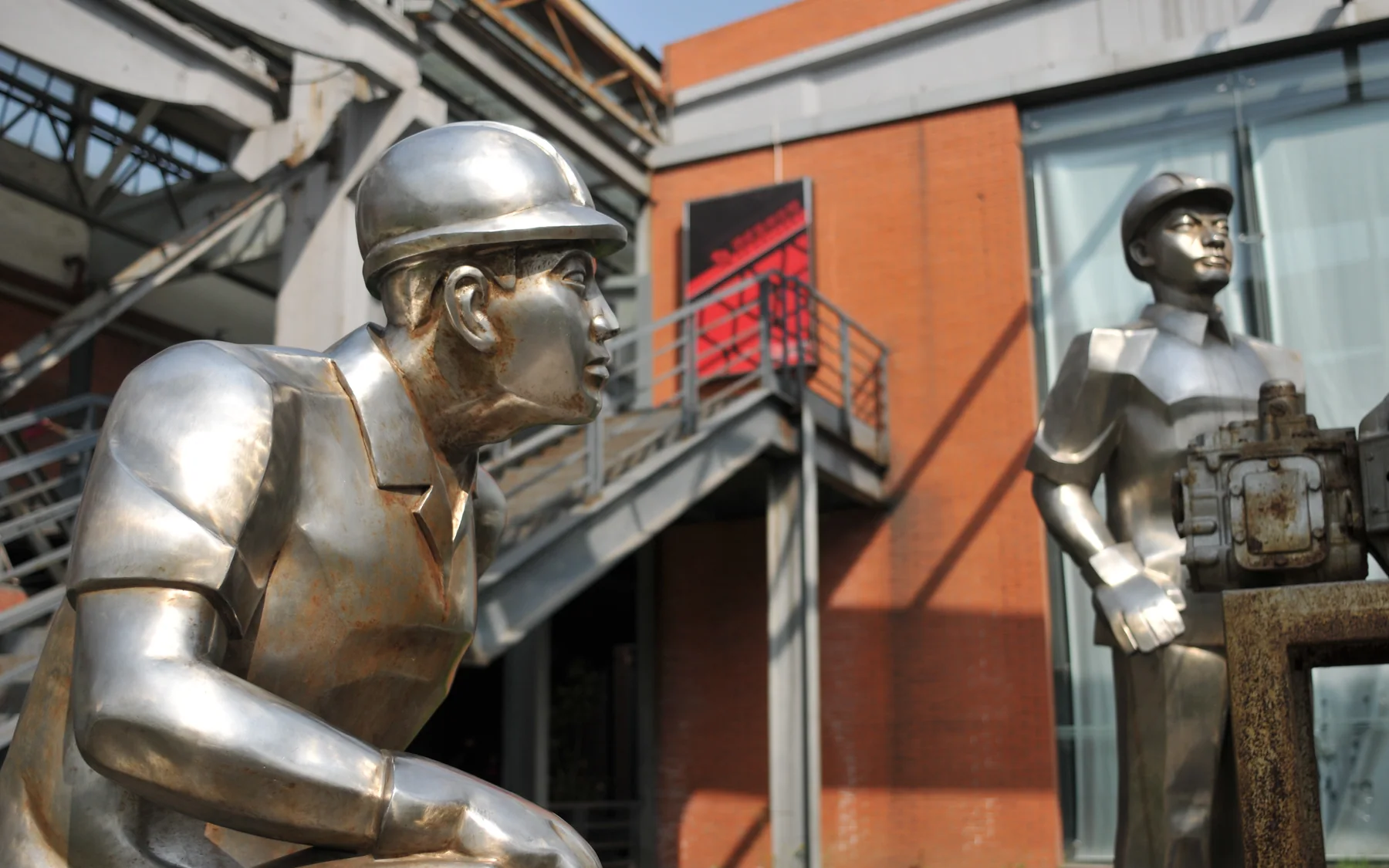
The Chongqing rap scene is often explained with a skyline: cliffs, river fog, stacked roads and staircases. The images are true, but I reject geography as an automatic explanation. Chongqing becomes audible only when artists convert pressure, southwest speech, crew loyalty and public character into vocal technique.
That distinction matters because GAI, Bridge and Wang Qiming / 王齐铭WatchMe make three different Chongqings audible. GAI lowers the center of gravity. Bridge lifts the voice until it behaves like a bright visual logo. Wang Qiming stays closer to districts, food, friends and the city at human scale.
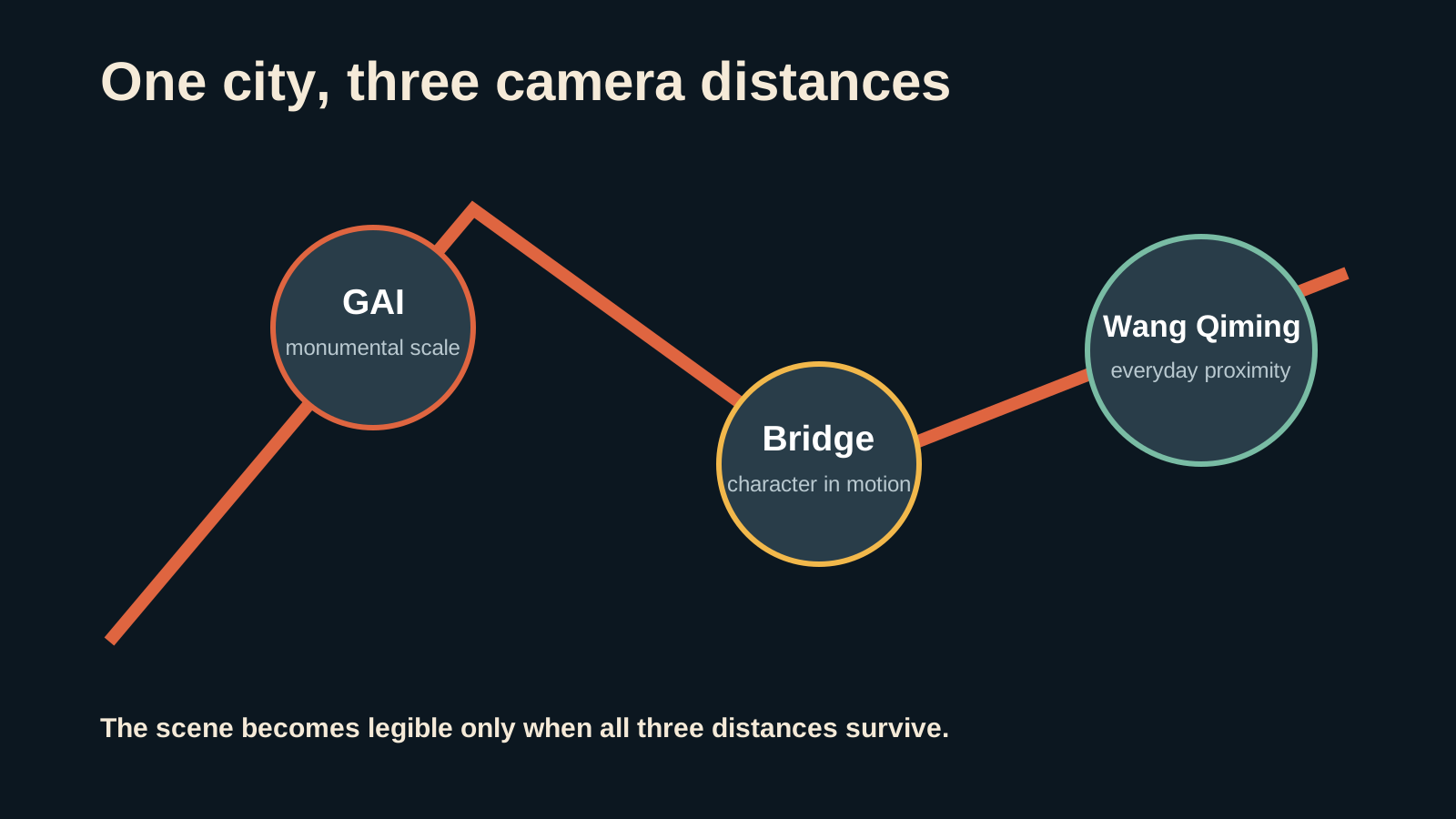
Our shorthand is deliberately simple: GAI makes Chongqing monumental, Bridge makes it performative, and Wang Qiming makes it lived-in. None is the “correct” city. Their disagreement is the scene.
GAI's gravity hits me first, but Wang Qiming is the correction I need. A city cannot remain permanently monumental without becoming advertising. Meals, districts, friendships and an ordinary night in Jiefangbei pull Chongqing back down to human height. Bridge then makes the opposite move and turns brightness into authority. I refuse to choose one as the authentic voice; authenticity here is the right to disagree audibly.
This guide explains GO$H, the meaning of 023, regional speech, key records and the relationship between Chongqing and neighboring Chengdu. It does not freeze a changing scene into a permanent roster.
Chongqing rap scene turns geography into vocal technique
| What you want to understand | The short answer |
|---|---|
| Formative scene name | GO$H, a collective central to modern Chongqing rap history |
| Three essential voices | GAI, Bridge and Wang Qiming, who build different versions of the city |
| Meaning of 023 | Chongqing's telephone area code and a compact signal of hometown identity |
| What regional speech changes | Cadence, vowel length, humor, attitude and where syllables strike the beat |
| National visibility | The Rap of China brought much larger audiences to artists whose local histories came first |
| Southwest relationship | Repeated exchange with Chengdu without becoming the same scene |
| Common mistake | Treating steep geography as an automatic explanation for hard music |
GO$H is formative history, not a roster frozen in time
GO$H is one of the central names in Chongqing's modern hip-hop story. It gave artists a shared banner, working relationships and a way to make the city legible beyond isolated songs. That history matters because scenes need repetition: people meeting, hearing new verses, testing identities and developing standards before national attention arrives.
The difficult part is writing about a collective accurately. Online biographies often turn historical association into permanent current membership. Public sources clearly support GAI's and Bridge's formative GO$H connections. They do not justify treating every past relationship as a current contract.
GAI's current official artist profile is maintained by Dream Music Group International. We do not claim a precise date or motive for leaving GO$H because a definitive primary-source record was not found. Bridge remains deeply associated with the scene's public history, but shared origins and later collaborations do not prove every present organizational detail.
This restraint does not weaken the story. It makes the useful claim clearer: GO$H helped create the conditions under which more than one unmistakable Chongqing voice could develop.
The city does not cause the sound; artists translate the city
Chongqing is physically intense. Streets climb, transport systems overlap and the Yangtze and Jialing rivers organize movement at monumental scale. It is tempting to say that steep terrain naturally produced forceful rap.
That explanation becomes a postcard. Many steep cities do not produce the same music, and not every Chongqing rapper sounds aggressive. The meaningful connection is artistic selection. A rapper chooses which parts of the city become rhythm: compressed street conversation, the breath of a live performance, place names that already carry emotional weight, or the public confidence required to claim a difficult city as home.
Our Chongqing culture guide explains the larger urban history. In the music, listen for movement rather than scenery. Lines climb in pitch, hooks turn quickly, and local names function as social coordinates rather than tourism captions.
If those coordinates are still abstract, the travel to Chongqing guide turns station exits, slopes and river crossings into a route a visitor can test. The Chongqing food guide does the same for hot pot, xiaomian and jianghu dishes. These links are not decorative background: they let a listener check whether a lyric uses the city as a lived system or merely borrows its most marketable symbols.
Three distances from the same Chongqing
GAI, Bridge and Wang Qiming matter together because they place the city at different distances from the listener. One makes it monumental, one makes it performative and one brings it down to neighborhood scale. None is the complete or “most authentic” Chongqing voice.
GAI turns Chongqing into gravity and scale
GAI was born in Weiyuan County, Sichuan, not Chongqing. Chongqing is nevertheless central to his artistic formation. His early rap career developed there, and the city's speech, venues and GO$H history became part of his musical identity.
The official iQIYI performance of Chaotianmen is the fastest way to hear GAI turn a Chongqing place name into scale and vocal drama.
In Chaotianmen, a river gate becomes more than a landmark. The place supplies arrival, collision and scale. GAI's gravel and melodic reach make the name feel physically large before an overseas listener understands its geography.
The decisive moment is when the place name comes back from the audience. Watching a Chongqing crowd jump and return the Chaotianmen chorus, I do not hear proof that one rapper owns the city. I hear a coordinate becoming temporarily collective: the artist throws the name outward, thousands of bodies recognize the claim, and the city answers in rhythm. That is stronger than putting “023” on a shirt because the belonging has to be performed together.
His deeper contribution is the combination of registers. Hard, compressed bars can open into full singing. Hot-pot language can sit beside jianghu imagery and personal memory. The voice connects street-level recognition with dramatic staging.
Calling this simply “Chongqing toughness” misses the musical labor. GAI controls weight. He knows when to keep a phrase low, when to let melody widen the frame and when an older cultural reference will increase pressure rather than decorate the beat.
Bridge turns Chongqing into character and motion
Bridge solves a different problem. His delivery is high, bright, slightly nasal and elastic. It can cut across heavy production without imitating GAI's mass.
That voice behaves almost like graphic design. Hair, silhouette, ad-libs, clipped phrases and sudden lifts reinforce one another. A listener can recognize the outline before decoding the line.
Bridge's official Grandmaster video makes that bright, elastic alternative to low-voiced authority visible in motion.
Grandmaster shows why “playful” does not mean lightweight. Bridge can use humor and caricature to occupy space quickly. The hook feels slogan-like, but the technical value lies in timing: selected syllables spring above the beat, then disappear before the character becomes predictable.
GAI and Bridge therefore make a strong pair for understanding scenes. Shared geography does not force sonic similarity. It creates a conversation in which difference becomes meaningful.
Wang Qiming makes Chongqing sound lived-in, not monumental
Wang Qiming is the missing third perspective in many summaries of Chongqing rap. His official Apple Music page styles the name 王齐铭WatchMe, and the catalog itself supplies unusually clear geographic evidence: 五小区, One night in 解放碑, 綦江走不走 pt.2 and 勒辈子 keep returning to districts, local phrasing and ordinary social life.
That does not make him a documentary narrator. The records still exaggerate, perform and arrange experience. The difference is one of distance. GAI often stands far enough back to turn Chongqing into mythic architecture. Bridge gets close enough to turn it into graphic character. Wang Qiming often sounds as if the listener is already inside the conversation, expected to recognize the district, the meal or the person being addressed.
The 2025 project Life's Hot & Spicy / 生活麻辣烫 is especially useful. “Spicy” could have become the easiest Chongqing cliche. Instead, the title frames daily life as mixed, social and continually reheated: pleasure, frustration, loyalty and appetite occupying the same table.
His collaborations also place him inside the city's working network without requiring us to invent a current roster. Apple Music credits 我的兄弟 with GAI, and 江湖菜 and 搏一搏 with Bridge. Live catalog entries such as 千翻儿 and 投名状 show further overlap. These records establish artistic connection. They do not by themselves prove a present GO$H membership or contract, so this guide makes no such claim.
Wang Qiming changes the article's conclusion. Chongqing rap is not only what happens when a city becomes larger than life. It is also what happens when a rapper refuses to leave ordinary life outside the frame.
Chongqing speech is rhythm before it is a subtitle problem
Overseas writing often treats dialect as content that needs translation. Meaning matters, but the first effect is musical. Southwest pronunciation changes vowel shape, attack, pitch movement and the social attitude of a sentence.
A literal subtitle cannot fully carry whether a phrase sounds teasing, confrontational or affectionate. Bridge uses quick tonal lift and clipped endings to animate a character. GAI uses roughness, sustained notes and heavier landing points to create authority.
This is why “rapping in dialect” is not enough as praise. Regional speech becomes art when an artist reorganizes the beat around it. A hometown word repeated without new rhythmic purpose is branding. A phrase that could only land that way in that voice is technique.
023 is a coordinate, a claim and sometimes a product
023 is Chongqing's telephone area code. In rap it operates as compact hometown shorthand. A local listener recognizes the coordinate immediately; an outside listener learns that the number carries allegiance before receiving the explanation.
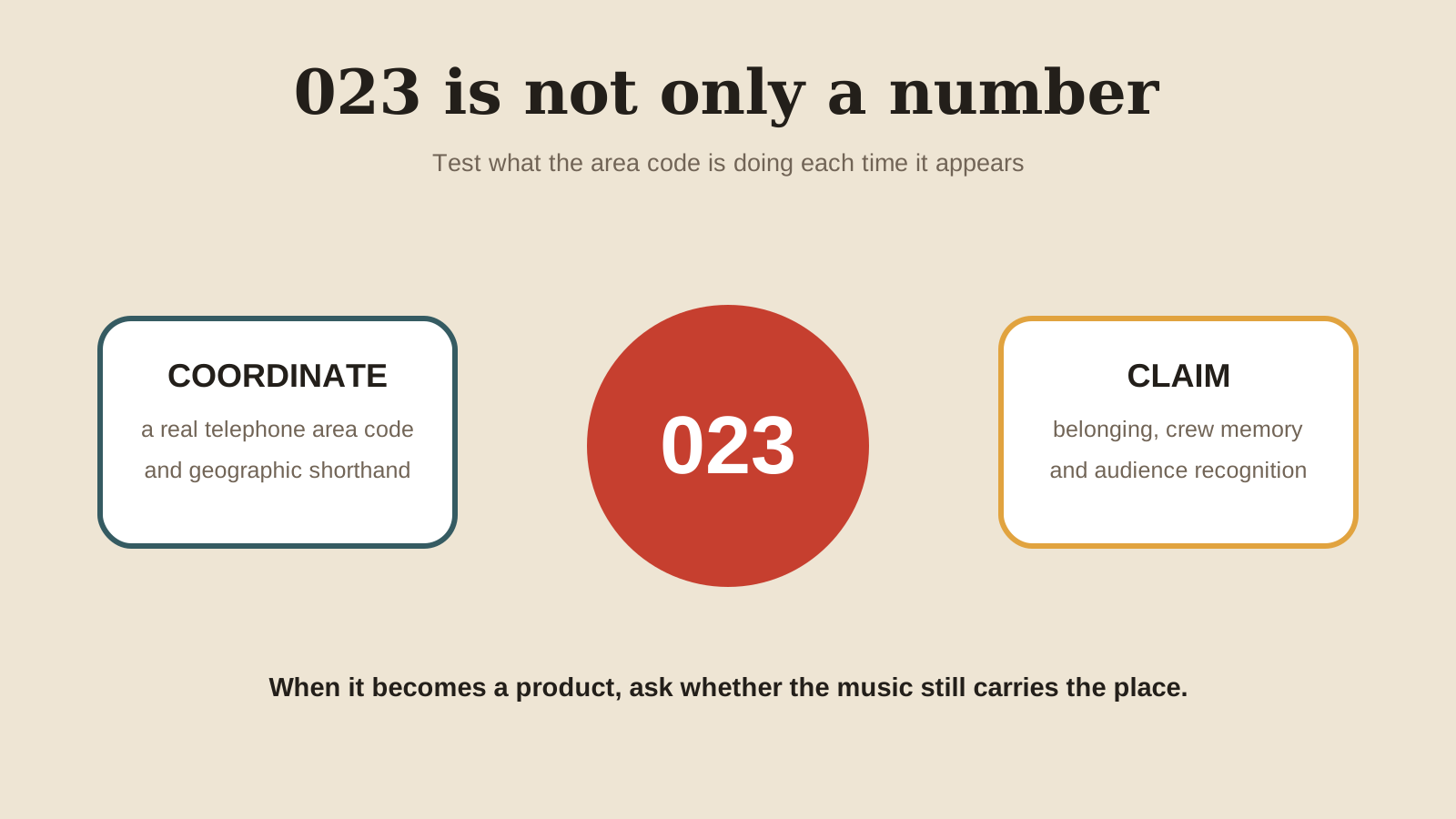
Bridge's 023% makes the code visible at album scale. The title can gather songs under a city claim without requiring every track to describe a landmark. That is the productive use of local branding: it creates expectation, then the music has to complicate it.
The risk is obvious. Once an area code becomes recognizable, it can be printed more easily than it can be artistically renewed. The strongest 023 records do not merely announce origin. They reveal a new vocal angle, relationship or contradiction inside that origin.
Television enlarged the audience, not the scene's birth date
The first season of The Rap of China in 2017 brought GAI and Bridge to national audiences. GAI became a co-champion, and Bridge's complete visual and vocal character made him memorable in a crowded format.
Television changed scale: recognition, bookings, production resources and the number of people who could identify Chongqing rap as a scene. It also encouraged a simplified story in which the city appeared when the contestants appeared.
The chronology runs the other way. Local relationships, performance habits and GO$H history supplied artists that television could frame. The program did not manufacture the accents or crew memory. It selected dramatic pieces from an existing environment.
That distinction is important for every city scene on East Moment. A broadcast is a visibility event, not an origin myth.
Chongqing and Chengdu need comparison without collapse
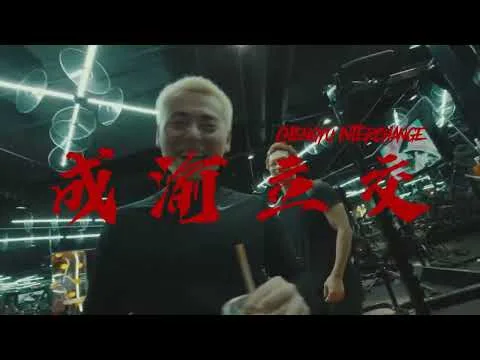
Official ZHONG.TV still from “Chengdu-Chongqing Interchange.” Proximity creates exchange, not a single merged scene.
Chongqing and Chengdu share a wider southwest speech world, travel routes, listeners and repeated collaborations. The official Chengdu-Chongqing Interchange video makes that relationship audible without pretending the two cities are one organization.
The Chengdu rap scene is especially useful for studying density: CDC, Higher Brothers, Xie Di, Wang Yitai and several solo routes remain close enough to sharpen one another. Chongqing's national story is often more immediately concentrated around GO$H history, 023 identity and the radical vocal contrast between GAI and Bridge.
These are critical lenses, not permanent laws. Chengdu also produces force; Chongqing also produces reflection. Comparison should reveal artistic choices, not assign a personality to millions of residents.
Eight records for hearing the scene move
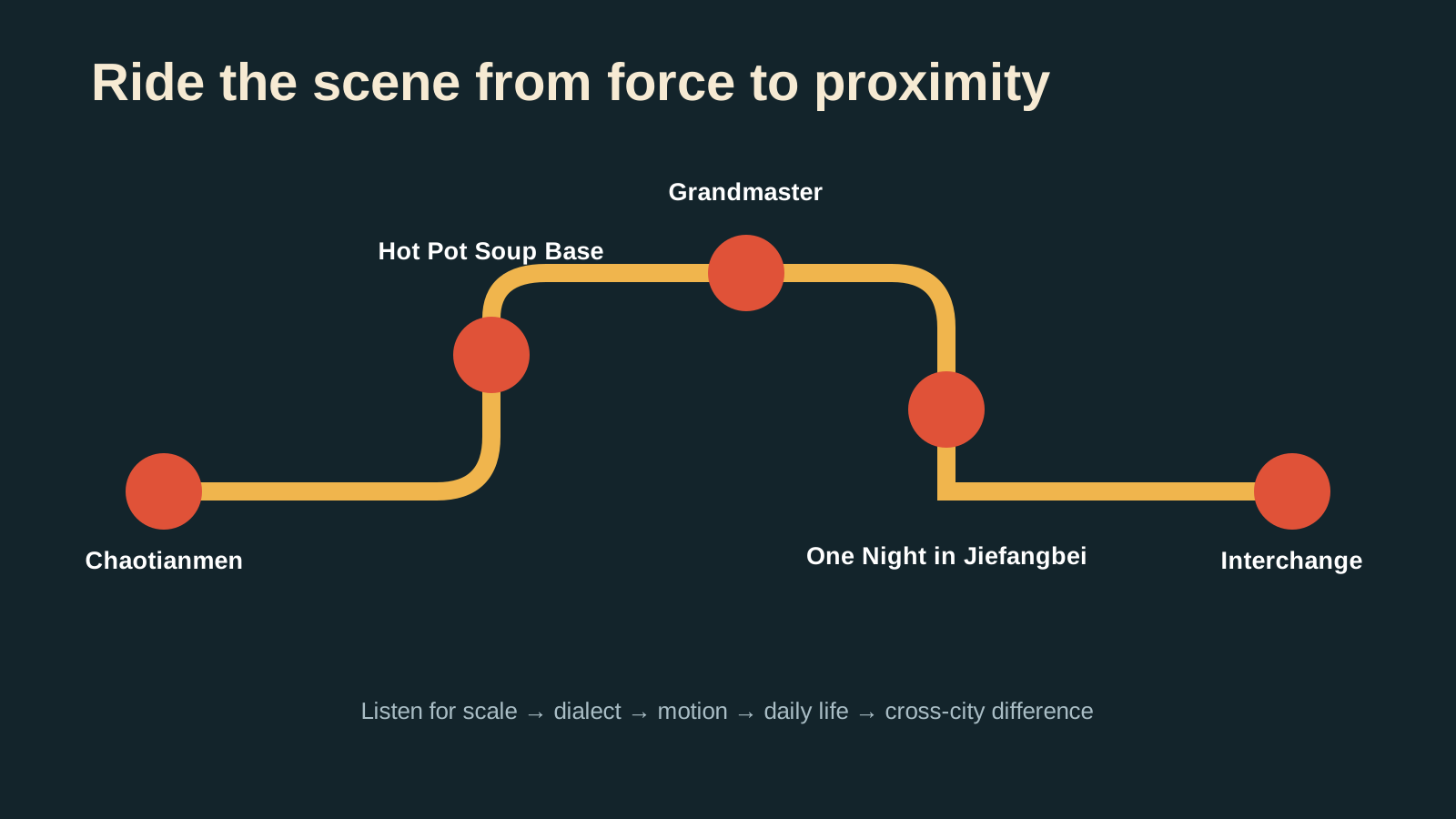
GAI, Chaotianmen: geography becomes drama
Begin here for vocal mass, melody and the way a place name can open a stage rather than merely label it.
GAI, Hot Pot Soup Base: local language travels
The hook works before cultural explanation. That immediate pleasure shows how hometown material can remain local while becoming nationally repeatable.
Bridge, Grandmaster: brightness as authority
Listen for the contradiction between the oversized title and playful attack. Authority does not have to arrive in a low voice.
Bridge, Chongqing Works: the city as working identity
The track makes hometown confidence active. Chongqing is not scenery behind the rapper; it is a relationship being performed.
Bridge, 023%: area code at album scale
Use the project to test whether a recognizable local brand can hold different moods rather than repeating one slogan.
Wang Qiming, One night in Jiefangbei: downtown at human scale
Use the track to hear a famous Chongqing district as social space rather than landmark inventory. The value lies in who occupies the night, not merely where it happens.
Wang Qiming, Life's Hot & Spicy: daily life becomes the frame
The 2025 project turns a familiar Chongqing flavor metaphor toward relationships and routine. It is a useful counterweight to city rap built only from spectacle.
Chengdu-Chongqing Interchange: difference across proximity
Finish with Xie Di and collaborators crossing the regional line. Similar speech energies meet, but the voices retain their own centers.
The climb belongs inside the rhythm
Chongqing rap has one of the strongest public images in Chinese hip-hop. That strength is also its editorial danger. Fog, hot pot, elevated trains, 023 and a gravelly voice can become a ready-made package.
What listeners actually want is split: some search for representative rappers and GO$H history, others for underground shows, live-house intensity, rap landmarks or Wang Qiming's everyday Chongqing. That split proves this guide's central argument. The city is compelling precisely because it can be heard at monumental, stage and neighborhood distance. It does not allow one current roster, venue or artist to represent the whole scene.
The best records resist the package from inside. GAI brings singing and county memory into the large persona. Bridge makes brightness and humor carry local authority. Wang Qiming lets districts, meals and friendships interrupt the skyline. Cross-city records prove that identity can move without disappearing.
Some releases rely too heavily on the recognition already attached to Chongqing. A place name cannot substitute for a fresh line, and crew history cannot guarantee present chemistry. Fans should be demanding precisely because the scene has created such a high standard of immediate character.
Our view is that Chongqing's deepest contribution is not hardness. It is proof that regional identity can operate at several distances at once: monumental in GAI, performative in Bridge and lived-in in Wang Qiming. Voice, image, hook, local code and public memory reinforce one another, but no artist owns the complete city. That is more useful than another list of famous Chongqing rappers, and it is what a generic AI summary usually fails to hear.
Start with dialect, then test the wider map
- Play GAI's Chaotianmen for scale, then Weiyuan Story for the person outside the city myth.
- Play Bridge's Grandmaster for instant character, then Running Child for a longer album view.
- Enter Wang Qiming through One night in 解放碑, then use Life's Hot & Spicy for the everyday-city perspective.
- Compare all three voices without asking which one is “more Chongqing.”
- Use 023% to hear how an area code becomes an album frame.
- Watch the official Chengdu-Chongqing Interchange video, then return to the Chinese rappers guide to compare Chongqing with Changsha, Chengdu and other routes.