Chongqing food is often summarized as hot, numbing and red. That is the visible layer. Underneath it is a cuisine of timing, rendered fat, fermented depth, quick service and social negotiation. A hot-pot table decides what enters the broth next. A xiaomian shop builds complexity in the bottom of a bowl. A plate of chicken hides small pieces among chilies so eating becomes an active search. Heat is not the whole flavor; it is one force organizing attention.
The Chongqing culture guide explains the port, factory and vertical-city context behind that appetite. If you are planning meals around actual routes, keep the travel to Chongqing guide beside this one; a famous restaurant on the wrong elevation is not a convenient stop merely because the map draws a short line.
Chongqing food at a glance
| Choose your route through this guide | Start here |
|---|---|
| First visit and limited time | Hot pot, xiaomian and the two-day route |
| Low spice tolerance | Mala explanation, douhua rice and ordering guidance |
| Interested in local technique | Hot-pot timing, bowl seasoning and jianghu cooking |
| Traveling alone | Xiaomian, suanlafen, chaoshou and douhua rice |
| Eating with a group | Hot pot, grilled fish, chicken and maoxuewang |
| Comparing Chongqing with Chengdu | The regional relationship section, not a simplistic ranking |
| Food | Chinese name | What defines it | Best moment |
|---|---|---|---|
| Chongqing hot pot | 重庆火锅 | Red broth, often beef-fat based, with chilies, Sichuan pepper and rapid communal cooking | Long dinner with two or more people |
| Xiaomian | 重庆小面 | Wheat noodles mixed with an intensely seasoned bowl base | Breakfast or quick lunch |
| Suanlafen | 酸辣粉 | Chewy sweet-potato noodles with sour, hot and savory seasoning | Snack or light meal |
| Maoxuewang | 毛血旺 | Blood tofu, offal and other ingredients in a chile-rich broth | Shared restaurant meal |
| Geleshan laziji | 歌乐山辣子鸡 | Small fried chicken pieces scattered through dried chilies | Shared dish with rice and vegetables |
| Wanzhou grilled fish | 万州烤鱼 | Grilled fish finished in a seasoned pan with vegetables and aromatics | Centerpiece for a group |
| Spring-water chicken | 泉水鸡 | Chicken cooked in a bold chile-and-aromatic preparation associated with Chongqing's southern hills | Shared meal outside a hot-pot setting |
| Douhua rice | 豆花饭 | Soft tofu, rice and a deeply flavored dipping condiment | Everyday lunch and respite from heavier dishes |
| Red-oil chaoshou | 红油抄手 | Folded dumplings dressed in aromatic chile oil | Snack or solo meal |
Chongqing cooking is related to Sichuan cuisine, not identical to all of it
Chongqing and Sichuan share a broad culinary world: chilies, Sichuan pepper, fermented bean pastes, pickled vegetables, preserved ingredients and skilled flavor construction cross administrative borders. Chongqing was part of Sichuan Province before becoming a municipality directly under the central government in 1997. Food traditions did not suddenly divide at that date.
Yet city food cultures develop their own habits. Chongqing's port history, steep neighborhoods, industrial workforce, migration and late-night social life helped make fast bowls, robust hot pot and generous jianghu cai especially visible.
Chongqing and Chengdu: a useful comparison
| Dimension | Chongqing tendency | Chengdu and wider Sichuan tendency | Important caution |
|---|---|---|---|
| Hot-pot identity | Strong association with red broth, beef fat, offal and an assertive profile | Many formats, including butter and vegetable-oil broths, skewers and varied restaurant styles | Individual restaurants differ more than slogans suggest |
| Everyday noodle icon | Xiaomian, seasoned from the bowl base | Dandan noodles, sweet-water noodles and many other forms | Both cities eat many noodles beyond the iconic one |
| Restaurant personality | Jianghu cai often foregrounds direct, bold, large-format flavor | Sichuan restaurant traditions include delicate, formal, home-style and snack cooking | "Sichuan food" is much broader than either city's loudest dishes |
| Public image | Port-city heat, night eating and working-city appetite | Tea-house rhythm, snack culture and provincial culinary capital | These are tendencies, not personality tests for residents |
The broader Sichuan and Chongqing food collection owns the regional relationship; our Chinese hot pot guide compares pot traditions and general etiquette. This page focuses on how a visitor eats through Chongqing as a city. For historical comparison beyond restaurant folklore, K. C. Chang's edited volume Food in Chinese Culture remains a serious starting point.
Mala is a relationship, not a heat score
Ma is the tingling, numbing sensation associated with Sichuan pepper. La is chile heat. Good mala cooking does not merely maximize both. It places them alongside fragrance, salt, savoriness, acidity, sweetness, fermented depth and texture.
Sichuan pepper can smell citrusy, floral or woody depending on type and condition. Dried and fresh chilies contribute different aromas as well as heat. Fermented broad-bean paste, fermented black beans, pickled mustard greens, ginger and garlic deepen a dish so the chile does not taste empty.
When a visitor says "not spicy," a kitchen may hear a request to reduce chile while leaving other strong seasonings intact. If your tolerance is low, ask for weila (微辣, mildly spicy) or bu la (不辣, not spicy), then confirm whether a nonspicy version actually exists. Some dishes lose their identity when all chile is removed; choose a different dish rather than demanding an impossible translation.
Chongqing hot pot is a social system
The Chongqing municipal government's current food guide identifies hot pot as the city's culinary symbol. That official status explains why it belongs in every first-time guide; it does not prove that the reddest broth, the highest review score or the best river view produces the best dinner.
The classic Chongqing hot-pot image is a vigorously red broth, historically associated with beef fat, dried chilies and Sichuan pepper. Its ingredient vocabulary often includes beef, tripe, duck intestine, blood tofu, tofu products, mushrooms and vegetables. The table cooks in waves rather than all at once.
Hot pot is not a soup to drink by the bowl. It is a cooking medium. The broth becomes more concentrated as the meal continues, and oil clings to each ingredient. The common Chongqing dip of sesame oil with minced garlic helps cool, lubricate and perfume the food; diners may add oyster sauce, vinegar, scallion or cilantro according to preference and restaurant practice.
The river view changes dinner, not the broth
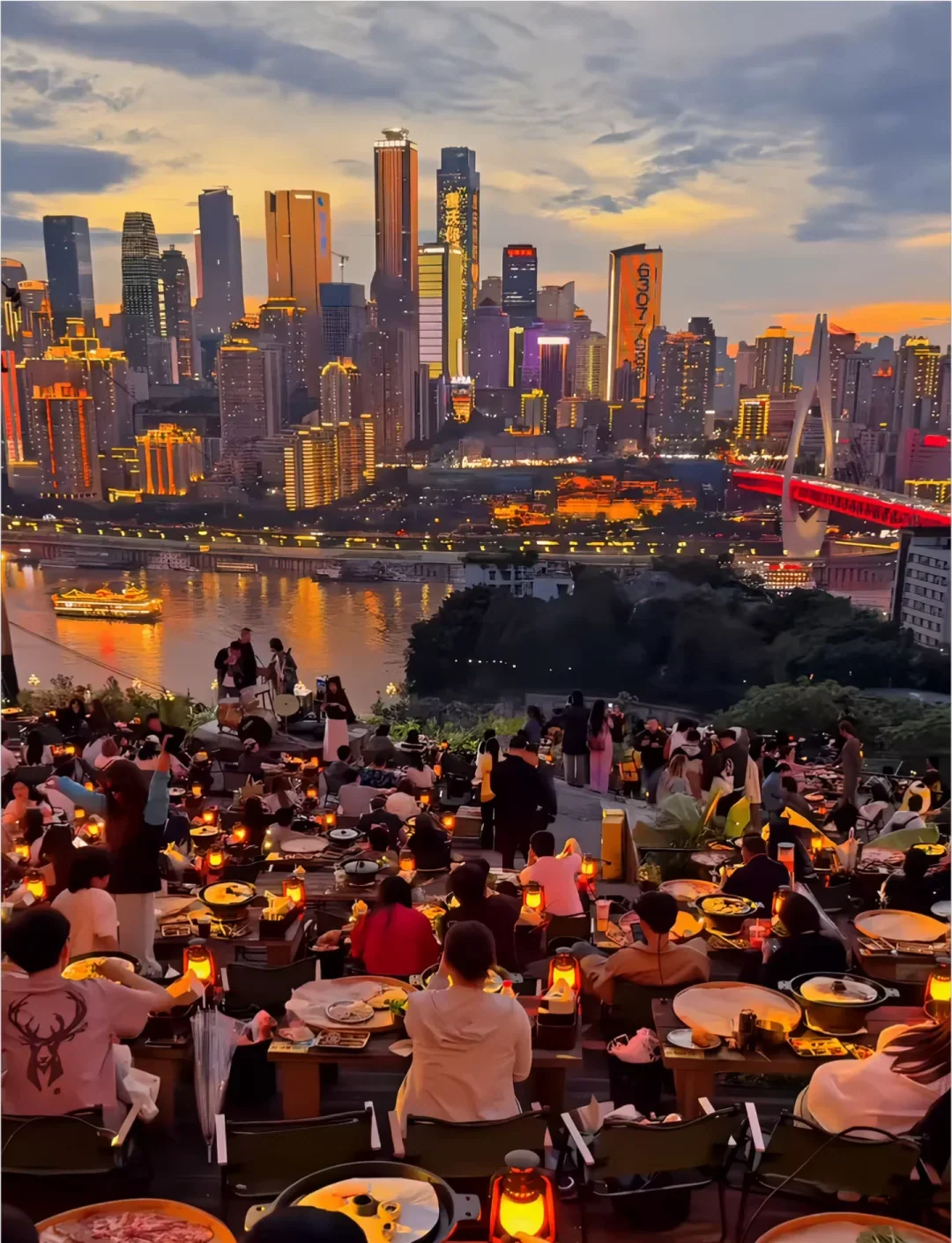
A river-facing table can make the meal unforgettable because Chongqing's geography remains present between bites: the opposite bank lights up, boats cross below and a long dinner moves from sunset into night. I love that collision of red broth, warm table lamps and a city switching itself on. But the skyline cannot rescue stale pepper, muddy beef fat or careless ingredient timing. The view changes the tempo of dinner; it does not prove the quality of the pot.
That distinction protects the traveler from an expensive mistake. Choose a scenic terrace when the shared evening is the purpose. Choose a modest neighborhood room when broth, turnover and staff guidance matter more. Both can reveal Chongqing; pretending they answer the same hunger is how recommendation lists become useless.
What the nine-grid pot actually does
The jiugongge, or nine-grid divider, creates smaller working zones inside one pot. It helps a table manage different ingredients and retrieve small pieces. It should not be treated as an ancient ritual whose every square has one permanent ingredient assignment. Restaurants and diners use it practically.
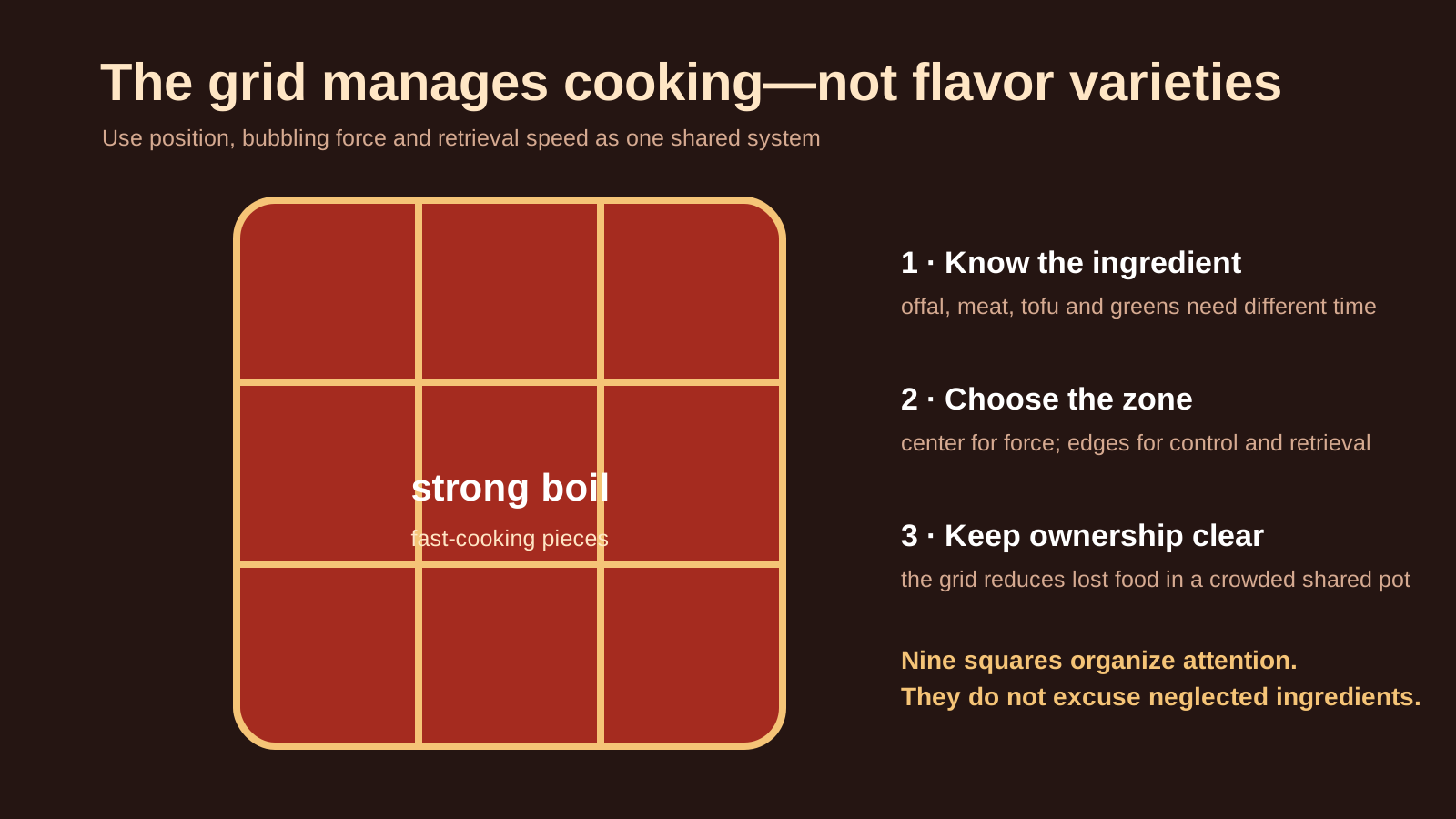
A practical hot-pot timing guide
| Ingredient | Typical cooking logic | What to watch |
|---|---|---|
| Duck intestine | Brief swishing to keep snap | Overcooking turns it firm and tough; follow local staff guidance |
| Beef slices | Short cooking in actively simmering broth | Cook through, especially if cuts are thicker than expected |
| Tripe | Quick cooking for crisp texture or longer cooking for tenderness | Different tripe cuts behave differently; ask before guessing |
| Blood tofu | Gentle simmer until heated through | Handle carefully because cubes break easily |
| Meatballs | Longer cooking until fully heated | Do not mistake floating alone for guaranteed doneness |
| Tofu and bean products | Moderate cooking; fried bean products absorb broth quickly | They can hold extremely hot oil inside |
| Mushrooms | Cook thoroughly | Add early enough to soften safely |
| Leafy vegetables | Usually later in the meal | Leaves absorb oil and salt as the broth concentrates |
| Starch noodles | Near the end | They cloud or thicken broth and can become difficult to retrieve |
Food-safety timing varies by cut, thickness and restaurant instructions. When uncertain, let staff guide the table. Do not copy theatrical social-media countdowns as universal rules.
Offal is central, not a dare
English-language travel content often presents tripe, intestine and blood tofu as bravery tests. That framing misses why these ingredients matter. They offer textures that lean meat cannot: snap, chew, softness, porosity and the ability to carry aromatic fat.
Historically, economical use of animal parts also belongs to working food cultures. Today, offal can be inexpensive or premium depending on cut, sourcing and restaurant. You do not have to enjoy it, but treating another table's ordinary ingredient as a stunt is poor curiosity.
Order one unfamiliar item, learn its Chinese name and understand how it should be cooked. A smaller, attentive experiment teaches more than a large plate ordered for a reaction video.
Xiaomian is the city's everyday masterpiece
Chongqing xiaomian literally means small noodles, but the smallness refers as much to format as portion. The bowl is quick, focused and built for repeat eating. Wheat noodles arrive over a seasoning base that may include chile oil, Sichuan pepper, soy sauce, garlic, ginger, scallion, sesame, preserved vegetables and stock.
The defining craft happens before the noodles enter. Proportion matters: too much soy buries fragrance; stale pepper loses its lift; weak chile oil produces heat without aroma; badly drained noodles dilute the base.
Plain xiaomian is not unfinished food. Versions with peas and minced pork, beef, intestines or other toppings are additions to a complete noodle logic. Stir thoroughly from the bottom before deciding the bowl lacks flavor.
The wider Chinese noodles guide explains how wheat, rice and starch noodles change across regions. Chongqing's contribution here is narrower and more decisive: the bowl base is already a complete argument before an expensive topping arrives.
How to order xiaomian
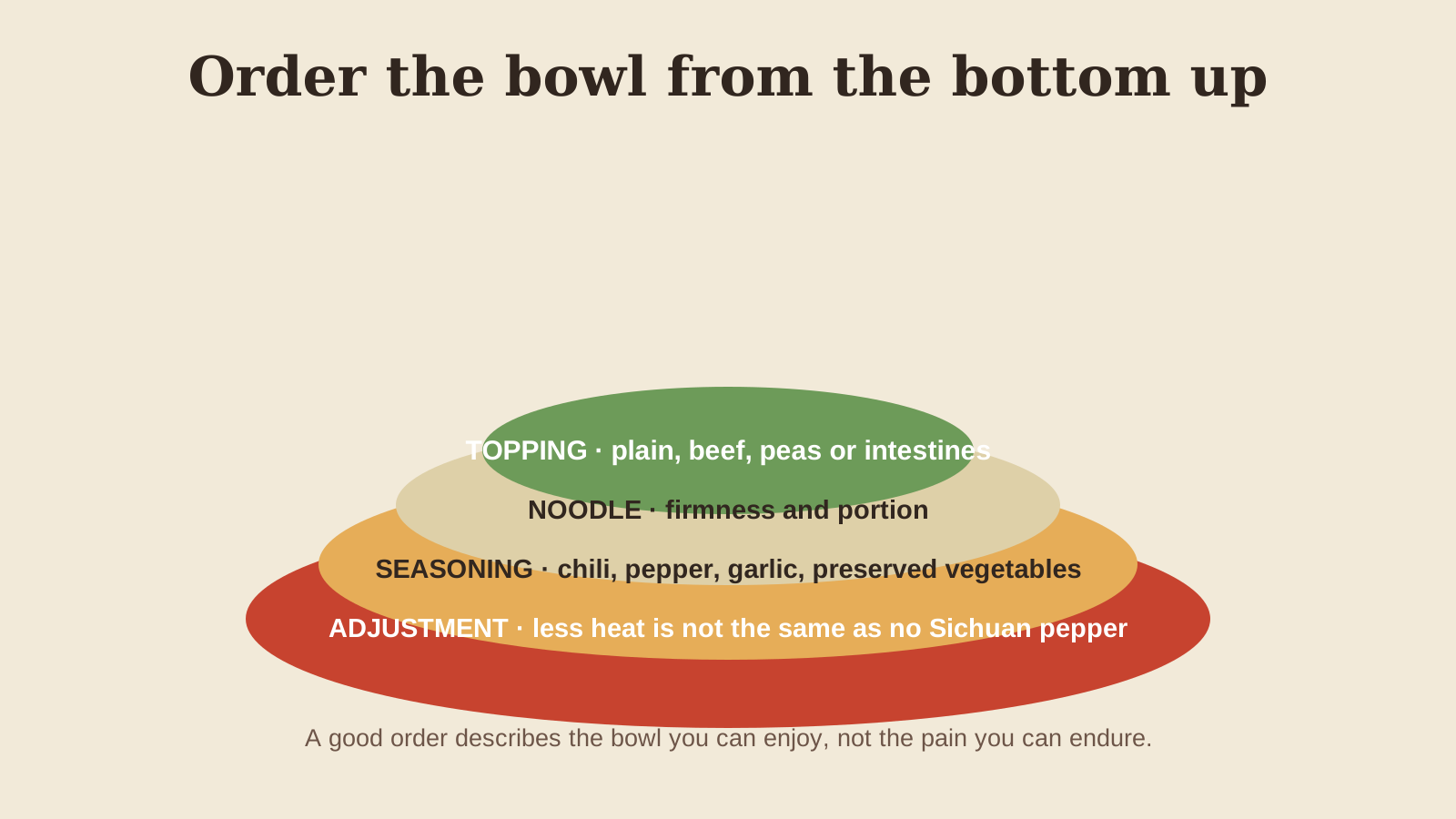
| Choice | Useful Chinese | What it changes |
|---|---|---|
| Mildly spicy | 微辣 (weila) | Reduces chile heat, though the bowl may still tingle and remain strongly seasoned |
| No Sichuan pepper | 不要花椒 (bu yao huajiao) | Removes most numbing sensation; confirm the shop can adjust its premixed base |
| Dry-mixed | 干溜 (ganliu) | Less or no broth; seasoning clings more directly to noodles |
| More broth | 多汤 (duo tang) | Requests more liquid where the shop allows customization; point and confirm because local shop vocabulary varies |
| Add beef | 牛肉面 (niurou mian) | Turns the bowl into a more substantial meal |
| Add peas and minced pork | 豌杂面 (wanzha mian) | Adds soft peas and savory minced-meat sauce |
Shop vocabulary varies, and English translations may be limited. A photograph, the Chinese characters and a clear gesture are more reliable than an elaborate custom order during a breakfast rush.
Suanlafen builds pleasure from chew and contrast
Suanlafen uses sweet-potato starch noodles with a springy, slippery chew. Vinegar supplies sourness; chile oil brings heat and aroma; peanuts or soybeans add crunch; preserved vegetables, scallion and other garnishes create contrast.
The dish is not simply a hotter noodle soup. Wheat xiaomian and starch-based suanlafen behave differently in the mouth and carry seasoning differently. Eat suanlafen while hot but carefully: the long, slippery noodles can throw chile oil onto clothing, and the broth can be hotter than its small bowl suggests.
From jianghu dishes to everyday counter food
Jianghu cai favors direct flavor and loose boundaries
Jianghu cai can be translated loosely as "rivers-and-lakes cooking," but here jianghu suggests an informal social world outside rigid institutions. The category is associated with bold, inventive restaurant dishes that spread through popular reputation rather than a fixed classical canon.
It does not mean careless cooking. Many jianghu dishes demand accurate frying, aromatic layering and control of large quantities of chile and oil. What feels loose is the willingness to combine local appetite, restaurant invention and highly memorable presentation.
Famous restaurant dishes and everyday foods
| Restaurant or group dish | Everyday or solo counterpart | What the contrast teaches |
|---|---|---|
| Hot pot | Xiaomian | Long communal cooking versus a fast individual bowl |
| Wanzhou grilled fish | Suanlafen | A large centerpiece versus a focused snack meal |
| Spring-water chicken | Douhua rice | Bold oil-rich chicken versus soft tofu, rice and condiment |
| Maoxuewang | Red-oil chaoshou | A mixed shared pot versus a small dumpling dish |
| Geleshan laziji | Breakfast noodles | Restaurant spectacle versus daily repetition |
Maoxuewang turns mixed ingredients into one field of flavor
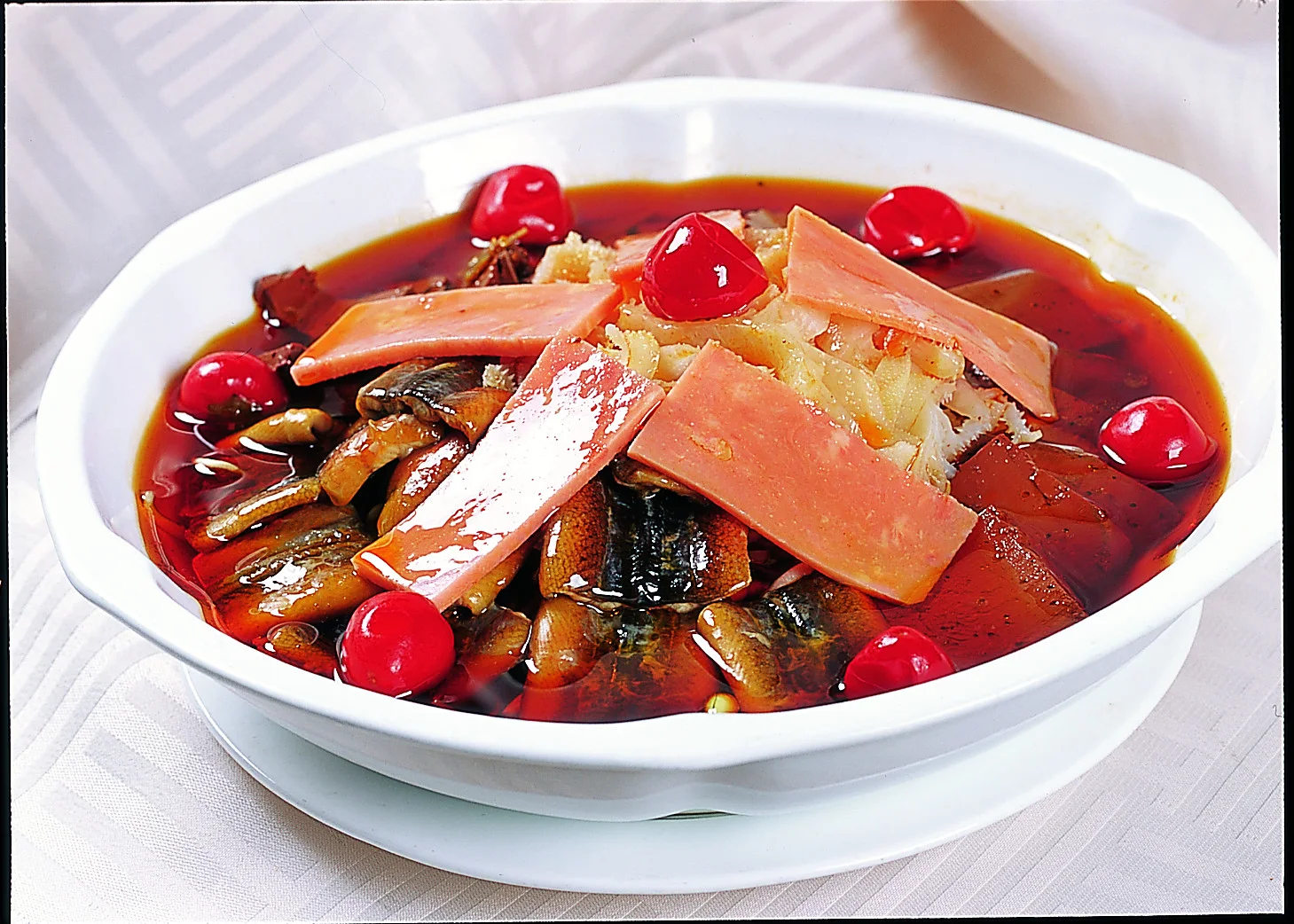
Maoxuewang commonly combines blood tofu with ingredients such as tripe, intestine, luncheon meat, bean sprouts or other vegetables in a chile-rich broth. Recipes and restaurant compositions vary.
The dish succeeds when ingredients remain identifiable instead of collapsing into one oily texture. Bean sprouts provide lift, blood tofu brings softness, offal adds chew and the surface aromatics perfume the broth. Because portions can be large, order it with rice and at least one less oily dish.
Geleshan laziji makes eating into a search
Geleshan laziji is associated with the Geleshan area of Chongqing. Small pieces of chicken are fried and tossed with a large volume of dried chilies and aromatics.
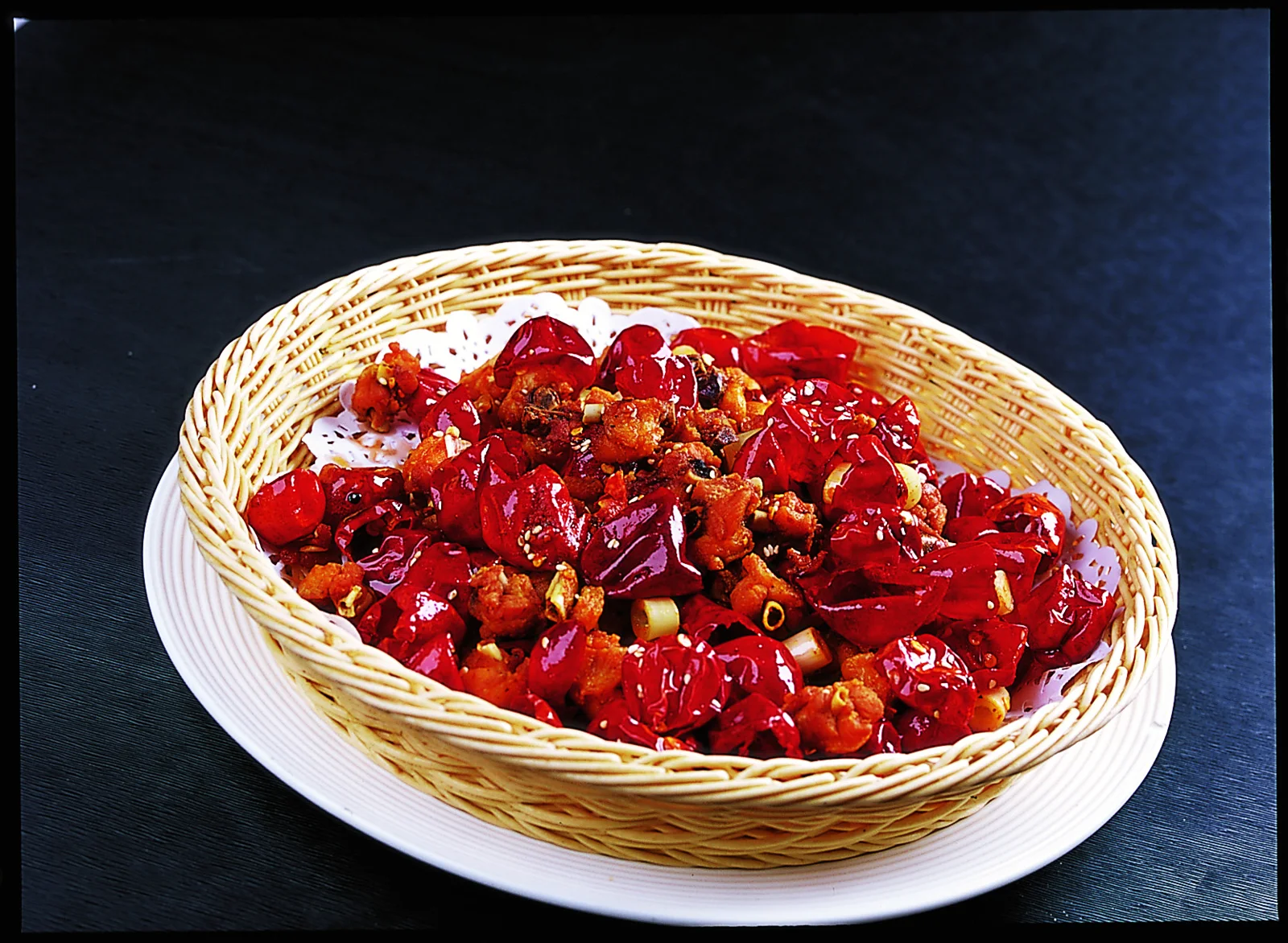
The chilies are not all intended to be eaten like vegetables. They create fragrance, heat and the visual field through which diners search for crisp chicken. The best pieces should remain juicy inside rather than becoming tiny dry bones. Eat it with rice, greens and another soft-textured dish.
Wanzhou grilled fish is built for a group
Wanzhou, within Chongqing Municipality, is closely associated with a style in which a fish is grilled and then served in a heated pan with sauce, chilies, aromatics and vegetables. The method combines charred surface flavor with the continuing absorption of a braise.
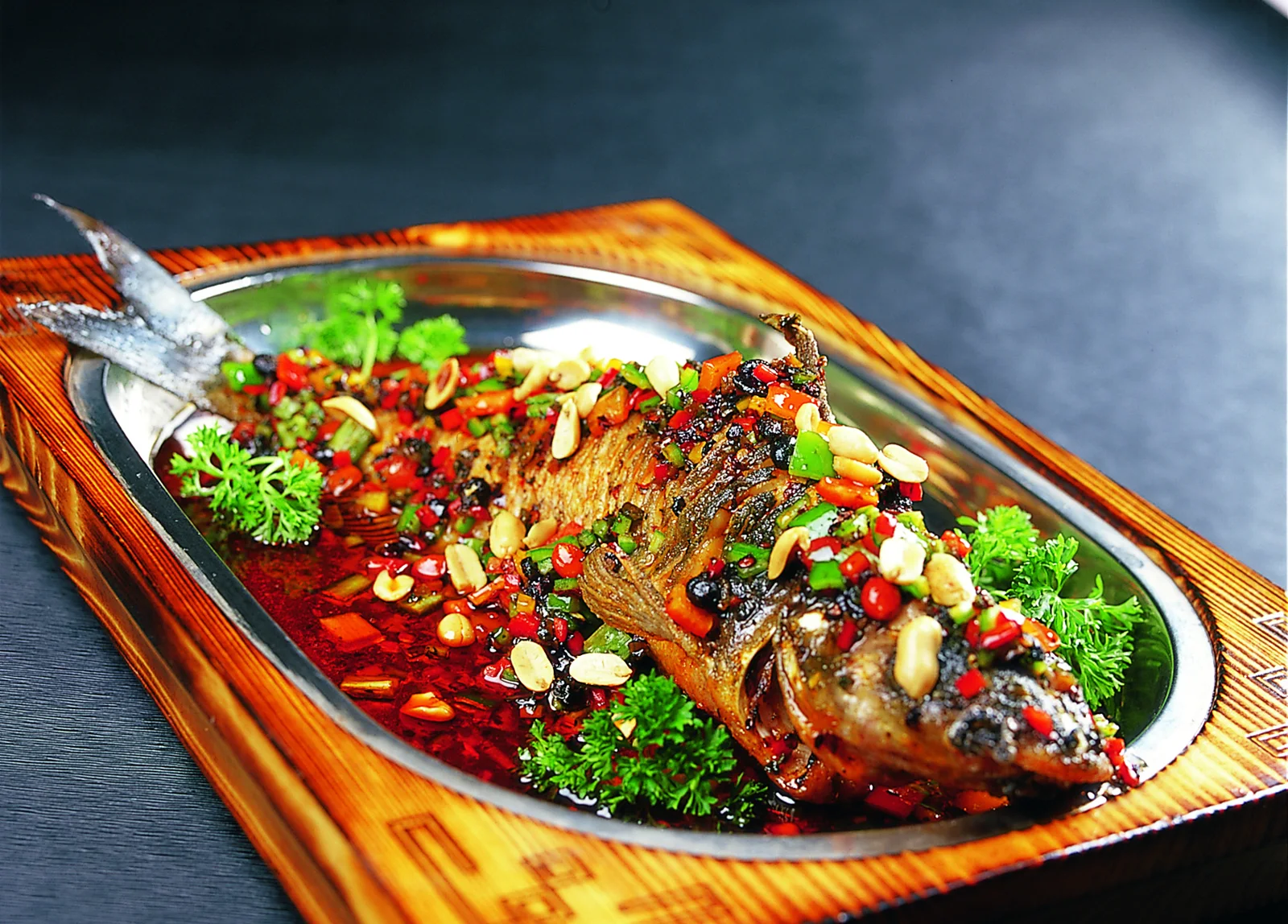
Ask how the fish is priced: by whole fish, weight or set. Choose sauce intensity and additions before cooking begins. Potatoes, lotus root, tofu, celery and other ingredients can turn the pan into a complete meal, but adding everything produces muddled texture and unnecessary cost.
Spring-water chicken belongs to the hills and the restaurant table
Spring-water chicken is associated with areas around Chongqing's southern mountains. Despite the gentle English name, many versions are robust, chile-rich preparations. Restaurants may serve chicken in large pieces with abundant aromatics and oil.
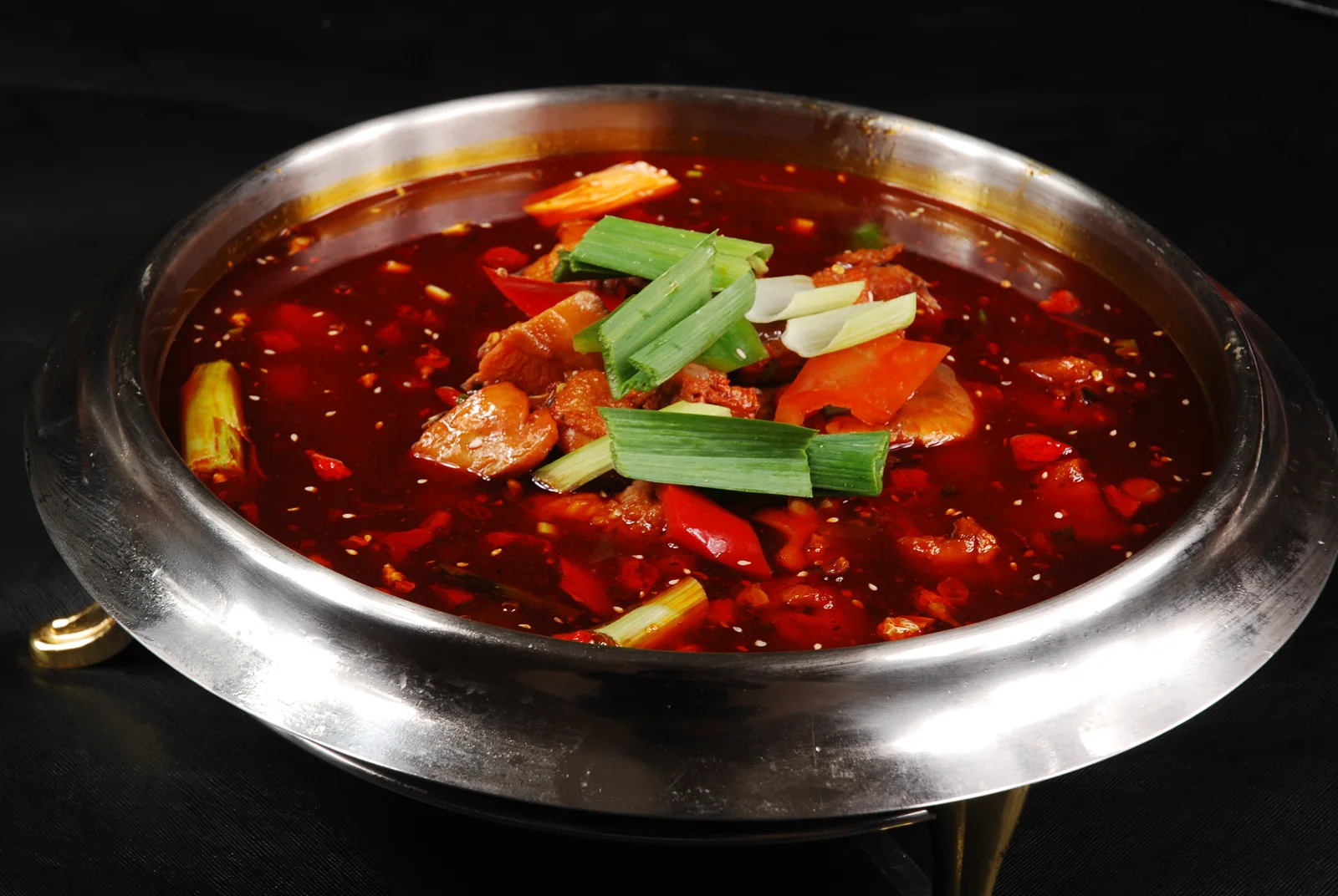
The name has regional and restaurant variations, so do not expect one standardized recipe. Ask about bone-in pieces, portion size and heat level. It makes more sense for three or four diners than for a solo meal.
Douhua rice shows the value of softness
Douhua is very soft tofu, served in different savory and sweet traditions across China. Around Chongqing and neighboring Sichuan, douhua with rice and a flavorful dipping condiment can form an inexpensive, satisfying meal.
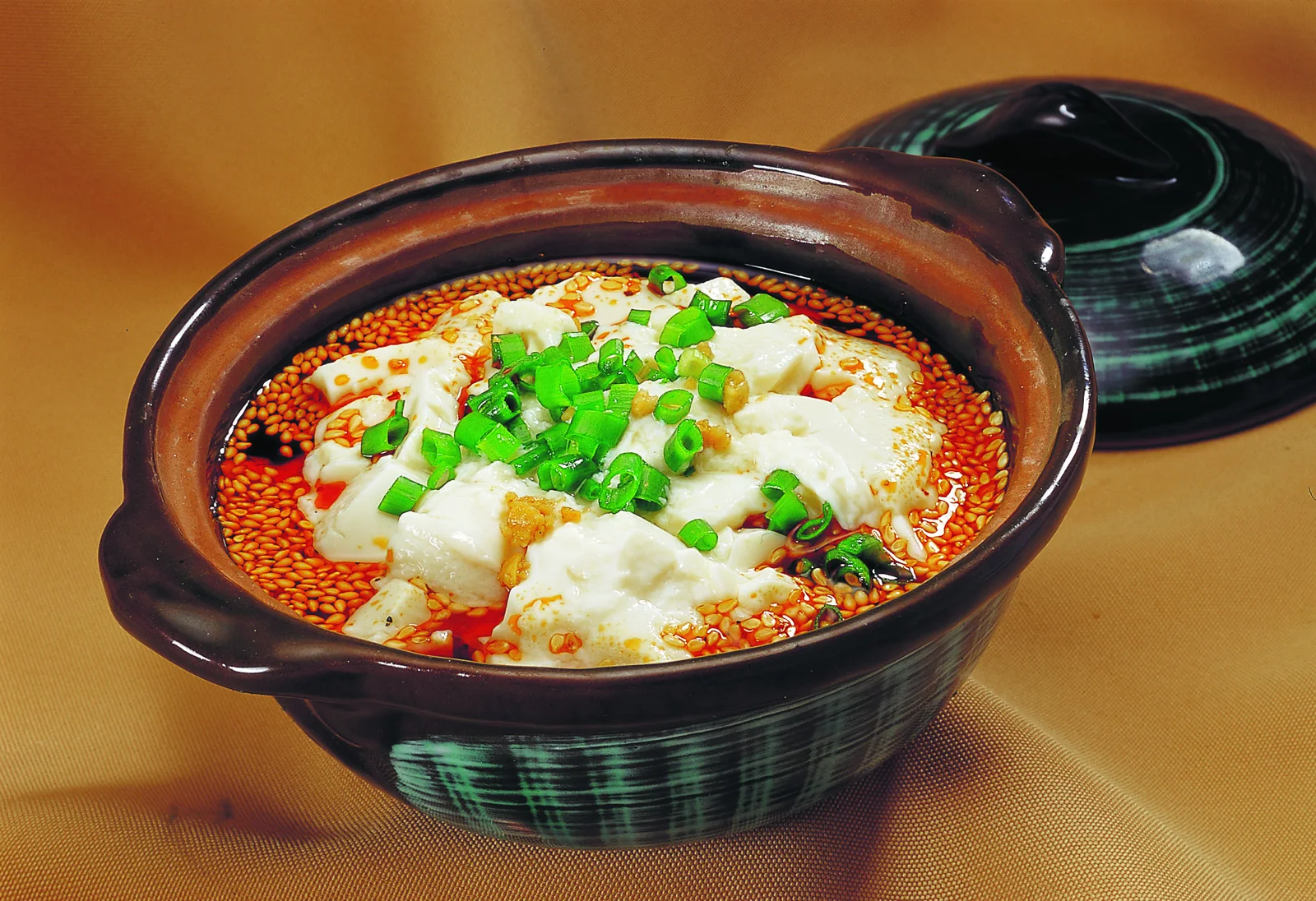
The pleasure lies in contrast: hot rice, delicate tofu and a condiment that may contain chile, fermented elements, sesame, garlic, scallion or preserved vegetables. Add condiment gradually. Douhua does not need to swim in sauce to become flavorful.
For visitors overwhelmed by several rich meals, douhua rice can reset the palate without pretending Chongqing suddenly becomes unseasoned.
Chaoshou gives chile oil a smaller stage
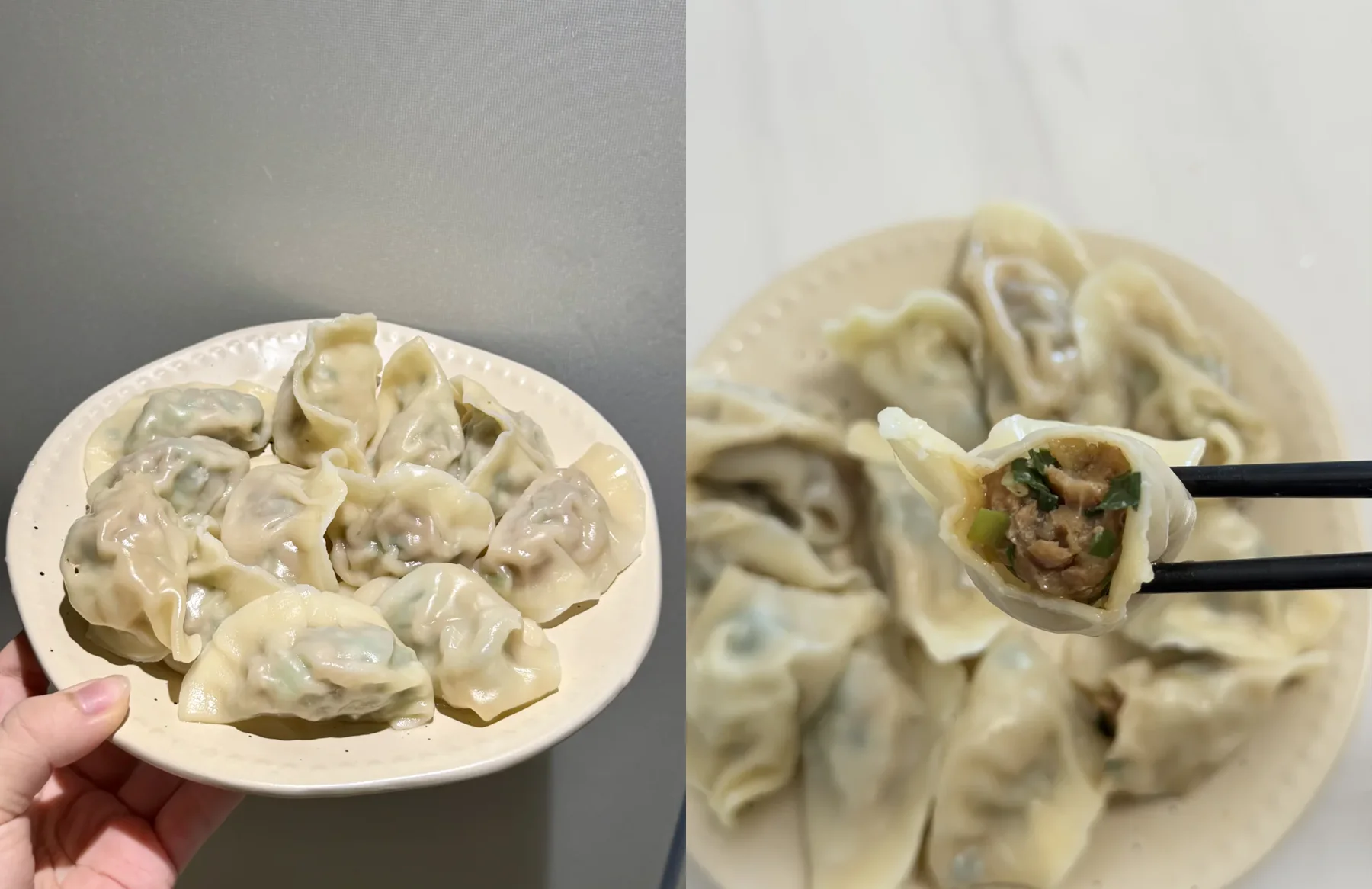
Chaoshou are Sichuan-style folded dumplings, related to wontons but named and served through regional traditions. Chongqing shops may offer them in red oil or broth.
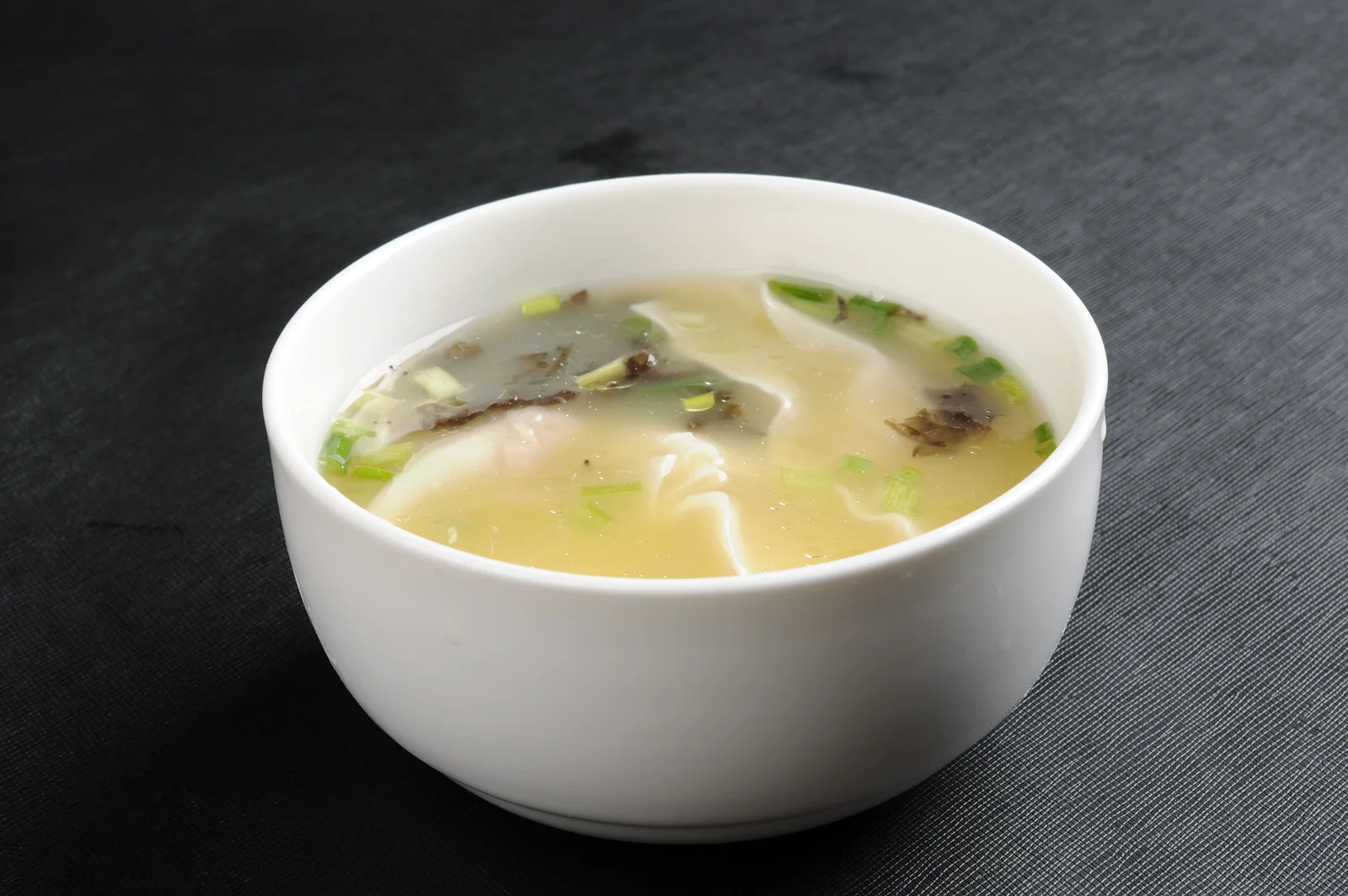
The wrapper should remain tender without disintegrating. In a red-oil version, sauce must reach the folds; stir carefully from the bottom. A broth version can be gentler, though "clear" does not always mean free from pepper or strong seasoning.
Pickles and fermentation provide the bass line
Preserved mustard greens, pickled vegetables, fermented black beans and chile pastes appear throughout the wider Sichuan-Chongqing pantry. They bring acidity, savoriness and depth that fresh chile alone cannot provide.
This matters when describing Chongqing food. A dish may feel powerful not because it contains the highest possible amount of chile, but because fermentation, oil and salt sustain flavor long after the first heat arrives. Rice, tofu and vegetables are therefore structural partners, not apologetic side dishes.
How to order a balanced Chongqing meal
| Situation | A balanced order | What to avoid |
|---|---|---|
| Solo breakfast | Plain xiaomian or wanzha noodles, with a soy drink or simple side if available | Ordering a large topping before learning the shop's portion size |
| Solo lunch | Suanlafen, chaoshou or douhua rice | Choosing a family-size jianghu dish because the photograph looks compact |
| Two-person hot pot | One broth, two meats or offal items, tofu or bean product, mushrooms and two vegetables | Ten plates of similar meat and no absorbent or fresh ingredients |
| Four-person hot pot | Add one signature offal item, mixed vegetables and a starch near the end | Pouring everything in at once and losing cooking control |
| Three-person restaurant meal | One chicken, fish or maoxuewang dish, one green vegetable, tofu or egg and rice | Ordering three oil-rich red dishes with identical texture |
| Late-night snack | Small noodles, chaoshou or one shared dish | Treating every night as a second banquet |
Look for specialization. A small shop that serves one noodle family may be a better introduction than a giant menu claiming every famous Chongqing dish. High turnover matters for broths, greens and prepared ingredients.
Vegetarian, allergy and dietary guidance
| Need | What to know |
|---|---|
| Vegetarian | Clear-looking broth may contain meat stock, lard or beef fat; ask whether the broth, sauce and preserved toppings contain animal products |
| Vegan | Tofu and vegetables are widely available, but oyster sauce, stock and animal fat can appear in seasoning; communicate every restriction |
| Peanut or sesame allergy | Peanuts, sesame paste and sesame oil are common in noodles, snacks and dipping sauces; cross-contact can be difficult to avoid |
| Gluten sensitivity | Soy sauce and many sauces may contain wheat; xiaomian uses wheat noodles, while sweet-potato noodles are not automatically safe because the sauce may contain gluten |
| Organ meats | Ask before ordering mixed hot-pot platters or maoxuewang; menus may not translate every component |
| Low heat tolerance | Choose douhua rice, vegetables, clear soups or plainly cooked dishes where available; "mild" remains relative |
| Oil sensitivity | Red broth and jianghu dishes can be rich even when less spicy; order rice, greens and smaller portions |
Severe allergies require more than a translation card. Cross-contact is likely in small kitchens and shared hot-pot broth. Choose restaurants able to discuss ingredients clearly, and do not assume visual inspection can identify every sauce or stock.
How to eat without turning the city into a challenge
- Start with one spicy meal per day and let your tolerance guide the next, especially in hot weather.
- Drink water, but use rice, tofu, vegetables and nonalcoholic drinks to pace a rich meal rather than trying to extinguish every bite.
- Do not pressure companions to eat offal or higher heat levels.
- Ask portion size before ordering whole fish, chicken or mixed pots.
- Let staff explain cooking times and dipping sauces.
- Use serving chopsticks when provided and keep raw-meat utensils away from cooked food.
- Photograph quickly and allow a busy shop to keep serving regular customers.
A two-day Chongqing food route
| Time | Day one: learn the everyday city | Day two: understand the shared table |
|---|---|---|
| Morning | Plain xiaomian or wanzha noodles at a focused neighborhood shop | Return to noodles with a different topping or try chaoshou |
| Midday | Douhua rice with a vegetable side | Suanlafen or another compact bowl before sightseeing |
| Afternoon | Walk a hillside neighborhood and let appetite reset | Tea, fruit or a nonspicy snack rather than continuous grazing |
| Dinner | Chongqing hot pot with a controlled mix of offal, tofu, mushrooms and greens | One jianghu centerpiece such as grilled fish or chicken, plus vegetables and rice |
| Late evening | Stop if the hot-pot meal was sufficient | Observe a night-food street or share one small snack |
The route separates the city's two scales. Day one moves from an individual bowl to a communal pot; day two compares another fast meal with a restaurant centerpiece. It also prevents the common mistake of placing hot pot, grilled fish, maoxuewang and laziji on the same exhausted table.
Chongqing tastes like movement held at a table
What most Chongqing food guides get wrong
They turn the city into a spice challenge, present offal as a dare and list every red dish as though intensity alone created variety. That approach misses the seasoned base of xiaomian, the soft relief of douhua, the work of fermentation and the timing that makes hot pot communal rather than chaotic.
The city's food mirrors its geography without becoming a metaphor too neatly. Small noodles move quickly because mornings move quickly. Hot pot slows a group down because the table must cook together. Offal, fermented vegetables and strong seasonings speak to economy and appetite, but modern restaurant culture has turned them into forms of pride and invention as well.
Eat the famous red broth, but do not stop there. Breakfast at a noodle counter. Learn what good tofu can do beside a sharp condiment. Order a green vegetable before the table becomes a wall of chile. Chongqing food becomes deeper when intensity is understood not as excess, but as a carefully managed relationship between heat, aroma, texture, labor and company.
Frequently asked questions about Chongqing food
What food is Chongqing famous for?
Chongqing is most famous for red hot pot and xiaomian, but its food culture also includes suanlafen, maoxuewang, Geleshan laziji, Wanzhou grilled fish, spring-water chicken, douhua rice, red-oil chaoshou and a broad family of bold restaurant dishes called jianghu cai.
Is all Chongqing food extremely spicy?
No. Chili and Sichuan pepper are important, but Chongqing meals also use garlic, sesame oil, fermented beans and vegetables, ginger, scallion, vinegar, soy, stock and pickles. Douhua rice, soups, vegetables and some noodles can provide gentler meals, although visitors with low heat tolerance should still ask clearly.
What is the difference between Chongqing hot pot and Sichuan hot pot?
Chongqing hot pot is one influential branch within the wider Sichuan-Chongqing hot-pot world. It is strongly associated with robust red broth, beef fat, chilies, Sichuan pepper, offal and fast communal cooking. Chengdu and other Sichuan styles may use different fats, aromatics, restaurant formats and broth balances, so neither city represents every hot pot in the region.
What is Chongqing xiaomian?
Chongqing xiaomian is a small bowl of wheat noodles seasoned through the bowl rather than defined by one topping. Chili oil, Sichuan pepper, soy, garlic, scallion, preserved vegetables and other seasonings create a layered base. Plain xiaomian and versions with beef, peas, intestines or other toppings coexist.
What should two people order in Chongqing?
For hot pot, choose one broth, a modest selection of meat or offal, tofu or bean products, mushrooms and two vegetables. At a restaurant, order one bold main such as grilled fish or chicken, one vegetable, one tofu or egg dish and rice. For solo meals, xiaomian, suanlafen, chaoshou and rice bowls are easier than large shared dishes.