To travel to Chongqing is to discover that a street can be a rooftop, a ground floor can become the twenty-second and a train can pass through a building without the city feeling obliged to explain itself. Do not chase every viral viewpoint: learn one complete vertical route and Chongqing's logic will finally click. Compare that route with the broader Chinese cities guide before combining Chongqing with a second city.
Travel to Chongqing without trusting a flat map
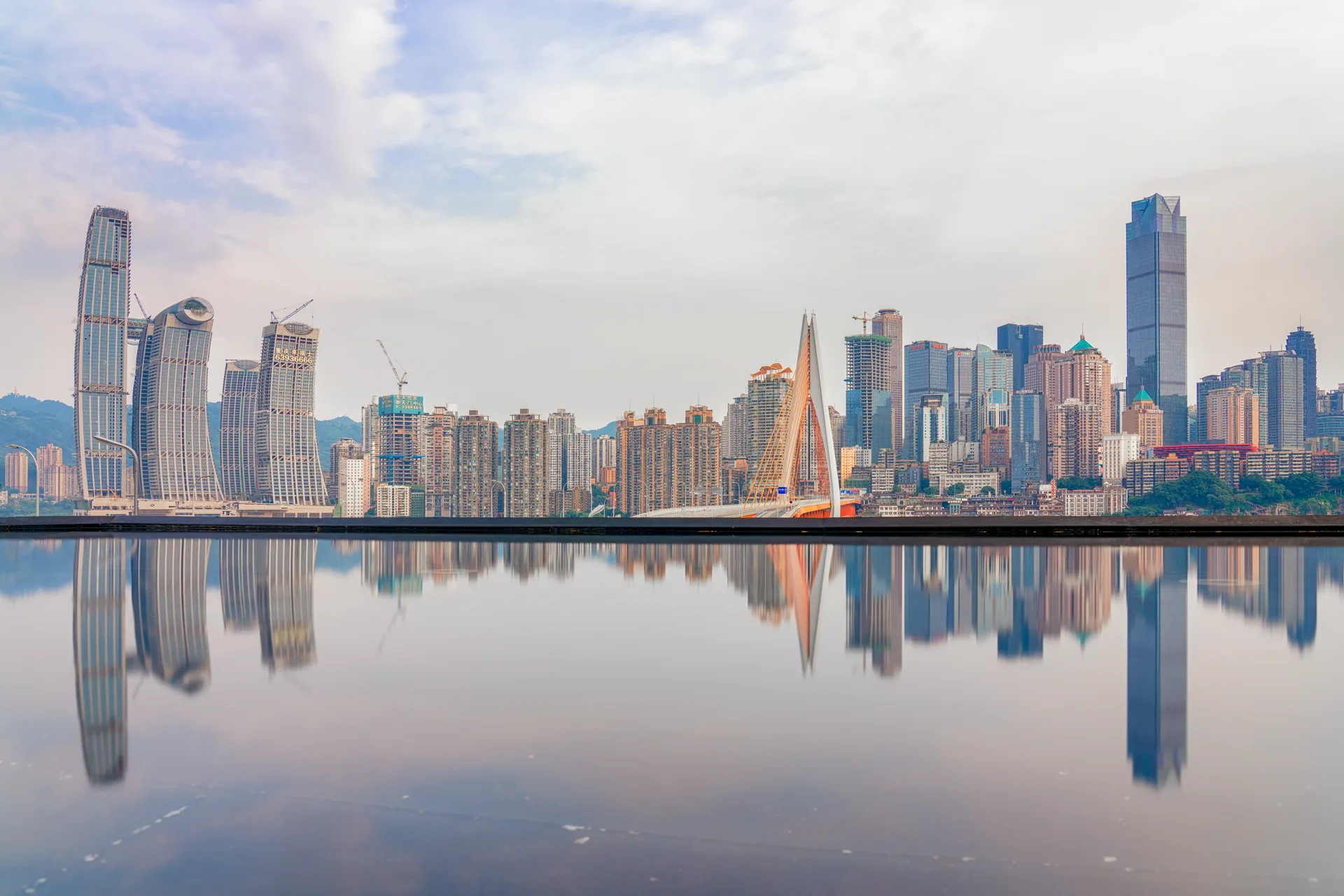
Built across steep hills where the Yangtze and Jialing rivers meet, Chongqing is not simply vertical in appearance. Height organizes daily life. Bridges, escalators, stairways, tunnels and metro lines create a city that feels edited like cinema.
Online images often turn it into science fiction. The stranger truth is that millions of ordinary routines happen inside this apparent impossibility: school pickup, grocery shopping, a bowl of noodles before work.
Read the Chongqing culture guide before building a checklist. It explains the river, wartime and industrial layers that a route planner cannot carry; this page keeps the narrower promise of helping you move through those layers without wasting a day on the wrong level.
Who should visit Chongqing
Come for urban photography, infrastructure, night views, intense food and the physical experience of a river city built in layers. It suits energetic travelers who enjoy cities more than polished resort calm.
Those with limited mobility should research exact routes and entrances carefully. Elevators exist, but not every dramatic staircase has a convenient alternative nearby.
| Chongqing at a glance | What it means for your trip |
|---|---|
| Best for | Urban photography, infrastructure, night views and intense food |
| Ideal first stay | Three days |
| City pace | Energetic, vertical and physically demanding |
| Best way to move | Metro plus carefully chosen walking descents |
| Do not miss | One daytime transit ride and one river view after dark |
Find your route through the levels
| If you need... | Start with... |
|---|---|
| A first itinerary | River geography and the three-day sequence |
| Photography | Level changes, transit windows and day-versus-night comparisons |
| Food | Hot pot, noodles and neighborhood meal formats |
| Mobility planning | Exact entrances, vertical routes and weather cautions |
| Regional excursions | Dazu and Wulong as separate journeys |
Plan by elevation before planning by distance
Chongqing's central districts occupy ridges, slopes and river edges connected through tunnels, bridges, rail, escalators, lifts and stairways. A map pin does not communicate which level an entrance uses. Two places can appear adjacent while requiring a descent, road crossing and another climb.
Build each walking route in one vertical direction when possible. Start high and descend toward a river or transit station. Avoid repeatedly climbing between Jiefangbei, riverfront zones and hillside streets because an app suggests a short distance. Save the Chinese destination name and a photo of the entrance; a taxi can reach the building while leaving you on the wrong side or level.
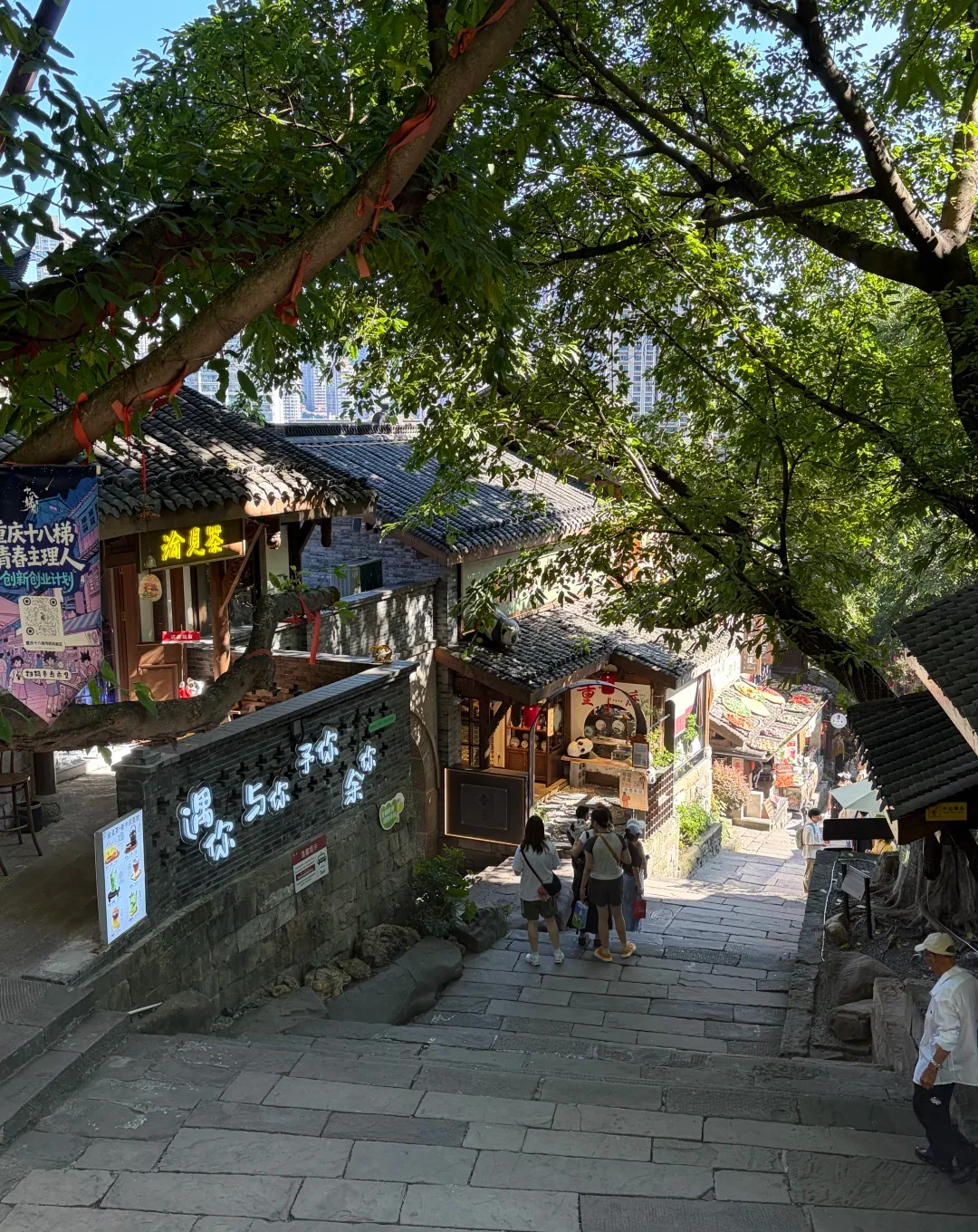
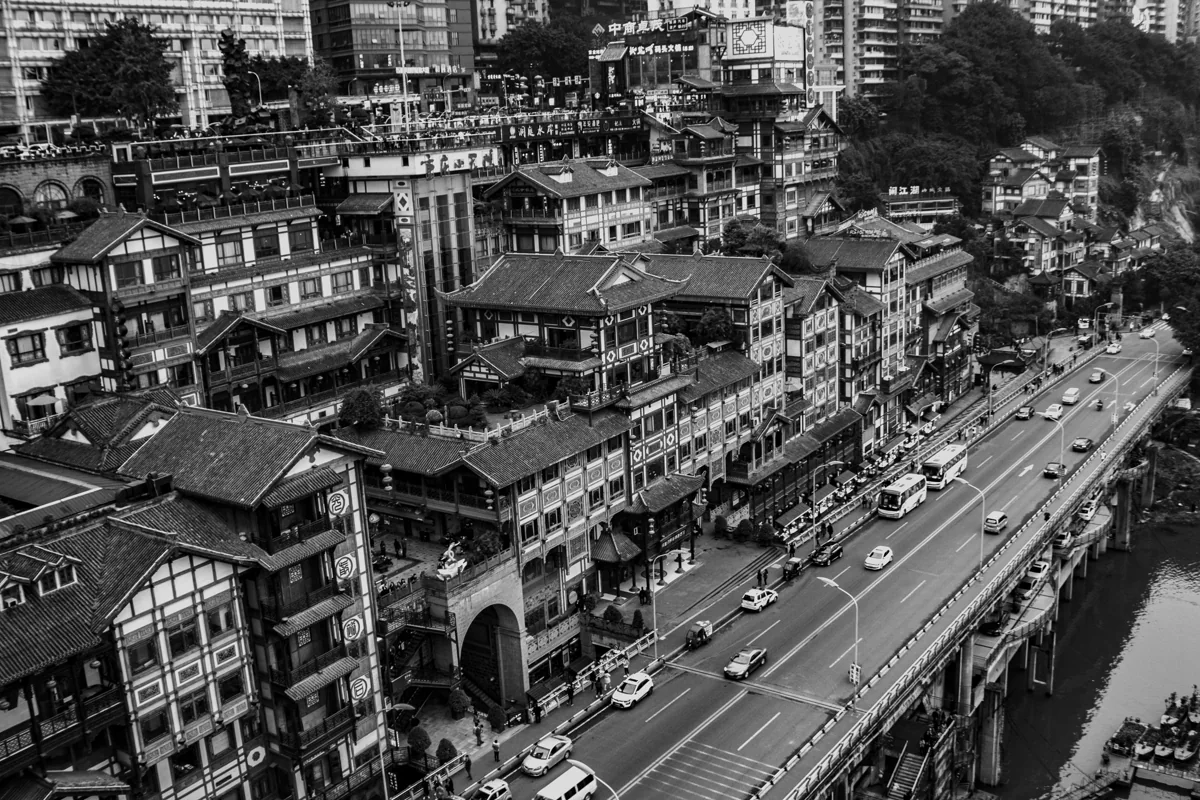
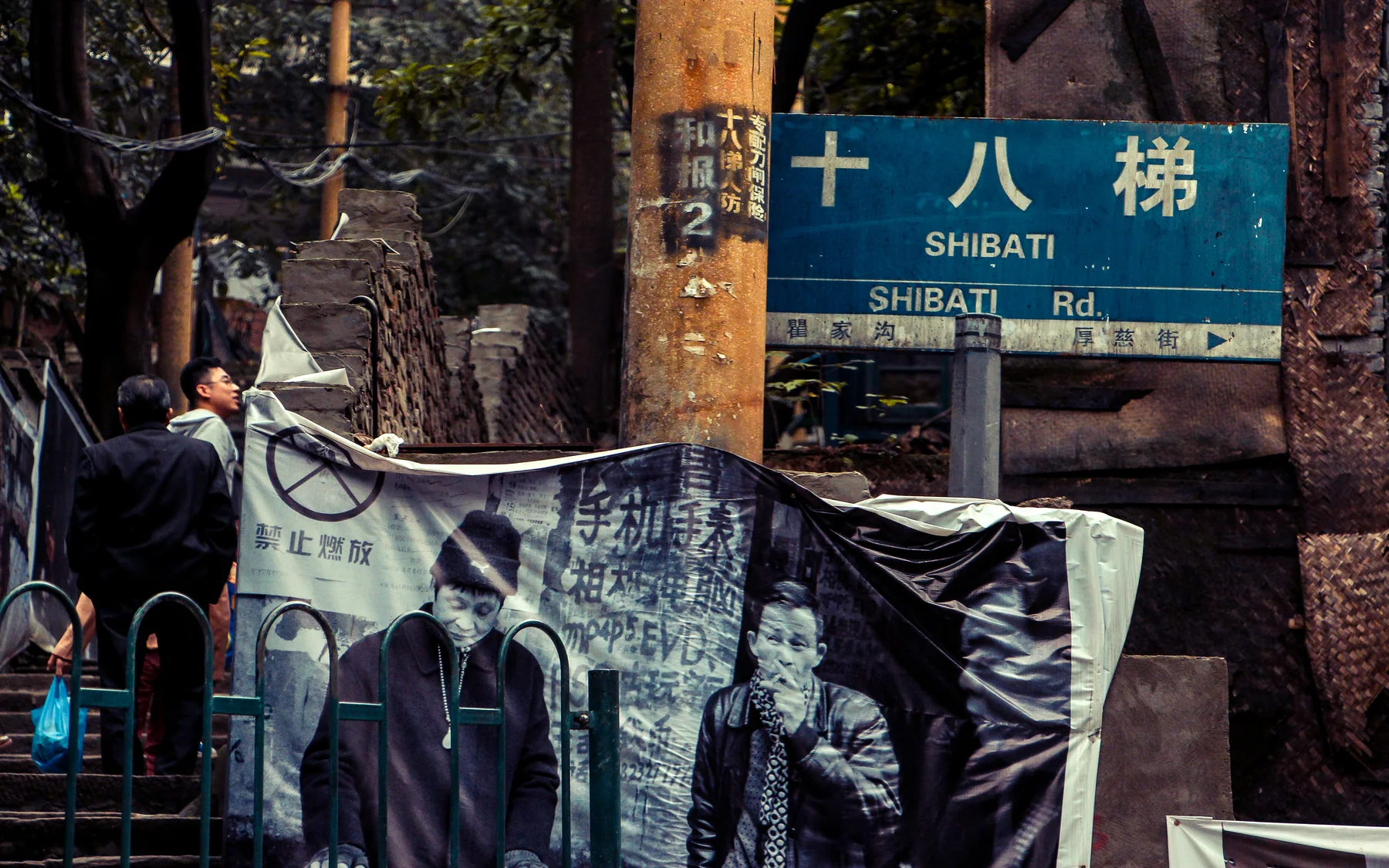
This is what a flat route line deletes: the entrance sits above the lane, shops open onto different landings and the useful path is a staircase rather than a road. The photograph does not prove that every old street has the same access, but it proves why “only 200 meters away” is not enough information in Chongqing.
Street level is a temporary condition
In Chongqing, a plaza can become the roof of a lower building and an elevator can function like public transport between streets. Instead of asking which floor is the ground floor, ask which road, bridge or station exit the floor connects to.
This is not an urban trick designed for visitors. It is the ordinary solution to difficult terrain and dense construction. Watch delivery riders, schoolchildren and residents navigate before stepping into circulation for a photograph.
Give every route four coordinates
Before leaving a station, compare four pieces of information: exit number, road name, destination entrance and whether the route initially climbs or descends. A straight blue line on a phone can hide an elevated road, fenced retaining wall or building whose useful lobby is several floors above the pin.
When lost, return to a recognized level rather than improvising through residential stairways. Ask for the road or station exit, not only the attraction name. In mixed-use towers, a public lift may connect two streets, but another lift may serve residents or customers only. Follow signs and staff direction instead of assuming every vertical shortcut is public infrastructure.
Photographers should scout a composition without stopping the flow. Chongqing's dramatic angles often occur exactly where commuters need to turn, queue or enter an escalator. Step aside, decide the frame, then photograph quickly. The city's spatial intelligence is most visible when the visitor does not interfere with it.
Build recovery into every descent. Walking downhill reduces cardiovascular effort but increases pressure on knees and demands attention on wet steps. A metro ride, cafe or meal after a long vertical section is route design, not wasted time. Reversing a descent because the next attraction looked close is one of the fastest ways to make Chongqing feel hostile.
Separate the peninsula from the wider municipality
The central peninsula and nearby urban districts fill three days. Dazu Rock Carvings, Wulong karst and distant county landscapes belong to a municipality of enormous geographic scale, not to central-city sightseeing. A location carrying the Chongqing name can still require hours of road or rail travel.
Essential Chongqing experiences
Understand the two rivers
Views near Chaotianmen and selected riverside paths reveal the geography behind the skyline. A river cruise can be enjoyable, but bridges, ferries and elevated viewpoints may offer a more grounded sense of scale.
The Yangtze and Jialing are not interchangeable strips of reflected light. Their confluence helps explain the peninsula's form, port history, bridge systems and the direction of later development. Visit one viewpoint in daylight before the night skyline removes geographic detail.
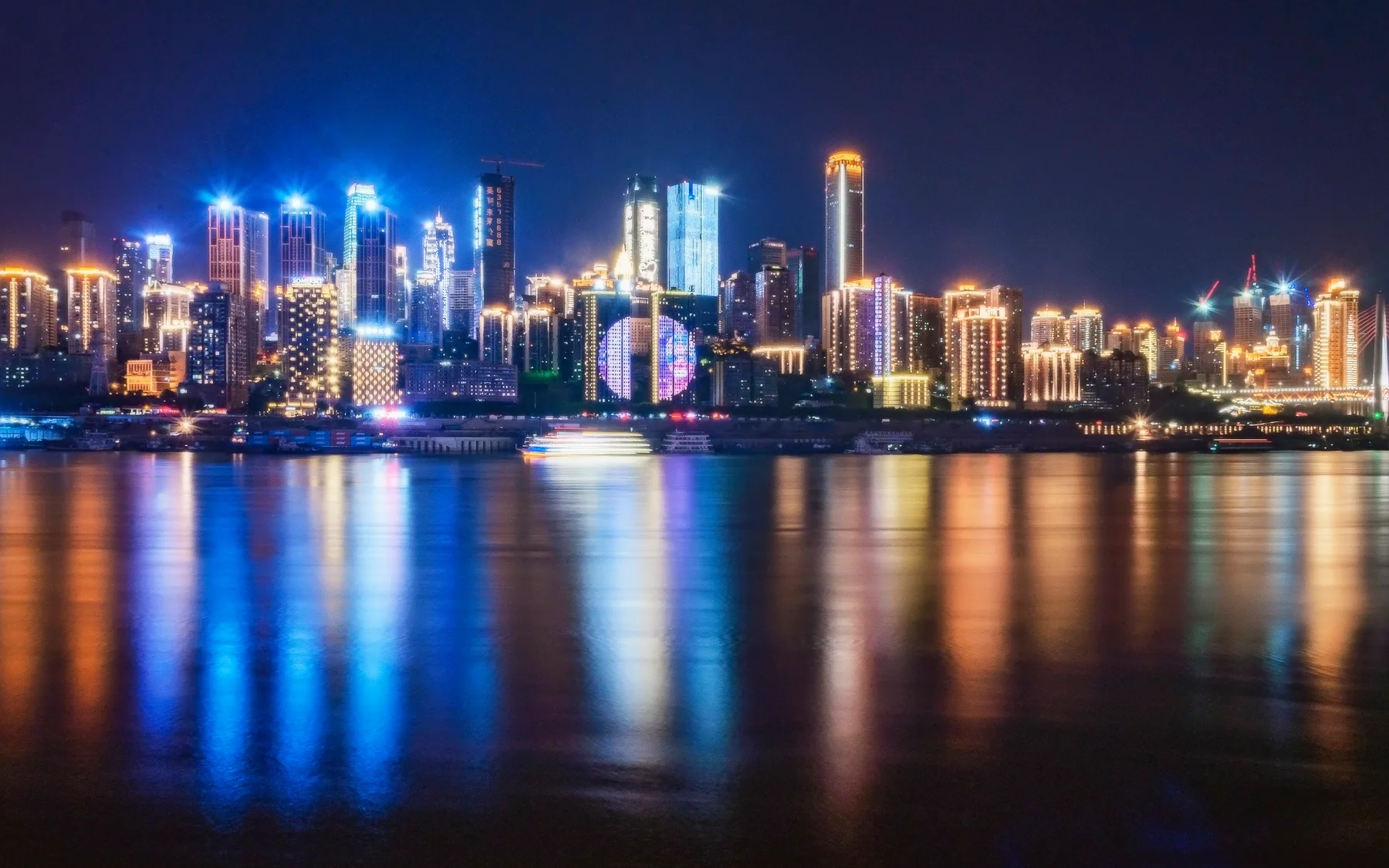
Chaotianmen and the Raffles City complex create a monumental contemporary gateway. Walk enough to understand river access and surrounding roads rather than entering only for an observation deck. Construction, cruise operations and public routes can change; confirm current access.
Choose one river crossing for what it explains
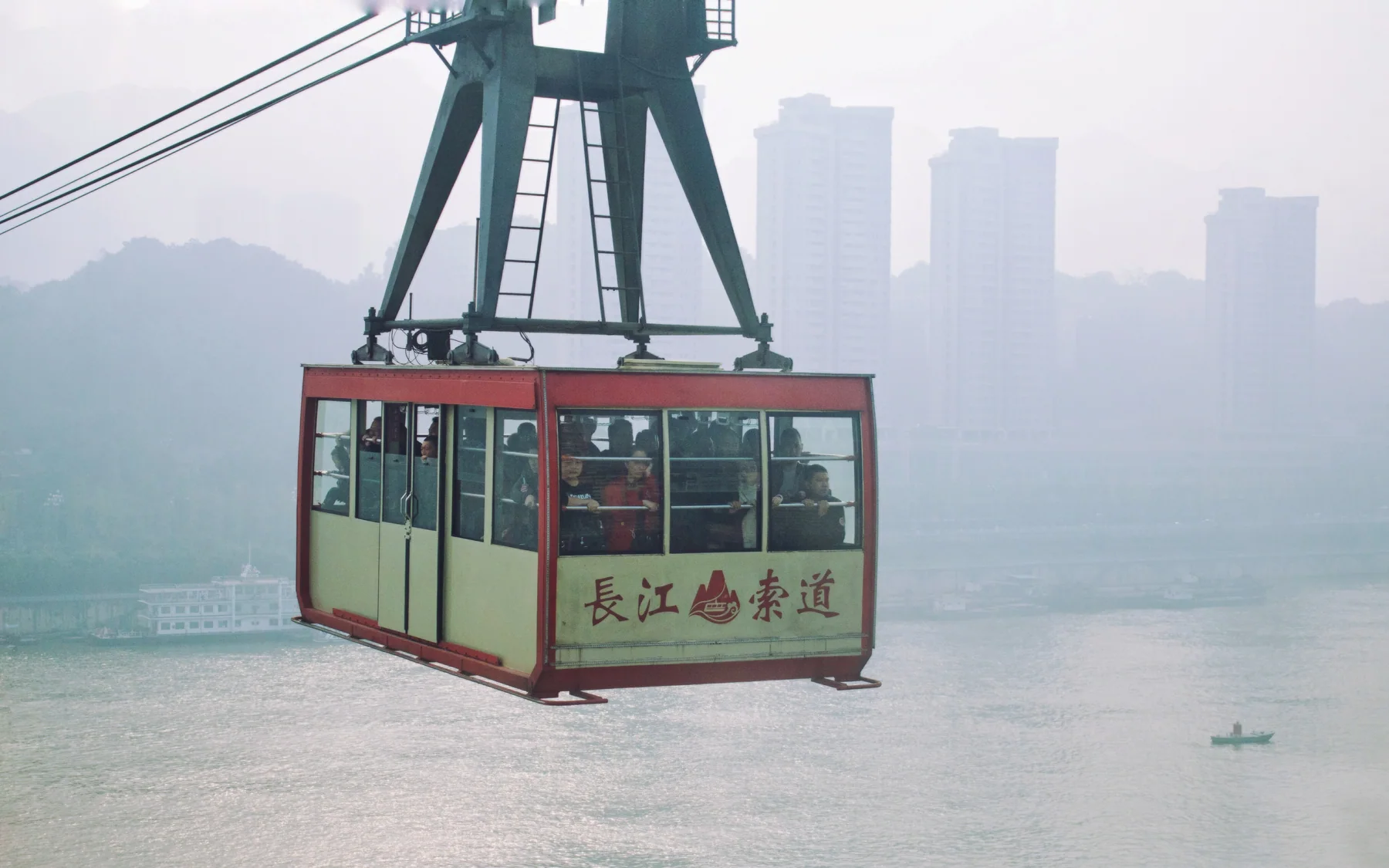
A cruise gives a seated sequence of bridges and illuminated facades, but it can distance the traveler from street access. The cableway makes elevation and crossing speed tangible, though queues may dominate. Metro and bridge crossings are less theatrical yet reveal ordinary movement. Select one according to the question you have, then see the same water from land.
Riverfront does not always mean easy promenade. Flood-control infrastructure, roads, construction and steep access can interrupt the edge. Confirm the entrance and exit before descending, especially near sunset when a missed connection can become a dark uphill return. The reward is a clearer sense that Chongqing's rivers are transport corridors, environmental forces and boundaries between urban districts, not merely mirrors for neon.
See Hongyadong, then keep walking
Hongyadong's illuminated stacked architecture is theatrical and heavily visited. Enjoy the spectacle, then look beyond it to older streets, hillside communities and the transport systems residents actually use.
Visit once in daylight. The structural relationship among road, cliff, river and commercial floors becomes much clearer. Return after dark only if crowd conditions are manageable. The famous image is usually strongest from outside the complex, while the interior can feel like a vertical retail corridor.
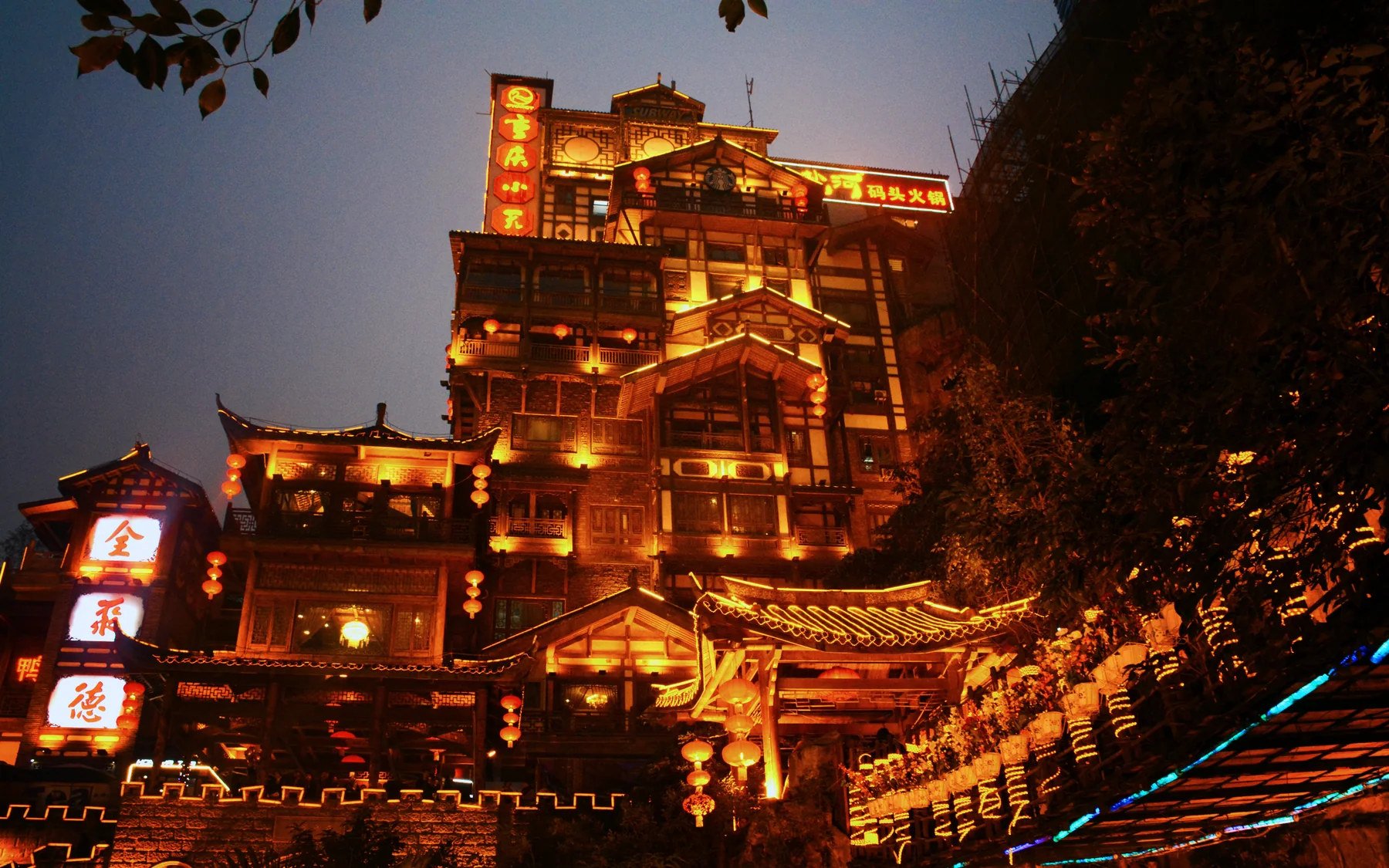
Do not call Hongyadong an ancient stilt-house settlement without qualification. The current visitor complex is a contemporary commercial interpretation using regional architectural imagery. Its value lies in spectacle and the way modern Chongqing represents its vertical identity.
Ride the city as experience
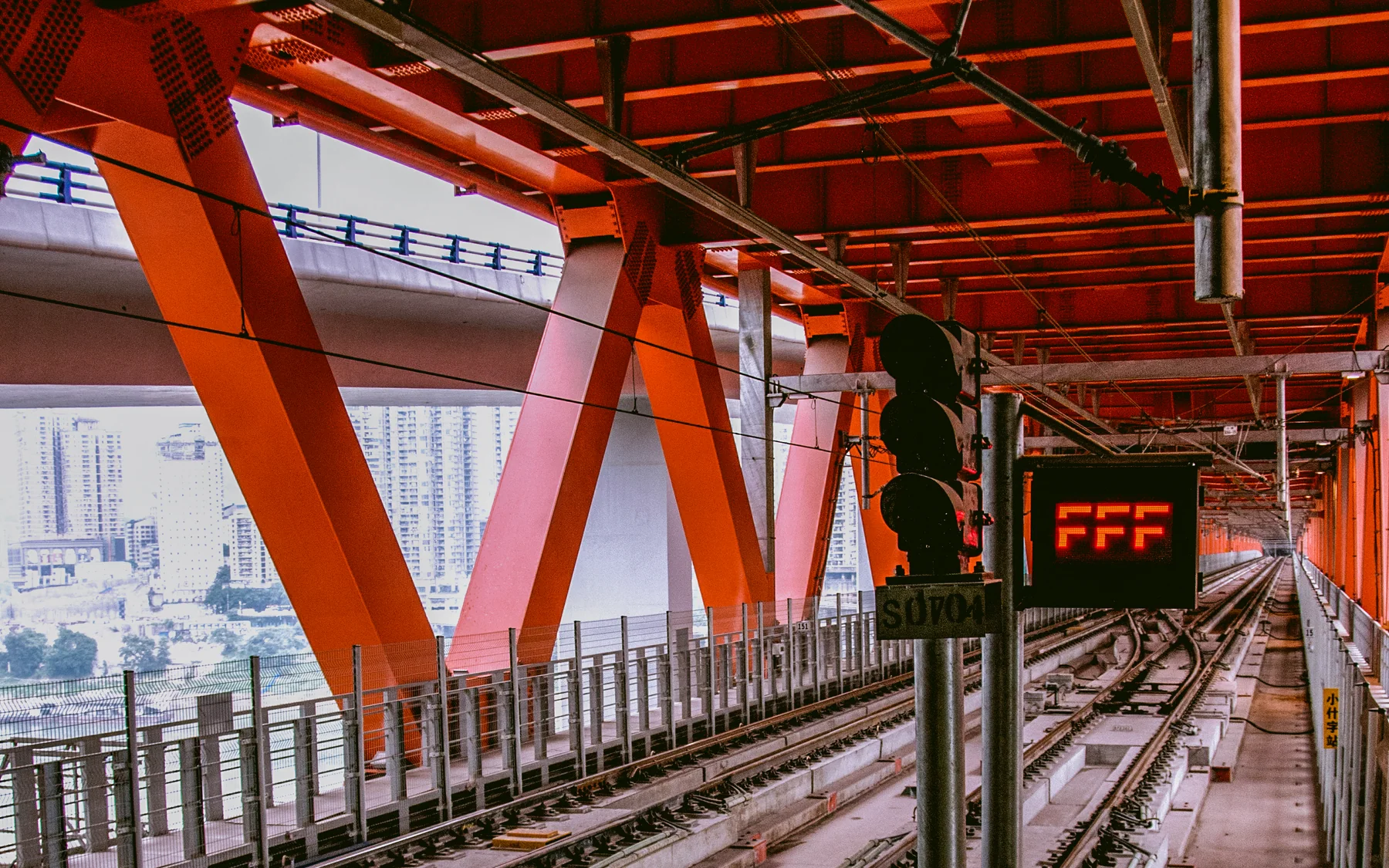
Liziba's metro-through-building view is famous, but the wider rail network is the real attraction. Watch the city change elevation through the window. Cableways and long escalators should be treated as transport first and attraction second.
At Liziba, use the designated public viewing area and avoid blocking station access or nearby businesses. The more important experience occurs on the train: housing, river, cliff and road infrastructure move through the same window.
The Yangtze River Cableway can provide a dramatic crossing, but queues may exceed the brief ride. Decide whether the view or the transport history justifies the time. A metro crossing or bridge walk can preserve the route when queues are excessive.
Old streets must be read beyond renovation
Historic commercial streets and hillside lanes often combine reconstructed facades, visitor retail, older religious or residential traces and current neighborhood services. Do not rank them by how "ancient" they look. Ask what fabric survives and what function the street has now.
Eat beyond the dare
Chongqing hot pot is social, aromatic and serious about heat. Order a divided pot if needed. Small noodles, grilled fish and local snacks deserve equal attention. The goal is flavor, not proving that your nervous system respects Chinese culture.
Our Chongqing food guide explains xiaomian, jianghu dishes and how to build a balanced local meal; the broader Chinese hot pot guide compares regional pot styles and table practice.
Hot pot requires decisions before the broth boils: oil-based dipping sauce, spice level, split pot, ingredient order and portion size. Ask about chili heat and numbing pepper separately. A local red broth may intensify over the meal as ingredients and reduction concentrate it.
Small noodles provide a faster introduction. Shops vary in seasoning, toppings and breakfast hours. A bowl eaten standing or at a shared table explains working-city rhythm better than treating every meal as a banquet.
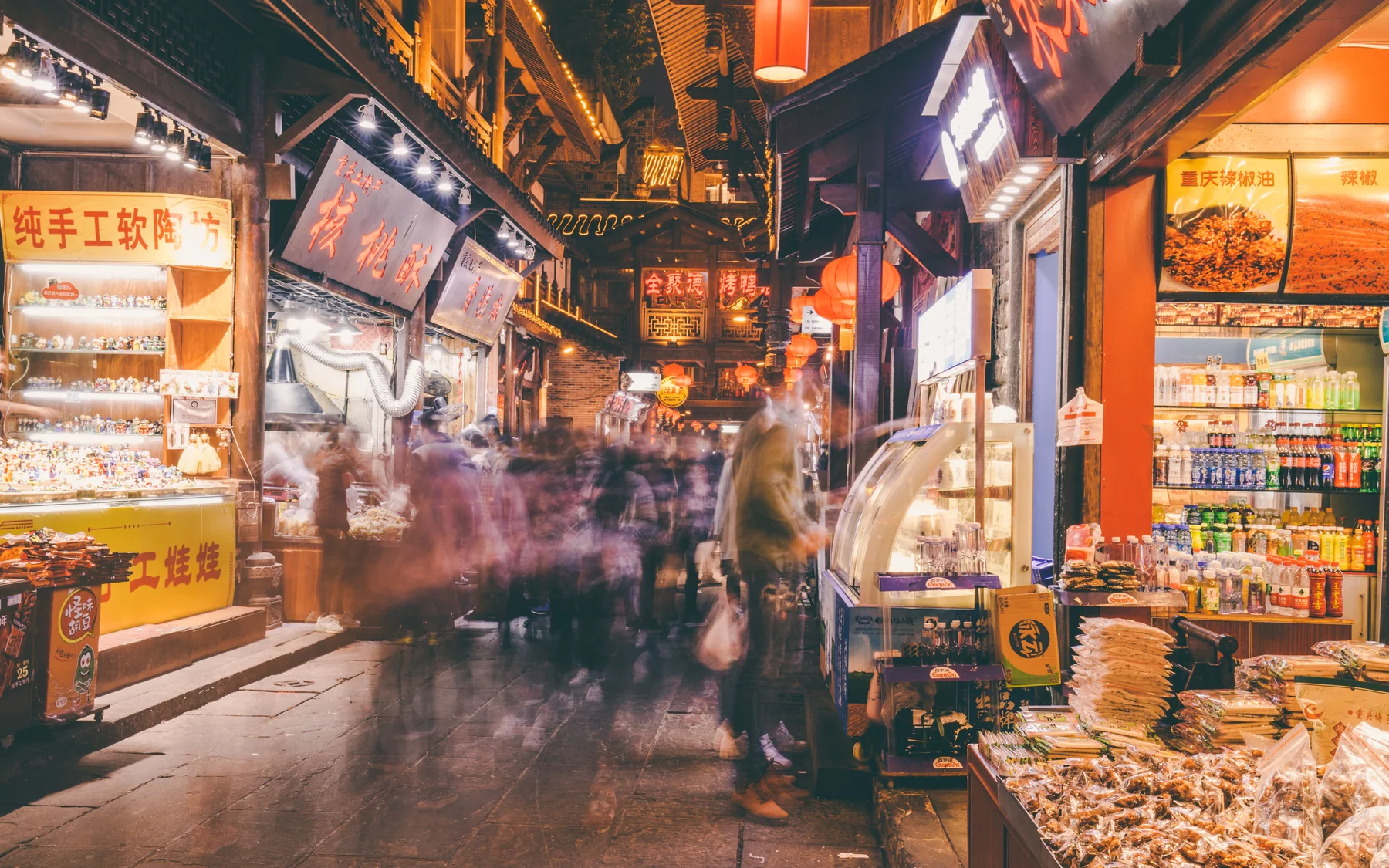
Grilled fish, chaoshou, spicy douhua and regional dishes create relief from repeated hot pot. Build contrast across days and keep one mild meal. Physical discomfort is not evidence of cultural seriousness.
Hot pot changes the schedule after dinner
A serious hot-pot meal can last hours and leave clothing, hair and appetite carrying the broth into the night. Place it after the day's hardest walking rather than before a staircase route or crowded cableway. Choose a restaurant near the hotel or a direct metro connection so the social evening ends without another navigation test.
Ordering less at first is sensible because ingredients, oil and spice accumulate. Add vegetables, tofu and staple foods according to appetite instead of treating only meat and offal as culturally legitimate. If a companion becomes uncomfortable, slow down, switch broth or stop. The table is successful when people can remain in conversation, not when everyone reaches the same heat threshold.
The next morning is a good time for xiaomian or another compact meal. This contrast between long communal dinner and fast working breakfast explains more about Chongqing food culture than repeating hot pot at every famous address.
Young Chongqing: the city as a spatial experiment
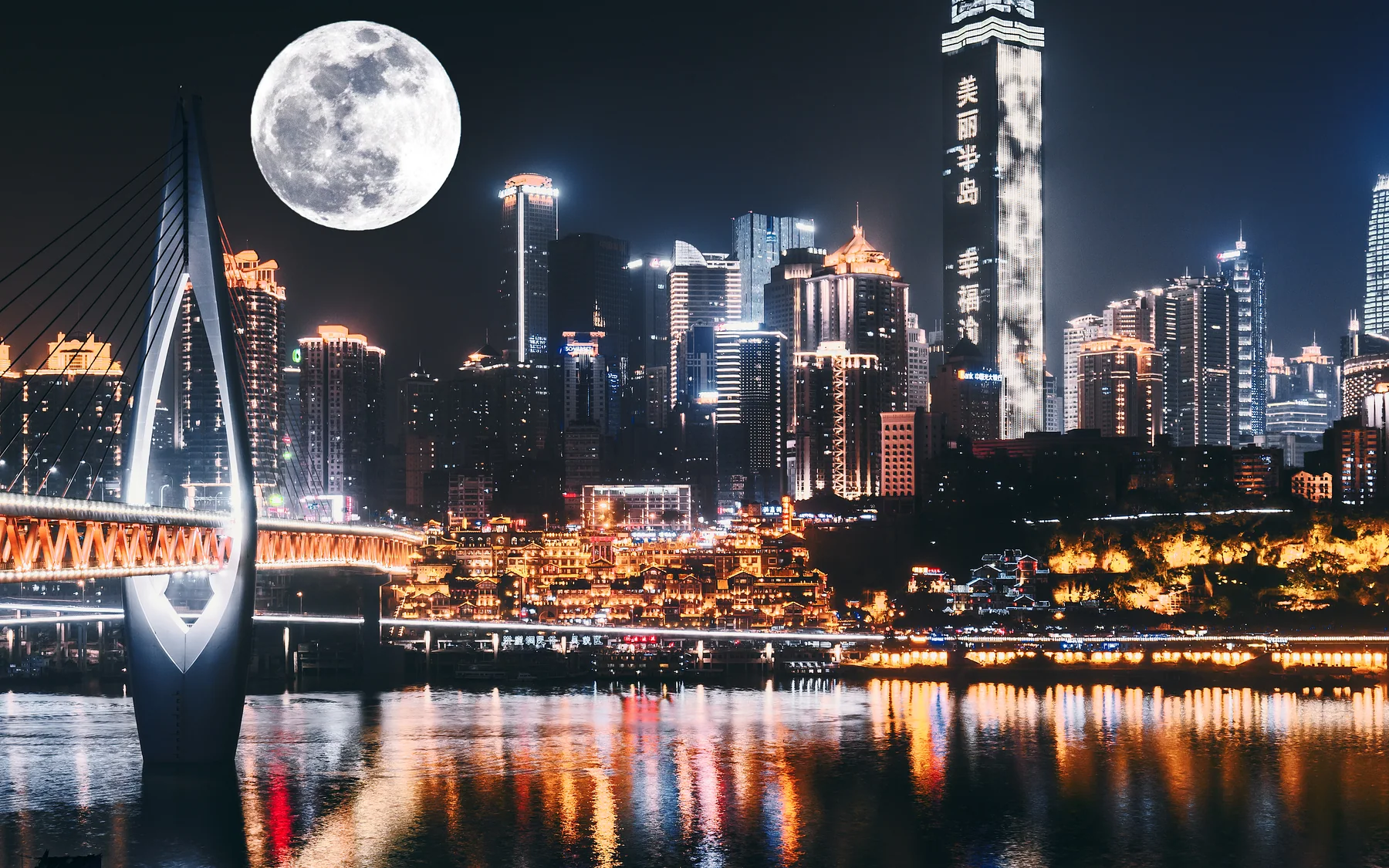
Chongqing's international image is increasingly shaped by short video: trains entering buildings, roads stacked above roofs and night scenes that appear digitally invented. Young local culture does more than consume that image. Designers, photographers, musicians, shop owners and small creative businesses reinterpret the city's industrial and infrastructural spaces.
TESTBED 2 on Eling grew from a former printing-factory environment into a cultural and creative complex. The same impulse reaches beyond one photogenic compound: a 2024 central-government report documented old streets, neighborhoods and factories in Chongqing's Jiangbei District being adapted for artistic and cultural use.
That transformation deserves both excitement and suspicion. Reuse can create public culture and opportunity, but it can also raise rents or turn working history into a visual product. The real test is what survives beyond the mural.
The same city is audible after dark. The Chongqing rap scene guide distinguishes GAI's scale, Bridge's bright theatricality and Wang Qiming's neighborhood distance; begin with GAI only if you also allow those other voices to argue with him. A city trip becomes richer when “023” stops being merchandise and starts behaving like a contested local coordinate.
How to read a vertical city
| Look at | Ask yourself |
|---|---|
| Metro lines through buildings | How does infrastructure negotiate extreme terrain? |
| Reused factories | Which industrial traces remain functional rather than decorative? |
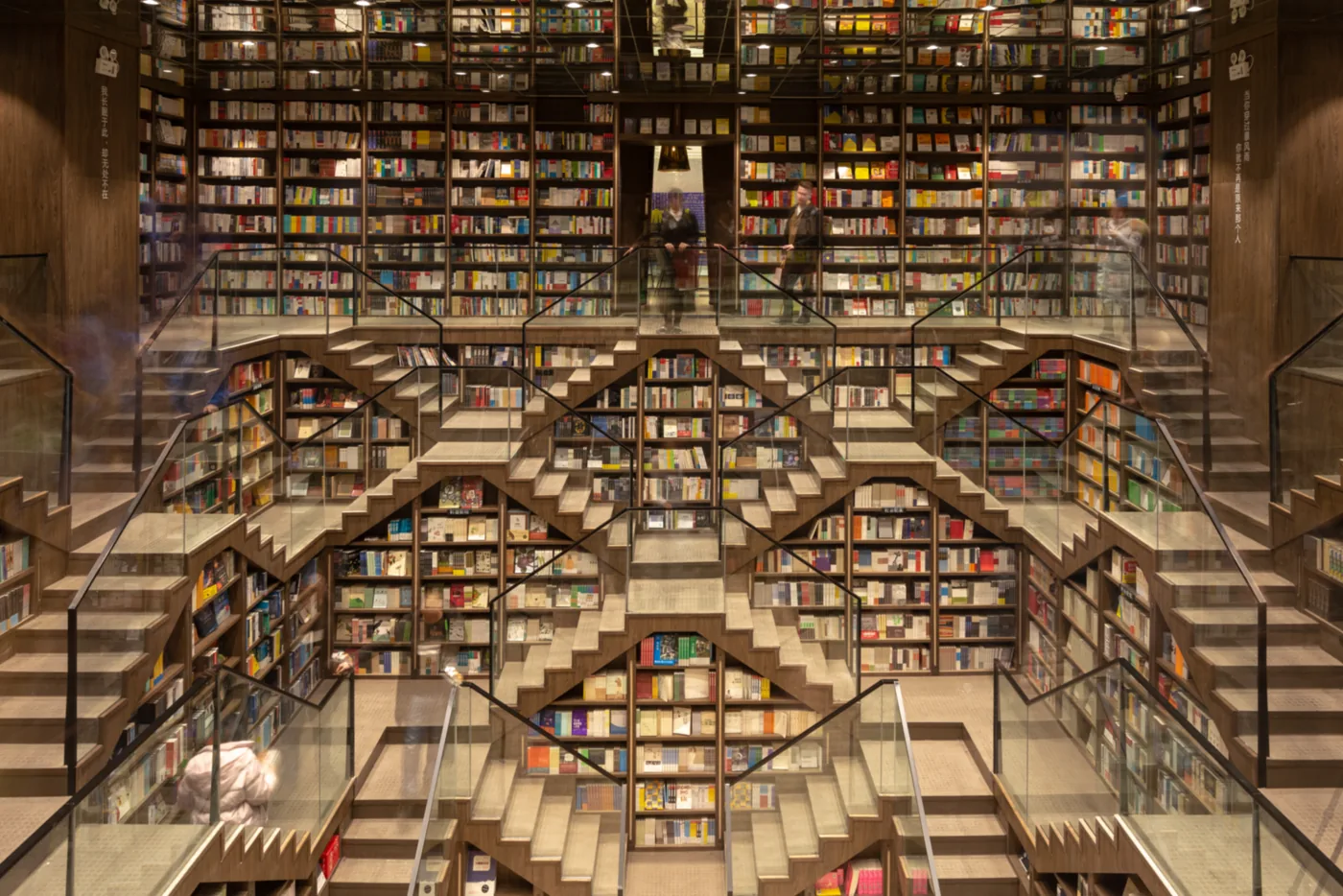
| Bookstores and creative interiors | Is the dramatic design also a useful public space? |
| Riverfront lighting | Where does the tourist image end and ordinary night work begin? |
The cyberpunk label is useful only as a beginning
Short video emphasizes neon, rail and impossible-looking roads. That visual language attracts visitors and supports local businesses, but it can erase daylight, labor and residential life. Photograph one famous night composition, then return to the same area in the morning.
In daylight, wiring, retaining walls, delivery access and weathered surfaces explain how the city works. The night image becomes stronger when its infrastructure is understood rather than treated as digital fantasy.
Design one night route and repeat part of it by day
Begin before sunset at a viewpoint where the river and slope remain legible. Continue downhill or by rail to one illuminated district, then end at food or the hotel without crossing the peninsula again. Hongyadong, Chaotianmen and Nanbin Road can all produce strong night experiences, but combining every famous angle creates traffic, queues and repeated versions of the same skyline.
Return to one section the next morning. Loading doors, breakfast shops, cleaning crews and school routes restore the labor hidden by lighting. The comparison is more original than another heavily processed neon photograph because it explains how spectacle is assembled and then returned to daily use.
Night photography should protect circulation. Use a small setup, keep tripods out of stairs and station exits, and do not stand in the road for the “correct” alignment. Rain intensifies reflection but also reduces grip and driver visibility. No composition justifies turning live infrastructure into a studio.
Reused industry should preserve more than a wall texture
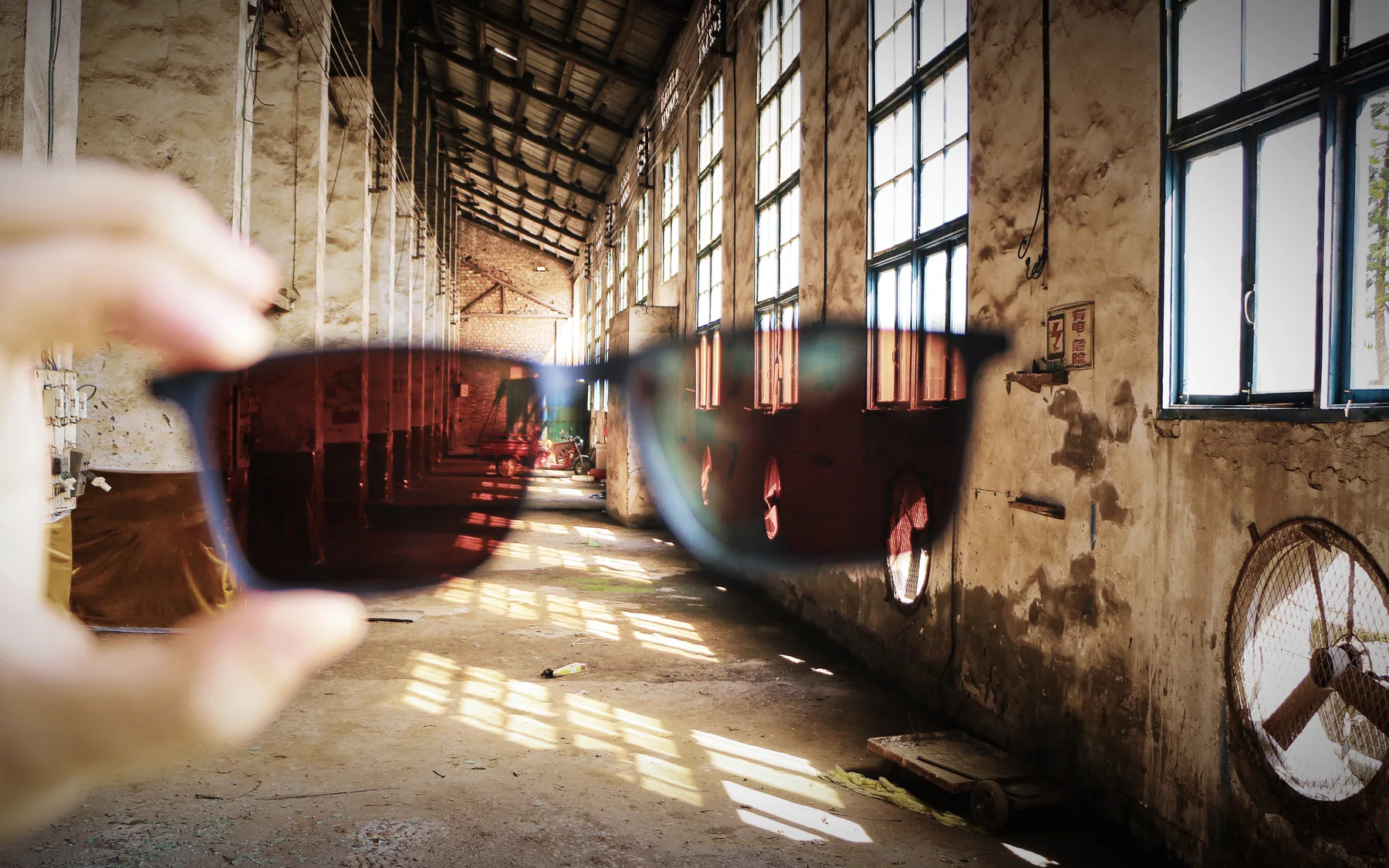
TESTBED 2 and other creative compounds can reveal printing, manufacturing and warehouse histories, but current programming matters. Check exhibitions and events rather than visiting solely for brick backgrounds. Ask which structures remain, what work occurred there and how surrounding neighborhoods respond to new cultural use.
Learn one vertical route completely
What most guides get wrong
They collect Liziba, Hongyadong, cableway and skyline as optical illusions. Chongqing's distinctive value is not that the city looks impossible, but that residents have made difficult terrain ordinary through infrastructure and learned movement.
One route understood completely beats another viral viewpoint: station exit, hillside street, elevator, stairway and river edge. Repeat it in reverse and the city begins to feel readable instead of merely impossible.
Three days is the minimum for the central city. Four allows a museum, slower neighborhoods and weather flexibility. Dazu or Wulong should add at least another full day and may justify an overnight.
The East Moment recommendation is to learn one route in both directions rather than collect ten isolated viewpoints. Start at an upper street, descend through a neighborhood, identify the public lift or rail connection and reach the river. On another day, reverse only the transport segment. Recognition transforms the city from visual confusion into a system you can read.
A three-day Chongqing itinerary
| Day | Morning | Afternoon | Evening |
|---|---|---|---|
| 1 | Central peninsula and river geography | Old streets and viewpoints | Hongyadong area after dark |
| 2 | Metro architecture and Liziba | Neighborhood food and hillside walking | Chongqing hot pot |
| 3 | Museum or cultural site | River crossing and contemporary districts | Skyline view from a quieter position |
A stronger four-day sequence
- Learn the central peninsula in daylight, then see Hongyadong from outside after dark.
- Ride rail across changing elevations, visit Liziba responsibly and eat hot pot after a rest.
- Cross a river, explore one hillside neighborhood and use a museum or creative district during the hottest hours.
- Repeat a favorite route slowly, or add Dazu only with confirmed full-day transport.
Where to stay when “nearby” has twelve levels
Jiefangbei is convenient for first-time central routes and night access but can be crowded and highly commercial. Nan'an provides river views and another perspective on the peninsula. Shapingba and other districts suit specific university, cultural or food interests but add transfer time to central landmarks.
Book by exact station exit and vertical path. A hotel can appear close to the metro while requiring stairs, an outdoor climb or a confusing building entrance. Ask about elevator access when luggage or mobility matters.
Summer heat and humidity can be formidable. Rain makes polished steps slippery. Map apps may place two points close together while omitting a cliff, flyover or twelve-storey disagreement about what “street level” means.
Metro exit numbers deserve the same attention as attraction names. Save destinations in Chinese and allow extra time. Chongqing has several major rail stations, so verify the precise one on the ticket. National planning details live in our Travel to China guide.
Summer heat and humidity are physically serious, especially on exposed stairs. Rain makes tile and stone slippery and can reduce river visibility. Spring and autumn usually support longer walks; winter can be damp, grey and atmospheric.
Accessibility requires route-level research
An attraction may have an elevator while the approach from the street does not. Confirm the entire path from hotel or station to entrance, including underpasses and slopes. Ride-hailing can remove a climb only when the correct pickup level is specified.
Travelers with limited mobility can still experience the river city through metro windows, accessible viewpoints and selected promenades, but viral staircase routes should not define the trip.
Ask a hotel to describe the full luggage route from vehicle drop-off to reception and from reception to the nearest useful station entrance. “Elevator available” may refer only to movement inside the building. Ride-hailing pickup points can sit on a different road level from the lobby; save a screenshot and Chinese note after the first successful arrival.
Heat, rain and visibility should change the route, not merely the clothing. On the hottest summer days, use rail observation, museums, meals and indoor creative spaces through midday, then begin the vertical walk later. During heavy rain, replace polished stone and exposed river stairs with a transit-based route. Fog may weaken a skyline view but strengthen the sense of elevation; accept the different city rather than chasing another distant platform.
Dazu and Wulong are separate travel decisions
The UNESCO-listed Dazu Rock Carvings offer major religious sculpture and historical depth. Wulong offers karst landscape and large scenic-area transport systems. They are not interchangeable day trips and should not be combined.
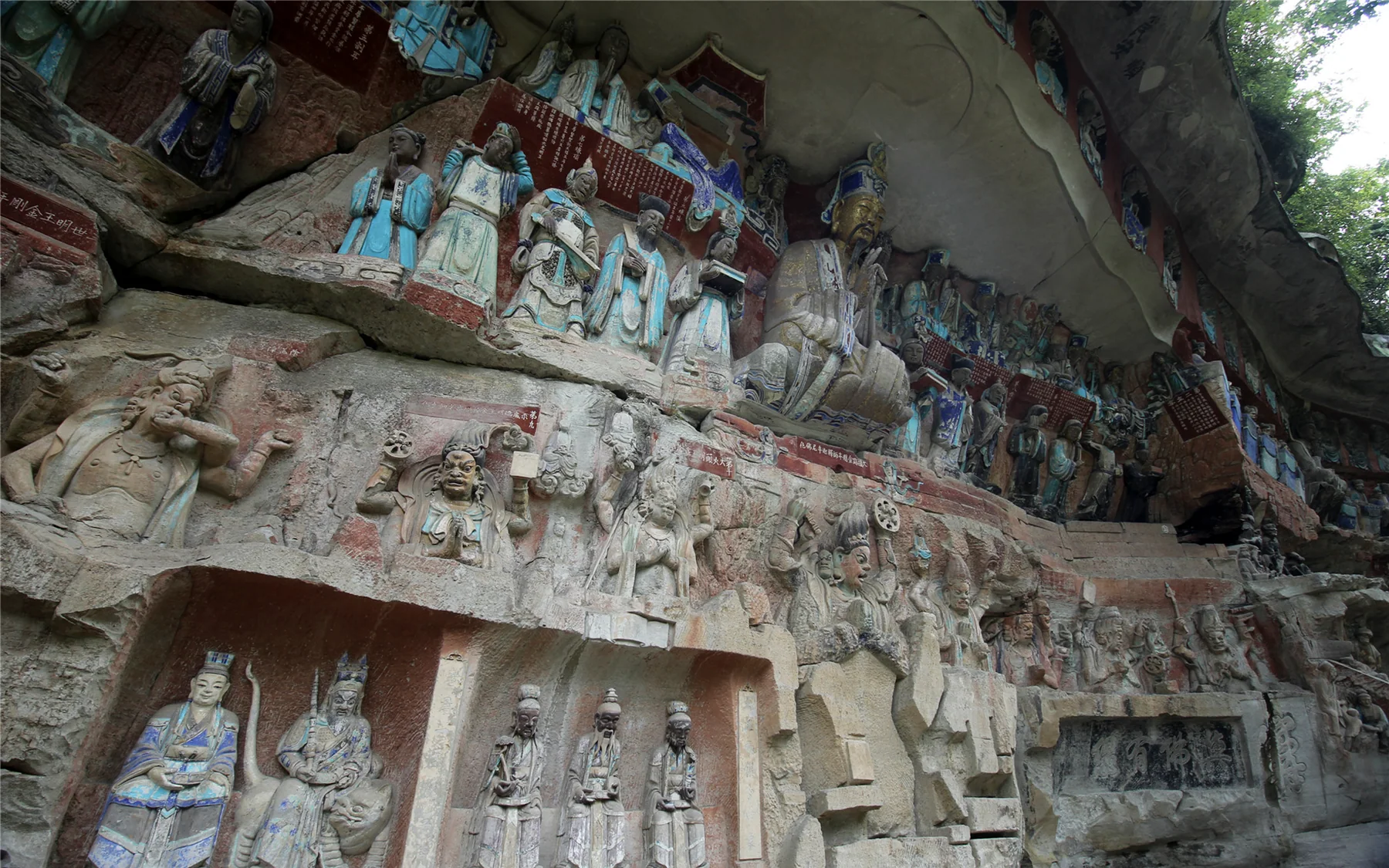
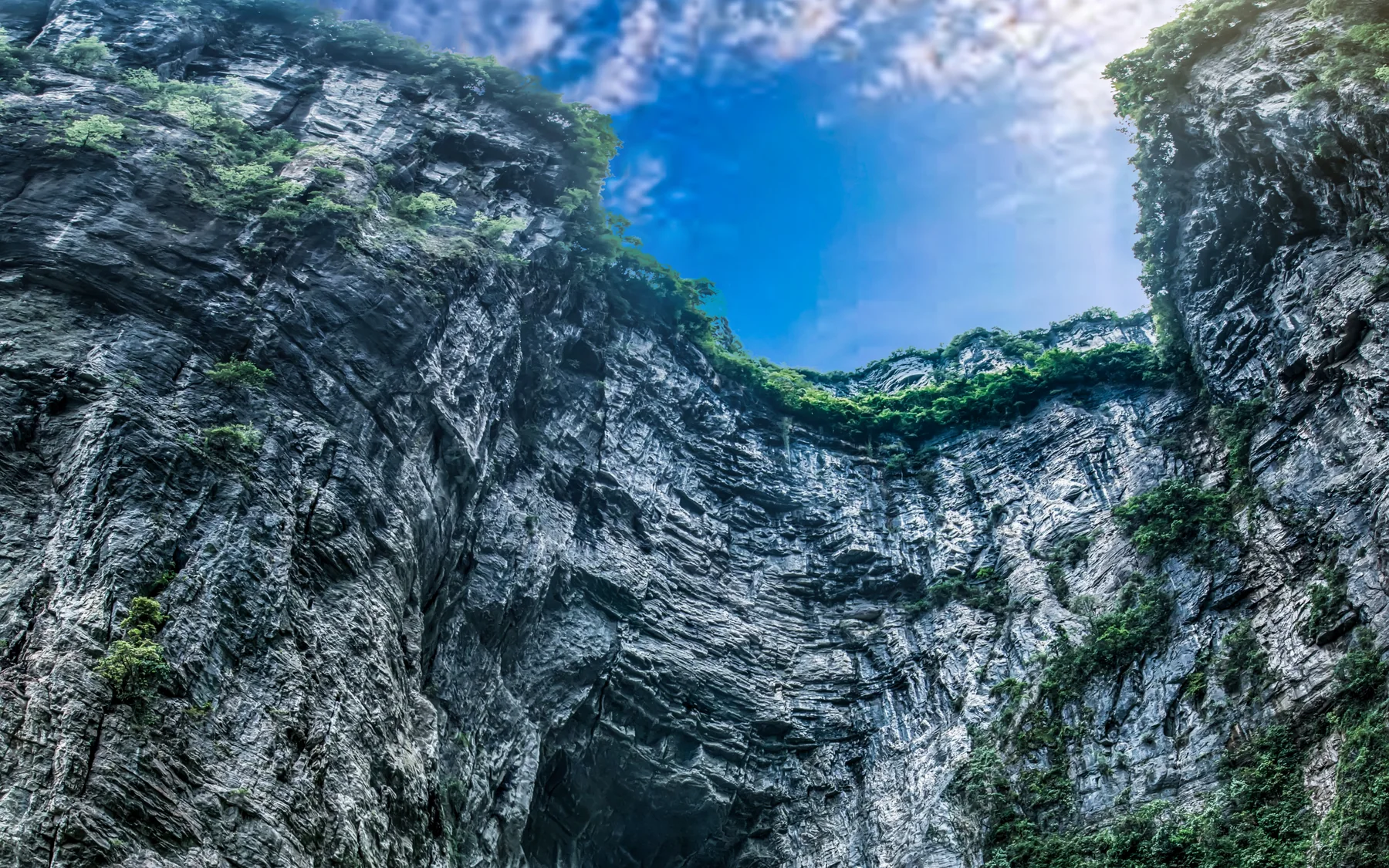
Choose Dazu for art, religion and history. Choose Wulong for geology and outdoor scenery. If the central-city stay is only three days, save both for another visit.
Lijun's note: beauty with its wiring visible
Chongqing does not hide the machinery required to make a city work. Tracks, bridges, retaining walls and apartment towers remain visible, almost proud. At night the infrastructure becomes light. In the morning it returns to carrying lunch deliveries and tired commuters. That movement between spectacle and routine is the city's deepest charm.
Frequently asked questions about travel to Chongqing
How many days should I spend in Chongqing?
Three days gives enough time for central river districts, neighborhood food and the city's unusual transport without turning every hour into a transfer.
Is Chongqing difficult to walk?
It can be. Steep grades, stairs and multi-level streets mean a map's short distance may hide significant vertical travel. Use metro and taxis strategically and wear shoes with good grip.
Is Chongqing hot pot always very spicy?
The classic red broth can be intensely spicy and numbing, but split pots and milder broths are widely available. Ask clearly and do not treat discomfort as a cultural achievement.