Xie Di did not make Chengdu dialect acceptable by translating it into standard Mandarin. He made everyone else adjust their ears. That is exactly why I rate the work so highly: the accent, particles, compressed vowels and local jokes are not flavor added to the song. They are the rhythmic engine.
That distinction is why his influence cannot be measured only by chart visibility or television results. Before Chengdu became an international shorthand for Chinese rap, Xie Di had already demonstrated a more radical idea: local speech could carry technical authority without asking the national audience for permission.
Xie Di rapper in 60 seconds
| What you want to know | The short answer |
|---|---|
| Real name | Cai Zhenhong, 蔡镇鸿 |
| Home city | Chengdu, Sichuan |
| Alternate platform name | Bo$$ X |
| National breakthrough | I Won't Work Tomorrow on the 2014 television program Sing My Song |
| What hits first | Chengdu dialect, comic command, clipped phrasing and local confidence |
| Start with | I Won't Work Tomorrow, Life, This Is Chengdu and Rap Snacks |
| Key projects | This Album Is Too Diao, Community Life and Community Life 2 |
| The deeper point | Dialect acts as technique and social point of view, not regional decoration |
The title 谢帝 is pronounced Xie Di and sounds like a deliberately imperial stage name. Yet the most convincing power in his music is not distant grandeur. It comes from sounding completely at home in ordinary Chengdu speech.
Dialect changes where the beat lands
International coverage often treats a Chinese regional accent as if it were a costume: identify the province, note that it sounds different, move on. Xie Di rewards a closer listen.
Sichuan speech changes the available rhythm. Sentence-final particles can become percussive releases. Local vowels alter rhyme families. A phrase may sound more teasing, confrontational or relaxed than its standard Mandarin translation. The flow is not standard Mandarin pronounced with an accent; it is composition built from another spoken system.
This also changes the social position of the rapper. Standard Mandarin can sound like broadcasting language: designed to travel and be understood everywhere. Chengdu dialect identifies a speaker with place, relationship and attitude. When Xie Di refuses to smooth it out, locality becomes power.
Five songs that explain Xie Di
1. I Won't Work Tomorrow: refusal becomes a public hook
I Won't Work Tomorrow (老子明天不上班) brought Xie Di to a national television audience in 2014 through Sing My Song (中国好歌曲). The opening word 老子 is central to the impact. Literally it can mean “I” in a swaggering, rough register; it can also invoke the philosopher Laozi in other contexts. Here it lands as defiant self-reference.
The line is funny because the rebellion is both enormous and ordinary. The narrator is not overthrowing an abstract system. He is refusing tomorrow's shift. Working frustration, local masculine bravado and a fantasy of freedom collapse into one phrase a crowd can shout.
Subtitles often translate the information and lose the posture. “I will not work tomorrow” sounds like a scheduling update. 老子明天不上班 sounds as if the speaker has climbed onto a table to announce it.
The live performance still bites because the crowd does not need a lecture before answering the hook. Xie Di plants the first phrase like a personal refusal, then lets repetition turn it into a room-sized release. I do not hear “realness” as a vague compliment here. I hear a technical conversion: one ordinary complaint about work becomes collective rhythm without losing the rough Chengdu mouth that made it funny.
2. This Is Chengdu: a city claimed from inside
This Is Chengdu (这才是成都) closes the 2017 album This Album Is Too Diao. The title is not simply “This is Chengdu.” The word 才 adds judgment: this is what truly counts as Chengdu.
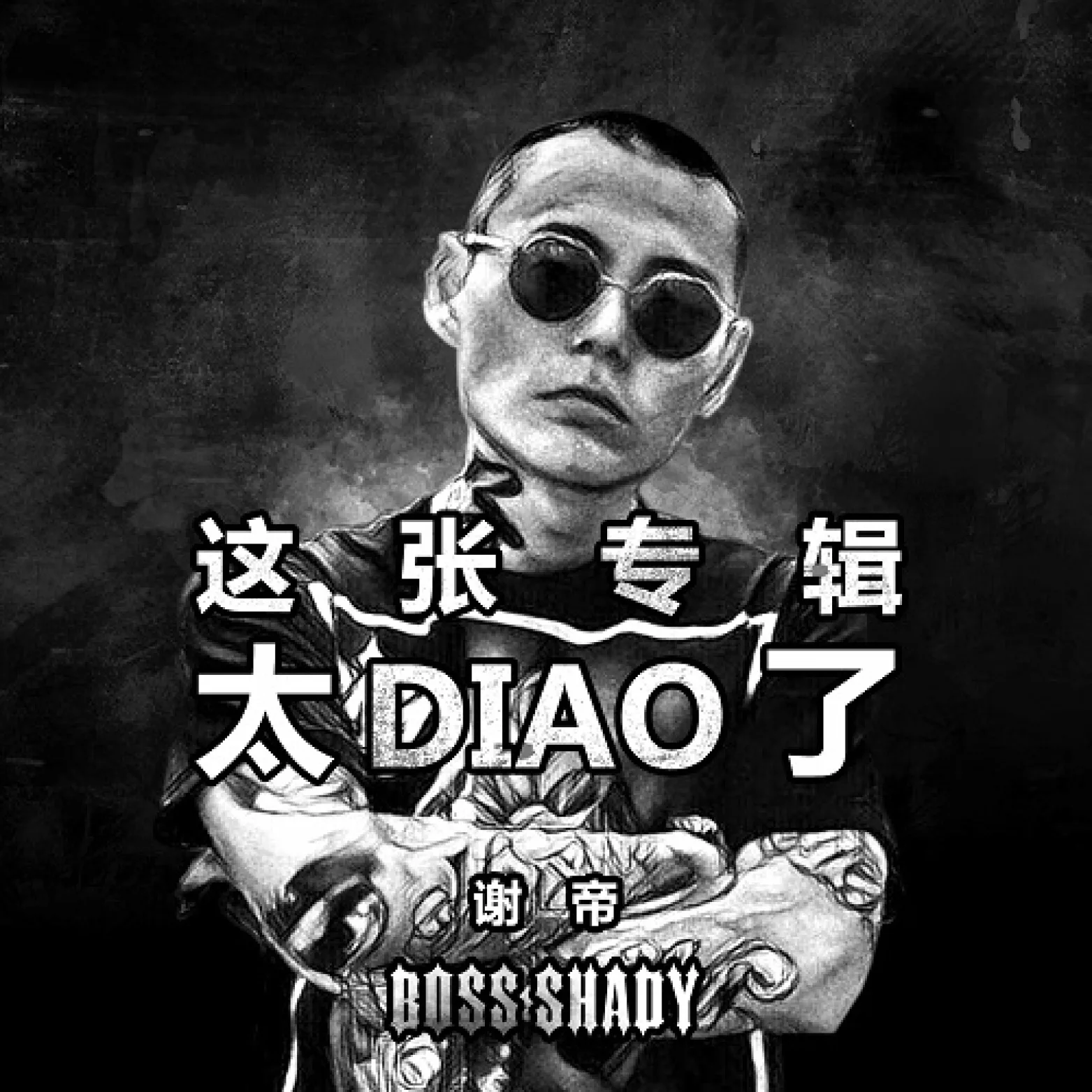
The 2017 This Album Is Too Diao frames swagger through Chengdu language rather than presenting the city as a tourist backdrop.
That small word changes the song into an argument over representation. A city can be marketed through pandas, tea houses and relaxed living. Xie Di claims authority from social speech: who talks this way, knows these people and understands which details are performance and which belong to daily life.
3. Life: the neighborhood voice grows older
Life belongs to Community Life, where ordinary calls, errands, local characters and interruptions become album structure. The English title is broad; the record surrounding it is highly specific.
The official Life video should be watched for mouth, shoulder and sentence timing rather than used as a generic portrait. The performance makes the argument audible: dialect is action.
The official Life video matters because it places the rapper's authority inside a lived social environment rather than an anonymous luxury set.
The performance is less dependent on proving that dialect rap can work. That battle has already been won. The more interesting question is what the voice notices after recognition arrives.
4. Rap Snacks: compressed humor and appetite
Rap Snacks is a good example of how Xie Di packs social character into short phrases. Food, consumption, rap business and the casual act of grabbing something to eat can occupy the same comic frame.
This is why I read the food reference through the city's actual eating formats, not as a generic badge of authenticity. The Chengdu food guide shows how quick bowls, shared pots and tea-table pauses organize different kinds of company. Xie Di compresses that social map into appetite, timing and a sentence that sounds casually spoken until the rhyme closes.
The song's pleasure comes from timing. He can sound as if he is speaking offhand, then close the bar with a rhyme that reveals how deliberately the sentence was shaped. That balance between casual surface and technical control is a major Chengdu contribution to Chinese rap.
5. Chengdu-Chongqing Interchange: regional difference without isolation
Chengdu-Chongqing Interchange (成渝立交) connects Xie Di with Rich4ever, Wudu L4WUDU and Young Jiankun. Chengdu and Chongqing share a southwestern linguistic and cultural zone, but their rap identities are not interchangeable.
The Chengdu-Chongqing Interchange video belongs in the listening sequence as a collaboration, but its visual evidence is owned by the city-scene comparison rather than repeated here.
The official video is useful as a regional map: related dialect energies meet without collapsing two cities into one generic “southwest” scene.
The track demonstrates a network rather than a merger. Chongqing's sharper, steep-city identity and Chengdu's conversational looseness can recognize each other while preserving rivalry and difference.
Community Life is his strongest concept
The 2022 album Community Life (社区生活) begins with a WeChat voice-message skit. More messages divide the project. This is not decorative realism. In China, WeChat is where work, family, friendship, logistics and social obligation constantly overlap. A voice message can move from business to gossip before the listener has decided which mode they are in.
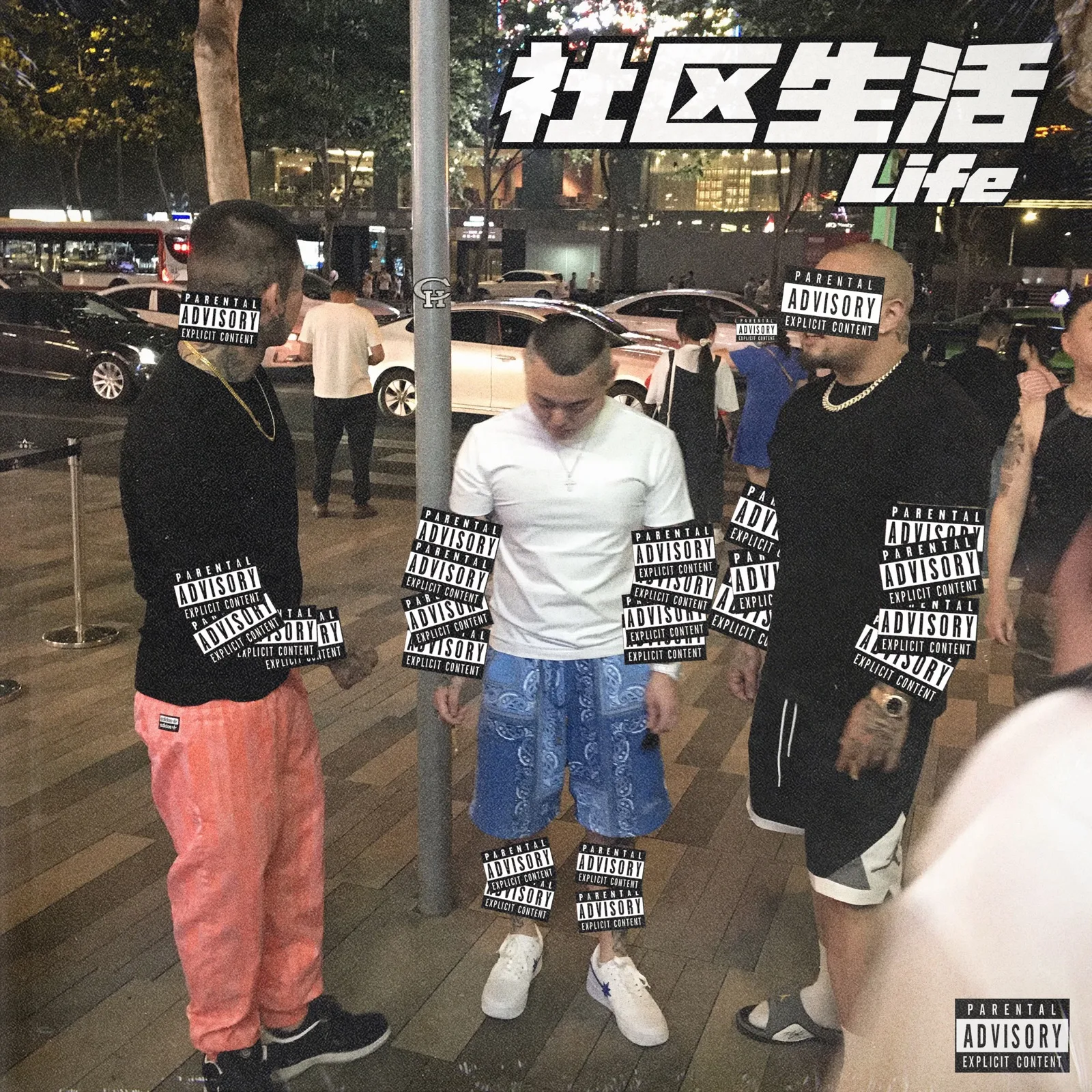
The Community Life album makes phone messages, neighborhood speech and daily interruption part of its musical architecture.
That form suits Xie Di because his rap has always depended on social proximity. He does not sound like a narrator explaining Chengdu from outside. He sounds interrupted by it. People call, ask where he is, pull him into plans and become characters in the record.
The album therefore offers something generic city rap often lacks: a city as relationships rather than skyline. Chengdu is not a photograph behind the artist. It is the pressure of other voices on his time.
Community Life 2 turns the block into a network
The 2024 sequel expands to 25 tracks and many collaborators. Masiwei, Fan Chengcheng, Yang Heshu KeyNG, Asen, L4WUDU, DDG and others enter the neighborhood frame.
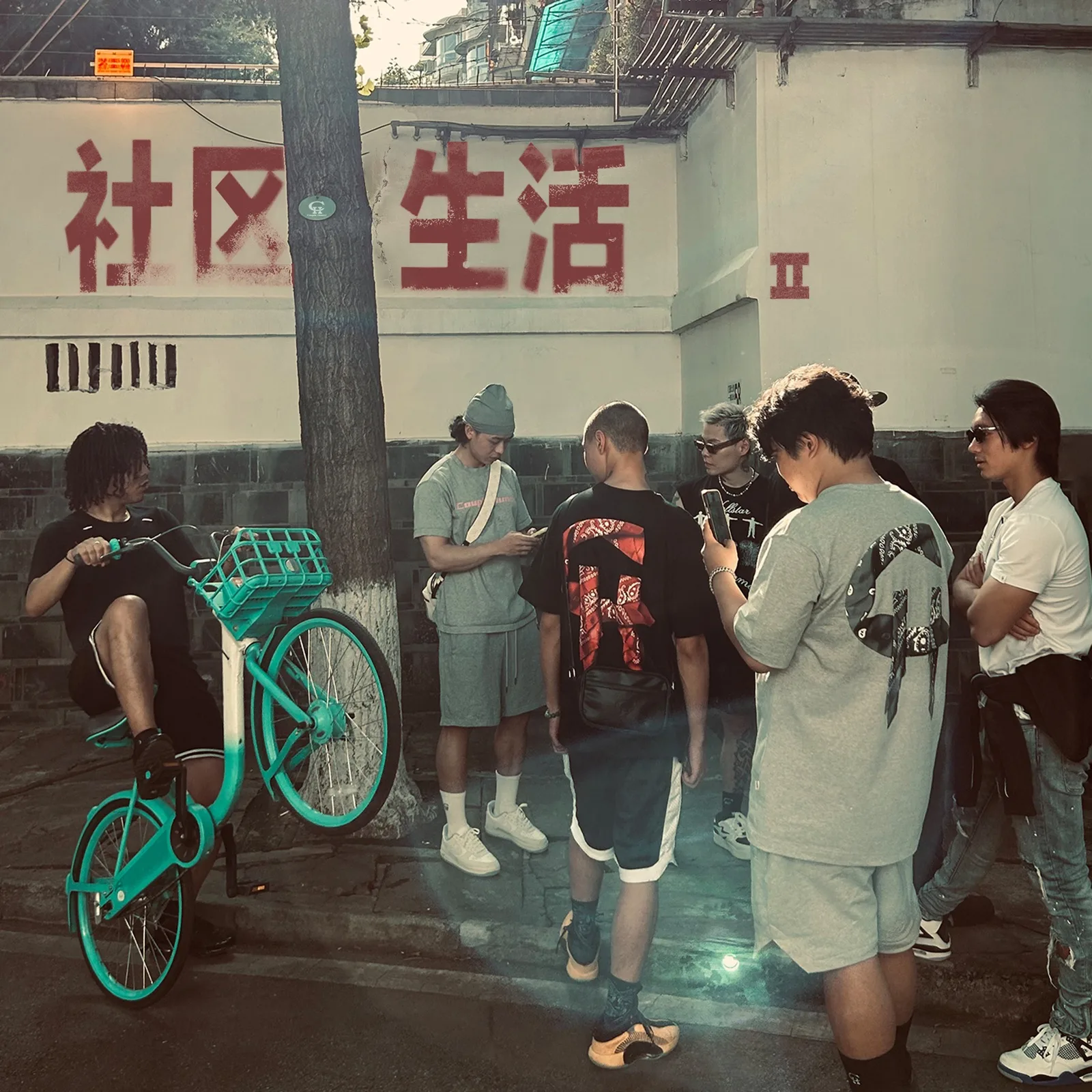
On Community Life 2, “community” becomes both a physical neighborhood and the larger rap economy built around Xie Di's local authority. The cover makes that claim before the first track: no isolated celebrity portrait, only a loose street-side group whose posture feels closer to waiting for a friend than staging a monument.
The scale creates a productive tension. Community can mean intimate recognition, but it can also become a brand that welcomes famous guests. The album is strongest when collaborations sound like visitors entering an existing social world, not when the concept simply excuses another large playlist.
Its length is also the clearest criticism. Twenty-five tracks reproduce abundance and social bustle, but not every episode deepens the portrait. The project sometimes documents the size of the network more effectively than it edits the experience.
Xie Di came before the global Chengdu story
Higher Brothers later helped international audiences associate Chengdu with Chinese hip-hop. That global visibility was important, but it can flatten the history by making 88rising the beginning.
Xie Di's television breakthrough and dialect-centered work belong to an earlier stage of national recognition. He proved that Chengdu speech could command a broad audience before the city was packaged for overseas discovery.
This does not place him “above” every later artist. It clarifies different achievements. Masiwei became a highly mobile global-facing star. Psy.P made restraint and fashion part of the Higher Brothers balance. Xie Di's authority comes from making the local audience feel that the language was never borrowed from the center.
What overseas listeners miss
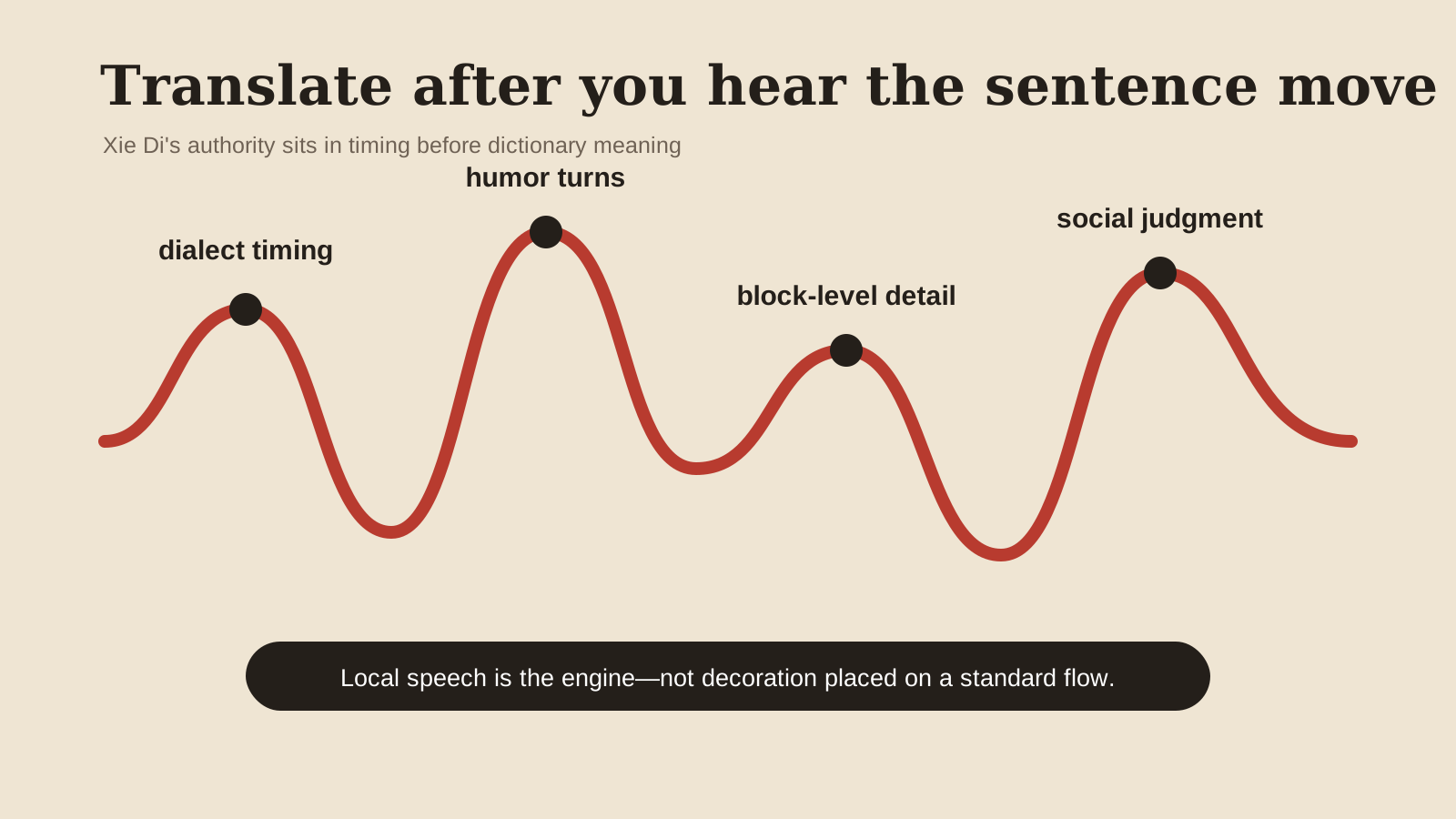
The hardest element to subtitle is not vocabulary but social temperature. Sichuan dialect can make confrontation sound playful and affection sound insulting. Friends may use rough language without the hostility an English subtitle implies. A particle at the end of a sentence can tell a local listener whether the speaker is commanding, teasing or performing annoyance.
Xie Di works inside those fine distinctions. A literal translation may make the writing look simpler because the rhythm, class position and relationship between speakers have disappeared.
Our Chinese musicians collection places him among artists whose authority comes from very different media, cities and performance traditions. The Chengdu rap scene guide shows how Xie Di's dialect authority differs from Higher Brothers' group export and Wang Yitai's arrangement craft. The Chengdu cultural guide explains the city's broader habit of mixing leisure, commerce and dense social life. Hear Xie Di after reading both and the relaxed surface stops looking passive.
That surface sounds loose and real to me, but those words are worthless without evidence. The looseness is technical when Chengdu syntax lets a sentence lean behind the beat, a local stress lands without chasing the snare and the voice can sound conversational without surrendering control. Cars, family jokes and senior status prove none of this. My judgment is narrower: Xie Di sounds effortless because the language and rhythm have already done difficult work before the listener notices it.
Let Chengdu speech move the beat before translating it
Play one Xie Di track without subtitles and tap where the stressed syllables land. The pattern will often resist the neat timing an overseas listener expects from standard Mandarin. That friction is the lesson: dialect is not a layer placed over the beat after writing. It changes how the line can be built.
On the second pass, identify the local joke, neighborhood reference or community voice. Ask whether the verse explains the place to outsiders or assumes the listener can catch up. Xie Di's authority grows from that refusal to flatten Chengdu speech for easy national consumption.
Then compare city pride with community observation. A place name can become empty branding when every record repeats the same claim. The stronger songs show work, neighbors, boredom, ambition and conflict inside the banner. My judgment is that Xie Di matters because he made the audience adjust its ear rather than making Chengdu adjust its mouth.
Test the community idea by following pronouns and quoted voices. Who gets to say we, who is being answered and when does the rapper imitate or stage another person? A neighborhood becomes musically convincing when it contains disagreement and social texture, not only loyalty slogans.
For translation, preserve the Chengdu line beside the English explanation. The untranslatable particle or vowel is not a defect in the guide. It is evidence that meaning includes sound, and that an overseas reader sometimes has to remain productively outside the joke.
Xie Di's dialect is argument, not decoration
Xie Di is at his best when one phrase contains an entire social situation. The humor lands before translation can explain it, and the rhythm makes dialect feel inevitable rather than defended.
The risk is that authority can harden into self-confirmation. City pride, boss language and repeated proof of seniority are less interesting when the song no longer reveals a new character or local tension. A large catalog needs more than the fact that the speaker is authentically Chengdu.
Community Life answers that problem better than pure flex records because other people keep entering the frame. The city becomes something that interrupts the boss.
Enter Chengdu through cadence and confrontation
Use this route:
- I Won't Work Tomorrow for the national breakthrough.
- This Is Chengdu for local authority.
- Life for the older neighborhood voice.
- Rap Snacks for comic timing.
- Community Life from beginning to end for the full social world.
Continue with Sheng Yu for Changsha dialect as collective memory, Wang Yitai for Chengdu rap shaped by arrangement and melody, or the Chengdu travel guide when the music makes you want to understand the city on the ground.
Why Xie Di matters
Xie Di made a regional language function as national rap authority without sanding away the local social signals that gave it power. He did not merely represent Chengdu. He demonstrated how Chengdu speech could reorganize rhyme, timing, humor and the rapper's relationship to the audience.
That is a larger contribution than city pride. It helped Chinese rap hear linguistic difference as creative infrastructure.