Chengdu food is not a contest to discover how much chili the body can tolerate. It is a system of calibrated appetite: numbing and fragrant, sweet and sour, garlicky and sesame-rich, crisp and soft, cold and steaming. A bowl of noodles may arrive in minutes but depend on a sauce assembled from many small decisions. Hot pot turns dinner into shared labor. Tea cools the mouth and extends conversation. The city eats with intensity, but it also eats with structure.
Chengdu food at a glance
| Food | Chinese name | Best context | What to notice |
|---|---|---|---|
| Mapo tofu | 麻婆豆腐 | Shared meal with rice | Tender tofu, fermented bean depth, minced meat, chili oil and Sichuan pepper working together |
| Dan dan noodles | 担担面 | Small breakfast or snack bowl | A concentrated sauce rather than a large soup; shop styles vary |
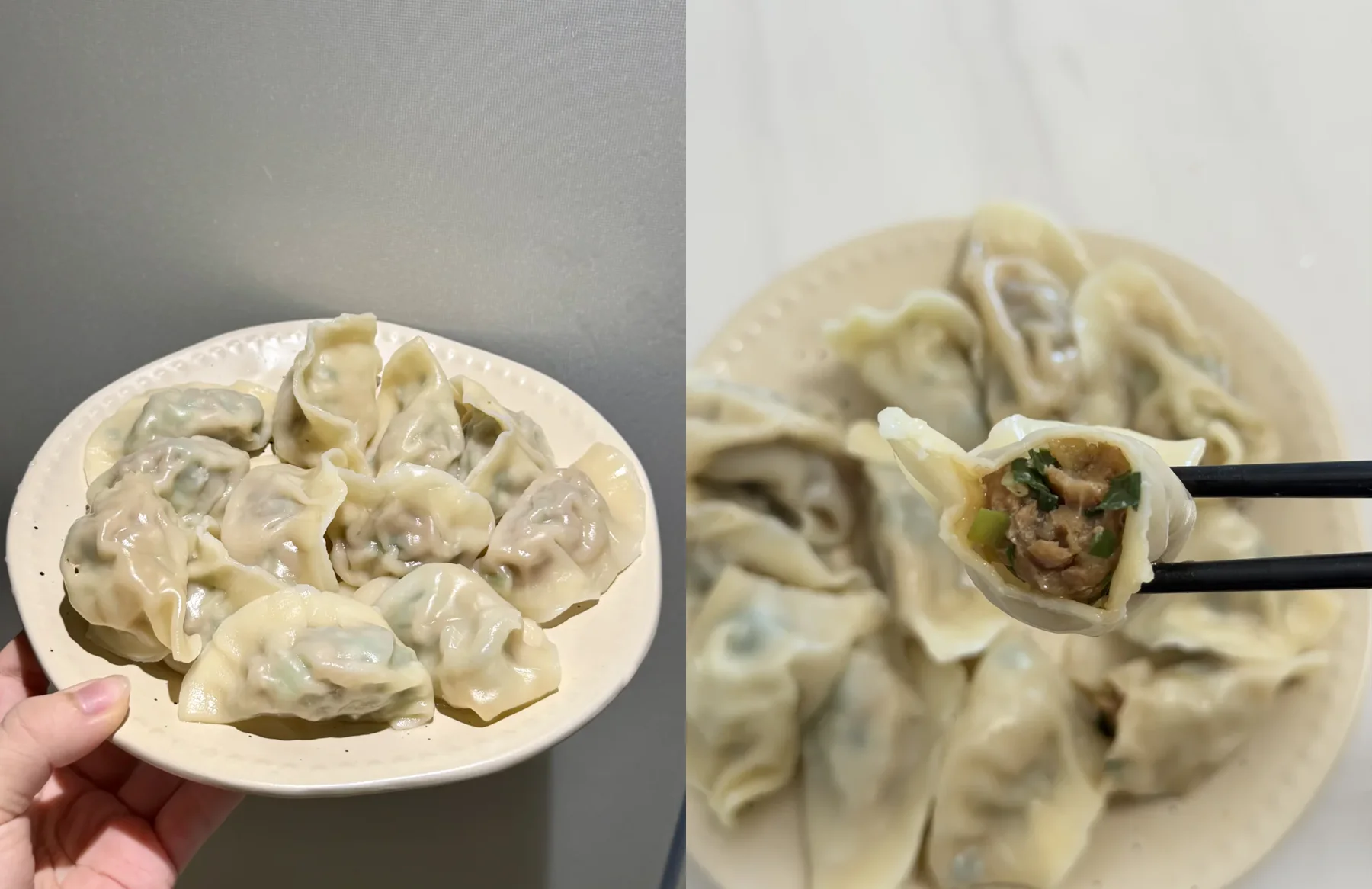
| Zhong dumplings | 钟水饺 | Snack shop | Soft dumpling skins with sweetened soy, garlic and red oil |
| Long chaoshou | 龙抄手 | Breakfast or light meal | Sichuan wontons served in broth or red oil, with a thin wrapper and tender filling |
| Sweet-water noodles | 甜水面 | Dense snack | Thick chewy noodles with sweet soy, sesame, garlic and chili |
| Hot pot | 火锅 | Group dinner | Broth, ingredient timing, dipping sauce and conversation matter as much as heat |
| Chuanchuan | 串串 | Casual evening meal | Ingredients cooked or served on skewers, priced and seasoned through different shop systems |
| Douhua | 豆花 | Breakfast, snack or rice meal | Soft tofu contrasted with a savory, spicy or occasionally sweet accompaniment |
Choose your route through this guide
| If you need... | Begin with... |
|---|---|
| A first understanding of Sichuan flavor | Chengdu's flavor grammar and the mala section |
| A solo meal | Noodles, chaoshou, dumplings and douhua |
| A group dinner | Hot pot, chuanchuan or a shared cooked-dish meal |
| A less spicy route | Clear-broth wontons, tea, tofu, vegetables and selected snacks |
| Restaurant and neighborhood strategy | Where to eat by format, not by a permanent ranking |
| A complete food day | The route table and East Moment verdict |
Chengdu rewards comparison because its foods reuse a deep pantry in different proportions. Chili oil, Sichuan pepper, fermented broad-bean paste, sesame, garlic, vinegar and sweetened soy do not form one universal “Sichuan sauce.” They behave differently around tofu, noodles, cold dishes and bubbling broth. UNESCO's Creative Cities profile for Chengdu is useful institutional context; the table still has to prove the city's range one texture at a time.
Chengdu is a city tradition inside Sichuan cuisine
The broader Sichuan and Chongqing food collection contains multiple city, county and household traditions. Chengdu's global prominence does not make every Sichuan dish a Chengdu invention.
The city concentrates cooks, culinary schools, markets, restaurant groups, migrants and customers with different budgets. That concentration allows neighborhood snacks, banquet techniques, home-style stir-fries and experimental restaurants to exist close together.
| Misconception | Better reading |
|---|---|
| Sichuan food means numbing-hot flavor | Mala is one important combination inside a much larger flavor vocabulary |
| Every famous dish began in Chengdu | The capital gathers and popularizes foods from across Sichuan and beyond |
| Street food is more authentic than restaurants | Shops, markets, homes and formal kitchens preserve different skills |
| The reddest bowl is the strongest experience | Aroma, texture, fermentation and balance often reveal more than visible chili |
Chengdu's importance also comes from concentration. A provincial capital brings cooks and customers from many parts of Sichuan into one restaurant economy. The regional history in Yale University Press's The Food of China is a useful counterweight to city branding: a dish can become identified with Chengdu because the city taught a national audience to recognize it, even when its ingredients or earlier versions belong to a wider regional history.
This distinction protects both accuracy and appetite. The goal is not to identify an “original” owner for every bowl. It is to notice how Chengdu turns regional techniques into snack shops, neighborhood restaurants, banquet dishes and new commercial formats.
I reject the lazy version of Chengdu in which every bowl is red, every meal is a heat challenge and every famous Sichuan dish becomes a city invention. The city's real power is range: it can make a five-minute noodle breakfast and a three-hour shared dinner feel like parts of the same appetite.
Mala is a relationship, not a heat level
Ma refers to the tingling or numbing effect associated with Sichuan pepper; la refers to chili heat. They can appear together, separately or barely at all. A cook may add fragrance through toasted pepper, freshness through green Sichuan pepper, depth through fermented broad-bean paste or sharpness through pickled chili.
Sugar, vinegar and sesame are not signs that a dish has become inauthentic. They are tools for shaping the arc of flavor. The mistake is expecting every plate to reproduce the same red-oil profile.
The most useful tasting method is to separate aroma from pain. Smell the broth or sauce before eating. Notice citrus-like Sichuan-pepper fragrance, fermented depth, toasted sesame and fresh garlic. If chili heat overwhelms everything, reduce the next order rather than treating discomfort as proof that the food is genuine.
Restaurants interpret wei la or “mildly spicy” differently. A dish whose sauce is pre-combined may be difficult to adjust, while a stir-fry or dipping mixture may allow more control. Ask before ordering and choose a naturally gentler dish instead of requesting every classic preparation without its defining seasoning.
Small bowls and tofu reveal Chengdu's flavor grammar
Chengdu's snack culture is powerful because portions can remain focused. One bowl tests one sauce, wrapper or broth. Travelers can compare several foods across a day without turning every stop into a full restaurant meal. The discipline is to stop ordering when comparison becomes fatigue.
I trust a food route only when the next bite changes the question. Follow a red-oil chaoshou with clear broth, a chewy sweet-water noodle with soft douhua, then interrupt the whole sequence with tea. Five famous dishes that repeat oil, chili and the same mouthfeel are not depth; they are a badly edited photograph. Chengdu's real generosity is contrast.
Mapo tofu should taste like more than sauce
Mapo tofu is often attached to an origin story involving a nineteenth-century Chengdu restaurant and a woman known by a facial nickname. Restaurant histories and retellings vary, so the story is best treated as culinary memory rather than perfectly documented biography.
The dish succeeds when tofu remains tender, the sauce clings without becoming paste, fermented beans provide depth, minced meat contributes texture and Sichuan pepper arrives as fragrance as well as sensation. Rice is part of the structure, not an emergency response.
Mapo tofu belongs in a shared meal rather than a tasting spoon isolated from rice and vegetables. Its oil, salt and fermented intensity need a plain grain and another dish with a different texture. A balanced table makes the famous dish more legible, not less exciting.
Noodles and wontons reveal the small-bowl city
Chengdu snacks are often served in modest portions, making comparison possible. Dan dan noodles, sweet-water noodles, Zhong dumplings and chaoshou use overlapping pantry elements while producing very different textures.
| Bowl | Main texture | Sauce or broth direction | Common misunderstanding |
|---|---|---|---|
| Dan dan noodles | Fine or medium wheat noodles | Savory, nutty, fermented and chili-fragrant | That it must arrive as a large peanut-heavy soup |
| Sweet-water noodles | Thick, firm wheat strands | Sweet soy, sesame, garlic and chili | That the name means dessert |
| Zhong dumplings | Soft filled wrappers | Sweetened soy, garlic and red oil | That all Sichuan dumplings use the same sauce |
| Red-oil chaoshou | Thin wonton wrappers | Chili oil, soy, garlic and aromatics | That chaoshou and northern jiaozi are interchangeable |
| Clear-broth chaoshou | Thin wonton wrappers | Light stock and gentle seasoning | That every Chengdu breakfast must be spicy |
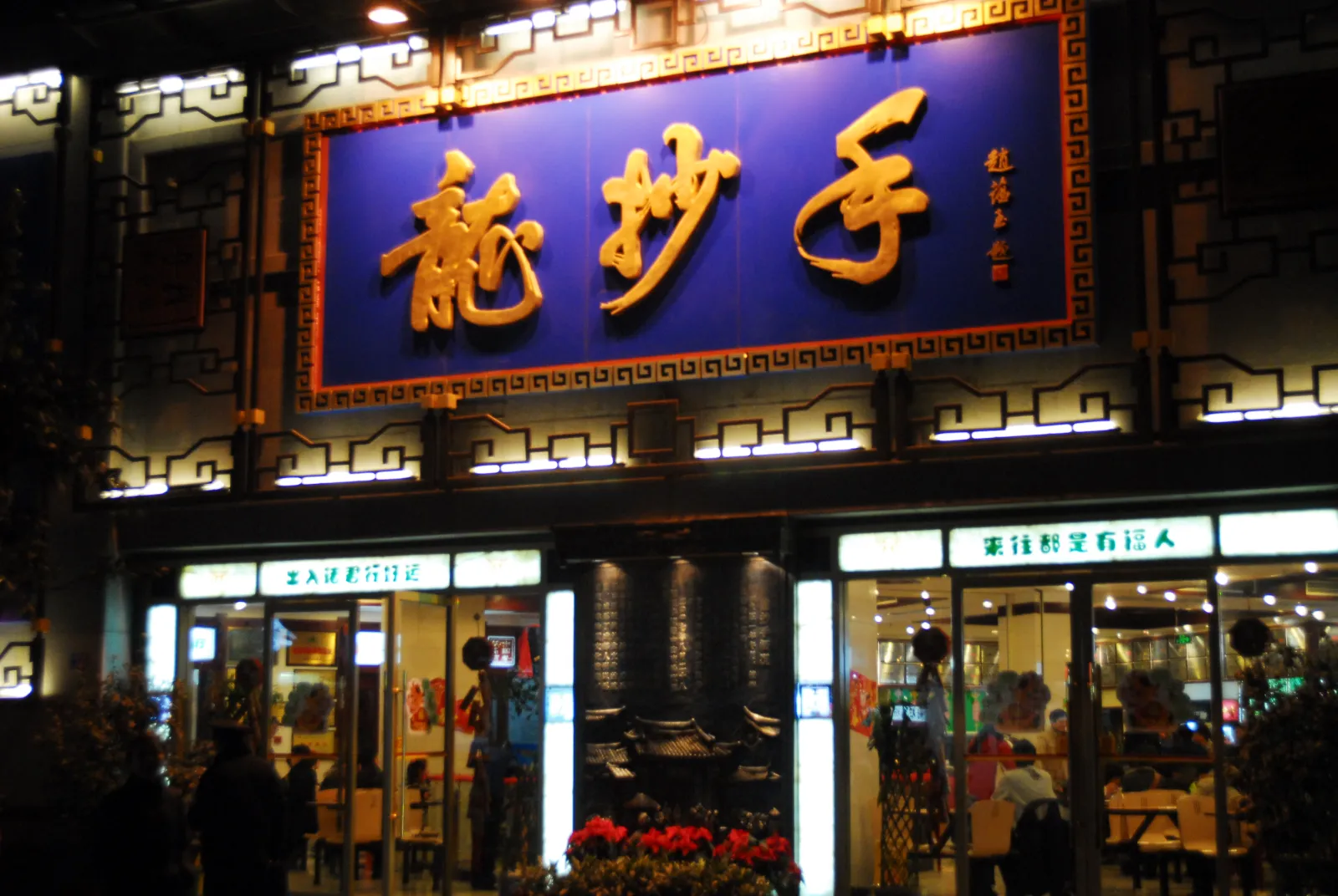
A famous brand can be convenient for tasting several snacks, but reputation does not guarantee the best bowl on a given day. Neighborhood turnover, broth temperature and sauce balance matter more than heritage signage alone.
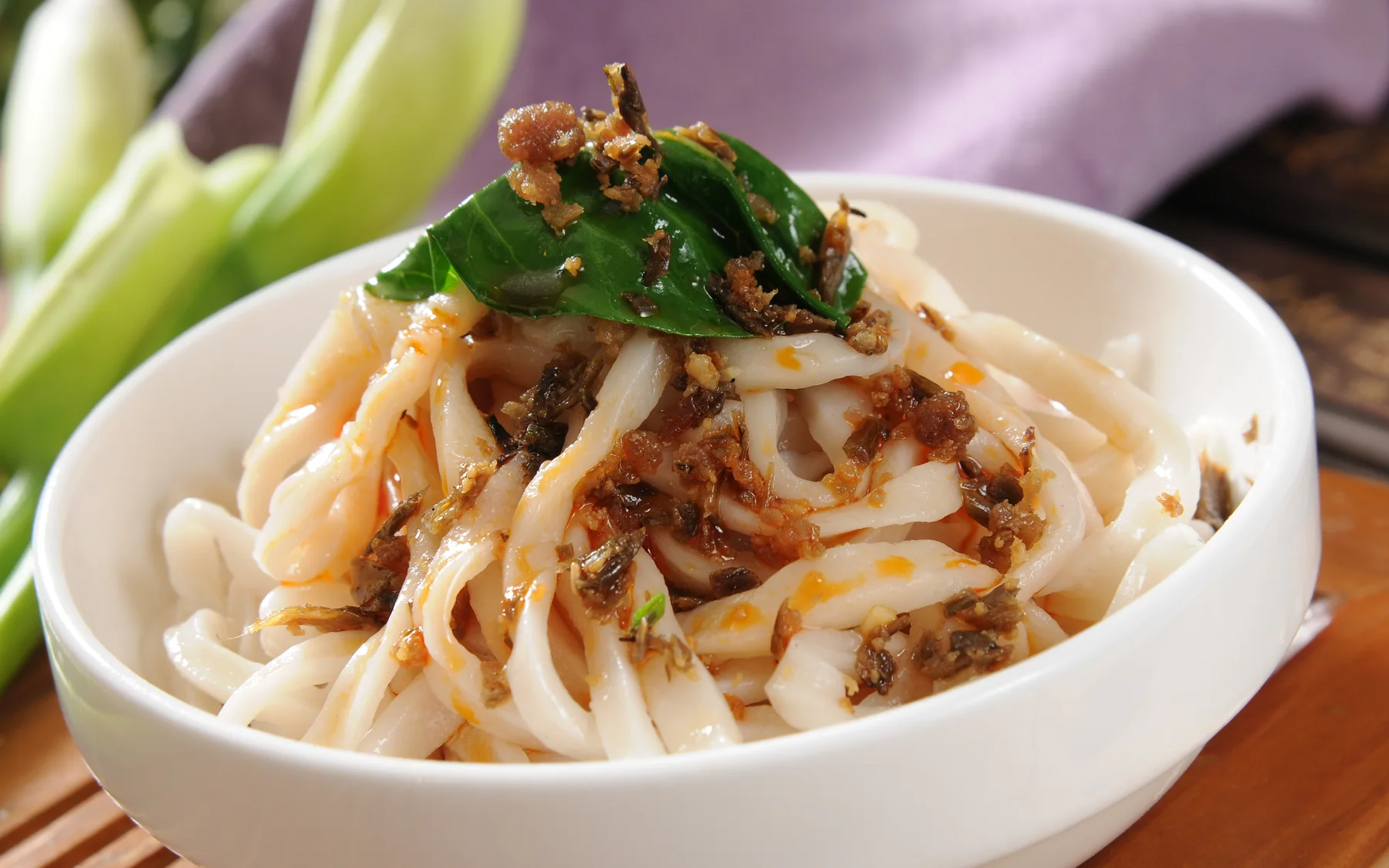
Dan dan noodles outside Sichuan often become a large bowl with heavy peanut sauce. In Chengdu, expect variation: smaller portions, preserved vegetables, minced meat, sesame or peanut notes and chili oil can appear in different balances. The useful question is not which version is universally authentic, but whether the sauce is proportioned to the noodles and remains aromatic after mixing.
Order one bowl at a time. Noodles soften and sauces concentrate while waiting, so filling a table with four bowls for photography weakens all of them. Two people can share and reorder. Solo diners should use multiple mornings rather than attempting a tasting flight at once.
Communal formats turn dinner into shared work
Hot pot, chuanchuan and maocai use broth, ingredients and seasoning to distribute decision-making differently. Hot pot keeps cooking at the table. Chuanchuan pre-portions ingredients on skewers. Maocai moves selection back to the kitchen and returns one completed bowl. Choosing among them is a social and practical decision, not a hierarchy of authenticity.
Hot pot is a social system
The Chinese hot pot guide explains the larger method. In Chengdu, hot pot competes with skewers, maocai and many forms of shared Sichuan dining. It should not occupy every dinner.
Order for balance: one or two meats, tofu or bean products, mushrooms, leafy vegetables, a root or starch and a finishing noodle. Add offal because you want its texture, not because a checklist says it is mandatory.
Chengdu and Chongqing hot pot compared carefully
| Tendency | Chengdu restaurant scene | Chongqing old-hot-pot image |
|---|---|---|
| Fat and oil | Vegetable-oil, mixed-oil and beef-fat formats coexist | Beef fat is especially prominent in the classic red-broth identity |
| Pot format | Split pots and varied broth choices are common | A forceful red broth remains the strongest symbolic form |
| Ingredient range | Broad, including vegetables and newer restaurant combinations | Offal and robust quick-cooking cuts are culturally central |
| Dipping | Sesame-oil and garlic combinations are common | Similar simple oil dips are also widespread |
| Reality | Shops borrow across regional boundaries | Shops borrow across regional boundaries |
Use the comparison to ask better questions, not to police a restaurant's address. The Chongqing food guide shows how the neighboring municipality builds its own food identity.
For a first Chengdu hot pot, decide broth and spice level before ordering ingredients. Learn which items require long cooking and which need only seconds. Keep raw and cooked utensils separate where provided. The person who drops everything into the broth at once removes texture and creates food-safety confusion.
Hot pot is not the correct choice for every group. A solo traveler, tired arrival or diner with complex allergies may learn more from a cooked-dish restaurant. Shared cooking is culturally meaningful only when the table can communicate clearly and eat safely.
Chuanchuan and maocai reorganize the same appetite
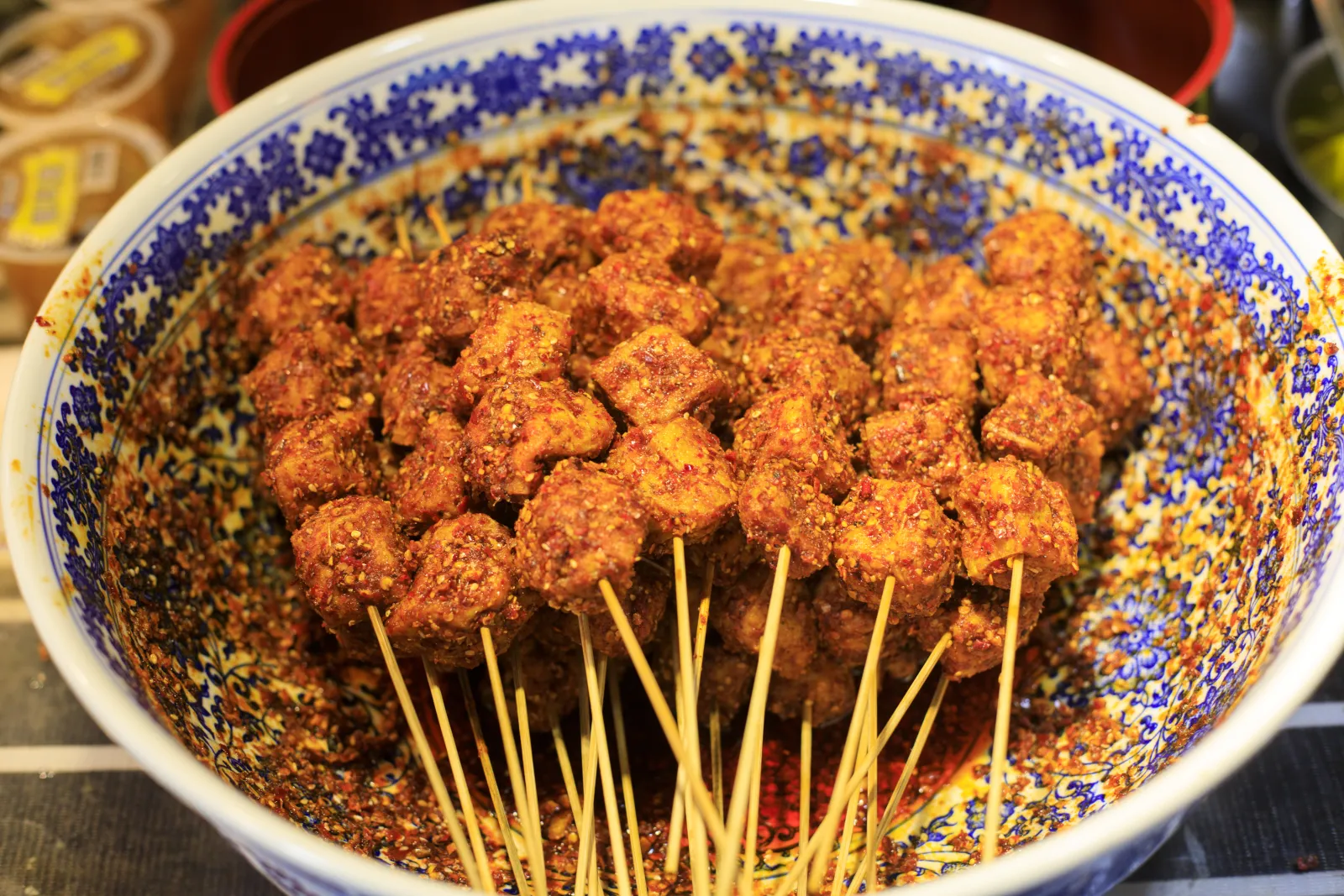
Chuanchuan places ingredients on skewers before cooking or seasoning. Maocai cooks selected ingredients in a seasoned broth and serves them in a bowl. Shop systems vary: some count sticks, some weigh ingredients and some offer cold skewers already coated in sauce.
The visible red seasoning tells only part of the story. Sesame, cumin, garlic, sugar and fermented flavors may sit beneath it. Ask whether the skewer contains meat, offal, tofu or a processed filling instead of identifying everything by color.
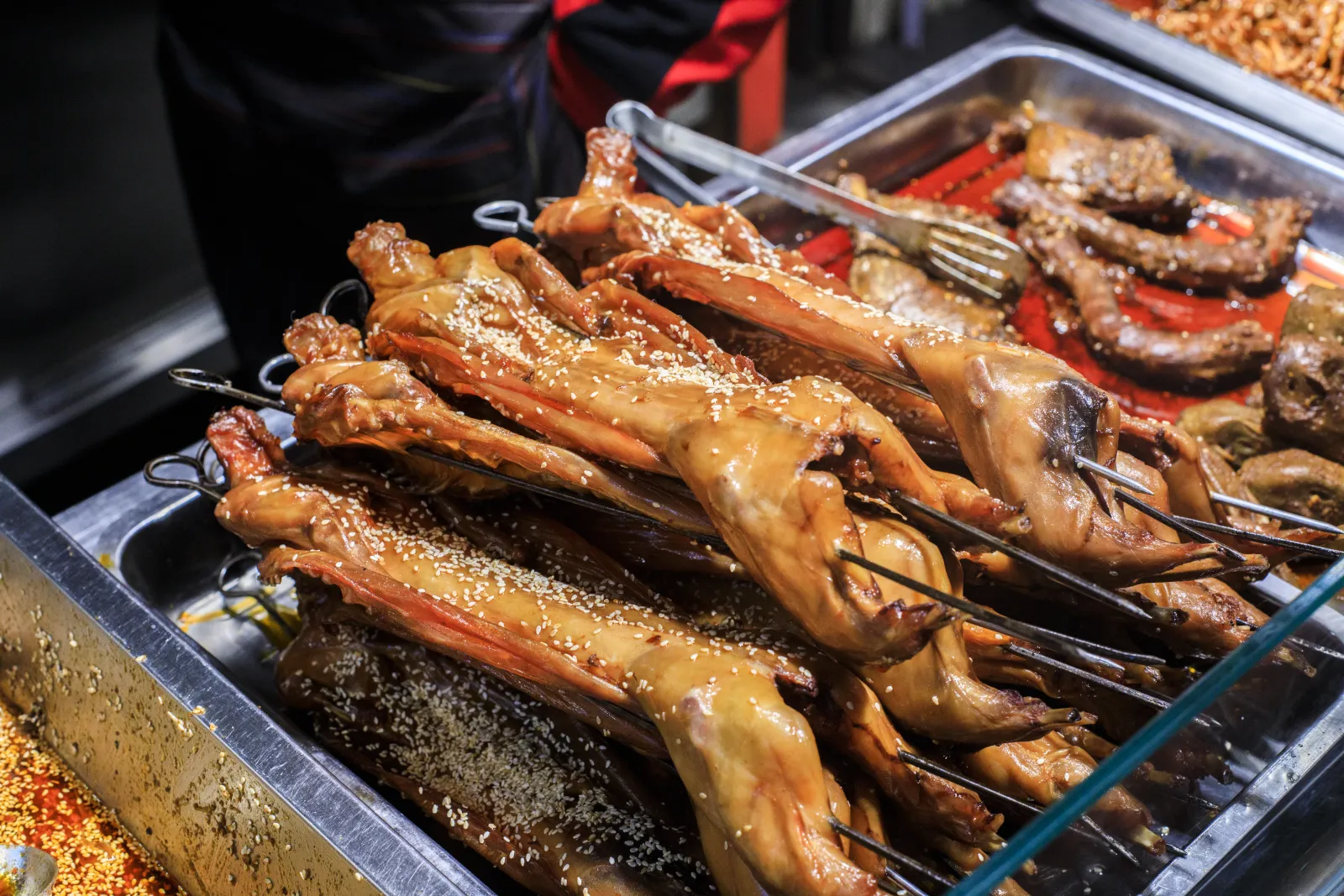
Prepared displays are useful for pointing and choosing, but food safety still depends on turnover, temperature and handling. Select busy vendors, eat cooked food hot and do not assume a crowded tourism street represents the city's best value.
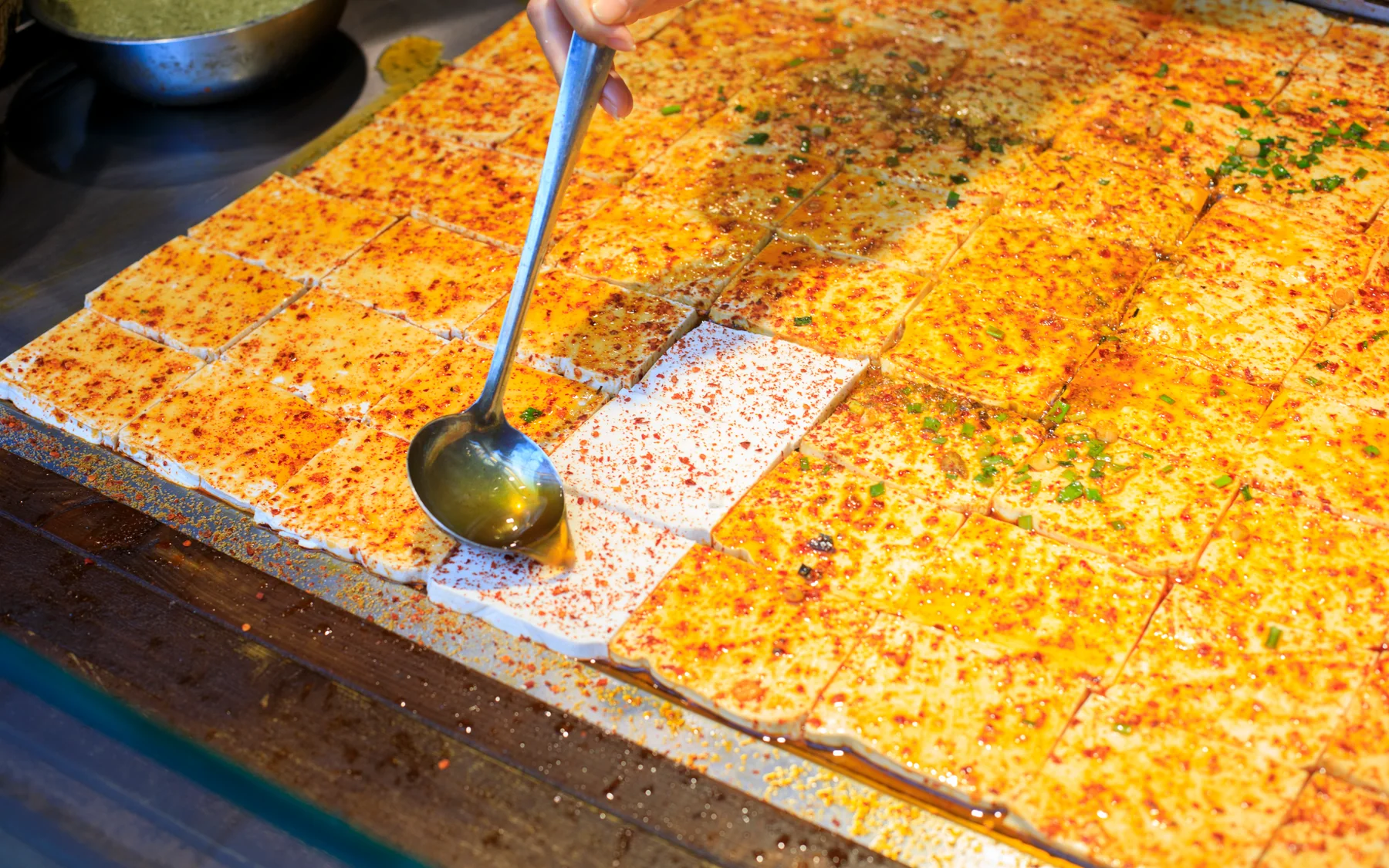
Tourism streets can provide visual variety and convenient tasting, but their role should be understood honestly. They collect foods for visitors, extend opening hours and make ordering easy. They do not automatically show where residents eat every day. Use one for orientation, then compare with a specialist shop or neighborhood restaurant.
Snacks, soft foods and tea provide necessary contrast
The Chengdu food day becomes exhausting when every stop repeats red oil, fried texture and crowd pressure. Pastries, tofu, douhua and tea introduce changes of temperature, pace and mouthfeel. They are not recovery foods outside the cuisine; they are part of its range.
Fried pastries and tofu show another snack vocabulary
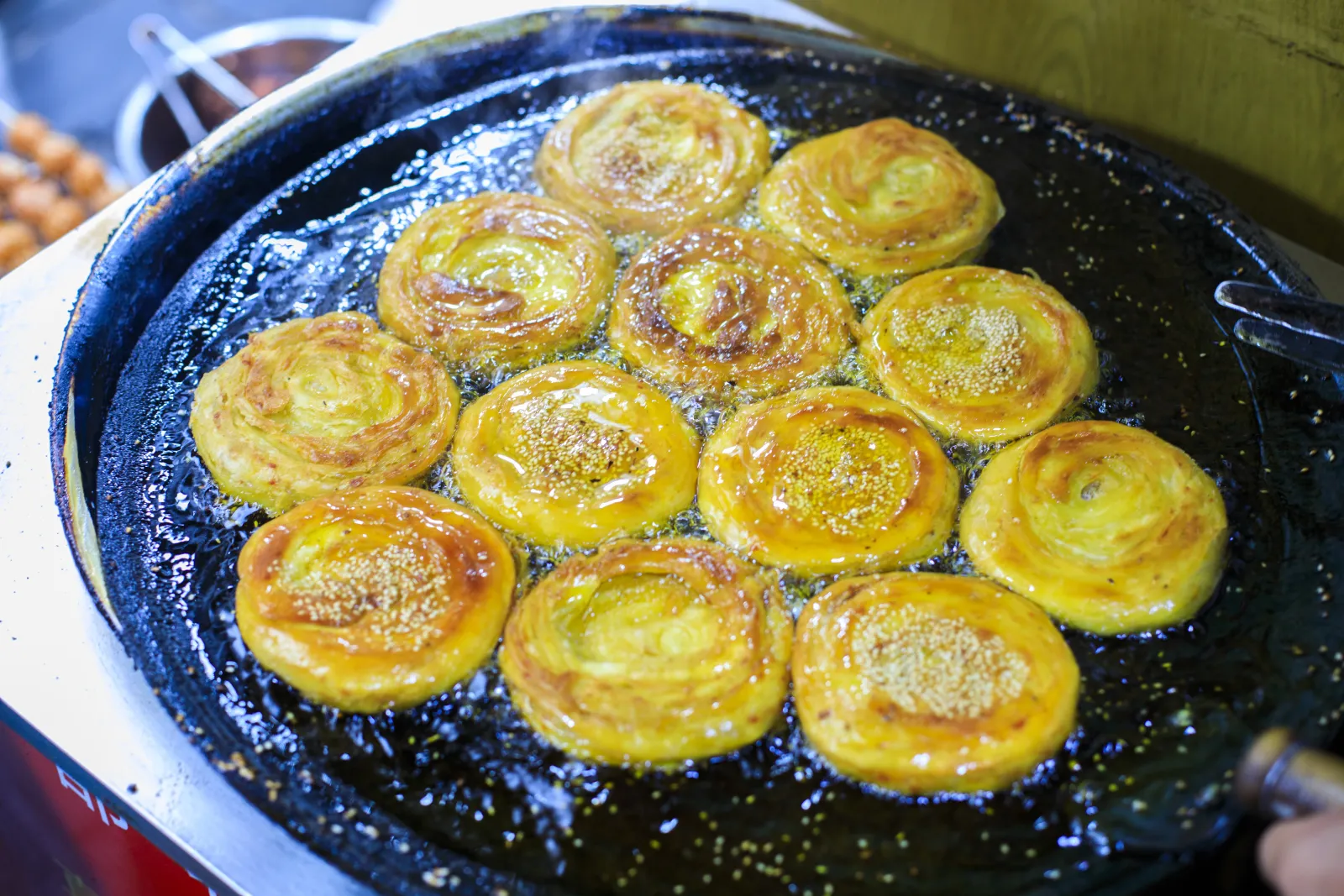
The archive image shows a layered fried pastry, but the broad category matters more than forcing one regional name onto a visually similar product. Chengdu snack streets sell breads, guokui-style pastries and stuffed or seasoned doughs whose recipes and local labels vary.
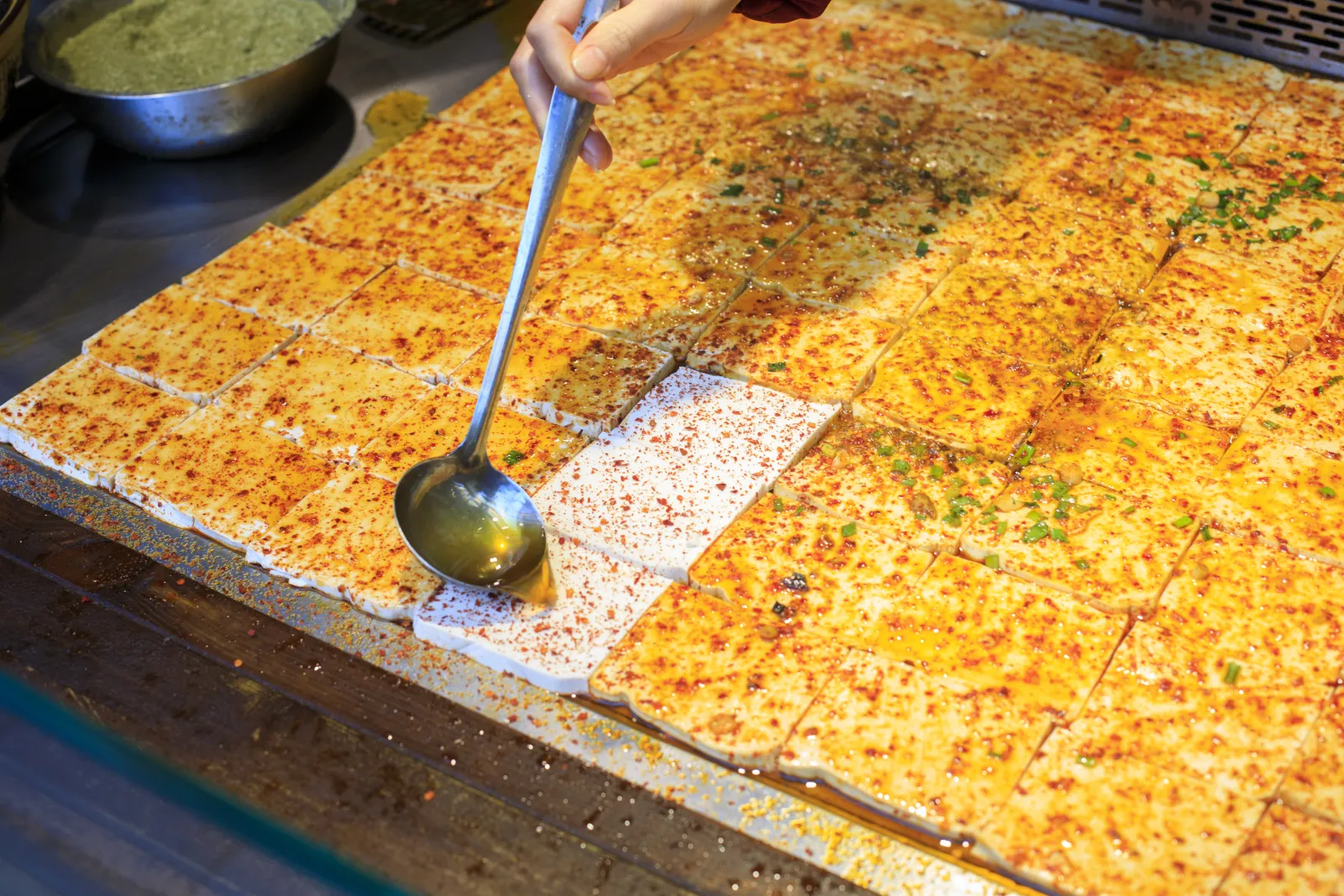
Tofu can be silken, pressed, fried, grilled, fermented or served as douhua. This flexibility helps explain why vegetarian-looking food still requires questions: cooking fat, stock and minced meat may be part of the seasoning.
Douhua can anchor a gentle meal
Douhua is soft tofu served with different accompaniments. In Sichuan, savory versions may include chili, soy, garlic, pickles and aromatics, while douhua rice combines tofu with rice and small dishes.
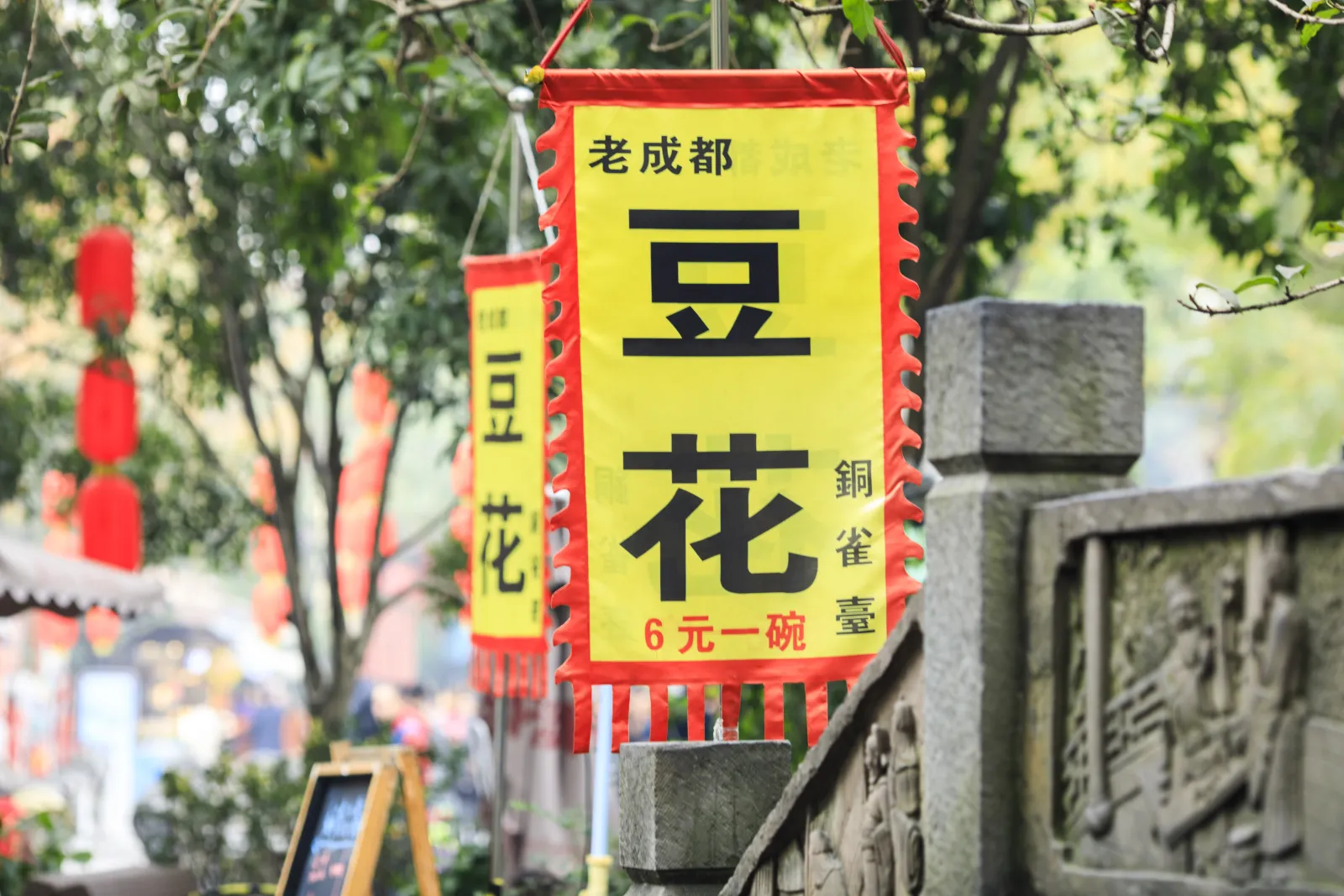
The sign is a street-life image rather than a recipe illustration. It shows how one inexpensive food becomes part of the visual language of an old-style commercial area.
Douhua also corrects the belief that softness is passive. The tofu's gentle texture makes pickles, chili, soy and aromatics more distinct. In a douhua rice meal, plain rice and small dishes allow each bite to be adjusted. This is a form of active eating very different from receiving one fully mixed noodle bowl.
Tea belongs inside the food day
Tea is not simply a palate cleanser after serious eating. A tea-house pause controls pace, creates room between meals and reveals how Chengdu organizes social time.
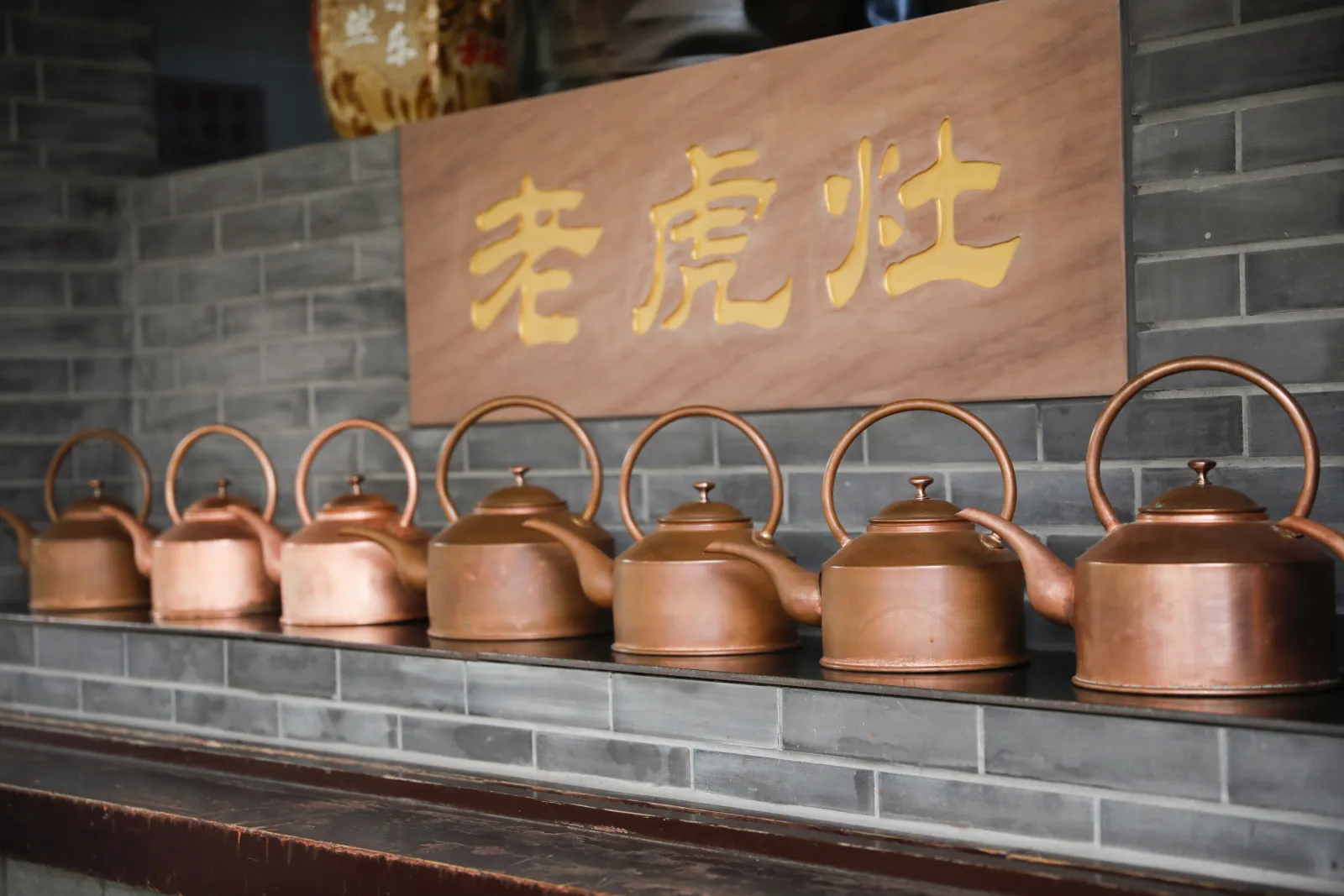
Older tea houses used large water-heating stoves sometimes described as tiger stoves. Equipment changes, but the practical principle remains: reliable hot water turns one cup into an afternoon. Continue through Chinese tea for leaf types and processing traditions.
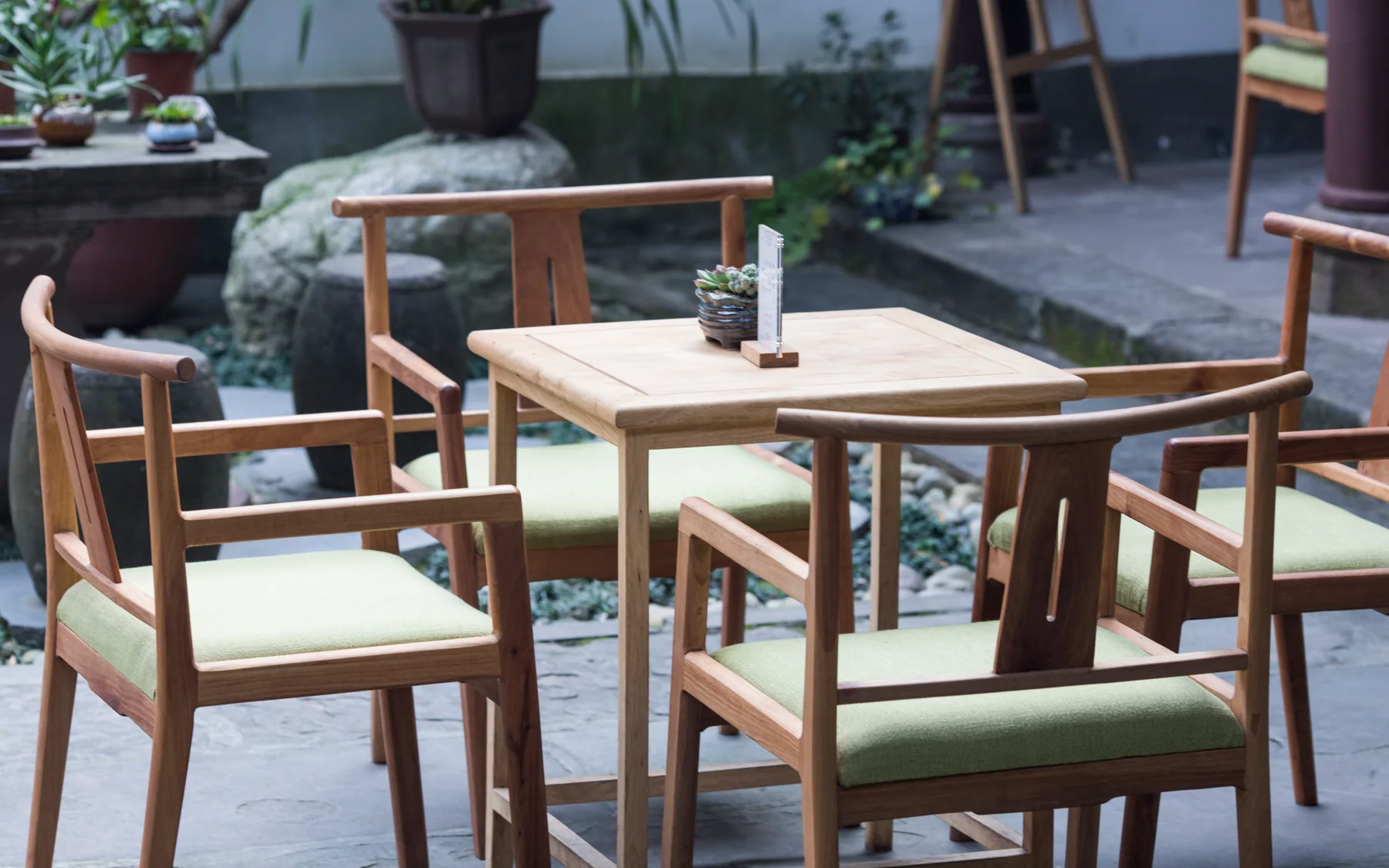
Do not schedule tea as a fifteen-minute beverage stop. The value lies in occupying a chair long enough for the preceding meal to settle and the next decision to become optional. Ask how refills work, keep bags out of circulation and avoid photographing card players or families at close range without permission.
Where to eat Chengdu food by restaurant format
| Format | Best for | What it reveals |
|---|---|---|
| Noodle or chaoshou shop | Solo breakfast or snack | Sauce proportion, broth and neighborhood turnover |
| Snack institution | Comparing several classic small dishes | Standardization, heritage branding and convenient portions |
| Home-style Sichuan restaurant | Mapo tofu, vegetables, fish and shared dishes | The cuisine beyond one-bowl snacks and hot pot |
| Hot-pot restaurant | Group dinner | Broth management, ingredient timing and social coordination |
| Chuanchuan or maocai shop | Casual evening or smaller group | Alternative ways to select and cook similar ingredients |
| Douhua rice shop | Gentle lunch | Tofu texture, condiments and everyday value |
| Tea house | Afternoon pause | Public leisure as part of the food system |
Chunxi Road and major visitor streets make famous foods easy to find, but convenience can produce repetitive menus. Residential districts and university or office areas often support more specialized, price-sensitive eating. Use current maps for hours, then judge the shop by focus, turnover and whether the format matches the meal you need.
Restaurant rankings age quickly. A useful plan identifies a noodle shop near the hotel, a cooked-dish restaurant for a balanced dinner and one communal format reachable without a long late-night transfer. Keep backup options in the same neighborhood rather than crossing Chengdu because one viral shop has a queue.
How to order a balanced Chengdu meal
| Group size | Useful order | Avoid |
|---|---|---|
| Solo | One noodle or chaoshou bowl, one vegetable or tofu side and tea | Ordering a full hot-pot spread for the photograph |
| Two people | One signature dish, one vegetable, one tofu or cold dish and rice | Two oily meat dishes with the same flavor profile |
| Four people | One poultry or fish dish, one pork or beef dish, tofu, vegetables, soup and rice | Making every dish mala and losing contrast |
| Hot pot group | Moderate meat, tofu, mushrooms, two vegetables and one starch | Ordering too much offal before knowing what everyone enjoys |
Useful phrases include asking for wei la (mildly spicy), but restaurant interpretations vary. Explain allergies and severe intolerance explicitly. Sichuan pepper produces tingling rather than chili heat, so asking only for "not spicy" may not address both sensations.
Cold dishes may contain sesame, peanuts, garlic, chili oil or meat stock. Vegetable dishes can include minced pork, lard or oyster sauce. Hot-pot broths are shared and cannot reliably protect severe allergies once ingredients circulate. Written allergy information in Chinese is more dependable than a vague request made after the food arrives.
Balance also means portion control. Chengdu menus can make every dish sound essential, but two people usually need fewer shared plates than enthusiasm suggests. Begin with one main dish, tofu or vegetables and rice; reorder only after seeing the actual serving size.
A one-day Chengdu food route
| Time | Eat or do | Why |
|---|---|---|
| Morning | Clear-broth chaoshou or a small noodle bowl | Start with technique before heavy seasoning |
| Late morning | Market walk or snack shop | Learn names and portions without buying everything |
| Lunch | Mapo tofu, one vegetable and rice | Taste a canonical dish in a balanced meal |
| Afternoon | Tea house and one pastry or douhua | Make sitting part of the food culture |
| Evening | Hot pot, chuanchuan or a shared Sichuan dinner | Choose one communal format rather than combining all three |
| Late night | Only if hungry: small noodles or a simple skewer plate | Appetite is a better guide than a viral checklist |
For a second day, reverse the emphasis: begin with douhua or a different noodle style, eat a home-style lunch, use tea as the longest stop and choose the communal dinner format skipped on day one. Repeating noodles or tofu creates a stronger memory than collecting another eight unrelated snack names.
Chengdu food rewards comparison
What most Chengdu food guides get wrong
They turn the city into a sequence of red bowls and dare foods: hot pot, rabbit head, skewers and increasingly spicy noodles. That visual story ignores tea-house time, clear broth, tofu, vegetables, sauce balance and the small portions that make comparison possible.
The most useful trip is not the one with the greatest number of famous dish names. Compare two noodle sauces. Notice how tofu changes across meals. Ask why one hot-pot broth smells brighter and another feels heavier. Return to tea. Chengdu becomes legible when food is treated as repeated urban knowledge rather than a sequence of challenges.
The East Moment recommendation is at least two food days: one organized around small bowls, a cooked-dish lunch and tea; the other around douhua, a neighborhood snack and one communal dinner. Leave one meal unplanned so a local recommendation or appetite can change the route.