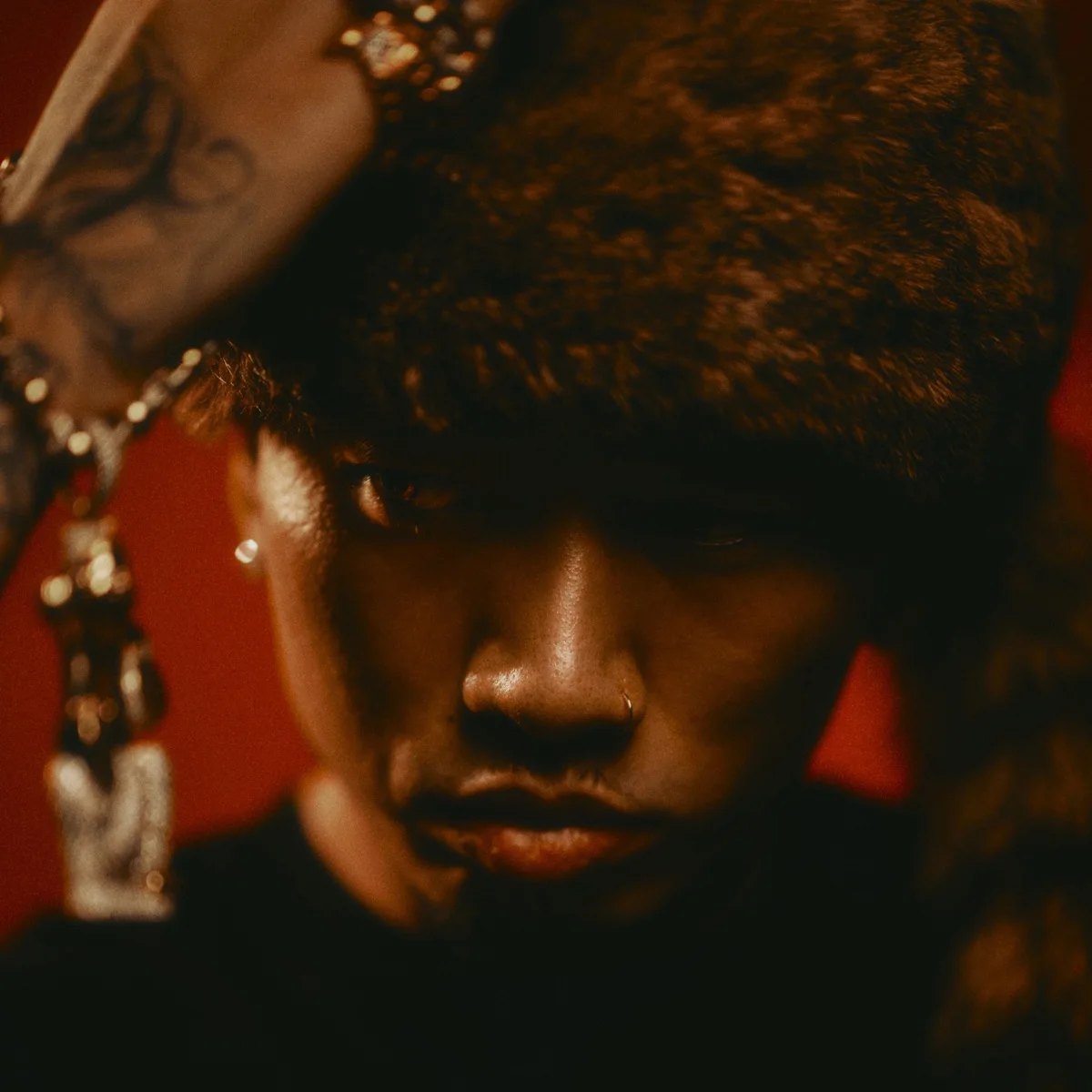
Cai Xukun is almost impossible to hear if all his public images are played at once. Separate the 2018 idol launch, the meme machine and the studio work, and a more useful question appears: what kind of musician remains when neither fans nor mockery are allowed to answer for him?
Cai Xukun appears differently through three cameras
The first camera sees Cai Xukun (蔡徐坤) in 2018: an idol-competition center, controlled styling, rapid mass recognition and the concentrated desire of a newly organized fandom.

The second camera loops one performance gesture until the person becomes a punchline. The third waits in the studio and asks slower questions about writing, production, vocal texture and sequencing.
Most pages choose one camera and pretend it records the whole person. Fan biographies protect the first. Meme summaries feed the second. East Moment is more interested in the third, without denying that the other two changed how the music is received.
The Chinese musicians collection provides the necessary comparison set. Cai Xukun should not be evaluated in a sealed room built only from his own fandom and opposition.
| Reader intent | Begin with | Do not confuse it with |
|---|---|---|
| Hear his most accessible song | Lover | proof of a complete album identity |
| Test the newer studio direction | KUN | a celebrity mood board |
| Judge live control | Live at Apple Music Radio and a complete stage | one isolated dance break |
| Understand the controversy around his image | the 2018 launch and later meme circulation | a music review |
| Decide whether he matters | compare writing, voice, production and physical performance separately | fan scale or ridicule scale |
Camera one: the idol launch made scale before it made context
The Nine Percent era gave Cai Xukun enormous visibility at high speed. That system is excellent at making recognition triggers: silhouette, gesture, clothing, a short performance clip, a center position. It is less suited to explaining artistic development, because the public must decide what somebody is before the person has had time to build a large body of work.
That early imbalance still shapes search intent. Some readers arrive wanting songs; others want the origin of a joke; others want evidence for an opinion they already hold. A responsible profile should not reward the loudest group by flattening the artist for everybody else.
The correct first judgment is modest: the idol system proves attention and performance discipline. It does not by itself prove songwriting quality, and it does not disprove it.
The system also teaches a performer to deliver legible moments: the center glance, the clean body line, the gesture that survives a vertical crop. Cai is exceptionally fluent in that grammar. The danger is that a sequence of legible moments can simulate a complete performance. A song needs development after the thumbnail has already won.
Camera two: repetition converted a performer into public property
Internet ridicule works through compression. A short clip loses its original scale, then repetition makes familiarity feel like knowledge. Eventually people who have never heard a complete Cai Xukun track believe they understand his entire artistic value.
This page will not reproduce humiliating edits for entertainment. That would make the article another distribution node in the same machine it claims to analyze.
The meme still belongs in the story because it altered the listening conditions. Any later vocal choice is heard through expectation; any confident visual can be treated as evidence of vanity; any fan defense can be dismissed before its musical claim is considered. None of this requires pretending that criticism is forbidden. It requires moving criticism to the object that can answer it: the song.
Cai Xukun is strongest on stage when the body edits the arrangement
Recent live clips make one thing undeniable: Cai understands how to place a body inside a beat. A hip change, held shoulder or delayed turn can make a production accent visible. This is not merely “good dancing.” The movement edits what the audience hears by deciding which sound receives a physical consequence.
That skill explains why short stage clips travel so aggressively. A camera can isolate one decisive motion and still preserve the rhythmic idea. It also creates the next trap: a thrilling dance break can make the surrounding song feel better structured than it is. Physical charisma supplies contrast, climax and release that the composition may not contain on its own.
My test is to replay the section without watching. Does the bass movement remain purposeful? Does the vocal phrase create tension before the body releases it? Then reverse the experiment: mute the clip and watch whether the choreography still communicates a changing emotional state or only repeated seduction.
Cai passes the integration test more often than dismissive meme culture admits. He does not yet pass it so completely that stage command can stand in for songwriting. That gap is not an insult. It is the most interesting problem in his work.
Camera three begins with Lover, not with a verdict
Lover (《情人》) offers a clean music-first test. Listen to the restrained pulse, the placement of breath and the way intimacy is produced through proximity rather than vocal force. The track does not ask to win through a giant climax. Its control is part of its argument.
Then move to Afterglow. The useful comparison is not "old Cai versus improved Cai" as a promotional slogan. Ask what has changed in the relationship between voice and production. Is atmosphere supporting a recognizable person, or is it doing too much of the emotional labor?
That question can produce disagreement grounded in sound. It is already better than counting fan posts or replaying a joke.
The English-language aspiration needs a harder standard
One current criticism argues that parts of Cai's newer music borrow a global Black-pop surface without creating an equally specific Chinese or personal center. The criticism can be expressed crudely online, but the underlying question is legitimate: why this language, this groove and this vocal character from this artist?
English is not evidence of imitation, and Chinese is not automatic authenticity. The problem appears when language, production and persona all feel imported as a complete package. Then technical polish can become anonymous luxury—the song sounds expensive without sounding necessary.
Lover avoids some of that problem because intimacy supplies a clear dramatic scale. With newer English-heavy material, I need more: a melodic decision only his voice would make, an image rooted in his actual emotional world, or a production risk that cannot be exchanged for another fashionable texture.
This is where fandom should become more demanding, not more defensive. If Cai wants to be judged as a producer and songwriter, the work deserves the respect of precise criticism. “International” cannot remain a synonym for English lyrics and dark styling.
For a wider vocabulary around Chinese pop production, continue through the Chinese music guide, then compare Jackson Wang's performance authorship. Cai Xukun should be compared with other contemporary musicians, not only with the idol image built around him: one test asks whether album sequence creates identity, while the other asks whether song, body and camera obey the same dramatic idea.
KUN is the album-sized test
The 2026 album KUN gives the profile a larger object than a viral clip or isolated single. An album asks whether choices can survive sequence: tempo beside tempo, persona across several songs, an opening promise answered or abandoned by the end.

The Apple Music album record establishes the release. East Moment's test is editorial: turn down the biography and ask which decisions recur because they form an aesthetic, not because they happen to be fashionable.
This is where Cai Xukun gains or loses the skeptical listener. A celebrity can purchase excellent production. Artistic identity appears when the arrangement, vocal limits and visual language feel selected by the same intelligence.
Play the album without shuffle. Mark the first moment when the sequence reveals information one single could not. If no such moment arrives, the project is a playlist wearing an album title. If recurring sounds change meaning across tracks, then KUN has built a world rather than merely maintained a brand.
The live radio room removes some protection
Live at Apple Music Radio, released in June 2026, matters because a contained performance space changes the evidence. Large staging, edits and mass choreography can no longer answer every question.

The official session release gives listeners a direct next step. Hear how the voice occupies a less crowded arrangement. Notice where polish remains and where physical effort becomes audible. A fair review can be positive or negative; it should be specific enough that another listener can test it.
The radio room is also where vocal limits become useful. Cai is not a singer whose authority rests on overwhelming range. He works through proximity, rhythm and texture. That can produce compelling control, but a narrow dynamic palette will become monotonous unless the arrangement creates friction. Listen for whether he changes attack, breath and consonant weight as the set progresses. A live session should reveal decisions, not merely prove that the microphone remained stable.
Fashion is a fourth language, not proof of musical depth
The current public image is sophisticated. A Shanghai beauty event and a 2026 Met Gala appearance show a figure able to operate inside global fashion's image economy.

Fashion belongs in a rounded profile because posture, fabric and camera literacy are part of modern stardom. It should not be smuggled in as proof that an album is good. The same evidence boundary works in reverse: disliking a styled portrait does not tell us whether the bass line works.
Readers interested in clothing as cultural language can continue to traditional Chinese clothing, where garments are examined as construction and social meaning rather than celebrity decoration.
Four scores are better than one fan verdict
Judge one track on four separate lines:
- Writing: does the lyric or melody contain a turn rather than one repeated mood?
- Voice: does Cai make phrasing decisions the production cannot make for him?
- Arrangement: does sound create tension, space and consequence?
- Performance: does the body reveal structure or merely decorate a beat already complete?
Do not average the scores too quickly. A brilliant stage with ordinary writing is still a real achievement and a real limitation. Separation gives the artist credit without surrendering judgment.
My current verdict is deliberately uneven: the performer is more distinctive than the songwriter, and the visual editor is often more decisive than the vocalist. That is already a serious artistic position. The next album must make the writing impossible to replace.
The best route through Cai Xukun is therefore a controlled experiment: hear Lover, compare Afterglow, play KUN in sequence, then watch the live radio session and one complete current stage. Only afterward return to the 2018 launch and the meme. The person will not become simple, but the disagreement will become more intelligent.
Add one track below and judge one element: writing, voice, arrangement or stage choice. "Icon" and "terrible" are equally cheap when they arrive without an ear attached.