Chengdu (成都) is often described as relaxed, but the word can mislead. The city is not slow because nothing happens. It feels unhurried because dense activity has learned to make room for sitting: tea cools beside a mahjong table, a shaded park becomes a living room, a noodle breakfast lasts ten minutes and a conversation lasts two hours. Beneath that public ease are Ancient Shu archaeology, an irrigation system that transformed the plain, memories of war and migration, poetry, religious institutions, industrial growth and a technology economy moving at a very different speed.
This is the deep dive into why Chengdu feels the way it does: water, tea, memory, public time and a creative economy moving much faster than the city's relaxed image. It belongs inside our wider Chinese culture guide, but it refuses the lazy idea that one city can stand for all of China. Use the Travel to Chengdu guide when tickets, neighborhoods and a compact itinerary take over; follow appetite into the Chengdu food guide.
Chengdu culture guide: read the city through public time
| Question | Short answer |
|---|---|
| Why visit? | For tea-house life, Ancient Shu archaeology, food, poetry, Sichuan performance, pandas and the contrast between inherited urban habits and a large modern creative economy |
| Ideal first stay | Five days in the city plus one full Dujiangyan or Qingcheng Mountain excursion |
| Best first base | Near a central metro interchange, with access to People's Park, the historic core and an evening district without depending on taxis |
| Essential experiences | Sit in a real tea house, visit Jinsha, compare Du Fu Thatched Cottage with Wuhou Shrine, eat beyond hot pot and see one contemporary district after dark |
| What makes Chengdu different? | It joins a fertile inland plain, sophisticated public leisure and strong cultural production without separating food from everyday urban life |
| Main planning trap | Treating pandas, hot pot, face-changing and one old-style shopping street as the complete city |
Choose the Chengdu you want to understand
| If you care most about | Build your days around | Add this contrast |
|---|---|---|
| Early history | Jinsha Site Museum and Sichuan Museum collections | Compare archaeological evidence with later legends about Ancient Shu |
| Poetry and memory | Du Fu Thatched Cottage, Wuhou Shrine and neighborhood reading | Ask how later generations constructed the places now associated with famous figures |
| Public life | People's Park and a neighborhood tea house | Compare an everyday venue with a ticketed performance tea house |
| Urban creativity | Eastern Suburb Memory, independent bookstores, music venues and design retail | Add Chunxi Road or Tianfu New Area to see different versions of contemporary consumption |
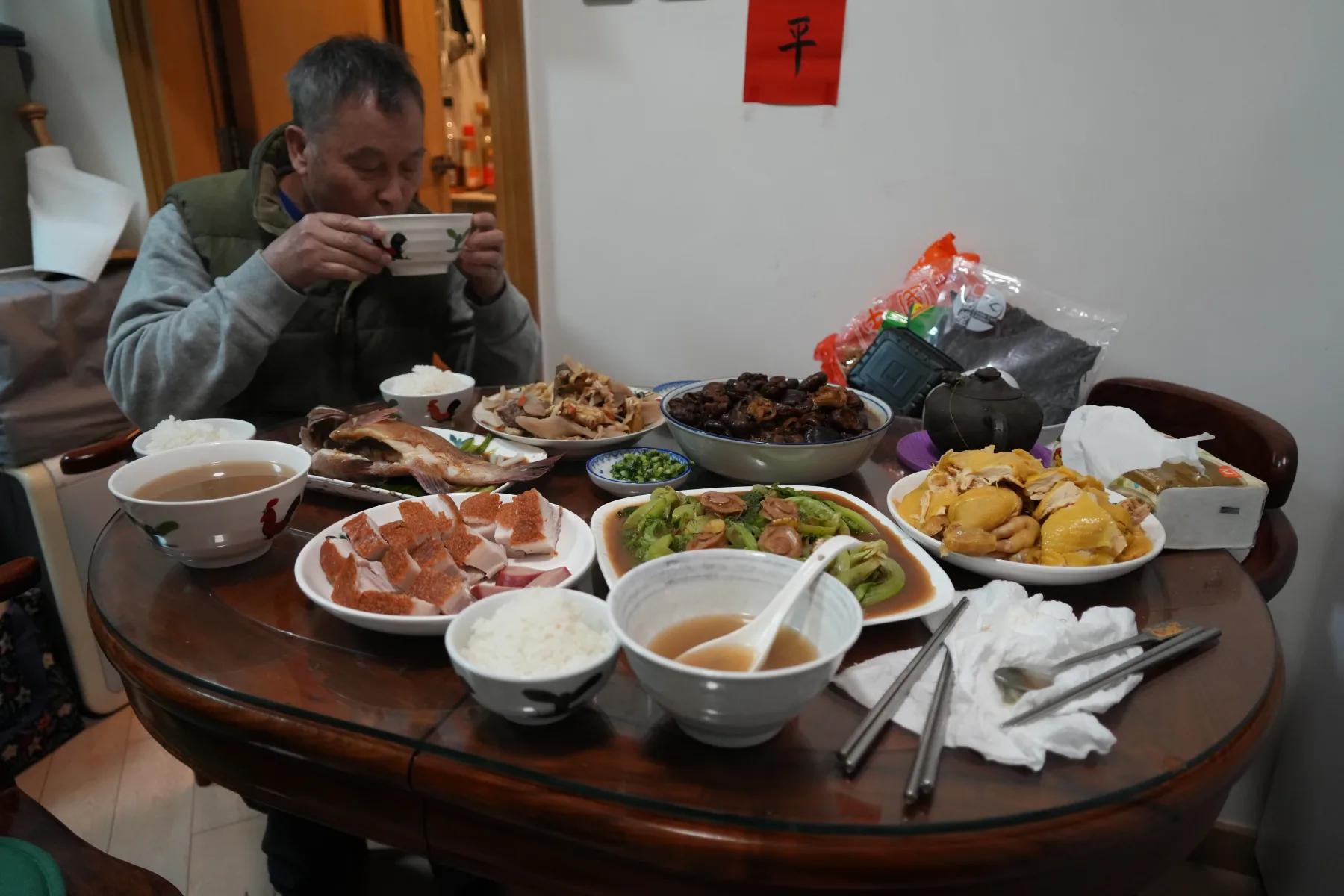
| Food | Breakfast noodles, small dishes, market snacks and one shared dinner | Use the Chengdu food guide instead of making every meal hot pot |
| Regional landscape | Dujiangyan and, if time allows, Qingcheng Mountain | Notice how water engineering, agriculture, religion and tourism occupy the same wider region |
For hotel choices, trip pacing and current travel logistics, use the separate Travel to Chengdu guide. This page stays with the harder question: what kind of city produced those experiences?
Chengdu begins before the familiar imperial story
The Sichuan Basin was never culturally empty while political centers developed farther east. Archaeology associated with Sanxingdui and Jinsha reveals bronze, gold, jade, ivory and ritual systems connected to Ancient Shu societies whose visual language does not fit a simple story of one civilization radiating from one capital.
Jinsha is inside modern Chengdu. That matters. The Jinsha Site Museum documents the excavation and collection; visitors do not need to imagine early history as a distant ruin beyond the metropolis. They can move from an excavation and museum to apartment blocks, ring roads and restaurants within the same day.
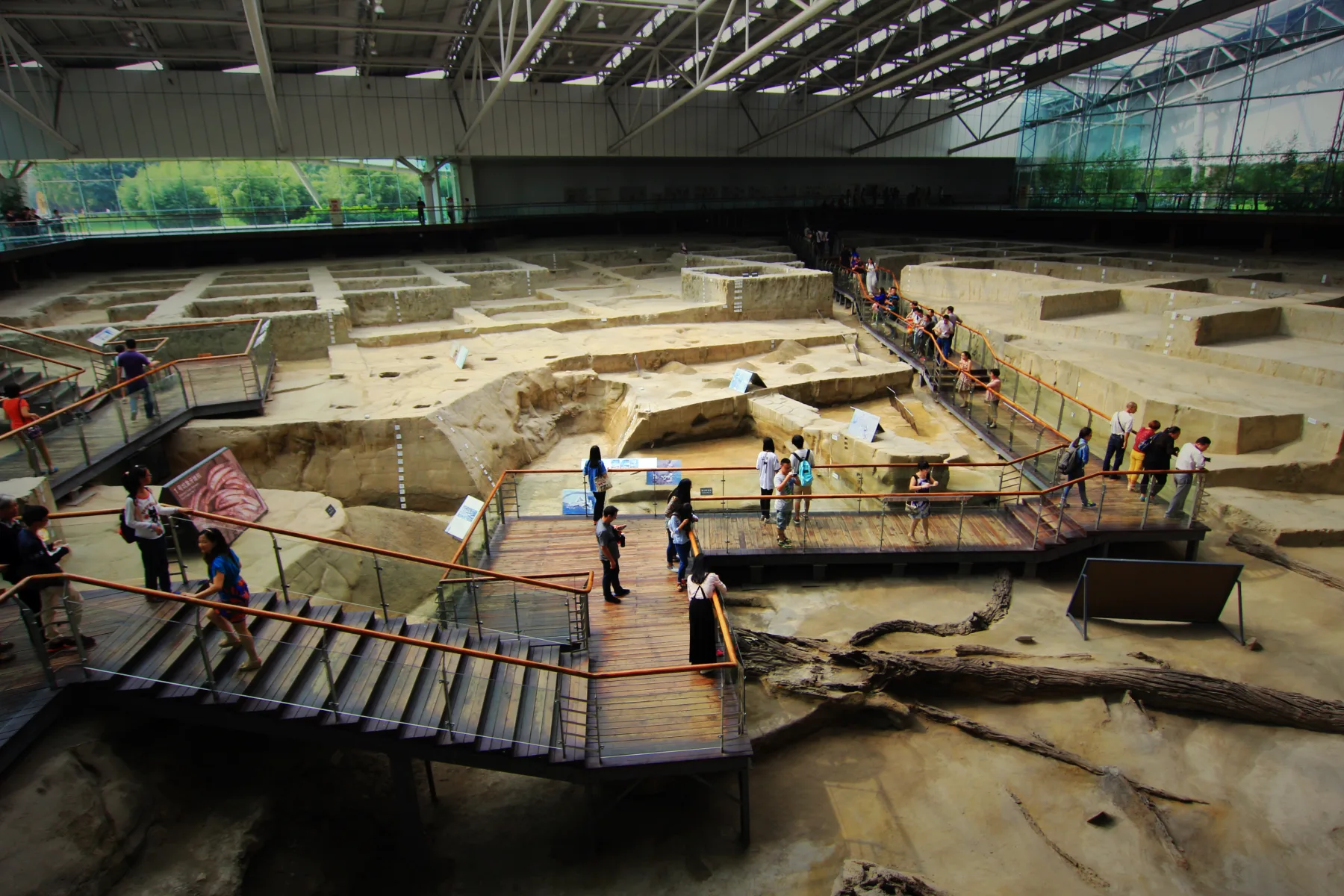
Museums distinguish evidence from interpretation. Object dates, find contexts and conservation records carry more weight than claims that every unusual mask or sun symbol proves a lost global civilization. Ancient Shu is compelling without speculative shortcuts.
| Historical layer | Where to encounter it | What not to assume |
|---|---|---|
| Ancient Shu | Jinsha objects, excavation zones and regional museum collections | That one spectacular object explains an entire society |
| Qin and Han transformation | Museum timelines, irrigation history and the integration of the basin into larger states | That cultural change happened in one clean replacement |
| Tang and Song Chengdu | Poetry, urban history and Buddhist or Daoist institutions | That present buildings survive unchanged from those periods |
| Late imperial city | Guild, temple, street and craft histories | That restored shopping streets preserve complete social worlds |
| Twentieth-century change | Industry, migration, war, universities and new infrastructure | That Chengdu's relaxed image means political or economic isolation |
Dujiangyan turned water into a civic system
Northwest of central Chengdu, the Dujiangyan Irrigation System reorganized the Min River without relying on a single conventional dam. Traditionally associated with Li Bing and the third century BCE, the system divided, guided and managed water to reduce flooding and irrigate the Chengdu Plain. It has been repaired, extended and governed across many periods.
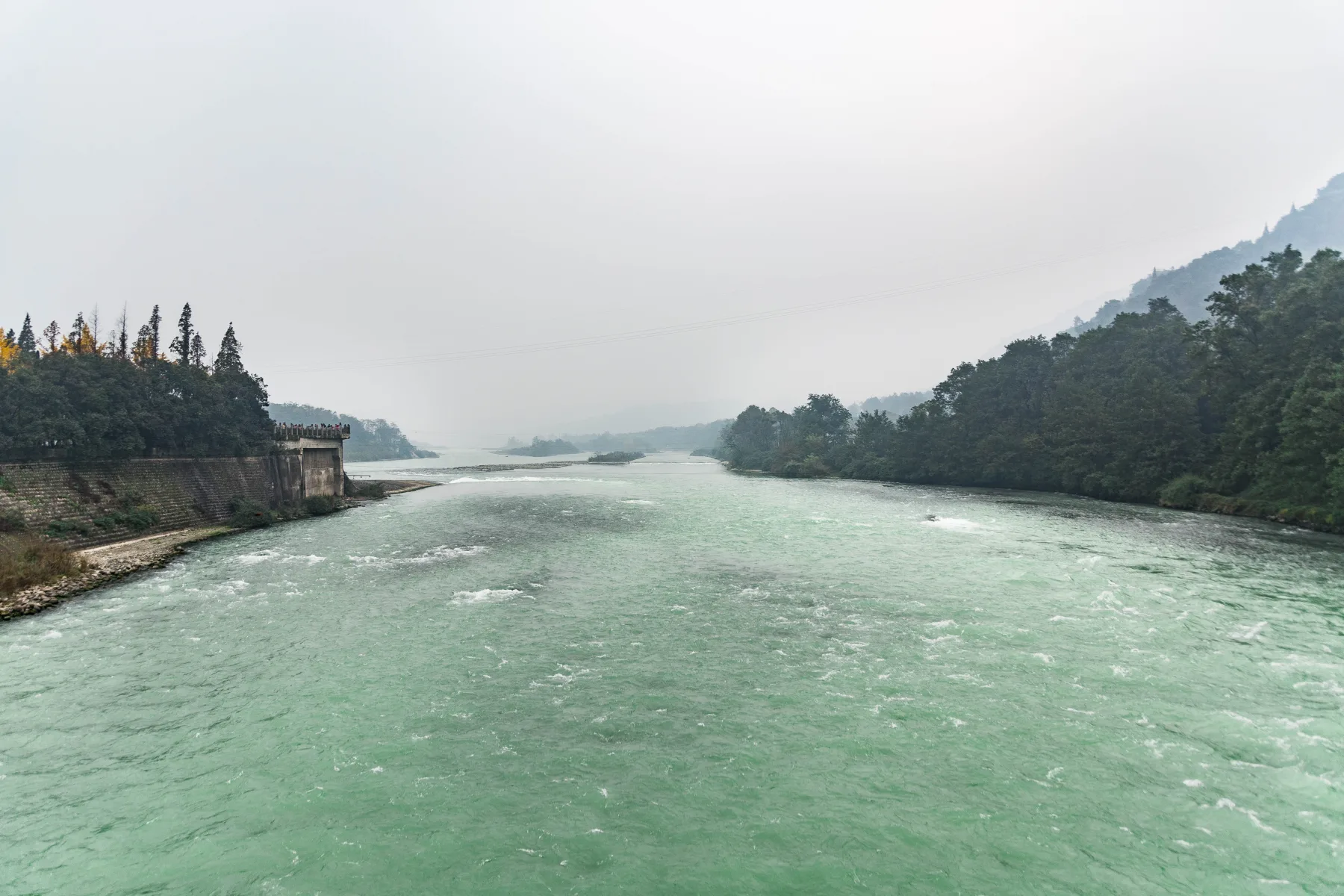
UNESCO lists Dujiangyan together with Mount Qingcheng. The pairing encourages a wider reading: engineering, state capacity, agriculture, sacred landscape and later tourism are connected. The site is not proof that an ancient structure has operated without change. Its significance includes repeated maintenance and institutional knowledge.
Allow a full day. A rushed photo stop misses the spatial logic, while combining Dujiangyan and every major Qingcheng route in one short winter day can turn both into transport exercises.
Poetry is preserved through later acts of memory
Du Fu lived in Chengdu during a period of displacement in the eighth century. His poems associated with the thatched cottage years connect weather, illness, friendship, poverty and political disorder to the textures of ordinary life.
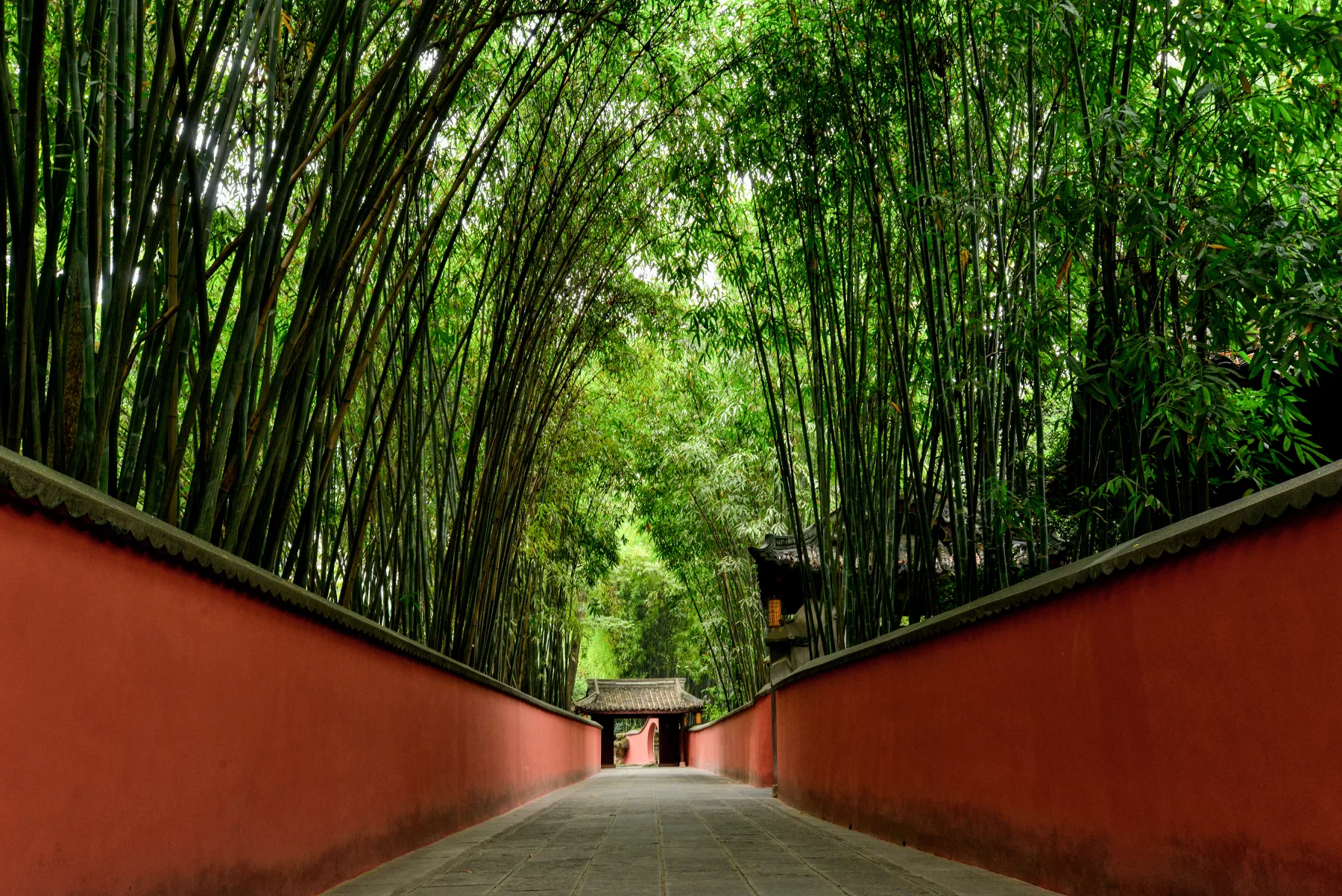
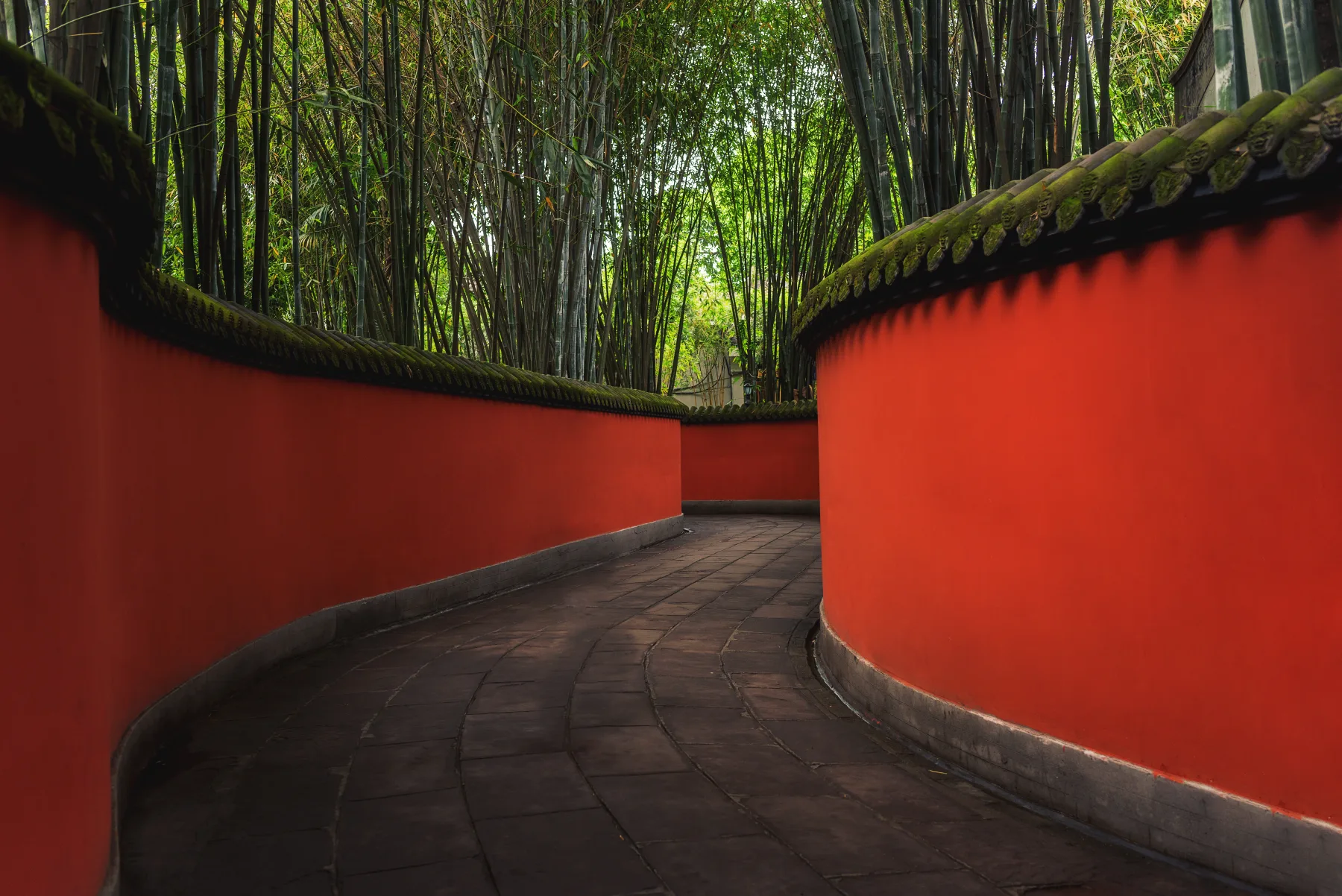
The present Du Fu Thatched Cottage is a memorial complex shaped by many centuries of rebuilding, landscaping and interpretation. Do not describe every hall as Du Fu's surviving home. Its value lies in how later readers kept rebuilding a place for poetry and public memory.
Wuhou Shrine operates through a different historical imagination. It is associated with Zhuge Liang, Liu Bei and the Three Kingdoms tradition, yet literature, worship, political memory and tourism overlap there. The nearby Jinli area is useful for seeing how historical stories become commercial atmosphere, but it should not be mistaken for an intact Three Kingdoms street.
Tea houses are inexpensive institutions of shared time
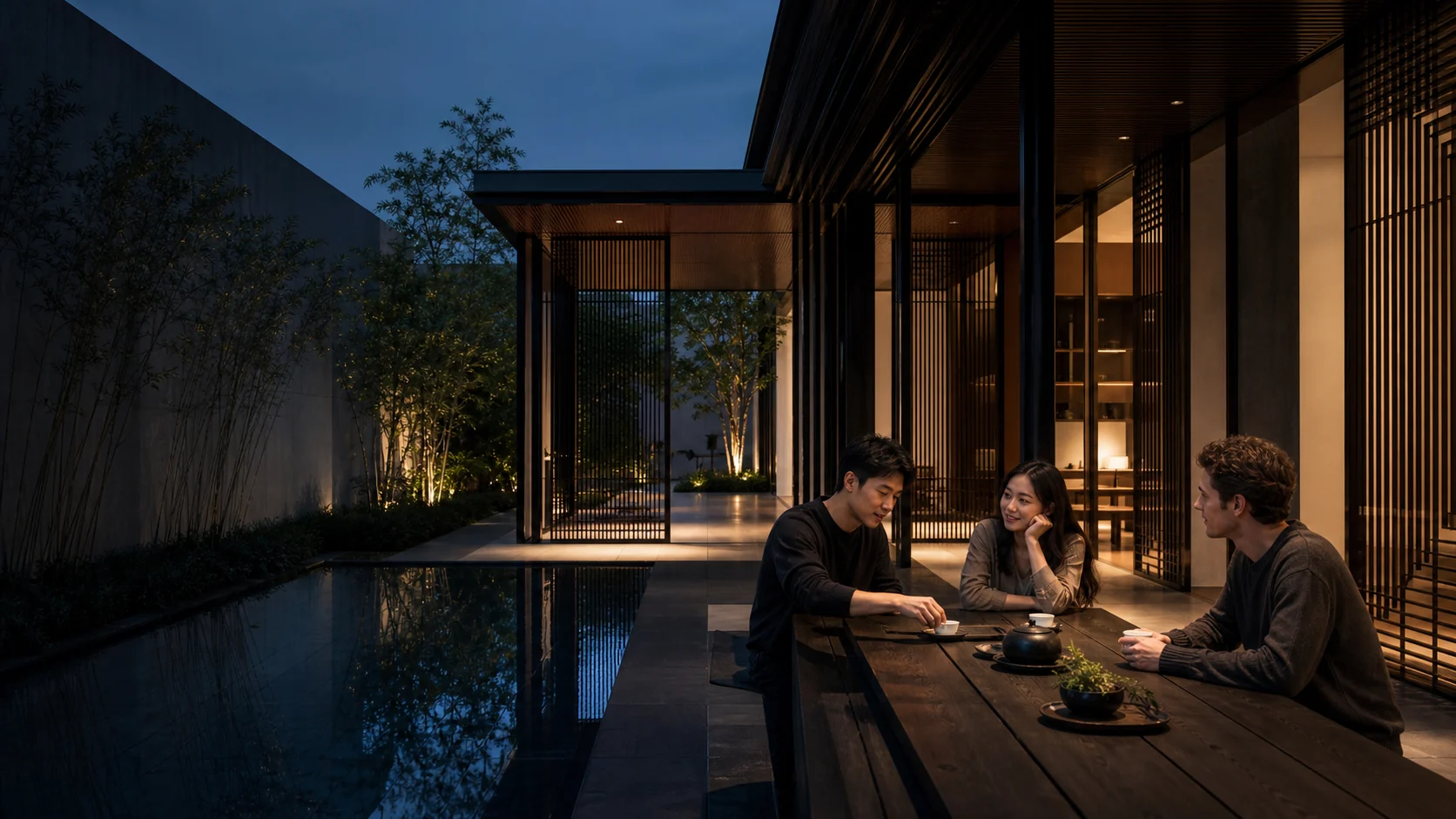
Chengdu tea culture is not defined by one rare leaf or a formal sequence of gestures. Its strongest urban expression is permission to remain. A cup buys a chair, hot-water refills and a temporary place in public life.
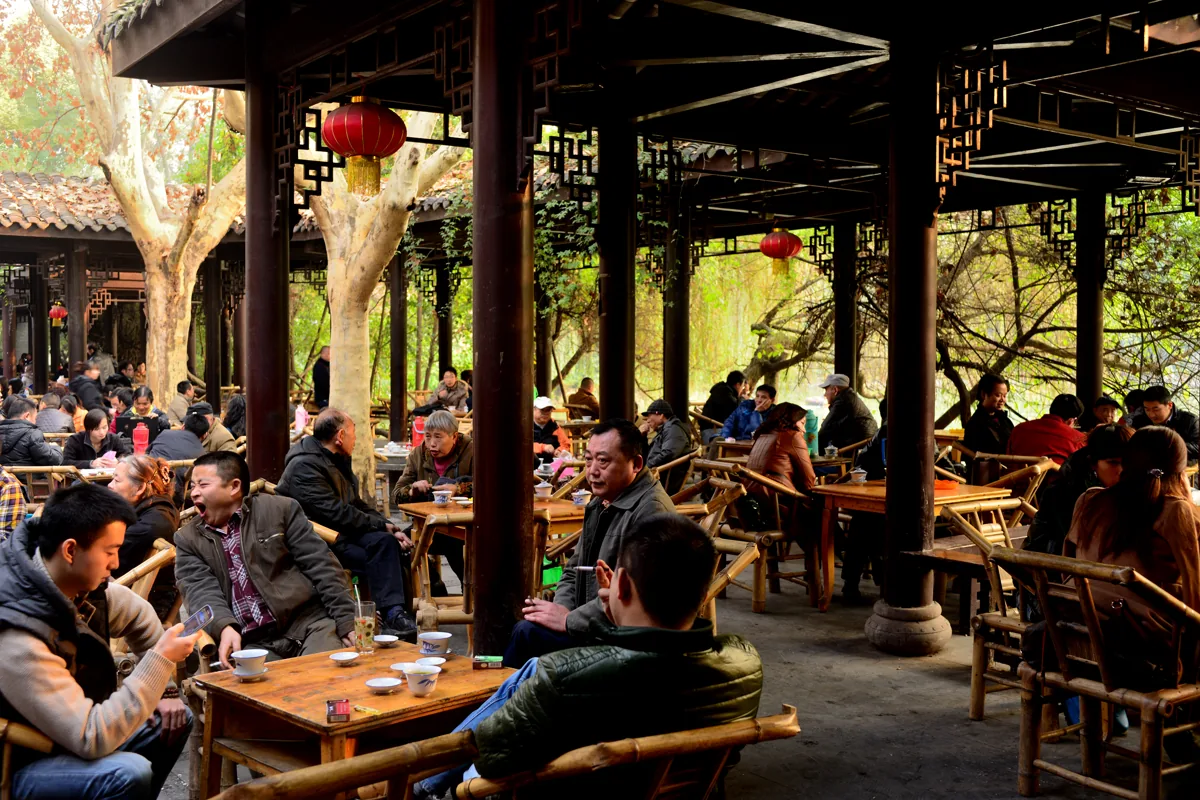
My test is brutally simple: if a guide photographs the gaiwan but cannot explain why the chair may stay occupied for two hours, it has missed Chengdu. The tea is real, yet the deeper cultural object is time made shareable. A refill keeps the conversation open; a movable bamboo chair lets strangers, relatives, card players and solitary readers use the same public room without performing one official version of “tea culture.”
I reject the easy joke that Chengdu is merely lazy. I believe its real talent is social engineering at a human scale: shade, cheap tea, movable chairs and repeated refills turn spare time into a public institution. The truth is that a city can work furiously and still refuse to make every visible minute look productive. I insist that this contradiction—not pandas or spicy food alone—is the cultural fact a visitor must carry home.
People's Park is the most accessible introduction, but it is also busy, photographed and partly shaped by visitor expectation. Neighborhood tea houses can feel less theatrical. In both settings, watch how tables create temporary communities without requiring everyone to interact.
| Tea-house element | What it does | Visitor note |
|---|---|---|
| Bamboo chair | Makes long sitting practical and movable | Do not treat occupied seating as a photo prop |
| Covered outdoor space | Joins weather, trees and conversation | Seasonal comfort changes sharply with heat and rain |
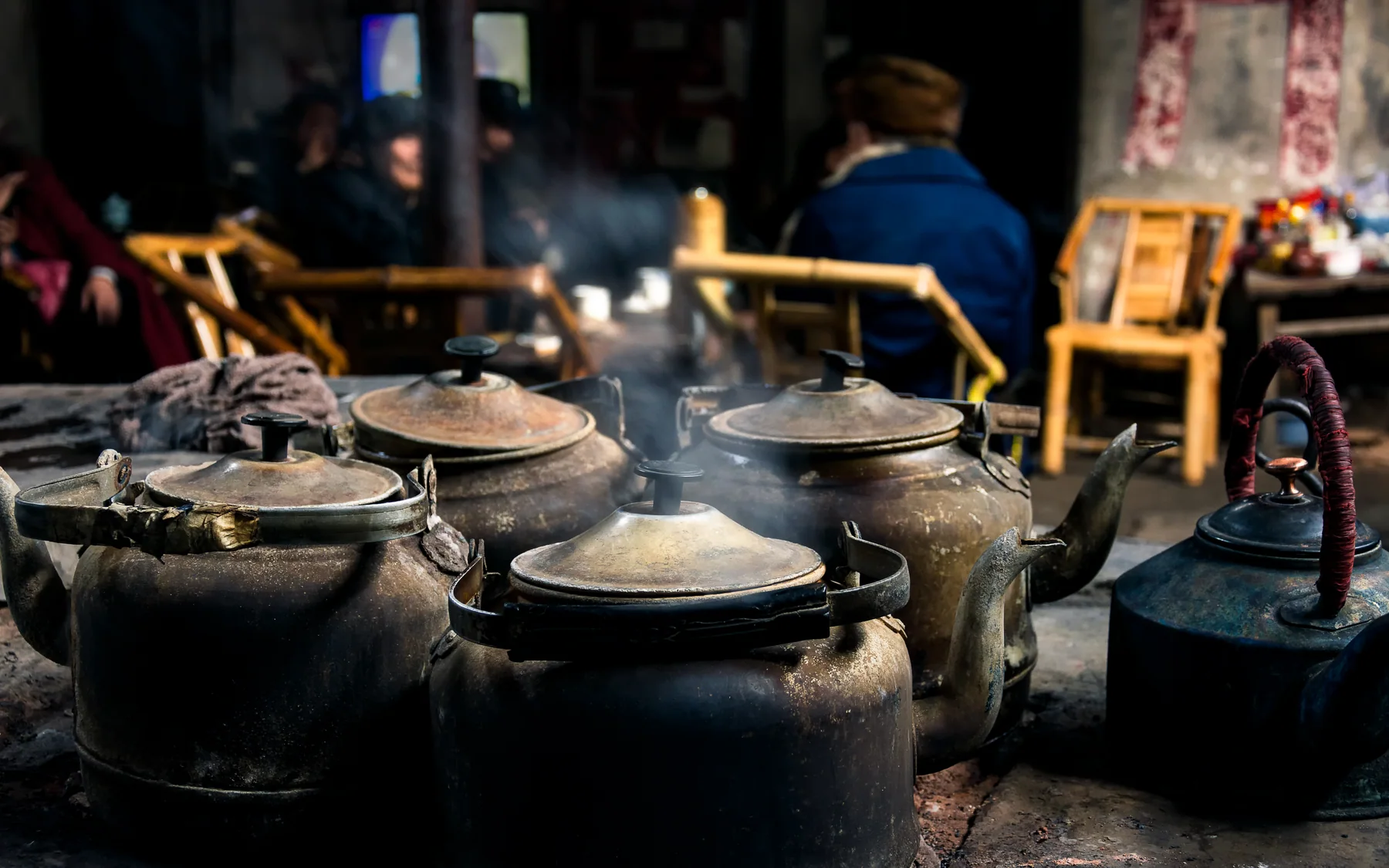
| Hot-water refill | Extends one inexpensive purchase | Ask how refills work before ordering premium tea |
| Cards and mahjong | Turn leisure into repeated social rhythm | Photograph players only with permission |
| Ear-cleaning vendors | Offer a service associated with public leisure | Check hygiene, price and personal comfort; participation is optional |
| Small performance | Connects tea drinking to storytelling or opera | Ticketed shows and everyday tea houses serve different purposes |
Explore the wider role of leaves, processing and social practice through Chinese tea, while remembering that Chengdu's contribution is often spatial: who gets to sit, for how long and with whom.
Sichuan opera is more than face-changing
Rapid mask changing is globally recognizable, but it is one technique within a wider performing tradition. Singing, speech, percussion, comic timing, gesture, acrobatics and local stories matter as much as the reveal.
Tourism programs may combine excerpts, fire-spitting, puppetry and mask changing into an accessible evening. They can be enjoyable introductions if audiences understand that a mixed showcase is not the complete opera form. Look for program information, performers' names and a venue that presents context rather than only spectacle.
Chengdu's creative economy moves faster than its image
Universities, software, digital entertainment, electronics, aviation and design shape contemporary Chengdu. Young migrants and graduates encounter the city through offices, campuses, apartment compounds, live music, shopping districts and long commutes as much as through parks.
Hip-hop is one of the clearest ways that contemporary Chengdu became audible overseas. Masiwei moved through Chengdu Rap House, widely known as CDC, before Higher Brothers carried the city's voices into 88rising videos and international tours. Our Chengdu rap scene guide explains that wider network through CDC, Higher Brothers, Xie Di and Wang Yitai; the Masiwei guide follows one globally visible route through it.
Rap is not the city's only export voice. Chengdu-born Jane Zhang carried a very different form of ambition from televised competition into film songs, large stages and English-language crossover. Her route matters here because a creative city should not be reduced to the scene that currently looks youngest: Sichuan dialect flow, a technically exposed pop vocal and game production can share one urban economy without sharing one aesthetic.
Xie Di shows an earlier source of local authority: Sichuan dialect functioning as flow, humor and social position before Chengdu rap became an international brand. Psy.P represents the low-register restraint inside Higher Brothers, while ICE Yang Changqing shows how a television-era technician built a much larger melodic and reflective catalog. Their differences are better evidence of a creative city than any claim that Chengdu has one sound.
Wang Yitai shows another CDC outcome: rap arranged with the patience of R&B and pop songwriting. KnowKnow complicates the geography from the other direction. He was born in Nanjing, then became central to the Chengdu-based Higher Brothers, evidence that a strong scene can absorb outsiders without pretending everyone shares one birthplace.
VaVa's artist guide adds a different Sichuan route. She was born in Ya'an rather than Chengdu, then moved to Beijing as a teenager and built a national career through competition stages, albums, fashion and My New Swag. Linking her to Sichuan context is accurate; relabeling her as a CDC or Chengdu-born rapper would not be.
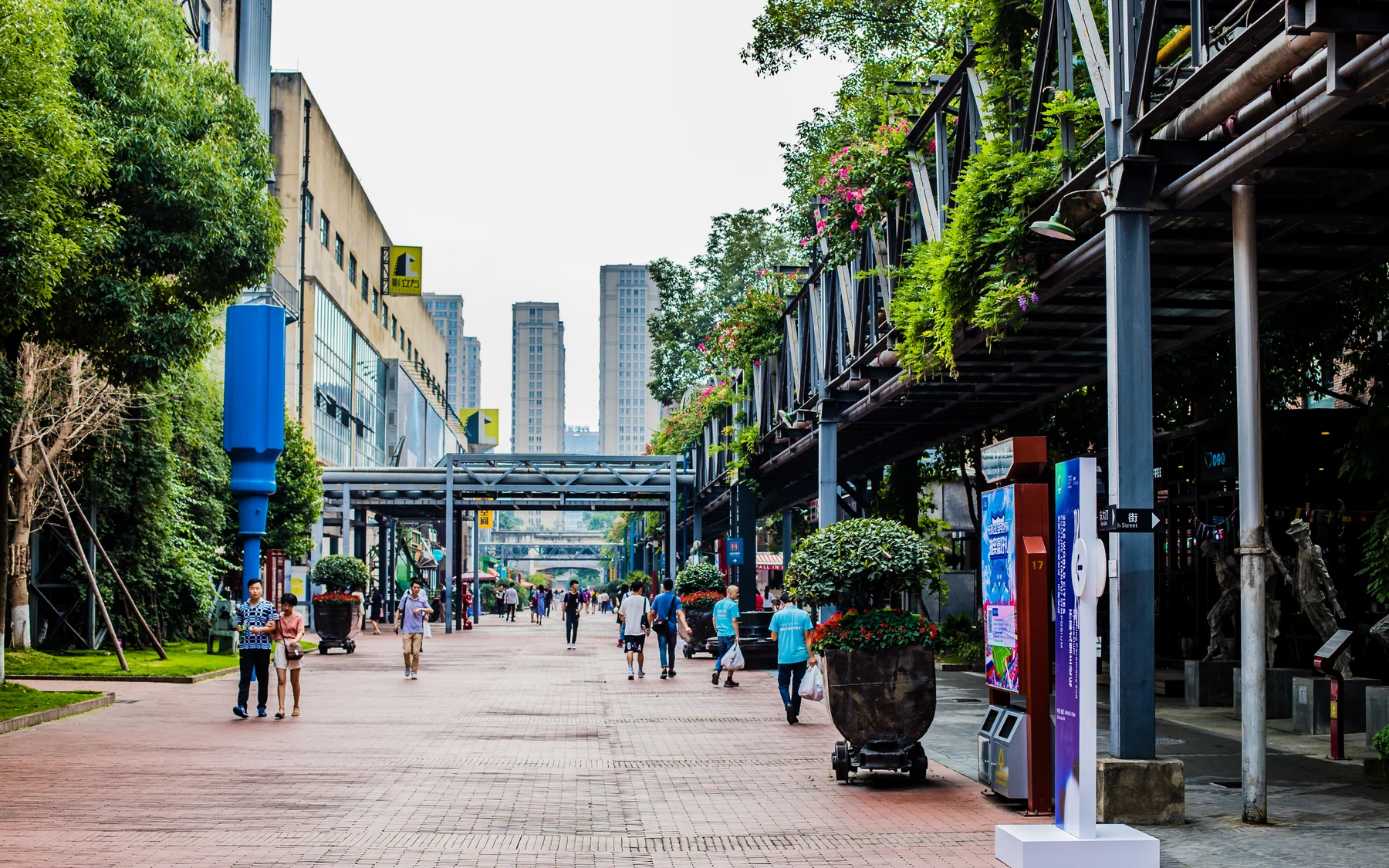
Eastern Suburb Memory uses former industrial structures for music, exhibitions, retail and events. Its value is not that every factory became an independent arts space; commercialization is visible. The district instead offers a readable transition from industrial production to cultural production.
Taikoo Li, Chunxi Road and IFS show a different urban economy, where temple proximity, international retail, street fashion and social media visibility meet.
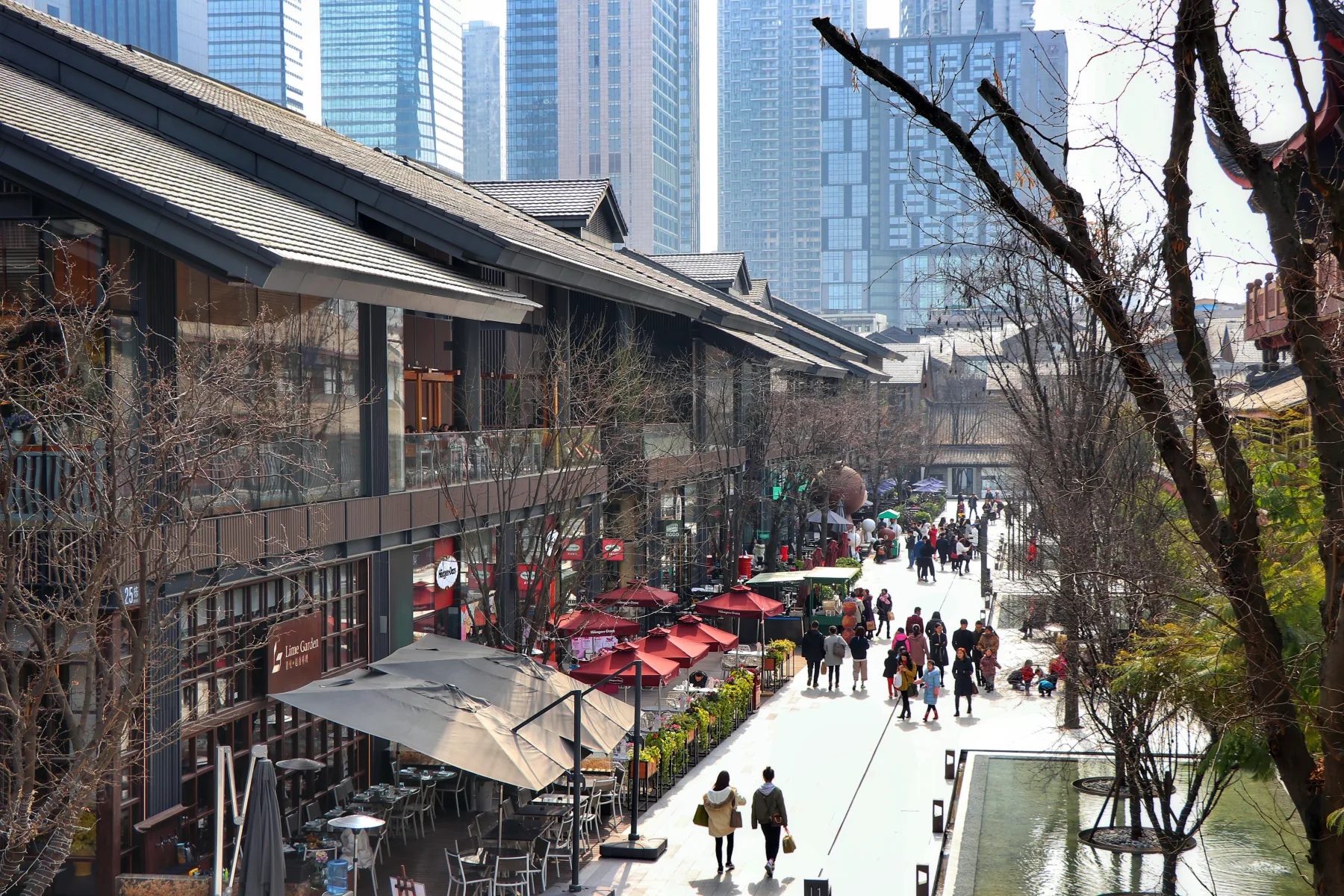
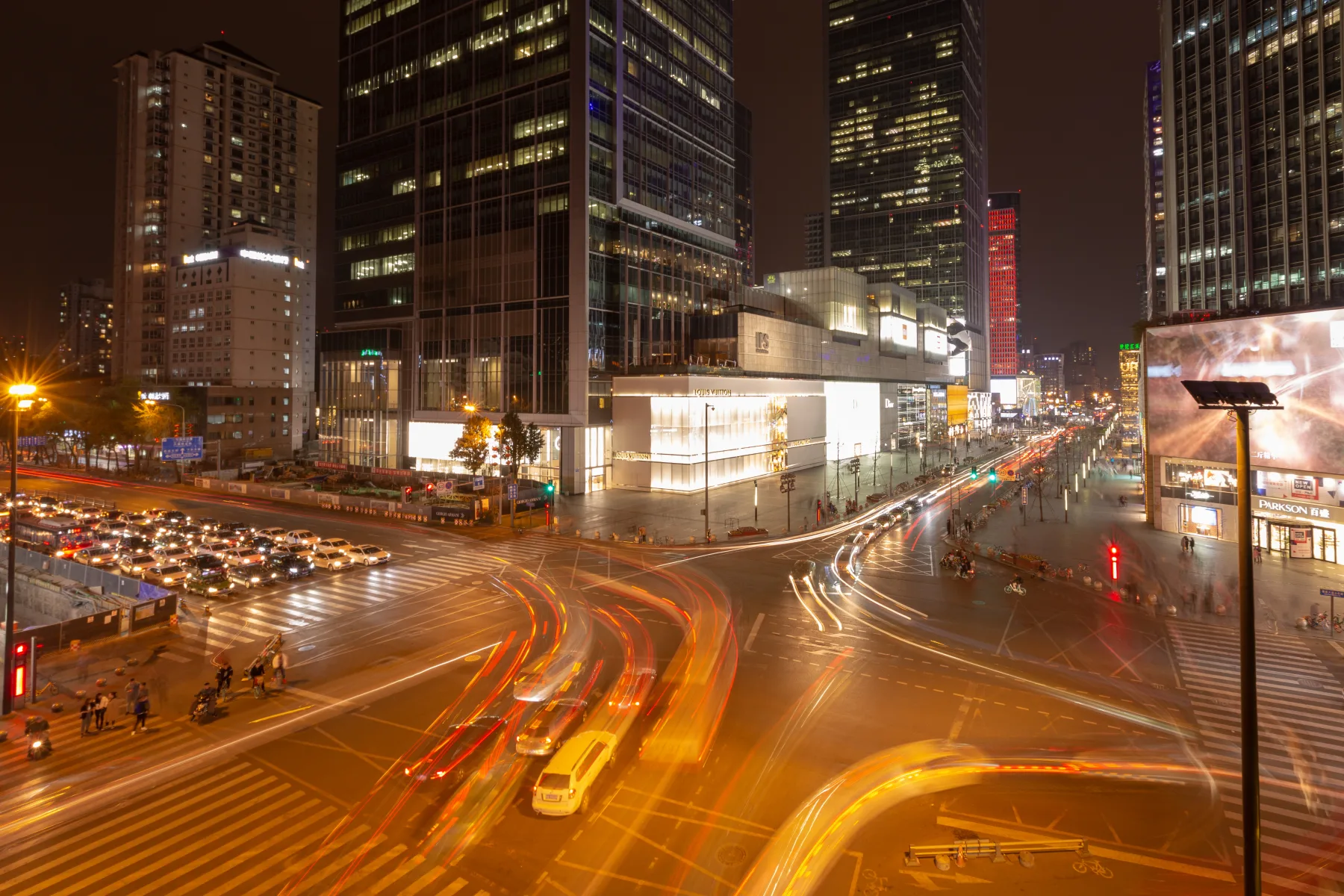
Calling this area superficial misses how consumption, aspiration, fashion and public space help younger residents negotiate identity. Calling it the real Chengdu would be equally narrow.
Pandas require realistic expectations
The Chengdu Research Base of Giant Panda Breeding is a conservation research and breeding institution with a major visitor function. It is not a wild reserve. Animals may sleep or remain indoors, especially in hot weather.
Arrive early, use the institution's official ticket information and avoid building the day around a guaranteed active-panda photograph. Giant pandas are part of Sichuan's ecological identity, but the province's wild habitats, research institutions and urban mascots are not interchangeable.
Night reveals another Chengdu
The city does not become dramatically vertical like Chongqing, but rivers, bridges, bars, food streets and commercial districts create multiple night rhythms.
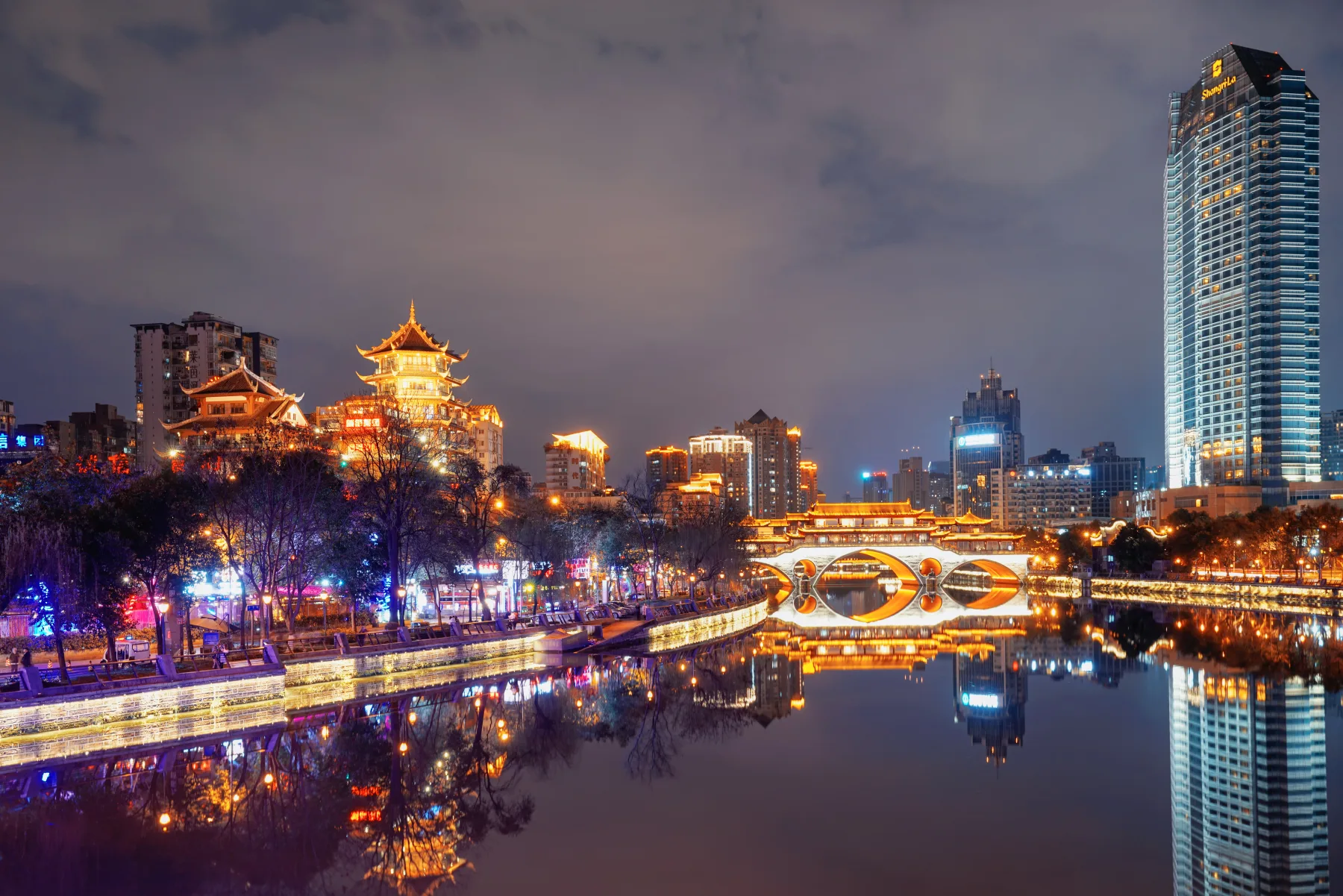
Jiuyan Bridge is popular for riverside nightlife. Visit for atmosphere, then step away from the most visible venues to see how residential streets, late meals and transport continue around it. Compare the experience with Chongqing, where topography and river crossings produce a very different urban night.
Where Chengdu's cultural systems meet
Chengdu makes the most sense as a chain of causes, not a checklist. Dujiangyan's managed water helped stabilize the plain. A productive plain supported dense settlement and a serious food culture. Dense neighborhoods needed affordable places to spend time, so the tea house became a public room. That room preserved local speech, humor, argument, cards, opera and the habit of listening to other people at close range.
Contemporary Chengdu did not replace that chain. It plugged new work into it. Game studios, science-fiction readers, musicians and designers inhabit a metropolis whose older social technology is still the chair beside the tea table. The Chengdu rap scene is therefore not an unrelated youth appendix: its verbal looseness and competitive network grew inside the same city that prizes talk, timing and repeat encounters. Chengdu food is not merely a list of dishes either; it shows how the region turns agricultural depth into shared social formats.
My strongest Chengdu judgment is simple: the city converts infrastructure into intimacy. Water control becomes settlement; settlement becomes food and public rooms; public rooms become speech, memory and new culture. The chain is more persuasive than the slogan that Chengdu is “laid-back,” because it explains what visitors can actually see.
For tickets, transport and a three-day sequence, use the practical Travel to Chengdu guide. This page stays with the cultural machinery behind the route.
Chengdu is relaxed because it makes room for life
The useful lesson is not that Chengdu has discovered a magical work-life balance. Residents still face pressure, cost, competition and long working days. The city's cultural power comes from something more concrete: repeated spaces where people can eat, sit, talk, perform, remember and continue being present without every minute becoming an attraction.