Jane Zhang is not the difficult note at the end of the clip. She is the singer who keeps making that note answer to a story. Begin with Painted Heart, listen to the low and middle register people skip, then judge the English records and current live work on their own terms. That route reveals an artist; a high-note montage reveals only an ability.
Jane Zhang is far more than China's “dolphin voice”
Search Jane Zhang (张靓颖) and the same small cage appears: talent show, “Dolphin Princess,” spectacular range, international singer. Every fact is recognizable. Together they still fail to explain why a voice stays with somebody after the applause ends.
I understand the temptation. A whistle note is easy to package. It travels through a fifteen-second clip without translation, and it lets everyone become a judge: high enough, long enough, clean enough. But I refuse to reduce a twenty-year recording career to vocal Olympics. The obsession with difficulty is often a way of avoiding music. We count what the body accomplished because it is harder to describe what the phrase meant.
Jane's real gift is not simply reaching the top. It is the tension between control and exposure. At her best, she sounds as if an enormous technical machine has been made to disappear behind one human need. At her least convincing, the machine remains visible and the song becomes a showroom. Both things are true. Pretending otherwise would turn admiration into publicity.
This guide takes five doors into the same career—competition, nickname, soundtrack, English crossover and the present—but it judges every door by one question: does the voice serve the emotion, or does the emotion merely introduce the voice?

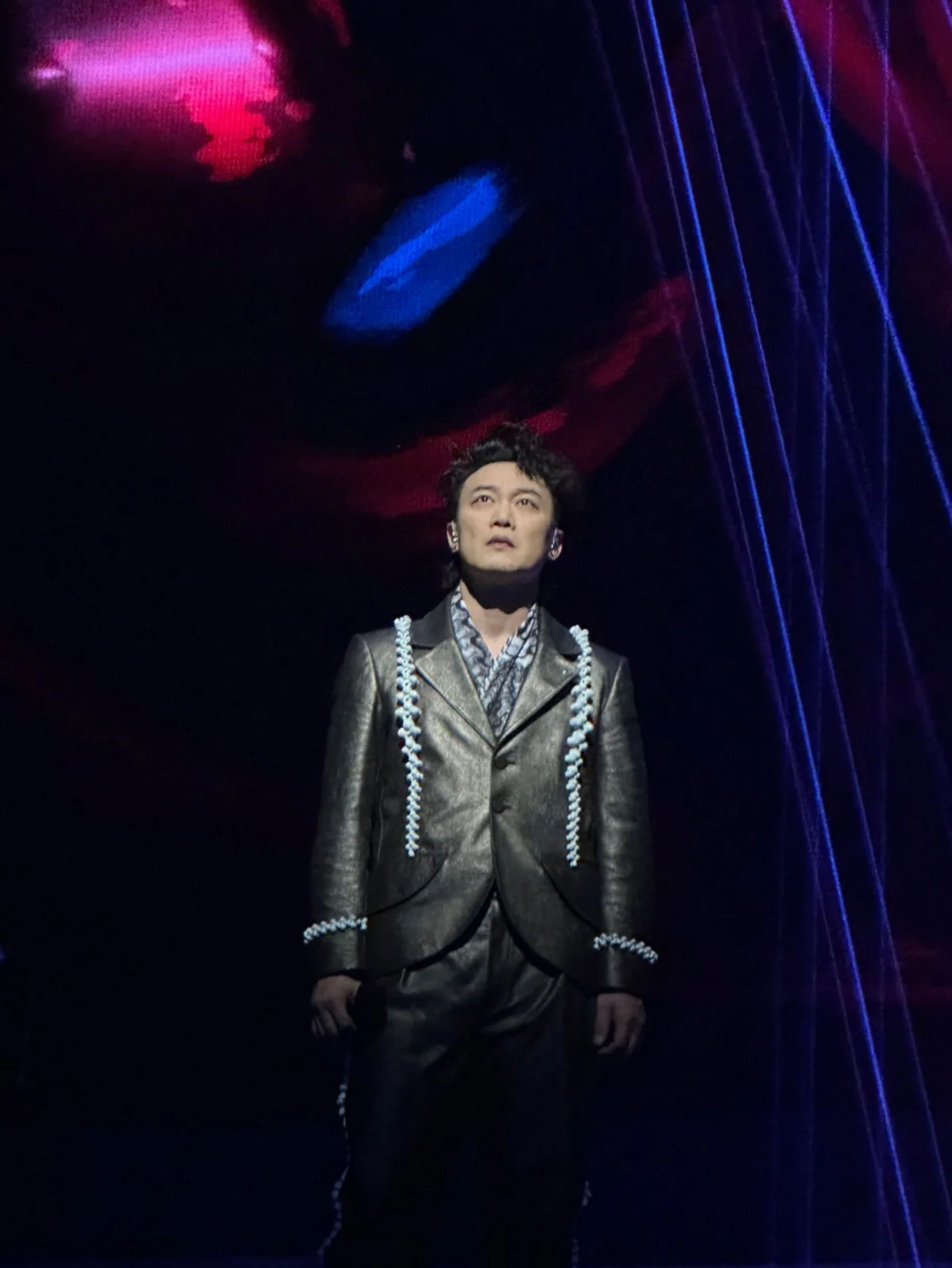
The stage photograph proves a public performance, not vocal quality. What matters beside it is the physical choice: microphone distance, posture and restraint before any climax.
The 2005 talent-show door gave her a weapon and a problem
Jane became nationally visible through the 2005 season of Super Voice Girl. A television contest needs a clean advantage that viewers can recognize before changing the channel. Range did that job. It turned a young singer from Chengdu into an instant argument at dinner tables and in school corridors.
The contest origin matters because it trained the public to listen competitively. Instead of entering a song, people waited for evidence. Could she reproduce the impossible sound? Was another singer more powerful? Did the live note match the legend? That listening habit followed her long after the competition ended.
Yet the early stage also exposed something more valuable: pressure did not make her abandon the line. Many big-voice performances attack the climax so aggressively that the verse feels like administrative paperwork. Jane could preserve the approach. Even when the arrangement promised fireworks, she often let the first phrases keep their shape.
That is the first reason she lasted. The range attracted attention; continuity made a career possible. Her Chengdu background belongs in the story, but not as a magical explanation for talent. Chengdu supplies a real place before the national television image—a city and a life, not a decorative origin label.
“Dolphin Princess” was a passport that became a border
The nickname “Dolphin Princess” made an unusual register portable. It also encouraged three lazy assumptions: the highest sound is the truest sound, technical novelty is a personality, and every new song should recreate the first astonishment.
I am especially impatient with the first assumption. A high note earns its place only when it changes the emotional geometry of a song. Does it release pressure that has accumulated? Does it expose panic? Does it turn private grief into something too large to hide? If the note exists because an audience bought a ticket expecting proof, it is athletic service, not interpretation.
The overlooked evidence sits lower. Listen to how Jane gives consonants an edge without chopping the line, how she darkens a vowel before a difficult rise, and how much air she allows into a quiet phrase. These are audible observations, not a diagnosis of her vocal mechanism. They matter because the return from a high note is often harder dramatically than the ascent. A singer can arrive at the peak and still fail to come home.
Recent Chinese discussion still divides around “singing skill”: one side treats technical command as the final verdict, while another hears impressive surfaces but insufficient intimacy. I share neither shortcut. Technique is indispensable, and technique alone is boring. The standard must be whether control makes a feeling more exact.

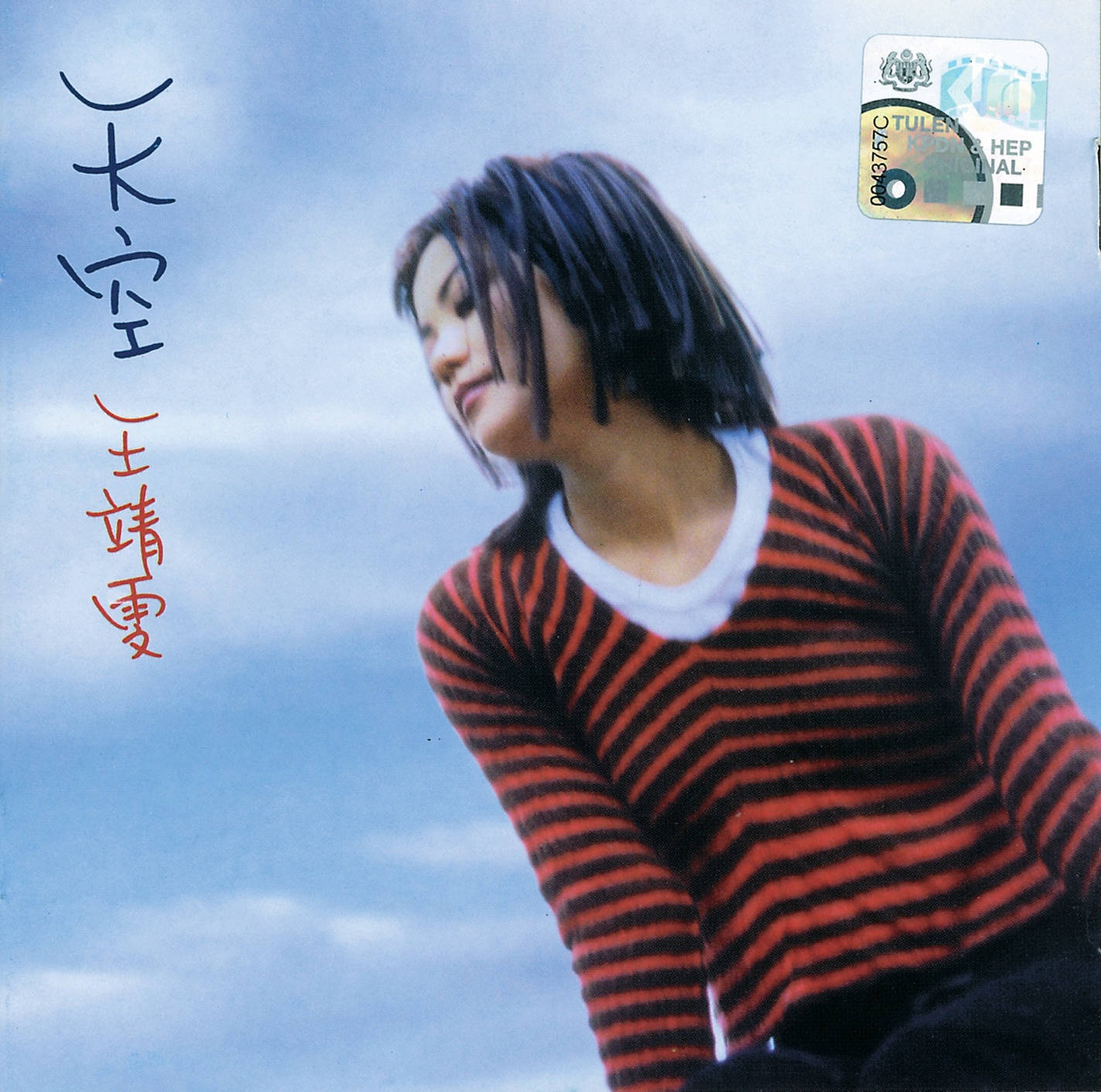
This frame shows the public scale attached to her voice. It cannot tell us whether a note moved the room; that judgment requires listening to the phrase before and after it.
Painted Heart is where Jane Zhang turns singing into screen acting
If somebody asks for one Jane Zhang song, I choose Painted Heart (《画心》) before any high-note compilation. It is the cleanest answer to the wrong question people keep asking about her.
The song has every excuse to become excessive: supernatural romance, a melody built for suspension, and a singer already famous for range. Jane resists the obvious trap. The opening does not behave as a runway for the final sound. Long phrases make grief feel as if it has continued beyond language, while the vocal colour stays intimate enough to belong to a character rather than a stadium.

The sustained climax is famous, but its value comes from preparation. Earlier restraint stores pressure. The lyric reaches a point where ordinary speech can no longer contain the feeling, so the melody stops behaving like speech. That is not “showing range.” It is soundtrack acting without a face.
The difference is crucial. A film singer can enlarge the scene until the characters disappear, or carry what the characters cannot say. Jane chooses the second path here. The official catalog identifies the 2008 release; it cannot prove my interpretation. The proof is repeatable: play the song from the beginning, skip no verse, and notice whether the climax still makes sense when separated from its approach. It does not. The architecture is the emotion.
That is why this song should lead naturally into Chinese movies. Soundtracks often cross language borders before the films do. A listener meets the ache first, then follows it backward toward the scene, the mythology and the Chinese words. Jane is not decorating cinema in Painted Heart. She is building an entrance to it.
English crossover worked when she stopped auditioning for English pop
Chinese coverage of an English-language release often becomes a national achievement notice: our singer entered their market. That framing is exhausting. Music is not an immigration stamp, and fluent pronunciation cannot substitute for character.
Dust My Shoulders Off works because it refuses solemnity. The track uses rhythmic looseness, spoken attitude and a pop-art world that lets Jane be playful. She does not arrive as a vocal ambassador required to prove China can produce a large voice. She arrives inside a song with its own wit.

The official Apple Music release record establishes the single. It does not establish whether the crossover succeeded artistically. My test is sharper: do phrasing, production and personality occupy the same room, or does the vocal sound imported after the track was finished? Here they share a room.
Not every crossover decision has equal depth. Sometimes English material gives her scale without enough emotional friction. The immaculate finish can keep the listener outside. That limitation should remain visible. A technically secure singer does not automatically become vulnerable by changing language, producer or market.
Compare her with G.E.M., another Chinese-language vocalist routinely reduced to power. G.E.M. often makes pressure itself part of the drama; Jane more often makes polish negotiate with ache. The comparison is useful precisely because “big female voice” is too crude a category for either artist.
The wardrobe argument is the least interesting thing happening on stage
Current performance discussion can be swallowed by clothes, body commentary and screenshots selected to reward outrage. I reject that entire substitution. A stage look may shape a performance, but it is not a serious answer to what the singer did with tempo, line, dynamics or the relationship between an old song and an older voice.
The authorized 2026 concert material I reviewed carries the heat of being in the room: red light, a figure on a giant screen, a lyric reaching the point where the audience already knows what comes next. The useful human response is not a verdict on styling. It is the recognition that a familiar song can still cause the body to brace for one phrase.
This is where lived audience material changes criticism. A catalog page tells us what was released. A stage recording shows how memory behaves collectively: people begin reacting before the decisive note because years of listening have taught them its location. That anticipation is part of the arrangement now. Jane is singing with the previous versions stored inside the crowd.
The page deliberately does not reproduce the blurry screen capture. Authorization does not make a weak picture useful. A first-hand image must still prove something clearly and look good enough to carry the proof. Editorial discipline includes leaving material out.
Jane Zhang in 2026 must be heard in the present tense
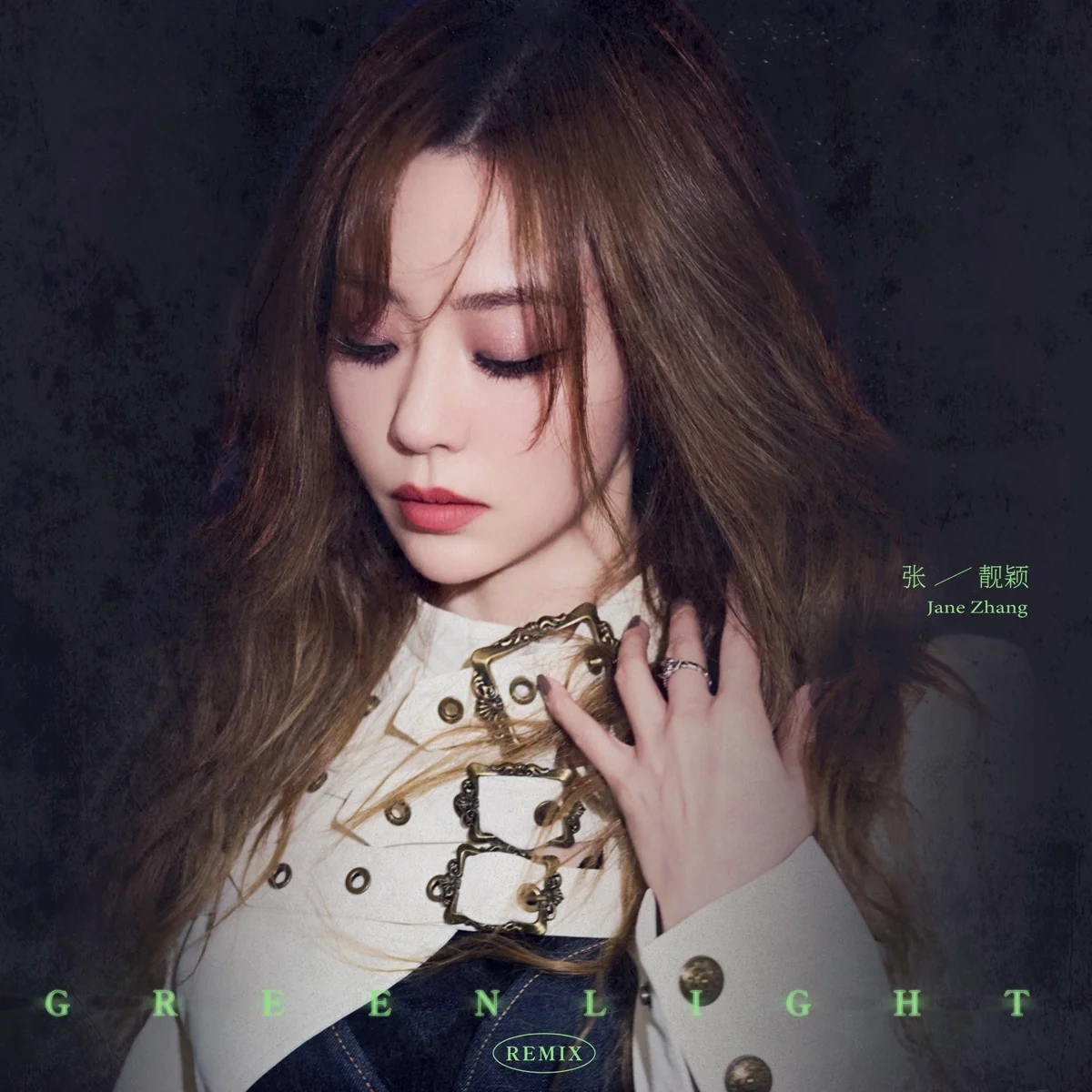
The vivid green artwork for the 2026 Green Light remix corrects a persistent editorial habit: established female singers are often pictured only at the moment the public first approved them. Their youth becomes the permanent visual tense even while the artist continues to record and tour.
Jane's current artist catalog lists active 2026 output. Newness is not proof of quality, and a release date is not a review. It changes the reader's responsibility. This is not a talent-show memorial. The present work deserves the same close attention as the origin story, without being forced to impersonate 2005 or Painted Heart.
A long career creates another risk: competence becomes expectation. When listeners already believe she can complete the phrase, surprise must come from interpretation rather than difficulty. Some recent performances meet that challenge by altering pressure, pacing or emotional temperature. Others feel sealed by their own excellence. I would rather say that plainly than praise longevity as if survival were a song.
The best Jane Zhang listening route moves away from spectacle
Do not begin with a random “best high notes” video. Use this route instead:
- Start with Painted Heart. Hear how long the song withholds full release. The famous note should arrive as consequence, not content.
- Choose a live version of a familiar Chinese ballad. Watch the microphone, but listen to the low entrance and the return after the climax. That is where control becomes narrative.
- Play Dust My Shoulders Off. Test whether English phrasing releases a different personality or merely demonstrates versatility.
- Choose one 2026 track without reading reactions first. Ask what the song wants from her that the older catalog did not.
- Only then revisit a 2005 performance. The contestant will sound less like a finished identity and more like raw material for everything that followed.
This route also answers the common search for “Jane Zhang best songs” without pretending that one ranking can serve every listener. For dramatic singing, begin with Painted Heart. For crossover play, use Dust My Shoulders Off. For career development, pair an early stage with a current release. A useful guide gives you a method, not just a list.
My conclusion is firm: Jane Zhang matters because she made extraordinary range carry ordinary human feelings—longing, self-protection, defiance, the desire to be recognized as more than one's most marketable gift. The whistle register opened the door. The art begins in the rooms beyond it.
Continue through the Chinese musicians collection or widen the frame with our Chinese music guide. Then bring one performance to the comments. Name the exact phrase where you stopped admiring the mechanism and believed the person. We will turn the strongest choices into an anti-showreel playlist: Jane Zhang heard through emotional decisions, never note height.