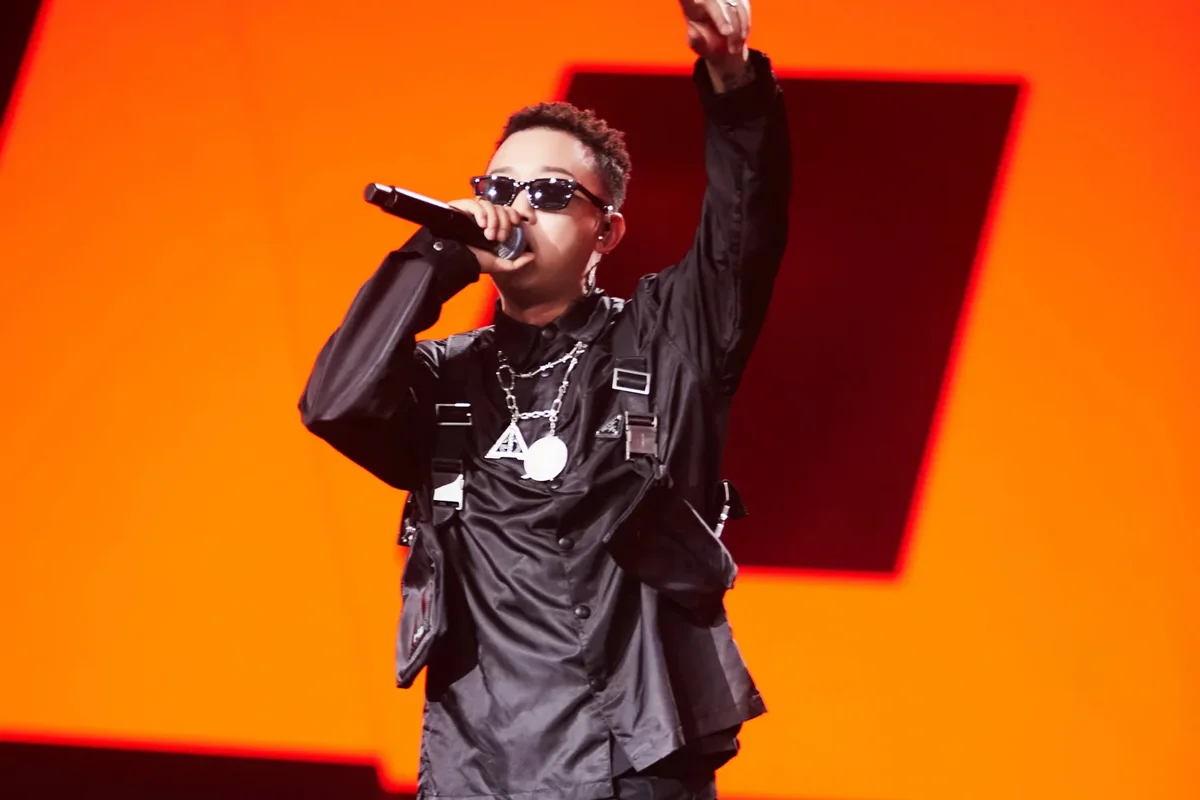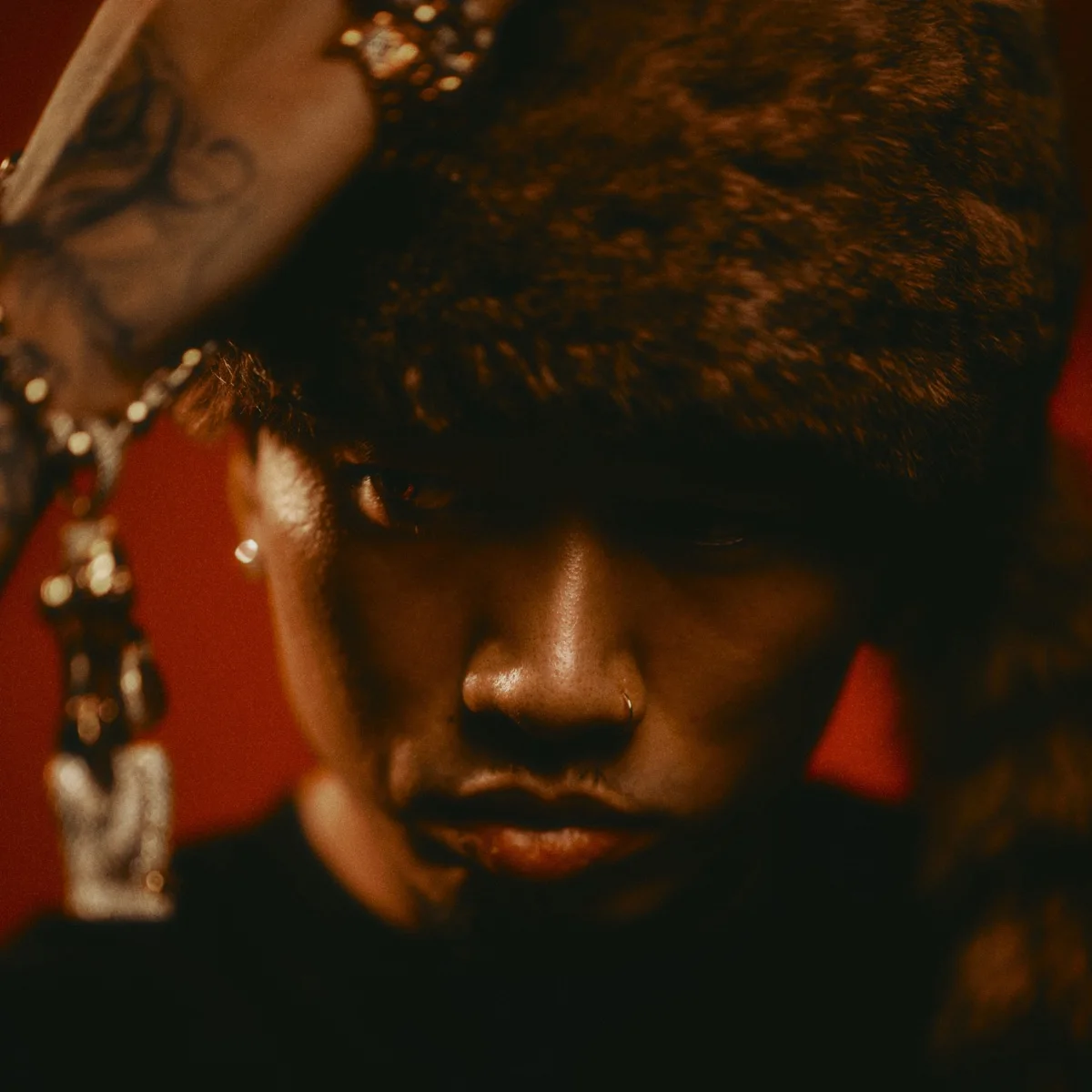
Wang Yitai makes rap for the moment after the party image has faded and the room still has to hold a song. He can deliver clean verses, but his deeper skill is architectural: knowing when a chorus should arrive, when a line should repeat and when the beat needs empty space.
I hear Wang Yitai most clearly when the hook has already done its commercial job and the next verse refuses to offer an easy emotional answer. I reject the idea that melody makes his rap less serious. The best songs use melody as pressure: the phrase becomes easier to remember while the feeling inside it becomes harder to resolve. This matters because a streaming-friendly chorus can either flatten a rapper or expose how carefully he has built the room around it.
That is why his crossover records feel more coherent than the usual “rapper tries pop” story. Melody is not attached after the verse. It is already inside the design. The listener can enter through rhythm, singing, romance or production and still arrive at the same artist.
Wang Yitai in 60 seconds
| What you want to know | The short answer |
|---|---|
| Chinese name | 王以太 |
| Home city | Chengdu, Sichuan |
| Scene | Chengdu Rap House, commonly called CDC |
| National breakthrough | Eyes Fixed during The Rap of China in 2018 |
| What hits first | Smooth phrasing, careful spacing and choruses built to last |
| Start with | Eyes Fixed, Sorry, Dangerous Party and Don't Fear Growing Old |
| Albums to know | Yan Shuo Jia, Survivor's Guilt and Love Me Later |
| Current chapter | The Wang Yitai and AIR EP Tai Re Ai in July 2026 |
Calling him a melodic rapper is accurate but incomplete. The melody works because Wang Yitai thinks about the whole room around it.
He arranges attention
Some rappers prove control by filling every beat. Wang Yitai often proves it by leaving a space untouched. He can place a phrase early, delay the next answer and allow the instrumental to become part of the conversation.
That sense of proportion explains his range. A direct rap track, an R&B duet and a large television chorus may use different surfaces, but the underlying decision is similar: each section earns its entrance.
His delivery also avoids one common crossover problem. He does not suddenly stop sounding like a rapper when the production becomes softer. The consonants remain clear, the pocket remains intentional and the melody grows from the same speaking voice.
Five songs that reveal Wang Yitai
1. Eyes Fixed: the “eliminated song” that outlived the result
Eyes Fixed (目不转睛) became the national introduction many listeners remember from 2018. The song's afterlife is more important than its competition outcome. A television format can decide who advances; it cannot fully decide which song people continue carrying.
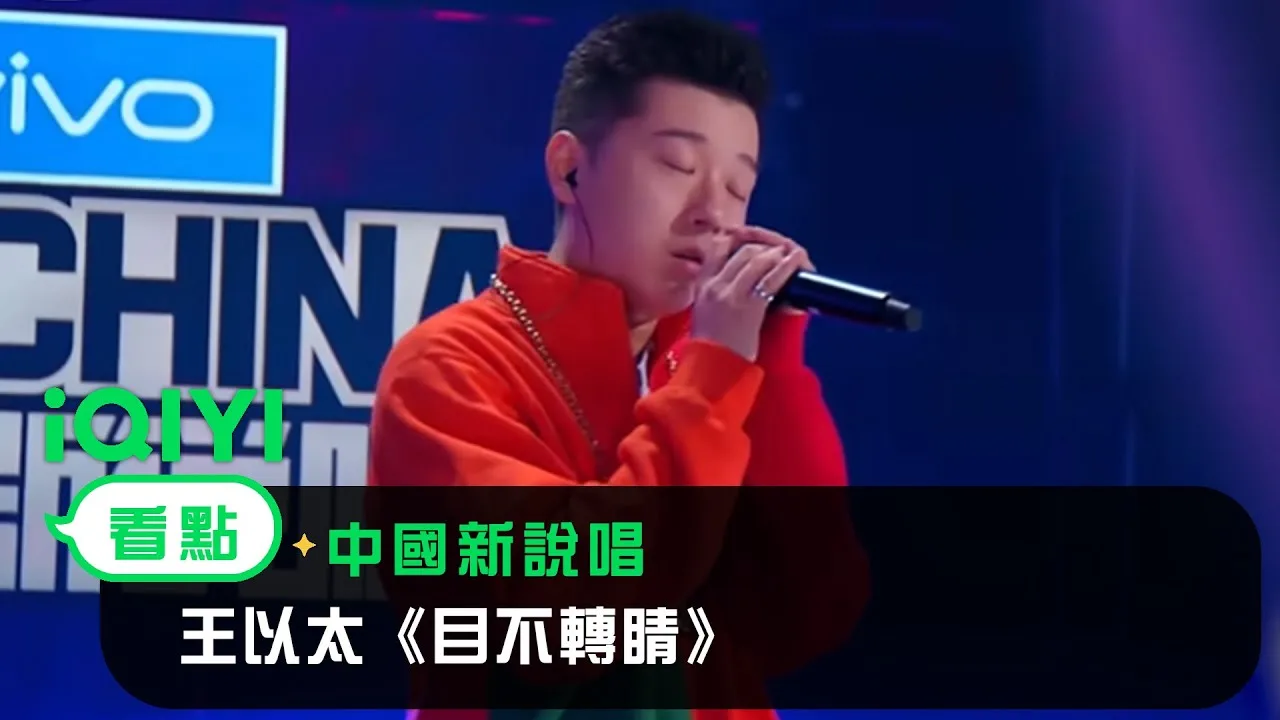
The official iQIYI upload of Eyes Fixed captures the economy of the breakthrough: a recognizable phrase, a relaxed pocket and enough melodic clarity to escape the episode.
Listen to how little the hook needs to explain. Repetition turns attention itself into the subject. The song is easy to remember because the structure behaves like the title: it fixes the listener on one phrase.
2. Sorry: softness with rhythmic edges
Sorry reduces the public scale. Wang Yitai does not use apology as a reason to abandon cadence. The vocal remains measured, but the spaces become more exposed, making hesitation part of the groove.

The official Sorry video on ZHONG.TV belongs in this guide because it shows his strongest crossover habit: reducing volume without losing rhythmic identity.
For a new listener, this is the track that proves “smooth” does not mean emotionally uncomplicated.
3. Dangerous Party: pop reach is part of the craft
Dangerous Party (危险派对), with Liu Zhijia, became one of Wang Yitai's widest-reaching songs. The duet is built around immediate chemistry and a chorus that can circulate far beyond rap audiences.
The easy reaction is to call it a commercial detour. A better question is what it demonstrates. Wang Yitai can write for shared vocal space, allow another singer to carry equal narrative weight and keep the rap section inside the same emotional world. That is collaborative composition, not a guest verse pasted onto a pop single.
4. Don't Fear Growing Old: adulthood without a lecture
With AIR, Wang Yitai finds a partner who also trusts melody and controlled delivery. Don't Fear Growing Old (别怕变老) lets friendship, time and vulnerability sit inside a rap performance without turning maturity into motivational speech.
The two voices complement each other because neither needs to dominate. AIR opens phrases through singing; Wang Yitai shapes the conversational frame around them. Their chemistry later expanded into a joint album and another collaborative project.
5. Roundabout: attraction as repeated motion
Roundabout (周旋) uses a word that can suggest circling, maneuvering or negotiating with another person. That ambiguity suits Wang Yitai. Romantic tension becomes structure: repeated approaches, partial answers and a beat that never resolves too quickly.
Listen after Dangerous Party. The comparison shows that he does not have one fixed “love song” setting. One record seeks immediate public lift; the other lets uncertainty remain active.
Chengdu is a workshop, not a flavor tag
Wang Yitai grew inside Chengdu Rap House, the network usually abbreviated as CDC. The Chengdu rap scene guide places his songwriter route beside Xie Di, Higher Brothers and other voices. International summaries often treat Chengdu rap as one recognizable sound: relaxed Sichuan attitude over modern trap production. The real value of the scene is broader.
CDC created proximity. Rappers could watch one another write, exchange beat knowledge, test songs, compete and build a local audience before national platforms understood the scale of the city. That workshop logic matters to Wang Yitai's music. He sounds like an artist accustomed to revising a complete song, not only protecting his own verse.
Our Masiwei guide explains how the same city network fed the global-facing energy of Higher Brothers. Wang Yitai took a different route. His international usefulness is not that he sounds “less Chinese” or more pop. It is that he demonstrates another outcome of Chengdu's dense creative exchange.
The Chengdu cultural guide gives the wider context: tea-house sociability, long public conversations, creative neighborhoods and a city pace that can feel relaxed without being inactive. Those qualities do not mechanically produce a flow, but they help explain why collaboration and unforced confidence became such durable local values.
The albums move from declaration to uncertainty
Yan Shuo Jia (演.说.家) arrived in 2019. The punctuation divides ideas of performance, speech and expertise, an appropriate title for an artist deciding how rap, singing and public identity fit together.
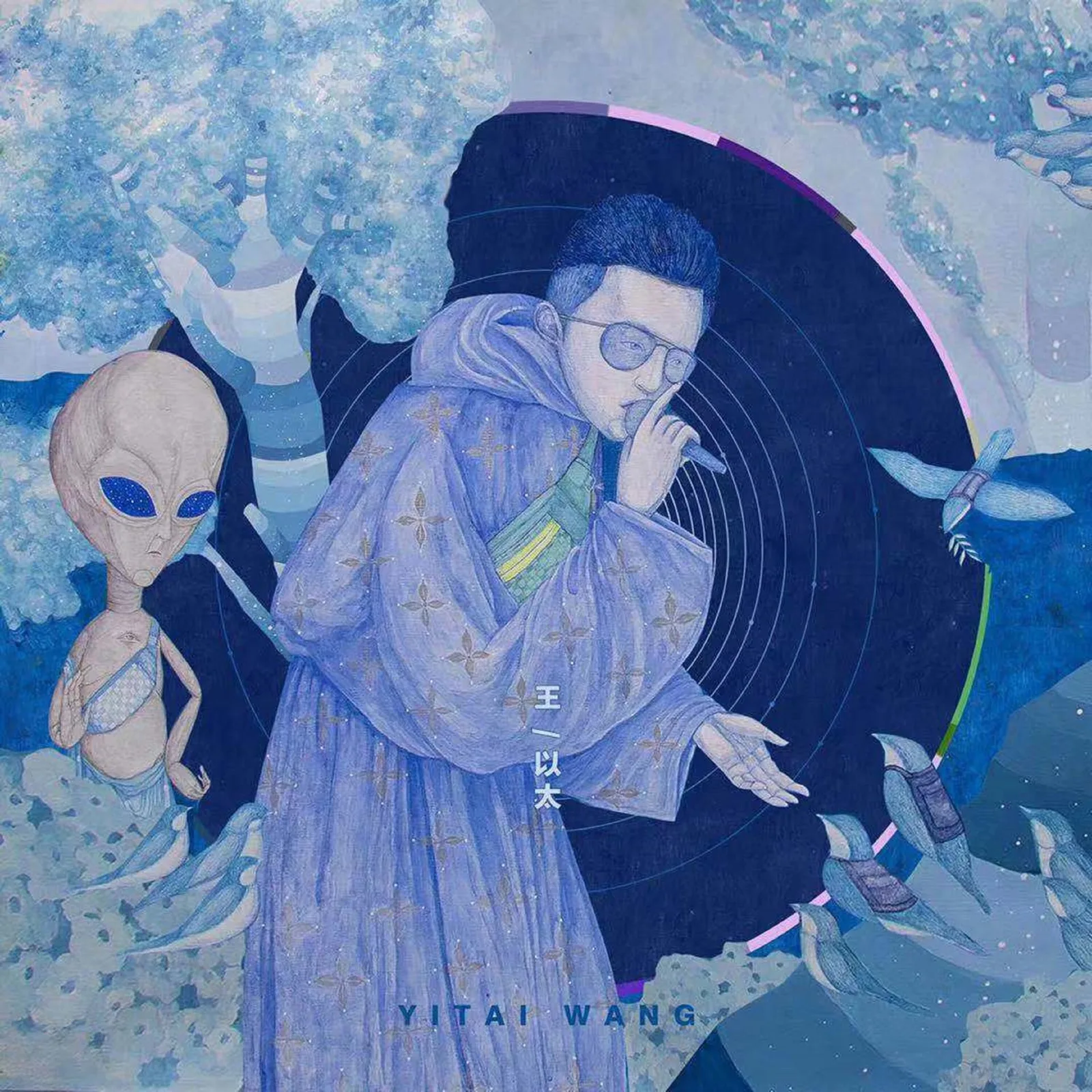
The Yan Shuo Jia album established a post-television catalog instead of allowing one breakout song to stand for the artist.
The 2021 project Survivor's Guilt (幸存者的负罪感), jointly credited to Wang Yitai and AIR on Apple Music, places heavier emotional language at the center. Success is not treated as a clean reward. The title suggests the discomfort of moving forward while remembering who, or what version of oneself, did not come with you.
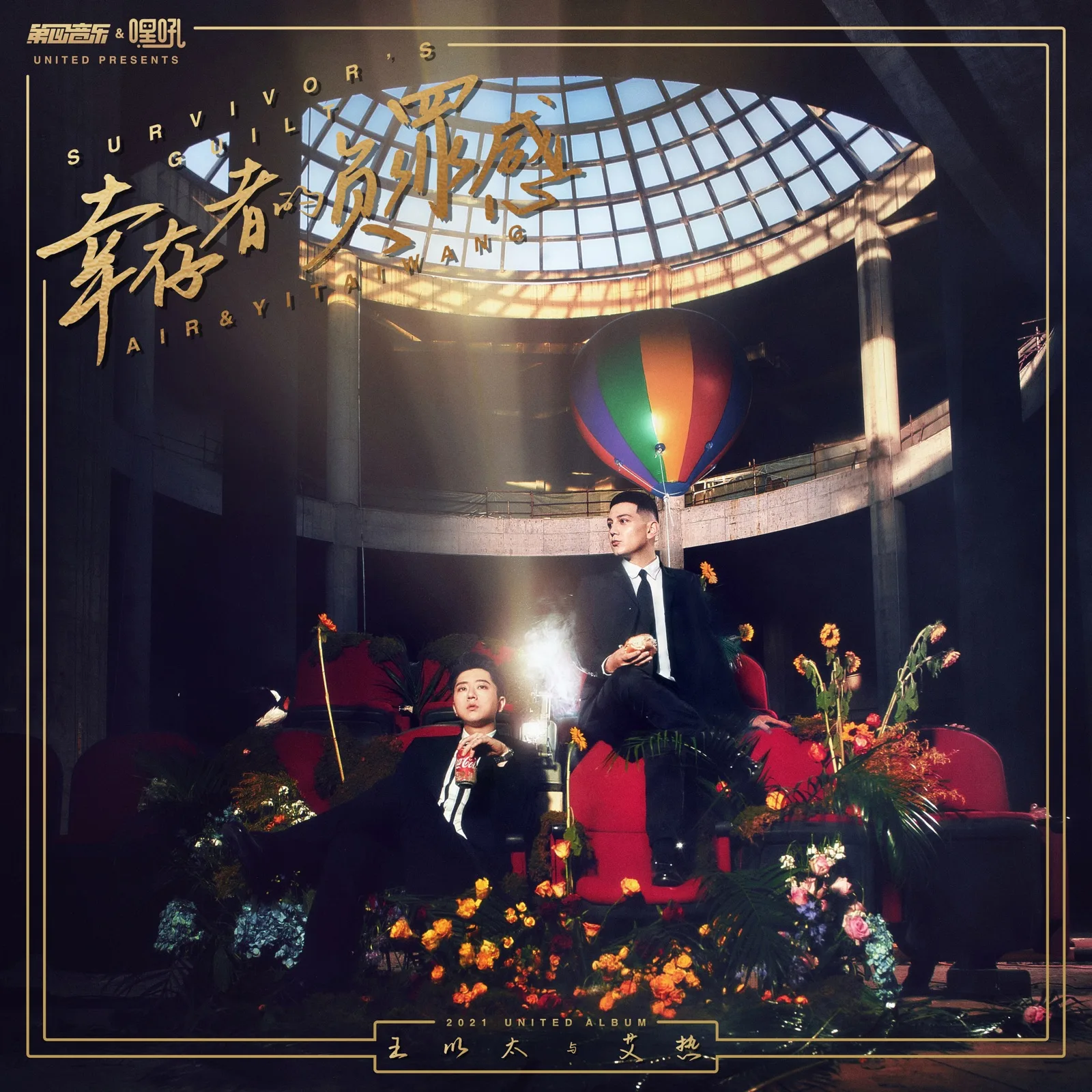
The official Survivor's Guilt album formalized the Wang Yitai and AIR partnership in 2021.
Love Me Later followed in 2024. The English title fits an artist increasingly comfortable with emotional delay. Love, recognition and understanding do not need to arrive on the beat's first count.

On Love Me Later, crossover polish becomes a framework for postponed answers rather than proof that Wang Yitai left rap behind.
AIR is a true catalog relationship
Wang Yitai and AIR are often linked because the collaboration makes musical sense, not merely because both became television-era stars. Each can sing without treating singing as an exit from rap, and each is comfortable leaving emotional space in an arrangement.
By July 2026, Apple Music listed Tai Re Ai (太热爱), a new joint EP. The title plays with their names and a phrase meaning intense love. It extends a relationship already visible in songs, stages and the 2021 album.
This is the kind of internal connection East Moment should preserve. AIR's Kashgar background and Wang Yitai's Chengdu scene are distinct. Collaboration reveals shared musical values without erasing geography.
Current listener interest makes the strength and the risk of that relationship visible. Tour clips, Dangerous Party, first performances with AIR and emotional stage moments generate attachment quickly. I do not read that accessibility as accidental viral luck: Wang Yitai knows how to leave a collaborator enough space to change the center of a song. The harder test is what remains when the famous hook and partner chemistry are removed. A polished record earns repeat listening only when one verse, silence or structural turn could belong to nobody else.
Map the song before judging the verse
Wang Yitai rewards a structural listening pass. Draw a simple timeline while the track plays: entrance, first hook, verse turn, empty space, melodic lift and final return. The exercise sounds clinical until it reveals how deliberately the song moves attention. A memorable line is only one piece; placement determines whether it lands as confession, release or decoration.
Next, compare the first and final chorus. Has a verse changed what the repeated words mean? Has the instrumental gained or lost weight? Does the singer sound more certain, or does repetition make the emotion less stable? This is where rap and songwriting stop behaving like separate departments.
Then test a collaborative track. Listen for whether Wang Yitai leaves a guest enough room to alter the center of the record. Good arrangement is not the ability to sound smooth over everything. It is the discipline to let contrast remain audible without breaking the song.
My view is that his strongest work is architectural rather than merely melodic. Start with the five songs above, but do not collect hooks. Track how each record controls distance, return and silence. The catalog clicks when you hear the room being built around the verse.
Use headphones once and speakers once. On headphones, follow small vocal doubles, breaths and the edge between rapping and singing. On speakers, ask whether the low end and chorus still organize a shared room. A well-built song should survive both scales without forcing every detail to the front.
Finally, compare a polished single with a deeper album cut. The single proves access; the album cut proves whether arrangement can support ambiguity when no immediate hook is required. That difference is where Wang Yitai stops being merely smooth and becomes a songwriter worth following across projects.
Do not confuse ease with simplicity. The smooth surface is successful only when a second listen reveals where the song redirected you without announcing the turn.
Wang Yitai makes melody carry adult uncertainty
Wang Yitai's strength is reliability at song scale. Even when a track is clearly designed for a large audience, the verse, chorus and feature usually belong to one arrangement. He does not need to prove seriousness by making the music difficult to enter.
The tradeoff is that polish can make risk harder to hear. Some later material settles into tasteful R&B-rap surfaces where the production, melody and emotional language all agree too quickly. Listeners who love the immediacy of Eyes Fixed may miss more abrasion.
His best answer is not a return to a supposedly pure underground sound. It is contrast: stranger drums, sharper writing decisions and collaborators who interrupt his balance. AIR works because he expands the emotional register; a harder producer can expose another edge.
Follow the hook into the unresolved verse
Use this five-step route:
- Eyes Fixed for the national breakthrough.
- Sorry for melodic restraint.
- Dangerous Party for pop-facing collaboration.
- Don't Fear Growing Old for the AIR partnership.
- Survivor's Guilt for a full project built around that chemistry.
Then move through the Chinese musicians directory or choose AIR for the other side of the partnership, Masiwei for a more globally projected Chengdu route, ICE Yang Changqing for competition-honed technique expanded across a large post-show catalog, and KEY.L Liu Cong for a contrasting form of controlled storytelling.
Why Wang Yitai matters
Wang Yitai offers a better vocabulary for discussing crossover. Rap and pop are not two countries he travels between. They are materials inside the same songwriting room.
His most important lesson is structural: accessibility becomes artistically meaningful when the listener can still hear decisions. The hook is memorable because of where it arrives. The verse feels calm because of what surrounds it. Smoothness is not the absence of technique. In Wang Yitai's best work, it is technique made invisible.