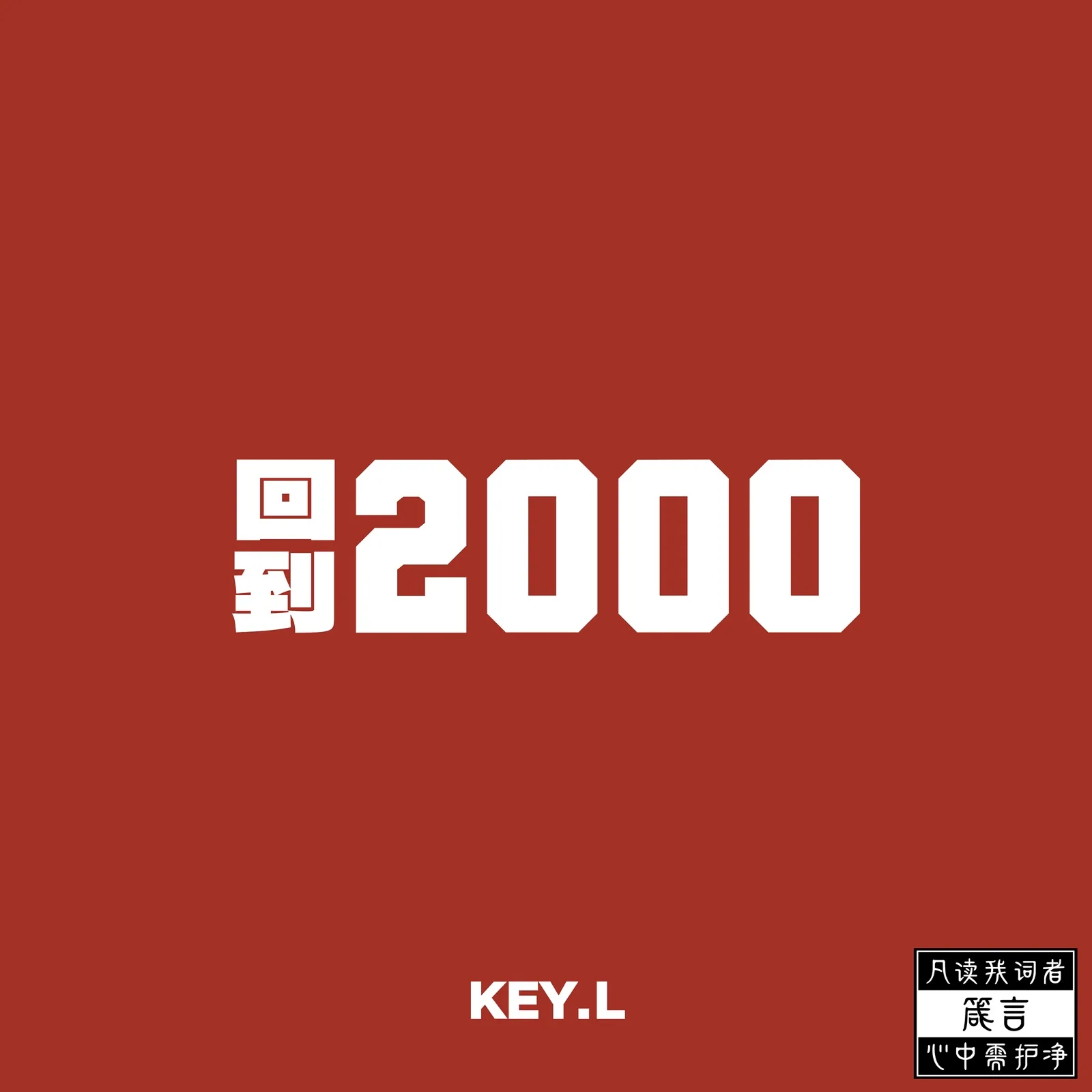
KEY.L Liu Cong does not sound like someone chasing your attention. He sounds like someone who assumes the details will bring you back. I trust that restraint more than manufactured drama: a street name, an old cassette player or a younger self can stay longer than the loudest line in the room.
That patience is his real advantage. Television made KEY.L more visible, but C-Block listeners already understood his role. DamnShine could strike with pressure, Kungfu-Pen could make language snap, and Liu Cong often became the quiet emotional center: the voice that made a crew record feel lived rather than merely performed.
KEY.L Liu Cong in 60 seconds
| What you want to know | The short answer |
|---|---|
| Artist name | KEY.L, also known as Liu Cong or 刘聪 |
| Birthplace and scene | Born in Hengyang; artistically formed in Changsha's C-Block scene |
| Core group | C-Block with DamnShine and Kungfu-Pen |
| What hits first | A low, unhurried voice that lets narrative details accumulate |
| Start with | Hey KONG, Future Awaits, Black Benz and Economy Class |
| Project to know | Back to 2000 |
| Current chapter | The four-artist G-BLOCK Mixtape in 2025 |
The essential distinction is geographical. KEY.L is not simply “a Changsha-born rapper.” He was born in Hengyang, studied in Changsha and became inseparable from the city's rap history through C-Block. That movement helps explain his writing: home is often something assembled through friendships, repeated routes and remembered rooms.
Restraint is the technique
I love KEY.L when one ordinary object carries more pressure than a shouted slogan. I reject the lazy praise that calls every quiet delivery “mature”; restraint must make the listener lean toward a specific room, year or unfinished relationship. My test is whether the verse leaves an object changed. A car, notebook or cassette should begin as scenery and end as evidence.
I also insist that nostalgia must lose something. If the past is only warm, the writing has protected memory from truth. KEY.L matters when affection and embarrassment remain in the same line, when looking back does not magically make the younger self innocent, and when the adult voice refuses to pretend it has solved the person it addresses.
KEY.L's voice sits low in the mix without becoming passive. He often enters slightly behind the emotional expectation of the beat, allowing the instrumental to establish a mood before he names what it means. The effect is conversational, but the phrasing is carefully controlled.
He also understands the difference between sadness and self-pity. Instead of announcing that a memory is important, he builds the memory from objects. The listener receives a scene, then realizes the scene has become a judgment about time, friendship or ambition.
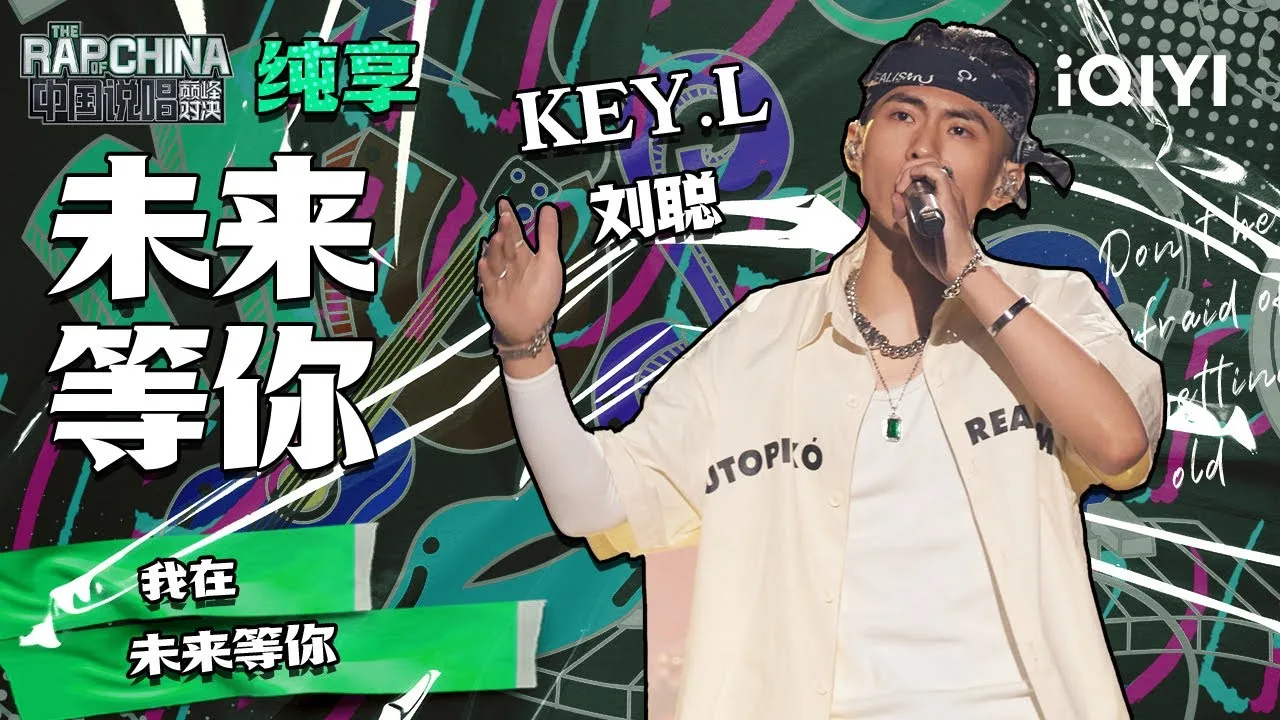
In the official iQIYI performance of Future Awaits, KEY.L addresses the younger “KONG” from his earlier song without pretending that adulthood solved every question.
This is why a literal translation misses part of his appeal. The words matter, but so does the social temperature: the Hunan habit of speaking directly without over-explaining, the crew history underneath the solo voice, and the distance between local recognition and late national fame.
Five tracks that explain KEY.L
1. Hey KONG: an introduction written as a private letter
Hey KONG is the obvious entrance because it contains the complete KEY.L method. The song looks backward without treating the past as a museum. “KONG” functions as a younger self, an imagined listener and a name the older artist can question.

The official Hey KONG single was released on Apple Music in 2020 after the song had already become central to his public identity.
The performance is controlled because the song does not need a dramatic reveal. Each verse adds another layer of accumulated time. For overseas listeners, the useful comparison is not confessional pop. It is a rap letter whose authority comes from refusing to clean up the life being remembered.
2. Future Awaits: the answer is not a victory speech
Future Awaits (未来等你) returns to the younger KONG. A weaker sequel would list achievements. KEY.L instead tests what success has and has not changed. The emotional weight comes from the gap between the hopeful teenager and the adult who now knows how slowly recognition can arrive.
The official stage works because he remains physically composed. The screen, arrangement and audience provide scale; his voice provides intimacy. That contrast makes the song feel addressed to one person even inside a television production.
3. Economy Class: adulthood measured from a seat
Economy Class (经济舱), made with Kafe.Hu, uses travel without turning the airplane into luxury symbolism. The seat is a temporary room between work and home. Fatigue, movement and ambition become ordinary rather than heroic.
That perspective separates KEY.L from rap built entirely around arrival. He is interested in transit: the years before recognition, the hours between cities and the compromises that continue after success. Listen for how little vocal force he uses to make the image believable.
4. Black Benz: calm does not mean soft
Black Benz (黑本子) tightens the drums and gives KEY.L a darker frame. The title's sound play links the “black notebook” of rap writing with the English-language luxury-car association, but the track's pleasure is rhythmic rather than purely aspirational.
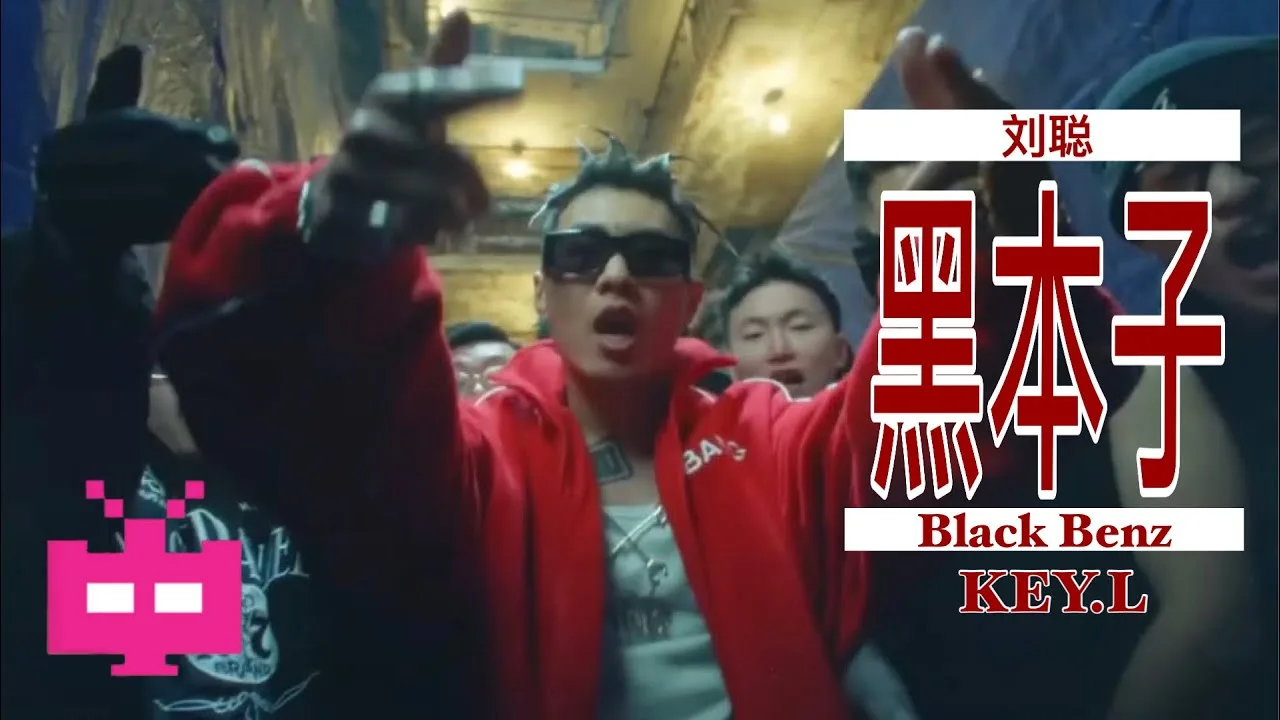
The official Black Benz video on ZHONG.TV shows that his restraint can carry a harder beat without imitating a more aggressive rapper.
He pushes consonants forward, leaves shorter gaps and proves that the reflective voice is a choice, not a technical limitation.
5. 28214 Days: counting life without summarizing it
The title 28214 Days turns a lifespan into an exact-looking number. The song is less interested in arithmetic than perspective: once time is counted as individual days, fame occupies a surprisingly small portion of it.
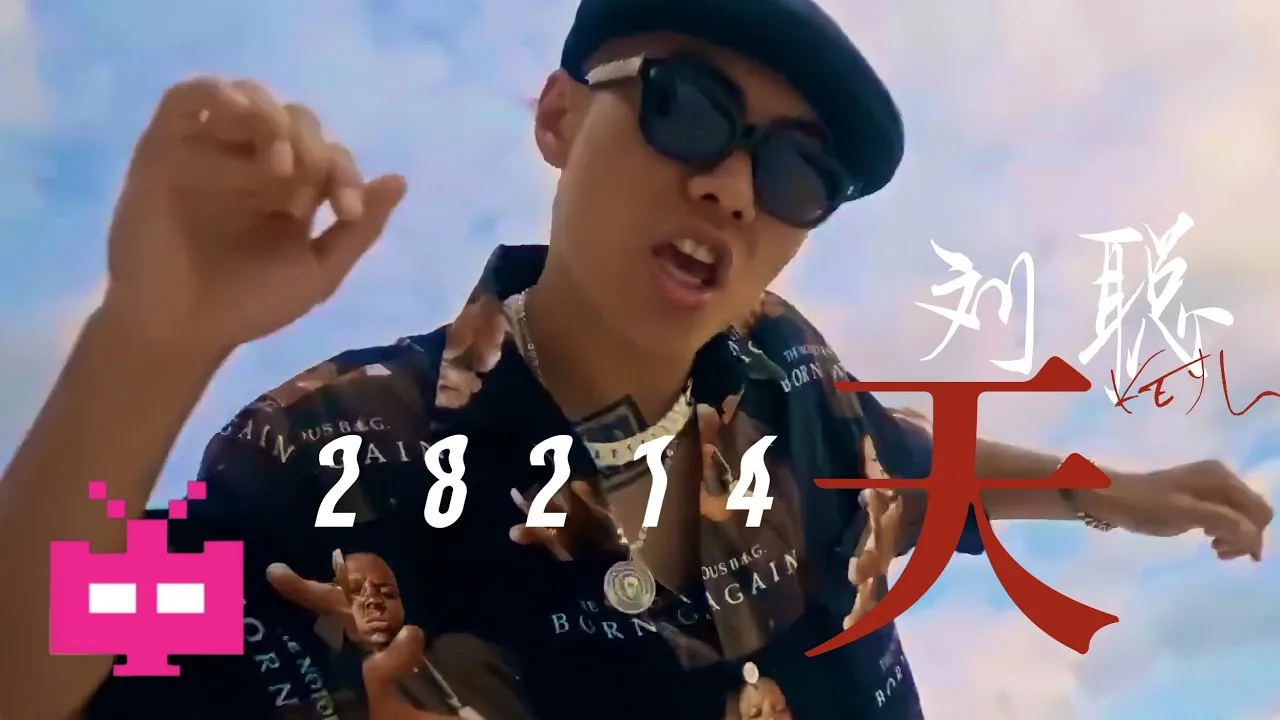
Watch the official 28214 Days video for the older KEY.L's visual language: measured, reflective and uninterested in turning every memory into nostalgia.
The record works as a late-career self-portrait because it does not compress the person into a television breakthrough. The number is a reminder that an artist's public timeline is never the whole life.
C-Block explains the voice, but does not contain it
C-Block formed in Changsha in 2007 around Liu Cong, DamnShine and Kungfu-Pen. Long before national rap programs could offer a career route, the group built an audience through local language, humor, street observation and a durable sense of collective identity.
Our Sheng Yu guide follows DamnShine's pressure, stage power and CSC leadership. KEY.L occupies a different frequency. His verses often lower the temperature and reveal what the larger group identity costs, protects or remembers.
The distinction matters for international readers. “CSC” can refer broadly to Changsha's rap community and cultural identity; C-Block is a specific three-member group. They overlap, but they are not interchangeable labels for every Hunan rapper.
The Changsha cultural guide explains the city's academy, revolutionary memory and night streets. C-Block adds another layer: Changsha as a place whose dialect, local pride and long friendships became national music without first asking Beijing or Shanghai to validate them.
Back to 2000 is a memory system
The 2023 album Back to 2000 (回到2000) is not simply retro styling. Its title points toward a period when imported rap vocabulary, local-language experimentation, physical media and small circles of listeners had not yet become a national industry.
The best way to hear the album is to notice what technology means in the songs. A cassette player, notebook or old recording is never only decoration. It marks how music circulated, who could hear it and how long an artist had to work before attention became measurable.
That gives KEY.L's nostalgia a social dimension. He is not claiming the past was purer. He is showing how a different infrastructure produced different kinds of loyalty.
G-BLOCK is a collaboration, not a rewritten biography
Apple Music credits the 2025 G-BLOCK Mixtape jointly to GAI, DamnShine, Kungfu-Pen and KEY.L. The project connects major figures from Chongqing and Changsha while preserving their separate histories.
The G-BLOCK Mixtape is formally credited to four artists. That credit supports a real collaboration; it does not prove that C-Block and GO$H became one organization.
This precision matters because Chinese rap affiliations change, overlap and are often simplified by fan discussion. GAI's relationship to Chongqing is central to his story, while KEY.L's is anchored in C-Block and Changsha. The mixtape is strongest when heard as a meeting of established voices rather than a new origin myth.
Follow the object that carries the memory
KEY.L often gives the listener a physical object before explaining the emotion. Write down the object: a vehicle, tape, room, street or item of clothing. Then ask who used it, what period it opens and whether it returns later in the song. The detail is not decoration. It is the hinge that lets private memory become shareable without turning into a generic inspirational speech.
On the next pass, listen for what he refuses to underline. A quieter delivery can create trust because the song does not order the audience to feel. Measure the empty space after an important line and notice whether the beat continues the thought. Restraint is active arrangement, not the absence of technique.
Compare solo work with C-BLOCK. In the group, privacy can function as contrast against larger voices and crowd-scale energy. Alone, the same quiet center has to hold an entire record. The best songs solve that problem through image sequence, melodic framing and a patient emotional turn rather than louder performance.
My judgment is that KEY.L becomes essential when memory remains specific enough to resist nostalgia branding. Do not ask whether a song reminds everyone of the same childhood. Ask whether its exact objects make you believe one person truly returned to his.
Read one translation after the first two listens and circle only the concrete nouns. Then return to the recording and notice which nouns receive stress and which pass almost casually. The emotional center is not always the object that looks most poetic on paper. Voice and placement decide which memory carries weight.
The final test is whether the song survives your own nostalgia. A listener may project a childhood onto any old cassette or street. Strong writing keeps the artist's life specific even while opening space for yours. That boundary is what turns sentiment into craft.
If the object could belong to any motivational montage, the writing has failed. If it remains unmistakably his and still reaches yours, restraint has done its work.
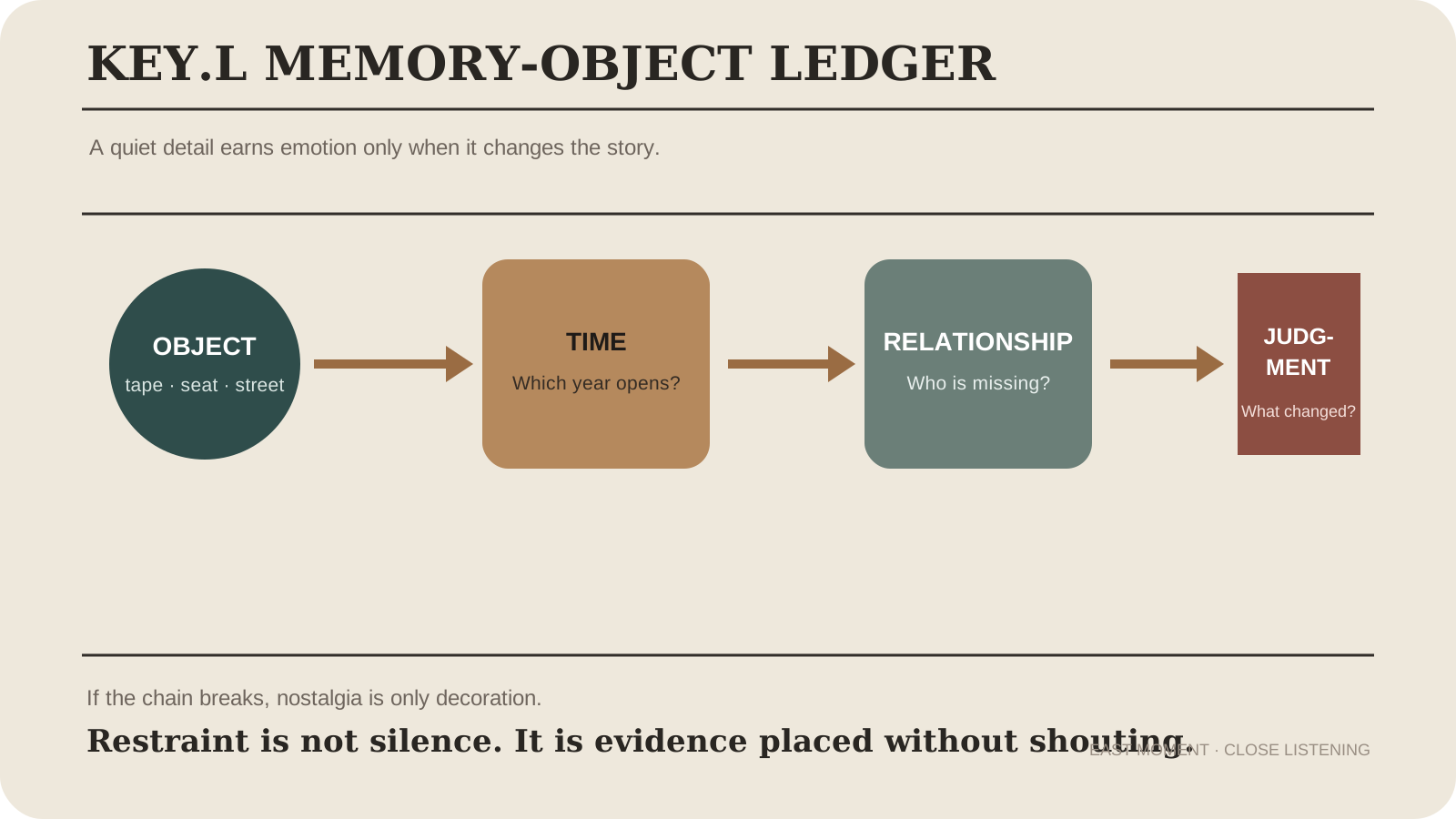
This is my test for KEY.L's restraint: if the object never changes the time, relationship or judgment, it is nostalgic decoration. If it does, the quiet delivery has built a complete emotional room.
Different generations of Hey Kong stages keep returning because one unfinished conversation can gather new meaning as the audience ages. That is real durability. It is also a trap if one canonical song swallows the albums. My conclusion is that KEY.L's narrative patience survives fast platforms, but the next listen must follow the same object-based craft beyond Hey Kong, not replay a reputation in place of a catalog.
KEY.L's clarity cuts both ways
I value KEY.L because he rewards familiarity. A line that sounds modest on first listen may become the emotional center after the fifth. His crew history feels real, and his solo writing rarely acts as if maturity requires abandoning rap for generic inspiration.
The tradeoff is that restraint can become sameness. On a long project, similar mid-tempo production and measured delivery sometimes reduce contrast. Listeners who enter through Hey KONG may also expect every song to carry the same autobiographical gravity.
The answer is not for KEY.L to become louder. It is for the production to challenge his calm: harder drums, unfamiliar collaborators or structures that force the narrative voice into new rooms. Black Benz works partly because it does exactly that.
Start where the writing has something to lose
Use this route:
- Hey KONG for the core writing voice.
- Future Awaits for reflection across time.
- Black Benz for sharper rhythmic pressure.
- Economy Class for adult movement and collaboration.
- Back to 2000 for the full memory system.
Then open the Chinese musicians directory or the C-BLOCK group guide to understand how KEY.L's restraint changes beside two more physical voices. Use the Changsha rap scene guide to place that role inside CSC and the city's longer crew memory. KungFu-Pen turns Hunan phrasing toward family, while GAI provides the Chongqing side of G-BLOCK.
Why KEY.L matters
KEY.L demonstrates that regional rap does not need to perform regional identity at maximum volume. Hunan is present in the friendships, social rhythm, language and long route from Hengyang to Changsha's music community. The place is structural, not decorative.
His deepest achievement is making delayed recognition sound like artistic material. The years before national fame are not empty prehistory. They are the reason the voice carries weight when it finally speaks softly.