C-BLOCK lasted because the members did not collapse into one group voice. Sheng Yu can make the room larger, KungFu-Pen can make a phrase snap and KEY.L Liu Cong can make the same room private. I believe their longevity comes from a shared grammar that allows the center to move.
C-BLOCK is a Changsha rap group formed in 2007 according to its official Apple Music artist record. Its established three-member lineup is Sheng Yu, KungFu-Pen and KEY.L Liu Cong. International listeners may encounter the members under several spellings: Sheng Yu is also D-SHINE, DamnShine or Da Sha; KungFu-Pen is Shi Yifan or 功夫胖; KEY.L is Liu Cong or 刘聪.
A normal group biography would list those names, mention Changsha and move toward television appearances. That misses the value. C-BLOCK matters because three artists with visibly different tempos learned how to preserve a collective identity across local stages, solo careers, national programs and a later collaboration with GAI.
C-BLOCK starts with a three-way handoff
| What you want to know | The short answer |
|---|---|
| Formed | 2007, according to Apple Music's official artist record |
| Home city | Changsha, Hunan |
| Members | Sheng Yu, KungFu-Pen and KEY.L Liu Cong |
| Wider scene label | CSC, a broader Changsha rap banner rather than another name for C-BLOCK |
| Central album | Yixia Fanshang in 2017 |
| Essential song | Jianghu Flow featuring GAI |
| What makes the group work | Leadership, verbal snap and restrained storytelling can rotate inside one performance |
| Recent shared chapter | The 2025 G-BLOCK Mixtape with GAI |
The center keeps moving
Many long-running groups become museums of their early chemistry. C-BLOCK stays readable because no member has to occupy the same position in every song.
Sheng Yu makes scale physical
Sheng Yu often establishes the dimensions of the performance. His voice, stance and timing can make a line feel built for crowd response. Apple Music describes him as the group's leader, and the description makes sense onstage.
Leadership should not be confused with authorship of the whole identity. Sheng Yu's force becomes more meaningful when the other members redirect it. A beam matters because something else gives the building rooms.
KungFu-Pen makes language strike
KungFu-Pen, publicly credited as Shi Yifan, often brings verbal density and a sharper percussive relationship to language. He can compress humor, Hunan speech and technical control into phrases that feel more struck than spoken.
His role is not simply "the technical rapper." Technique becomes valuable when it changes group movement. KungFu-Pen can tighten a loose performance, complicate a slogan or make a familiar local expression land with new force.
KEY.L Liu Cong makes memory accumulate
KEY.L Liu Cong works through restraint. Details, pauses and narrative patience allow adulthood and shared history to enter a crew record without turning it into a memorial speech.
When Sheng Yu projects outward and KungFu-Pen makes language snap, KEY.L often pulls the listener inward. That movement is why C-BLOCK can sound collective without requiring every song to be loud.
This division is an editorial listening tool, not a permanent job chart. The members overlap. What matters is the possibility of rotation: any one of them can become the center while the group remains recognizable.
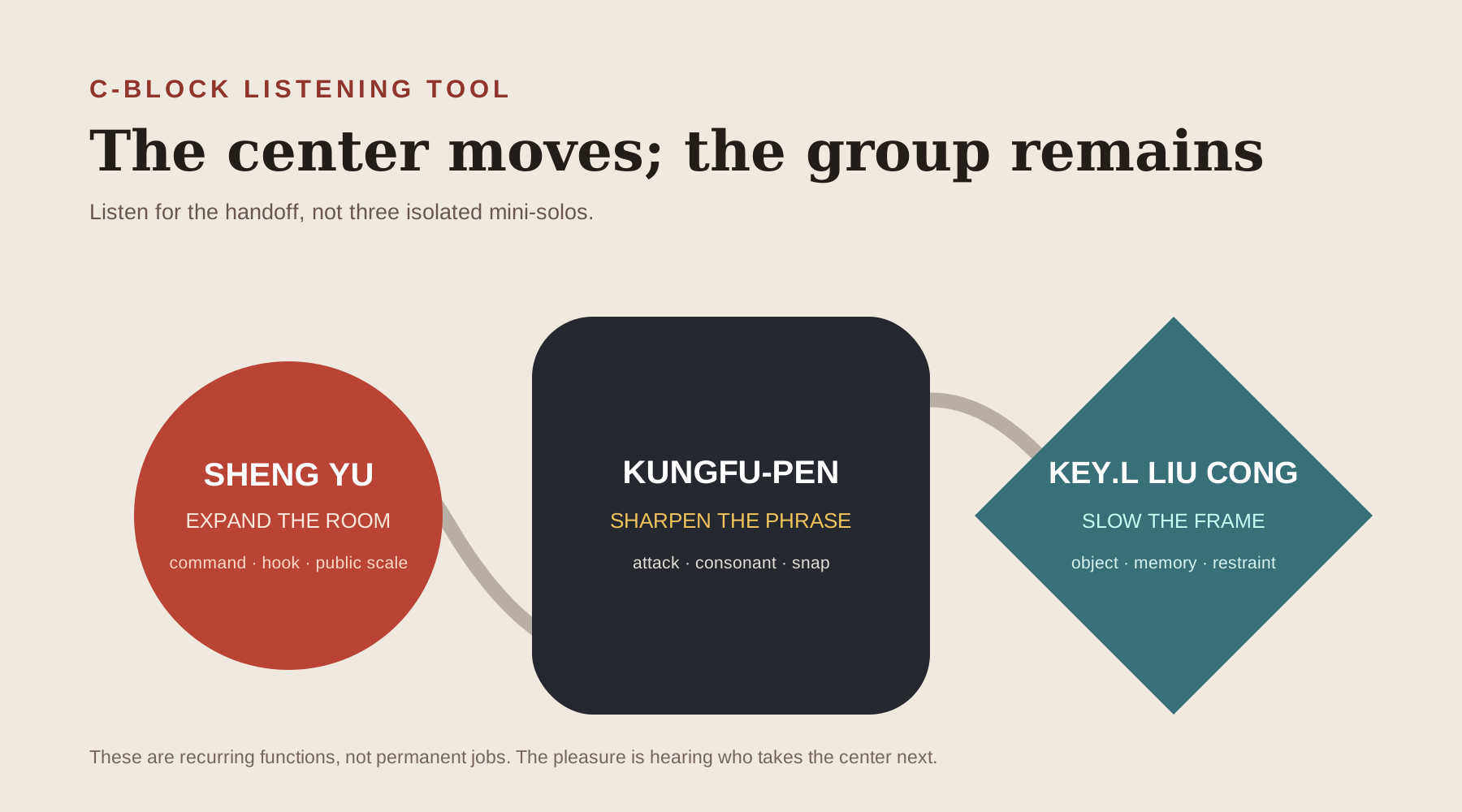
The diagram is deliberately asymmetric. Sheng Yu's circle, KungFu-Pen's hard-edged block and KEY.L's directional diamond describe three different ways of taking attention. None is a rank. The group becomes interesting at the instant one shape gives the song to another.
Five songs that explain C-BLOCK
1. Jianghu Flow: regional voices keep their edges
Released in 2017, Jianghu Flow features GAI. The collaboration connects Changsha and Chongqing before the later G-BLOCK project, but it does not make the regional voices interchangeable.
The song works because "jianghu" is not treated as costume decoration. Multiple rappers bring different vocal authority to a shared idea of codes, reputation and movement. The record feels like negotiation between established presences, not a guest attached to a finished group track.
2. Huo Miao: fire as persistence, not fireworks
Apple Music's album notes place Huo Miao among the more self-examining songs on Yixia Fanshang. The title means "flame" or "spark," but the record is more useful when heard as persistence than spectacle.
After years of local work, the image of a small flame carries different weight from a victory anthem. It suggests something maintained through repetition, limited resources and the stubborn refusal to disappear.
3. Wo De Meng: ambition without leaving the group behind
Wo De Meng, "My Dream," could easily become generic motivational rap. C-BLOCK's history gives the title friction. The first-person claim exists inside a long-running three-person structure.
Listen for the difference between individual aspiration and individual branding. A member can speak in the singular while the arrangement preserves collective memory. That tension defines much of the group's appeal.
4. Ye Jia Quan: KungFu-Pen leaves a fingerprint
Apple Music's composer metadata credits Ye Jia Quan to Shi Yifan alone, making the track a useful route into KungFu-Pen's writing identity inside the group catalog. The title evokes an unorthodox or homespun fighting style rather than institutional polish.
The song demonstrates why member-specific authorship does not weaken a group. It allows listeners to identify what one mind contributes, then hear how the others perform around it.
5. Wei Lai Zhu Ren Weng: who gets to inherit the future?
The title Wei Lai Zhu Ren Weng means roughly "master of the future" or "future owner." In the context of an album called Yixia Fanshang, the phrase carries class and generational pressure. People positioned below imagine themselves as the subjects of what comes next.
The most persuasive C-BLOCK songs make ambition social. Success is not only jewelry or chart position. It is the ability to speak from Changsha without waiting for another city to validate the accent.
Yixia Fanshang is an album about rising without floating away
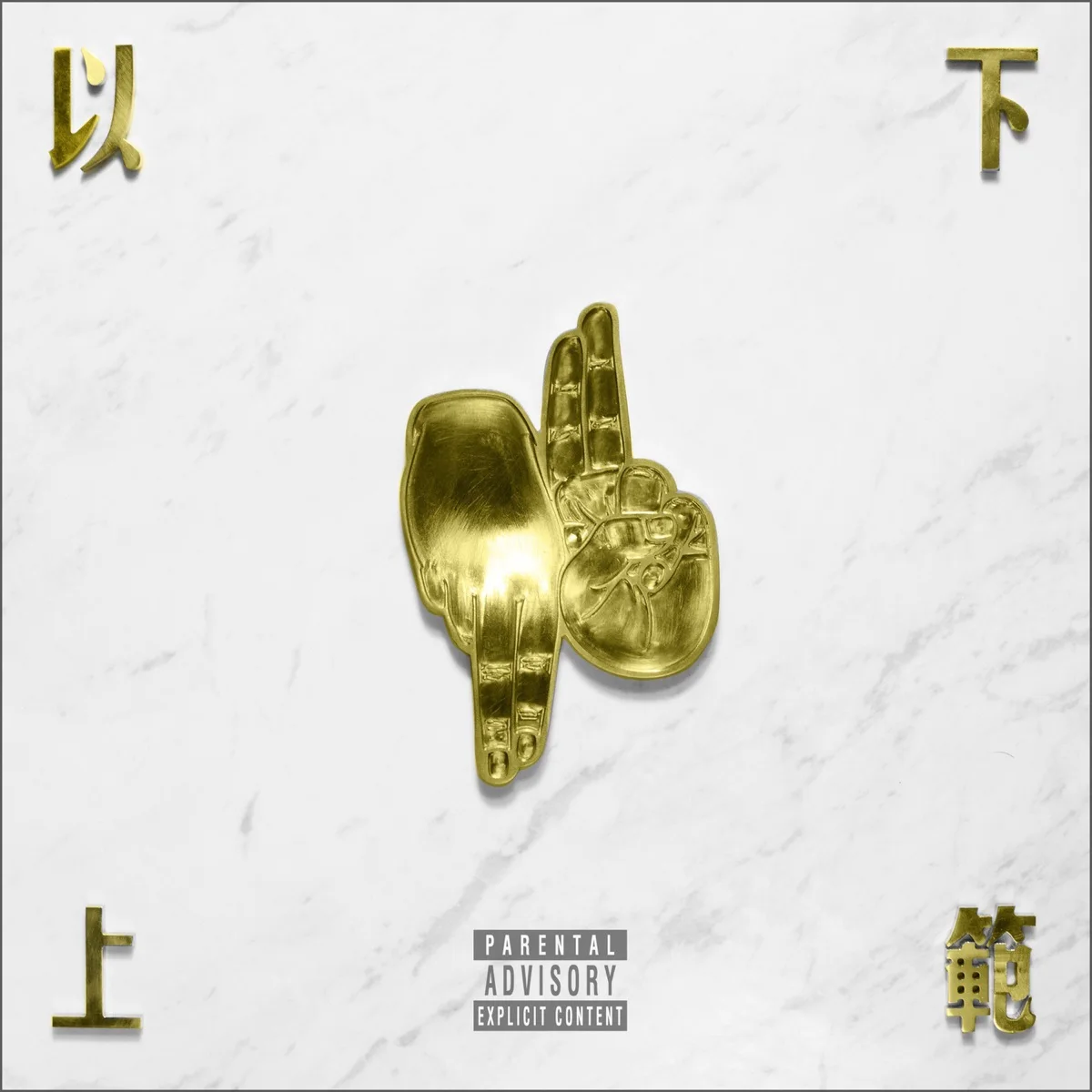
The 2017 album Yixia Fanshang can be understood as a challenge from below toward those above. Apple Music's editorial description emphasizes a decade of struggle, Changsha roots, humor, observation from the perspective of ordinary people, self-examination and a more mature melodic approach.
That description is unusually useful because it identifies several forces often separated in rap criticism:
- local humor is not the opposite of ambition;
- melody is not automatically a retreat from credibility;
- ordinary-life observation can carry group mythology;
- maturity can mean arrangement and reflection, not merely cleaner production.
Our view: the album is strongest when the title's upward pressure remains connected to street-level detail. When the songs describe specific routes, frustrations and social types, "rising" feels earned. When confidence becomes too general, the group's distinctive Changsha scale briefly disappears.
The album is also more melodic than a listener expecting only hard crew rap may assume. That range helps explain longevity. A group survives when it can change emotional temperature without asking the audience to forget who is speaking.
C-BLOCK and CSC are not the same thing
This distinction is essential for overseas readers.
C-BLOCK is the three-member group: Sheng Yu, KungFu-Pen and KEY.L Liu Cong. CSC is a broader Changsha rap banner and scene identity. C-BLOCK is central to that history, but not every Changsha rapper is a C-BLOCK member, and the two names should not be exchanged casually.
The difference resembles the distinction between a band and the city network that made the band possible. One has a defined lineup; the other contains venues, collaborators, audiences, rivalries and multiple generations.
The Changsha culture guide provides the city beyond rap: Yuelu Academy, Mawangdui, Orange Isle, television culture, night streets and a public personality shaped by history and appetite. C-BLOCK adds a modern sonic layer without becoming a complete definition of Changsha.
Dialect works as timing before it works as meaning
International listeners often ask for translations first. With C-BLOCK, the better sequence begins with sound.
Listen to where the members shorten a phrase, lean into a Hunan texture or make a local expression hit the beat differently from standard broadcast Mandarin. Dialect is not only information inside the lyric. It alters timing, social attitude and the degree of intimacy between artist and local audience.
Translation can explain the joke or reference afterward. It cannot reproduce the full social temperature. The goal is not to become fluent before enjoying the record. It is to recognize that what feels rhythmically distinctive may already be carrying place.
G-BLOCK is a reunion of regional histories
In 2025, GAI, Sheng Yu, KungFu-Pen and Liu Cong released G-BLOCK Mixtape. Apple Music credits all four artists, dates the fourteen-track project to July 8, 2025 and lists Dream Music Group and SupMusic.
The correct language is collaboration. G-BLOCK does not replace C-BLOCK. It does not prove that every historical crew affiliation merged into a new permanent organization. It reconnects artists whose Changsha-Chongqing relationship was already audible on Jianghu Flow.
This precision improves the listening. Instead of chasing organizational gossip, hear what changed after eight years. C-BLOCK brings practiced group spacing; GAI brings the scale of a solo star; the mixtape tests whether those forms can share a longer project.
Television revealed a skill the catalog had already built
The Singer 2024 stage introduced C-BLOCK to viewers who may not follow rap programs. A mainstream performance can make the group seem newly assembled around a famous song. The official 2007 formation date tells the opposite story.
Television revealed an existing craft: how three performers distribute attention. Cameras can cut between faces, but the members already know when to move forward, when to support and when to leave a gap. That knowledge comes from years of shared stages, not from one rehearsal cycle.
The danger is that television turns one successful performance into the entire biography. Use the stage as evidence of live architecture, then return to Yixia Fanshang and the solo catalogs to understand the time beneath it.
I refuse to reduce C-BLOCK to three successful solo catalogs standing next to one another. Full Jianghu Flow performances, archival stages and the reunion route matter because the group itself remains the instrument. Friendship explains the emotional wish to see them together, but it is not enough analysis. My conclusion is that trust creates continuity while changing functions create the music. A true reunion is audible when any member can take the center and the other two make that move feel inevitable.
C-BLOCK sounds strongest when the city stays audible
C-BLOCK's strongest quality is trust. The members do not seem frightened that another voice will take the center for eight bars. That security allows contrast, humor and emotional detail to coexist without constant competition.
Longevity can also become a protective mythology. I will not treat every reunion as automatically important merely because the friendship is important. Some records depend more on accumulated affection than fresh musical discovery. Certain group slogans and success narratives feel powerful live but less specific on repeat listening.
The answer is not to dismiss nostalgia. It is to ask whether memory is being used as material. Huo Miao and Wo De Meng work when history creates pressure inside the song. Jianghu Flow works when established identities genuinely collide. Group legacy becomes art when it changes the arrangement, not when it merely appears in the caption.
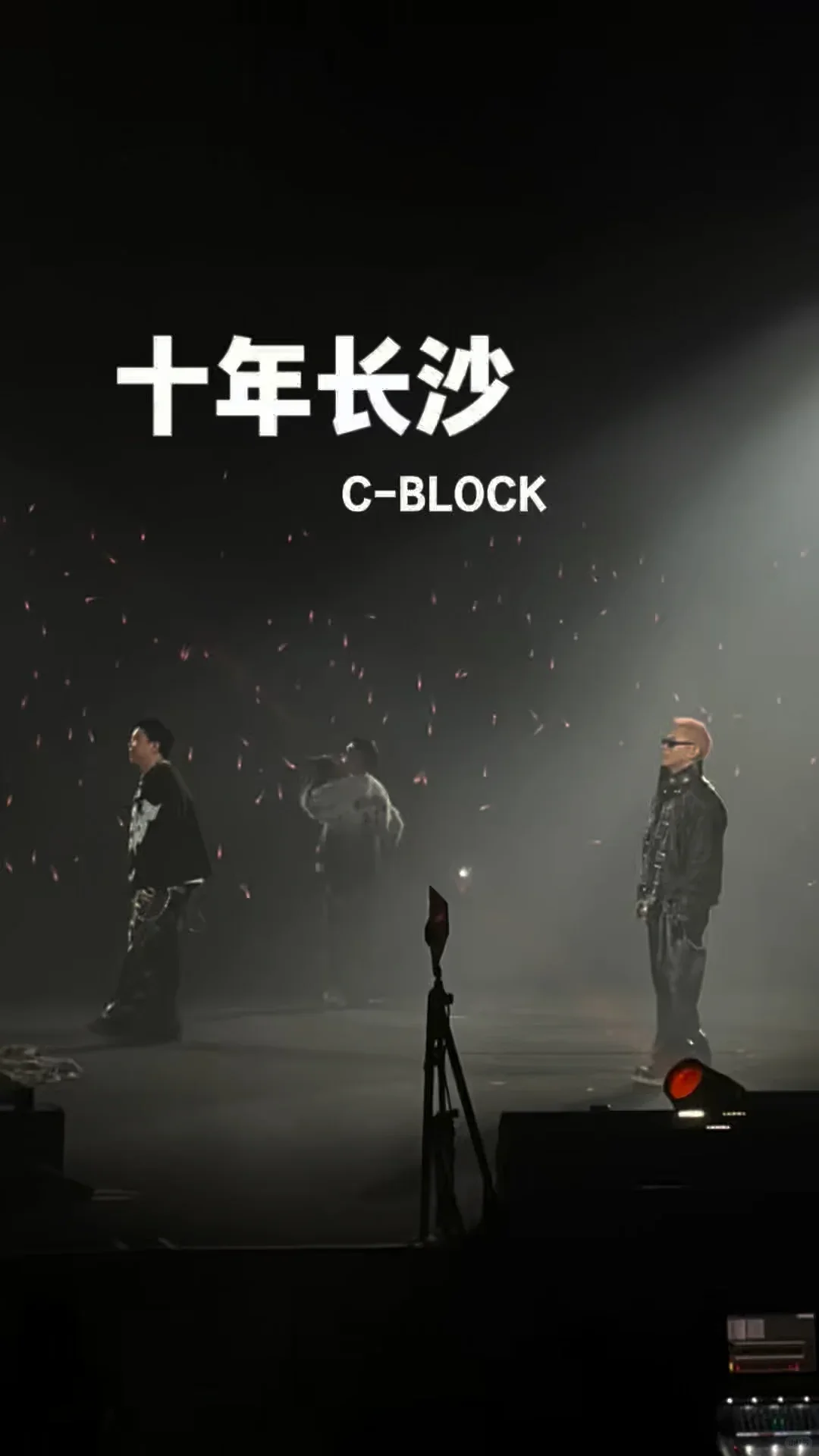
The three figures do not crowd the same center. The distance between them is the visual version of C-BLOCK’s strength: one group, three independent positions and a decade of Changsha carried into a current concert. Image record.
People do not only remember C-BLOCK albums; they remember who they were when the songs arrived. Some first heard the group as schoolchildren through Hunan television, carried the records through high school and university, then returned years later to find the same voices sounding older in different ways. That is not soft fan trivia. It is the strongest possible test of a long-running group: did the music merely survive, or did it give listeners a clock for their own lives?
My answer is that C-BLOCK survives the test when all three members remain audible as changing adults. A reunion that only reproduces the old pose is merchandise. A reunion in which the center moves differently turns shared time into new form.
Enter Changsha through the crew, not a greatest-hits shuffle
- Watch the official Singer 2024 performance of Jianghu Flow for live spacing.
- Play the studio version and listen to how GAI changes the regional balance.
- Hear Huo Miao and Wo De Meng for reflection inside the crew identity.
- Use Ye Jia Quan as the bridge into KungFu-Pen's writing.
- Play Yixia Fanshang front to back for humor, melody and ordinary-life observation.
- Continue into Sheng Yu, KungFu-Pen and KEY.L Liu Cong to hear what each member does when the frame becomes individual.
- Finish with G-BLOCK Mixtape and compare 2017 chemistry with the 2025 reunion.
The Changsha rap scene guide places C-BLOCK inside the wider CSC banner and the city's longer crew memory. The Chinese rappers guide then compares that structure with other groups, cities and listening routes.
Why C-BLOCK matters
C-BLOCK demonstrates that a Chinese rap group can build national visibility without converting its city into a decorative origin story. Changsha remains audible through speech, humor, long friendship and the confidence to let three different temperaments share ownership.
I hear the group most clearly when nobody tries to win every eight bars. I want Sheng Yu's scale, KungFu-Pen's snap and Liu Cong's inward detail to remain unequal. I need that friction; if the voices are polished into one neutral delivery, I lose the very thing that made Changsha travel.
The deepest lesson is structural. A durable group does not freeze everyone in the role that first made sense. It develops a grammar strong enough to survive when the center moves.