
KungFu-Pen can make Hunan speech feel like another drum in the beat. Consonants strike, phrases turn sharply and a joke can arrive with the force of a challenge. But the deeper story is what happened after listeners already knew he could hit hard: he began using that same precision to write about leaving, returning, family and the people whose voices remain inside an adult life.
KungFu-Pen, written 功夫胖 in Chinese and publicly credited as Shi Yifan (施逸凡), is one of the three established members of C-BLOCK alongside Sheng Yu and KEY.L Liu Cong. He belongs to Changsha's long rap history, but calling him only "the technical member of C-BLOCK" leaves the most interesting development outside the frame.
Our view is that KungFu-Pen's career makes sense as a movement from impact to memory. The impact never disappeared. What changed is the target. On the 2026 album My Family Picture, verbal sharpness is no longer used only to defeat an opponent or energize a crew track. It helps him examine inheritance, distance and the unstable meaning of home.
KungFu-Pen in 60 seconds
| What you want to know | The short answer |
|---|---|
| Chinese stage name | 功夫胖 |
| Publicly credited name | Shi Yifan (施逸凡) |
| Core group | C-BLOCK with Sheng Yu and KEY.L Liu Cong |
| Home scene | Changsha, Hunan and the wider CSC identity |
| What hits first | Dense phrasing, verbal snap and Hunan speech used rhythmically |
| Essential early collaboration | Hu Shan Xing with GAI and After Journey |
| Album to know | My Family Picture (2026) |
| Start with | Hu Shan Xing, You Zi Yin, Yu Lan and Li Sao |
The facts are compact. The listening question is larger: how does a rapper keep the punch while allowing more complicated feelings into the bar?
Hunan speech is part of the percussion
International writing often treats dialect as cultural flavor added after the music is made. KungFu-Pen shows why that model is backwards. The speaking voice helps determine where the rhythm can go.
Regional pronunciation changes the length and pressure of a syllable. A local expression may carry humor, class position or immediate familiarity for a Changsha listener before it can be translated. KungFu-Pen uses those qualities structurally. He can shorten a phrase until it feels struck, then let another line spill over the beat without losing control.
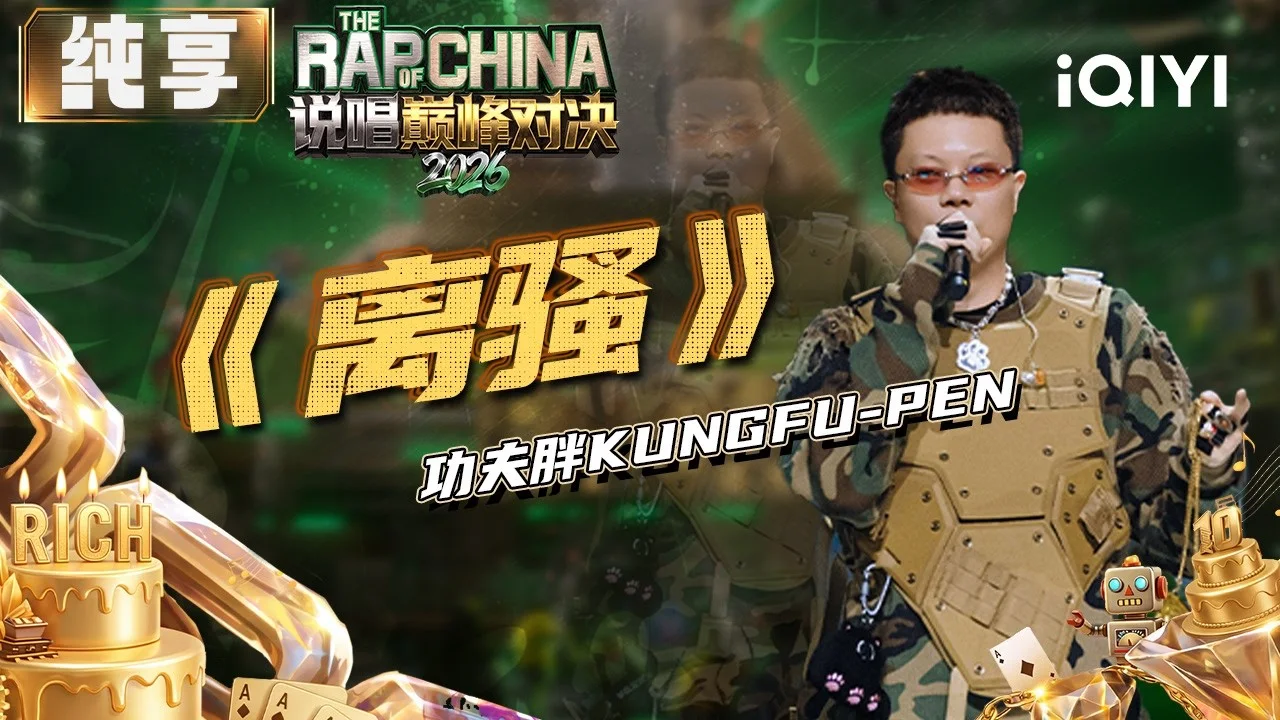
The classical title creates expectations of literary weight, but watch how KungFu-Pen keeps the body grounded and the diction forward. Reference becomes pressure inside a rap stage rather than a heritage costume placed around it.
This is the first correction an overseas listener should make: do not wait for a translation before listening to the mechanics. Hear the attack, pauses and changes in density first. Translation can later explain a reference. It cannot recreate the exact social temperature of the voice.
Five tracks that explain KungFu-Pen
1. Hu Shan Xing: force without interchangeable heroes
Apple Music credits the 2017 single Hu Shan Xing to GAI, KungFu-Pen and After Journey. The combination matters because all three performers can project strength, yet strength does not sound identical in their mouths.
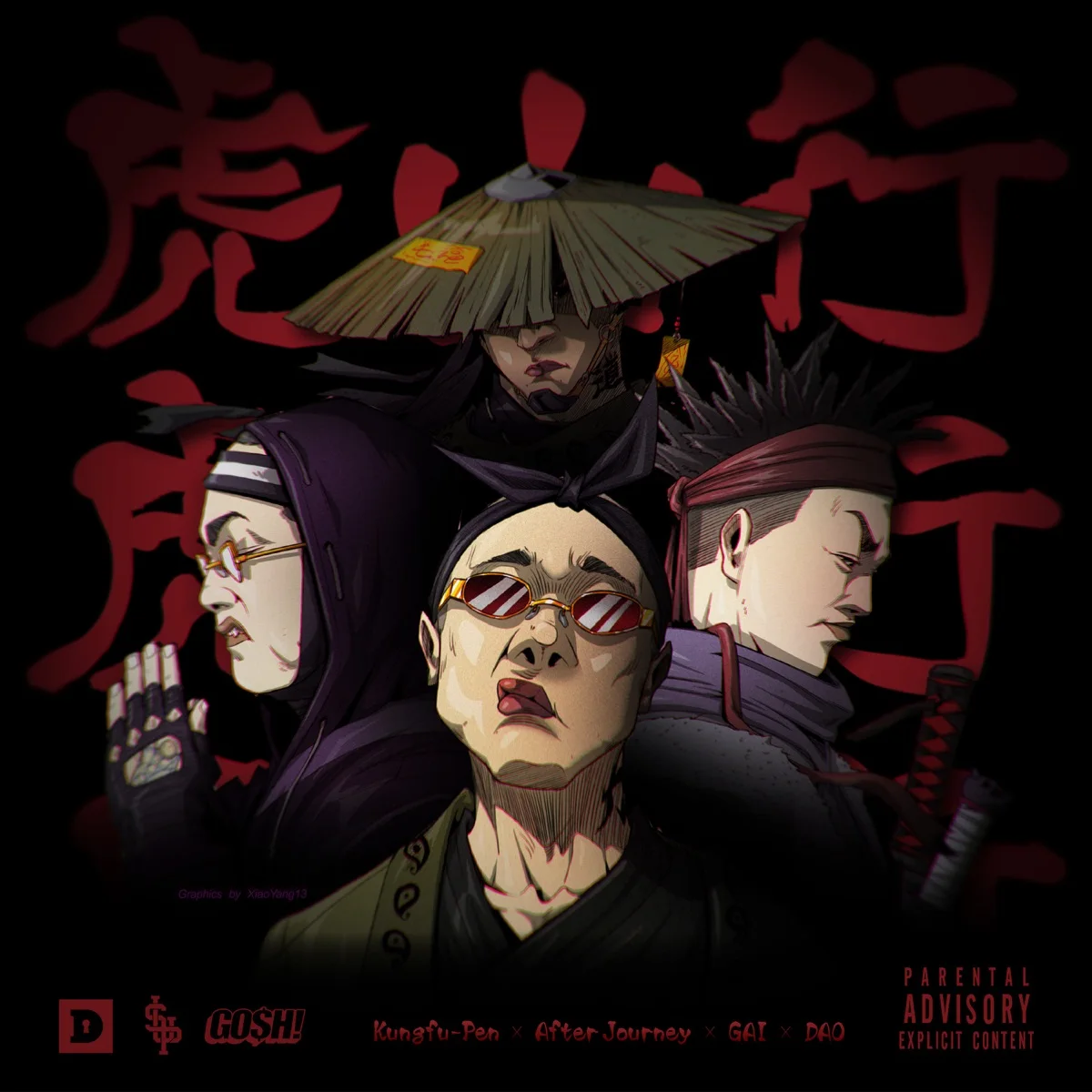
KungFu-Pen's contribution is useful to hear as compression. GAI can open a song toward melody and widescreen jianghu drama. KungFu-Pen makes language feel more tightly wound. The track works when those forms of authority remain distinct rather than merging into one generic "Chinese warrior rap" image.
That distinction protects the song from easy exoticism. Traditional references are not valuable because they look Chinese to an overseas audience. They matter when an artist makes them perform a new rhythmic or emotional job.
2. Zai Jian Hip-Hop: technique inside an all-star conversation
The 2018 single Zai Jian Hip-Hop is officially credited to Zhang Zhenyue, MC HotDog, KungFu-Pen and PACT. It places him beside artists from different generations and routes through Chinese-language rap.
The important detail is not simply that famous names share the track. Group records reveal whether a rapper can enter an existing conversation without either disappearing or breaking the whole arrangement. KungFu-Pen's sharpness works as a change in pressure. His verse does not need to own every minute in order to leave a fingerprint.
That skill helps explain C-BLOCK. Technical ability is most valuable when it reorganizes the people around it.
3. You Zi Yin: departure becomes an adult problem
You Zi Yin means "Traveler's Poetry" in the official English title and also recalls one of the best-known classical Chinese poems about a mother preparing clothes for a departing child. The allusion supplies a cultural frame, but KungFu-Pen's record belongs to a contemporary adult catalog rather than a literature lesson.
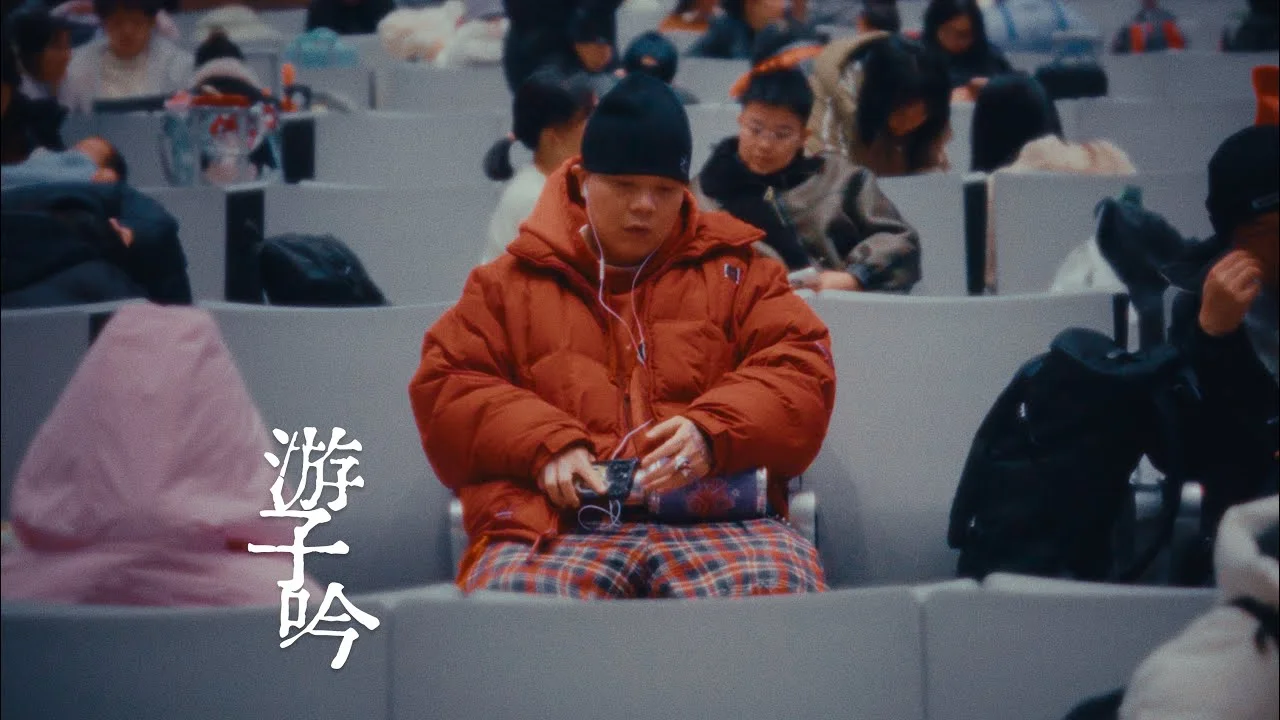
The official SUP Entertainment video makes departure visible as lived distance. Notice how movement stops meaning only ambition and begins to ask what the traveler carries, who remains at home and whether success can repair absence.
That is not a softer question. It is harder to answer because there is no opponent to defeat.
4. Yu Lan: collaboration turns toward grief and care
Apple Music credits the 2026 single Yu Lan to KungFu-Pen and GAI. Their earlier chemistry makes a large, forceful track easy to imagine. Yu Lan is valuable because it directs their scale toward a more intimate emotional center.
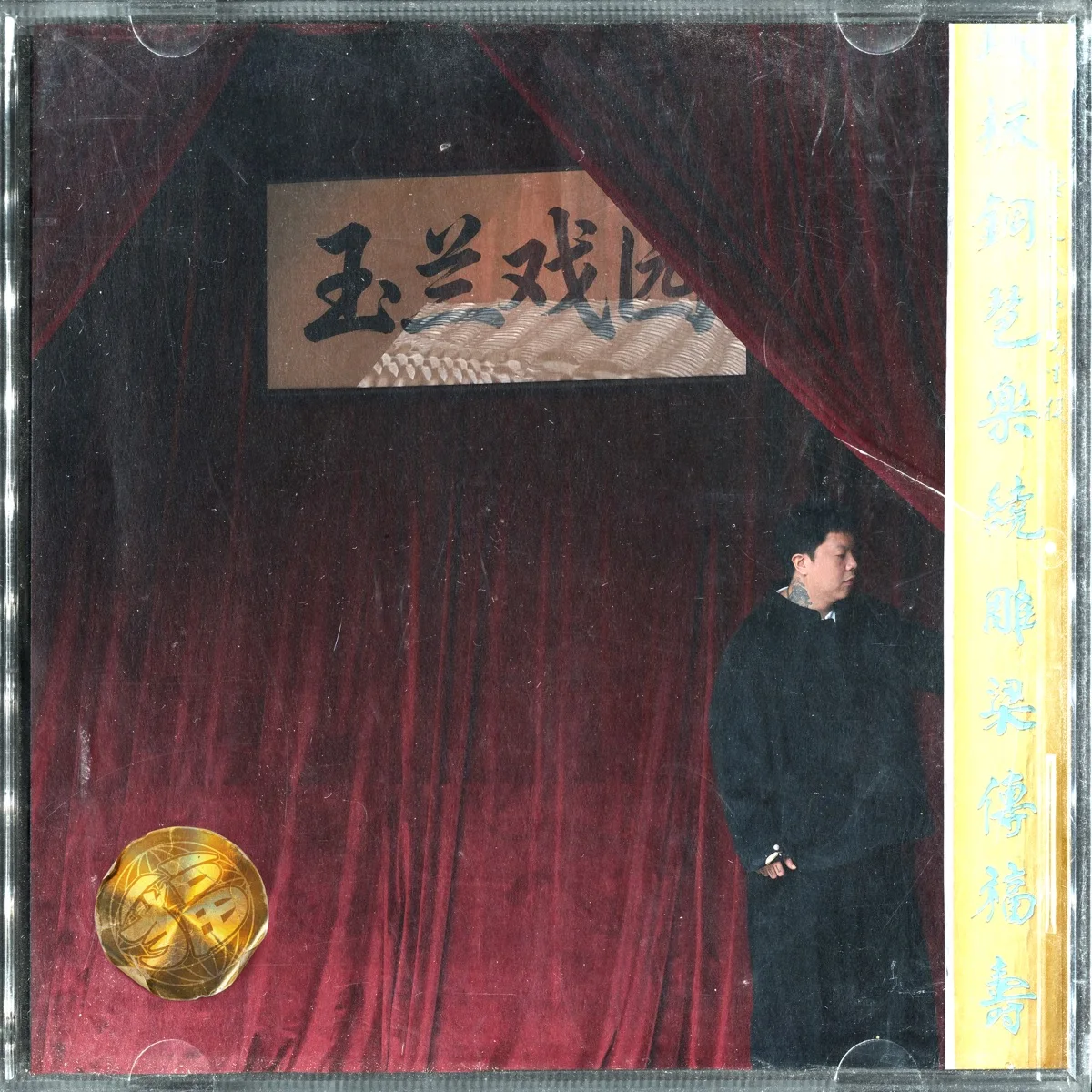
The two rappers do not have to abandon dramatic voices to express care. Instead, the size of the delivery makes private feeling difficult to contain. This is a mature use of collaboration: history between the artists is audible, but the song is not sold only as a reunion.
Placed inside My Family Picture, Yu Lan also changes how the album's family theme is heard. Kinship is not a warm decorative backdrop. It includes memory, missed speech and the fact that some conversations cannot be completed on demand.
5. Shan Ge Wang: regional confidence becomes a role
Apple Music currently highlights Shan Ge Wang, translated as The KING Of Mountains, among KungFu-Pen's popular tracks. The title carries regional confidence and the exaggeration expected from rap naming.
The useful question is what the king rules. KungFu-Pen is strongest when "Hunan rapper" describes a method rather than a slogan: local speech changes cadence, familiar social voices enter the writing and tradition is allowed to become funny, abrasive or personal.
Regional pride becomes thin when place appears only in a title. It becomes art when place changes the sentence.
My Family Picture is not a victory-lap album
Apple Music lists My Family Picture as a fourteen-track, 43-minute album released on February 26, 2026. The sequence begins with You Zi Yin and moves through titles including Go Home, Kid., The KING Of Mountains, Grandma's Words, Yu Lan, Big Bro, The Kid, the title track and Freedom In Our Lifetime.
Even before a listener translates every line, the architecture is clear. The album repeatedly changes the position from which family is seen:
- the traveler looks back toward home;
- an elder voice interrupts the rapper's self-narration;
- "the kid" can be remembered, addressed or discovered inside the adult;
- a family picture turns separate lives into one frame;
- freedom arrives at the end, after obligation and memory have already complicated it.
This is why the album should not be described simply as KungFu-Pen becoming more personal. Most rap is personal in some sense. The more specific achievement is that he lets other people's voices limit his control of the story. A grandmother's skit occupies album time. Children and elders alter who gets to speak with authority. Home is not merely the place the successful rapper returns to for a cinematic shot.
The title image is especially effective. A family photograph looks stable, but everyone in it continues changing outside the frame. Rap normally privileges motion, presence and the current voice. A photograph introduces stillness and the awareness that a single moment cannot explain the relationships it records.
Our reading is that this is the mature extension of KungFu-Pen's technical identity. Precision once helped him dominate space. Here it helps him arrange distance.
C-BLOCK taught him that a voice has a role
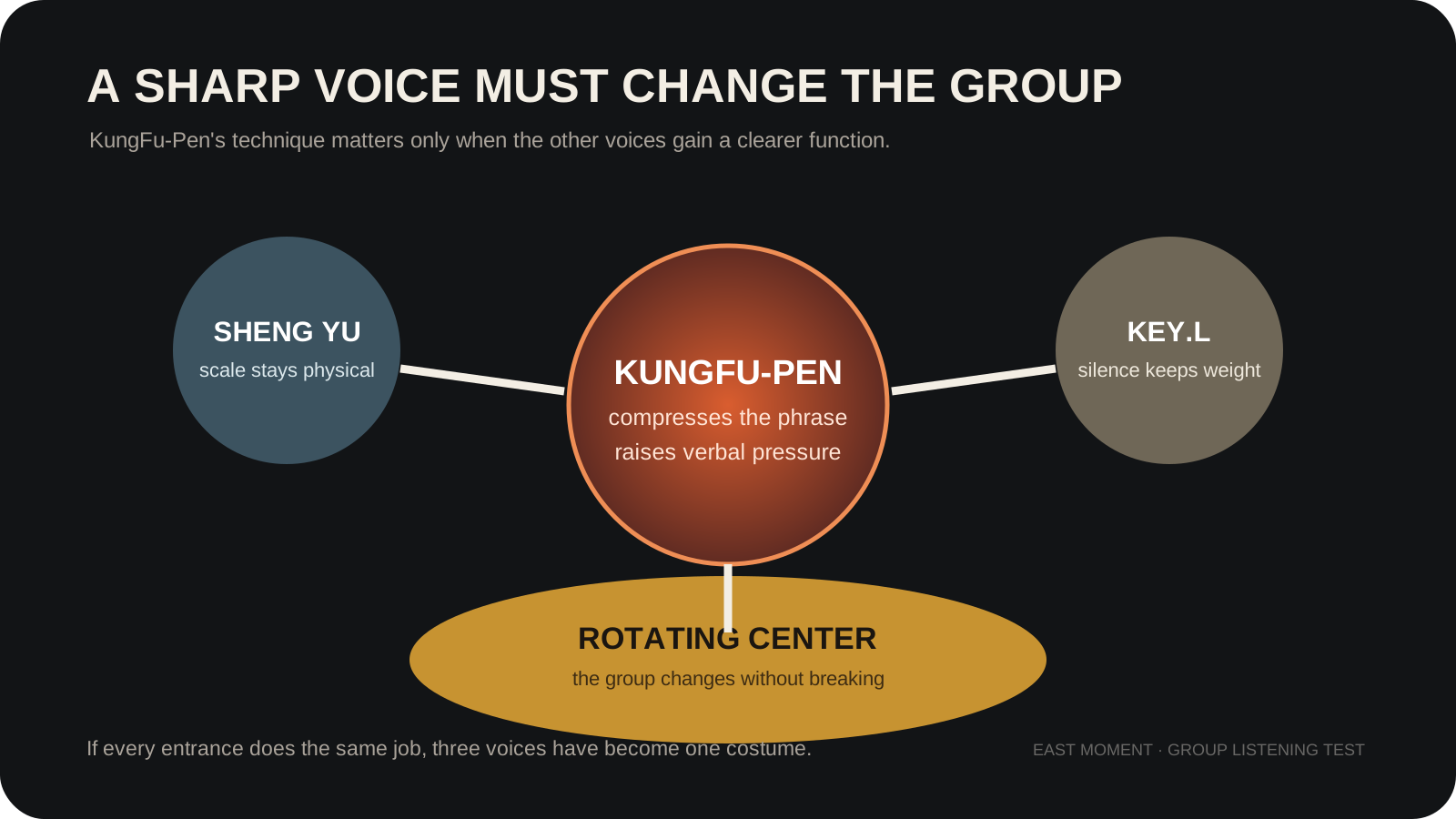
My C-BLOCK test is functional, not sentimental: KungFu-Pen must sharpen the phrase without making Sheng Yu's scale or KEY.L's restraint irrelevant. Watch the official Jianghu Flow performance, then mark what changes when he enters.
C-BLOCK formed in Changsha in 2007 according to the group's official Apple Music record. The established trio works because the members do not perform one shared personality.
Sheng Yu often creates physical scale and crowd command. KEY.L Liu Cong can slow the emotional clock and let memory accumulate. KungFu-Pen frequently changes the surface of the language: a phrase becomes tighter, stranger or more percussive when he enters.
These are listening roles, not permanent job descriptions. Their value lies in movement. A strong C-BLOCK song can shift the center without losing group identity.
KungFu-Pen's solo work becomes clearer in that context. He did not discover family after leaving a purely aggressive group persona behind. C-BLOCK already trained him to hear how one voice affects several others. My Family Picture expands the ensemble. Parents, elders, children, absent people and earlier versions of the self now occupy the arrangement.
C-BLOCK, CSC and G-BLOCK must stay distinct
Three names often collapse in English-language summaries.
C-BLOCK is the defined three-member group. CSC is a broader Changsha rap banner and city-scene identity. G-BLOCK is the 2025 project credited to GAI, Sheng Yu, KungFu-Pen and Liu Cong.
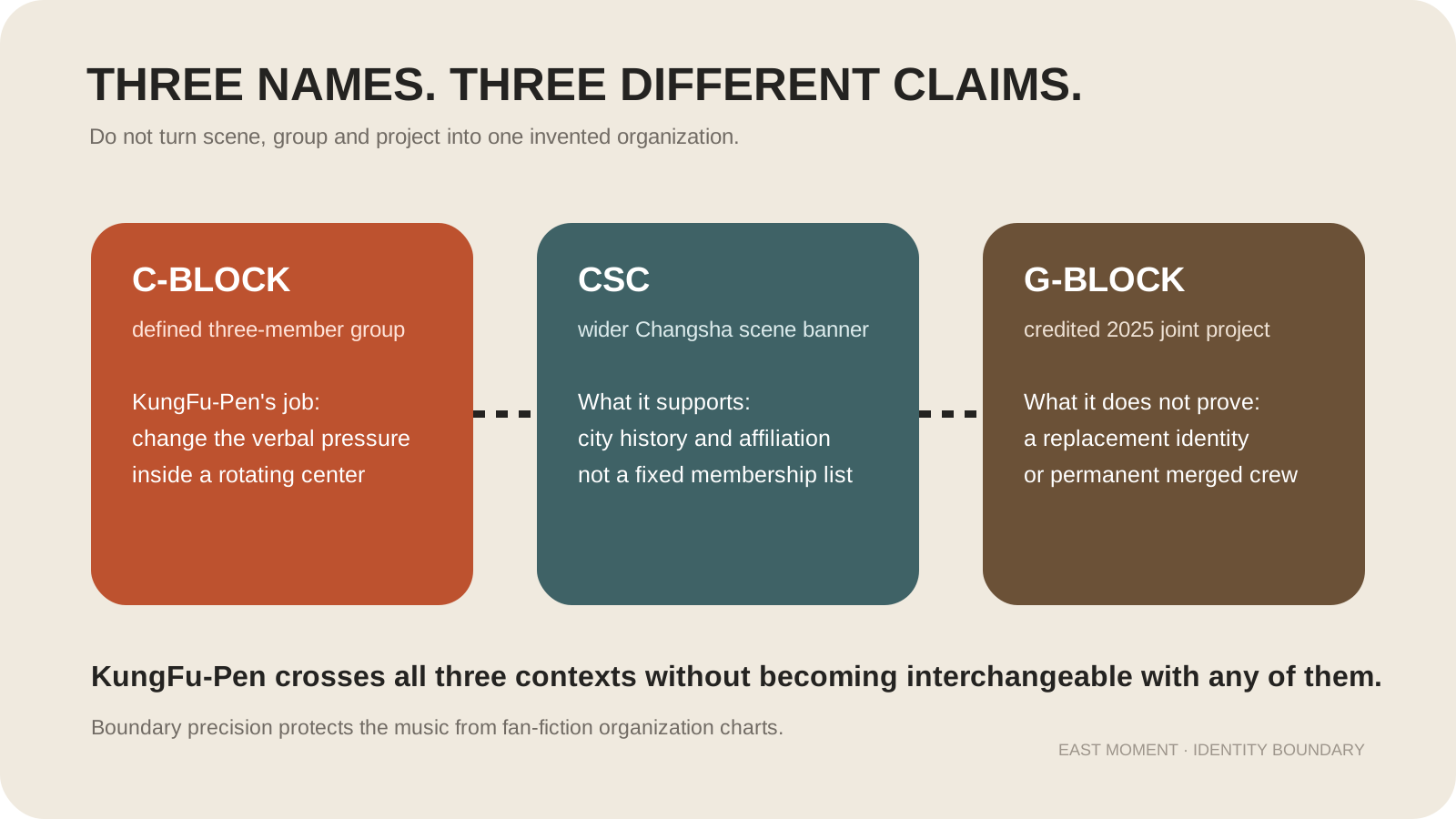
G-BLOCK does not replace C-BLOCK, and it does not prove that Changsha and Chongqing rap became one permanent organization. It is better understood as a collaboration between artists with years of shared records, stages and regional dialogue.
The distinction improves the music. On G-BLOCK Mixtape, KungFu-Pen is not an isolated guest standing next to GAI. He brings an existing C-BLOCK grammar: awareness of handoffs, contrast and how a member can sharpen the group without occupying every hook.
I connect parts of the catalog that are too often separated: sampling analysis, Kunlun, an old championship stage, the My Family Picture tour and songs about smoke, freedom and family. My conclusion is that the punch did not disappear; it acquired more jobs. Technique can identify a sample, make Hunan speech strike, frame an elder voice or hold still long enough for memory to enter. Longevity becomes meaningful when strength changes function rather than repeating its first proof.
The pen name creates a promise the songs must keep
KungFu-Pen is easy to admire because the craft is visible. The delivery has edges. Hunan speech gives the bar a local body. He can enter a crowded collaboration and create an immediate shift in pressure.
The risk is also visible. Dense technique and regional force can become predictable badges. If every track is approached as proof that the rapper is skilled, proud and difficult to defeat, personality narrows into demonstration. A literary or traditional title can also become an empty signal if the reference does not change the song beneath it.
His recent work matters because it pushes against that trap. My Family Picture does not remove the familiar weapons. It asks them to perform more delicate work. The best moments are not "the hard rapper showing a soft side." That phrase is too simple. They are moments when hardness itself is redefined as the ability to face obligation, grief and the limits of individual freedom.
Not every listener will prefer the slower family frame to the immediate electricity of Hu Shan Xing or a C-BLOCK stage. That difference is healthy. A durable catalog should create arguments about which version of an artist feels most alive.
Follow the writing before the branding
- Play Hu Shan Xing to hear KungFu-Pen beside GAI and After Journey without flattening their different voices.
- Hear Zai Jian Hip-Hop for his role inside a cross-generational collaboration.
- Watch the official iQIYI Li Sao stage for current performance control.
- Watch the official You Zi Yin video, then continue directly into My Family Picture.
- Use Grandma's Words, The Kid and the title track to follow how the album redistributes narrative authority.
- Return to C-BLOCK's Jianghu Flow and identify what KungFu-Pen changes when he enters.
- Finish with G-BLOCK Mixtape to hear that group instinct in a later Changsha-Chongqing collaboration.
The Changsha rap scene guide places KungFu-Pen's percussive Hunan speech inside C-BLOCK and the wider CSC banner. The Chinese rappers guide compares that route with other city voices, while the Changsha culture guide provides the larger context without pretending C-BLOCK represents every part of Hunan life.
Why KungFu-Pen matters
KungFu-Pen demonstrates that regional rap is not defined by how often a city name appears. Place becomes convincing when it changes timing, humor, social distance and whose voice is allowed into the record.
He also offers a useful answer to a problem that arrives with longevity. A veteran technical rapper can keep proving he is technically strong, or he can discover new tasks for the technique. My Family Picture chooses the second route. Family is not added to make the profile respectable. It becomes a new compositional system.
That is the larger reason to listen. The punch remains. The meaning of impact expands.