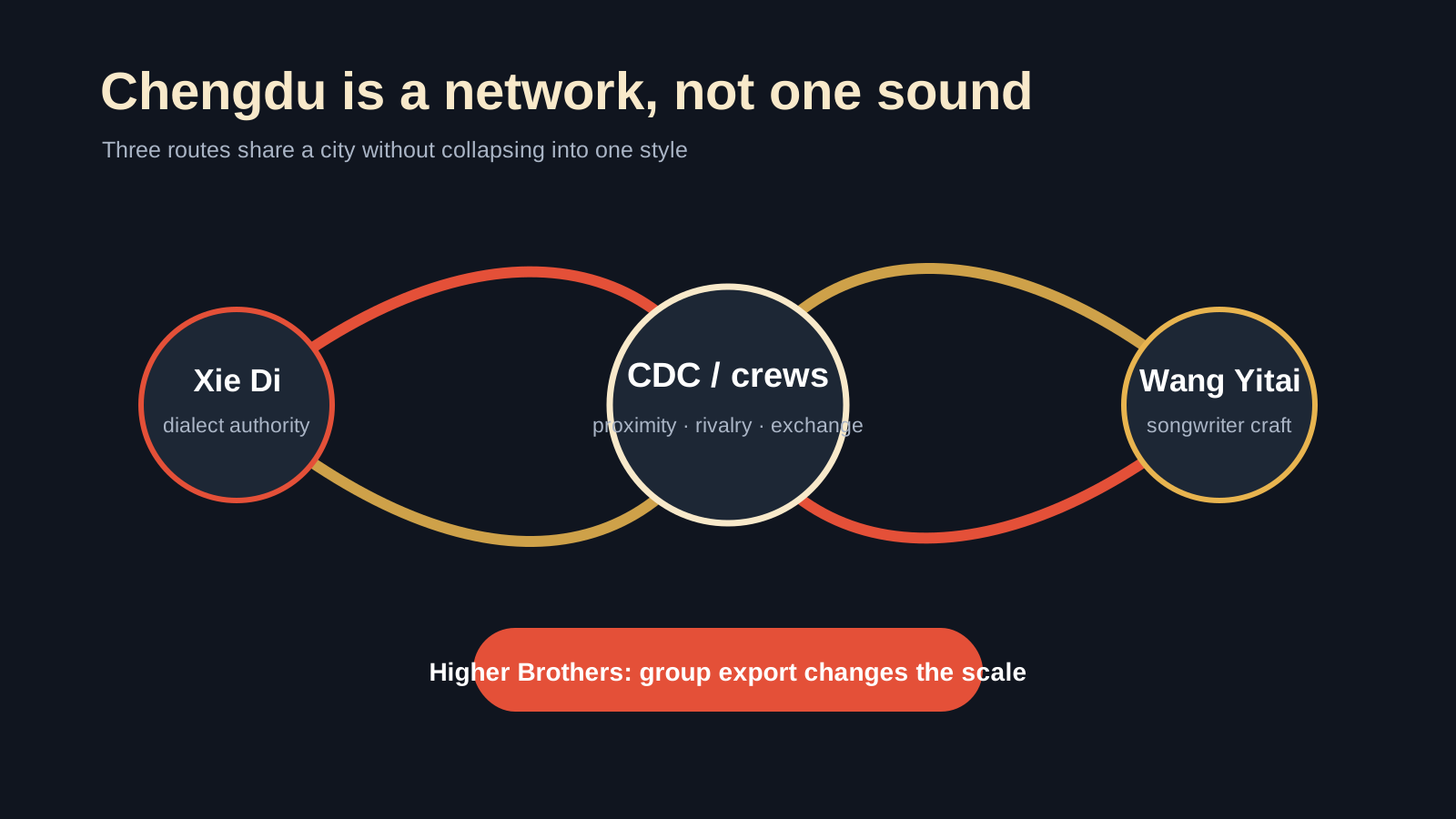
The easiest myth about the Chengdu rap scene is that a relaxed city naturally produced relaxed rappers. The records tell a more useful story. Chengdu became powerful because artists could stay close enough to compete, collaborate, argue and hear one another change. Its signature is not one sound. It is network density.
I dislike the lazy Chengdu cliché because it makes serious creative pressure sound like tea-house weather. Masiwei's elasticity, Xie Di's verbal authority and Psy.P's low-register weight did not drift out of a “laid-back lifestyle.” They became legible because different artists kept hearing, challenging and borrowing from one another at close range. Ease is the surface. Repeated contact is the engine.
For overseas listeners, Chengdu often begins with Higher Brothers and Made in China. That entrance matters, but it can make the city look like the background to one export success. The deeper scene contains Xie Di's dialect authority, Masiwei's bright melodic identity, Wang Yitai's songwriter instinct, Psy.P's restraint, Melo's friction and several television-era careers that did not follow the same route.
This guide explains CDC, Higher Brothers, key artists, essential songs and the reason Chengdu keeps producing recognizable voices without requiring them to agree.
Chengdu rap scene is a network before it is a sound
| What you want to understand | The short answer |
|---|---|
| Core scene name | CDC, commonly used for Chengdu Rap House and its wider network |
| International breakthrough | Higher Brothers through 88rising, videos and touring |
| Earlier local authority | Xie Di making Sichuan dialect central to flow and observation |
| Most visible solo route | Masiwei turning group recognition into a large multi-album career |
| Songwriter route | Wang Yitai building rap, R&B and melody into complete structures |
| What connects the scene | Proximity, competition, shared collaborators, regional speech and repeated live contact |
| What does not connect it | One permanent lineup, one beat style or the stereotype that every Chengdu rapper sounds relaxed |
How Chengdu's rap network became dense
The scene did not appear in one breakthrough year. Its development is easier to understand as a sequence of overlapping routes:
- Before the global crossover, Sichuan-dialect rappers such as Xie Di had already shown that local speech could carry authority, humor and social observation.
- 2011: GQ's history places Psy.P and Melo in the Chengdu Rap House orbit.
- 2013: Masiwei entered the same local network, adding a voice that would later become internationally recognizable.
- 2016: Higher Brothers joined 88rising, turning local group chemistry into videos, translation, touring and a global-facing release path.
- From 2017 onward: national rap television widened the routes available to Chengdu artists, but artists such as Wang Yitai and ICE still had to turn visibility into durable catalogs.
- The current picture: group histories, solo albums, melodic rap, dialect writing and cross-city collaborations coexist. No single career now explains the city.
This chronology is the evidence behind “network density.” Density does not mean everybody belonged to one crew. It means enough artists, collaborators, stages and listeners occupied the same urban circuit for repeated contact to matter. A verse could receive an answer; a local success could raise standards; a collaborator could move between group and solo work without leaving the city conversation.
I insist on calling that friction infrastructure. A scene that only celebrates harmony becomes hometown advertising; Chengdu mattered because admiration, rivalry and access to the same rooms kept forcing artists to answer one another in public.
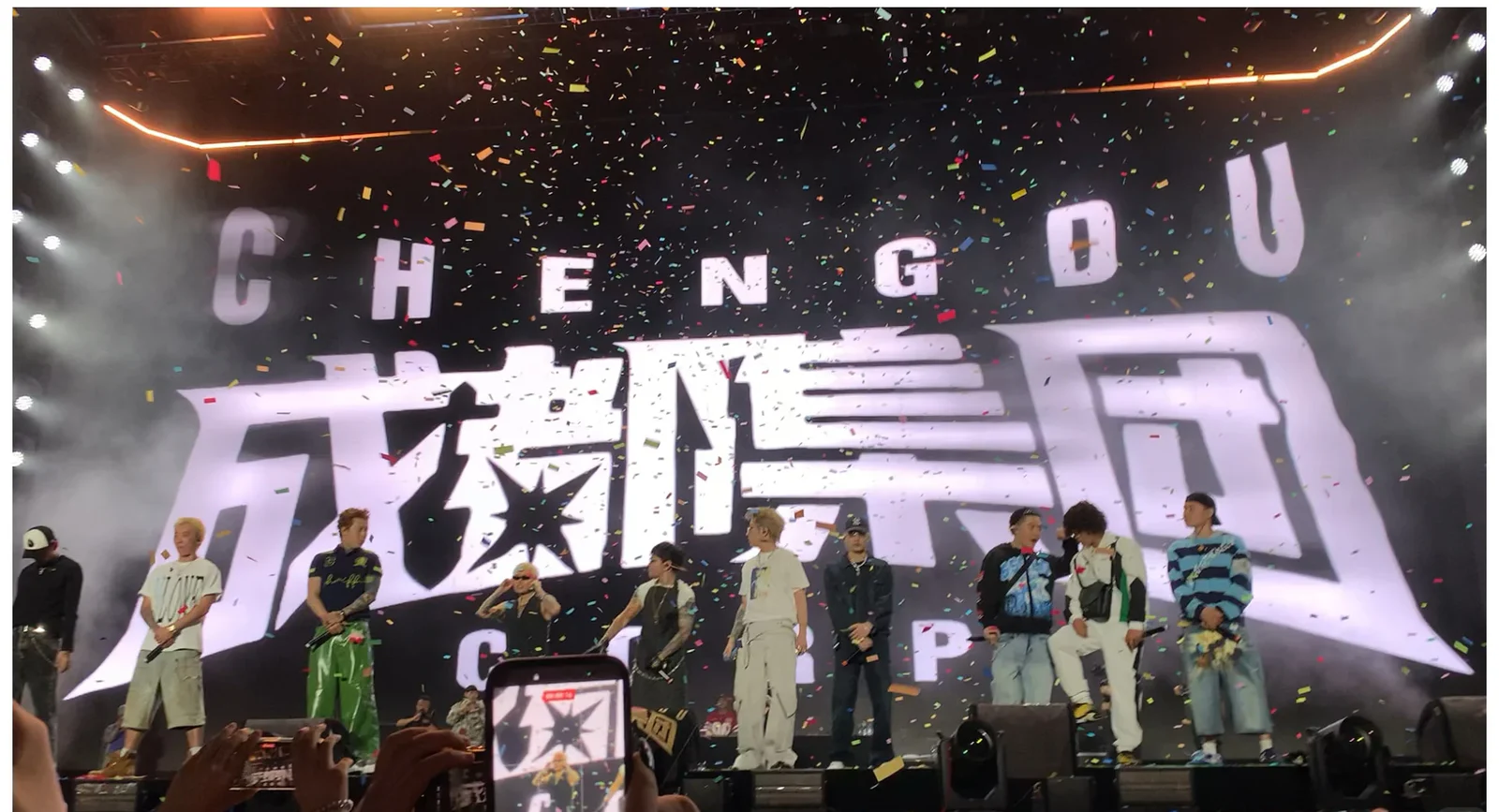
At the finale documented here, the strongest fact is not the size of the screen or the confetti. It is the line of different performers sharing one frame. The photograph cannot prove crew history or artistic quality, but it makes the scene's collective self-image visible.
That image is why the word scene still matters to me. A celebrity portrait asks the city to become one person's backdrop. This lineup does the reverse: no single body can occupy the whole word Chengdu. The emotion comes from recognition across the row, not from pretending the row has no arguments, uneven fame or changing alliances.
CDC is infrastructure, not a synonym for every Chengdu rapper
CDC commonly refers to Chengdu Rap House. English-language summaries sometimes use the initials as if they name one stable band. That creates immediate confusion.
CDC is better understood as a collective identity and scene network. It describes proximity: artists, crews, studios, performances, friendships and competition in Chengdu. Membership histories and business arrangements can change, so the term should not be used to invent a permanent current roster.
GQ's Higher Brothers history provides useful fixed points. It reports that Psy.P and Melo entered the Chengdu Rap House orbit in 2011 and Masiwei joined in 2013. Those dates matter because they show local development before international attention. The city already had working relationships, rival standards and audiences before a global platform arrived.
Masiwei's official Apple Music portrait. His solo visibility is one route out of Chengdu's network, not a portrait of the entire scene.
CDC and Higher Brothers are therefore not interchangeable. One names a wider environment; the other names a defined four-member group. The distinction is not administrative trivia. It explains why Chengdu still matters when the four members release solo records.
The voices that make Chengdu's network audible
The network argument only matters if a listener can hear different creative functions inside it. These artists are not examples of one Chengdu sound; they are evidence that proximity can produce several competing answers.
Xie Di made local speech sound sufficient
Xie Di is essential because he demonstrates that Chengdu's value did not begin with international distribution. His music makes Sichuan speech carry rhythm, humor, neighborhood position and social judgment.
Xie Di's official Apple Music portrait. His importance begins with what Sichuan speech does inside the verse, not with hometown branding alone.
Dialect rap is often explained to overseas readers as regional authenticity. That phrase is too passive. Xie Di does not simply preserve how Chengdu sounds. He uses local speech to decide what the beat can do. A vowel stretches differently. A joke lands before standard Mandarin could finish explaining it. The listener hears who is inside the conversation and who needs translation.
This created permission. Later Chengdu artists could face national or international audiences without treating neutral pronunciation as the price of seriousness.
The important limitation is that dialect alone does not make a scene. A local accent becomes artistically valuable when it shapes observation. Xie Di's strongest records look at community life, aspiration and social types rather than using Chengdu as a repeated slogan.
Higher Brothers turned difference into an export form
Higher Brothers formed around Masiwei, KnowKnow, Psy.P and Melo. The group developed in Chengdu, joined 88rising in 2016 and reached a much wider audience through official videos, translation, touring and the albums Black Cab and Five Stars.
The official 88rising video for Made in China remains the most efficient document of that export moment: the hook travels immediately, while the group format keeps several personalities in the frame.
Official 88rising video still from “Made in China.” The image links to the performance that became an international entry point.
The lazy version of this story says Chengdu trap went global. The music is more specific. Higher Brothers worked because four voices occupied unequal positions. Masiwei could make the hook immediately legible. KnowKnow built comic business characters. Psy.P lowered the temperature. Melo disturbed the clean handoff with rougher physical pressure.
The group did not export one Chengdu voice. It exported an arrangement capable of carrying several voices at once.
88rising's role also needs precision. Videos, media framing, touring and translation built roads toward overseas listeners. The FADER's profile of translator and manager Lana Larkin shows how much mediation crossover requires. None of that created the local chemistry from nothing. It made existing chemistry easier to discover.
Masiwei made the scene globally recognizable without exhausting it
Masiwei became the most immediately recognizable Higher Brothers voice for many international listeners. His high, elastic delivery can organize a crowded beat in seconds. Melody and hooks then allowed the solo catalog to move beyond group trap without abandoning the accent of ambition.
His importance to the city is not that he represents everybody. It is that he changed the scale of what a Chengdu rapper could imagine publicly. International touring, solo albums and visual polish became plausible parts of the local career map.
That visibility creates a risk. Once one voice becomes the city's logo, younger listeners may mistake the logo for the whole system. Chengdu's continued strength depends on artists who do not sound like Masiwei receiving equal critical attention.
Wang Yitai proves Chengdu rap can be built like a complete song
Wang Yitai offers one of the clearest corrections to the idea that Chengdu means loose trap energy. His records often treat the verse, sung section, instrumental space and emotional turn as parts of one room.
Wang Yitai's official Apple Music portrait. His catalog demonstrates Chengdu rap built around arrangement and emotional movement.
The distinction is not simply that he sings more. Plenty of rappers add melody. Wang Yitai's value lies in arrangement: the melodic section changes the argument, and the production creates space for vulnerability rather than merely decorating the hook.
This route matters because scenes survive by solving new musical problems. Higher Brothers proved that contrasting rap voices could travel. Wang Yitai asks how a Chengdu artist can hold attention across a complete song or album when global novelty is no longer the main story.
Psy.P and Melo explain why a network needs supporting forces
Scenes are often narrated through frontmen. Psy.P and Melo demonstrate why that method misses musical structure.
Psy.P's low register and controlled timing give a group record ground. Melo creates resistance, making a polished handoff feel pushed rather than automatic. Their solo catalogs reveal those qualities more clearly, but the original value is relational: they change how brighter voices are heard.
This is a broader Chengdu lesson. A dense scene produces more than stars. It produces people who understand entrances, contrast, studio trust and the difference between an individual verse and a group record.
The official cover of Higher Brothers' “Five Stars,” used here to identify a group document rather than stand in for all Chengdu rap.
Television amplified Chengdu; it did not invent it
National rap competitions brought artists such as Wang Yitai and ICE to much larger audiences. Television changed recognition, booking power and the visual scale of performance. It did not create the years of local work beneath those appearances.
The useful question is always two-part: what did the program reveal, and what did it simplify?
It could reveal technical control, live adaptability and charisma. It could simplify a network into one contestant's origin label. After the program, the catalog becomes the real test. Can the artist build albums, deepen the writing and remain interesting when the competition story disappears?
Chengdu has repeatedly answered yes because television arrivals can return to an existing ecosystem of collaborators and listeners.
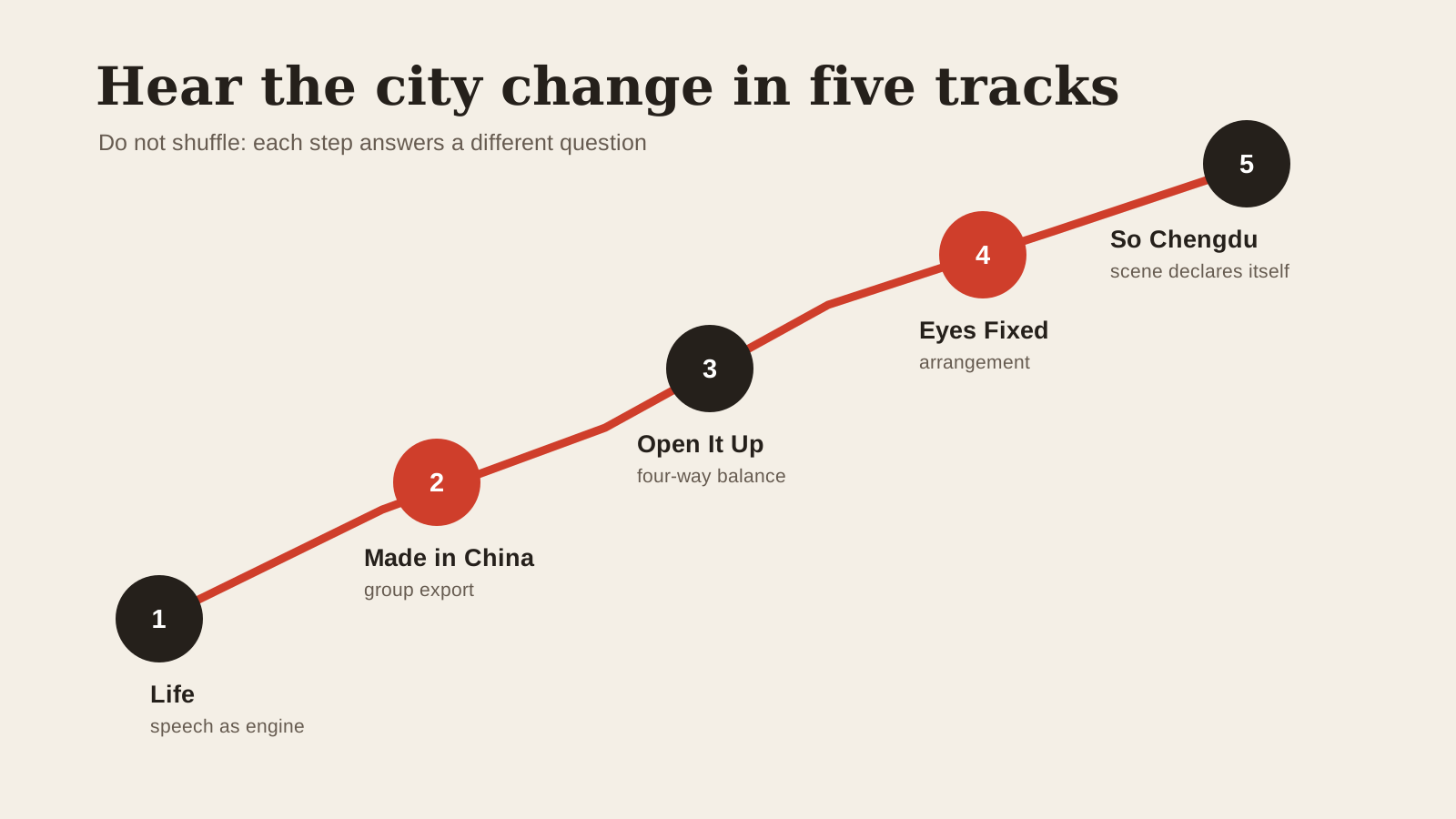
Five tracks for hearing the city change
Xie Di, Life: neighborhood scale
Life places observation before mythology. It is a useful entrance to Chengdu as a lived social environment rather than a rap capital announced from above.
Higher Brothers, Made in China: global reversal
The hook turns an international assumption around before translation is complete. Listen past the slogan to the four member entrances.
Higher Brothers, Open It Up: group architecture
The pleasure lies in anticipating the next voice. It shows why a scene rich in individual character can produce effective groups.
Wang Yitai, Eyes Fixed: arrangement as emotion
The track demonstrates how melody and rap can belong to one dramatic structure instead of occupying separate commercial sections.
Masiwei, So Chengdu: the star returns to the network
The song and its wider album context return solo scale to a city conversation. Chengdu is strongest when success points back toward relationships rather than becoming a private monument.
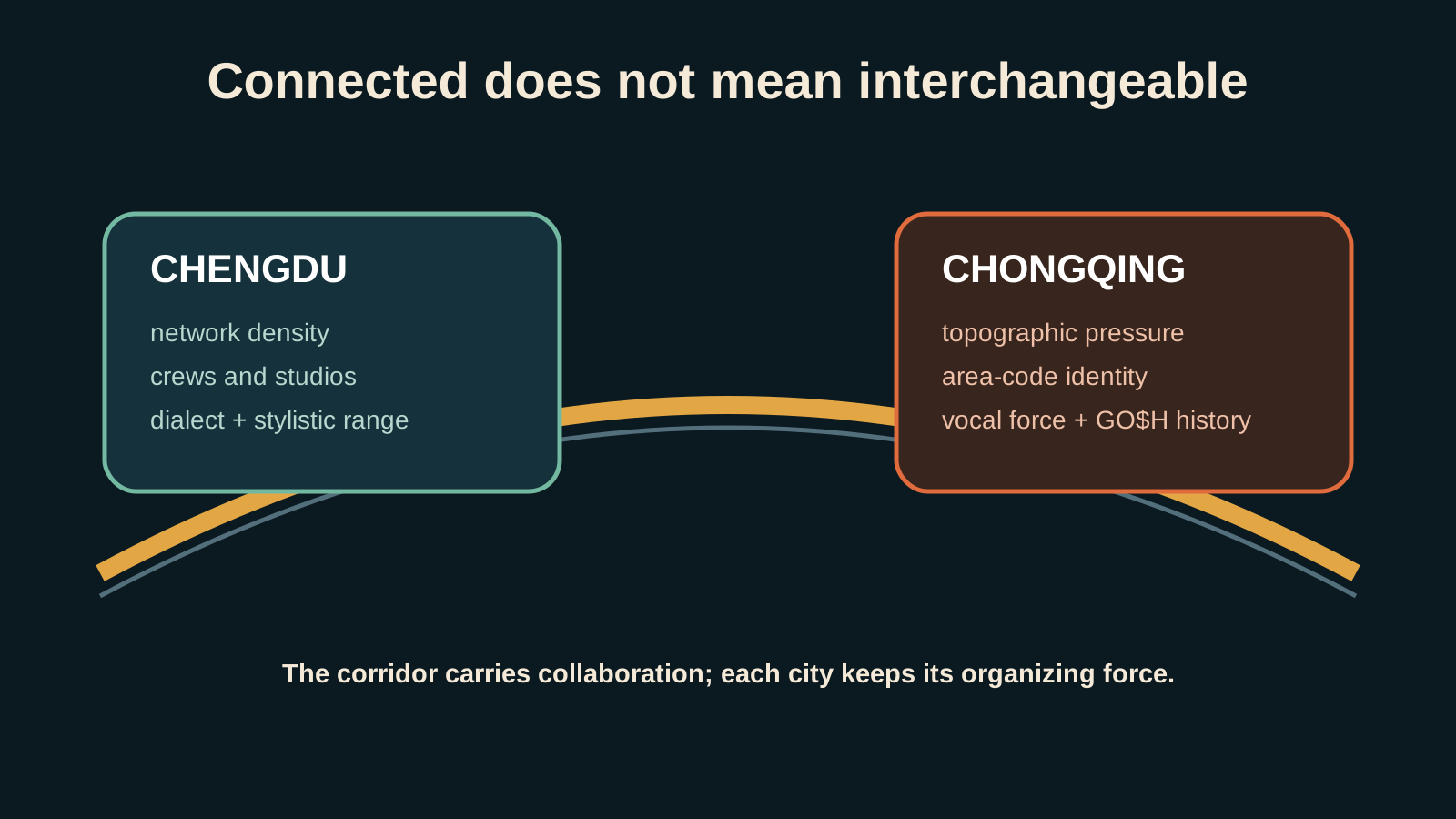
Chengdu and Chongqing are connected, not interchangeable
The official Chengdu-Chongqing Interchange video is valuable precisely because it makes contact visible without erasing difference. Collaboration is evidence of a corridor, not proof of one merged scene.
Official ZHONG.TV video still from “Chengdu-Chongqing Interchange,” linking two neighboring scenes without collapsing their differences.
Both cities belong to southwest China's broader speech world, and collaborations repeatedly cross the administrative border. That does not make their scenes one organization or one sound.
Chengdu's modern rap story is often read through density, crews, studios and stylistic variety. The Chongqing rap scene is especially legible through vocal force, GO$H history, area-code identity and the contrast between GAI and Bridge. The comparison becomes valuable only when difference survives.
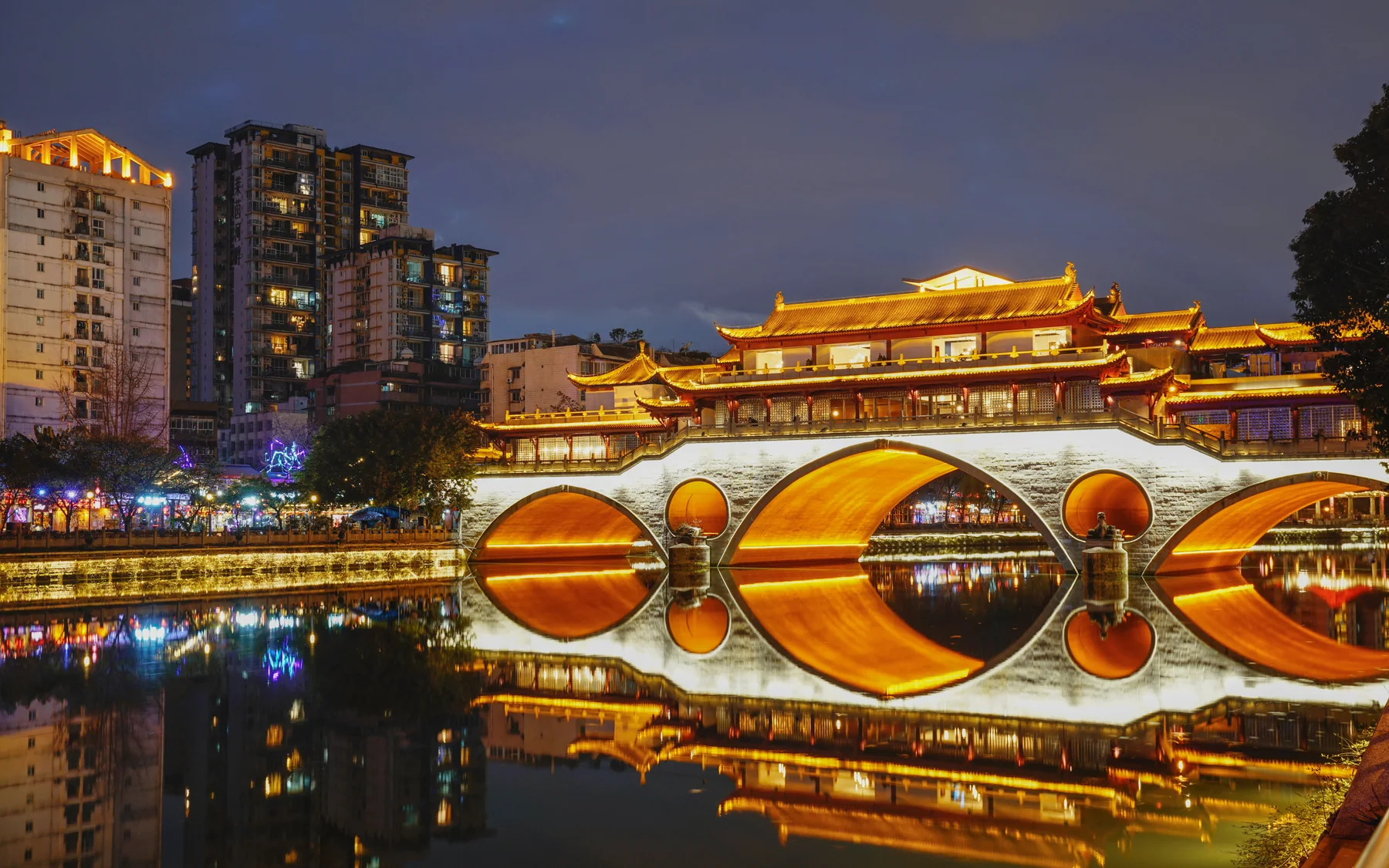
What current listener behavior adds is physical intent. People do not only search for “the best Chengdu rappers”; they look for CDC street locations, rap-culture routes, venues and nights where the network can still be encountered. That does not turn a popular bar into historical proof. It does show why Chengdu feels larger than a roster. My conclusion is that a mature scene gives an audience routes among songs, people and places. One star can export a city name; only a network makes listeners want to enter the city and keep moving.
That is the part I love: every convincing Chengdu voice makes the city larger instead of claiming it alone. The moment hometown branding begins to replace a new musical choice, I lose interest. A mature scene deserves stricter listening, not automatic applause.
Chengdu's looseness is hard-earned
Chengdu deserves its reputation, but reputation can become an editing shortcut. Articles repeat tea houses, laid-back life, CDC and Higher Brothers until every artist seems to emerge from the same relaxed mood.
The city is more interesting when pressure remains visible. Competition, unequal visibility, changing affiliations and the demand to follow an international breakthrough all shape the records. Some releases lean too heavily on established Chengdu branding. A dialect phrase, crew name or hometown feature cannot replace a new musical decision.
The geography becomes audible after walking it. The Chengdu culture guide explains why tea houses and repeat public encounters matter; the travel guide locates the creative districts without pretending every venue is permanent. Even the Chengdu food guide belongs beside the music: late meals, shared tables and neighborhood speech are social infrastructure, not decorative “local flavor.”
The strongest artists keep changing the use of the network. Xie Di turns speech into observation. Higher Brothers turn contrast into movement. Masiwei turns recognition into scale. Wang Yitai turns arrangement into emotional depth. Psy.P and Melo make supporting positions audible as creative choices.
That is the advantage an AI summary usually misses: Chengdu is not important because it has the most names. It is important because the names teach us different ways a scene can function.
Follow the city from dialect to export
- Begin with Xie Di's Life to hear dialect and neighborhood observation.
- Play Higher Brothers' Made in China, then Open It Up to move from hook to arrangement.
- Hear Masiwei's Lover Boy 88 and So Chengdu for melody and return.
- Use Wang Yitai's Eyes Fixed and Sorry for songwriter architecture.
- Compare Psy.P and Melo inside the same Higher Brothers track before entering their solo pages.
- Finish with the Chengdu-Chongqing interchange and continue into the neighboring scene.
The Chinese rappers guide maps these artists against other city voices. The Chengdu culture guide explains the larger city without pretending music can summarize it.