Xi'an (西安) is famous because several histories occupy the same region without occupying the same city. The First Emperor's burial complex lies east of the center. Han and Tang Chang'an spread across plans much larger than the walls visitors cycle today. Ming towers anchor modern traffic, while new museums, costume studios, universities and technology districts keep remaking the meaning of the ancient capital. The best Xi'an trip learns to see those layers separately before connecting them.
This is the city page inside East Moment's wider Chinese culture collection. It explains what Xi'an is and how its layers fit together; the China ancient capitals itinerary takes over when the search task becomes a multi-city route.
Xi'an travel guide at a glance
| Question | Short answer |
|---|---|
| Why visit? | For the Qin imperial necropolis, Tang capital history, major museums, Buddhist exchange, Hui Muslim culture, calligraphy, architecture and one of China's strongest wheat-food cities |
| Ideal first stay | Six days: one Qin day, two museum and archaeology days, two central-city days and one flexible neighborhood or excursion day |
| Best first base | Inside or just outside the Ming wall near a metro connection; choose access over a generic "ancient city view" |
| Essential experiences | Give the mausoleum most of a day, see Shaanxi History Museum early, walk the wall, visit an active religious site respectfully and eat beyond one famous street |
| What makes it different? | Xi'an lets visitors compare an excavated imperial afterlife, vanished capital plans, surviving later monuments and a highly visible modern history economy |
| Main planning trap | Calling every tiled tower "Tang," squeezing the Terracotta Army into half a morning or treating the Muslim Quarter as a food-themed attraction without a community |
Choose the Xi'an you want to meet
| If you care most about | Build your days around | Add this contrast |
|---|---|---|
| Archaeology | Qin mausoleum museum, Shaanxi History Museum and Daming Palace | Compare objects in context, excavated foundations and monumental modern displays |
| Tang history | Museum galleries, Big Wild Goose Pagoda, Daming Palace and a mapped walk through former Chang'an | Put modern Tang-themed performance after the evidence, not before it |
| Architecture | Ming wall, Bell and Drum towers, Great Mosque, pagodas and Guangren Temple | Separate date of institution, date of visible fabric and date of restoration |
| Religion | Big Wild Goose Pagoda, Great Mosque, Guangren Temple and Xingjiao Temple | Observe Buddhism, Islam and active ritual as living practice rather than decorative heritage |
| Food | Morning soup, specialist noodles, roujiamo, paomo and Hui neighborhood eating | Use our Xi'an food guide to distinguish pork, beef and lamb traditions |
| Youth culture | Hanfu photography, live music, design shops, universities and night streets | Ask how historical imagery becomes employment, identity and contemporary entertainment |
Chang'an was not one timeless city
The Guanzhong Plain is protected by mountains and connected by passes. Its river systems and agricultural land helped rulers organize armies, grain, roads and court life. Capitals established in this region could face east toward the Central Plains and west toward corridors leading into Central Asia.
But Chang'an is not a single urban object that survived under modern Xi'an. Western Han Chang'an lay northwest of the present center. Sui and Tang Chang'an occupied an enormous gridded capital south of the Han city. Palaces, wards, markets and religious institutions changed location and scale across periods.
The name Xi'an and the compact walled center belong to later history. The visible wall follows a Ming plan far smaller than Tang Chang'an. When a hotel advertises a "Tang city" view, it usually means modern historical styling, not a view over the intact seventh-century capital.
The four Xi'ans a visitor encounters
| Layer | Representative evidence | What survives | Common mistake |
|---|---|---|---|
| Qin imperial landscape | First Emperor's tomb mound, pits, satellite burials and excavated objects | A vast necropolis with only selected areas excavated and displayed | Treating the warriors as an independent army museum unrelated to the mausoleum |
| Han and Tang Chang'an | Palace sites, ward plans, pagodas, objects and texts | Archaeological remains and a few major monuments within altered urban landscapes | Assuming the Ming wall marks the Tang city boundary |
| Ming and Qing Xi'an | City wall, Bell Tower, Drum Tower, mosque courtyards and temples | Standing buildings with repairs, rebuilding and living institutions | Labeling every historic-looking roof as Tang |
| Contemporary Xi'an | Museums, metro, universities, aerospace and technology industries, performance districts and costume economy | A major modern city actively producing historical culture | Seeing residents only as supporting characters in a tourist version of antiquity |
The Terracotta Army is one part of an imperial afterlife
The UNESCO-listed Mausoleum of the First Qin Emperor is a burial landscape, not simply three halls of clay soldiers. The First Emperor, Qin Shi Huang, unified competing states in 221 BCE and connected political centralization to roads, standards, administration, military power and enormous forced labor demands.
The UNESCO record for the Mausoleum of the First Qin Emperor defines the protected property as a vast burial complex, not simply three halls of clay soldiers. The famous pits contain infantry, archers, chariots and horses arranged in formations. Individualized faces and details are remarkable, but they were produced through organized workshop systems using repeated components, finishing and assembly. "Every face is completely unique" is less useful than asking how standardization and variation worked together.
The figures were originally painted. Exposure during excavation can cause surviving pigment layers to deteriorate rapidly, which is one reason conservation and controlled excavation matter. The muted earth colors seen today are not the original intended appearance.
How to read the Qin mausoleum museum
| What to notice | Why it matters | What not to assume |
|---|---|---|
| Pit layout and corridors | Shows architecture, formation and the relationship between figures and timber structures | That every excavated figure was found standing intact |
| Repaired warriors | Reveals archaeological reconstruction from broken fragments | That restoration hides the real evidence; repair history is part of the evidence |
| Repeated armor and body parts | Points to workshop organization and production systems | That repetition means the figures lack individual craft decisions |
| Traces of pigment | Recovers a vividly colored burial world | That the current gray-brown surface represents Qin aesthetics |
| Empty or unexcavated areas | Shows conservation limits and unanswered questions | That archaeologists have already opened the First Emperor's main tomb chamber |
| Museum crowd flow | Shapes which pits visitors remember and photograph | That Pit 1 alone explains the entire necropolis |
Reserve most of a day. Begin with the site's orientation materials before pursuing the most famous panoramic view. The museum lies in Lintong, outside central Xi'an; transport, entry checks, walking and crowds make a compressed half-day unrealistic for anyone who wants more than a photograph.
Shaanxi History Museum should organize the trip
Shaanxi History Museum connects prehistoric settlement, Zhou ritual, Qin state formation, Han exchange, Tang cosmopolitan life and later regional history through excavated objects. It is the most efficient place to learn why the word "ancient" is not a useful date.
Read object labels for findspot and archaeological context. A gold or ceramic object from a tomb, a palace zone and a religious foundation answers different questions. Imported materials and foreign-looking figures also require precision: they may record long-distance exchange, migration, artistic borrowing or local production, not a simple claim that Tang Chang'an was modern globalization in costume.
Reservations and gallery access can change, so confirm current procedures directly. Give the museum at least half a day and avoid placing it after a physically exhausting Qin visit.
Big Wild Goose Pagoda links translation, pilgrimage and urban memory
The Big Wild Goose Pagoda was first built in 652 within the Da Ci'en Temple complex and is closely associated with the monk and translator Xuanzang. He traveled through Central and South Asia, returned with Buddhist texts and participated in a major translation project in Chang'an.
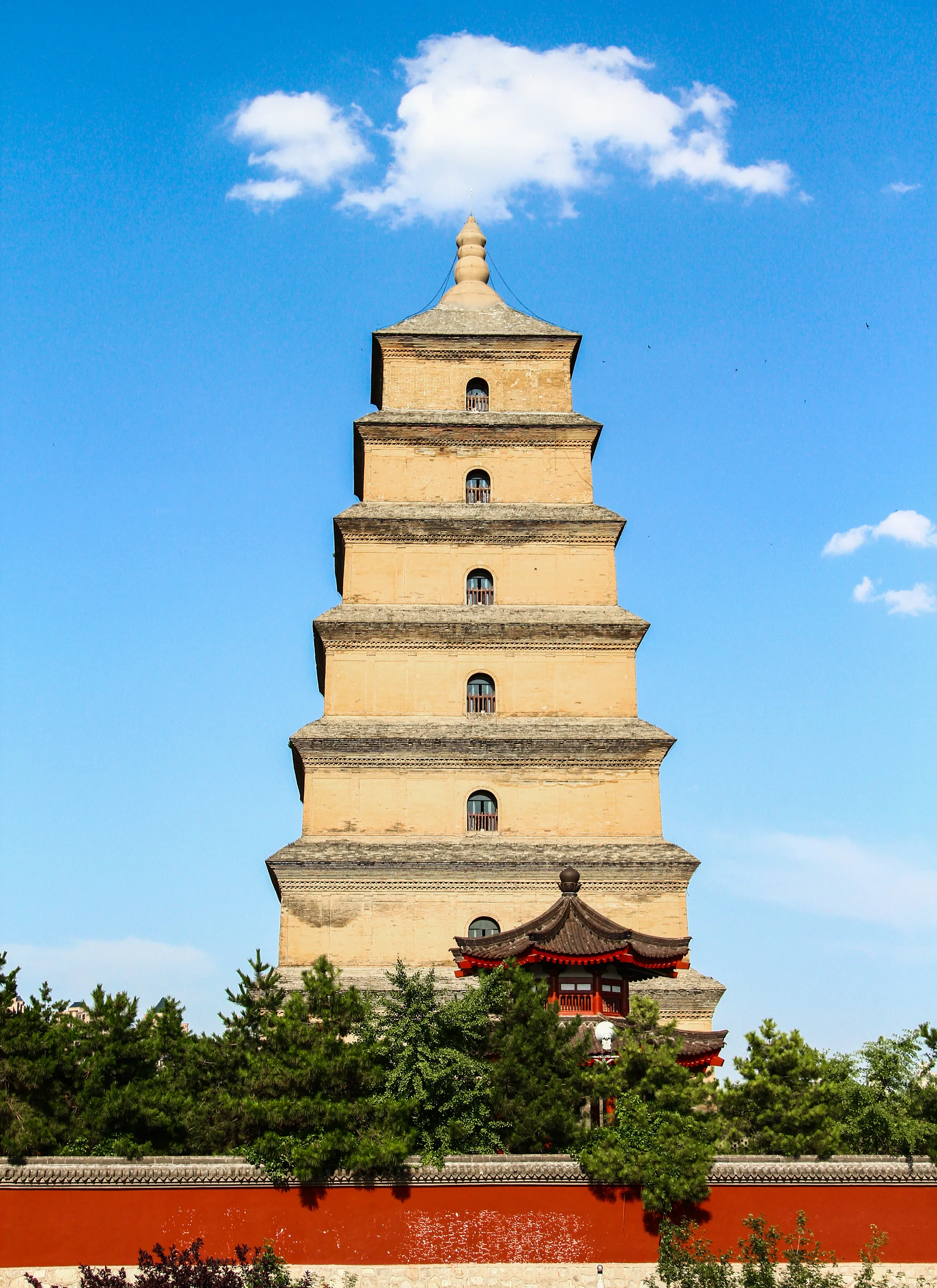
The standing pagoda reflects rebuilding, modification and restoration after its original construction. Its historical importance lies in Buddhist scholarship, textual movement, patronage and the place of monasteries within the Tang capital, not in the fantasy of a building untouched since Xuanzang's lifetime. Read it beside the Chinese pagoda guide to compare Xi'an's single city-scale landmark with Shaolin's memorial field, Quanzhou's port-city towers and Dali's mountain composition.
The surrounding district now includes large plazas, commercial streets, fountains and performance spaces. This creates a useful contrast: a major Buddhist monument has become the anchor of contemporary night tourism and costume photography.
Xingjiao Temple carries Xuanzang's memory beyond the center
Xingjiao Temple is associated with Xuanzang's burial pagoda and with the transmission of Buddhist knowledge. Its pagoda complex is included in the UNESCO Silk Roads serial property.
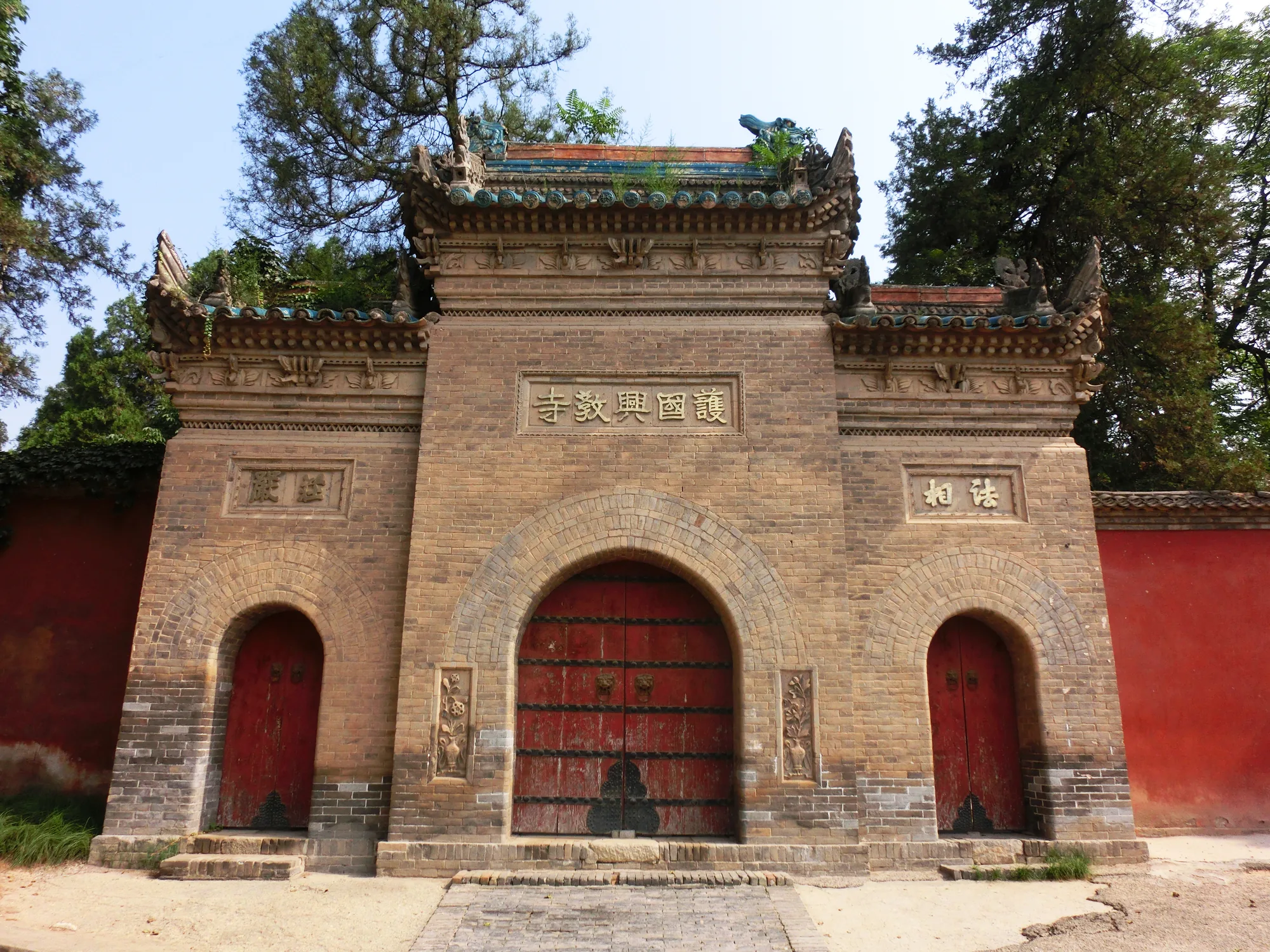
The site is farther from the central visitor circuit and should be treated as an active religious place. Visible halls and courtyards belong to different periods of rebuilding. Visit for the relationship between memorial, monastic life and the geography of Buddhist networks, not as a quick checklist addition after the Big Wild Goose Pagoda.
The city wall is Ming, monumental and genuinely useful
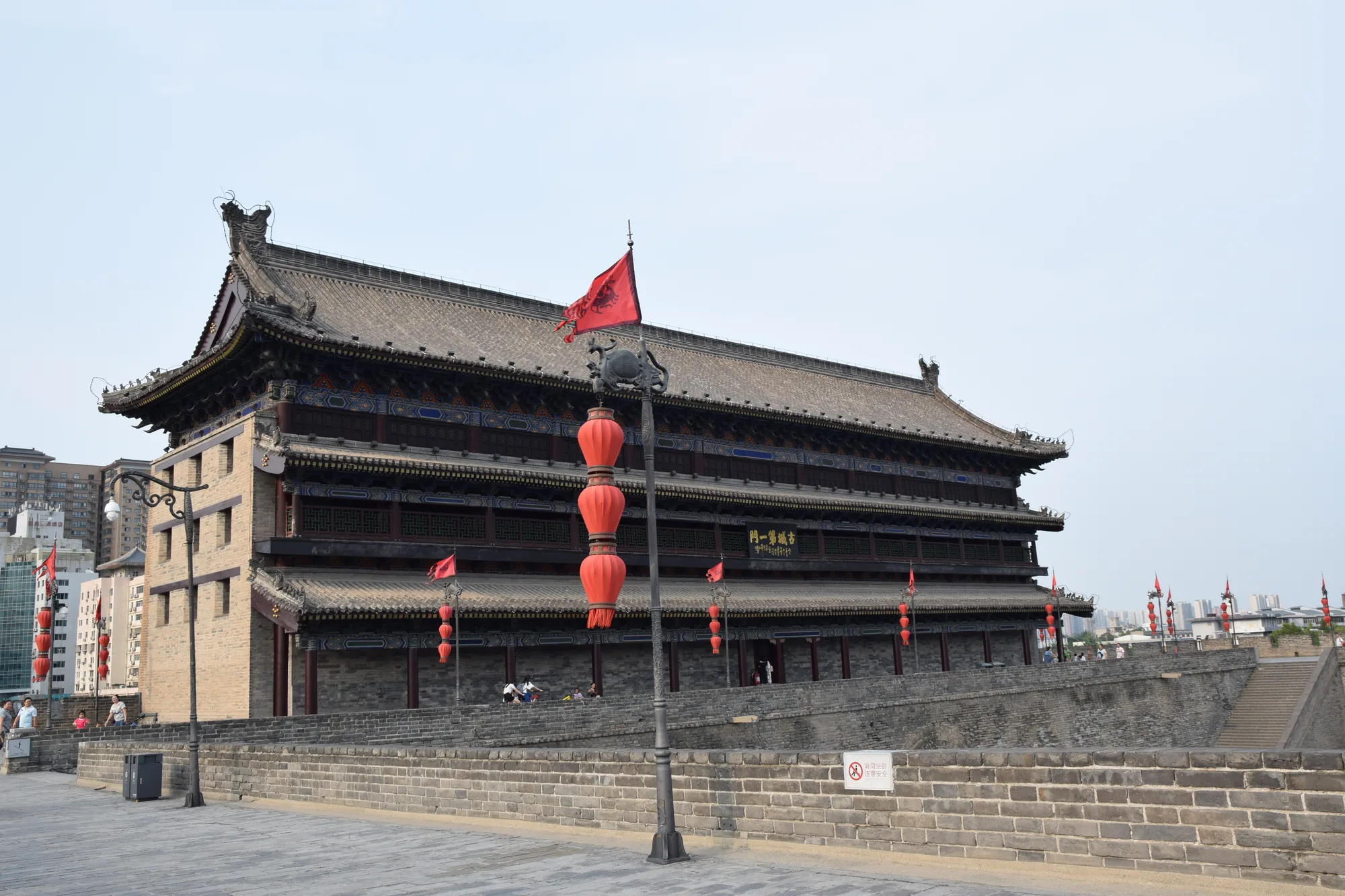
Xi'an's standing city wall was developed in the early Ming period and repaired repeatedly afterward. It is among China's most complete large urban fortification systems, but it is not the wall of Tang Chang'an.
Its scale is best understood from above. Gates, corner towers, ramparts and the rectangular plan reveal defense and movement, while modern roads and buildings show how a historical boundary still organizes the city.
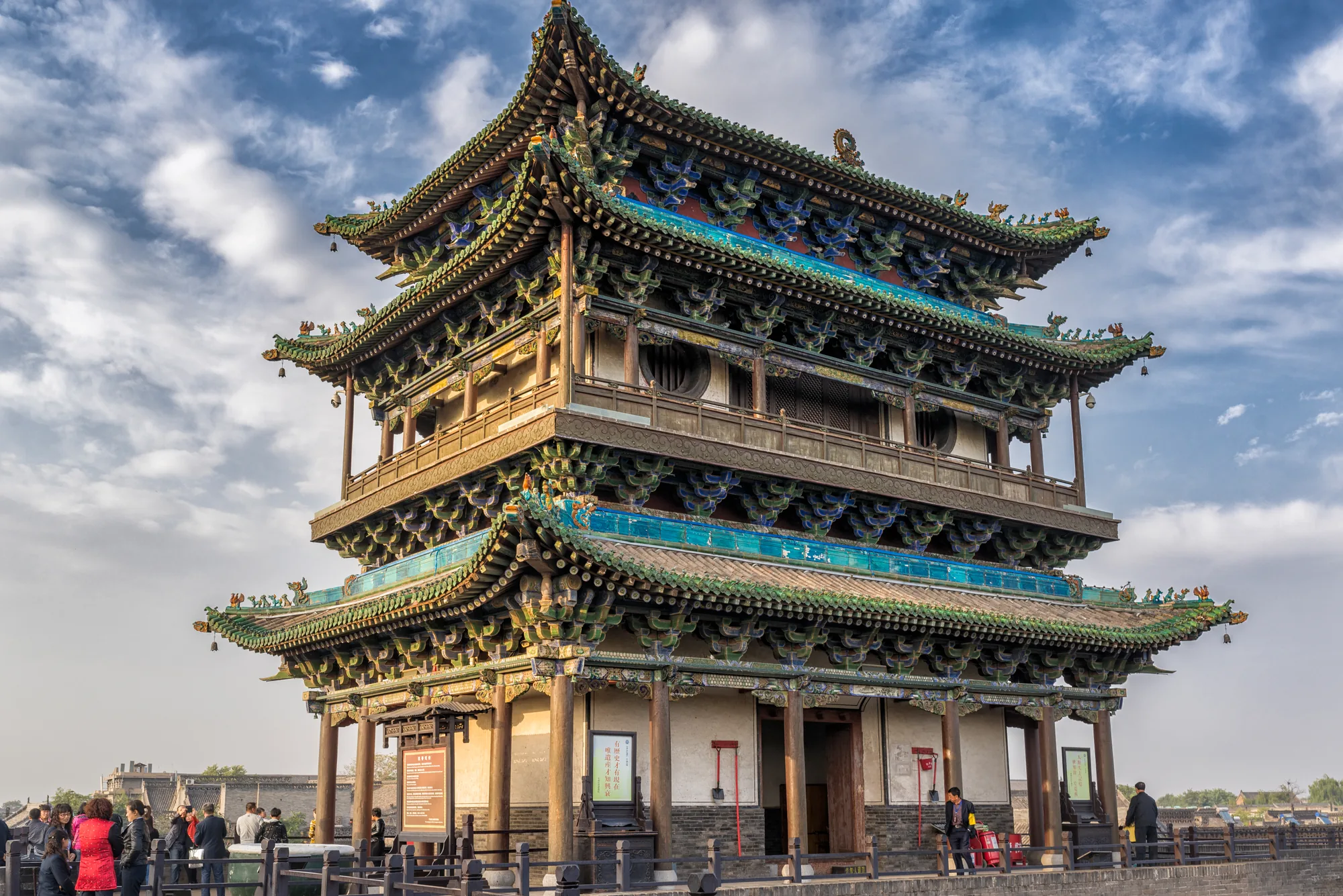
Walking a section is often more rewarding than racing the entire circuit. Bicycle availability, access points and temporary closures change, so confirm conditions on the day. Heat, wind and limited shade matter more on the wall than at street level.
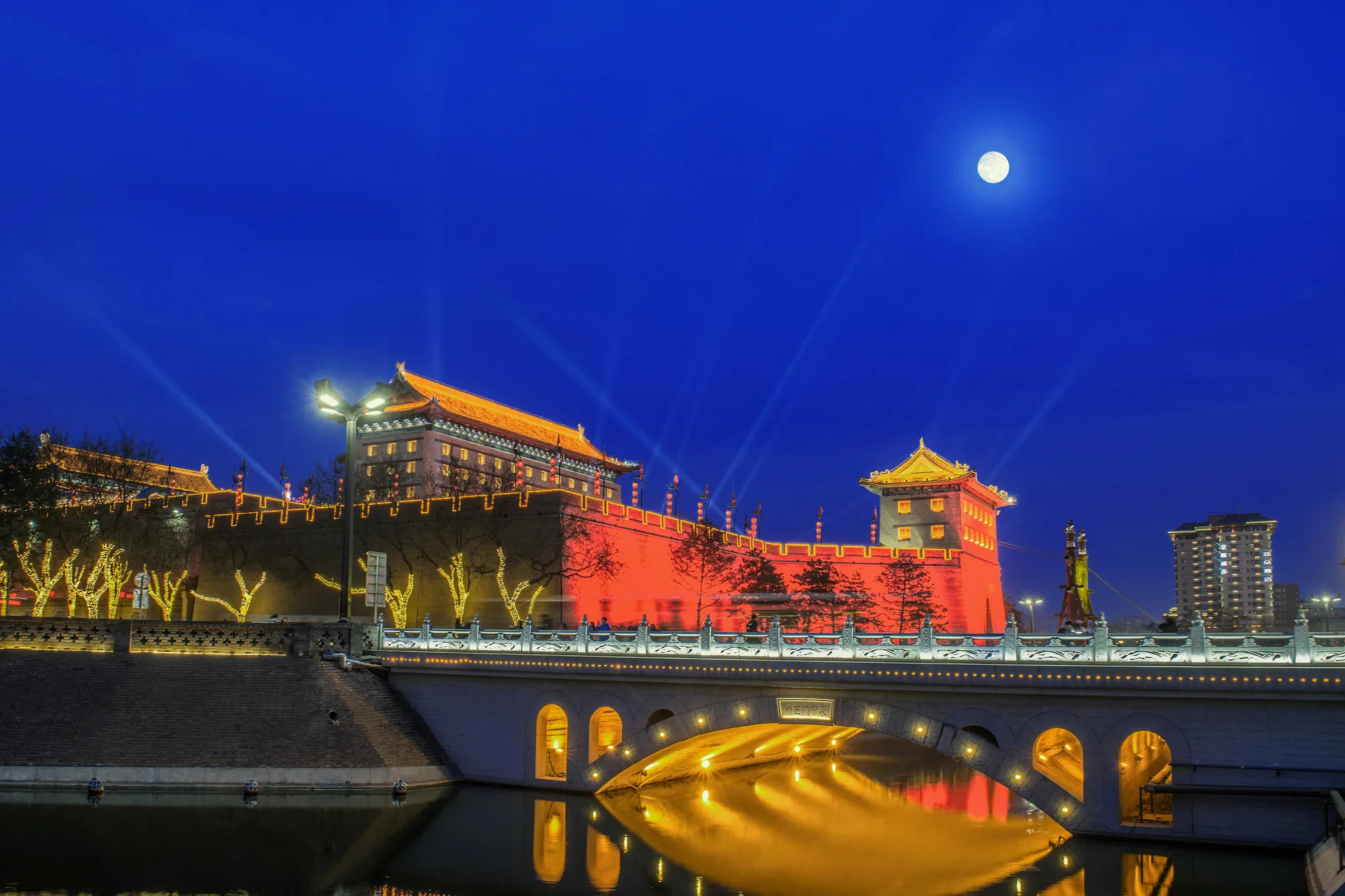
Night lighting makes the wall dramatic but reduces material detail. See at least one gate in daylight before using the illuminated outline as your mental image of Ming construction.
Bell Tower and Drum Tower define a later urban center
The Bell Tower was built in the Ming period and later moved to its present position at the meeting of major streets. The Drum Tower also dates to the Ming era. Together they organize the image of central Xi'an, but neither is a Tang monument.
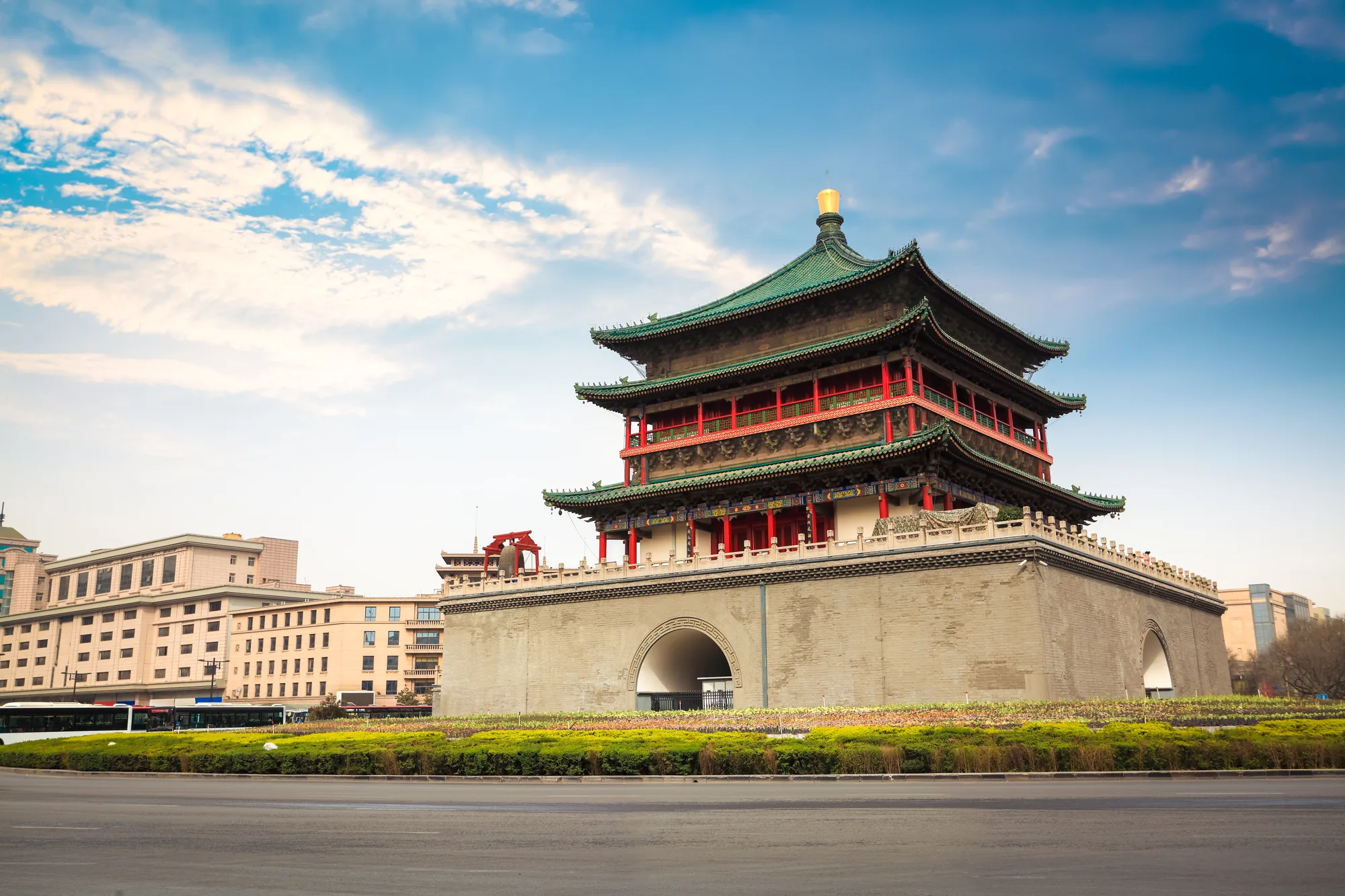
The strongest view includes buses, tunnels, signs and traffic. The towers survive not outside modernity but at its center. Their current paint, lighting and visitor circulation are products of conservation and urban management.
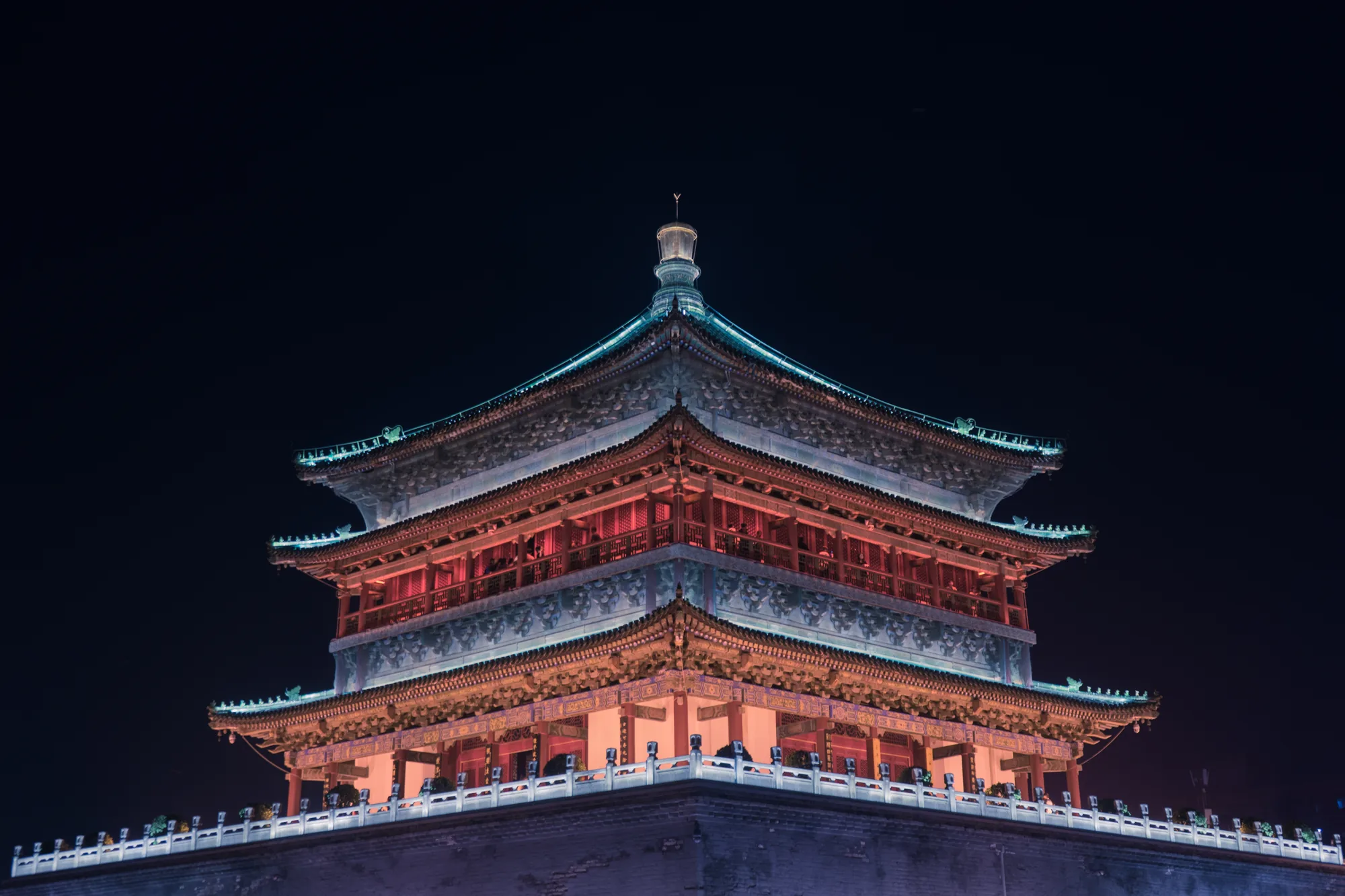
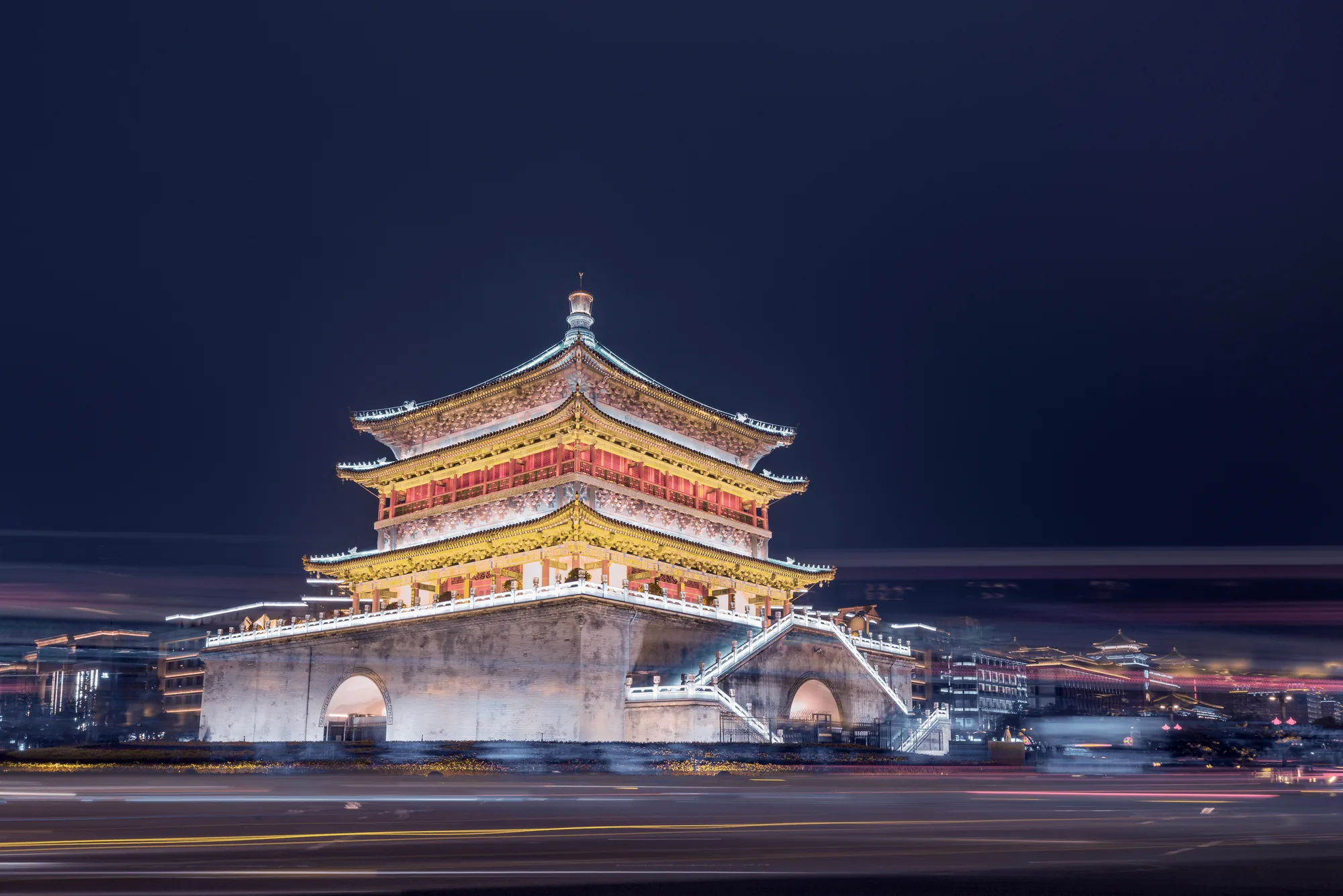
Climbing both is optional. If time is limited, study one interior and use the other as an exterior urban landmark. The streets behind the Drum Tower lead toward the best-known visitor section of the Hui district.
The Muslim Quarter is a living Hui district
The name Muslim Quarter usually refers to several lanes and neighborhoods around the Great Mosque, not one official theme street. Hui families, mosques, schools, shops and food businesses have shaped this area over generations.
The busiest corridors contain heavy tourism, repeated snack stalls and performance-style selling. Walk beyond the first illuminated stretch. Morning and daytime reveal bakeries, butchers, prayer rhythms and specialist businesses that night crowds can obscure.
The Great Mosque of Xi'an has a long institutional history, while much of its visible timber architecture and courtyard form reflects later periods, particularly Ming and Qing building traditions. Its Chinese architectural vocabulary does not make it less Islamic. Orientation, Arabic and Chinese inscriptions, prayer space and community use reveal how religious architecture adapts locally.
Dress and behave respectfully, check visitor access and prayer-time restrictions, and never stage fashion photography in active worship areas. Our Xi'an food guide explains how Hui beef and lamb traditions differ from pork-based Shaanxi foods.
The Stele Forest turns writing into historical evidence
The Forest of Stone Steles Museum, or Beilin, preserves inscriptions, calligraphy models, stone classics, religious records and carved works across many periods. Stone does not make a text neutral. Each stele was commissioned, selected, copied, moved or preserved for reasons connected to education, authority, memory and collecting.
Calligraphy visitors should slow down enough to compare script, line, spacing and surface. A rubbing reverses the visual relationship between cut stone and written stroke; it is a historical technology of reproduction, not merely a souvenir technique.
The famous Nestorian Stele records the presence of the Church of the East in Tang China and is important evidence for religious exchange. It does not prove that all of Chang'an shared one uniform cosmopolitan identity. One inscription opens a history; it does not finish it.
Daming Palace is an archaeological landscape
Daming Palace was a major Tang imperial palace complex northeast of the walled center. Today the national heritage park presents foundations, platforms, museum interpretation, landscape scale and selective modern reconstruction.
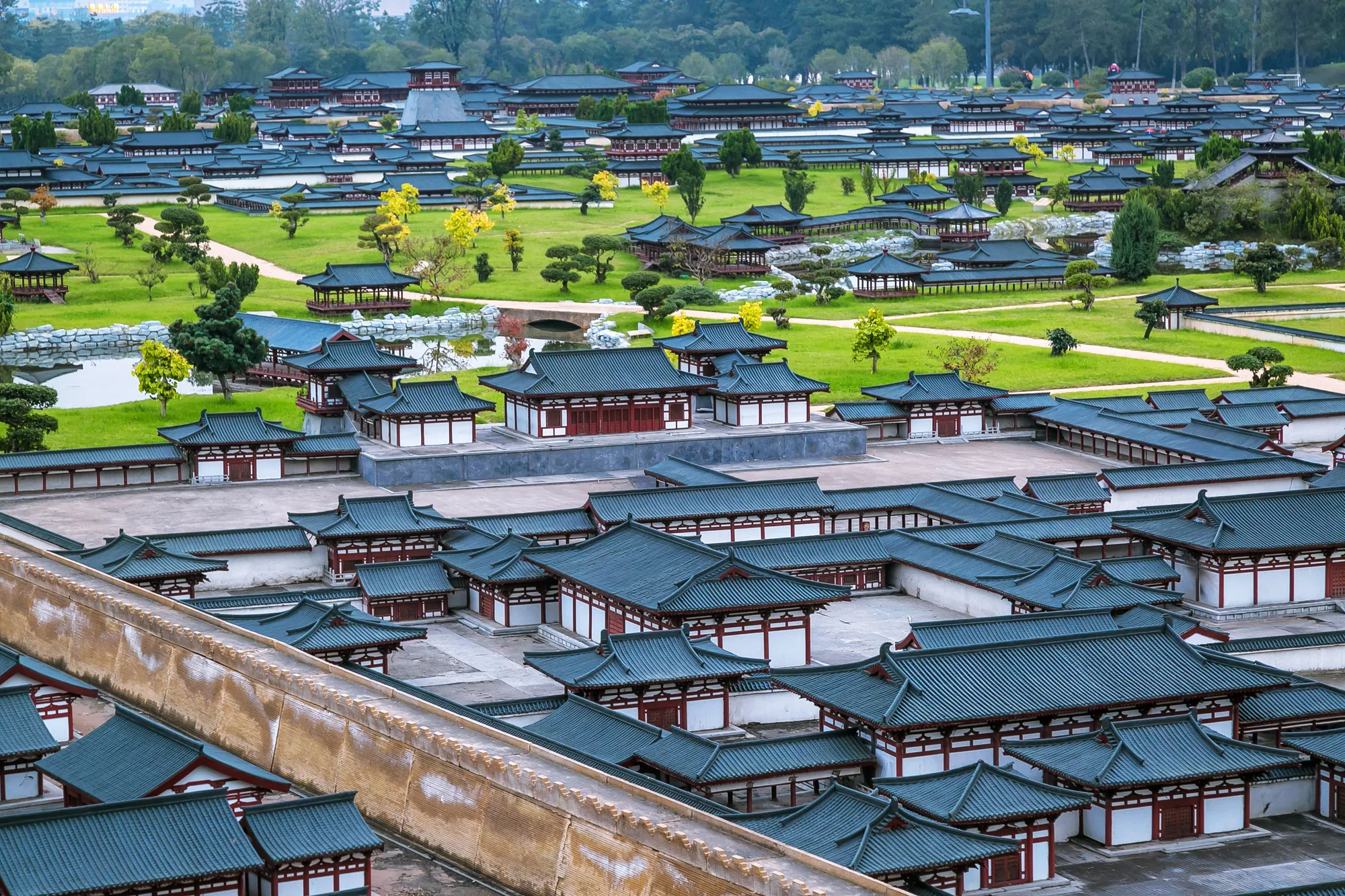
The model is an interpretation, not a surviving palace photograph. Use it to understand axes, courtyards and scale, then compare it with foundations on the ground. Empty space is part of the visit: it shows the distance between archaeological evidence and the complete palace imagined by visitors.
Evidence versus historical entertainment
| Experience | What it offers | What it does not offer |
|---|---|---|
| Daming Palace archaeological park | Foundations, spatial scale, excavation context and site interpretation | An intact Tang palace complex |
| Shaanxi History Museum | Objects with chronology and findspots | The original buildings and social settings in full |
| Big Wild Goose Pagoda | A major monument with a long Buddhist institutional history | An untouched seventh-century structure |
| Grand Tang Mall and costume streets | Contemporary public performance, lighting, photography and youth culture | Archaeological reconstruction of an entire Tang neighborhood |
| Tang Paradise | A modern cultural theme park with landscape, buildings and shows | Original Tang architecture or a preserved imperial garden |
Modern Tang spectacle is part of contemporary Xi'an
Xi'an has turned Tang imagery into a large cultural economy. Tang Paradise, the Grand Tang Mall area, stage productions, makeup studios and costume rentals generate work for performers, photographers, designers and small businesses.
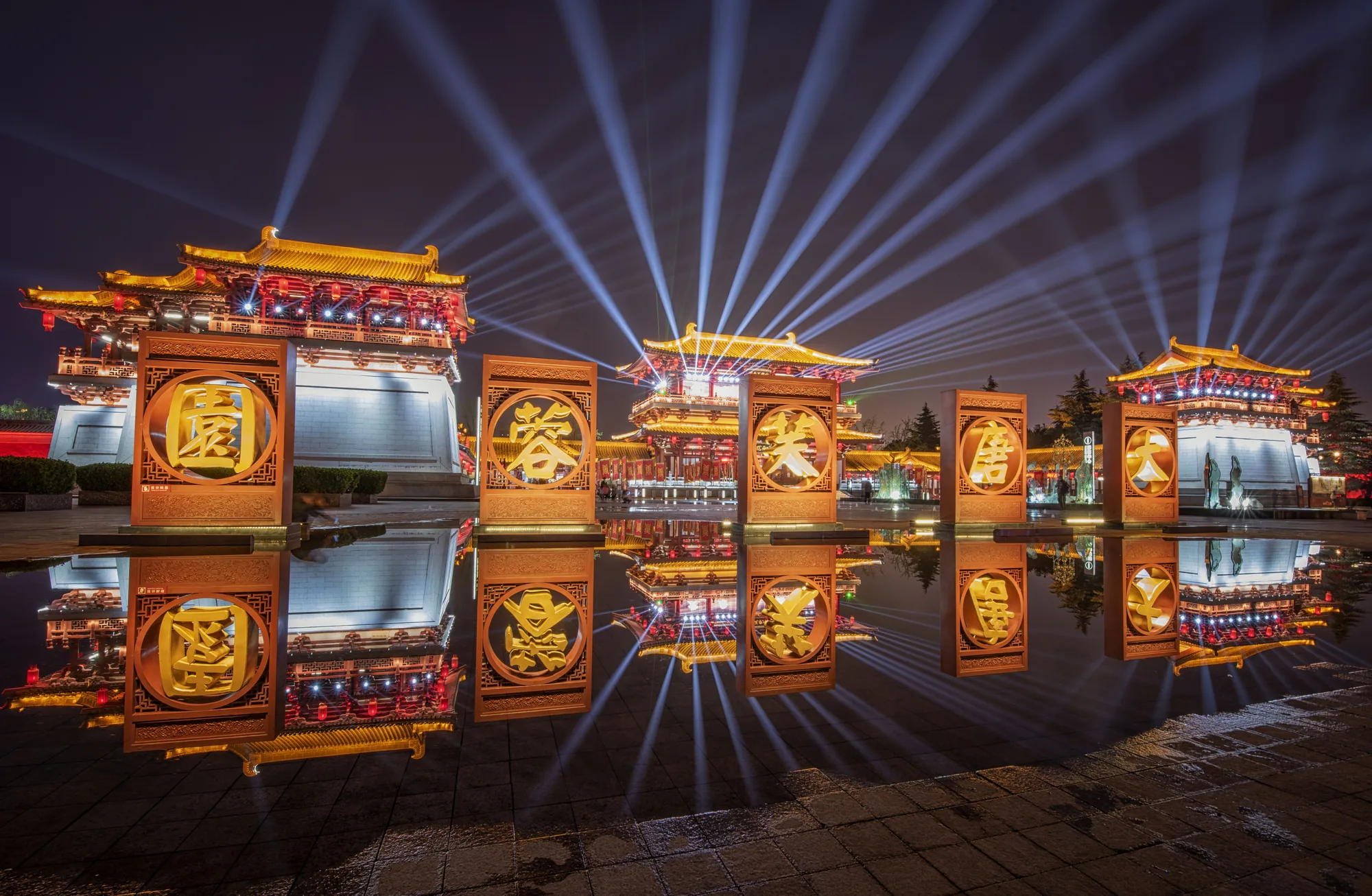
This is not a failure of authenticity. It is contemporary cultural production. The mistake is calling modern architecture and scripted scenes preserved Tang life. Enjoy the lighting and performance, then ask what visual elements come from museum objects, paintings, television, fashion and practical crowd design.
Hanfu photography also raises etiquette questions. Do not block active religious spaces, climb monuments, imitate sacred ritual for a pose or photograph strangers without consent. A strong image should not require turning residents into scenery.
Huaqing Palace contains several histories
At the foot of Mount Li, Huaqing Palace is associated with imperial hot springs, Tang court memory and the story of Emperor Xuanzong and Yang Guifei. It is also connected to the 1936 Xi'an Incident, when Chiang Kai-shek was detained during a crisis that reshaped Nationalist-Communist cooperation against Japan.
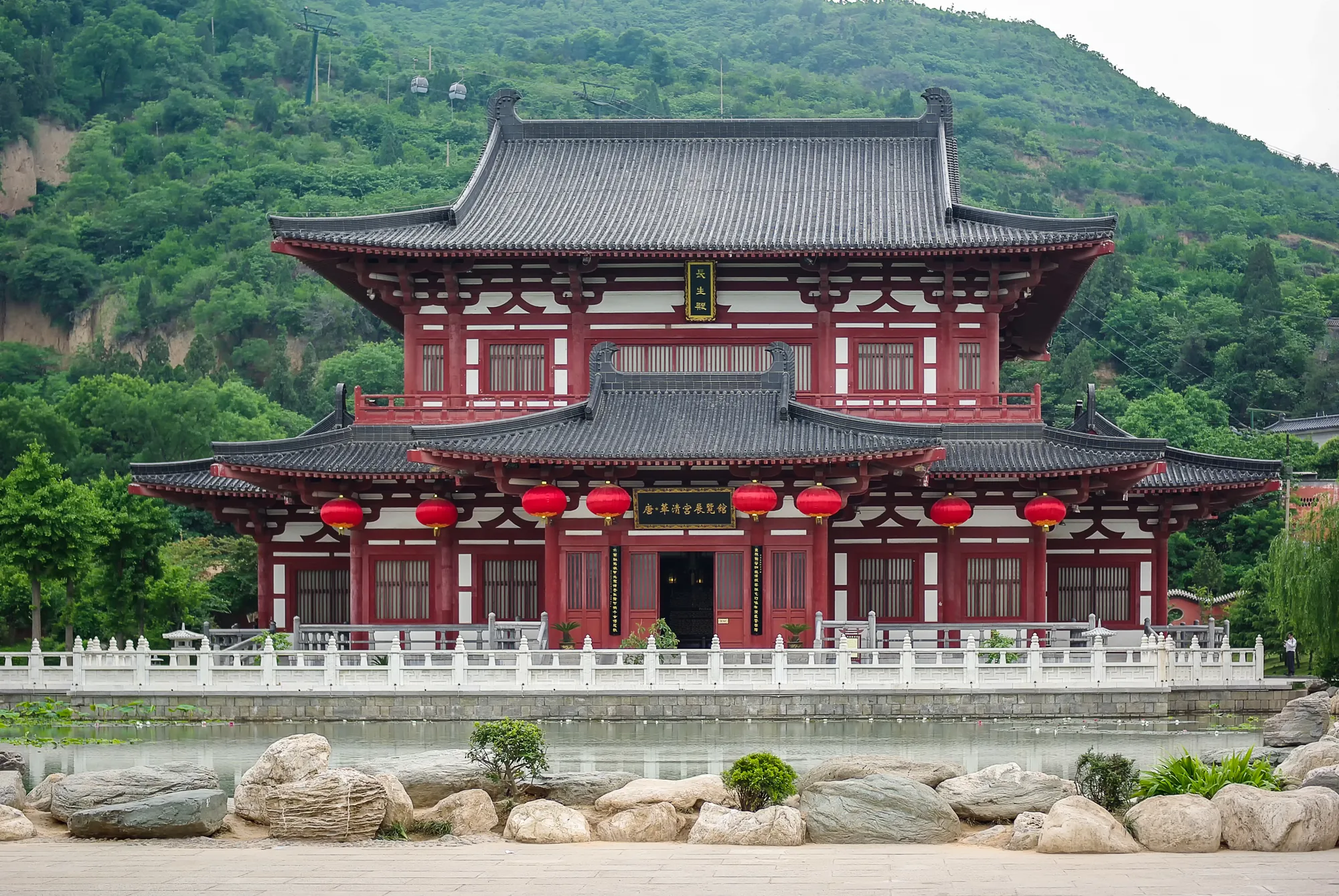
The current scenic area joins archaeology, restored or reconstructed architecture, landscaped pools, theater and political history. Romantic legend should not erase labor, court power or twentieth-century conflict. Pair the site carefully with the Qin mausoleum only if you accept a long, demanding Lintong day.
Guangren Temple expands the religious map
Guangren Temple, established in the Qing period, is a Tibetan Buddhist temple within the Ming-walled city. Its presence complicates any simple story in which Xi'an's religious history belongs only to Tang Buddhism and Islam.
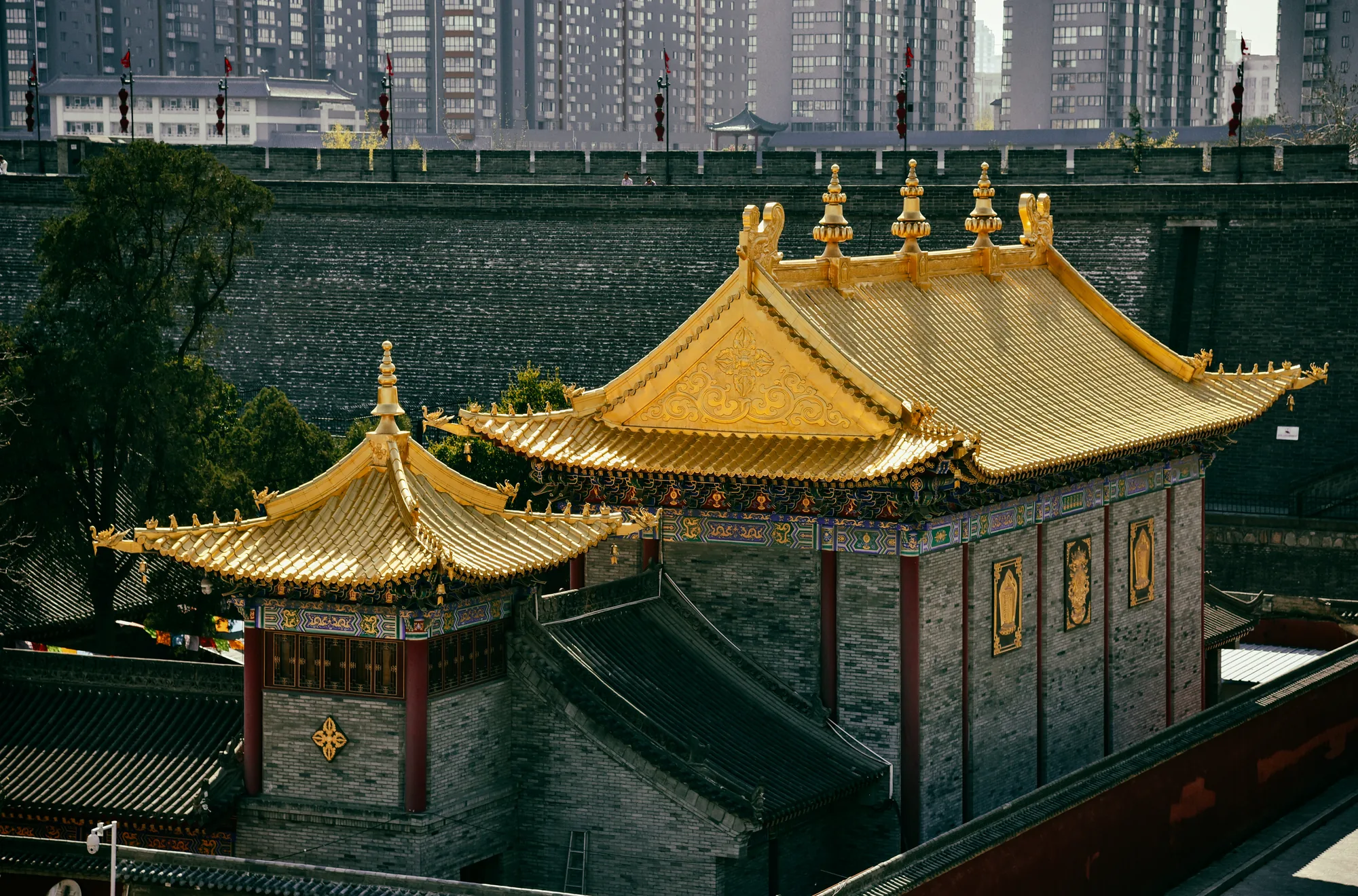
Visit as an active temple. Observe ritual boundaries and photography rules. The site is especially useful after the Big Wild Goose Pagoda because it shows a different Buddhist institution, visual language and political history.
Xi'an's rap scene is bigger than one famous name
I refuse to leave Xi'an's young people dressed as extras in a Tang-dynasty photograph. Rap gives them the microphone. But starting and ending with Capper erases the networks that made the city a place to create music, not merely consume it.
Hong Hua Hui (红花会) belongs in that history. Founded in Xi'an in 2011 by Danko (弹壳) and Ding Fei, the crew's wider story includes Beibei (贝贝) and BrAnT.B, also called Xiaobai (小白). Its name comes from Jin Yong's The Book and the Sword: a martial-arts brotherhood became a rap identity. That is a far more interesting connection between inherited culture and contemporary Xi'an than adding an ancient-looking backdrop to a performance. The 2017 label announcement also identifies Mai as the producer behind Tui Bian (蜕变). Listen to the production as well as the person holding the microphone; a scene needs people who can turn performances into records.
Mercy, formerly known as Zhizhu (蜘蛛), is a different person from Mai and part of the early Hong Hua Hui story. PACT (派克特) belongs on another branch: NOUS, which he co-founded. These are historical relationships, not a claim that every artist remains under one current contract. Sharing Xi'an does not mean sharing a crew, and an old collaboration is not a membership list.
For a first encounter, follow three routes: Hong Hua Hui for the crew history, PACT for the NOUS connection, then Capper and NINEONE for distinct artists associated with the Lazyair network. Do not force them into one “Xi'an sound.” Before arranging a music night, check the actual artist and venue listing for your dates; a famous local name is not a promise of a hometown performance. I would rather hear one artist properly than collect ten names and leave believing the city speaks in unison.
Xi'an extends beyond the dynastic center
The city's universities, research institutes, aerospace sector, software and manufacturing economies matter. Students and young workers use the same metro system and night districts as heritage visitors but inhabit a city whose future is not limited to tourism.
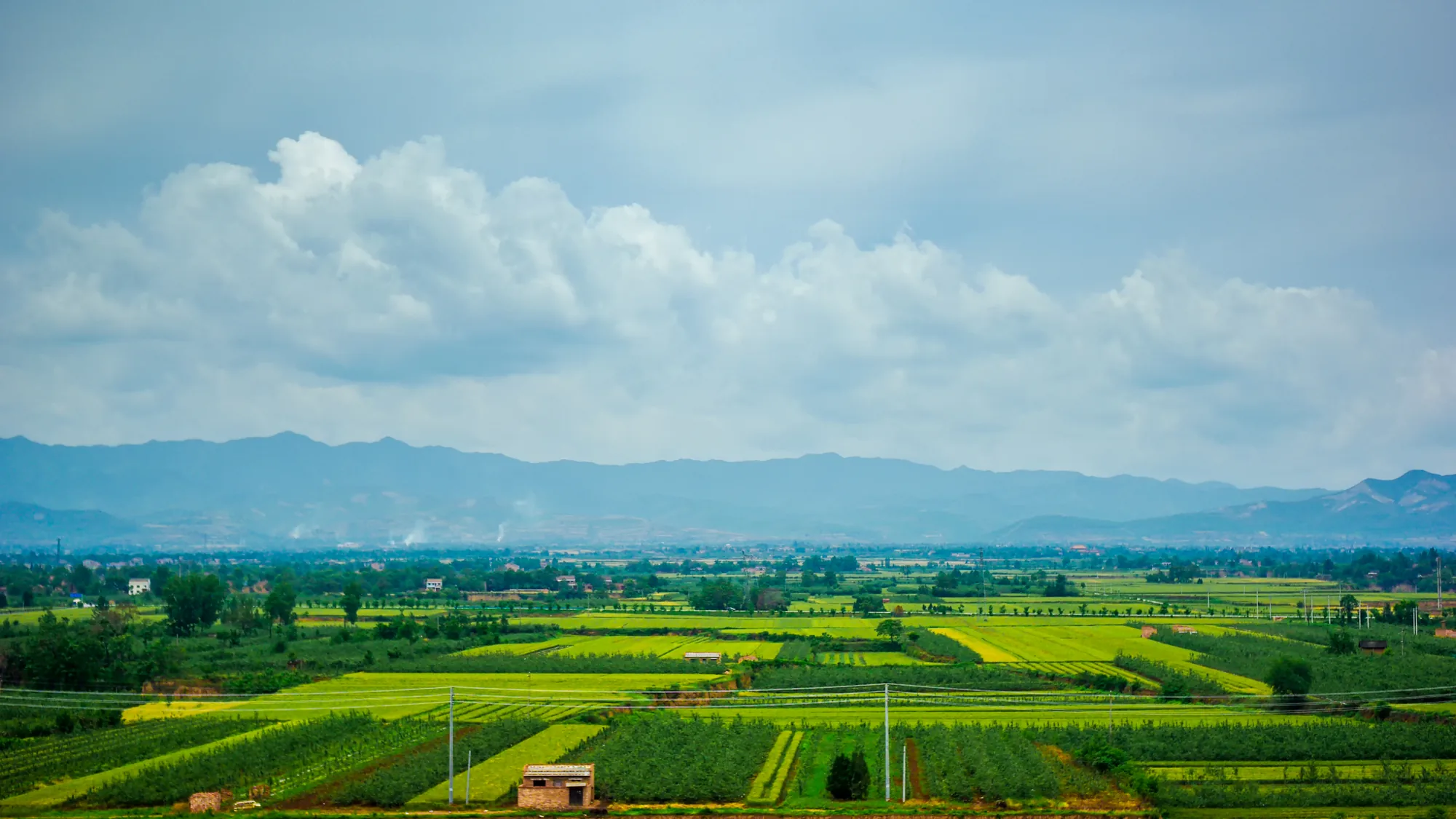
The Guanzhong landscape also remains visible beyond the dense center. Agricultural land, villages, logistics zones and new development show the environmental base that imperial histories often compress into palace narratives.
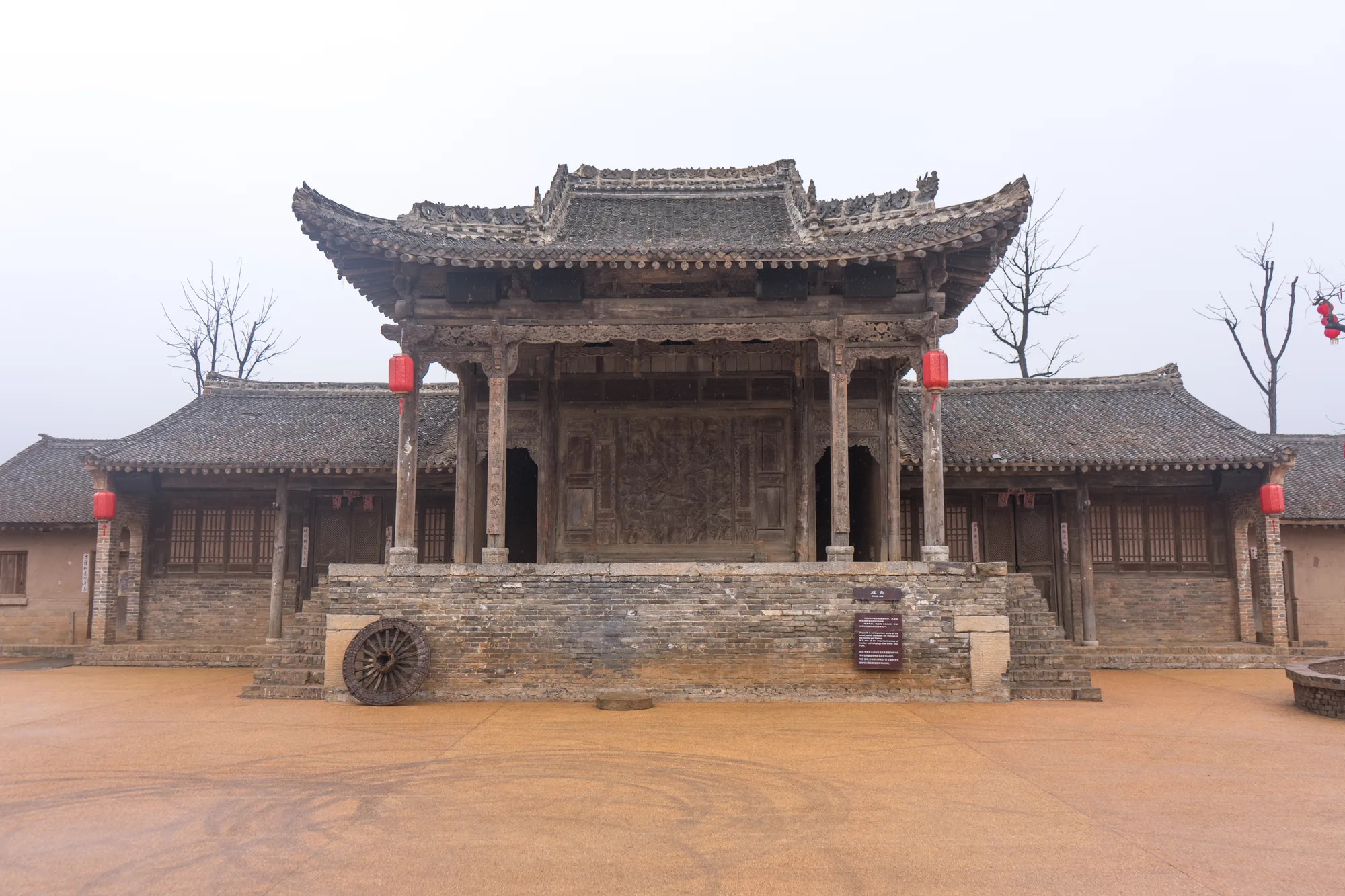
Places such as Bailuyuan are tied to regional literature, rural memory and contemporary cultural tourism. Treat them as separate excursions, not proof that every staged village scene preserves timeless Shaanxi life.
Where to stay
| Area | Best for | Trade-off |
|---|---|---|
| Bell and Drum Tower area | First-time access, evening walks, wall gates and central food | Crowds, tourist pricing and traffic around major intersections |
| South Gate / Yongning Gate | Wall access, cafes, nightlife and connections south | Night noise in some streets and less immediate access to the Hui district |
| Big Wild Goose Pagoda area | Museums, modern Tang-night experiences and southern attractions | Farther from central Ming heritage and the railway station |
| North or northeast of the wall | Daming Palace, transport links and a more ordinary urban base | Less postcard atmosphere for a first evening |
| Lintong | Early Qin mausoleum or Huaqing Palace access | Poor base for several days of central Xi'an exploration |
Build a realistic itinerary
| Stay | Core plan | Do not do this |
|---|---|---|
| 3 days | Qin mausoleum; museum plus Big Wild Goose Pagoda; wall, Beilin and central evening | Add Huashan, Huaqing Palace and every night show |
| 4 days | Add Great Mosque, Hui district and Bell/Drum towers at a slower pace | Treat the Hui district as only a dinner stop |
| 6 days | Add Daming Palace, Guangren Temple, Huaqing Palace or Xingjiao Temple and one flexible neighborhood day | Schedule two distant excursions back to back |
| 8 days | Add Huashan or another major regional trip, more archaeology and recovery time | Use the city only as a hotel between day trips |
A balanced six-day first visit
| Day | Morning | Afternoon | Evening |
|---|---|---|---|
| 1 | Shaanxi History Museum | Big Wild Goose Pagoda and surrounding district | Modern Tang-night area with clear expectations |
| 2 | Qin mausoleum orientation and pits | Continue museum and necropolis visit | Simple dinner and rest in central Xi'an |
| 3 | Stele Forest Museum | South Gate and a wall walk | Bell Tower exterior and neighborhood meal |
| 4 | Great Mosque and Hui district | Drum Tower area and specialist food shops | Return after the main rush or attend a carefully chosen performance |
| 5 | Daming Palace | Guangren Temple and north-city walk | Contemporary cafe, music or university district |
| 6 | Huaqing Palace, Xingjiao Temple or a free archaeology day | Continue the chosen route | Final Shaanxi dinner without a checklist |
Practical and ethical travel guidance
| Issue | Better approach |
|---|---|
| Museum reservations | Check official channels shortly before the visit; policies and release times can change |
| Terracotta Army transport | Allow for travel to Lintong, security, queues and walking; ignore drivers who redefine your itinerary around commissions |
| Historical labels | Ask whether a structure is original fabric, restored, reconstructed or newly built in a historical style |
| Religious sites | Check access, cover appropriately, keep voices low and do not interrupt prayer or ritual |
| Costume photography | Use permitted public areas, avoid blocking circulation and ask before including strangers prominently |
| Heat and air quality | Carry water, pace wall visits and check current conditions rather than relying on seasonal stereotypes |
| Accessibility | Historic stairs, wall surfaces and archaeological routes vary; confirm lifts, ramps and shuttle access directly |
| Artifact ethics | Do not touch carvings, make unauthorized rubbings or buy objects represented as excavated antiquities |
Frequently asked questions about Xi'an
Is Xi'an worth visiting?
Yes. Xi'an is one of China's strongest first destinations for archaeology, imperial urban history, Buddhist transmission, Hui Muslim culture and regional food. It is most rewarding when visitors go beyond the Terracotta Army and distinguish ancient remains from Ming buildings and modern Tang-themed entertainment.
How many days do you need in Xi'an?
Four days cover the Terracotta Army, Shaanxi History Museum, the city wall, Big Wild Goose Pagoda and one central-city heritage day. Six days allow the Stele Forest, Daming Palace, Great Mosque, neighborhood food and Huaqing Palace. Eight days make room for slower museums and a major mountain or regional excursion.
Is Xi'an the same city as ancient Chang'an?
Xi'an occupies the same wider Guanzhong region and inherits Chang'an's historical identity, but the urban footprints changed. Han and Tang Chang'an were vast planned capitals whose walls and palace zones do not match the smaller Ming-walled center visible today.
Is Xi'an's city wall from the Tang dynasty?
No. The standing city wall is principally a Ming-period fortification begun in the fourteenth century, with later repairs and modern conservation. It follows a much smaller footprint than Tang Chang'an and should not be presented as the Tang capital's original wall.
Can you visit the Terracotta Army and central Xi'an in one day?
Technically yes, but it produces a rushed visit. The mausoleum museum is outside the central city and requires transport, security, walking and time across multiple pits. Give it most of a day, then plan only a simple evening in the city.
Is the Muslim Quarter only a tourist food street?
No. The famous visitor streets are part of a larger Hui Muslim district with mosques, homes, specialist food businesses and community life. Some lanes are highly commercial, but the area should not be reduced to spectacle or treated as a theme park.
Xi'an is deepest when the layers remain visible
Xi'an does not need to be presented as an intact Tang film set. Its historical depth is stronger than that claim. The Qin necropolis shows imperial power through archaeology. Pagodas and inscriptions preserve networks of religion and writing. The Ming wall organizes a later city. Hui neighborhoods, universities, factories and performance districts reveal how people continue to inhabit and sell the past.
Give each layer its own date, evidence and community. Then the city becomes more than a list of dynasties: it becomes a place where archaeology, memory and contemporary ambition continuously negotiate with one another.