Luoyang (洛阳) is not an ancient capital preserved under glass. It is a city repeatedly built, destroyed, relocated, excavated and imagined again. At Longmen, Buddhist figures remain cut into limestone cliffs. Beneath modern roads and reconstructed gates lie the plans of Eastern Han, Northern Wei, Sui and Tang cities. Around them, factories, apartment districts, soup shops and peony gardens belong to a living industrial city rather than a historical theme park.
Within our wider Chinese culture guide, Luoyang owns the question of how several kinds of past coexist. The UNESCO Longmen Grottoes record anchors the heritage facts; it does not excuse us from separating carved stone, excavated plans and new monumental architecture.
Luoyang culture guide at a glance
| Question | Short answer |
|---|---|
| Why does Luoyang matter? | It connects Buddhist art, repeated capital-city projects, archaeology, reconstruction, peony symbolism and industrial history |
| Cultural center | Longmen and the changing urban landscapes around the Luo and Yi river system |
| Best way to read it | Keep surviving sculpture, excavated foundations, museum objects and modern reconstructions in separate evidence categories |
| Essential cultural forms | Buddhist sculpture, capital-city archaeology, Guan Yu veneration, peony culture, soup traditions and industrial memory |
| Central tension | Luoyang must make lost capitals visible without allowing reconstruction to replace evidence |
| What makes Luoyang different? | It makes the gap between archaeological evidence, surviving heritage and modern historical imagination unusually visible |
Choose the Luoyang you want to meet
| If you care most about | Build your days around | Add this contrast |
|---|---|---|
| Buddhist art | Longmen Grottoes, White Horse Temple and museum sculpture | Compare rock-cut images, later temple buildings and portable objects rather than treating them as one period |
| Capital-city history | Luoyang Museum, Dingding Gate, Yingtian Gate, Mingtang, Tiantang and Jiuzhou Pool | Ask what was excavated, what was reconstructed and what the modern display is trying to teach |
| Archaeology | Luoyang Museum, Tianzi Jialiu chariot pits and site museums | Walk the contemporary city afterward to understand how incomplete ancient plans survive below active streets |
| Food | Morning soup shops, old-city snacks and a small Water Banquet set | Read our Luoyang food guide before ordering a 24-course banquet for two people |
| Contemporary China | Manufacturing history, industrial creative districts and new urban expansion | Put a factory-derived cultural space beside a dynastic reconstruction to see two ways Luoyang repurposes its past |
| Mountains | Longmen's river cliffs and a separate Luanchuan excursion | Do not let a long Laojun Mountain day erase the city that makes the journey meaningful |
Luoyang was many capitals, not one continuous imperial city
Luoyang's location near the Luo and Yi rivers gave it access to the Central Plains, mountain passes and routes running east and west. Different states and dynasties established major centers in and around present-day Luoyang, but their walls, palaces and population centers did not occupy one perfectly continuous footprint.
Popular tourism language often calls Luoyang the capital of "thirteen dynasties." The number changes with the criteria used: whether short regimes count, whether nearby capital sites are grouped together and how political transitions are defined. The deeper truth does not need a fixed slogan. Luoyang repeatedly became a place where rulers organized territory, ritual, transport and monumental space.
This is why a map matters. Eastern Zhou royal burials, Eastern Han and Northern Wei remains, the Sui-Tang city plan and later urban districts belong to related but distinct historical landscapes. Visiting them as one intact "ancient Luoyang" removes the very changes that make the city important.
Three kinds of heritage appear side by side
| What you are seeing | Luoyang example | What is historically present | How to read it |
|---|---|---|---|
| Surviving rock-cut heritage | Longmen Grottoes | Caves, niches, inscriptions and sculpture cut into the cliffs over centuries, with damage and conservation visible | Examine carving style, patronage, chronology, loss and the relationship between cliff and river |
| Archaeological site | Chariot pits, palace foundations and city gates | Buried structures, road lines, postholes, walls, objects or other excavated evidence | Start with labels, plans and dating; the absence of standing walls does not mean the evidence is weak |
| Modern reconstruction or interpretation | Yingtian Gate, Mingtang, Tiantang and parts of the Sui-Tang city presentation | Contemporary structures used to evoke former scale or shelter and explain archaeological remains | Enjoy the spatial drama while keeping original fabric, scholarly reconstruction and entertainment display separate |
| Later historic religious complex | White Horse Temple and Guanlin | Institutions with long histories whose visible halls, statues and courtyards were renewed across later periods | Ask which tradition is old, which building phase is visible and how present-day worship continues |
This distinction is not an argument against reconstruction. A reconstructed gate can reveal an axis that a foundation outline cannot. Night lighting can attract people who would never enter a conventional site museum. The problem begins only when visual impact replaces chronological honesty.
Longmen Grottoes are the essential Luoyang experience
The Longmen Grottoes, a UNESCO World Heritage property, extend along the limestone cliffs beside the Yi River. Caves, niches, inscriptions and Buddhist images were created across several centuries, with especially important work associated with the Northern Wei and Tang periods.
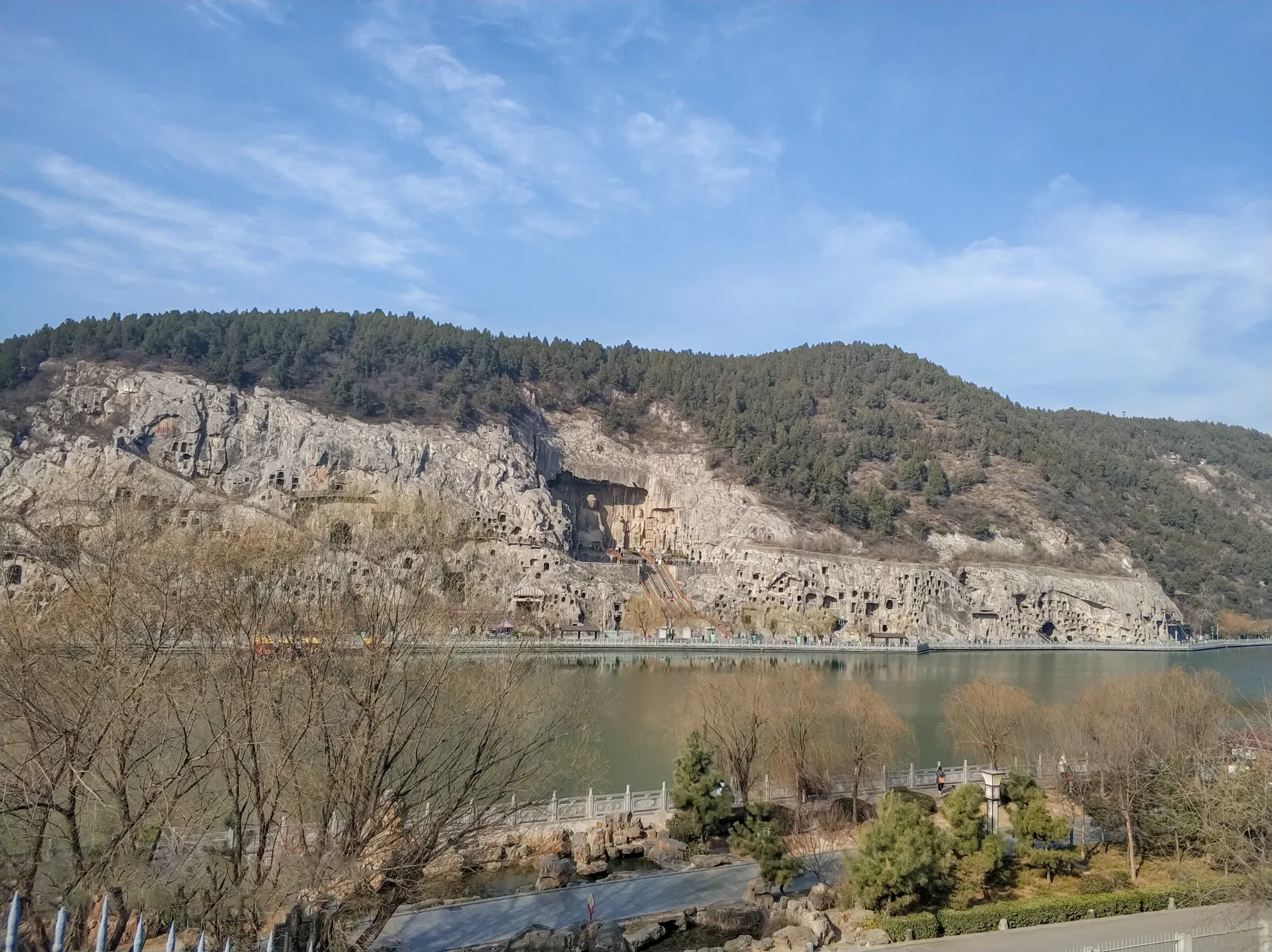
Longmen is not one cave and not one artistic moment. Small donor niches sit beside monumental programs. Some faces remain sharply modeled; others have been weathered, damaged or removed. Inscriptions record patrons and aspirations. Changes in clothing, bodily volume, expression and grouping reveal different workshops and religious environments.
The site grew through patronage. Rulers, court figures, religious communities and private donors used image-making to accumulate merit, assert authority, remember relatives and materialize Buddhist devotion. Scale therefore carries political meaning, but small carvings can be equally revealing about ordinary acts of patronage.
The Fengxian Temple group joins faith and state power
The monumental Vairocana, or Lushena, Buddha at Fengxian Temple is Longmen's most famous image. Its calm face is surrounded by disciples, bodhisattvas, heavenly kings and guardian figures, forming a complete visual hierarchy rather than a solitary statue.
The group is closely associated with Tang imperial patronage and the reign of Empress Wu, but avoid turning the central Buddha into a simple portrait claim. Resemblance stories are attractive and heavily repeated; the stronger interpretation begins with documented patronage, Buddhist iconography, court power and the coordinated labor required to carve the cliff.
Look sideways as well as upward. Guardian figures twist with compressed energy; damaged surfaces expose the vulnerability of stone; stairs and viewing platforms reveal how the modern visitor route changes the original devotional encounter.
How to plan Longmen without rushing it
| Decision | Best approach | Why it matters |
|---|---|---|
| Time | Reserve at least half a day; most culture-focused visitors benefit from longer | Entry, walking, stairs, river crossing and interpretation take more time than one famous photo |
| Start | Go early when possible and confirm current opening and last-entry times | Heat and crowds rise quickly, especially on weekends and holidays |
| Route | Follow the main cliff sequence before deciding whether to add every secondary viewpoint | Repeated backtracking is tiring and can reduce attention at the best caves |
| Light | Morning and afternoon conditions favor different surfaces; accept that not every cave photographs evenly | Sculpture is easier to read with patient looking than aggressive exposure correction |
| Mobility | Expect long walking distances and many uneven or steep stair sections | Accessible routes and shuttle arrangements can change, so verify directly with the site |
| Conduct | Follow barriers, flash rules and conservation instructions | Stone, pigment traces and narrow cave spaces are vulnerable to heavy visitor pressure |
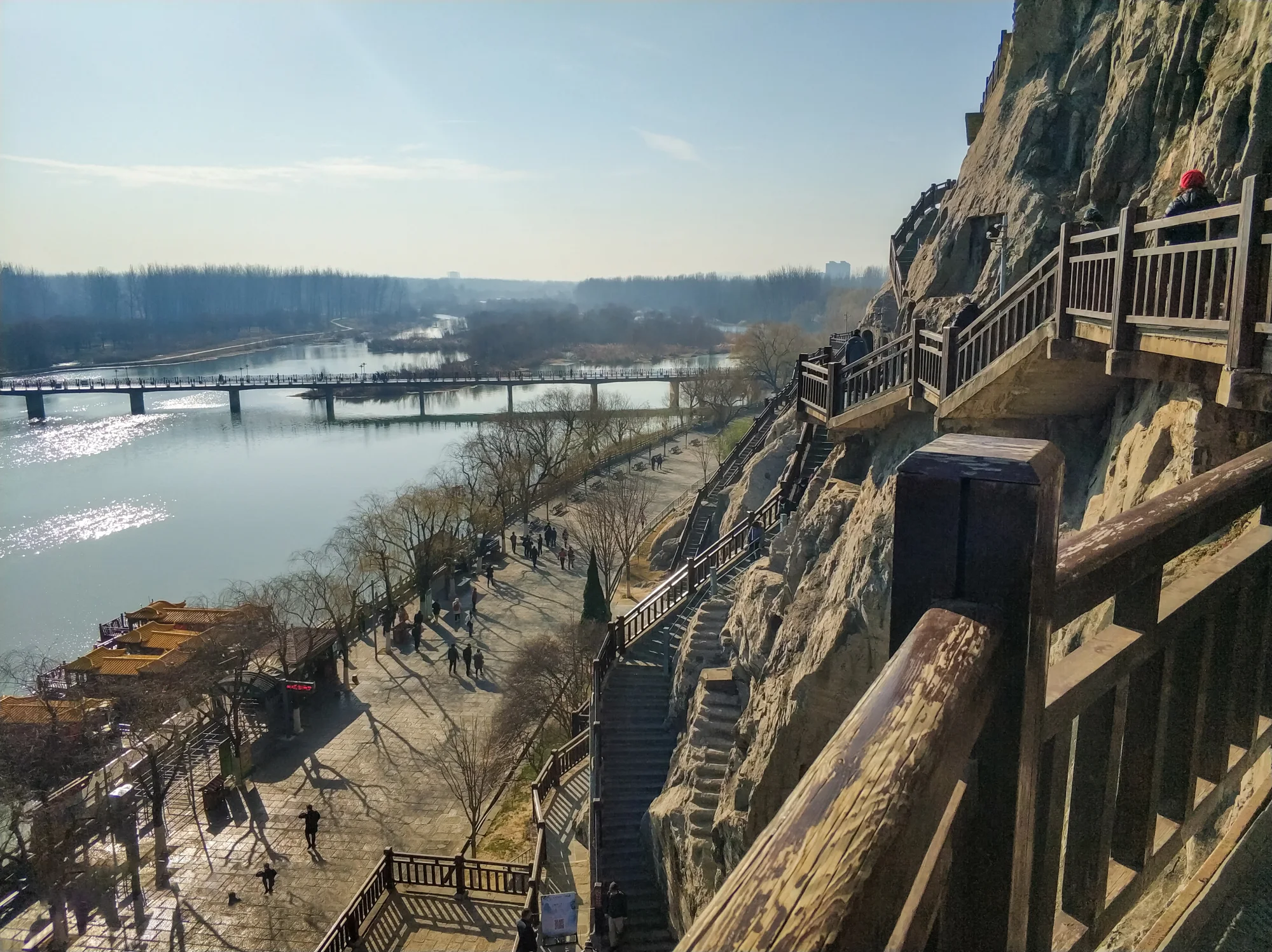
Crossing the river gives the cliff back its landscape scale. The Yi River is not a decorative foreground: water, rock, routes and settlement geography helped make this a meaningful place for monumental carving.
White Horse Temple is a history of transmission and renewal
White Horse Temple is traditionally associated with the early transmission of Buddhism into imperial China and is commonly linked to an Eastern Han founding date. That institutional memory matters enormously, but the visible complex is not a group of untouched first-century buildings.
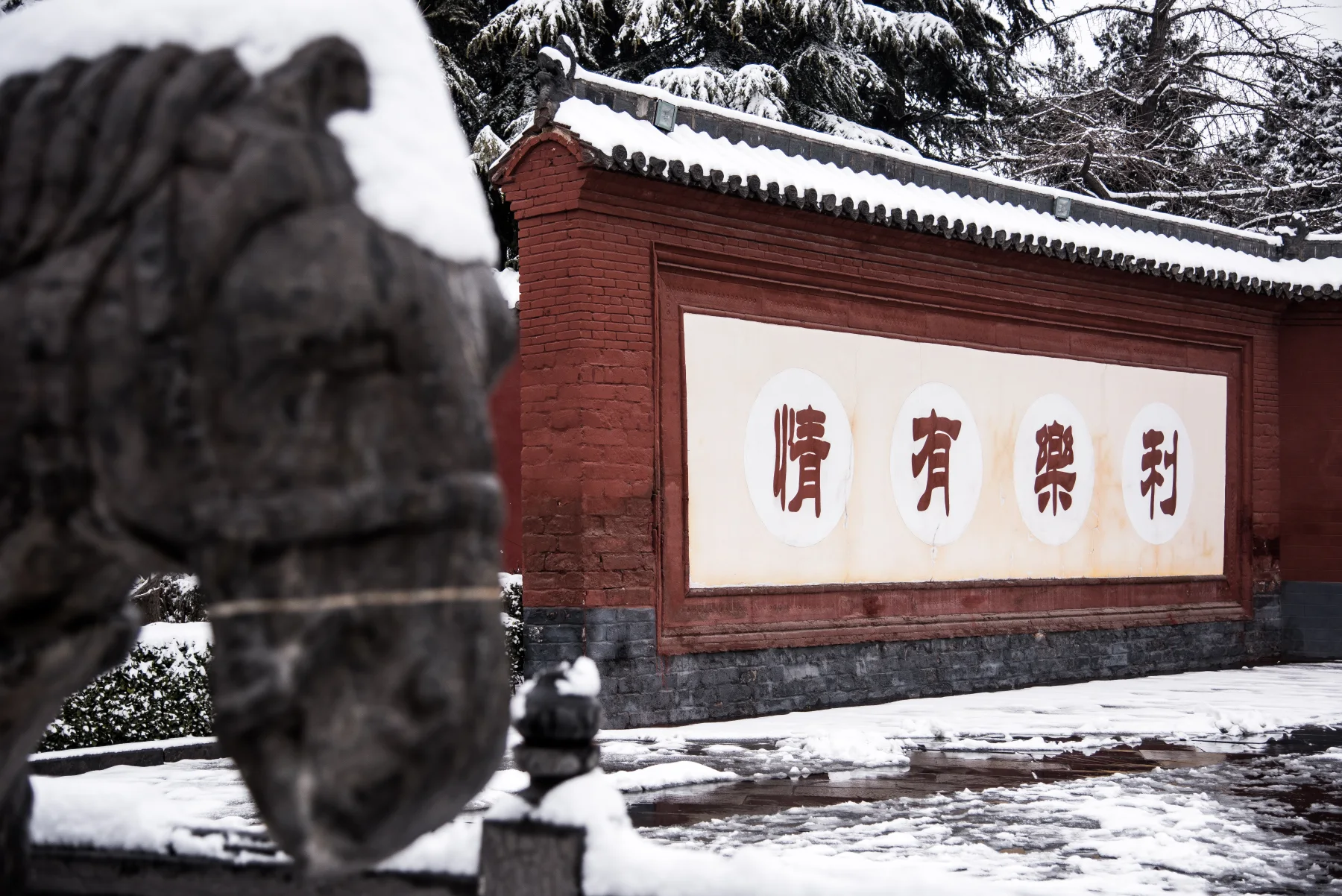
Halls, courtyards, statues and ritual spaces were rebuilt or renewed in later periods. Modern international Buddhist architecture on the broader site also reflects contemporary religious diplomacy and transnational exchange. The temple therefore offers several histories at once: a foundational origin tradition, later Chinese temple architecture, active worship and a modern presentation of Buddhism as a cross-Asian network.
Visit respectfully. Religious practice is not historical theater. Keep voices low in active halls, observe photography restrictions and do not interrupt people praying for a portrait.
Luoyang Museum connects fragments into a regional story
Luoyang Museum is the best place to understand why the city cannot be explained by one dynasty. Archaeological objects connect court ritual, burial, trade, religion, craft and everyday life across changing settlements.
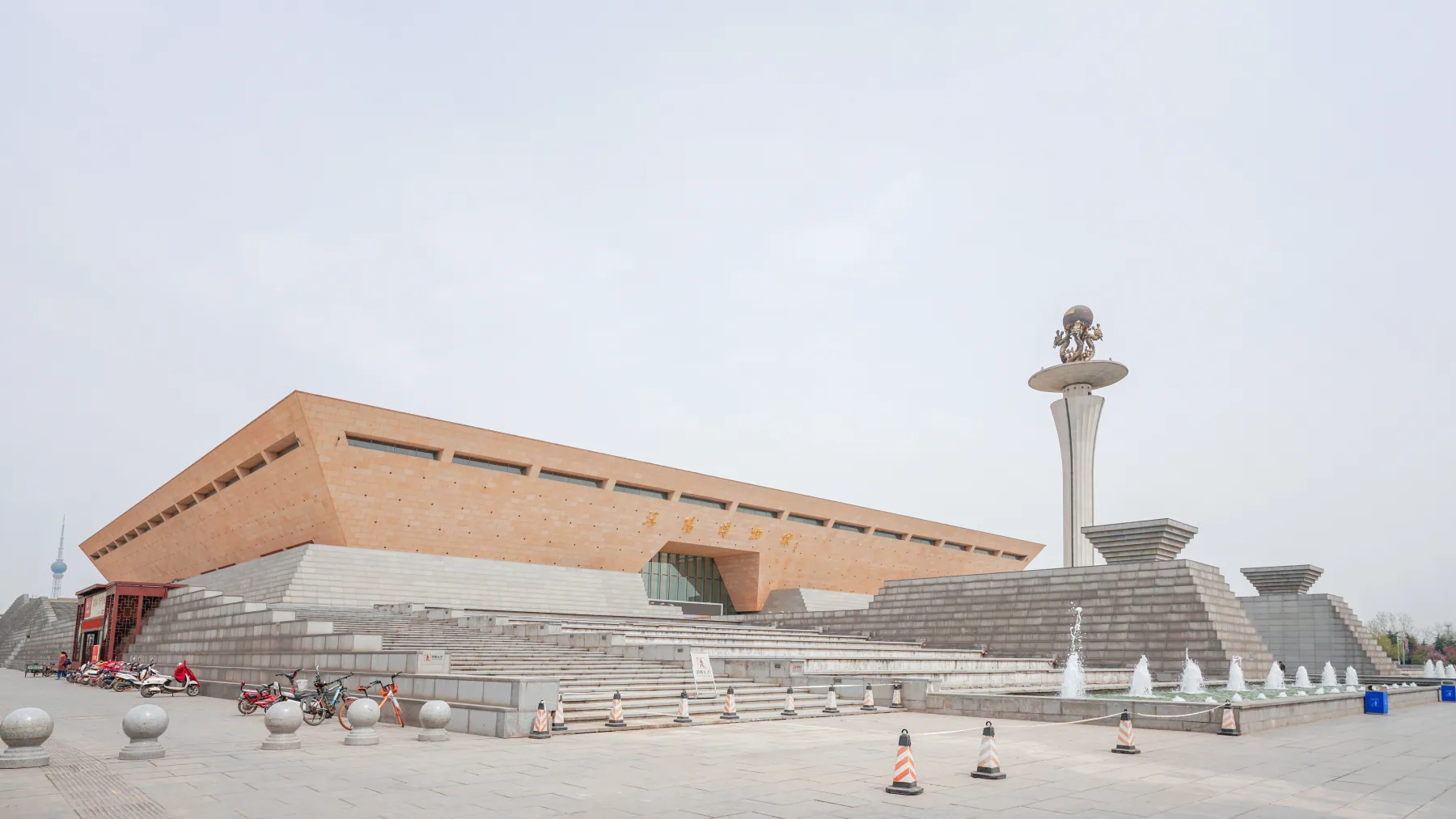
Read excavation locations carefully. An artifact found in a tomb, palace zone or workshop carries different evidence. Chronology also matters: an object displayed in Luoyang is not automatically evidence that every historical layer belonged to the same capital plan.
Allow half a day and check current reservation rules. Begin with chronological galleries before moving to individual masterpieces. The museum makes the later site visits more legible because you can recognize materials and institutions rather than seeing only empty foundations.
The chariot pits make political rank physical
The Tianzi Jialiu Museum, built around excavated chariot and horse pits, presents Eastern Zhou-era burial evidence in the urban center. The name refers to the status encoded by a six-horse royal chariot tradition, but the archaeological value lies in the pit itself: animal remains, vehicle traces, arrangement and burial context.
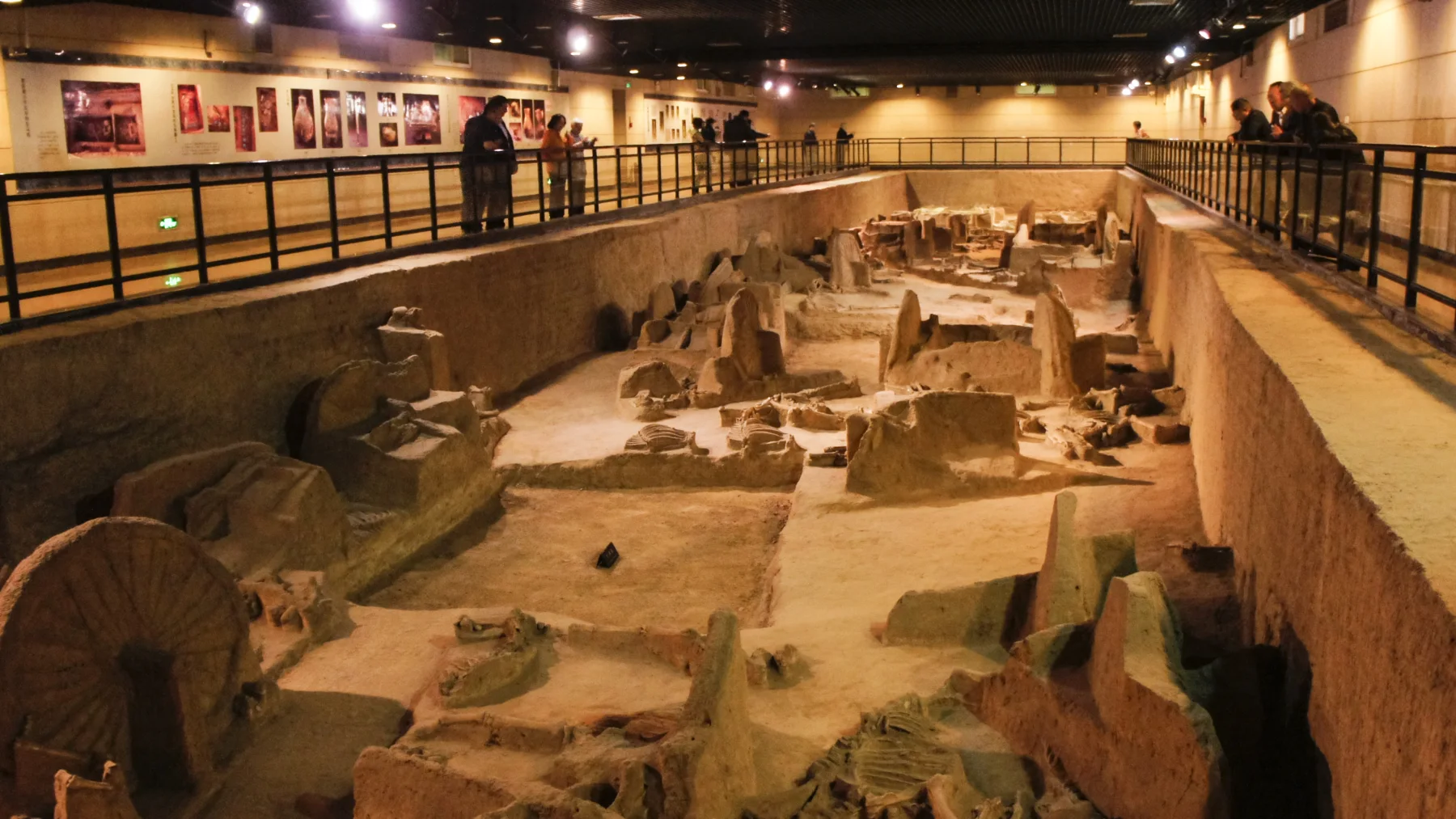
Do not photograph the remains as a curiosity and move on. Ask how archaeologists distinguish vehicle components, how the pit relates to nearby burials and what ritual display tells us about hierarchy. The compact museum rewards slow observation precisely because its subject is still in place.
Dingding Gate places Luoyang on the Silk Roads
The Dingding Gate Site belongs to the Sui-Tang Luoyang city landscape and is included within UNESCO's serial Silk Roads property. Its archaeological remains help identify a major southern gateway, urban axis and the movement of people and goods through an imperial capital.
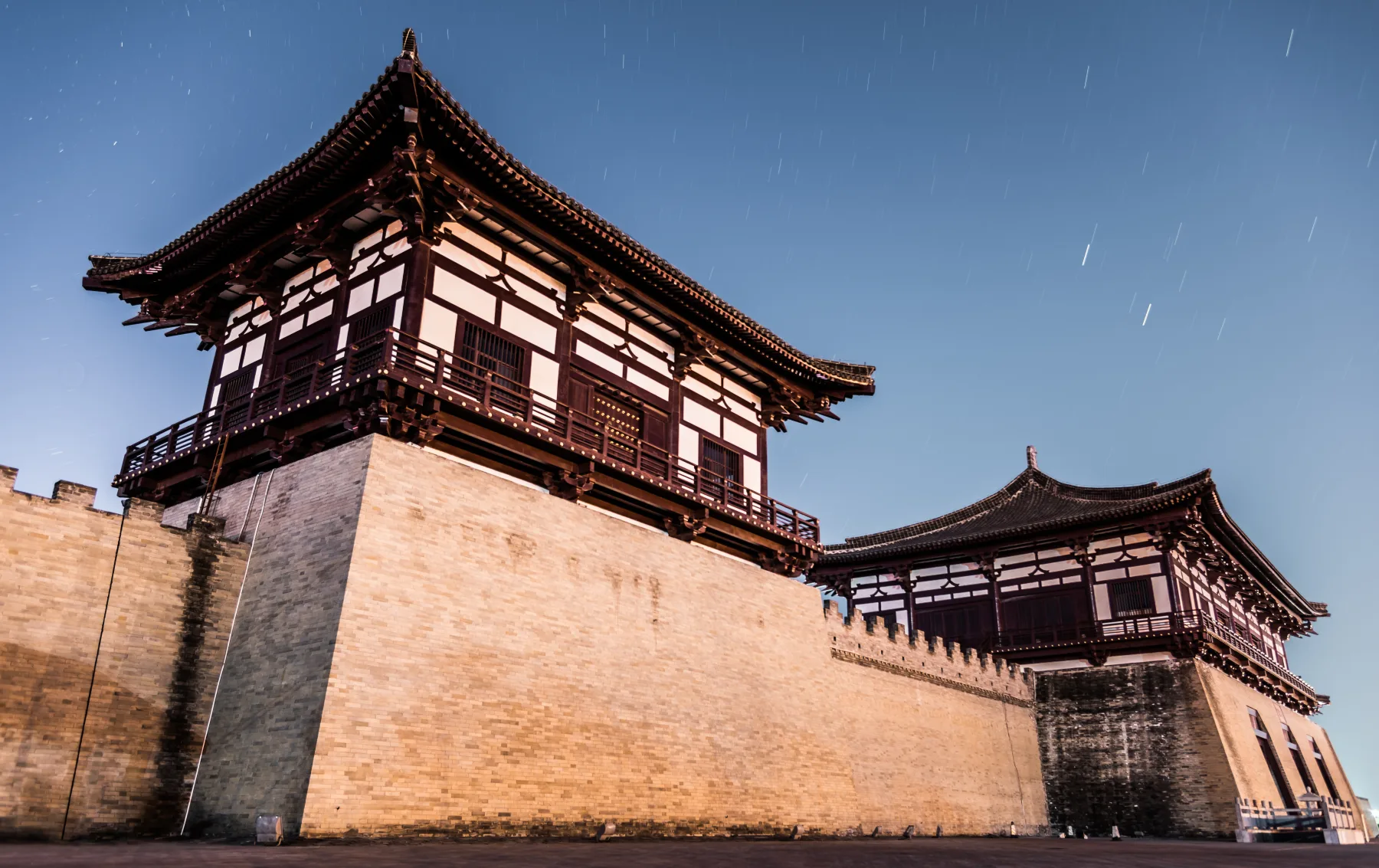
The visible monumental gate presentation is modern. What gives the place World Heritage significance is not new roofing by itself but the archaeological site and its relationship to the wider route network. Luoyang's Silk Roads history was made through administration, envoys, merchants, religious travelers, animals, objects and ideas moving across connected regions.
Avoid imagining a single road lined continuously with caravans. The Silk Roads were changing networks. A gate is useful because it turns that abstract network into urban control, arrival and direction. I reject the postcard version of Luoyang in which every rebuilt roof is treated as ancient and every ancient connection becomes a caravan fantasy. The city becomes more impressive, not less, when surviving material, excavated evidence and modern interpretation are named without embarrassment.
Yingtian Gate and the Sui-Tang city make reconstruction visible
The reconstructed Yingtian Gate complex gives the former palace city's southern approach enormous visual presence, particularly at night. It is one of Luoyang's most popular places for costume photography and large-scale performance.
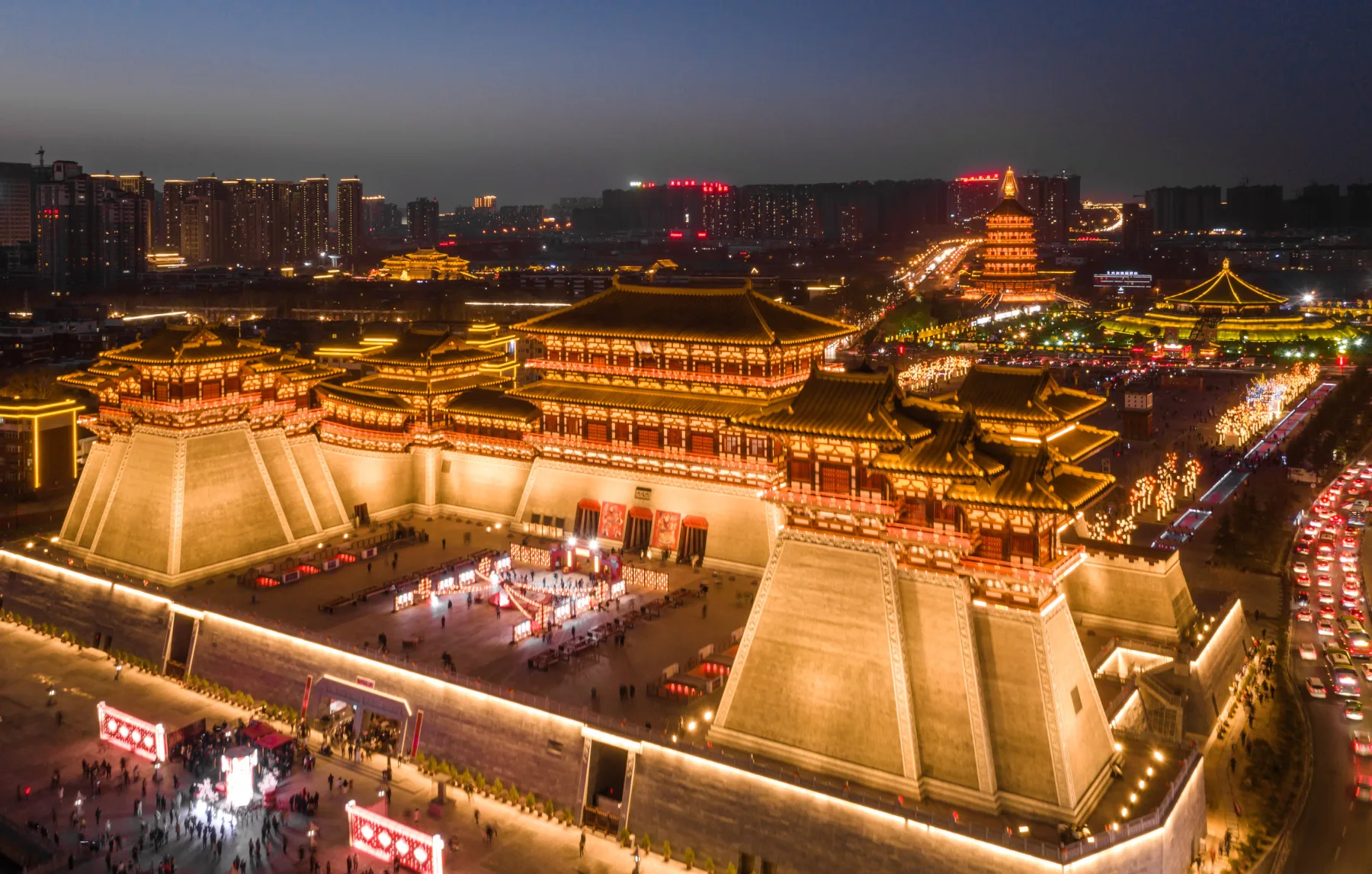
Enjoy the spectacle, but name it accurately. The attraction interprets an archaeological palace-gate site through contemporary monumental construction. It does not transport visitors into an intact Tang capital. Costume photography is a modern leisure practice, not direct evidence of how every person dressed at court.
That tension is worth studying. The site shows how present-day Luoyang turns archaeology into public identity, nighttime economy and participatory historical imagination. Young visitors are not merely consuming history; they are also producing new images of it.
Mingtang, Tiantang and Jiuzhou Pool rebuild an imperial axis
The Mingtang and Tiantang presentations evoke major ceremonial structures associated with Empress Wu's Luoyang, while Jiuzhou Pool interprets a palace-garden landscape. Modern buildings and landscaping make the lost city spatially graspable, but excavation evidence and contemporary design must remain distinct.
I would not call these buildings surviving Tang architecture, but “fake ancient city” is also too lazy. A protective display can shelter archaeological remains, restore an urban axis to human scale and make buried evidence legible without becoming the original monument. The honest visit asks three separate questions: what material survives below, what historians and designers inferred above it, and what experience the present structure is selling at night. If a label, glass floor or exposed foundation lets you answer all three, the reconstruction has become an educational instrument rather than scenery alone.
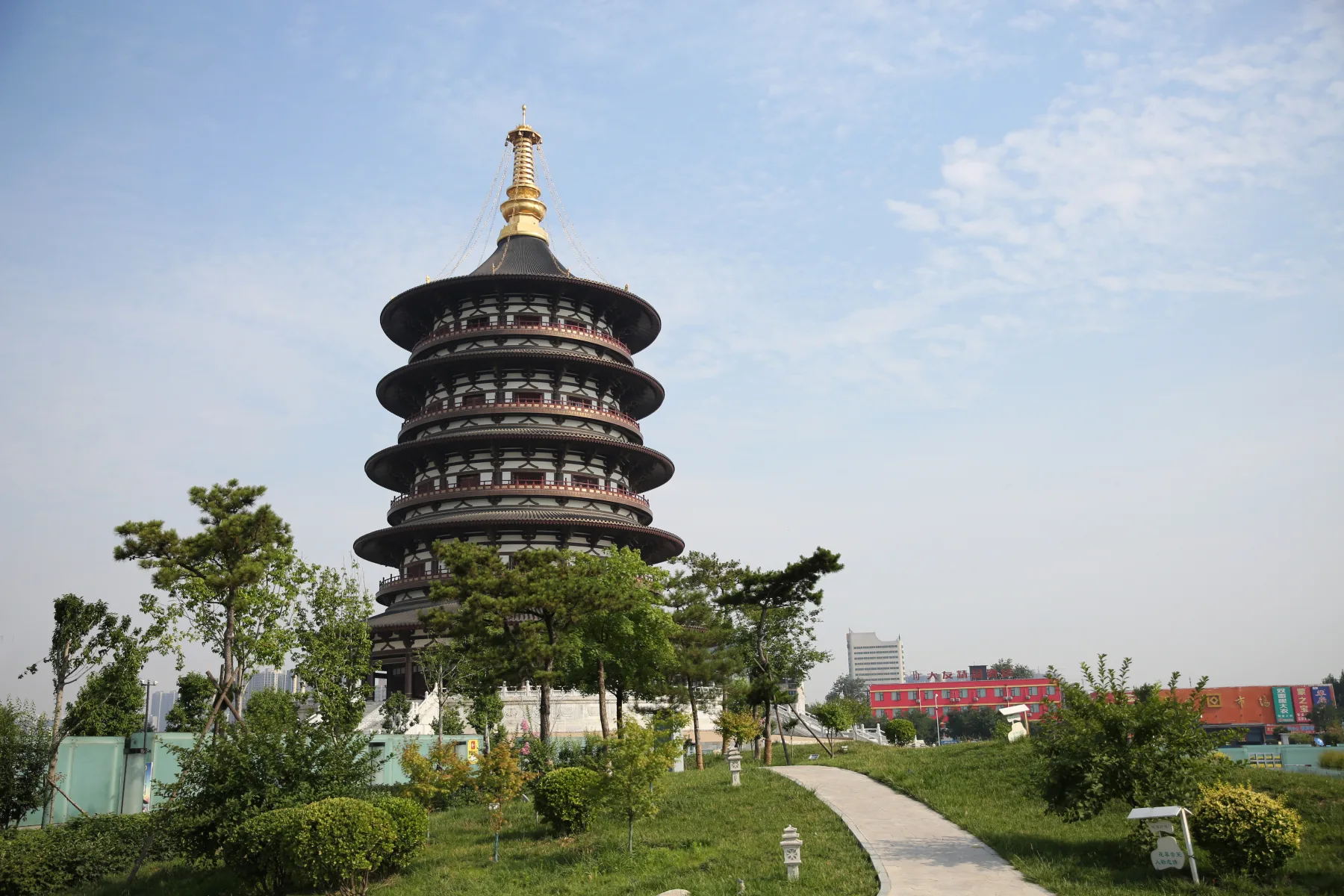
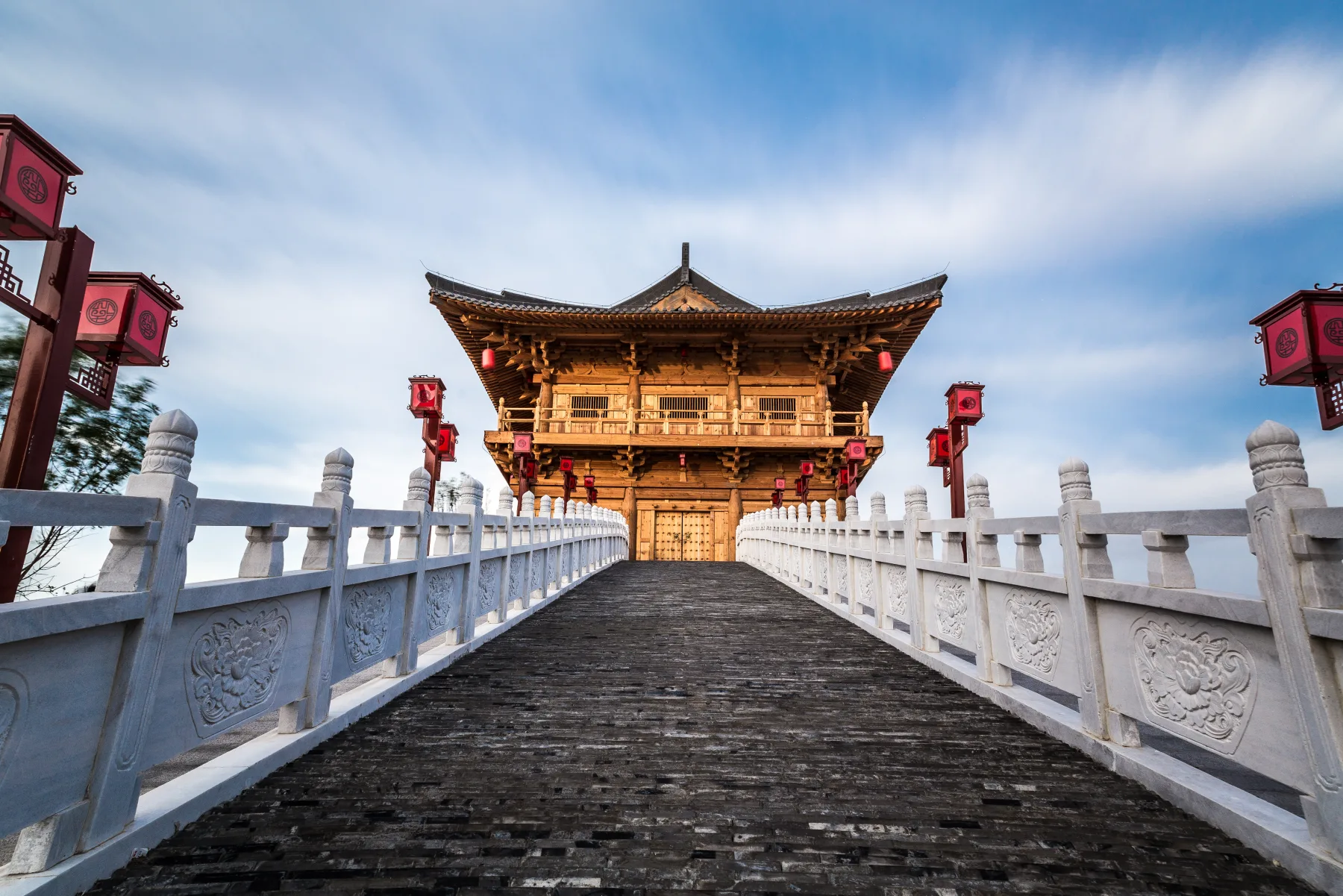
Visit one area in daylight if you care about archaeology and another after dark if you care about public culture. At night, lighting unifies different construction dates into one persuasive image. In daylight, foundations, labels and boundaries are easier to separate.
Guanlin shows how a historical person becomes a deity
Guanlin is associated with the burial tradition of Guan Yu's head and with his later religious and cultural veneration. Guan Yu moved through history, literature, theater, local cult and state recognition to become a figure invoked for loyalty, protection, martial power and commercial trust.
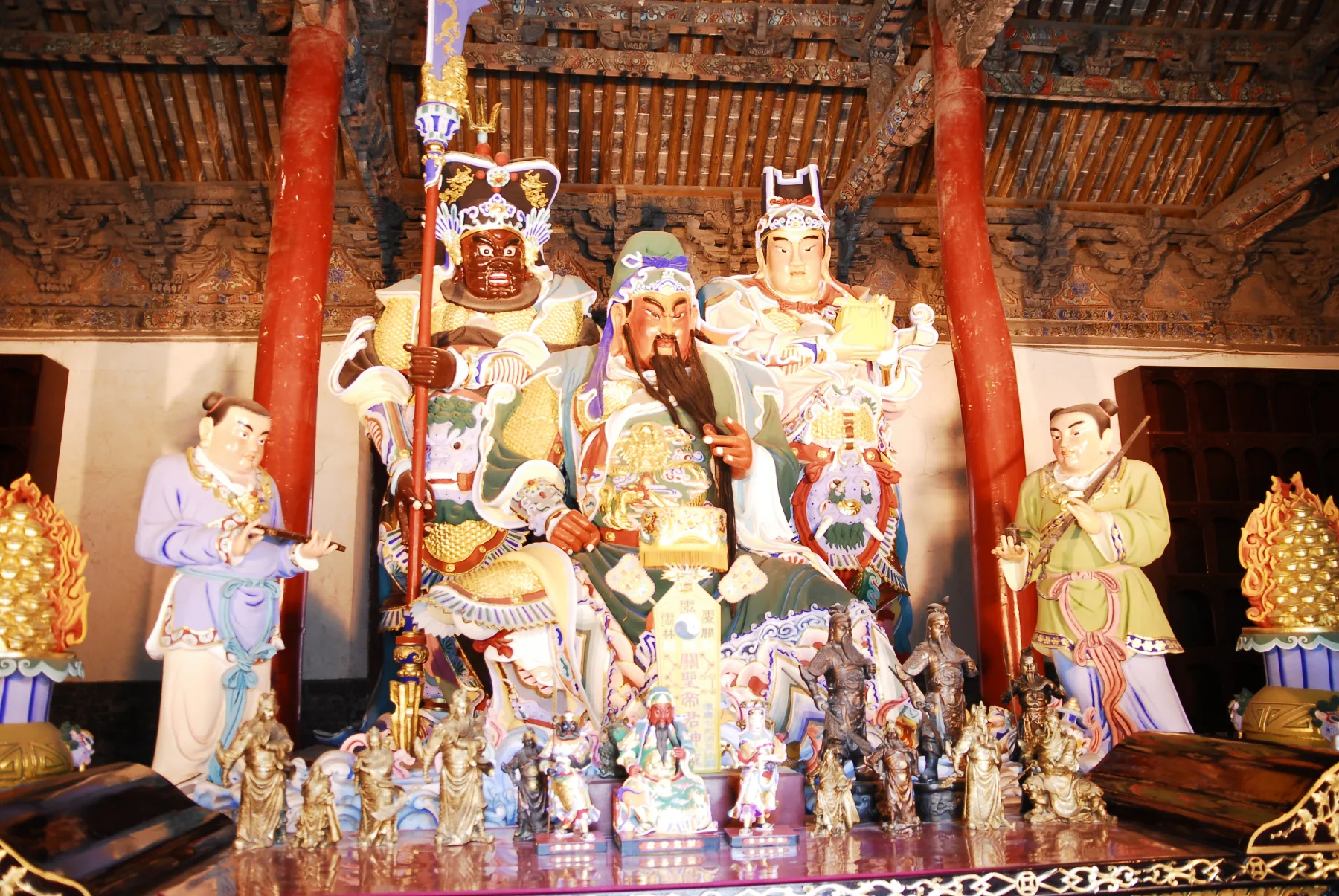
The site is therefore not only a Three Kingdoms attraction. It shows how memory accumulates. Historical biography, the Romance of the Three Kingdoms, temple ritual and modern popular media overlap without becoming identical sources.
Notice who is worshipping and what inscriptions emphasize. Guan Yu's meaning changes between a business altar, a martial temple, a literary narrative and a tourism performance.
The old city is commerce, residence and reinvention
Luoyang's old-city districts contain markets, lanes, snack shops, religious sites and heavily renovated visitor streets. Lijing Gate and surrounding commercial areas are lively entry points, but they are not a sealed medieval quarter.
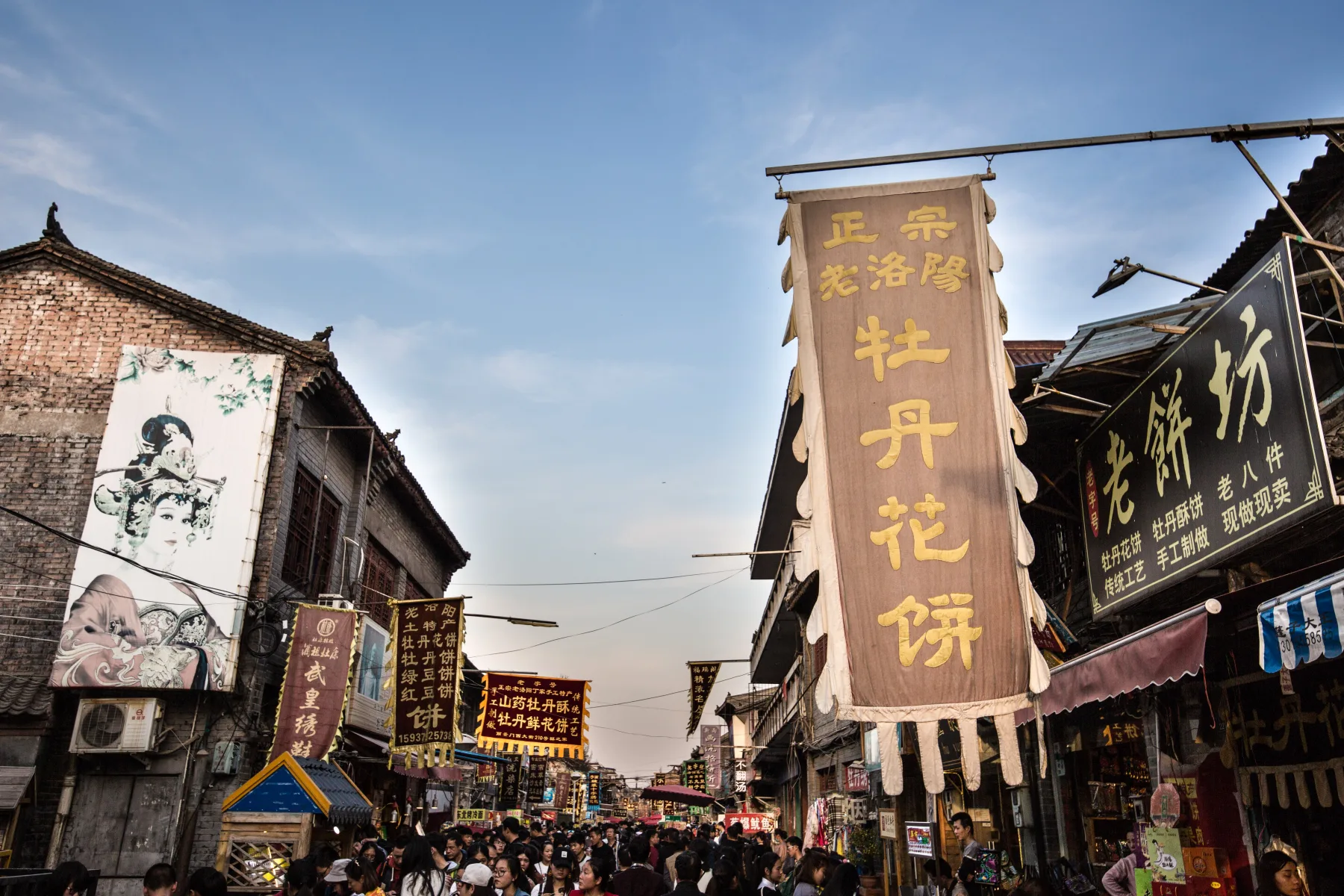
Go once for evening energy and once, if possible, in the morning. Night lighting and costume rental reveal the tourism economy; breakfast counters, deliveries and residents reveal the working district beneath it. Step away from the main photo corridor before deciding what the old city feels like.
Do not treat every decorative facade as an ancient building. Ask what remains of street pattern, community use, temple history and local commerce even when surfaces have been renewed.
Peonies are seasonal culture, not a permanent city filter
Luoyang's peony identity is expressed through gardens, cultivation, painting, poetry, civic branding and an annual festival season. The flower's association with wealth and distinction grew through historical literature and courtly taste, but today's citywide peony economy is also modern horticulture and tourism.
That distinction is the best reason to read Flourished Peony beside the real city. The drama turns cultivation and flower commerce into a woman's business leverage; Luoyang shows why a peony is never only a romantic prop once growers, gardens, festival crowds and civic identity enter the frame.
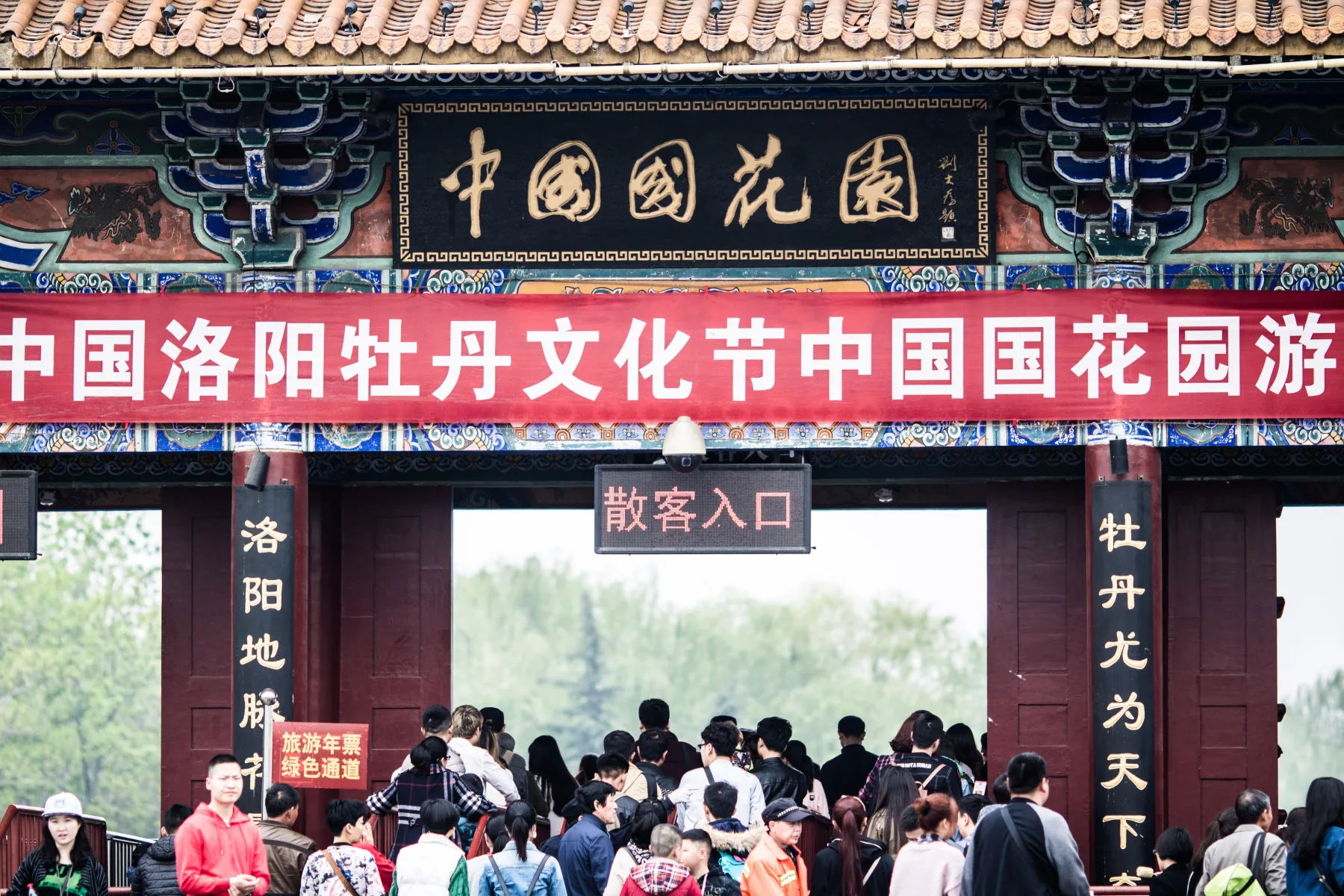
April is the broad season most visitors target, but flowering does not obey a fixed tourism calendar. Cultivar, temperature, greenhouse use and garden management affect timing. A garden can have some flowers without being at peak display.
Planning for peony season
| Period | What you may find | Planning reality |
|---|---|---|
| Late March to early April | Early cultivars and protected displays in some gardens | Outdoor bloom may still be limited in a cool year |
| Mid-April | Often the broadest range of flowering and the largest festival crowds | Book transport and accommodation early; visit gardens near opening time |
| Late April to early May | Later cultivars and fading earlier varieties | Heat or rain can shorten outdoor quality; check live bloom reports |
| Outside spring | Peony culture in art, food presentation, products and museums | Do not expect outdoor gardens to reproduce peak-season photographs |
Manufacturing belongs beside dynastic history
Modern Luoyang developed as an important industrial city, particularly through machinery, tractors, mining equipment, bearings and related manufacturing. Large factories, worker communities and technical institutions reshaped the urban area in the twentieth century.
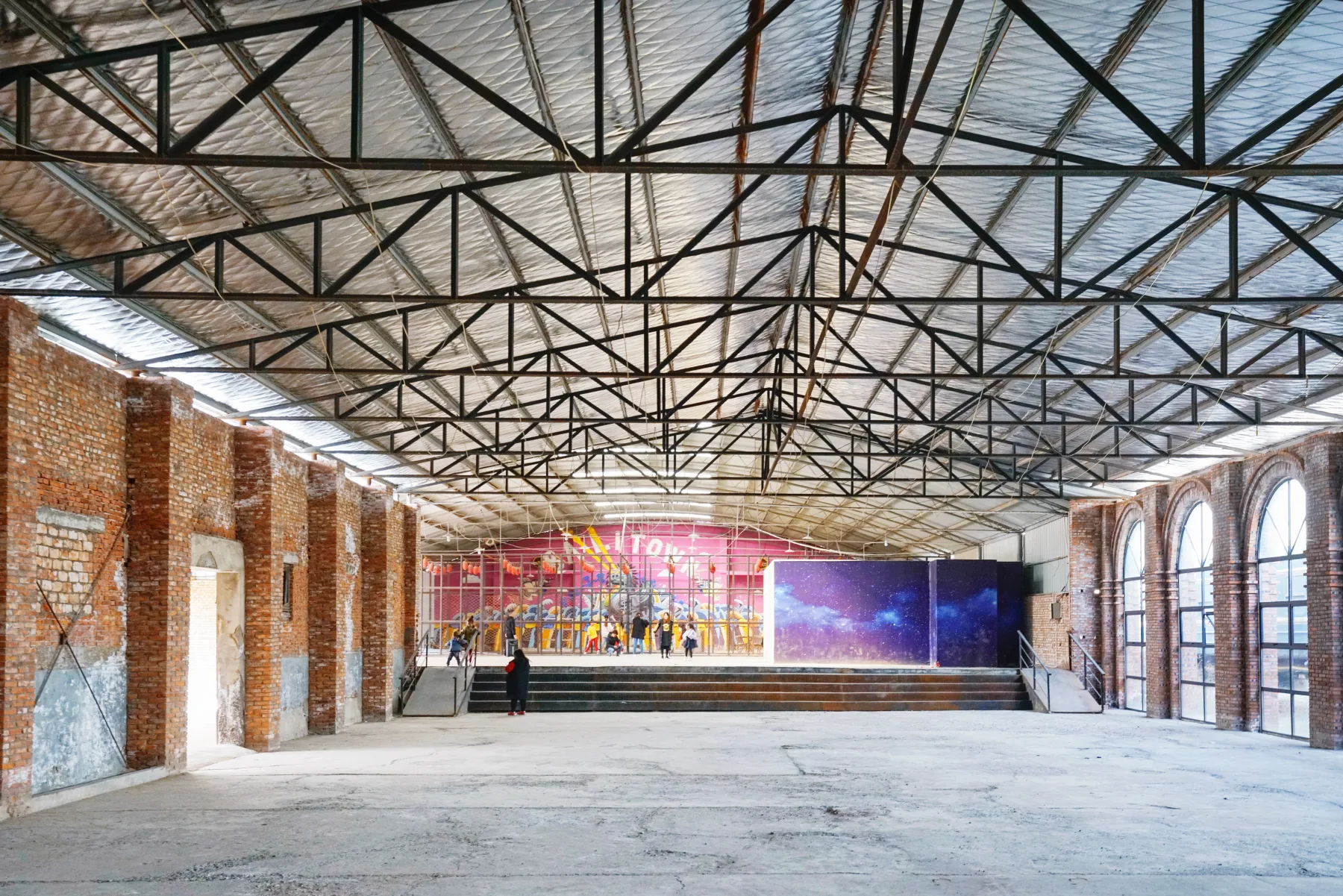
Creative parks in former industrial spaces introduce cafes, studios and events into buildings made for production. Adaptive reuse can preserve scale, but it can also erase workers behind attractive brick and steel. Look for retained machinery, factory names, housing patterns and oral-history interpretation.
For young foreign visitors, this is one of Luoyang's most valuable contrasts. The city did not jump directly from Tang palaces to tourism. Socialist industrialization, technical labor and contemporary manufacturing are central chapters in between.
Young Luoyang exists beyond historical costume
Costume photography around Yingtian Gate is genuinely part of contemporary youth culture, but it is not the whole scene. University districts, live-performance venues, bookstores, sports spaces, cafes, creative parks and ordinary late-night restaurants reveal a city negotiating lower living costs, regional opportunity and the pull of larger Chinese metros.
Instead of asking where the single "young neighborhood" is, choose an evening sequence: a museum or heritage site, dinner in a local district, then a creative or music venue whose current program you have checked. Luoyang's contemporary culture is distributed, and venues can change faster than monuments.
Laojun Mountain is a separate journey
Laojun Mountain in Luanchuan County is promoted for dramatic granite peaks, Daoist associations and summit architecture. Social media often compresses the trip into one floating golden temple above clouds.
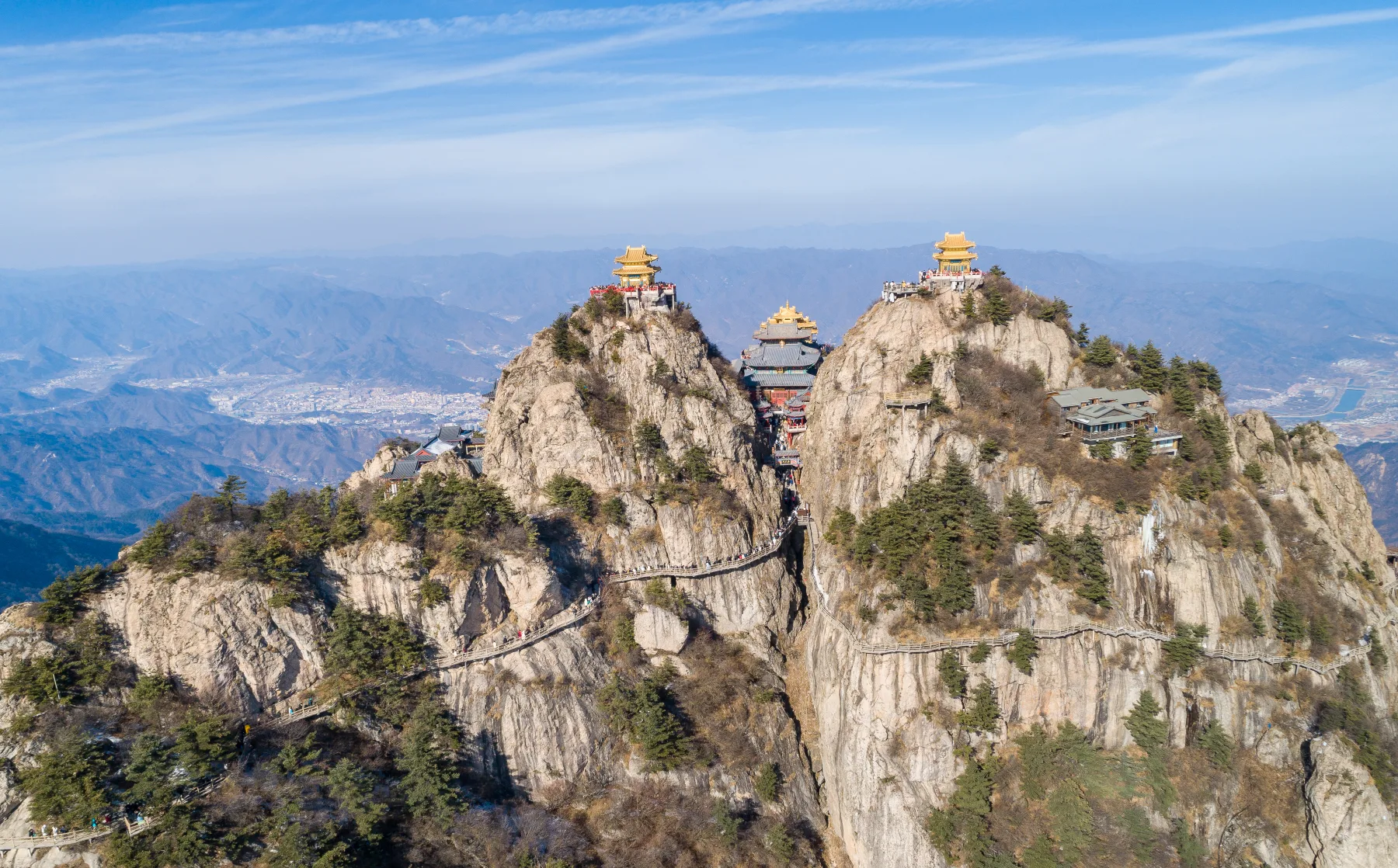
The actual journey involves a long road transfer from central Luoyang, scenic-area transport, cable-car decisions, stairs, queues and rapidly changing mountain weather. Winter ice and summer storms require appropriate clothing and current safety information.
Treat the summit complex as a contemporary religious-tourism landscape with older Daoist associations, not as an untouched ancient building above the clouds. One night near the mountain creates a more honest rhythm than returning exhausted after a photo-focused dash.
Plan the visit on the travel page
This page owns Luoyang's cultural problem: how Buddhist art, archaeology, reconstructed capitals, peony identity and industrial memory remain visible without becoming one undated historical spectacle. The separate travel to Luoyang guide owns hotel districts, station choice, trip length, daily routes, season decisions and the practical Longmen visit.
Continue to the Luoyang food guide for breakfast soups, Water Banquet choices and meal pacing. Keeping those decisions outside this page allows the cultural argument to remain clear.
Frequently asked questions about Luoyang
What defines Luoyang culture?
Luoyang culture is shaped by repeated periods as a capital, Buddhist transmission and patronage, archaeological recovery, peony symbolism, Central Plains food and modern industrial life. Its identity comes from visible disagreement among surviving, excavated and reconstructed pasts.
Why is Luoyang important to Chinese Buddhist art?
Longmen Grottoes preserves a vast record of Buddhist devotion, state and private patronage, sculptural change and later damage. White Horse Temple and museum collections add institutional and portable histories that should not be collapsed into one period.
What is Luoyang best known for?
Luoyang is best known internationally for the UNESCO-listed Longmen Grottoes. It is also associated with repeated periods as a capital, early Chinese Buddhist history, Sui-Tang urban archaeology, peony culture, the Luoyang Water Banquet and modern machinery manufacturing.
Are Luoyang's palace gates and towers original ancient buildings?
Many prominent structures in the Sui-Tang Luoyang City visitor area are modern reconstructions or interpretive buildings erected above or near archaeological remains. They can help visitors understand former scale and urban axes, but they should not be described as fully surviving Tang-dynasty architecture. Longmen's rock-cut caves and sculpture are a different category of preserved heritage.
When is the best time to see Luoyang peonies?
The main peony season is usually in April, but exact flowering varies by cultivar, garden, temperature and year. Early, middle and late varieties do not peak together. Check current garden bloom reports before booking a flower-centered trip and expect higher prices and larger crowds during festival periods.
Can you visit Laojun Mountain as a day trip from Luoyang?
It is possible with an early start and carefully arranged road transport, but Laojun Mountain is in Luanchuan County and is not a casual central-city add-on. Long transfers, scenic-area shuttles, cable cars, stairs, queues and weather can make an overnight stay the more realistic choice.
Luoyang rewards travelers who keep the layers separate
Luoyang becomes shallow when every gate is called ancient, every dish is attributed to an emperor and every dynasty is blended into one golden age. It becomes extraordinary when the layers remain visible.
At Longmen, stone preserves devotion and damage. In museums, objects restore dates and contexts. Across the Sui-Tang city, foundations and modern reconstruction debate how a lost capital should look. In old streets and factory districts, residents keep producing a city that no dynasty could have planned.
Come for the monuments, but stay long enough to learn which ones survived, which ones were excavated and which ones were built so the past could be imagined again.
The China ancient capitals itinerary carries that same evidence test across Beijing, Xi'an, Kaifeng and Nanjing. Continue there when the next question is not “What else is in Luoyang?” but “How should several Chinese capitals be compared without blending their centuries together?”