A Chinese food menu is not a catalogue of individual entrées. It is a compressed map of a kitchen. The section tells you a dish's role; the name may encode place, flavor, method, ingredient and cut; the serving word tells you whether the price belongs to one person, one plate, one animal or a weight. Read those layers first, then build a table with contrast. That is faster—and far more Chinese—than memorizing a hundred English dish names.
Chinese food menu reading begins with the section, not the first familiar dish
The worst way to open a Chinese menu is to scan for one word you recognize, panic, and order five versions of meat in brown sauce.
I have done the mental version of this even when I could read every character: choose the famous fish, the famous pork, the famous chicken, another “must-order” meat, then realize the table has the same color, the same softness and no place for the tongue to rest. Each dish may be good. The meal is still badly written.
My rule is firm: do not order dishes; compose a table.
The menu has already begun that work by dividing food into sections. Common headings include:
- 凉菜 (liángcài): cold dishes, cold openers or prepared appetizers;
- 热菜 (rècài): hot cooked dishes, often the main shared plates;
- 汤 / 汤羹 (tāng / tānggēng): soup and thicker soup-like dishes;
- 主食 (zhǔshí): staples such as rice, noodles, buns and breads;
- 点心 (diǎnxin): small foods, pastries and dumpling-like items whose role changes by region and restaurant;
- 饮品 (yǐnpǐn): drinks.
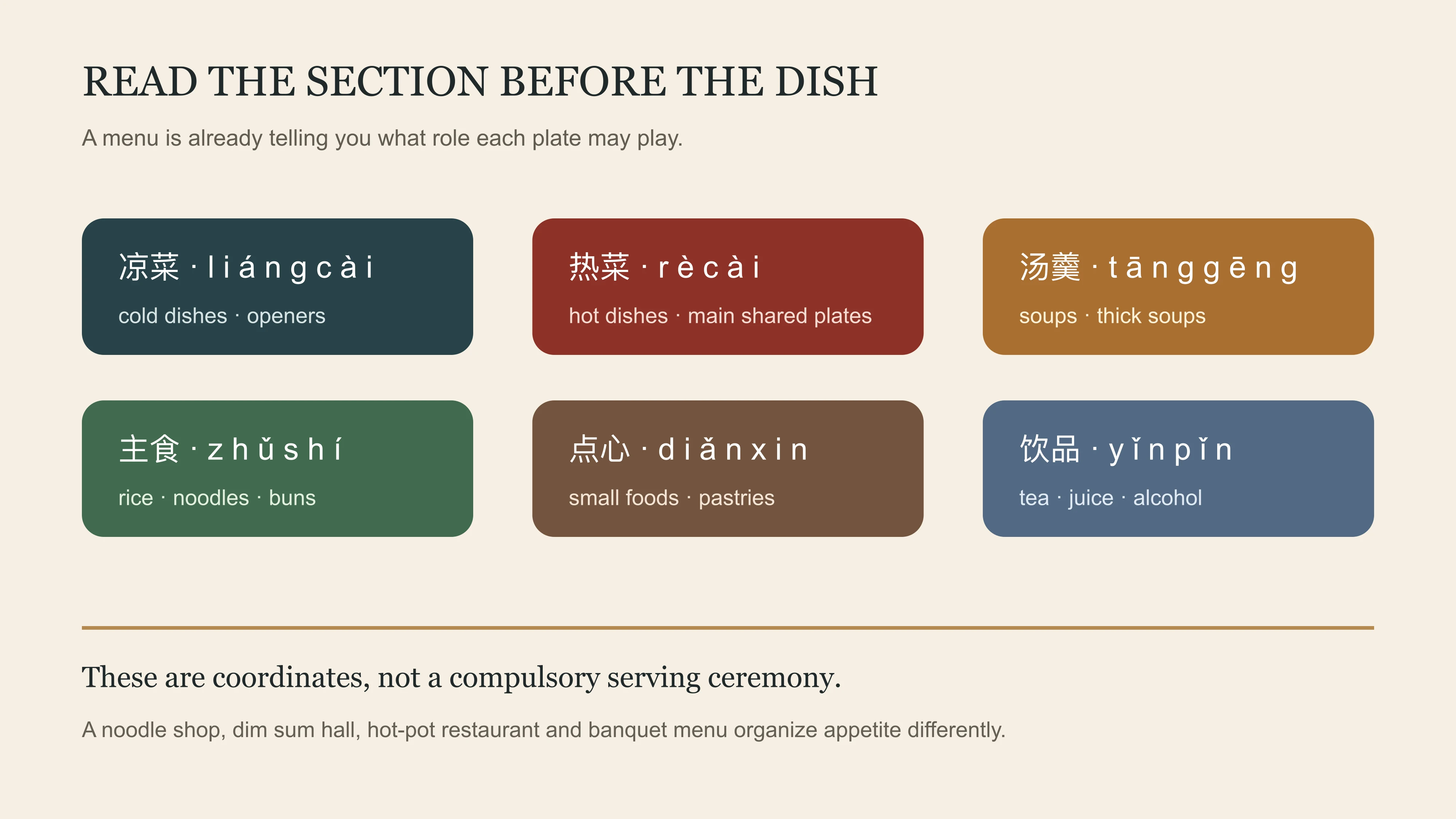
These headings are coordinates, not a national ceremony. A Lanzhou noodle shop may organize by noodle type and beef portions. A Cantonese dim sum hall may use a paper order sheet, trolley service or servers carrying fresh steamers. The Hong Kong Tourism Board describes both a grand hall with weekend dim sum carts and a neighborhood restaurant where a server asks each table as food comes from the steamer. Same city, different ordering system.
That difference matters. A menu is not Chinese culture printed in permanent order. It is a restaurant solving service, kitchen and customer problems in one specific place.
What “food” means in Chinese depends on the sentence
Before decoding dish names, separate four everyday words that English often compresses into “food.”
食物 (shíwù) is the broad generic term for food as a category. It belongs naturally in explanations, labels and sentences about nutrition or food types. It can sound oddly abstract when you are simply asking what to eat.
菜 (cài) is more alive at the restaurant. It can mean a prepared dish, cuisine or vegetables depending on context. 点菜 means to order dishes. 川菜 means Sichuan cuisine. 蔬菜 means vegetables. If someone says “再点一个菜,” they mean “order another dish,” not automatically “order another vegetable.”
饭 (fàn) can mean cooked rice or a meal. 吃饭 literally contains “eat rice,” yet in ordinary speech it often means to eat a meal. 白饭 is plain cooked rice; 炒饭 is fried rice; 饭店 may mean a restaurant in mainland usage even though the same characters can confuse learners expecting a literal “rice shop.”
主食 (zhǔshí) names the staple that anchors appetite: rice, noodles, steamed buns, flatbread or another grain-based food. Calling it a “side” imports the logic of a Western plated entrée. At many shared tables, the staple is quieter and more structurally important than that.
The Chinese food hub explains the wider regional system. This page stays close to the moment when the menu is open and everybody looks at you because somehow you became the person ordering.
Most dish names are compressed recipes—until they become stories
The fastest useful reading method is to look for five kinds of information:
- place, person, story or established style;
- flavor system;
- cooking method;
- main ingredient;
- cut or shape.
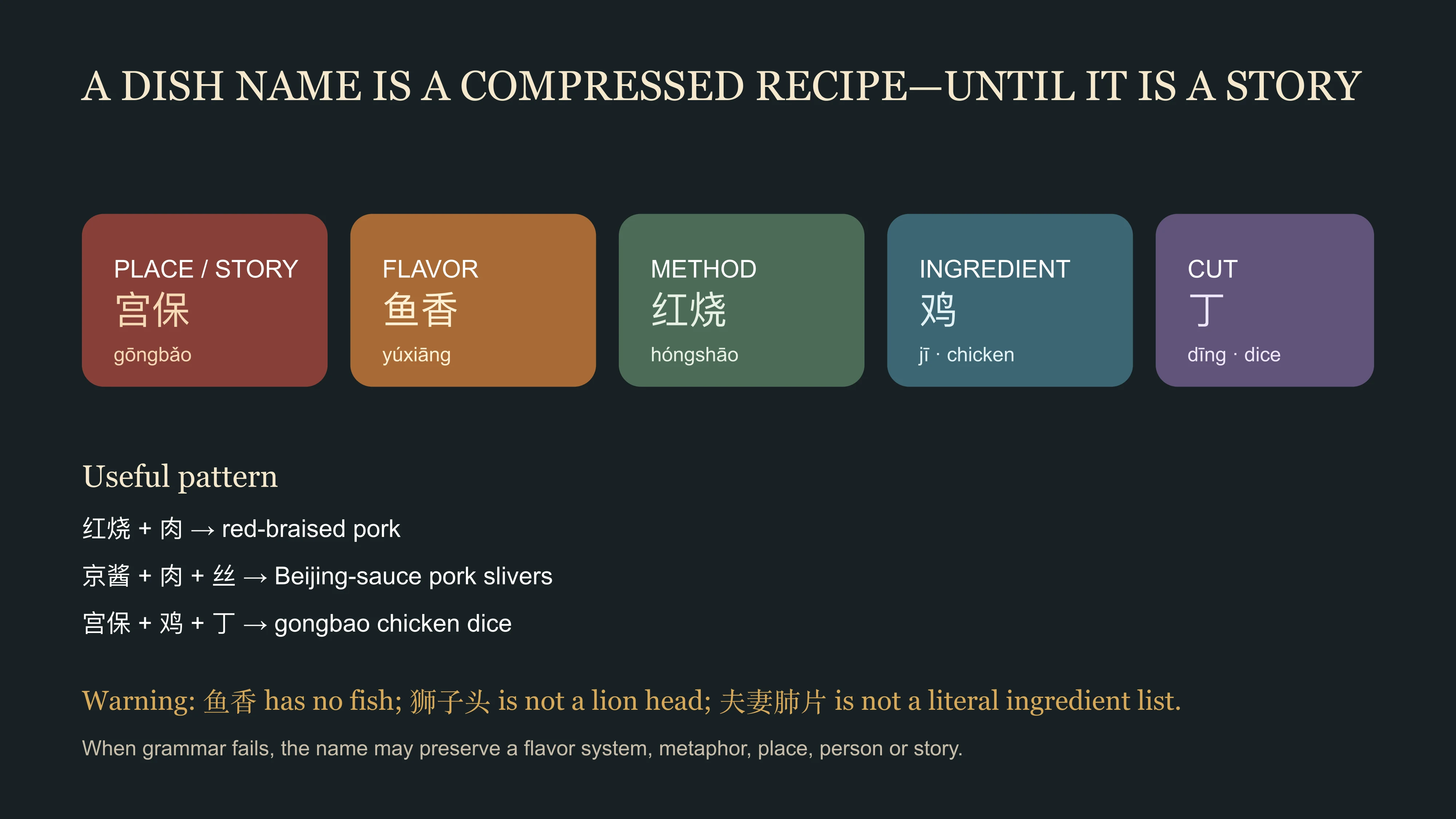
MIT OpenCourseWare's Chinese-menu material lists cooking terms, cuts and sample dishes because these components repeat. Learn the reusable parts and one unfamiliar menu becomes less frightening.
Consider 宫保鸡丁 (gōngbǎo jīdīng). 宫保 identifies the established dish style; 鸡 is chicken; 丁 means small dice. The name tells you more than “kung pao chicken,” especially when an English menu drops the cut.
京酱肉丝 (jīngjiàng ròusī) gives another pattern: Beijing-style sauce, meat, fine slivers. 红烧肉 (hóngshāo ròu) puts a red-braising method before pork. 清蒸鱼 (qīngzhēng yú) tells you gentle steaming and fish.
Then the pattern breaks—beautifully.
鱼香肉丝 (yúxiāng ròusī) contains no fish. 鱼香 names a Sichuan flavor system historically associated with seasonings used for fish; 肉丝 tells you the actual central ingredient and cut: pork slivers. A literal translator sees “fish fragrance meat threads.” A useful reader sees pickled-chili flavor, pork and fine cut.
狮子头 means “lion's head,” yet the dish is a large meatball. 蚂蚁上树 means “ants climbing a tree,” yet it describes minced meat clinging to vermicelli. 夫妻肺片 preserves a famous name whose literal translation can make newcomers imagine a married couple's lungs; the dish is a cold, highly seasoned beef-and-offal preparation, and its composition varies.
The lesson is not that Chinese names are mysterious. The lesson is that a menu is both technical language and cultural memory. Grammar gets you far. Story finishes the journey.
Cooking-method characters predict texture
An English translation such as “fried” can hide three completely different experiences.
- 炒 (chǎo) usually signals stir-frying with fast heat and movement.
- 爆 (bào) implies an even faster, intense cooking action, often with small pieces.
- 煎 (jiān) means pan-frying or shallow-frying against a hot surface.
- 炸 (zhá) means deep-frying.
- 蒸 / 清蒸 (zhēng / qīngzhēng) means steaming.
- 炖 (dùn) means slow stewing.
- 焖 (mèn) points toward covered, moisture-retaining cooking.
- 红烧 (hóngshāo) names a family of soy-colored braises rather than one fixed recipe.
- 凉拌 (liángbàn) means a cold dressed preparation.
- 烤 (kǎo) means roast, bake or grill depending on the food and equipment.
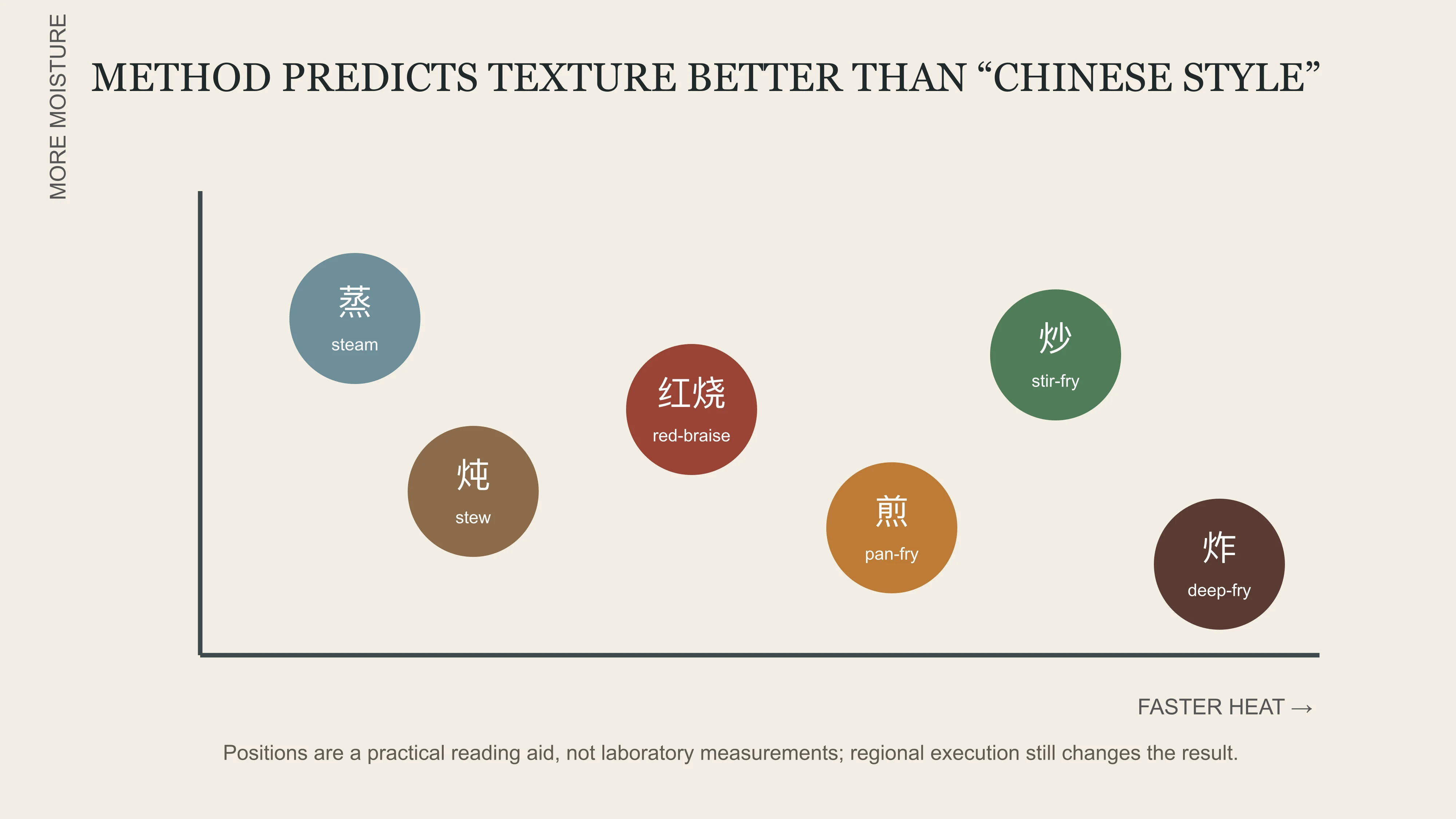
Technique is not decoration. It predicts whether a green vegetable should still snap, whether a fish should separate in moist flakes, whether pork will be yielding after a braise or crisp around the edges.

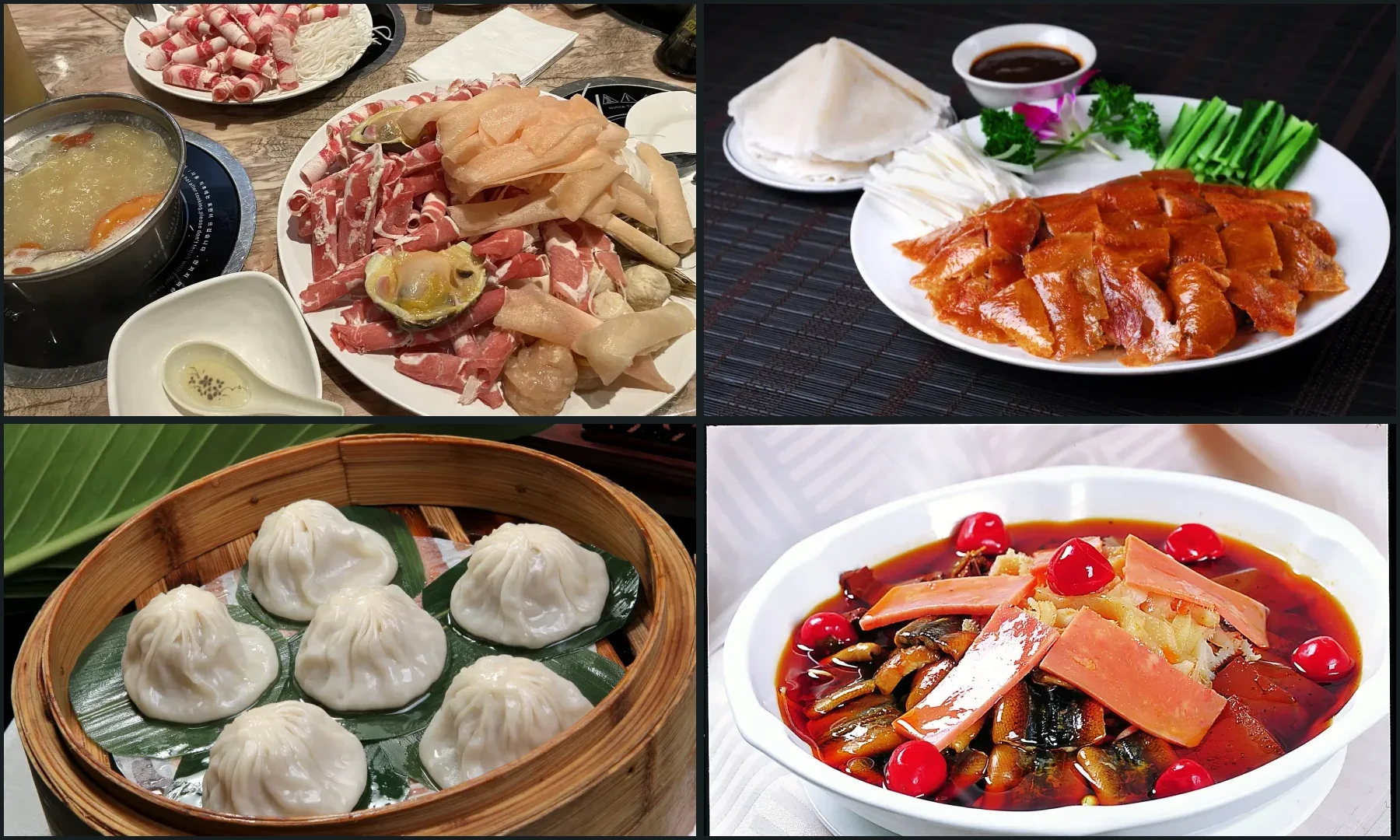
On a Beijing food menu, 北京烤鸭 tells you place, ingredient and roasting. The photo completes what the words cannot: lacquered skin, sliced meat, wrappers, scallion and sauce make a shared assembly rather than one plated entrée.
Do not translate one character mechanically. 水煮牛肉 literally appears to be “water-boiled beef,” but the Sichuan dish arrives in an aromatic chili-and-oil-rich broth. 水煮 is the established method name, not a promise of bland poaching. This is why searching the full Chinese name is stronger than translating each character independently.
The cut is part of the cooking technology
Chinese menus often tell you how an ingredient was cut because shape controls heat, sauce and mouthfeel.
- 丁 (dīng): small dice;
- 丝 (sī): fine slivers or shreds;
- 片 (piàn): slices;
- 块 (kuài): chunks or pieces;
- 段 (duàn): short sections;
- 末 (mò): mince or very fine particles;
- 馅 (xiàn): filling.
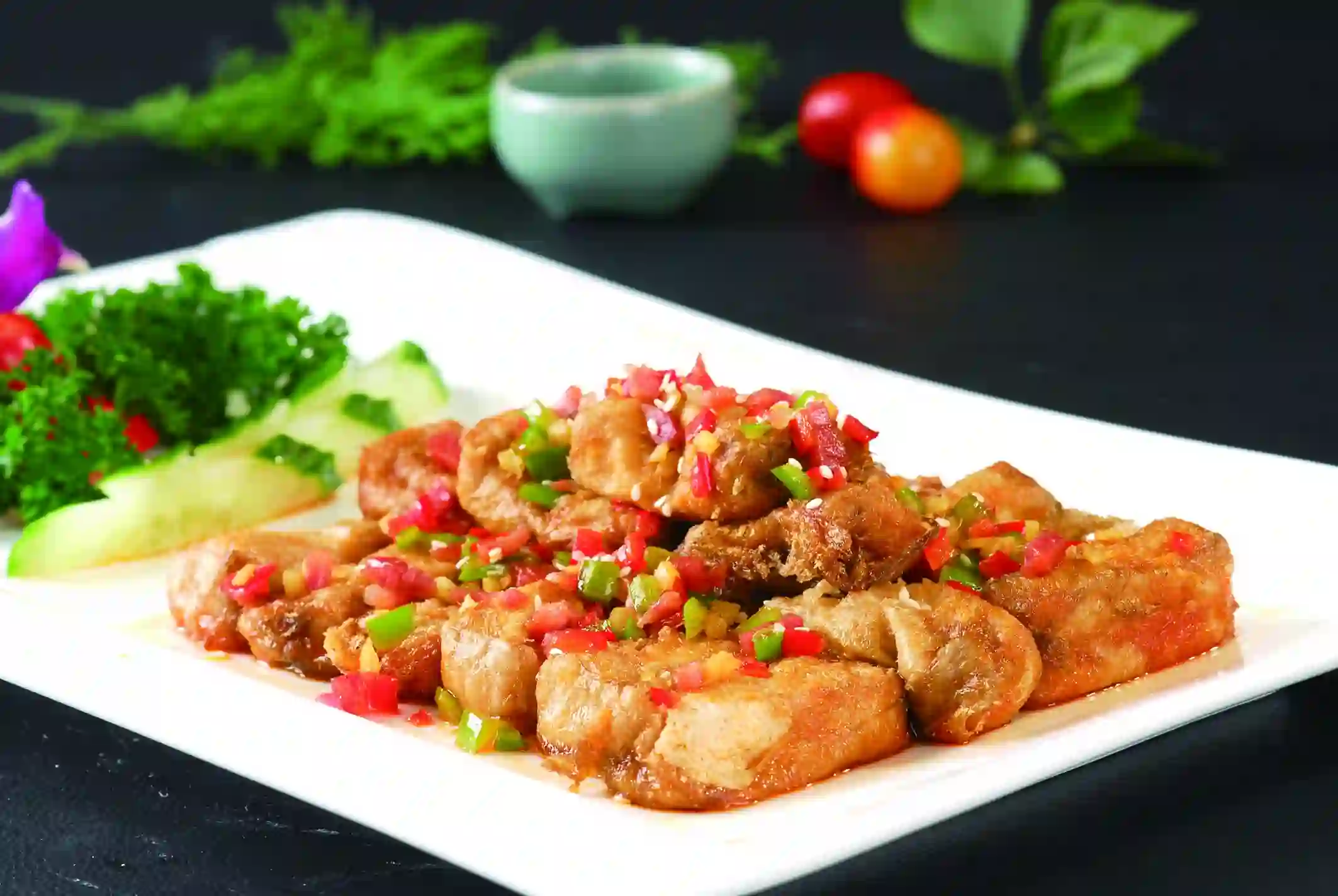
A sliver of pork and a cube of chicken are not merely visual choices. Thin pork can cook rapidly and catch sauce across a large surface. Dice can stay distinct among peanuts and chilies. A dumpling filling must hold together inside a wrapper without becoming paste.

The word 包 in 小笼包 tells you something is wrapped; 小笼 points to the small steamer basket. Yet the name alone cannot show wrapper thinness, pleats, broth quantity or whether the bottom has stuck. Our Shanghai food guide supplies that local context.
This is why pictures must carry evidence rather than fill space. A menu proves the promised name. The arrived plate proves how this kitchen interpreted it. Neither alone is the whole truth.
“Spicy” is not enough information
I dislike the single red-chili icon. It turns several different sensory systems into one warning triangle.
麻辣 (málà) combines the numbing, citrus-like sensation of Sichuan pepper with chili heat. 香辣 (xiānglà) emphasizes fragrance and heat. 酸辣 (suānlà) combines sourness and heat. 鱼香 (yúxiāng) is a named savory-sour-sweet-aromatic profile, not fish flavor. 糖醋 (tángcù) combines sugar and vinegar. 椒盐 (jiāoyán) is pepper-salt seasoning. 蒜蓉 (suànróng) foregrounds minced garlic. 葱油 (cōngyóu) foregrounds scallion oil.
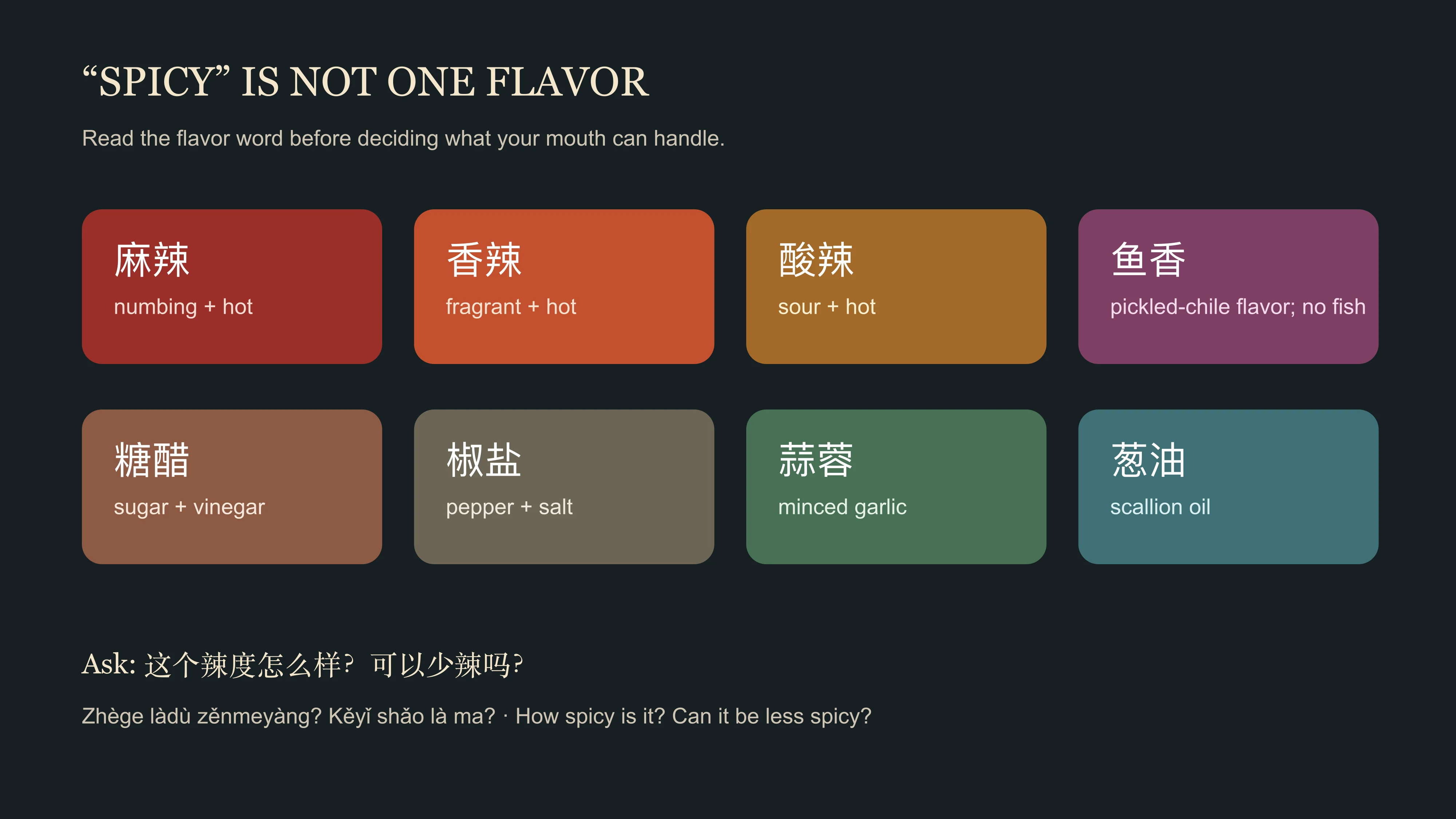
Even the same word changes by region and kitchen. “少辣” may reduce visible chilies but leave a fermented chili base. A restaurant can often adjust a quick stir-fry more easily than a stockpot, braise or pre-mixed sauce.
Ask two questions:
这个辣度怎么样?
Zhège làdù zěnmeyàng?
How spicy is this?
可以少辣吗?
Kěyǐ shǎo là ma?
Can it be less spicy?

I also ask what kind of heat is central. If Sichuan pepper numbness is the reason I chose the dish, removing it would make the order pointless. Confidence is not demanding that every kitchen redesign its food. Confidence is understanding the choice before making it.
Ingredient characters reveal more than the English title
Learn the characters that change an order materially:
| Group | Chinese | Practical meaning |
|---|---|---|
| Meat | 猪 / 牛 / 羊 / 鸡 / 鸭 | pork / beef / lamb / chicken / duck |
| Seafood | 鱼 / 虾 / 蟹 / 贝 | fish / shrimp / crab / shellfish |
| Plant protein | 豆腐 / 面筋 / 腐竹 | tofu / wheat gluten / tofu skin |
| Vegetables | 菜 / 菌 / 菇 / 笋 | greens or vegetables / fungi / mushrooms / bamboo shoots |
| Egg and dairy clues | 蛋 / 奶 / 芝士 | egg / milk / cheese |
| Common allergen clues | 花生 / 芝麻 / 小麦 | peanut / sesame / wheat |
But the headline ingredient is not a full ingredient list. A vegetable dish may use meat stock, lard, oyster sauce or dried seafood. A tofu dish may include minced pork. A sauce may contain soy, sesame or wheat even when none appears in the English title.
The menu tells you what the restaurant wants to name. It does not necessarily disclose every component.
Portion words prevent the most expensive misunderstanding
I keep returning to a simple restaurant story because it captures the problem perfectly: two people order a large fish-head soup after being warned about the size; the dish arrives in a basin and confidence becomes silence.
The failure was not appetite. It was scale.
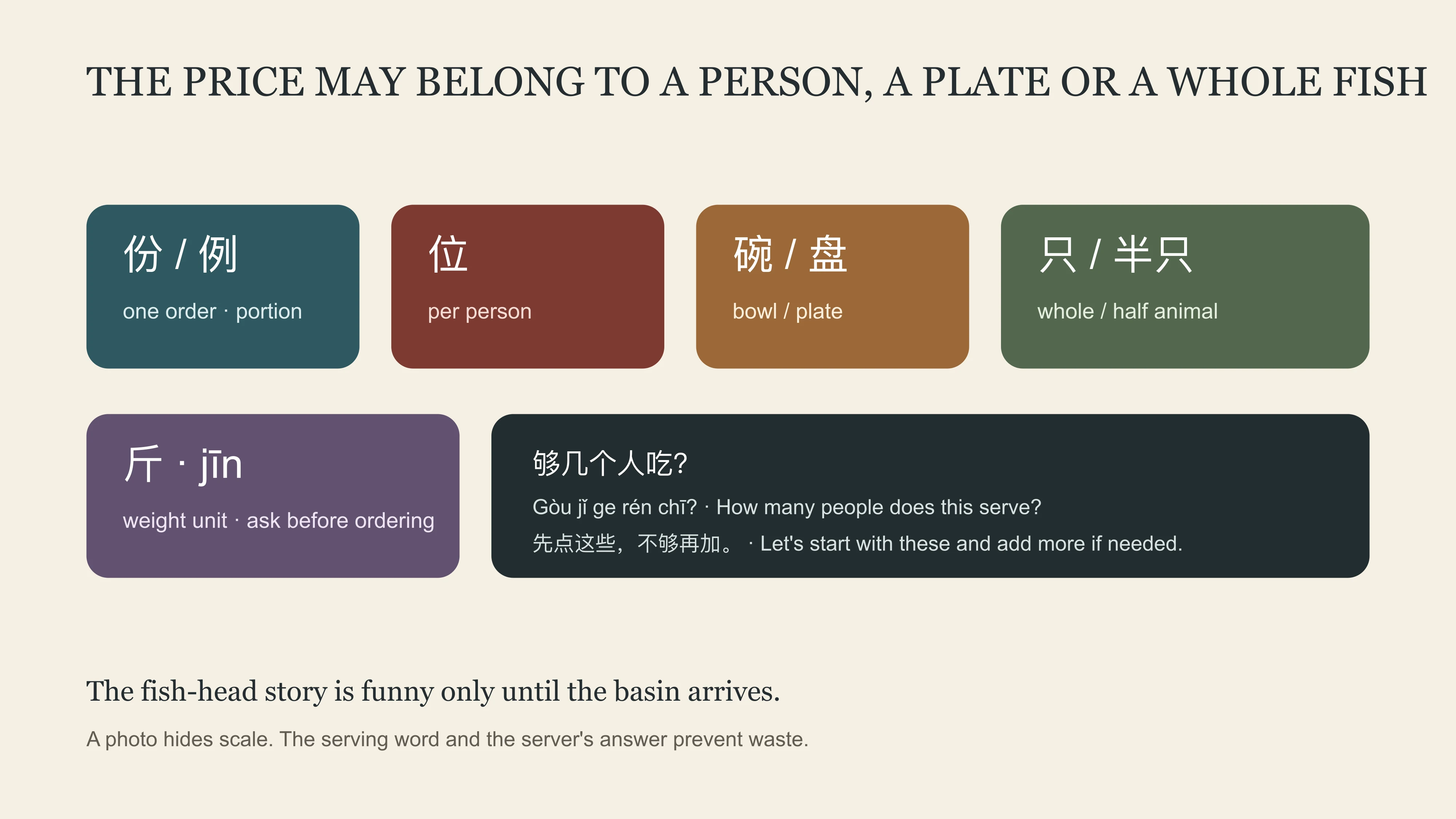
Watch for:
- 份 / 例 (fèn / lì): an order or portion;
- 位 (wèi): priced per person;
- 碗 / 盘 (wǎn / pán): bowl or plate;
- 只 / 半只 (zhī / bàn zhī): one whole animal or half;
- 斤 (jīn): a weight unit; in mainland China one jin is 500 grams;
- 时价 (shíjià): current or market price.
For fish, crab, lobster and other live or weight-priced seafood, confirm the weight, unit and estimated total before cooking. A number beside “时价” or “斤” does not behave like the price of one fixed plate.
Ask:
这个够几个人吃?
Zhège gòu jǐ ge rén chī?
How many people does this serve?
先点这些,不够再加。
Xiān diǎn zhèxiē, bùgòu zài jiā.
Let's begin with these and add more if needed.
That sentence is better hospitality than waste disguised as generosity.
Build the shared table through contrast
There is no national equation saying “one dish per person plus one soup.” Portion size, restaurant type, appetite and occasion vary too much. A village banquet, mall restaurant, dim sum breakfast, noodle shop and home table should not be forced into one formula.
I use five roles instead:
- one dish that reveals what this kitchen does best;
- one seasonal or simply cooked vegetable;
- one contrasting temperature or texture;
- one wet, soft or calming dish such as soup, tofu or a braise when the table needs it;
- a suitable staple.
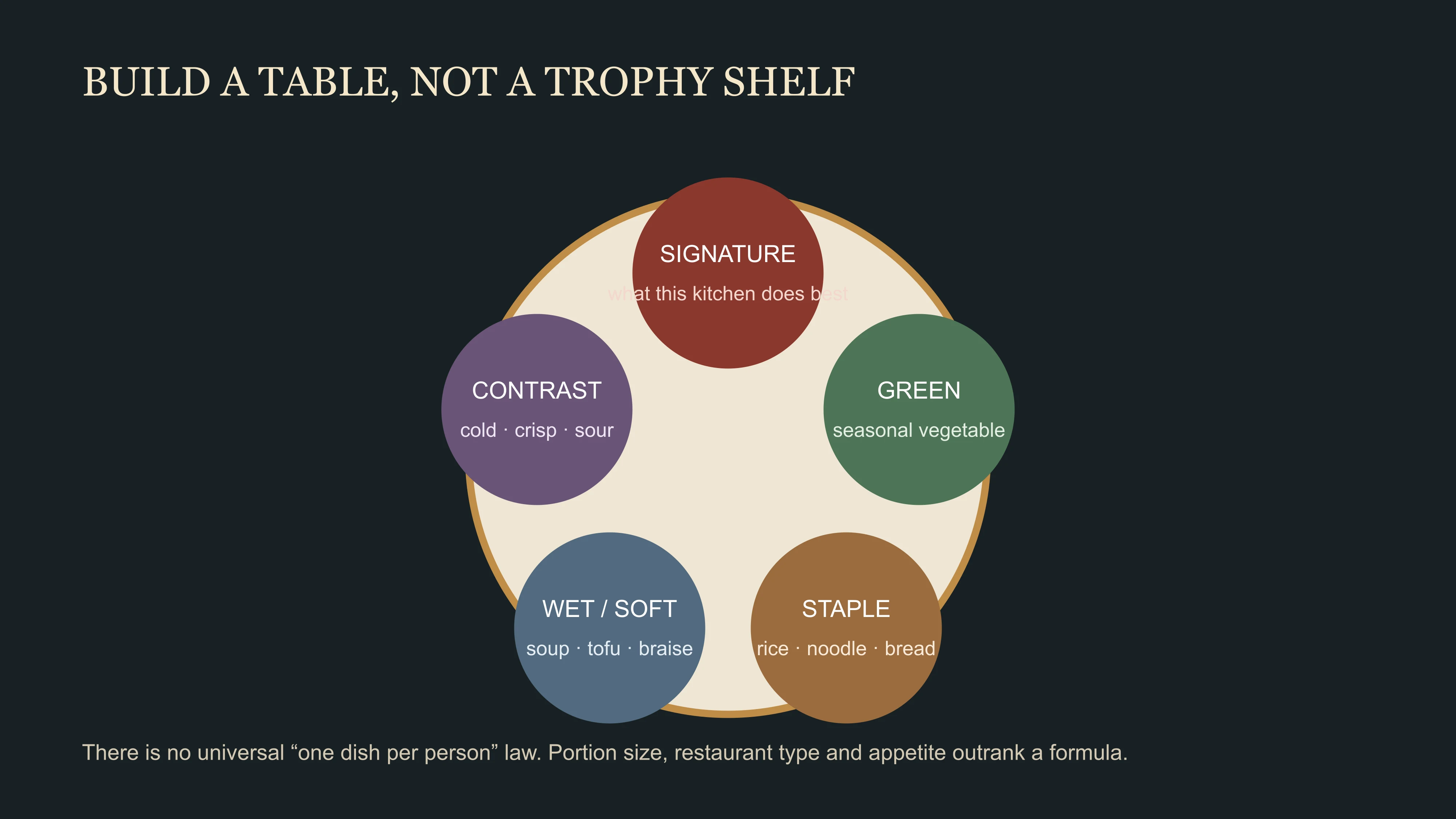
This is not a checklist requiring five plates. It is a diagnostic. If the signature dish is rich roast duck, a clear green vegetable and a lighter cold dish make sense. If the table centers on steamed fish, perhaps you need something crisp and a braised tofu. If everyone wants chili, choose one dish that resets the mouth.

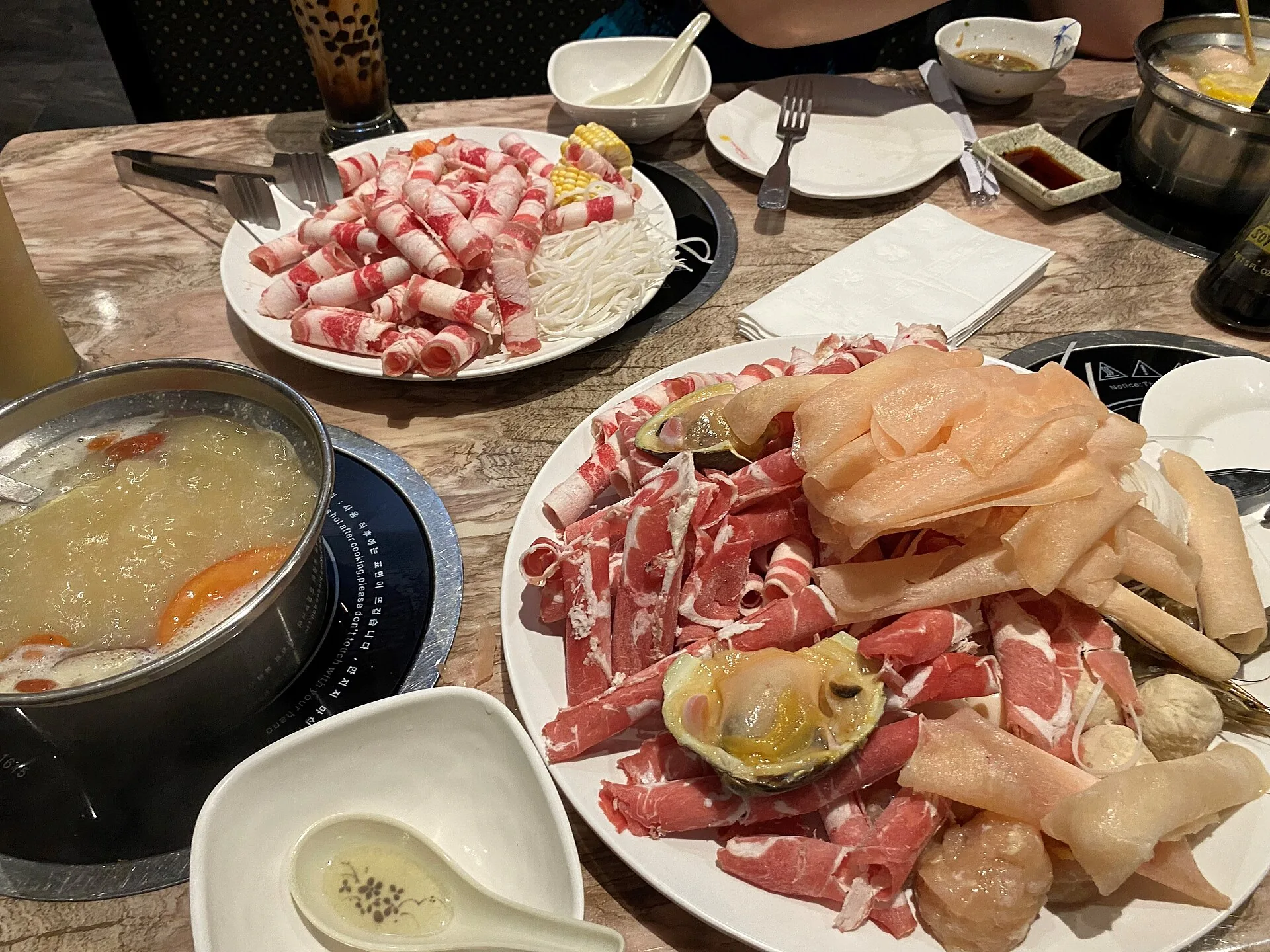
Chinese hot pot breaks the static-plate model completely. Ingredients arrive raw, enter broth in sequence and change the liquid as the meal continues. Ordering too many similar slices still creates fatigue, even if every plate looks impressive before cooking.
The most useful question is not “What is the best Chinese dish?” It is “What does this table still need?”
Start with the restaurant's identity, not a global greatest-hits list
Do not enter a Cantonese seafood restaurant and order a generic Sichuan dish merely because it is famous. Do not ignore a Shaanxi noodle shop's dough work to ask for fried rice. Do not judge a dumpling specialist by one off-menu sweet-and-sour chicken.
Look for evidence of identity:
- city or region in the restaurant name;
- a short section of signature dishes, marked 招牌 or 拿手;
- seasonal boards and live ingredient displays;
- repeated technique across the menu;
- what neighboring tables actually ordered;
- what the server recommends for today's ingredients and your group size.
MIT's menu guide includes the useful phrase 你们这儿有什么拿手菜? (Nǐmen zhèr yǒu shénme náshǒu cài?)—What specialties do you do well here?
That one question is more intelligent than bringing an internet “top ten” list into every kitchen.

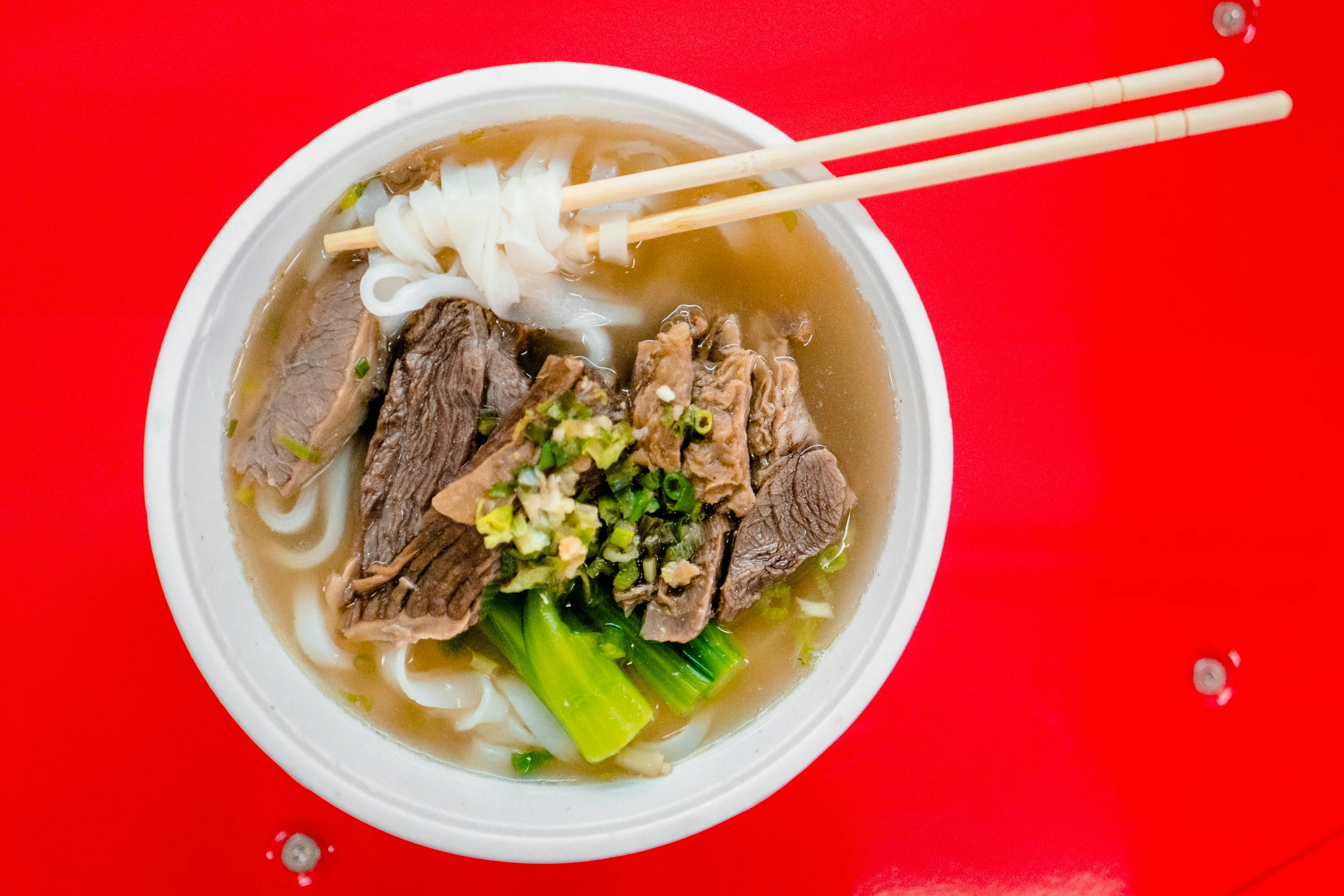
Our Chinese noodles guide explains why noodle width, dough, broth and topping belong to regional systems. The menu term 油泼 tells you hot oil is poured over aromatics; the photo lets you inspect whether the noodles remain wide, separate and capable of carrying that finish.
Dietary restrictions require ingredient-level questions
“I am vegetarian” is useful. It is not a complete kitchen instruction.
素菜 can mean vegetarian dishes, but a restaurant's everyday category may focus on the visible main ingredient rather than every stock, sauce and cooking surface. Confirm whether you avoid meat pieces, animal stock, lard, oyster sauce, egg, dairy or all animal-derived ingredients.
For a severe food allergy, the stakes are higher. The U.S. Food and Drug Administration's food-allergy guidance identifies nine major allergens in the United States and warns that reactions can be life-threatening. It also notes that most food sold in restaurants is not covered by the same packaged-food labeling framework diners may expect.
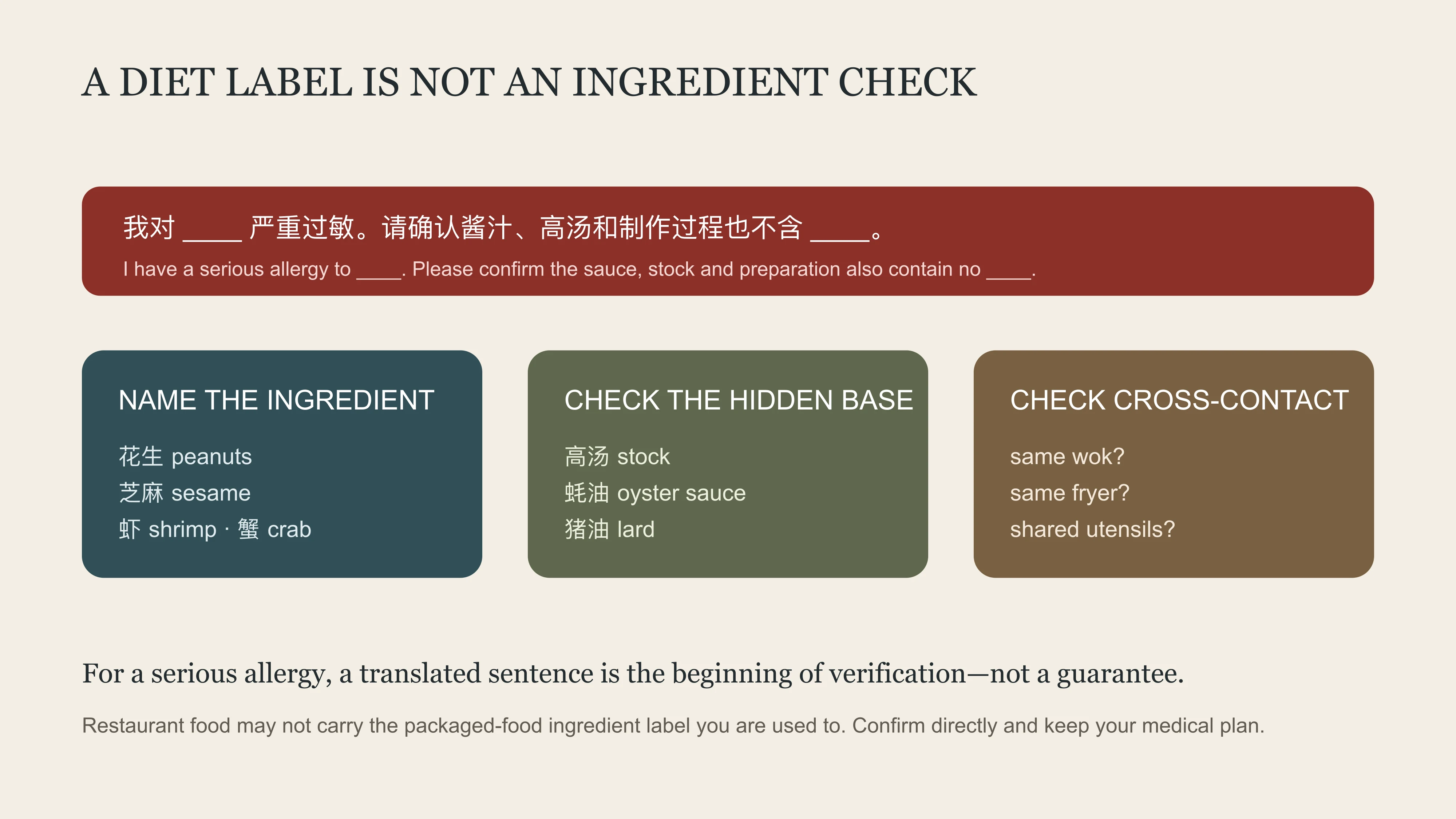
Use a written, specific statement:
我对____严重过敏。请确认酱汁、高汤和制作过程也不含____。
Wǒ duì ____ yánzhòng guòmǐn. Qǐng quèrèn jiàngzhī, gāotāng hé zhìzuò guòchéng yě bù hán ____.
I have a serious allergy to ____. Please confirm the sauce, stock and preparation also contain no ____.
Then ask about shared woks, fryers and utensils. A translated card begins the conversation; it cannot certify the kitchen. Follow the safety plan you already use and do not eat a dish when the answer remains uncertain.
Six phrases solve more problems than fifty memorized dishes
The Shanghai Municipal Government's English-language introduction includes basic dish vocabulary and ordering language. I would carry these six sentences:
| Chinese | Pinyin | Use |
|---|---|---|
| 请给我看一下菜单。 | Qǐng gěi wǒ kàn yíxià càidān. | May I see the menu? |
| 你们的招牌菜是什么? | Nǐmen de zhāopái cài shì shénme? | What is your signature dish? |
| 这个是什么做法? | Zhège shì shénme zuòfǎ? | How is this cooked? |
| 这个够几个人吃? | Zhège gòu jǐ ge rén chī? | How many people does this serve? |
| 我们先点这些。 | Wǒmen xiān diǎn zhèxiē. | We will start with these. |
| 买单,谢谢。 | Mǎidān, xièxie. | The bill, please. |
Pointing is not failure. Show the Chinese line, point to the item and confirm the number. The goal is dinner, not a language examination.
What a menu and food photograph cannot prove
A menu can show names, prices, categories, claims and available choices at one moment. A food photograph can show visible ingredients, portion clues, color, cut, plating and texture signals. Together they still cannot prove:
- the complete ingredient list;
- absence of an allergen or cross-contact;
- the recipe's regional authenticity;
- the cook's identity or training;
- the freshness of ingredients beyond visible clues;
- that the portion will remain the same on another visit;
- that one dish represents an entire province;
- that a restaurant still serves the item today.
That boundary is not disappointing. It tells us exactly what evidence to collect next: full menu entry, arrived dish, city, restaurant type, serving unit and one honest note about taste and texture.
My Chinese menu verdict: read relationships, not translations
Translation is necessary. It is not enough.
The best Chinese food menu guide must show how a dish belongs to a section, how a name compresses technique and memory, how a cut changes texture, how a portion word controls scale and how one plate changes the rest of the table.
Once you see those relationships, an unfamiliar menu stops being a wall of characters. It becomes a conversation with a kitchen.
Do not photograph only the glamorous dish. Photograph the menu entry too. Post both in Moments with the city, restaurant type, Chinese name, price unit and what arrived. We are building a menu-to-table translation lab where the words must answer to the plate—and the plate must answer to a real eater.