Guangzhou food is not a collection of bamboo steamers waiting for brunch. The city eats from early congee and rice noodle rolls through roast-meat lunches, afternoon tea, seafood dinners, clay-pot rice and late bowls of sweet soup. Dim sum is a gateway; Guangzhou's daily appetite is the destination.
For regional history and technique, begin with our full Cantonese food guide. This page answers a narrower question: what should you actually eat in Guangzhou, in what order and in what kind of place?
Use the broader Chinese food guide for regional comparison, then return to this city clock. Guangzhou food makes most sense when appetite, neighborhood and time of day remain connected.
The meal clock also belongs to the larger Guangzhou culture guide: shaded arcades, river commerce, migration and Cantonese speech are not background decoration around the food. If you need to turn that context into a route with realistic transfers and weather breaks, keep the separate travel to Guangzhou guide open beside this one.
The Guangzhou municipal international portal is useful for checking city context and visitor information; it cannot tell you whether a particular roast or dumpling is good. That judgment has to remain sensory and specific.
Guangzhou food at a glance
| Eating moment | Start with | What it teaches |
|---|---|---|
| Early breakfast | Rice noodle roll, congee or wonton noodles | Speed, softness and neighborhood routine |
| Morning tea | Har gow, siu mai, steamed ribs and tea | Shared ordering, wrapper technique and social time |
| Roast-meat lunch | Goose, char siu or chicken over rice | Urban specialization, chopping and turnover |
| Shared dinner | Steamed fish, white-cut chicken, vegetables and soup | Ingredient quality and controlled heat |
| Cool-weather meal | Clay-pot rice | Cured aroma, rice texture and the crisp pot crust |
| Late finish | Sweet soup or herbal jelly | Cantonese dessert culture beyond egg tarts |
Choose your route through this guide
| If you want to understand... | Begin with... |
|---|---|
| Why dim sum matters beyond individual dishes | Morning tea as the city's social clock |
| The clearest everyday breakfast | Liwan congee, wonton noodles and rice noodle rolls |
| Cantonese cooking technique | Roast meats, white-cut chicken, steamed fish and greens |
| Where to eat | Neighborhood character and specialist restaurant formats |
| How to order without wasting food | The Guangzhou food day and practical ordering section |
| How Guangzhou differs from Hong Kong | The comparison near the end of the guide |
Guangzhou is best approached through repeated contrasts: soft congee against resilient noodles, crisp roast skin against gently poached chicken, clear soup against fermented seasoning, and a long tea-house morning against a fast rice lunch. No single “best dish” can explain those relationships.
How Guangzhou turns daily time into flavor
Guangzhou food is organized as much by the clock as by ingredients. Breakfast specialists may close after the morning rush. Tea houses can stretch a meal across several hours. Roast-meat counters depend on rapid turnover at lunch, while clay-pot rice and seafood fit a slower evening. Planning by meal format prevents the common mistake of trying to order every famous food at one restaurant.
The city's humid subtropical climate also helps explain the value placed on freshness, soups, steamed dishes and foods served at several temperatures. This does not mean all Cantonese food is “light.” Roast fat, cured sausage, fermented black beans, oyster sauce and rich stocks can be powerful. Balance comes from how those elements are distributed across the table.
Morning tea is the city's social clock
Yum cha means drinking tea, but the phrase names a whole meal: tea, small dishes, conversation and a table that can stay occupied longer than efficiency would prefer.
Guangzhou has now made that social character explicit. The municipal culture and tourism bureau's morning-tea protection regulation treats Guangzhou morning tea as a regional food practice carrying craft and social custom, not as a rule for what residents must eat at breakfast. That is exactly the distinction a visitor needs: the meal is preserved through skilled making and shared time, not by freezing every teahouse into one nostalgic service format.
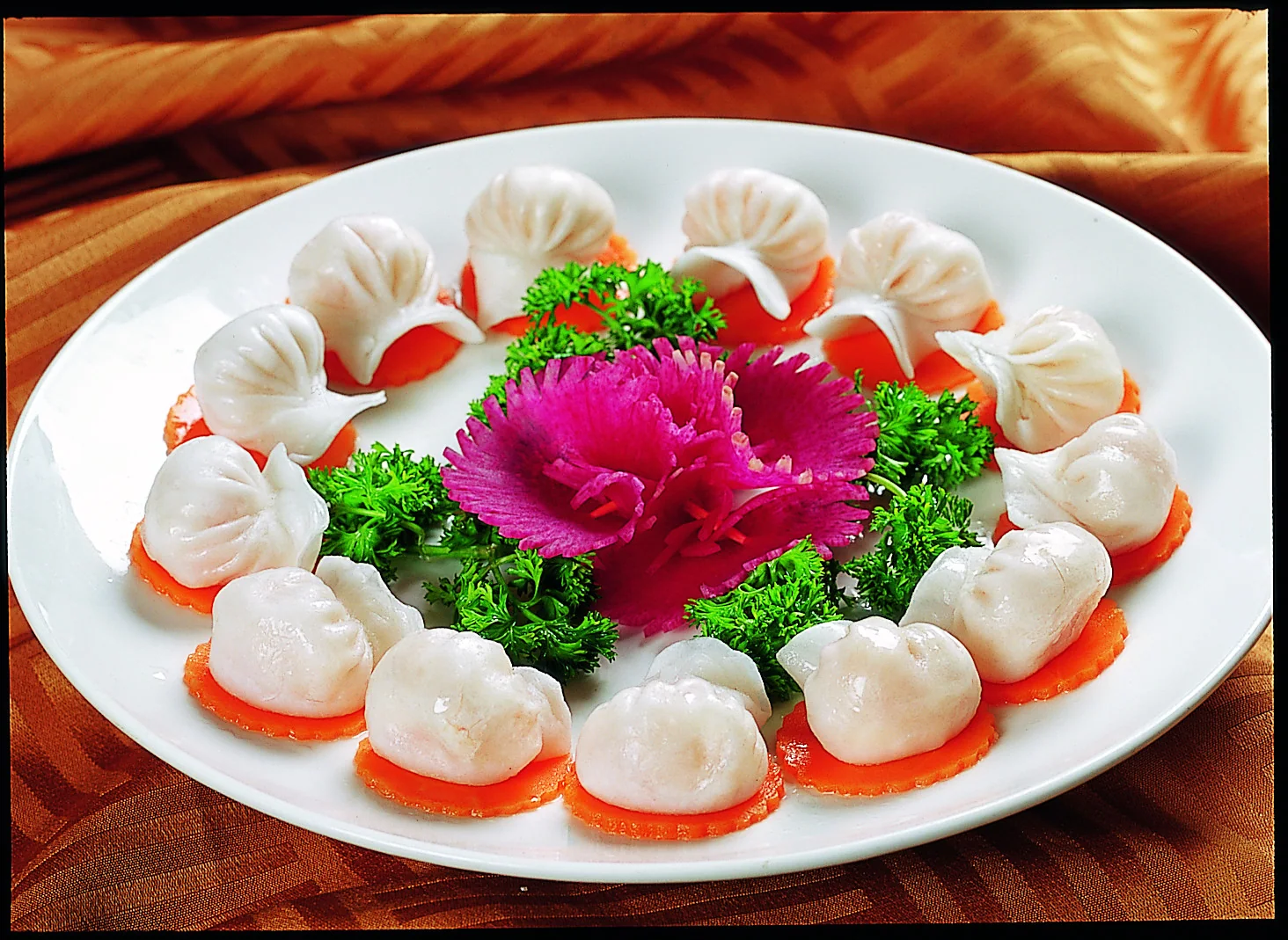
Har gow tests the kitchen immediately. The wrapper should be thin enough to reveal the shrimp, elastic enough to lift and delicate enough not to feel like a rubber shell.
Add steamed ribs, rice noodle rolls, vegetables or congee so the table does not repeat the same shrimp-and-wrapper idea.
| Table size | A balanced first order |
|---|---|
| Solo | Two savory dishes and tea; add congee only if portions are small |
| Two people | One dumpling, one rice noodle roll, one meat or vegetable dish and one baked item |
| Four people | Four to six contrasting dishes, then reorder based on appetite |
Tea is not a side beverage. It sets the pace, refreshes the mouth and gives the table a reason to remain social.
Morning tea also reveals the economics of shared eating. One basket rarely exists as an individual main course. The table becomes interesting when several people compare wrappers, fillings, steaming and baking. Solo diners can still participate, but should choose a restaurant and portion structure that does not turn curiosity into waste.
Do not judge the meal only by how many carts or bamboo steamers appear. Ordering systems now vary from paper cards to digital menus, and many excellent kitchens prepare dishes to order. The meaningful continuity lies in tea, shared portions, specialist technique and social duration, not one nostalgic service format.
Liwan explains Guangzhou one bowl at a time
Old Liwan is strongly associated with waterways, commerce and several foods that make sense as urban breakfast or snack culture.
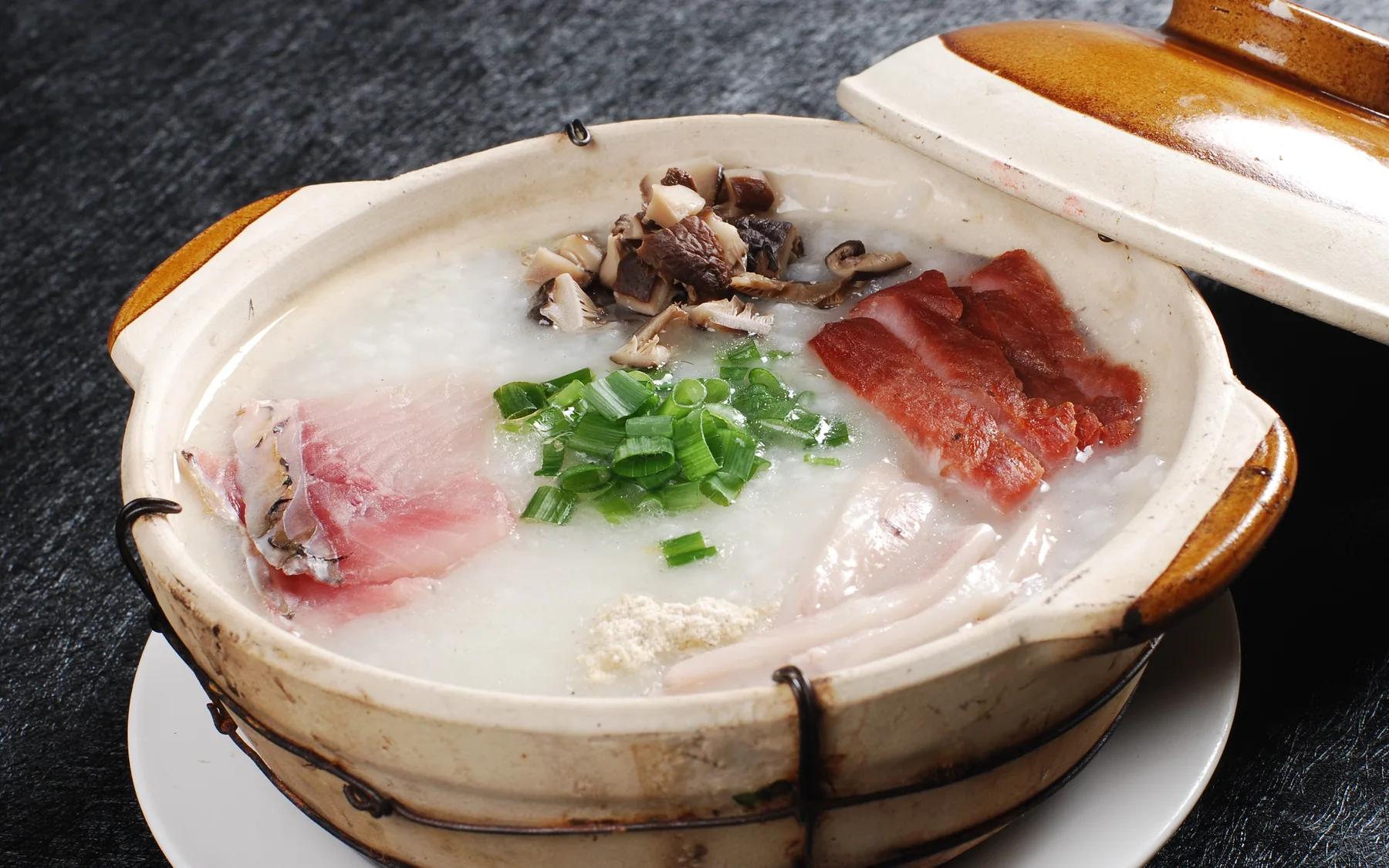
Sampan congee combines silky rice with toppings such as fish, meat, peanuts, fried dough and scallion. Recipes vary; the pleasure comes from soft porridge meeting crisp and savory additions.
Wonton noodles depend on proportion. The noodles should remain resilient, the wontons shrimp-forward and the broth clear enough that each component stays distinct.
Also look for rice noodle rolls, rice cakes and local sweets. One famous shop is less important than eating these foods in a neighborhood where they remain ordinary.
Liwan's food makes the relationship between water, trade and urban density easier to taste. Congee stretches rice into a warm, adaptable meal. Wonton noodles compress broth, shrimp and texture into a small bowl. Rice noodle rolls move quickly from steam tray to plate. These foods are technically exact but socially unceremonious.
A useful breakfast comparison is to order the same rice noodle roll on two mornings. Look at sheet thickness, the amount of oil, the texture of the filling and whether the soy seasoning supports or floods the rice. Repetition teaches more than adding another unrelated snack to a checklist.
Roast, poach and steam: Guangzhou measures heat precisely
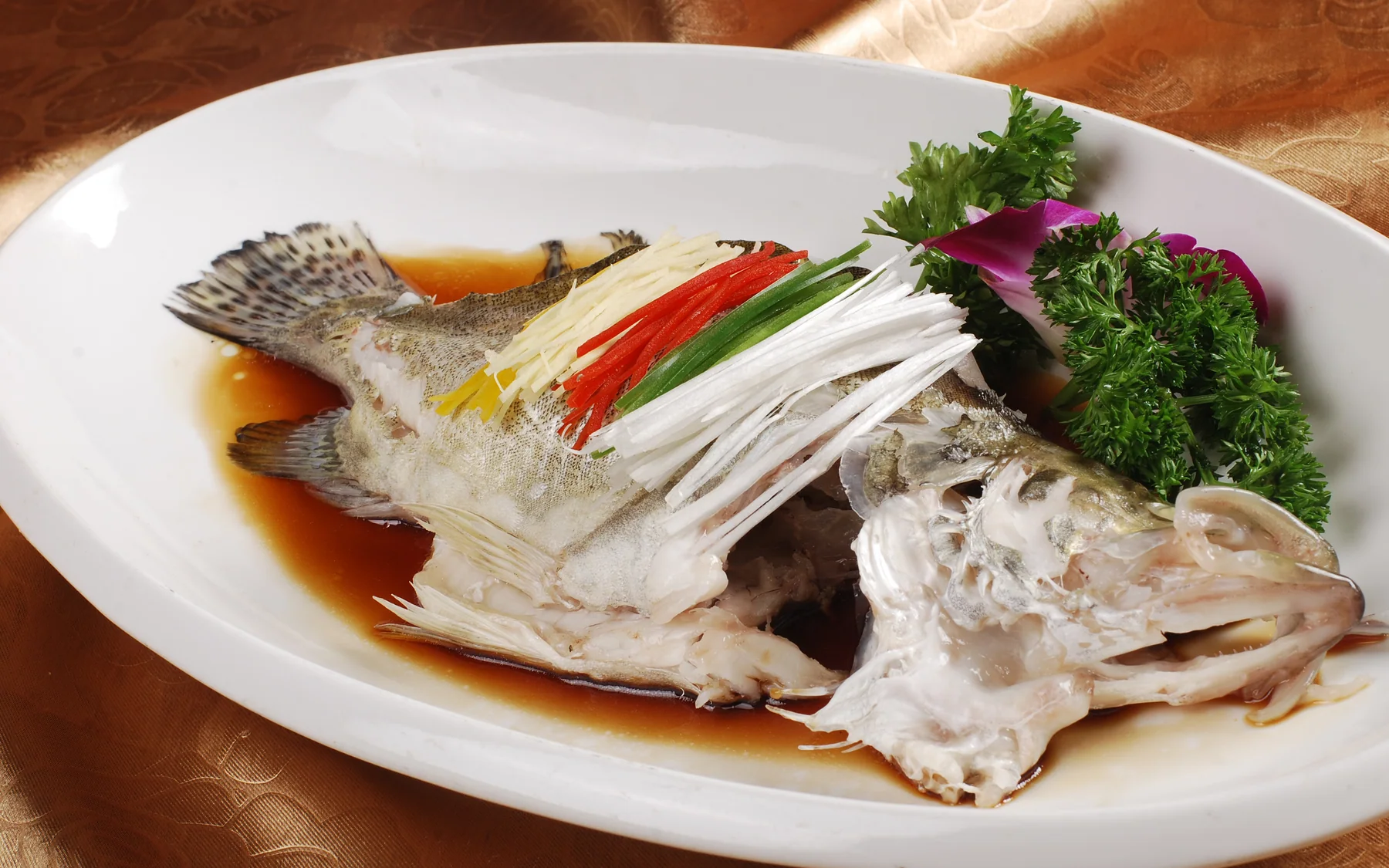
Cantonese technique often becomes visible at the point where overcooking would destroy the dish. Roast goose needs rendered fat without dry meat. White-cut chicken needs cooked flesh and supple skin without aggressive boiling. Steamed fish needs to release cleanly from the bone before tightening. The cuisine's apparent restraint leaves little room for careless timing.
Roast-meat shops turn precision into fast food
Siu mei counters display roast goose, char siu, chicken and other meats because appearance and turnover communicate quality. Diners can order a portion over rice or assemble a shared plate.
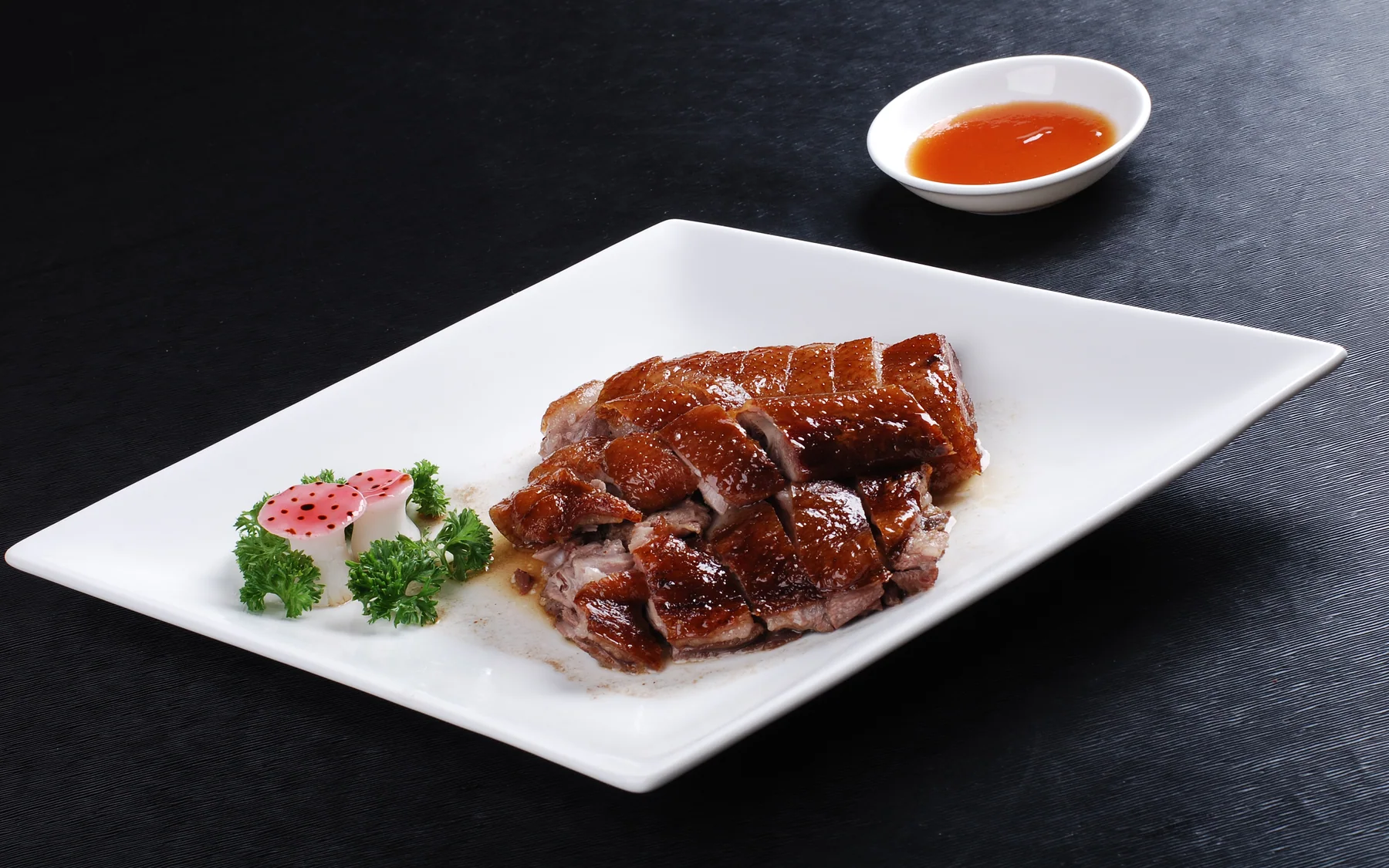
Roast goose should balance skin, rendered fat, juicy meat and aromatic seasoning. Ask for a cut that suits your preference; breast and leg do not eat the same way.
Good char siu is not merely red and sweet. Cut, fat, roasting heat and surface caramelization decide whether it feels succulent or dry.
For a solo lunch, roast meat over rice is one of Guangzhou's most efficient cultural lessons: specialist labor delivered at everyday speed.
A combination plate can be useful, but do not assume more varieties produce a better comparison. Two carefully chosen meats reveal enough: roast goose against char siu, or crisp-skinned pork against soy chicken. Notice the chopping, bone structure and sauce rather than expecting Western-style boneless portions.
Turnover matters because roast meats change as they sit. A busy specialist counter with visible chopping and a focused menu can be more instructive than an elaborate restaurant serving siu mei as one small section of a huge menu. Ask for the portion before ordering; a shared plate and a rice portion are different quantities.
White-cut chicken makes subtlety measurable
White-cut chicken is gently cooked and chopped so the skin remains supple and the meat moist. Ginger-scallion oil supports the chicken rather than hiding it.
The dish explains why calling Cantonese food bland is usually a failure of attention. Notice poultry flavor, skin texture, temperature and the salt balance of the dip. There is nowhere for careless heat to hide.
The chopped presentation keeps bone, skin and meat together. Foreign diners should eat slowly and use the small plate for bones. Boneless chicken breast would remove part of the textural argument. If this format is unfamiliar, begin with a modest portion rather than asking the kitchen to redesign the dish.
A complete Cantonese table needs contrast
A banquet built only from famous meat dishes is not a complete Guangzhou meal. Soup changes the temperature and pace. Greens test the kitchen's ability to preserve freshness. Tofu absorbs stock and sauce. Seafood introduces season and market judgment. Rice provides a quieter base. The table works as an arrangement rather than a sequence of headline dishes.
Seafood, soup and vegetables complete the table
Guangzhou's access to the Pearl River Delta and South China supply networks supports a deep seafood culture. Steamed fish is the clearest technique: cook until the flesh releases but has not tightened into dryness, then finish with ginger, scallion, hot oil and seasoned soy.
Ask what species is being sold, whether pricing is by weight and what portion suits the table. Live tanks do not remove questions of sourcing or sustainability.
Slow and double-boiled soups are equally important. They may combine meat, roots, gourds, beans, dried seafood, herbs and fruit. Appreciate household knowledge and extraction without converting cultural dietary ideas into unsupported medical claims.
Order a green vegetable. Garlic, fermented bean curd, stock or simple blanching can make vegetables one of the clearest measures of kitchen control.
Seafood ordering requires more questions than pointing at a tank. Confirm species, weight, unit price and cooking method before preparation. Ask whether the quoted weight is for the whole animal and what size is appropriate for the group. A clear agreement is better cultural behavior than silently accepting an unexpectedly large bill and resenting the restaurant later.
Soup should not be treated as medicinal proof. Cantonese households and restaurants use ingredients within food traditions that may carry ideas about season and bodily balance, but a travel guide should not convert those traditions into clinical claims. Taste extraction, aroma and the way soup structures a meal.
Clay-pot rice rewards the person who waits
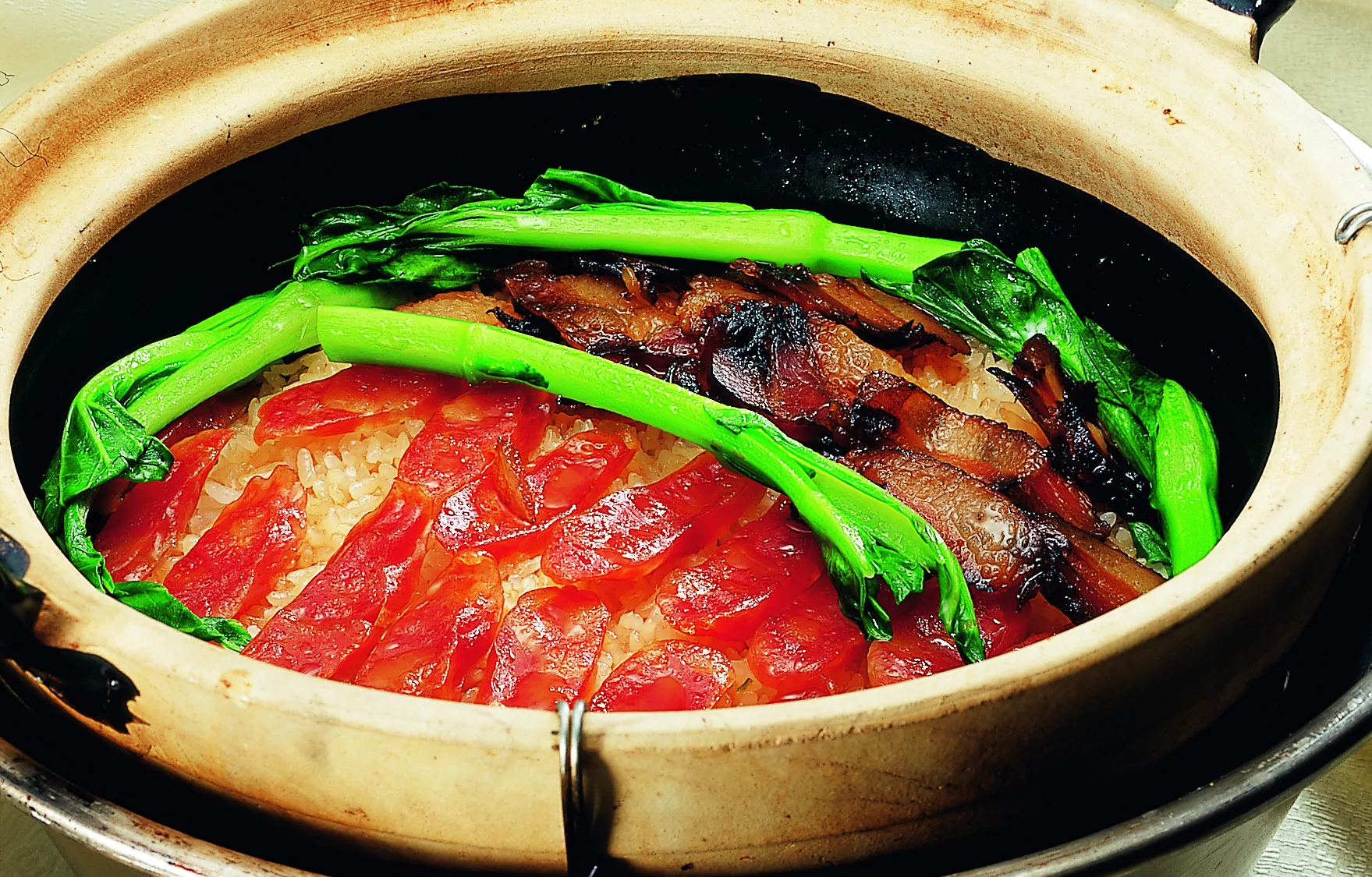
Clay-pot rice is especially satisfying in cooler weather. Rice cooks against the pot until a toasted crust forms, while cured sausage, meat or other toppings perfume the grains.
Do not stir immediately. Let the server explain whether sauce should be added first and give the base time to become crisp without burning.
Clay-pot rice is also a lesson in distribution. The top grains receive aroma and fat from the ingredients, the middle holds moisture and the bottom forms fan jiu, the toasted crust. Mix too early and the layers disappear; wait too long and the base may harden. The correct moment depends on the pot and the server's method.
Guangzhou desserts are not an afterthought
Cantonese tong sui, or sweet soups, may use sesame, red bean, mung bean, almond, tofu, sago, fruit or milk. Herbal jelly and chilled desserts suit humid weather; baked pastries and egg tarts reflect the wider port-city baking world.
Egg tarts are worth eating warm, but do not let one pastry erase the quieter dessert shops that residents use after dinner.
Sweet soup provides an important counterweight after roast, seafood or clay-pot rice. Black sesame paste emphasizes roasted depth; red- or mung-bean soups feel grainier; tofu pudding can be almost weightless; milk desserts show the influence of South China's dairy traditions and modern restaurant culture. Order by texture and temperature, not only sweetness.
Where to eat by neighborhood character
| Area | Useful for | Planning note |
|---|---|---|
| Liwan | Congee, wonton noodles, rice noodle rolls, traditional sweets and older tea-house culture | Go early and combine food with a slow neighborhood walk |
| Yuexiu | Long-established restaurants, roast meats and central access | Useful for comparing heritage institutions with everyday lunch |
| Haizhu | Residential food, markets and contemporary local dining | Look beyond the Canton Tower riverfront |
| Tianhe | Modern malls, regional restaurants and polished Cantonese dining | Good for seeing how traditional dishes adapt to a wealthy business district |
| Panyu and outer districts | Large restaurants, family dining and district specialties | Travel time matters; choose deliberately rather than chasing a list |
Restaurant quality changes faster than cultural patterns. Use current maps for opening hours, then judge turnover, specialization and local use.
The strongest plan clusters two or three compatible stops in one district instead of commuting between famous names. Liwan works when congee, noodles, sweets and a neighborhood walk belong to the same morning; Tianhe works when a polished lunch and contemporary city life are the point. Geography changes the meal. A ten-minute walk allows appetite and attention to reset, while an hour in traffic turns every restaurant into an appointment and makes spontaneous comparison almost impossible.
Think in restaurant types rather than permanent “best restaurant” rankings:
| Restaurant format | Best used for | What to verify |
|---|---|---|
| Tea house | Shared dim sum and a long social morning | Service hours, queue system and portion size |
| Congee or noodle specialist | Breakfast or focused solo meal | Specialty, broth style and closing time |
| Siu mei counter | Quick roast-meat lunch | Turnover, cut choice and rice portion |
| Full Cantonese restaurant | Seafood, poultry, soup and vegetables | Group size, reservations and live-seafood pricing |
| Clay-pot rice shop | Cool-weather dinner | Cooking wait and available toppings |
| Tong sui shop | Dessert or late finish | Hot, cold and seasonal choices |
Markets can clarify ingredients, but they are working spaces. Do not block vendors for photography or assume every live product is intended as spectacle. Observe how vegetables, dried seafood, poultry and prepared foods are grouped, then eat at a nearby specialist rather than trying to turn the market itself into a tasting menu.
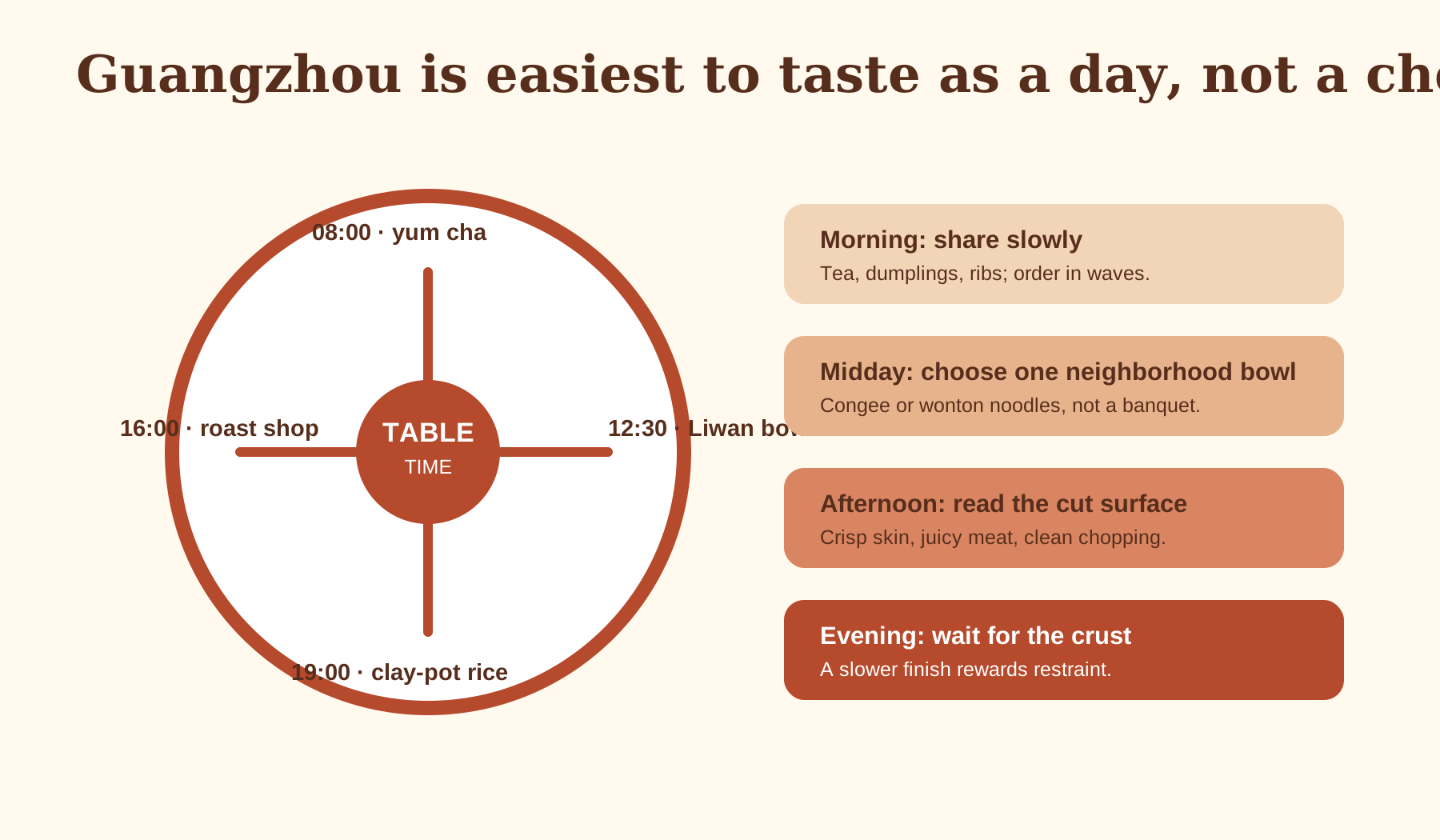
How to build a Guangzhou food day
| Time | Meal | Why this sequence works |
|---|---|---|
| 08:00 | Rice noodle roll or congee | Begin with a working breakfast rather than a banquet |
| 10:30 | Yum cha | Order selectively and let tea slow the morning |
| 14:00 | Roast-meat rice or wonton noodles | Keep lunch focused after dim sum |
| 18:30 | Shared Cantonese dinner | Add seafood or chicken, soup, tofu and greens |
| 21:00 | Sweet soup | Finish with a different texture and temperature |
This is a structure, not a command to eat five full meals. Share, reduce portions and skip a stop when appetite says enough.
A realistic two-day Guangzhou food plan
Use day one for Liwan or Yuexiu: a rice noodle roll or congee breakfast, one unhurried yum-cha sitting and a focused roast-meat lunch. Rest, walk and finish with a shared dinner containing chicken or fish, greens and soup. Use day two for a different district, a noodle or douhua breakfast, a contemporary Cantonese lunch and clay-pot rice or dessert later.
The second day should repeat one format. Another tea house or roast counter creates a comparison and helps distinguish city tradition from one restaurant's style. The point of staying longer is not to double the number of famous dishes; it is to improve judgment.
Use that comparison to notice service as well as flavor. Does the second tea house steam in smaller batches? Are roast meats cut with a different skin-to-meat ratio? Does a noodle specialist keep broth clearer by limiting toppings? Guangzhou's mature food culture often expresses itself through small operational decisions rather than novelty. A visitor who compares two ordinary businesses can understand more than someone who moves from one expensive signature dish to the next.
Climate should influence the route too. In humid heat, schedule walks and rest between rich meals, use congee, soup, fruit and vegetables to manage appetite, and avoid carrying roast meat or seafood for long periods. In cooler weather, clay-pot rice and longer shared dinners become easier to appreciate. The city does not have one ideal menu independent of season and body.
Guangzhou and Hong Kong should be compared, not ranked
Both cities belong to interconnected Cantonese food histories. Guangzhou offers the regional center of gravity for many tea-house, market and household traditions. Hong Kong adds its own migration, colonial, industrial, bakery and restaurant history.
Use the Hong Kong food guide to compare wonton noodles, roast meats, tea culture and urban pace without calling one city the authentic original and the other a copy.
Guangzhou's relationship to Cantonese food is regional and metropolitan: markets, banquet restaurants, household habits and specialist shops connect the city to the Pearl River Delta. Hong Kong's version reflects another port history, denser commercial formats, migration and cha chaan teng culture. The overlap is historical connection, not evidence that the cities should taste identical.
Practical ordering and dietary notes
- Ask about portion size before ordering fish, soup or poultry.
- Vegetable dishes may contain oyster sauce, meat stock or lard.
- Congee and soup can include dried seafood even when the English name sounds simple.
- Dim sum wrappers differ; wheat and shrimp are common allergens.
- Choose busy shops with clean tools and strong turnover.
- Confirm seafood pricing before the fish is cooked.
- Do not order prestige wildlife products; history does not remove environmental responsibility.
Guangzhou tastes clearest through repetition
What most Guangzhou food guides get wrong
They begin and end with dim sum, then add roast goose and declare the city complete. That approach treats Guangzhou as a supplier of famous Cantonese dishes rather than a place whose daily schedule, specialist shops and shared tables keep the cuisine functioning.
Eat one breakfast twice. Compare two roast counters. Order greens at every dinner. Guangzhou's food culture becomes visible through small differences in broth, chopping, wrapper thickness and rice texture. Famous dishes open the door; repeated ordinary meals show why the city remains one of China's essential places to eat.
The East Moment recommendation is two full food days with one serious morning-tea meal, one specialist breakfast, one roast-meat lunch, one shared dinner and one dessert shop. Leave space between them. Guangzhou rewards appetite, but it rewards attention even more.
My limit is just as definite: this page cannot name a permanent “best” restaurant in a city where cooks move, leases end, service changes and a once-famous room can coast on reputation. It can give you the harder thing to fake—a way to judge wrapper, broth, skin, steam, portion and sequence for yourself.
Frequently asked questions about Guangzhou food
What food is Guangzhou famous for?
Guangzhou is famous for morning tea and dim sum, roast goose and char siu, white-cut chicken, steamed seafood, wonton noodles, congee, rice noodle rolls, clay-pot rice, slow soups and Cantonese desserts. No single meal represents the whole city.
Is Guangzhou the best city for dim sum?
Guangzhou is one of the essential cities for understanding dim sum because the dishes remain connected to yum cha, tea-house history and a wider Cantonese food system. Hong Kong offers a related but distinct urban tradition worth comparing.
What time should I eat dim sum in Guangzhou?
Morning is the classic time, and popular restaurants may be busiest on weekends. Some places serve dim sum into the afternoon or all day. Check current hours and arrive early if the tea-house experience matters.
Is Guangzhou food sweet or bland?
No. Some glazes and sauces contain sweetness, while many dishes emphasize clean broth, fresh seafood, ginger, scallion, fermented black beans, dried ingredients and precise texture. Subtle seasoning is not the same as bland cooking.
Where should first-time visitors eat in Guangzhou?
Build meals across Liwan or Yuexiu for traditional breakfasts and old-city food, then add Haizhu, Tianhe or another working district for contemporary restaurants. Choose specialist shops as well as one full Cantonese dinner.