Hong Kong food knows how to move quickly without feeling careless. A bamboo steamer opens, a roast goose is chopped to order, tea falls through a cloth filter and a cafe breakfast reaches the table before the conversation has properly begun. Speed here is not the opposite of craft. It is craft adapted to a city with little space and no patience for wasted motion.
This is the food institution inside the Cantonese and Chaoshan regional collection, not a ranking of famous dishes. The Hong Kong intangible cultural heritage database is an institutional boundary for named practices; it does not decide which dining room still feels alive. The Hong Kong Tourism Board's current dining portal helps locate contemporary formats and neighborhoods, but popularity still cannot replace a plate-level judgment about heat, texture and specialist repetition.
Hong Kong food at a glance
| Choose your route through this guide | Start here |
|---|---|
| First visit | Yum cha, roast meats, cha chaan teng and the two-day plan |
| Traveling alone | Wonton noodles, congee, roast-meat rice and cafe sets |
| Interested in city history | The Cantonese relationship and cha chaan teng sections |
| Interested in technique | Dim sum wrappers, roasting, milk tea and clay-pot crust |
| Vegetarian or allergy planning | Ordering guidance on stocks, seafood, lard and cross-contact |
| Comparing Hong Kong with Guangzhou | The relationship table and keyword distinction under city identity |
| Food or drink | Chinese name | Taste and texture | Best moment | What it explains |
|---|---|---|---|---|
| Har gow | 虾饺 | Translucent wrapper and springy shrimp | Yum cha | Cantonese tea-house precision |
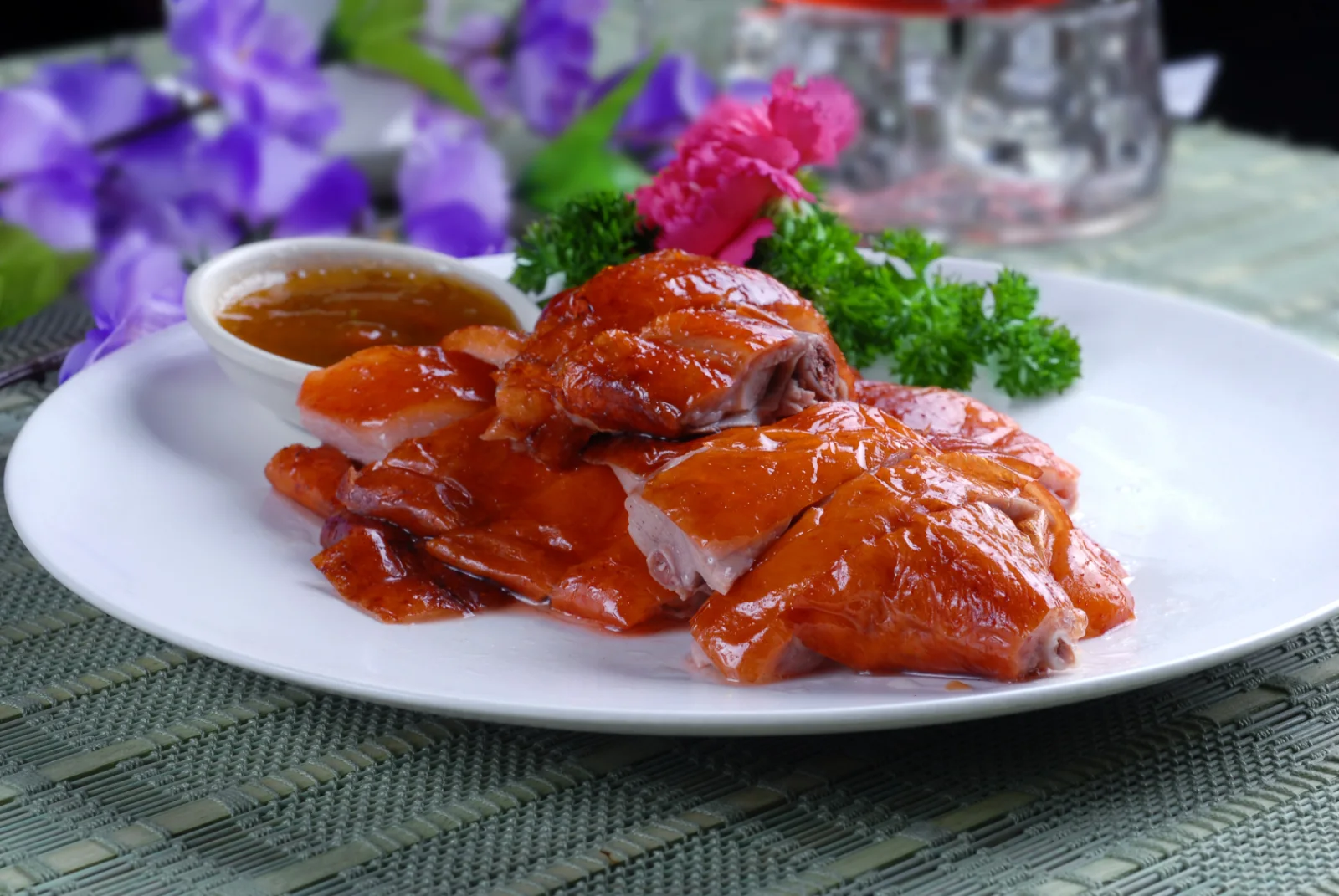
| Roast goose | 烧鹅 | Crisp skin, aromatic fat and juicy meat | Roast-meat lunch or shared dinner | Specialist ovens and efficient urban service |
| Char siu | 叉烧 | Sweet-savory pork with caramelized edges | Rice plate or shared meal | How roasting turns into everyday food |
| Wonton noodles | 云吞面 | Fine noodles, shrimp-rich wontons and clear broth | Breakfast or quick lunch | Focused specialization and texture control |
| Clay-pot rice | 煲仔饭 | Fragrant rice, savory toppings and crisp crust | Cool-weather dinner | Patience hidden inside a compact meal |
| Hong Kong-style milk tea | 港式奶茶 | Strong, smooth, tannic and creamy | Breakfast or afternoon tea | Localized cafe modernity |
| Pineapple bun | 菠萝包 | Soft bread with a sweet crackled top | Bakery snack or cafe break | A local name based on appearance, not filling |
| Egg tart | 蛋挞 | Tender custard and crisp pastry | Warm from a bakery or tea house | Port-city baking and Cantonese adaptation |
| Sampan congee | 艇仔粥 | Silky porridge with layered savory toppings | Breakfast or late snack | Waterway memory and inexpensive nourishment |
What makes Hong Kong food distinctive?
Hong Kong food grows from Cantonese foundations, especially the cooking of Guangzhou and the Pearl River Delta, but the city made those foundations intensely urban. British colonial rule, regional migration, refugee arrivals, manufacturing, global shipping, tourism and compact housing changed what people cooked, what ingredients circulated and how quickly a restaurant needed to serve.
The result is not simply “East meets West.” That phrase hides unequal history and makes local cooks sound passive. Hong Kong food is better understood as translation under pressure. Imported ingredients and dining formats were altered to fit Cantonese taste, working hours, limited space and the desire for affordable modernity.
Hong Kong food and Cantonese food are related, not identical
| Question | Hong Kong answer | Wider Cantonese context |
|---|---|---|
| Foundation | Cantonese techniques, ingredients and social customs | Extends across Guangzhou, the Pearl River Delta and global Cantonese communities |
| Distinctive institution | Cha chaan teng, local bakery and dense specialist shop | Tea houses, roast shops, seafood restaurants, home kitchens and banquet halls |
| Colonial influence | Strongly visible in tea, bread, dairy, cafe menus and service language | Present elsewhere, but not organized through the same urban history |
| Everyday rhythm | Fast breakfasts, compact lunch sets and long operating hours | Varies by city, household and restaurant type |
| Global extension | Closely connected to migration through Britain, Canada, Australia and Southeast Asia | Cantonese migration is broader and predates many modern Hong Kong patterns |
Use our full Cantonese food guide to understand the larger culinary family. Hong Kong belongs within that family without representing all of it.
Density is not a romantic explanation for every dish, but it helps explain formats. Specialist shops can concentrate equipment and labor that small homes may not hold. Roast-meat counters turn large ovens into rice plates and takeaway. Bakeries make breakfast portable. Cafes combine many familiar components into set meals, while noodle shops protect speed through narrow expertise.
The Guangzhou food guide owns a different search intent. It explains the regional center of Cantonese morning tea, markets, roast and family restaurant tables. This page explains Hong Kong's local institutions, colonial and migration history, high-density service formats and global diaspora. The cities should be compared through connection, not ranked as authentic original and derivative copy.
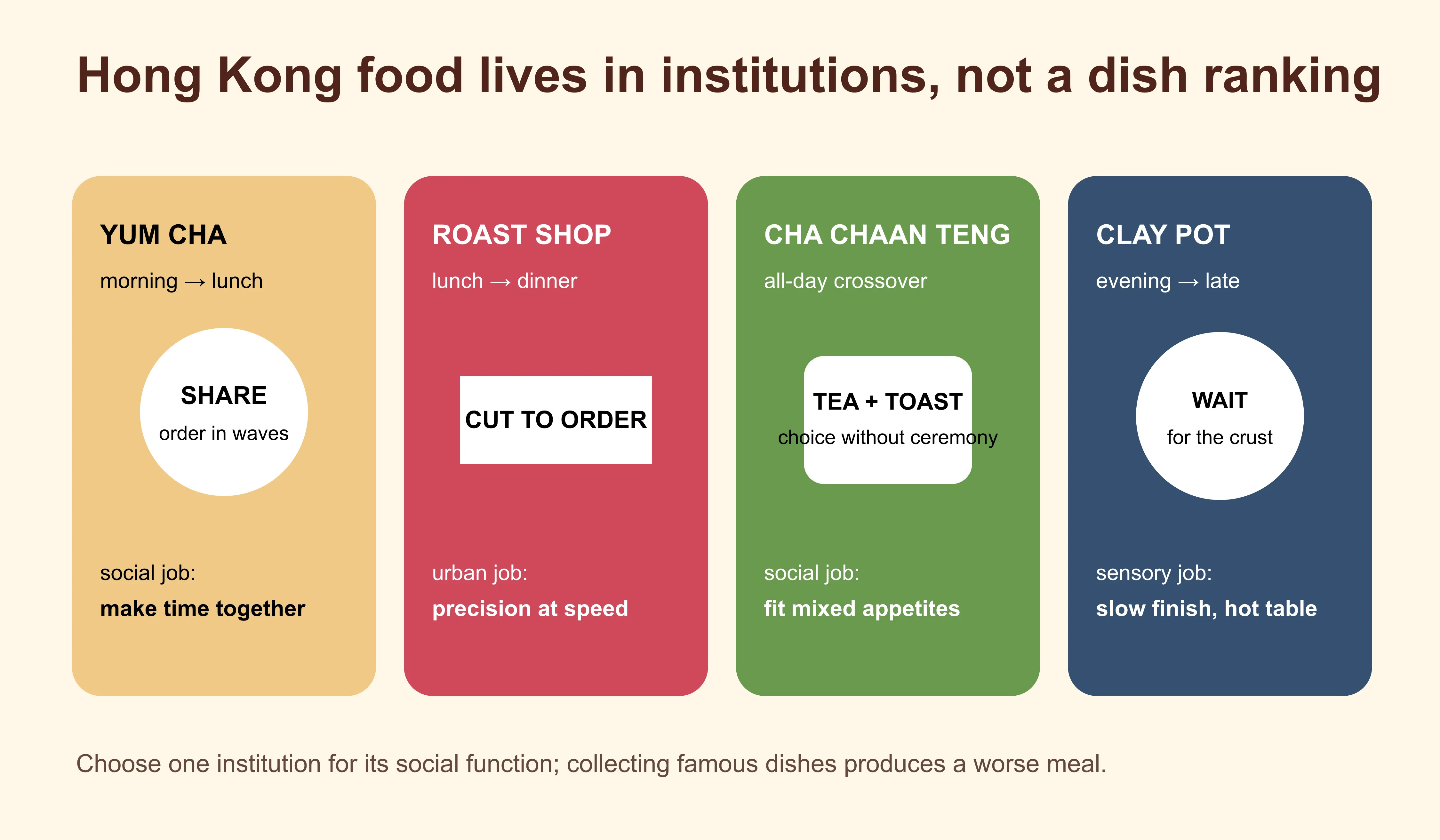
Yum cha gives conversation a structure
Yum cha means drinking tea, but it describes a social meal organized around tea and dim sum, the small steamed, baked, fried and braised dishes shared across the table.

Har gow is a compact test of judgment. The wrapper must be thin enough to reveal the shrimp, strong enough to lift and tender enough not to fight the filling. Siu mai, rice noodle rolls, steamed ribs, turnip cake and buns solve different technical problems.
Dim sum is therefore not a collection of cute dumplings. It includes meat, vegetables, congee, pastry and dishes whose strongest quality is steam rather than shape.
Build a better dim sum order
| Choose | Example | Why it belongs | Avoid |
|---|---|---|---|
| One translucent or thin-wrapper item | Har gow or rice noodle roll | Shows delicacy and wrapper control | Three nearly identical shrimp dishes |
| One savory steamed plate | Ribs, beef balls or chicken feet | Adds seasoning and a different structure | Treating dumplings as the whole cuisine |
| One starch or soft dish | Congee, turnip cake or bun | Changes pace and makes the meal complete | Ordering more bread after several buns |
| One vegetable | Seasonal greens or bean-curd sheet dish | Brings color and relief | A table composed entirely of beige and brown foods |
| One baked or sweet finish | Egg tart or custard bun | Ends with pastry while it is still warm | Saving it until the crust becomes soft |
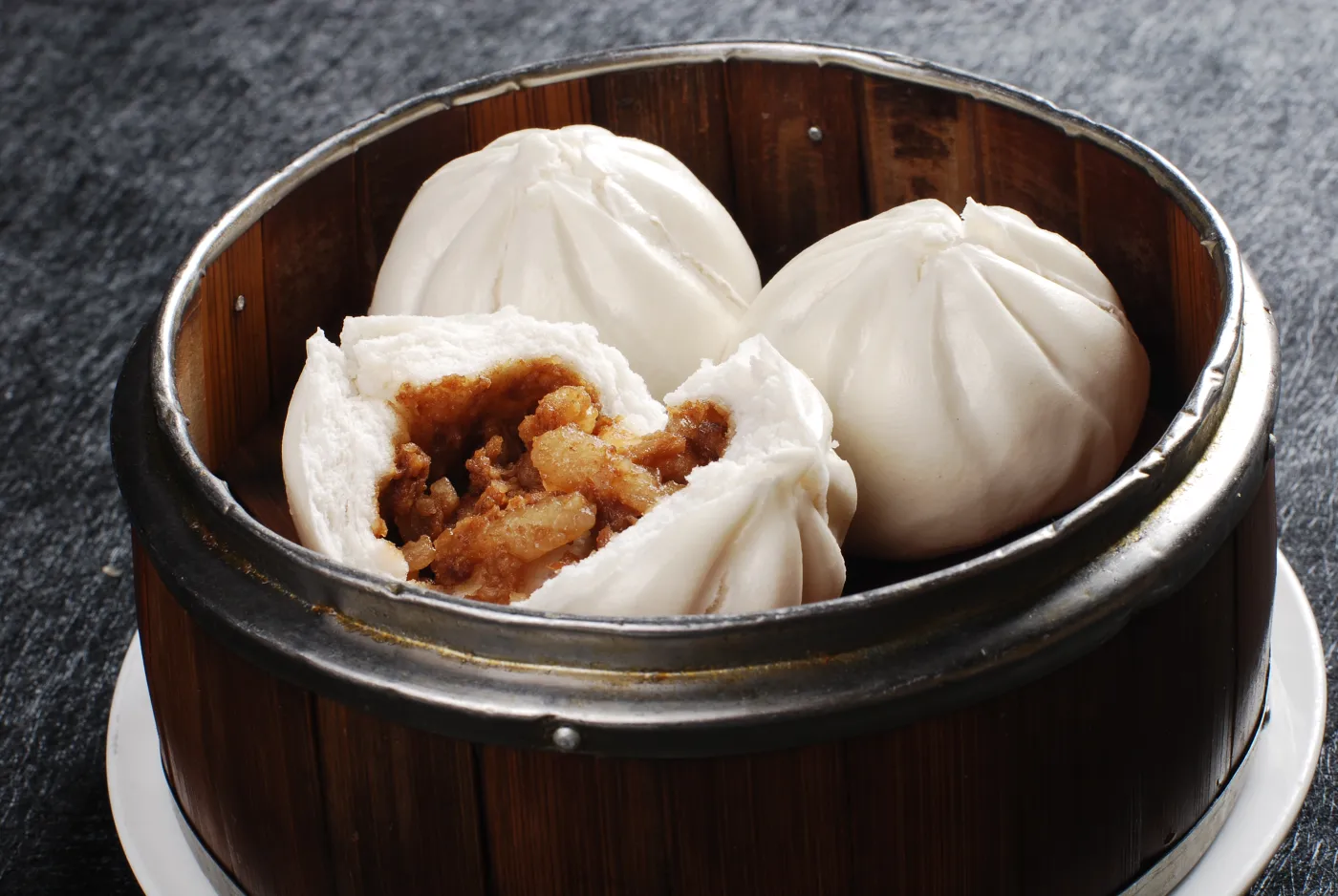
Char siu bao places a strongly seasoned roast filling inside soft steamed dough. The ratio matters: too much dough makes the bun heavy; too much sauce overwhelms the pork.
Order in waves when the restaurant system allows it. Steamed wrappers and fried surfaces deteriorate while a crowded table takes photographs. Start with three or four contrasting dishes, finish them warm and add another basket only if appetite remains. Yum cha is social because tea and small dishes create time, not because the table must hold every classic at once.
Tea choice matters less than attention at a first meal. Keep cups filled, turn the pot lid or follow the restaurant's refill custom and use serving chopsticks when provided. Service styles vary from carts to paper forms and digital ordering; no single system proves greater authenticity.
Roast-meat shops are small urban theaters
Hong Kong roast-meat counters display whole birds and strips of pork behind glass. The customer points, the cleaver falls and specialist oven work becomes a practical rice plate.
Roast goose seeks several contrasts at once: taut skin, rendered fat, moist meat and aromatic seasoning. Leg and breast do not eat the same way. Bone brings flavor but slows the diner; a rice plate asks the butcher to convert a whole roast into efficient pieces.
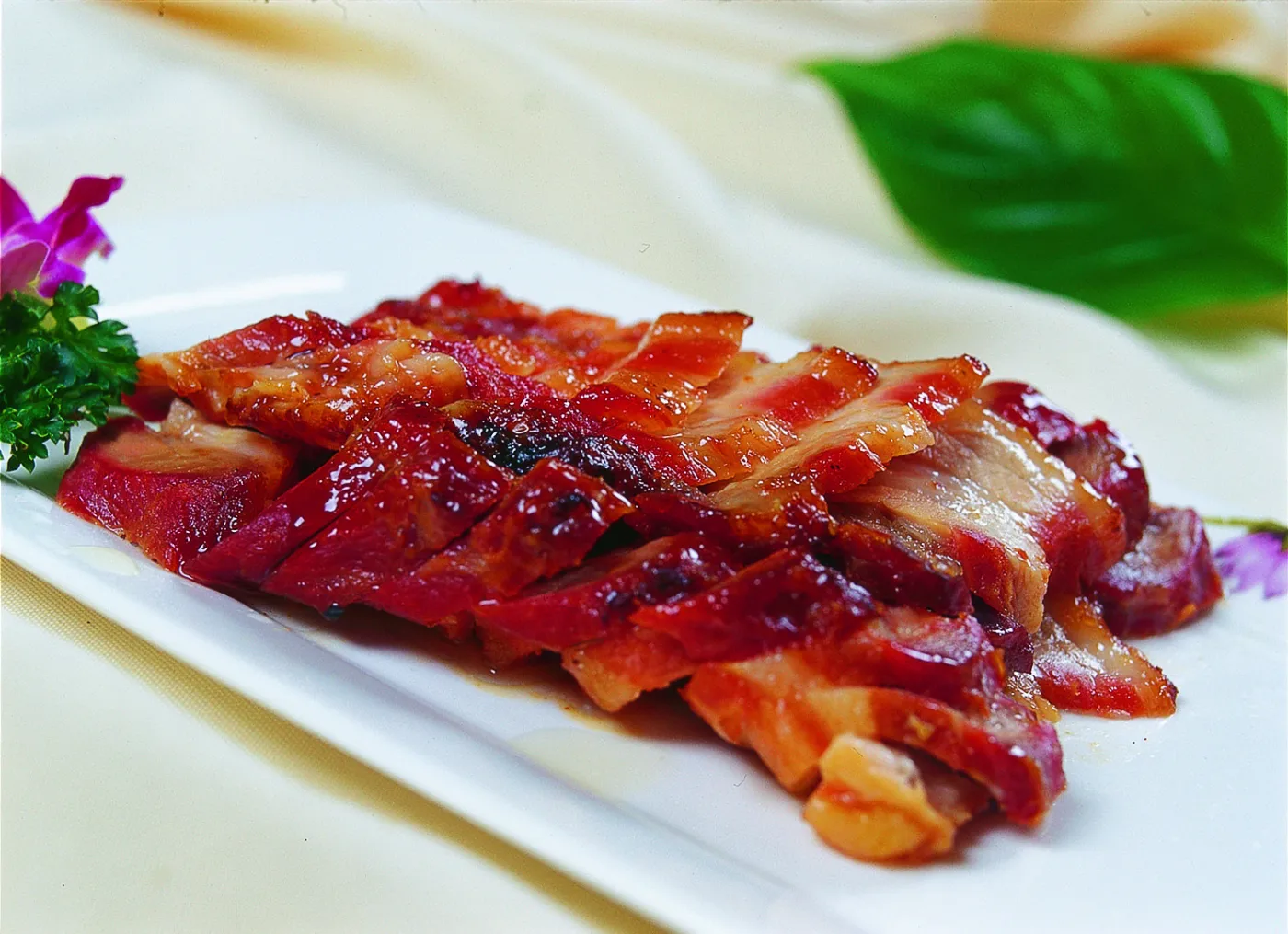
Good char siu is not merely red or sweet. The cut should retain moisture, the edges should show roasting and the glaze should support pork flavor. A dry center hidden beneath sauce signals imbalance.
Roast shops also serve soy chicken, roast pork and duck. Ordering two meats over rice is often more revealing than requesting an oversized sampler, because the rice catches juices and lets texture remain the center of attention.
The shop is a production system. Roasting, hanging, resting, chopping and holding must be coordinated so a quick lunch still tastes freshly cut. Ask for a preferred cut if language and queue allow, but do not turn a busy counter into a long customization exercise. A two-meat rice plate gives enough comparison between skin, fat, glaze and lean meat.
Roast goose and char siu also deserve separate judgment. Gloss is not crispness, and red color is not caramelization. Look for rendered fat beneath goose skin, moisture through the meat and charred edges that taste of heat rather than bitter coloring.
Cha chaan teng is Hong Kong modernity served quickly
The cha chaan teng (茶餐厅) is one of Hong Kong's most distinctive institutions. Its menu can include milk tea, toast, eggs, instant noodles, macaroni soup, pork chops, baked rice, sandwiches and sweet buns without feeling obliged to fit one culinary textbook.
These cafes emerged from local encounters with Western-style restaurant food and the demand for an affordable version of modern dining. Butter, milk, bread, canned foods and oven-baked dishes were not simply copied. They were reorganized through Cantonese preferences and Hong Kong working schedules.
The result is a local grammar. Breakfast sets group drink, egg, bread and noodles. Afternoon tea creates a lower-priced pause. Abbreviated orders and direct service keep tables moving. Efficiency can seem abrupt to newcomers, but it is often a practical response to rent, volume and limited seating.
This is also why old Hong Kong cafes carry more emotion than a deliberately aged “retro” interior. Cinema repeatedly used counters, booths, fans and tiled walls because they already compressed work, waiting, flirtation and loneliness into one public room. In Chungking Express, the food stand is not food decoration; it is the hinge that passes heartbreak from one story to the next. The Hong Kong culture guide follows that same compression through transport, housing, language and music.
My test is blunt: if the room photographs beautifully but no longer serves an ordinary urban need, nostalgia has won and the institution has weakened. Preservation must keep use, price and human rhythm in the conversation. A cafe is not alive because a movie fan recognizes a booth. It is alive because someone can still sit down, order efficiently and leave fed.
Read the menu by format rather than attempting to prove that every dish is traditionally Cantonese. Macaroni soup, toast, baked rice and milk tea are meaningful precisely because Hong Kong cooks reorganized imported products into local combinations. The cultural question is how the cafe made them ordinary.
First-time visitors should choose one set and one signature drink. Ordering toast, a pineapple bun, macaroni, instant noodles, baked rice and two drinks creates a museum display of carbohydrates. The better experience is to see whether tea arrives balanced, toast is fresh and the set functions at the speed and price point promised.
The separate travel to Hong Kong guide helps place that meal inside a realistic district route. Do not cross the harbour for a social-media queue while ignoring a busy local cafe beside you; fame measures attention, not whether the kitchen understands its neighborhood.
Milk tea is balance, not just strength
Hong Kong-style milk tea begins with a strong black-tea blend brewed and filtered to create body and smoothness, then combined with evaporated or condensed milk according to the shop's method. The cloth filter associated with the technique produced the English nickname “silk-stocking milk tea,” though the filter is not actually hosiery.

The pictured drink represents yuanyang, the Hong Kong cafe combination of coffee and milk tea. Versions vary, and not every elaborate presentation reflects the restrained glass or cup served in a traditional cafe.
Good milk tea has enough tannin to remain tea after dairy is added. Too weak and it becomes sweet milk; too harsh and it loses the smooth body that makes the drink persuasive.
Sugar preference should be stated when the shop allows it, but first understand whether sweetness comes premixed or is added at the table. Hot and iced versions also differ because ice dilutes and changes aroma. Yuanyang adds coffee, creating a separate balance rather than a stronger version of milk tea.
Noodles and congee specialize in clarity
Hong Kong wonton noodles rely on four distinct parts: fine resilient noodles, shrimp-forward wontons, clear broth and a portion small enough to eat before the noodles soften.
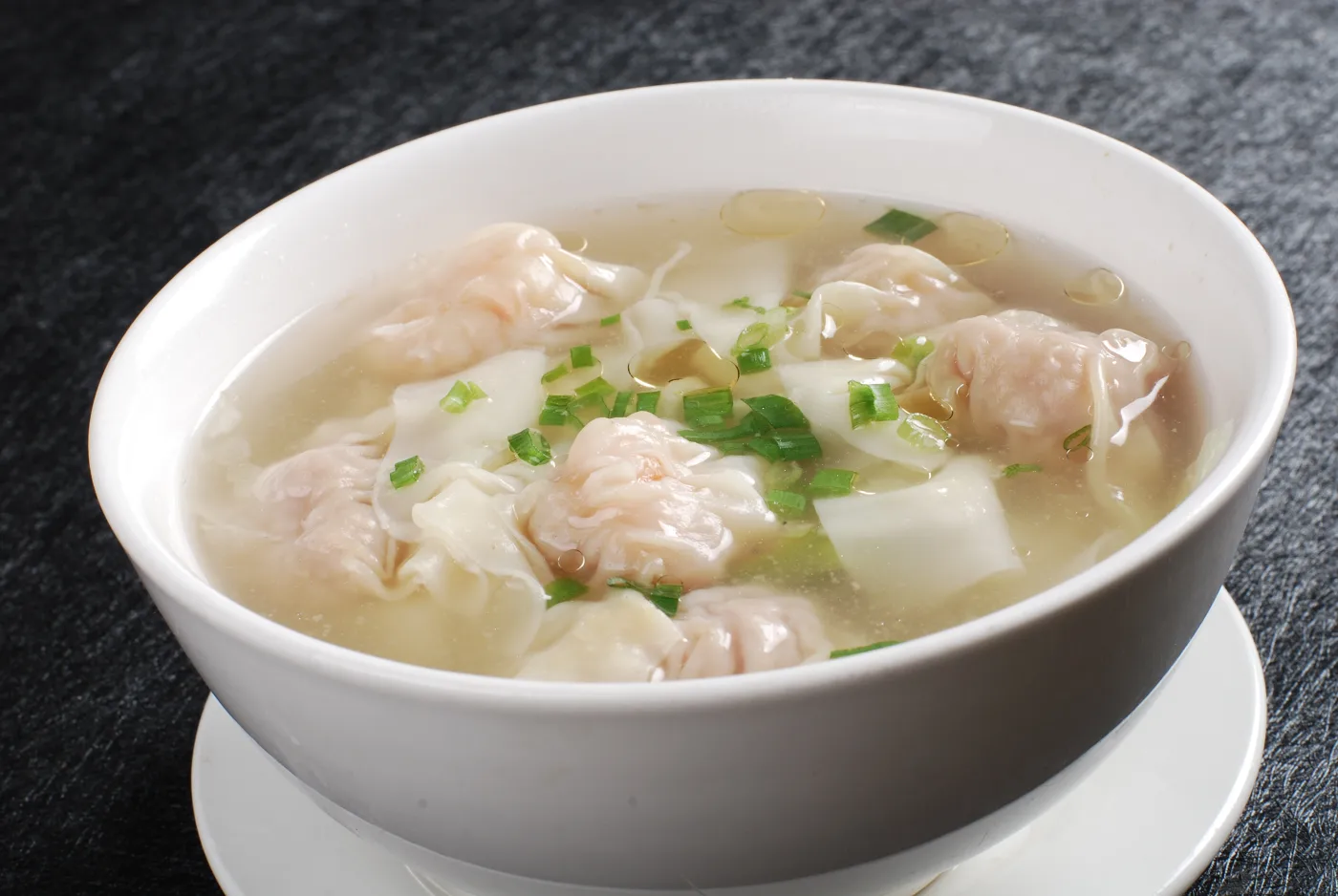
The bowl often looks modest because its difficulty is structural. Thick, soft noodles change the dish. A muddy broth hides the filling. An oversized wonton can become impressive but unbalanced.
Congee moves in the opposite textural direction. Rice is cooked until it loses individual boundaries and becomes a silky base for fish, meat, preserved egg, peanuts, fried dough or other toppings.
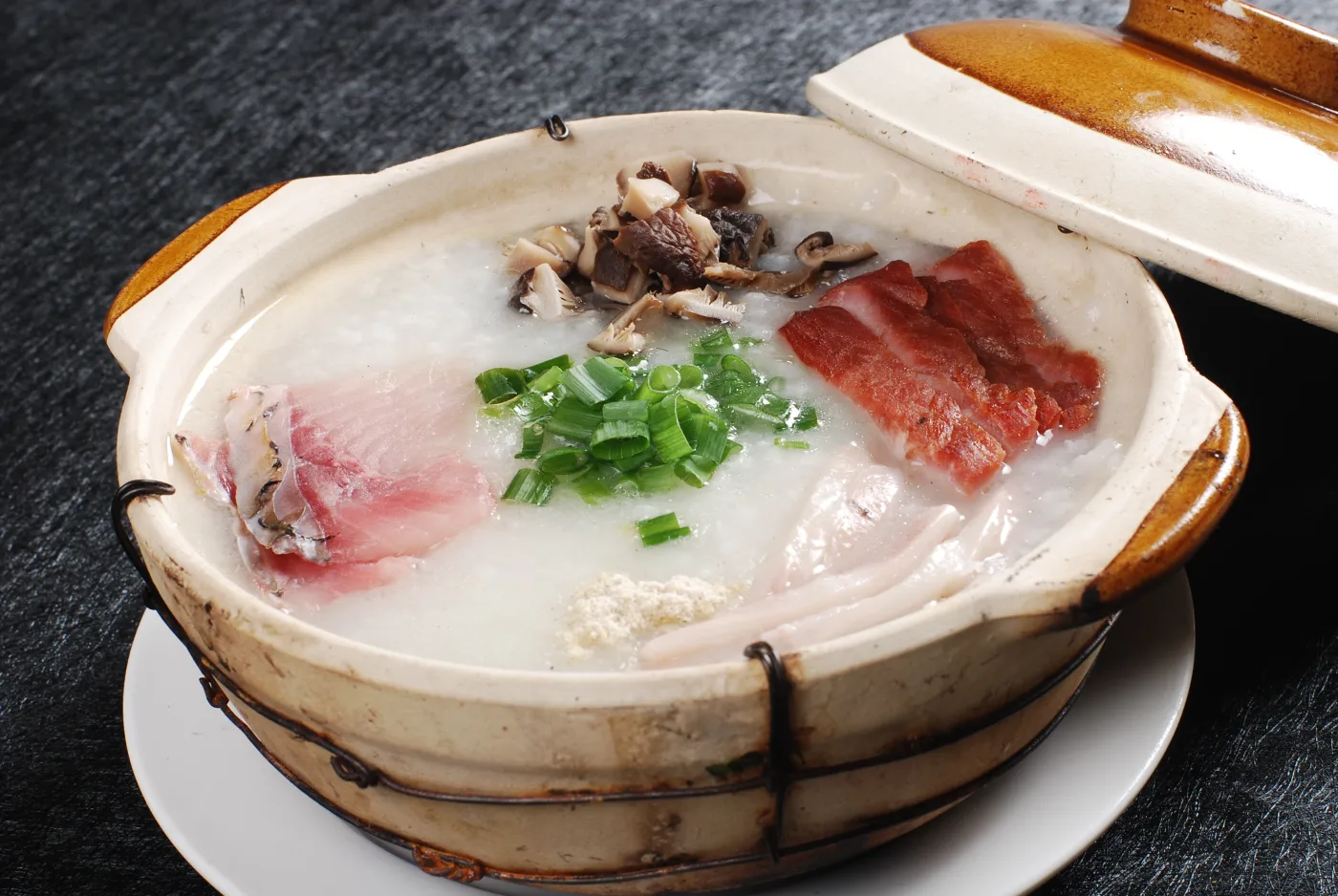
Sampan congee connects Hong Kong and Guangzhou to a wider Pearl River Delta waterway history. Exact toppings vary, but the pleasure lies in a smooth base interrupted by crisp, savory and fresh elements.
Noodle and congee shops reward narrow comparison. A first meal needs either wonton noodles or congee, not both plus a roast plate and bakery stop. Return for the other format. Fine noodles soften quickly, while congee depends on toppings being added at the correct moment; both lose clarity when treated as side dishes to an oversized crawl.
From clay-pot rice to markets, compact formats hold the city together
Clay-pot rice makes the bottom essential
Clay-pot rice cooks grain directly against the vessel so the lower layer develops a toasted crust. Cured sausage, chicken, ribs, eel or other toppings season the rice as it cooks.

The crust is not accidental burning. It should be fragrant and crisp without tasting scorched. Seasoned soy is added carefully, then the pot is mixed so soft grains, toppings and crust appear in the same serving.
The dish is especially satisfying in cooler weather, but its deeper lesson is year-round: one compact vessel can hold several textures if the cook controls time.
Clay-pot rice requires waiting in a city famous for speed. Ask the expected cooking time, then let the pot arrive properly rather than choosing a pre-cooked shortcut only because the schedule is crowded. Mix enough to distribute sauce and toppings, but preserve sections of crust so its texture remains distinct.
Bakeries make pleasure portable

Hong Kong bakeries translated bread and pastry into foods suited to commuting, school breaks and afternoon tea. Pineapple buns contain no pineapple in the standard form; the name refers to the crackled top. Cocktail buns, wife cakes, paper-wrapped sponge cakes and other items carry different histories and fillings.

Egg tarts exist in different pastry styles. Some shells are flaky, others more crumbly and short. The custard should remain tender rather than rubbery, and the best time to eat one is usually before the pastry cools and absorbs moisture.
Macau's Portuguese-influenced egg tarts form a related but distinct tradition, commonly recognized by laminated pastry and a caramelized surface. Similar appearance does not erase the different routes by which these pastries developed.
Bakery timing is unforgiving. Buy one item and eat it while the crust or bread is still in the state the baker intended. A large souvenir bag may photograph well, but butter, lard, custard and humidity keep changing after purchase. Ask about fillings and fats if dietary restrictions matter.
Street food survives through change
Curry fish balls, egg waffles, stuffed vegetables and skewers belong to Hong Kong's street-food memory. Open-air dai pai dong stalls remain powerful cultural symbols, although regulation, redevelopment, hygiene rules and rent have changed their number and operation.
Street food should not be judged only by how closely it resembles an old photograph. A snack may move indoors and remain meaningful. What matters is who continues making it, how the technique changes and whether ordinary people can still afford the spaces where it is sold.
Night markets are context, not a guarantee that every stall is historic or locally specialized. Observe turnover, hygiene and what residents buy. One fresh egg waffle or fish-ball portion is more useful than a checklist of cooling snacks carried from stall to stall.
Seafood connects market choice to restaurant technique
Hong Kong's coastal and port history supports a strong seafood culture. Restaurants may display live fish and shellfish, while markets connect household cooks to regional supply chains.
Before ordering a whole fish or crab, confirm species, weight, preparation and price. “Market price” is not an invitation to remain vague. Steaming can reveal ingredient quality, but freshness language should not prevent questions about sourcing and sustainability.
How to order a balanced Hong Kong meal
| Situation | A balanced order | What to avoid |
|---|---|---|
| Solo breakfast | Milk tea, eggs and toast, congee or one noodle bowl | Ordering a full cafe set plus several bakery items before understanding portions |
| Two people at yum cha | Three or four contrasting dishes and tea | Multiple baskets with the same shrimp filling |
| Roast-meat lunch | One or two meats over rice, plus greens if available | Covering everything with extra sauce before tasting |
| Two people at dinner | Roast or poultry, steamed seafood or tofu, vegetables and rice | Ordering a banquet-sized fish without asking its weight |
| Cool-weather meal | Clay-pot rice or noodles, one vegetable and a small side | Treating the crisp rice crust as burnt waste |
| Bakery stop | One bun or tart eaten warm, then decide whether to add another | Buying a large checklist that will be stale before it is eaten |
| Restaurant format | Best use | What to verify |
|---|---|---|
| Cha chaan teng | Breakfast, lunch set or afternoon tea | Set composition, drink sweetness and peak-hour pace |
| Roast-meat shop | Focused rice lunch | Cut, turnover and whether greens are available |
| Noodle or congee specialist | Solo breakfast or late meal | Specialty, broth and serving speed |
| Dim sum restaurant | Shared morning or lunch | Ordering system, portion size and tea charge |
| Clay-pot specialist | Cool-weather dinner | Cooking wait and whether pots are made to order |
| Seafood restaurant | Group dinner | Species, weight, market price and preparation before cooking |
A realistic two-day route uses repetition instead of constant grazing. On day one, eat a cha chaan teng breakfast, a roast-meat rice lunch and one shared Cantonese dinner. On day two, choose yum cha as the main morning meal, then wonton noodles or congee later and clay-pot rice or seafood for dinner. Place one bakery item and one street-food stop between those anchors only when appetite returns.
Dietary restrictions require specific questions. Clear noodle broth may contain pork, dried seafood or shellfish. Vegetable dim sum can use lard, oyster sauce or meat stock. Bakeries may use butter, lard, egg and milk, while roast and seafood kitchens have substantial cross-contact. A written Traditional Chinese explanation is more reliable than the general word “vegetarian.”
How to recognize thoughtful Hong Kong cooking
- Roast-meat skin should retain texture while the meat remains moist.
- Char siu should taste of pork and fire, not only sugar and coloring.
- Wonton noodles should remain resilient in a clear broth.
- Dim sum wrappers should suit their fillings rather than becoming uniformly thick.
- Milk tea should remain recognizably tea after milk is added.
- Clay-pot rice should have a fragrant crust without bitter scorching.
- Egg-tart custard should be tender and the shell still crisp.
- Cafe food should arrive efficiently without feeling as though every component was held too long.
Hong Kong food abroad is a migration record
Hong Kong migrants carried roast-meat shops, dim sum halls, bakeries and cha chaan teng habits to Britain, Canada, Australia, the United States and elsewhere. Local flour, dairy, meat, labor and regulation changed the results. Later generations also translated the foods for new customers and new ideas of Hong Kong identity.
A bakery bun in Toronto or a milk-tea shop in London is not meaningful only when it reproduces one remembered shop exactly. It belongs to a continuing network. The better question is whether the adaptation understands the central structure of the food and the community whose memory it carries.
The city keeps memory in motion
What most Hong Kong food guides get wrong
They present the city as an endless snack crawl: one dim sum basket, one roast shop, one milk tea, one egg tart and one night market after another. That removes meal structure, specialist labor, migration, density, price pressure and the social difference between a fast cafe set and a long yum-cha table.
Hong Kong food rarely waits for grand ceremony. It survives through repetition: the same breakfast booth, the same tea order, the same roast-meat specialist trusted to cut dinner correctly. These habits appear ordinary because people worked hard to make them repeatable.
That is the city's culinary achievement. It places demanding technique inside a fast day, then sends the diner back into the street with enough time to catch the next train.
East Moment recommends one serious yum-cha meal, one cha chaan teng breakfast, one roast-meat lunch and one specialist noodle or clay-pot dinner. Use Guangzhou to understand the broader Cantonese regional center; use Hong Kong to understand how that inheritance was rebuilt through cafes, bakeries, migration and dense urban service.
Frequently asked questions about Hong Kong food
What food is Hong Kong famous for?
Hong Kong is famous for dim sum, roast goose, char siu, wonton noodles, congee, clay-pot rice, seafood, egg tarts, milk tea and cha chaan teng dishes such as pineapple buns, toast, macaroni soup and baked rice.
Is Hong Kong food the same as Cantonese food?
Hong Kong food is deeply Cantonese but not identical to all Cantonese cuisine. Colonial history, migration, port trade, manufacturing and dense restaurant culture produced distinctive cafes, bakeries, hybrid dishes and service formats.
What is a cha chaan teng?
A cha chaan teng is a Hong Kong-style cafe known for fast service and an eclectic menu that may include milk tea, toast, eggs, noodles, rice plates, baked dishes and localized Western-influenced foods.
What is Hong Kong-style milk tea?
Hong Kong-style milk tea is made from a strong blend of black teas filtered for smoothness and combined with evaporated or condensed milk according to the shop's method. Its character depends on tea strength, aroma, body and the balance of dairy and sweetness.
Is eating in Hong Kong always expensive?
No. Hong Kong has luxury seafood and banquet dining, but much of its identity comes from bakeries, noodle shops, roast-meat counters, cafes and small specialists. Accommodation may be costly, while focused local meals can still offer good value.