Hong Kong (香港) is often introduced through compression: towers against mountains, ferries crossing a narrow harbour, people moving rapidly through spaces that seem too small to hold them. This Chinese culture guide starts there but refuses to stop there. Follow a tram east, climb above the skyline or walk beyond the last housing estate, and Hong Kong opens into water, forest, villages and long views.
Hong Kong culture guide at a glance
| Question | Short answer |
|---|---|
| Why visit? | For a rare combination of Cantonese urban culture, harbour geography, design, food and accessible mountain landscapes |
| Ideal first stay | Five days for the harbour, neighborhoods, museums, food and one outdoor day |
| Best first base | Tsim Sha Tsui for the harbour; Sheung Wan for layered streets; Wan Chai for transport; Jordan for Kowloon life |
| Essential experiences | Harbour crossing, Peak view, tram ride, Kowloon walk, M+ or another museum, local food and a trail or island |
| Best travel style | Use public transport, group plans by side of the harbour and leave room for weather |
| What makes it different? | Extreme urban density exists beside protected hills, coastlines and islands rather than replacing them |
Choose the Hong Kong you want to meet
| If you care most about | Build your days around | Add this contrast |
|---|---|---|
| Architecture and urbanism | Central, Wan Chai, public housing landscapes and Quarry Bay | Take a ferry or trail to understand the geography beneath the density |
| Art and design | M+, Hong Kong Palace Museum, Tai Kwun and smaller galleries | Add a market street or tram journey so culture is not confined to institutions |
| Food | Yum cha, roast meats, noodle shops, bakeries and cha chaan teng | Visit a wet market and one neighborhood outside the main visitor corridor |
| Cinema and photography | Neon memory, stair streets, ferries, housing courts and Kowloon at night | Photograph with restraint; homes and workers are not film sets |
| Nature | Dragon's Back, Lantau, Sai Kung, country parks or outer islands | Return by public transport after dark to feel how close city and landscape remain |
Hong Kong is not one island, one skyline or one cultural mixture. It includes Hong Kong Island, Kowloon, the New Territories and many islands. Its contemporary character grows from Cantonese foundations, regional Chinese migration, maritime trade, British colonial rule, refugee and labor movements, global capital and continual negotiation over land and belonging.
The phrase “East meets West” is too tidy for this history. I reject it when it turns conquest, migration, labor and local invention into a cheerful branding slogan. Cultures did not meet on equal terms, and local people did more than combine ready-made ingredients. They translated institutions, technologies, tastes and forms into something specific to Hong Kong.
Victoria Harbour is transport before spectacle
The Hong Kong government overview establishes the territory's official geographic and institutional frame. It cannot explain how the harbour feels socially; for that, watch who crosses it, why and at what hour.
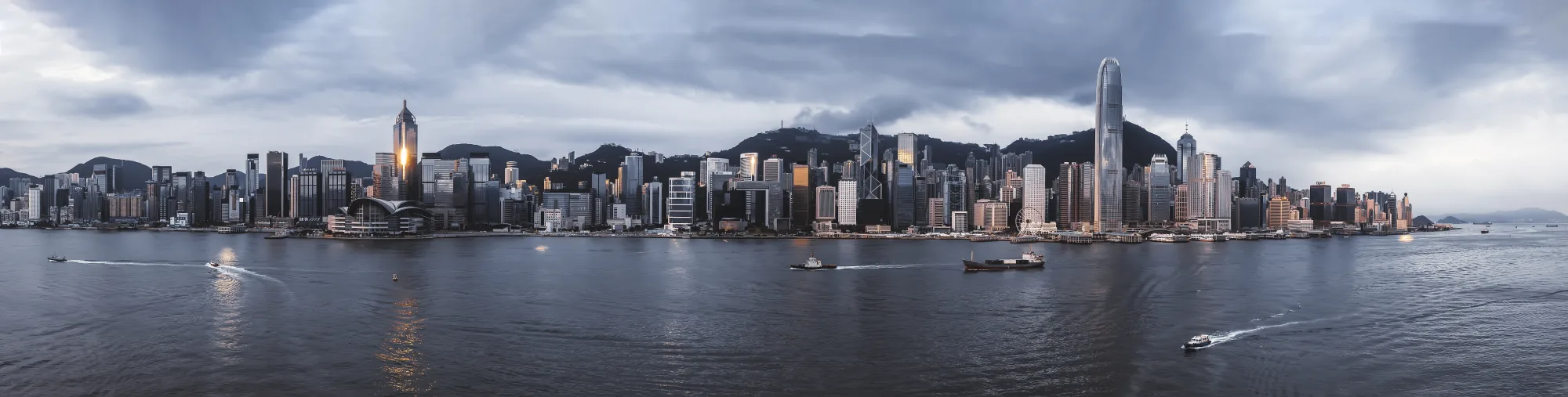
Victoria Harbour gives Hong Kong its most famous image, but the water is not an empty mirror for towers. It supported shipping, military strategy, industry, migration and cross-harbour movement before waterfront promenades turned sections of it into civic space.
Cross the harbour at water level. A ferry makes the skyline change relation: towers separate, hills reappear and working vessels interrupt the postcard. I believe the ferry is the best first lesson in Hong Kong because it returns motion and working water to a skyline that photographs freeze. Then walk one bank and look back. Hong Kong's identity is created by repeated crossings, not simply by possession of a view.
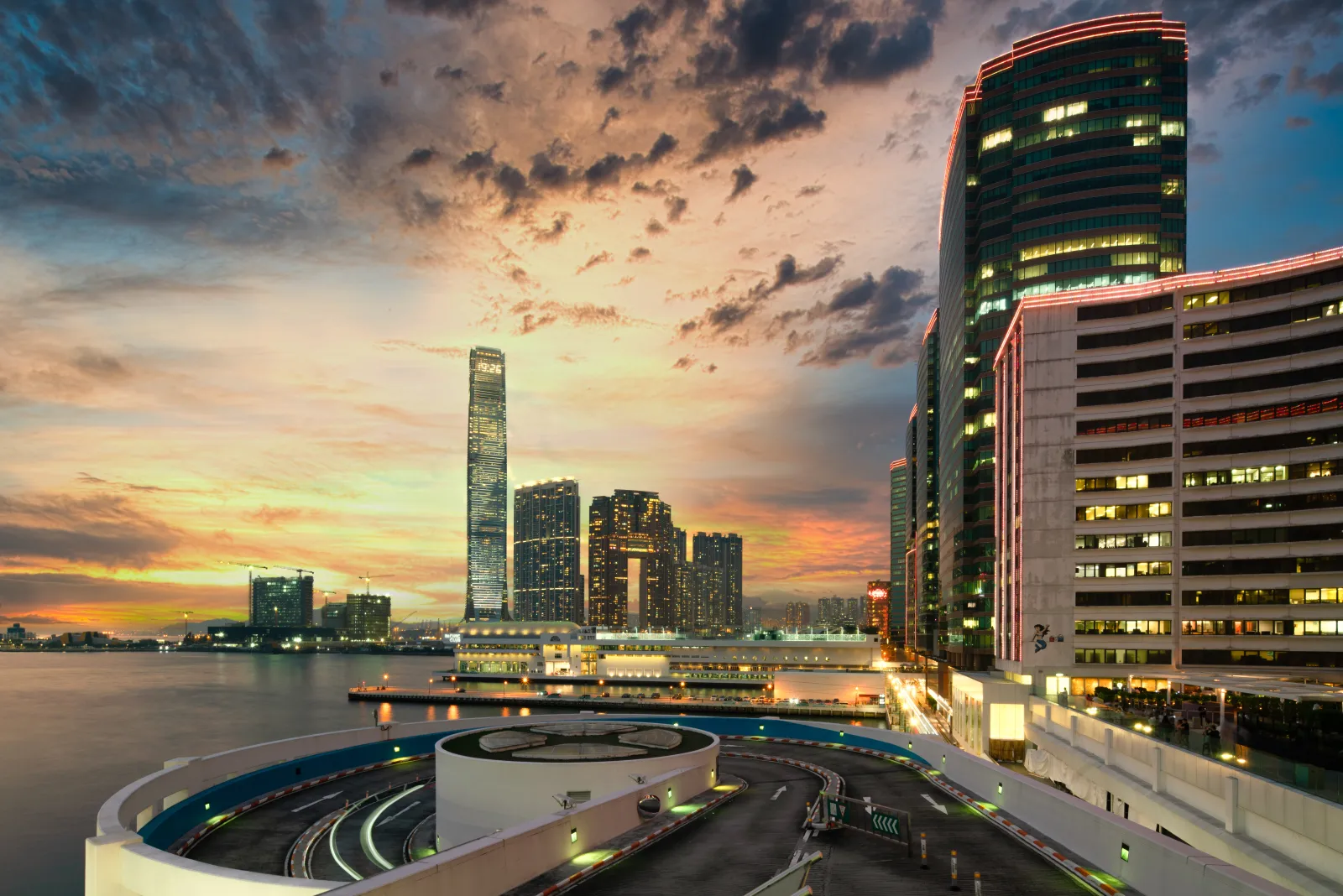
Reclamation has altered the shoreline over generations. Much of the city now meets the harbour through engineered land, roads, cultural buildings and promenades. The waterfront is both a natural advantage and a heavily redesigned urban edge.
The Peak shows how terrain governs the city
From Victoria Peak, roads, towers and harbour seem to form a complete system. The view is powerful because it makes density legible, but it can also flatten human differences into an elegant pattern.
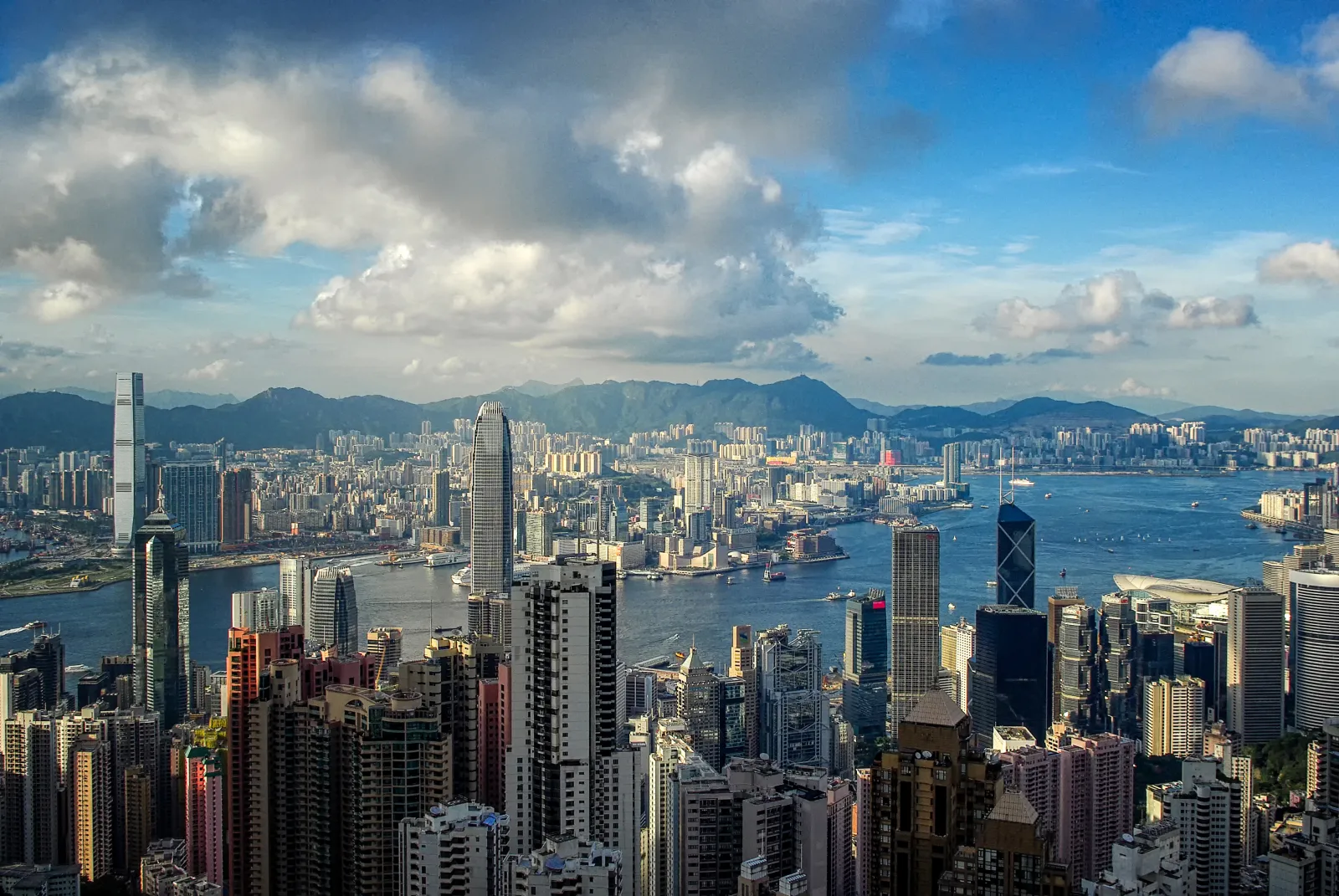
Look beyond the financial district. Housing districts extend along shorelines and valleys. Mountains interrupt the grid. The harbour narrows and widens. Hong Kong is not dense everywhere; it concentrates building where terrain and planning allow, leaving steep land and country parks unexpectedly close.
Visit in daylight before chasing the night view. Daylight explains geography. Darkness explains image.
Colonial history remains visible in streets and institutions
Hong Kong Island became a British colony after the First Opium War and the Treaty of Nanking in 1842. Kowloon south of Boundary Street followed in 1860, while the New Territories were leased in 1898. British colonial rule ended in 1997, when sovereignty returned to China and Hong Kong became a Special Administrative Region governed under the Basic Law and the “one country, two systems” framework.
Those dates are important, but buildings alone do not explain the period. Colonial Hong Kong included unequal power, racial and class hierarchies, Chinese entrepreneurship, labor organizing, war, refugee arrivals and changing relationships with mainland China. Its institutions were imposed, inhabited, contested and localized.
In Central and Sheung Wan, courts, churches, markets, temples, banks and tong lau shophouses sit within walking distance. Read them together. A heritage building restored as a cultural venue may preserve architecture while changing who can afford the surrounding district.
A tram ride makes the island readable
Hong Kong Tramways has operated on Hong Kong Island since 1904. The double-decker tram is slow compared with the MTR, which is exactly why it is useful to a visitor.
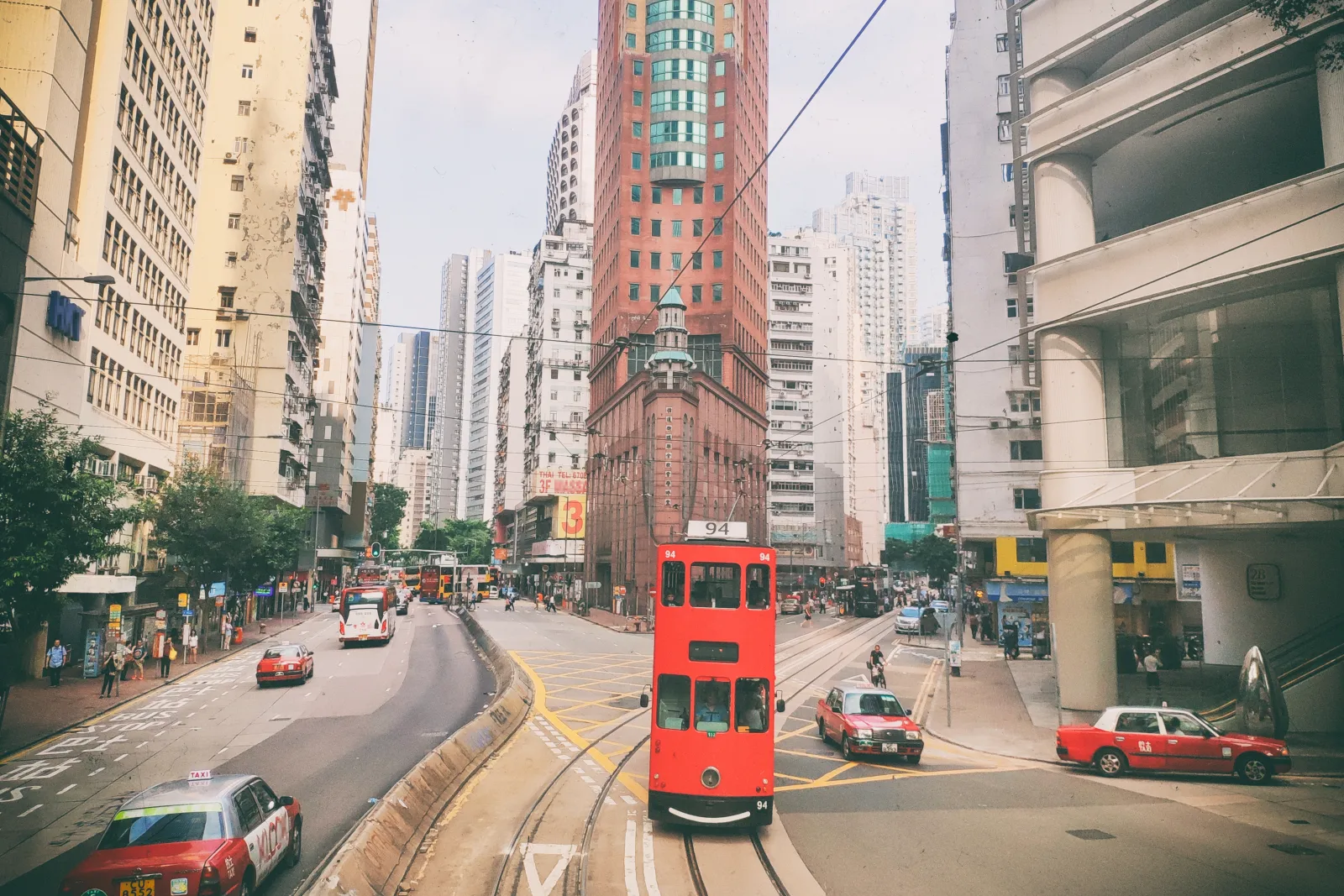
From the upper deck, commercial districts stop being isolated names. Kennedy Town, Sheung Wan, Central, Wan Chai, Causeway Bay and the eastern districts become one changing corridor of slopes, towers, older blocks, street markets and flyovers.
The tram is not a preserved attraction detached from daily life. It remains public transport. Avoid blocking stairs or the front window for a photograph when others are commuting.
Kowloon keeps the city close to the body
Across the harbour, Kowloon often feels more continuous at street level. Tsim Sha Tsui faces the skyline, but Jordan, Yau Ma Tei, Mong Kok and Sham Shui Po reveal a denser mixture of housing, repair shops, markets, schools, restaurants and small businesses.
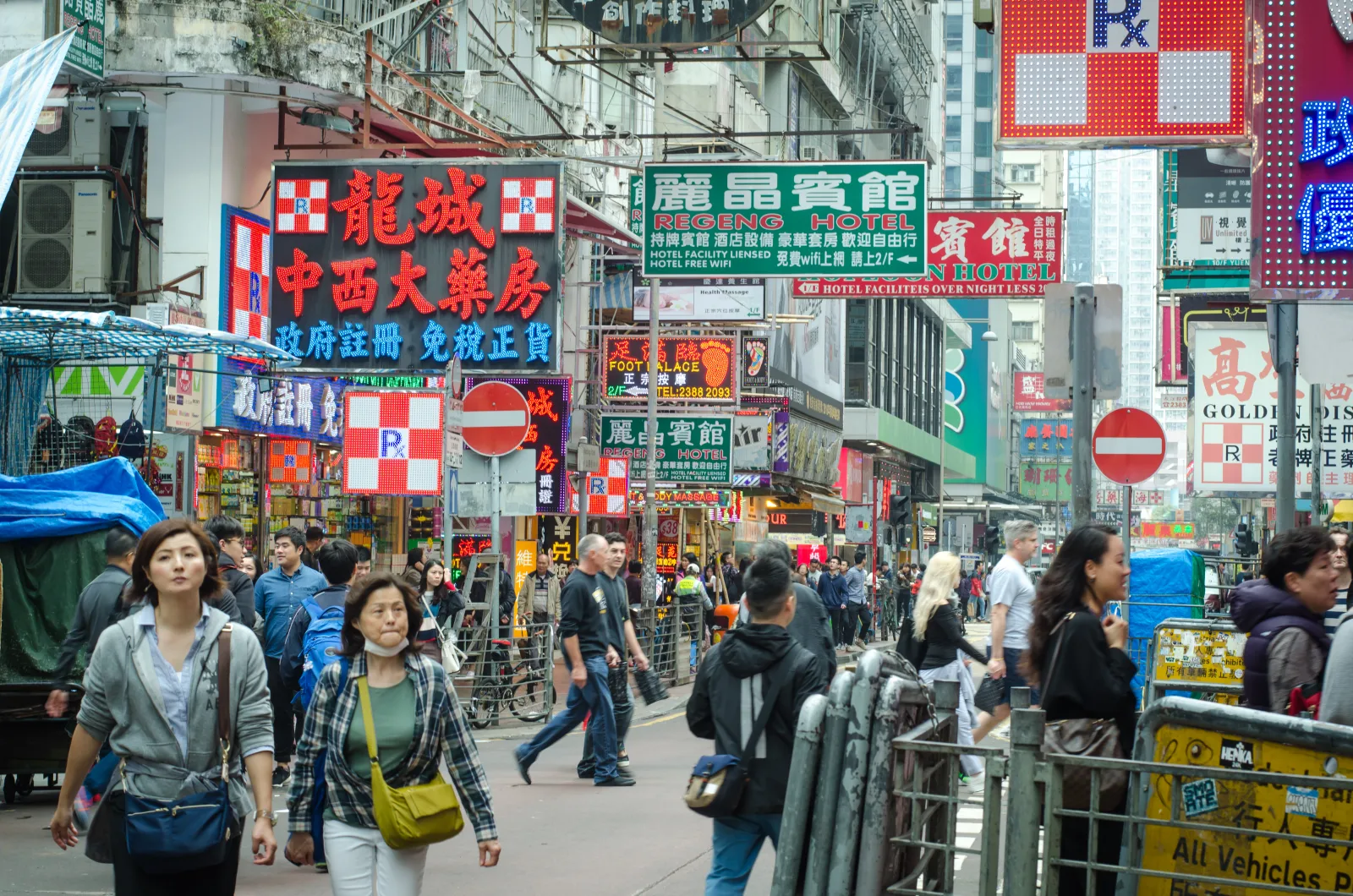
The visual intensity is real, but “chaos” is a lazy description. The mistake is confusing a system you have not learned with a system that does not exist. Deliveries, pedestrian flows, minibuses, market hours and tiny shopfronts follow learned systems. Spend time watching before deciding the street is disordered.
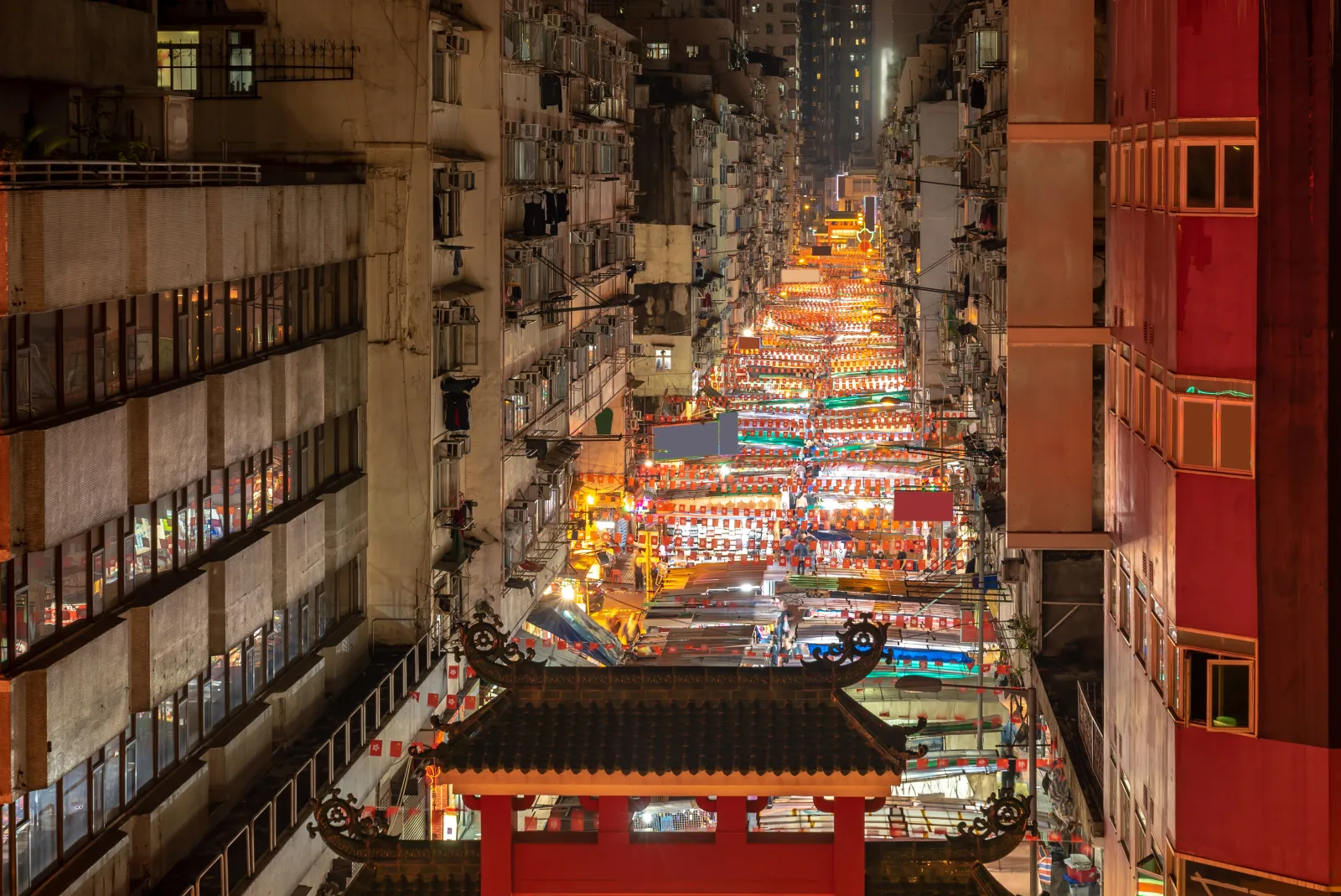
At night, Temple Street and surrounding blocks combine food, retail, fortune-telling traditions, performance memory and tourism. The market changes with regulation, redevelopment and visitor demand; it is not a frozen scene from a 1980s film.
Housing density is architecture and social pressure
Hong Kong's residential architecture is inseparable from land, planning, migration and inequality. Tall blocks can provide transport access, services and extraordinary urban efficiency. They can also contain small homes, high costs, long waiting lists and sharp differences in living conditions.
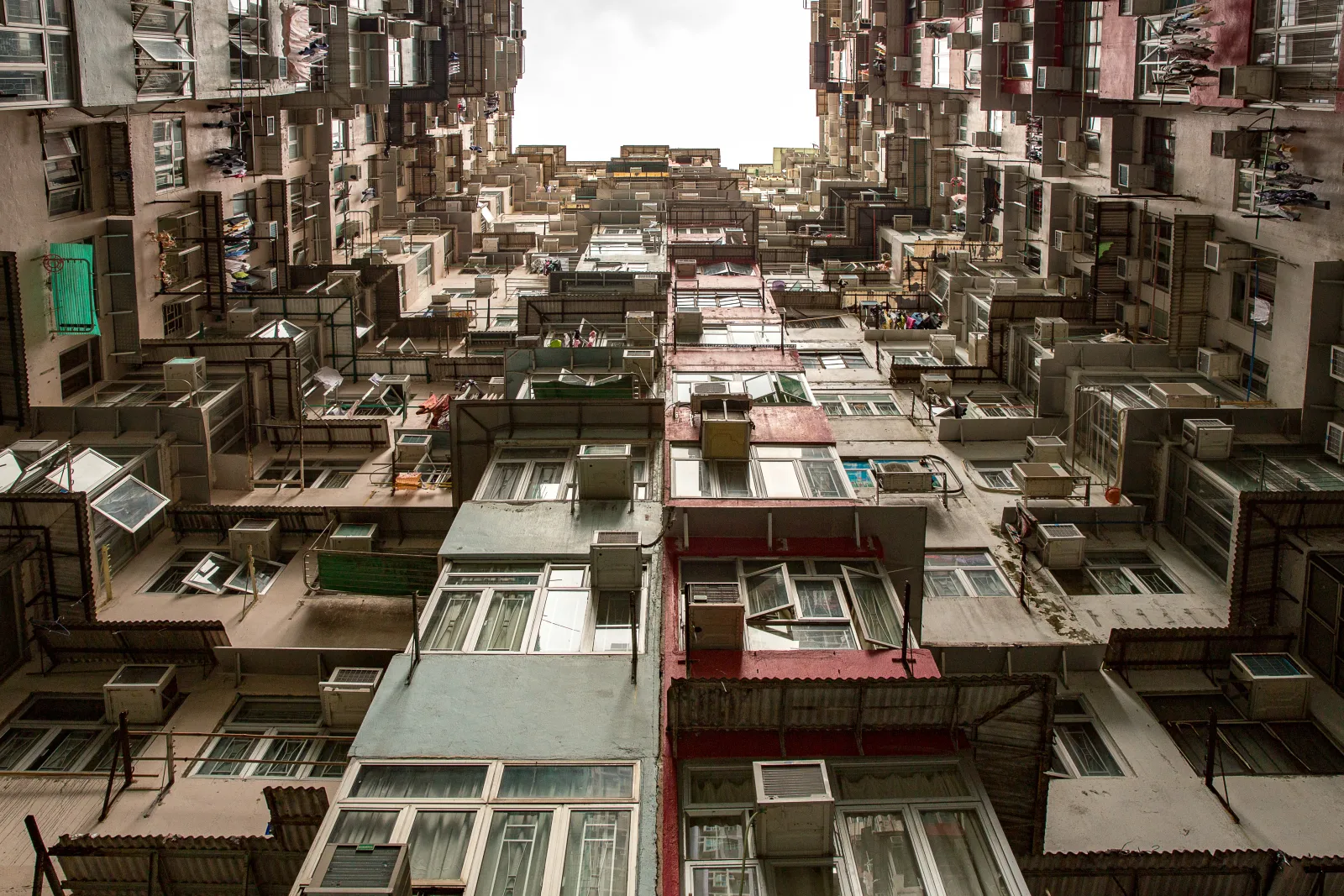
Do not turn housing estates or private residential courtyards into “cyberpunk” scenery. The famous compressed view in Quarry Bay is visually compelling because thousands of domestic lives produce the facade. That fact creates an obligation to photograph respectfully.
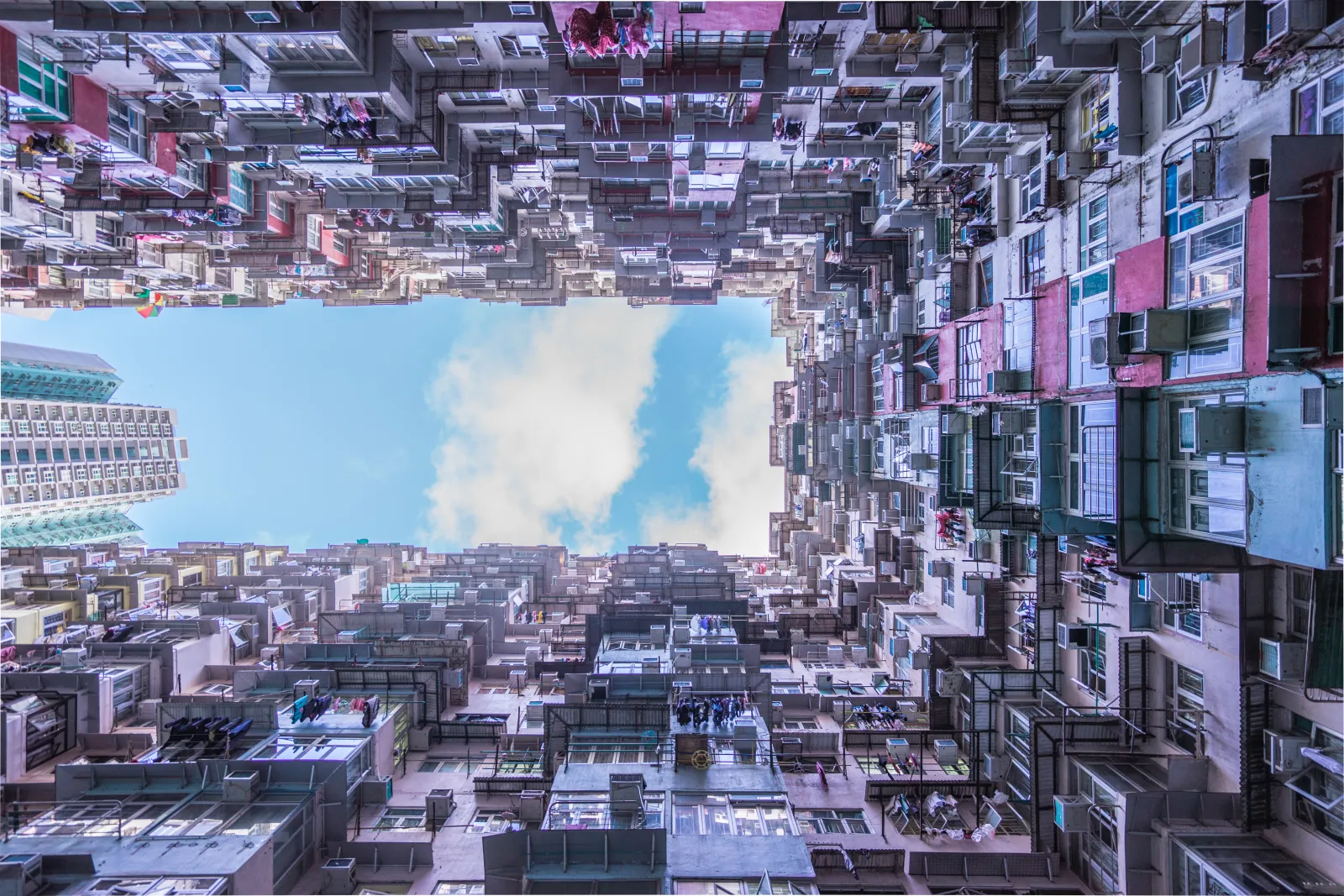
Density has also generated design intelligence: compact storage, covered walkways, mixed-use podiums, elevated connections, transit-oriented development and public facilities integrated into large complexes. Hong Kong is a global reference for vertical urbanism because it demonstrates both the power and the costs of building upward.
Cantonese language gives Hong Kong its public voice
Cantonese is the dominant spoken Chinese variety in much of Hong Kong's everyday life and popular culture. Chinese and English are official languages, while traditional Chinese characters are standard in most public writing. Mandarin is also widely heard through education, tourism, migration and business.
Hong Kong Cantonese carries distinctive slang, borrowed words, rhythms and cultural references. Subtitles, advertising, comedy, music and film helped circulate it far beyond the city. Language links Hong Kong to Guangdong and the global Cantonese diaspora while preserving a strongly local public voice.
Do not treat English fluency as universal, or Cantonese as a performance test for visitors. Address and destination names saved in traditional Chinese are often more useful than uncertain pronunciation.
Film, music and design made a city larger than its territory
Hong Kong cinema turned stairways, housing blocks, restaurants, neon signs, police stations and harbour crossings into globally recognizable visual language. Cantopop created another network of memory, carrying local speech and emotion across Chinese-speaking communities.
That musical inheritance is not one preserved decade. Teresa Teng made distance feel private across Mandarin, Cantonese and Japanese recordings that circulated through Hong Kong's media world. The Eason Chan guide follows a Cantonese voice that can make fatigue, embarrassment and ordinary adult failure sound more truthful than polish. The Jackson Wang profile shows a different export system: choreography, English-language solo work and TEAM WANG turn Hong Kong identity into a self-directed global performance rather than a Cantopop memory exercise. Put them beside each other and the city stops sounding like a museum playlist.
The danger for visitors is arriving inside the film rather than the city. Famous locations still hold ordinary work and domestic life. A respectful cultural itinerary pairs cinema memory with institutions, archives and contemporary production rather than collecting backdrops alone.
The M+ museum in the West Kowloon Cultural District provides a major platform for visual culture, design, architecture and moving image. I love that its subject is not limited to objects inside vitrines: film, graphic design, buildings and moving images show how Hong Kong learned to make pressure visible. Nearby cultural institutions have changed the western Kowloon waterfront from infrastructure and reclaimed land into a new museum district.
Tai Kwun, PMQ, independent galleries and performance spaces show other models of reuse and cultural production. Each also raises questions about preservation, public access and commercial redevelopment.
Food turns adaptation into routine
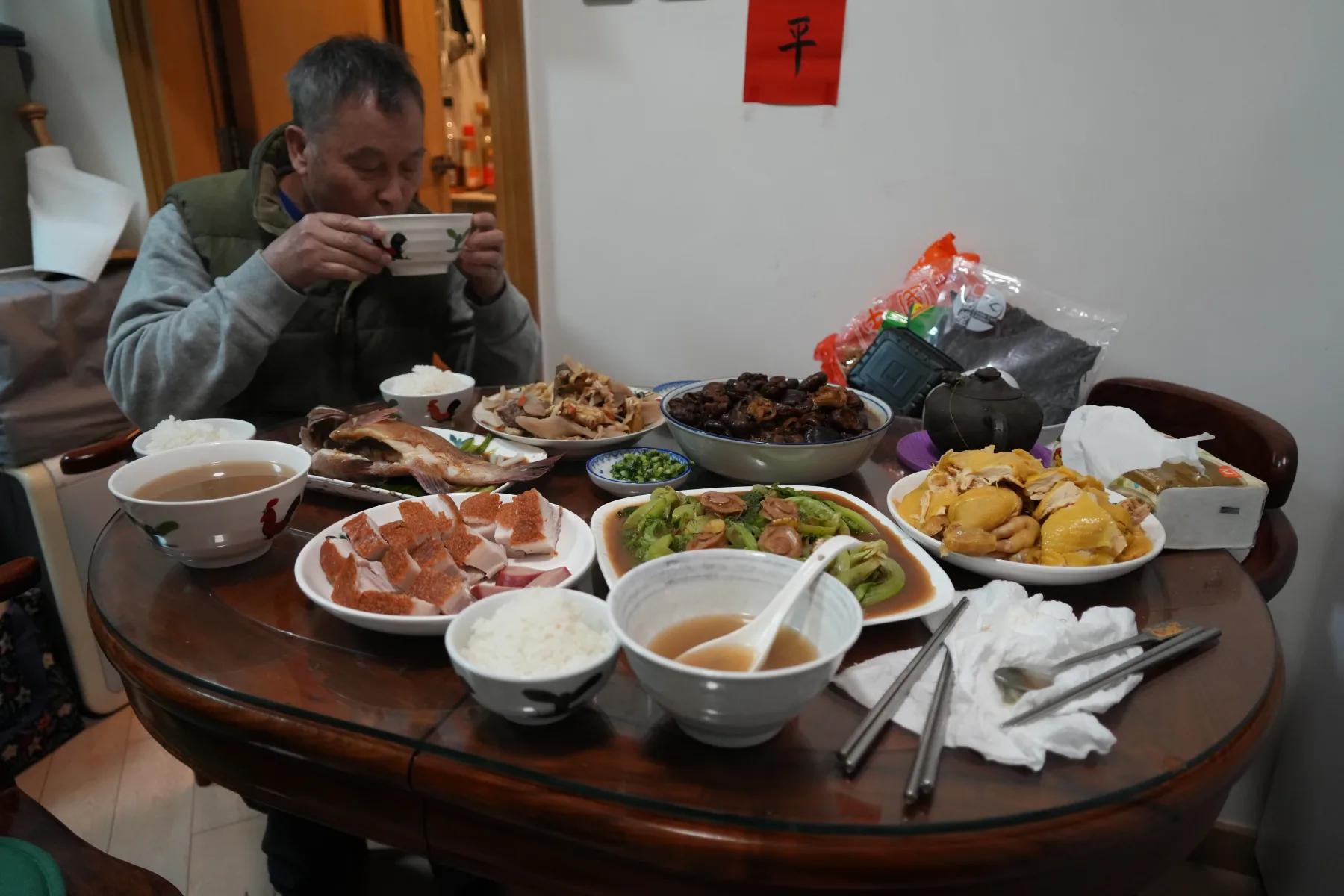
Hong Kong food is deeply Cantonese but shaped by the city's own labor schedules, colonial encounters, migration and compact restaurant economy. Yum cha, roast-meat shops and seafood sit beside cha chaan teng cafes, bakeries, noodle specialists and dishes that translated Western forms into local habits.
A cha chaan teng menu can move from milk tea to macaroni soup, scrambled eggs, instant noodles and baked rice without treating the combination as confused. The coherence comes from service speed, price, familiarity and the city's appetite for practical translation.
Our Hong Kong food guide explains these institutions in depth, while the broader Cantonese food guide distinguishes Hong Kong cooking from the wider cuisines of Guangzhou, the Pearl River Delta, Chaoshan and Hakka communities.
Lantau and the New Territories widen the map
Hong Kong's urban image can make its large green and coastal areas seem improbable. Country parks, reservoirs, beaches, villages and hiking routes extend through the New Territories and islands.
On Lantau Island, the Tian Tan Buddha and Po Lin Monastery form a major religious and visitor destination. The large bronze statue is modern rather than ancient, completed in the late twentieth century. Treat the site as an active Buddhist environment, not merely a viewpoint.
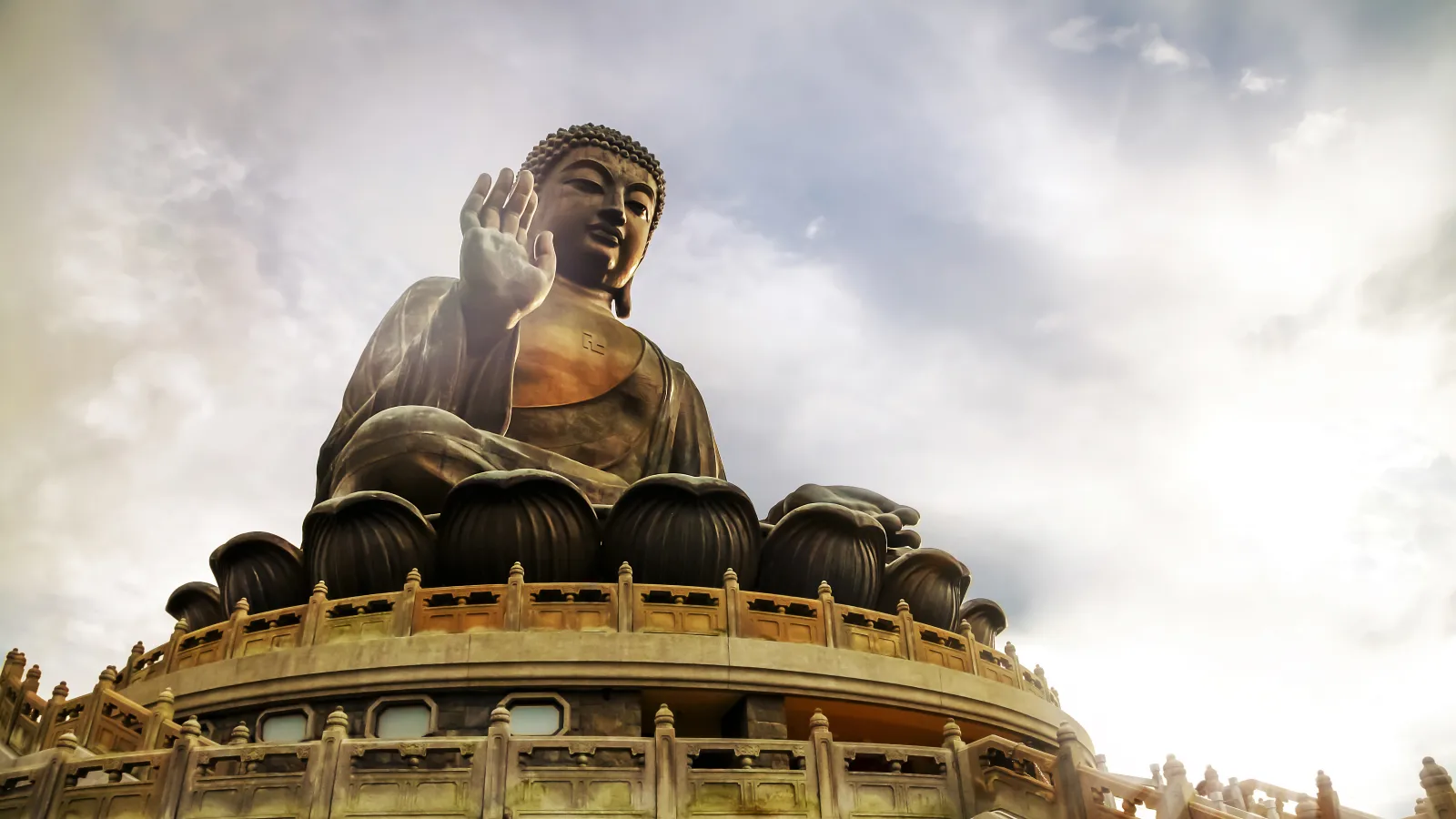
Lantau also contains villages, beaches, trails, airport infrastructure and new development. One monument does not represent the whole island.
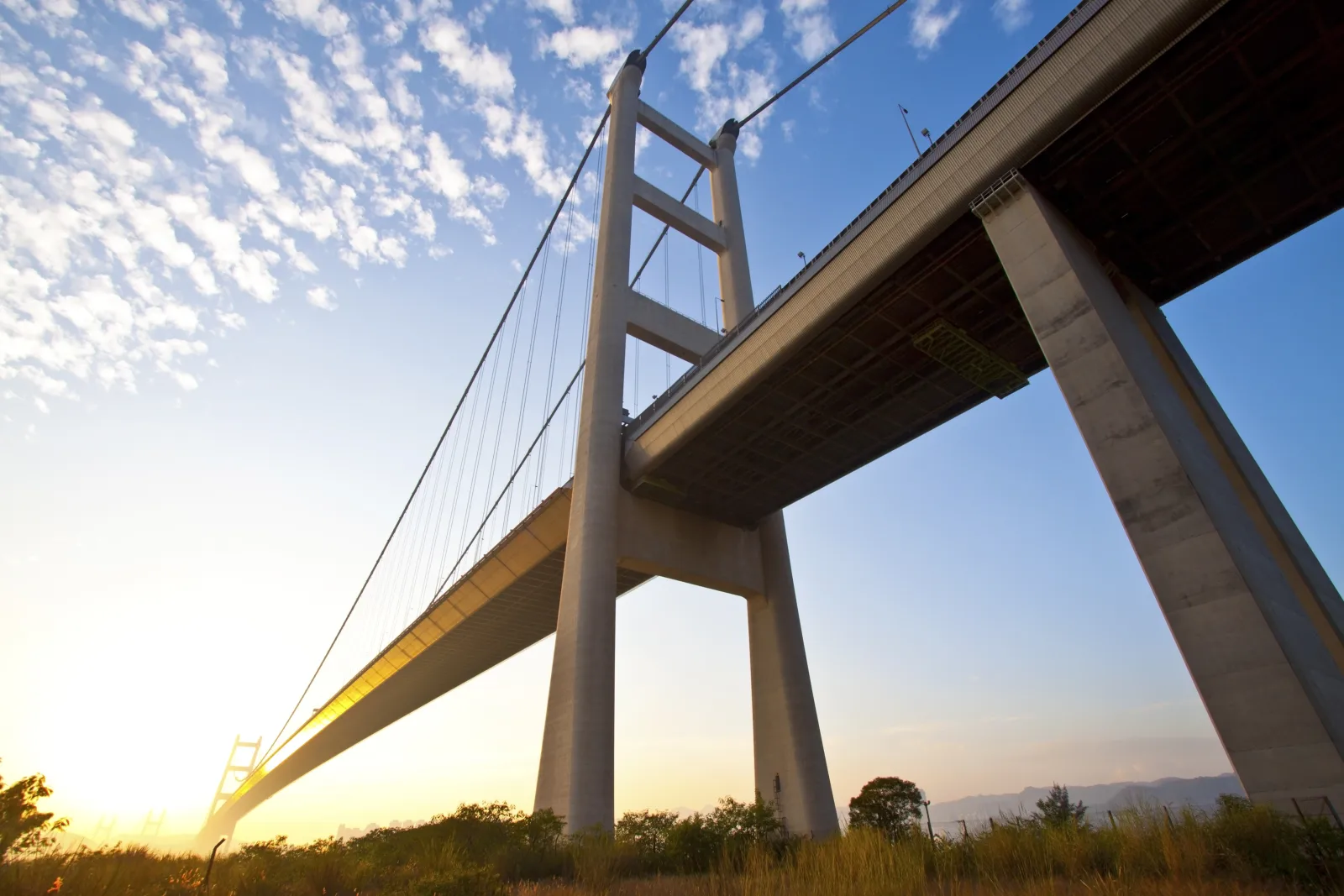
The Tsing Ma Bridge reveals another Hong Kong: a territory held together by large engineering systems across water and steep land.
For hiking, use official trail information, check heat and storm conditions, carry water and do not assume urban mobile coverage makes every route casual. I insist on treating the green map as real Hong Kong rather than a scenic escape from the “authentic” urban one. Summer humidity changes the difficulty of even familiar paths.
Hong Kong culture survives inside working rooms
The most valuable Hong Kong interiors were not built as nostalgia sets. A narrow cafe booth, a tiled wall, a ceiling fan, a roast-meat window or a food counter mattered first because someone worked there and someone else needed an affordable meal. Cinema later made those rooms internationally recognizable, but the camera did not invent their emotional charge. It noticed a city already forcing strangers, regulars, owners and staff into close range.
This distinction matters. I have no interest in praising an old dining room merely because it looks “retro.” Age alone proves nothing. The room becomes cultural evidence when its layout still explains how Hong Kong eats: compact tables, direct service, mixed menus, short pauses and constant turnover. Our Hong Kong food guide follows that practical grammar from yum cha to cha chaan teng rather than reducing it to a checklist of famous dishes.
The same room can carry several generations of memory. One person recognizes a childhood breakfast, another hears a Cantopop song, and a film viewer recognizes the angle of a counter before remembering the plot. That collision is why an ordinary cafe can feel more truthful than a themed museum. Yet memory never gives a visitor ownership. Staff are not extras, regular customers are not atmosphere, and a business does not owe anyone an unchanged 1990s frame.
Hong Kong culture is unusually good at making usefulness emotional. A ferry is transport and a pause between skylines. A tram is a slow machine inside a fast city. A bakery bag is breakfast, school memory and portable pleasure. None needs to stop working in order to become heritage.
Cinema did not invent Hong Kong's mood—it borrowed its pressure
The lazy description of Hong Kong cinema is “neon and loneliness.” It mistakes a visual result for a cause. The cause is pressure: expensive space, overlapping routes, migration, work schedules, overheard lives and the possibility that a private feeling will be interrupted by someone passing through.
Wong Kar Wai turned that pressure into wrong timing. In Chungking Express, a snack counter transfers the film from one brokenhearted policeman to another; food orders, canned pineapple, a repeated song and a borrowed key do the emotional work that direct confession cannot. The city is not decorative background. Remove the crowd, the counter and the apartment's unstable privacy, and the relationships lose their mechanism.
The people on screen also widened the city's voice. Faye Wong could bring Cantopop identity, physical mischief and a dream of elsewhere into the same scene. Tony Leung could make hesitation visible without turning silence into emptiness. Their international recognition matters, but their local force came from gestures and sounds already legible inside Hong Kong.
This is why chasing only “film locations” produces a thin encounter. The useful question is not whether a famous actor stood there. Ask what the place allowed the scene to do. Did the counter make repeated observation plausible? Did the corridor deny privacy? Did the escalator let two lives pass at different speeds? Once the question becomes functional, the current city remains visible even when a sign, tenant or facade has changed.
The harbour is not a divider; it edits the city
Crossing Victoria Harbour changes scale, light, language around the body and the direction from which the skyline is read. That repeated cut between Hong Kong Island and Kowloon is one reason the territory feels larger than its land area. Water creates separation, but ferries and rail turn separation into routine.
The mountains perform another edit. Dense streets can end against a slope; a housing estate can sit close to a reservoir or trail; an elevated walkway can move a pedestrian above traffic and into a shopping complex without a clean boundary between public infrastructure and commercial space. Hong Kong's identity lives in these transitions, not in a contest between “old” and “modern.”
For route planning, weather, transport, districts and accommodation, use the separate travel to Hong Kong guide. This culture page owns the harder question: why do those movements feel specifically Hong Kong? Because limited land did not produce only density. It produced habits of translation—between shores, languages, cuisines, media, private feeling and public movement.
Frequently asked questions about Hong Kong
What makes Hong Kong culture distinctive?
Hong Kong culture grew from Cantonese language and regional traditions meeting maritime trade, migration, British colonial institutions, extreme urban density and global media. Its distinctiveness appears in ordinary systems—transport, housing, food service, film, music and bilingual public life—not in one skyline image.
Is Hong Kong culture only Cantonese culture?
Cantonese language and social practice are foundational, but Hong Kong culture is not interchangeable with every Cantonese-speaking place. Port history, migration, colonial rule, finance, manufacturing, housing pressure and local media reorganized those foundations into a specific urban culture.
Why are Hong Kong cinema and Cantopop culturally important?
Hong Kong cinema and Cantopop carried Cantonese speech, city space, fashion and emotional expression across Chinese-speaking communities and international audiences. They also preserve changing interiors, streets and working rhythms that official monuments rarely record.
What is Hong Kong best known for?
Hong Kong is known for Victoria Harbour, Cantonese language and food, vertical urbanism, cinema, finance, public transport, mountain trails and a history shaped by Chinese regional connections, British colonial rule and global migration.
What is the best time to visit Hong Kong?
Late autumn through early spring is generally best for walking and hiking. Spring is humid and often cloudy, while summer is hot, wet and affected by tropical cyclones. Weather can change quickly around hills and coastlines.
Hong Kong becomes larger when you stop looking only upward
Hong Kong's towers deserve attention, but they are not the whole argument. The city is equally defined by the water between districts, the mountain behind an office block, the tram that refuses to hurry, the public estate connected to a market and the trail beginning near a station. A serious culture guide must keep all of those systems in the same frame.
The most rewarding visit moves repeatedly between scales. Read a sign at street level, then look across the harbour. Eat at a counter, then enter a museum. Climb above the city, then return to it by ordinary transport. Hong Kong's intensity is not a wall. It is a system of passages.