Four Cantonese systems that a menu should keep distinct
Technique and service reveal more than the generic word Cantonese.
| System | Decisive craft | Common flattening |
|---|---|---|
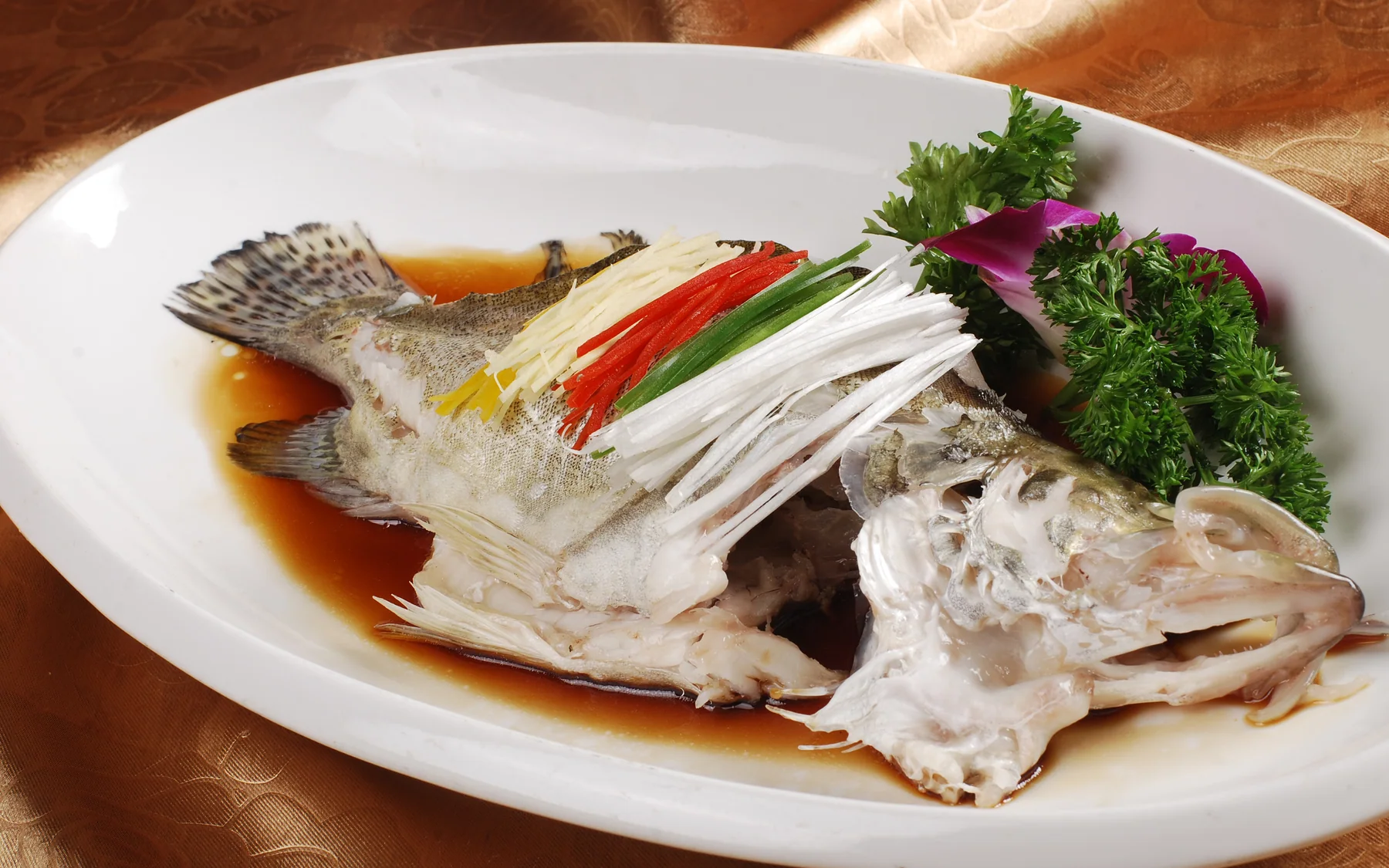
| Steamed and poached | Freshness, cut, exact doneness and finishing aromatics remain visible. | Pale color means simple or easy cooking. |
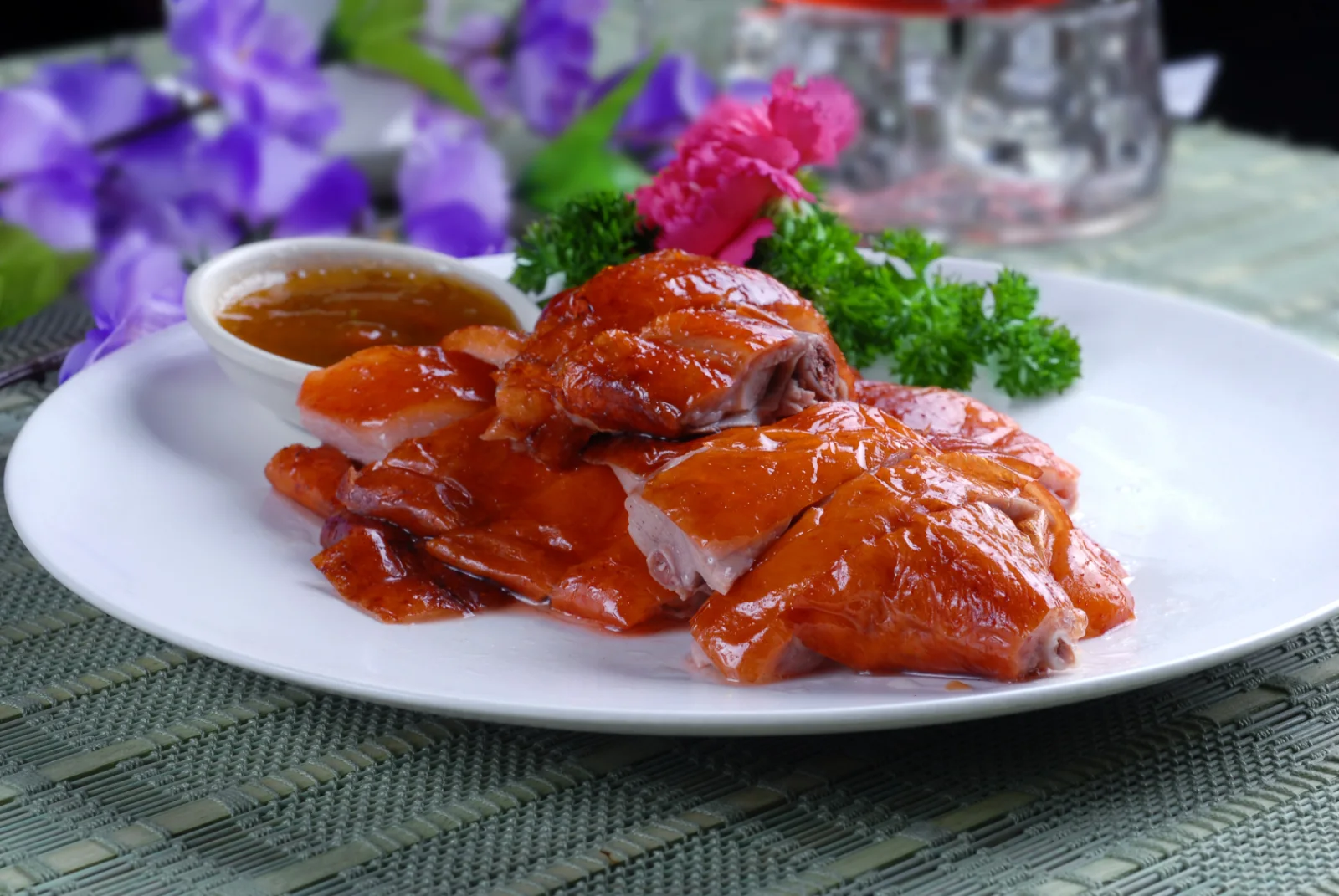
| Siu mei roast meats | Marination, hanging, skin drying, roasting and chopping create distinct duck, goose, pork and chicken forms. | Sweet red sauce defines all Cantonese barbecue. |
| Dim sum and yum cha | Specialist dough, filling, steam or fry work enters a paced tea-house service system. | Dim sum is a random appetizer buffet. |
| Chaoshan food | Seafood, brines, beef cuts, dipping sauces and gongfu tea express a distinct eastern Guangdong tradition. | Chaoshan is merely a spicy or rustic subset of Guangzhou food. |
A clear preparation exposes the market decision
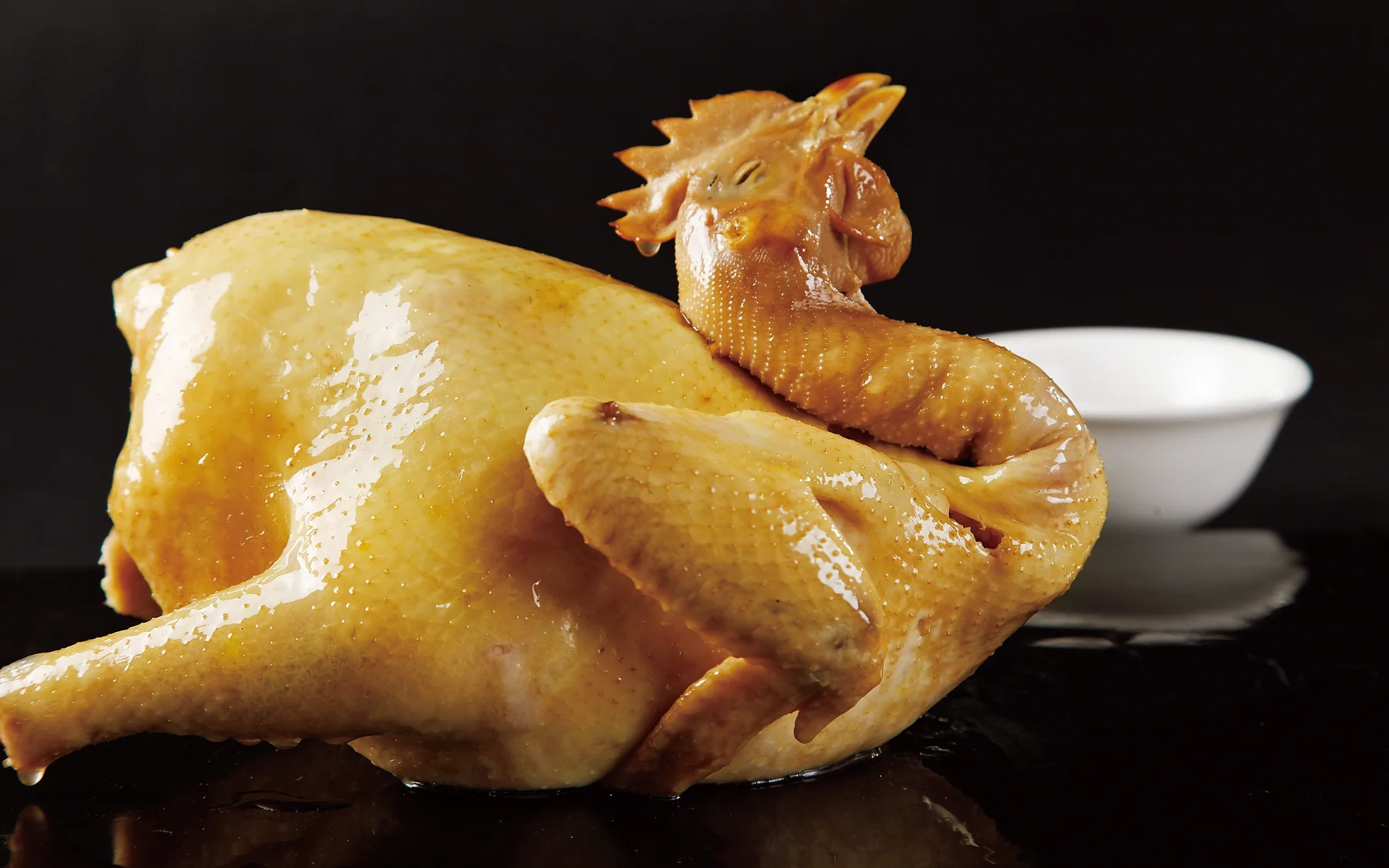
Steamed fish depends on species, size, slaughter or storage condition, cut, plate, steam strength and finish. White-cut chicken depends on bird, poaching control, rest and bone-side doneness. The sauces are important, but they do not carry the whole dish. This is why Cantonese diners ask about ingredient condition with such seriousness.
Fresh is not a mystical word and not every product must be live. It means the form of preservation and timing must suit the dish. A frozen seafood item can be excellent when handled for the right preparation; an expensive live ingredient can be ruined. The page should name the chain rather than worship the tank.
Gentle appearance requires violent precision
A steamer can overcook in seconds, and a quick wok dish loses texture when the pan is crowded. Blanching greens, finishing with hot oil and seasoning a clear broth demand timing that cannot be hidden by color. Cantonese restraint is therefore technical intensity translated into a calm plate.
I reject the patronizing word simple when it means effortless. A three-ingredient dish can require more judgment than a crowded sauce. The correct explanation shows the sensory checkpoint: flesh just separating, green stem still crisp, stock clear but not thin.
Siu mei is a public craft measured at the chopping block
Roast goose skin, char siu edges and soy chicken texture depend on preparation before the oven as much as heat inside it. Display windows make the craft visible, while the chopping block converts a whole bird or slab into portions with bone, skin, fat and meat distributed differently.
A glossy surface proves glaze and light, not juiciness. Show the cross-section. Ask which cut of char siu, which bird and when it left the oven. My favorite piece may be fatty and charred; another diner may want lean. Precision in ordering respects both the craft and appetite.
Dim sum belongs to tea, pacing and repeated specialist work
Har gow skin must be translucent yet strong; siu mai must remain juicy without becoming loose; buns need fermentation; rice rolls need a thin tender sheet. These pieces are small because skill and service are concentrated, not because they are snacks without context.
Yum cha also carries family time: elders, children, newspaper, conversation, carts or order sheets, repeated tea refills. A guide that lists baskets but misses the social pace has photographed objects and lost the meal.
Beef cut, seafood condition and dipping sauce create another grammar
Chaoshan beef hot pot separates cuts by muscle and cooking time, uses a clear broth and relies on extremely fresh supply and controlled swishing. Marinated raw seafood, braised goose, fish balls and small dishes belong to other local systems with their own safety and sourcing boundaries. Gongfu tea structures conversation around the food.
Do not collapse this into ‘Cantonese hot pot.’ Name Chaoshan, the cut and the service method. Regional pride is not a marketing obstacle; it is information that helps the reader understand why the meal works.
Judge Cantonese food by what the cook leaves exposed
Texture, temperature, stock clarity, ingredient smell and exact doneness remain visible. When those elements are right, the food can feel effortless. That ease is the result of work, not its absence.
My position is certain: the best Cantonese cooking makes restraint feel generous. The worst uses ‘delicate’ as an excuse for weak stock and overcooked premium ingredients. A famous price cannot repair a dead fish or cottony chicken.
Soft food can carry the longest household attention
Cantonese soups may be everyday, seasonal or built around ingredients chosen for family preference. Long simmering is not automatically nutritionally superior or medicinal, but it creates a service language of care. Congee can be plain, seafood-rich, offal-based or finished with preserved and fried accompaniments. Rice texture, stock and addition timing decide whether the bowl is silky or broken.
These foods are easy to dismiss beside roast meats and dim sum because they photograph quietly. That is exactly why East Moment should write them. A bowl placed in front of someone tired or ill can hold a household’s deepest tenderness without needing a miracle claim.
Cafes and overseas restaurants are not footnotes to Guangzhou
Hong Kong cha chaan teng food, bakery culture, roast shops and milk tea record colonial history, migration, industrial ingredients and fast urban service. Cantonese restaurants overseas adapted seafood, portion, banquet format and ingredients while maintaining specialist networks. These forms belong to their places and periods.
I reject the hierarchy that treats mainland origin as real and diaspora adaptation as diluted. The correct comparison names what changed and why. A dish can carry Cantonese technique while becoming unmistakably Hong Kong, Canadian, Australian or another local Chinese creation.
Steam and pale color need evidence at the cut surface
A whole steamed fish or white-cut chicken can look visually quiet. Show flake separation, skin, bone-side doneness, clear juices and the finishing oil or aromatics. For roast meat, show crisp skin, fat and meat in one slice. The close-up makes technical restraint visible.
Do not oversaturate the image until every roast turns red and every green becomes electric. Accurate color is part of the evidence. Cantonese cuisine should not be made louder by editing because the page is afraid the real plate looks calm. That disciplined calm is precisely the point.